Browse the collection
 Image
Image
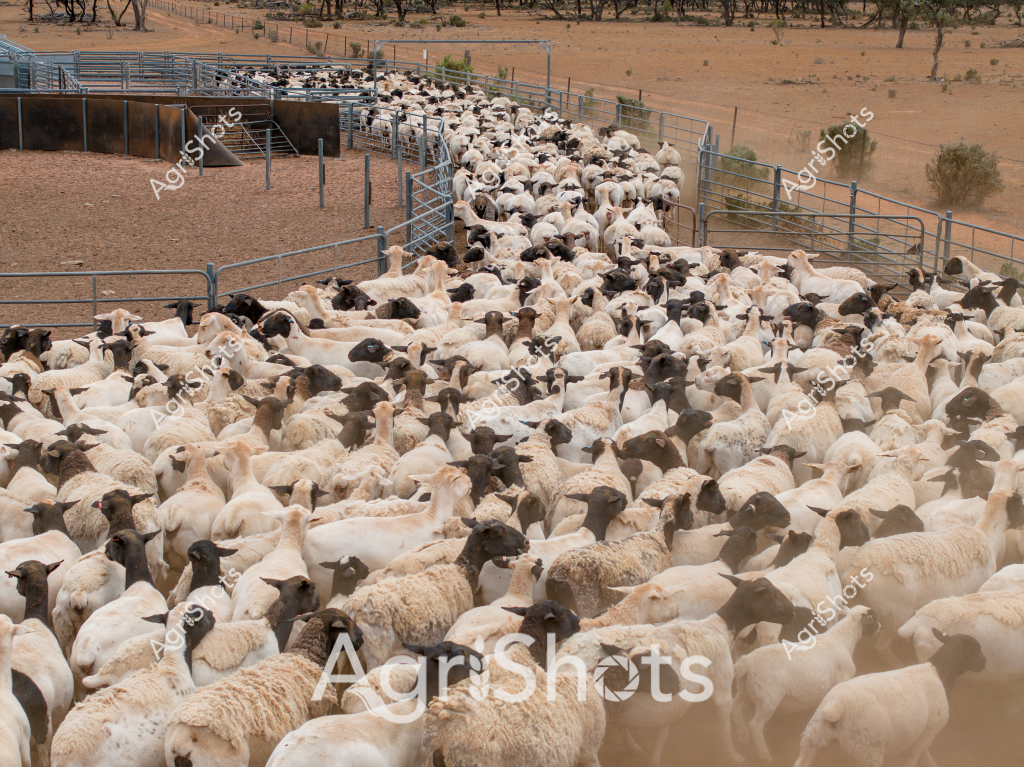
A dense mob of Merino and crossbred sheep fills a tight steel yard complex in a dry, arid Australian pastoral landscape. The woolly flock, comprising predominantly white sheep with scattered black and brown individuals, is tightly packed within metal cattle yards and loading ramps, creating a textural sea of wool and movement. The surrounding environment reveals a classic outback setting - reddish-brown earth, sparse vegetation, and scattered eucalyptus trees, indicating this is likely a large-scale sheep station in inland Australia. The metal yard infrastructure suggests professional livestock management, with carefully designed gates and pathways to facilitate stock movement and handling. Dust rises from the densely packed animals, highlighting the dry conditions and the physical process of mustering and containing the sheep. The scene captures the scale and complexity of Australian sheep farming, where large numbers of livestock are carefully managed in challenging environmental conditions.
 Image
Image
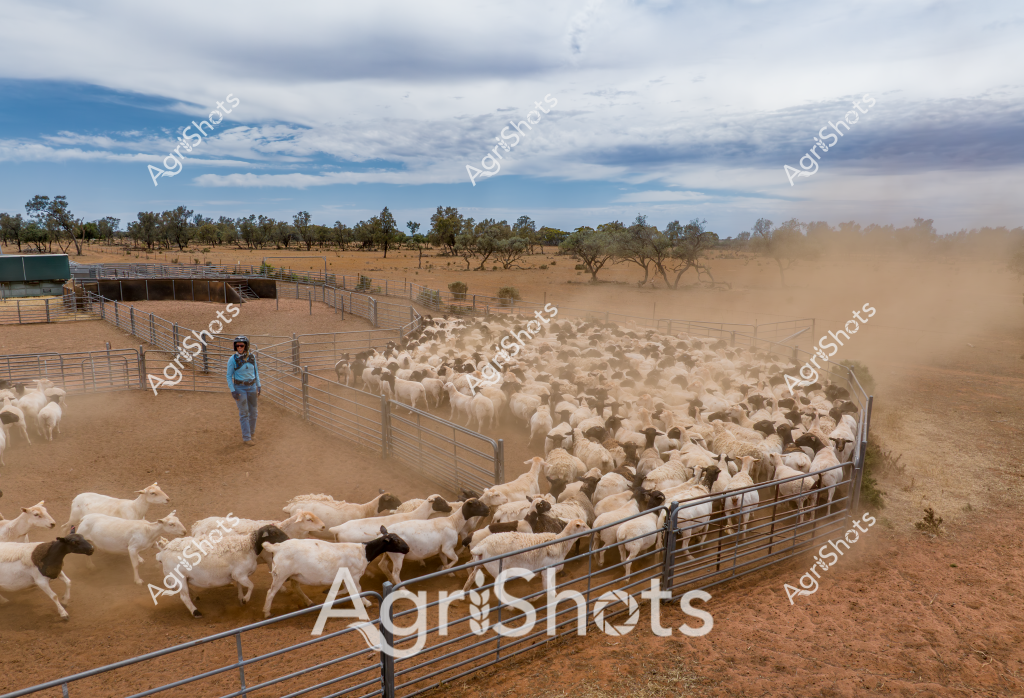
A woman stockman manages a large mob of white and black-flecked sheep in a dusty sheep yard under cloudy skies in an arid Australian pastoral landscape. The dense flock moves through metal livestock gates, kicking up substantial red earth dust that billows across the dry paddock. Scattered eucalyptus trees line the background, providing sparse shade in the scorching environment. The stockman, wearing blue work attire and standing confidently within the yard, carefully guides the sheep through the narrow metal gate sections of the robust livestock handling infrastructure. The scene captures the challenging conditions of sheep farming in rural Australia, where skilled workers manage large herds across expansive, drought-affected stations. The image depicts the precision and expertise required in mustering and moving livestock in harsh outback conditions.
 Image
Image
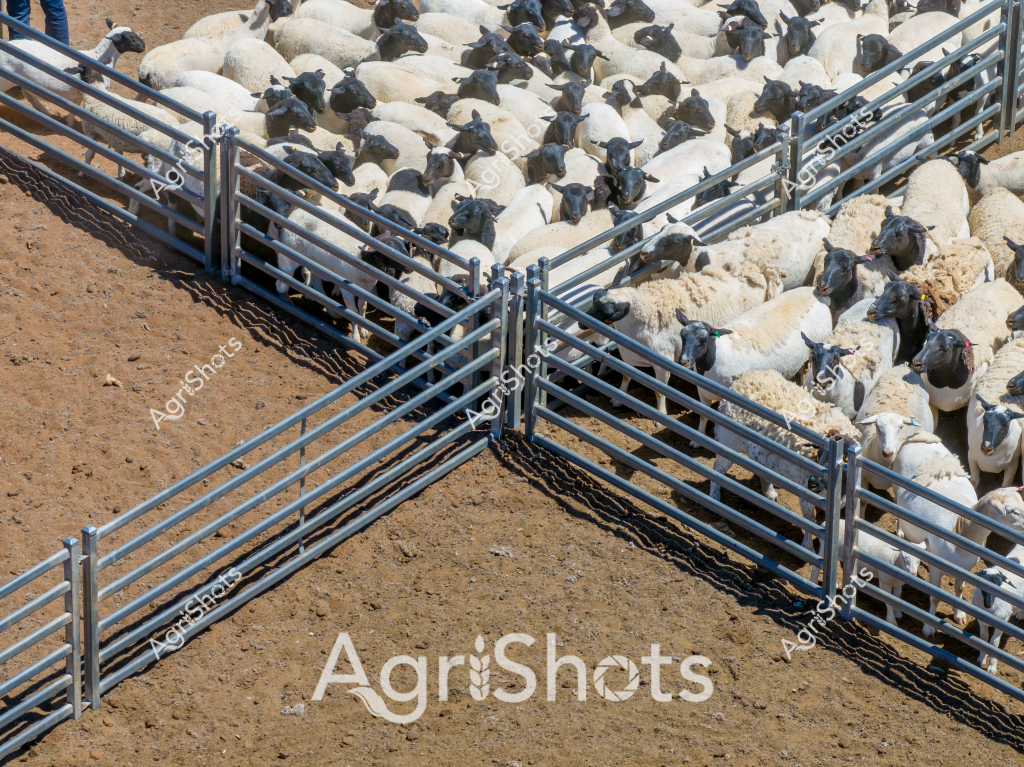
A large mob of black-and-white sheep are densely packed into a series of intersecting metal livestock yards, creating a geometric pattern of animals and steel gates. The sheep appear to be a mix of dark-faced breeds, possibly Black Suffolk or Dorper crosses, tightly clustered in a dry, dusty paddock with a brown earth floor. Precision metal gates form a complex funnel-like configuration, designed to efficiently control and direct the movement of the livestock during mustering or processing. The tight arrangement of sheep suggests they are being prepared for either shearing, veterinary treatment, or transportation, highlighting the systematic approach of modern Australian livestock management. The metallic gray yards contrast sharply with the white and dark woolly bodies of the sheep, creating a striking visual representation of agricultural infrastructure and animal husbandry.
 Image
Image
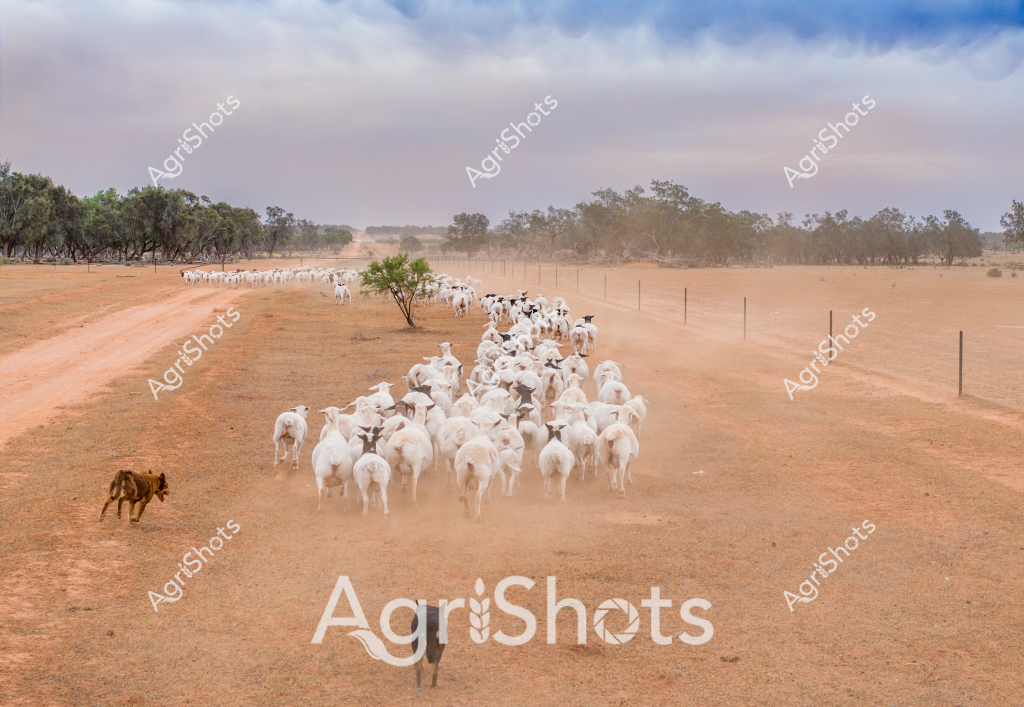
A large mob of white livestock - likely Merino sheep - are being expertly herded across a dry, dusty rural landscape by a working dog. The flock moves along a dirt track with sparse trees and fencing, creating a cloud of reddish-orange dust in their wake. A single working dog, likely a Kelpie, guides the sheep from behind, demonstrating the classic Australian pastoral scene of mustering livestock across an arid station property. The landscape suggests a drought-affected region, with minimal vegetation and a wide, open terrain typical of Australia's interior. Sparse eucalyptus trees line the distant horizon, breaking up the flat landscape and providing minimal shade. The image captures the challenging environmental conditions and the resilience of Australian agricultural practices, with the sheep moving steadily under the watchful eye of their canine handler across the seemingly endless paddock.
 Image
Image
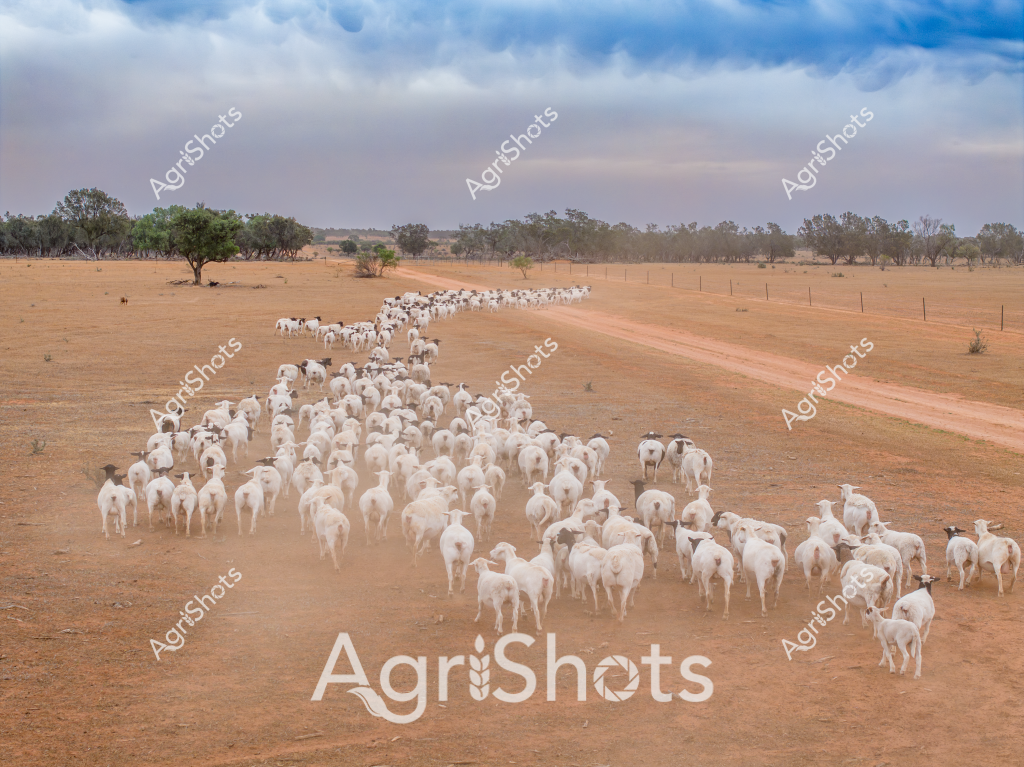
A large herd of white sheep moves across a dry, dusty paddock in what appears to be an Australian outback or pastoral landscape. The expansive terrain is characterized by sparse trees, reddish-brown earth, and a wide dirt track running alongside the flock. Scattered eucalyptus trees dot the horizon, creating a classic Australian rural scene with muted greens and browns contrasting against a cloudy sky with soft blue and gray tones. The sheep - likely Merino or a similar white wool breed - are tightly clustered, moving in a long, winding column across the parched landscape. Their pure white coats stand out starkly against the ochre-colored ground, creating a striking visual pattern of movement and density. The dusty environment suggests challenging drought conditions typical of many Australian agricultural regions. This image captures the essence of large-scale sheep farming in Australia, where herds are moved across vast properties to access grazing areas. The landscape speaks to the resilience of both the animals and the farmers who manage these extensive agricultural operations, navigating harsh environmental conditions with skill and determination.
 Image
Image
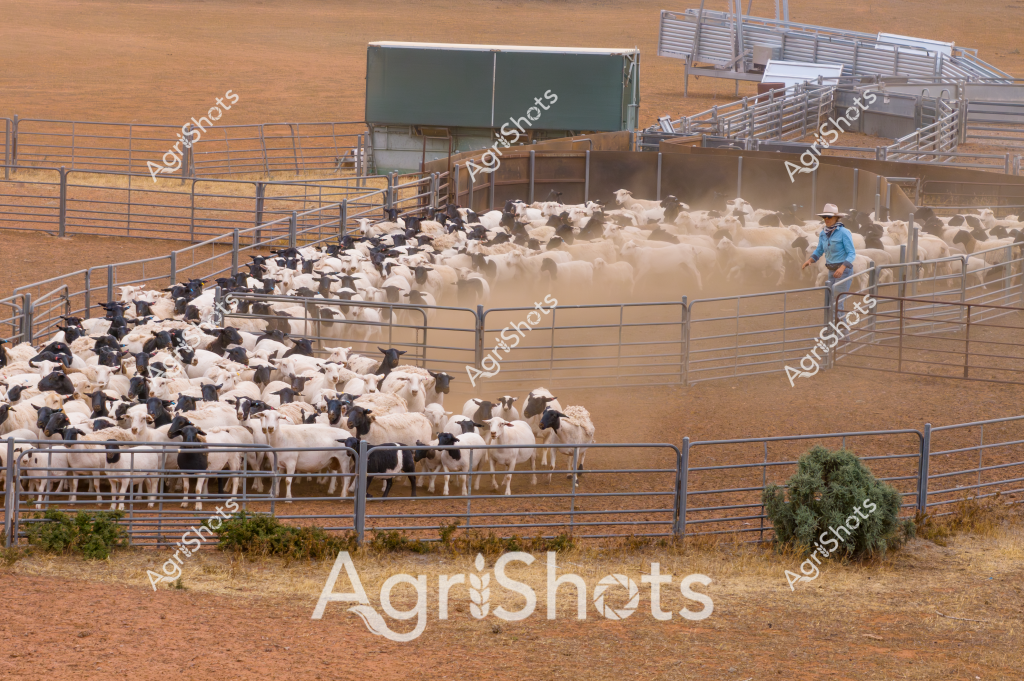
A large herd of white and black-faced sheep are gathered in a dusty livestock yard, managed by a man in a blue shirt and light-colored hat. Multiple metal livestock fencing panels create a complex holding area, with a green-roofed shed and additional silver metal yards visible in the background. The sheep appear densely packed, raising a cloud of fine golden-brown dust around their woolly bodies. A sparse bush and dry grassland surrounds the yard, indicating an arid agricultural setting typical of Australian livestock operations. The careful arrangement of the yards and the controlled movement of the sheep demonstrate professional livestock management techniques used in sheep farming. The scene captures the precision of contemporary Australian sheep farming, where infrastructure and skilled stockmanship enable efficient livestock handling. The man's positioning suggests he is carefully guiding or monitoring the sheep's movement through the yard's carefully designed gates and holding pens. The dust and dry landscape highlight the challenging environmental conditions typical of many Australian agricultural regions.
 Image
Image
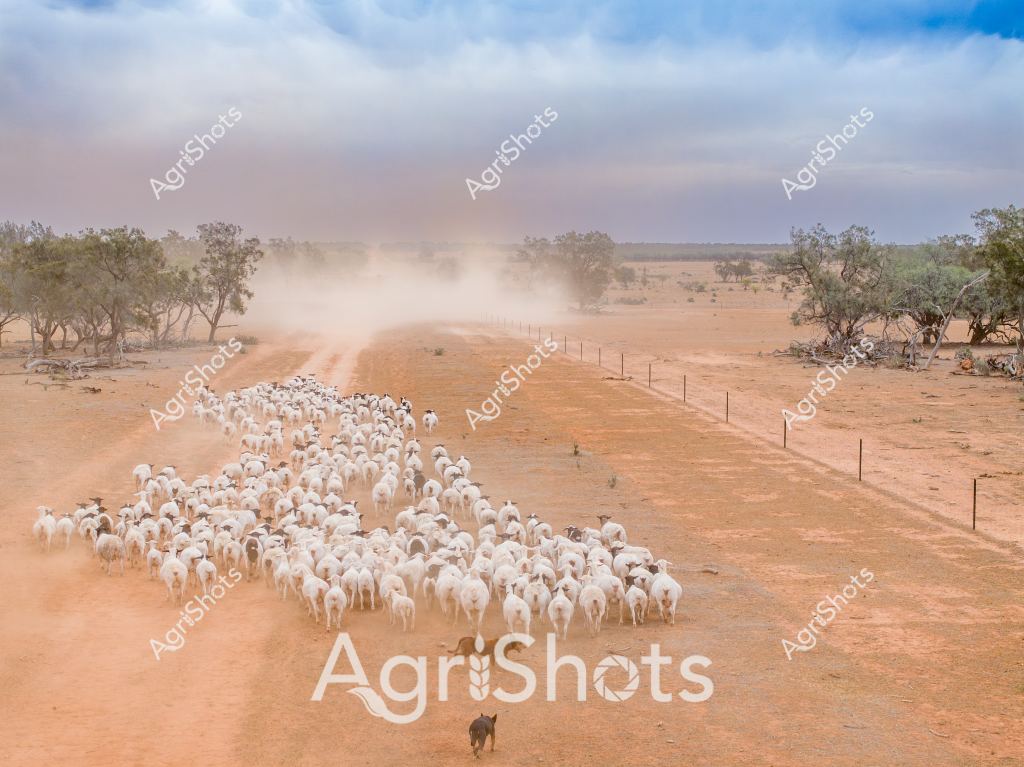
A vast, dusty landscape in outback Australia captures a large mob of white sheep being mustered along a dirt track, creating a billowing dust cloud behind the tightly packed herd. Sparse eucalyptus trees line the fenced road, their weathered branches framing the arid pastoral scene typical of inland grazing properties. A lone working dog trails behind the herd, helping to guide the sheep forward across the ochre-colored earth. The landscape speaks to the challenging conditions of Australian sheep farming, with the dry ground and sparse vegetation highlighting the resilience required to run livestock in this unforgiving environment. The sheep, likely Merino or a similar white-fleeced breed, move as a compact, woolly mass, kicking up a dramatic plume of red dust that softens the harsh landscape and creates a striking visual representation of cattle station life in rural Australia. The image powerfully captures the scale and drama of livestock mustering, showcasing the vast open spaces and the intricate process of moving sheep across remote pastoral lands. The fence line, dust, and sparse vegetation all tell a story of agricultural persistence in one of the world's most challenging farming environments.
 Image
Image
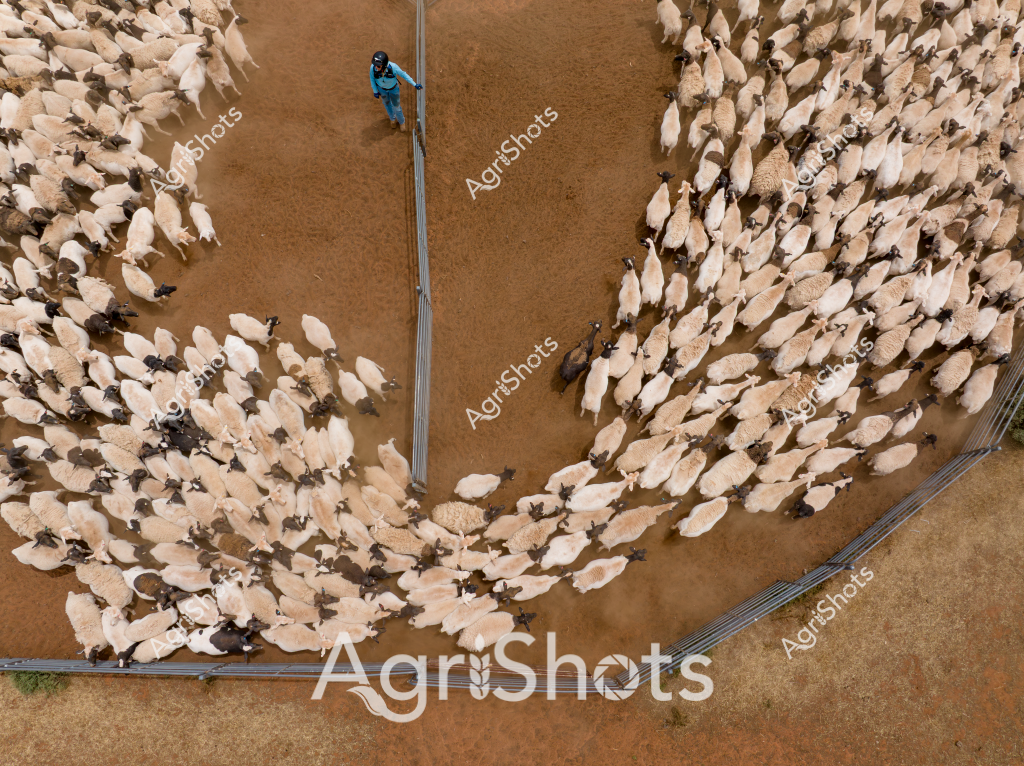
A striking aerial view captures a large flock of light-colored sheep being expertly guided through a curved livestock handling system by a person in a bright blue jacket. The sheep are densely packed, creating a flowing, organic pattern across the dry earth, with metal gates and fencing defining their movement corridor. The overhead perspective reveals the precision of livestock management, showing how a single person can effectively control and direct a large number of animals using strategic infrastructure. The earthy brown ground contrasts with the white and cream-colored wool of the sheep, some of which appear to be Merino or a similar breed common in Australian agriculture. Metal railings create a V-shaped channel that guides the animals, demonstrating the sophisticated approach to stock management in modern farming. The image captures the scale and complexity of sheep farming, highlighting the intersection of animal husbandry, agricultural engineering, and human skill in managing livestock. The blue-jacketed stockperson stands centrally, symbolizing the critical role of human expertise in guiding and controlling the herd's movement through this carefully designed agricultural system. The photograph offers a compelling bird's-eye view of agricultural practice, showcasing the intricate relationship between farmers, animals, and the carefully constructed infrastructure of modern sheep farming.
 Image
Image
A substantial mob of white and dark-colored sheep crowd together, raising a fine cloud of reddish-brown dust against the overcast sky. A woman in blue clothing and a wide-brimmed hat stands near the metal gate, while another worker bends to interact with the livestock. Several working dogs are positioned around the flock, helping to control and direct the sheep's movements. The arid landscape features sparse trees in the background and metal livestock yards with multiple paddock sections, typical of Australian sheep station infrastructure. The scene captures the challenging and dynamic nature of sheep management in a dry rural environment, with the dust and tight grouping of animals suggesting active mustering or sorting activities.
 Image
Image
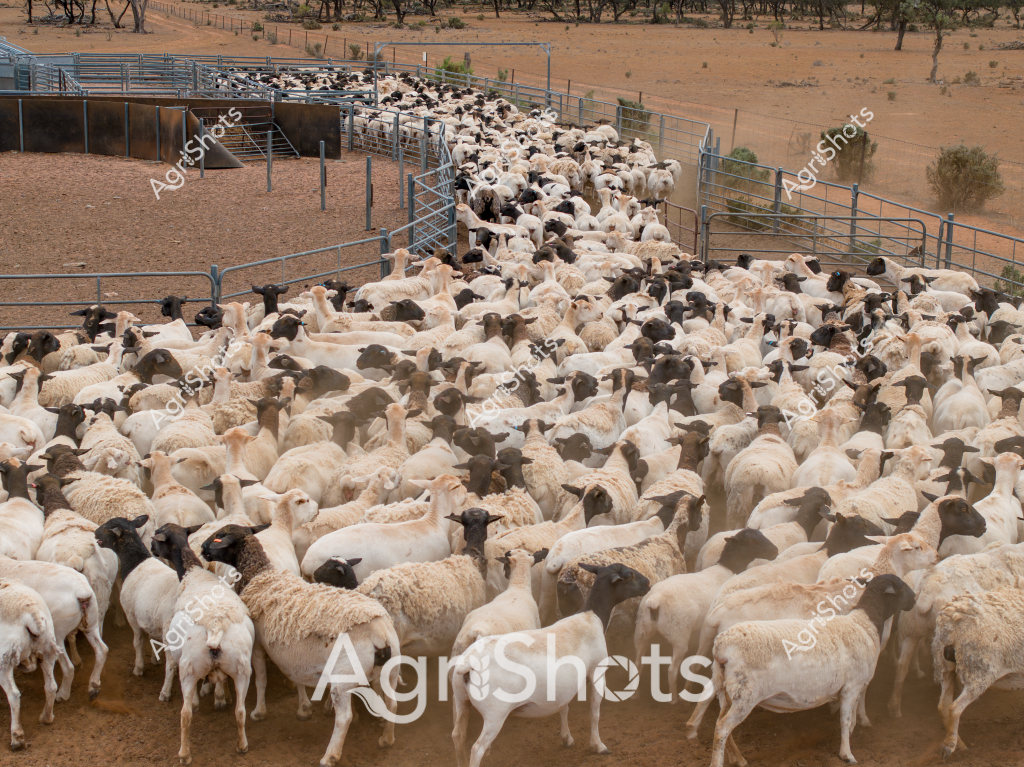
A densely packed mob of white and black-faced sheep crowds into a metal livestock yard in an arid Australian pastoral landscape. The sheep, likely a mix of Merino and other breeds, are tightly clustered within steel panel fences, creating a sea of woolly bodies against the reddish-brown earth. Sparse trees and scrub vegetation populate the dry background, indicating this is likely a station or large agricultural property in an inland region experiencing drought-like conditions. The sophisticated metal yard infrastructure suggests professional livestock management, with carefully designed gates and holding areas to control and direct the sheep's movement. The animals appear to be gathered for mustering, sorting, or potentially preparing for shearing or transportation. Their varied coloration - predominantly white with black faces and legs - is typical of many Australian sheep breeds adapted to harsh pastoral environments. The landscape's stark contrast between the concentrated livestock and the sparse, dusty surroundings highlights the challenges of sheep farming in Australia's challenging agricultural regions. The image captures the resilience of both the livestock and the agricultural systems that sustain them in difficult environmental conditions.
 Image
Image
A man and a woman in blue shirts work amid a large flock of black and white sheep in a dusty livestock yard. Two workers carefully manage a mob of sheep through metal livestock gates and holding pens, creating clouds of fine red dirt as the animals move. The arid landscape surrounding the yards suggests this is likely a pastoral station in central or western Australia, where sheep farming is a critical agricultural industry. The workers appear experienced, skillfully guiding the sheep through the narrow metal gates and sorting areas with practiced movements. The sheep - a mix of white and black-faced breeds, likely Dorper or crossbred stock - are tightly clustered, demonstrating the controlled movement typical of professional livestock management. Metallic yard infrastructure, including sturdy gates and fencing, provides structured pathways for moving and sorting the animals in this quintessential Australian farm scene.
 Image
Image
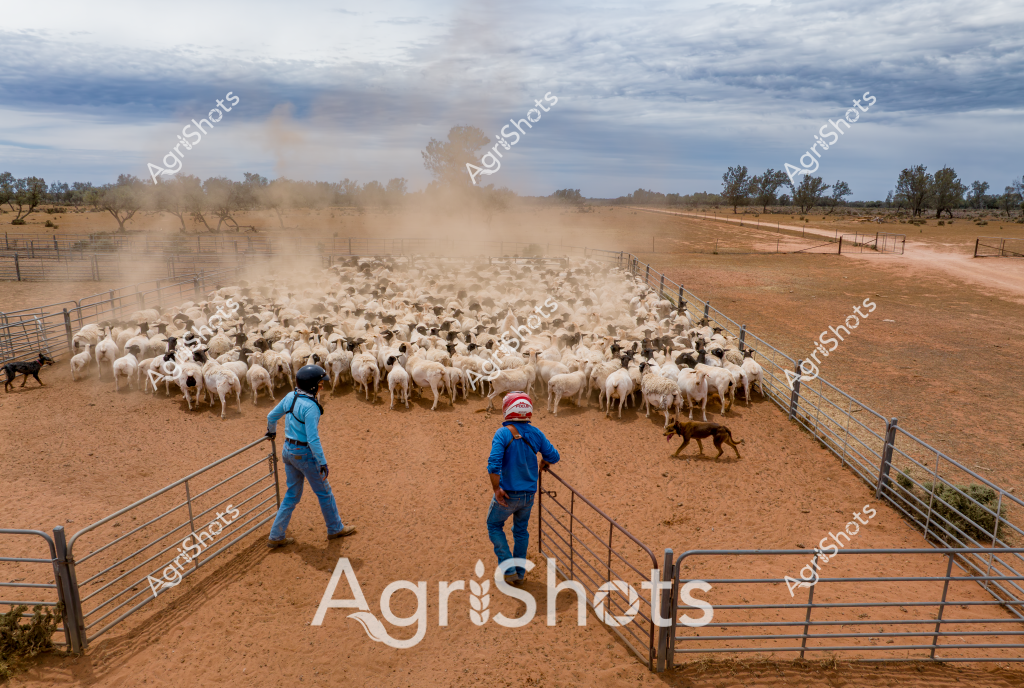
Two men in blue clothing and work boots manage a large flock of white sheep in a dry, dusty livestock yard during what appears to be a warm, overcast day. The sheep are tightly clustered, generating a cloud of reddish-brown dust as they move within the metal livestock fencing. Working dogs assist the stockmen, helping to control and direct the mob of sheep across the arid paddock with its sparse trees and fenced enclosures in the background. The scene captures a typical Australian sheep farming operation, likely in an inland region experiencing dry seasonal conditions. The stockmen's coordinated movements and their dogs' precise herding demonstrate the skill and experience required in managing large livestock herds in challenging agricultural environments. The loose, functional clothing - blue shirts, work pants, and practical footwear - reflects the pragmatic approach of professional livestock managers. The landscape suggests a rural property in an arid or semi-arid zone, with hard-packed earth, minimal vegetation, and a wide, cloudy sky typical of Australian pastoral regions. The fencing and yard infrastructure highlight the structured approach to livestock management, with carefully designed spaces to control and move sheep efficiently.
 Image
Image
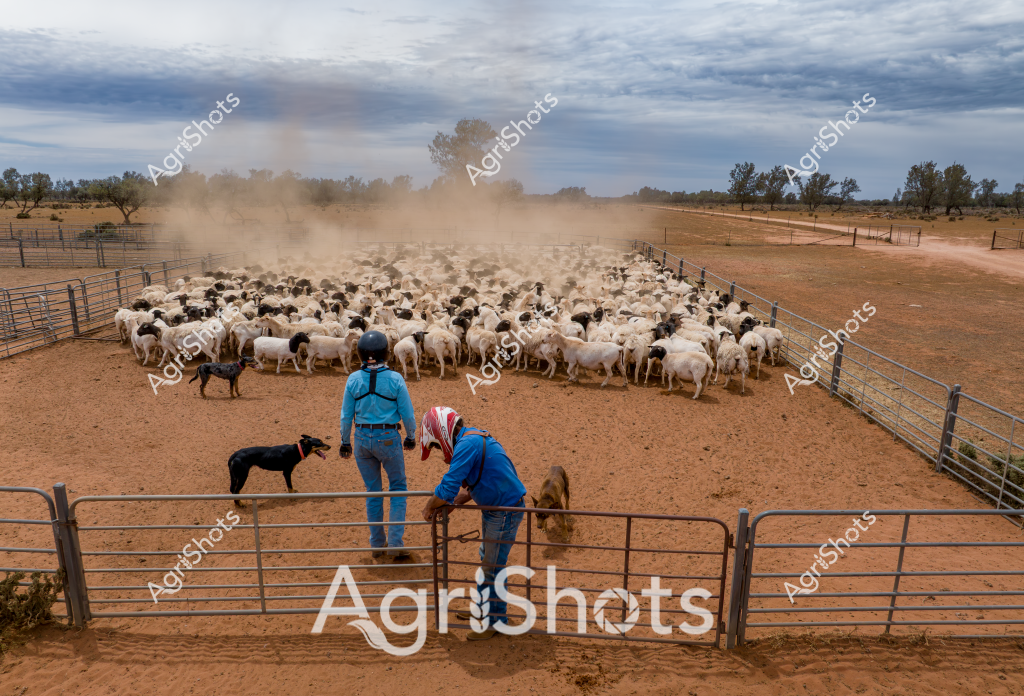
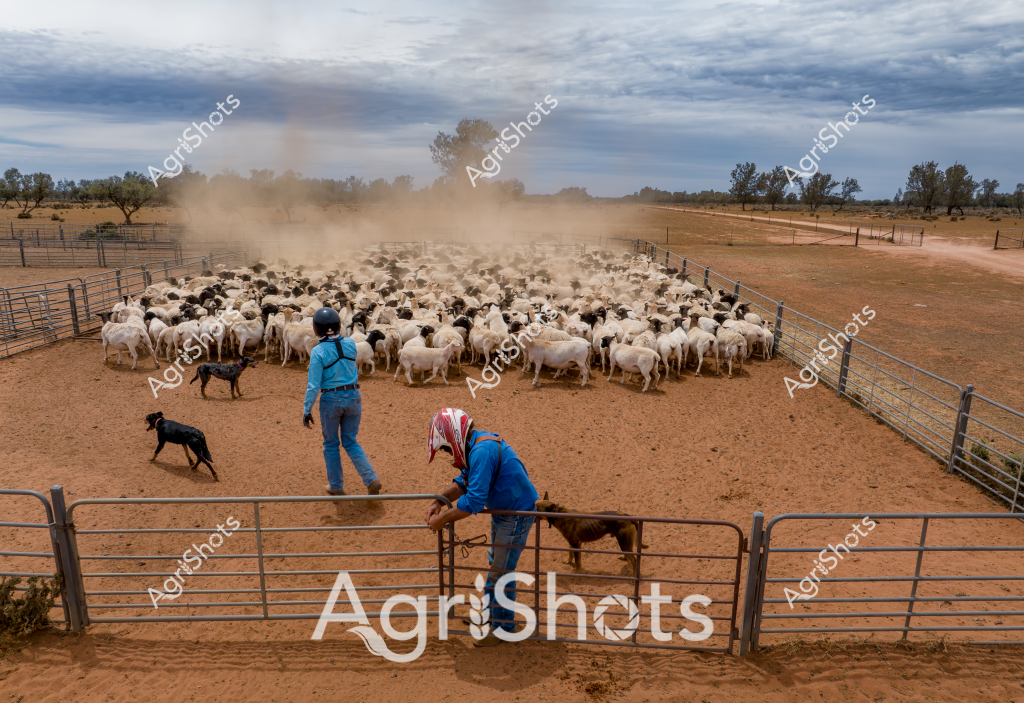
A comprehensive sheep mustering scene depicting two workers managing a large flock in a dusty yard under overcast skies. A large mob of predominantly white and dark-colored sheep are tightly clustered in a rectangular metal yard, kicking up considerable dust from their movement. A woman in a bright blue jacket and jeans stands observing the flock, while another worker leans on the yard gate, both accompanied by working dogs helping to control the livestock. The arid landscape features sparse trees and fenced paddocks stretching to the horizon, typical of Australian sheep farming regions. The scene captures the intense physical labor and precision required in sheep management, with the working dogs moving strategically to keep the flock contained and controlled. The dust and crowded yard highlight the challenging environmental conditions of livestock farming in rural Australia.
 Image
Image
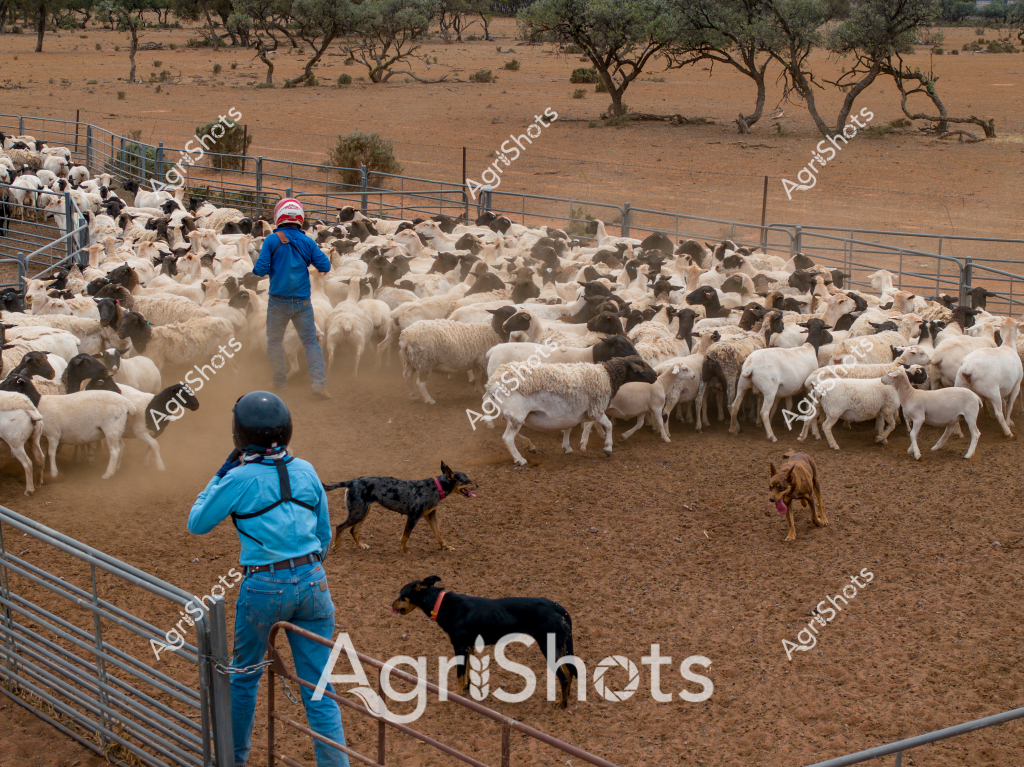
A man stockman and his working dogs expertly manage a large flock of mixed white and dark-colored sheep in a dusty, arid paddock. The scene captures a quintessential Australian livestock management moment, with sparse eucalyptus trees dotting the rusty-red landscape in the background. Two working dogs - one black and one reddish-brown - assist the stockmen in herding and controlling the dense mob of sheep within metal yard fencing. A woman in a blue jacket and helmet stands near the gate, adding additional support to the mustering operation. The ground is dry and kicked up with dust, reflecting the challenging environmental conditions typical of Australian pastoral regions. Multiple breeds of sheep - likely including Merino and cross-bred varieties - are tightly packed within the holding yard, showcasing the complexity of sheep farming in an challenging landscape.
 Image
Image
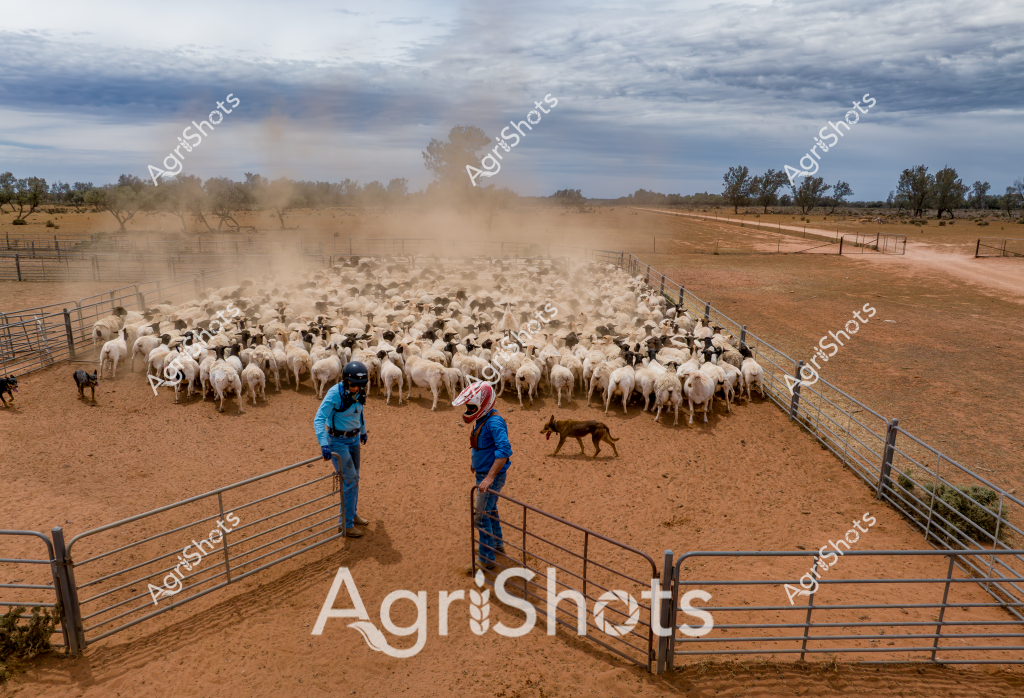
A dusty sheep mustering scene captures the essence of Australian pastoral life, with a large flock of white and black-faced sheep crowded into a dirt yard. Two men in blue work attire stand near the metal gates, overseeing the livestock operation under a dramatic cloudy sky. Herding dogs move strategically around the edges of the densely packed mob, helping to control the movement of the sheep. The arid landscape, with sparse trees and reddish-brown earth, highlights the challenging environment of rural Australian sheep farming. Dust billows around the flock, creating a hazy atmosphere that speaks to the hard work and skill required in managing livestock in this harsh terrain. The scene represents the traditional methods of sheep farming, with experienced stockmen and working dogs managing a large number of sheep in a compact yard.
 Image
Image
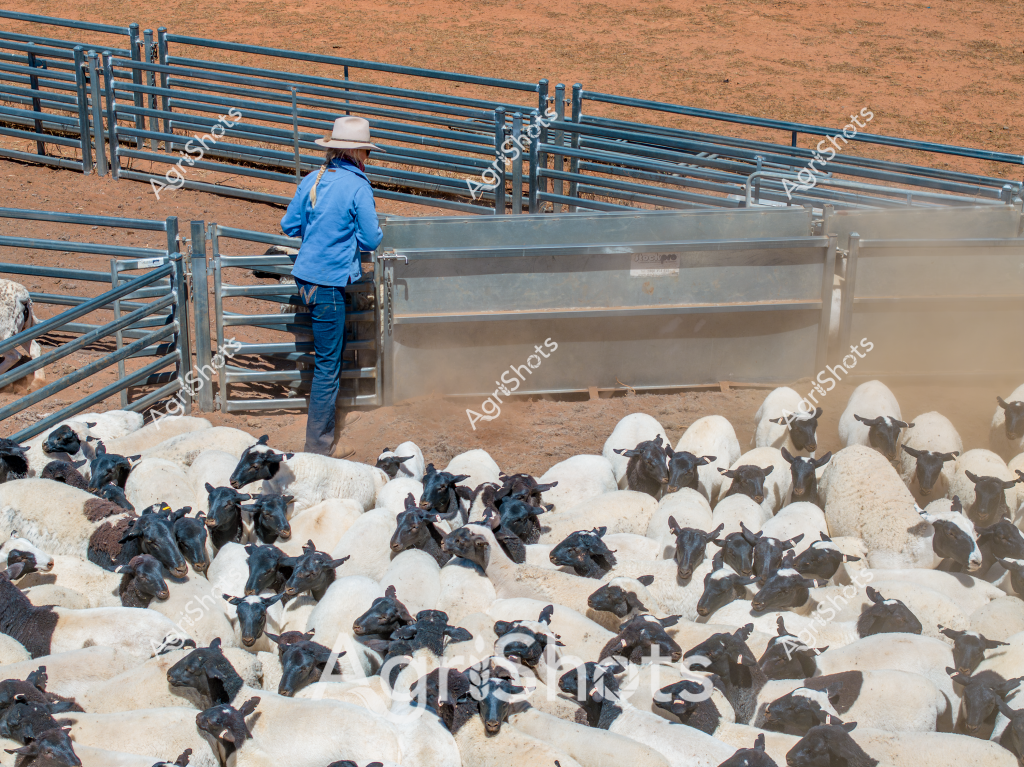
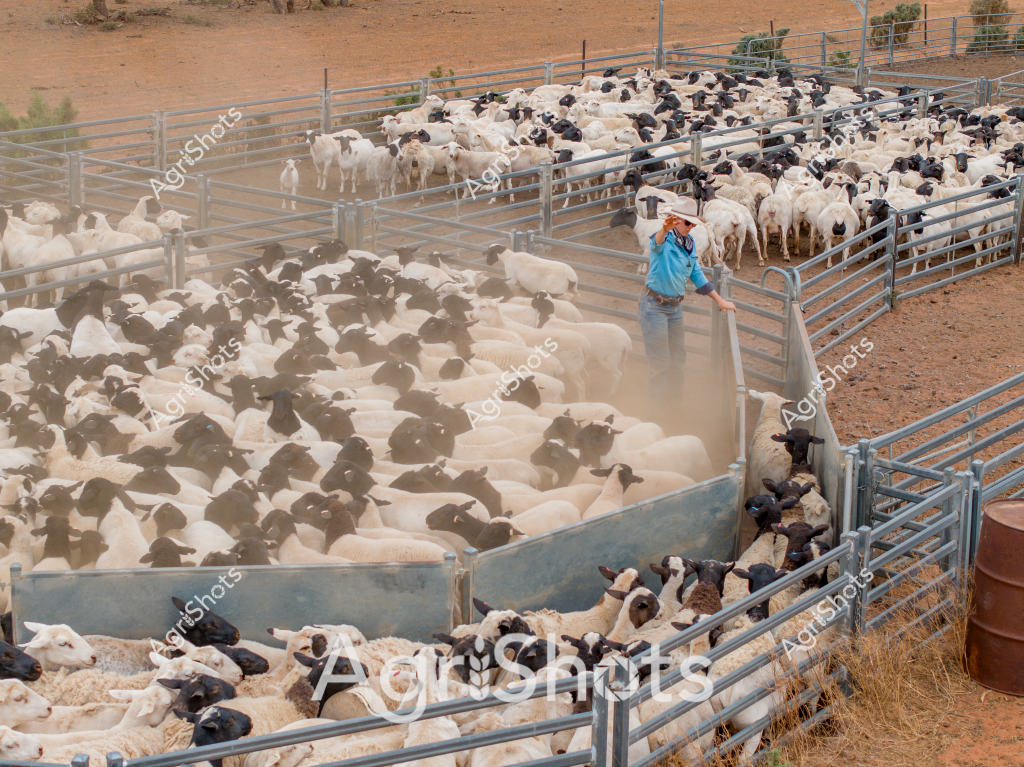
A skilled stockman in a blue long-sleeved shirt and white wide-brimmed hat stands at a livestock handling gate, overseeing a densely packed mob of white and black sheep. The animals are tightly clustered in a dusty yard with blue metal livestock panels, creating a striking contrast of white woolly bodies and dark faces typical of a crossbred or mixed breed flock. Dust rises around the sheep, suggesting active movement and the dry, arid conditions of an Australian pastoral setting. The scene captures the intricate work of livestock management, with the stockman positioned strategically to control and guide the flock through the metal cattle yards. The reddish-brown earth and the metallic blue of the yards provide a quintessential Australian agricultural landscape backdrop, highlighting the precision and skill required in sheep farming.
 Image
Image
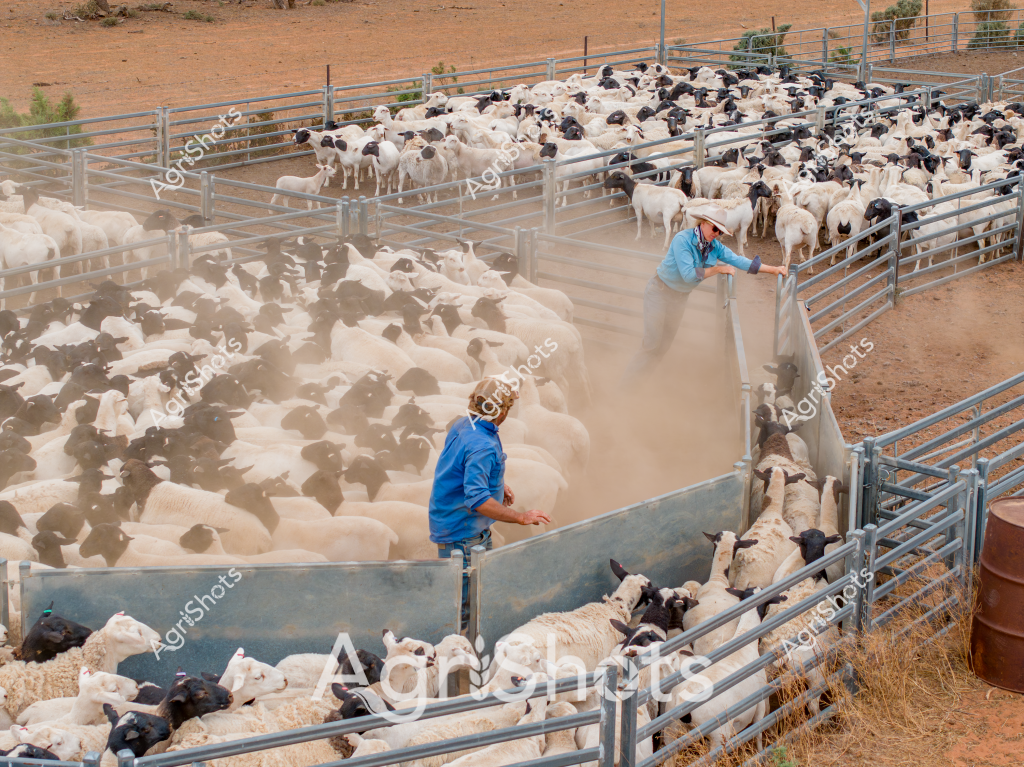
A stockman in a bright blue shirt and wide-brimmed hat manages a large mob of black and white sheep in a dusty, arid livestock yard. The sheep are tightly packed into metal livestock yards with multiple pens, creating a dense sea of woolly bodies in white and black. The reddish-brown earth and sparse vegetation suggest this is a typical Australian outback livestock station, likely in a region like Western Queensland or the Northern Territory. A steel gate and metal yard infrastructure frame the scene, with a rusty barrel visible on the right side of the image. The stockman appears to be carefully guiding or sorting the sheep, standing amid a swirling dust cloud kicked up by the densely packed animals. The image captures the intense, physical nature of sheep management in harsh Australian pastoral landscapes, showcasing the skill and endurance required of modern livestock workers.
 Image
Image
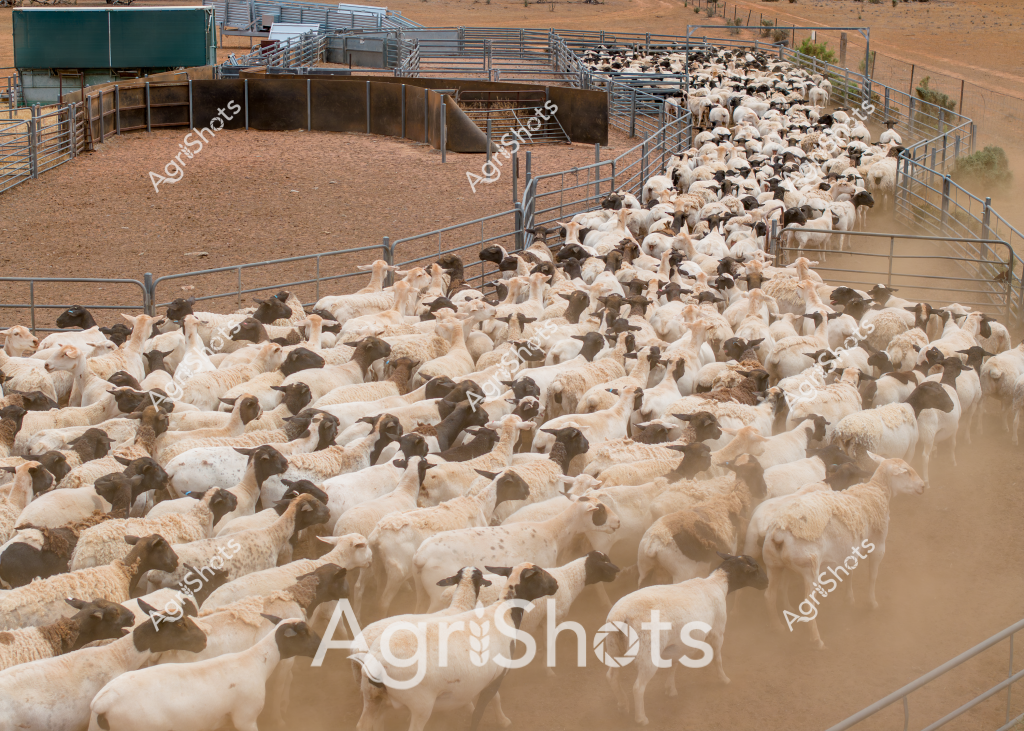
A large flock of white and dark-faced sheep densely crowds a set of metal livestock yards in an arid, dusty rural setting. The sheep, likely Merino or a crossbreed common in Australian pastoral regions, are tightly packed within a series of connected metal panel gates and sorting pens. A rusty-colored dirt ground and sparse vegetation suggest this is a dry, inland livestock management area, typical of sheep stations in regions like western New South Wales or South Australia. The animals appear to be moving through a systematic handling system, potentially for routine agricultural procedures like marking, shearing, or health checks. Dust rises around the tightly clustered mob, creating a hazy atmosphere that highlights the movement and density of the livestock. The metal yard infrastructure demonstrates the sophisticated management techniques used in Australian sheep farming, with carefully designed paths and holding areas to efficiently handle large numbers of animals.
 Image
Image
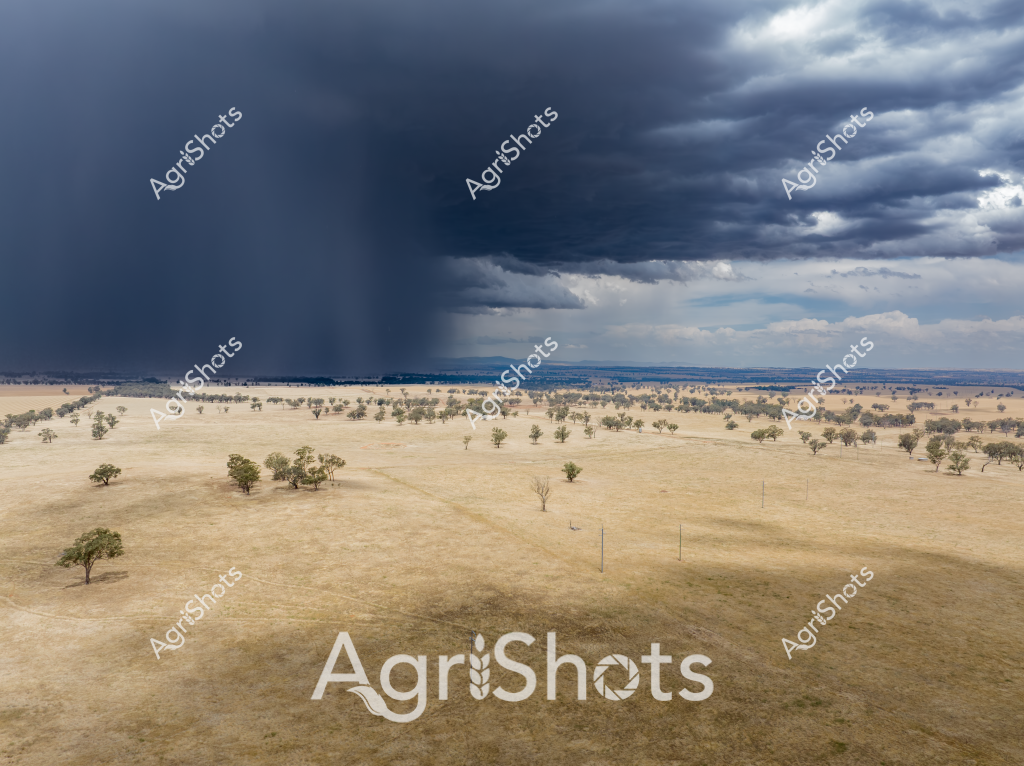
A dramatic storm landscape unfolds across a dry Australian pastoral landscape, with dark, ominous storm clouds gathering intensely over a golden grassland. Scattered eucalyptus trees punctuate the expansive, parched terrain, their weathered forms standing resilient against the approaching rainfall. A heavy rain curtain is visible in the distance, promising potential relief to the drought-affected landscape. The image captures the stark contrast between the arid, wheat-colored ground and the deep blue-gray storm clouds, symbolizing the challenging environmental conditions faced by Australian farmers. Electrical power lines stretch across the scene, further emphasizing the human presence in this remote agricultural setting. The landscape epitomizes the resilience of Australian rural environments, where extreme weather and challenging conditions are a constant backdrop to agricultural life.
 Image
Image
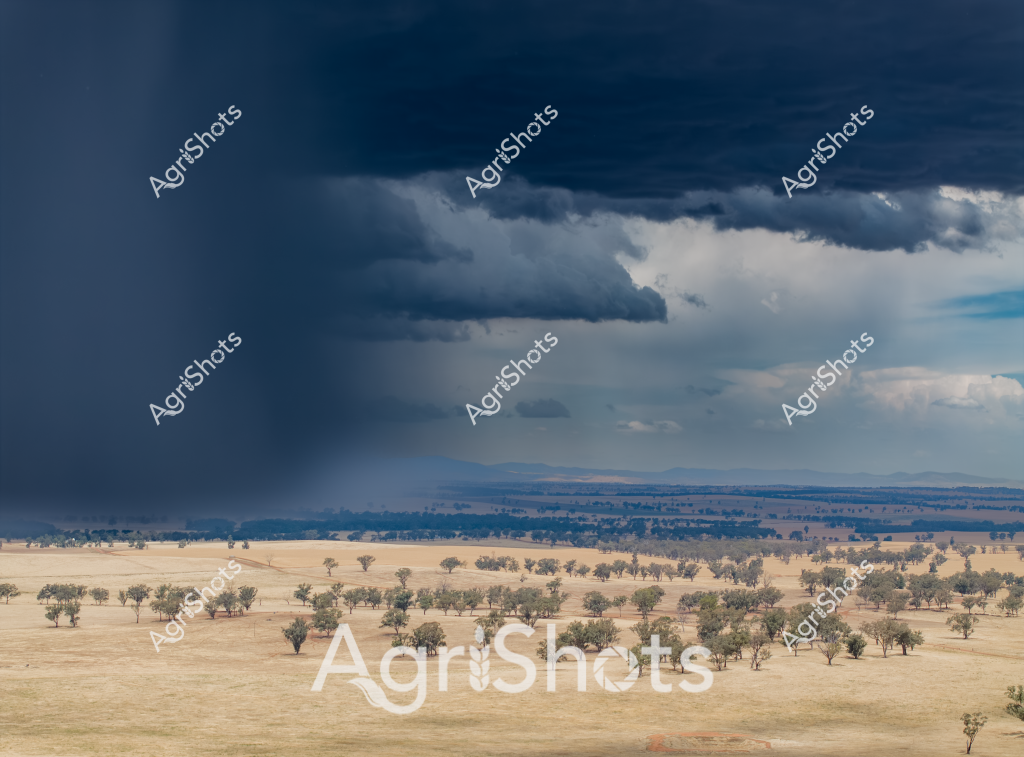
A dramatic storm cloud looms over a sparse woodland landscape, capturing the raw atmospheric drama of an Australian rural setting. Scattered eucalyptus trees punctuate a golden dry grassland, their silvery-green foliage standing stark against the parched paddock. Dark, heavy storm clouds gather menacingly on the horizon, promising potential rainfall to the drought-stressed landscape below. The scene epitomizes the challenging environmental conditions of inland Australia, where vegetation survives through remarkable resilience. Layers of cloud create a moody, textured skyscape - deep navy transitioning to lighter grey, with hints of blue peeking through - representing the dynamic and unpredictable nature of rural weather patterns. The expansive vista stretches toward distant mountain ranges, illustrating the vast, open character of the Australian agricultural terrain.
 Image
Image
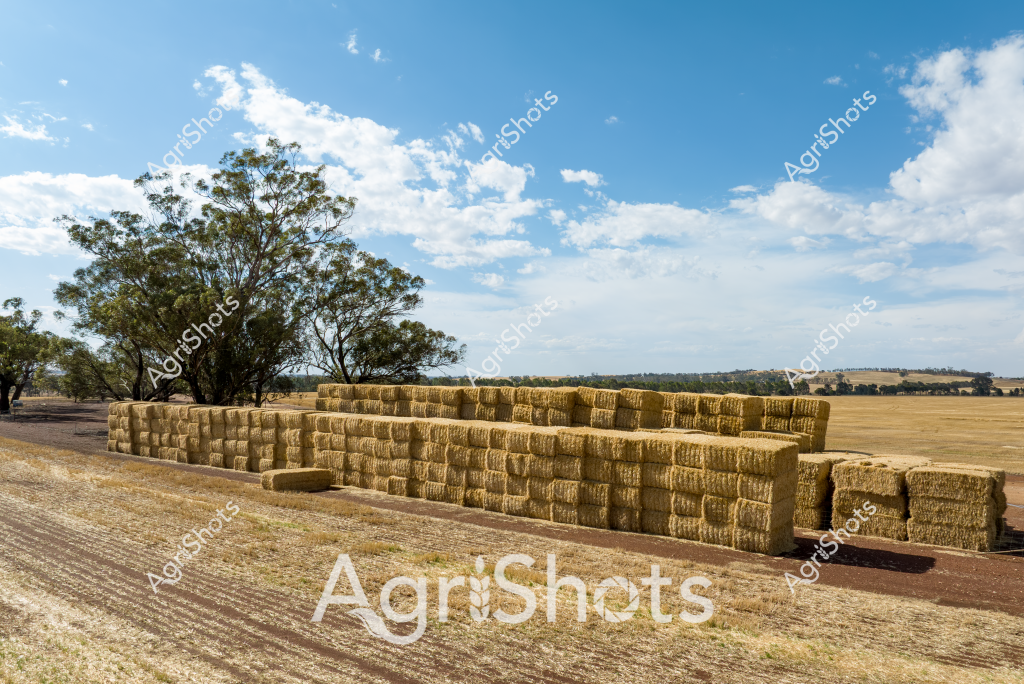
A sprawling rural landscape unfolds with neat stacks of rectangular hay bales strategically arranged in long rows across a harvested golden-brown paddock. Mature eucalyptus trees frame the background, providing a classic Australian rural backdrop against a bright blue sky dotted with fluffy white clouds. The hay bales, tightly compressed and uniform in shape, represent the result of careful agricultural work during harvest season, showcasing the precision of modern farming techniques. Dry grass and dirt pathways surround the stacked bales, indicating the paddock has been recently harvested and prepared for storage or transportation. The composition captures the essence of Australian agricultural productivity, with the neatly organized hay bales symbolizing the hard work and efficiency of rural farmers in managing their crops and resources. The expansive sky and distant tree line emphasize the vast, open nature of the agricultural landscape, highlighting the scale and importance of hay production in rural Australian farming systems.
 Image
Image
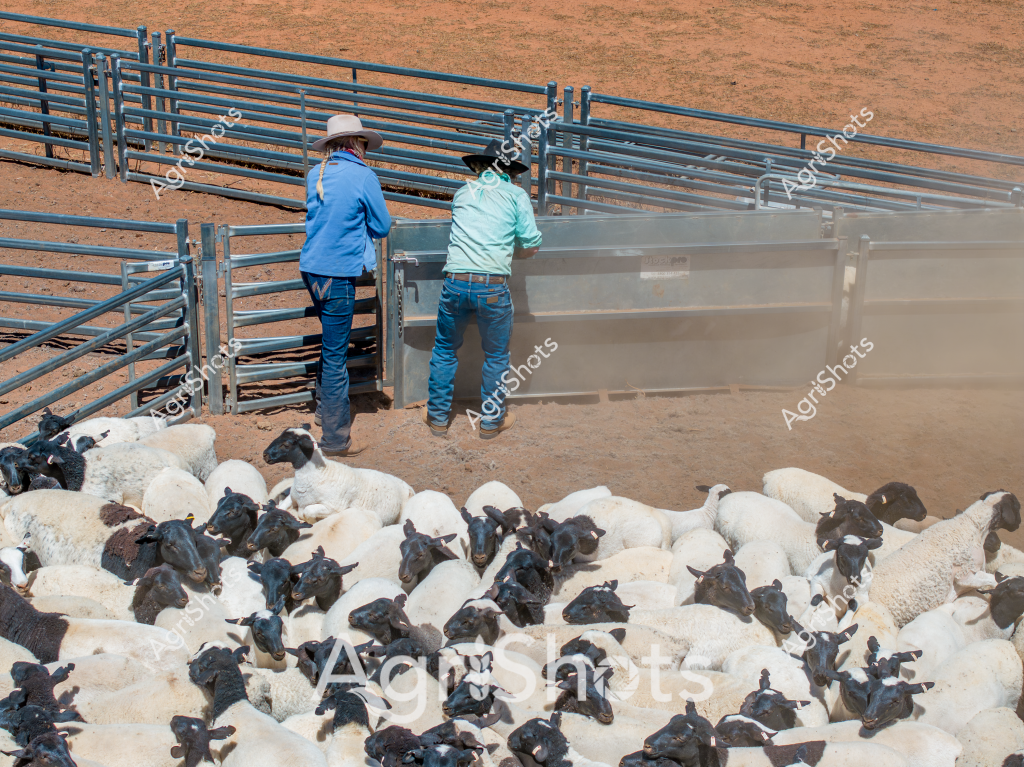
Two men in work attire operate a livestock handling system with a herd of black and white sheep clustered in the holding yards. The men, wearing blue shirts, jeans, and work hats, are positioned near a metal livestock chute and gate system on a dry, reddish-brown earth paddock. A dense group of sheep - predominantly white with black-faced individuals mixed throughout - are tightly packed in the lower portion of the image, waiting to be processed through the metal handling equipment. The metal gates and chute appear to be a standard design for efficiently moving and managing sheep, typical of Australian livestock management practices. The dusty environment and metal infrastructure suggest this is a working sheep station, likely in an arid or semi-arid region of Australia where sheep farming is a critical agricultural activity. The scene captures the methodical nature of livestock management, with the workers carefully positioning the animals through controlled infrastructure, demonstrating the precision and skill required in modern agricultural practices. The mix of white and black-faced sheep indicates a potentially diverse breeding program or mixed flock composition, which is common in Australian sheep production.
 Image
Image
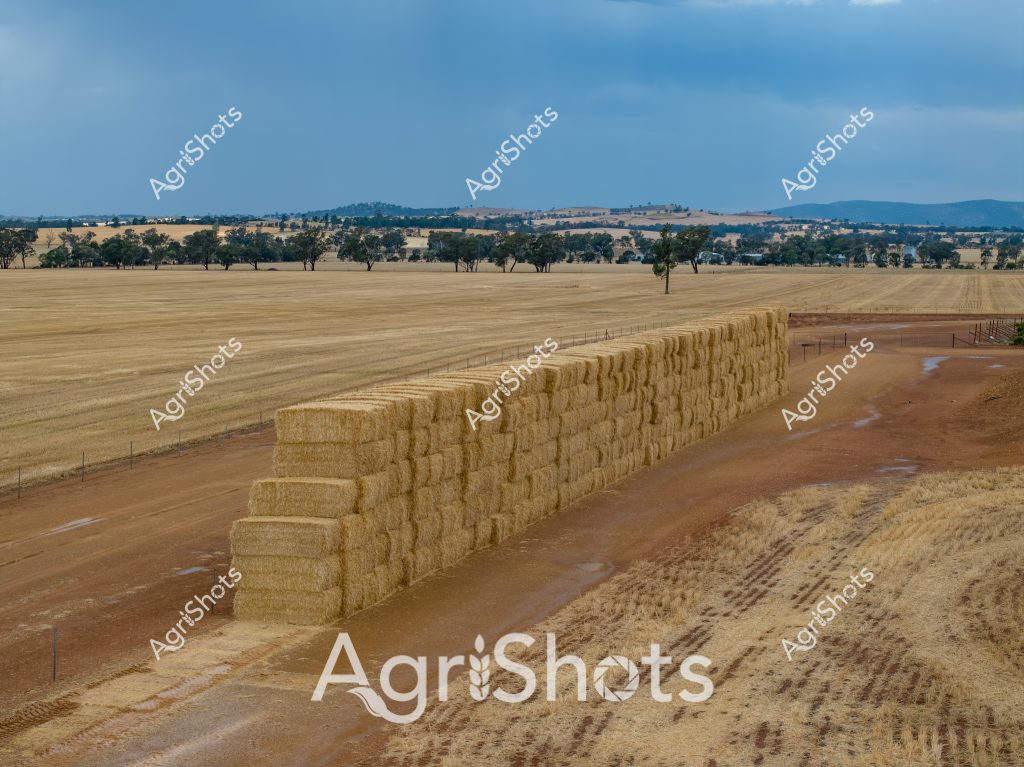
A sweeping agricultural landscape captures a vast hay storage operation in a dry Australian paddock. Hundreds of precisely stacked rectangular hay bales form an impressive long wall, stretching across a golden-brown harvested field dotted with scattered eucalyptus trees. The rural scene showcases the scale of modern agricultural production, with the neat hay stack positioned alongside a dirt track, revealing meticulous farming practices in what appears to be a southern Australian wheat or grain-growing region. The landscape extends to distant hills and mountains, creating a classic Australian rural vista of undulating terrain and sparse woodland. Soft blue skies contrast with the warm earth tones of the harvested paddock, highlighting the seasonal rhythm of crop production. The hay bales - likely wheat or barley straw - are tightly compressed and stacked with mathematical precision, demonstrating the efficiency of contemporary agricultural machinery and storage techniques. The environment speaks to the challenging conditions of Australian farming, with wide-open spaces, minimal vegetation, and evidence of careful land management. The strategic placement of the hay stack suggests preparation for livestock feeding during potential drought periods, a critical consideration in Australian agricultural planning.
 Image
Image
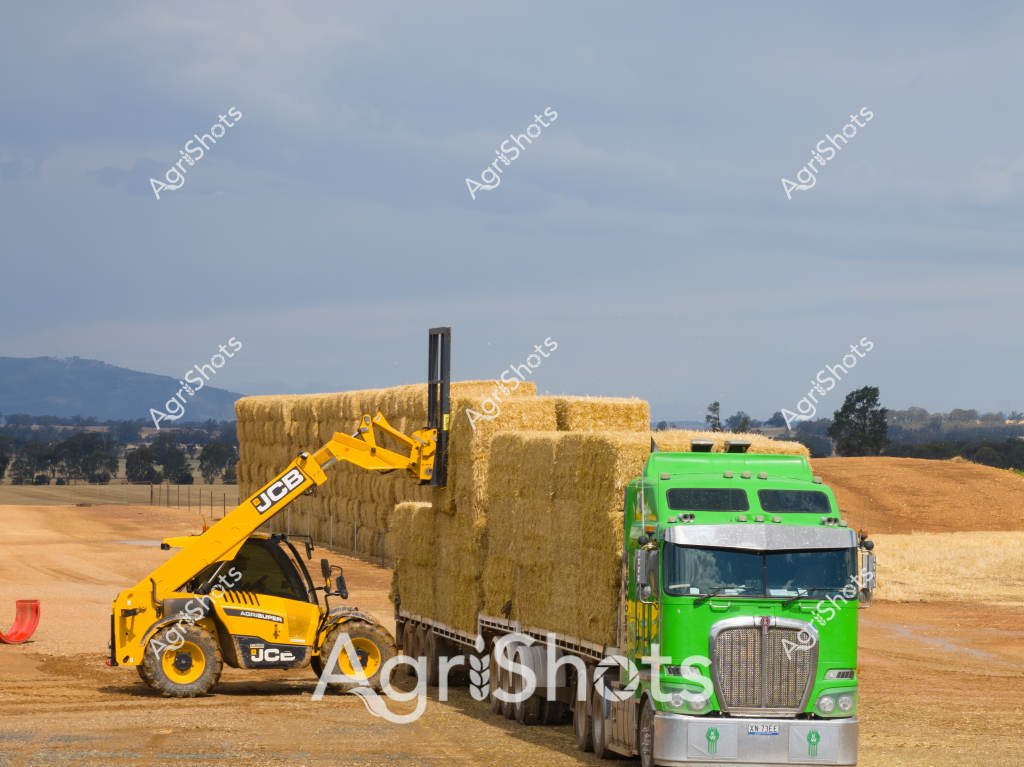
A precision agricultural scene unfolds, featuring a bright yellow JCB telescopic handler strategically positioning large rectangular hay bales next to a vibrant green truck on a dry rural landscape. The yellow machinery carefully manipulates massive golden straw bales, demonstrating modern farming equipment's capability to efficiently handle substantial agricultural loads. In the background, rolling hills and scattered trees create a classic Australian rural panorama under an overcast sky, highlighting the expansive agricultural terrain. The gleaming green truck, likely a long-haul transport vehicle, stands ready to transport the compressed hay bales, showcasing the intricate logistics of agricultural product distribution. The earthen ground appears dry and compacted, typical of rural Australian farming environments, with a golden-brown color palette reflecting the surrounding hay and landscape. This image captures the seamless intersection of heavy machinery, agricultural production, and transportation infrastructure in contemporary Australian farming operations.