About this image
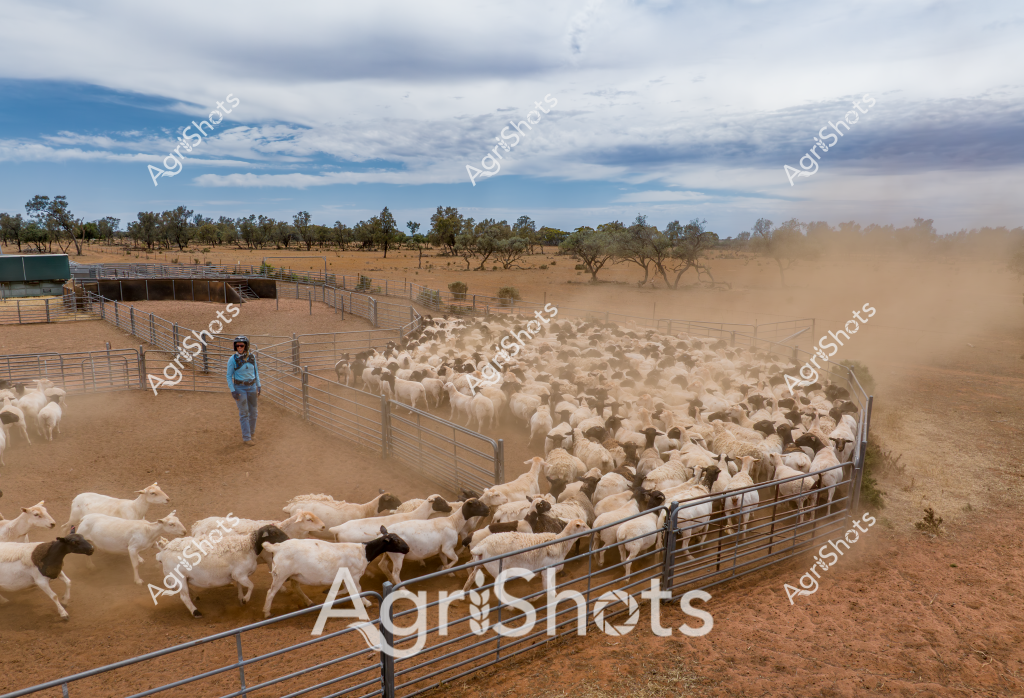
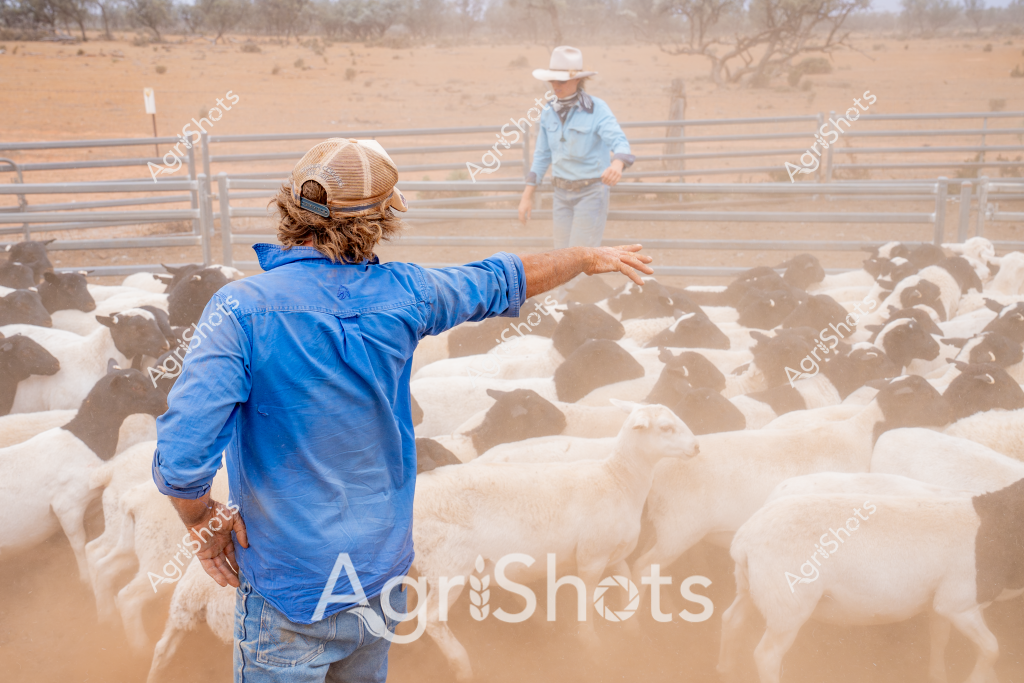
A woman stockman manages a large mob of white and black-flecked sheep in a dusty sheep yard under cloudy skies in an arid Australian pastoral landscape. The dense flock moves through metal livestock gates, kicking up substantial red earth dust that billows across the dry paddock. Scattered eucalyptus trees line the background, providing sparse shade in the scorching environment. The stockman, wearing blue work attire and standing confidently within the yard, carefully guides the sheep through the narrow metal gate sections of the robust livestock handling infrastructure. The scene captures the challenging conditions of sheep farming in rural Australia, where skilled workers manage large herds across expansive, drought-affected stations. The image depicts the precision and expertise required in mustering and moving livestock in harsh outback conditions.
Similar media
 Image
Image
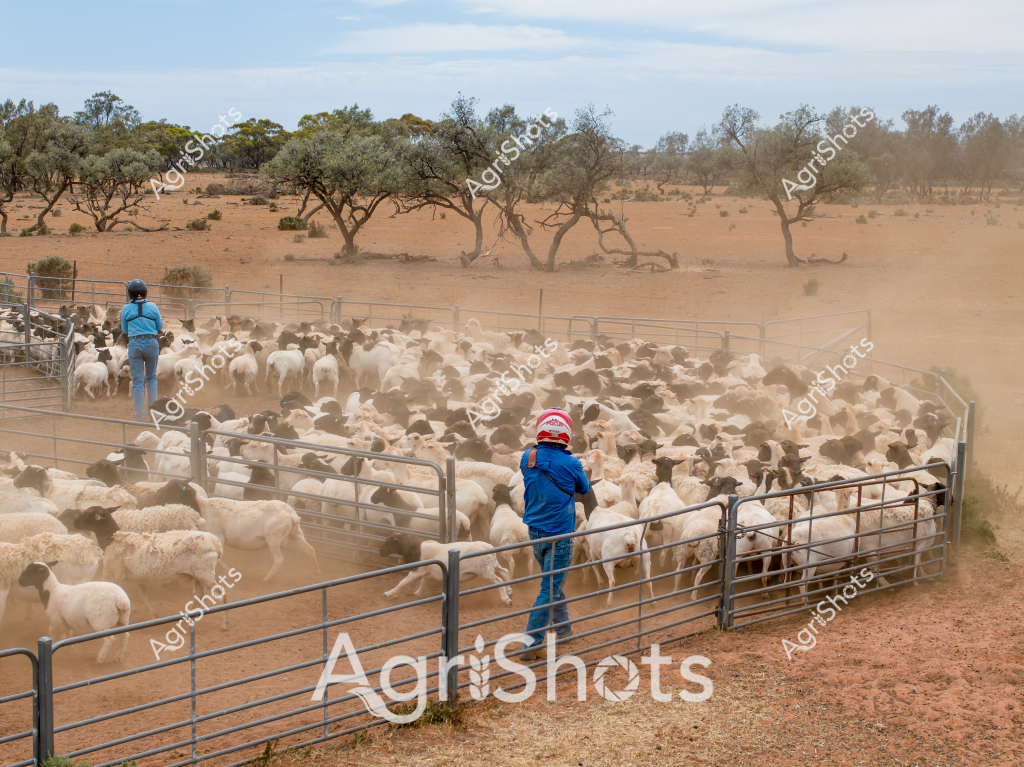
A woman stockman herds a large flock of white sheep through a dusty, arid paddock in what appears to be a remote Australian pastoral landscape. Two workers in blue jackets and jeans carefully manage the livestock through metal stock yards, surrounded by sparse eucalyptus trees and reddish-brown earth. The scene is characterized by thick dust clouds rising from the moving sheep, creating a hazy atmosphere that highlights the challenging environmental conditions of rural Australia. Sparse, wind-sculpted trees dot the background, indicating this is likely a drought-affected region with minimal vegetation. The sheep, tightly packed and predominantly white, are being systematically moved through multiple fence sections, demonstrating professional livestock management techniques. The dry, open landscape with its muted color palette of browns, greys, and dusty blues captures the resilient nature of Australian agricultural practices in harsh rural environments.
 Image
Image
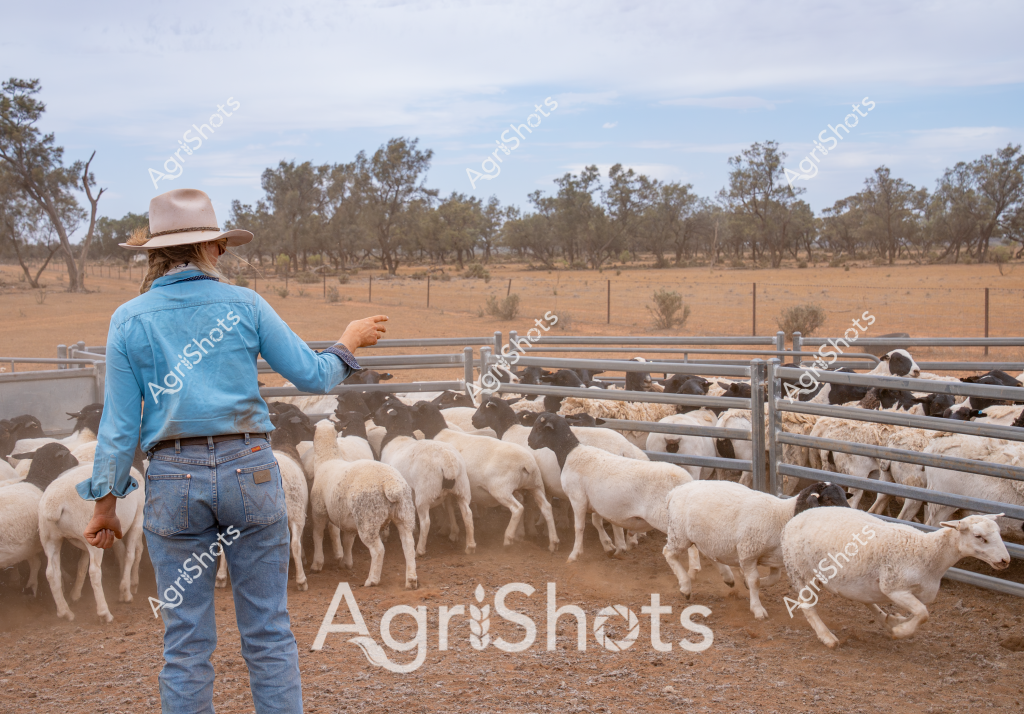
A woman stockman stands with her back to the camera, overseeing a mob of white lambs in a dusty livestock yard. Wearing a classic Australian farm uniform of a blue long-sleeved work shirt, faded blue jeans, and a light-colored wide-brimmed Akubra hat, she gestures with one hand while controlling the sheep's movement. The surrounding landscape is quintessential Australian outback - sparse eucalyptus trees scattered across a dry, golden-brown paddock with wire fencing defining the livestock area. The sheep, likely a white breed such as Merinos, are clustered tightly in a metal stock yard, creating a dynamic scene of rural agricultural activity. Dust rises from their movement, highlighting the arid conditions typical of Australian sheep farming regions. The woman's stance suggests years of experience managing livestock, her body language calm and authoritative as she guides the lambs. The background reveals a classic Australian pastoral setting - sparse trees, fenced paddocks, and wide-open skies with soft clouds creating a sense of expansive rural space. This image captures the essence of Australian sheep farming - resilience, skill, and a deep connection to the land.
 Image
Image
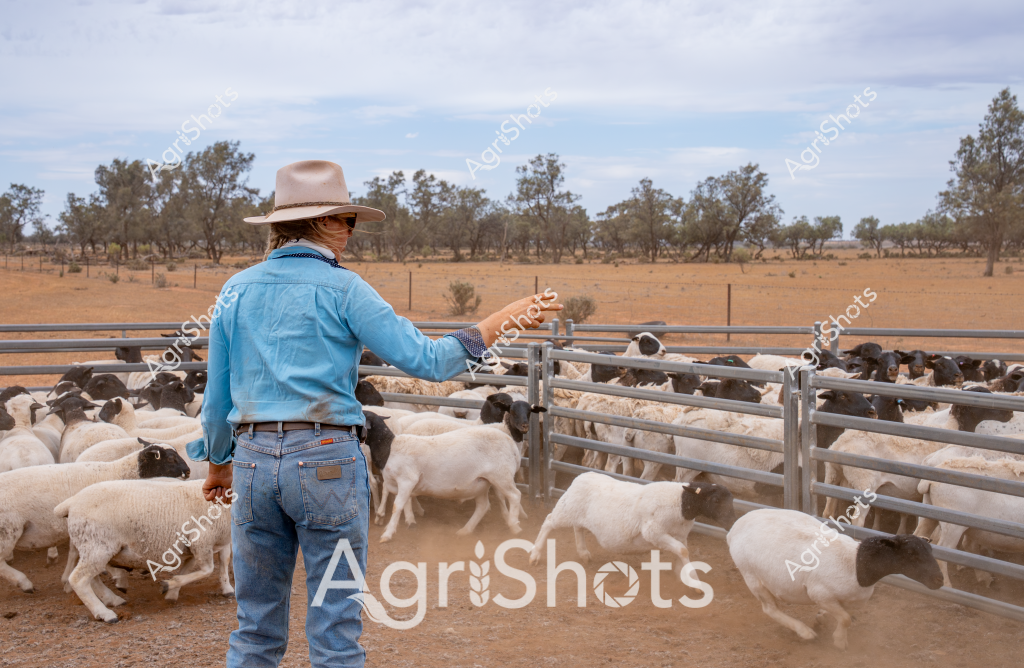
A woman stockman wearing a light blue long-sleeved shirt, blue jeans, and a wide-brimmed tan Akubra hat stands with her back to the camera, managing a flock of white and black-faced sheep in a dusty livestock yard. The paddock behind her is a classic Australian rural landscape, with sparse eucalyptus trees dotting a dry, golden-brown terrain under an overcast sky. Multiple metal livestock gates and fencing compartmentalize the yard, allowing the woman to control and sort the sheep with precision. The sheep - which appear to be a mixed breed, possibly including Merino and damara or dorper crosses - are densely packed within the metal pen, creating a bustling scene of agricultural activity. Her posture suggests calm expertise, with one arm extended to guide or manage the movement of the animals. The environment captures the quintessential Australian agricultural setting: a dry, challenging landscape where skilled stockmanship is essential for livestock management.
 Image
Image
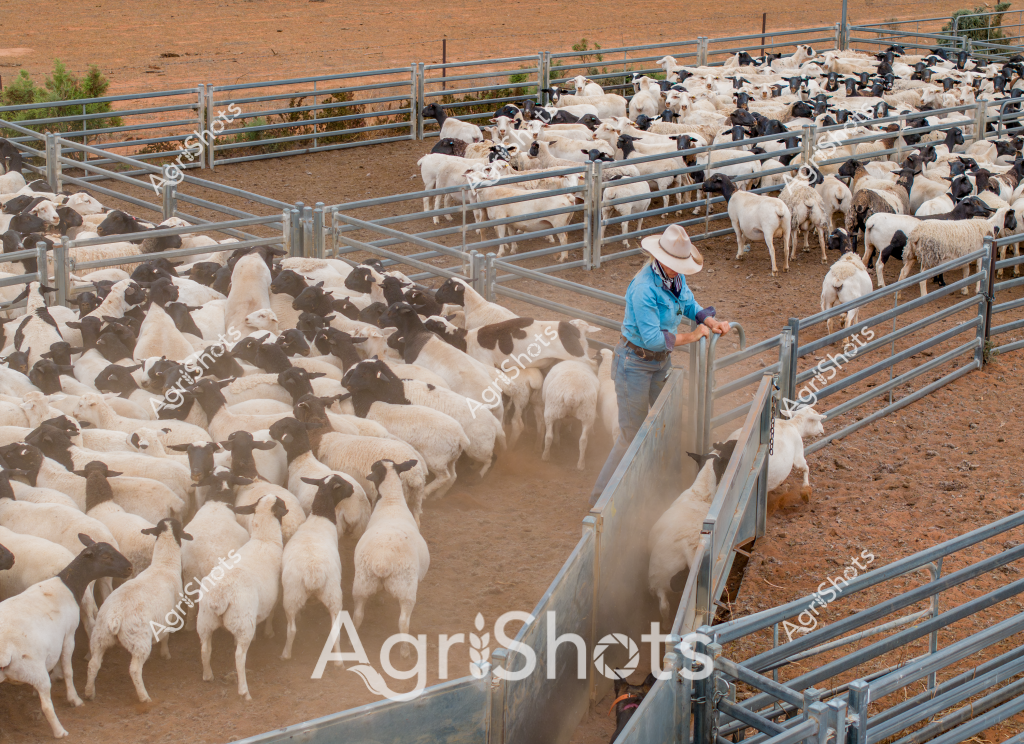
A man stockman wearing a wide-brimmed hat and blue work shirt manages a large mob of white and black-faced sheep in a metal livestock yard. The sheep - which appear to be a mix of Dorper and Merino breeds - are densely packed into interconnected metal cattle yards with a dusty, reddish-brown ground typical of Australian agricultural landscapes. The stockman carefully works the gate and sorting pens, guiding the sheep through the precise metal infrastructure designed for efficient livestock movement and management. Dozens of sheep with distinctive white bodies and black faces crowd together, creating a textured landscape of woolly forms and movement. The scene captures the precision and skill of Australian livestock management, with the man's controlled movements contrasting against the fluid, shifting mass of sheep. The environment suggests an arid or semi-arid region, with the bare earth and metal yards indicating a professional, well-maintained agricultural operation.
 Image
Image
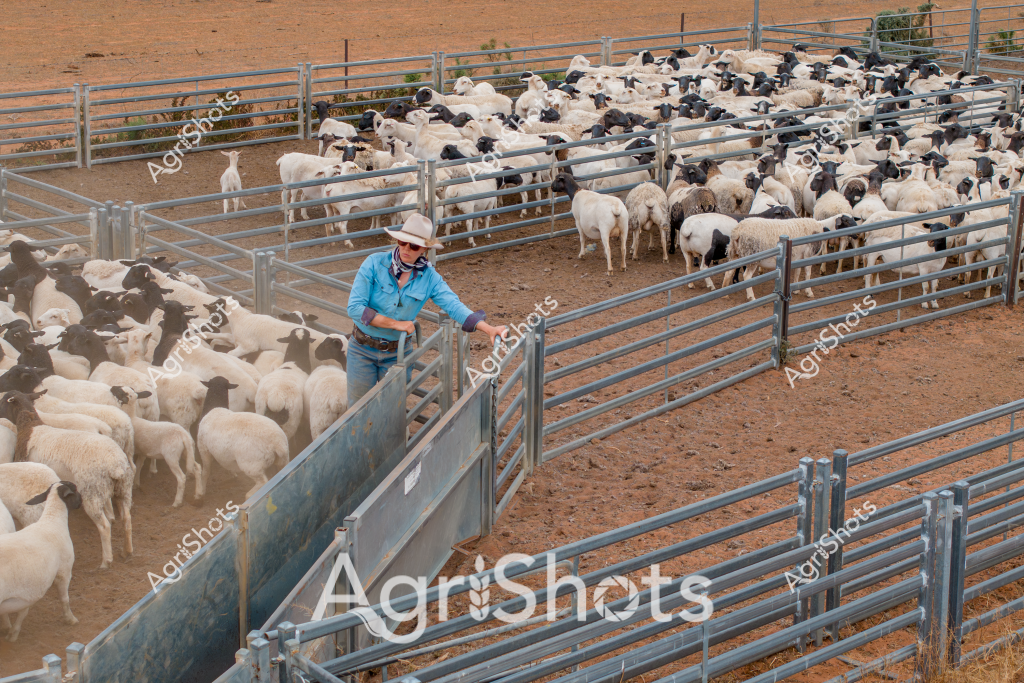
A man stockman in a blue long-sleeved shirt and light-colored hat manages a large flock of black and white sheep within a series of metal livestock yards. The sheep - a mix of white and black-faced breeds, likely Dorper or Suffolk crosses - are densely packed into interconnected holding pens with metal gates and fencing. The ground is a dry, reddish-brown earth typical of Australian pastoral landscapes, suggesting an arid or semi-arid region. The stockman is carefully positioning a gate, working to sort or move the sheep through the yards, demonstrating the precise livestock management skills essential in Australian agriculture. The dense clustering of sheep and the systematic yard layout highlight the structured approach to livestock handling in rural Australian farming operations.
 Image
Image
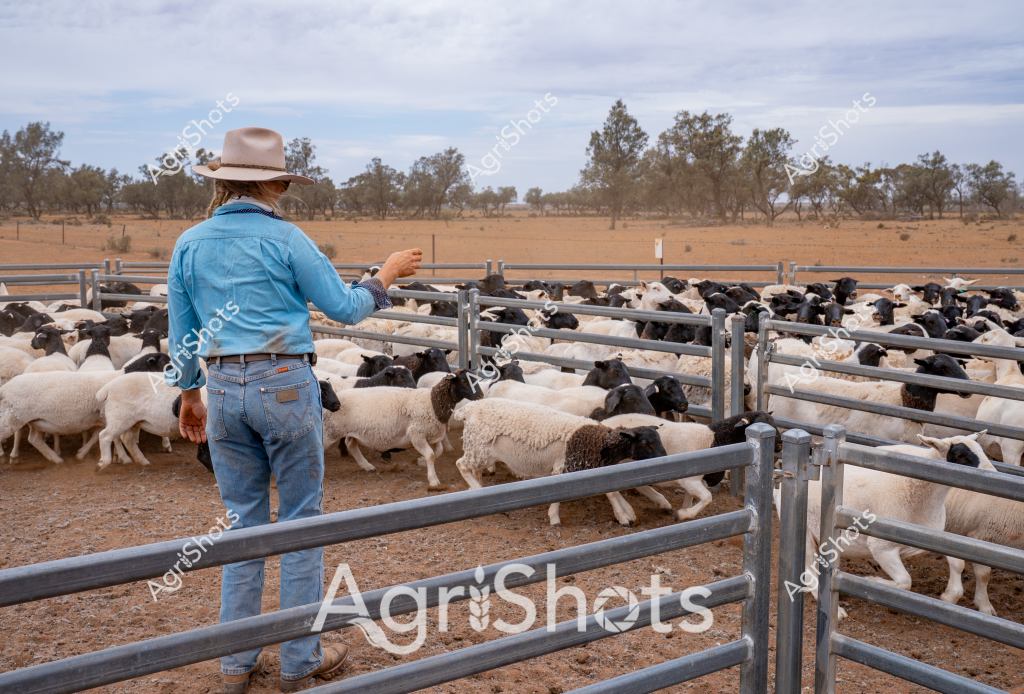
A man stockman stands in a dry, arid landscape, overseeing a large flock of black and white sheep within a metal livestock yard. Wearing a light blue long-sleeved shirt, faded blue jeans, and a wide-brimmed tan hat, he appears to be managing the mob of sheep in what looks like a typical Australian outback setting. Sparse eucalyptus trees dot the background, highlighting the sparse, golden-brown landscape that speaks to the challenging drought conditions of the region. The sheep - a mix of white and black-faced breeds, likely Dorper or Suffolk cross - are tightly packed within the steel paneled yards, creating a dense cluster of woolly bodies. The ground is dry and compacted, with minimal vegetation, emphasizing the harsh environmental conditions. The stockman's posture suggests careful observation and management, with one arm raised, potentially signaling or directing the movement of the livestock. This image captures the resilience of Australian agriculture, showcasing how farmers adapt to challenging landscapes and maintain the livestock operations under difficult environmental conditions. The scene epitomizes the daily work of a rural stockman, managing sheep in the unforgiving Australian interior.
 Image
Image
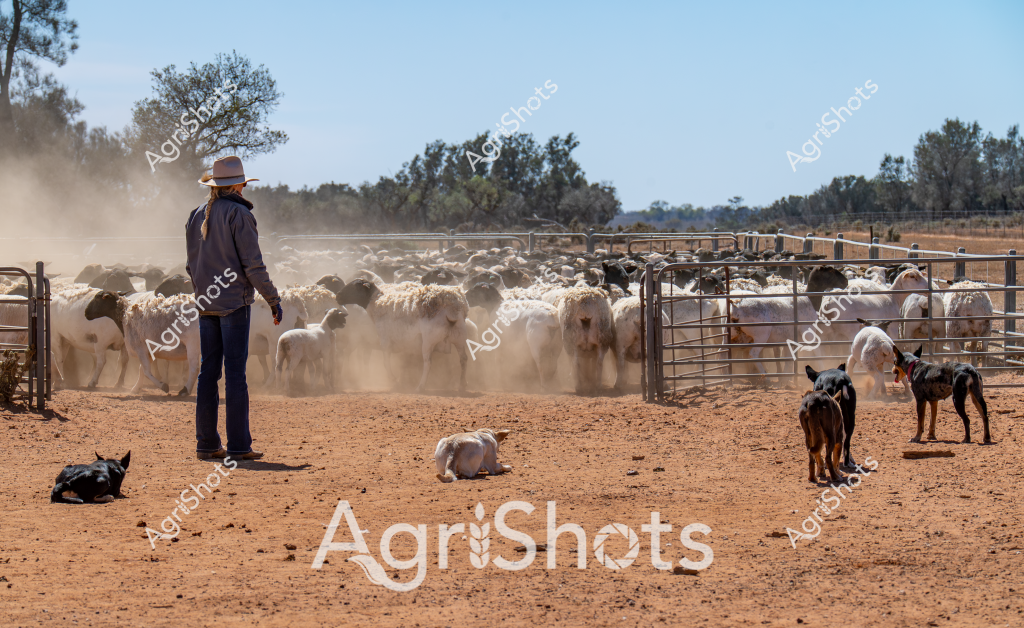
A stockman stands amid a dusty sheep paddock, overseeing a large flock of woolly sheep crowded into metal yard panels. Three working dogs are strategically positioned around the livestock - two standing alert and one resting on the dry, reddish earth. The scene captures a typical Australian sheep station environment, with sparse trees and bush landscape visible in the background under a clear blue sky. The person is wearing a wide-brimmed hat and dark clothing, standing sideways and watching the tightly packed mob of sheep raising dust as they shuffle within the metal gates. The sheep appear to be a mix of white and darker-colored animals, tightly clustered together. Several young lambs are visible among the adult sheep, indicating this is likely a breeding flock. The environment suggests an arid or semi-arid region, with the ground parched and covered in red dirt, characteristic of inland Australian pastoral landscapes. The working dogs - likely Australian Kelpies or similar herding breeds - demonstrate the critical role of canine assistance in managing large livestock mobs in challenging rural environments. This image powerfully represents the traditional practices of Australian sheep farming, highlighting the interdependence between humans, dogs, and livestock in managing agricultural operations across vast and demanding terrains.
 Image
Image
A stockman in a blue work shirt and trucker cap directs a large flock of sheep in a dusty livestock yard. Standing with his arm outstretched, he guides the dense mob of white sheep through a metal cattle yard, coordinating their movement with precision. Another worker in lighter clothing stands in the background, observing the mustering process. The landscape appears arid and typically Australian, with sparse trees and reddish-brown earth visible beyond the yards. Dust rises around the sheep, creating a hazy atmosphere that captures the challenging environmental conditions of rural livestock management. The scene exemplifies the skill and hard work required in Australian sheep farming, where experienced stockmen use subtle gestures to control large numbers of livestock in harsh, dry terrain.