About this image
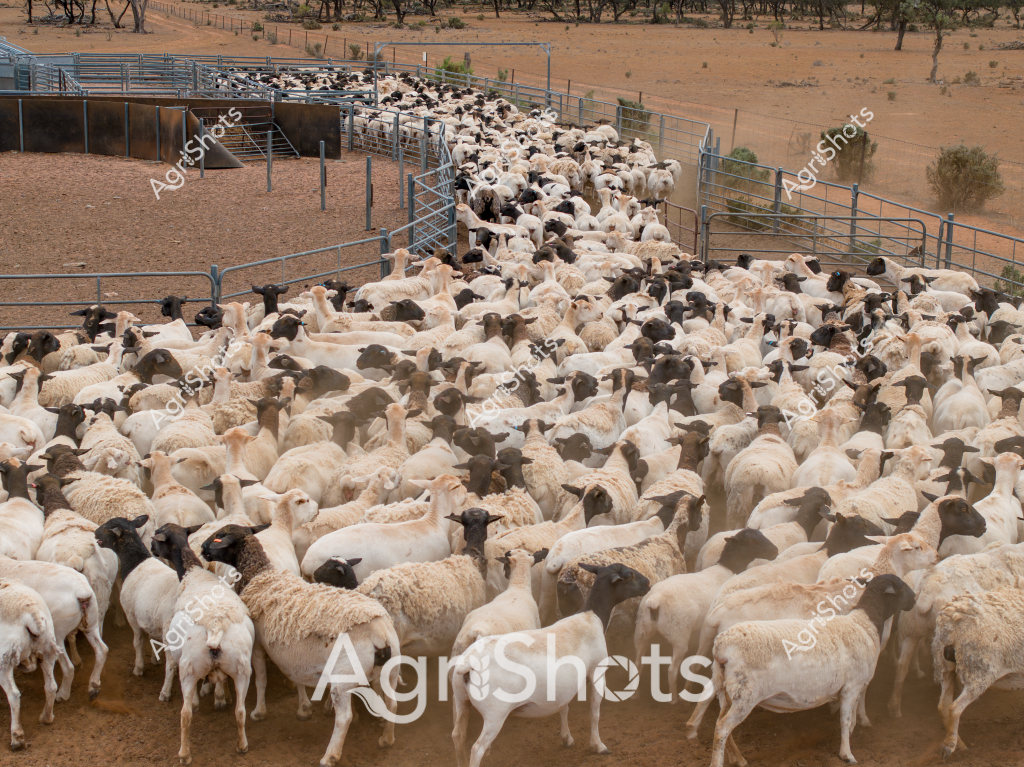
A densely packed mob of white and black-faced sheep crowds into a metal livestock yard in an arid Australian pastoral landscape. The sheep, likely a mix of Merino and other breeds, are tightly clustered within steel panel fences, creating a sea of woolly bodies against the reddish-brown earth. Sparse trees and scrub vegetation populate the dry background, indicating this is likely a station or large agricultural property in an inland region experiencing drought-like conditions. The sophisticated metal yard infrastructure suggests professional livestock management, with carefully designed gates and holding areas to control and direct the sheep's movement. The animals appear to be gathered for mustering, sorting, or potentially preparing for shearing or transportation. Their varied coloration - predominantly white with black faces and legs - is typical of many Australian sheep breeds adapted to harsh pastoral environments. The landscape's stark contrast between the concentrated livestock and the sparse, dusty surroundings highlights the challenges of sheep farming in Australia's challenging agricultural regions. The image captures the resilience of both the livestock and the agricultural systems that sustain them in difficult environmental conditions.
Similar media
 Image
Image
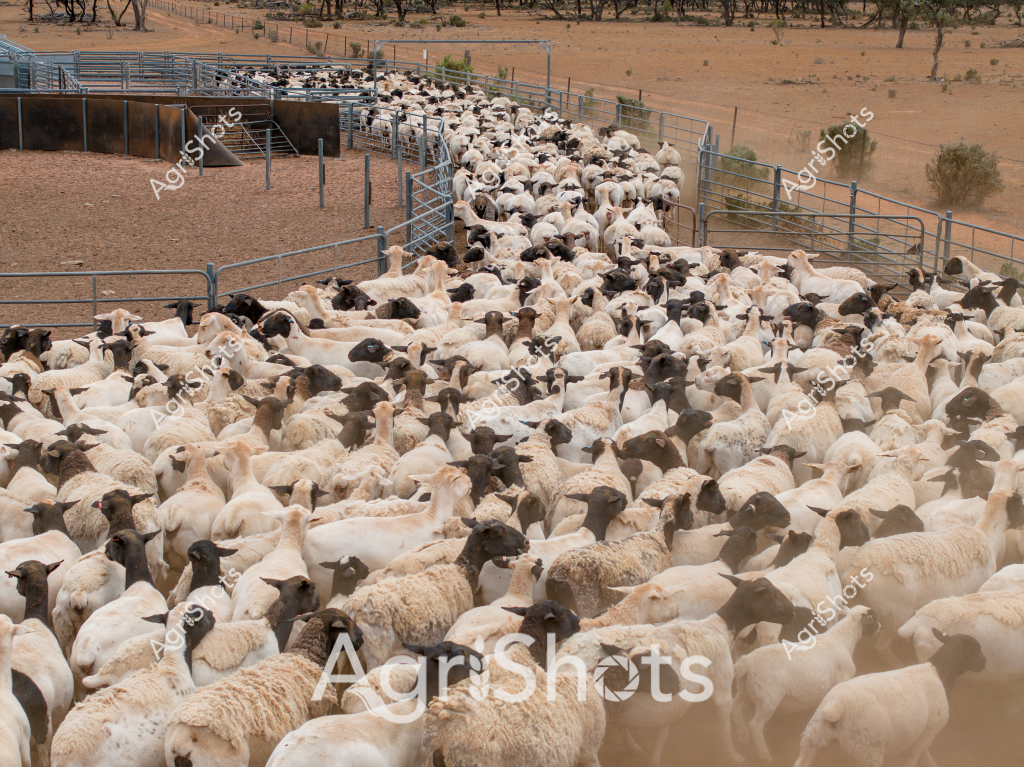
A dense mob of Merino and crossbred sheep fills a tight steel yard complex in a dry, arid Australian pastoral landscape. The woolly flock, comprising predominantly white sheep with scattered black and brown individuals, is tightly packed within metal cattle yards and loading ramps, creating a textural sea of wool and movement. The surrounding environment reveals a classic outback setting - reddish-brown earth, sparse vegetation, and scattered eucalyptus trees, indicating this is likely a large-scale sheep station in inland Australia. The metal yard infrastructure suggests professional livestock management, with carefully designed gates and pathways to facilitate stock movement and handling. Dust rises from the densely packed animals, highlighting the dry conditions and the physical process of mustering and containing the sheep. The scene captures the scale and complexity of Australian sheep farming, where large numbers of livestock are carefully managed in challenging environmental conditions.
 Image
Image
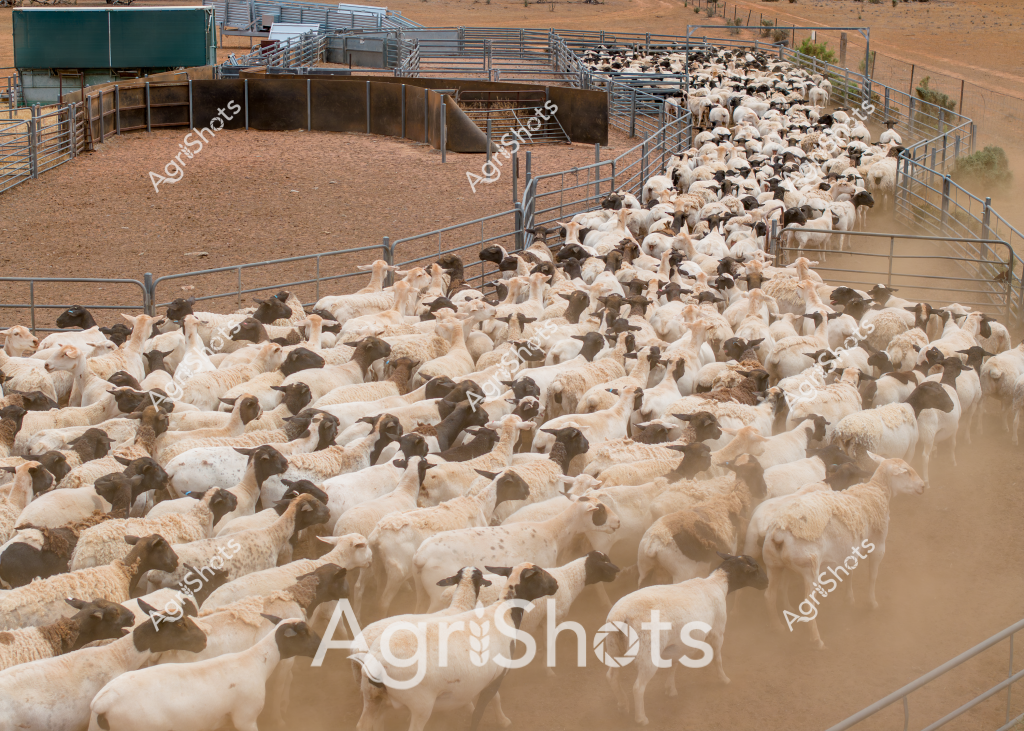
A large flock of white and dark-faced sheep densely crowds a set of metal livestock yards in an arid, dusty rural setting. The sheep, likely Merino or a crossbreed common in Australian pastoral regions, are tightly packed within a series of connected metal panel gates and sorting pens. A rusty-colored dirt ground and sparse vegetation suggest this is a dry, inland livestock management area, typical of sheep stations in regions like western New South Wales or South Australia. The animals appear to be moving through a systematic handling system, potentially for routine agricultural procedures like marking, shearing, or health checks. Dust rises around the tightly clustered mob, creating a hazy atmosphere that highlights the movement and density of the livestock. The metal yard infrastructure demonstrates the sophisticated management techniques used in Australian sheep farming, with carefully designed paths and holding areas to efficiently handle large numbers of animals.
 Image
Image
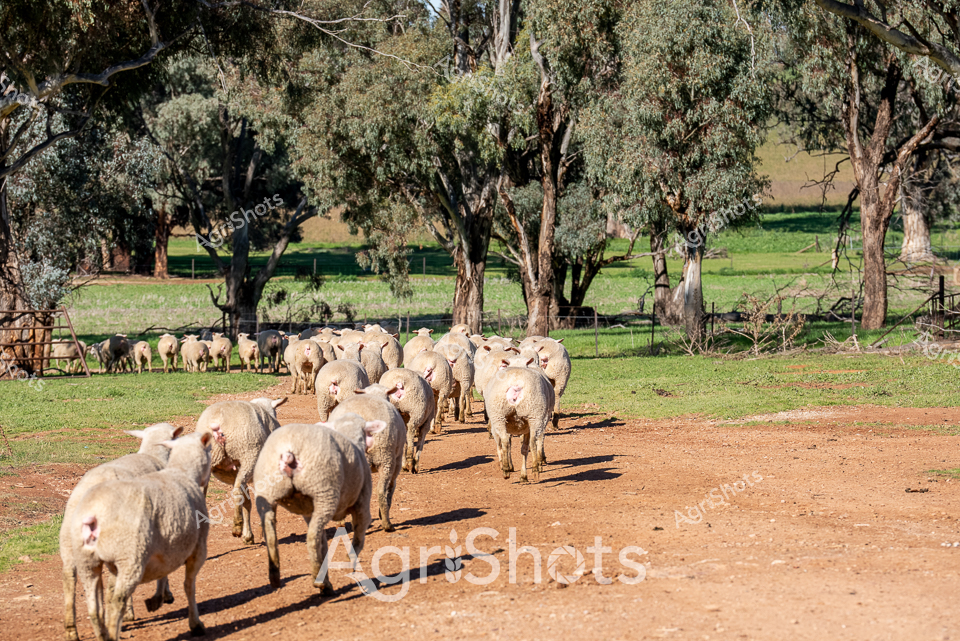
Merino ewes flow like a woolly river along a well-trodden dirt track, winding between ancient grey-green eucalyptus trees. The late morning sunlight casts long shadows across the rich pastureland of rural New South Wales, highlighting the pristine white fleeces of this premium breeding flock. Muscular and compact, these ewes move with purpose, their backs straight and heads aligned, demonstrating the disciplined management of a high-quality sheep enterprise. The landscape speaks of generations of agricultural expertise - weathered fence lines, mature paddock trees, and carefully maintained grasslands creating a timeless Australian pastoral scene. Soft earth and verdant grass provide a striking contrast to the pure white of the sheep, their robust bodies testament to the resilience of Merino genetics in challenging agricultural environments. This image captures the quiet dignity of Australian sheep farming - a delicate balance of natural beauty and calculated agricultural precision.
 Image
Image
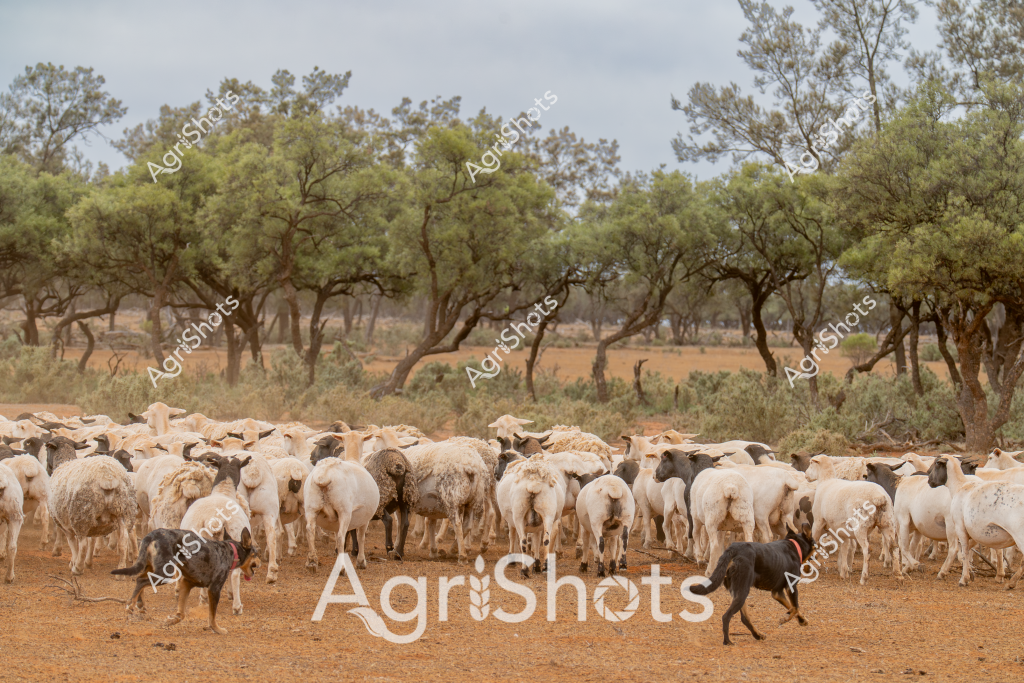
A substantial flock of white and dark-colored sheep cluster tightly together on a dry, reddish-brown earth paddock, surrounded by sparse acacia and eucalyptus trees. Two working dogs, likely Australian Kelpies, move strategically around the herd, herding and controlling the sheep's movement with practiced precision. The landscape suggests an arid or semi-arid region, with muted green trees providing a soft backdrop against the dusty ground where the sheep are densely packed. The animals appear to be Merino or crossbred sheep, their woolly backs facing mostly outward, creating a textured mass of cream and darker fleece. The scene captures the quintessential Australian pastoral setting - a moment of controlled movement during mustering, where skilled working dogs and the natural landscape work in harmony to manage livestock in challenging environmental conditions. The image represents the resilience of Australian agricultural practices, showcasing how farmers and their canine partners navigate vast, challenging terrains to manage livestock effectively. The dogs' positioning and the sheep's tight formation demonstrate the sophisticated communication and training required in rural stock management.
 Image
Image
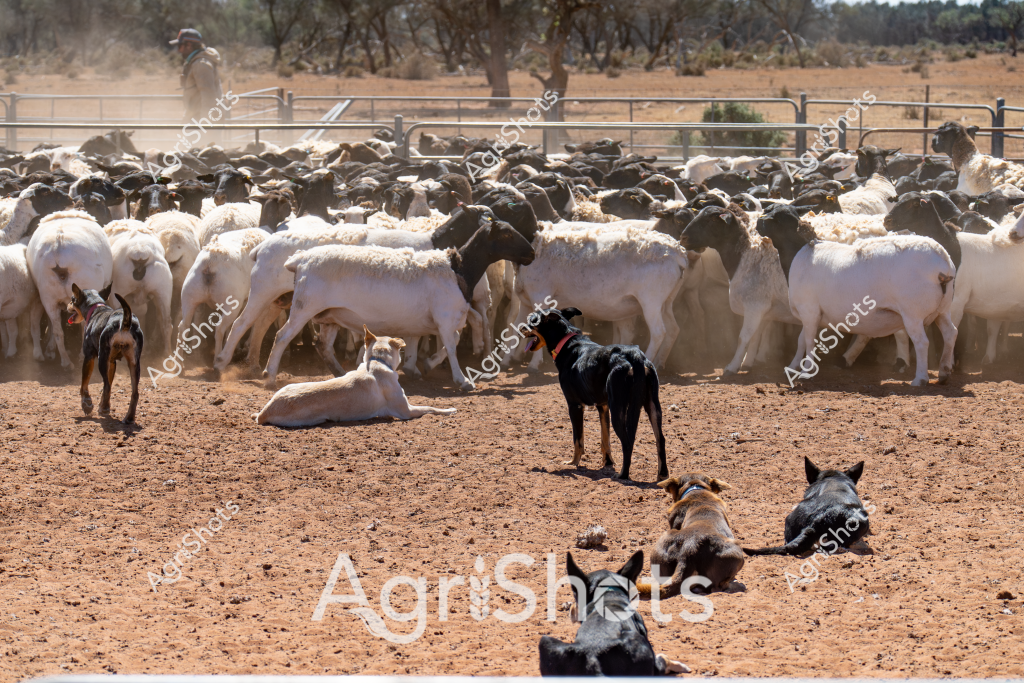
A large herd of predominantly white sheep with some black sheep are gathered in a dusty, fenced paddock with several working dogs managing the mob. A black and white dog stands alertly in the foreground, while others are resting on the dry, reddish-brown earth. In the background, a person on horseback can be seen behind the metal yard fencing, suggesting this is a typical Australian sheep station mustering scene. The bright white coats of the Dorper or White Dorper sheep stand out against the arid landscape, with sparse trees and shrubs visible in the distance. Multiple herding dogs of different colors are strategically positioned around the sheep, demonstrating their crucial role in controlling and moving the livestock across the challenging outback terrain. The harsh, dry environment and the coordinated effort of the stockman and dogs highlight the resilience required in Australian sheep farming.
 Image
Image
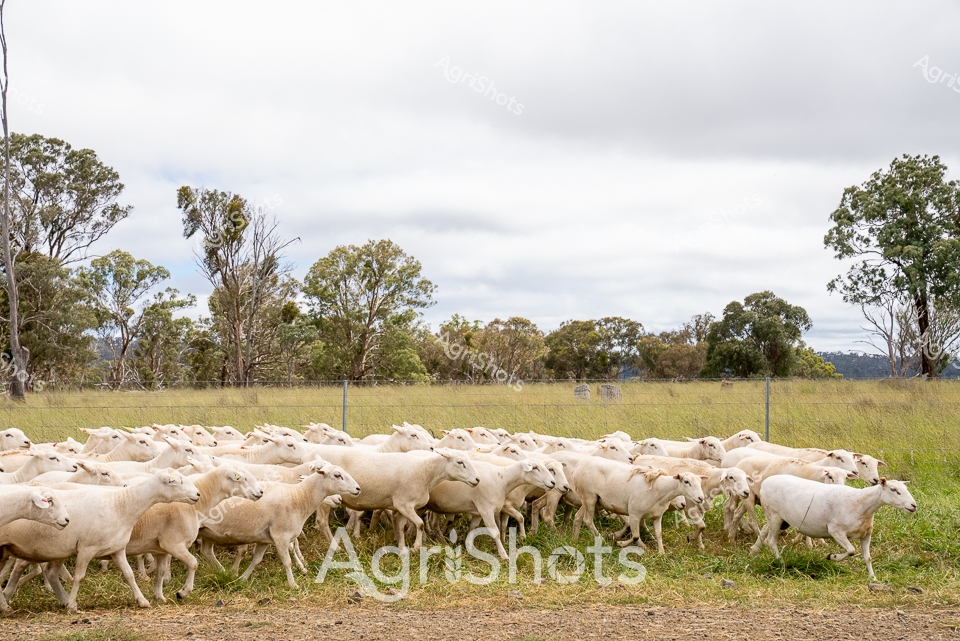
Pure white Merino ewes cluster together in a lush pasture, their woolly bodies creating a dense, creamy collective against the muted greens of late summer grasslands. The flock spreads across a gently sloping paddock bordered by classic New England region eucalyptus trees, their silvery-green foliage providing a soft backdrop under a pale, overcast sky. These robust sheep, characteristic of the New South Wales agricultural landscape, stand as a testament to generations of careful breeding and pastoral management. The fenceline and scattered trees frame a quintessential Australian rural scene, where the animals appear healthy and well-maintained, their uniform coloration suggesting a carefully selected breeding program. Soft earth tones of browns and greens blend seamlessly, creating a tranquil agricultural tableau that speaks to the quiet productivity of Australian sheep farming. The overcast light enhances the sheep's pure white fleeces, highlighting their uniform quality and the meticulous care of the flock.
 Image
Image
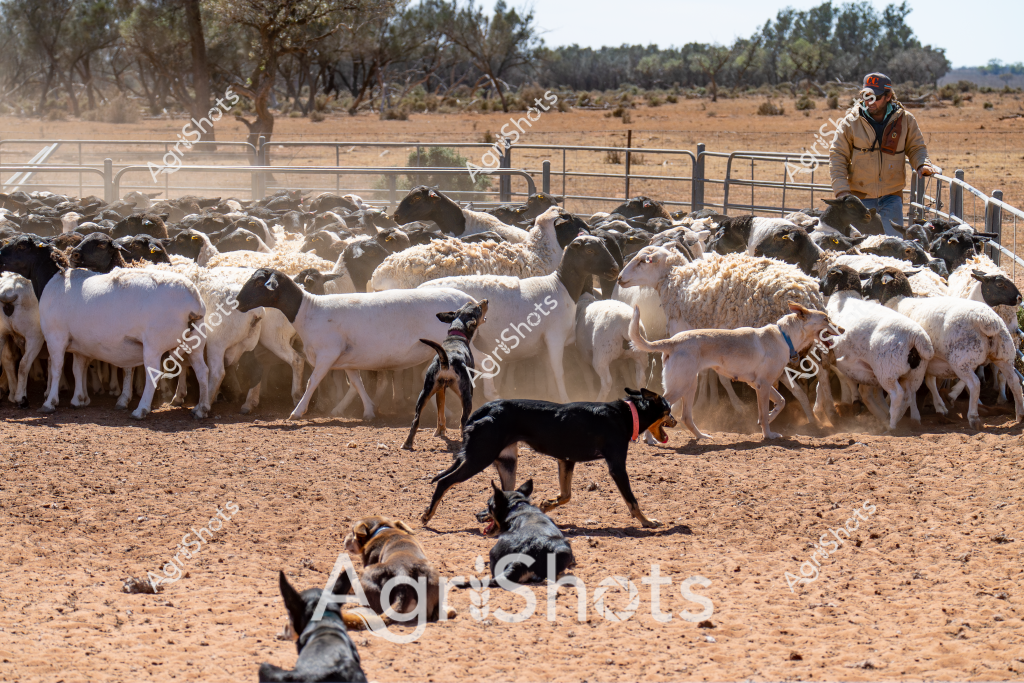
A skilled man livestock manager stands alongside a large mob of white and black sheep in a dry, dusty paddock in what appears to be an arid Australian agricultural setting. Several working dogs - black and tan kelpies - are positioned around the flock, helping to control and guide the sheep within metal yard fencing. The landscape is characterized by reddish-brown earth, sparse vegetation, and scattered eucalyptus trees in the background, suggesting this is likely a station or rural property in an inland region experiencing dry conditions. The sheep appear to be a mixed flock, predominantly white with some black-faced individuals, potentially a breed like Dorper or a crossbred meat sheep variety. The working dogs are intensely focused, moving strategically around the tightly packed group of animals to maintain their position and assist the livestock manager in mustering and controlling the flock. The scene captures the quintessential Australian agricultural landscape - a testament to the resilience of farmers and working animals in challenging environmental conditions. The man is dressed in practical work attire, including a tan jacket and hat, reflecting the functional approach to livestock management in rural Australia.
 Image
Image
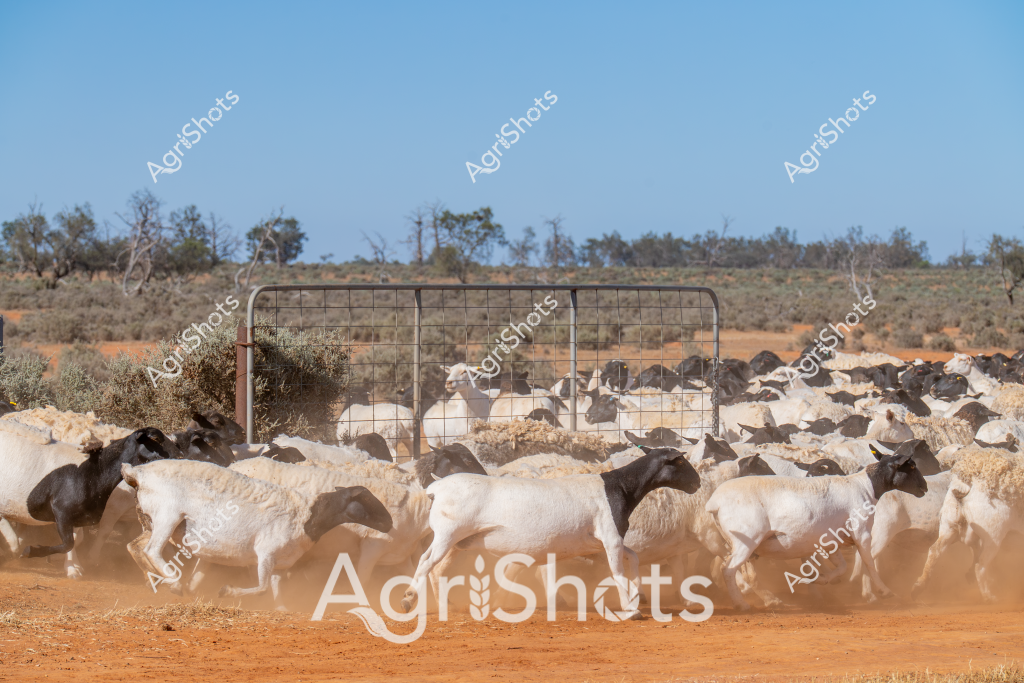
A large flock of white and black sheep crowds around a wire gate in a dusty, arid landscape typical of Australian outback stations. The mixed mob of sheep - likely a combination of Merino and potentially Black Dorper breeds - are kicking up red soil and fine dust as they move, creating a dynamic scene of rural agricultural activity. Sparse eucalyptus trees and low scrubland stretch across the background, with a clear blue sky overhead indicating a dry, hot day. The wire gate and surrounding fence suggest controlled livestock movement, a critical management technique in extensive grazing operations across remote Australian pastoral regions. The sheep's compact clustering and the surrounding landscape highlight the challenging environmental conditions of inland Australia, where careful stock management is essential for livestock survival and agricultural productivity.