Browse the collection
 Image
Image
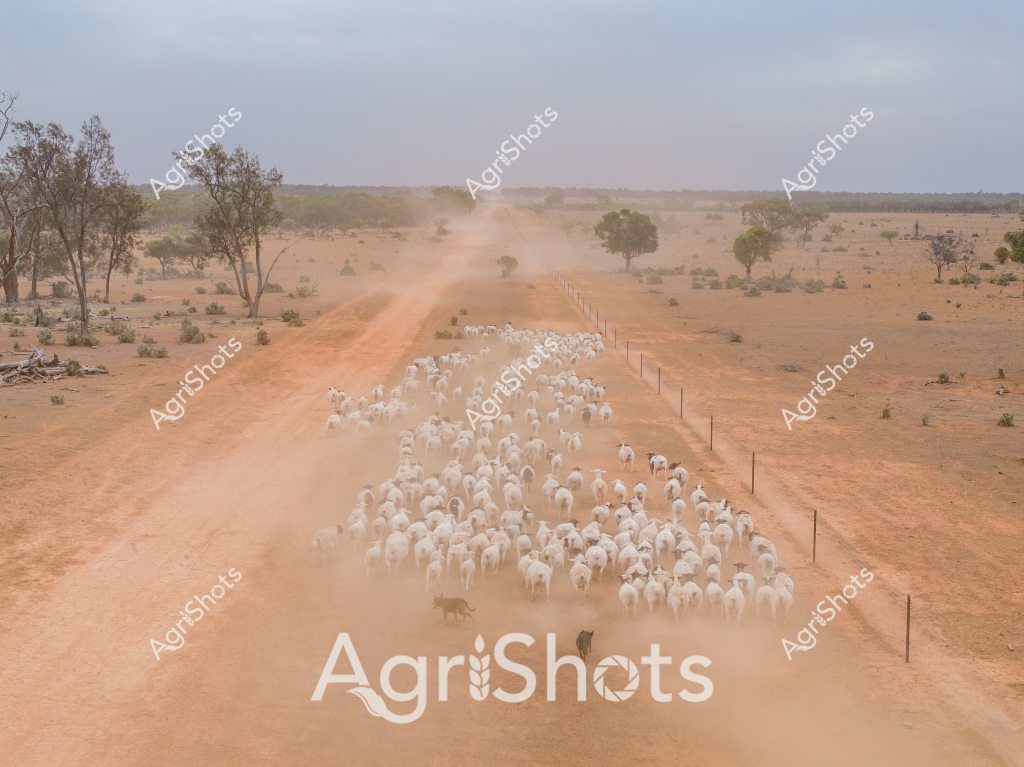
A large herd of white sheep trudges along a dusty orange dirt road through an arid Australian landscape, creating a billowing cloud of red dust behind them. Sparse eucalyptus trees and scrubby bushes dot the sparse, dry paddock on either side of the fenced road, indicating this is likely a remote cattle station in central or western Australia during a dry season. The livestock appear to be moving together, guided by unseen stockmen, across the expansive, sunbaked terrain that characterizes much of Australia's interior rural regions. Fence lines run parallel to the road, defining a clear path through the seemingly endless ochre-colored landscape. The dust kicked up by the sheep's movement creates a misty, atmospheric quality to the scene, highlighting the challenging environmental conditions of this agricultural setting. The image captures the resilience of Australian pastoral farming, where livestock are moved across vast distances under harsh, dry conditions.
 Image
Image
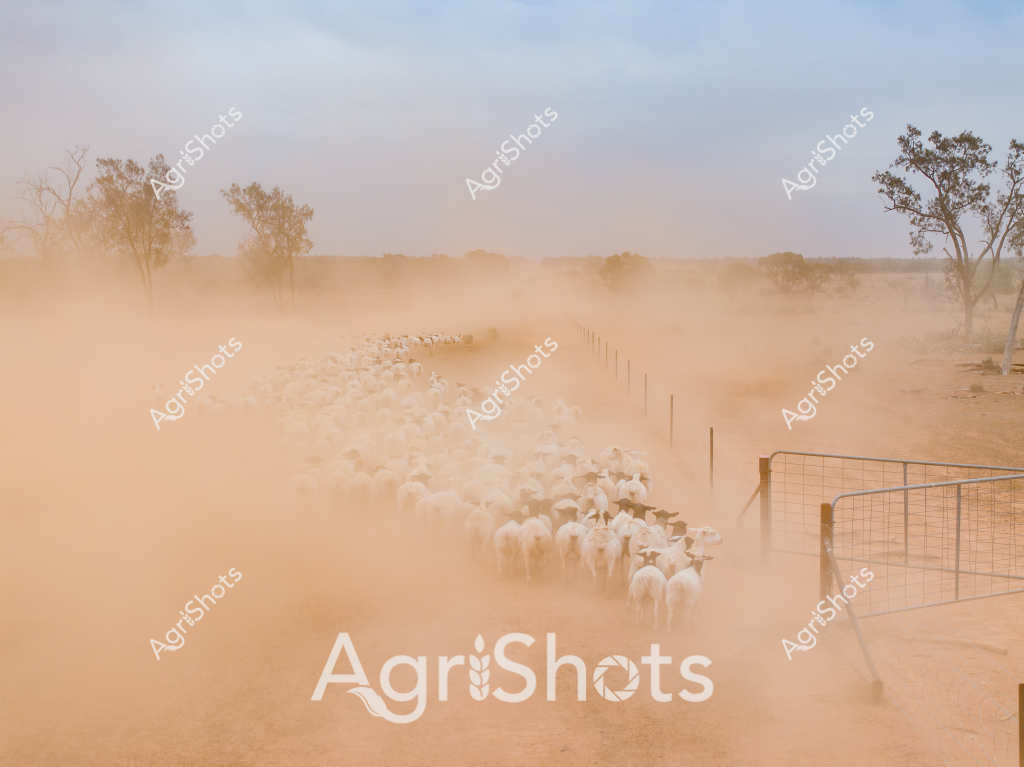
A dense flock of sheep moves through a dusty, arid landscape, creating a dramatic cloud of ochre-colored dust as they follow a narrow fenced pathway. Sparse eucalyptus trees line the horizon, their silhouettes barely visible through the thick dust raised by the moving livestock. The scene captures the challenging conditions of Australian outback farming, where livestock must be carefully managed and moved across vast, dry stations. The fence line guides the sheep precisely, demonstrating the careful stock management techniques required in harsh rural environments. Wooden fence posts and wire mesh create a defined route through the parched landscape, with the sheep moving in a tight, uniform line that stretches into the hazy distance. The early morning or late afternoon light softens the harsh landscape, casting a warm, golden tone across the dry earth and creating a powerful visual of agricultural life in remote Australia.
 Image
Image
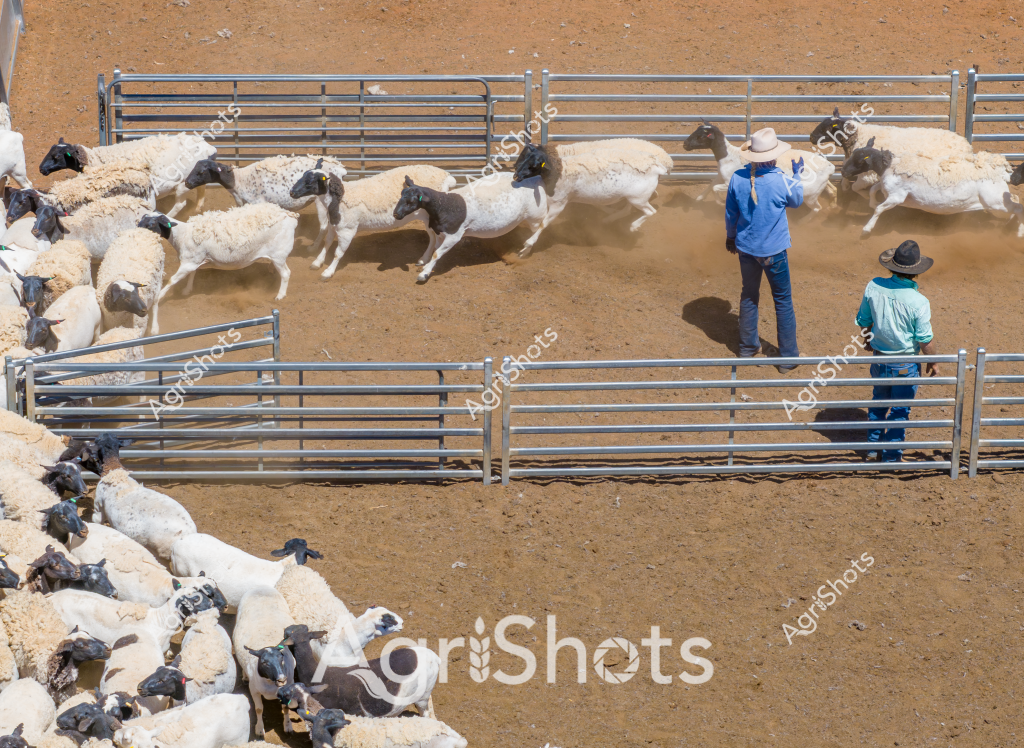
Two stockmen manage a group of white and dark-colored sheep in metal livestock yards during a stock handling operation. A man in a bright blue shirt and a man in a teal shirt stand near metal livestock gates, carefully directing a mob of sheep that appear to be Dorper or Merino cross breed. The dusty, sandy-colored yard provides a stark backdrop to the crisp movement of the sheep, which are densely clustered and actively moving between different pen sections. The precise metal fencing creates systematic pathways, demonstrating the structured approach to livestock management typical of Australian agricultural practices. Shadows cast by the workers and animals emphasize the midday sunlight and the controlled, methodical nature of the sheep mustering process.
 Image
Image
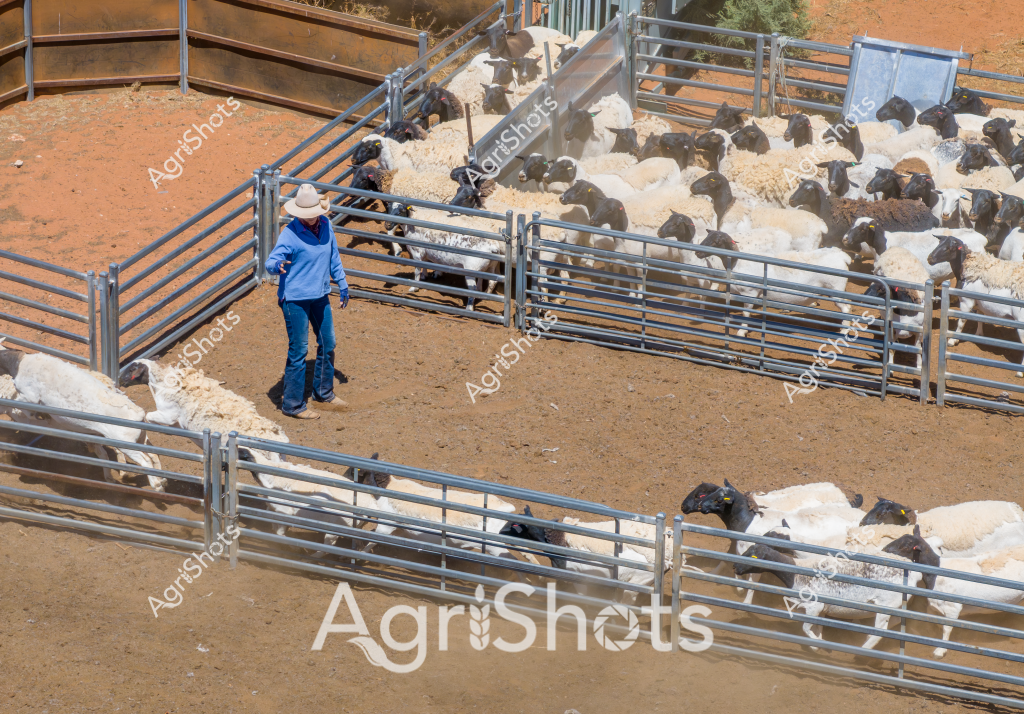
A woman in a blue jacket and white hat stands in a sheep yard, overseeing a large flock of black-faced and white sheep. Multiple metal livestock pens divide the dusty, reddish-brown paddock, creating organized sections for managing the sheep. The animals are densely clustered, with a mix of black-headed and white-fleeced sheep pressed against the metal gates and fencing. The landscape appears to be an arid or semi-arid region, likely in the Australian outback, with reddish soil and minimal vegetation visible. A gate or loading ramp is positioned in one of the pens, suggesting this is part of a livestock management operation, potentially for mustering, sorting, or preparing sheep for transport or shearing. The scene captures the precision and infrastructure of modern Australian sheep farming, with careful animal handling and controlled movement through carefully designed yards.
 Image
Image
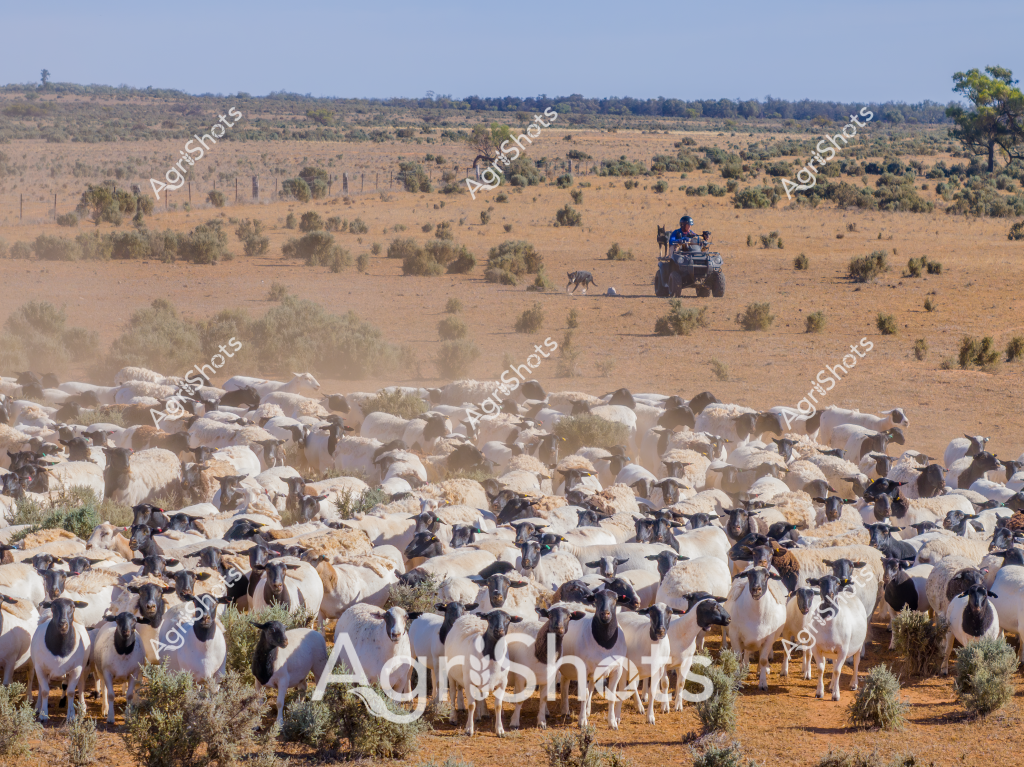
A large flock of white and black-faced sheep crowd together in an arid pastoral landscape, with sparse scrubland and dusty ground stretching to the distant horizon. A four-wheel drive vehicle and a working dog are visible in the background, indicating this is likely a station or large grazing property in inland Australia. The sheep appear to be Dorper or White Dorper breed, known for their hardiness in dry conditions, standing clustered among low saltbush and spinifex vegetation. A man in blue clothing sits on the quad bike, seemingly monitoring the mob as they graze and move across the parched landscape. The scene captures the essence of Australian sheep farming in a challenging, drought-affected environment, with the stark beauty of the arid rangelands providing a dramatic backdrop to the livestock operation. The image reveals the resilience of both the animals and the agricultural workers who manage them in harsh, unforgiving terrain. Dust rises around the sheep's feet, highlighting the dry conditions and the careful movement of the herd. The quad bike and working dog demonstrate the modern tools and techniques used in managing large flocks across extensive grazing properties.
 Image
Image
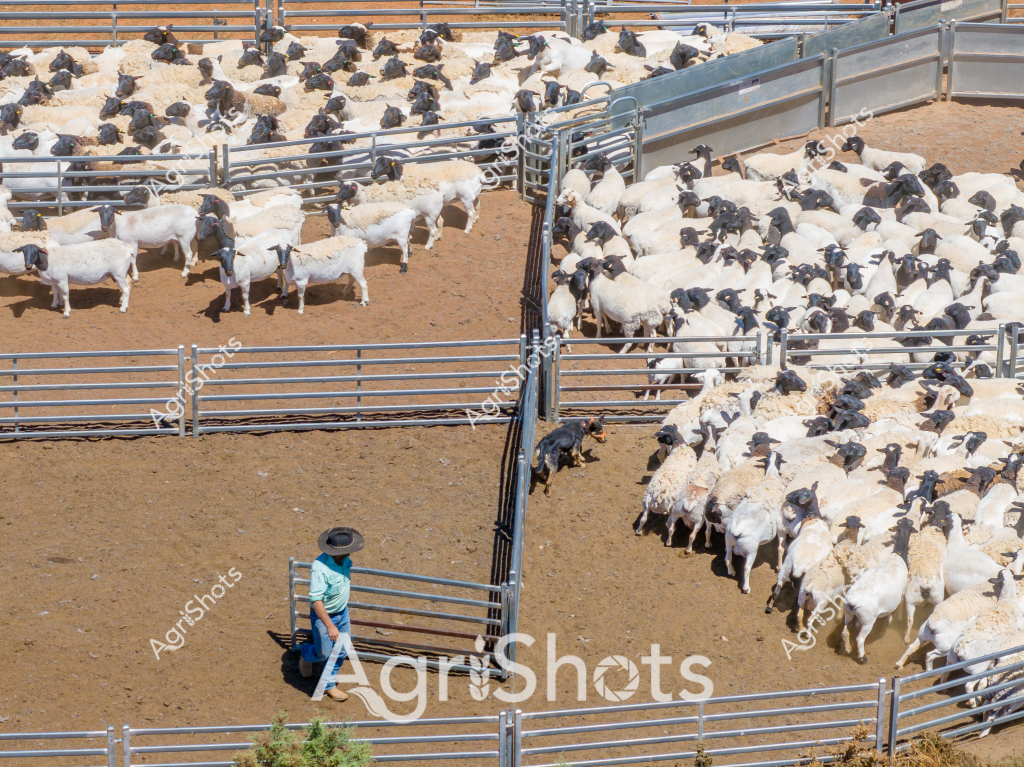
A large flock of black and white sheep are penned in a dry, sandy livestock yard, carefully managed by a stockman wearing a blue shirt and wide-brimmed hat. The sheep appear to be a mixed breed, with some pure white and others with distinct black heads and markings, typical of breeds like Dorper or Suffolk. Metal livestock panels divide the yard into separate pens, creating an organized system for sorting and managing the herd. The stockman stands near the fence, observing the tightly packed groups of sheep that fill multiple interconnected yards. The ground is a sandy brown color, suggesting an arid or semi-arid agricultural region, likely in inland Australia. The precise arrangement of the yards and the careful positioning of the livestock demonstrate professional farm management techniques used in Australian sheep production. The aerial perspective reveals the scale of the operation, with hundreds of sheep clustered together, their woolly bodies creating a textured landscape of white and gray against the earthy background. This scene captures the essence of Australian livestock farming - a blend of careful animal husbandry, strategic farm infrastructure, and adaptation to challenging rural environments.
 Image
Image
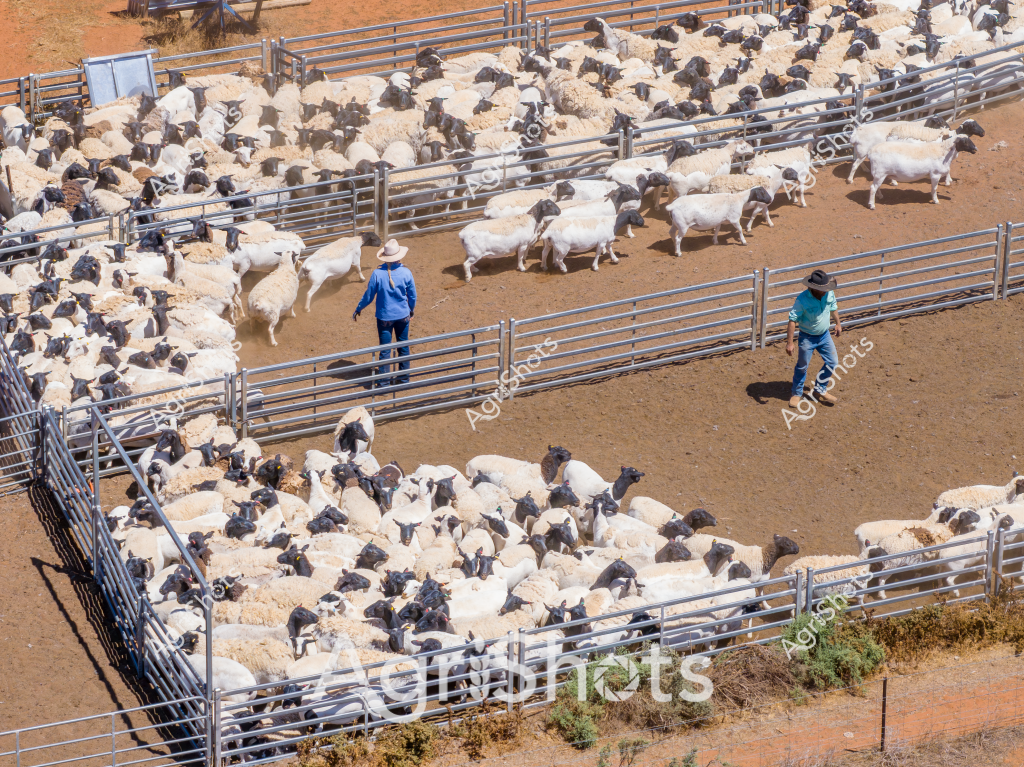
A large flock of white and dark-colored sheep are clustered in a series of metal livestock yards, with two stockmen managing the mob in a dry, reddish-brown rural landscape. A man in a blue shirt and another in a teal shirt are strategically positioned along the metal fencing, carefully controlling the movement of the sheep through the yards. The animals appear to be a mix of white wooled sheep with dark heads and legs, likely a Merino or crossbred flock, tightly packed and moving in coordinated groups across the dusty paddock. Metal gates and panels create a complex system of pens and pathways, demonstrating the systematic approach to livestock management in Australian agriculture. The arid ground and sparse vegetation suggest this is likely an inland property, possibly in a region like Western New South Wales or Western Queensland, where sheep farming is a critical agricultural enterprise. The scene captures the skill of experienced stockmen in efficiently handling and directing a large number of sheep using strategic positioning and livestock management techniques.
 Image
Image
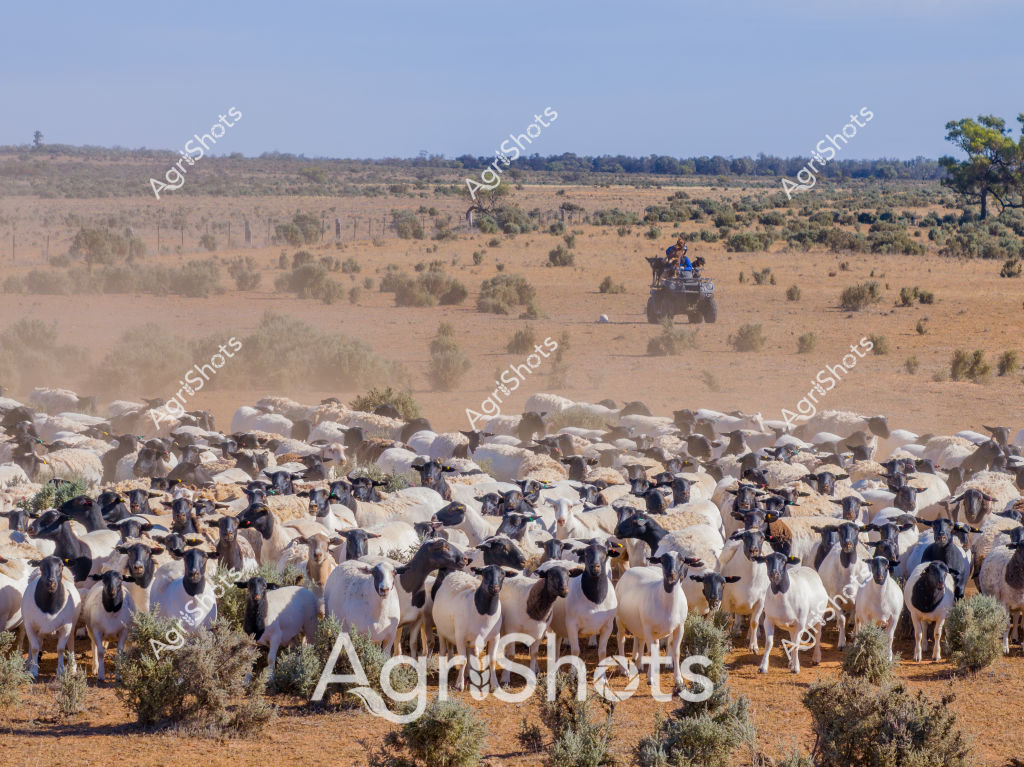
A large flock of white and black-faced sheep cluster tightly together in a dry, sparse outback landscape. An all-terrain vehicle drives in the dusty background, suggesting active livestock management. The sheep appear to be Dorper or Merino breeds, with distinctive white bodies and dark faces, standing among scattered saltbush and low scrub in a sun-baked paddock. The arid environment creates a golden-brown backdrop, with scattered vegetation and a distant treeline indicating a typical Australian pastoral setting. The dense grouping of sheep demonstrates careful mustering, with the vehicle likely guiding or monitoring the herd across the expansive station country. The scene captures the resilience of Australian livestock farming in challenging dry landscape conditions, showcasing the interaction between agricultural workers and their animals in remote rural terrain.
 Image
Image
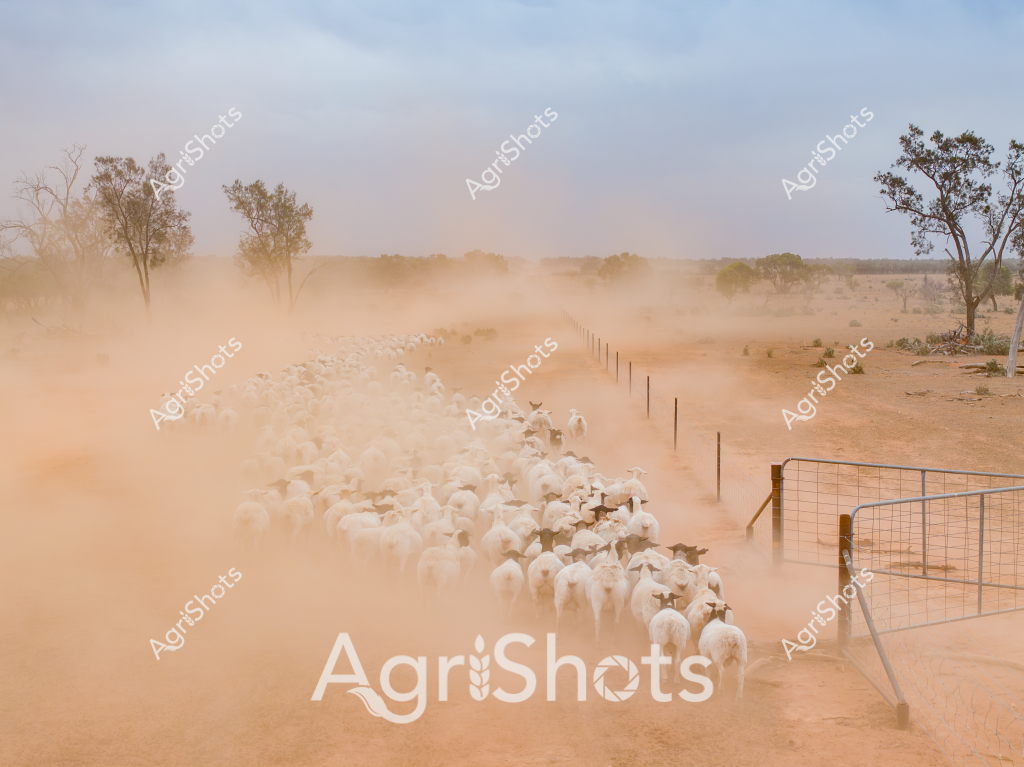
A large mob of white sheep moves through a dusty, arid landscape, kicking up a massive cloud of ochre-colored dust as they travel along a fenced paddock. Sparse eucalyptus trees frame the scene, their silhouettes barely visible through the thick dust haze. The sheep are tightly packed, moving in a long, disciplined line between fence posts that stretch toward the distant horizon. The dry, sunbaked ground and billowing dust clouds capture the harsh conditions of an Australian outback station, highlighting the resilience of both the livestock and the farmers who manage them. The landscape speaks to the challenging environment of inland Australia, where pastoral operations must navigate extreme drought and unforgiving terrain. The image powerfully illustrates the movement of livestock through a stark, unforgiving rural landscape, with the dust creating an almost ethereal atmosphere that softens the rugged details of the surrounding countryside.
 Image
Image
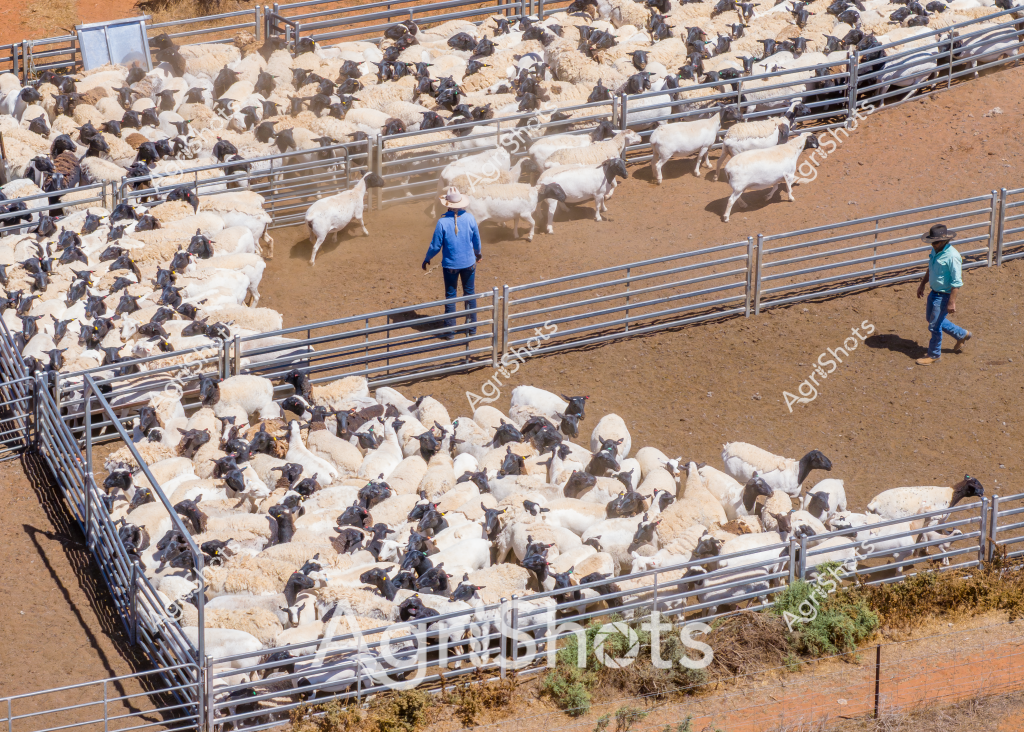
A large mob of white and dark-colored sheep are packed tightly into a series of metal livestock yards in a dry, arid landscape. Two men are working the yards - one wearing a blue shirt and the other in a teal-colored work shirt - carefully managing the sheep's movement between different pen sections. The ground is a dusty reddish-brown, typical of an Australian inland station or pastoral property, with sparse vegetation visible around the yard's perimeter. Metal stock fencing creates a systematic grid of pens, allowing for controlled livestock movement and management. The sheep appear to be a mixed flock, with predominantly white bodies and dark heads, likely a crossbreed or Merino-type breed common in Australian agriculture. The aerial perspective reveals the scale of the livestock operation, showcasing the precision and infrastructure required for managing large sheep herds in challenging rural environments.
 Image
Image
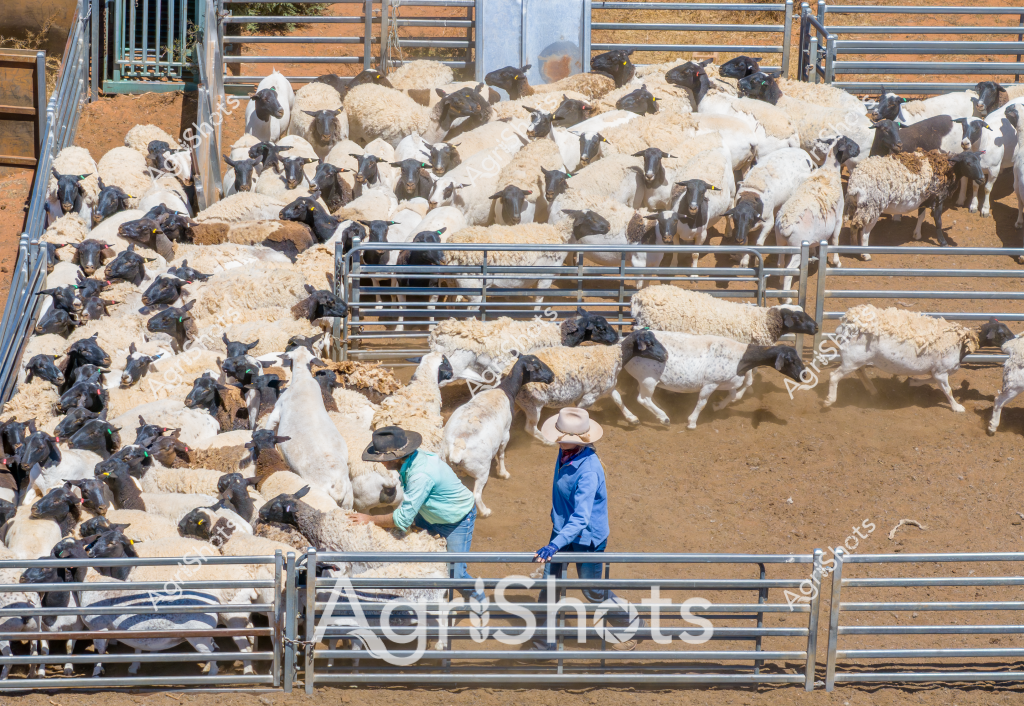
Two men in blue and turquoise shirts work among a large flock of white and black-faced sheep in a metal livestock yard. The sheep - which appear to be Merino or similar wool-producing breed - are densely packed in multiple pens with sandy-colored ground, creating a textural landscape of woolly bodies and metal fencing. One man is crouched down working closely with the sheep, while the other stands nearby, suggesting a coordinated livestock management activity. The metal yard infrastructure includes multiple interconnected pens with horizontal rails, designed for efficient sheep handling and movement. The scene captures the precision and physical labor of Australian sheep farming, with the animals tightly clustered and the workers moving methodically among them under what seems to be bright, clear daylight conditions typical of a rural Australian setting.
 Image
Image
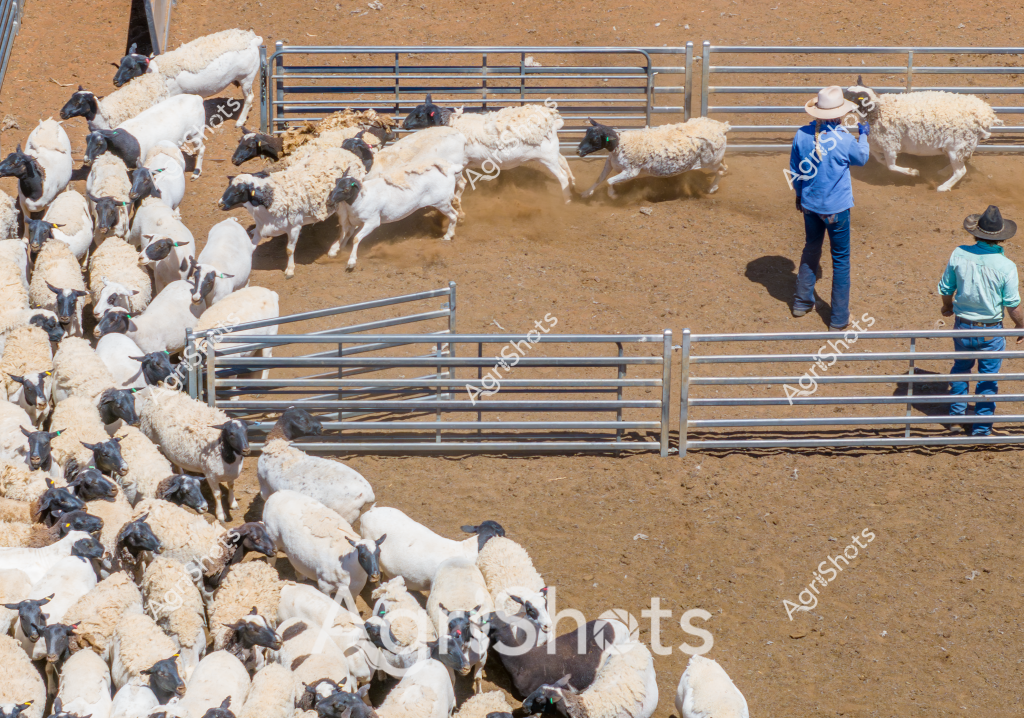
A dynamic sheep mustering scene unfolds in an arid Australian livestock yard, with a large flock of white and black-headed sheep moving through metal livestock gates. Two workers, a man in a blue shirt and another in a turquoise top and wide-brimmed hat, carefully manage the sheep's movement through the paddock's corral system. The sheep appear to be Dorper or Merino crossbreed, with distinctive black heads and white woolly bodies, clustered tightly and moving in coordinated groups across the dusty, sun-baked ground. The metal yard gates create a systematic pathway, guiding the livestock through different pens with precision. Shadows are sharp and defined, indicating bright midday sunlight typical of an Australian rural setting. The scene captures the expertise of stockmen in managing livestock, with their careful positioning and movement controlling the flow of the sheep herd. The environment suggests an inland pastoral station, with hard-packed earth and minimal vegetation, reflecting the challenging conditions of Australian sheep farming. The composition emphasizes the scale and complexity of sheep management, showcasing the critical role of skilled workers and infrastructure in moving and controlling livestock herds across vast agricultural landscapes.
 Image
Image
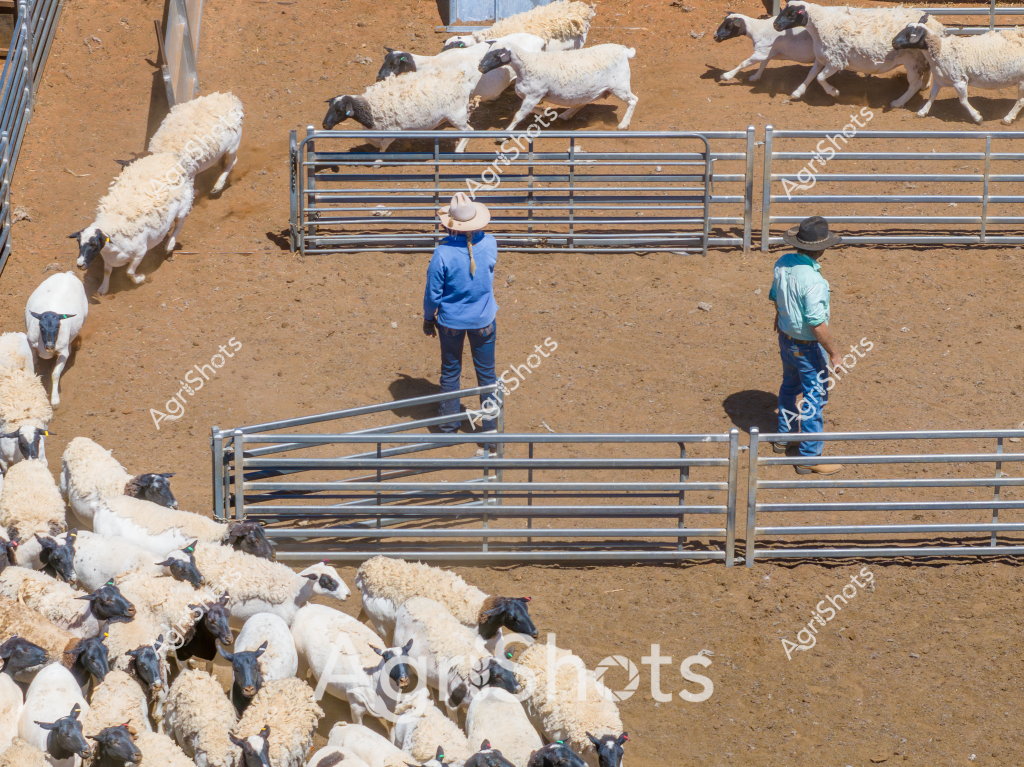
Two people are working with a flock of sheep in a dusty livestock yard, surrounded by metal cattle panels. A woman in a blue long-sleeved shirt and a man in a light blue-green shirt stand strategically positioned among numerous white and black-faced sheep, likely Merino or Dorper cross breeds. The animals are moving in small groups through the yard's metal gates and pens, suggesting a mustering or sorting operation typical of Australian sheep stations. The ground is a rich, rusty-orange dirt color, characteristic of arid or semi-arid agricultural regions, with the stark landscape highlighting the precision of the livestock management. The overhead view captures the methodical process of moving and managing sheep, demonstrating the skill and coordination required in Australian pastoral farming.
 Image
Image
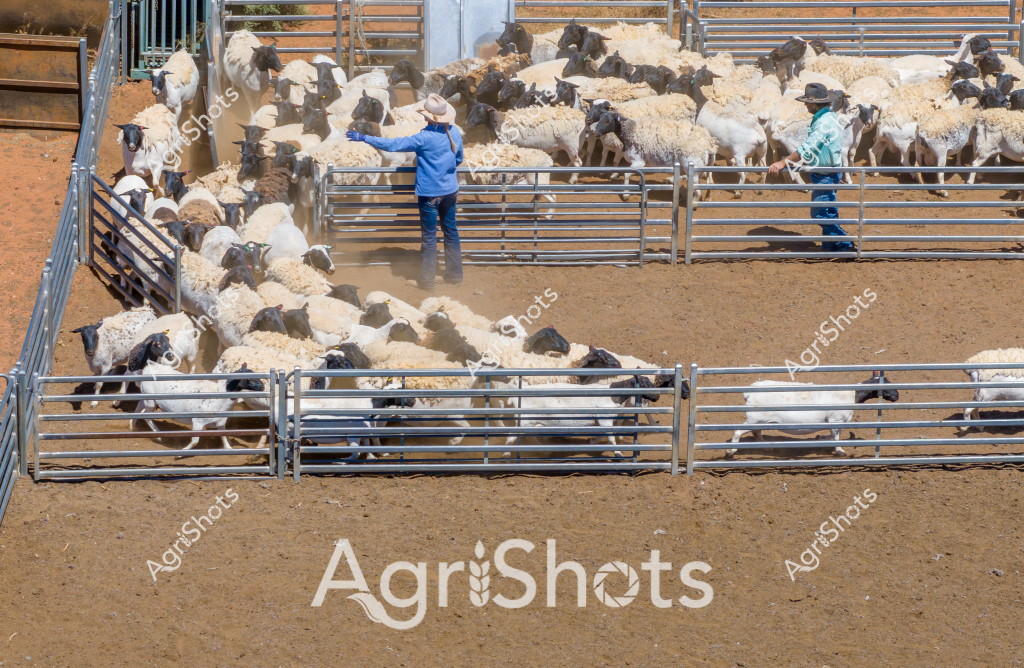
Two workers manage a large flock of sheep in a dusty livestock yard, carefully moving and sorting the animals through metal cattle gates and pens. A man in a blue long-sleeved shirt stands in the center of the enclosure, strategically positioning himself to guide the sheep's movement, while another worker in a light green shirt assists from a different section of the yard. The sheep appear to be a mixed flock of white and dark-colored animals, densely packed and creating clouds of dust as they shift between the metal rail compartments. The ground is a rich reddish-brown earth typical of Australian agricultural landscapes, likely indicating an inland or outback location. Metal livestock handling gates create a complex system of pathways and sorting areas, demonstrating the sophisticated infrastructure used in sheep management. The overhead view reveals the precise choreography of animal handling, with the workers using careful positioning and movement to control the flock's direction. This scene captures the essential skill and physical labor of livestock management, showcasing the intricate process of moving and sorting sheep in a professional agricultural setting. The dust, metal infrastructure, and coordinated human movements highlight the challenging and precise nature of Australian sheep farming.
 Image
Image
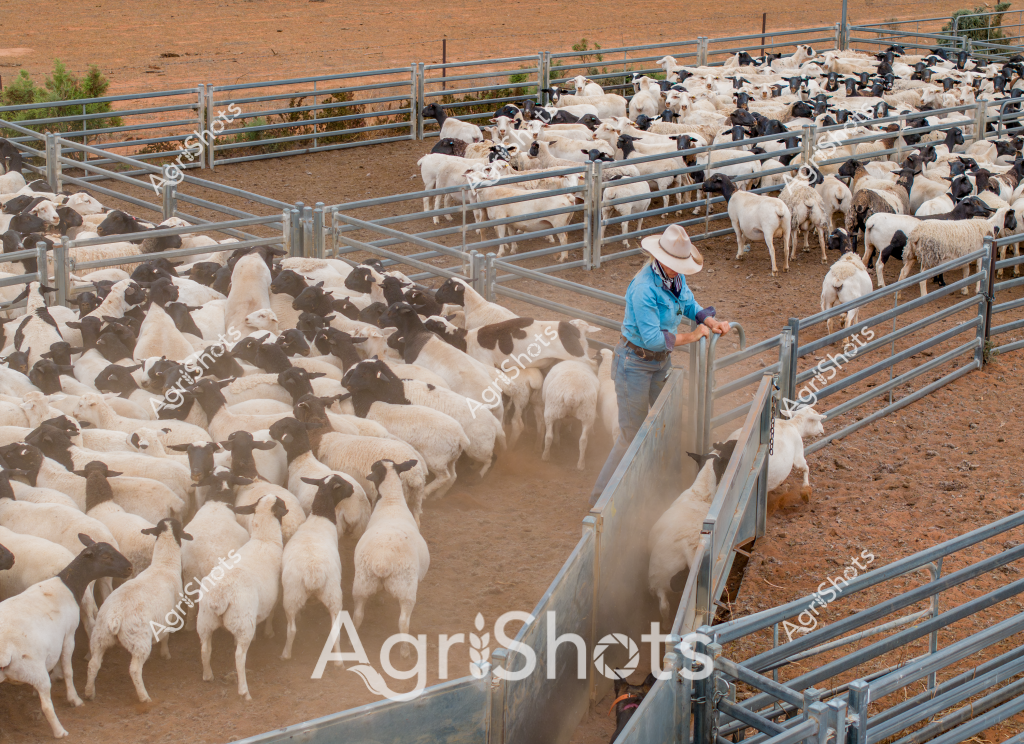
A man stockman wearing a wide-brimmed hat and blue work shirt manages a large mob of white and black-faced sheep in a metal livestock yard. The sheep - which appear to be a mix of Dorper and Merino breeds - are densely packed into interconnected metal cattle yards with a dusty, reddish-brown ground typical of Australian agricultural landscapes. The stockman carefully works the gate and sorting pens, guiding the sheep through the precise metal infrastructure designed for efficient livestock movement and management. Dozens of sheep with distinctive white bodies and black faces crowd together, creating a textured landscape of woolly forms and movement. The scene captures the precision and skill of Australian livestock management, with the man's controlled movements contrasting against the fluid, shifting mass of sheep. The environment suggests an arid or semi-arid region, with the bare earth and metal yards indicating a professional, well-maintained agricultural operation.
 Image
Image
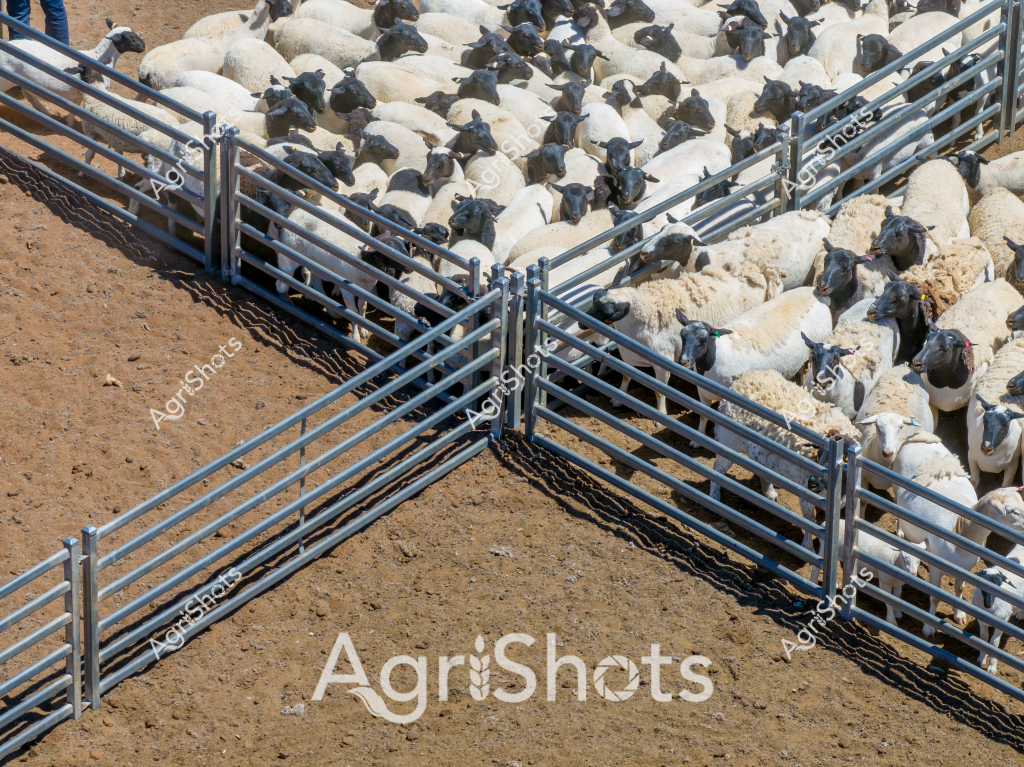
A large mob of black-and-white sheep are densely packed into a series of intersecting metal livestock yards, creating a geometric pattern of animals and steel gates. The sheep appear to be a mix of dark-faced breeds, possibly Black Suffolk or Dorper crosses, tightly clustered in a dry, dusty paddock with a brown earth floor. Precision metal gates form a complex funnel-like configuration, designed to efficiently control and direct the movement of the livestock during mustering or processing. The tight arrangement of sheep suggests they are being prepared for either shearing, veterinary treatment, or transportation, highlighting the systematic approach of modern Australian livestock management. The metallic gray yards contrast sharply with the white and dark woolly bodies of the sheep, creating a striking visual representation of agricultural infrastructure and animal husbandry.
 Image
Image
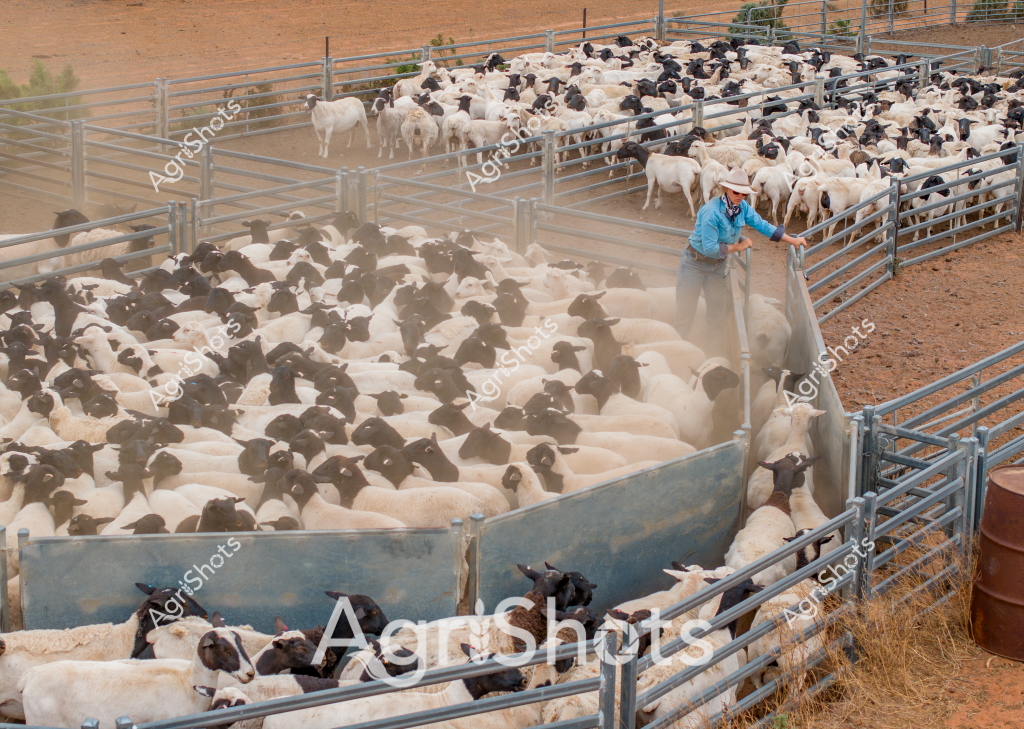
A dedicated stockman in a bright blue shirt and wide-brimmed hat manages a large mob of black-and-white spotted dorper or damara cross sheep in a dusty livestock yard. The densely packed sheep fill multiple interconnected metal livestock pens, creating a striking visual pattern of white bodies with black heads, kicking up fine red dirt as they move. The arid landscape suggests this is a pastoral station in central or western Australia, likely during mustering season when livestock are gathered for counting, sorting, or transportation. A series of steel livestock gates and fencing provide structure to the yard, with a metal loading ramp visible on one side and an old steel barrel in the background indicating a typical remote Australian livestock management setting. The stockman appears calm and experienced, leaning against the fence and overseeing the tightly packed flock with practiced ease, demonstrating the skilled stock management essential to Australian agricultural operations.
 Image
Image
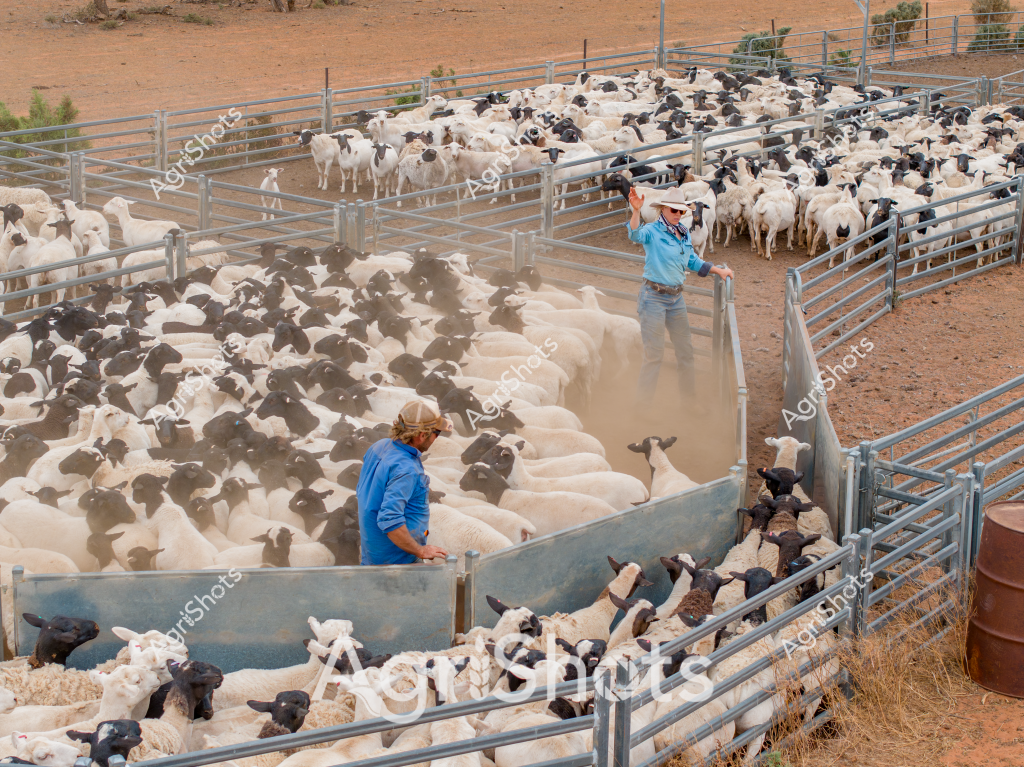
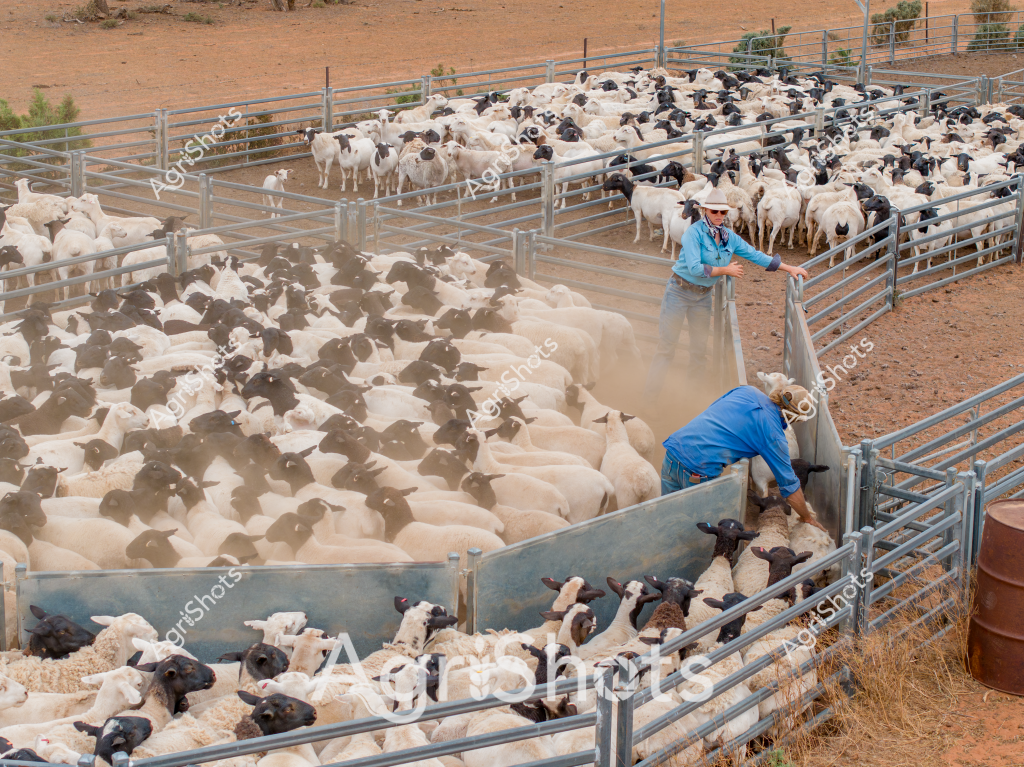
A dusty sheep yards scene captures two workers managing a large flock of black and white sheep in a metal livestock holding pen. A woman in a blue shirt and a man in a blue shirt and cap are strategically positioned within the fenced area, carefully directing and sorting the densely packed mob of sheep. The arid, reddish-brown ground and metal yard infrastructure suggest this is a typical livestock management scene in the Australian outback or pastoral region. Dozens of sheep - predominantly white with black faces and legs, characteristic of breeds like Merino or Dorper - are tightly clustered in different pens, creating a textured landscape of woolly bodies. Dust rises from the animals' movement, indicating active livestock handling during what appears to be a warm, dry day. The metal gates and sorting infrastructure demonstrate the sophisticated approach to sheep management in Australian agriculture, where precise handling and sorting are critical to pastoral operations.
 Image
Image
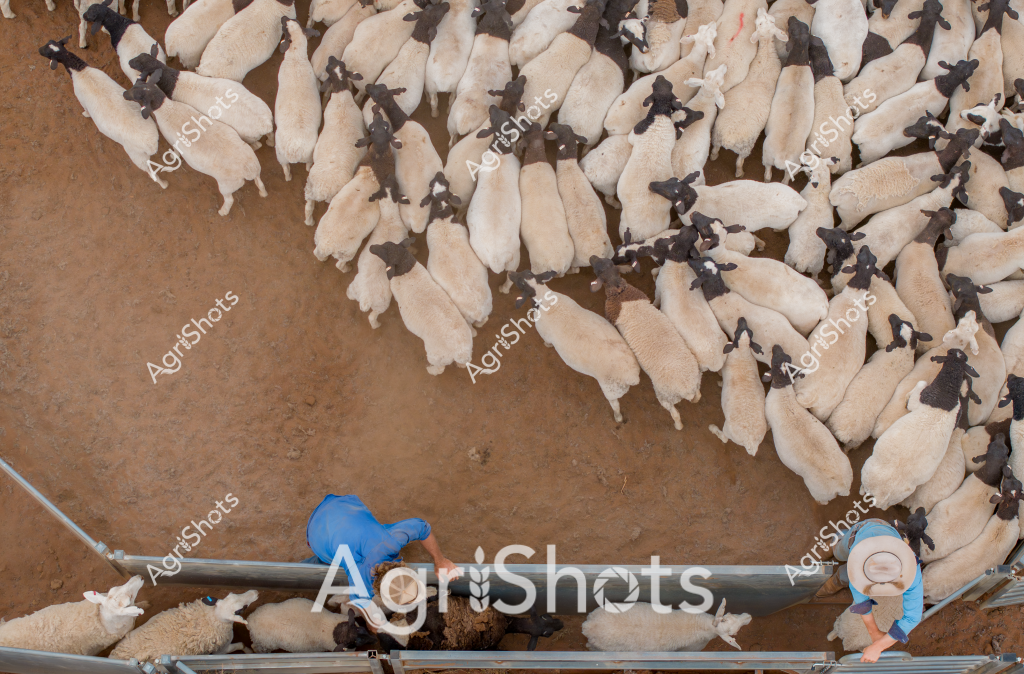
A large flock of black-and-white spotted sheep are densely packed in a holding yard, viewed from an overhead perspective. Two workers in blue clothing are positioned along a metal livestock handling rail, carefully managing the sheep during what appears to be a shearing or livestock processing operation. The ground is a rich brown earthen surface, providing contrast to the predominantly white woolly bodies of the sheep with their distinctive black faces and legs. One worker is wearing a light-colored hat, suggesting this is likely an Australian sheep station or farm environment, potentially in a region like Queensland or New South Wales. The tight clustering of the animals and the systematic handling infrastructure indicates a professional, well-organized livestock management approach typical of Australian agricultural practices. The image captures the precision and scale of modern sheep farming, with the overhead view revealing the impressive density and uniformity of the flock. The blue-clad workers demonstrate the hands-on nature of livestock management, working closely with the animals in a controlled, efficient manner.
 Image
Image
Two men in blue work attire manage a large mob of white and black-headed sheep in a dusty livestock yard. The scene captures a typical Australian sheep farming operation, with densely packed sheep clustered in metal livestock pens under an arid, reddish-brown landscape. One man stands at the gate, while another is positioned within the pen, carefully guiding and sorting the sheep during what appears to be a routine mustering or drafting activity. The sheep look like a mixed flock of Merino and possibly crossbred lambs, with distinctive black and white coloration. Dust rises around their woolly bodies as they move tightly together, creating a textured, monochromatic scene of agricultural activity. The metal yard panels provide structure and control, essential for managing large numbers of livestock in challenging outback conditions. The environment suggests a dry, inland Australian setting - likely in a sheep-producing region such as Western New South Wales, South Australia, or Queensland. The stark contrast between the blue-clothed workers, the gray metal infrastructure, and the reddish earth creates a visually striking representation of Australian sheep farming practices.
 Image
Image
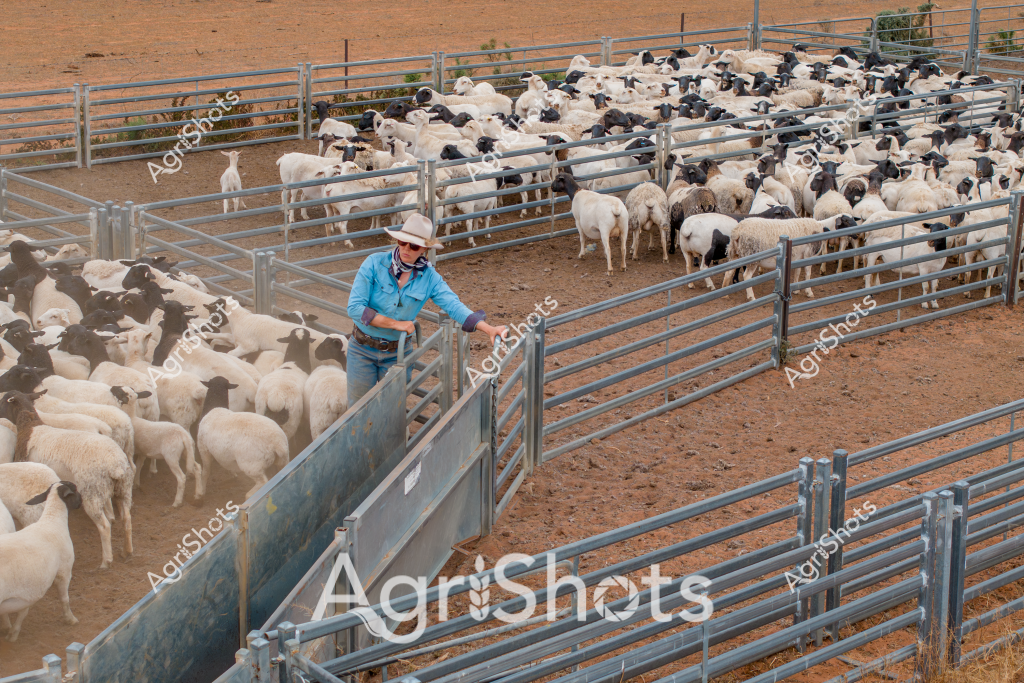
A man stockman in a blue long-sleeved shirt and light-colored hat manages a large flock of black and white sheep within a series of metal livestock yards. The sheep - a mix of white and black-faced breeds, likely Dorper or Suffolk crosses - are densely packed into interconnected holding pens with metal gates and fencing. The ground is a dry, reddish-brown earth typical of Australian pastoral landscapes, suggesting an arid or semi-arid region. The stockman is carefully positioning a gate, working to sort or move the sheep through the yards, demonstrating the precise livestock management skills essential in Australian agriculture. The dense clustering of sheep and the systematic yard layout highlight the structured approach to livestock handling in rural Australian farming operations.
 Image
Image
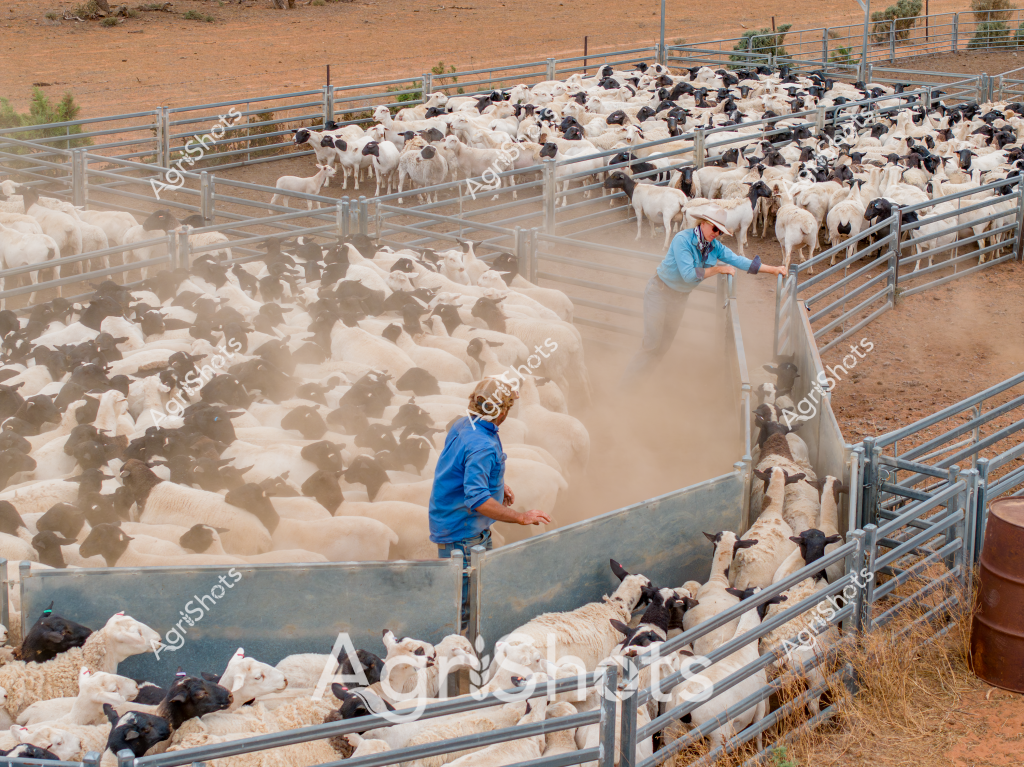
In this dynamic livestock scene, two workers in blue shirts manage a large mob of black and white sheep in a dusty livestock yard. The sheep, a mix of white and black-faced breeds typical of Australian farming, are densely packed within metal livestock yards under an arid, reddish-brown landscape. One worker stands on the metal gate, directing the sheep's movement with practiced movements, while dust rises around the animals, creating a dramatic visual effect that captures the intensity of sheep management in a dry rural environment. The metal yard panels provide structure and control, allowing the workers to efficiently sort and move the livestock. The scene epitomizes the challenging and skilled work of Australian sheep farming, where precision and experience are crucial in managing large flocks in harsh, drought-prone landscapes. The blue shirts of the workers contrast sharply with the tan earth and white and black sheep, creating a visually compelling image of agricultural work.
 Image
Image
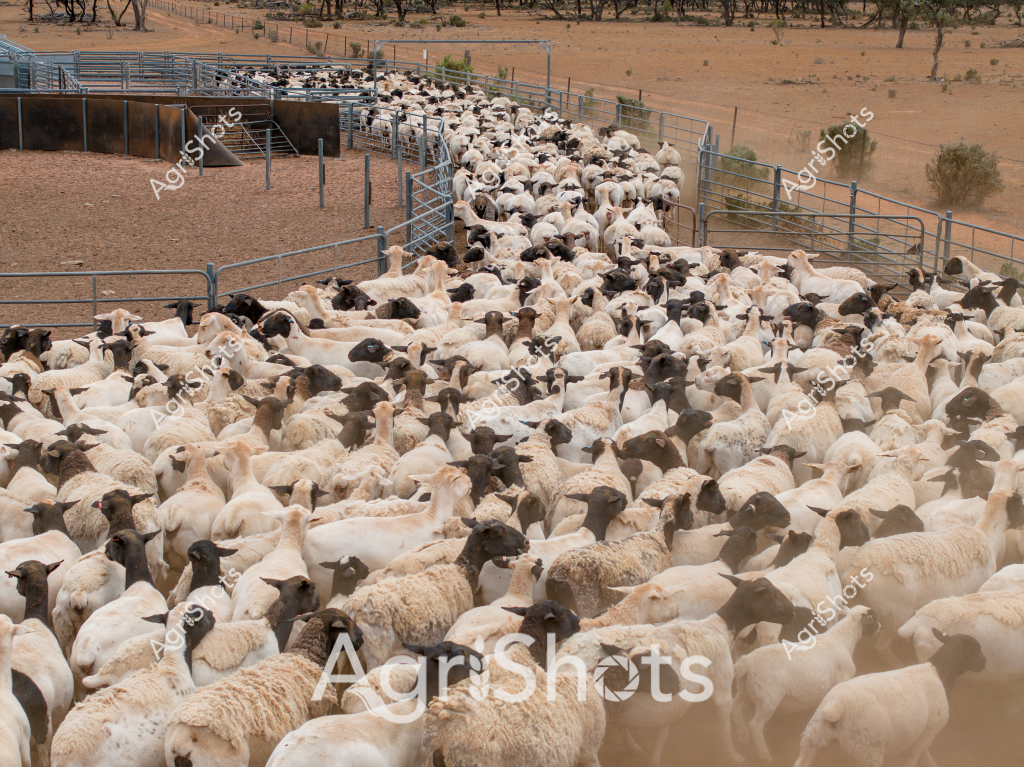
A dense mob of Merino and crossbred sheep fills a tight steel yard complex in a dry, arid Australian pastoral landscape. The woolly flock, comprising predominantly white sheep with scattered black and brown individuals, is tightly packed within metal cattle yards and loading ramps, creating a textural sea of wool and movement. The surrounding environment reveals a classic outback setting - reddish-brown earth, sparse vegetation, and scattered eucalyptus trees, indicating this is likely a large-scale sheep station in inland Australia. The metal yard infrastructure suggests professional livestock management, with carefully designed gates and pathways to facilitate stock movement and handling. Dust rises from the densely packed animals, highlighting the dry conditions and the physical process of mustering and containing the sheep. The scene captures the scale and complexity of Australian sheep farming, where large numbers of livestock are carefully managed in challenging environmental conditions.
 Image
Image
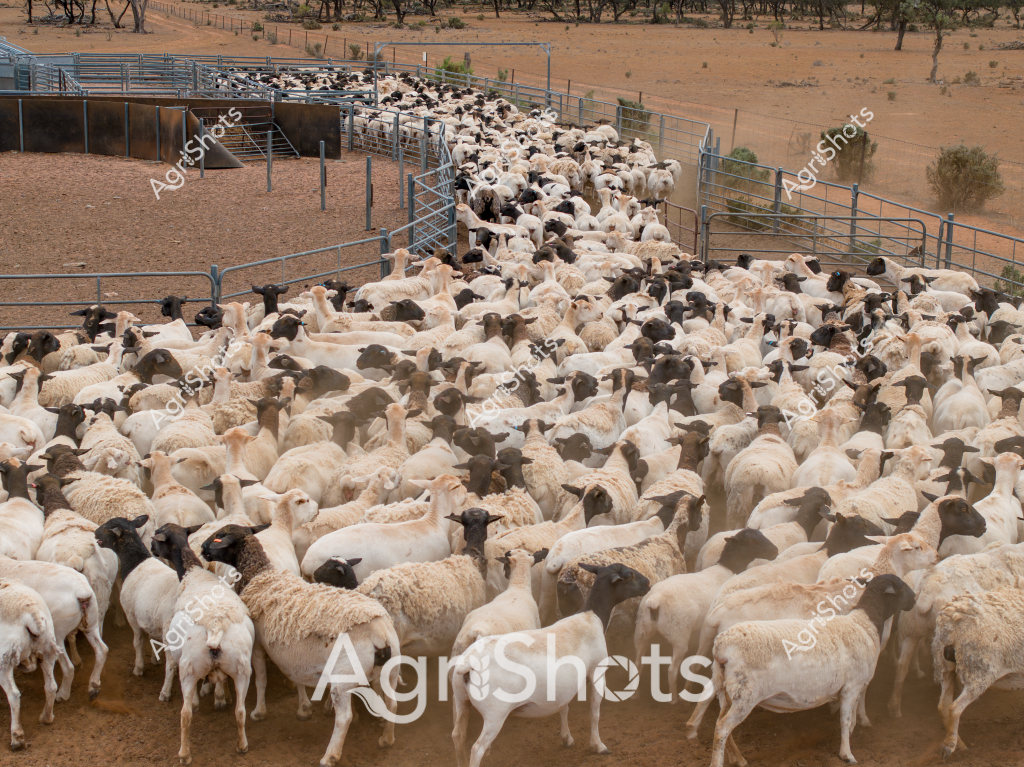
A densely packed mob of white and black-faced sheep crowds into a metal livestock yard in an arid Australian pastoral landscape. The sheep, likely a mix of Merino and other breeds, are tightly clustered within steel panel fences, creating a sea of woolly bodies against the reddish-brown earth. Sparse trees and scrub vegetation populate the dry background, indicating this is likely a station or large agricultural property in an inland region experiencing drought-like conditions. The sophisticated metal yard infrastructure suggests professional livestock management, with carefully designed gates and holding areas to control and direct the sheep's movement. The animals appear to be gathered for mustering, sorting, or potentially preparing for shearing or transportation. Their varied coloration - predominantly white with black faces and legs - is typical of many Australian sheep breeds adapted to harsh pastoral environments. The landscape's stark contrast between the concentrated livestock and the sparse, dusty surroundings highlights the challenges of sheep farming in Australia's challenging agricultural regions. The image captures the resilience of both the livestock and the agricultural systems that sustain them in difficult environmental conditions.