Browse the collection
 Image
Image
A bearded man working as a station hand stands on the platform of a road train at cattle yards in the Northern Territory. The worker, wearing a blue shirt, jeans and wide-brimmed hat, operates equipment on the dusty truck designed for transporting Brahman cattle across remote Australian stations. The industrial blue and white road train sits amid the red dirt and harsh outback conditions typical of NT cattle operations, where these specialized vehicles are essential for moving livestock across vast distances between paddocks and yards.
 Image
Image
Aerial vista of station in the Northern Territory, revealing the intricate infrastructure of a robust cattle enterprise. Silvery-green metal sheds and water tanks punctuate the rusty earth and scattered eucalyptus woodland, capturing the quintessential resilience of northern Australian pastoral landscapes. Dusty tracks wind between substantial agricultural buildings, suggesting a well-organized beef cattle operation likely focused on Brahman or crossbred herds suited to tropical conditions. The strategic layout reflects generations of strategic agricultural design - wide yards, robust shelters, and carefully positioned infrastructure to manage livestock in challenging environmental conditions. Soft morning light casts long shadows across the terrain, highlighting the textural richness of red soil, sparse grasslands, and the weathered functionality of station architecture. This panorama encapsulates the understated complexity of cattle station management - where precise engineering meets expansive natural wilderness.
 Image
Image
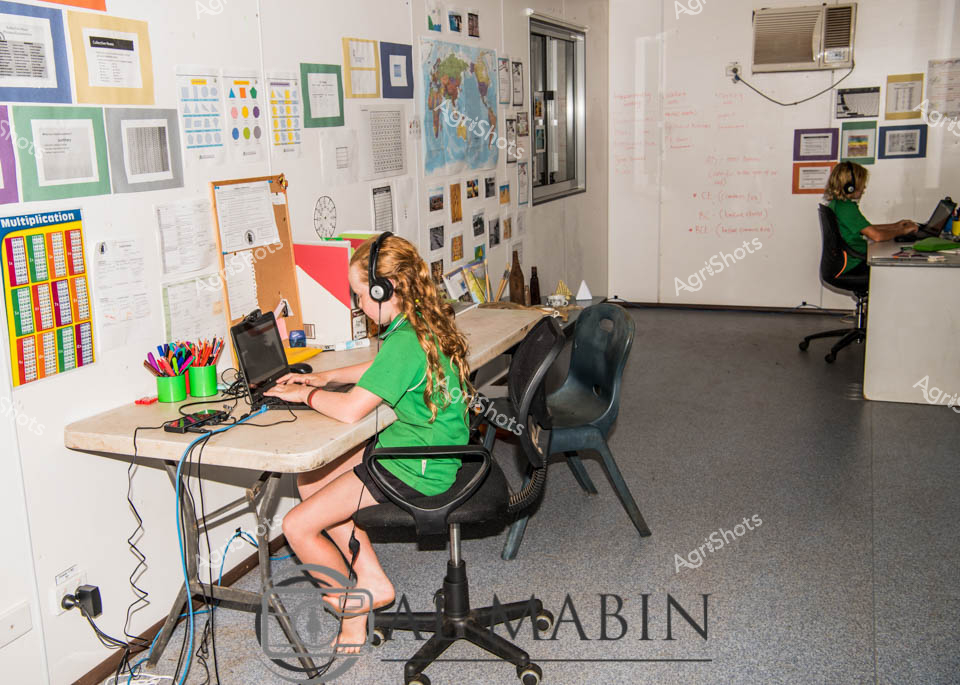
A student in a vibrant green shirt sits attentively at a workstation, wearing headphones and working on a laptop in a learning space richly decorated with educational posters, multiplication charts, and a world map. The classroom environment appears to be a School of the Air setup, typical of remote Australian educational programs that connect students across vast distances through technology. Colorful pencil containers, computer equipment, and an array of learning materials suggest an interactive and engaging educational approach designed to support rural and remote learners. The white walls are covered in a dynamic collage of learning resources, creating a stimulating backdrop for digital education. Another student can be seen in the background, similarly equipped with headphones and technology, reinforcing the collaborative and connected nature of distance learning in the Northern Territory. The scene captures the innovative spirit of Australian educational strategies that bridge geographical isolation through digital connectivity.
 Image
Image
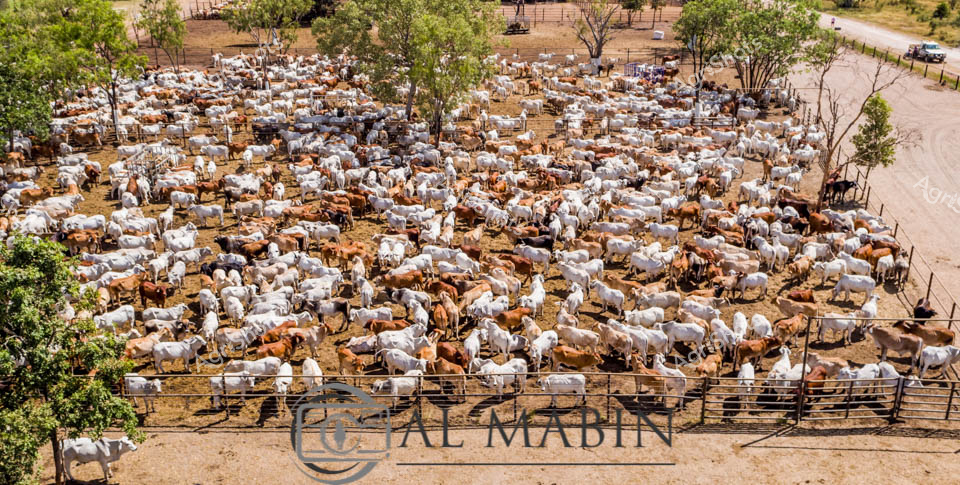
A sprawling cattle yard in Australia's Northern Territory teems with Brahman cattle, their distinctive white and light brown coats creating a living mosaic against the rusty earth. Densely packed within sturdy metal fencing, hundreds of heat-resistant cattle stand clustered beneath sparse trees, their bodies a testament to the resilience required in this harsh pastoral landscape. The dry season's signature dust hangs in the air, softening the edges of the scene and highlighting the intense agricultural activity. Bright white cattle predominate, their genetic adaptation to tropical climates evident in their robust frames and heat-tolerant characteristics. The composition reveals the scale of modern pastoral enterprise, with carefully managed herds representing significant economic and cultural investment in Australia's agricultural heartland.
 Image
Image
A man working as a cattle handler sits on the loading ramp of a road train cattle truck in the Northern Territory, wearing a wide-brimmed hat and blue work clothes. Below him, Brahman cattle with their characteristic humped backs are loaded into the truck's compartments, their grey and white coats visible through the metal railings. The scene captures the essential livestock transport operations of a remote cattle station, with scattered trees dotting the dry landscape in the background. Dust particles hang in the air, emphasizing the rugged conditions of outback cattle mustering and transportation.
 Image
Image
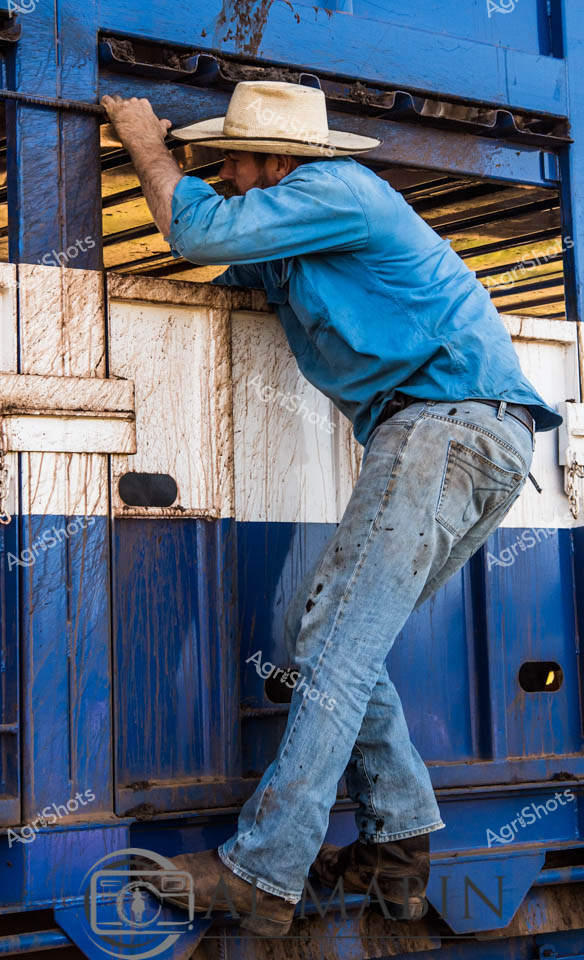
A man working as a stockman climbs onto the side of a weathered blue road train in the Northern Territory cattle yards. The worker, wearing a light blue shirt, cowboy hat, and denim jeans, demonstrates the hands-on nature of cattle station operations as he accesses the truck's loading compartments. The dusty, sun-beaten road train shows the rugged conditions of Northern Territory beef cattle transport, with its painted blue exterior weathered from countless journeys across the outback. This scene captures the essential logistics of moving Brahman cattle from remote stations to market, highlighting the physical demands and practical skills required in Australia's extensive beef cattle industry.
 Image
Image
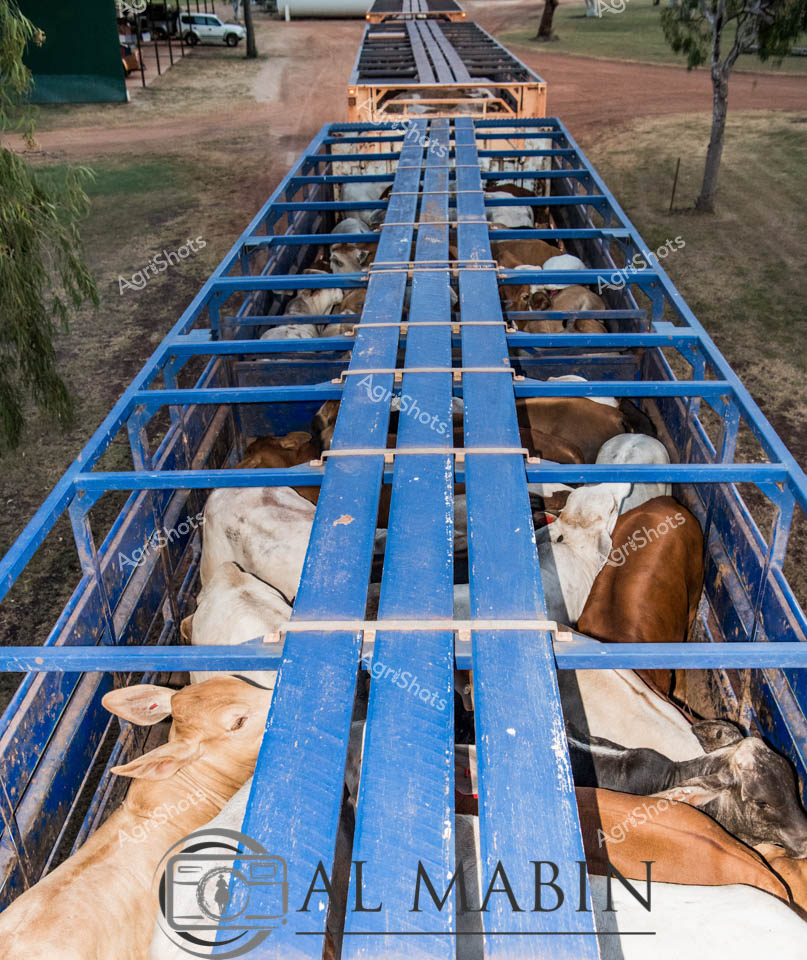
In the arid landscape of Australia's Northern Territory, a series of blue steel cattle yards cradle a collection of Brahman cattle, their distinctive humped silhouettes pressed together in a disciplined arrangement. The robust blue metallic framework of the loading trailer stretches across a dusty, sunbaked ground, flanked by sparse trees and a distant vehicle, capturing the harsh yet meticulously organized environment of a cattle station. Varying shades of tan, white, and rich brown coats blend together as the cattle stand shoulder-to-shoulder, their muscular bodies a testament to the resilient Brahman breed renowned for thriving in challenging tropical conditions. The scene speaks to the precision of Australian cattle logistics, where road train transporters like this carefully manage livestock movement across vast agricultural landscapes. Weathered blue paint on the loading infrastructure and the muted earth tones of the surrounding environment create a compelling visual narrative of pastoral industry, highlighting the intersection of animal husbandry, transportation, and the unforgiving beauty of the Australian outback.
 Image
Image
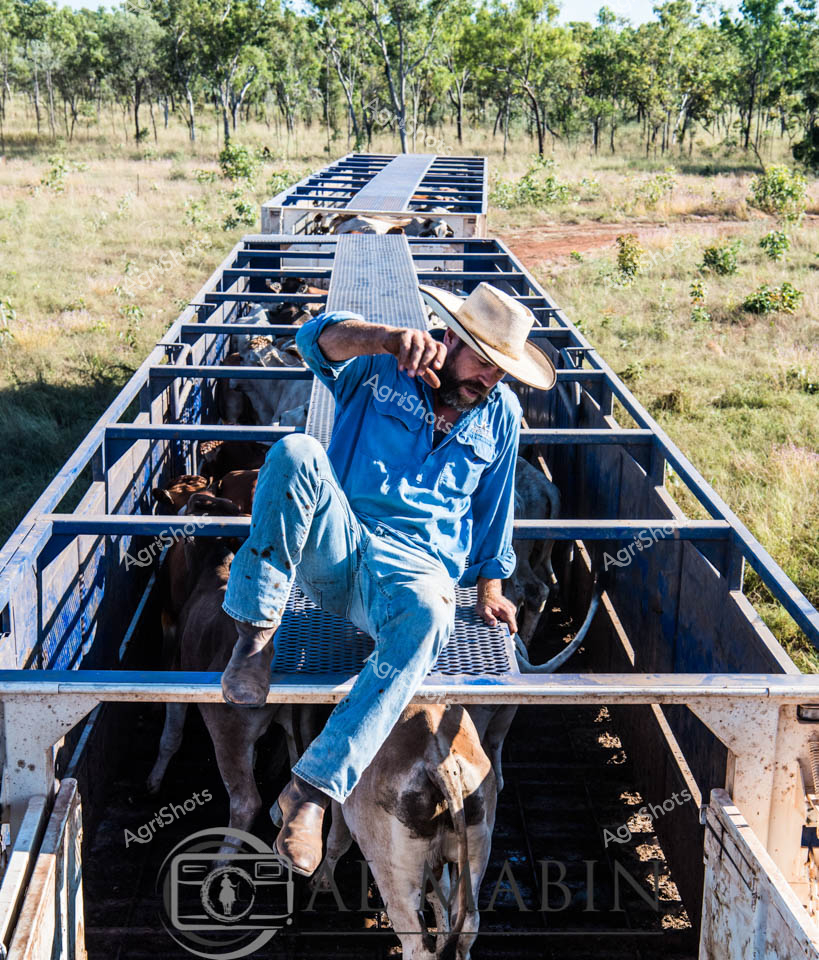
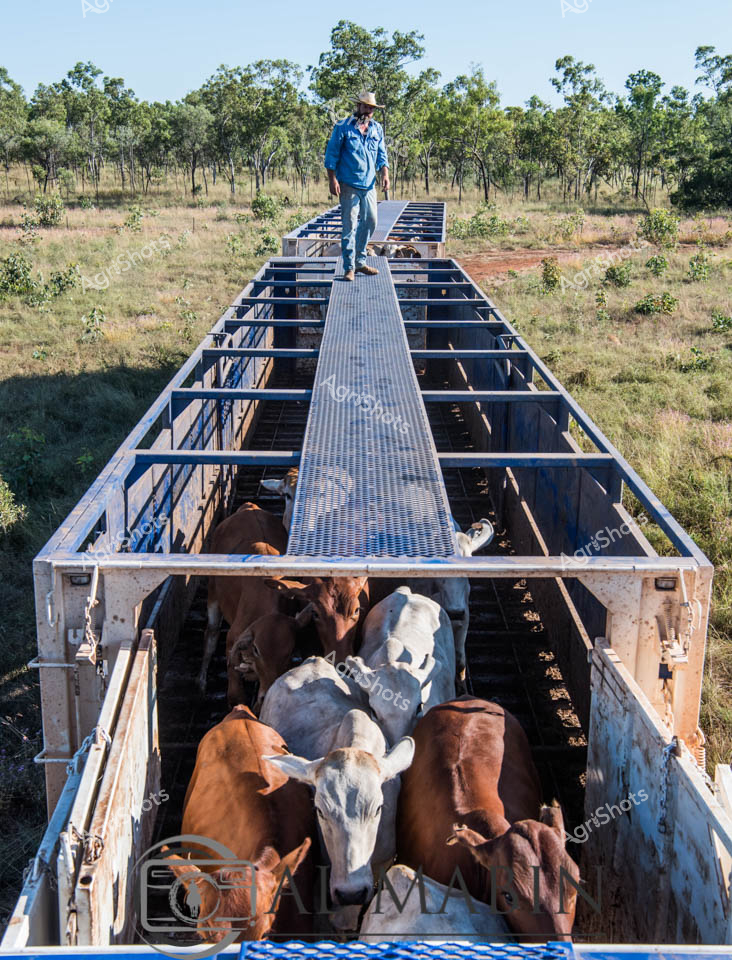
A man working as a cattle station operator walks along the top of a livestock road train trailer loaded with Brahman cattle in the Northern Territory. The truck's metal framework and mesh walkway allows safe access above the compartmented trailer carrying multiple beef cattle of various colors including red, white and brown. Scattered trees dot the rural landscape surrounding this remote cattle station, with red dirt roads visible beneath the heavy transport vehicle. This scene captures the essential logistics of moving cattle across Australia's vast pastoral regions, where road trains are critical for transporting livestock between stations and markets.
 Image
Image
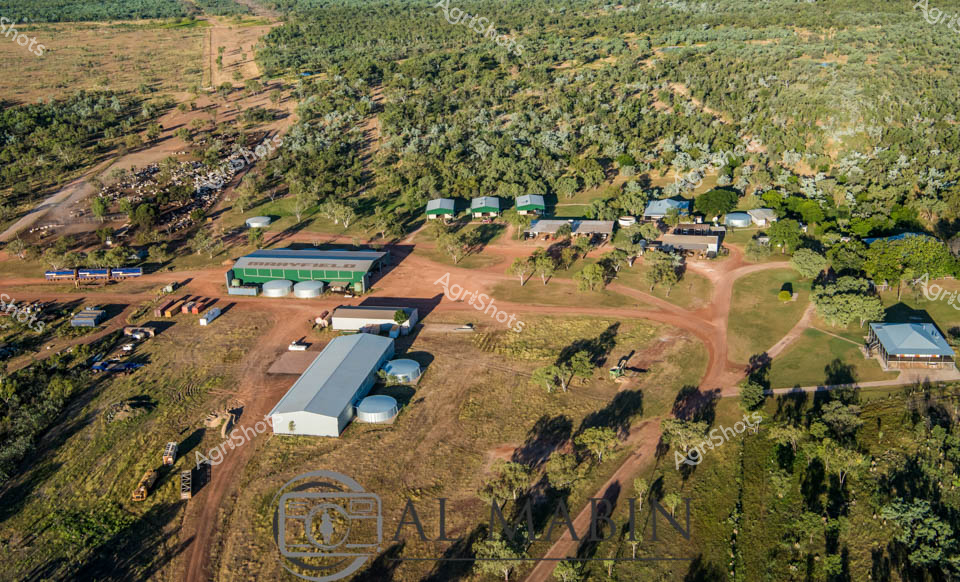
Aerial vista of a remote Northern Territory cattle station, where rusty-red earth tracks wind between silvery-green bushland and robust agricultural infrastructure. Expansive steel-clad sheds and cylindrical water tanks anchor the homestead complex, strategically positioned amid the rugged landscape. The morning sunlight casts long shadows across the dusty paddocks, highlighting the geometric precision of the built environment against the organic contours of the surrounding woodland. Typical of Top End pastoral operations, tthe station represents the resilient agricultural backbone of Australia's northern frontier - a carefully engineered settlement carved from the ancient landscape. Robust, functional buildings in forest green and slate gray speak to the pragmatic design demanded by harsh tropical conditions, while the intricate network of dirt roads suggests a complex logistical ecosystem supporting cattle production. The scene embodies the quintessential Australian pastoral narrative: human adaptation, technological resilience, and harmonious interaction with an uncompromising natural environment.
 Image
Image
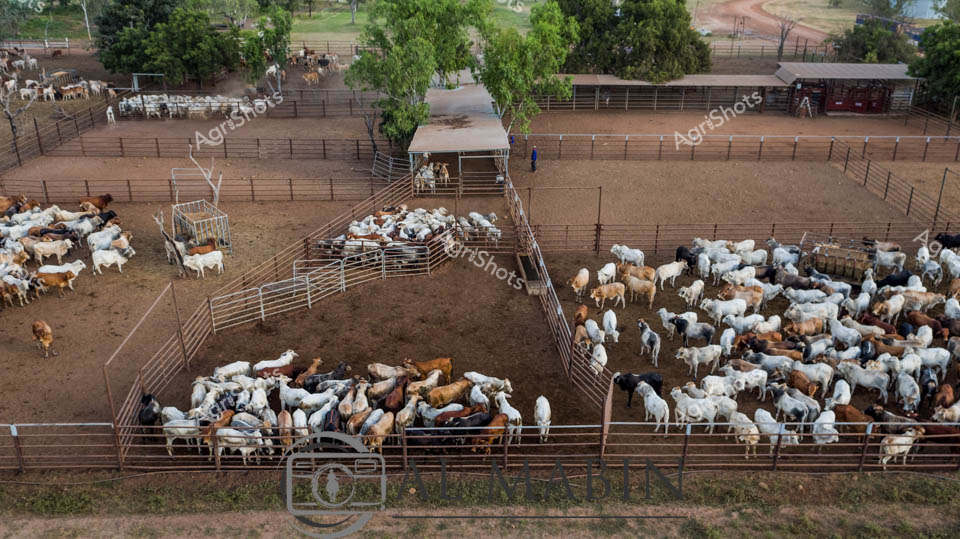
Brahman cattle cluster in sun-baked holding yards, their distinctive white and mottled brown coats creating a living patchwork against the rust-red earth of a Northern Territory cattle station. Robust steel yard panels create a geometric network of pens, guiding the herd through a central processing area with a raised walkway. Mature Brahman bulls and cows, renowned for their heat and tick resistance, stand clustered in tight groups, their muscular bodies testament to generations of breeding for harsh Australian pastoral conditions. Mature gum trees provide sparse shade around the perimeter, highlighting the arid landscape's uncompromising environment. A classic outback scene captures the precision of modern cattle management, where traditional pastoral skills merge with systematic livestock handling infrastructure. The image pulses with the quiet energy of Australia's beef production heartland - a testament to agricultural resilience in one of the world's most challenging farming environments.
 Image
Image
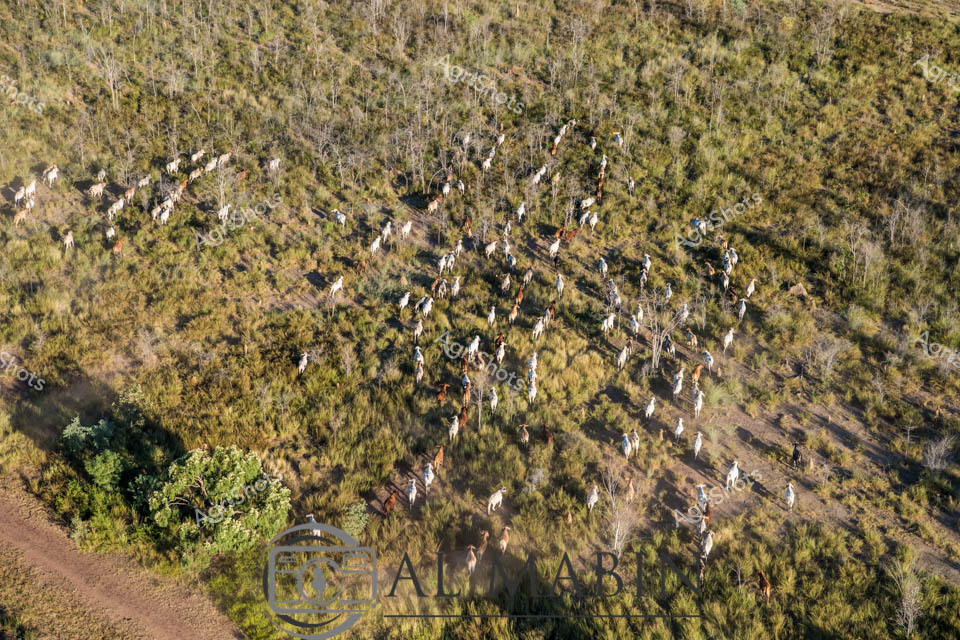
Brahman cattle stream across a sun-drenched pastoral landscape in Australia's rugged Northern Territory, captured in a sweeping aerial view that reveals the intricate choreography of mustering. The pale-coated herd moves as a living current through a sea of golden grasses and sparse woodland, their forms creating an organic pattern against the textured terrain. Dusty tracks border the scene, evidence of the station's extensive network of pathways guiding livestock movement. Robust Brahman cattle, renowned for their heat tolerance and distinctive humped shoulders, navigate the sparse woodland with a purposeful momentum that speaks to generations of pastoral management. The photograph captures the essence of northern Australian cattle farming - a delicate dance between human intervention and natural landscape, where livestock traverse vast, untamed territories under the watchful eye of stockmen. The muted earth tones of the landscape - sage greens, ochre browns, and pale dust - create a timeless canvas that epitomizes the resilience and beauty of Australia's agricultural heartland.
 Image
Image
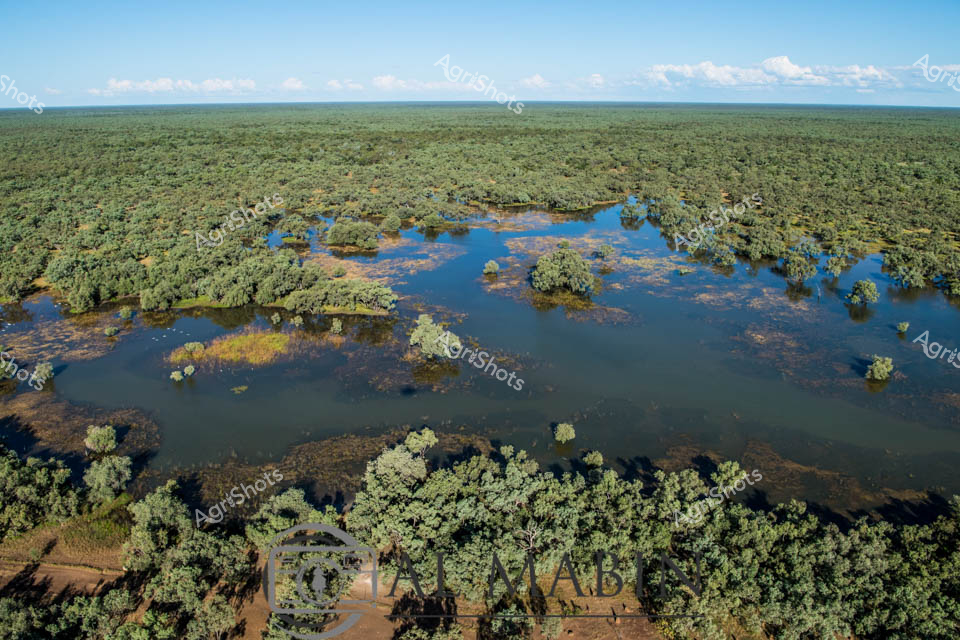
Aerial panorama of a classic Top End floodplain during the wet season, revealing the lush, inundated landscape of a remote Northern Territory cattle station. Expansive blue-green waters weave through dense eucalyptus woodland, creating a complex mosaic of submerged trees and seasonal wetlands characteristic of the region's tropical savanna ecosystem. The waterlogged terrain showcases the dramatic seasonal transformation of the landscape, where thousands of hectares become temporarily converted into a shallow, tree-studded inland sea. Soft cumulus clouds drift across a cerulean sky, highlighting the immense horizontal scale of this pristine wilderness. Glimpses of a dirt track in the foreground suggest the challenging access and remote nature of these vast pastoral lands. The image captures the dynamic hydrology of Australia's northern landscapes, where annual monsoon rains dramatically reshape the environment, supporting rich biodiversity and sustaining cattle operations across immense, seemingly untouched territories.
 Image
Image
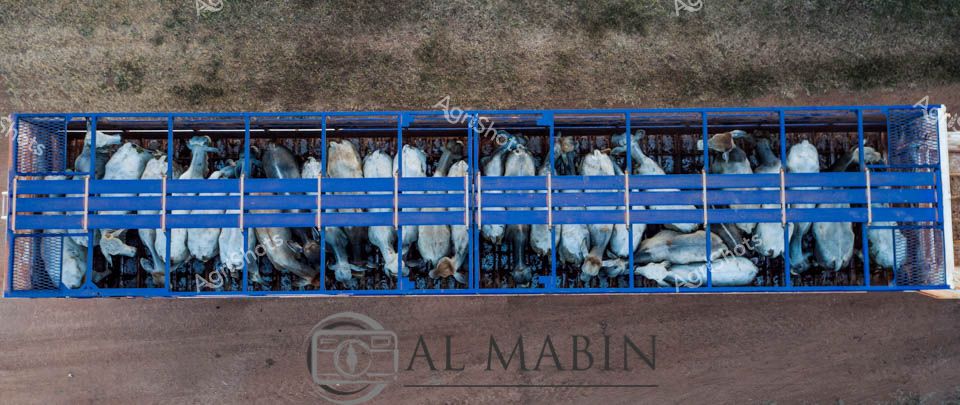
In the harsh, dusty landscapes of Australia's Northern Territory, a blue livestock transport trailer stands loaded with pale Brahman cattle, their distinctive humped backs and loose skin visible through the metal mesh compartments. The cattle are tightly packed, their pale hides contrasting sharply against the vibrant blue frame of the trailer, suggesting a journey across vast pastoral lands between cattle stations. Subtle brown and grey tones of the surrounding environment - likely a dirt road with sparse vegetation - frame the scene, highlighting the rugged infrastructure of Australia's beef production chain. The Brahman breed, renowned for its heat and insect resistance, represents a critical genetic adaptation to Australia's challenging tropical agricultural environments. This image encapsulates the resilience, scale, and logistical complexity of Australia's beef industry, where road trains like this traverse immense distances to move livestock across the continent's challenging terrain.
 Image
Image
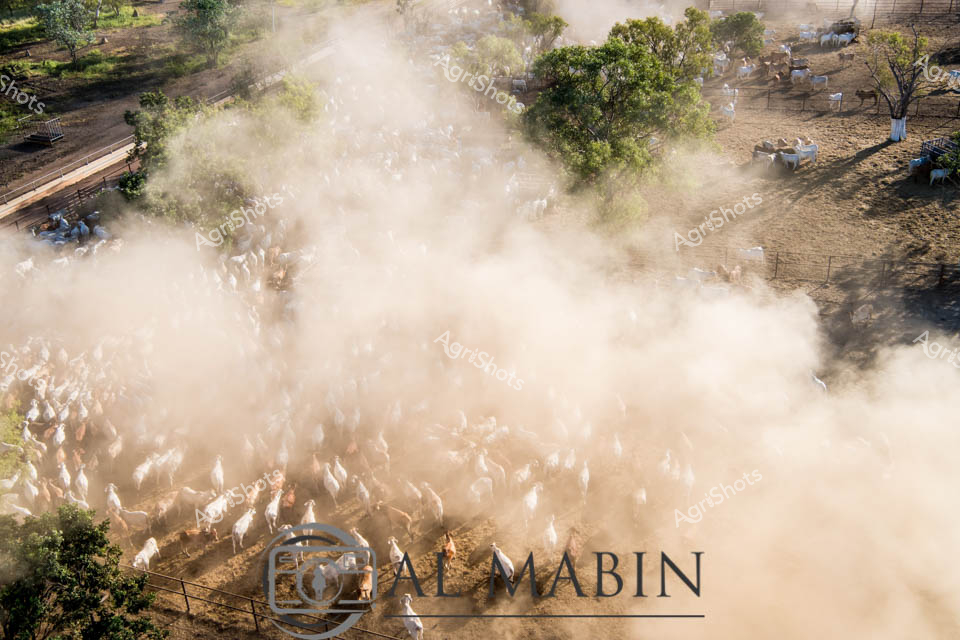
Brahman cattle surge through a dust-laden stockyard, their pale hides blending with the billowing ochre clouds of the Northern Territory landscape. A thundering mass of livestock moves with collective energy, kicking up a massive plume that obscures the surrounding paddock and scattered gum trees. The aerial perspective captures the raw dynamism of pastoral life, where massive herds are guided through yards with precision and skill. Sunlight filters through the dust, creating a golden-brown atmosphere that speaks to the harsh, beautiful environment of Australia's northern cattle stations. Fences and yards frame the movement, revealing the carefully designed infrastructure that manages these powerful animals. The scene embodies the resilience of cattle and cattlemen in one of Australia's most challenging agricultural terrains, where Brahman cattle - bred for heat tolerance and insect resistance - thrive in conditions that would defeat other breeds.
 Image
Image
Aerial panorama of a quintessential Northern Territory cattle station, where robust Brahman cattle gather in expansive yards under the dappled shade of native eucalyptus trees. Pristine white road trains with gleaming blue canopies stand ready to transport livestock, their substantial trailers highlighting the scale of Australia's northern cattle industry. The rich terracotta earth contrasts against verdant green paddocks, creating a textural landscape that speaks to the harsh yet productive agricultural environments of the Top End. Intricate fence lines and strategically placed trees provide natural breaks in the dusty landscape, demonstrating sophisticated station management and cattle handling techniques. Multiple holding pens reveal careful livestock sorting and management, with herds clustered in different zones showing the systematic approach of modern Australian beef production. This vista encapsulates the resilience, engineering, and pastoral heritage that defines Australia's northern cattle enterprises, where sophisticated agricultural practices meet rugged wilderness.
 Image
Image
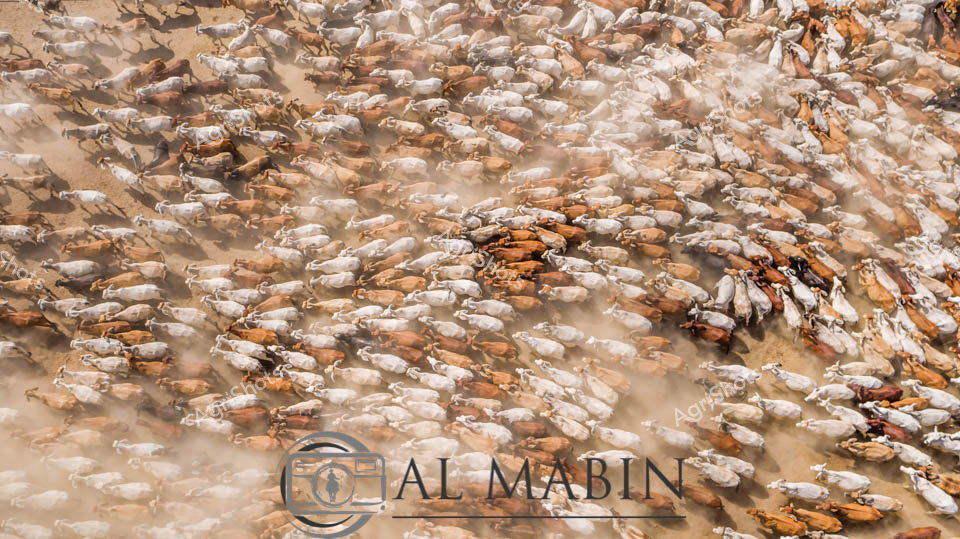
Herds of Brahman cattle cluster tightly in a dusty cattle yard, their distinctive humped shoulders and light-colored coats creating a dense, undulating landscape of livestock. Warm ochre and white tones dominate the scene, with cattle pressed closely together raising clouds of fine red earth that softens the boundaries between animals. The aerial perspective reveals the impressive scale of the Northern Territory cattle station, where hundreds of robust Brahman cattle - renowned for their heat and insect resistance - await processing or movement. Swirling dust creates an atmospheric haze, filtering sunlight and casting a golden-brown palette across the scene, highlighting the resilience of these animals in Australia's challenging pastoral environments. The tightly packed yard suggests a moment of active cattle management, likely during mustering or preparation for transportation, demonstrating the complex logistics of northern Australian cattle production.
 Image
Image
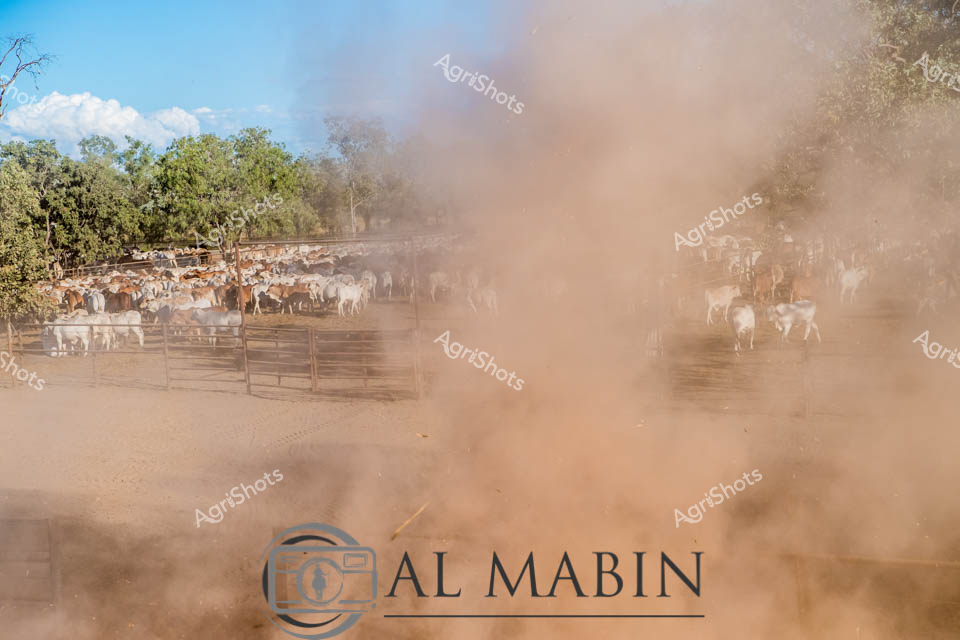
Brahman cattle cluster in tight formation within timber-railed yards, creating a swirling cloud of ochre dust that obscures the landscape. The harsh afternoon light of the Northern Territory illuminates a classic pastoral scene, where these heat-tolerant cattle breed stand resilient against the unforgiving station environment. Muscular white and red-tinged bodies press together, their robust frames testament to generations of adaptation to Australia's challenging tropical grasslands. Sparse gum trees frame the periphery, providing minimal shade as the herd stands stoically in the paddock, surrounded by billowing dust that speaks to the dry season's intensity. The weathered cattle yards and fine particulate matter capture the raw essence of northern Australian cattle production - a landscape of endurance, where livestock and environment merge in a timeless agricultural tableau. This image embodies the spirit of the beef industry's most iconic tropical cattle breed, showcasing the Brahman's fundamental role in Australia's agricultural heritage.
 Image
Image
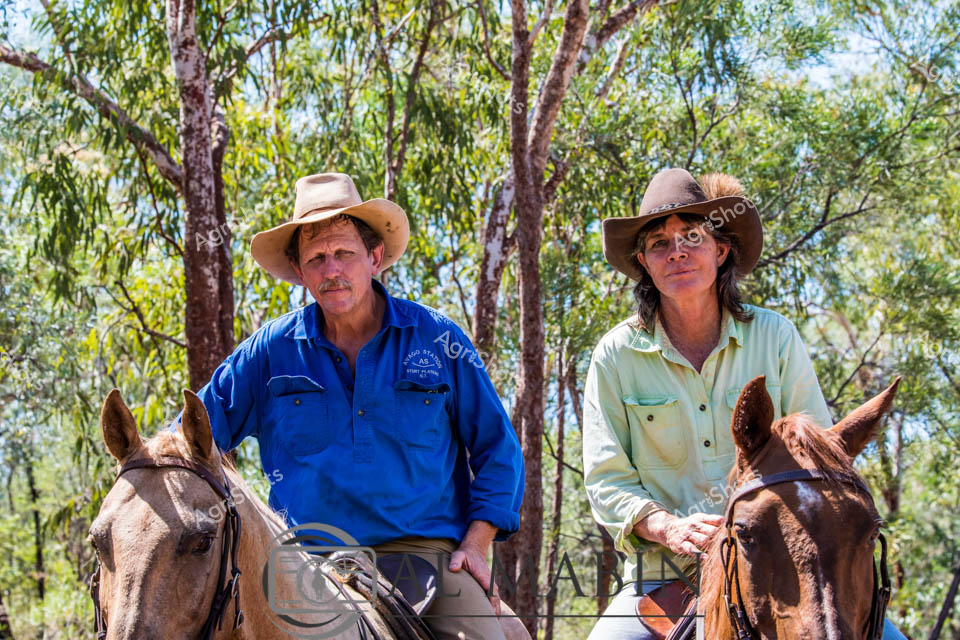
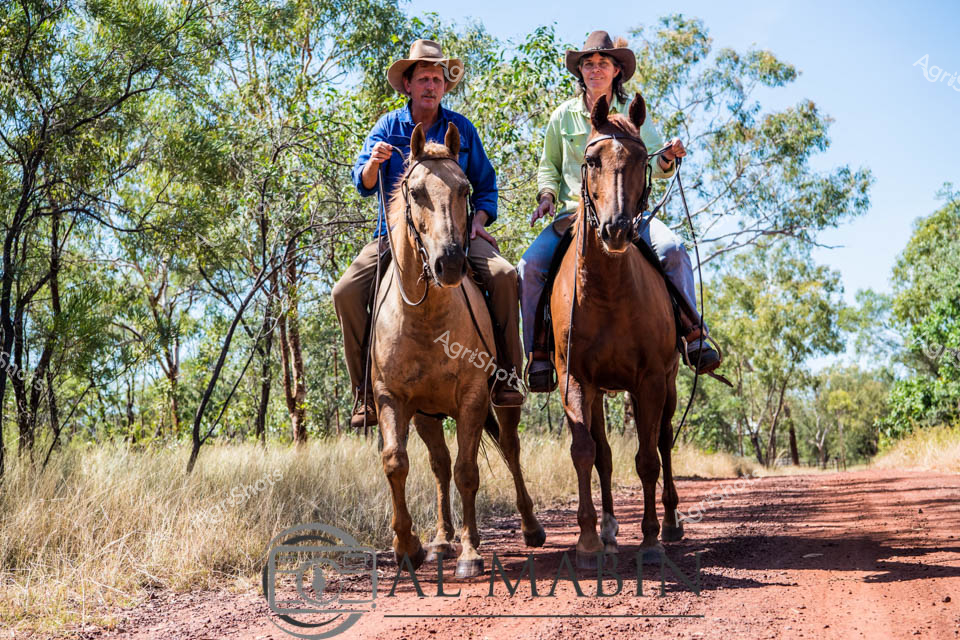
Two station hands on horseback pause beneath the dappled shade of native trees in the Northern Territory. A man and woman, both wearing wide-brimmed hats and long-sleeved shirts, sit mounted on the horses during what appears to be a break from station work. The lush green canopy overhead provides welcome relief from the harsh outback sun, while their relaxed postures suggest a moment of respite during their daily duties managing livestock across the expansive NT station property.
 Image
Image
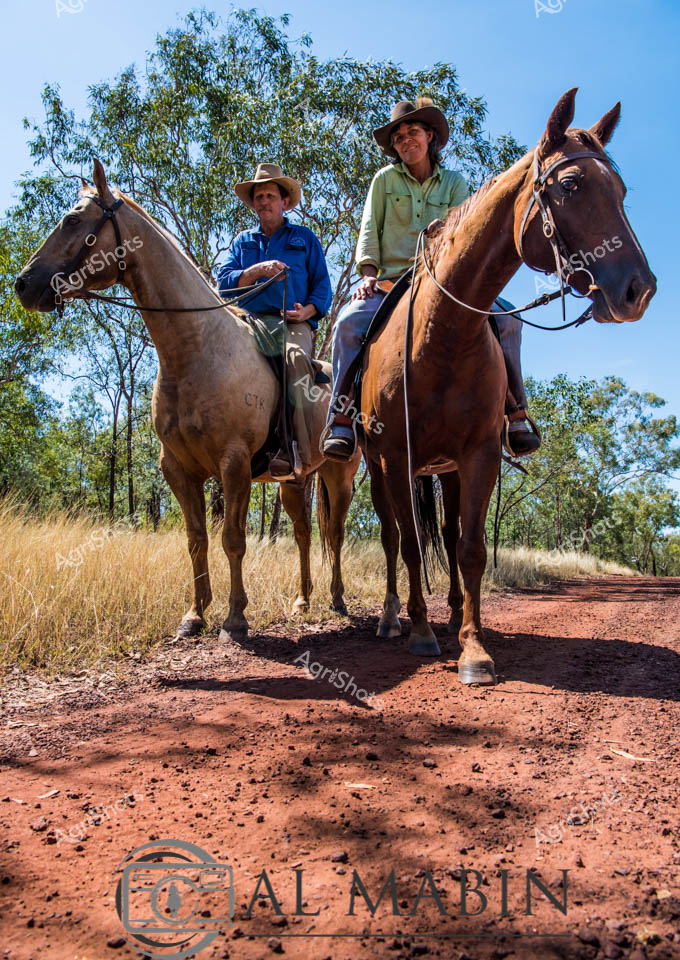
Two station hands on horseback pause on a dirt track in the Northern Territory, the horses standing calmly beneath the sparse eucalyptus trees. A man in a blue shirt rides a grey horse while a woman in green sits astride a chestnut mount, both wearing characteristic station hats for sun protection. The red earth and golden grasslands stretch into the distance, creating the quintessential Australian outback landscape where these skilled riders work the vast cattle station. The clear blue sky and scattered native vegetation frame this authentic moment of station life in the NT's remote pastoral country.
 Image
Image
Two horse riders traverse a red dirt road through the Australian bush in the Northern Territory, with the horses moving at a steady pace along the station track. A man and woman, both wearing wide-brimmed hats and riding gear, guide their brown horses through the rural landscape dotted with native trees and golden grassland. The dusty earth beneath the horses' hooves and the sparse vegetation surrounding the dirt road capture the quintessential outback setting of a Northern Territory cattle station. This pastoral scene showcases the enduring tradition of horseback travel across Australia's vast rural properties, where horses remain essential for station work and transportation across remote terrain.
 Image
Image
A bearded man working as a station hand walks confidently along steel cattle yard rails in Australia's Northern Territory. The sturdy infrastructure stretches beneath him as he oversees operations at this remote beef cattle station. Rolling bushland and scattered trees create a typical outback backdrop under the clear blue sky. His practical work attire and purposeful stride reflect the hands-on nature of cattle station management in this rugged landscape.
 Image
Image
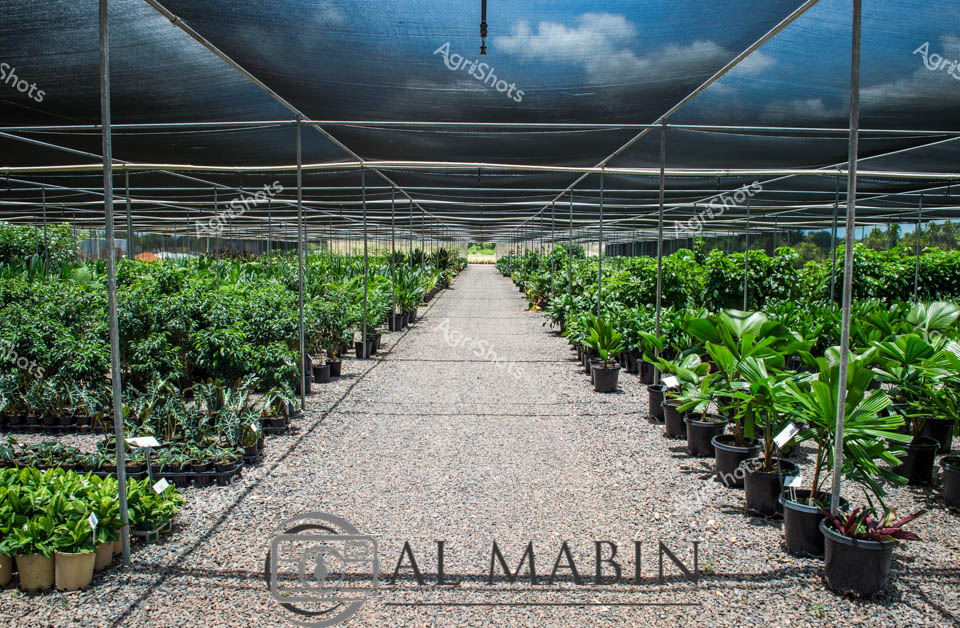
Al Marin Horticultural Nursery: A Verdant Sanctuary of Cultivation Stretching beneath a sophisticated shade structure, rows of meticulously arranged potted plants create an emerald corridor of agricultural precision. Gravel pathways bisect lush green specimens, each carefully cultivated in uniform black containers, revealing a professional plant propagation environment. The overhead netting filters brilliant sunlight, casting a soft azure-tinged atmosphere that protects delicate saplings and mature plants alike. Varying shades of green - from deep forest to vibrant chartreuse - populate the nursery, demonstrating the diversity of vegetation being systematically developed. Structural metal framework supports the expansive greenhouse, creating geometric lines that contrast beautifully with the organic forms of the botanical collection. The Al Marin branding prominently displayed suggests a sophisticated commercial nursery operation, likely specializing in tropical and subtropical plant varieties typical of Northern Territory cultivation strategies.
 Image
Image
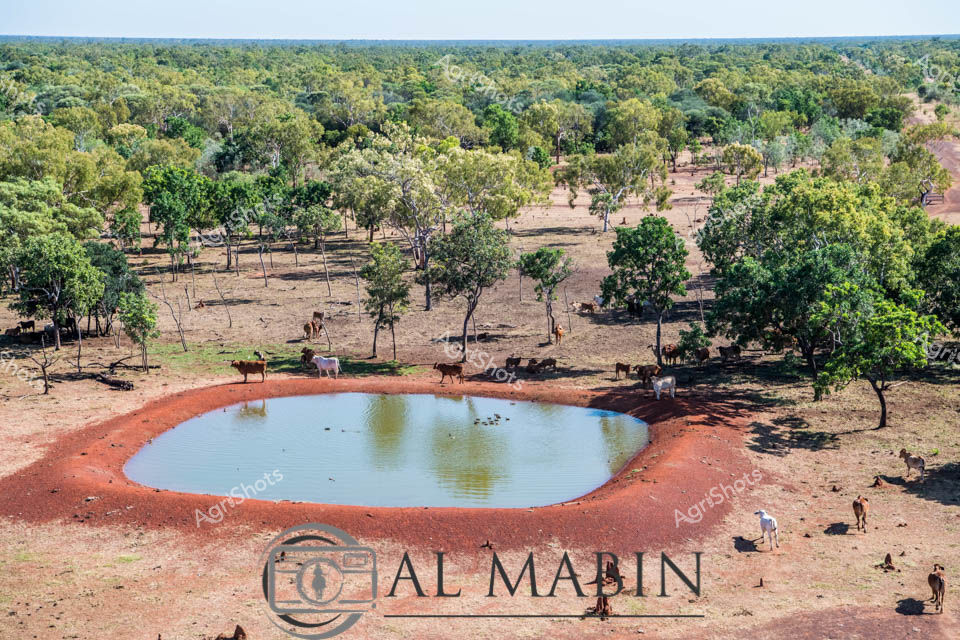
Brahman cattle cluster around a rusty-red earth dam, their pale hides contrasting against the parched landscape of a Northern Territory cattle station. The circular water hole, ringed by ochre-colored soil, provides critical hydration for the hardy livestock amid the sparse woodland of eucalyptus and acacia trees. Scattered across the dusty paddock, the cattle create a living tableau of resilience, their muscular bodies adapted to the harsh tropical savanna environment. The expansive backdrop reveals a dense green horizon, showcasing the vast, untamed wilderness that characterizes Australia's remote agricultural regions. Soft midday light casts dappled shadows across the ground, highlighting the textural contrast between the red earth, weathered tree bark, and the reflective surface of the life-giving dam. This image captures the essence of northern Australian cattle farming - a delicate balance of survival, agricultural practice, and raw, elemental beauty.
 Image
Image
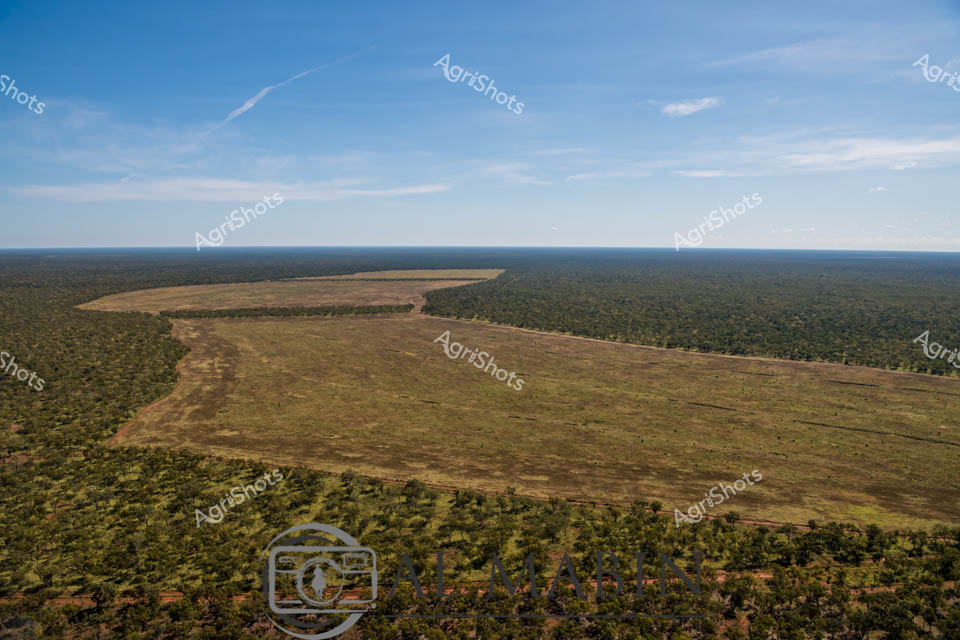
Vast savanna grasslands stretch across the Northern Territory, revealing the raw beauty of an expansive cattle station. Golden-brown pastures curve through dense eucalyptus woodland, creating a dramatic landscape of agricultural transformation. The cleared paddocks, surrounded by native bushland, demonstrate the intricate balance between managed grazing lands and preserved wilderness. Soft blue skies with wispy cirrus clouds hover above the undulating terrain, suggesting a crisp dry season morning with perfect visibility across kilometers of remote pastoral country. This aerial perspective captures the immense scale of Northern Australian agricultural operations, where properties can span hundreds of thousands of hectares. The landscape tells a story of careful land management, showcasing how carefully planned agricultural practices integrate with the rugged, ancient ecosystems of the continent's tropical north.