About this image
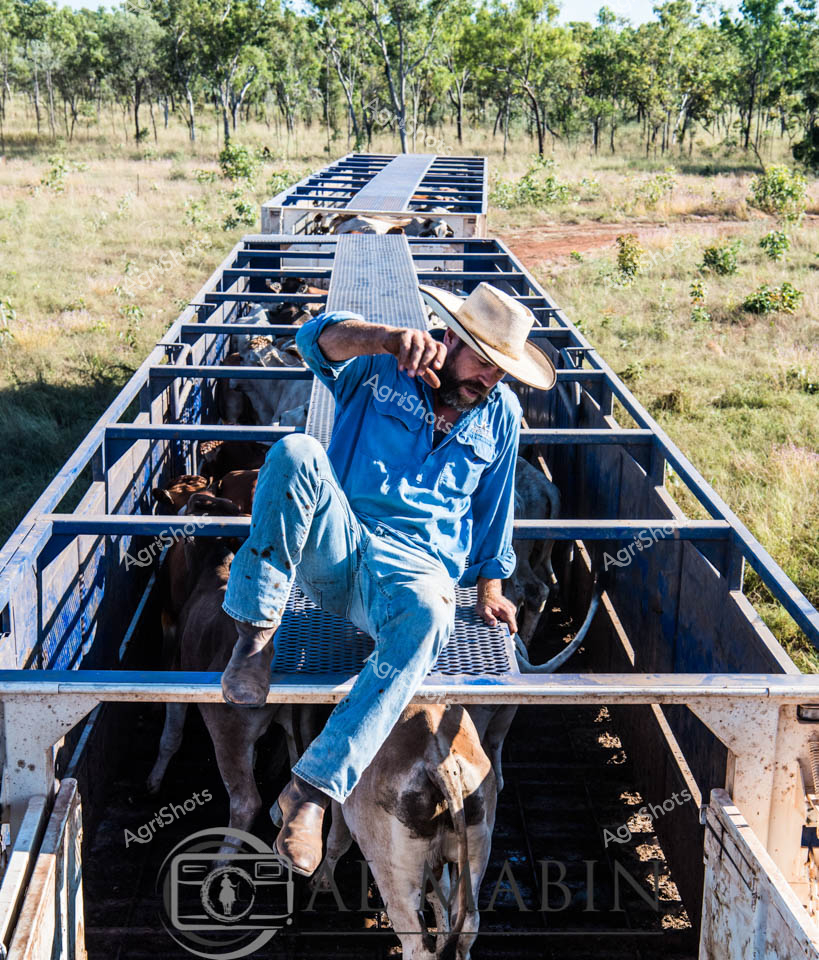
A man working as a cattle handler sits on the loading ramp of a road train cattle truck in the Northern Territory, wearing a wide-brimmed hat and blue work clothes. Below him, Brahman cattle with their characteristic humped backs are loaded into the truck's compartments, their grey and white coats visible through the metal railings. The scene captures the essential livestock transport operations of a remote cattle station, with scattered trees dotting the dry landscape in the background. Dust particles hang in the air, emphasizing the rugged conditions of outback cattle mustering and transportation.
Similar media
 Image
Image
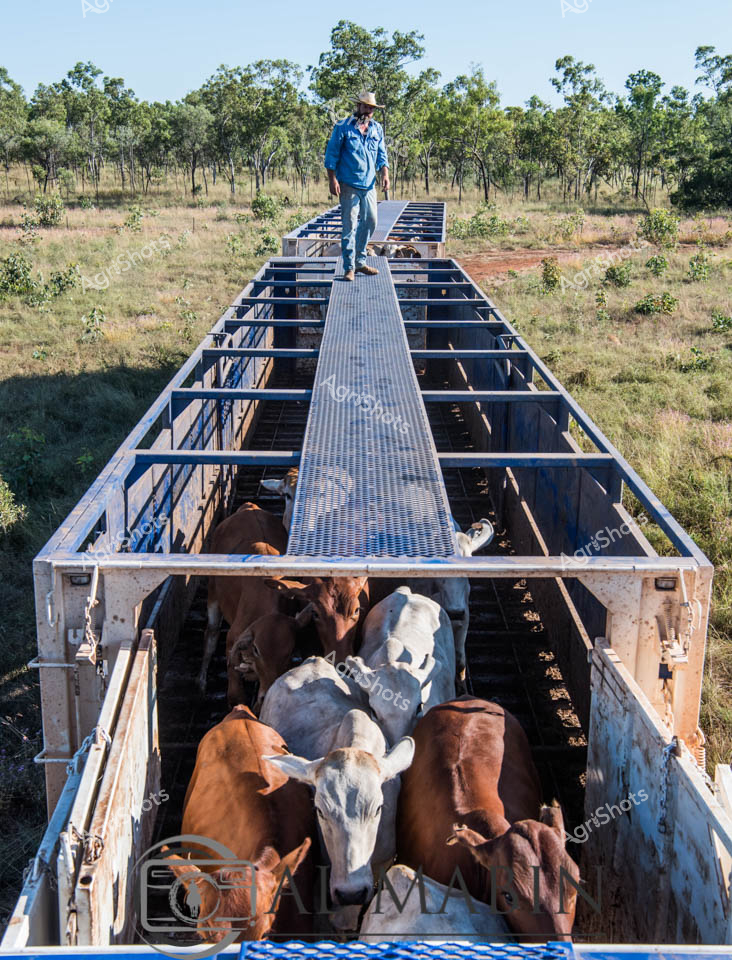
A man working as a cattle station operator walks along the top of a livestock road train trailer loaded with Brahman cattle in the Northern Territory. The truck's metal framework and mesh walkway allows safe access above the compartmented trailer carrying multiple beef cattle of various colors including red, white and brown. Scattered trees dot the rural landscape surrounding this remote cattle station, with red dirt roads visible beneath the heavy transport vehicle. This scene captures the essential logistics of moving cattle across Australia's vast pastoral regions, where road trains are critical for transporting livestock between stations and markets.
 Image
Image
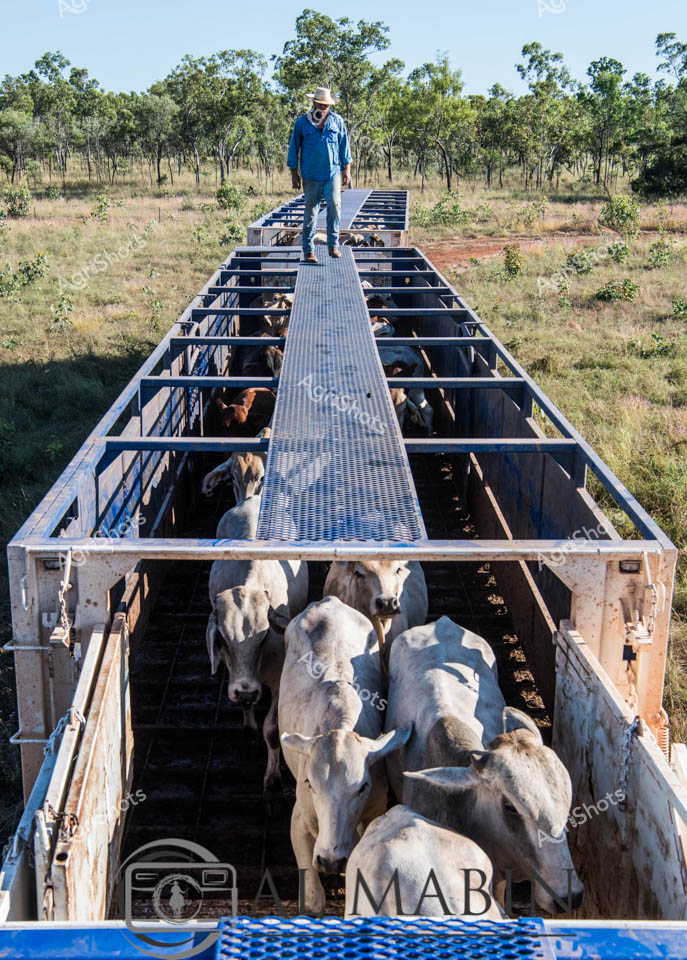
A man working as a cattle farmer walks along the central walkway of a road train cattle trailer loaded with Brahman cattle in the Northern Territory. The distinctive humped Brahman cattle are packed into the compartmentalized truck trailer, ready for transport across the station's dusty landscape. Scattered trees dot the arid outback terrain in the background, while red dust from the cattle yards creates a hazy atmosphere typical of NT beef operations. This scene captures the essential logistics of moving cattle from remote stations to markets using the specialized road trains that are vital to Australia's extensive beef industry.
 Image
Image
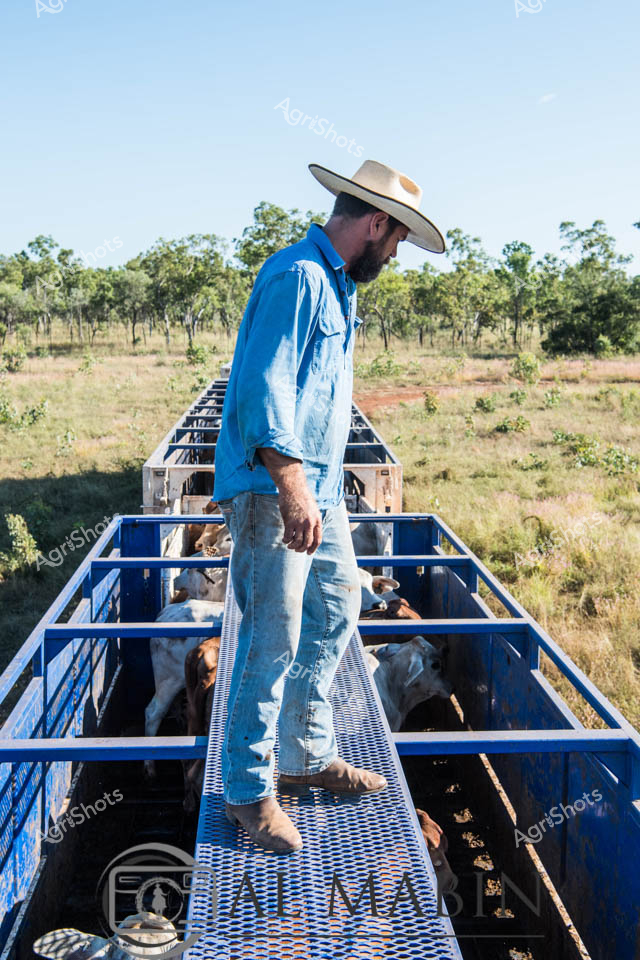
A man working as a station hand walks along the blue metal walkway of cattle yards in the Northern Territory, overseeing Brahman cattle below. The distinctive humped Brahman beef cattle move through the blue steel yards beneath him, their light-colored coats catching the sunlight. Sparse trees dot the arid landscape beyond the yards, typical of Northern Territory cattle station country. The scene captures the essential work of cattle handling in Australia's remote pastoral regions, where road trains transport cattle across vast distances.
 Image
Image
A bearded man working as a station hand walks confidently along steel cattle yard rails in Australia's Northern Territory. The sturdy infrastructure stretches beneath him as he oversees operations at this remote beef cattle station. Rolling bushland and scattered trees create a typical outback backdrop under the clear blue sky. His practical work attire and purposeful stride reflect the hands-on nature of cattle station management in this rugged landscape.
 Image
Image
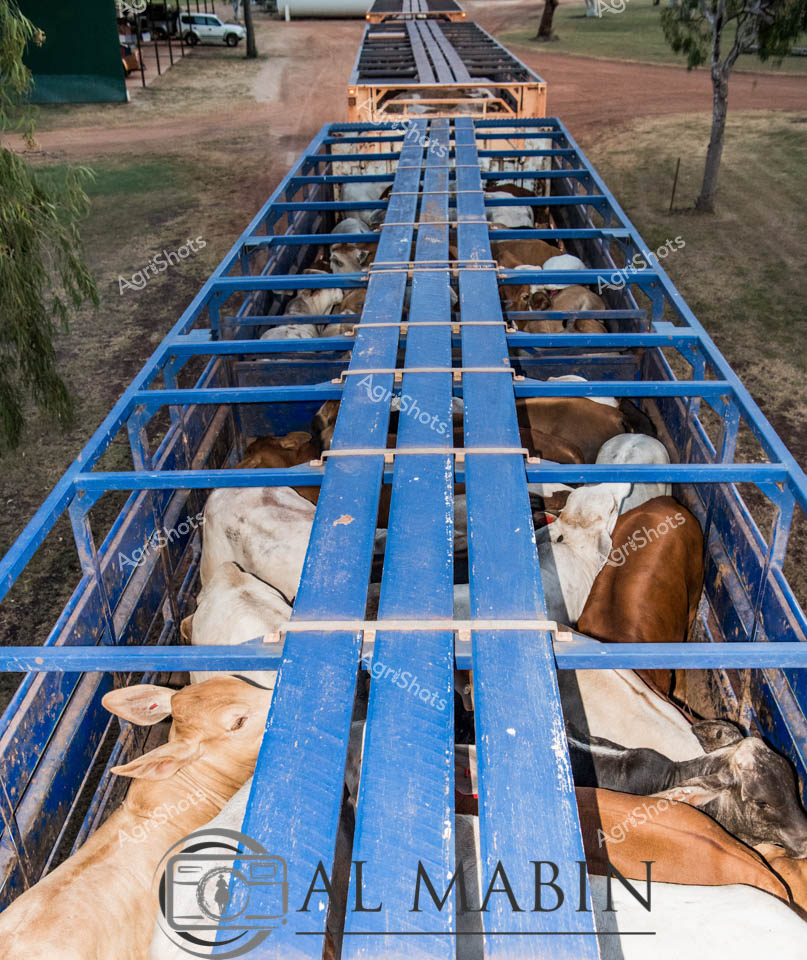
In the arid landscape of Australia's Northern Territory, a series of blue steel cattle yards cradle a collection of Brahman cattle, their distinctive humped silhouettes pressed together in a disciplined arrangement. The robust blue metallic framework of the loading trailer stretches across a dusty, sunbaked ground, flanked by sparse trees and a distant vehicle, capturing the harsh yet meticulously organized environment of a cattle station. Varying shades of tan, white, and rich brown coats blend together as the cattle stand shoulder-to-shoulder, their muscular bodies a testament to the resilient Brahman breed renowned for thriving in challenging tropical conditions. The scene speaks to the precision of Australian cattle logistics, where road train transporters like this carefully manage livestock movement across vast agricultural landscapes. Weathered blue paint on the loading infrastructure and the muted earth tones of the surrounding environment create a compelling visual narrative of pastoral industry, highlighting the intersection of animal husbandry, transportation, and the unforgiving beauty of the Australian outback.
 Image
Image
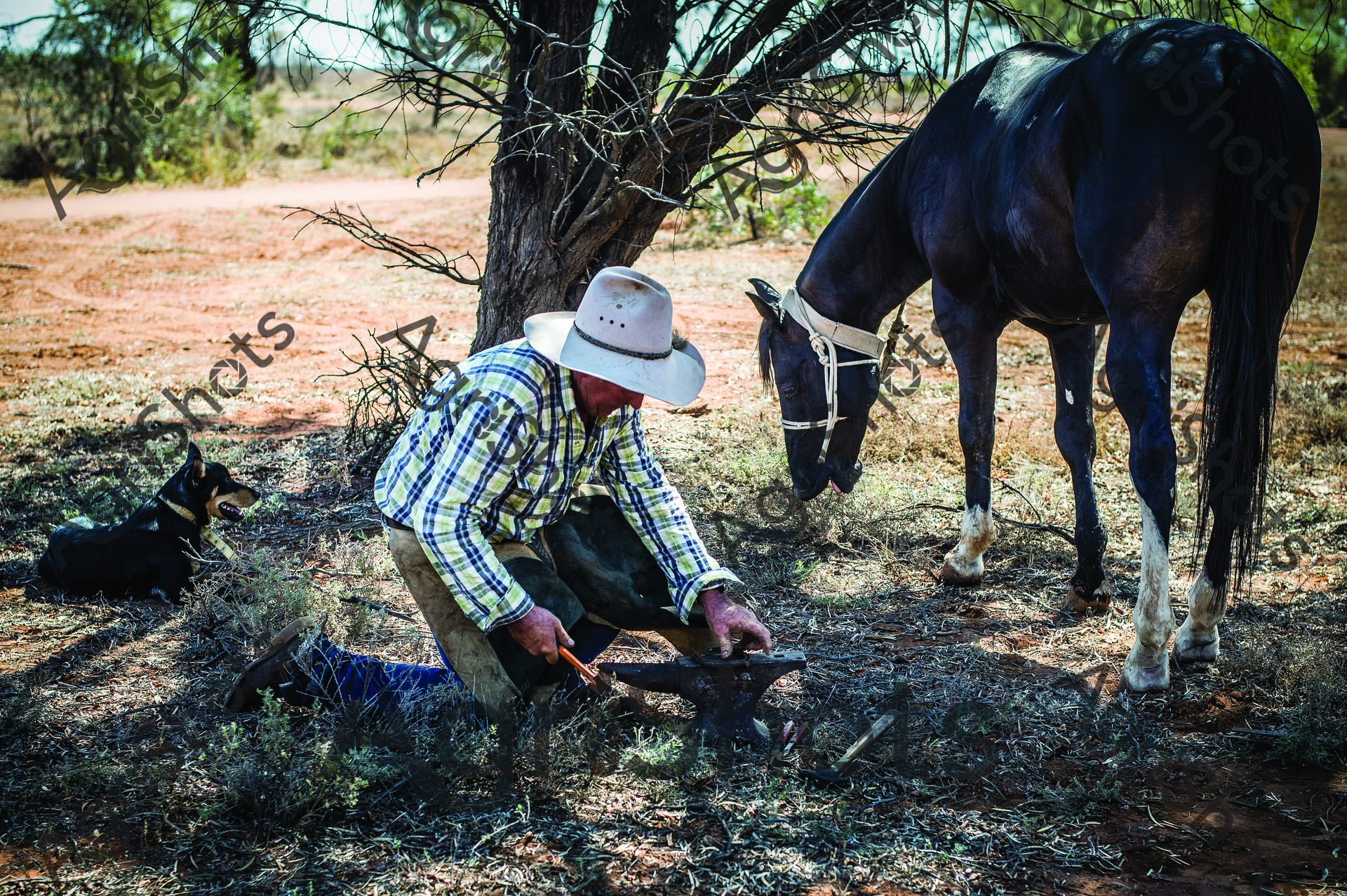
Under the dappled shade of a gnarled outback tree, a seasoned stockman tends to essential farm work with quiet precision. Wearing a classic white bush hat and a blue-green checked work shirt, he carefully manages a horse shoeing task, with a dark blue toolbox and essential metalwork nearby. A loyal working dog rests watchfully to the left, while the deep navy horse stands patiently, its muscular form contrasting against the dusty reddish-brown earth and sparse ground vegetation. The scene captures the timeless rhythm of rural Australian agricultural labor - methodical, practical, and deeply connected to the landscape. Muted earth tones and the soft filtered light suggest an early morning or late afternoon moment, typical of the harsh yet beautiful conditions of regional New South Wales. This image embodies the resilience and skill of Australian rural workers, where every task is performed with quiet expertise and a deep understanding of both animal and environment.
 Image
Image
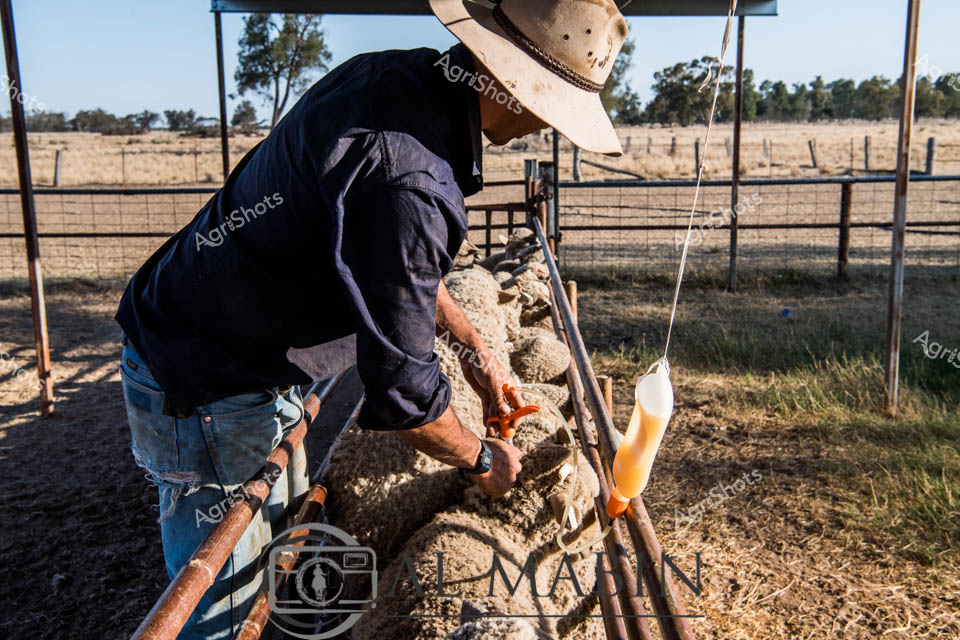
Merino lamb vaccination unfolds under the harsh midday sun of rural New South Wales, a quintessential moment of agricultural care. A weathered farmworker in a wide-brimmed khaki hat and navy work shirt carefully administers a health treatment to a cluster of woolly Merino lambs within sturdy metal livestock yards. Dusty golden paddocks and distant eucalyptus trees frame the scene, capturing the unforgiving yet beautiful Australian pastoral landscape. Rusted equipment and worn fence lines speak to generations of agricultural resilience, while the precise handling of the lamb demonstrates the skill and dedication of Australian farmers. The orange vaccination tool contrasts sharply with the soft cream and grey fleece of the Merino lambs, highlighting the critical intersection of animal husbandry and veterinary science. This image epitomizes the meticulous care and expertise required in maintaining the health of Australia's prized sheep flocks, a cornerstone of the nation's agricultural heritage.
 Image
Image
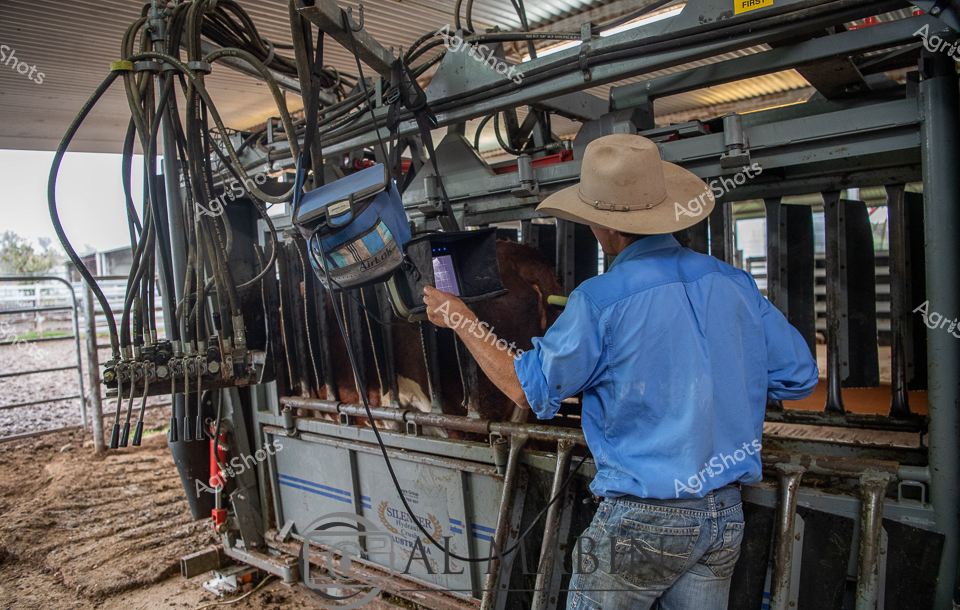
Under the corrugated metal roof of a modern cattle handling facility, a skilled farmworker in a crisp blue shirt and wide-brimmed sun hat operates a sophisticated livestock management system. The Catagra cattle crush stands ready, its robust steel framework designed to safely restrain animals for critical agricultural procedures like vaccination, pregnancy testing, and health monitoring. Hydraulic arms and precision equipment surround the worker, who carefully manages electronic tracking and medical protocols with focused professionalism. Dark rubber tubes and technical mechanisms create a complex network of agricultural technology, highlighting the sophisticated intersection of animal husbandry and modern innovation. Soft natural light filters through the shed, casting subtle shadows on the dirt floor and emphasizing the careful, methodical nature of livestock management in contemporary Australian agriculture. The scene represents the careful balance of animal welfare, technological efficiency, and agricultural expertise that defines modern farming practice in rural New South Wales.