Browse the collection
 Image
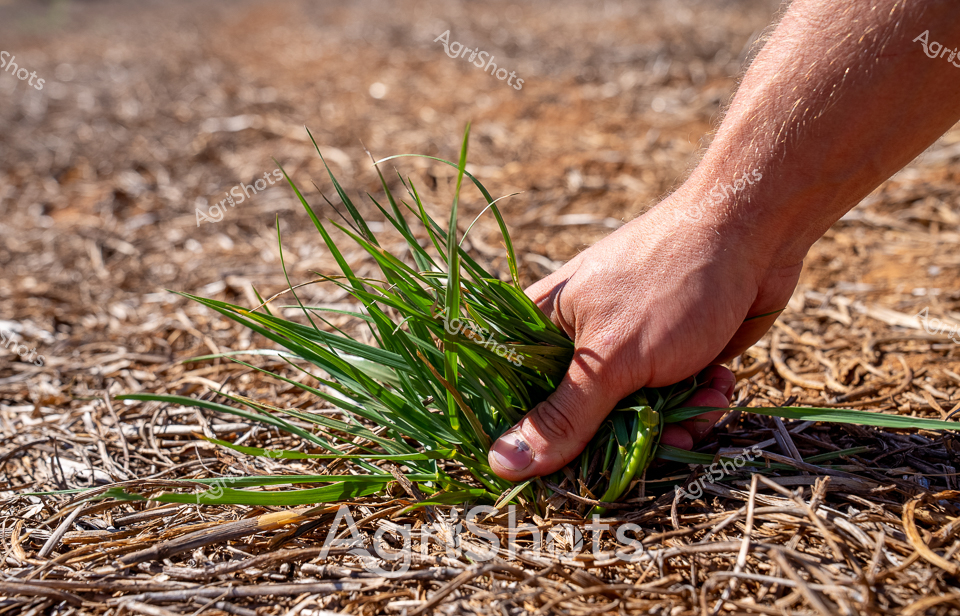
A weathered hand grasps a clump of vibrant green ryegrass, its slender blades contrasting sharply against the dry, golden stubble of a harvested paddock in the Riverina region of New South Wales. The close-up reveals the intricate texture of the weed, its bright green shoots standing defiantly amid the brown, cracked earth typical of an Australian summer or early autumn landscape. Fingers curl around the invasive plant, showcasing the constant battle farmers face with persistent vegetation like Hairy Panic and ryegrass that threaten crop productivity. The ground tells a story of resilience - scattered straw and dried plant matter speak to recent harvesting and the challenging agricultural conditions of the region. Sunlight casts a warm, harsh glow across the landscape, highlighting the textural contrast between the lush green grass and the parched, weathered ground beneath. This intimate moment captures the daily struggle of agricultural management, where every handful of vegetation represents a critical decision in crop maintenance and land stewardship.
 Image
Harvested wheat stubble stretches across a dry, golden paddock, the remnant stalks standing like weathered sentinels after the crop's removal. Crisp, bleached stems create a textural landscape of interlocking spikes and dried foliage, revealing the harsh aftermath of a summer harvest in the Australian agricultural heartland. The ground's ochre and tan palette speaks to weeks of intense heat and minimal rainfall, with stubble providing crucial protection against soil erosion and moisture loss. Each vertical stalk casts a subtle shadow, creating a complex network of lines that demonstrates the precision of modern farming techniques and the resilience of dryland agricultural systems. The image captures the raw, unadorned beauty of post-harvest terrain - a landscape of potential, waiting for the next season's regeneration. This stark panorama embodies the cyclical nature of broadacre farming, where every withered stem tells a story of growth, harvest, and renewal.
 Image
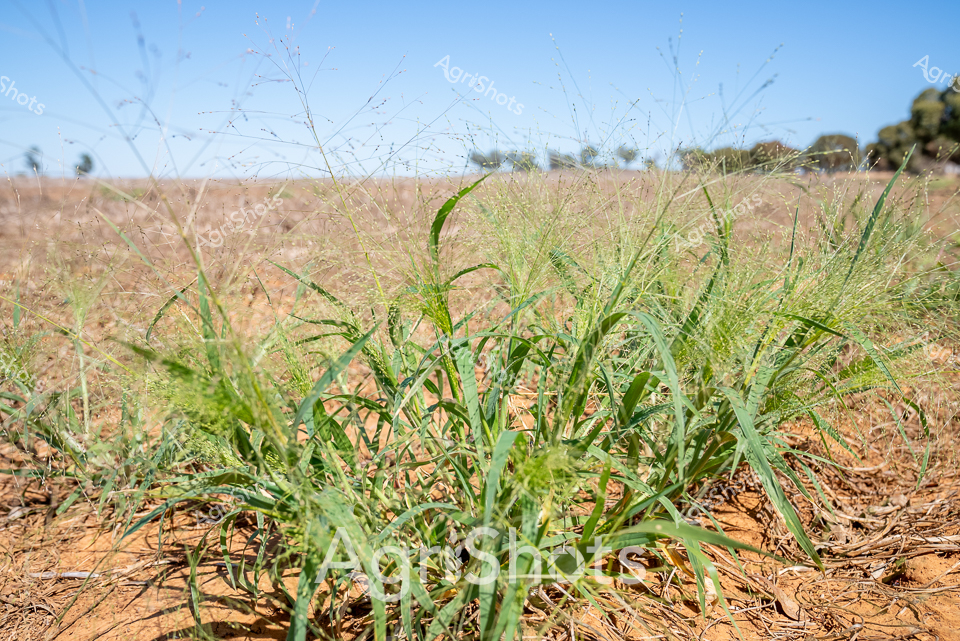
Wild summer pasture sprawls across the parched Riverina landscape, where dense clusters of hairy panic grass emerge from cracked, sun-baked earth. Delicate, pale green grass stalks with feathery seed heads rise against a crystalline blue sky, creating a textural tapestry of agricultural resilience. The ground surrounding the grass clumps is a rich terracotta brown, indicating the intense dry conditions characteristic of New South Wales agricultural regions during peak summer months. Thin, wispy grass tendrils sway subtly, hinting at the lightest breeze moving across this unforgiving terrain. The stubble and wild grasses represent both a challenge and an opportunity in dryland farming - a testament to the adaptive vegetation that survives in marginal cropping environments. This raw, unfiltered landscape captures the stark beauty of Australian rural ecosystems, where native grasses persist despite harsh climatic pressures.
 Image
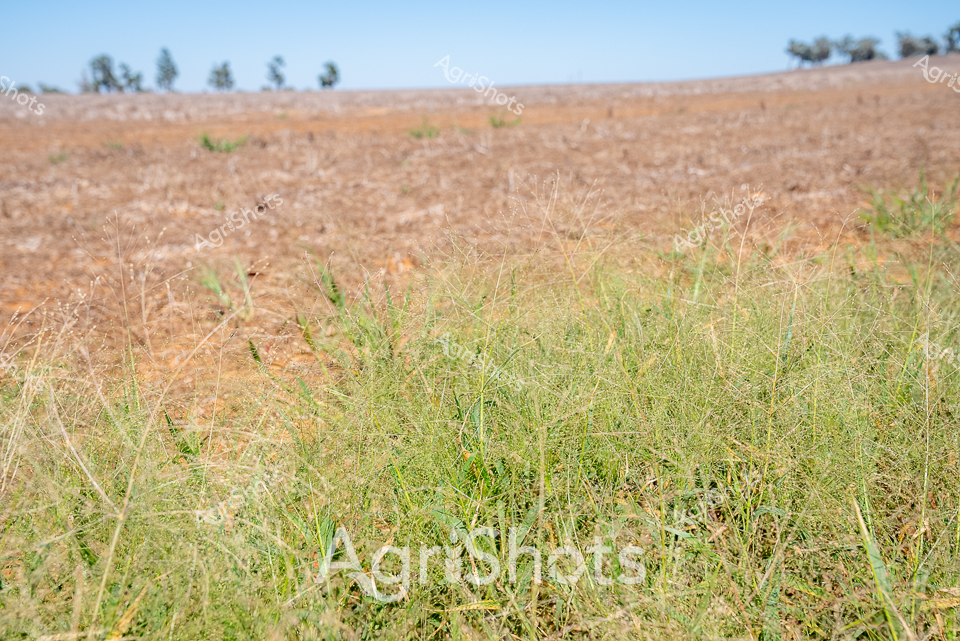
Hairy Panic grass emerges from dusty, sun-baked agricultural stubble in the heart of New South Wales' Riverina region. Delicate, wispy grass stems dance across a parched landscape, their pale green and straw-colored hues contrasting against the rich terracotta soil. Sparse eucalyptus trees punctuate the distant horizon under an expansive, crystalline blue sky, signaling the harsh conditions of an Australian summer or early autumn. The ground tells a story of recent harvest and agricultural challenge - sparse vegetation struggling through compacted earth, highlighting the resilience required in dryland farming. Wind-swept and weathered, this paddock represents the stark beauty of agricultural landscapes, where every blade of grass and patch of soil carries the narrative of survival and agricultural persistence. The image captures the raw, unfiltered essence of rural Australian agricultural terrain, where farmers battle challenging environmental conditions with unwavering determination.
 Image
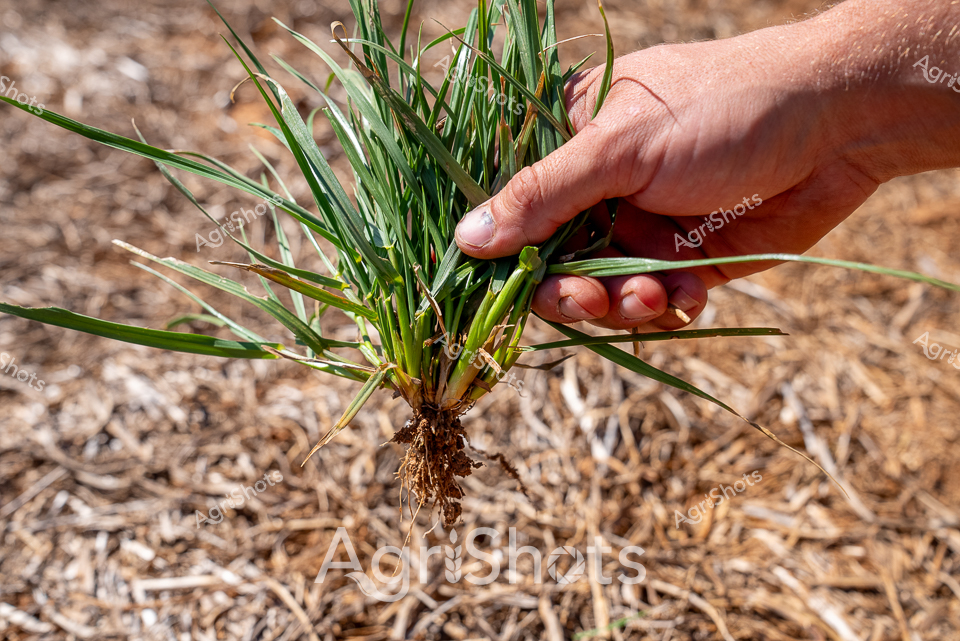
A weathered hand gently cradles a tussock of native grass, revealing the intricate root system against a backdrop of dry, textured stubble. The vibrant green blades contrast sharply with the parched earth, capturing the harsh resilience of agricultural landscapes in the Riverina region of New South Wales. This close-up reveals the delicate ecosystem of a paddock during the challenging transition between summer and autumn, where every plant tells a story of survival. The slender grass - potentially a ryegrass or hairy panic variety - demonstrates the complex relationship between farmers and unwanted vegetation. Roots exposed, the plant becomes a living specimen of the ongoing battle with weeds and managing ground cover in drought-affected regions. The intimate framing emphasizes the tactile connection between human intervention and natural growth, with each weathered finger telling its own story of agricultural expertise. The muted browns and rich earth tones speak to the cyclical nature of farming, where seemingly insignificant plants can dramatically impact crop health and soil management. This image captures a moment of careful assessment, a testament to the nuanced knowledge required in Australian agricultural practice.
 Image
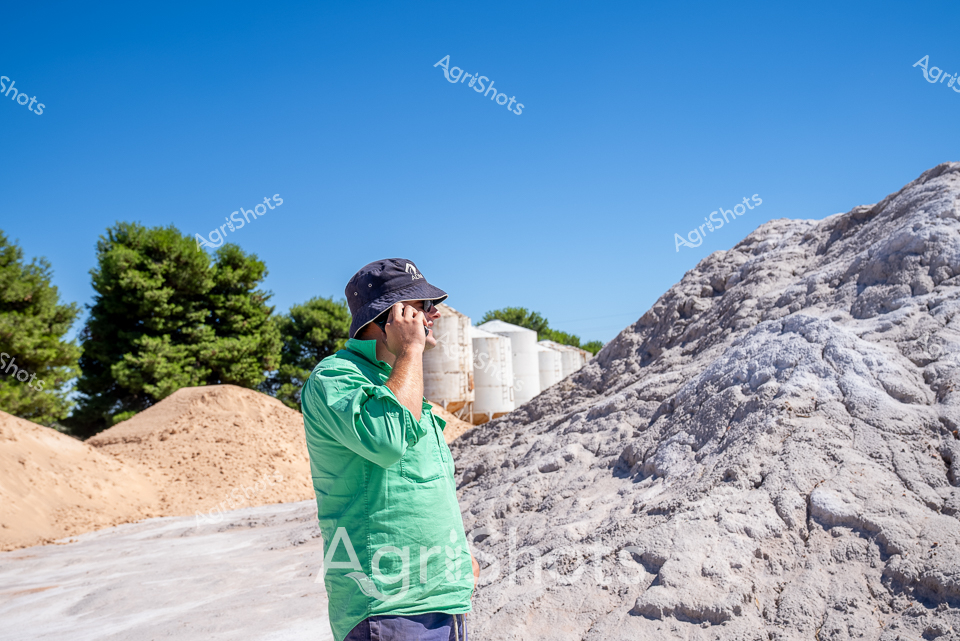
Surveying a sprawling agricultural supply yard on a clear, bright day, a worker in a vibrant green shirt and navy cap stands amid towering piles of white limestone or crushed aggregate. Crisp blue skies and verdant pine trees frame the scene, suggesting a late summer or early autumn setting. The worker appears to be assessing stockpiles, carefully examining the terrain with a contemplative stance, hand raised near his face in a gesture of focused observation. Massive white storage silos rise in the background, punctuating the landscape of sandy and rocky material heaps. The scene captures the meticulous nature of agricultural supply management, with carefully sorted and graded materials ready for distribution to farms, construction sites, or agricultural processing facilities. The image radiates a sense of quiet industry, showcasing the behind-the-scenes infrastructure that supports Australia's robust agricultural sector.
 Image
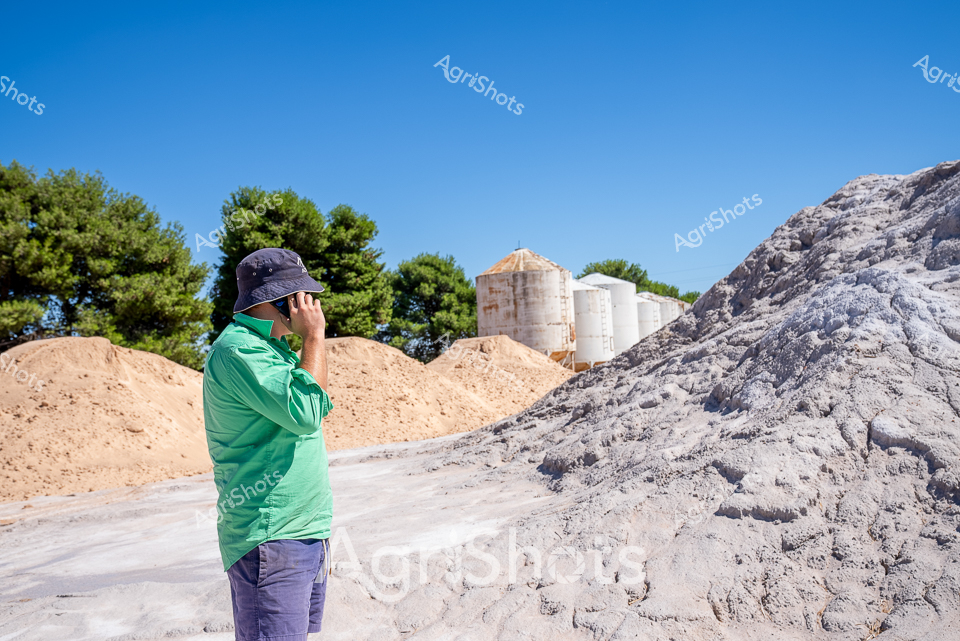
Limestone quarry under brilliant blue skies, a farm worker in vivid emerald green shirt and navy cap surveys vast piles of crushed white stone. Towering cylindrical storage silos rise in the background, weathered and functional against a backdrop of pine trees, marking this as an agricultural materials processing site. The worker stands contemplatively, observing the raw mineral landscape - mounds of pale sandy and ash-colored aggregate waiting to be sorted, transported, and utilized in construction and agricultural applications. Textural contrasts dominate the scene: smooth industrial containers, rough-hewn stone piles, and the crisp lines of the worker's protective workwear. Brilliant sunlight reveals every granular detail of the stone, suggesting this is a mid-morning moment during harvest season, when agricultural and mining operations are in full productive swing. The scene speaks to the essential infrastructure of rural industry - the unseen backbone of agricultural and construction supply chains that transform raw materials into essential resources.
 Image
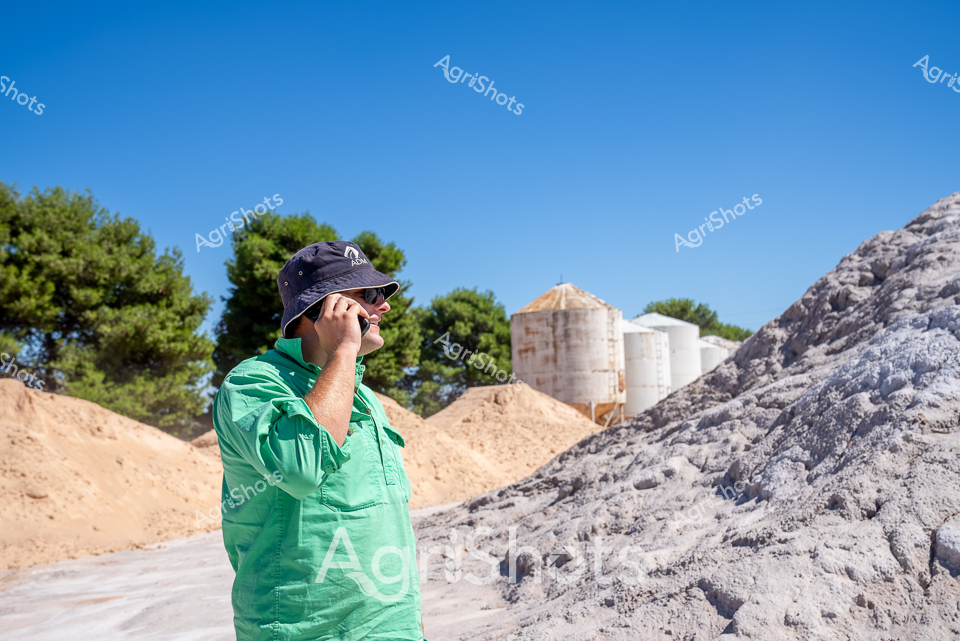
Agricultural Site Survey: Coastal Agricultural Precinct A field technician in a vibrant mint-green work shirt and navy cap surveys an expansive agricultural processing site, communicating via mobile phone against a brilliant azure sky. Massive white cylindrical storage silos rise in the background, standing sentinel over mounds of sandy soil and crushed stone materials. Pine trees frame the periphery, suggesting a Mediterranean or coastal Australian landscape during peak growing season. The technician's posture - alert and engaged - indicates active site assessment, potentially evaluating soil composition, storage capacity, or logistics planning for an agricultural supply chain operation. Warm sunlight bathes the scene, highlighting the textural contrasts between the smooth concrete silos, rough aggregate piles, and verdant vegetation. The image captures a quintessential moment of agricultural infrastructure management, where technical expertise meets environmental assessment under clear, promising skies.
 Image
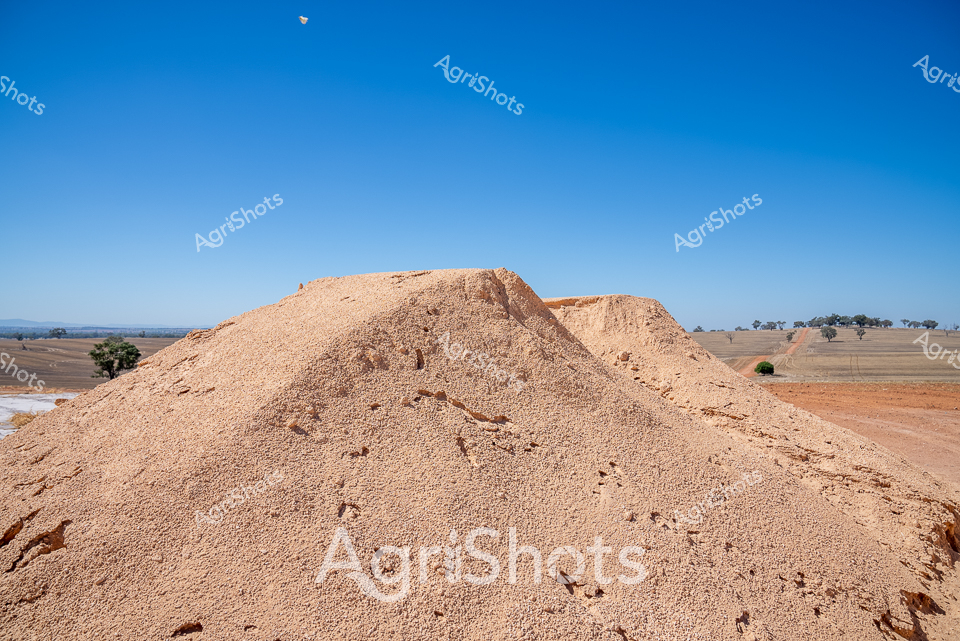
Towering against a cloudless cerulean sky, a massive mound of gypsum rises from the arid Riverina landscape, its pale terracotta hues contrasting sharply with the sun-bleached paddocks stretching to the horizon. The agricultural amendment pile stands as a testament to soil management practices, its textured surface revealing the granular composition of this critical mineral supplement used to improve soil structure and fertility in challenging dryland farming regions. Scattered trees punctuate the distant landscape, their sparse silhouettes emphasizing the vast, open expanses of this New South Wales agricultural heartland during the peak of summer. The gypsum heap represents a crucial investment in land rehabilitation, its carefully stockpiled volumes ready to be distributed across paddocks to combat soil salinity and enhance crop productivity in this demanding agricultural environment. Harsh sunlight accentuates the mound's contours, creating deep shadows and highlighting the mineral's raw, unprocessed texture - a stark reminder of the scientific precision and environmental stewardship integral to modern Australian agricultural practices.
 Image
Rugged terrain of the Riverina unfolds beneath an expansive blue summer sky, where a farm worker in a vibrant green polo and purple shorts stands amid chalky white mineral deposits. The worker pauses thoughtfully, mobile phone pressed to his ear, surrounded by undulating mounds of gypsum or agricultural lime - critical soil amendment materials used to balance pH and improve crop productivity. Sandy-colored ground slopes gently, contrasting dramatically with the textured, almost lunar-like white mineral formations dominating the background. His dark cap shields against intense Australian sunlight, while his stance suggests a moment of consultation or problem-solving amid this stark, mineral-rich landscape. The scene captures the solitary, strategic nature of agricultural work - where communication and careful land management happen in remote, seemingly inhospitable environments. This image embodies the resilience and technological connectivity of modern agricultural professionals working in challenging terrain.
 Image
Limestone formations rise like ghostly sentinels against a crisp, azure sky, revealing the rugged geological landscape of the Riverina region in New South Wales. These weathered, pale-white rock formations create a lunar-like terrain, with deeply furrowed textures and undulating surfaces that speak to millennia of geological transformation. The intricate network of crevices and bulbous protrusions suggest a complex mineral composition, likely rich in calcium carbonate - a critical component in agricultural soil management and fertiliser production. Each craggy peak and valley tells a story of erosion, compression, and the slow, patient sculpting of the earth's surface, highlighting the raw, elemental beauty of Australia's inland geological structures. The stark contrast between the chalky white rock and the pure blue sky creates a sense of expansive, timeless serenity, capturing the raw, unadorned essence of the Australian landscape. This terrain represents more than just a geological formation; it's a testament to the fundamental minerals that underpin the country's agricultural productivity.
 Image
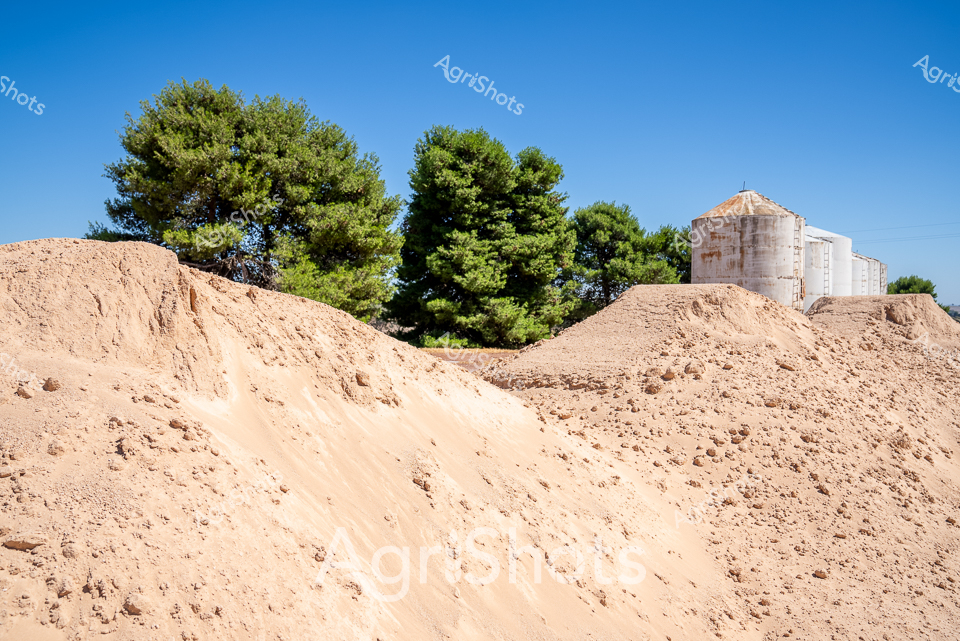
Sandy soil enrichment reveals the agricultural ingenuity of the Riverina's dryland farming landscape. Massive mounds of pale gypsum - a critical soil amendment mineral - rise against a backdrop of deep green pine trees and gleaming white agricultural storage silos under a pristine azure sky. The textured, undulating earth tones of the gypsum piles demonstrate the meticulous land preparation techniques used by farmers to combat soil salinity and improve crop yields in this challenging agricultural environment. Scattered rocks and varied particle sizes in the sandy material highlight the careful selection and processing of the mineral supplement, which will help restore soil structure and nutrient balance. The bright summer sunlight accentuates the raw, unprocessed quality of the mineral stockpile, suggesting ongoing land regeneration efforts typical of sustainable agricultural practice in southern New South Wales. This scene encapsulates the strategic approach of modern farmers who understand that soil health is the fundamental foundation of productive agricultural systems.
 Image
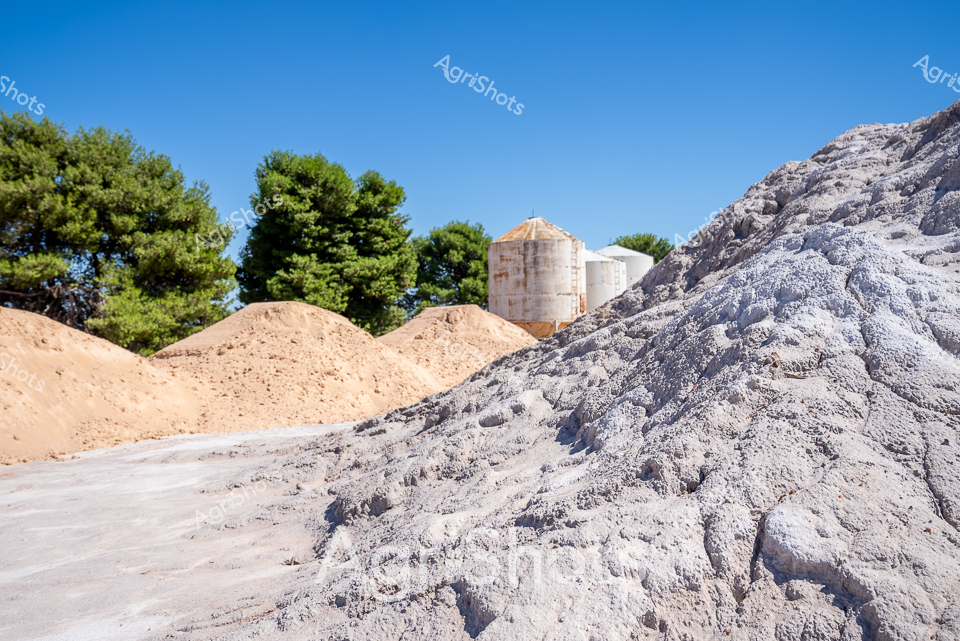
Sun-bleached sand and lime piles dominate this stark agricultural landscape, capturing the essence of mineral preparation in the Riverina region of New South Wales. Pale mounds of crushed limestone rise like sculptural formations against a brilliant cerulean sky, their textured surfaces reflecting the harsh summer light. Weathered grain silos stand sentinel in the background, their neutral tones blending with the surrounding terrain, while clusters of robust pine trees provide a verdant counterpoint to the mineral expanse. The scene speaks to the meticulous soil management practices of Australian farmers, where agricultural amendments like lime are critical for balancing soil pH and enhancing crop productivity. Subtle variations in the pile's coloration - from warm sandy beiges to cool grey-white tones - create a nuanced visual landscape that hints at the scientific precision underlying agricultural production. The image captures a moment of potential, where raw materials await transformation into fertile ground, embodying the calculated patience of rural enterprise.
 Image
Rural Riverina landscape under a crisp summer sky, where an agricultural worker pauses amid sandy soil terrain. Dressed in a vibrant mint green jacket and a navy blue bucket hat, the worker shields their eyes while examining the ground, potentially assessing soil composition or fertiliser distribution. The rugged terrain suggests recent earthworks or land preparation, with pine trees softening the background and creating depth. A tanned, weathered hand emerges from the jacket sleeve, holding a mobile device - likely documenting field conditions or consulting agricultural data. The scene captures the essence of modern farming: a blend of physical labour, technological integration, and careful environmental assessment. The muted earth tones of the landscape contrast sharply with the worker's protective clothing, highlighting the resilience and adaptability of agricultural professionals in the challenging Riverina region of New South Wales.
 Image
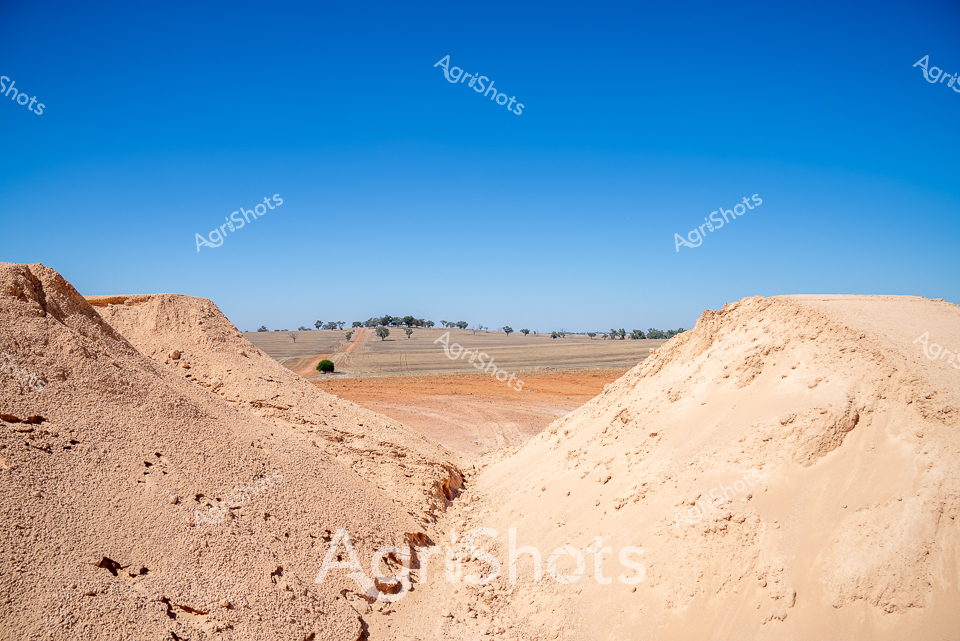
Harsh sunlight bathes the undulating earth of the Riverina, where weathered clay mounds of gypsum rise like sentinels against an azure sky. Deep ochre and pale sandy tones define the landscape, revealing the arid conditions of a late summer day in New South Wales. A subtle channel cuts between the gypsum hills, creating a natural pathway that hints at soil management strategies critical to agricultural resilience in this challenging environment. Sparse eucalyptus trees punctuate the distant horizon, their muted green a stark contrast to the terracotta-hued terrain, symbolizing the tenacious nature of Australian agricultural ecosystems. The raw, textured surface of the gypsum mounds suggests careful land preparation, likely part of a broader soil amendment process to improve agricultural productivity in this drought-prone region. The expansive, uninterrupted landscape embodies the raw beauty and scientific precision of modern dryland farming, where every contour and mineral deployment represents a calculated approach to sustainable land stewardship.
 Image
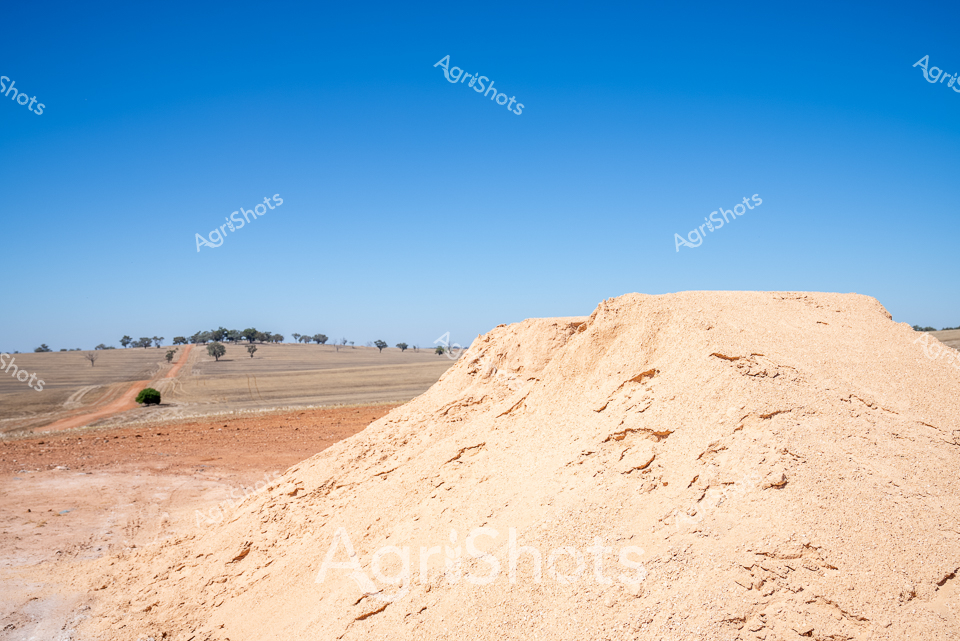
Towering against an expansive azure sky, a massive mound of gypsum rises from the arid agricultural landscape of the Riverina region in New South Wales. The pale sandy-beige pile dominates the foreground, its irregular surface textured with wind and machinery marks, suggesting recent mining or agricultural processing activity. In the mid-distance, a rust-colored dirt track winds through sparse paddocks, lined with scattered eucalyptus trees that punctuate the stark rural horizon. The harsh summer light bleaches the landscape, creating a palette of ochre, terracotta, and pale gold that speaks to the challenging agricultural environment of inland Australia. This gypsum heap represents a critical component of soil management - a mineral used to improve soil structure, reduce erosion, and enhance crop productivity in challenging dryland farming conditions. The image captures the raw, unadorned essence of agricultural resource management, where every element of the landscape is carefully considered and utilized to support farming sustainability.
 Image
Rural Agricultural Landscape: Riverina Region Fieldwork A field technician pauses amid sun-baked earthen mounds, wearing a vivid green agricultural work shirt and navy bucket hat, tilting his face away while consulting a mobile device. The surrounding terrain reveals rich, sandy soil characteristic of New South Wales' Riverina agricultural region, with golden earth banks contrasting against a cloudless azure sky and scattered pine trees. Summer's intense light casts sharp shadows, highlighting the worker's bronzed, weathered arm and suggesting meticulous soil analysis or crop management activities. The scene captures a quintessential moment of modern agricultural practice - where technology and traditional fieldwork intersect, demonstrating the precision and attentiveness required in contemporary farming. Gypsum or fertiliser assessment appears imminent, with the worker's focused stance and strategic positioning indicating careful environmental evaluation. The image epitomizes the agricultural professional's dedication: solitary, methodical, connected to both landscape and digital tools.
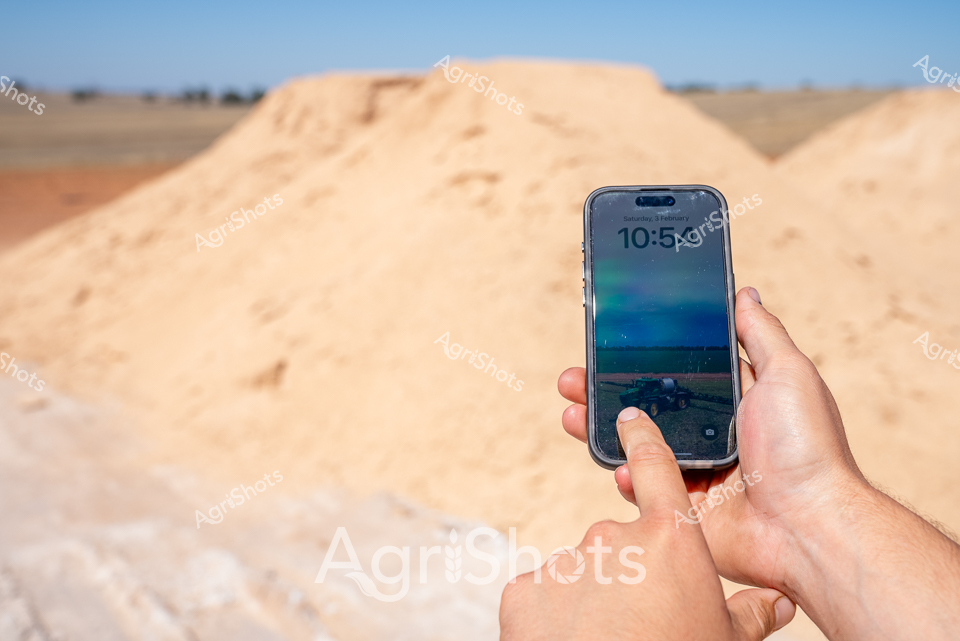 Image
Agricultural data collection under the golden light of a summer morning in the Riverina region of New South Wales. A hand grasps a smartphone, capturing precise digital records against a backdrop of pale gypsum mounds and expansive dry farmland. The screen displays a crisp 10:55 timestamp, overlaid on a horizon where azure sky meets dusty agricultural terrain, symbolizing the modern farmer's integration of technology with traditional landscape management. Fingers poised on the device screen suggest meticulous recording of fertilizer measurements or soil composition data, bridging generations of agricultural knowledge with contemporary digital precision. The soft beige tones of the gypsum piles contrast beautifully with the deep blue sky, creating a quintessential Australian agricultural scene that speaks to innovation, careful land stewardship, and the critical role of data in contemporary farming practices.
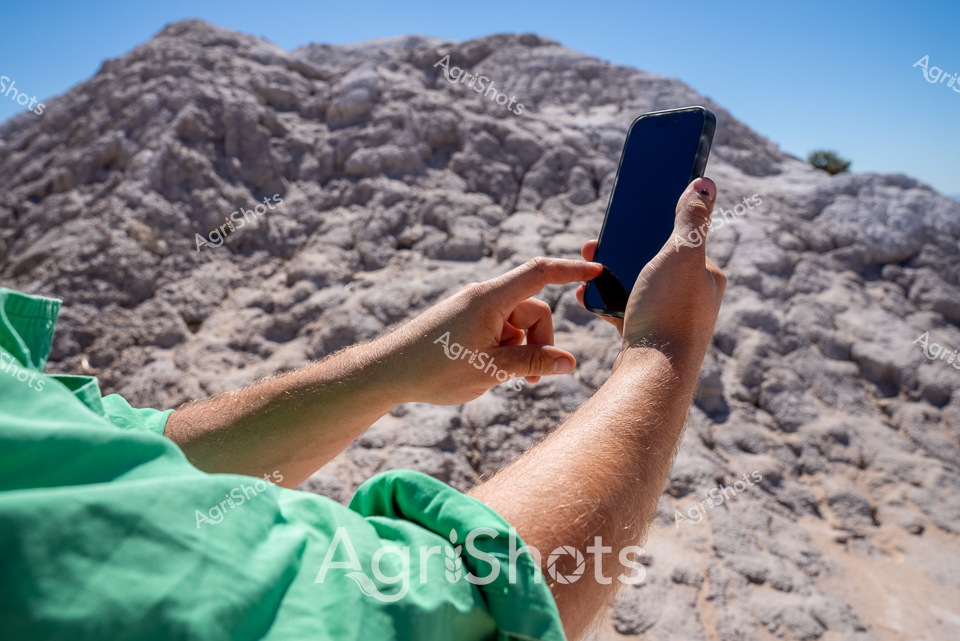 Image
Rural Innovation Meets Rugged Terrain: Agricultural Technology in Action A weathered hand in a vibrant lime-green sleeve navigates a smartphone against a stark, rocky landscape typical of Australia's challenging agricultural regions. The rocky backdrop suggests the harsh Riverina terrain of New South Wales, where farmers constantly adapt to demanding environmental conditions. Sunlight illuminates the scene, highlighting the contrast between cutting-edge technology and timeless natural surroundings - a powerful metaphor for modern agricultural practices. The dark smartphone screen becomes a portal of information, likely accessing critical data about crop management, soil conditions, or livestock tracking. Bare, suntanned arms hint at the physical labor and direct connection to the land that characterizes Australian farming culture. This image captures the essence of contemporary agriculture: where traditional rural expertise meets digital innovation, enabling farmers to make precise, informed decisions in unforgiving landscapes.
 Image
Agrarian innovation pulses through this captivating scene of rural technology integration. A tablet glows with digital precision against the stark, sun-bleached landscape of the Riverina, capturing the moment where agricultural data meets vast paddock horizons. Weathered hands—one in a hint of green—cradle the device, their fingers poised to record critical farm information under a brilliant azure sky. Sparse, resilient trees punctuate the golden-brown earth, suggesting a summer or early autumn setting where every technological interaction can mean the difference between agricultural success and challenge. The limestone-white ground contrasts sharply with the surrounding terrain, symbolizing the careful measurements and strategic planning integral to modern farming. At 10:57, this moment represents the confluence of generations—traditional land knowledge meeting cutting-edge digital agriculture, where every touch of the screen potentially transforms pastoral management.
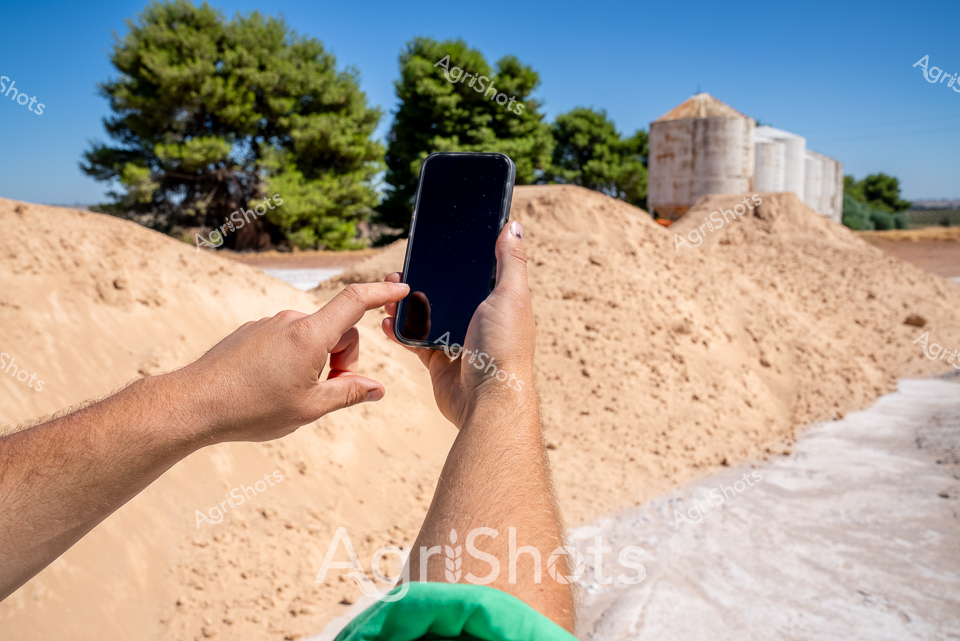 Image
Sun-drenched paddocks of the Riverina stretch out under a brilliant blue summer sky, where a farmer's weathered hands cradle a mobile device amid sandy soil mounds and distant grain silos. The rich golden-brown earth reveals recent agricultural activity, with neat piles of what appears to be gypsum or fertilizer material creating textural contours across the landscape. Precision agriculture comes to life through this moment of digital data collection, where technology meets traditional farming practice in a seamless gesture of modern agricultural management. A vibrant green sleeve peeks into view, contrasting against the sun-bleached terrain and highlighting the human element of agricultural innovation. Agricultural technology transforms how farmers interact with their land, capturing critical information about soil composition, crop health, and resource management through a simple touchscreen interface. The scene captures the intersection of traditional rural expertise and cutting-edge digital tools, embodying the progressive spirit of contemporary Australian agricultural practice.
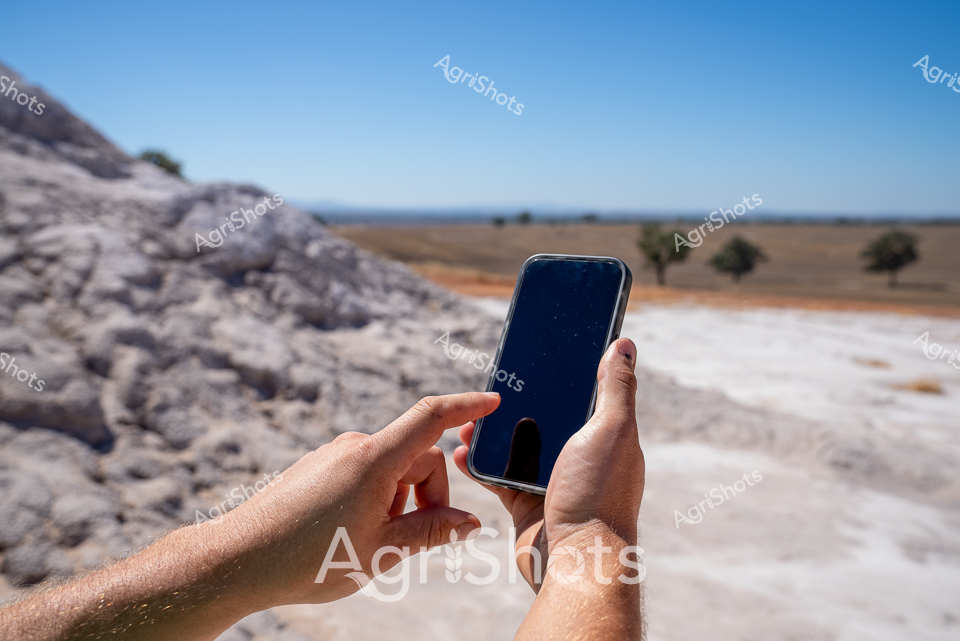 Image
Rural Digital Connection: Agricultural Innovation A weathered hand cradles a smartphone against a stark agricultural landscape, capturing the essence of modern farming technology in the Riverina region of New South Wales. Rugged limestone outcrops frame the foreground, contrasting with the expansive golden paddocks and scattered olive-green trees stretching toward a cloudless azure sky. The image speaks to the critical role of digital connectivity in contemporary agricultural practice, where technology bridges vast distances and complex farming challenges. Sunlight bathes the scene in a warm palette of earth tones, highlighting the textured terrain and the sleek smartphone screen - a powerful symbol of how digital tools have transformed rural communication and farm management. The bare, sun-baked landscape suggests late summer or early autumn, a critical period for crop monitoring and agricultural planning. This single frame encapsulates the intersection of traditional agricultural landscapes and cutting-edge digital innovation, representing the sophisticated technology now integral to Australian farming operations.
 Image
Sun-baked earth stretches across a quintessential Australian agricultural landscape, with sandy soil mounds and distant pine trees framing a moment of modern farm technology. Weathered hands grip a sleek digital tablet, its black screen reflecting the intense sunlight of a summer day in the Riverina region of New South Wales. The scene suggests precision agriculture at work, with the tablet likely being used to monitor soil conditions, track fertiliser applications, or analyze gypsum distribution across this arid terrain. Warm ochre tones of the ground contrast sharply with the deep blue sky, highlighting the rugged beauty of rural Australian farming environments. The careful positioning of hands holding the device speaks to the technological sophistication of contemporary agricultural practices, bridging traditional landscape and cutting-edge digital management tools. This image captures the essence of modern farming - a delicate balance of human skill, technological innovation, and the timeless challenge of working with the land.
 Image
Agricultural Field Data Collection: Precision Farming in the Riverina A sun-drenched landscape of pale gypsum mounds stretches across the expansive Riverina plains, capturing the essence of modern agricultural data management. Precise fingers grip a smartphone, poised to record critical soil and field information against the golden-tan earth and clear azure sky. The scene epitomizes contemporary agricultural technology, where digital tools transform traditional farming practices through instant data capture and analysis. Broad sandy-colored soil heaps rise in the background, suggesting recent land preparation or mineral assessment, while the sleek mobile device represents the industry's technological evolution. This moment encapsulates the intersection of cutting-edge digital innovation and Australia's time-honored agricultural landscape, where farmers leverage real-time information to optimize crop management, soil health, and productivity. The stark contrast between the rugged natural terrain and the sophisticated electronic device highlights the progressive nature of agricultural science in regional New South Wales.