About this image
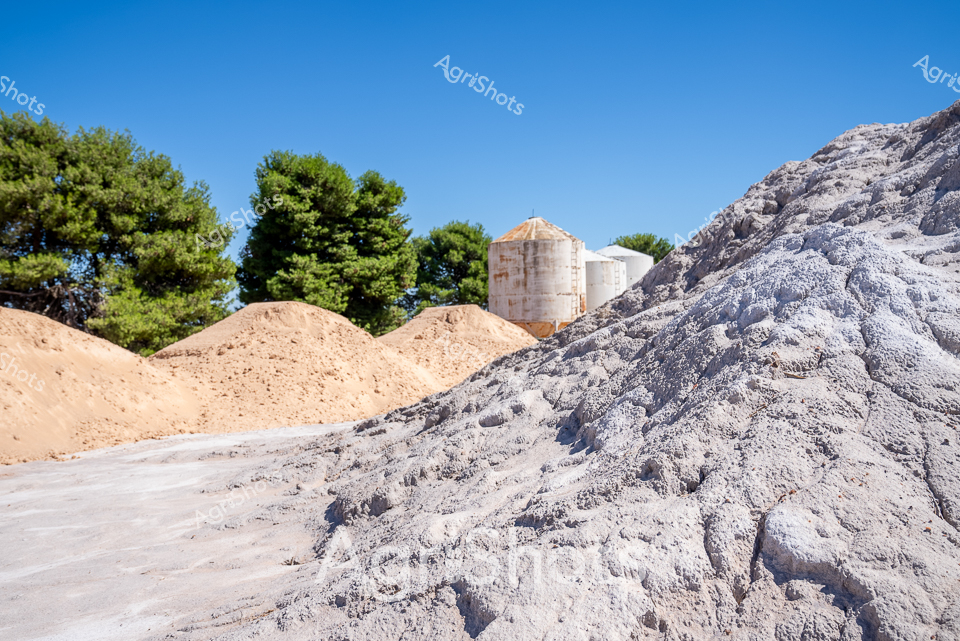
Sun-bleached sand and lime piles dominate this stark agricultural landscape, capturing the essence of mineral preparation in the Riverina region of New South Wales. Pale mounds of crushed limestone rise like sculptural formations against a brilliant cerulean sky, their textured surfaces reflecting the harsh summer light. Weathered grain silos stand sentinel in the background, their neutral tones blending with the surrounding terrain, while clusters of robust pine trees provide a verdant counterpoint to the mineral expanse. The scene speaks to the meticulous soil management practices of Australian farmers, where agricultural amendments like lime are critical for balancing soil pH and enhancing crop productivity. Subtle variations in the pile's coloration - from warm sandy beiges to cool grey-white tones - create a nuanced visual landscape that hints at the scientific precision underlying agricultural production. The image captures a moment of potential, where raw materials await transformation into fertile ground, embodying the calculated patience of rural enterprise.
Similar media
 Image
Image
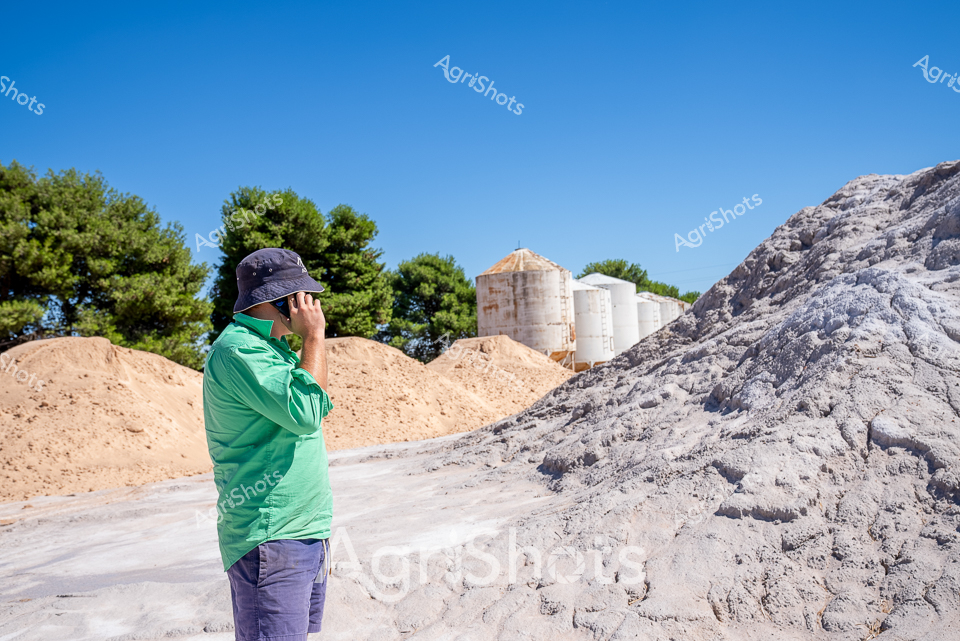
Limestone quarry under brilliant blue skies, a farm worker in vivid emerald green shirt and navy cap surveys vast piles of crushed white stone. Towering cylindrical storage silos rise in the background, weathered and functional against a backdrop of pine trees, marking this as an agricultural materials processing site. The worker stands contemplatively, observing the raw mineral landscape - mounds of pale sandy and ash-colored aggregate waiting to be sorted, transported, and utilized in construction and agricultural applications. Textural contrasts dominate the scene: smooth industrial containers, rough-hewn stone piles, and the crisp lines of the worker's protective workwear. Brilliant sunlight reveals every granular detail of the stone, suggesting this is a mid-morning moment during harvest season, when agricultural and mining operations are in full productive swing. The scene speaks to the essential infrastructure of rural industry - the unseen backbone of agricultural and construction supply chains that transform raw materials into essential resources.
 Image
Image
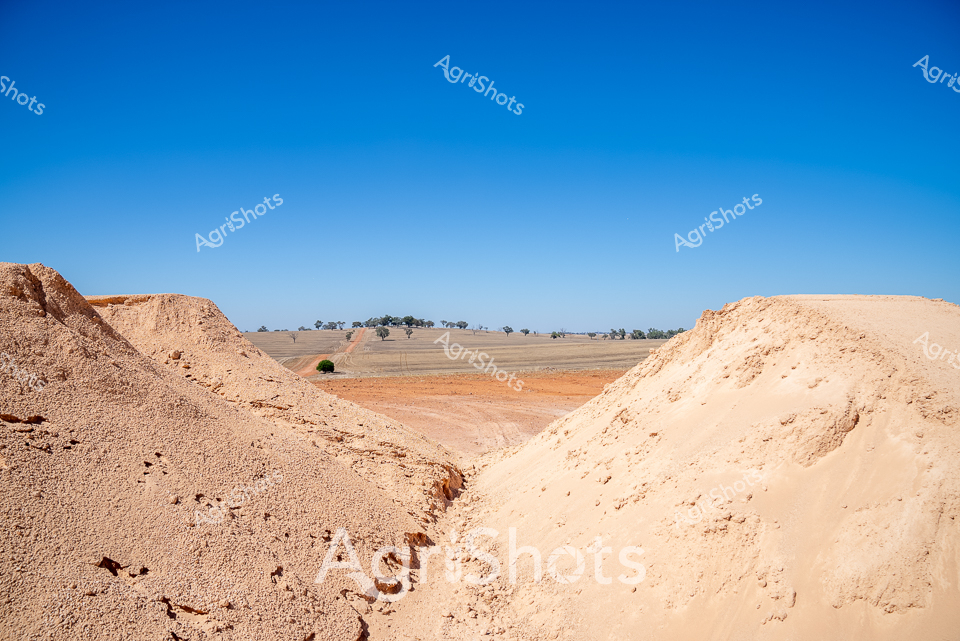
Harsh sunlight bathes the undulating earth of the Riverina, where weathered clay mounds of gypsum rise like sentinels against an azure sky. Deep ochre and pale sandy tones define the landscape, revealing the arid conditions of a late summer day in New South Wales. A subtle channel cuts between the gypsum hills, creating a natural pathway that hints at soil management strategies critical to agricultural resilience in this challenging environment. Sparse eucalyptus trees punctuate the distant horizon, their muted green a stark contrast to the terracotta-hued terrain, symbolizing the tenacious nature of Australian agricultural ecosystems. The raw, textured surface of the gypsum mounds suggests careful land preparation, likely part of a broader soil amendment process to improve agricultural productivity in this drought-prone region. The expansive, uninterrupted landscape embodies the raw beauty and scientific precision of modern dryland farming, where every contour and mineral deployment represents a calculated approach to sustainable land stewardship.
 Image
Image
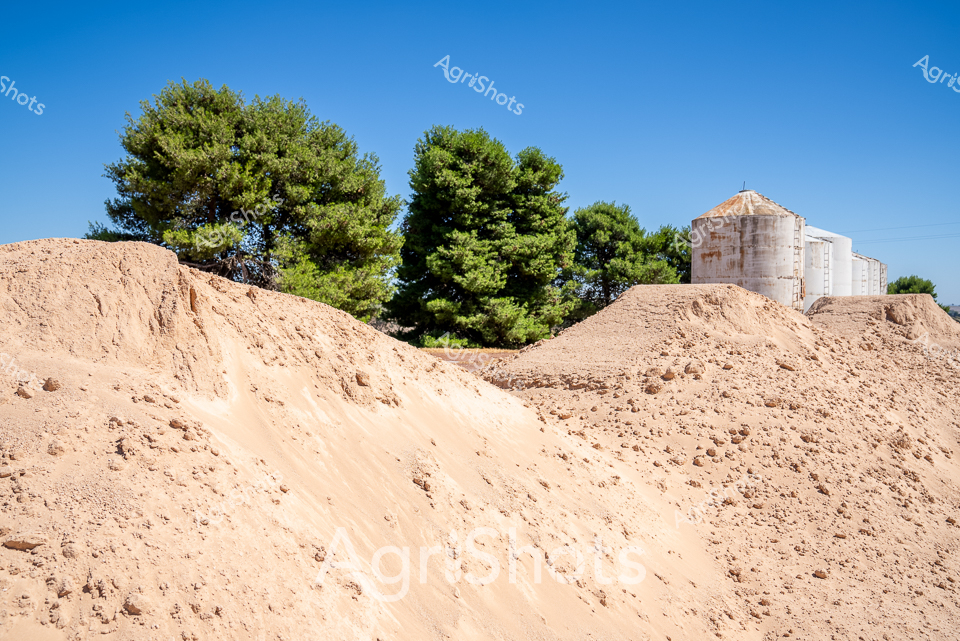
Sandy soil enrichment reveals the agricultural ingenuity of the Riverina's dryland farming landscape. Massive mounds of pale gypsum - a critical soil amendment mineral - rise against a backdrop of deep green pine trees and gleaming white agricultural storage silos under a pristine azure sky. The textured, undulating earth tones of the gypsum piles demonstrate the meticulous land preparation techniques used by farmers to combat soil salinity and improve crop yields in this challenging agricultural environment. Scattered rocks and varied particle sizes in the sandy material highlight the careful selection and processing of the mineral supplement, which will help restore soil structure and nutrient balance. The bright summer sunlight accentuates the raw, unprocessed quality of the mineral stockpile, suggesting ongoing land regeneration efforts typical of sustainable agricultural practice in southern New South Wales. This scene encapsulates the strategic approach of modern farmers who understand that soil health is the fundamental foundation of productive agricultural systems.
 Image
Image
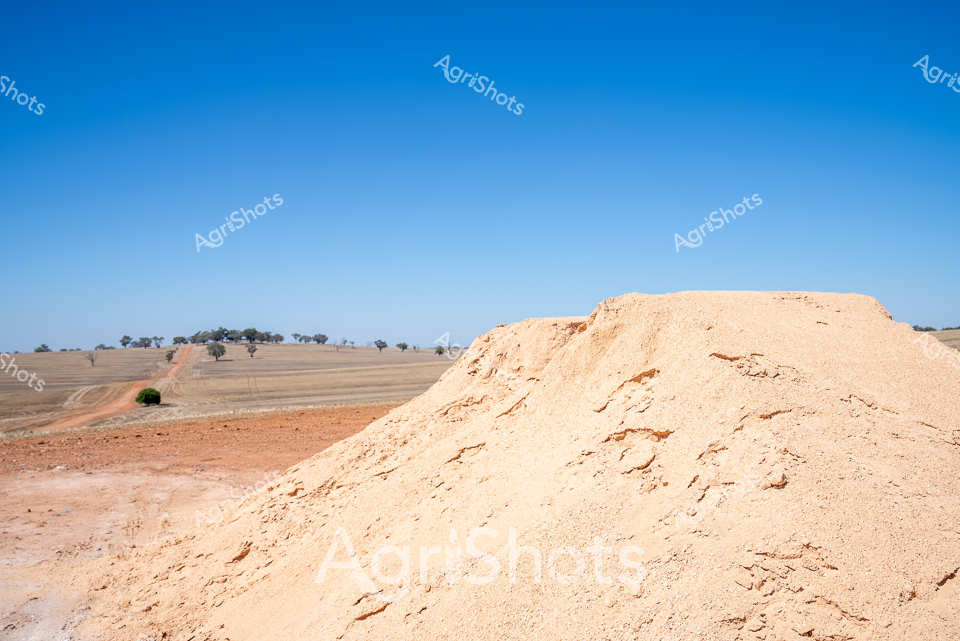
Towering against an expansive azure sky, a massive mound of gypsum rises from the arid agricultural landscape of the Riverina region in New South Wales. The pale sandy-beige pile dominates the foreground, its irregular surface textured with wind and machinery marks, suggesting recent mining or agricultural processing activity. In the mid-distance, a rust-colored dirt track winds through sparse paddocks, lined with scattered eucalyptus trees that punctuate the stark rural horizon. The harsh summer light bleaches the landscape, creating a palette of ochre, terracotta, and pale gold that speaks to the challenging agricultural environment of inland Australia. This gypsum heap represents a critical component of soil management - a mineral used to improve soil structure, reduce erosion, and enhance crop productivity in challenging dryland farming conditions. The image captures the raw, unadorned essence of agricultural resource management, where every element of the landscape is carefully considered and utilized to support farming sustainability.
 Image
Image
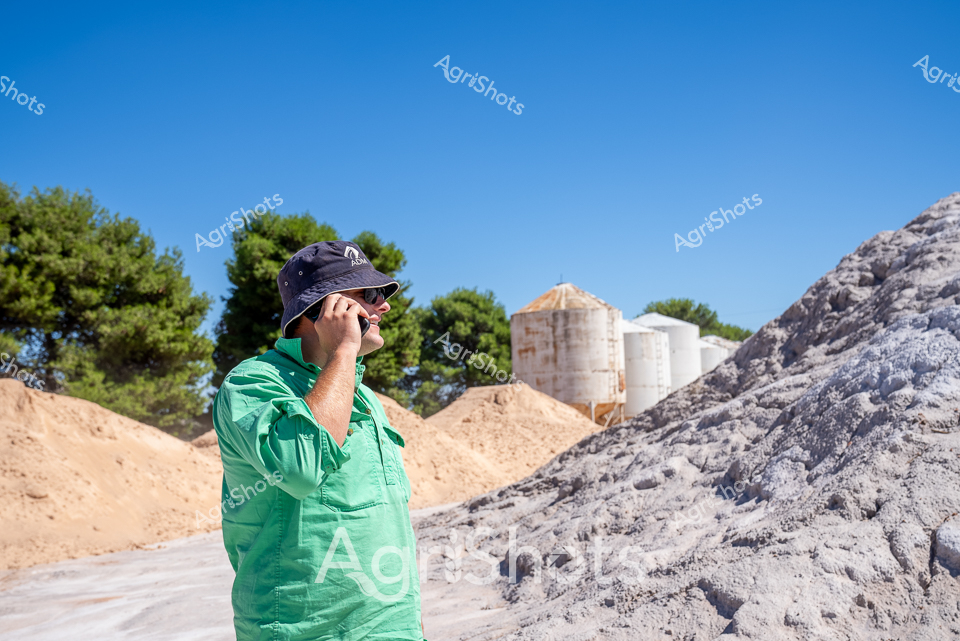
Agricultural Site Survey: Coastal Agricultural Precinct A field technician in a vibrant mint-green work shirt and navy cap surveys an expansive agricultural processing site, communicating via mobile phone against a brilliant azure sky. Massive white cylindrical storage silos rise in the background, standing sentinel over mounds of sandy soil and crushed stone materials. Pine trees frame the periphery, suggesting a Mediterranean or coastal Australian landscape during peak growing season. The technician's posture - alert and engaged - indicates active site assessment, potentially evaluating soil composition, storage capacity, or logistics planning for an agricultural supply chain operation. Warm sunlight bathes the scene, highlighting the textural contrasts between the smooth concrete silos, rough aggregate piles, and verdant vegetation. The image captures a quintessential moment of agricultural infrastructure management, where technical expertise meets environmental assessment under clear, promising skies.
 Image
Image
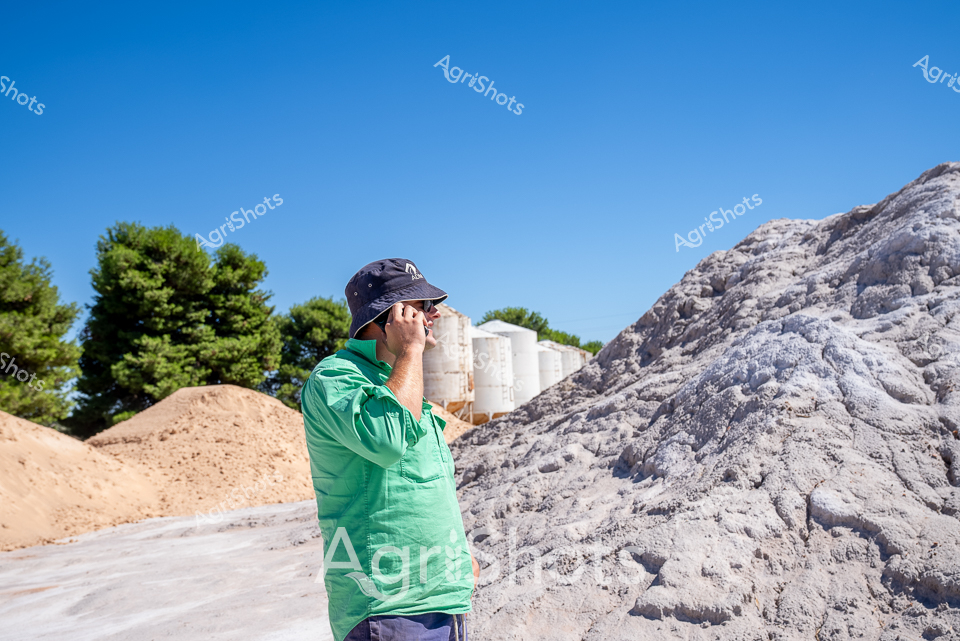
Surveying a sprawling agricultural supply yard on a clear, bright day, a worker in a vibrant green shirt and navy cap stands amid towering piles of white limestone or crushed aggregate. Crisp blue skies and verdant pine trees frame the scene, suggesting a late summer or early autumn setting. The worker appears to be assessing stockpiles, carefully examining the terrain with a contemplative stance, hand raised near his face in a gesture of focused observation. Massive white storage silos rise in the background, punctuating the landscape of sandy and rocky material heaps. The scene captures the meticulous nature of agricultural supply management, with carefully sorted and graded materials ready for distribution to farms, construction sites, or agricultural processing facilities. The image radiates a sense of quiet industry, showcasing the behind-the-scenes infrastructure that supports Australia's robust agricultural sector.
 Image
Image
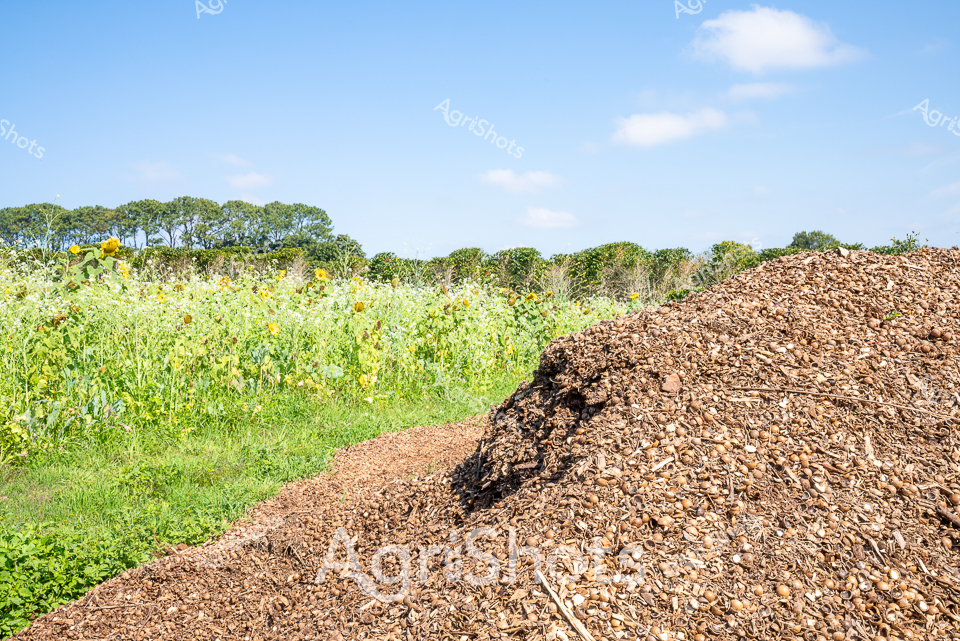
Golden sunflowers dance among verdant green grasses, creating a vibrant understory beneath a distant treeline in this lush agricultural landscape of the Northern Rivers region of New South Wales. In the foreground, a massive mound of macadamia nut shells dominates the composition - a rich, textured pile of warm brown organic material representing sustainable agricultural practice and waste recycling. The shells, byproducts of macadamia processing, will likely be repurposed as valuable compost or mulch, enriching the soil for future crop cycles. Brilliant spring sunlight bathes the scene, casting soft shadows across the undulating ground and highlighting the intricate layers of agricultural production. The carefully cultivated cover crop surrounding the macadamia shell pile demonstrates sophisticated land management techniques, with nitrogen-fixing and soil-building plants intermixed to promote ecological health. This image captures the harmonious intersection of agricultural productivity, environmental stewardship, and the vibrant natural beauty of Australia's premier agricultural landscapes.
 Image
Image
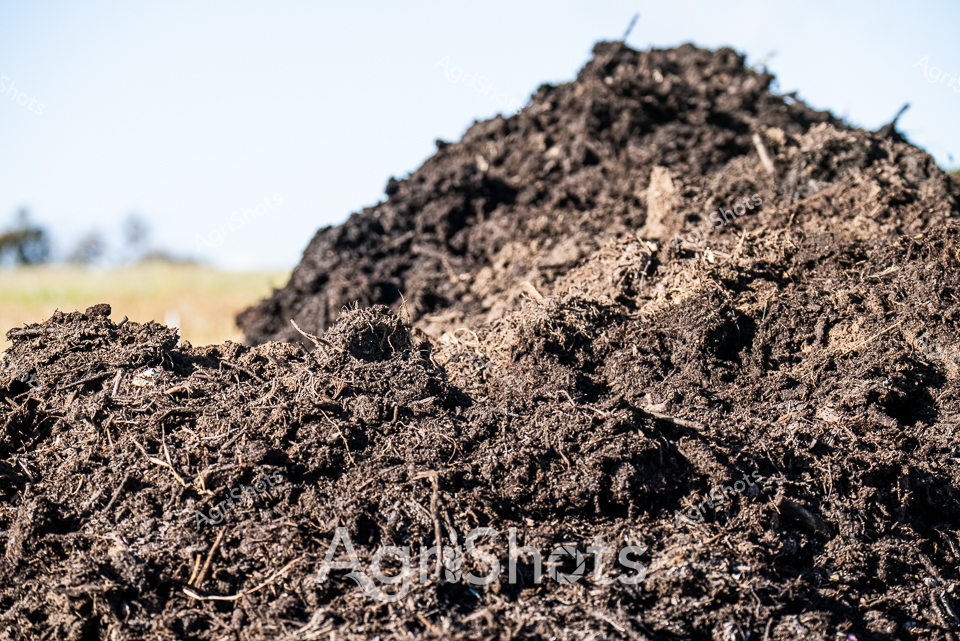
Rich, dark compost teems with organic potential, its complex texture telling a story of regenerative agricultural practice. Layers of decomposed green waste, manure, and agricultural residue create a complex mosaic of earthy browns and deep charcoal tones, revealing the intricate microbial landscape that drives soil health. Each clump represents a transformative process where waste becomes nutrition, embodying Victoria's commitment to sustainable farming techniques. Tiny fragments of plant matter, twigs, and fibrous materials are visible throughout the pile, demonstrating the comprehensive recycling approach of modern regenerative agriculture. The background hints at an expansive rural landscape, suggesting this composting operation is part of a broader ecosystem of environmental stewardship. This rich, living substrate represents more than mere waste - it's a critical component of soil regeneration, carbon sequestration, and sustainable food production.