Results for “Stockmen”
 Image
Image
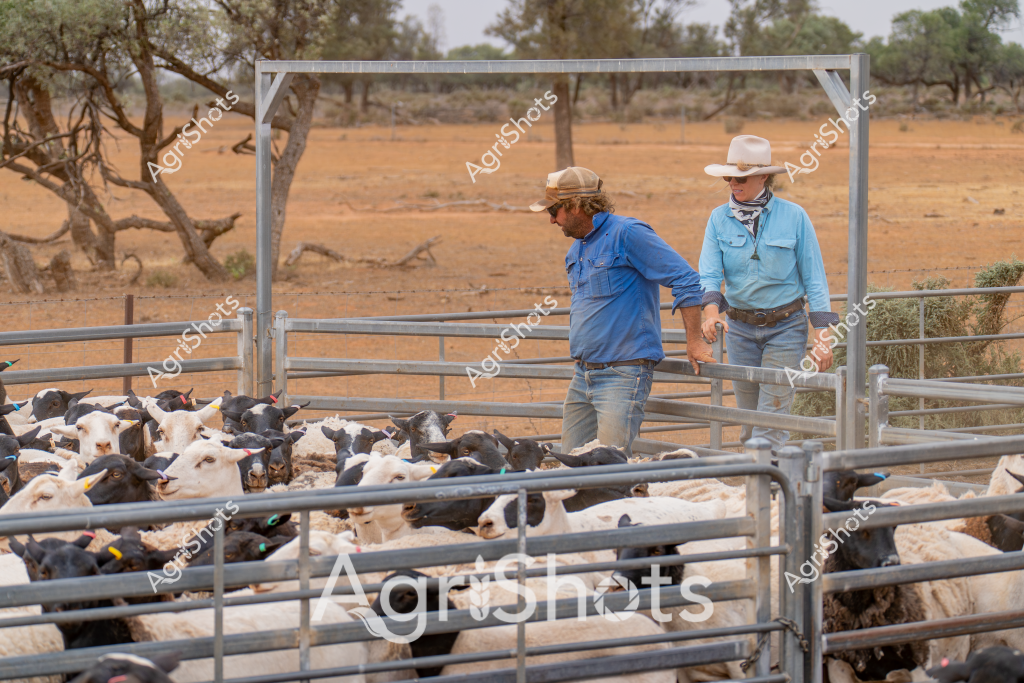
Two men farmers carefully manage a flock of mixed-breed sheep in a dry, arid paddock with scattered eucalyptus trees. Wearing broad-brimmed hats and rural workwear - one in a blue shirt, the other in a light blue top - they stand inside metal livestock yards with multiple pens. The sheep, a mix of white and dark-colored animals, are tightly clustered within the metal fencing, with yellow ear tags visible on many individuals. The landscape behind them is a classic Australian outback scene - reddish-brown earth, sparse vegetation, and twisted tree branches suggesting a drought-affected region. The metal yard structure provides a structured, controlled environment for managing the livestock, highlighting the careful husbandry practices of Australian farmers working in challenging environmental conditions. The scene captures the essence of rural agricultural management, with the farmers demonstrating close attention to the sheep herd in a harsh, sun-bleached landscape typical of inland Australian farming regions. Their positioning and calm demeanor suggest experienced stockmen working systematically to handle and potentially sort or prepare the flock for further processing or movement.
 Image
Image
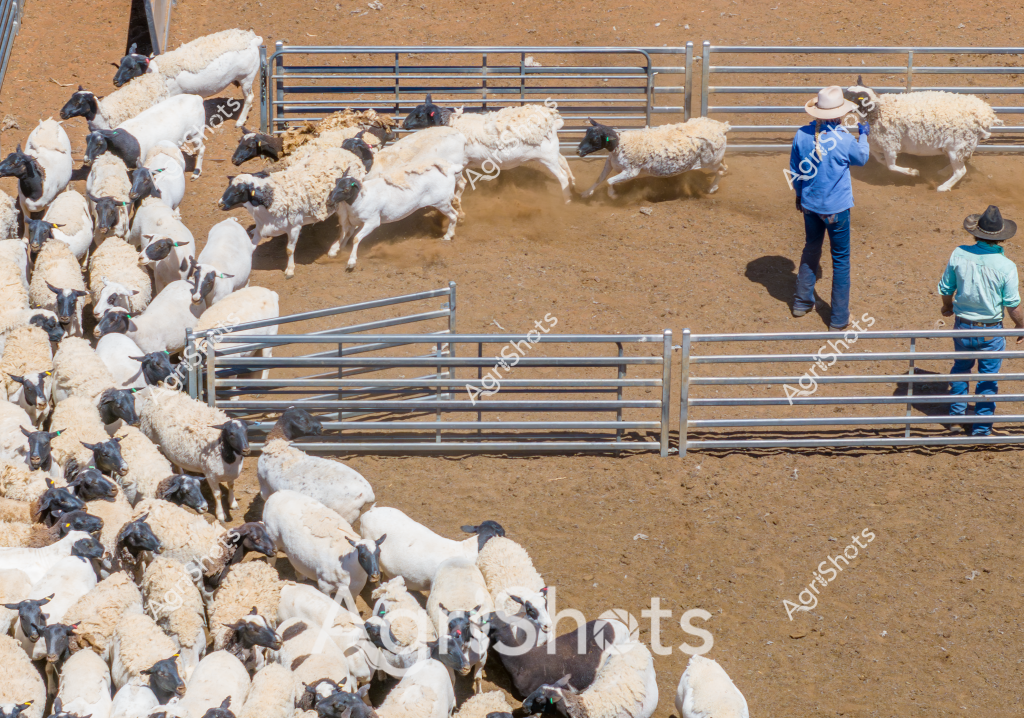
A dynamic sheep mustering scene unfolds in an arid Australian livestock yard, with a large flock of white and black-headed sheep moving through metal livestock gates. Two workers, a man in a blue shirt and another in a turquoise top and wide-brimmed hat, carefully manage the sheep's movement through the paddock's corral system. The sheep appear to be Dorper or Merino crossbreed, with distinctive black heads and white woolly bodies, clustered tightly and moving in coordinated groups across the dusty, sun-baked ground. The metal yard gates create a systematic pathway, guiding the livestock through different pens with precision. Shadows are sharp and defined, indicating bright midday sunlight typical of an Australian rural setting. The scene captures the expertise of stockmen in managing livestock, with their careful positioning and movement controlling the flow of the sheep herd. The environment suggests an inland pastoral station, with hard-packed earth and minimal vegetation, reflecting the challenging conditions of Australian sheep farming. The composition emphasizes the scale and complexity of sheep management, showcasing the critical role of skilled workers and infrastructure in moving and controlling livestock herds across vast agricultural landscapes.
 Image
Image
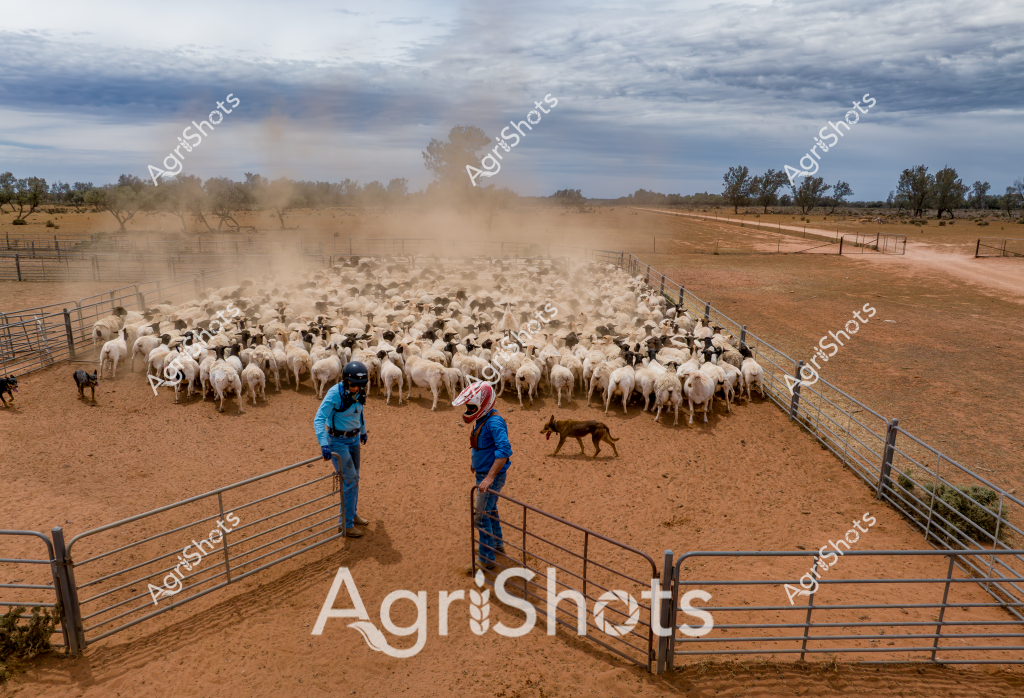
A dusty sheep mustering scene captures the essence of Australian pastoral life, with a large flock of white and black-faced sheep crowded into a dirt yard. Two men in blue work attire stand near the metal gates, overseeing the livestock operation under a dramatic cloudy sky. Herding dogs move strategically around the edges of the densely packed mob, helping to control the movement of the sheep. The arid landscape, with sparse trees and reddish-brown earth, highlights the challenging environment of rural Australian sheep farming. Dust billows around the flock, creating a hazy atmosphere that speaks to the hard work and skill required in managing livestock in this harsh terrain. The scene represents the traditional methods of sheep farming, with experienced stockmen and working dogs managing a large number of sheep in a compact yard.
 Image
Image
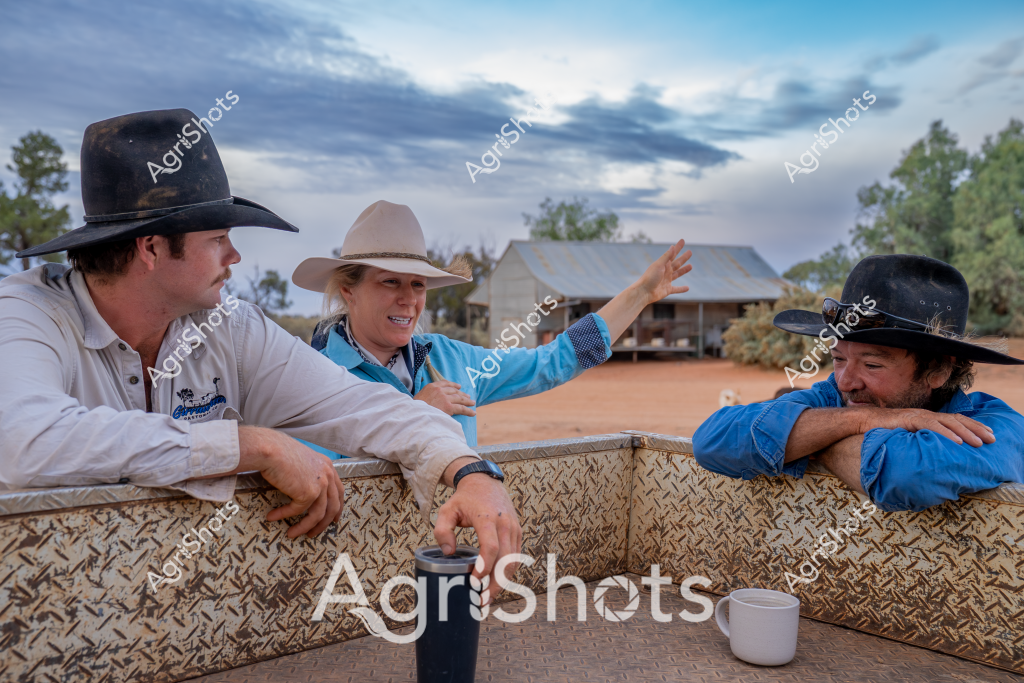
A scene of rural Australian life unfolds at a remote station, with three people in classic stockman attire leaning against a textured metal barrier. Two men and a woman, all wearing wide-brimmed hats and blue work shirts, are engaged in casual conversation with a rustic tin-roofed shed in the background. The landscape suggests an arid or semi-arid region, with reddish earth and sparse trees creating a classic outback setting. The individuals appear relaxed, with one woman in a light-colored hat gesturing animatedly while speaking to her companions. Their clothing - crisp blue work shirts and sturdy cowboy hats - speaks to the practical nature of station life. A coffee mug sits in the foreground, suggesting a moment of rest during a long working day. The cloudy sky adds depth to the scene, with soft blue and gray tones creating a moody backdrop to the rural setting. The metal barrier they're leaning on looks weathered, with a diamond-plate texture typical of rural infrastructure. This image captures the essence of Australian rural community - connection, communication, and the shared experience of working the land. The composition tells a story of camaraderie and the everyday moments that define life on a remote Australian station, where conversation and connection are as important as the work itself.
 Image
Image
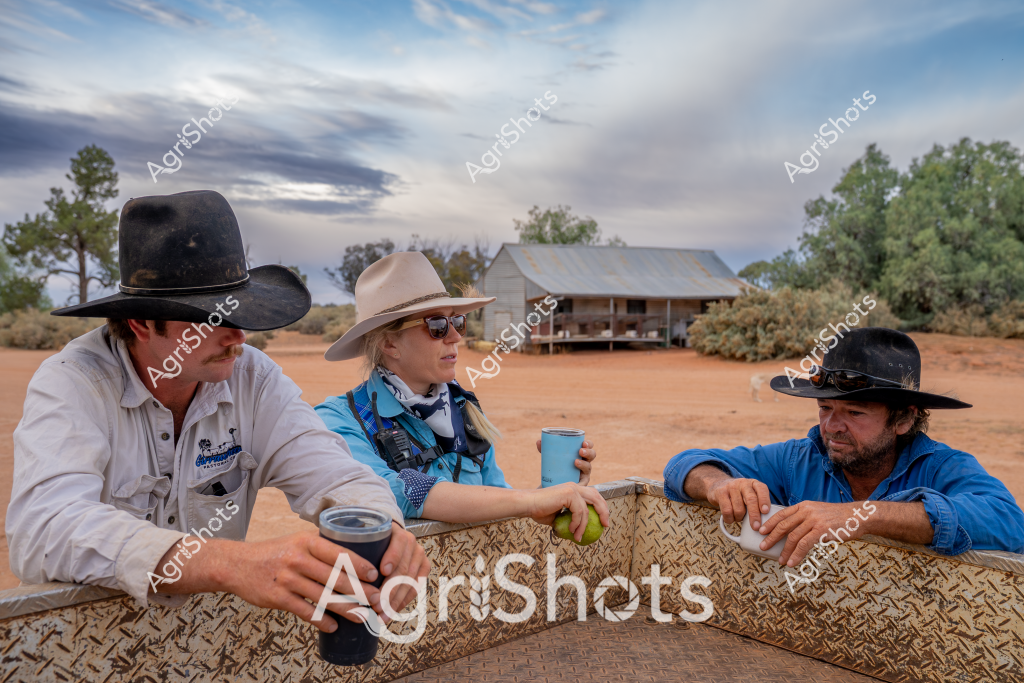
Three rural workers take a break at a remote outback station, sitting around a metal checkerplate surface with drinks and a piece of fruit. A weathered tin shed stands in the background amid sparse trees and reddish sandy ground, with dramatic cloudy skies overhead. The workers wear wide-brimmed bush hats - two black and one cream - and are dressed in work shirts in white and blue tones. A man on the left holds a dark beverage cup, a woman in the center wears sunglasses and holds a green apple, and a man on the right leans casually against the textured surface. Their relaxed postures and outdoor setting suggest a moment of rest during a long day of station work, capturing the resilient spirit of Australian rural life. The soft light and expansive landscape hint at the challenging but beautiful environment of the Australian agricultural interior.
 Image
Image
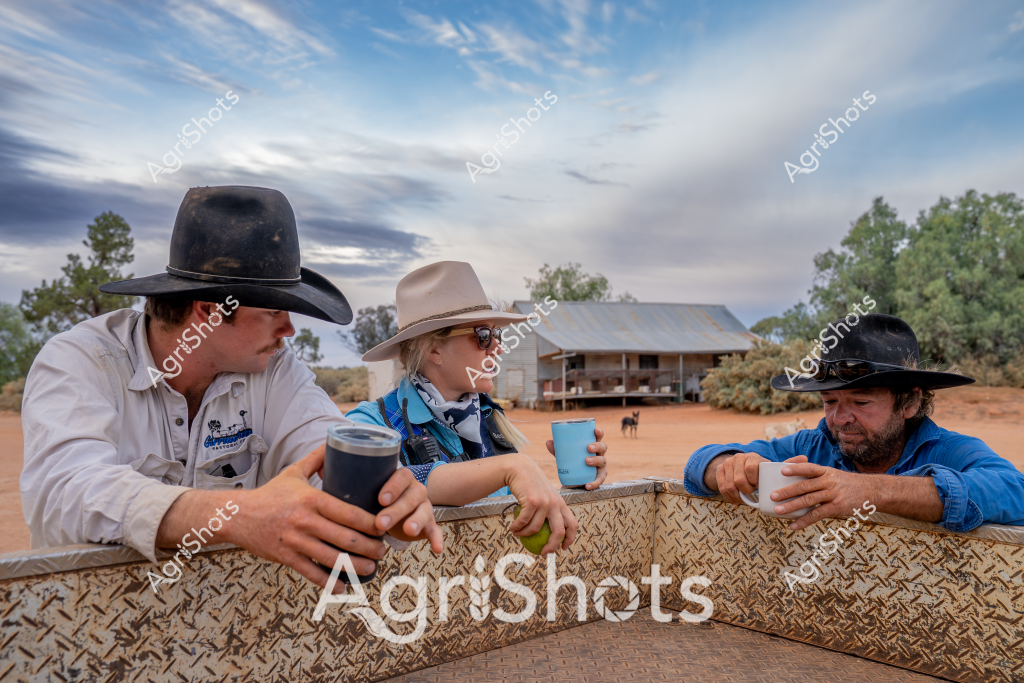
Three men wearing wide-brimmed Australian bush hats sit at a textured metal table in a remote rural setting, holding thermal mugs and sharing a moment of camaraderie. A weathered tin shed stands in the background, with sparse trees and an open dirt yard typical of an outback station or remote agricultural property. The sky is dramatic, with soft cloud formations creating a moody backdrop of blues and grays that suggest early morning or late afternoon light. The men are dressed in typical rural workwear - one in a white work shirt, another in a blue shirt, all wearing practical wide-brimmed hats that provide protection from the harsh Australian sun. Their posture and the shared moment around the table suggest a break from rural work, perhaps discussing the day's tasks or simply enjoying a moment of rest. A dog can be seen in the distant background, adding to the quintessential rural Australian scene. The landscape speaks of resilience - a dusty, open environment that characterizes much of Australia's agricultural heartland, where farming and station life demand strength and community. The textured metal table and the men's relaxed demeanor capture the essence of rural Australian working life, highlighting the social connections that are crucial to survival in challenging environments.
 Image
Image
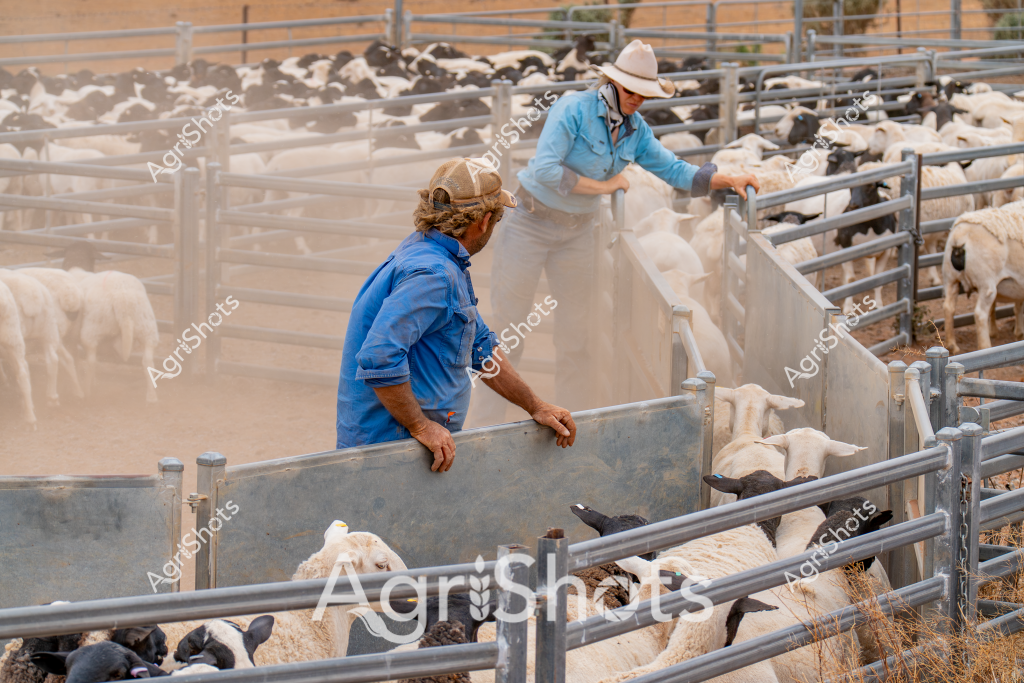
Two men farmers work together in a dusty sheep yard, carefully managing a flock of white and black sheep within metal livestock pens. One man in a blue shirt and cap stands near the gate, while another in a light blue shirt and white hat manages the gate and sheep movement. The metal yards are sturdy and well-constructed, with multiple interconnected pens allowing controlled livestock sorting and movement. Dust hangs in the air, indicating dry conditions typical of Australian agricultural landscapes, suggesting this is likely a rural station or farm in an arid or semi-arid region. The sheep appear to be a mixed breed, with white and darker-colored animals clustered together, waiting to be sorted or moved. The scene captures the practical, hands-on nature of Australian sheep farming, highlighting the skill and teamwork required in managing livestock in challenging environmental conditions.
 Image
Image
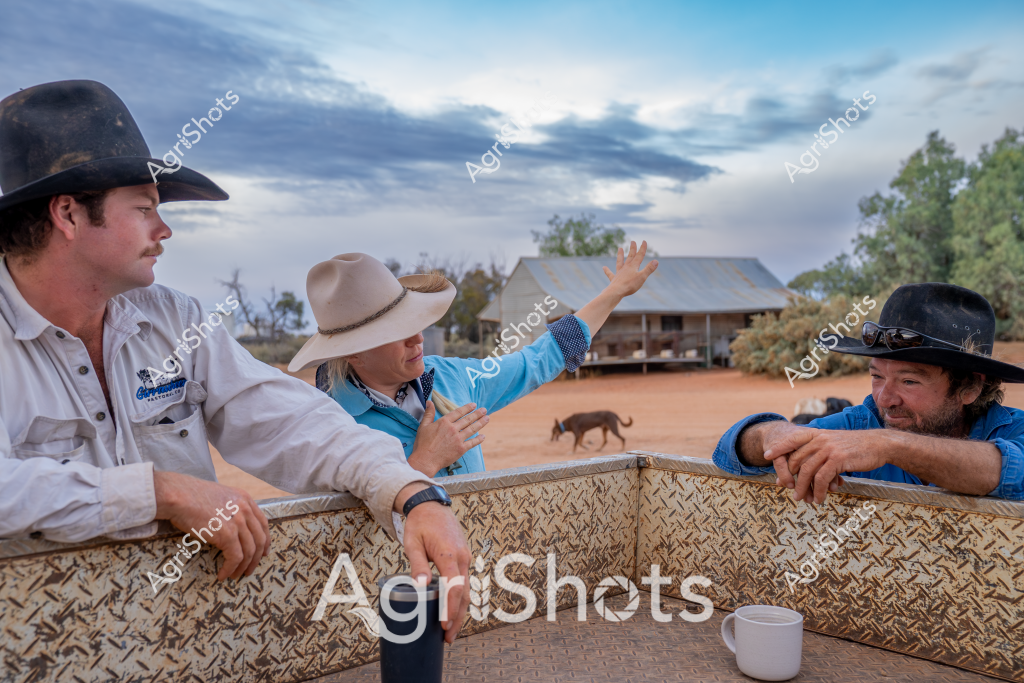
A quintessential outback scene unfolds at a rural homestead, with three men in wide-brimmed hats gathered around a textured metal barrier. A dog wanders across the dusty red earth in the background, while a corrugated iron shed and sparse trees complete the landscape. A man in a white work shirt leans casually on the fence, while another in a blue shirt gestures animatedly, suggesting an ongoing conversation about station life. The third man, also wearing a black cowboy-style hat, listens intently. The cloudy sky and muted earth tones capture the rugged atmosphere of an Australian rural property, with the men's relaxed postures and bush attire reflecting the resilient spirit of outback workers. A white coffee mug sits on the fence, hinting at a moment of respite during a busy day of station work.
 Image
Image
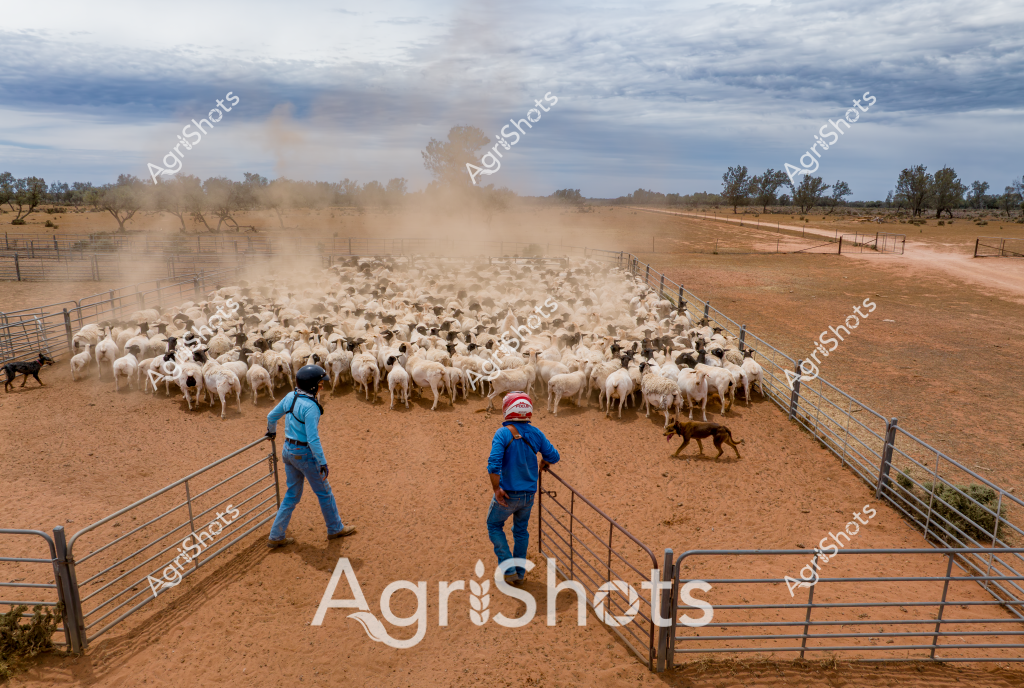
Two men in blue clothing and work boots manage a large flock of white sheep in a dry, dusty livestock yard during what appears to be a warm, overcast day. The sheep are tightly clustered, generating a cloud of reddish-brown dust as they move within the metal livestock fencing. Working dogs assist the stockmen, helping to control and direct the mob of sheep across the arid paddock with its sparse trees and fenced enclosures in the background. The scene captures a typical Australian sheep farming operation, likely in an inland region experiencing dry seasonal conditions. The stockmen's coordinated movements and their dogs' precise herding demonstrate the skill and experience required in managing large livestock herds in challenging agricultural environments. The loose, functional clothing - blue shirts, work pants, and practical footwear - reflects the pragmatic approach of professional livestock managers. The landscape suggests a rural property in an arid or semi-arid zone, with hard-packed earth, minimal vegetation, and a wide, cloudy sky typical of Australian pastoral regions. The fencing and yard infrastructure highlight the structured approach to livestock management, with carefully designed spaces to control and move sheep efficiently.
 Image
Image
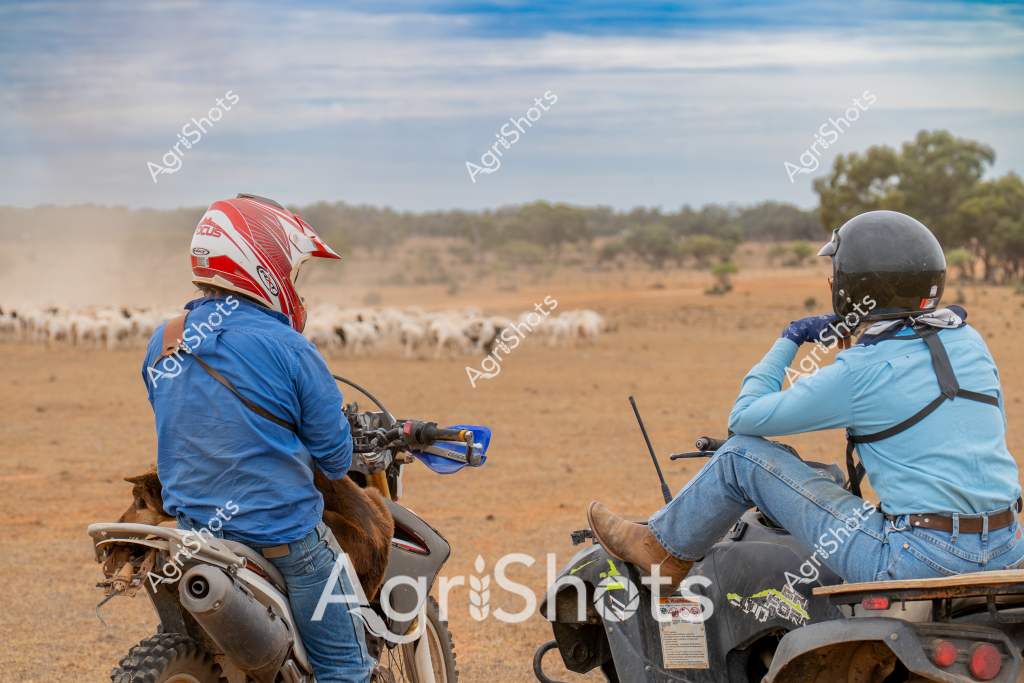
Two men on motorbikes survey a mob of white sheep across a dry, dusty paddock in rural Australia. The men wear blue shirts and protective helmets, with one in a red motocross helmet and the other in a black helmet, seated on an all-terrain vehicle and a motorcycle. The landscape is a typical Australian pastoral scene - golden-brown grass, sparse trees on the horizon, and a vast open sky with soft blue and white clouds. Several dozen sheep are grazing in the background, creating a light dust cloud as they move slowly across the arid terrain. The scene captures the essence of modern Australian livestock management, where motorcycles and quad bikes have replaced traditional horse-based mustering techniques. The dry conditions suggest this could be during a prolonged drought period, typical of many Australian agricultural regions.
 Image
Image
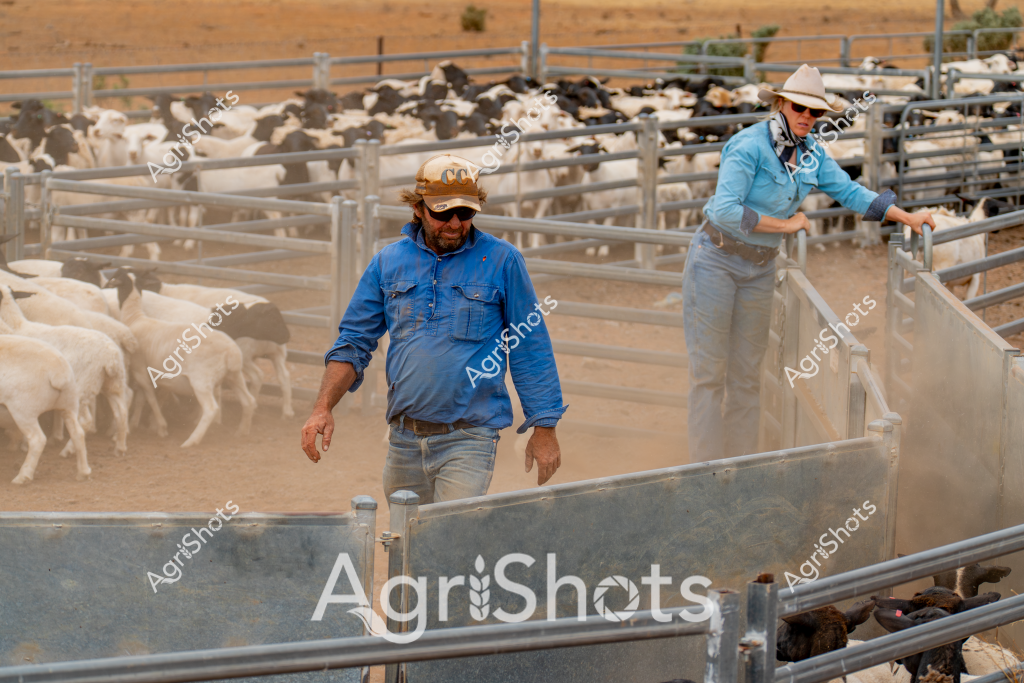
A man and a woman livestock managers work together in a dusty cattle yard, carefully managing a herd of white and dark-colored goats within metal livestock pens. The man, wearing a blue work shirt, brown cap, and sunglasses, walks along the metal gate, while a woman in a light blue shirt and white hat stands at another section of the fencing. The surrounding landscape appears arid, with dry golden grasslands and sparse vegetation visible in the background, suggesting this is likely a rural station or property in an inland region of Australia. Metallic livestock handling equipment creates a structured grid around the animals, who are clustered tightly within the enclosed spaces. The scene captures the careful, methodical approach of professional livestock management, highlighting the skill and teamwork required to handle and move herds in challenging agricultural environments.
 Image
Image
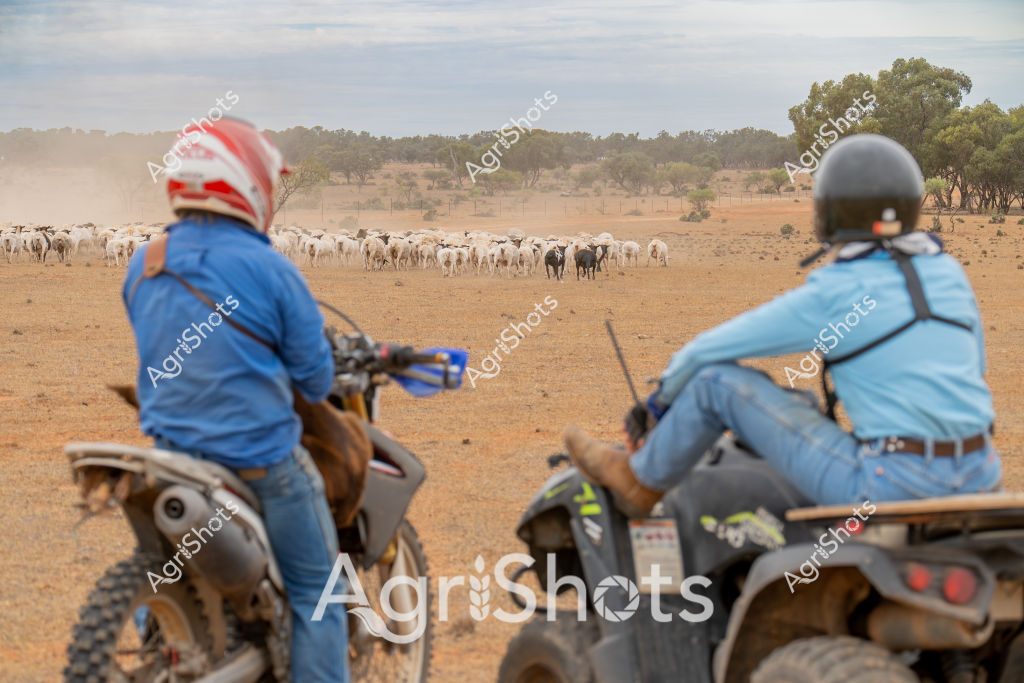
Two men on motorcycles muster a large herd of white and grey cattle across a dry, dusty paddock in what appears to be an arid or semi-arid region of Australia. The landscape is characterized by sparse eucalyptus trees on the horizon, reddish-brown earth, and minimal ground vegetation, suggesting challenging drought conditions. Both riders wear blue jackets and protective helmets, using their motorbikes to efficiently guide and move the livestock across the open terrain. The cattle are tightly grouped, moving as a cohesive mob through the sparse, sun-baked landscape. A light haze of dust rises behind the herd, indicating their movement and the dry environmental conditions. The scene captures the quintessential Australian agricultural practice of livestock management in a challenging rural environment.
 Image
Image
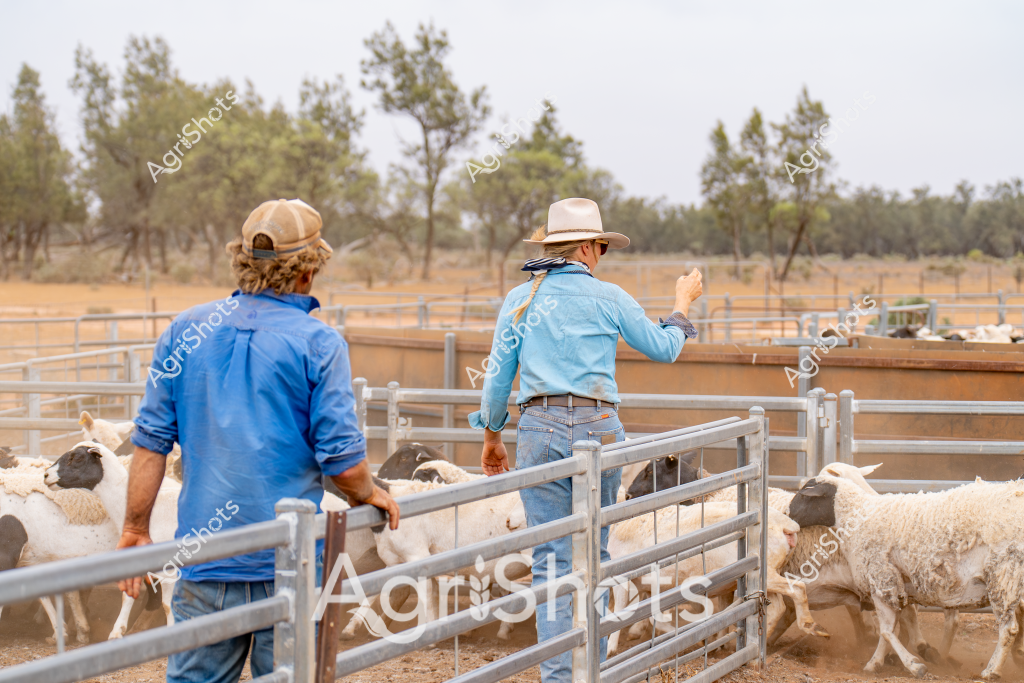
Two men farmers oversee a small flock of sheep in a dry, dusty livestock paddock surrounded by sparse eucalyptus trees. One man in a blue long-sleeved shirt and a tan cap stands near a metal livestock gate, while the other wearing a light blue shirt and wide-brimmed sun hat gestures toward the animals. Several white sheep with varying wool textures are visible within the metal stock yard fencing, highlighting the typical rural Australian agricultural setting. The landscape appears arid, with a muted color palette of golden-brown ground, gray-green trees, and washed-out sky, suggesting conditions typical of inland pastoral regions. The men's sturdy work clothing and attentive postures indicate an experienced approach to livestock management, carefully monitoring the small mob of sheep in their contained yard.
 Image
Image
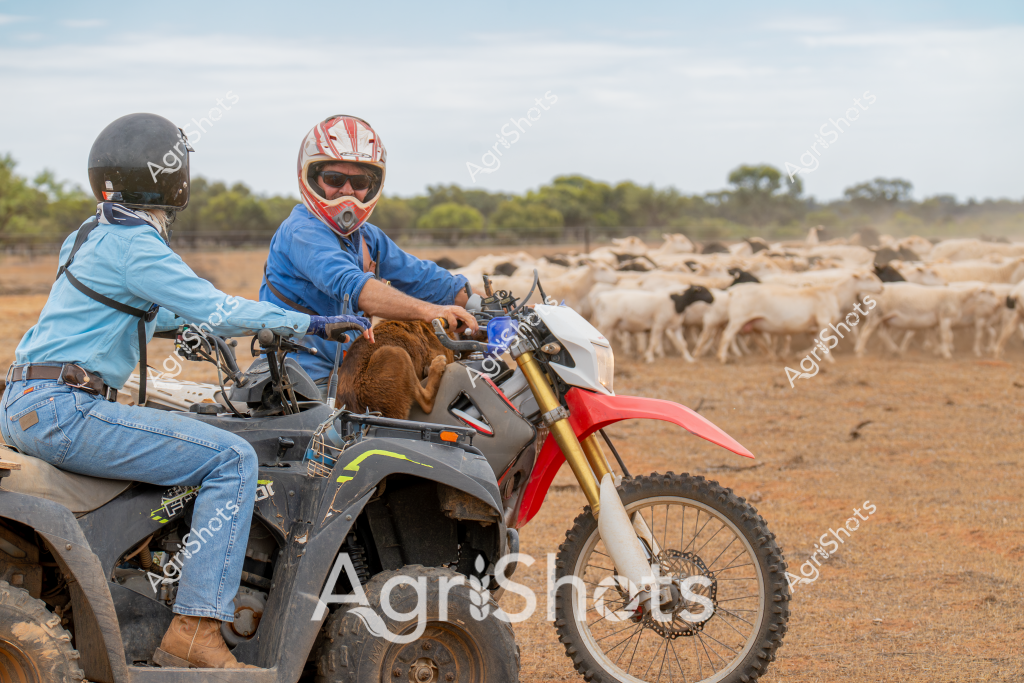
Two riders on off-road motorcycles guide a flock of white sheep across a dry, golden paddock in rural Australia. A woman in a light blue shirt and denim jeans sits on a quad bike, while a man in a blue shirt and red-and-white motocross helmet rides a dirt bike beside her. The landscape is typical of the Australian interior - sparse, dusty ground with scattered trees on the horizon and a herd of woolly sheep clustered in the background. The motorcycles appear well-equipped for farm work, with the dirt bike featuring a striking red and white color scheme and the quad bike looking robust and functional. Both riders are wearing protective gear, including helmets and sturdy clothing, suggesting they are actively mustering or moving the livestock across the property. The scene captures the essence of modern Australian livestock management, where motorized vehicles have replaced traditional horse-based mustering, demonstrating the evolving techniques of farm work in the contemporary agricultural landscape. The dry terrain and sparse vegetation hint at challenging environmental conditions typical of many Australian grazing regions.
 Image
Image
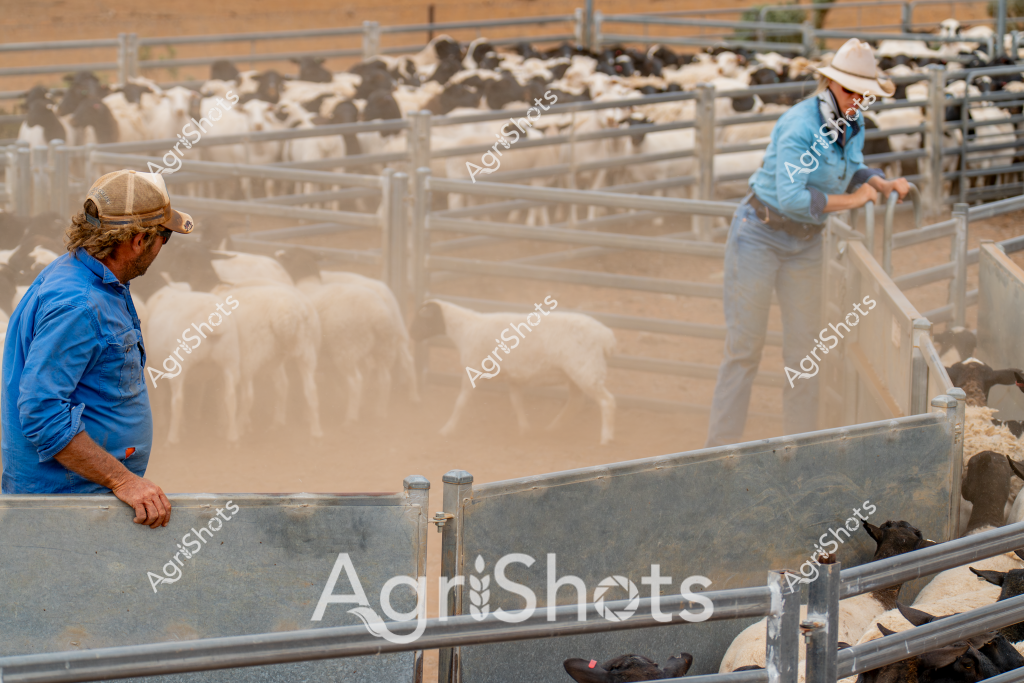
Two men working in a dusty livestock yard manage a flock of sheep, carefully guiding them through metal cattle yards under bright, arid conditions. A man in a blue long-sleeved shirt and tan cap stands near a metal gate, observing the livestock movement, while another man in a light blue shirt and white wide-brimmed hat actively manages the sheep behind metal fencing. The sheep - a mix of white and dark-colored animals - are clustered tightly in the holding pen, raising a fine cloud of dust around their woolly bodies. The landscape appears dry and sun-drenched, typical of Australian rural livestock management settings, with metal yard infrastructure providing structured containment for the animals. The workers' positioning and attentive postures suggest an experienced approach to stock handling, demonstrating the precise and methodical nature of sheep farming in challenging agricultural environments.
 Image
Image
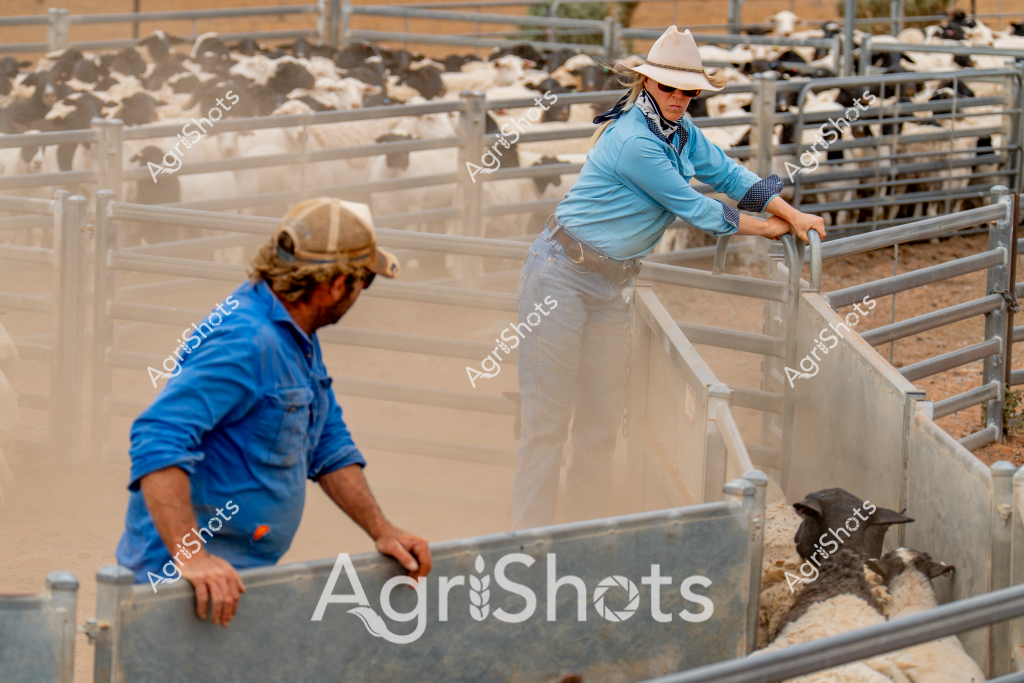
A woman stockman and a man worker are managing sheep in a dusty livestock yards, using metal cattle gates and pens to control the flock's movement. The woman wears a white wide-brimmed hat, light blue long-sleeved shirt, and light-colored trousers, leaning confidently on the metal yard fence. Her colleague in a blue work shirt stands nearby, carefully monitoring the sheep's positioning. Multiple sheep are visible in the background, clustered within the galvanized steel yard infrastructure. The scene captures the precision and skill of Australian livestock management, with fine dust particles hanging in the air and creating a soft, atmospheric light that highlights the rural working environment. The metallic fencing, practical workwear, and controlled movement of livestock demonstrate the professional approach to sheep handling in a dry, potentially arid agricultural setting.
 Image
Image
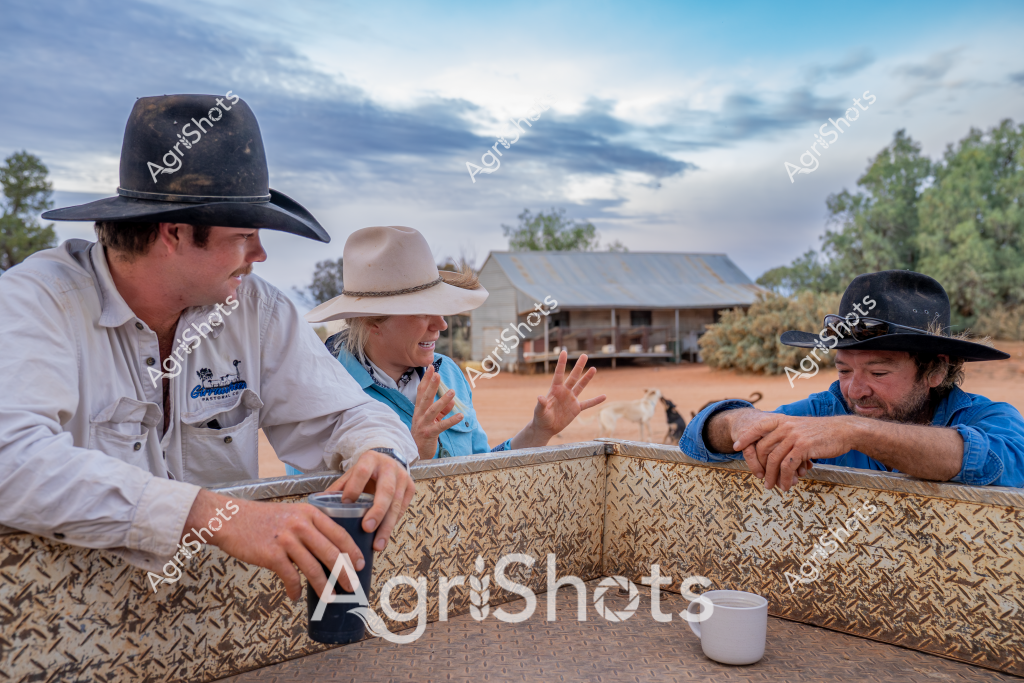
Three men in wide-brimmed Australian bush hats are engaged in conversation around a textured metal surface, with a rustic rural station building in the background. A white mug sits on the surface, suggesting an informal workplace discussion. The men are dressed in light-colored work shirts - white and blue - and appear to be agricultural workers or station hands, likely discussing daily operations or work plans. The setting looks like a remote Australian cattle station, with reddish dirt ground, scattered trees, and a corrugated iron shed, creating a quintessential outback rural atmosphere. The cloudy sky suggests early morning or late afternoon, with soft light casting subtle shadows across the landscape. Their body language and positioning indicate a collaborative, relaxed workplace interaction typical of Australian rural communities.
 Image
Image
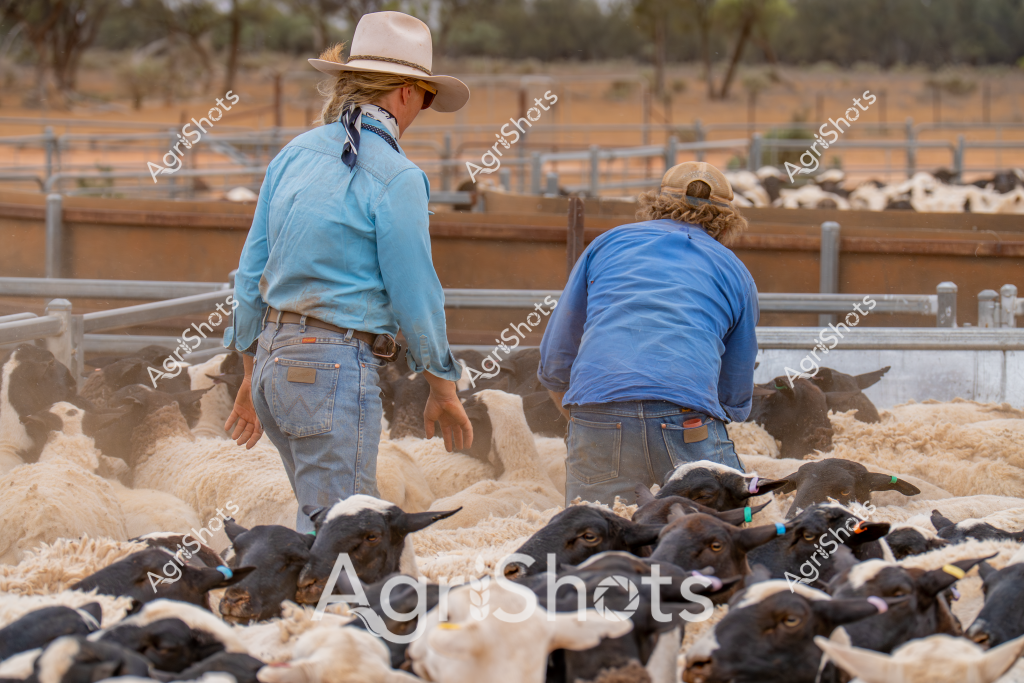
Two women workers manage a large flock of black and white sheep in a dusty livestock yard, wearing blue work shirts and wide-brimmed hats typical of Australian agricultural settings. The scene captures a moment of intense sheep handling, with the women carefully navigating through the densely packed animals, likely preparing them for shearing or movement between paddocks. The livestock yard features sturdy metal fencing in warm earth tones, creating a structured environment for managing the sheep herd. Black-faced sheep with white wool intermingle, creating a textured landscape of animal bodies against the dry, dusty ground. A wide-brimmed hat and blue work shirt provide protection from the harsh Australian sun, highlighting the practical clothing essential for rural workers. The image conveys the hard physical work and skill required in sheep farming, showcasing the close interaction between agricultural workers and the livestock in a quintessential Australian rural setting.
 Image
Image
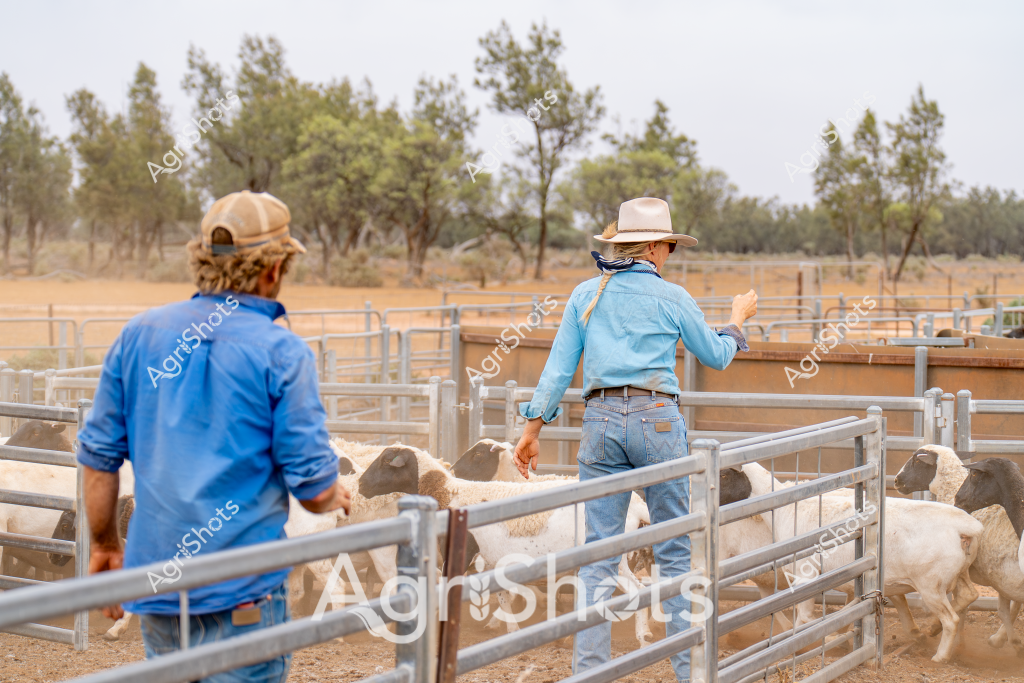
Two men working in a livestock yard, carefully managing a small herd of sheep within metal livestock pens. They are wearing typical rural workwear - blue long-sleeved shirts, wide-brimmed sun hats, and work jeans. One man faces away from the camera, standing near the metal gate, while the other is partially visible to the left side of the image. The setting appears to be a dry, arid paddock with sparse trees and scrubland in the background, suggesting this is likely in an inland Australian agricultural region. The metal yard panels create a systematic grid for controlling and moving the sheep, which appear to be light-colored, possibly Merino or other wool breed. The dusty ground and sparse vegetation indicate this could be during a dry season or in a drought-affected area. The scene captures the practical, no-nonsense approach of Australian livestock management, where farmers work efficiently to handle their stock in challenging environmental conditions.
 Image
Image
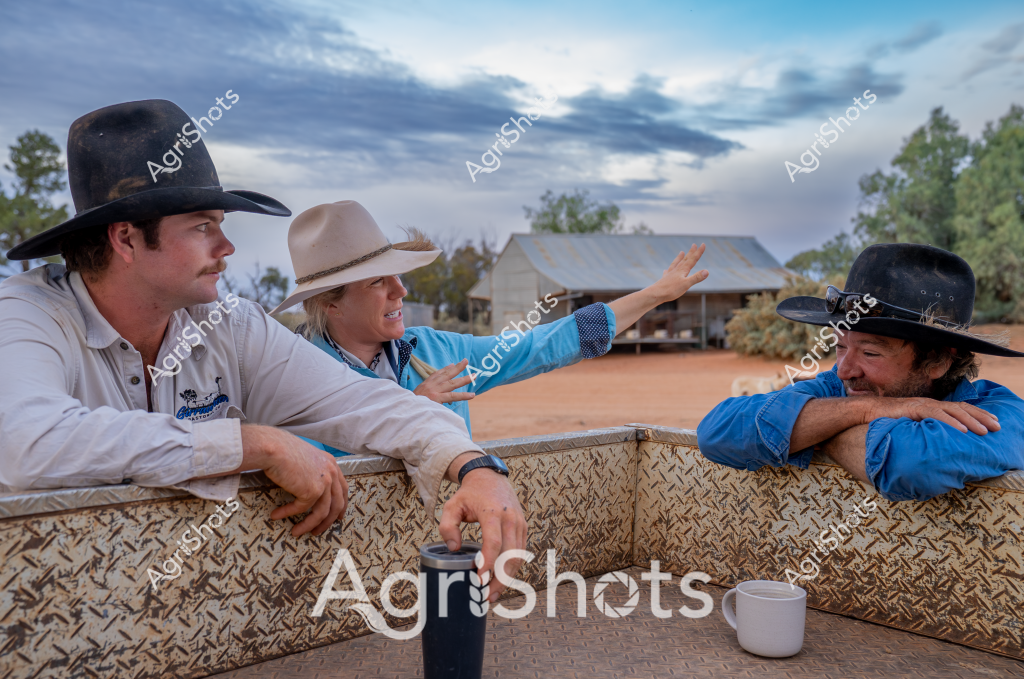
A group of three rural workers pause during their morning discussion, leaning against a textured metal utility vehicle with a rustic shed in the background. Two men and a woman, all wearing cowboy hats in black and beige, are dressed in blue and white work shirts typical of Australian rural attire. The landscape suggests an outback station or remote agricultural property, with a weathered tin shed and sparse trees visible under a cloudy dawn or dusk sky. A white coffee mug sits on the vehicle's surface, indicating a casual workplace moment of connection and conversation. The scene captures the collaborative spirit of Australian rural work, with the individuals appearing relaxed yet focused, their body language suggesting an ongoing discussion about station operations or daily tasks. The environment speaks to the rugged nature of Australian agricultural work - a dusty, open landscape with muted earth tones of red soil, gray-blue sky, and the weathered textures of rural infrastructure. Their attire and posture reflect generations of farming culture, where communication and teamwork are as critical to success as hard work and resilience.
 Image
Image
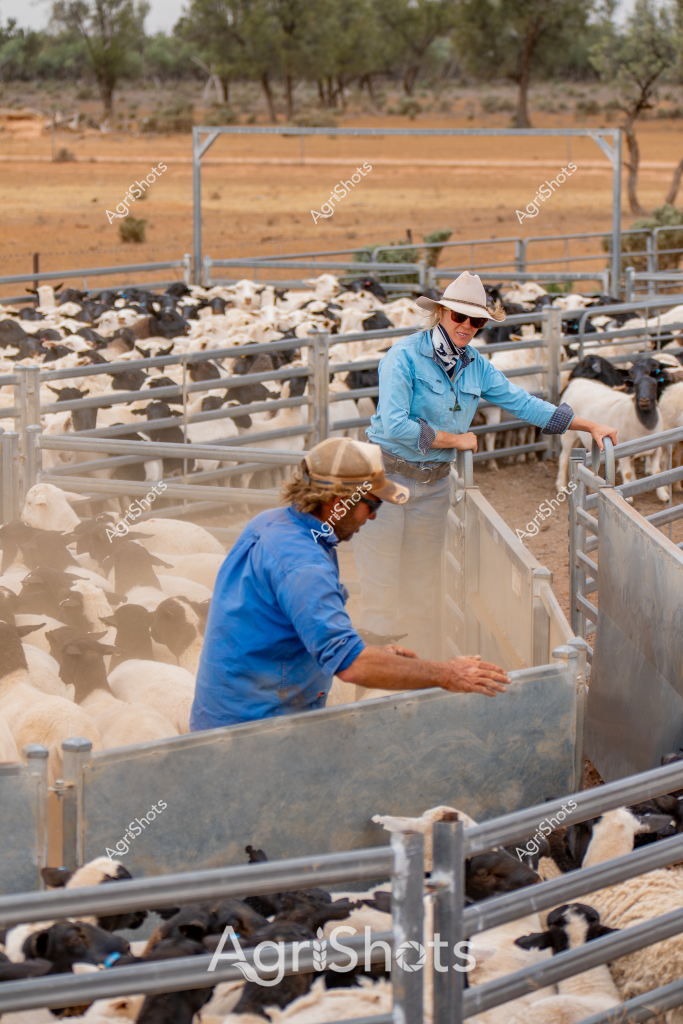
Two experienced stockmen manage a large herd of sheep in metal livestock yards during a dry, arid landscape setting. A woman wearing a wide-brimmed white hat and light blue long-sleeved shirt stands near the metal yard gates, while another worker in a blue jacket assists with moving the animals. The dusty paddock behind them contains sparse trees and golden-brown ground, typical of an Australian pastoral landscape. Multiple sheep - a mix of white and dark-colored animals - are densely packed within the metal yard compartments, waiting to be sorted or processed. The scene captures the precision and practical teamwork required in managing livestock in challenging rural conditions, highlighting the essential skills of Australian agricultural workers in handling large herds across expansive, dry terrain.
 Image
Image
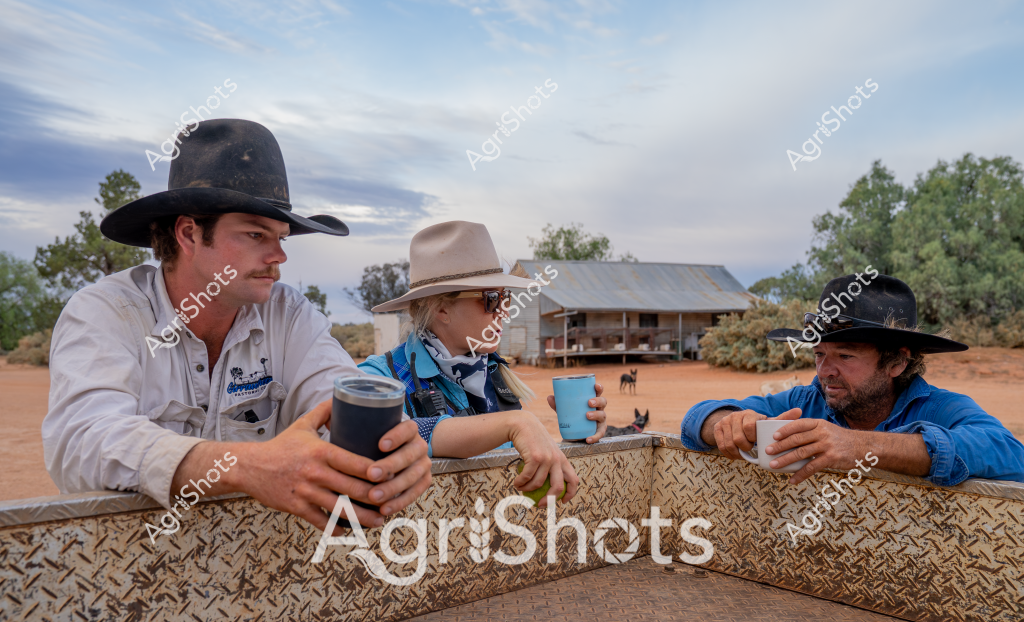
Three men in rural Australian workwear share a break moment on a dusty outback station, their blue shirts and wide-brimmed hats reflecting the classic pastoral style. Seated at a textured metal surface with a rustic tin shed and wandering dog in the background, they hold thermal mugs, suggesting a moment of rest during a long working day. The landscape is quintessentially Australian - a sandy, ochre-colored ground punctuated by sparse grey-green bushes and a soft, cloud-streaked sky typical of the arid interior. One man wears a black cowboy-style hat, another a light cream fedora, while the third sports a similar dark hat, all wearing long-sleeved work shirts in white and blue tones. The scene captures the camaraderie and quiet resilience of rural workers, with the weathered shed and open landscape emphasizing the challenging environment of Australian agricultural work. Their relaxed postures and shared drinks represent a universal moment of connection in the demanding world of station life.
 Image
Image
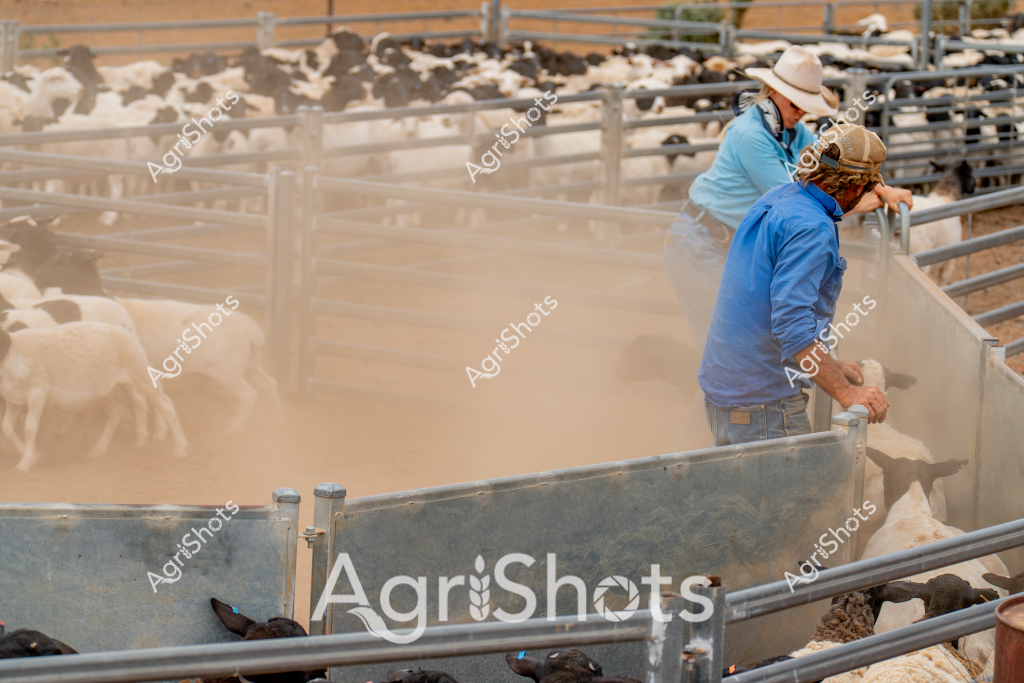
Two workers manage a dusty livestock yard, with sheep penned in metal fencing and dust swirling around their feet. A man in a white hat and light blue shirt and another worker in a blue jacket are positioned at different points of the curved metal livestock handling system, carefully controlling the movement of the sheep. The agricultural setting is characterized by metallic yard infrastructure, multiple paddocks, and a dry, dusty environment typical of Australian livestock management. Dust clouds rise around the animals, creating a hazy atmospheric effect that highlights the dynamic nature of stock handling. The workers appear focused and professional, demonstrating the skilled labor required in managing livestock in challenging rural conditions. The scene captures the essence of Australian sheep farming, with precision and careful animal management evident in every aspect of their work.
 Image
Image
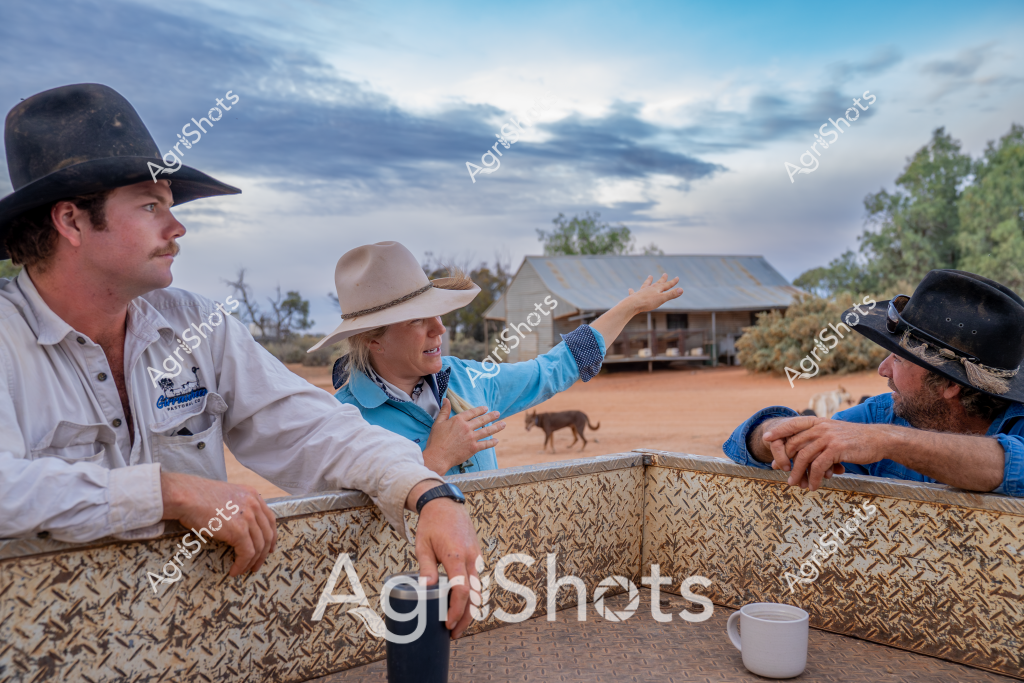
Three men in work attire stand around a textured metal fence, gazing across a dusty rural Australian station yard. A weathered tin shed sits in the background, with a dog wandering across the rich ochre-colored ground. One woman in a blue shirt gestures animatedly, pointing towards something off-frame, while the men in white and blue shirts wearing wide-brimmed work hats listen intently. A white coffee mug sits on the fence, suggesting a break in farm activities or a morning planning discussion. The cloudy sky suggests early morning or late afternoon, with soft light casting subtle shadows across the rustic rural landscape. The scene captures the collaborative nature of station life, with workers seemingly discussing farm operations or livestock management in a classic Australian outback setting.