About this image
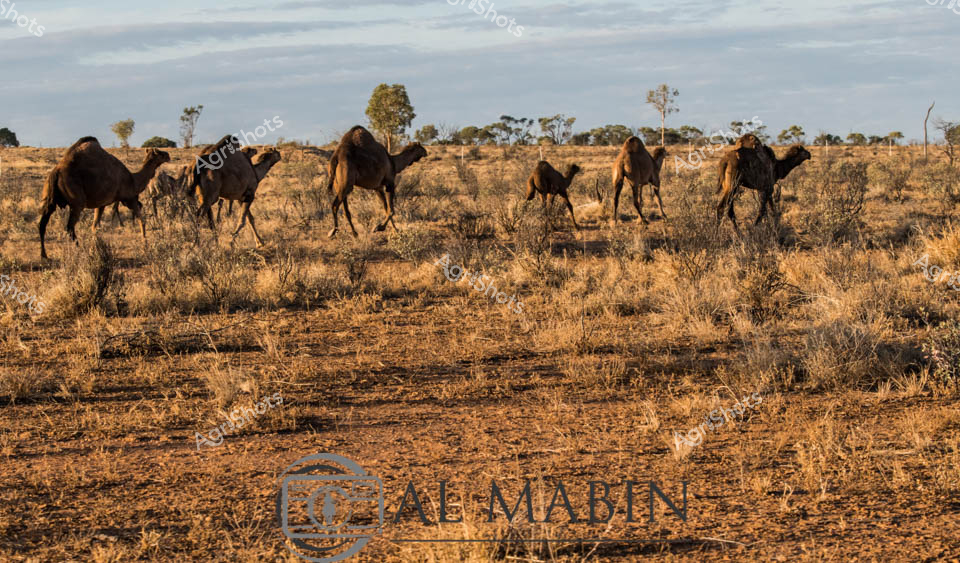
Feral camels roam the arid landscape of a remote Queensland cattle station, their rich brown coats blending with the sun-scorched golden grasslands and scattered scrub. The herd moves with a deliberate, unhurried gait across the dusty terrain, silhouetted against a pale, overcast sky that stretches endlessly across the horizon. These resilient dromedary camels, descendants of imported working animals from the 19th century, now form significant wild populations across Australia's interior, representing a unique aspect of the continent's agricultural and ecological history. Sparse eucalyptus trees punctuate the background, their weathered forms a testament to the harsh environmental conditions of the outback. The muted earth tones and expansive landscape speak to the raw beauty and endurance of Australia's agricultural environments.
Similar media
 Image
Image
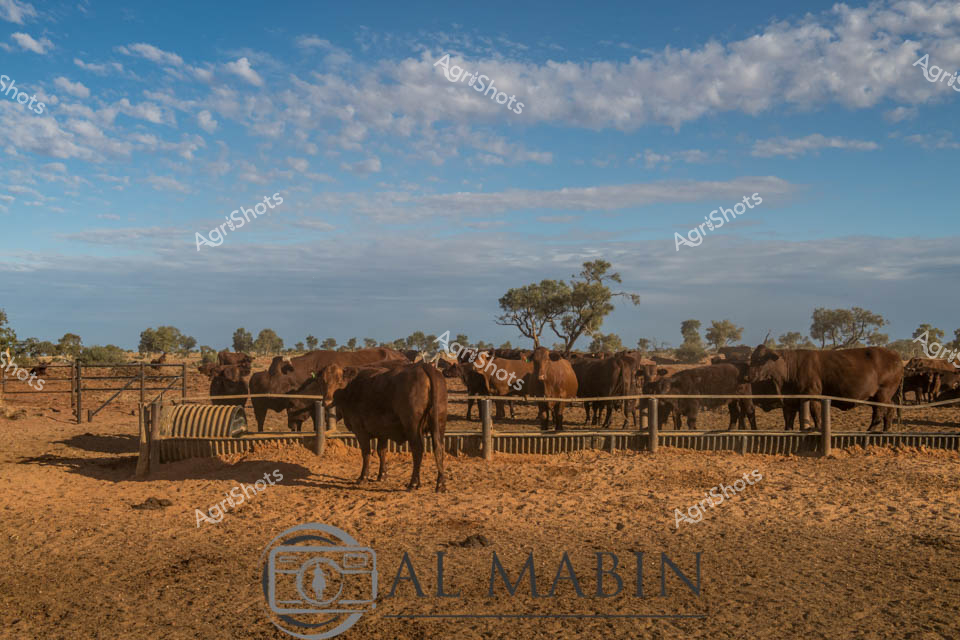
A herd of dark red-brown beef cattle stands in a dry, red-earth feedlot yard in outback Australia, gathered around a cylindrical hay feeder under a partly cloudy blue sky. Sparse native trees line the background horizon, and the warm late-afternoon light highlights the russet tones of the dusty ground and the cattle's coats. Metal panel fencing encloses the yard, with several animals visible near the feed station while others mill about in the background.
 Image
Image
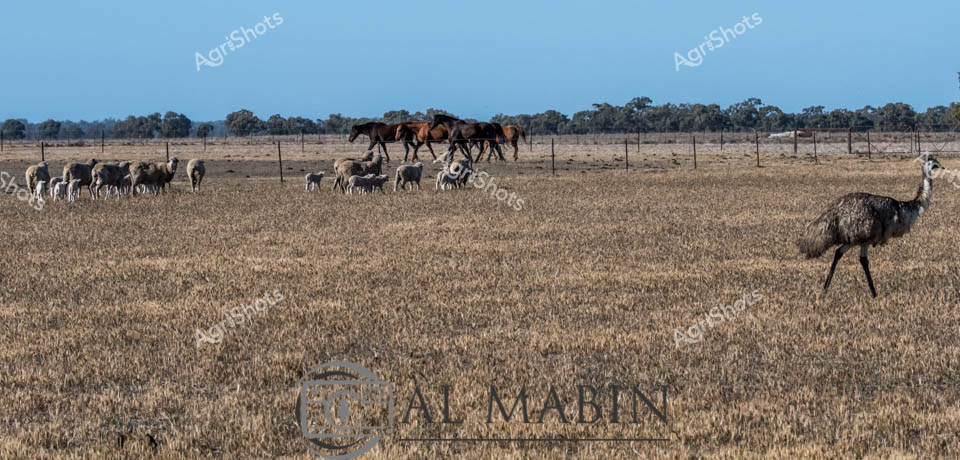
Expansive golden pastures stretch beneath a clear azure sky in this quintessential Australian rural landscape. A small mixed herd of horses and sheep graze together in a fenced paddock, their forms silhouetted against distant eucalyptus woodland on the horizon. An inquisitive emu stands sentinel at the edge of the frame, its long neck and distinctive profile adding a distinctly Australian accent to the pastoral scene. The landscape speaks of dry season conditions, with weathered grass covering the terrain in rich amber and brown tones, typical of inland New South Wales agricultural country. Fence lines divide the property, marking boundaries between grazing areas and suggesting careful livestock management. The composition captures the harmonious coexistence of different livestock species against a backdrop of classic Australian agricultural terrain, highlighting the resilience and diversity of rural farming ecosystems.
 Image
Image
Cattle cluster beneath the iconic windmill on a parched Queensland cattle station, their diverse hides ranging from rich chocolate brown to silvery grey. The dry, rust-colored earth stretches out beneath a cloudless azure sky, revealing the harsh realities of pastoral life in the Australian outback. Sturdy Brahman and crossbred cattle huddle together, seeking respite from the intense midday heat near the tall metal windmill - a critical water infrastructure that symbolizes rural resilience. The landscape speaks of endurance, with scattered sparse vegetation and the windmill standing as a sentinel of agricultural persistence in an unforgiving environment. This scene captures the essence of extensive beef production in northern Australia, where livestock must adapt to challenging climatic conditions and rely on strategic water management.
 Image
Image
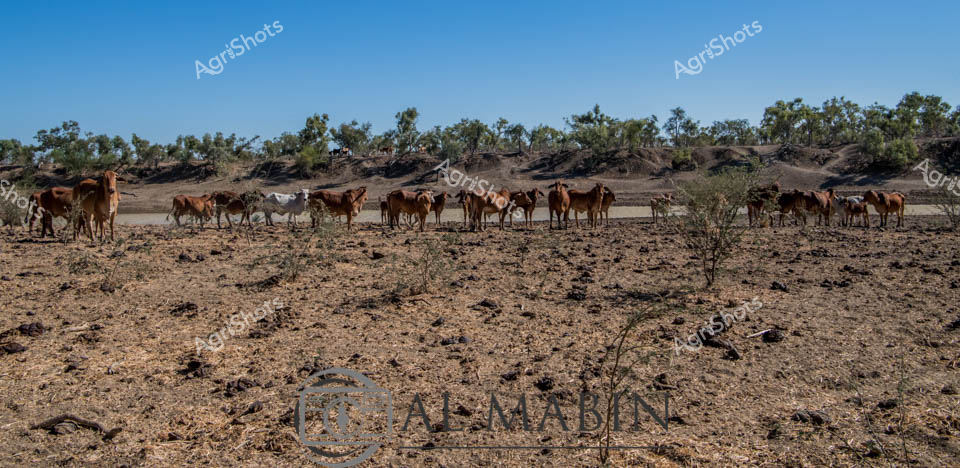
Brahman cattle cluster across a parched, ochre-toned landscape, their distinctive humped shoulders and heat-resistant coats revealing their adaptability to Australia's harsh northern pastoral zones. The dry, cracked earth and scattered sparse vegetation speak to the challenging environmental conditions of a Queensland cattle station during an extended dry season. Reddish-brown Brahman bulls and cows stand together in a tight, resilient herd, their muscular frames and loose skin demonstrating generations of genetic adaptation to survive in extreme temperatures and limited grazing conditions. Scrubby trees and a distant treeline provide minimal shade, highlighting the robust nature of these cattle and the agricultural resilience required in remote Australian pastoral regions. The clear blue sky and stark landscape create a sense of isolation and endurance, capturing the raw essence of Queensland's cattle industry and the intrinsic connection between livestock and landscape.
 Image
Image
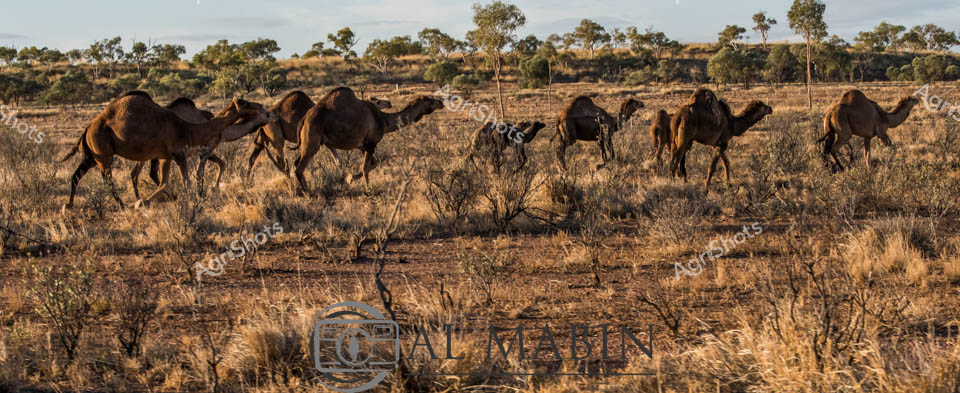
Feral camels roam the vast, arid landscape of a remote Queensland pastoral station, their sandy-brown coats blending seamlessly with the sun-scorched earth and sparse saltbush. Hardy and resilient, these descendants of Afghan camel handlers' imported dromedaries traverse the rocky, undulating terrain with a languid grace, their silhouettes casting long shadows in the golden late afternoon light. Scattered eucalyptus trees punctuate the horizon, providing sparse shade in the unforgiving Australian outback, while dry grasses and low shrubs crackle beneath their padded feet. The herd moves with a collective purpose, each animal maintaining a respectful distance yet moving in loose synchronization across the expansive station country. This scene captures the raw, untamed spirit of Australia's inland territories - a landscape where introduced species have become an integral part of the ecological narrative, roaming freely across thousands of hectares of rugged, unforgiving terrain. The image speaks to the adaptability of both the animals and the landscape, a testament to survival in one of the world's most challenging environments.
 Image
Image
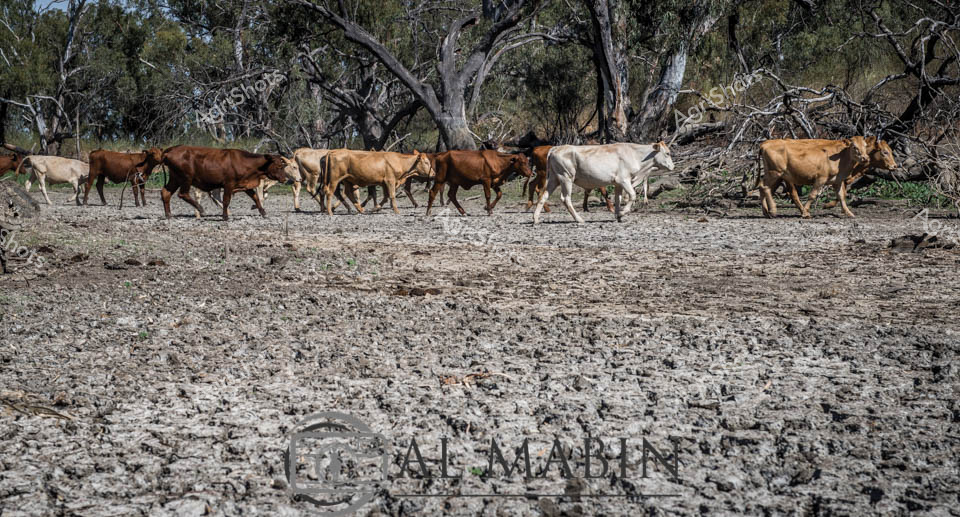
Dust billows beneath weathered hooves as a mixed herd of cattle traverses a parched stock route in the Australian outback. Lean Brahman and crossbred beef cattle move with steady determination, their varied coat colors ranging from rich rust-red to pale cream, walking in a disciplined line through a landscape of gnarled eucalyptus trees and cracked earth. The dry season's brutal impact is evident in the bare ground and skeletal tree branches, highlighting the resilience of both livestock and landscape. Each animal moves with a quiet strength, their muscular bodies testament to generations of breeding adapted to harsh environmental conditions. Weathered tree sentinels stand as silent witnesses to this timeless rhythm of stock route droving - a quintessential scene of Australian agricultural heritage that speaks to generations of pastoral movement and survival.
 Image
Image
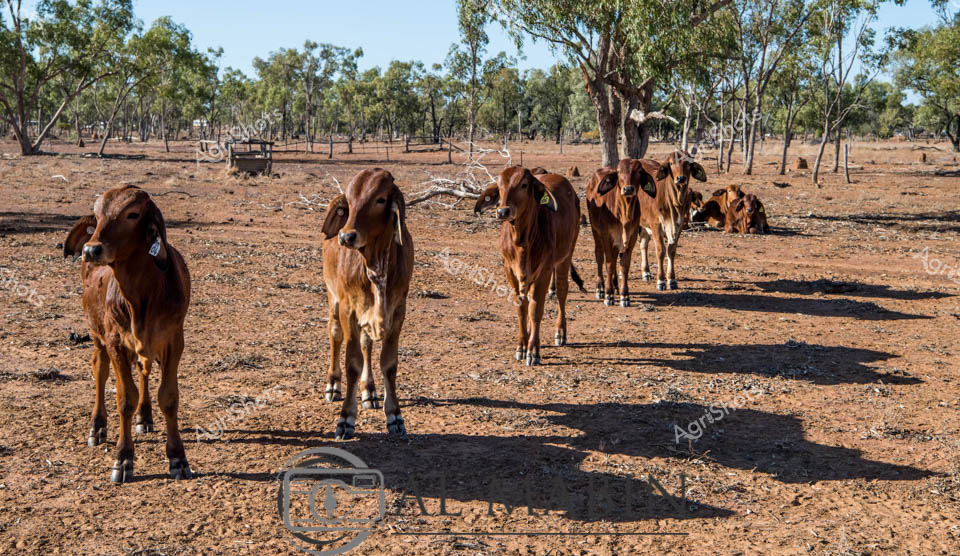
Brahman-cross beef calves cast long shadows across the baked red earth of a Queensland cattle station, their chestnut-colored hides gleaming in the harsh midday sunlight. Scattered eucalyptus trees punctuate the sparse, dry landscape, providing minimal shade for the young herd. These robust cattle, typical of northern Australian pastoral operations, stand quietly in the unforgiving paddock, their muscular frames testament to generations of breeding for heat tolerance and resilience. The dry season landscape reveals compacted, dusty ground with sparse ground cover - a challenging environment that demands hardy livestock and skilled station management. Ear tags indicate these are carefully tracked animals, part of a sophisticated modern cattle production system that balances traditional agricultural practices with contemporary animal husbandry techniques. The scene captures the essence of extensive beef production in remote Australia: resilient animals, vast unfenced horizons, and the stark beauty of a landscape that demands adaptation and strength. Each calf represents a carefully managed asset in a complex agricultural ecosystem, where survival depends on genetic selection, strategic grazing, and intimate knowledge of challenging environmental conditions.
 Image
Image
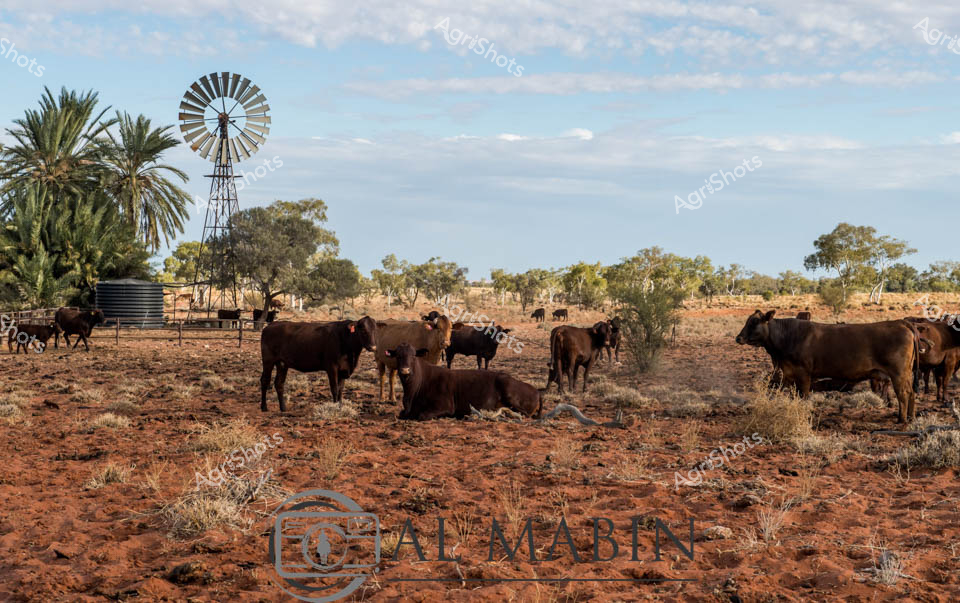
Red Dirt & Resilience: Cattle Station Life Angus cattle cluster around a weathered windmill beneath the expansive Queensland sky, their dark coats contrasting against the rusty-ochre landscape. Sparse eucalyptus trees and a solitary palm punctuate the arid pastoral terrain, revealing the harsh yet beautiful environment of Australia's inland cattle stations. The classic steel windmill, a quintessential feature of outback infrastructure, stands sentinel beside a water tank, silently pumping precious groundwater for the herd during the dry season. Some cattle rest on the sun-baked earth while others graze tentatively among sparse grassland scrub, embodying the stoic resilience required to survive in this unforgiving ecosystem. The muted palette of browns, blues, and dusty greens speaks to the challenging conditions of northern Queensland's agricultural heartland, where generations of farmers have cultivated livestock despite environmental constraints. This image captures the essence of Australian pastoral life - a delicate balance between human engineering, animal husbandry, and an uncompromising landscape.