About this image
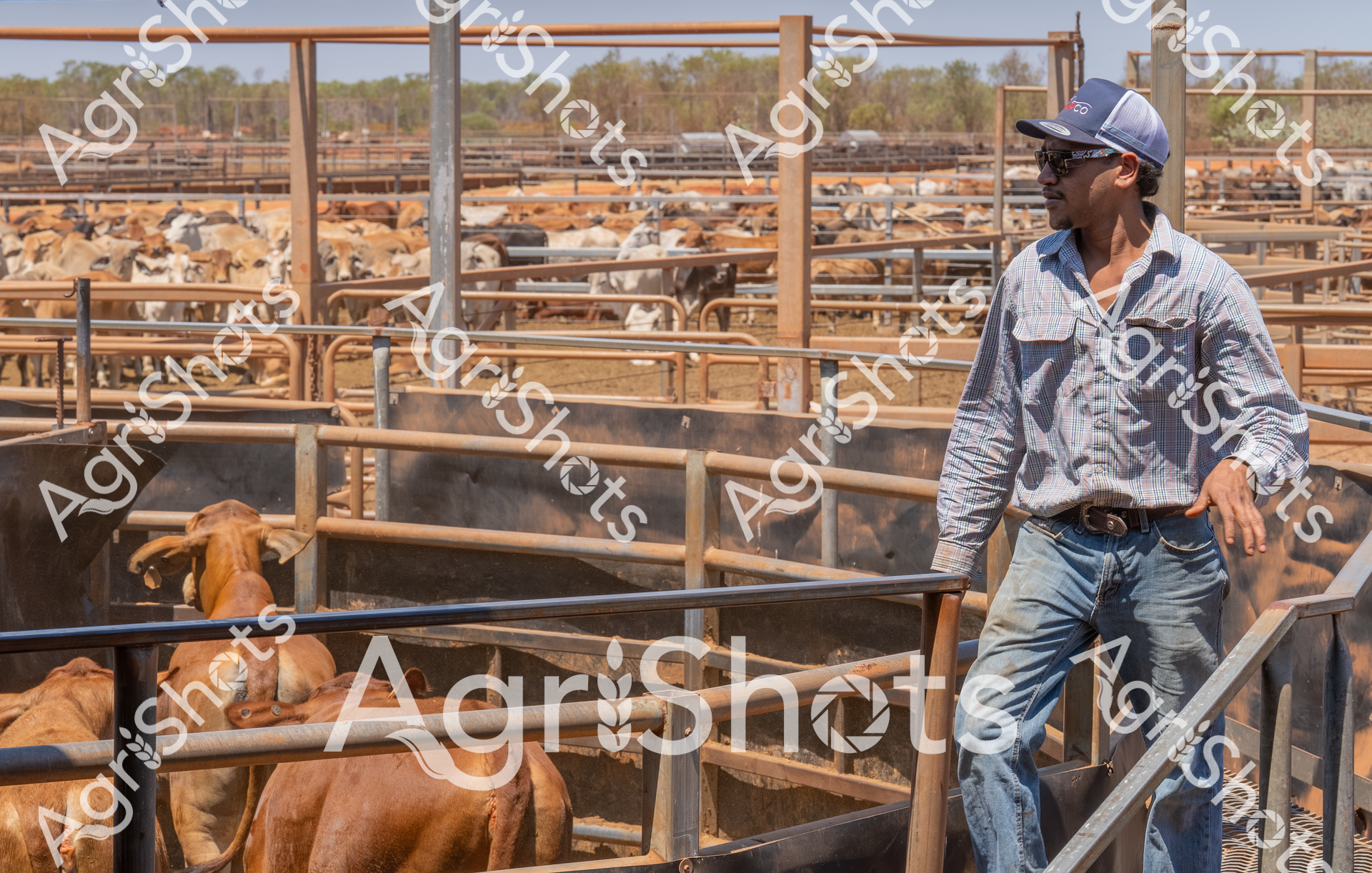
A seasoned stockman in a plaid shirt and cap stands surveying a large cattle yard in Western Australia's Kimberley region. Brahman-cross cattle fill the dusty holding pens, with reddish-brown animals clustered together under the harsh outback sun, ready for processing and potential export.
Similar media
 Image
Image
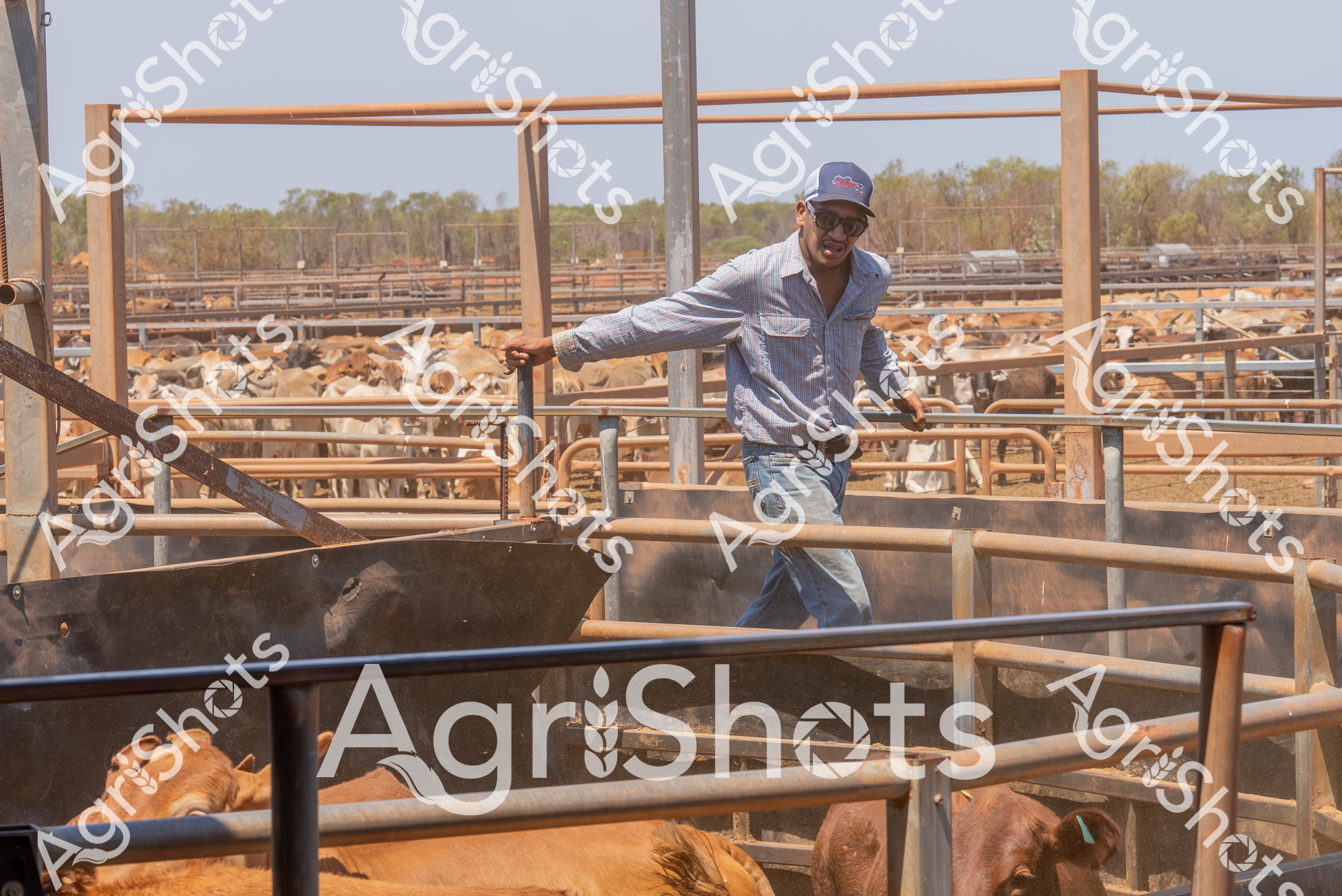
A man in a checked shirt and cap stands in a cattle yard in Western Australia's Kimberley region, surrounded by rows of metal pens filled with light-colored cattle. The dusty landscape and extensive holding facilities suggest this is a typical cattle station during the spring season, with livestock being processed for potential export.
 Image
Image
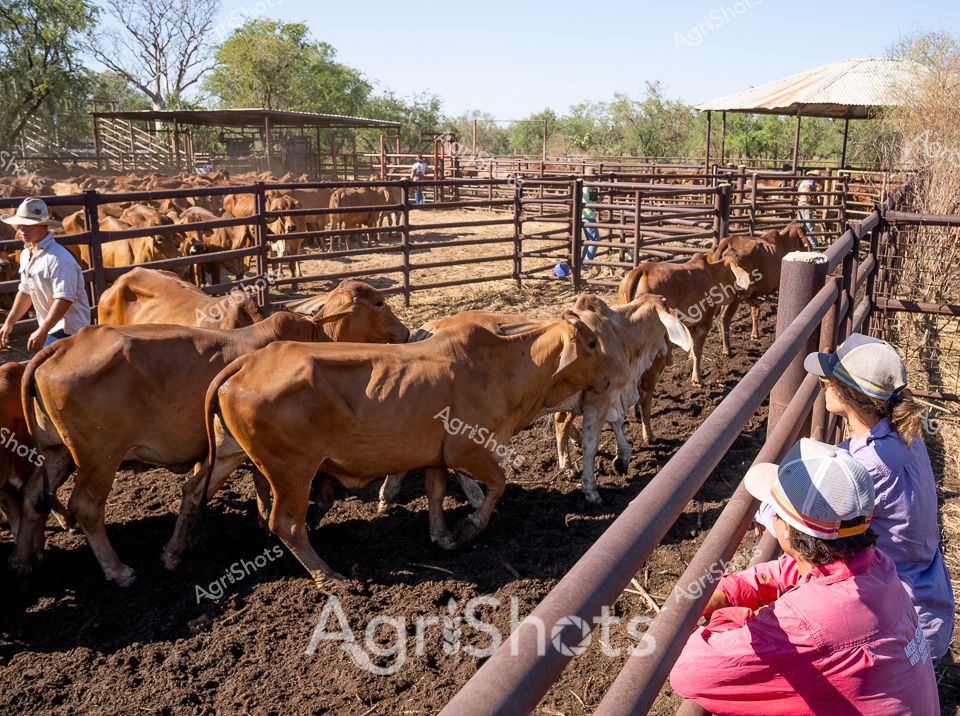
Burnished copper Brahman cattle crowd the dusty yards of a remote Kimberley station, their distinctive humped shoulders and loose skin highlighting their adaptability to harsh Australian pastoral landscapes. A pair of stockworkers in wide-brimmed hats and practical workwear - one in crisp white, another in soft purple and pink - observe the herd's movement through the metal cattle yards, their posture relaxed yet attentive. Dry season sunlight casts long shadows across the compacted earth, revealing the rustic corrugated iron shelters and sparse eucalyptus trees that frame this quintessential West Australian cattle processing scene. The animals' rich reddish-brown coats contrast against the weathered steel railings, embodying the resilience of both livestock and human workers in this unforgiving agricultural environment. Carefully positioned gates and experienced handlers signal the methodical process of drafting and managing the herd, a critical moment in the station's seasonal cattle management cycle. This image captures the quiet expertise and enduring spirit of Australian pastoral life, where generations of knowledge flow as naturally as the cattle through these well-worn yards.
 Image
Image
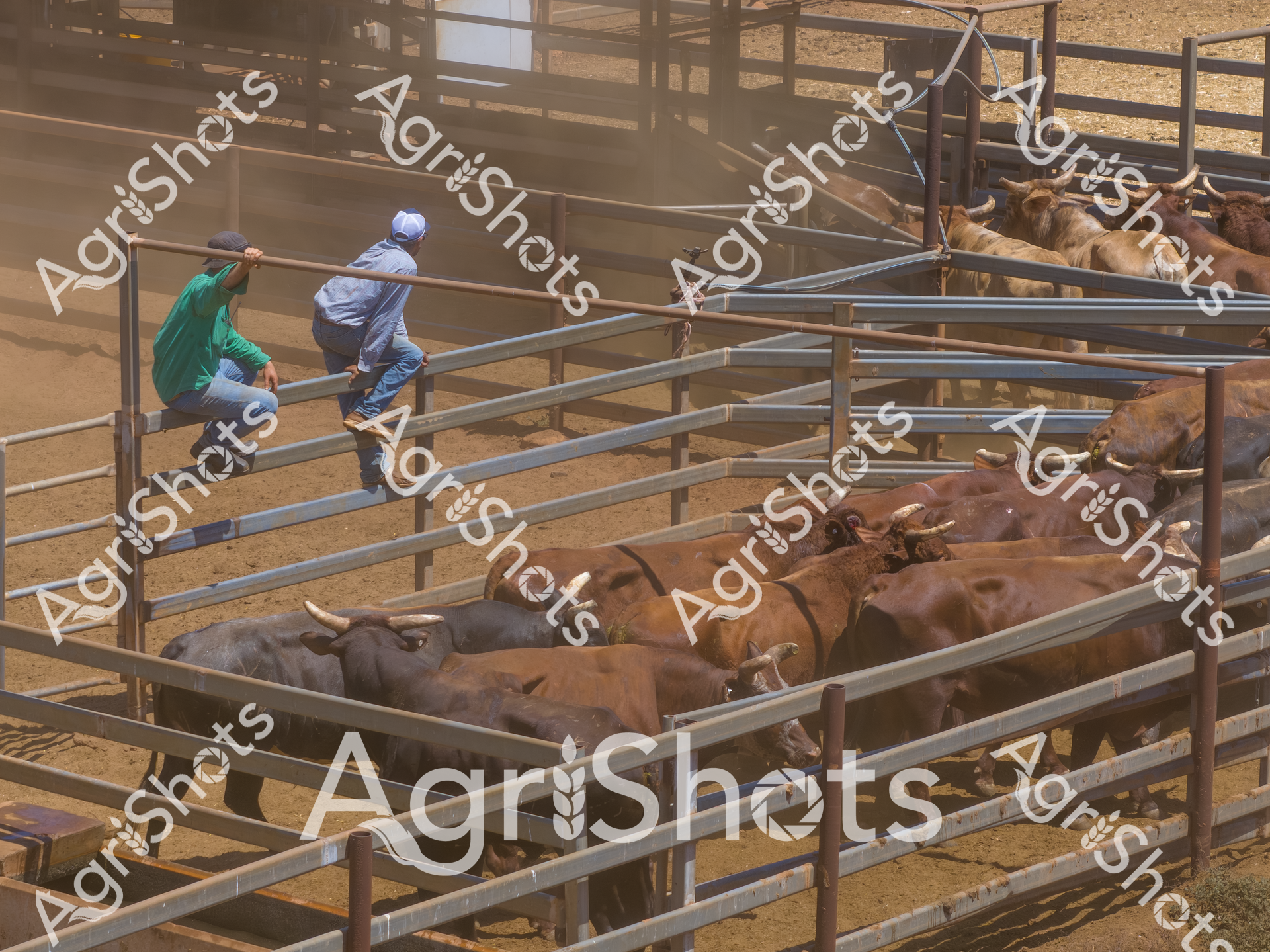
In the dusty cattle yards of Western Australia's Kimberley region, stockmen navigate metal livestock pens during a routine cattle health check and dipping process. Multiple brown and dark-colored cattle are tightly grouped in the metal-railed enclosures, with two workers in colored shirts carefully managing the herd's movement during what appears to be a seasonal quarantine and veterinary inspection.
 Image
Image
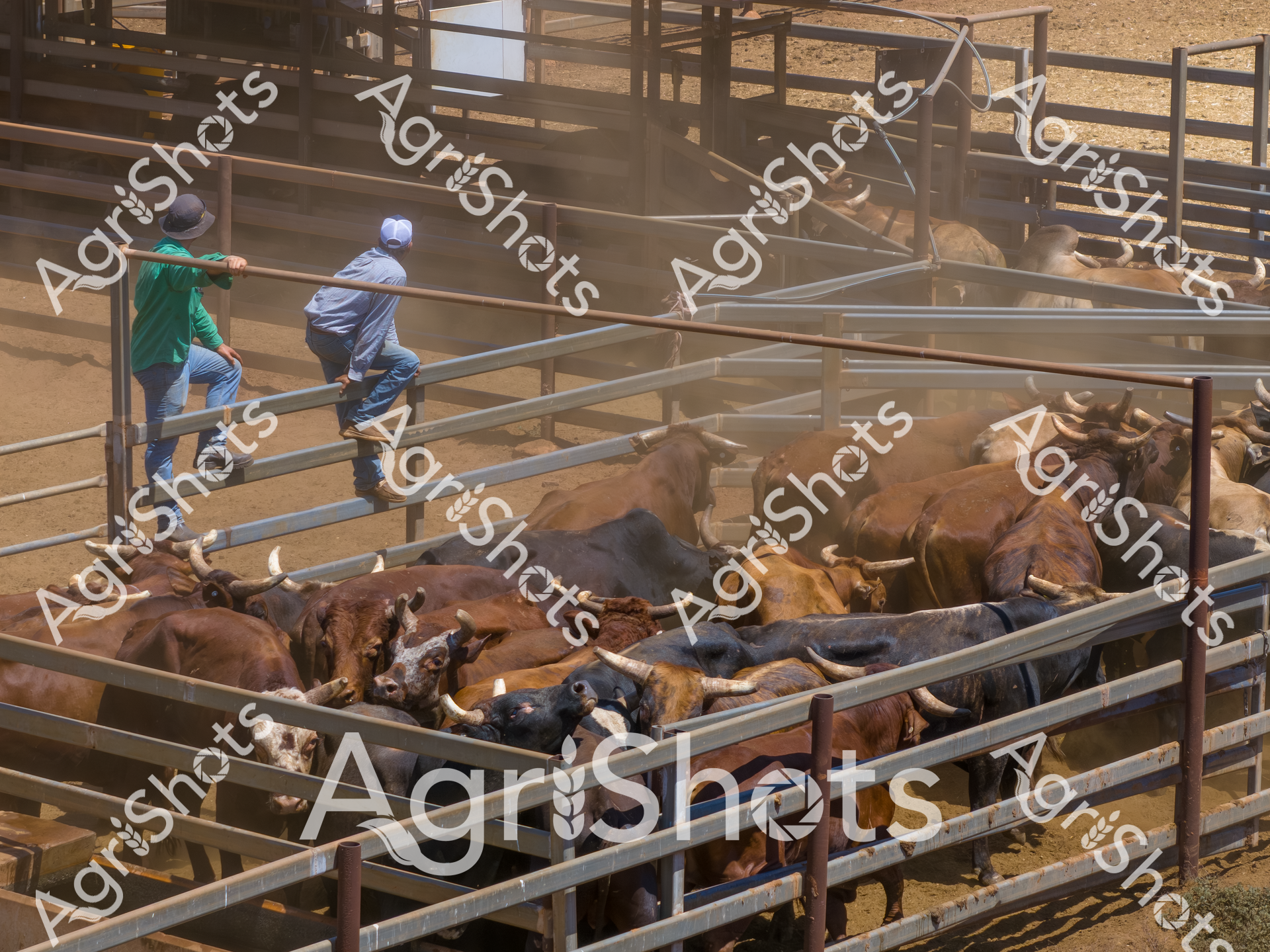
A group of cattle are penned in metal livestock yards, with two workers standing on the fencing rails observing the herd. The cattle appear to be a mix of breeds, predominantly brown and black, crowded together in dusty holding pens typical of the Kimberley region in Western Australia. This scene likely depicts a routine veterinary health check, quarantine process, or cattle management activity on a station in Western Australia.
 Image
Image
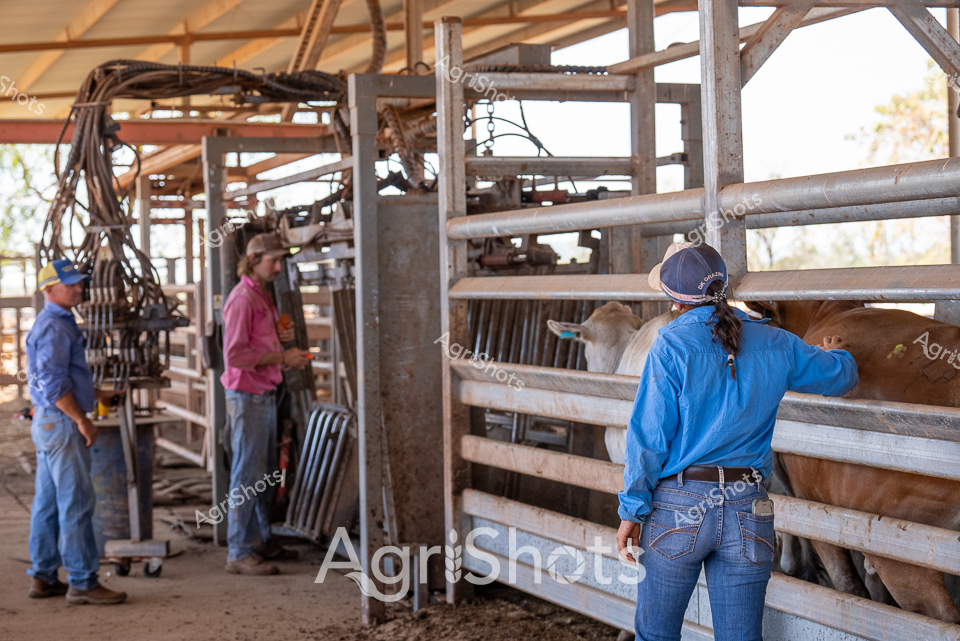
Weathered steel gates and sturdy livestock infrastructure frame a quintessential Northern Territory cattle yard scene during the mild autumn season. A team of agricultural workers coordinate the careful drafting of Brahman cattle, their movements deliberate and practiced. One worker in a bright blue shirt and denim jeans stands with her back to the camera, guiding a beast through the narrow cattle crush, while another in a pink shirt and a colleague in blue workwear monitor the process. The robust metal yards gleam with a patina of use, tangled hydraulic lines and support structures creating a complex industrial backdrop that speaks to the precision of modern cattle management. Soft natural light filters through the shed, highlighting the muscular form of the Brahman - a breed renowned for its heat tolerance and importance to Australia's live export trade. This scene captures the quiet expertise of agricultural professionals, their connection to the land, and the sophisticated systems that underpin northern Australia's cattle industry.
 Image
Image
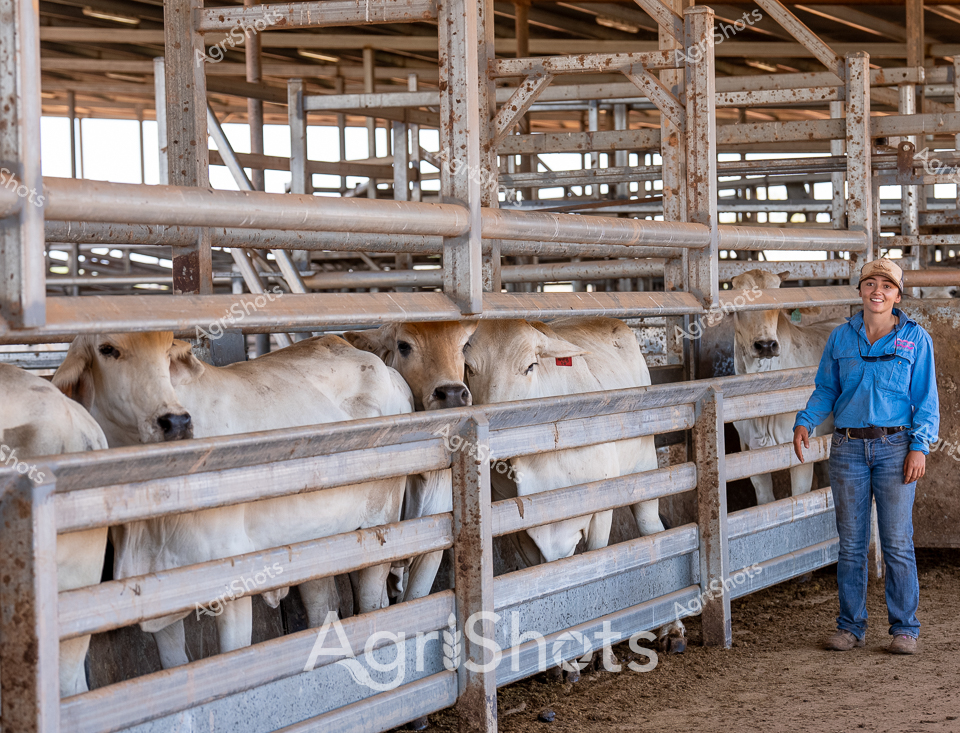
In the robust export yards of Adelaide River, Northern Territory, a seasoned cattle handler stands alongside a line of pristine Brahman cattle, their pale cream coats gleaming in the soft autumn light. The industrial steel-framed cattle yards create a structured backdrop of horizontal and vertical lines, showcasing the methodical nature of agricultural operations. Wearing a bright blue work shirt, sturdy jeans, and a protective cap, the agricultural worker exemplifies the professional approach of modern northern Australian cattle management. These distinctive Brahman cattle, known for their heat tolerance and resilience, are carefully positioned in individual holding pens, each animal displaying the breed's characteristic loose skin and prominent humps. The metallic infrastructure, weathered by years of use, tells a story of continuous agricultural activity in this challenging landscape. This scene captures the intersection of skilled animal husbandry, export preparation, and the critical role of women in Australian agricultural industries, highlighting the precision and care integral to livestock management in the Northern Territory.
 Image
Image
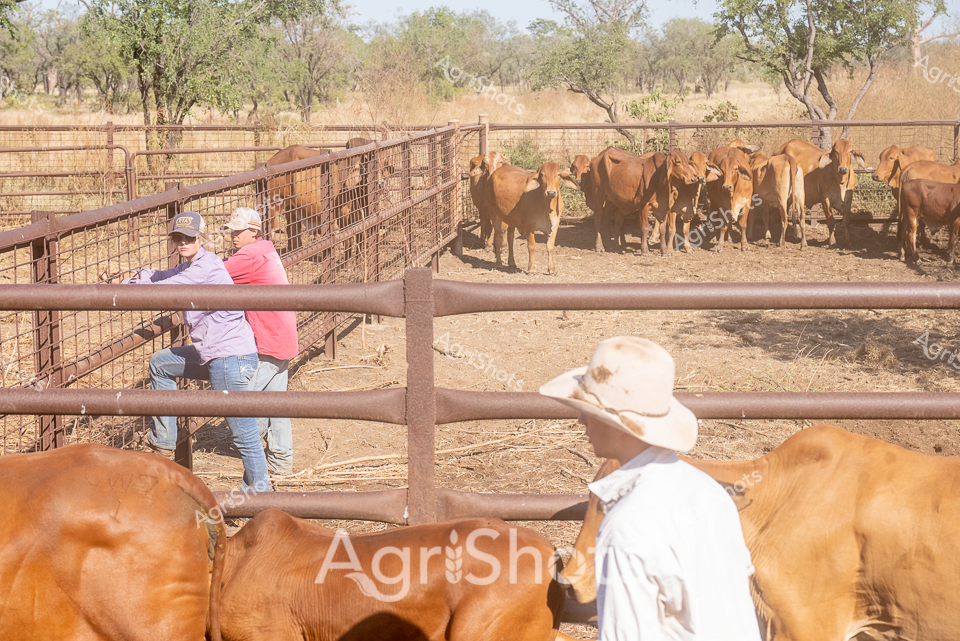
Brahman cattle cluster in rusty steel yards under the harsh Kimberley sunlight, their burnished copper-red coats gleaming against the dusty paddock. Two station workers in practical workwear - one in a pink shirt, the other in lavender - lean against the metal railings, surveying the herd with practiced eyes. A third worker in a wide-brimmed sun hat stands nearby, positioned to assist with the cattle drafting process. The landscape behind reveals a classic West Australian pastoral scene: sparse eucalyptus trees scattered across dry golden grasslands, creating a textured backdrop of muted greens and ochres. These robust Brahman cattle, renowned for their heat and tick resistance, represent the resilient livestock central to northern Australian agricultural operations. The meticulously maintained yards and attentive workers capture the precise, methodical nature of station management in one of Australia's most challenging agricultural environments.
 Image
Image
Brahman cattle cluster in the sun-baked yards of a remote Kimberley station, their burnished copper coats gleaming against the rich dark earth. Stockyard rails cast long shadows across the compact dirt paddock, where two workers move with practiced efficiency, preparing to draft the herd. A woman in a pink jacket and another in blue observe from the side fence, their broad-brimmed hats protecting them from the harsh Western Australian midday light. These robust Brahman cattle, renowned for their heat and tick resistance, stand clustered in tight groups, their muscular bodies testament to generations of breeding for harsh northern Australian conditions. The weathered tin roof shelters provide minimal shade, reflecting the uncompromising landscape of Western Australia's northwestern cattle country. Dusty, well-worn yards speak to decades of pastoral management, where every movement is purposeful and every action is part of the rhythmic cycle of station life. The scene captures the quintessential Australian agricultural landscape - a moment of quiet concentration amid the demanding work of cattle management, where human skill and animal resilience converge under an expansive, cloudless sky.