About this image
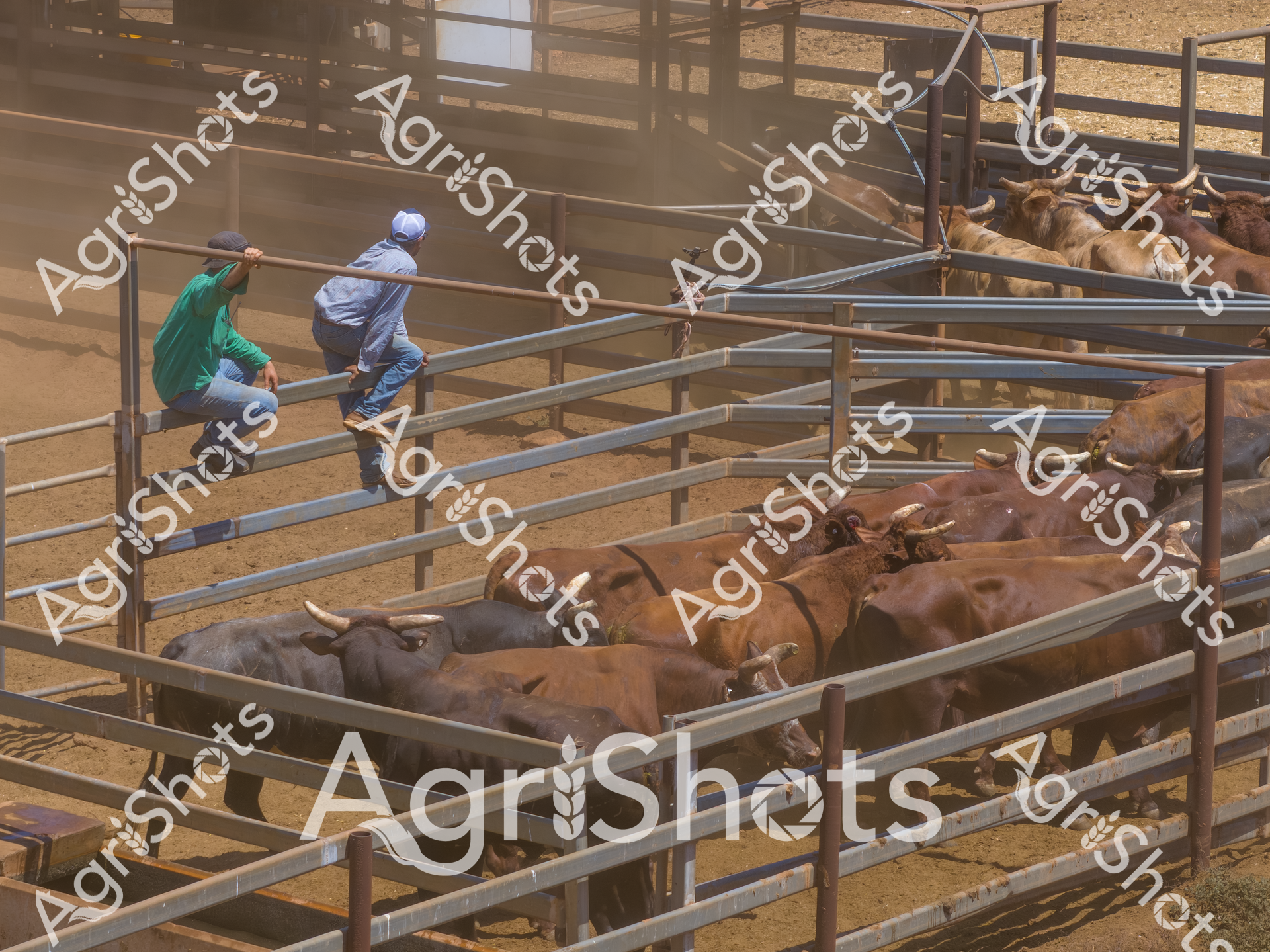
In the dusty cattle yards of Western Australia's Kimberley region, stockmen navigate metal livestock pens during a routine cattle health check and dipping process. Multiple brown and dark-colored cattle are tightly grouped in the metal-railed enclosures, with two workers in colored shirts carefully managing the herd's movement during what appears to be a seasonal quarantine and veterinary inspection.
Similar media
 Image
Image
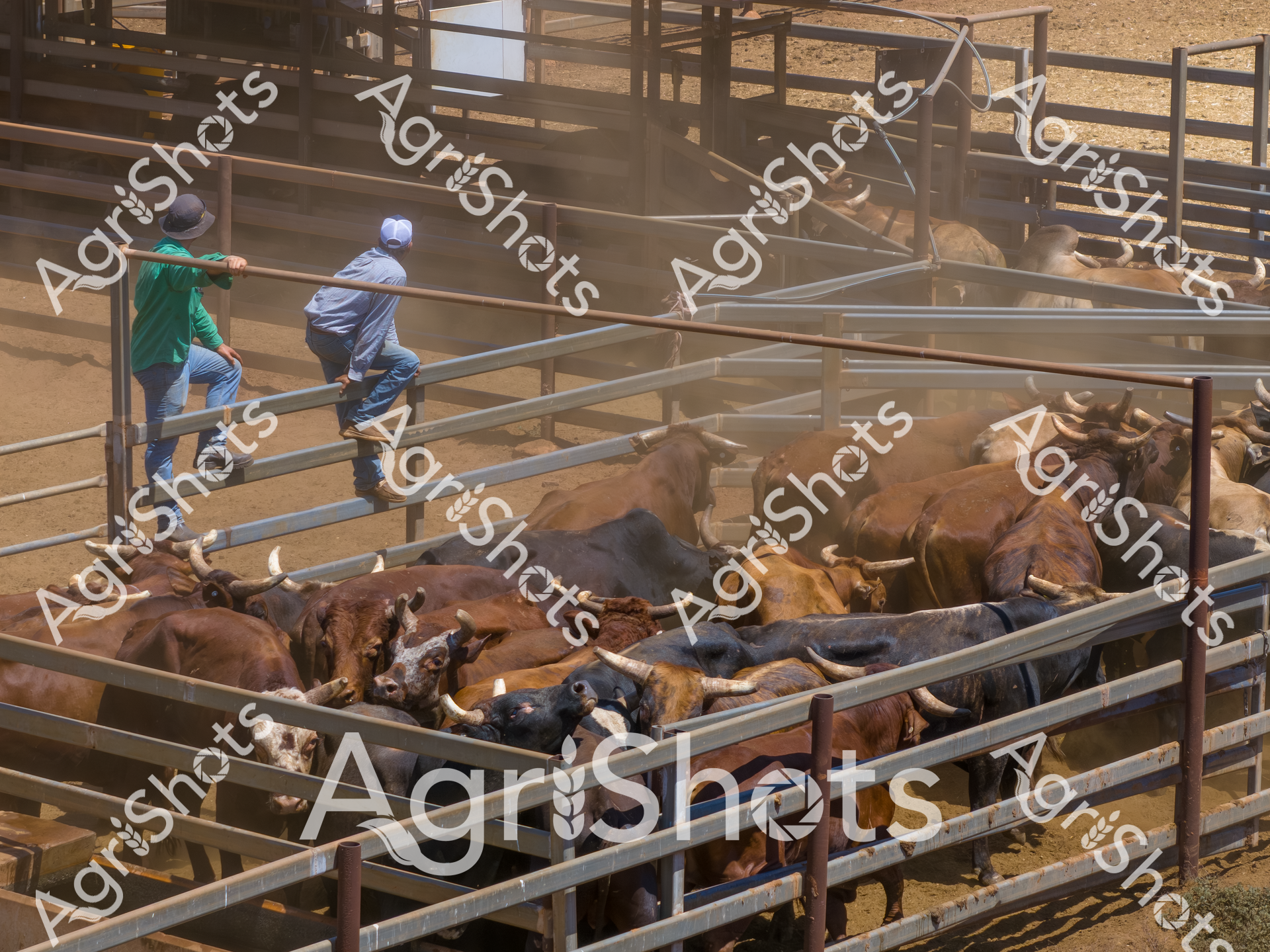
A group of cattle are penned in metal livestock yards, with two workers standing on the fencing rails observing the herd. The cattle appear to be a mix of breeds, predominantly brown and black, crowded together in dusty holding pens typical of the Kimberley region in Western Australia. This scene likely depicts a routine veterinary health check, quarantine process, or cattle management activity on a station in Western Australia.
 Image
Image
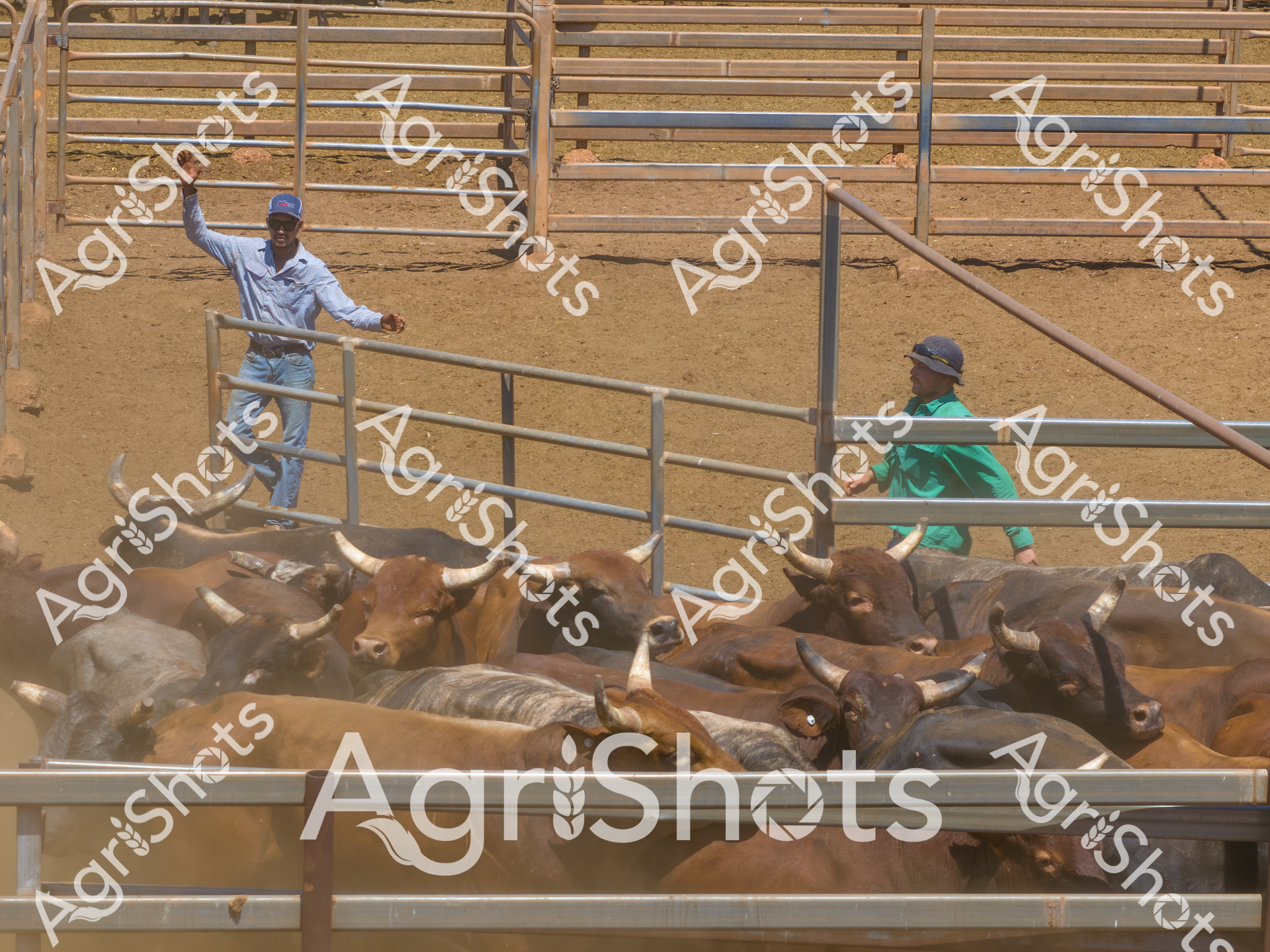
In the rugged Kimberley Region of Western Australia, cattle are carefully counted and managed in a dusty export yard. Two workers oversee a densely packed pen of horned cattle, likely Brahman or crossbreed cattle suited to the harsh tropical environment, during what appears to be a spring season livestock processing operation.
 Image
Image
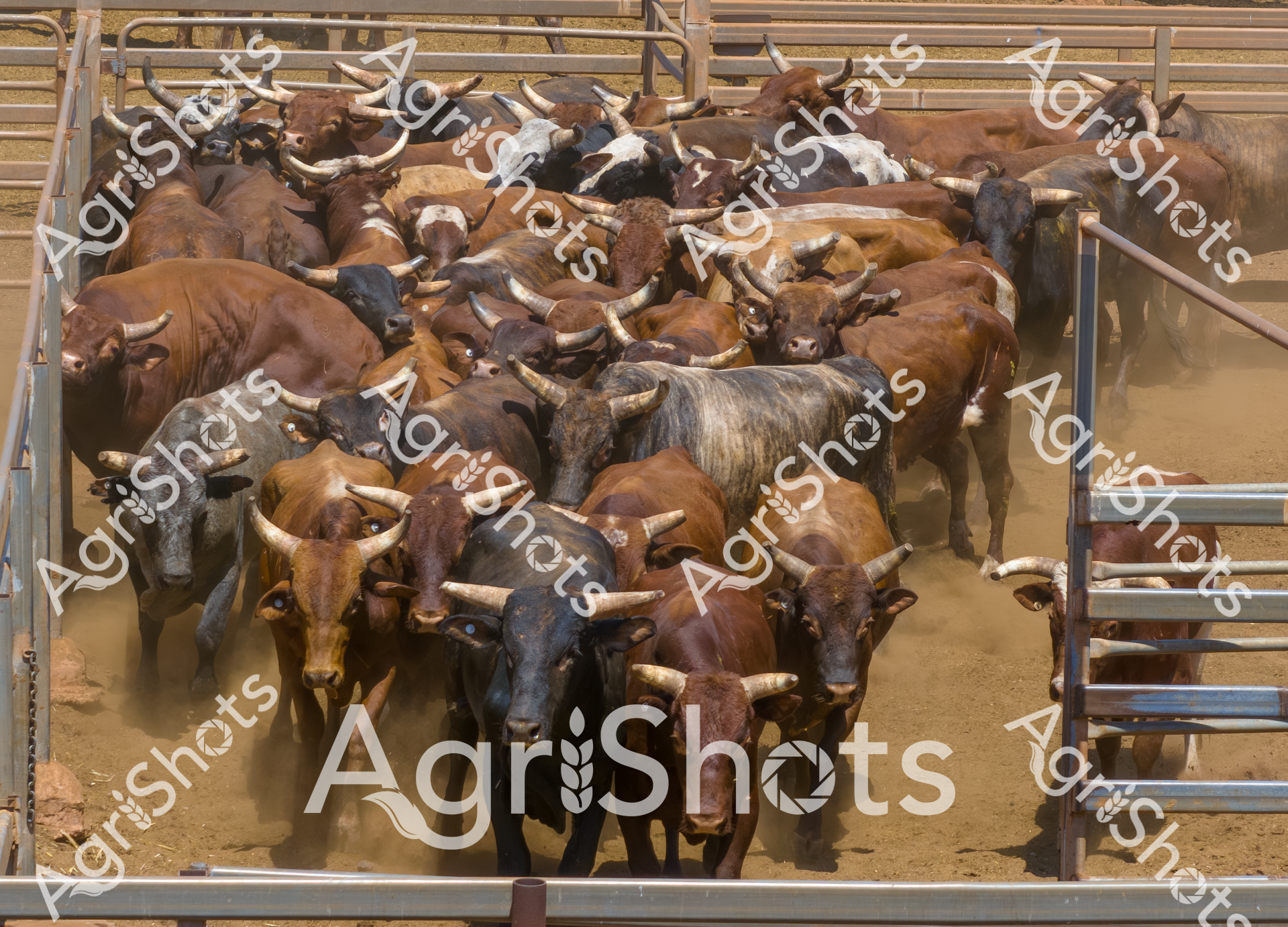
A densely packed group of cattle, primarily brown and black in color, are clustered together in a metal livestock pen. These cattle appear to be in the Kimberley Region of Western Australia, likely at an export yard or station during spring season. The animals have varying horn sizes and are standing on dusty ground, creating a tight, bustling scene typical of cattle management and preparation for potential export or quarantine processes.
 Image
Image
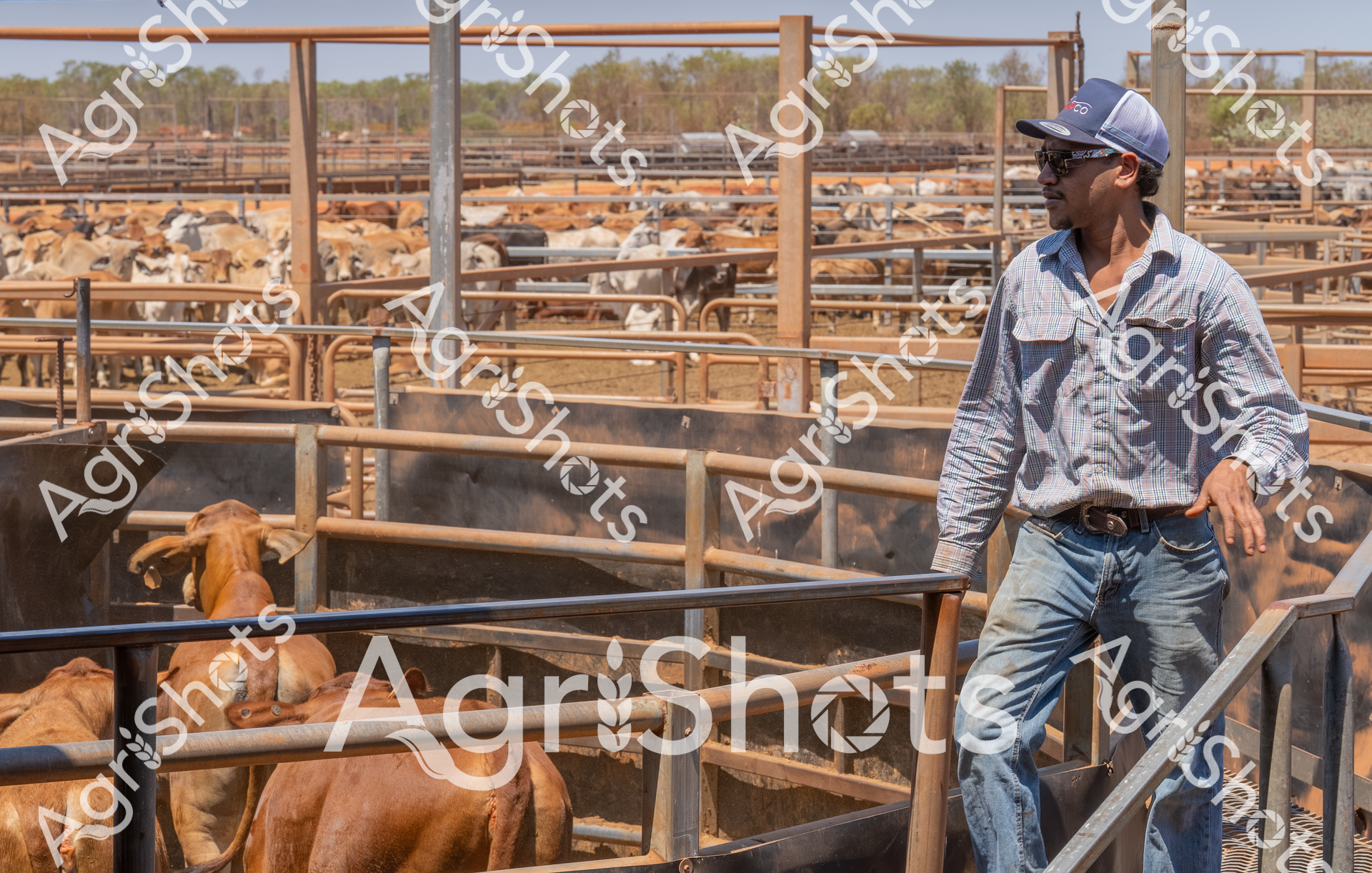
A seasoned stockman in a plaid shirt and cap stands surveying a large cattle yard in Western Australia's Kimberley region. Brahman-cross cattle fill the dusty holding pens, with reddish-brown animals clustered together under the harsh outback sun, ready for processing and potential export.
 Image
Image
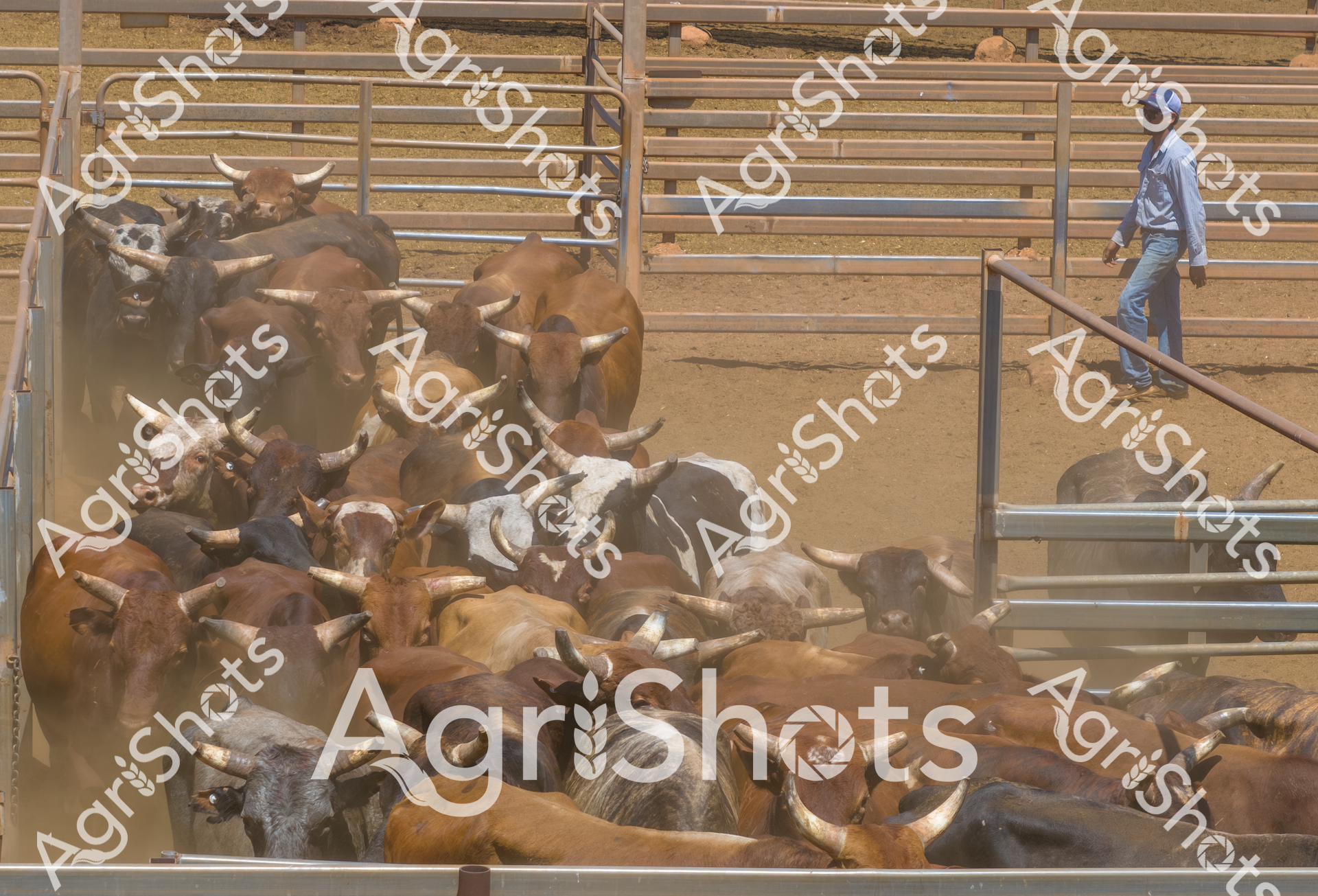
A crowded cattle yard in Western Australia's Kimberley region shows a large herd of mixed-breed cattle, predominantly brown and black, tightly packed within metal livestock pens. A lone worker in light-colored clothing stands on the adjacent platform, likely overseeing the cattle during a seasonal counting or quarantine process at a regional station.
 Image
Image
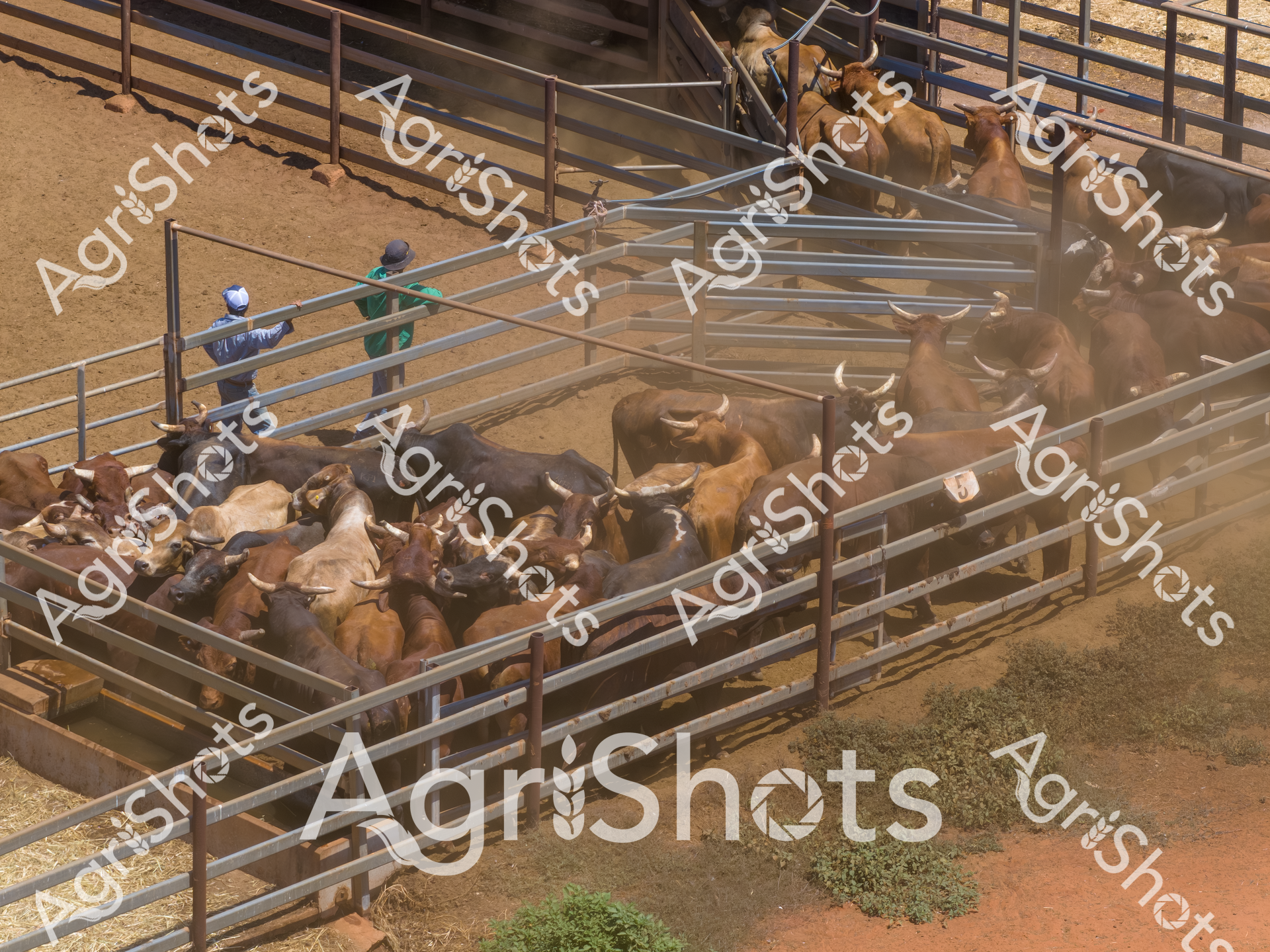
Here's a detailed description for the image: A large group of brown and dark-colored cattle are clustered tightly within a series of metal livestock yards in what appears to be the Kimberley region of Western Australia. The cattle are being processed for a veterinary check or quarantine, with workers visible near the fence managing the herd during what seems to be a routine animal health inspection during the spring season.
 Image
Image
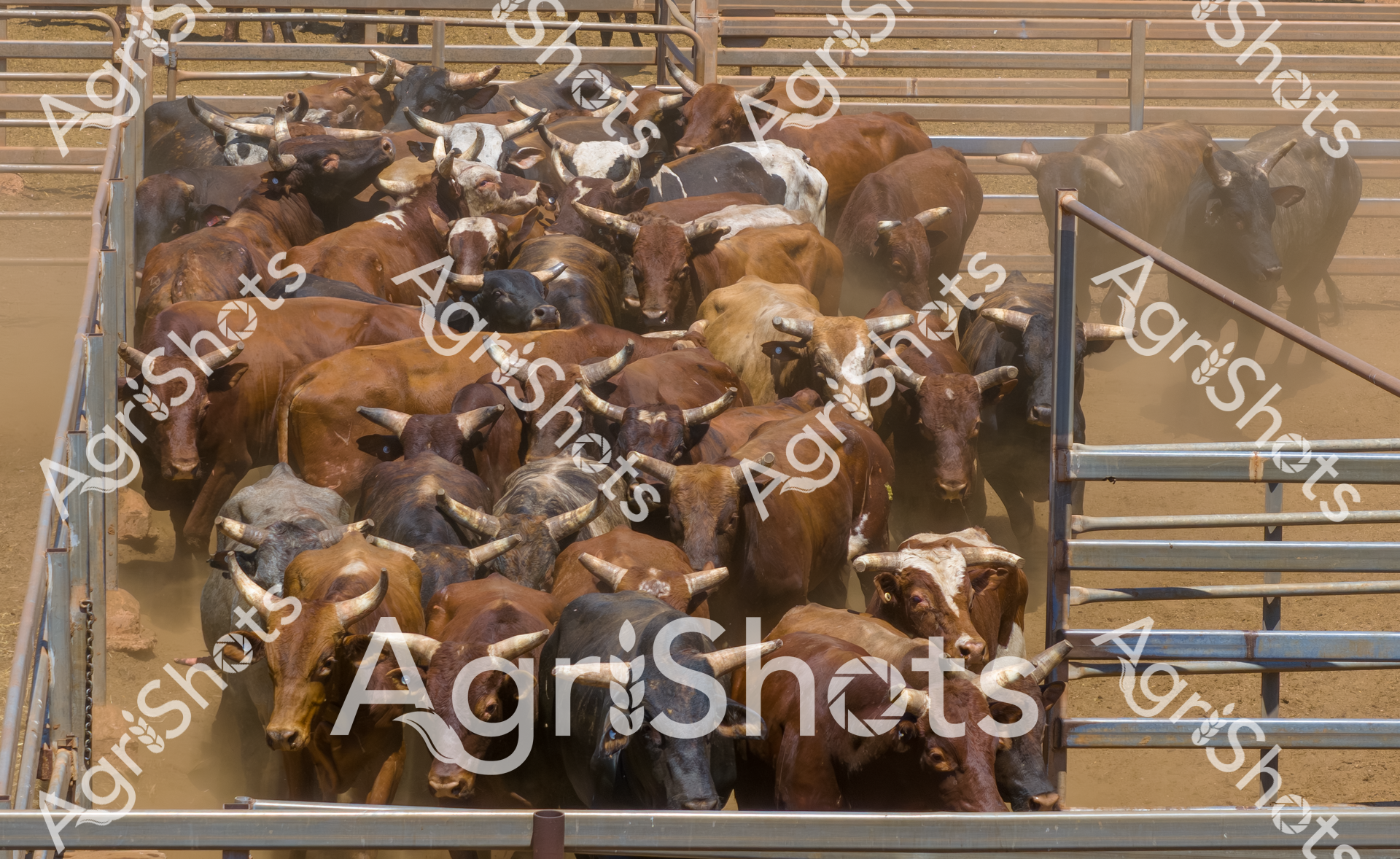
A large herd of mixed-breed cattle are packed tightly together in a metal livestock pen, likely in Western Australia's Kimberley region. These cattle appear to be gathered for counting, quarantine, or preparation for export, with various shades of brown, black, and spotted coats visible among the densely clustered animals.
 Image
Image
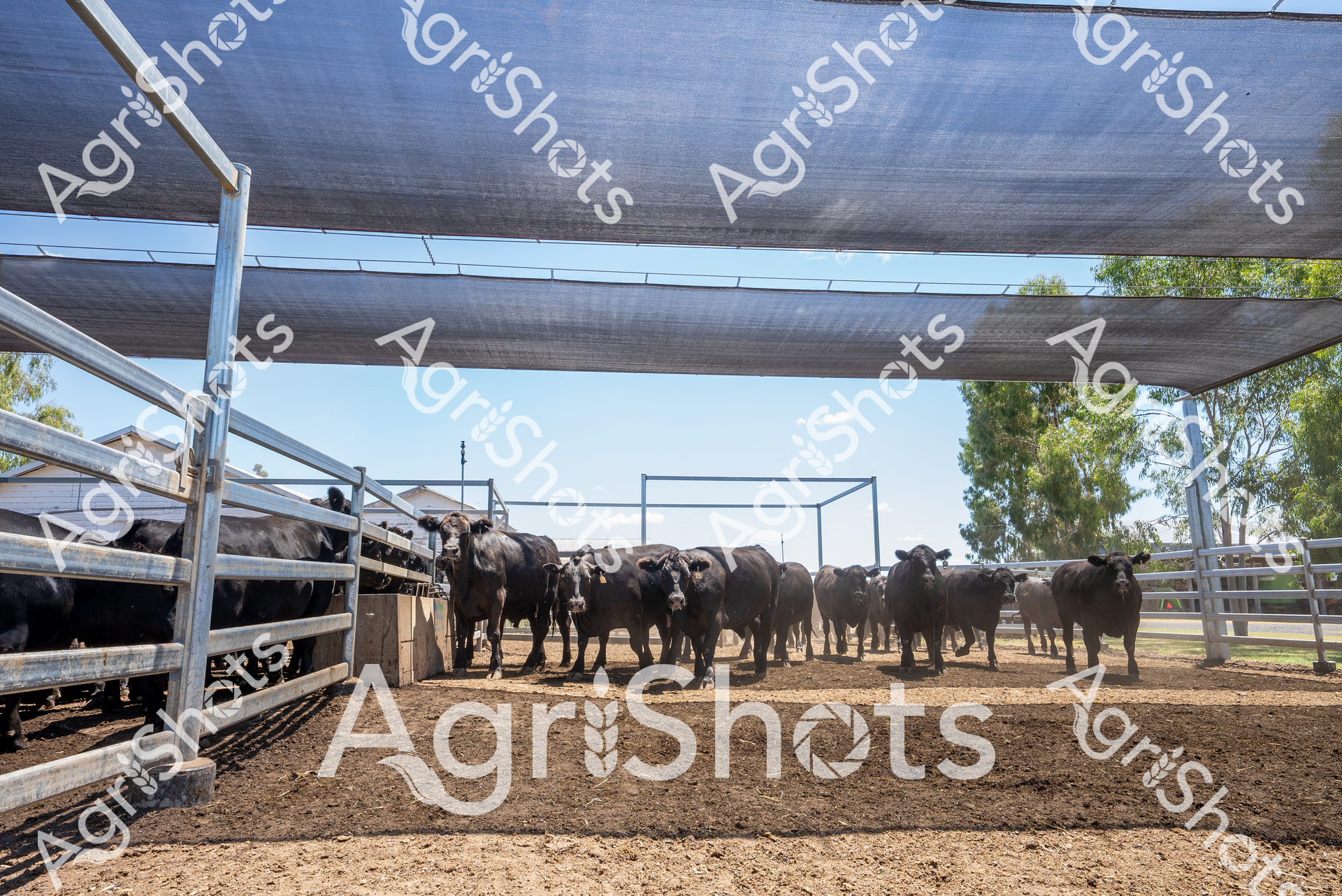
Black Angus cattle stand poised in a meticulously prepared cattle yards pen, sheltered by expansive shade sails that protect them from the intense Queensland summer heat. The steel-gray metallic cattle yards create a structured environment, with clean lines of galvanized fencing contrasting against the dusty earth and verdant tree line in the background. These robust beef cattle, with their sleek black coats and muscular frames, are positioned deliberately, suggesting preparation for transport or market assessment. Overhead, the shade cloth filters the harsh sunlight, casting a cool blue-gray tone across the enclosure and providing critical temperature management for the livestock. The precise agricultural infrastructure - from the carefully engineered shade structures to the robust stock yards - demonstrates the sophisticated approach to cattle management in rural Australian agricultural systems. Every element speaks to professional livestock handling: strategic design, animal welfare, and preparedness for the demanding conditions of regional Queensland.