Results for “white”
 Image
Image
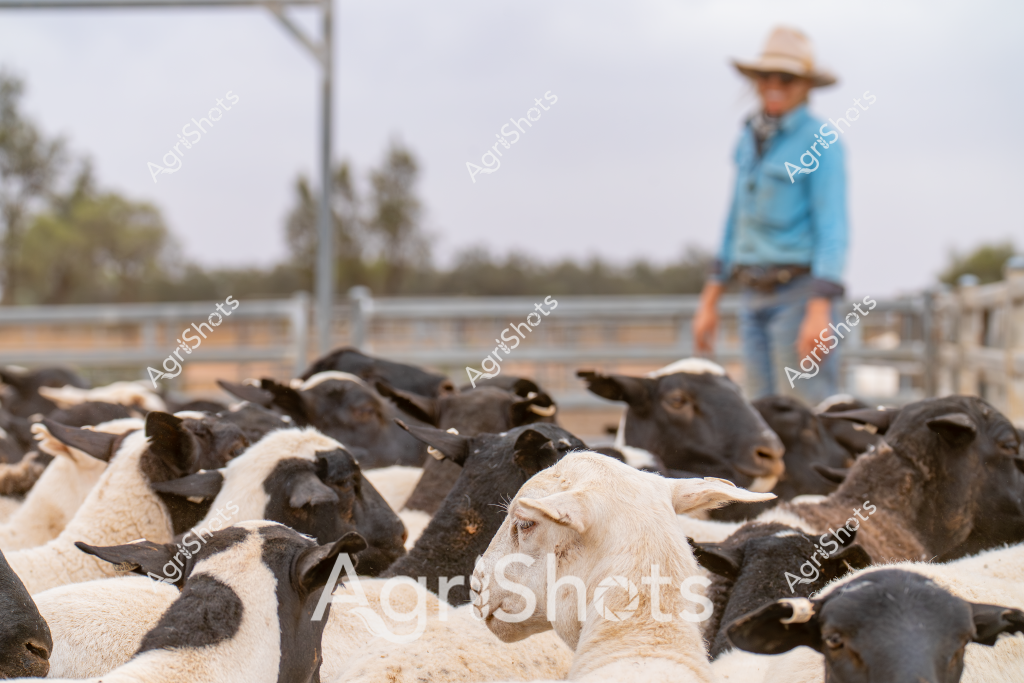
A group of black and white sheep cluster tightly in a livestock yard, with a man stockman standing in the background wearing a wide-brimmed hat and blue work shirt. The sheep appear to be a mix of dark-faced breeds, possibly Dorper or Suffolk crosses, with some white woolly sheep interspersed among the darker animals. The stockman stands casually near a metal fence, overlooking the mob of sheep with a calm, professional demeanor. The landscape is typical of an Australian pastoral setting - dry, with sparse trees and metal yards visible in the background, suggesting a rural station or farm environment. The lighting indicates it's likely a mid-morning or early afternoon scene, with a soft, even light casting subtle shadows across the dusty yard and tightly packed flock. The image captures the everyday work of livestock management, showcasing the close relationship between the stockman and the sheep, and the practical infrastructure of Australian agricultural operations. The tight clustering of the animals and the stockman's relaxed posture suggest a moment of calm during routine farm activities.
 Image
Image
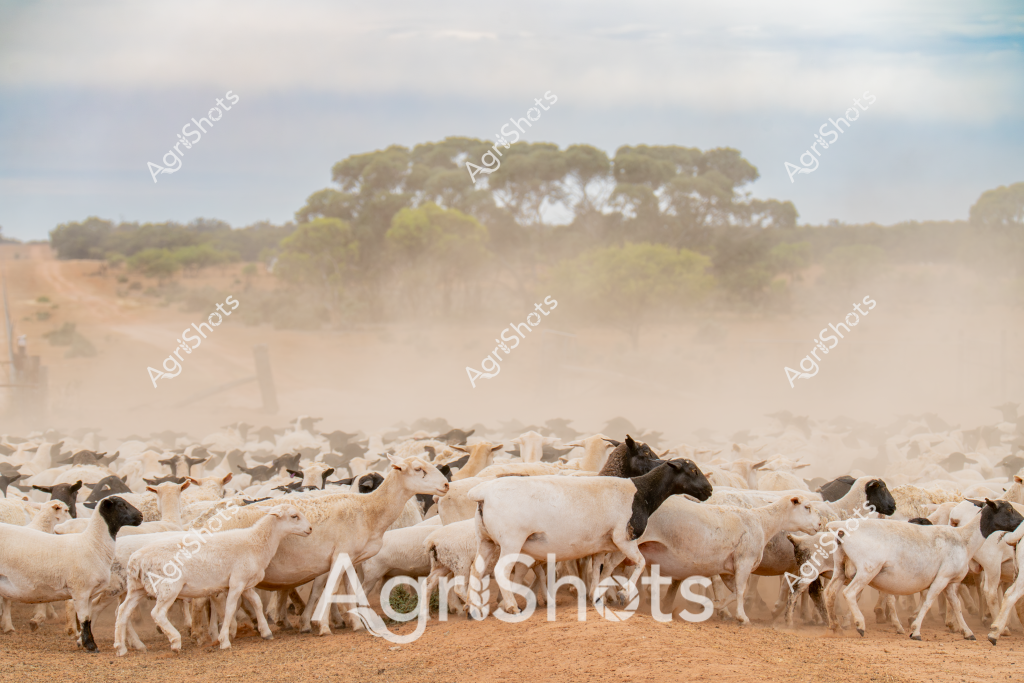
A large flock of light-colored sheep moves across a dusty rural landscape, kicking up a dense cloud of earthen particles. The mob comprises predominantly white sheep with some black-headed individuals scattered throughout the herd, creating a distinctive visual pattern against the dry, compacted ground. Sparse trees and vegetation line the distant horizon, suggesting an arid Australian pastoral setting, likely in a region experiencing dry seasonal conditions. The sheep appear to be moving with purpose, potentially being mustered by unseen livestock managers, their dense clustering indicating coordinated movement across the sparse paddock. The warm, muted color palette of beige earth, pale sheep, and soft green-gray vegetation captures the quintessential Australian rural landscape, highlighting the resilience of both the livestock and the environment. The scene evokes the challenging conditions of Australian sheep farming, where careful management and adaptation are critical to survival. The dust cloud surrounding the sheep emphasizes the intensity of their movement and the dry, potentially drought-affected terrain they traverse.
 Image
Image
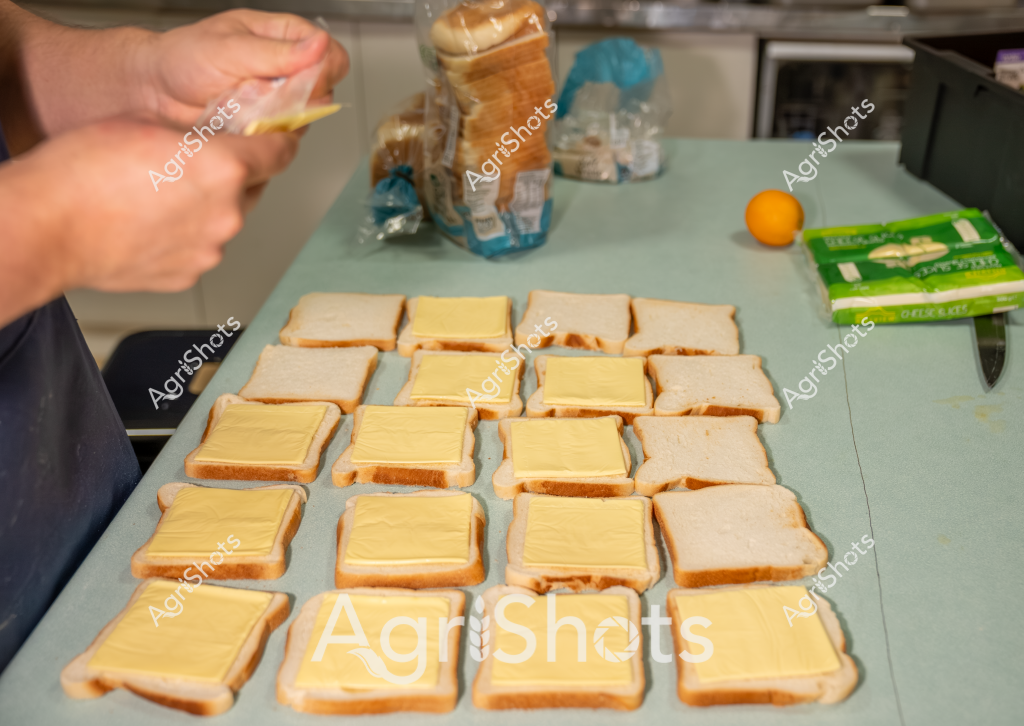
A person's hands are preparing a grid of white bread slices, systematically arranging them on a pale green surface in preparation for making multiple sandwich units. Slices of bread are evenly spaced, with some topped with a pale yellow spread - likely butter or margarine. In the background, a loaf of packaged bread is visible, along with a small orange fruit, possibly a mandarin or small orange, and the edge of a green package. The scene appears to be in a kitchen or food preparation area, with a methodical and organized approach to creating multiple identical sandwich bases. The careful, precise arrangement suggests this could be for commercial food preparation or a large-scale meal preparation task.
 Image
Image
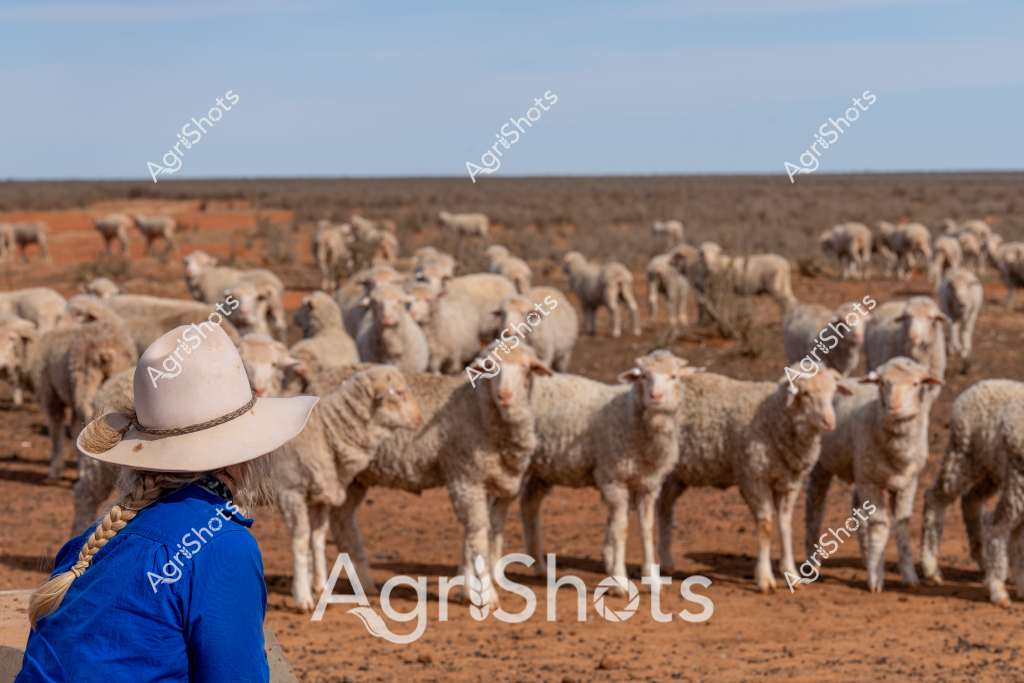
A woman stockman wearing a wide-brimmed light-colored hat and a bright blue long-sleeved shirt stands observing a large flock of Merino sheep grazing across a dry, reddish-brown paddock. The landscape stretches out to a flat horizon under a pale blue sky, typical of Australia's arid pastoral regions. Dozens of woolly white sheep are scattered across the dusty ground, their dense fleeces standing out against the ochre-colored earth. The scene captures the essence of sheep farming in rural Australia, showcasing the vast, open landscapes and the careful management required to maintain a healthy flock in challenging environmental conditions. The woman's positioning suggests she is monitoring the sheep, a critical task in maintaining the health and safety of the livestock in this harsh, expansive terrain.
 Image
Image
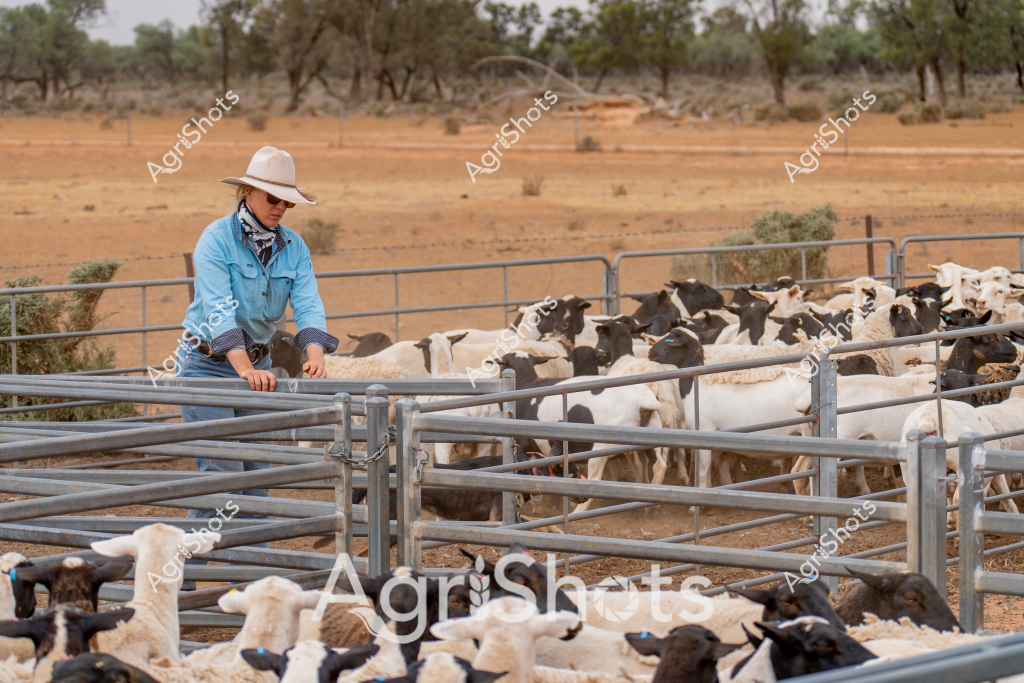
A woman stockman surveys a flock of mixed-breed goats in a dry, sparse paddock typical of Australian outback conditions. Wearing a light blue long-sleeved shirt, white wide-brimmed hat, and sunglasses, she leans against metal livestock yards with a series of interconnected gates. The goats - a mixture of white, black, and brown animals - are tightly packed within the metal fencing, their varied coat colors creating a textured scene against the golden-brown earth and scattered eucalyptus trees in the background. The landscape suggests a drought-affected region, with parched ground and sparse vegetation highlighting the challenging environmental conditions faced by Australian farmers. Her professional stance and careful positioning demonstrate the skill required in managing livestock in harsh rural environments.
 Image
Image
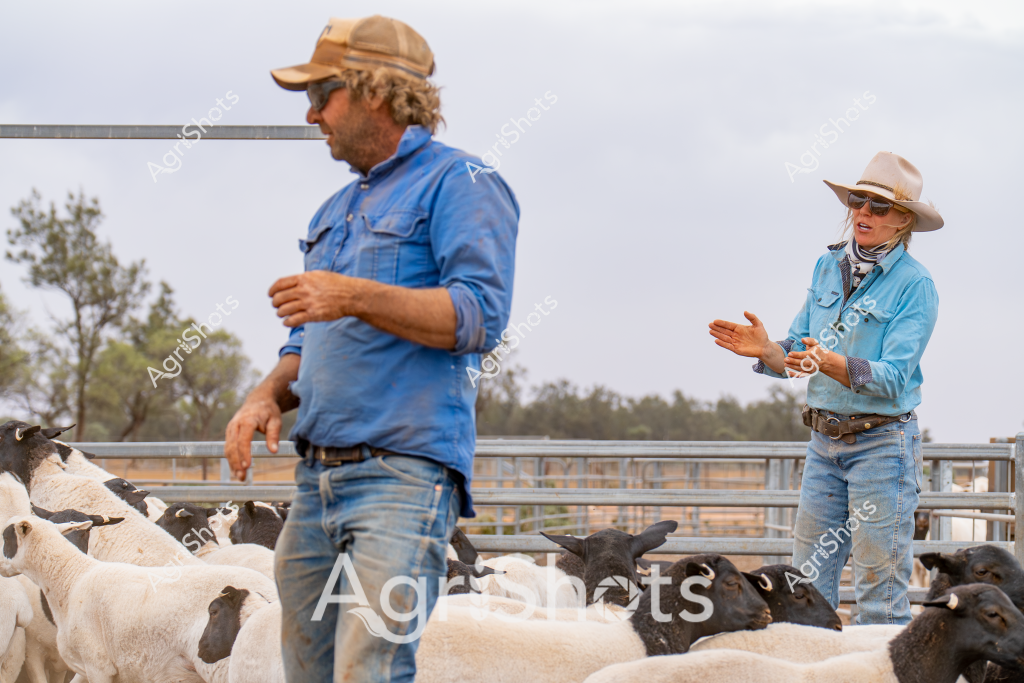
A woman and a man stockman work together in a livestock yard, managing a mixed flock of white and black sheep. Dressed in blue chambray shirts and wearing wide-brimmed hats for sun protection, they appear to be coordinating the movement and sorting of the sheep within metal livestock yards. The landscape in the background suggests an Australian rural setting, with scattered trees and an open sky creating a typical pastoral scene. Their body language indicates careful communication and collaboration, with the woman gesturing and the man positioned among the sheep, demonstrating the teamwork essential in livestock management. The sheep - a mix of white and black woolly animals - are clustered tightly within the yard's metal railings, ready for potential drafting, health checks, or preparation for movement.
 Image
Image
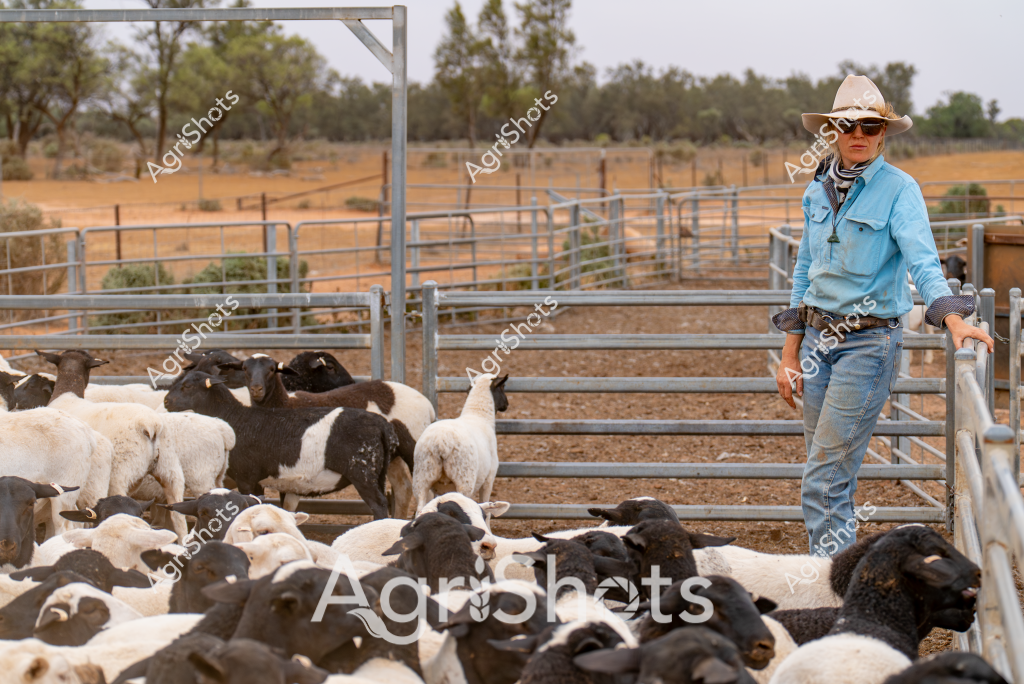
A woman stockman in classic rural attire - blue denim work shirt, jeans, and a light-colored cowboy hat - stands confidently beside metal livestock yards containing a mixed flock of black and white sheep. The paddock appears to be in an arid or semi-arid Australian agricultural setting, with sparse trees and golden-brown earth visible in the background. Multiple breeds of sheep are clustered together in the metal holding pens, with white and dark-colored animals standing and moving about, suggesting a routine livestock management scenario. The woman's stance is alert and professional, leaning against the metal gate, wearing sunglasses and embodying the skilled stockmanship typical of Australian rural workers. The landscape hints at a dry pastoral region, likely in inland Queensland or New South Wales, where sheep farming is a critical agricultural industry. The scene captures the essence of Australian livestock management - a lone stockwoman overseeing a diverse flock in a challenging rural environment, representing the resilience and expertise of agricultural workers in managing livestock under often harsh conditions.
 Image
Image
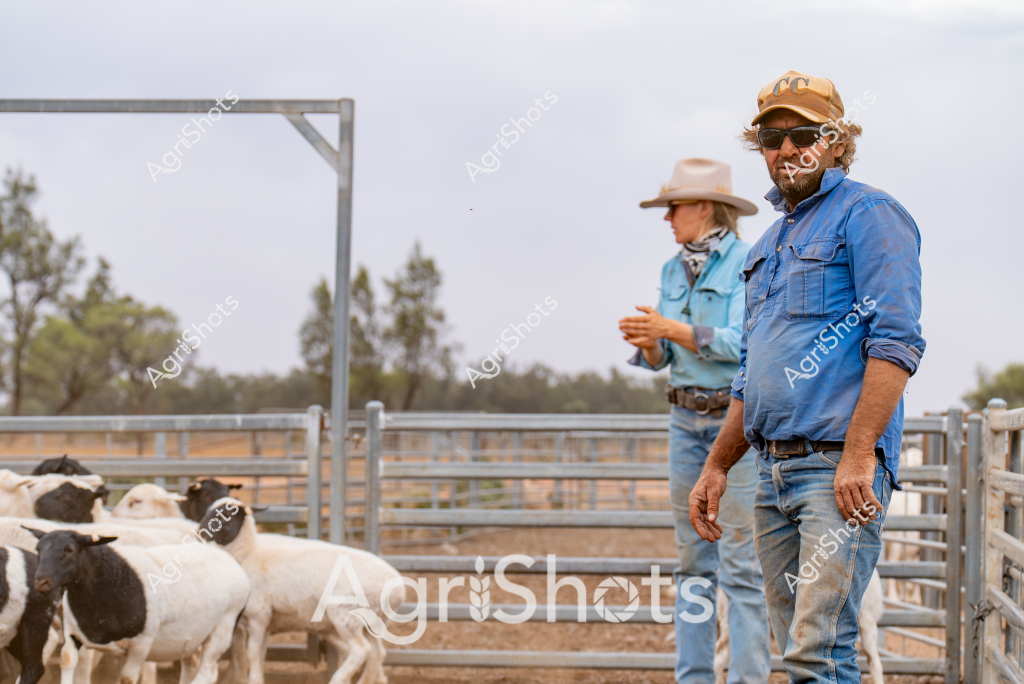
A seasoned man stockman and a woman worker supervise a small herd of black and white sheep in a rural livestock yard, surrounded by metal livestock fencing and distant eucalyptus trees. The man wears a tan cap, sunglasses, and a blue chambray work shirt with rolled-up sleeves, standing confidently in worn denim jeans and boots. His companion, wearing a light-colored wide-brimmed hat and a blue work shirt, stands nearby, both carefully observing the flock of mixed-color sheep clustered in the steel holding pen. The overcast sky and dusty ground suggest a typical Australian pastoral scene, highlighting the ongoing management of livestock in a challenging rural environment. Their professional stance and attentive posture demonstrate the careful husbandry and daily work required in managing a sheep production operation.
 Image
Image
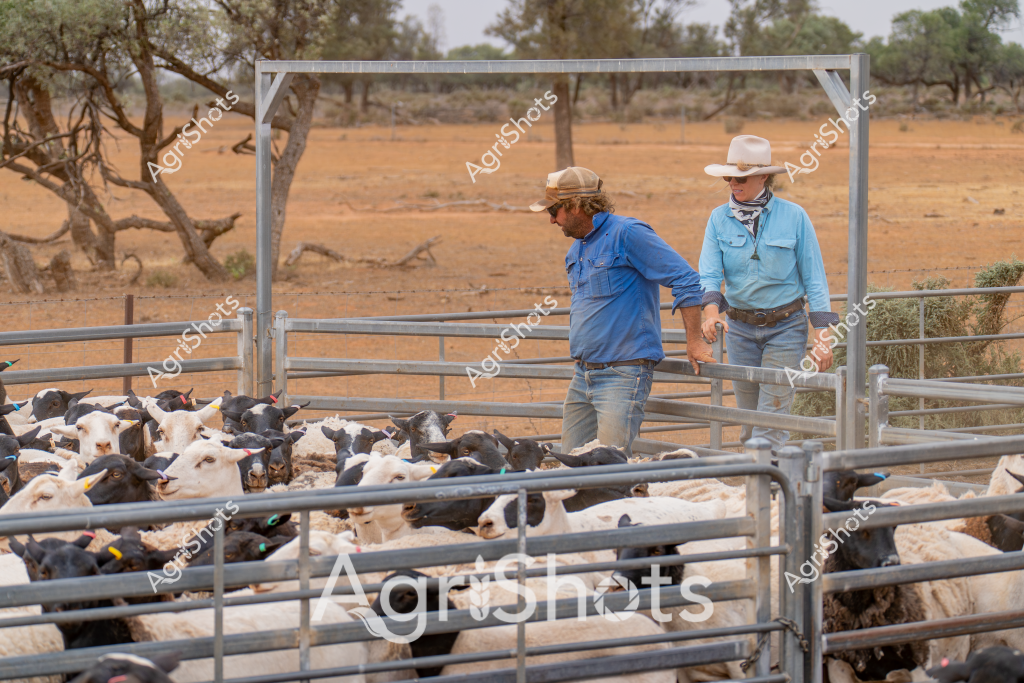
Two men farmers carefully manage a flock of mixed-breed sheep in a dry, arid paddock with scattered eucalyptus trees. Wearing broad-brimmed hats and rural workwear - one in a blue shirt, the other in a light blue top - they stand inside metal livestock yards with multiple pens. The sheep, a mix of white and dark-colored animals, are tightly clustered within the metal fencing, with yellow ear tags visible on many individuals. The landscape behind them is a classic Australian outback scene - reddish-brown earth, sparse vegetation, and twisted tree branches suggesting a drought-affected region. The metal yard structure provides a structured, controlled environment for managing the livestock, highlighting the careful husbandry practices of Australian farmers working in challenging environmental conditions. The scene captures the essence of rural agricultural management, with the farmers demonstrating close attention to the sheep herd in a harsh, sun-bleached landscape typical of inland Australian farming regions. Their positioning and calm demeanor suggest experienced stockmen working systematically to handle and potentially sort or prepare the flock for further processing or movement.
 Image
Image
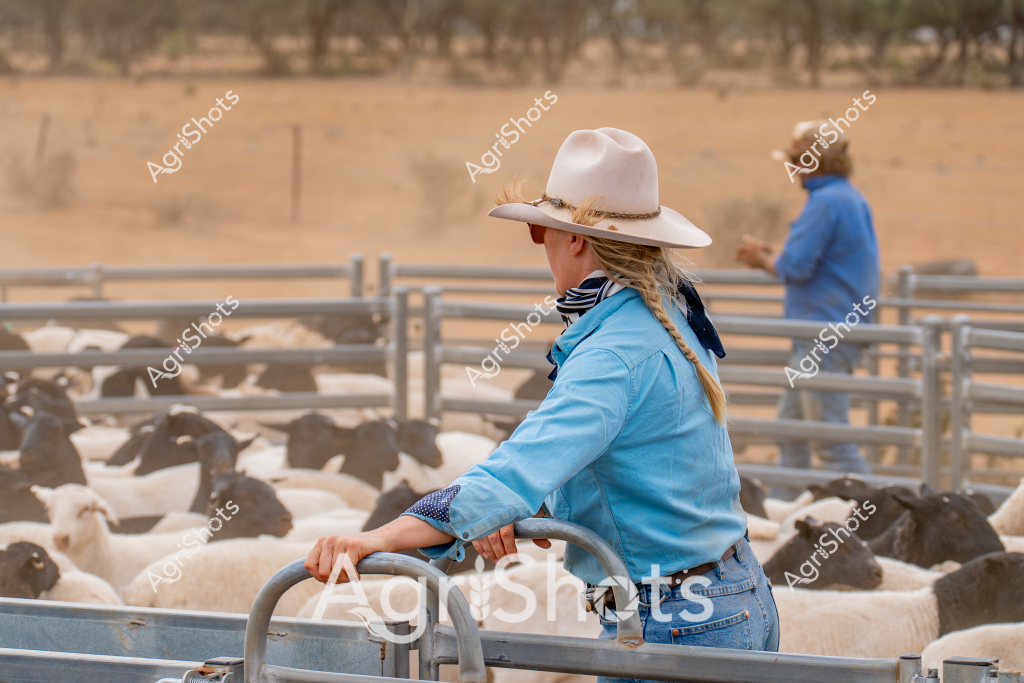
A woman stockman wearing a cream-colored wide-brimmed hat and light blue long-sleeved shirt stands at a livestock yard, carefully observing a flock of black and white sheep. Her braided hair trails down her back, and she leans casually against a metal gate in the foreground, with another worker visible in the background. The dry, golden paddock stretches behind the metal livestock yards, with sparse trees and fencing creating a typical Australian rural landscape. The sheep are tightly clustered within the metal livestock pens, their woolly bodies creating a textured mass of white and dark markings. The scene captures the essence of Australian sheep farming, showcasing the careful management and attentive work of rural stock workers in a classic outback setting. The composition highlights the connection between the stockwoman and the livestock, demonstrating the skill and quiet concentration required in managing sheep. Her outfit - practical blue shirt, robust denim jeans, and protective wide-brimmed hat - speaks to the functional nature of farm work and the need for sun protection in the harsh Australian landscape.
 Image
Image
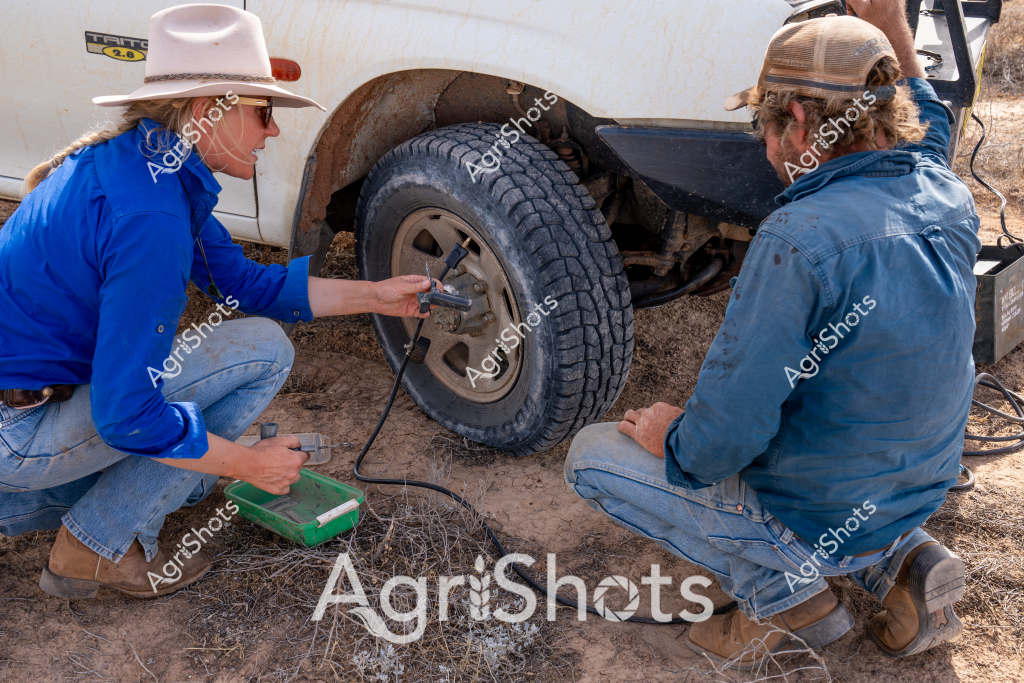
Two people in blue denim work attire are crouched beside a white vehicle, carefully working on a tire in what appears to be a dry, dusty rural setting. A woman wearing a white wide-brimmed hat and sunglasses is using a green device, likely an air compressor, to inflate or check the tire pressure. Her companion, wearing a brown mesh-backed cap, is positioned nearby, assisting or observing the process. The rugged all-terrain tire has a deep tread pattern suitable for rough rural terrain, and the surrounding ground is covered in sparse, dry grass and dirt. Their coordinated, practical approach suggests they are experienced agricultural workers dealing with vehicle maintenance in a remote location, demonstrating the self-sufficiency required in rural and farming environments.
 Image
Image
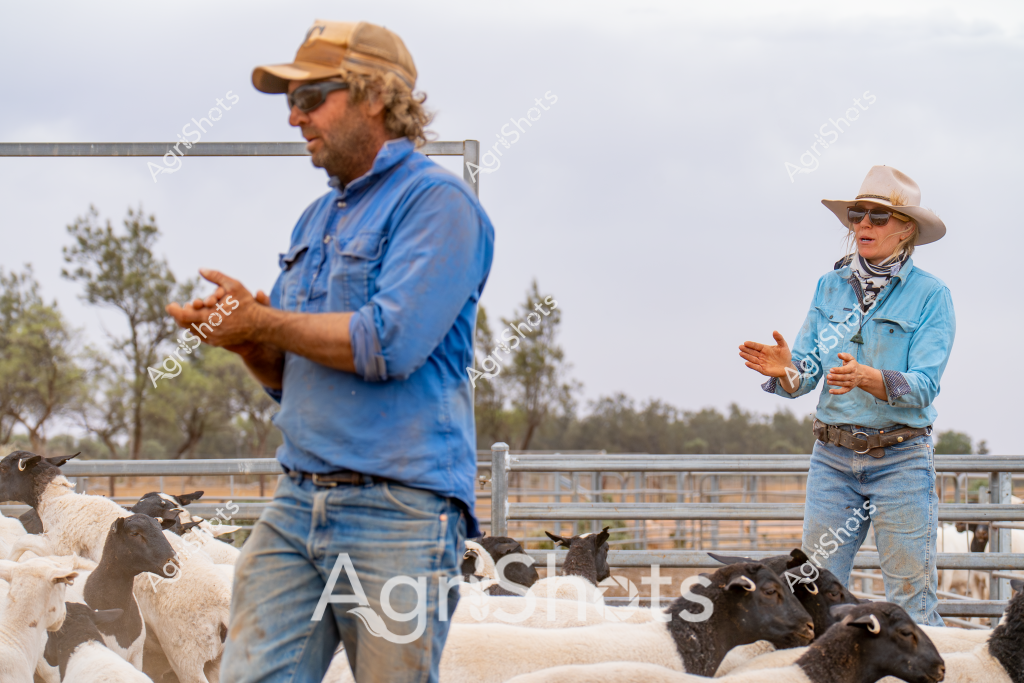
Two experienced farmers in blue work shirts and wide-brimmed hats manage a mixed flock of black and white sheep in a rural livestock yard. A man and a woman stand on opposite sides of a metal livestock pen, both using hand gestures to guide and control the movement of the sheep. The sheep appear to be a mix of dark and light-colored breeds, clustered tightly within the metal gate enclosure. The background reveals a sparse rural landscape with scattered trees and an overcast sky, typical of Australian agricultural settings. Both farmers are wearing practical farm attire - blue chambray shirts, denim jeans, and protective wide-brimmed hats with sunglasses, indicating their professional approach to livestock management. The scene captures the collaborative nature of sheep farming, where coordinated human interaction and careful animal handling are essential skills.
 Image
Image
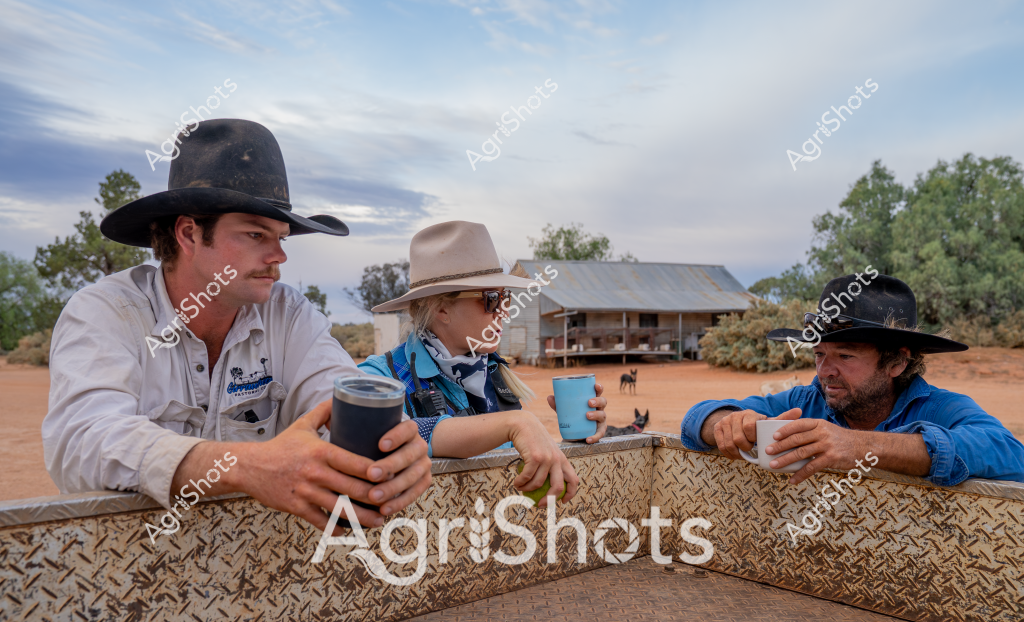
Three men in rural Australian workwear share a break moment on a dusty outback station, their blue shirts and wide-brimmed hats reflecting the classic pastoral style. Seated at a textured metal surface with a rustic tin shed and wandering dog in the background, they hold thermal mugs, suggesting a moment of rest during a long working day. The landscape is quintessentially Australian - a sandy, ochre-colored ground punctuated by sparse grey-green bushes and a soft, cloud-streaked sky typical of the arid interior. One man wears a black cowboy-style hat, another a light cream fedora, while the third sports a similar dark hat, all wearing long-sleeved work shirts in white and blue tones. The scene captures the camaraderie and quiet resilience of rural workers, with the weathered shed and open landscape emphasizing the challenging environment of Australian agricultural work. Their relaxed postures and shared drinks represent a universal moment of connection in the demanding world of station life.
 Image
Image
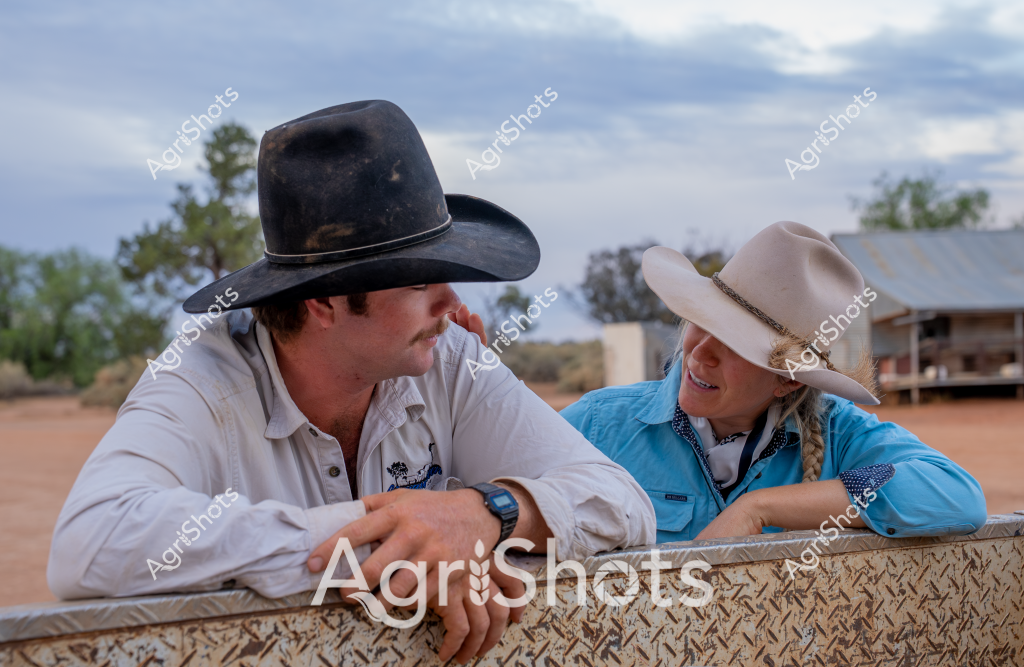
A man and a woman in classic rural Australian attire lean against a metal fence, sharing a moment of connection at what appears to be a remote cattle station. The man wears a black cowboy hat and a crisp white long-sleeved work shirt, while the woman sports a light-colored wide-brimmed hat and a bright blue button-up shirt. Their relaxed posture and proximity suggest a comfortable working relationship, typical of rural Australian agricultural settings. The backdrop reveals a dry, sandy landscape with sparse vegetation and a tin-roofed building in the distance, characteristic of the Australian outback. Soft blue-gray clouds diffuse the light, creating a muted, expansive atmosphere that speaks to the vastness of rural agricultural landscapes. Their matching cowboy hats and lean against the textured metal fence highlight the shared culture and resilience of people working in remote agricultural environments. The scene captures the essence of contemporary rural Australian life - connection, hard work, and an intimate understanding of the challenging but beautiful landscape they call home. Their stance suggests a moment of rest or conversation, perhaps discussing the day's work or upcoming tasks on the station.
 Image
Image
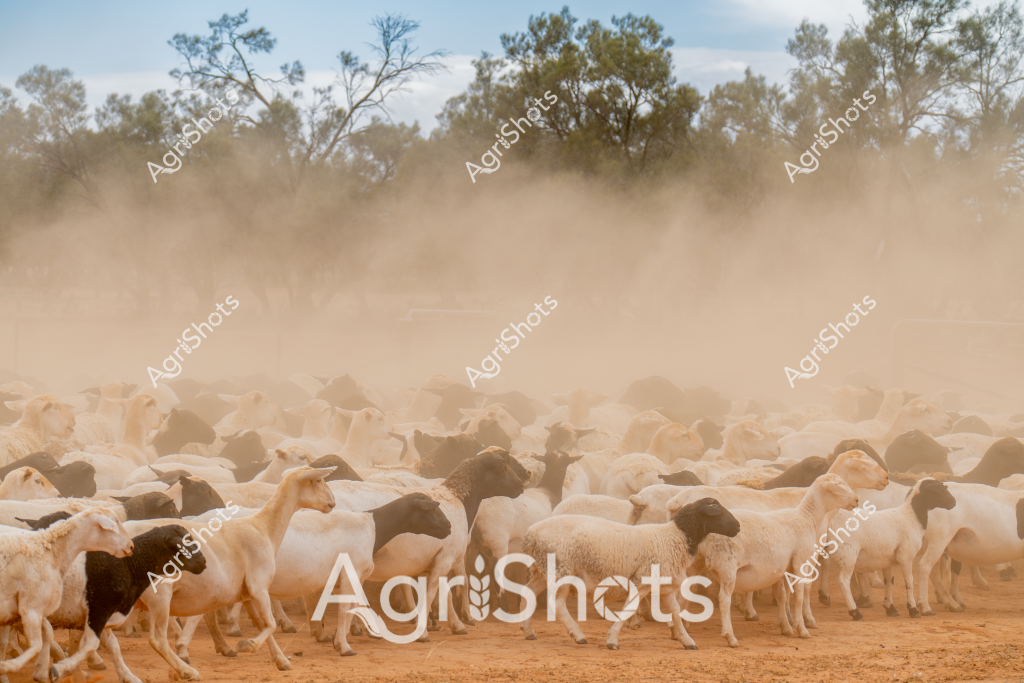
A large flock of mixed-breed sheep kicks up a massive dust cloud during mustering in the Australian outback. Merino and other white and black sheep are tightly clustered on a dry, reddish-brown earth paddock, surrounded by sparse eucalyptus trees in the background. The intense dust storm created by their movement obscures parts of the landscape, highlighting the dynamic nature of livestock management in arid regions. The sheep appear to be in motion, potentially being moved between pastures or preparing for sorting and handling. The scene captures the challenging environmental conditions of rural Australian livestock farming, where dust, heat, and vast open spaces are constant companions to shepherds and their flocks. The stark contrast between the light-colored sheep and the ochre earth creates a powerful visual representation of Australia's agricultural landscape.
 Image
Image
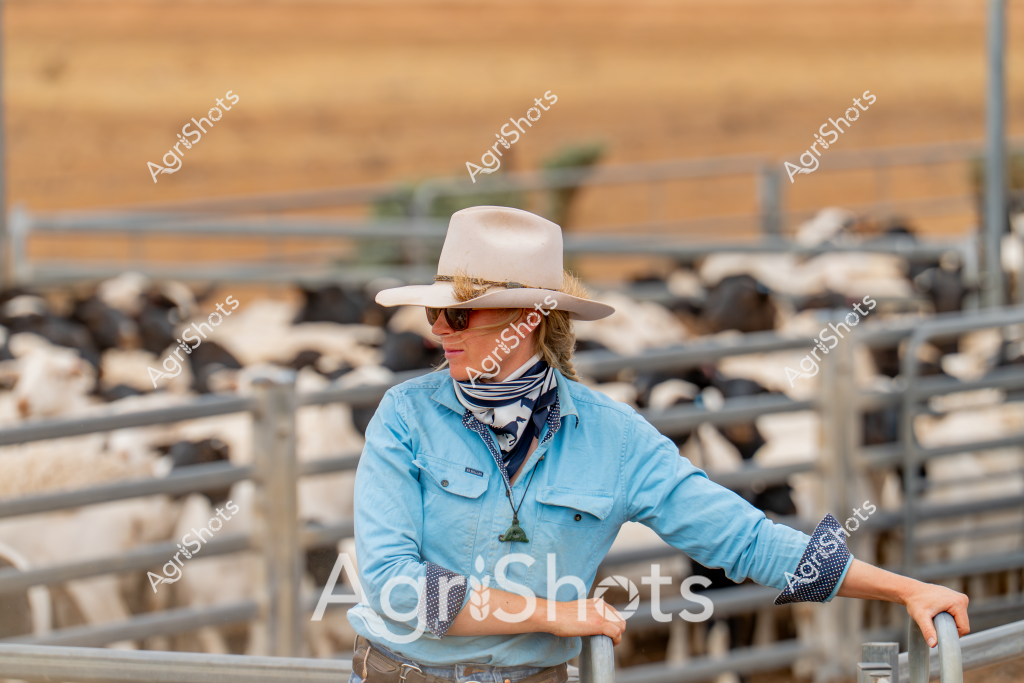
A woman stockman wearing a white wide-brimmed hat and sunglasses stands confidently in a livestock yard, leaning against metal fencing with a herd of sheep visible in the background. Dressed in a light blue work shirt with rolled-up sleeves and a striped neck scarf, she embodies the practical and resilient spirit of Australian rural workers. The metal yard panels create a structured environment, containing a dense flock of sheep with varying shades of white and gray wool. The warm, golden-toned background suggests a typical Australian pastoral landscape, likely during mid-morning or early afternoon. Her posture and attire reflect the professional and no-nonsense approach of contemporary livestock management, showcasing the ongoing role of skilled workers in managing agricultural operations.
 Image
Image
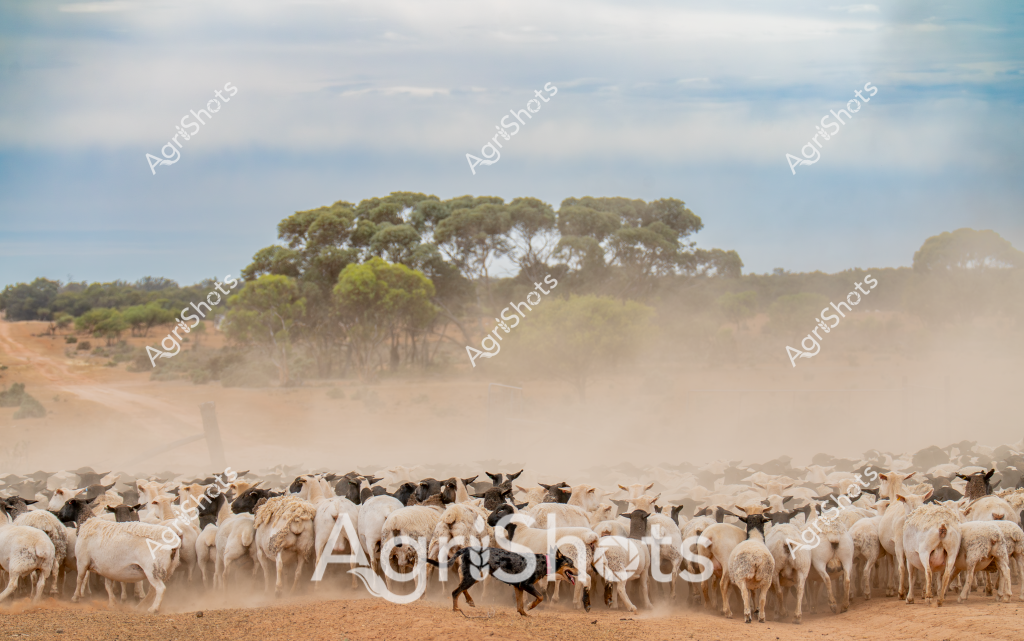
A large mob of white and black sheep are clustered together, kicking up a dense cloud of dust across a dry, golden paddock. The livestock - likely a mixed flock of Merino and crossbred sheep - stand tightly packed, creating a textural landscape of woolly bodies against the parched earth. Sparse eucalyptus trees line the background, their green canopies contrasting with the dusty brown landscape, suggesting this is during a dry season in rural Australia. The dense dust cloud rising around the sheep indicates movement and the arid conditions typical of many agricultural regions during summer or drought periods. The scene captures the resilience of Australian sheep farming, where livestock must navigate challenging environmental conditions. The soft blue sky and scattered clouds provide a muted backdrop to this quintessential Australian pastoral scene, highlighting the harsh yet beautiful nature of agricultural landscapes.
 Image
Image
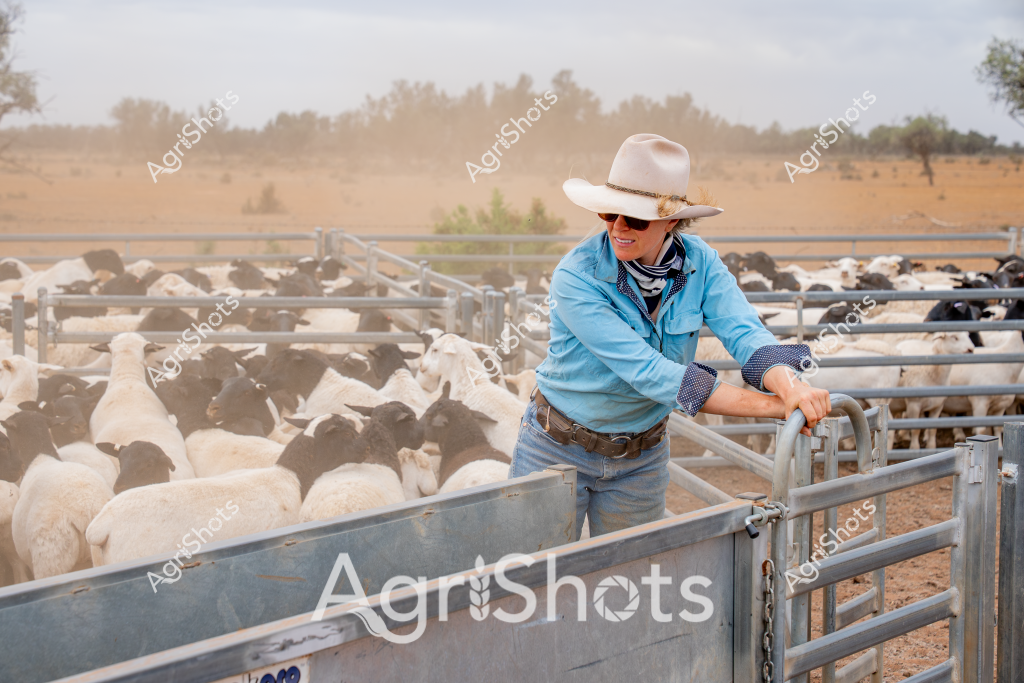
A woman stockman in a blue work shirt and wide-brimmed white hat leans against a metal livestock gate, carefully monitoring a large flock of sheep in a dusty paddock. The sheep - a mix of white and black woolly animals - are densely packed within metal yard panels, creating a textured landscape of livestock. The background reveals a dry, arid Australian rural landscape with scattered trees and golden-brown earth, suggesting challenging drought conditions. Her blue shirt, sunglasses, and relaxed posture indicate an experienced agricultural worker comfortable in the harsh rural environment. Dust hangs in the air, adding a sense of atmospheric texture to the scene and highlighting the challenging conditions of outback sheep farming. The metal livestock gates and fencing demonstrate the structured management of the agricultural property.
 Image
Image
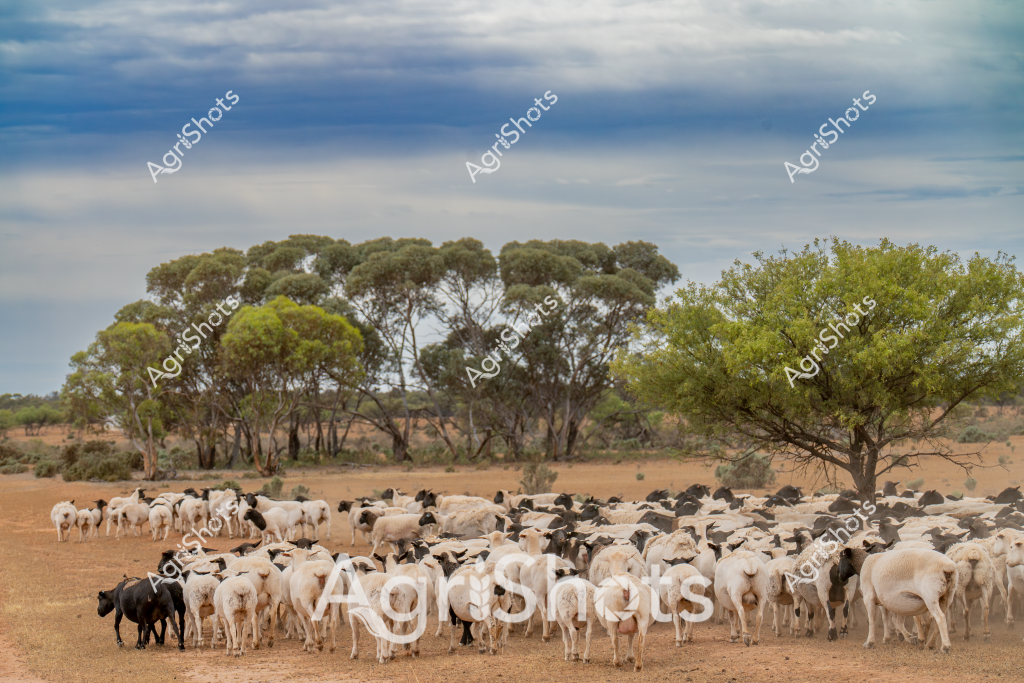
A large flock of white and black sheep clusters together in a dry, dusty paddock surrounded by eucalyptus trees under a soft, cloudy sky. The sheep - a mix of white and dark-colored individuals - stand closely packed, creating a dense woolly landscape against the arid ground. Sparse green trees line the horizon, providing a subtle backdrop to the livestock scene. The landscape appears typical of an Australian pastoral setting, with a wide, open terrain and scattered vegetation characteristic of sheep grazing country. The animals seem calm and grouped together, suggesting they might be resting or being moved between pastures by a nearby livestock manager. The muted color palette of browns, greens, and grays captures the essence of a rural Australian agricultural scene, highlighting the resilience of livestock in challenging environmental conditions.
 Image
Image
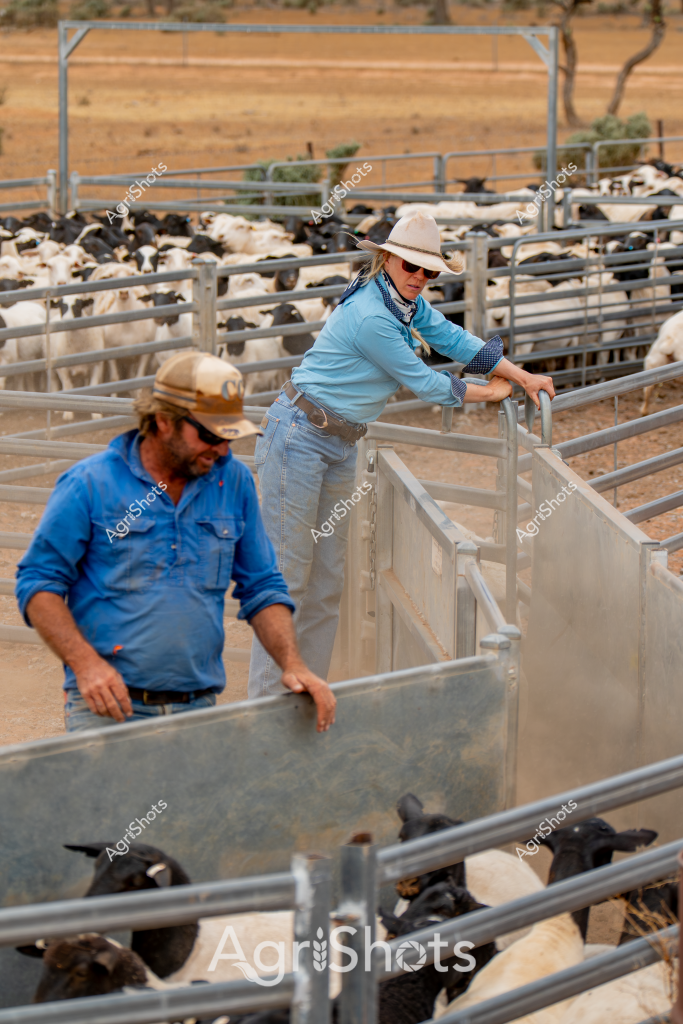
A woman and a man are working together in a livestock yard, managing a flock of black and white sheep. The woman, wearing a white hat, light blue long-sleeved shirt, and blue jeans, leans against a metal livestock gate in the foreground. A man in a blue work shirt stands nearby, both carefully monitoring the sheep contained within the metal yard fencing. The livestock yard appears to be in a dry, arid landscape with sandy ground and sparse vegetation visible in the background. Metal livestock gates and fencing create a systematic pen system, typical of Australian rural livestock management. Multiple groups of sheep - both black and white - are clustered within the different fenced sections, suggesting this is likely a sheep station or farm in an inland region. The scene captures the careful, methodical work of livestock management, with the workers positioned strategically to control and monitor the animal movement. Their clothing - practical work shirts, jeans, and a protective hat - reflects the functional approach to agricultural work in challenging rural environments. The metal infrastructure and careful positioning of the workers demonstrate the professional approach to sheep farming in what appears to be a challenging, dry Australian landscape.
 Image
Image
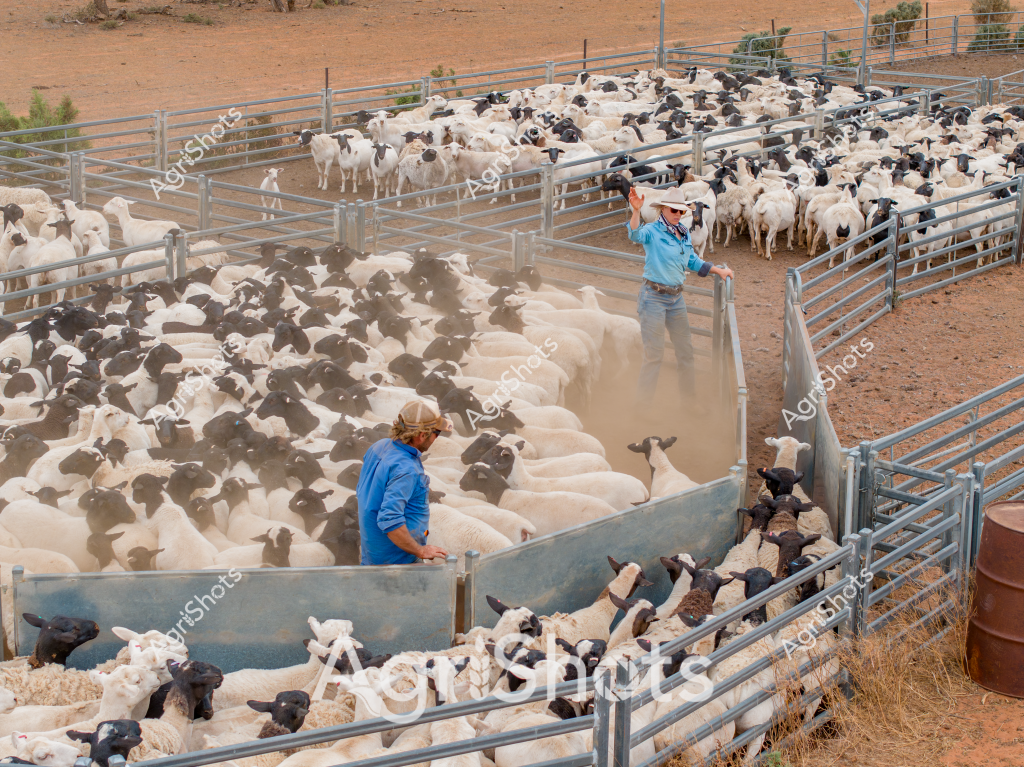
A dusty sheep yards scene captures two workers managing a large flock of black and white sheep in a metal livestock holding pen. A woman in a blue shirt and a man in a blue shirt and cap are strategically positioned within the fenced area, carefully directing and sorting the densely packed mob of sheep. The arid, reddish-brown ground and metal yard infrastructure suggest this is a typical livestock management scene in the Australian outback or pastoral region. Dozens of sheep - predominantly white with black faces and legs, characteristic of breeds like Merino or Dorper - are tightly clustered in different pens, creating a textured landscape of woolly bodies. Dust rises from the animals' movement, indicating active livestock handling during what appears to be a warm, dry day. The metal gates and sorting infrastructure demonstrate the sophisticated approach to sheep management in Australian agriculture, where precise handling and sorting are critical to pastoral operations.
 Image
Image
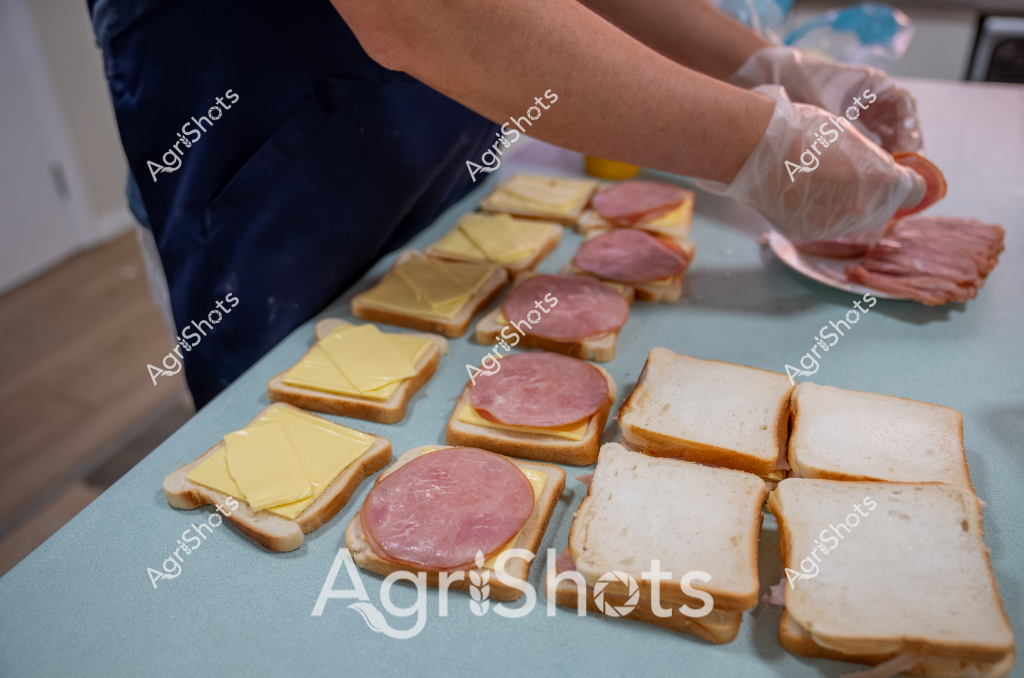
A person wearing white gloves and a dark blue apron is assembling ham and cheese sandwiches on a clean kitchen surface. Slices of white bread are arranged systematically, with square yellow cheese slices and round pink ham pieces carefully positioned on alternating bread slices. The hands are methodically placing ham onto the sandwiches, suggesting a professional food preparation environment, likely in a commercial kitchen or food service setting. The precise, organized layout indicates attention to detail and standardized food production techniques. The neutral color palette of white, pale yellow, and pink creates a clean, appetizing visual composition.
 Image
Image
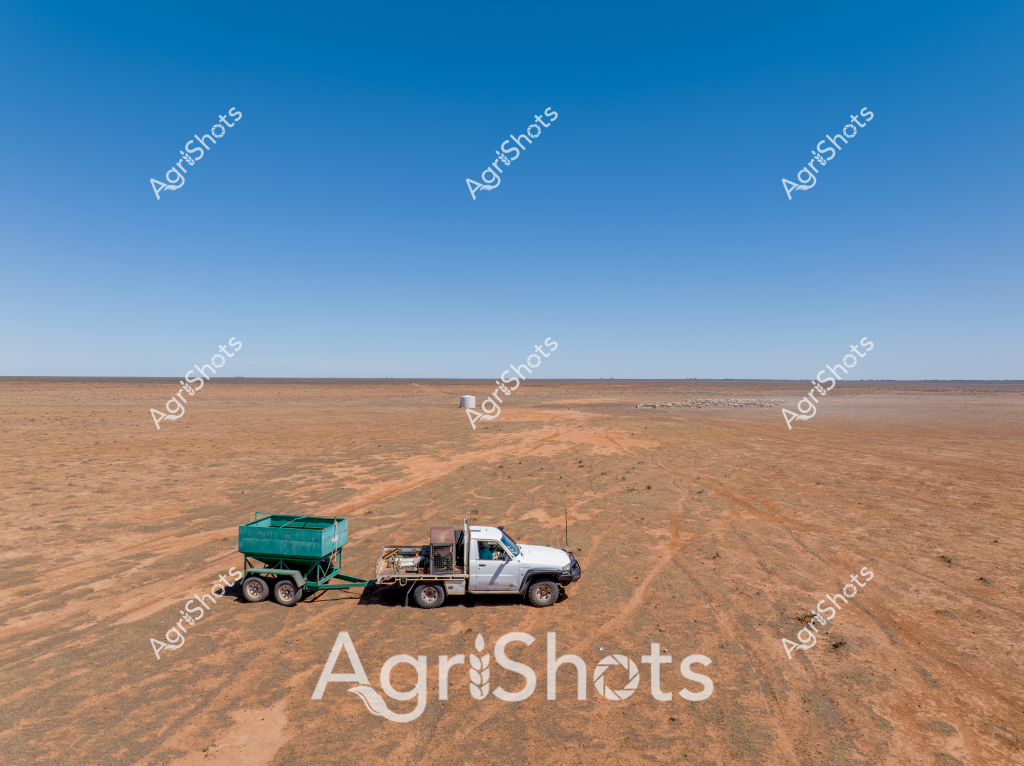
A white utility truck and a green agricultural trailer stand isolated in a vast, arid landscape under a brilliant blue sky. The stark desert environment stretches out to a distant, flat horizon, revealing the challenging terrain of what appears to be an Australian outback region during a severe drought. The reddish-brown earth is parched and cracked, with minimal vegetation, emphasizing the harsh conditions facing rural agricultural operations. The utility vehicle, likely used for farm management or water transportation, sits purposefully on the dry ground, suggesting resilience and adaptation in an unforgiving environment. The green trailer provides a stark contrast to the monochromatic landscape, hinting at the essential mobile infrastructure required to survive in such extreme conditions. The scene captures the essence of Australian agricultural challenge - survival and persistence in a landscape defined by extreme weather and vast, unforgiving spaces. The solitary vehicle becomes a symbol of human determination against the backdrop of an expansive, uncompromising natural environment.