Results for “precision instrument”
 Image
Image
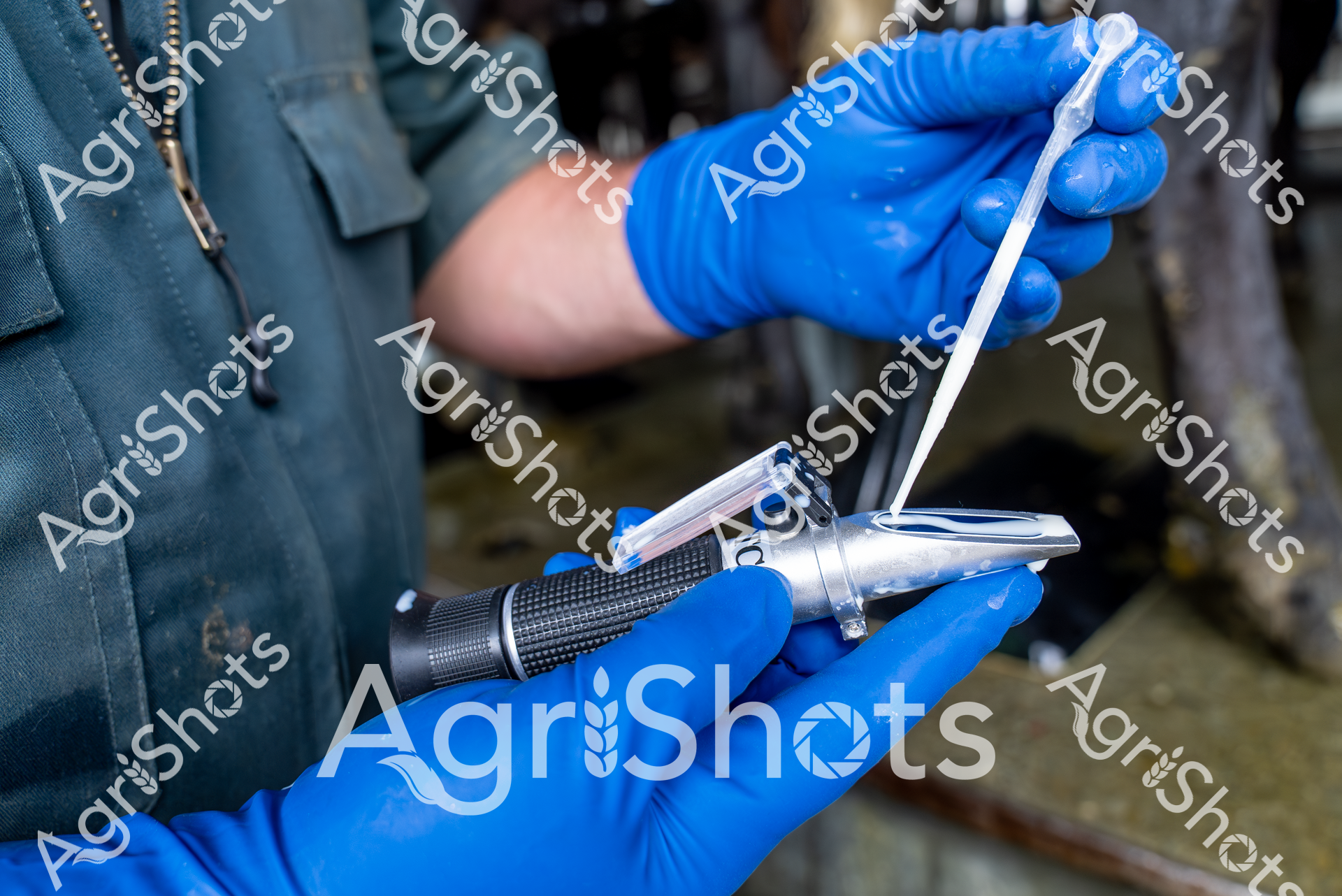
Blue-gloved hands carefully handle a precise agricultural testing instrument in a dairy environment. The stainless steel refractometer gleams under controlled lighting, its calibrated surface reflecting professional scientific methodology. These blue nitrile safety gloves - standard in livestock management and dairy testing - grip the optical instrument with careful precision, suggesting a meticulous approach to milk quality assessment. The close-up perspective emphasizes the technical skill required in modern agricultural testing, highlighting the intersection of scientific measurement and animal husbandry. Subtle textures of the gloves and metallic instrument suggest the rigorous standards of South Canterbury's dairy industry, where technological precision supports agricultural productivity. The scene communicates a moment of professional data collection, critical to maintaining high-quality dairy production standards.
 ▶ Video
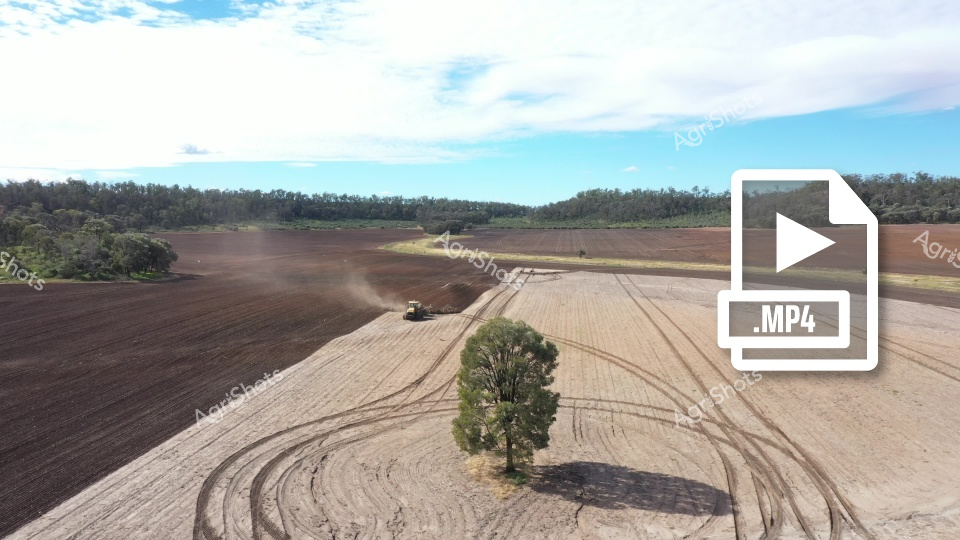
Solitary sentinel: A majestic tree stands proudly amid the geometric precision of a freshly prepared agricultural field, its verdant canopy a stark contrast against the rich, dark earth and pale cultivated ground. A powerful tractor glides across the landscape, kicking up a billowing cloud of dust as it prepares the soil for planting, its tracks etching intricate patterns into the earth like a massive paintbrush. The undulating terrain of Queensland's agricultural heartland stretches to the horizon, with dense bushland framing the edges of this carefully managed paddock, creating a patchwork of cultivation and natural landscape. Soft blue skies with wispy clouds provide a serene backdrop to the intense agricultural activity, capturing the dynamic relationship between human intervention and the natural world. The air seeder's methodical pass demonstrates the sophisticated technology of modern farming, transforming raw land into a precision instrument of agricultural productivity. This image encapsulates the spirit of Australian broadacre farming - a delicate dance of machinery, soil, and potential, where each pass of the tractor brings the promise of future harvest.
 Image
Image
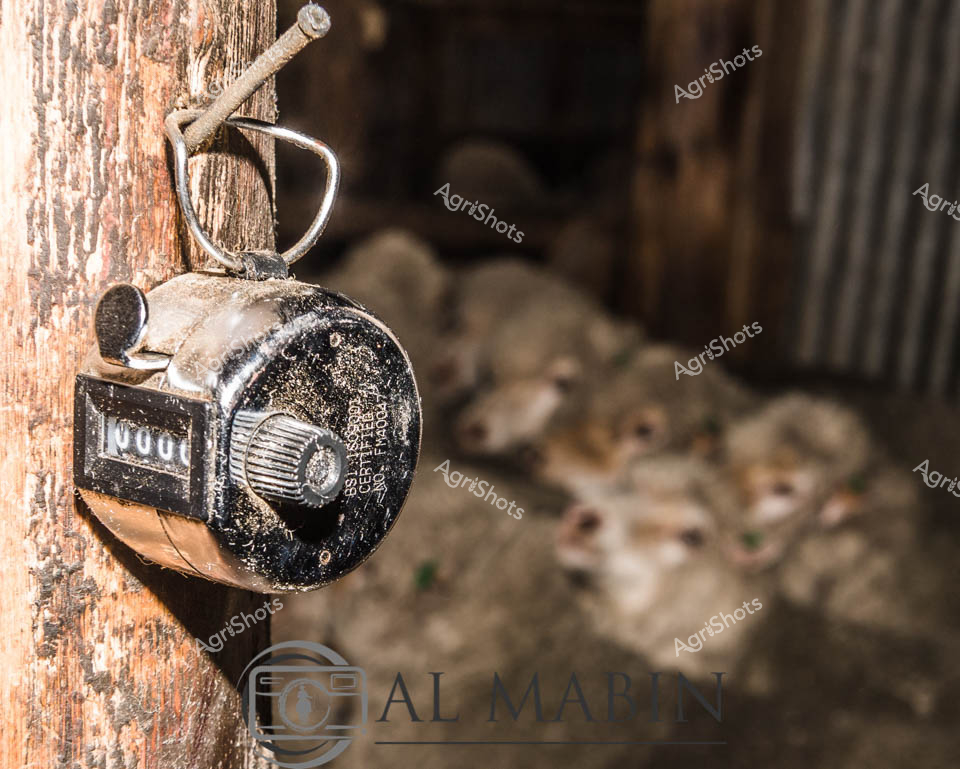
A rugged industrial timer counter sits mounted on a weathered wooden shed wall, its black metallic surface dusted with grime, positioned against a soft-focus backdrop of huddled Merino sheep. The precision instrument, likely tracking shearing hours or wool production metrics, represents the meticulous documentation integral to Australian wool production. Soft muted tones of beige and grey characterize the scene, capturing the austere functionality of a traditional woolshed environment. In the background, a cluster of Merino sheep - their dense, fine fleece characteristic of this premium wool-producing breed - wait quietly, embodying generations of pastoral agricultural heritage. The textured wooden surface, marked by years of hard work and industrial use, tells a silent narrative of rural craftsmanship and agricultural resilience. This image encapsulates the quiet efficiency of Australian sheep farming, where every tool and animal plays a critical role in the sophisticated process of wool production.
 Image
Image
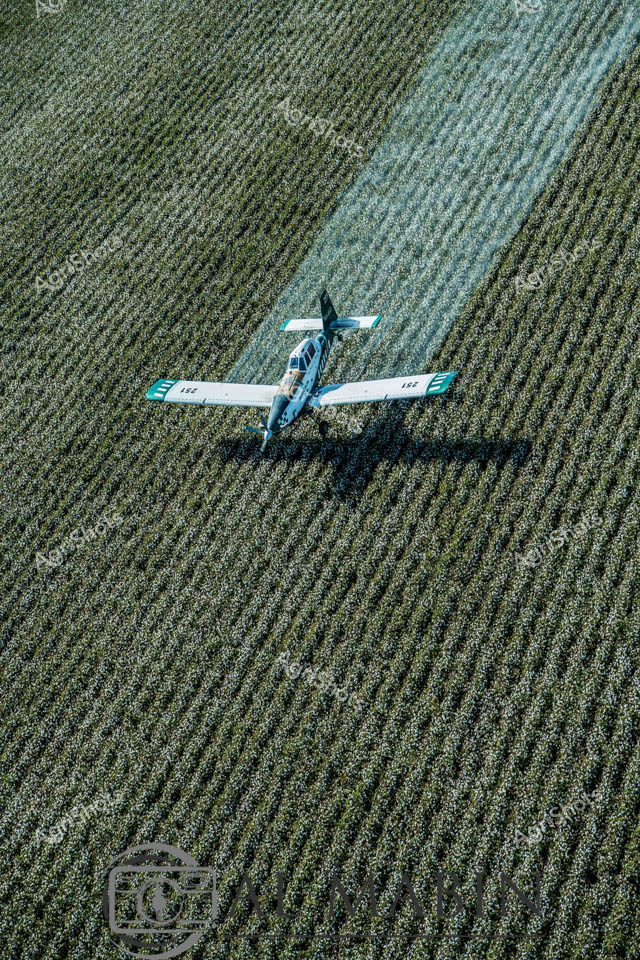
Aerial crop management in full swing, a sleek blue and white agricultural plane glides low over a lush cotton field, casting a crisp shadow across the meticulously planted rows. The aircraft, a precision instrument of modern farming, navigates carefully between the dense green rows of cotton plants, likely engaged in defoliation or pest control operations typical of the Queensland cotton growing region. Verdant green rows stretch uniformly across the landscape, creating a textured carpet of agricultural productivity that demonstrates the meticulous planning and technological sophistication of contemporary cotton cultivation. The bird's-eye perspective reveals the immaculate geometry of the plantation, with each row perfectly aligned and the plane positioned as a strategic tool in maximizing crop yield and quality. The cool blue tones of the aircraft contrast sharply against the rich green of the cotton field, symbolizing the intersection of technology and nature in Australian agricultural practice. This image captures the precise, calculated approach of modern farming - where aerial technology meets agricultural expertise to optimize crop management in the challenging Queensland agricultural landscape.
 Image
Image
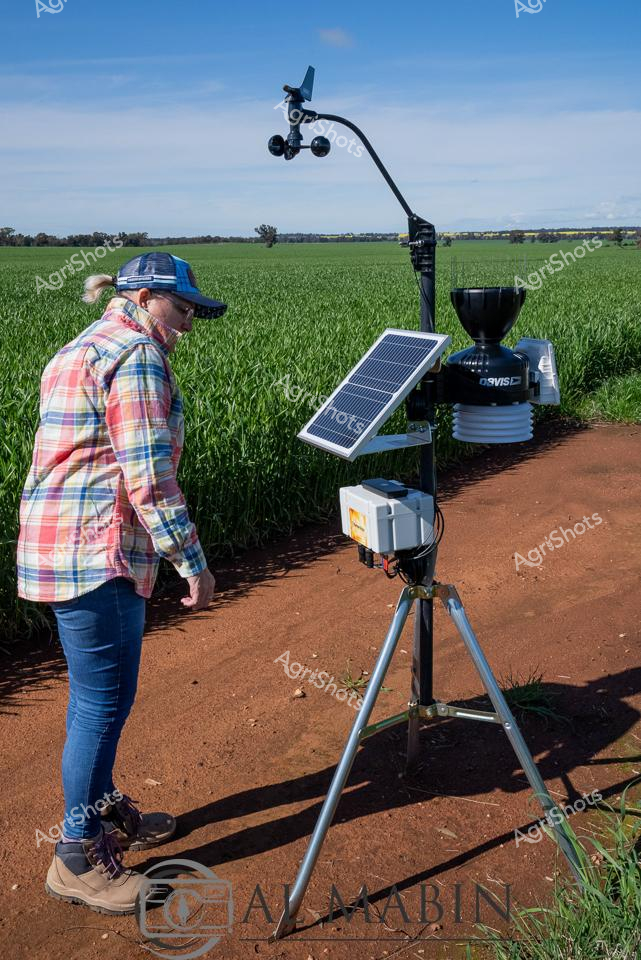
A farmer in a vibrant plaid shirt and blue cap stands beside a sophisticated Davis weatthe station in a lush wheat field, capturing critical agricultural meteorological data. The precision instrument, mounted on a tripod, features a solar panel, wind sensor, and sophisticated recording equipment, positioned on a rich terracotta-colored dirt track with verdant green wheat stretching across the horizon. Early morning sunlight casts long shadows, highlighting the detailed technological setup against the expansive agricultural landscape of what appears to be a classic New South Wales wheat-growing region. The weatthe station represents the cutting edge of agricultural monitoring, allowing farmers to track micro-climate conditions crucial for crop management, with its sleek black sensors and white solar panel creating a stark technological contrast to the organic agricultural setting. The scene embodies the modern farmer's relationship with technology - carefully observing, measuring, and responding to environmental conditions to optimize agricultural productivity. Every element speaks to precision agriculture: from the carefully calibrated equipment to the meticulously maintained crop rows extending to the distant tree line.
 Image
Image
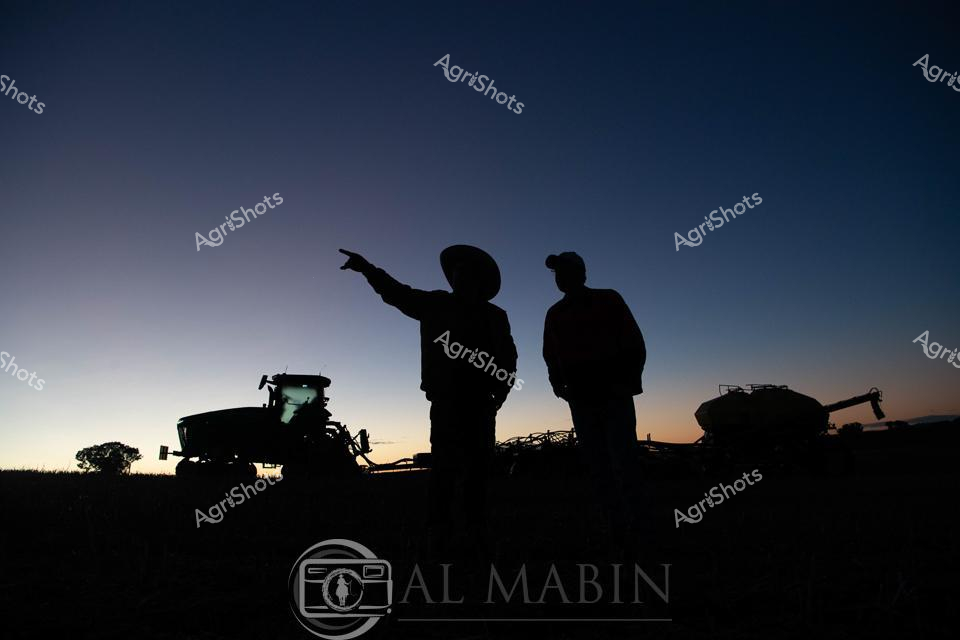
Golden dawn breaks over a rippling wheat field as two seasoned agricultural professionals survey the early morning landscape. Silhouetted against the luminous gradient of predawn sky, one figure gestures expansively while the other listens intently, both standing beside a gleaming John Deere agricultural machine. The air seeder waits patiently, a precision instrument ready to begin the critical task of crop planting across the undulating New South Wales agricultural terrain. Soft gradient light paints the horizon in muted blues and soft oranges, capturing the quiet anticipation of another farming day about to commence. Agricultural machinery and human expertise blend seamlessly in this intimate moment of rural planning, where generations of agricultural knowledge converge with cutting-edge farming technology. The scene embodies the spirit of Australian broadacre farming - strategic, patient, and deeply connected to the rhythms of the land.
 Image
Image
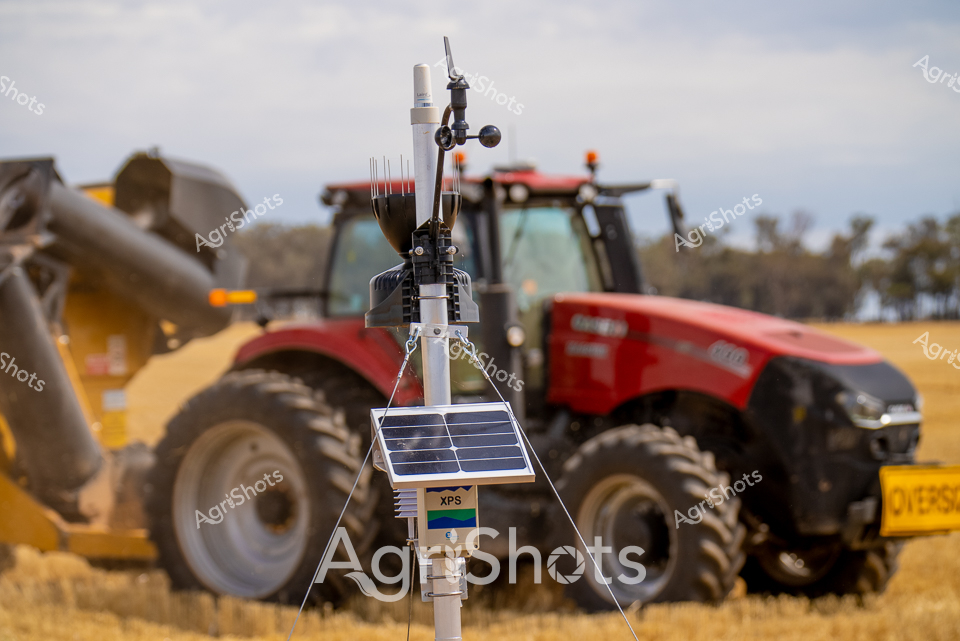
Solar-powered precision agriculture takes center stage in this sophisticated farm technology snapshot. A sophisticated XPS weatthe station stands sentinel in the foreground, its sleek solar panel capturing ambient energy while wind sensors and monitoring equipment capture critical environmental data. A powerful Case IH tractor, gleaming in vibrant red, dominates the background - a muscular machine poised on massive tyres across a golden wheat field ready for harvest. The expansive wheat paddock stretches beneath a pale summer sky, characteristic of a New South Wales agricultural landscape, with distant trees and subtle terrain undulations completing the panorama. This image captures the intersection of cutting-edge agricultural technology and traditional farming, where digital monitoring and robust machinery work in harmony to optimize crop management and environmental understanding. The precision instrument represents the modern farmer's commitment to data-driven agricultural practices, transforming traditional farming through intelligent, responsive technology.
 Image
Image
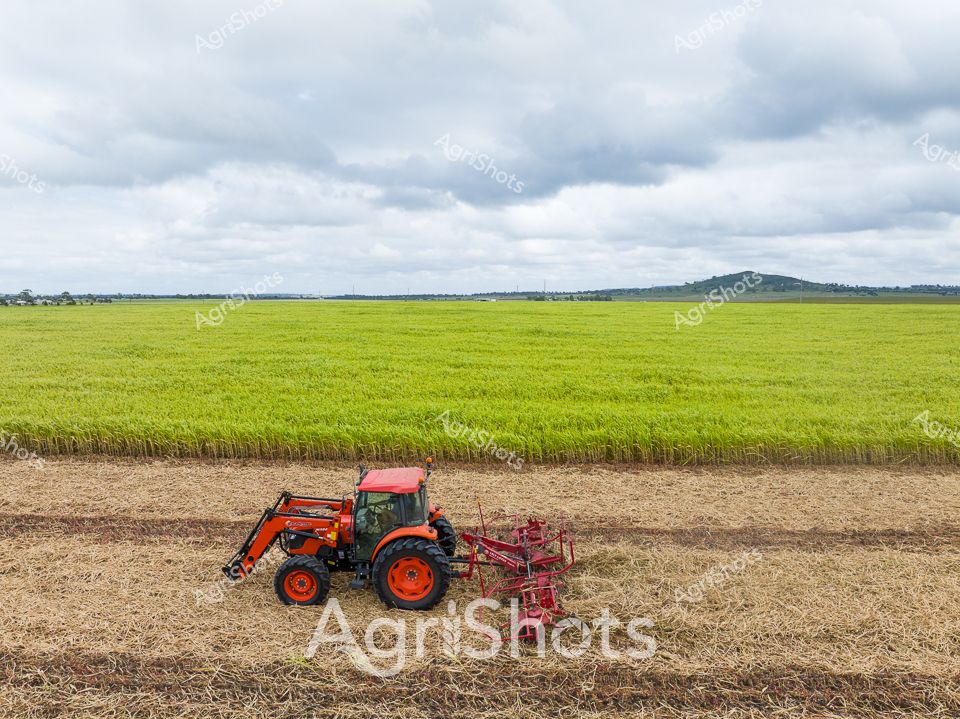
Burnished gold and sage-green stretch across the horizons of a classic Queensland agricultural landscape, where a vibrant red Kubota tractor methodically rakes dry hay against a backdrop of expansive sorghum fields. Low-hanging pewter clouds drift above the undulating terrain, casting soft diffused light over the meticulously managed farmland. The tractor, a precision instrument of agricultural productivity, moves deliberately along the field's edge, its burgundy rake systematically gathering cut forage into neat windrows ready for baling. The rich textural contrast between the bleached stubble of the harvested section and the lush green rippling sorghum crop creates a compelling visual narrative of agricultural cycles and seasonal rhythms. Every mechanical movement speaks to generations of farming expertise, where modern machinery and traditional landscape management intersect with calculated efficiency. The immense scale of the terrain - punctuated by distant hills and an endless sky - underscores the grand challenge of agricultural production in the Australian landscape.
 Image
Image
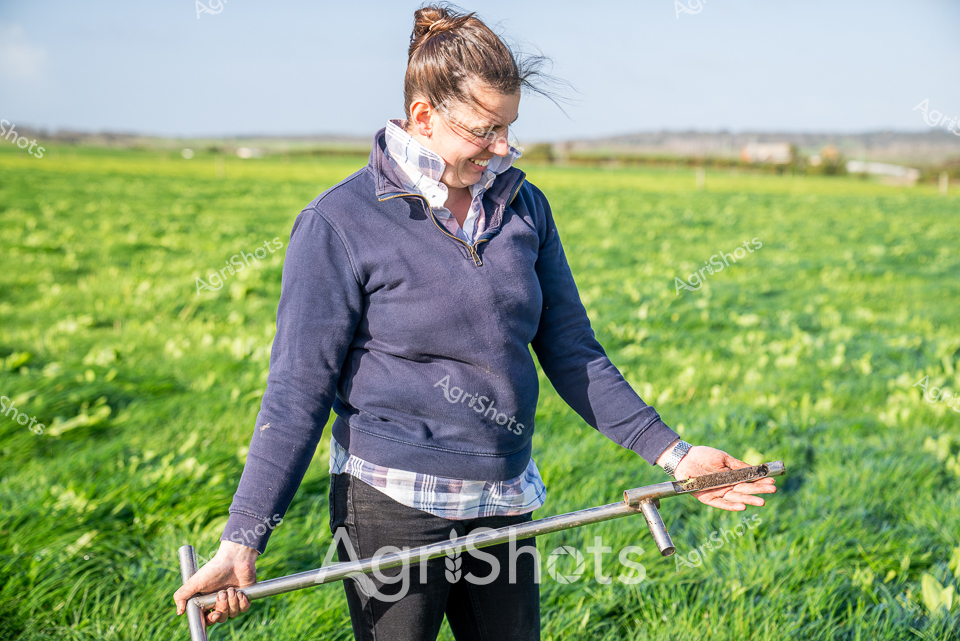
An agronomist surveys a lush winter pasture, her navy blue pullover and plaid underlayer contrasting against the vibrant emerald grasslands stretching to the distant horizon. Clutching a specialized soil moisture probe, she carefully assesses the ground's hydration and health, her focused expression revealing years of agricultural expertise. The precision instrument extends from her hands, allowing detailed measurement of soil conditions critical for optimal pasture management and livestock feed quality. Soft breezes ruffle her hair, caught in a practical top-knot, while the expansive green field suggests a thriving dairy region during the cooler agricultural season. Her practical work attire and technical equipment highlight the scientific approach modern agricultural professionals bring to land management. The scene captures the intersection of technological innovation and traditional farming knowledge, showcasing the critical role of agronomists in sustainable agricultural practices.
 Image
Image
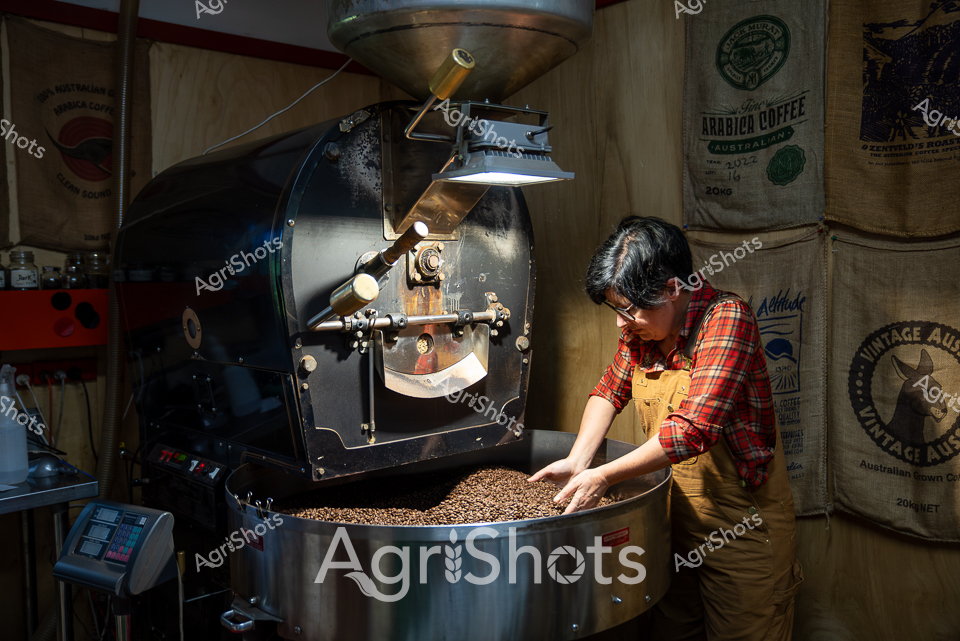
Bathed in warm, focused light, a dedicated coffee roaster tends to a gleaming black roasting machine in a rustic warehouse space. Wearing a vibrant red plaid shirt and mustard-colored overalls, the artisan carefully manages a batch of freshly roasted coffee beans, her hands moving methodically across the cooling tray. Surrounding her, burlap sacks from Arabian Coffee and Vintage Australia line the walls, speaking to the rich heritage and provenance of the beans. The industrial roaster - a precision instrument of gleaming metal and complex mechanics - stands as a centerpiece, its lamp casting dramatic shadows and highlighting the golden-brown beans transitioning from raw potential to aromatic perfection. Scattered control panels and measuring devices underscore the scientific precision required in specialty coffee production, while the warm, intimate lighting suggests the passion and craft behind each carefully roasted batch. This scene captures the meticulous art of small-batch coffee roasting, where every detail matters and each bean tells a story of agricultural expertise and sensory delight.
 Image
Image
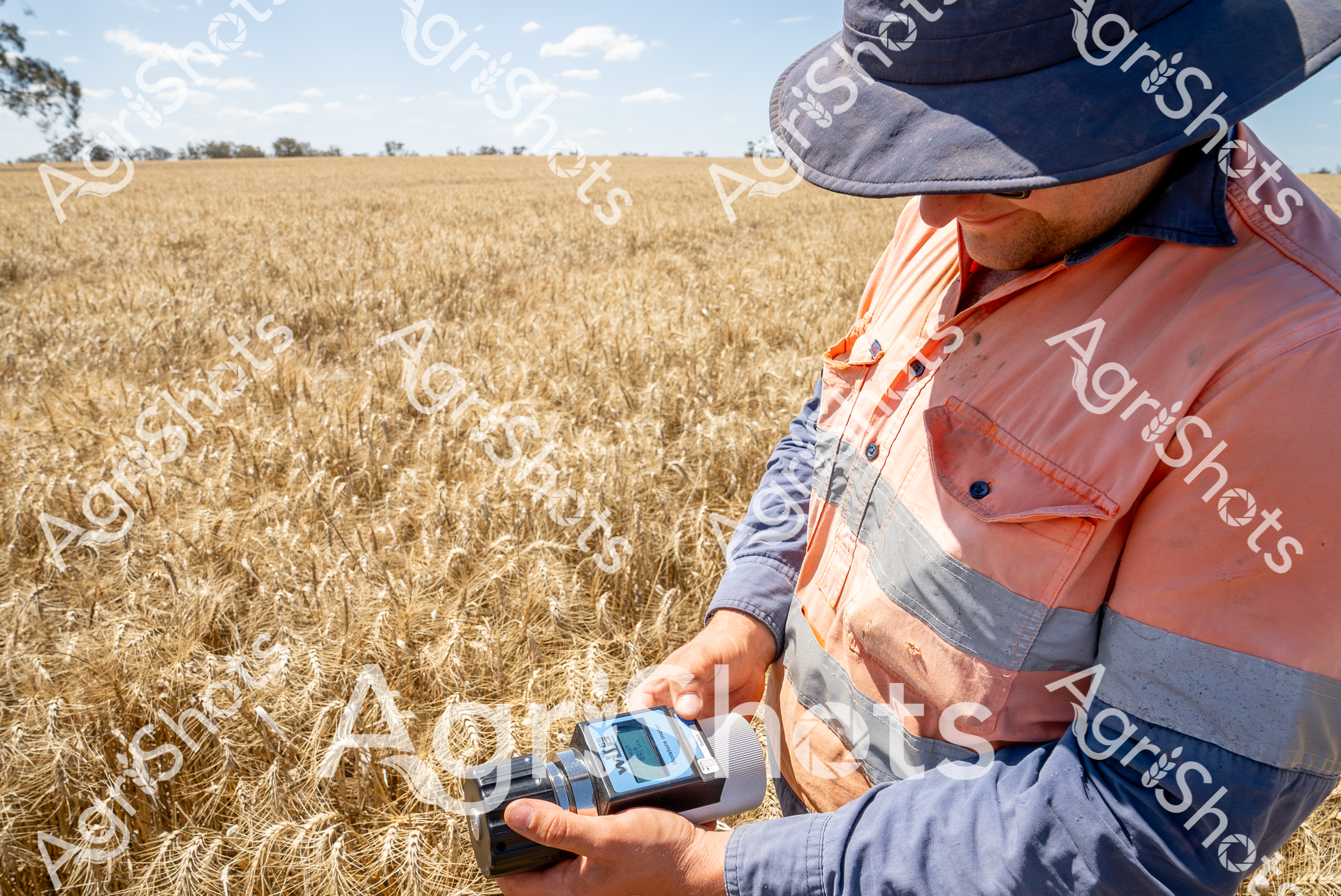
Ripening golden wheat stretches across a sun-drenched paddock, with a field technician carefully measuring grain moisture content using a handheld digital testing device. Dressed in a salmon-colored high-visibility work shirt and navy blue cap, the agricultural worker stands amidst the mature wheat crop, capturing critical harvest readiness data. The wheat field appears ripe and heavy, with delicate wheat heads swaying under a soft blue sky dotted with wispy clouds, suggesting peak summer conditions in a typical New South Wales grain-growing region. The technician's protective clothing and precision instrument highlight the technical expertise and meticulous approach of modern Australian agricultural practice. Careful moisture testing ensures optimal harvest timing, protecting crop quality and maximizing yield potential for farmers. The image captures the intersection of traditional agricultural landscape and contemporary scientific farm management, showcasing the sophisticated skills required in contemporary grain production.
 Image
Image
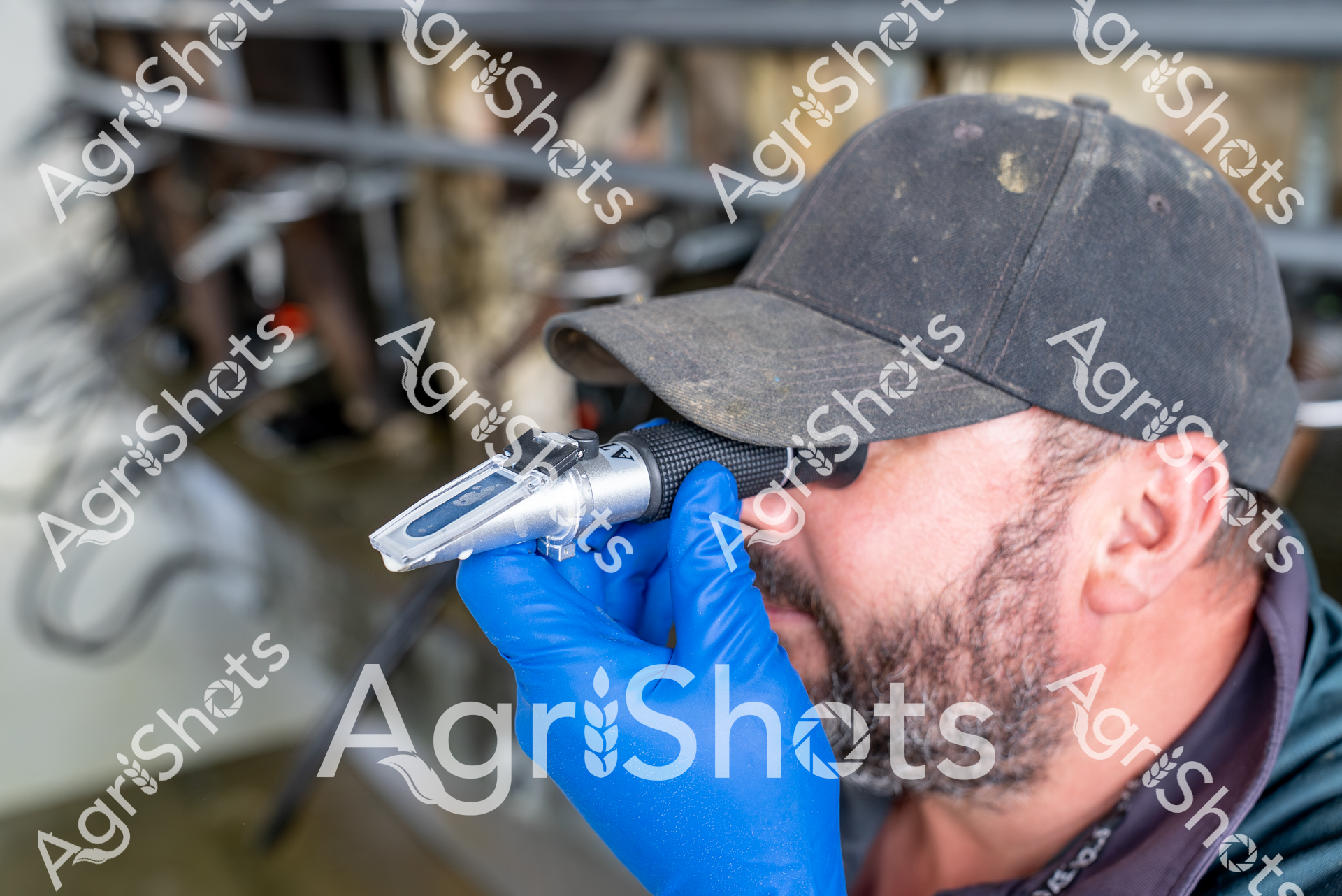
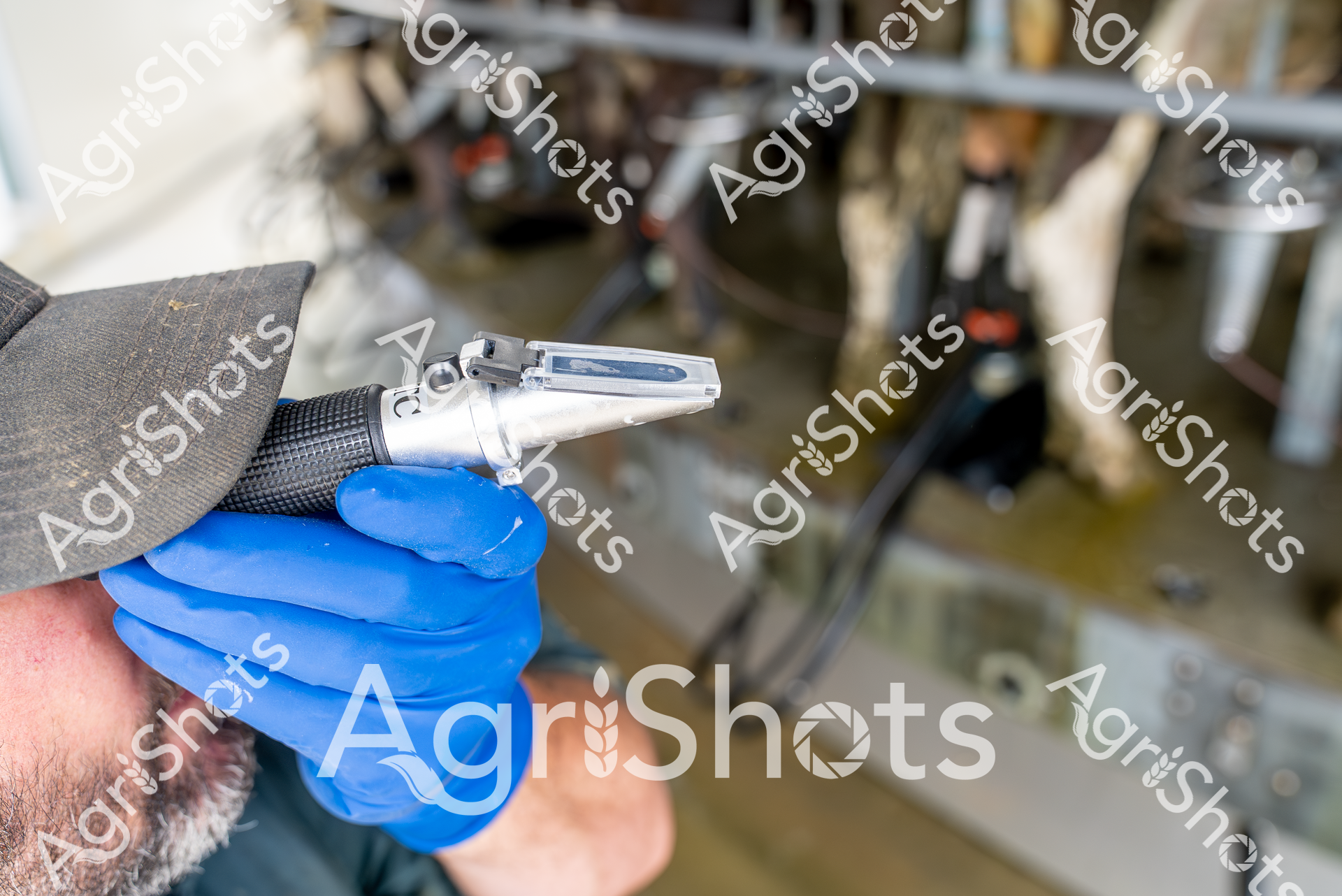
In the controlled environment of a dairy processing facility, a skilled technician wearing protective blue gloves carefully operates a handheld refractometer, a precision instrument used for quality testing of milk samples. Dressed in a weathered gray cap and industrial workwear, the individual focuses intently on measuring the milk's sugar, protein, or fat content - critical data for ensuring dairy product quality and farm productivity. The background hints at a sophisticated rotary dairy setup, typical of the advanced agricultural operations found in New Zealand's South Canterbury region, where dairy farming represents a cornerstone of the agricultural economy. The technician's blue-gloved hand grips the metallic refractometer with practiced expertise, suggesting years of experience in agricultural testing and quality control. Soft industrial lighting and the muted tones of the equipment create an atmosphere of methodical professionalism, highlighting the technical precision required in modern agricultural research and production. This image captures the intersection of scientific measurement and agricultural practice, showcasing the sophisticated processes behind New Zealand's world-renowned dairy industry.
 Image
Image
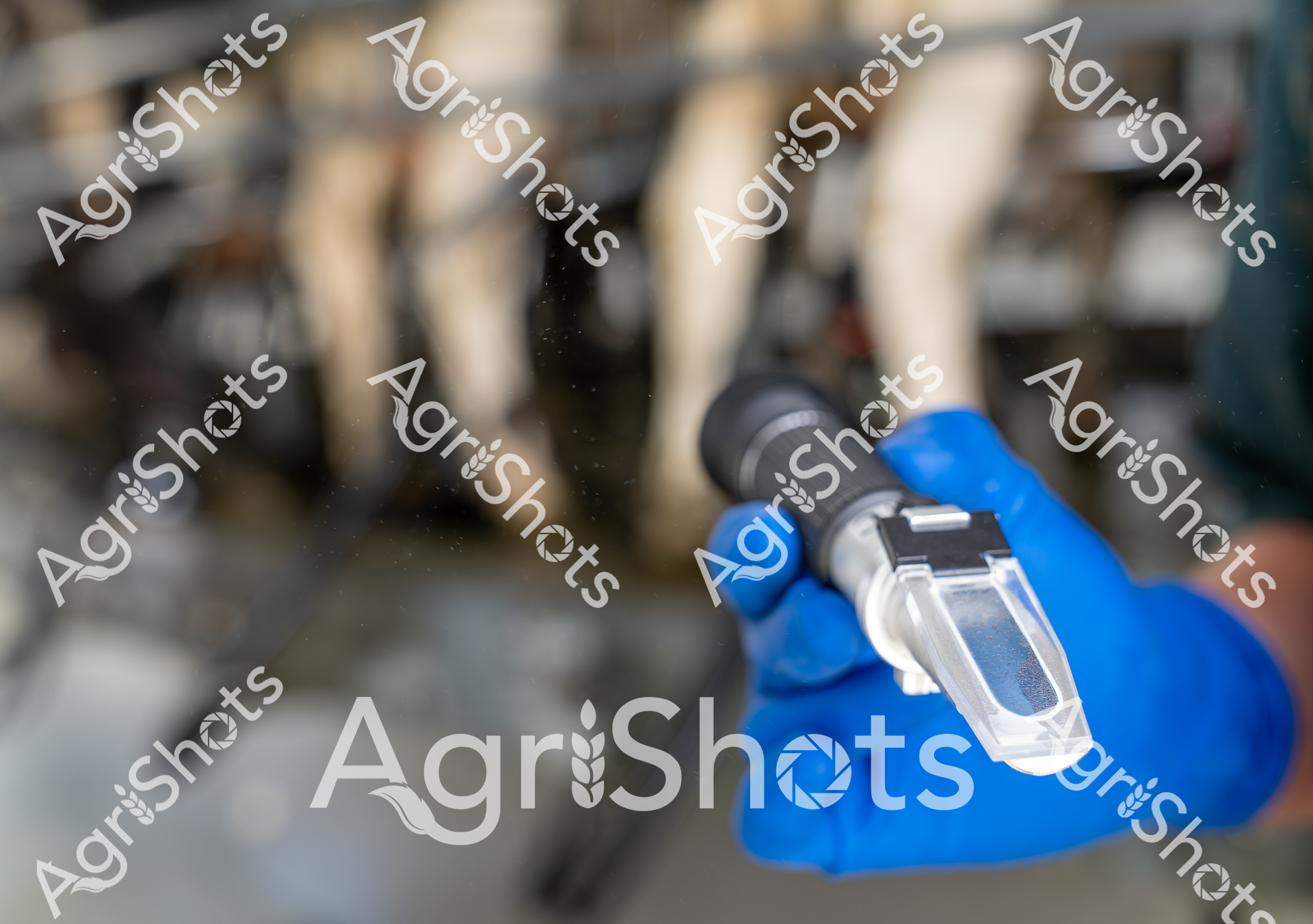
A skilled dairy technician wearing vivid blue nitrile gloves carefully operates a handheld refractometer, a precision instrument used for measuring milk quality and composition. The gleaming silver device sits precisely in the technician's gloved hand, positioned against the blurred background of a rotary milking platform typical of South Canterbury's advanced dairy operations. Intricate mechanical details of the dairy shed's infrastructure hint at the sophisticated agricultural technology employed in modern milk production. The close-up perspective emphasizes the meticulous attention to quality control and scientific testing integral to New Zealand's world-renowned dairy industry. Soft industrial tones of grey, blue, and metallic silver create a professional and technical visual atmosphere that underscores the precision of agricultural science. This image captures the intersection of technical expertise, agricultural innovation, and rigorous quality assurance that defines contemporary dairy farming in one of the world's leading milk-producing regions.
 Image
Image
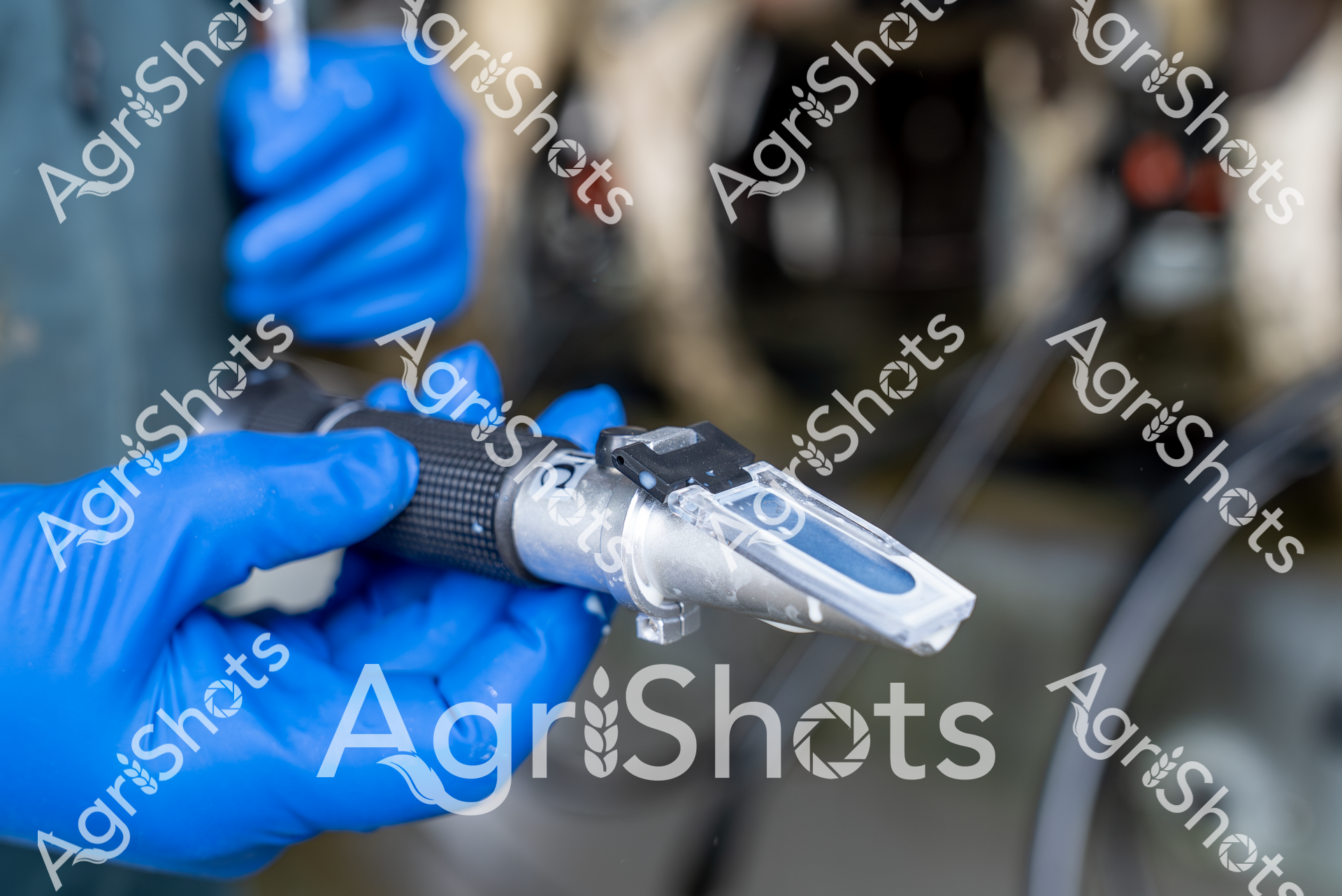
In the crisp, clean environment of a modern rotary dairy, a gloved hand carefully operates a refractometer - a precision instrument crucial to dairy quality control. The vivid blue nitrile glove provides stark contrast against the sophisticated sampling equipment, highlighting the meticulous scientific approach of contemporary agricultural practice. This scene captures the essence of New Zealand's dairy industry, renowned for its rigorous quality standards and technological innovation, specifically within the lush agricultural landscapes of South Canterbury. The refractometer - a sleek, transparent device - represents the intersection of farming expertise and scientific measurement, allowing farmers to assess milk quality, protein levels, and other critical parameters with remarkable accuracy. Every detail speaks to the careful, professional approach of modern dairy management - from the protective blue glove ensuring hygienic handling to the advanced testing equipment that guarantees premium milk production. The blurred background suggests a dynamic dairy processing environment, where precision, safety, and technical skill combine to maintain New Zealand's world-class agricultural reputation.
 Image
Image
In the controlled environment of a modern dairy, a technician wearing protective blue nitrile gloves carefully operates a handheld refractometer, a precision instrument used for milk quality testing. The individual, partially visible and wearing a golden-tan cap, focuses intently on measuring milk solids, sugar content, or other critical dairy parameters. The metallic silver refractometer gleams against the blue glove, suggesting meticulous scientific analysis in the agricultural sector. Soft industrial lighting illuminates the scene, highlighting the technical expertise required in contemporary dairy production. This moment captures the intersection of agricultural science and dairy farming, where rigorous quality control ensures the highest standards of milk production. The precise, measured action speaks to the technological sophistication of modern New Zealand dairy operations, particularly in the rich agricultural landscape of South Canterbury.
 Image
Image
In the crisp, precise environment of a modern dairy facility, a gloved hand carefully operates a handheld refractometer - a critical tool for quality control in milk production. The vivid blue nitrile glove provides a stark contrast against the metallic and transparent surfaces of the precision instrument, symbolizing the meticulous hygiene and scientific approach of contemporary agricultural testing. This close-up captures the moment of technical analysis, where each droplet of milk undergoes rigorous examination to ensure optimal nutritional quality and food safety standards. The sophisticated refractometer, with its sleek design and technical components, represents the intersection of agricultural tradition and cutting-edge technology prevalent in New Zealand's world-renowned dairy industry. The blurred background hints at the complex machinery of a rotary dairy milking platform, suggesting the broader context of systematic milk production in the South Canterbury region. Every element in the frame - from the carefully positioned instrument to the protective glove - communicates a narrative of professionalism, precision, and commitment to agricultural excellence.
 Image
Image
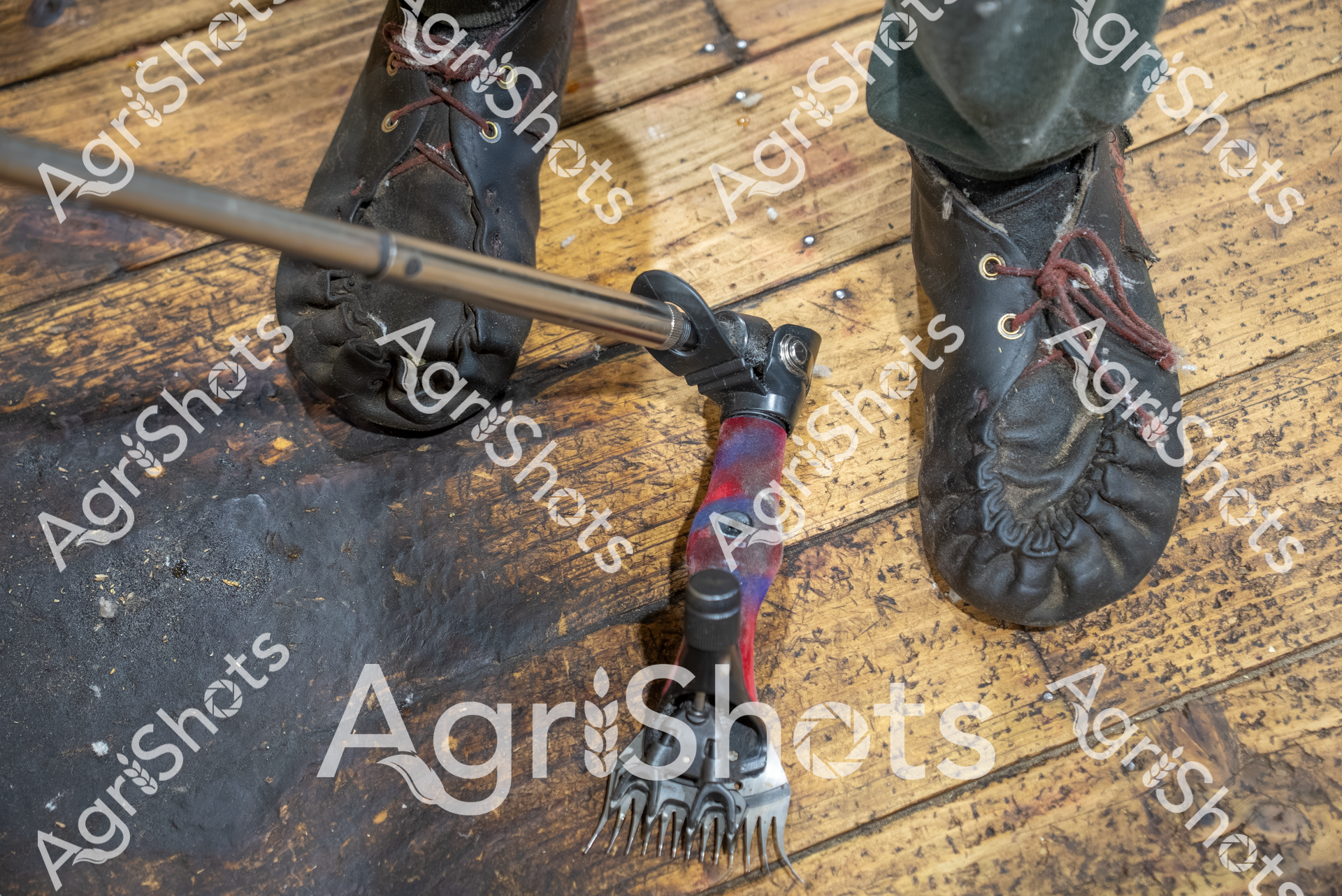
In the warm, dim light of a weathered shearing shed, a skilled shearer's gloved hands carefully maneuver electric shearing handpieces across a worn wooden floor. The robust, industrial-grade shearing tool - with its distinctive red and blue-tinted handle - stands ready to efficiently remove wool from merino sheep, a critical task in the South Australian agricultural cycle. Rugged leather work boots, caked with dust and bearing the marks of countless hours of demanding labor, anchor the shearer's stance on the textured timber surface. The metallic handpiece, a precision instrument of rural productivity, reflects the generations of expertise embedded in Australian wool production. Every scratch and scuff on the floor, every subtle curve of the specialized equipment tells a story of hard work, agricultural heritage, and the intricate craftsmanship that defines sheep farming in the region's challenging winter landscape. The image captures the raw, unembellished essence of rural labor - a moment of skilled technique and mechanical precision that has sustained Australian agriculture for generations.
 Image
Image
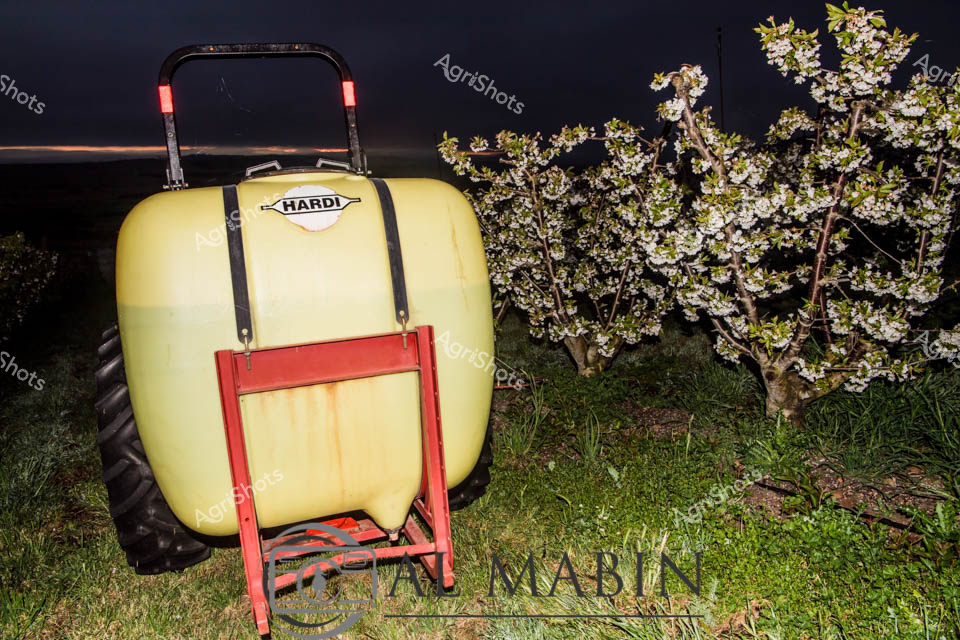
Moonlit orchard under the first blush of spring, a Hardi crop sprayer stands ready beside a blossoming cherry tree. The pale yellow tank gleams softly in the night, its robust red frame providing stark contrast against the delicate white flower clusters and dark grassy terrain. This precision agricultural instrument represents the careful science of fruit cultivation - poised to deliver targeted crop protection during the critical flowering season. Mounted on sturdy wheels, the sprayer embodies the careful balance between technological intervention and natural growth cycles typical of Tasmanian agricultural practices. The deep navy backdrop and illuminated grass suggest a twilight moment, capturing the quiet anticipation of an orchard on the cusp of fruit development. The Hardi brand, a marker of quality agricultural equipment, signals professional-grade preparedness for the delicate work of nurturing Tasmania's renowned cherry crops.
 Image
Image
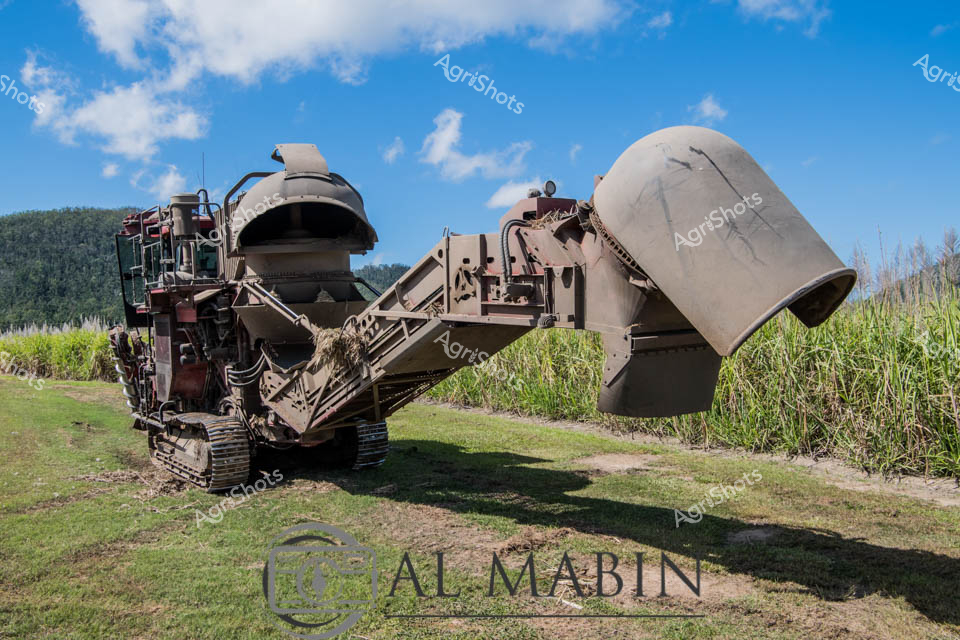
Thundering across the lush sugarcane fields of Queensland, a robust Case harvester dominates the verdant landscape under a crystalline blue sky. The industrial behemoth, coated in weathered metallic tones of grey and rust, crawls on heavy treads through the rippling green plantation, its massive articulated arm extended like a mechanical proboscis. Intricate hydraulic systems and complex engineering transform this machine into a precision agricultural instrument, designed to efficiently strip and collect sugarcane stalks in a single sweeping motion. Surrounding grasslands and distant forested hills frame the scene, highlighting the expansive agricultural terrain where modern technology meets traditional farming practices. The harvester's imposing silhouette casts a sharp shadow on the ground, emphasizing its substantial scale and the transformative power of agricultural mechanization in contemporary Australian farming. Every component of this machine represents decades of engineering refinement, purpose-built to maximize crop yield and streamline the challenging process of sugarcane harvest in Queensland's rich agricultural heartland.
 Image
Image
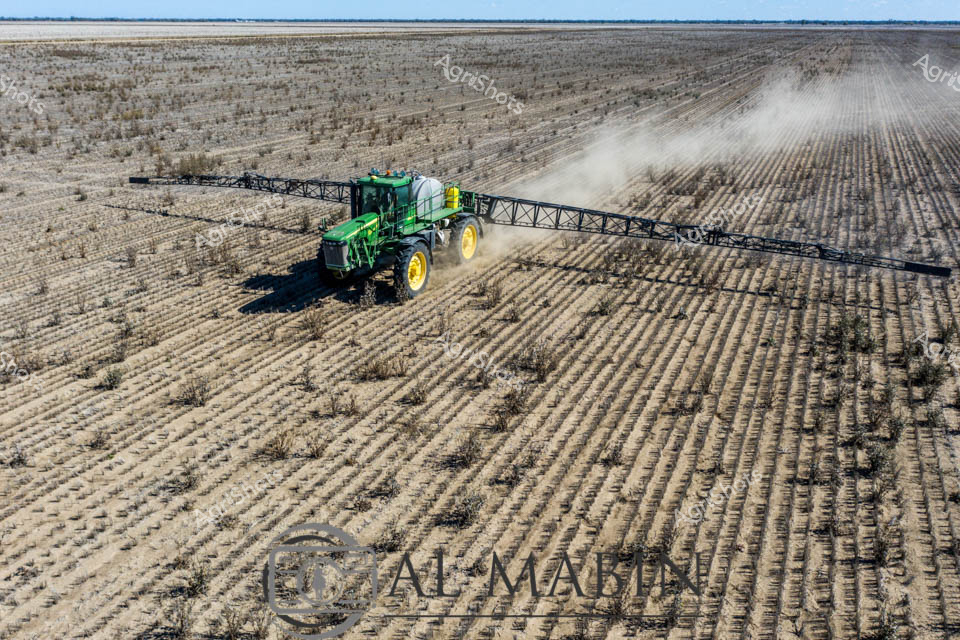
Sweeping across a weathered paddock of golden stubble, a gleaming John Deere self-propelled spray rig cuts a powerful line against the arid landscape of rural New South Wales. Extended black spray booms stretch wide, releasing a fine mist of agricultural treatment that billows into a soft dust cloud behind the machine's massive green and yellow frame. The meticulously cultivated field reveals precise rows of harvested crop remnants, creating a textured canvas of earthy browns and greys that stretches to a pale blue horizon. This precision agricultural instrument represents the cutting edge of modern farming technology, navigating the challenging dry landscape with calculated efficiency. The stark, open terrain speaks to the resilience of Australian agricultural practices, where advanced equipment enables cultivation in harsh, marginal environments. Every movement of the spray rig is a testament to the calculated science of modern crop management, transforming seemingly barren ground into a potential future harvest.
 Image
Image
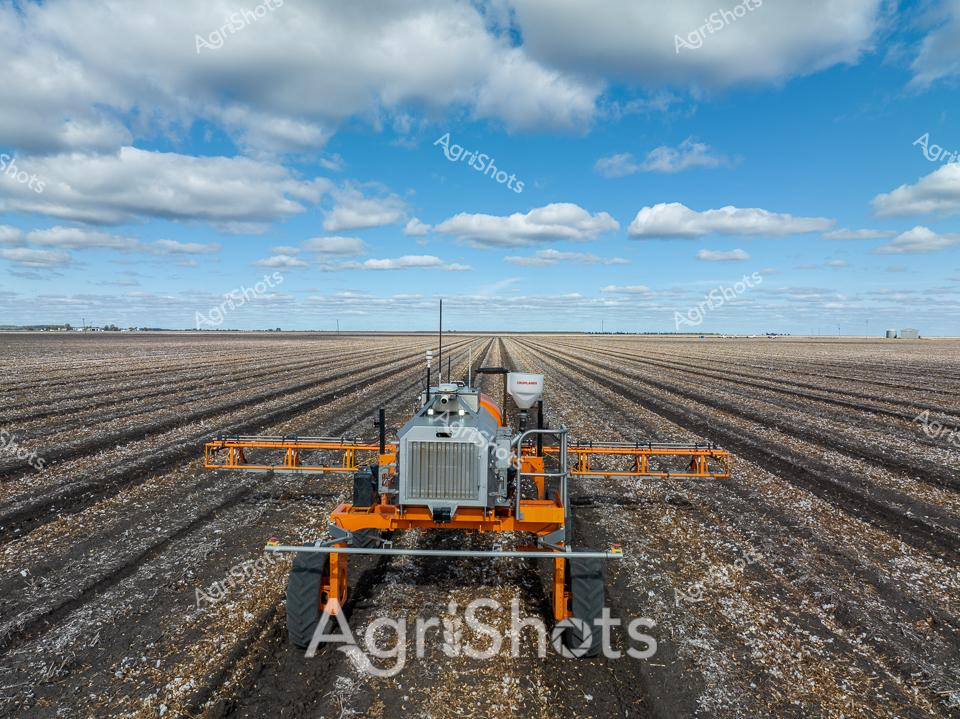
A cutting-edge agricultural spray rig dominates a precisely cultivated cotton field under an expansive Queensland sky, its gleaming orange and metallic frame positioned perfectly between ruler-straight rows of prepared earth. Modern agricultural technology meets vast agricultural landscape, with the sophisticated robotic sprayer poised to systematically apply crop treatments across the immense, meticulously prepared paddock. Crisp white clouds drift across an azure blue sky, creating a dramatic backdrop for this precision farming instrument, which represents the pinnacle of contemporary agricultural innovation. The machine's extended orange booms stand ready to disperse carefully calibrated agricultural chemicals, demonstrating the intricate balance between technological intervention and natural agricultural processes. Subtle textures of freshly tilled soil contrast with the sleek mechanical lines of the spray rig, highlighting the sophisticated engineering required in modern broad-acre farming. This scene captures the essence of Australian agricultural technology - powerful, precise, and designed to maximize productivity across seemingly endless agricultural horizons.
 Image
Image
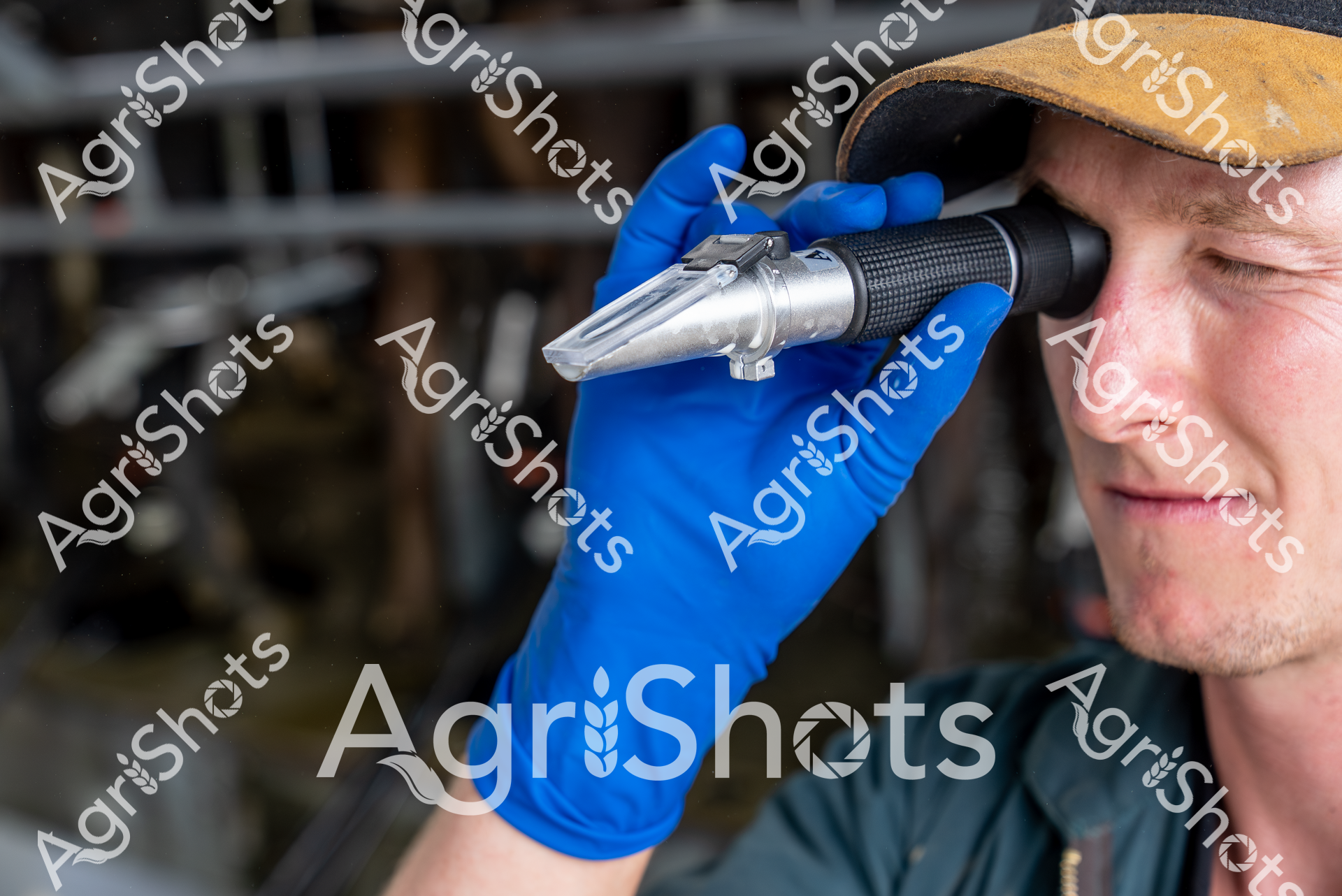
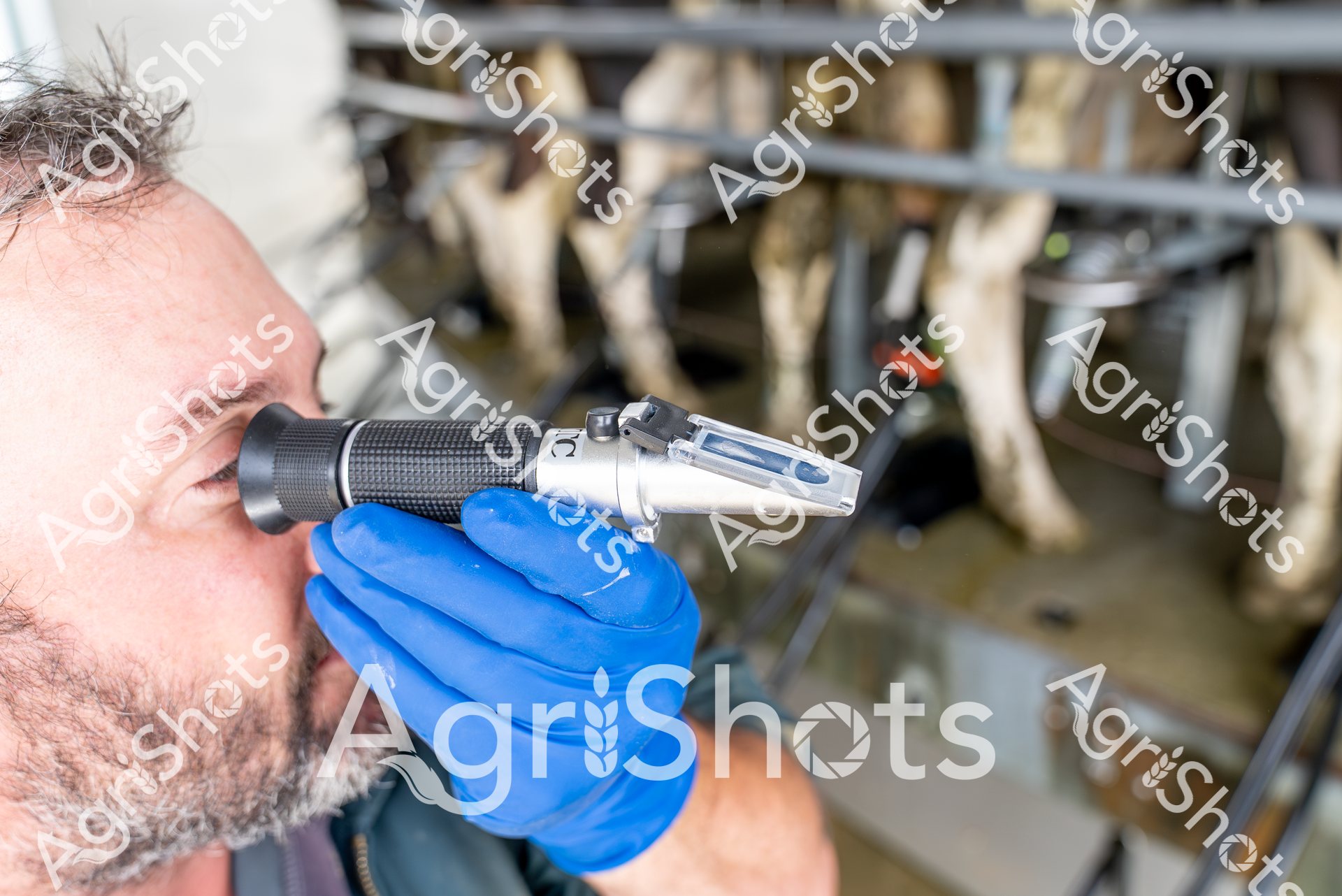
A farmer performs critical milk quality testing in a state-of-the-art rotary dairy facility, characteristic of South Canterbury's sophisticated agricultural landscape. Wearing protective blue nitrile gloves, the individual carefully uses a handheld refractometer - a precision optical instrument designed to measure milk's sugar, fat, and protein content. The device is positioned close to the farmer's eye, capturing the meticulous attention to detail required in modern dairy production. Behind the scene, multiple dairy cattle stand in the rotating milking platform, their forms slightly blurred but suggesting the continuous, systematic process of milk harvesting. The environment speaks to the technological advancement of New Zealand's agricultural sector, where scientific measurement and animal husbandry intersect with cutting-edge equipment. The muted tones of blue gloves, silver machinery, and the soft focus of the background create a sense of clinical professionalism and precision that defines contemporary agricultural practice.
 Image
Image
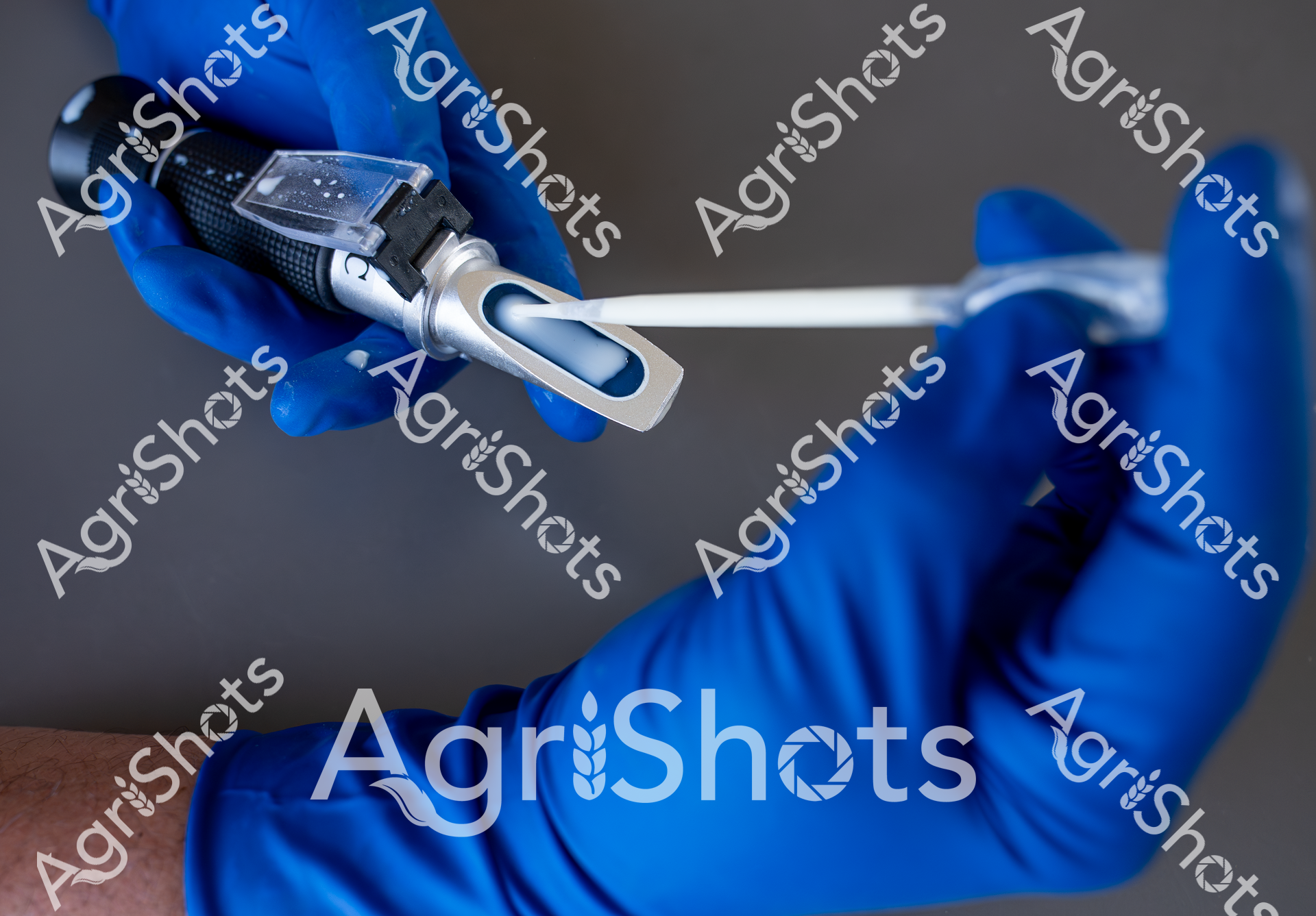
Precise clinical hands encased in deep azure nitrile gloves delicately grip a handheld refractometer - a precision optical instrument used for measuring milk quality and composition. The gleaming metallic and polymer device captures the subtle nuances of dairy testing, representing the meticulous scientific approach of modern agricultural practice. Against a neutral grey background, the blue-gloved hands demonstrate professional care and technical expertise characteristic of New Zealand's sophisticated dairy industry, particularly in the renowned South Canterbury region. Every detail suggests methodical quality control, with the refractometer positioned to capture a critical milk sample, ensuring optimal livestock management and product standards. The crisp, clean aesthetic speaks to the rigorous standards of agricultural science, where each measurement represents potential improvements in animal health, milk yield, and ultimately, economic performance. This image encapsulates the intersection of agricultural tradition and cutting-edge technological innovation.
 Image
Image
Precision and care converge in this intimate agricultural diagnostic moment, capturing the meticulous quality control of dairy production. Robust blue nitrile gloves cradle a handheld refractometer, an essential instrument for measuring milk quality and composition, likely situated in a South Canterbury dairy processing facility. The gleaming metallic and transparent surfaces of the precision optical instrument contrast sharply with the deep blue protective handwear, symbolizing the scientific rigor underlying New Zealand's world-renowned dairy industry. Every careful movement suggests the importance of sampling and testing protocols that maintain international standards of agricultural excellence. The cool, clinical grey background emphasizes the professional, technical nature of modern dairy science, where each drop of milk represents a complex ecosystem of nutritional potential. These gloved hands represent the intersection of agricultural tradition and cutting-edge technological expertise, ensuring the purity and nutritional integrity of a critical global food resource.