Results for “green shirt”
 Image
Image
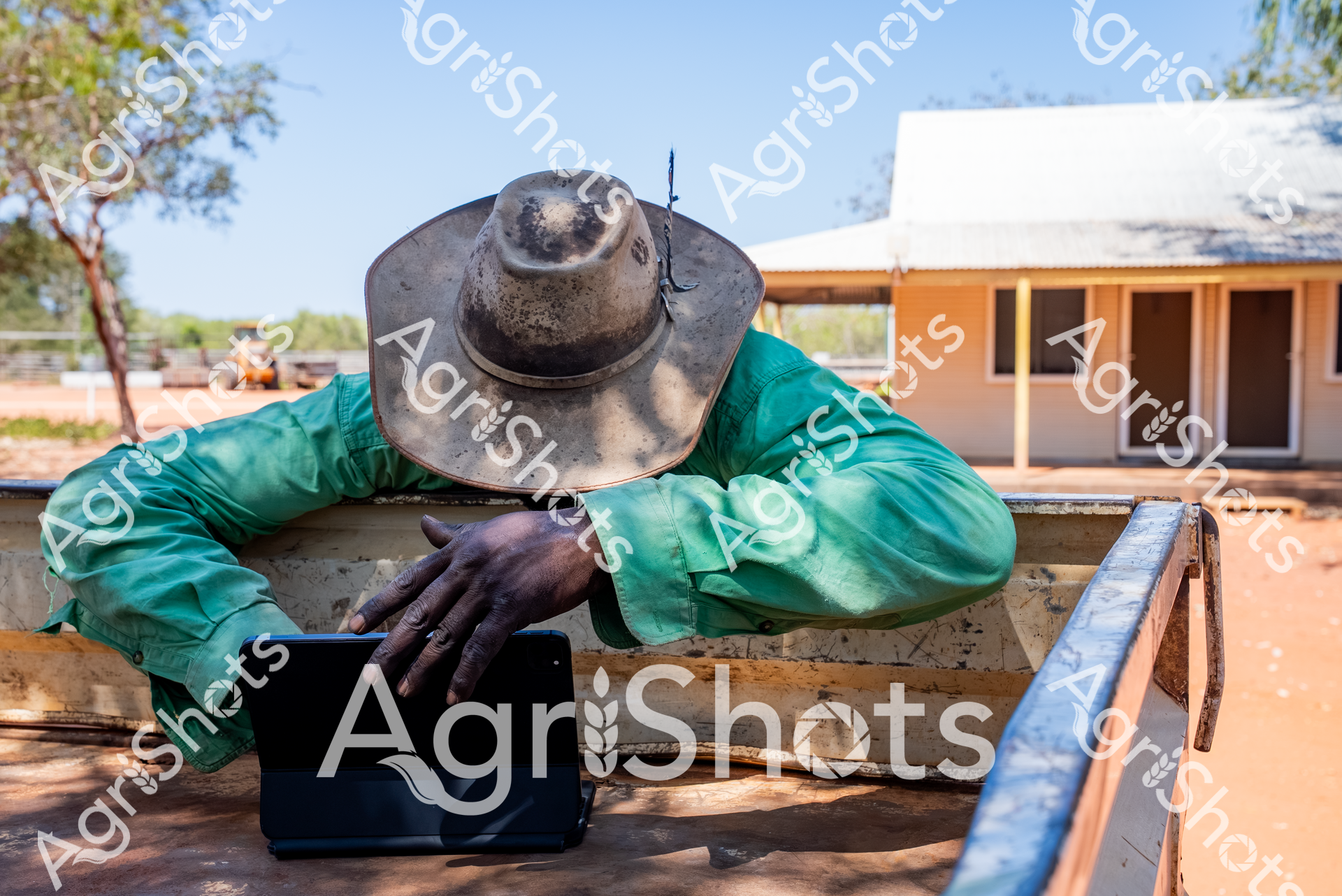
A worker in a green shirt and wide-brimmed hat leans on a vehicle at a rural station in Western Australia's Kimberley region, using an iPad to record information on a sunny spring day. The rugged landscape and outback building in the background showcase the remote working conditions typical of this area.
 Image
Image
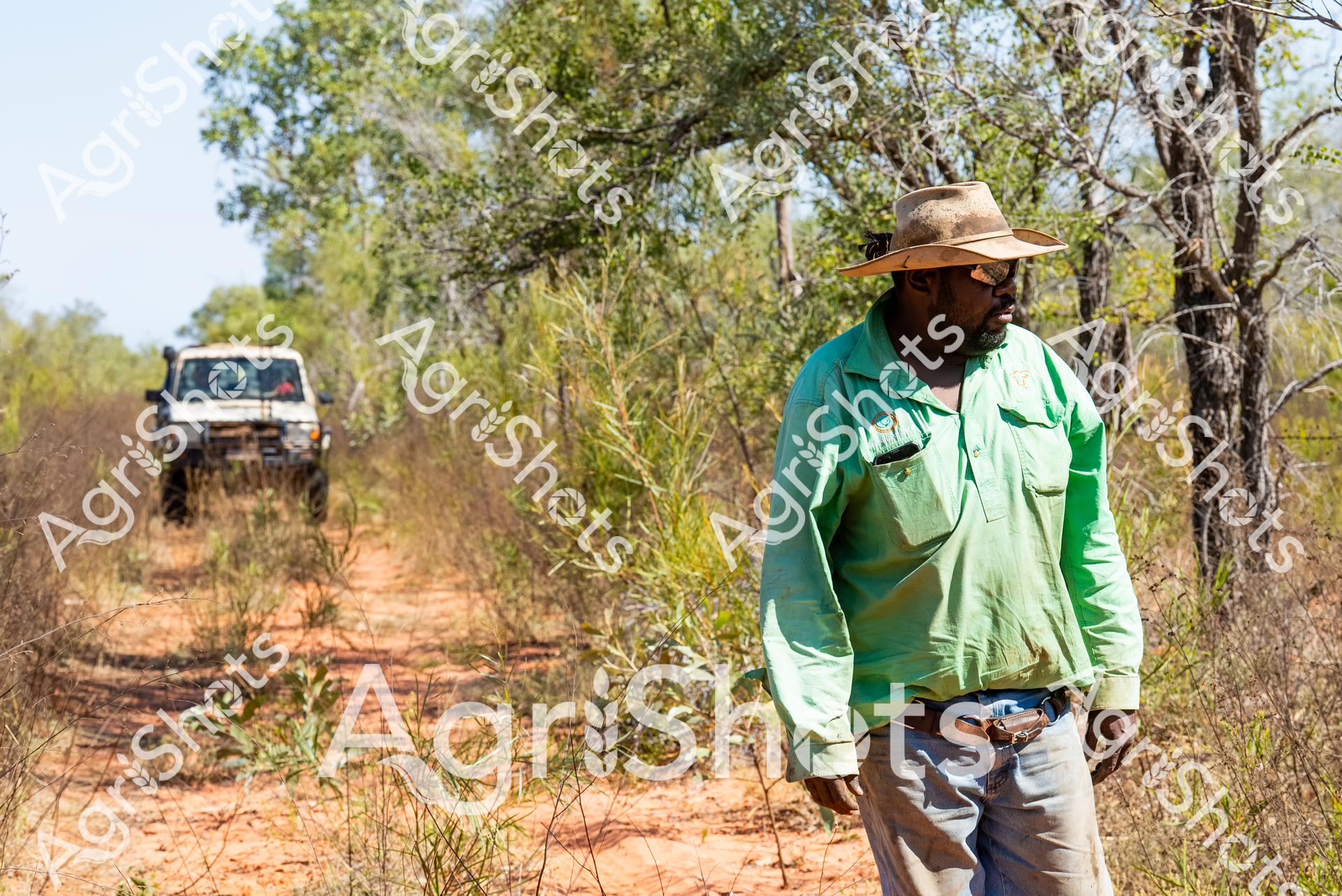
A man wearing a green shirt and wide-brimmed hat walks along a dusty rural track in the Kimberley region of Western Australia, with a four-wheel drive vehicle visible in the background among sparse trees and scrubland. The scene captures the rugged landscape of a pastoral station during springtime, highlighting the remote and challenging environment of northwest Australia.
 Image
Image
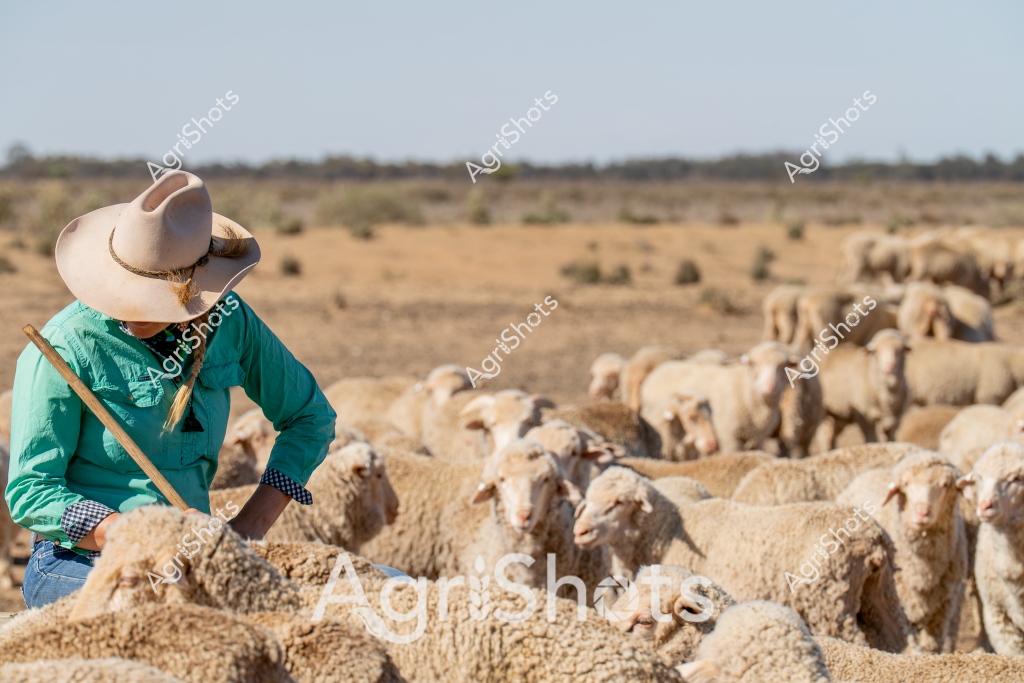
A woman sheep farmer stands among a large flock of merino sheep in an arid Australian landscape, wearing a wide-brimmed sun hat and a bright green jacket. The woolly, cream-colored sheep are densely clustered across a dry, golden-brown paddock with sparse vegetation and distant scrubland visible on the horizon. Her stance suggests careful observation and management, with a long herding stick resting casually across her body as she surveys the flock. The landscape epitomizes the challenging conditions of Australian pastoral farming, where livestock management requires skill, resilience, and intimate knowledge of the terrain. The soft beige of her hat contrasts beautifully with her emerald green jacket, creating a striking visual against the neutral tones of the surrounding environment. This image captures the essence of rural Australian sheep farming - a solitary figure amidst a sea of livestock, representing the hard work and dedication required to maintain agricultural productivity in harsh, dry conditions.
 Image
Image
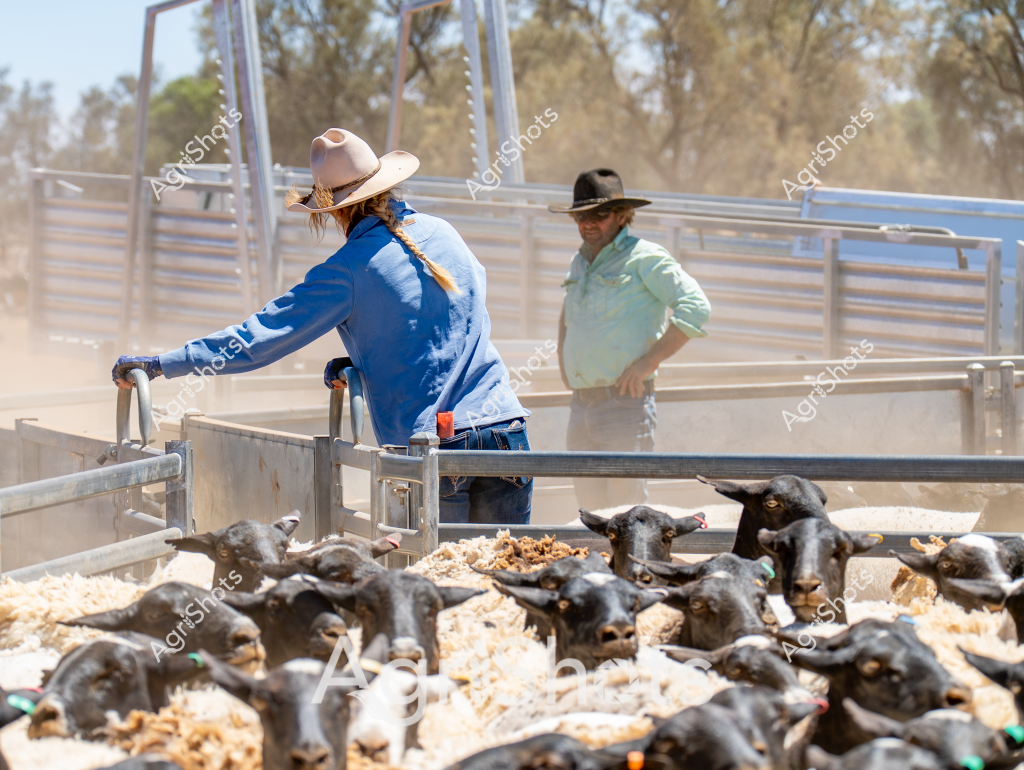
Two workers manage a group of black goats in a dusty livestock yard, with metal cattle panels and handling facilities surrounding them. A woman in a blue jacket and wide-brimmed hat operates the gate control, while a man in a light green shirt stands nearby observing the livestock. Multiple young black goats are clustered on straw bedding within the metal yard, some with colored ear tags indicating they are part of a managed herd. The scene is dry and sun-drenched, with trees and yard infrastructure visible in the background, suggesting this is a typical agricultural livestock management setting in rural Australia. Dust hangs in the air, highlighting the movement and activity of the goat handling process. The workers' attire - wide-brimmed hats, long-sleeved shirts, and practical work clothing - indicates professional agricultural practice and protection from the harsh Australian sun.
 Image
Image
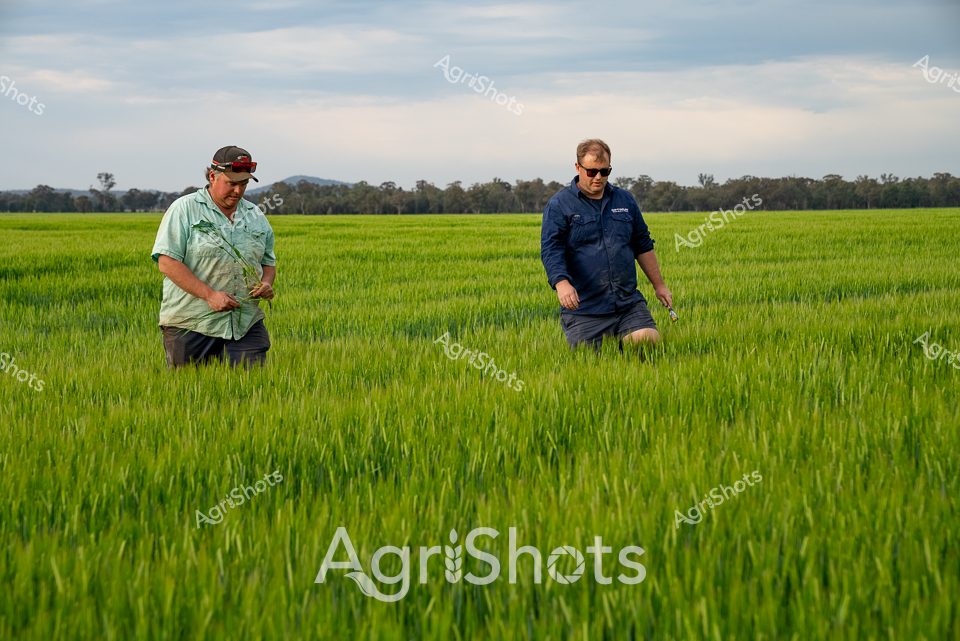
Verdant wheat stretches across the horizon, its vibrant green blades swaying gently under an overcast spring sky in rural New South Wales. Two agricultural professionals traverse the lush field, carefully assessing the crop's health and development. One wears a light mint green shirt and cap, while the other is dressed in navy blue workwear, both moving deliberately through the dense wheat rows. Their measured steps and focused demeanor suggest an expert evaluation of the growing season's potential, checking plant density, moisture, and early signs of yield. Distant tree lines and soft mountains frame the expansive agricultural landscape, highlighting the sweeping agricultural vista typical of Australia's agricultural heartland. The rich, uniform green of the wheat field represents promise and potential, a testament to careful cultivation and the critical work of agricultural specialists monitoring crop progression.
 Image
Image
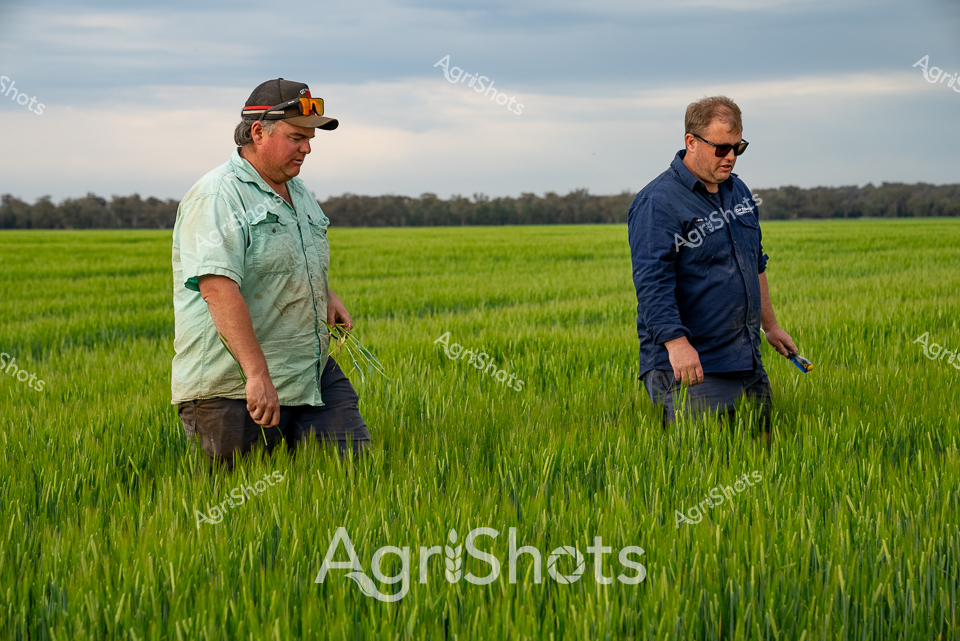
In the lush green expanses of a wheat field, two agricultural professionals inspect the young crop with focused determination. Dressed in contrasting work attire - one in a mint green shirt and cap, the other in a navy blue jacket and sunglasses - they move deliberately through the verdant wheat stalks. The men appear to be conducting a field assessment, carefully examining the crop's growth and health during the vibrant spring season. Overcast skies provide a soft, diffused light that highlights the rich emerald hues of the wheat, creating a sense of potential and promise for the season's harvest. Their measured steps and intent postures suggest years of agricultural expertise, walking the rows with the practiced eye of seasoned farmers or agricultural researchers. The expansive field stretches to a distant tree line, embodying the vast agricultural landscapes of New South Wales, where careful crop management and expert knowledge converge to nurture Australia's critical agricultural production.
 Image
Image
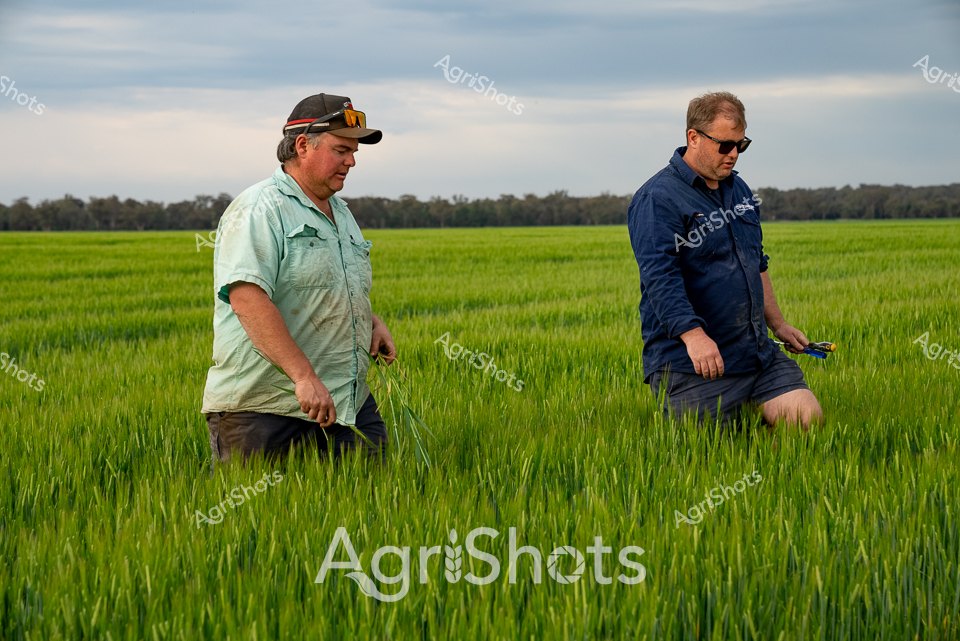
Verdant wheat fields stretch beneath a soft, overcast sky as two agricultural professionals inspect a promising spring crop. Dressed in contrasting mint green and navy blue work attire, the men move deliberately through the lush green wheat, their postures suggesting careful assessment and deep agricultural expertise. The figure in the light green shirt and cap stands with a measured stance, while his companion in dark clothing kneels, examining the young wheat plants with concentrated intent. Soft light diffuses across the landscape, highlighting the vibrant emerald hues of the wheat and creating a sense of quiet anticipation for the growing season ahead. Tree lines blur softly in the distant background, framing the expansive agricultural landscape of what appears to be a classic New South Wales wheat-growing region. The scene captures the nuanced work of modern agricultural professionals - part science, part intuition - as they evaluate the potential of a crop that represents months of careful planning and cultivation.
 Image
Image
A man in a green shirt and wide-brimmed hat sits in a vehicle, speaking into a two-way radio. Wearing sunglasses and focusing intently, he appears to be a station hand working in the Kimberley region of Western Australia during springtime. The image captures the rugged essence of outback station life and communication.
 Image
Image
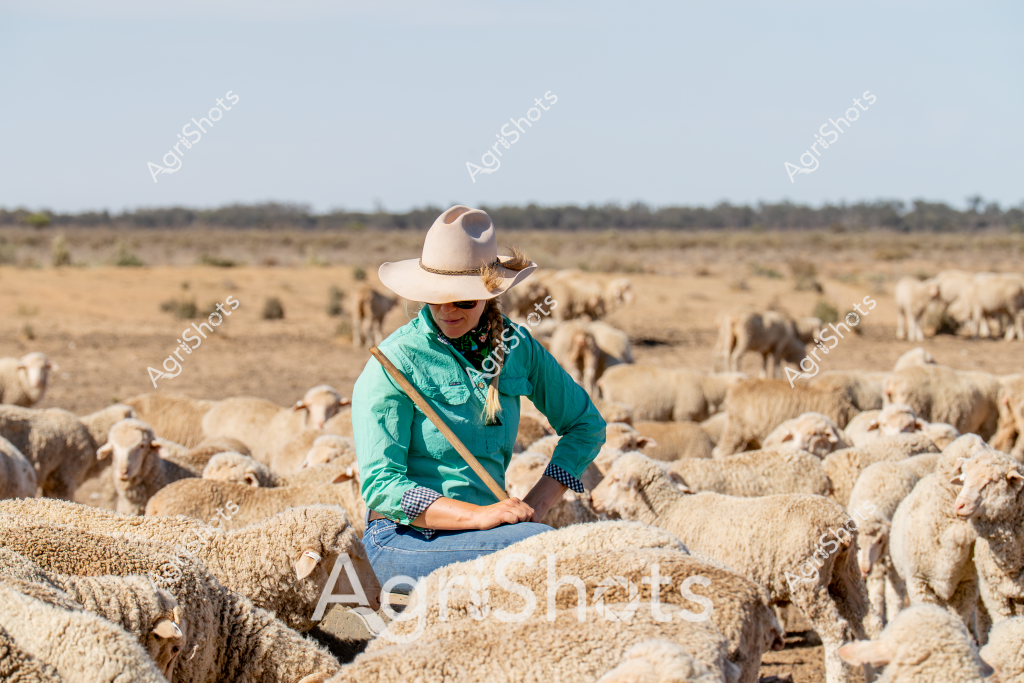
A woman shepherd sits among a large flock of Merino sheep in a dry, expansive Australian pastoral landscape. Wearing a wide-brimmed sun hat and a vibrant turquoise work shirt, she rests on a rocky outcrop surrounded by woolly white sheep that stretch across the golden-brown grasslands. The sparse, arid environment typical of Australian sheep country extends to the distant tree line, with a muted blue sky overhead suggesting the harsh midday heat. Her green shirt provides a striking contrast against the neutral tones of the landscape, while a wooden staff rests beside her, indicating her traditional shepherding role. The dense flock of Merino sheep, prized for their fine wool, demonstrates the resilience of both the livestock and the livestock manager in this challenging rural environment. The scene captures the essence of Australian sheep farming - a solitary figure managing a substantial flock in a vast, unforgiving landscape that requires skill, patience, and deep connection to the land and animals.
 Image
Image
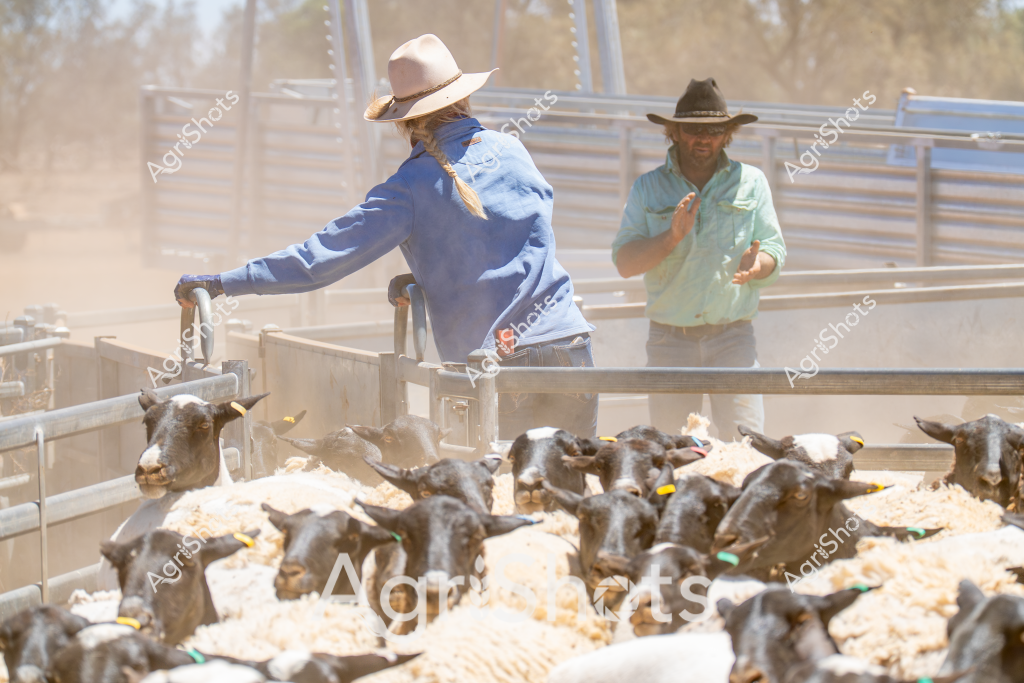
Two people manage a group of goats in a dusty livestock yard, with metal cattle panels creating a confined processing area. A woman wearing a blue jacket and wide-brimmed hat stands at one end of the pen, operating gate controls, while a man in a light green shirt stands nearby, appearing to assist with livestock movement. Multiple dark-colored goats are densely packed in the pen, their heads and bodies visible among wood shavings or straw bedding. Dust hangs in the air, suggesting active movement and handling of the animals, indicating this is likely a routine livestock management activity on an Australian farm or station. The metal yards provide a structured, professional environment for animal handling, with yellow ear tags visible on some of the goats, suggesting they are being sorted, counted, or prepared for veterinary treatment or sale.
 Image
Image
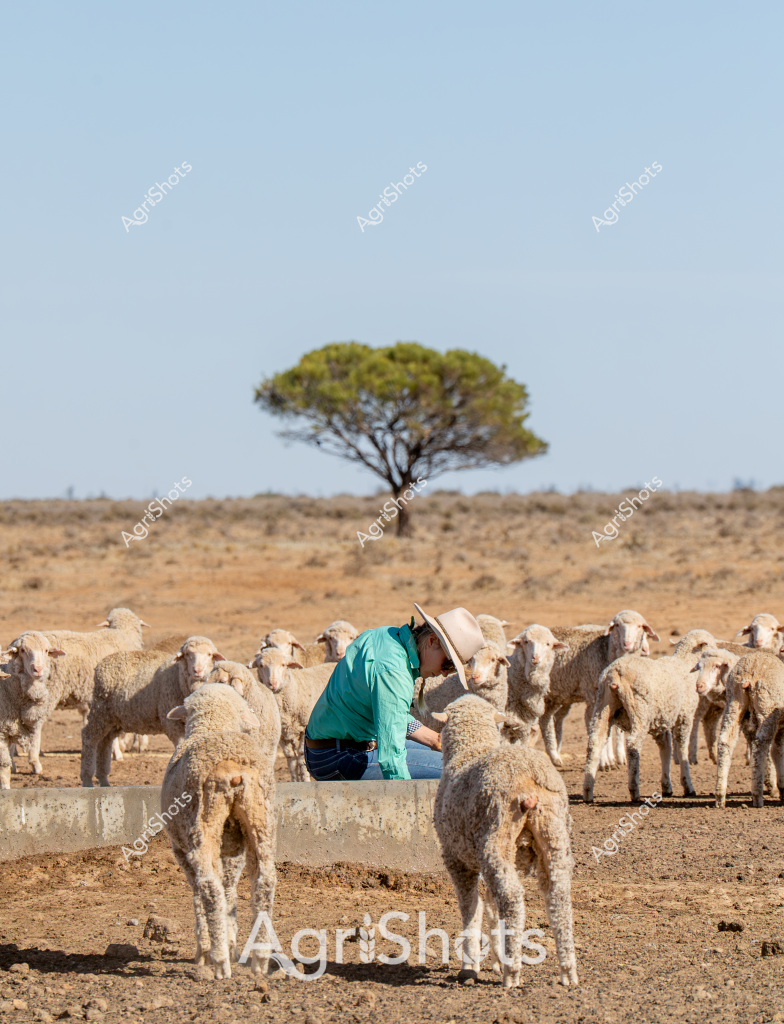
A dedicated woman stockman tends to a flock of Merino sheep in a sparse, arid landscape. Wearing a teal green shirt and a wide-brimmed sun hat, she carefully works among the woolly white sheep gathered around a concrete trough. The barren paddock stretches out to the horizon, with a single, distinctive acacia tree standing solitary against the pale blue sky, symbolizing the resilience of Australian pastoral life. The sheep, with their dense, cream-colored fleece, cluster tightly around the water source, highlighting the critical importance of water management in this dry environment. The ground is hard-packed and dusty, indicating challenging drought conditions typical of many Australian rural regions. The woman's posture and careful attention suggest years of experience in managing livestock in harsh agricultural settings. This image captures the essence of Australian sheep farming - the intimate relationship between the stockman and the flock, the stark beauty of the landscape, and the ongoing challenge of sustaining agriculture in a challenging environment. The scene speaks to the skill, dedication, and adaptability required in Australian pastoral agriculture.
 Image
Image
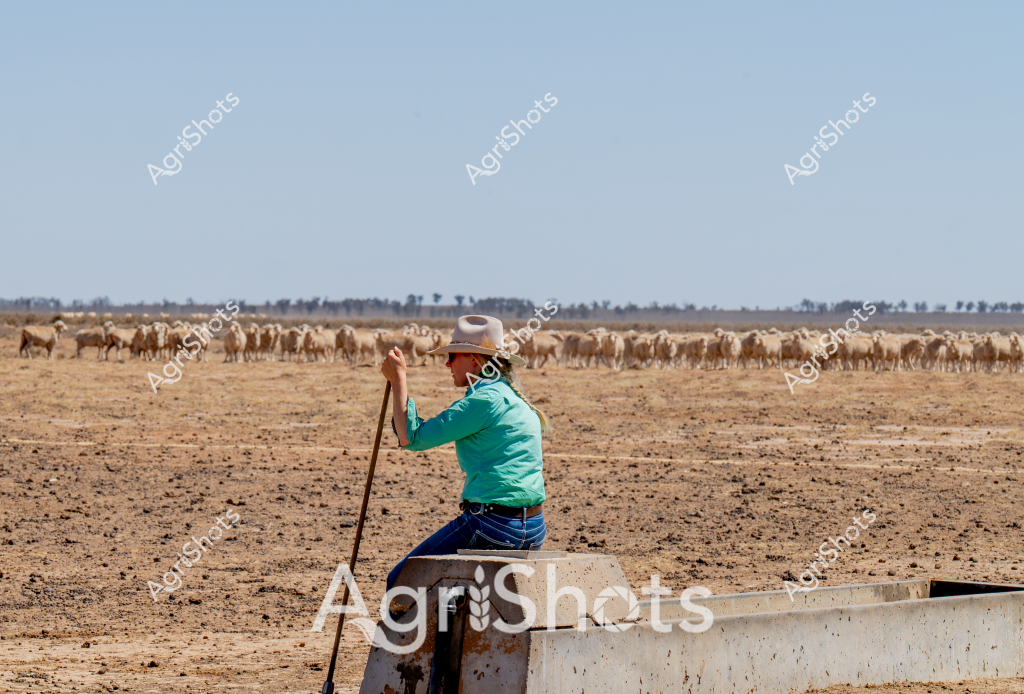
A woman stockman sits atop a concrete water trough, surveying a large herd of light-colored cattle grazing across a dry, dusty paddock under a pale blue sky. Wearing a green shirt, blue jeans, and a wide-brimmed hat, she leans on a long wooden stock stick, embodying the resilient spirit of Australian rural life. The landscape appears parched and sun-baked, with sparse vegetation and a distant line of trees marking the horizon, suggesting challenging drought conditions typical of inland Australia. The herd, likely beef cattle, spreads out across the expansive golden-brown landscape, their pale bodies creating a textured pattern against the arid ground. The scene captures the essence of pastoral management - a lone stockwoman monitoring the livestock in a harsh, unforgiving environment that demands constant vigilance and skill. Her posture and positioning reveal an intimate connection with the land and the animals, representing the enduring tradition of Australian agriculture. This image powerfully illustrates the challenging conditions faced by farmers and livestock managers in rural Australia, where survival depends on careful stewardship and adaptability in an often unforgiving landscape.
 Image
Image
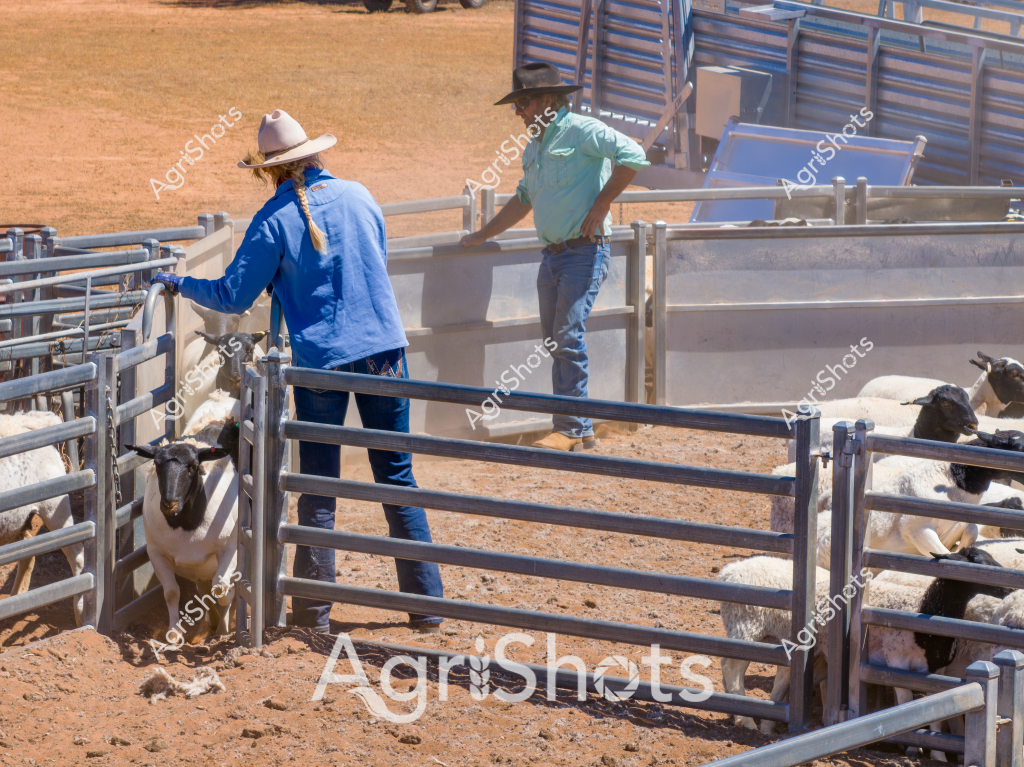
Two men are working in a livestock yard managing sheep, with metal stock handling gates and pens in the background. A man in a blue jacket and white hat stands at one section of the metal fencing, while another man in a light green shirt and wide-brimmed hat is positioned at another section. Several sheep are visible within the enclosed yard, which has a dry, sandy ground surface typical of arid Australian agricultural environments. The metal livestock handling infrastructure appears robust and well-maintained, with multiple interconnected gates and panels designed to efficiently move and manage the sheep. The scene captures the practical, no-nonsense approach of Australian livestock management, with experienced stockmen carefully controlling the movement and positioning of their animals in a structured yard setting.
 Image
Image
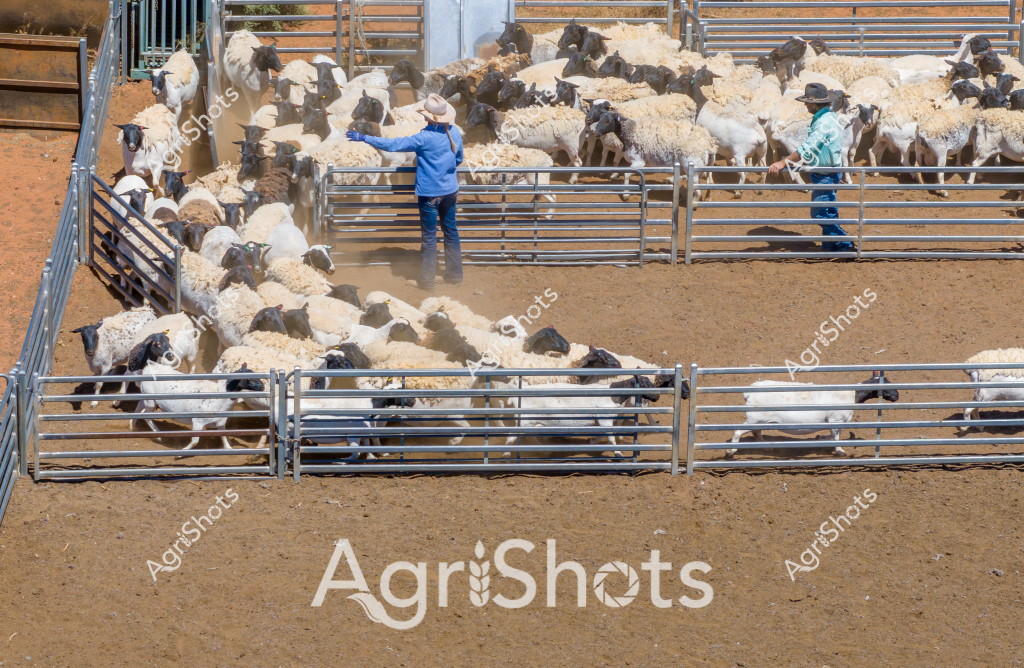
Two workers manage a large flock of sheep in a dusty livestock yard, carefully moving and sorting the animals through metal cattle gates and pens. A man in a blue long-sleeved shirt stands in the center of the enclosure, strategically positioning himself to guide the sheep's movement, while another worker in a light green shirt assists from a different section of the yard. The sheep appear to be a mixed flock of white and dark-colored animals, densely packed and creating clouds of dust as they shift between the metal rail compartments. The ground is a rich reddish-brown earth typical of Australian agricultural landscapes, likely indicating an inland or outback location. Metal livestock handling gates create a complex system of pathways and sorting areas, demonstrating the sophisticated infrastructure used in sheep management. The overhead view reveals the precise choreography of animal handling, with the workers using careful positioning and movement to control the flock's direction. This scene captures the essential skill and physical labor of livestock management, showcasing the intricate process of moving and sorting sheep in a professional agricultural setting. The dust, metal infrastructure, and coordinated human movements highlight the challenging and precise nature of Australian sheep farming.
 Image
Image
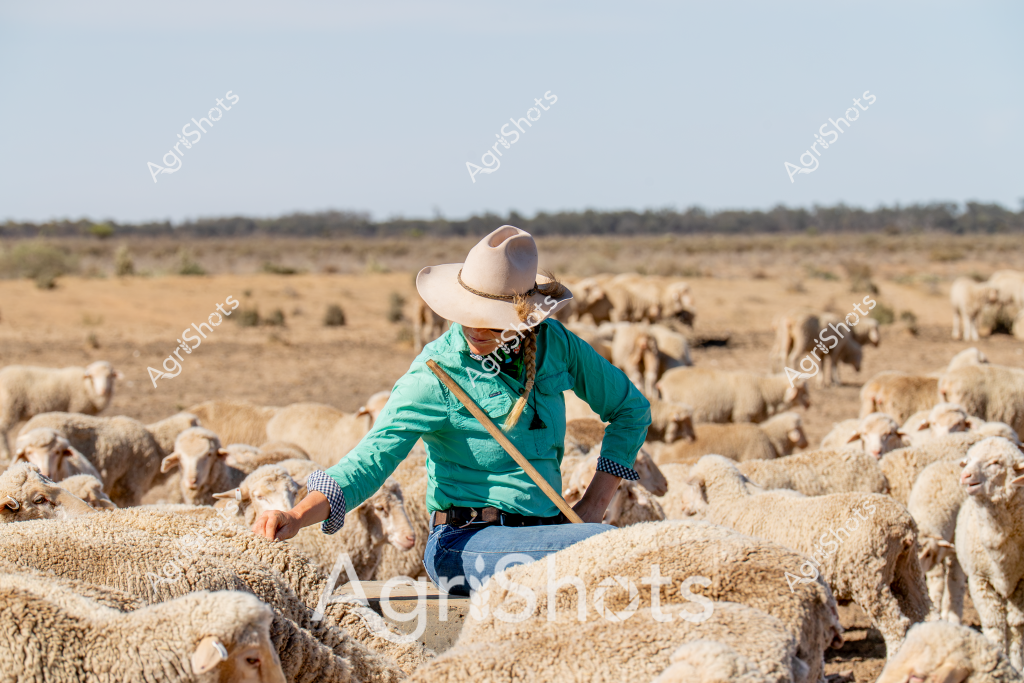
A woman livestock manager wearing a wide-brimmed hat and a bright turquoise shirt carefully moves through a dense flock of merino sheep in an expansive, dry Australian pastoral landscape. Her green shirt and denim jeans contrast with the golden-brown grasslands stretching to a distant treeline, while she uses a long wooden staff to guide and check the woolly flock. The sheep, with their thick, creamy-white fleeces, are tightly clustered across the arid paddock, representing a typical scene of sheep management in rural Australia's challenging dry interior. Her positioning among the animals suggests careful inspection, perhaps checking their health or preparing them for mustering or shearing. The wide-brimmed hat shields her from the intense outback sun, highlighting the practical clothing and equipment essential for livestock management in harsh agricultural environments. The scene captures the resilience of Australian agricultural workers and the livestock, demonstrating the close relationship between farmer and flock in managing stock across vast, challenging terrain. The muted earth tones of the landscape and the dense cluster of merino sheep create a compelling visual narrative of rural Australian farming practices.
 ▶ Video
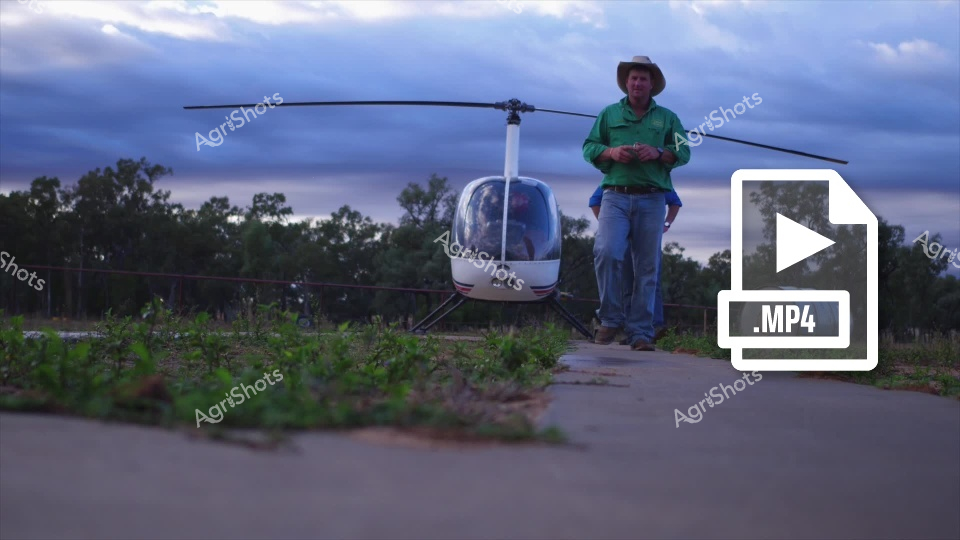
At dusk on a rural property, a man in a green shirt and cowboy hat stands beside a small white helicopter on a dirt path, with trees and vegetation in the background under moody blue-gray clouds. The scene suggests agricultural aviation work, likely for farm surveying, crop monitoring, or cattle mustering in the Australian outback.
 ▶ Video
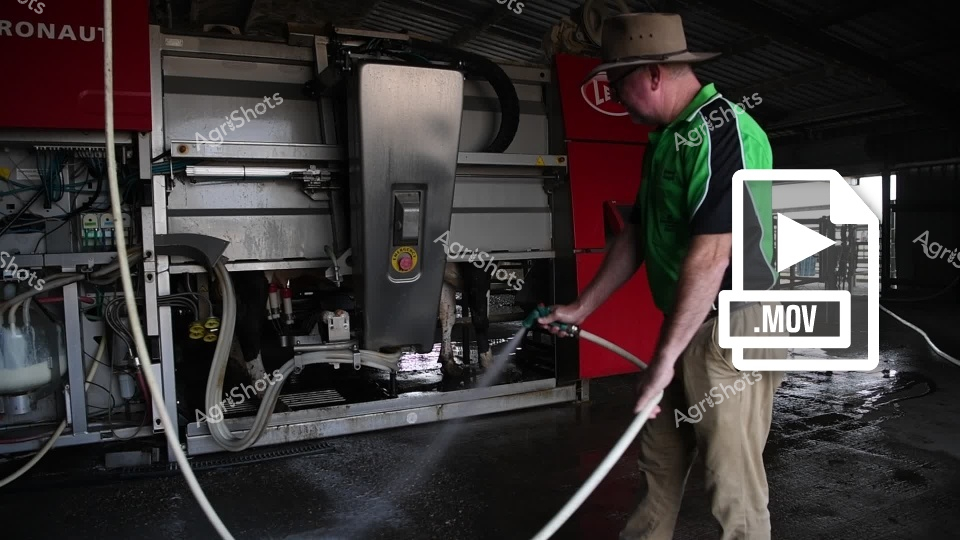
A man farm worker in a green shirt and hat operates a high-pressure hose to clean modern robotic milking equipment in a Queensland dairy shed. The advanced automated milking system features stainless steel components and computerized controls, representing cutting-edge dairy technology. Water streams across the concrete floor as he maintains the sophisticated machinery, highlighting the importance of hygiene in modern robotic dairy operations.
 ▶ Video
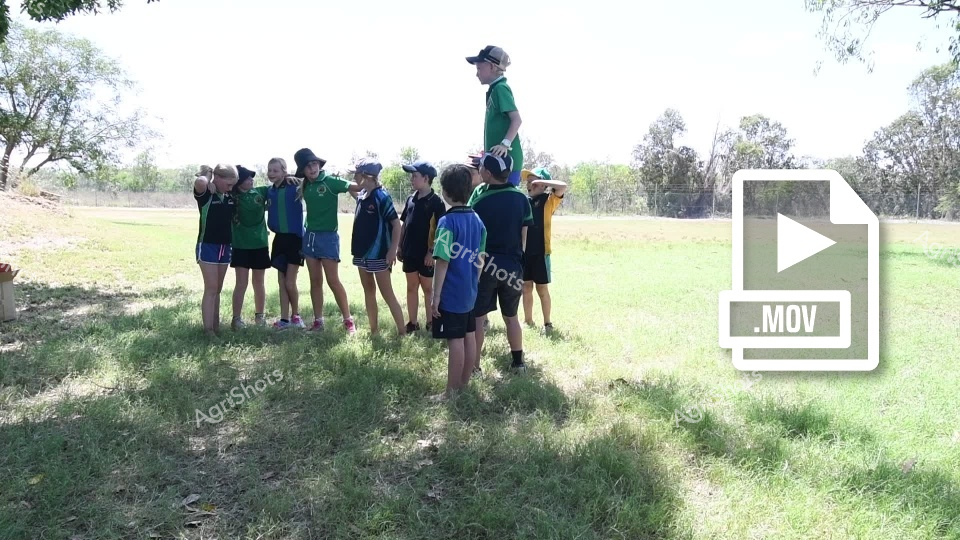
A group of young students in green and blue sports uniforms stand together on a grassy field under trees on a sunny day. One student in a green shirt stands slightly elevated, appearing to be leading or instructing the group. The children seem to be participating in an outdoor team activity or sports practice, lined up attentively in a semi-circle formation.
 ▶ Video
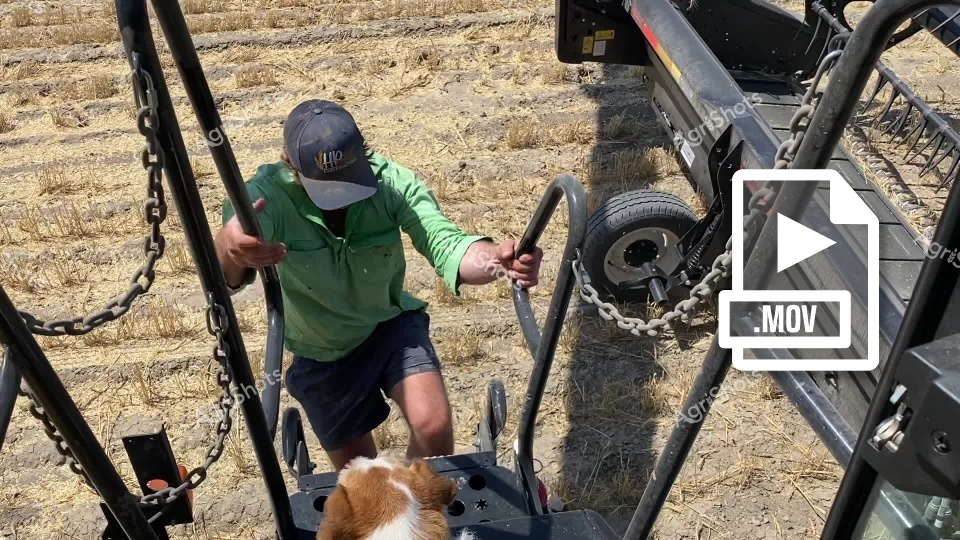
A man in a green shirt and cap operates a combine harvester during wheat harvest in New South Wales, with a small dog nearby on the machinery. The agricultural scene captures the intense work of grain harvesting, showcasing modern farming equipment in a stubble-covered field. The worker appears focused on managing the header's complex mechanisms during the crucial crop collection process.
 Image
Image
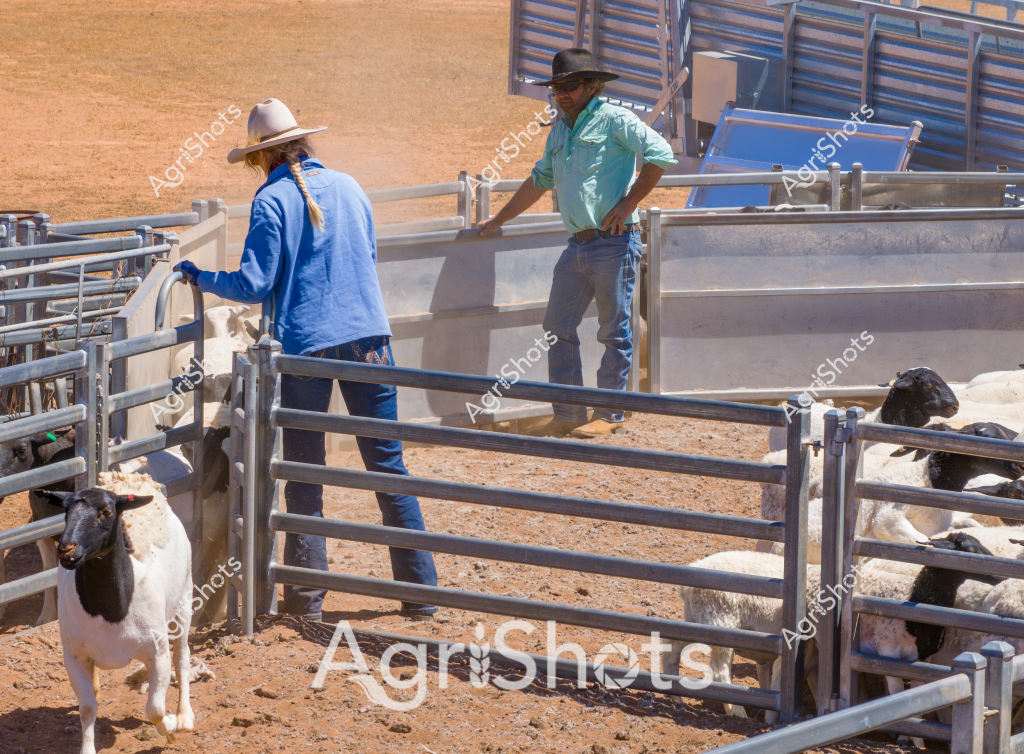
A woman in a bright blue long-sleeved shirt and a light-colored wide-brimmed hat stands alongside a man in a mint green shirt and dark hat within a livestock handling facility. They are working with a small group of sheep in metal livestock yards, with the ground being a sandy, dusty terrain typical of Australian agricultural settings. Several sheep, predominantly white with some dark markings, are contained within the metal gate pens, suggesting this is likely a sheep station or farm in an arid or semi-arid region. The metal yard infrastructure is modern and sturdy, with multiple gate sections and walkways designed for efficient animal movement and management. The scene captures the collaborative nature of livestock handling, with the two workers positioned at different points in the yard, suggesting they are coordinating the sheep's movement or preparation for processing, shearing, or veterinary procedures. The harsh, dry landscape and professional livestock management equipment highlight the resilience and technical expertise required in Australian sheep farming.
 ▶ Video
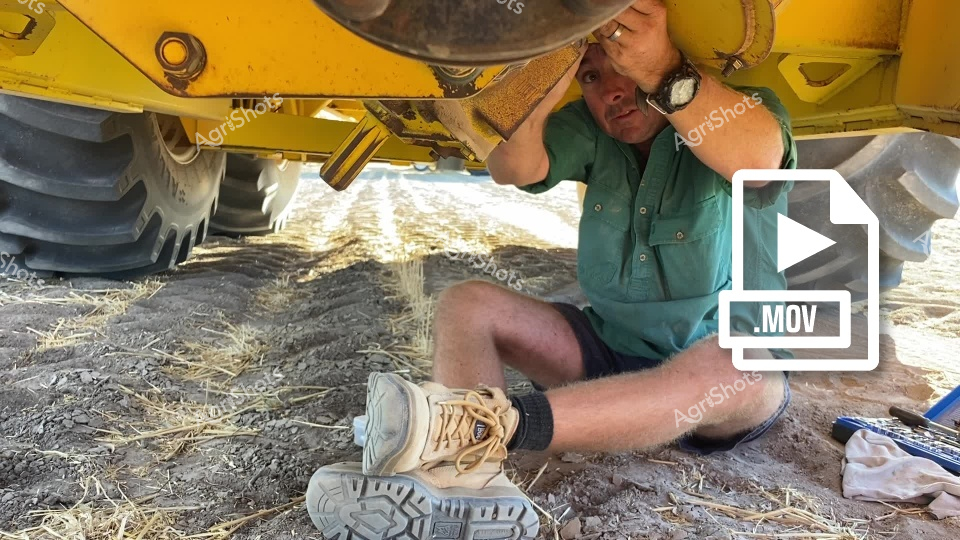
A man in a green shirt works underneath a large yellow agricultural machine, likely a harvester, during wheat harvesting season. Sitting on dusty ground with straw and stubble, he appears to be performing maintenance or repair work on the equipment in a rural field setting. The close-up view captures the challenging and hands-on nature of agricultural work during harvest time.
 Image
Image
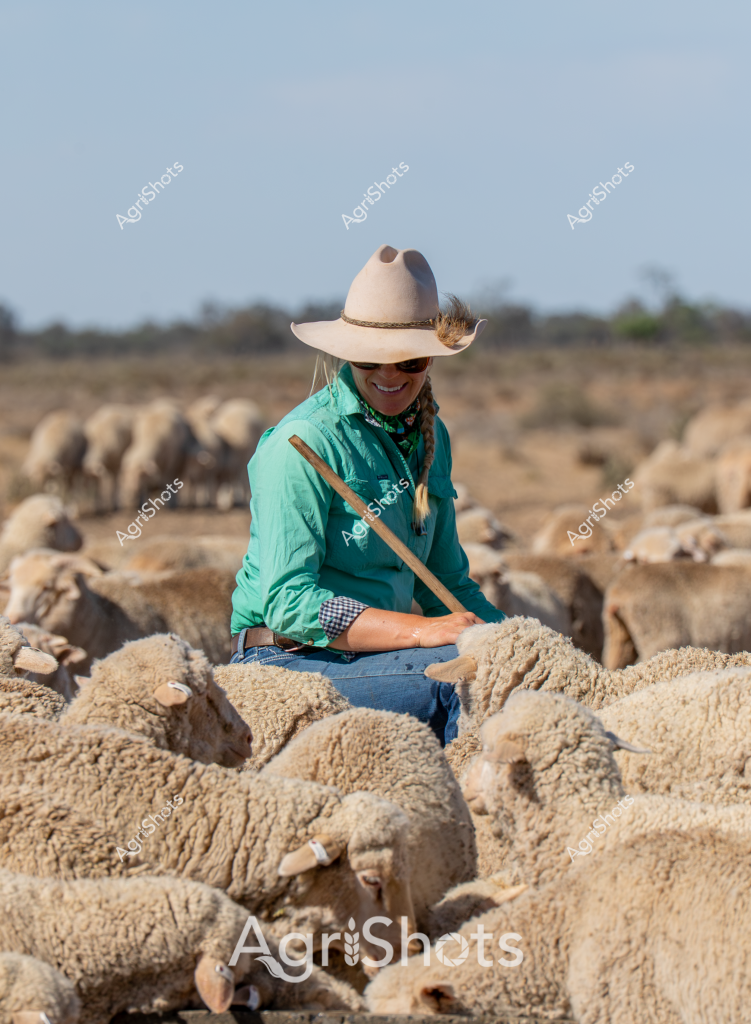
A woman sheep farmer sits amid a large flock of woolly Merino sheep in an arid Australian pastoral landscape. Wearing a classic wide-brimmed cream cowboy hat and a bright turquoise long-sleeved shirt, she appears relaxed yet focused, perched atop the dense mass of sheep. Her green shirt with a subtle print and blue jeans blend with the earthy, muted tones of the surrounding dry grasslands and distant scrubby vegetation. A wooden staff rests across her lap, suggesting her role in guiding and managing the flock. The sheep, with their thick, uniform cream-colored fleece, are tightly clustered, creating a textural landscape of woolly bodies that stretches across the foreground and background. The clear blue sky and open terrain evoke the quintessential Australian rural setting, highlighting the connection between the farmer and the livestock in this expansive, challenging environment.
 ▶ Video
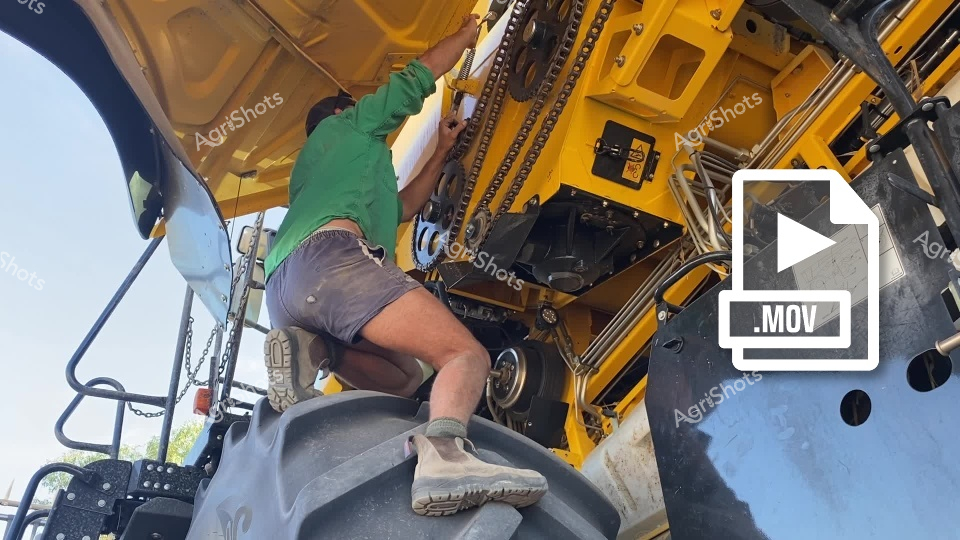
A farm worker in a green shirt performs maintenance on a New Holland harvester header during wheat harvest operations in New South Wales. The worker is positioned within the machinery's yellow framework, accessing internal components of the header comb system. The scene captures the hands-on technical work required to keep harvesting equipment operational during the critical grain harvest period. This maintenance activity demonstrates the essential behind-the-scenes work that ensures efficient wheat cropping operations across NSW farming properties.
 Image
Image
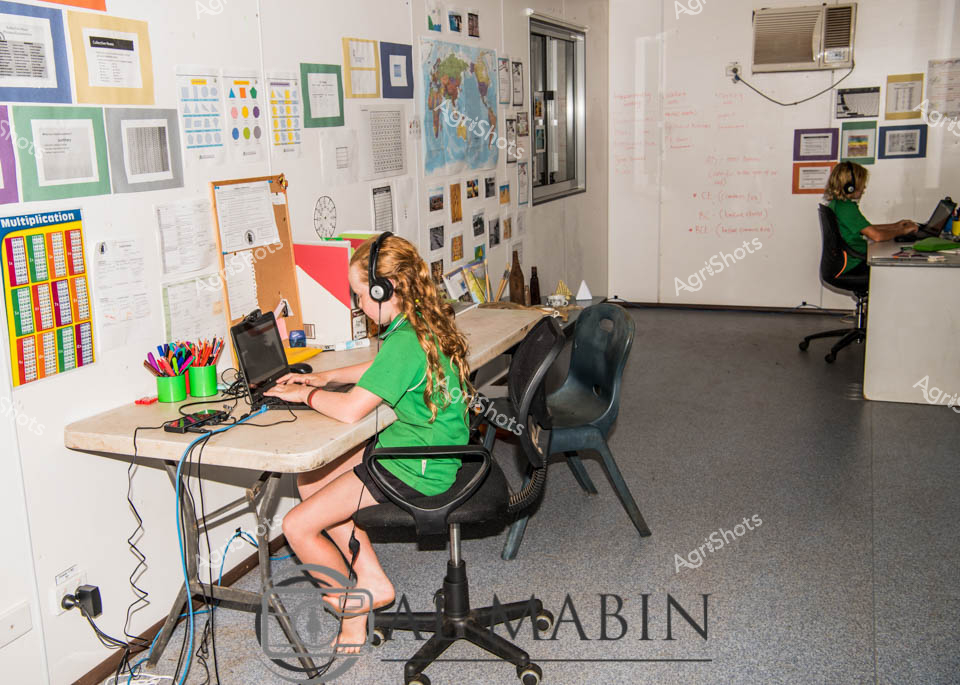
A student in a vibrant green shirt sits attentively at a workstation, wearing headphones and working on a laptop in a learning space richly decorated with educational posters, multiplication charts, and a world map. The classroom environment appears to be a School of the Air setup, typical of remote Australian educational programs that connect students across vast distances through technology. Colorful pencil containers, computer equipment, and an array of learning materials suggest an interactive and engaging educational approach designed to support rural and remote learners. The white walls are covered in a dynamic collage of learning resources, creating a stimulating backdrop for digital education. Another student can be seen in the background, similarly equipped with headphones and technology, reinforcing the collaborative and connected nature of distance learning in the Northern Territory. The scene captures the innovative spirit of Australian educational strategies that bridge geographical isolation through digital connectivity.