Results for “dusty ground”
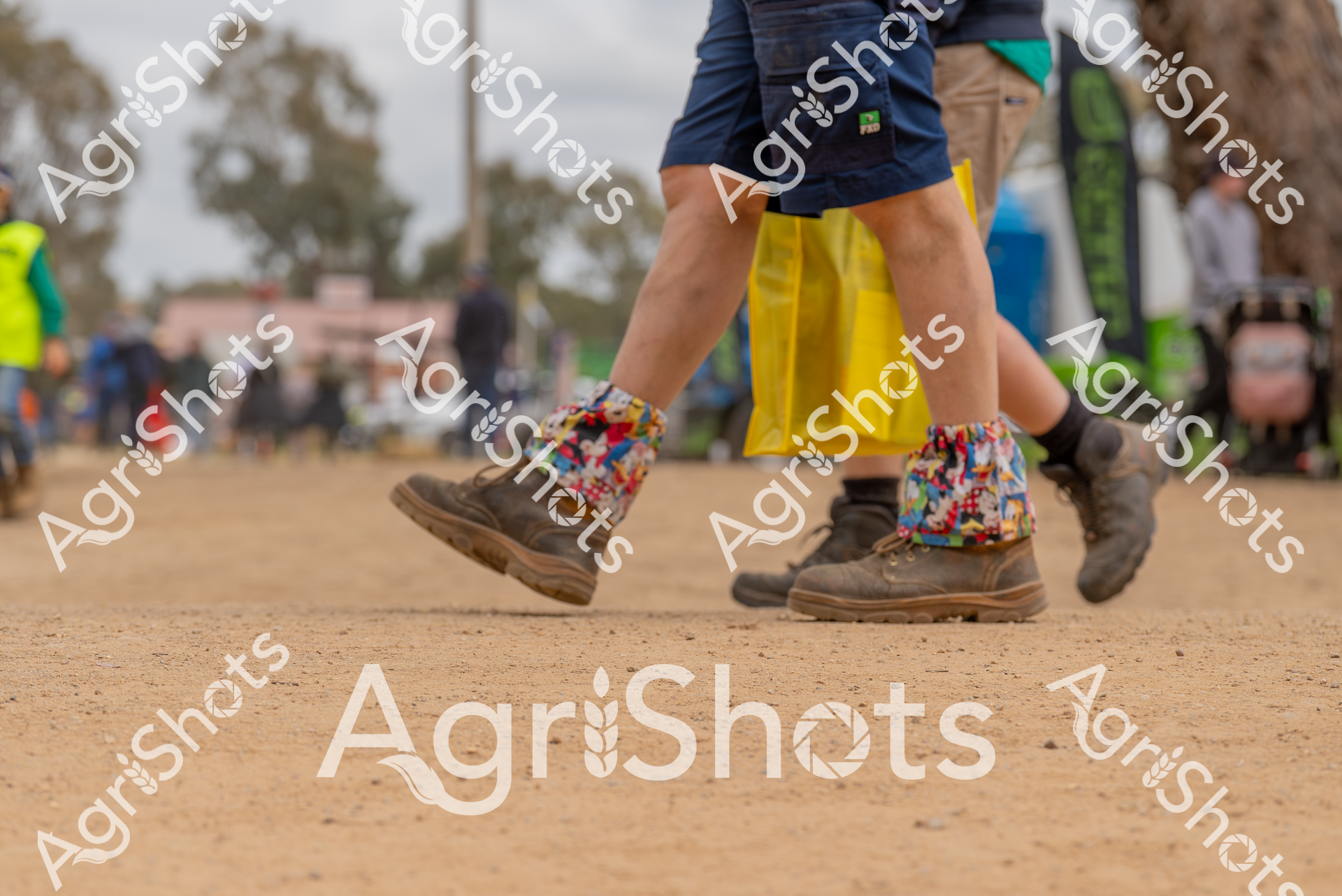
Sturdy work boots and colorful boot covers stand out against a dusty field background at an agricultural event. The image captures the lower legs of someone walking, highlighting the practical footwear typical of farming and rural agricultural shows in New South Wales. Image

Sturdy work boots and colorful boot covers stand out against a dusty field background at an agricultural event. The image captures the lower legs of someone walking, highlighting the practical footwear typical of farming and rural agricultural shows in New South Wales.

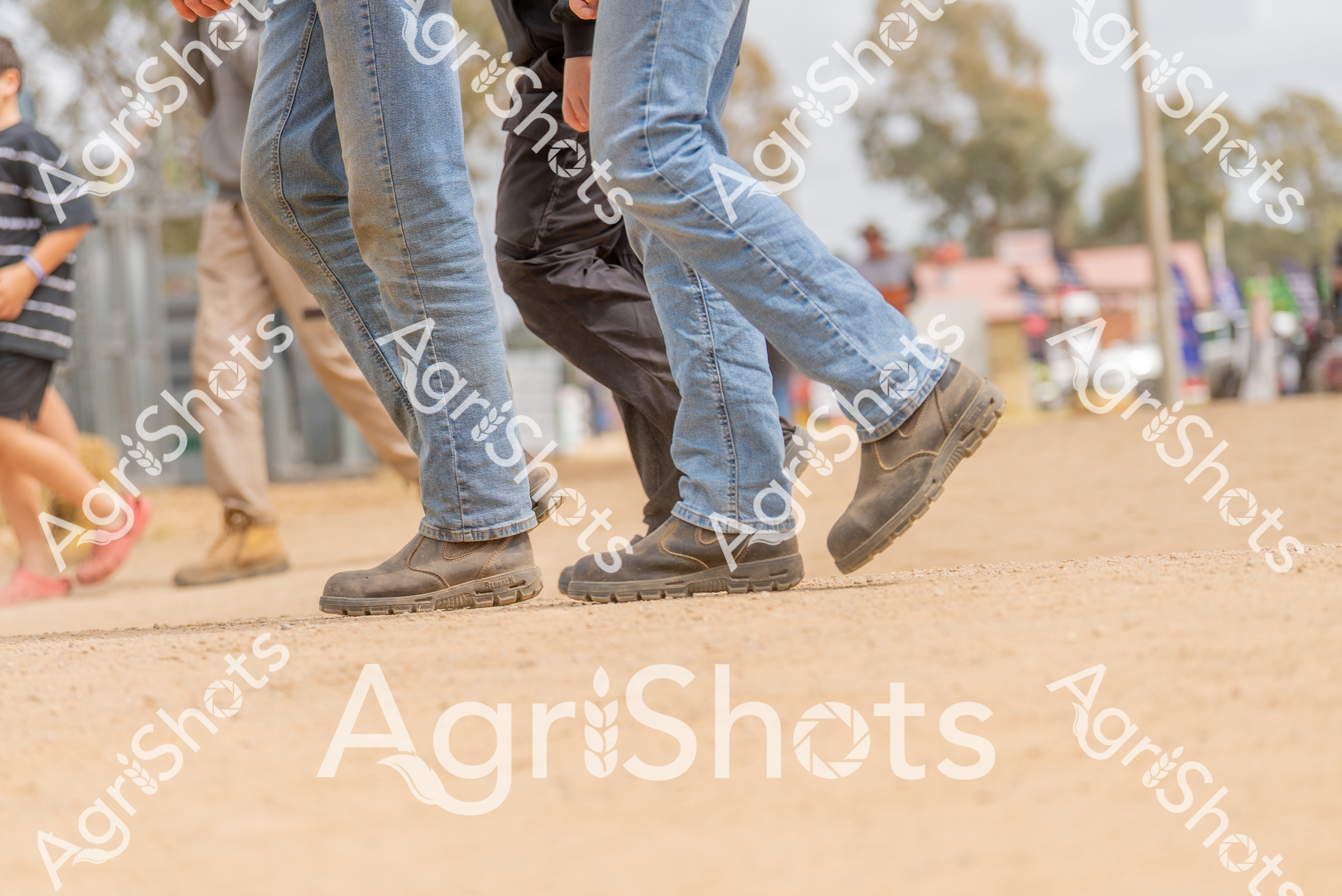
At the Henty Field Days in New South Wales, two people stand on dusty ground wearing blue denim jeans and rugged work boots. The close-up image captures the legs and footwear typical of agricultural events in the Riverina region during springtime, showcasing the practical attire of farmers and agricultural professionals. Image

At the Henty Field Days in New South Wales, two people stand on dusty ground wearing blue denim jeans and rugged work boots. The close-up image captures the legs and footwear typical of agricultural events in the Riverina region during springtime, showcasing the practical attire of farmers and agricultural professionals.
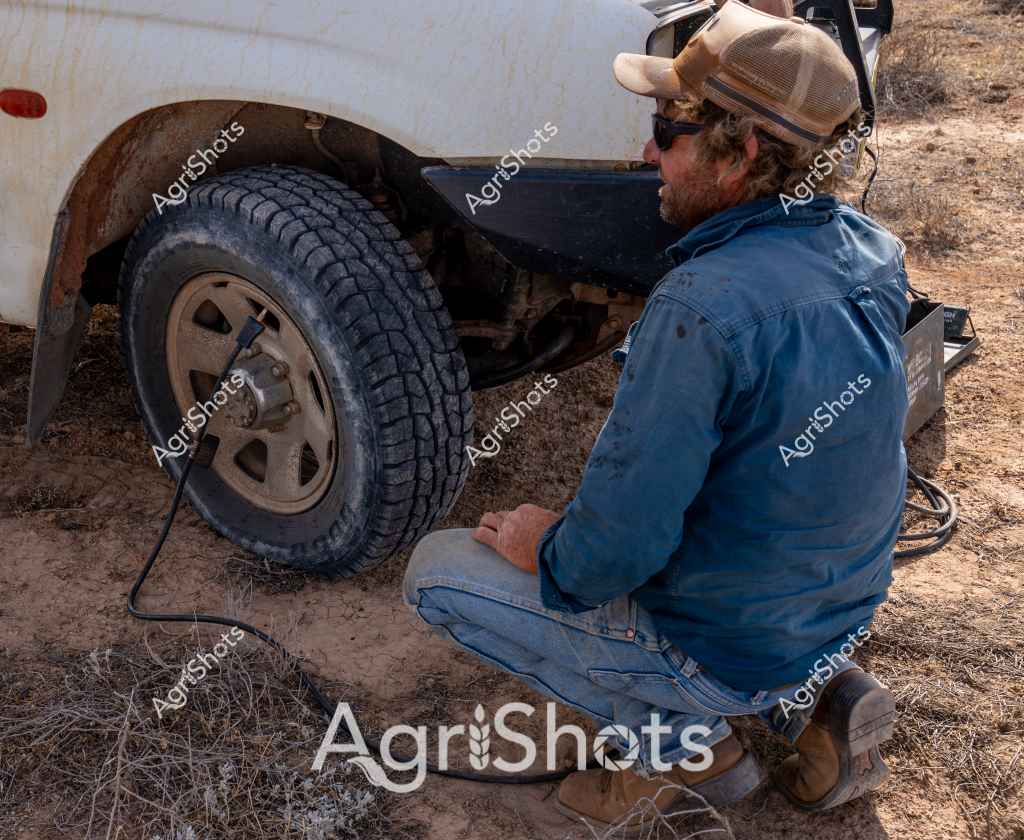
A man wearing a blue work jacket and tan cap carefully examines a vehicle tire while crouched on dry, rocky ground. The white vehicle has a rusted wheel arch, and the tire appears to be an all-terrain model with deep tread patterns suitable for rough rural terrain. He is wearing sunglasses and work boots, suggesting he is performing roadside maintenance or vehicle inspection in an isolated, arid landscape. The surrounding environment looks like a typical Australian outback or remote farming region, with sparse vegetation and dusty ground indicating challenging environmental conditions. The man's posture and attentive positioning suggest he is experienced in dealing with vehicle repairs in challenging outdoor settings. Image

A man wearing a blue work jacket and tan cap carefully examines a vehicle tire while crouched on dry, rocky ground. The white vehicle has a rusted wheel arch, and the tire appears to be an all-terrain model with deep tread patterns suitable for rough rural terrain. He is wearing sunglasses and work boots, suggesting he is performing roadside maintenance or vehicle inspection in an isolated, arid landscape. The surrounding environment looks like a typical Australian outback or remote farming region, with sparse vegetation and dusty ground indicating challenging environmental conditions. The man's posture and attentive positioning suggest he is experienced in dealing with vehicle repairs in challenging outdoor settings.
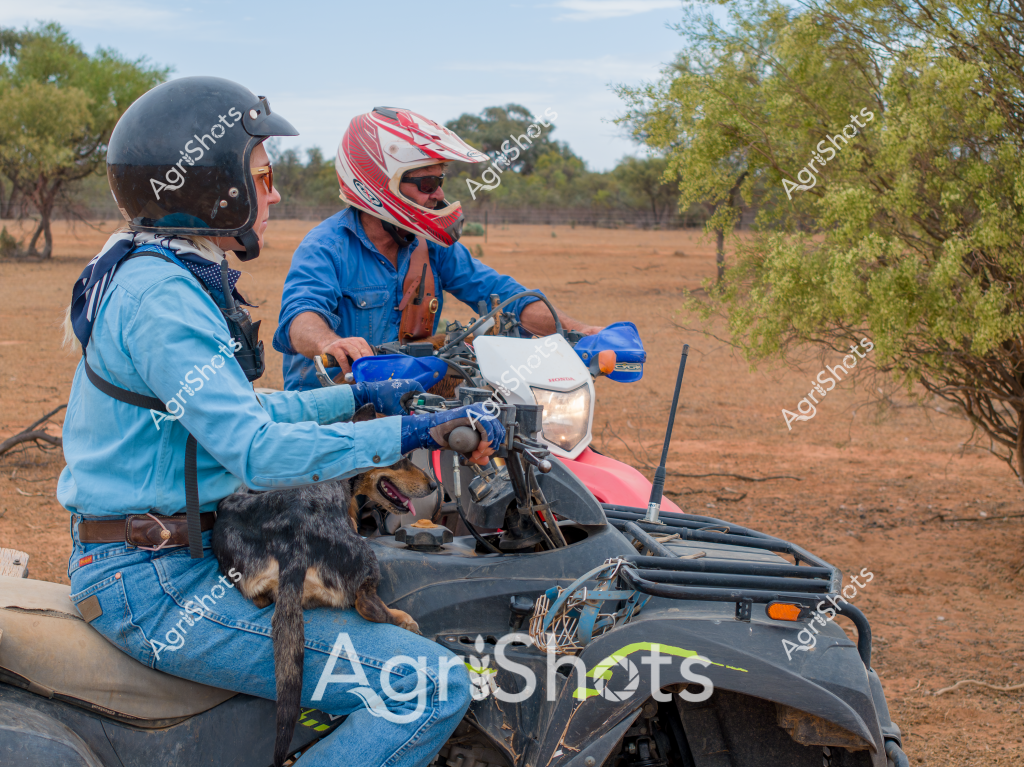
Two men on an all-terrain vehicle (ATV) traverse a dry, arid landscape with sparse trees and reddish-brown soil, typical of Australia's rural interior. One man wears a black helmet and a light blue long-sleeved shirt, while the other sports a red and white racing-style helmet and a blue work shirt. A small dark-colored dog sits on the ATV between them, suggesting this is a working vehicle used for farm or station duties. 

The rugged quad bike is equipped with additional storage racks and appears to be a robust model designed for challenging outback terrain. Protective gear like helmets and sturdy denim jeans indicate the serious approach to safety when navigating rough rural landscapes. The surrounding environment shows scattered acacia or eucalyptus trees, with a dry, dusty ground that hints at challenging environmental conditions typical of Australian agricultural regions.

The scene captures the resilience and practical nature of rural workers, using specialized equipment to traverse vast, challenging landscapes in what seems to be a remote agricultural setting during what appears to be a dry season or drought-affected period. Image

Two men on an all-terrain vehicle (ATV) traverse a dry, arid landscape with sparse trees and reddish-brown soil, typical of Australia's rural interior. One man wears a black helmet and a light blue long-sleeved shirt, while the other sports a red and white racing-style helmet and a blue work shirt. A small dark-colored dog sits on the ATV between them, suggesting this is a working vehicle used for farm or station duties. The rugged quad bike is equipped with additional storage racks and appears to be a robust model designed for challenging outback terrain. Protective gear like helmets and sturdy denim jeans indicate the serious approach to safety when navigating rough rural landscapes. The surrounding environment shows scattered acacia or eucalyptus trees, with a dry, dusty ground that hints at challenging environmental conditions typical of Australian agricultural regions. The scene captures the resilience and practical nature of rural workers, using specialized equipment to traverse vast, challenging landscapes in what seems to be a remote agricultural setting during what appears to be a dry season or drought-affected period.
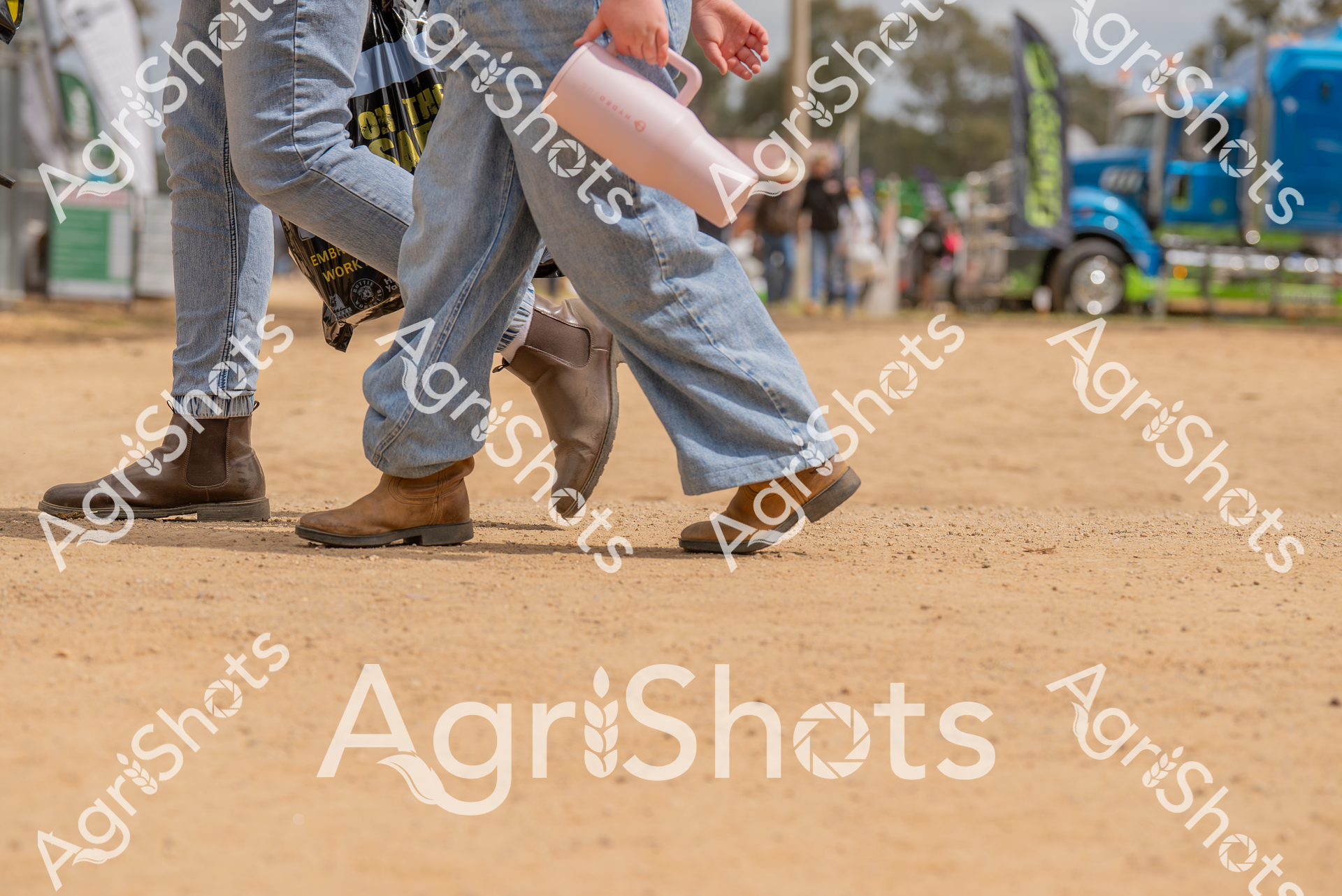
This image captures a close-up view of people's legs and boots standing on dusty ground at an agricultural event, likely the Henty Field Days in New South Wales. The scene showcases denim-clad legs and sturdy brown work boots, suggesting a typical rural agricultural gathering in the Riverina region during springtime. Image

This image captures a close-up view of people's legs and boots standing on dusty ground at an agricultural event, likely the Henty Field Days in New South Wales. The scene showcases denim-clad legs and sturdy brown work boots, suggesting a typical rural agricultural gathering in the Riverina region during springtime.
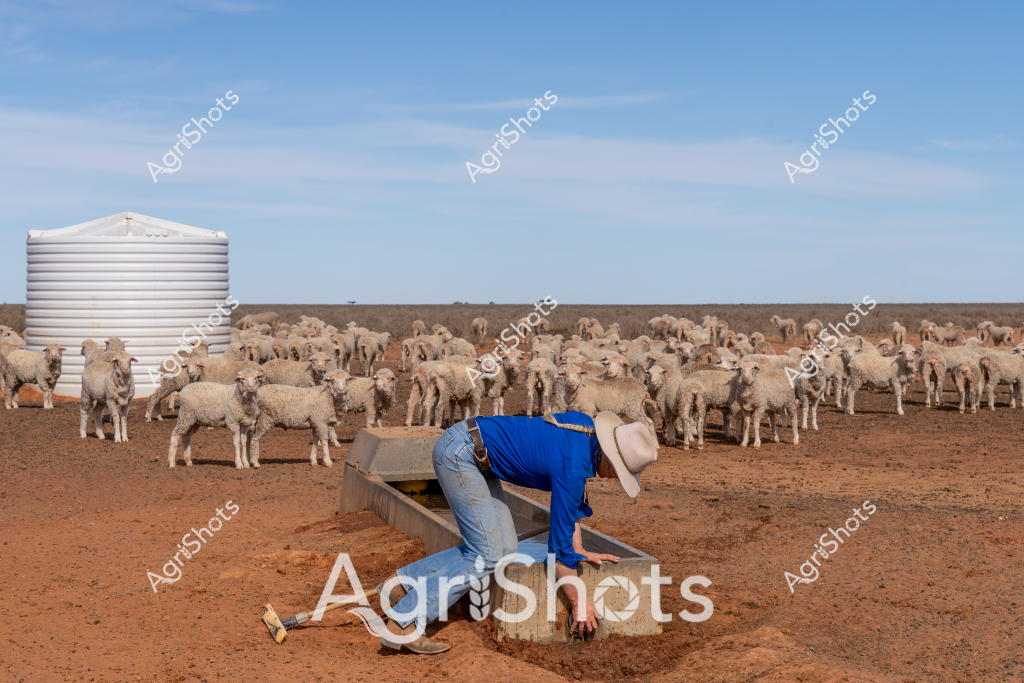
A man in a blue work shirt and wide-brimmed hat tends to a large flock of Merino sheep in a dry, arid landscape of central Australia. A large white water tank stands prominently in the background, while dozens of woolly sheep crowd the reddish-brown earth around a livestock water trough. The stockman is bent over, carefully managing the water supply for the flock, which appears to be a substantial breeding mob spread across the sparse paddock. The clear blue sky and open horizon emphasize the challenging environment of outback sheep farming, where water management is critical for livestock survival. Dusty ground and scattered vegetation highlight the harsh conditions of this rural agricultural setting, showcasing the resilience required in Australian sheep farming.

The scene captures the essential daily work of a sheep station worker, demonstrating the careful husbandry needed to maintain livestock in a drought-prone landscape. The white water tank and metal trough are crucial infrastructure that enables sheep farming in these challenging environmental conditions. Image

A man in a blue work shirt and wide-brimmed hat tends to a large flock of Merino sheep in a dry, arid landscape of central Australia. A large white water tank stands prominently in the background, while dozens of woolly sheep crowd the reddish-brown earth around a livestock water trough. The stockman is bent over, carefully managing the water supply for the flock, which appears to be a substantial breeding mob spread across the sparse paddock. The clear blue sky and open horizon emphasize the challenging environment of outback sheep farming, where water management is critical for livestock survival. Dusty ground and scattered vegetation highlight the harsh conditions of this rural agricultural setting, showcasing the resilience required in Australian sheep farming. The scene captures the essential daily work of a sheep station worker, demonstrating the careful husbandry needed to maintain livestock in a drought-prone landscape. The white water tank and metal trough are crucial infrastructure that enables sheep farming in these challenging environmental conditions.
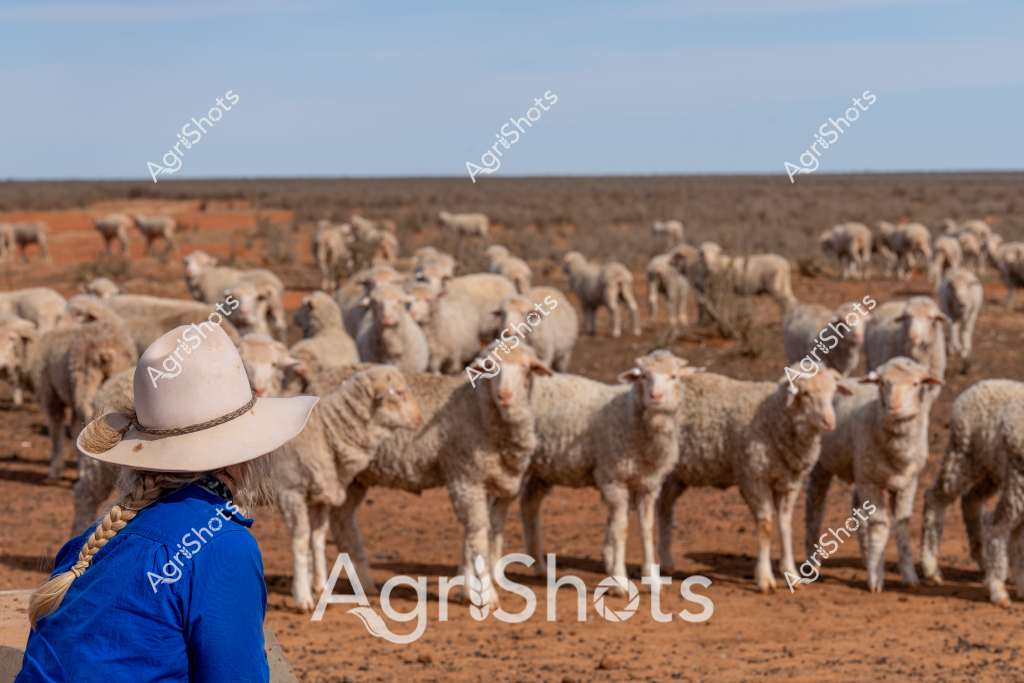
A woman stockman wearing a wide-brimmed light-colored hat and a bright blue long-sleeved shirt stands observing a large flock of Merino sheep grazing across a dry, reddish-brown paddock. The landscape stretches out to a flat horizon under a pale blue sky, typical of Australia's arid pastoral regions. Dozens of woolly white sheep are scattered across the dusty ground, their dense fleeces standing out against the ochre-colored earth. The scene captures the essence of sheep farming in rural Australia, showcasing the vast, open landscapes and the careful management required to maintain a healthy flock in challenging environmental conditions. The woman's positioning suggests she is monitoring the sheep, a critical task in maintaining the health and safety of the livestock in this harsh, expansive terrain. Image

A woman stockman wearing a wide-brimmed light-colored hat and a bright blue long-sleeved shirt stands observing a large flock of Merino sheep grazing across a dry, reddish-brown paddock. The landscape stretches out to a flat horizon under a pale blue sky, typical of Australia's arid pastoral regions. Dozens of woolly white sheep are scattered across the dusty ground, their dense fleeces standing out against the ochre-colored earth. The scene captures the essence of sheep farming in rural Australia, showcasing the vast, open landscapes and the careful management required to maintain a healthy flock in challenging environmental conditions. The woman's positioning suggests she is monitoring the sheep, a critical task in maintaining the health and safety of the livestock in this harsh, expansive terrain.
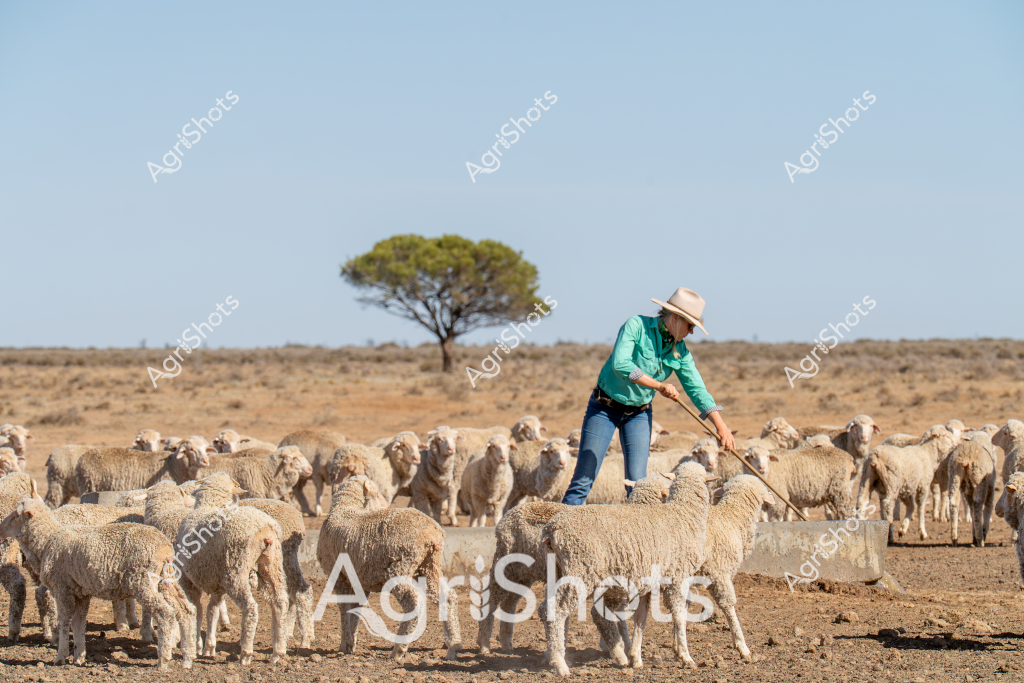
A woman stockman in a bright green long-sleeved shirt and wide-brimmed hat stands amidst a large flock of Merino sheep in a dry, sparse Australian outback landscape. The woolly flock covers the dusty ground, their cream-colored fleeces blending with the arid terrain, while a solitary tree stands in the distant background against a clear blue sky. The stockwoman uses a long herding stick to guide and manage the sheep, demonstrating the skilled and challenging work of livestock management in remote rural Australia. The scene captures the harsh beauty of the pastoral landscape, highlighting the resilience required in sheep farming and the expansive, unforgiving nature of the Australian interior. Her stance and positioning among the sheep reveal the close relationship between the livestock manager and the flock, a testament to the intricate skills of Australian agricultural workers. Image

A woman stockman in a bright green long-sleeved shirt and wide-brimmed hat stands amidst a large flock of Merino sheep in a dry, sparse Australian outback landscape. The woolly flock covers the dusty ground, their cream-colored fleeces blending with the arid terrain, while a solitary tree stands in the distant background against a clear blue sky. The stockwoman uses a long herding stick to guide and manage the sheep, demonstrating the skilled and challenging work of livestock management in remote rural Australia. The scene captures the harsh beauty of the pastoral landscape, highlighting the resilience required in sheep farming and the expansive, unforgiving nature of the Australian interior. Her stance and positioning among the sheep reveal the close relationship between the livestock manager and the flock, a testament to the intricate skills of Australian agricultural workers.
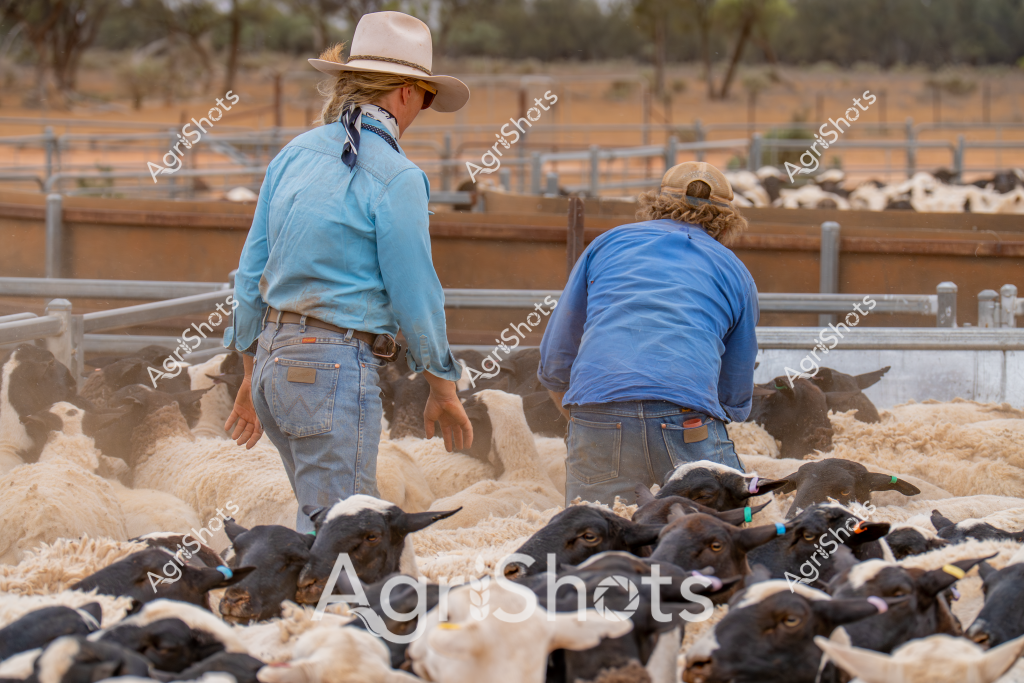
Two women workers manage a large flock of black and white sheep in a dusty livestock yard, wearing blue work shirts and wide-brimmed hats typical of Australian agricultural settings. The scene captures a moment of intense sheep handling, with the women carefully navigating through the densely packed animals, likely preparing them for shearing or movement between paddocks. The livestock yard features sturdy metal fencing in warm earth tones, creating a structured environment for managing the sheep herd. Black-faced sheep with white wool intermingle, creating a textured landscape of animal bodies against the dry, dusty ground. A wide-brimmed hat and blue work shirt provide protection from the harsh Australian sun, highlighting the practical clothing essential for rural workers. The image conveys the hard physical work and skill required in sheep farming, showcasing the close interaction between agricultural workers and the livestock in a quintessential Australian rural setting. Image

Two women workers manage a large flock of black and white sheep in a dusty livestock yard, wearing blue work shirts and wide-brimmed hats typical of Australian agricultural settings. The scene captures a moment of intense sheep handling, with the women carefully navigating through the densely packed animals, likely preparing them for shearing or movement between paddocks. The livestock yard features sturdy metal fencing in warm earth tones, creating a structured environment for managing the sheep herd. Black-faced sheep with white wool intermingle, creating a textured landscape of animal bodies against the dry, dusty ground. A wide-brimmed hat and blue work shirt provide protection from the harsh Australian sun, highlighting the practical clothing essential for rural workers. The image conveys the hard physical work and skill required in sheep farming, showcasing the close interaction between agricultural workers and the livestock in a quintessential Australian rural setting.
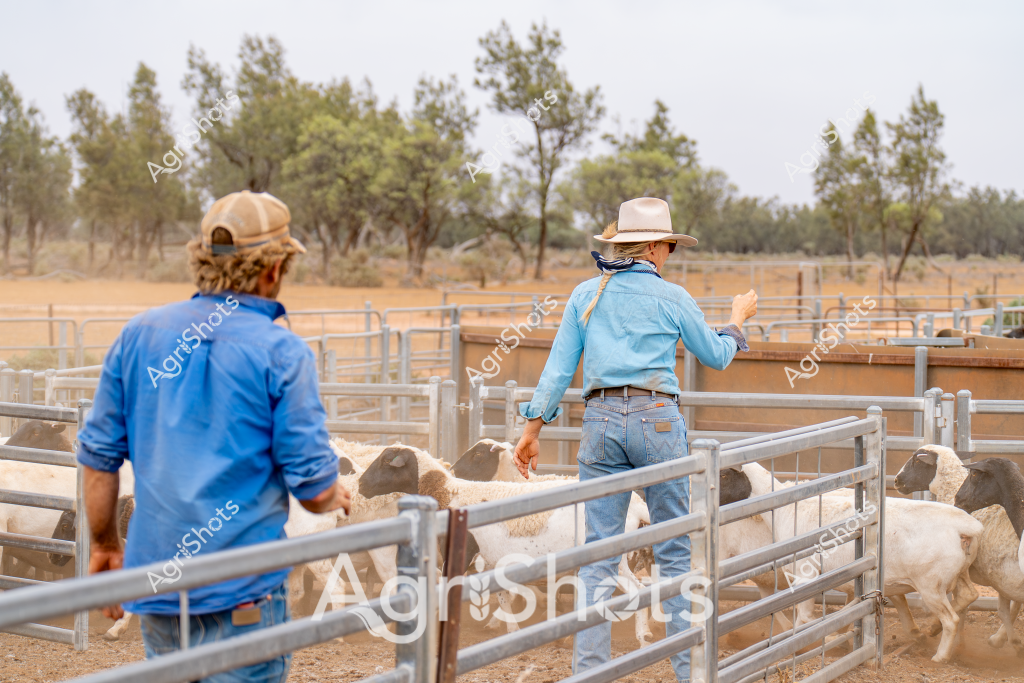
Two men working in a livestock yard, carefully managing a small herd of sheep within metal livestock pens. They are wearing typical rural workwear - blue long-sleeved shirts, wide-brimmed sun hats, and work jeans. One man faces away from the camera, standing near the metal gate, while the other is partially visible to the left side of the image. The setting appears to be a dry, arid paddock with sparse trees and scrubland in the background, suggesting this is likely in an inland Australian agricultural region. The metal yard panels create a systematic grid for controlling and moving the sheep, which appear to be light-colored, possibly Merino or other wool breed. The dusty ground and sparse vegetation indicate this could be during a dry season or in a drought-affected area. The scene captures the practical, no-nonsense approach of Australian livestock management, where farmers work efficiently to handle their stock in challenging environmental conditions. Image

Two men working in a livestock yard, carefully managing a small herd of sheep within metal livestock pens. They are wearing typical rural workwear - blue long-sleeved shirts, wide-brimmed sun hats, and work jeans. One man faces away from the camera, standing near the metal gate, while the other is partially visible to the left side of the image. The setting appears to be a dry, arid paddock with sparse trees and scrubland in the background, suggesting this is likely in an inland Australian agricultural region. The metal yard panels create a systematic grid for controlling and moving the sheep, which appear to be light-colored, possibly Merino or other wool breed. The dusty ground and sparse vegetation indicate this could be during a dry season or in a drought-affected area. The scene captures the practical, no-nonsense approach of Australian livestock management, where farmers work efficiently to handle their stock in challenging environmental conditions.
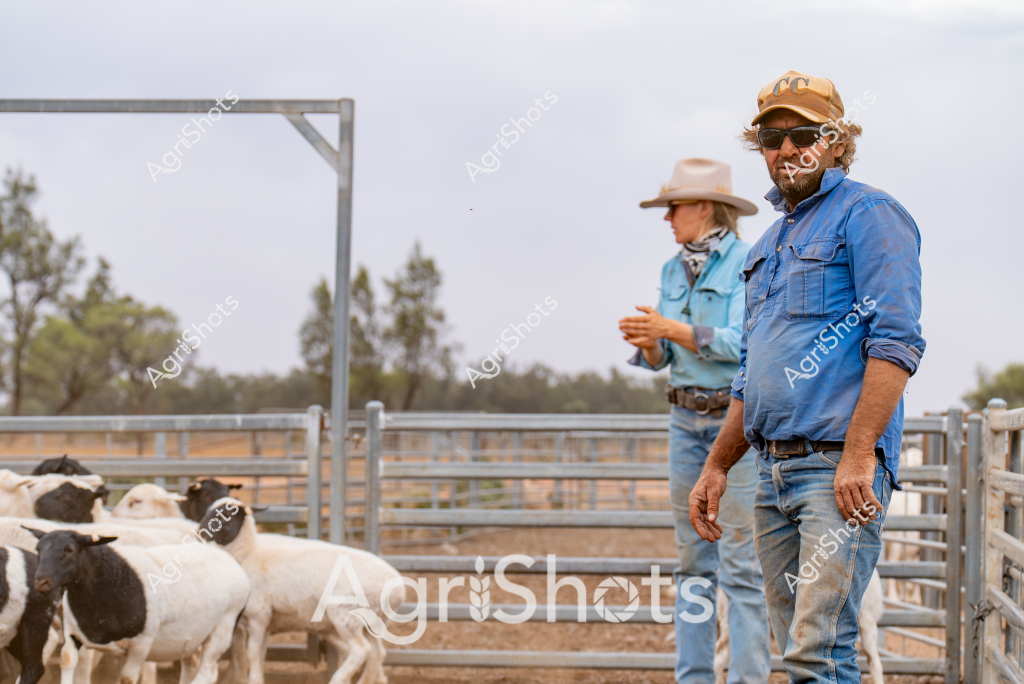
A seasoned man stockman and a woman worker supervise a small herd of black and white sheep in a rural livestock yard, surrounded by metal livestock fencing and distant eucalyptus trees. The man wears a tan cap, sunglasses, and a blue chambray work shirt with rolled-up sleeves, standing confidently in worn denim jeans and boots. His companion, wearing a light-colored wide-brimmed hat and a blue work shirt, stands nearby, both carefully observing the flock of mixed-color sheep clustered in the steel holding pen. The overcast sky and dusty ground suggest a typical Australian pastoral scene, highlighting the ongoing management of livestock in a challenging rural environment. Their professional stance and attentive posture demonstrate the careful husbandry and daily work required in managing a sheep production operation. Image

A seasoned man stockman and a woman worker supervise a small herd of black and white sheep in a rural livestock yard, surrounded by metal livestock fencing and distant eucalyptus trees. The man wears a tan cap, sunglasses, and a blue chambray work shirt with rolled-up sleeves, standing confidently in worn denim jeans and boots. His companion, wearing a light-colored wide-brimmed hat and a blue work shirt, stands nearby, both carefully observing the flock of mixed-color sheep clustered in the steel holding pen. The overcast sky and dusty ground suggest a typical Australian pastoral scene, highlighting the ongoing management of livestock in a challenging rural environment. Their professional stance and attentive posture demonstrate the careful husbandry and daily work required in managing a sheep production operation.
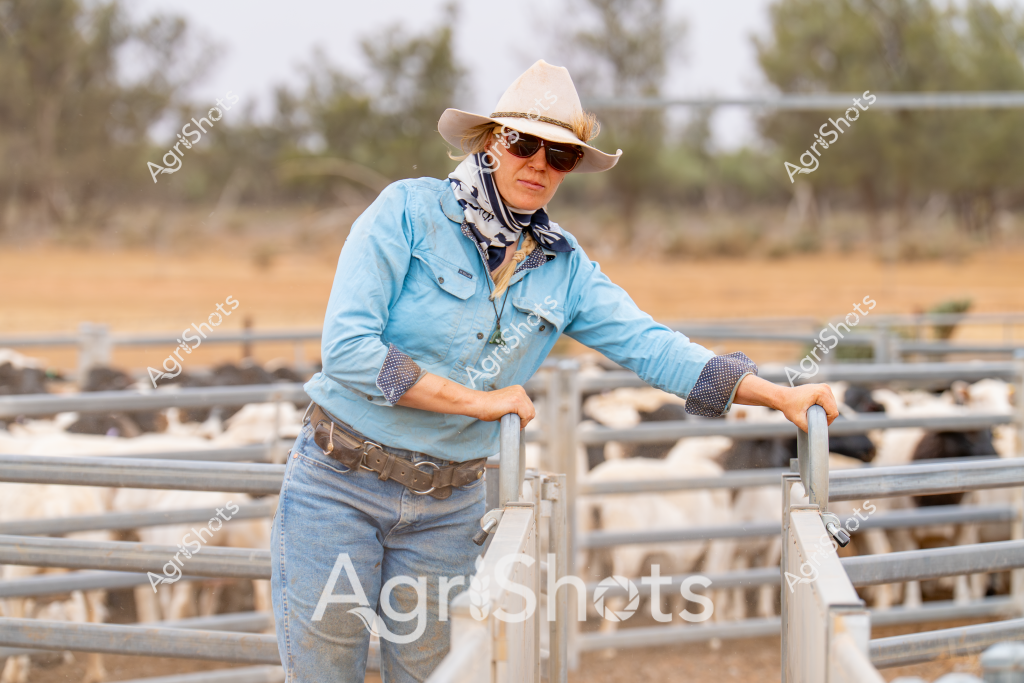
A woman stockman stands confidently beside sheep yards in a dry Australian rural landscape, wearing classic pastoral work attire. Dressed in a light blue long-sleeved chambray shirt with rolled cuffs, faded denim jeans, and a wide-brimmed cream cowboy hat, she leans against the metal livestock gates with sunglasses protecting her eyes from the harsh outback sunlight. The background reveals a sparse paddock with scattered trees and dusty ground, typical of arid agricultural regions. Her navy neck scarf and sturdy leather belt complete the practical workwear ensemble, highlighting the professional preparedness of contemporary Australian rural workers. She appears ready to manage livestock, with the metal cattle yards behind her suggesting an active agricultural setting during what seems to be a warm, dry season. Image

A woman stockman stands confidently beside sheep yards in a dry Australian rural landscape, wearing classic pastoral work attire. Dressed in a light blue long-sleeved chambray shirt with rolled cuffs, faded denim jeans, and a wide-brimmed cream cowboy hat, she leans against the metal livestock gates with sunglasses protecting her eyes from the harsh outback sunlight. The background reveals a sparse paddock with scattered trees and dusty ground, typical of arid agricultural regions. Her navy neck scarf and sturdy leather belt complete the practical workwear ensemble, highlighting the professional preparedness of contemporary Australian rural workers. She appears ready to manage livestock, with the metal cattle yards behind her suggesting an active agricultural setting during what seems to be a warm, dry season.
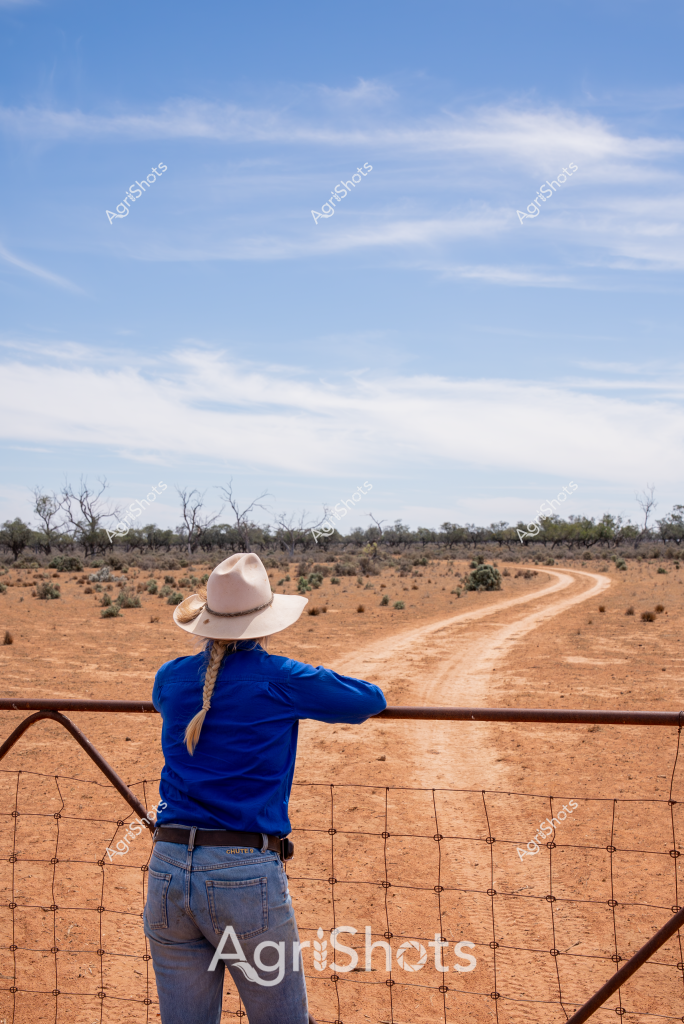
A woman in a blue shirt and wide-brimmed hat stands at a rural gate, gazing across a vast, arid Australian landscape. Her back is turned to the camera as she looks out over a sweeping dirt track that winds through a sparse, drought-affected paddock. Sparse scrub and leafless trees dot the distant horizon, creating a sense of isolation and resilience typical of Australia's inland regions.

The landscape is a study in earthy tones - rich reddish-brown soil, dusty ground, and muted olive vegetation contrasting against a soft blue sky with wispy clouds. The woman's bright blue shirt provides a vivid splash of color against the monochromatic background, symbolizing human presence in this challenging environment.

A sturdy wire fence runs in the foreground, marking property boundaries and suggesting the ongoing agricultural management of this harsh terrain. The scene captures the essence of rural Australian life - a quiet moment of contemplation amid the vast, unforgiving landscape that defines much of the continent's interior.

The image conveys a sense of solitude, endurance, and connection to the land, with the woman's posture suggesting both reflection and determination in the face of challenging environmental conditions. Image

A woman in a blue shirt and wide-brimmed hat stands at a rural gate, gazing across a vast, arid Australian landscape. Her back is turned to the camera as she looks out over a sweeping dirt track that winds through a sparse, drought-affected paddock. Sparse scrub and leafless trees dot the distant horizon, creating a sense of isolation and resilience typical of Australia's inland regions. The landscape is a study in earthy tones - rich reddish-brown soil, dusty ground, and muted olive vegetation contrasting against a soft blue sky with wispy clouds. The woman's bright blue shirt provides a vivid splash of color against the monochromatic background, symbolizing human presence in this challenging environment. A sturdy wire fence runs in the foreground, marking property boundaries and suggesting the ongoing agricultural management of this harsh terrain. The scene captures the essence of rural Australian life - a quiet moment of contemplation amid the vast, unforgiving landscape that defines much of the continent's interior. The image conveys a sense of solitude, endurance, and connection to the land, with the woman's posture suggesting both reflection and determination in the face of challenging environmental conditions.
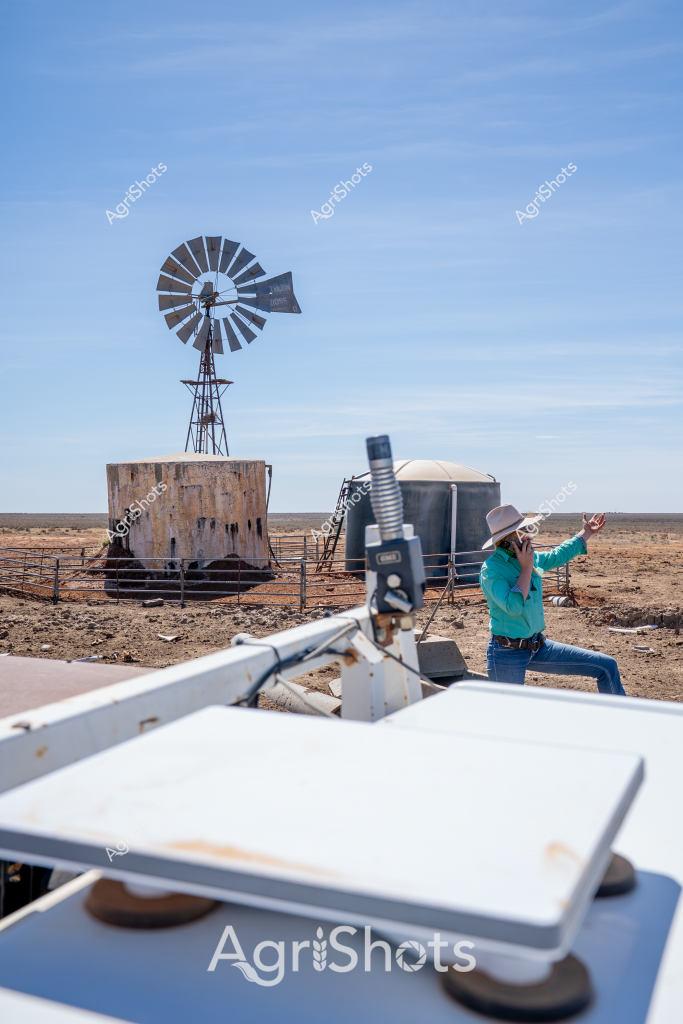
A woman in a teal shirt and wide-brimmed hat stands near a classic windmill and water tank in a stark, arid landscape. The windmill's metal blades rise against a clear blue sky, positioned next to a weathered cylindrical water tank enclosed by a metal fence. In the foreground, scientific or surveying equipment is visible, suggesting the woman is conducting environmental or agricultural research in this remote, dry terrain. The landscape appears to be a typical Australian outback scene - flat, dusty ground stretching to a distant horizon, with minimal vegetation indicating challenging drought conditions. The bright turquoise of the woman's shirt provides a vivid contrast to the muted browns and grays of the surrounding environment, highlighting human presence in this harsh but essential agricultural setting. Image

A woman in a teal shirt and wide-brimmed hat stands near a classic windmill and water tank in a stark, arid landscape. The windmill's metal blades rise against a clear blue sky, positioned next to a weathered cylindrical water tank enclosed by a metal fence. In the foreground, scientific or surveying equipment is visible, suggesting the woman is conducting environmental or agricultural research in this remote, dry terrain. The landscape appears to be a typical Australian outback scene - flat, dusty ground stretching to a distant horizon, with minimal vegetation indicating challenging drought conditions. The bright turquoise of the woman's shirt provides a vivid contrast to the muted browns and grays of the surrounding environment, highlighting human presence in this harsh but essential agricultural setting.
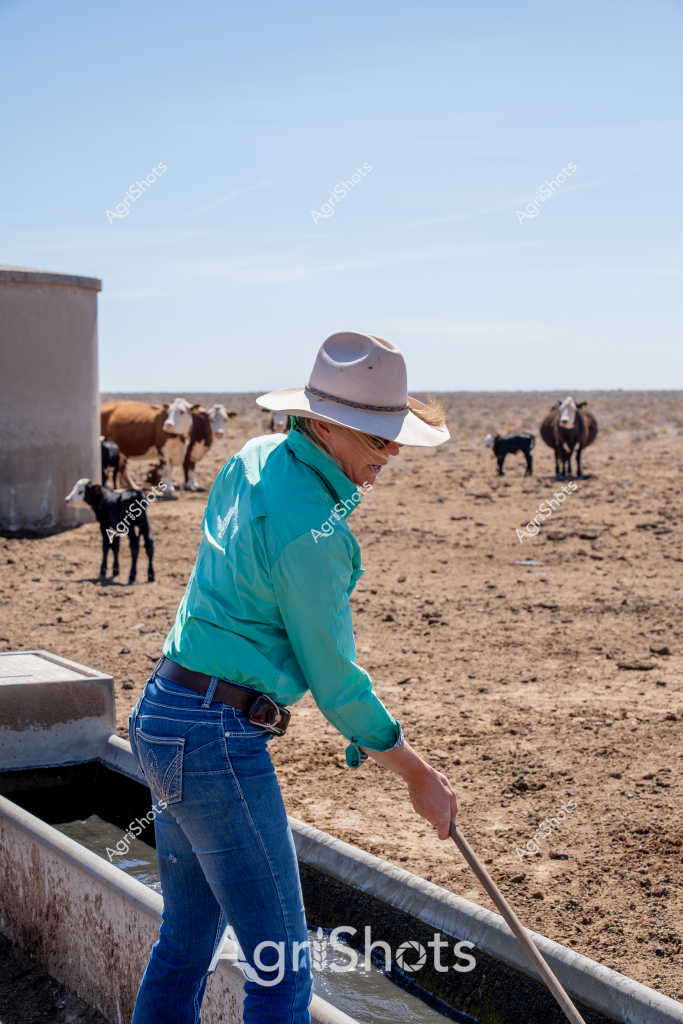
A woman livestock manager wearing a white wide-brimmed hat and bright turquoise long-sleeved shirt stands in a dry, arid landscape, carefully tending to the small herd of cattle and goats. The barren paddock surrounds a white water storage tank, with sparse, dusty ground stretching to the horizon. She leans over a concrete water trough, using a long pole to manage the water supply for her animals, demonstrating the challenging conditions of rural agricultural work. Several cattle and black goats are scattered around the tank, highlighting the sparse grazing conditions typical of drought-affected regions. Her blue jeans and cowboy hat suggest practical, hardworking attire designed for the harsh outdoor environment, while her careful attention to the livestock speaks to the resilience of Australian farmers managing stock in difficult conditions.

The scene captures the essence of rural agricultural life - a careful balance of resource management, animal husbandry, and survival in an unforgiving landscape. The clear blue sky and open terrain emphasize the isolation and challenge of maintaining a livestock operation in what appears to be a particularly dry and demanding environment. Image

A woman livestock manager wearing a white wide-brimmed hat and bright turquoise long-sleeved shirt stands in a dry, arid landscape, carefully tending to the small herd of cattle and goats. The barren paddock surrounds a white water storage tank, with sparse, dusty ground stretching to the horizon. She leans over a concrete water trough, using a long pole to manage the water supply for her animals, demonstrating the challenging conditions of rural agricultural work. Several cattle and black goats are scattered around the tank, highlighting the sparse grazing conditions typical of drought-affected regions. Her blue jeans and cowboy hat suggest practical, hardworking attire designed for the harsh outdoor environment, while her careful attention to the livestock speaks to the resilience of Australian farmers managing stock in difficult conditions. The scene captures the essence of rural agricultural life - a careful balance of resource management, animal husbandry, and survival in an unforgiving landscape. The clear blue sky and open terrain emphasize the isolation and challenge of maintaining a livestock operation in what appears to be a particularly dry and demanding environment.
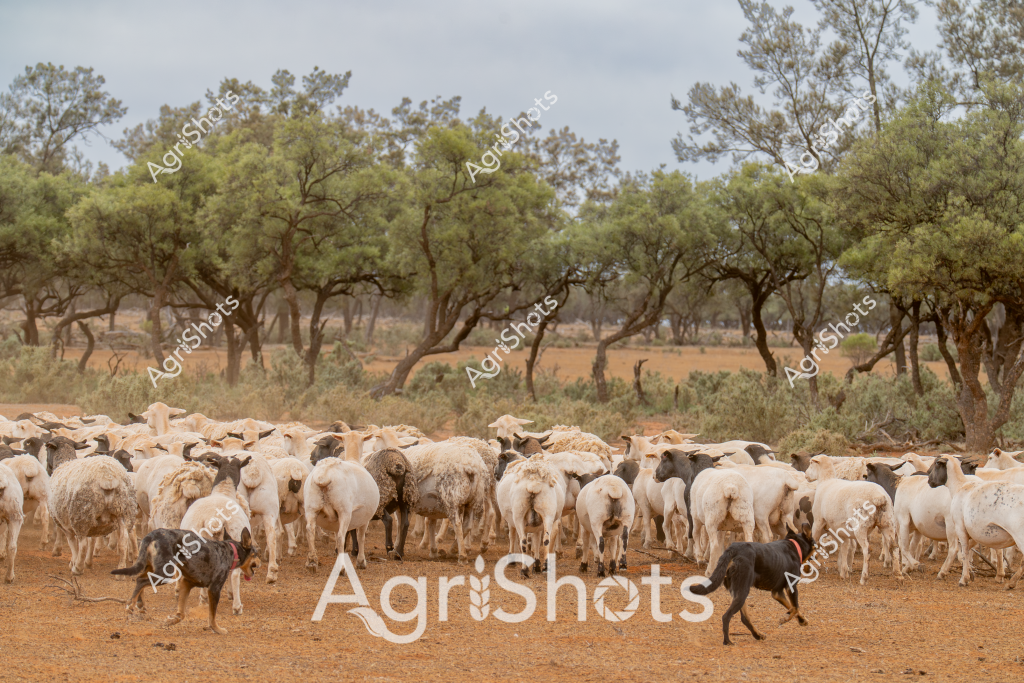
A substantial flock of white and dark-colored sheep cluster tightly together on a dry, reddish-brown earth paddock, surrounded by sparse acacia and eucalyptus trees. Two working dogs, likely Australian Kelpies, move strategically around the herd, herding and controlling the sheep's movement with practiced precision. The landscape suggests an arid or semi-arid region, with muted green trees providing a soft backdrop against the dusty ground where the sheep are densely packed. The animals appear to be Merino or crossbred sheep, their woolly backs facing mostly outward, creating a textured mass of cream and darker fleece. The scene captures the quintessential Australian pastoral setting - a moment of controlled movement during mustering, where skilled working dogs and the natural landscape work in harmony to manage livestock in challenging environmental conditions.

The image represents the resilience of Australian agricultural practices, showcasing how farmers and their canine partners navigate vast, challenging terrains to manage livestock effectively. The dogs' positioning and the sheep's tight formation demonstrate the sophisticated communication and training required in rural stock management. Image

A substantial flock of white and dark-colored sheep cluster tightly together on a dry, reddish-brown earth paddock, surrounded by sparse acacia and eucalyptus trees. Two working dogs, likely Australian Kelpies, move strategically around the herd, herding and controlling the sheep's movement with practiced precision. The landscape suggests an arid or semi-arid region, with muted green trees providing a soft backdrop against the dusty ground where the sheep are densely packed. The animals appear to be Merino or crossbred sheep, their woolly backs facing mostly outward, creating a textured mass of cream and darker fleece. The scene captures the quintessential Australian pastoral setting - a moment of controlled movement during mustering, where skilled working dogs and the natural landscape work in harmony to manage livestock in challenging environmental conditions. The image represents the resilience of Australian agricultural practices, showcasing how farmers and their canine partners navigate vast, challenging terrains to manage livestock effectively. The dogs' positioning and the sheep's tight formation demonstrate the sophisticated communication and training required in rural stock management.
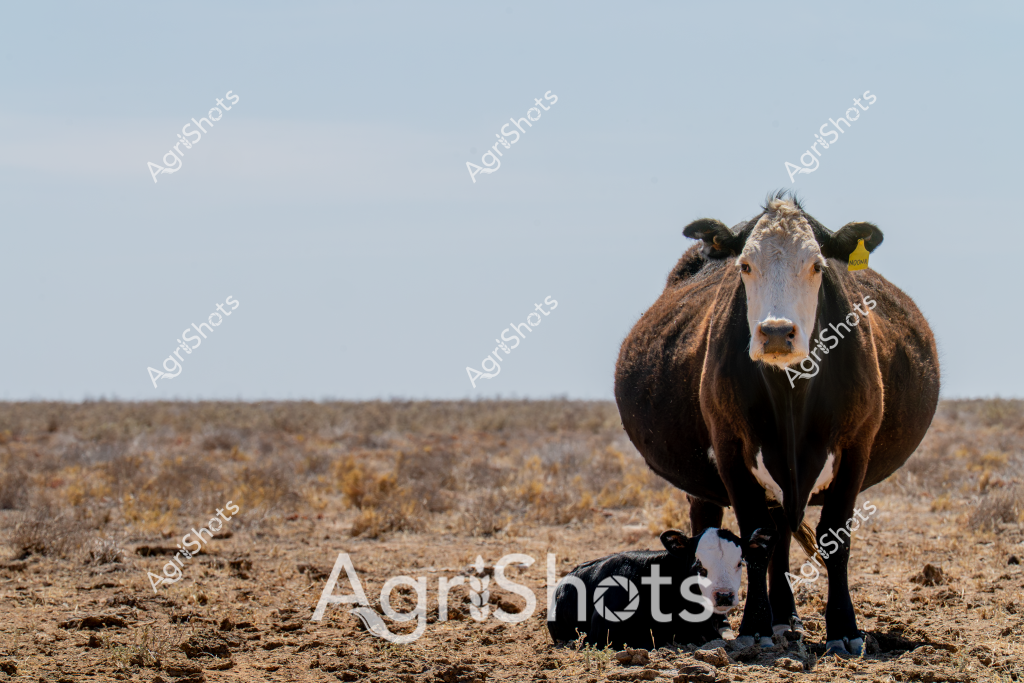
A robust beef cow stands confidently on a dry, sparse paddock, with her newborn black and white calf nestled beside her. The mature cow, likely a Angus or Angus-cross breed, wears a yellow ear tag and displays a sturdy, well-developed physique typical of Australian beef cattle. The landscape is characteristically arid, with brown, sparse vegetation and a flat horizon stretching to a pale blue sky, suggesting a challenging drought-affected environment.

The cow's protective stance and close proximity to her calf indicate the strong maternal instincts critical for survival in harsh agricultural conditions. Her rich dark brown coat contrasts against the pale, dusty ground, highlighting the resilience of livestock in Australian agricultural settings. The image captures the essence of pastoral farming - where animals must be hardy and adaptable to survive in challenging terrain.

This scene represents the realities of cattle farming in Australia's more marginal grazing lands, where animals must be tough and farmers must be strategic in managing livestock through difficult environmental conditions. The proximity of the mother and calf demonstrates the ongoing cycle of agricultural production and the fundamental relationship between farmers and their herds. Image

A robust beef cow stands confidently on a dry, sparse paddock, with her newborn black and white calf nestled beside her. The mature cow, likely a Angus or Angus-cross breed, wears a yellow ear tag and displays a sturdy, well-developed physique typical of Australian beef cattle. The landscape is characteristically arid, with brown, sparse vegetation and a flat horizon stretching to a pale blue sky, suggesting a challenging drought-affected environment. The cow's protective stance and close proximity to her calf indicate the strong maternal instincts critical for survival in harsh agricultural conditions. Her rich dark brown coat contrasts against the pale, dusty ground, highlighting the resilience of livestock in Australian agricultural settings. The image captures the essence of pastoral farming - where animals must be hardy and adaptable to survive in challenging terrain. This scene represents the realities of cattle farming in Australia's more marginal grazing lands, where animals must be tough and farmers must be strategic in managing livestock through difficult environmental conditions. The proximity of the mother and calf demonstrates the ongoing cycle of agricultural production and the fundamental relationship between farmers and their herds.
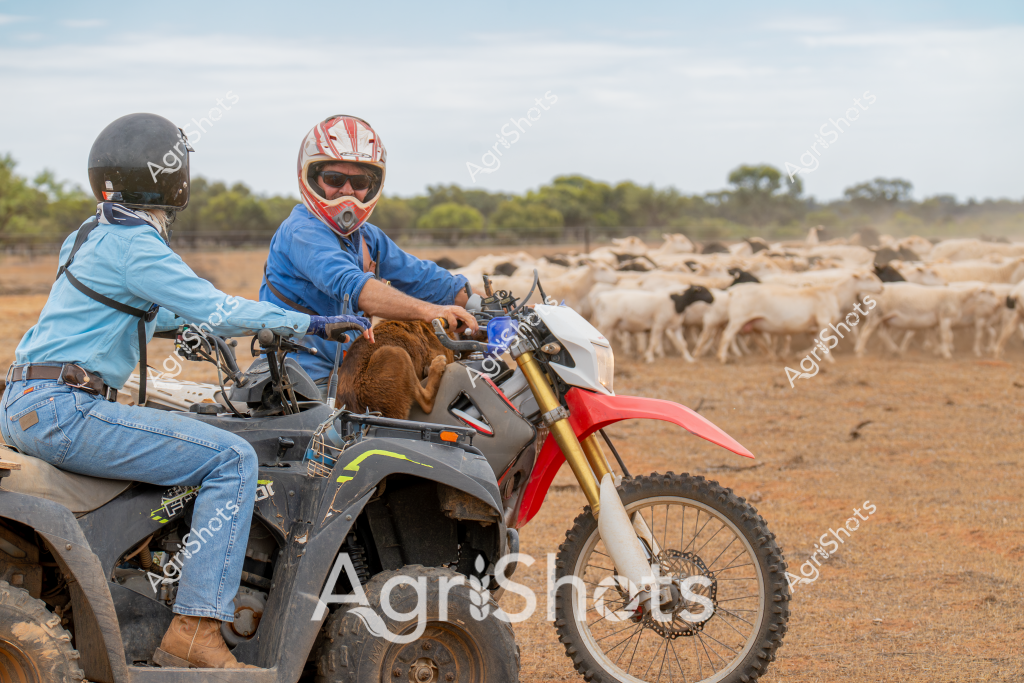
Two riders on off-road motorcycles guide a flock of white sheep across a dry, golden paddock in rural Australia. A woman in a light blue shirt and denim jeans sits on a quad bike, while a man in a blue shirt and red-and-white motocross helmet rides a dirt bike beside her. The landscape is typical of the Australian interior - sparse, dusty ground with scattered trees on the horizon and a herd of woolly sheep clustered in the background. 

The motorcycles appear well-equipped for farm work, with the dirt bike featuring a striking red and white color scheme and the quad bike looking robust and functional. Both riders are wearing protective gear, including helmets and sturdy clothing, suggesting they are actively mustering or moving the livestock across the property. 

The scene captures the essence of modern Australian livestock management, where motorized vehicles have replaced traditional horse-based mustering, demonstrating the evolving techniques of farm work in the contemporary agricultural landscape. The dry terrain and sparse vegetation hint at challenging environmental conditions typical of many Australian grazing regions. Image

Two riders on off-road motorcycles guide a flock of white sheep across a dry, golden paddock in rural Australia. A woman in a light blue shirt and denim jeans sits on a quad bike, while a man in a blue shirt and red-and-white motocross helmet rides a dirt bike beside her. The landscape is typical of the Australian interior - sparse, dusty ground with scattered trees on the horizon and a herd of woolly sheep clustered in the background. The motorcycles appear well-equipped for farm work, with the dirt bike featuring a striking red and white color scheme and the quad bike looking robust and functional. Both riders are wearing protective gear, including helmets and sturdy clothing, suggesting they are actively mustering or moving the livestock across the property. The scene captures the essence of modern Australian livestock management, where motorized vehicles have replaced traditional horse-based mustering, demonstrating the evolving techniques of farm work in the contemporary agricultural landscape. The dry terrain and sparse vegetation hint at challenging environmental conditions typical of many Australian grazing regions.
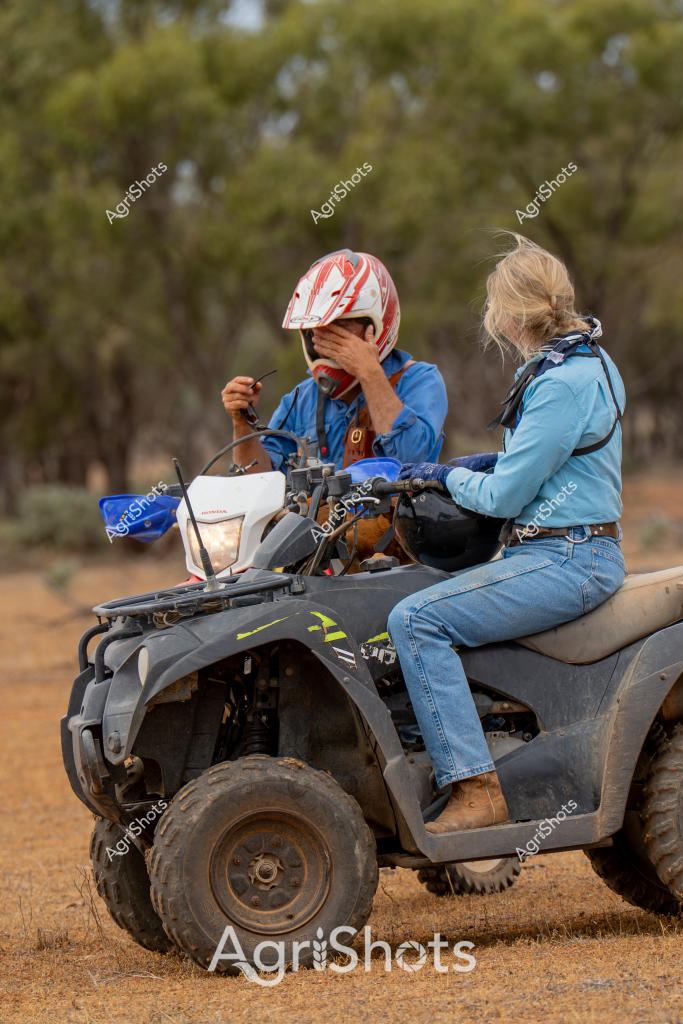
A woman and a young person sit on an all-terrain vehicle (ATV) in a dry, bushland setting, surrounded by sparse trees and dusty ground. The woman, wearing blue denim and a light blue jacket, is seated behind the rider, who is wearing a red and white helmet and a blue top. The grey ATV appears well-used, with robust off-road tires suitable for rugged rural terrain. The rider seems momentarily paused, with one hand covering their face, suggesting a brief moment of reflection or rest during what appears to be a farm or station work activity. The surrounding landscape looks typical of Australian rural areas - sparse eucalyptus trees, reddish-brown earth, and an open, expansive feel that characterizes many agricultural regions. The image captures an authentic slice of rural life, highlighting the practical use of all-terrain vehicles in managing large properties or conducting agricultural work. Image

A woman and a young person sit on an all-terrain vehicle (ATV) in a dry, bushland setting, surrounded by sparse trees and dusty ground. The woman, wearing blue denim and a light blue jacket, is seated behind the rider, who is wearing a red and white helmet and a blue top. The grey ATV appears well-used, with robust off-road tires suitable for rugged rural terrain. The rider seems momentarily paused, with one hand covering their face, suggesting a brief moment of reflection or rest during what appears to be a farm or station work activity. The surrounding landscape looks typical of Australian rural areas - sparse eucalyptus trees, reddish-brown earth, and an open, expansive feel that characterizes many agricultural regions. The image captures an authentic slice of rural life, highlighting the practical use of all-terrain vehicles in managing large properties or conducting agricultural work.
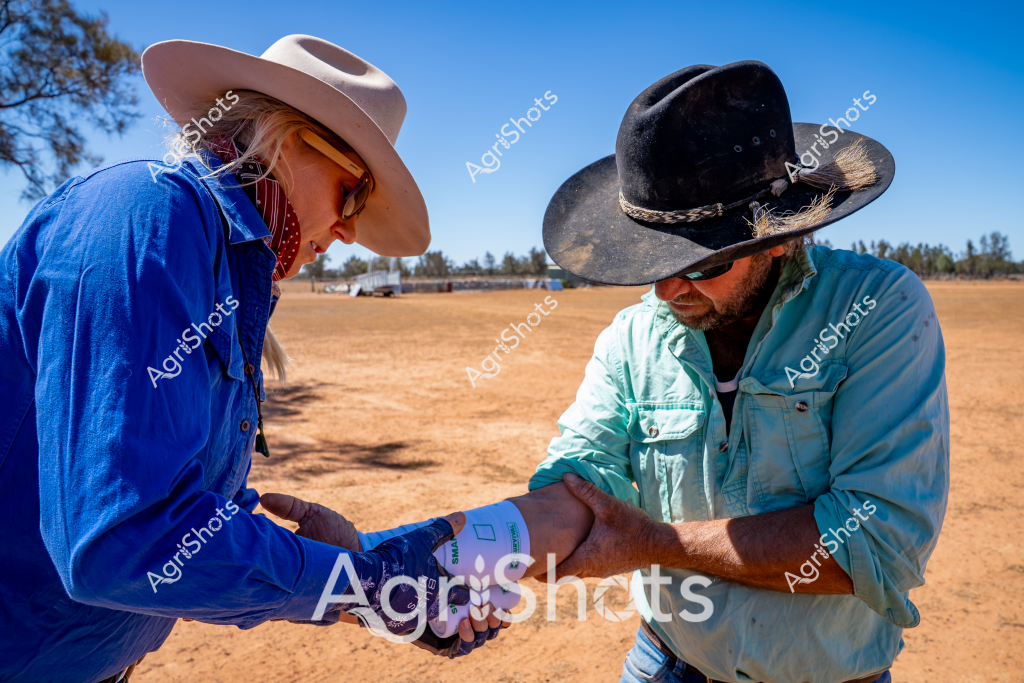
Two people stand in a dry, sun-drenched rural landscape, engaged in a close interaction. A woman wearing a blue long-sleeved shirt and a light cream cowboy hat is carefully examining the arm of a man in a light blue-green shirt and a dark wide-brimmed hat. Their posture suggests a professional medical or veterinary assessment, with the landscape of dusty ground and sparse trees in the background indicating an outback or rural Australian setting.

The scene appears to capture a moment of agricultural health monitoring, potentially a routine check or treatment process. Both individuals are wearing protective work clothing typical of rural Australian settings - sturdy shirts, wide-brimmed hats for sun protection, and work gloves. The bright blue sky and arid ground suggest a hot, dry day in a farming or station environment.

Their focused body language and close proximity indicate a professional interaction, likely related to livestock health, farm work, or medical assessment. The landscape behind them is characteristic of Australian agricultural regions - open, sparse, with a sense of expansive remote terrain typical of cattle stations or rural properties. Image

Two people stand in a dry, sun-drenched rural landscape, engaged in a close interaction. A woman wearing a blue long-sleeved shirt and a light cream cowboy hat is carefully examining the arm of a man in a light blue-green shirt and a dark wide-brimmed hat. Their posture suggests a professional medical or veterinary assessment, with the landscape of dusty ground and sparse trees in the background indicating an outback or rural Australian setting. The scene appears to capture a moment of agricultural health monitoring, potentially a routine check or treatment process. Both individuals are wearing protective work clothing typical of rural Australian settings - sturdy shirts, wide-brimmed hats for sun protection, and work gloves. The bright blue sky and arid ground suggest a hot, dry day in a farming or station environment. Their focused body language and close proximity indicate a professional interaction, likely related to livestock health, farm work, or medical assessment. The landscape behind them is characteristic of Australian agricultural regions - open, sparse, with a sense of expansive remote terrain typical of cattle stations or rural properties.
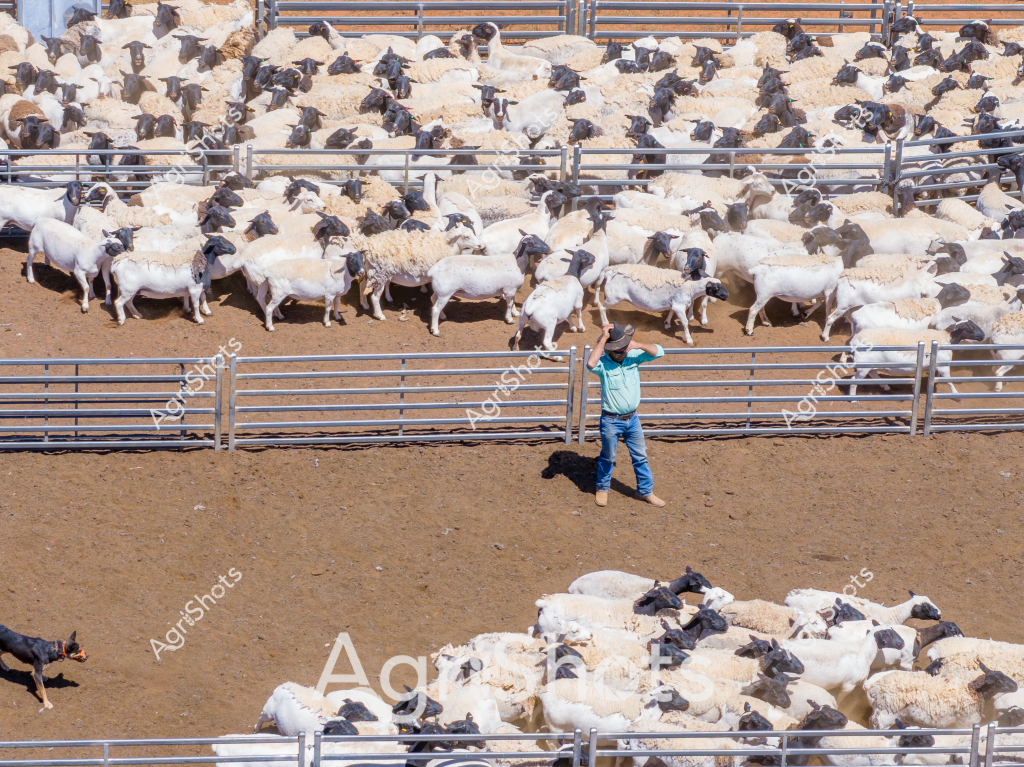
A large flock of white and black-faced sheep are packed tightly within multiple metal livestock yards, with a man in a blue shirt and hat standing among them. The sheep appear to be a mixed breed, likely Dorper or Merino cross, densely clustered across different pen sections on a dry, dusty ground. A working dog can be seen at the bottom left of the image, ready to assist with herding. The metal yard infrastructure creates geometric patterns, with horizontal rails dividing the livestock into controlled groups. The scene captures a typical Australian livestock management scenario, likely in a regional or station setting, where careful animal handling and mustering are essential agricultural practices. The stark contrast between the white sheep, tan ground, and blue-shirted stockman creates a visually striking representation of rural Australian livestock management. Image

A large flock of white and black-faced sheep are packed tightly within multiple metal livestock yards, with a man in a blue shirt and hat standing among them. The sheep appear to be a mixed breed, likely Dorper or Merino cross, densely clustered across different pen sections on a dry, dusty ground. A working dog can be seen at the bottom left of the image, ready to assist with herding. The metal yard infrastructure creates geometric patterns, with horizontal rails dividing the livestock into controlled groups. The scene captures a typical Australian livestock management scenario, likely in a regional or station setting, where careful animal handling and mustering are essential agricultural practices. The stark contrast between the white sheep, tan ground, and blue-shirted stockman creates a visually striking representation of rural Australian livestock management.
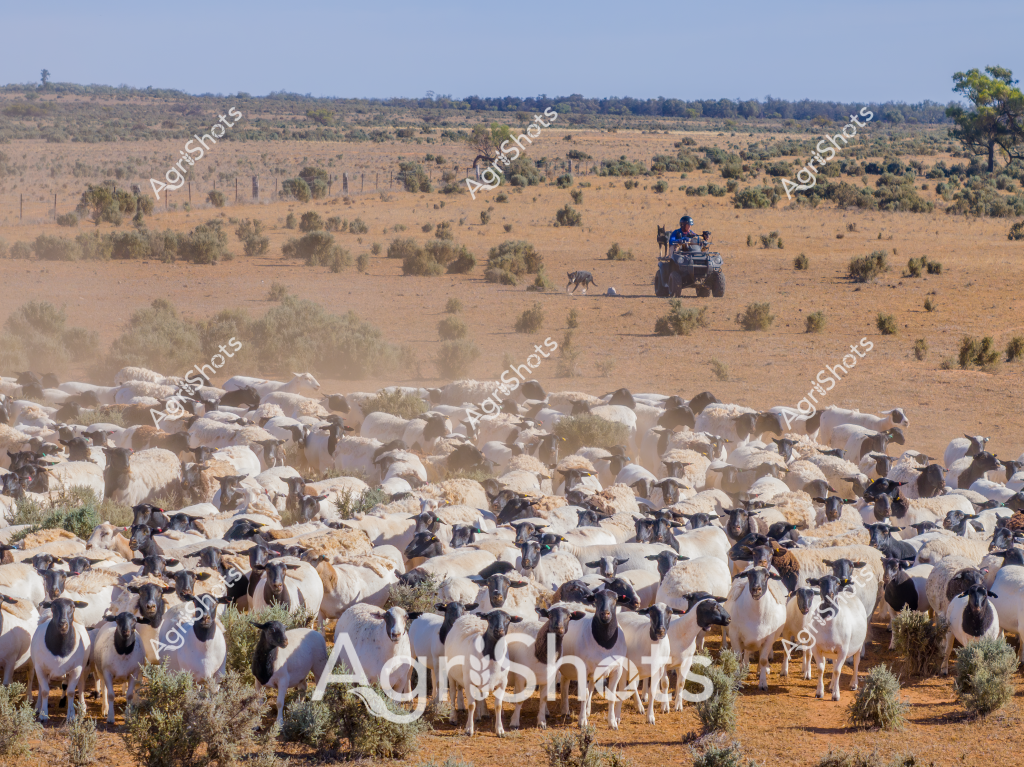
A large flock of white and black-faced sheep crowd together in an arid pastoral landscape, with sparse scrubland and dusty ground stretching to the distant horizon. A four-wheel drive vehicle and a working dog are visible in the background, indicating this is likely a station or large grazing property in inland Australia. The sheep appear to be Dorper or White Dorper breed, known for their hardiness in dry conditions, standing clustered among low saltbush and spinifex vegetation. A man in blue clothing sits on the quad bike, seemingly monitoring the mob as they graze and move across the parched landscape. The scene captures the essence of Australian sheep farming in a challenging, drought-affected environment, with the stark beauty of the arid rangelands providing a dramatic backdrop to the livestock operation.

The image reveals the resilience of both the animals and the agricultural workers who manage them in harsh, unforgiving terrain. Dust rises around the sheep's feet, highlighting the dry conditions and the careful movement of the herd. The quad bike and working dog demonstrate the modern tools and techniques used in managing large flocks across extensive grazing properties. Image

A large flock of white and black-faced sheep crowd together in an arid pastoral landscape, with sparse scrubland and dusty ground stretching to the distant horizon. A four-wheel drive vehicle and a working dog are visible in the background, indicating this is likely a station or large grazing property in inland Australia. The sheep appear to be Dorper or White Dorper breed, known for their hardiness in dry conditions, standing clustered among low saltbush and spinifex vegetation. A man in blue clothing sits on the quad bike, seemingly monitoring the mob as they graze and move across the parched landscape. The scene captures the essence of Australian sheep farming in a challenging, drought-affected environment, with the stark beauty of the arid rangelands providing a dramatic backdrop to the livestock operation. The image reveals the resilience of both the animals and the agricultural workers who manage them in harsh, unforgiving terrain. Dust rises around the sheep's feet, highlighting the dry conditions and the careful movement of the herd. The quad bike and working dog demonstrate the modern tools and techniques used in managing large flocks across extensive grazing properties.
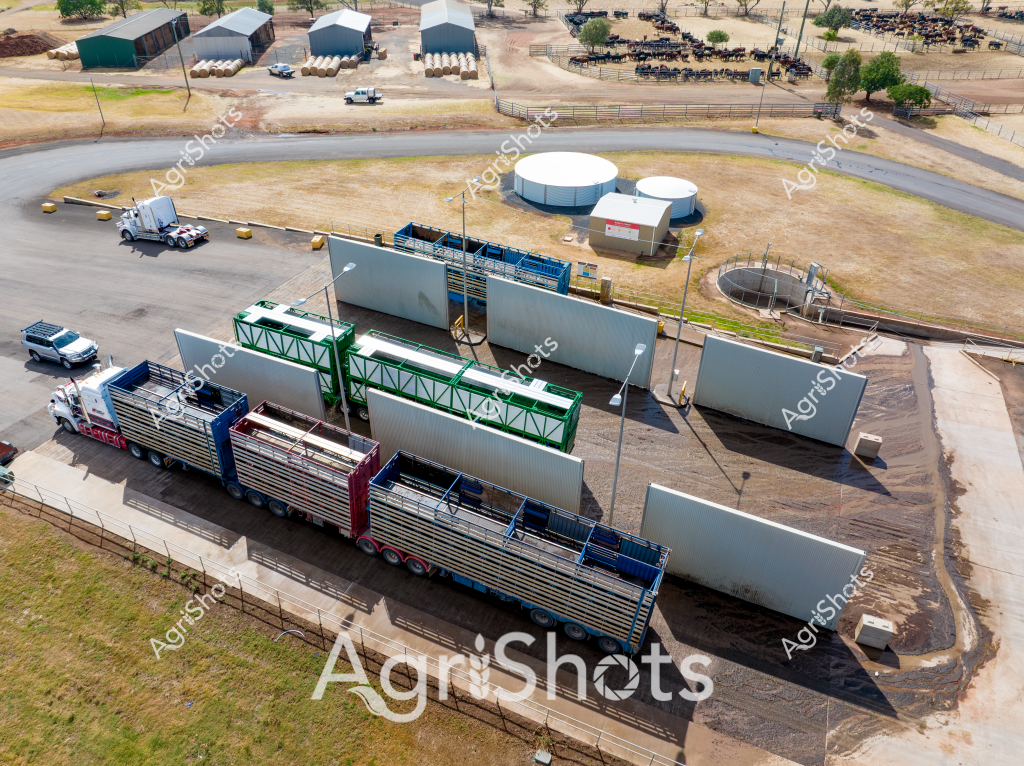
An aerial view of a livestock processing facility reveals a complex agricultural infrastructure designed for efficient cattle management. Large white modular walls and green-framed structures create a systematic loading and unloading area for semi-trailer trucks. White cylindrical water tanks and circular holding pens surround the central processing zone, indicating a modern cattle handling facility likely located in a dry, arid region with sparse vegetation and dusty ground.

A semi-trailer truck is positioned within the loading zone, suggesting preparation for transporting livestock. The surrounding landscape features several industrial-style sheds with metal roofing in green and grey tones, and a series of fenced paddocks where numerous dark-colored cattle can be seen clustered together.

The infrastructure demonstrates precision engineering typical of contemporary Australian agricultural operations, with carefully designed pathways, sturdy infrastructure, and strategic layout to maximize efficiency in livestock movement and processing. Gravel and concrete surfaces provide durable, functional spaces for heavy vehicle and animal traffic, reflecting the demanding environmental conditions of rural livestock production zones.

The aerial perspective offers a comprehensive view of the facility's layout, highlighting the sophisticated systems developed to manage large-scale cattle operations in challenging agricultural environments. Image

An aerial view of a livestock processing facility reveals a complex agricultural infrastructure designed for efficient cattle management. Large white modular walls and green-framed structures create a systematic loading and unloading area for semi-trailer trucks. White cylindrical water tanks and circular holding pens surround the central processing zone, indicating a modern cattle handling facility likely located in a dry, arid region with sparse vegetation and dusty ground. A semi-trailer truck is positioned within the loading zone, suggesting preparation for transporting livestock. The surrounding landscape features several industrial-style sheds with metal roofing in green and grey tones, and a series of fenced paddocks where numerous dark-colored cattle can be seen clustered together. The infrastructure demonstrates precision engineering typical of contemporary Australian agricultural operations, with carefully designed pathways, sturdy infrastructure, and strategic layout to maximize efficiency in livestock movement and processing. Gravel and concrete surfaces provide durable, functional spaces for heavy vehicle and animal traffic, reflecting the demanding environmental conditions of rural livestock production zones. The aerial perspective offers a comprehensive view of the facility's layout, highlighting the sophisticated systems developed to manage large-scale cattle operations in challenging agricultural environments.
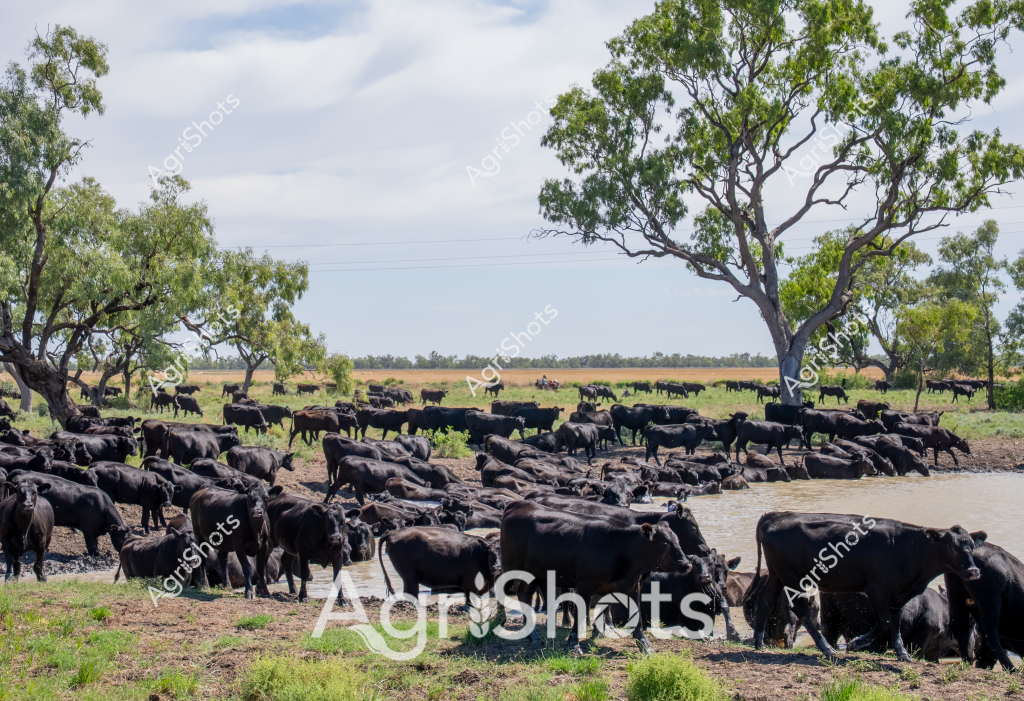
A large herd of black cattle congregates around a water point in a classic Australian pastoral landscape. Numerous dark-colored cattle crowd the waterhole, some standing in the shallow water while others wait at the edges, creating a dense group against the dry grassland and scattered eucalyptus trees. The landscape suggests a cattle station in northern Australia, with open grasslands stretching to the horizon and mature gum trees providing sparse shade. These appear to be beef cattle, likely Angus or Droughtmaster breed, gathering to drink during what seems to be a warm day with a pale, cloudy sky overhead. The scene captures the essential rhythm of cattle management in Australia's extensive grazing systems, where water sources are critical lifelines in often arid environments.

The image showcases the typical landscape of a large cattle property, with the animals clustered tightly around the water source, demonstrating the importance of strategic water points in managing livestock across vast pastoral lands. The green-grey foliage of the eucalyptus trees and the dusty ground highlight the challenging agricultural conditions of the region. Image

A large herd of black cattle congregates around a water point in a classic Australian pastoral landscape. Numerous dark-colored cattle crowd the waterhole, some standing in the shallow water while others wait at the edges, creating a dense group against the dry grassland and scattered eucalyptus trees. The landscape suggests a cattle station in northern Australia, with open grasslands stretching to the horizon and mature gum trees providing sparse shade. These appear to be beef cattle, likely Angus or Droughtmaster breed, gathering to drink during what seems to be a warm day with a pale, cloudy sky overhead. The scene captures the essential rhythm of cattle management in Australia's extensive grazing systems, where water sources are critical lifelines in often arid environments. The image showcases the typical landscape of a large cattle property, with the animals clustered tightly around the water source, demonstrating the importance of strategic water points in managing livestock across vast pastoral lands. The green-grey foliage of the eucalyptus trees and the dusty ground highlight the challenging agricultural conditions of the region.