Results for “design”
 Image
Image
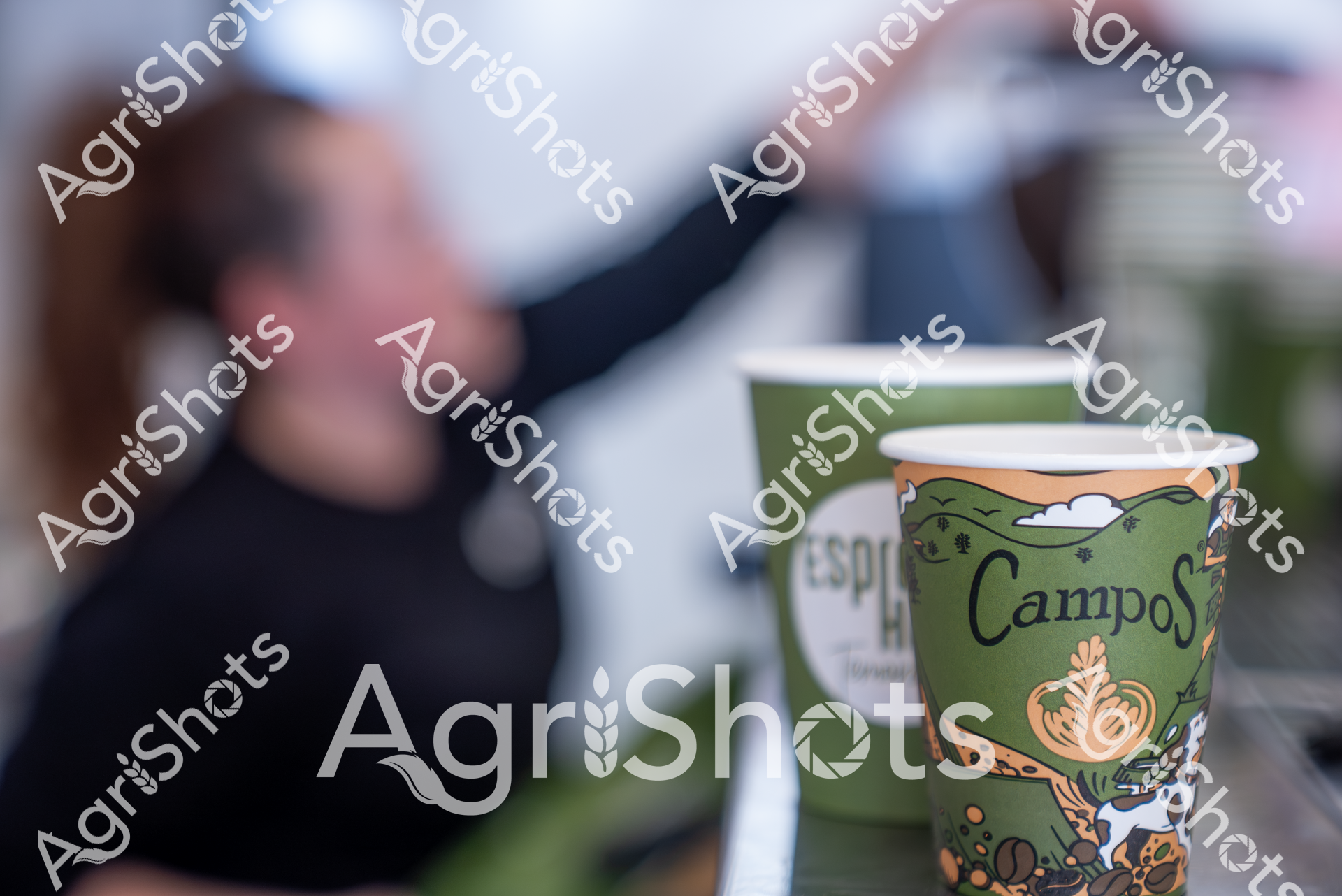
A green Campos Coffee cup sits in focus, with a blurred figure in a black top in the background. The image appears to be taken inside a coffee shop, showcasing the artisan coffee brand's distinctive packaging with illustrative design. The scene suggests a moment of coffee preparation or enjoyment in a warm, inviting setting.
 Image
Image
A woman with manicured nails holds a green coffee cup with the motivational text "Be Happy, Be Full" printed on its side. The cup appears to be from a coffee shop, suggesting a moment of relaxation or a quick break during the day. The image focuses on the hand and cup, creating an intimate and personal atmosphere.
 Image
Image
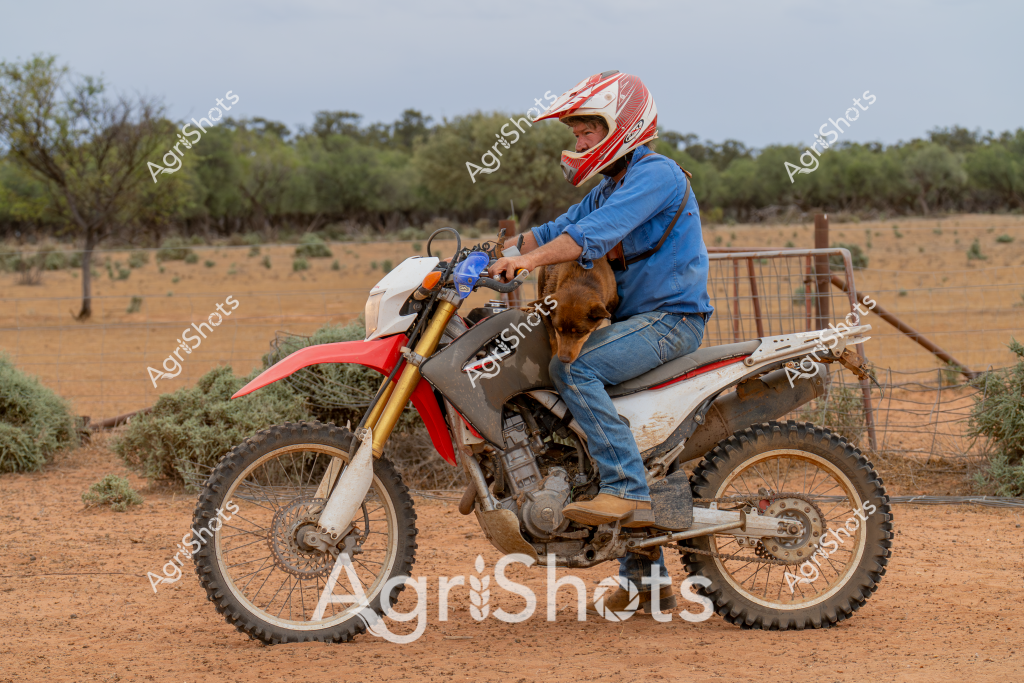
A man in blue clothing and a red and white helmet rides a red and white dirt bike across an arid Australian landscape. Sitting in front of him in the bike's cargo compartment is a brown dog, seemingly comfortable and secure during the journey. The terrain is typical of the Australian outback - reddish-brown soil, sparse vegetation, and scattered trees and shrubs in the background. The rider appears to be navigating a dirt track, with wire fencing visible to one side, suggesting this is a rural property or station. The motorcycle's robust design with knobby off-road tires indicates it's well-suited for traversing challenging rural terrain. The scene captures the practical nature of transport in remote Australian agricultural areas, where versatile vehicles and loyal working dogs are essential companions.
 Image
Image
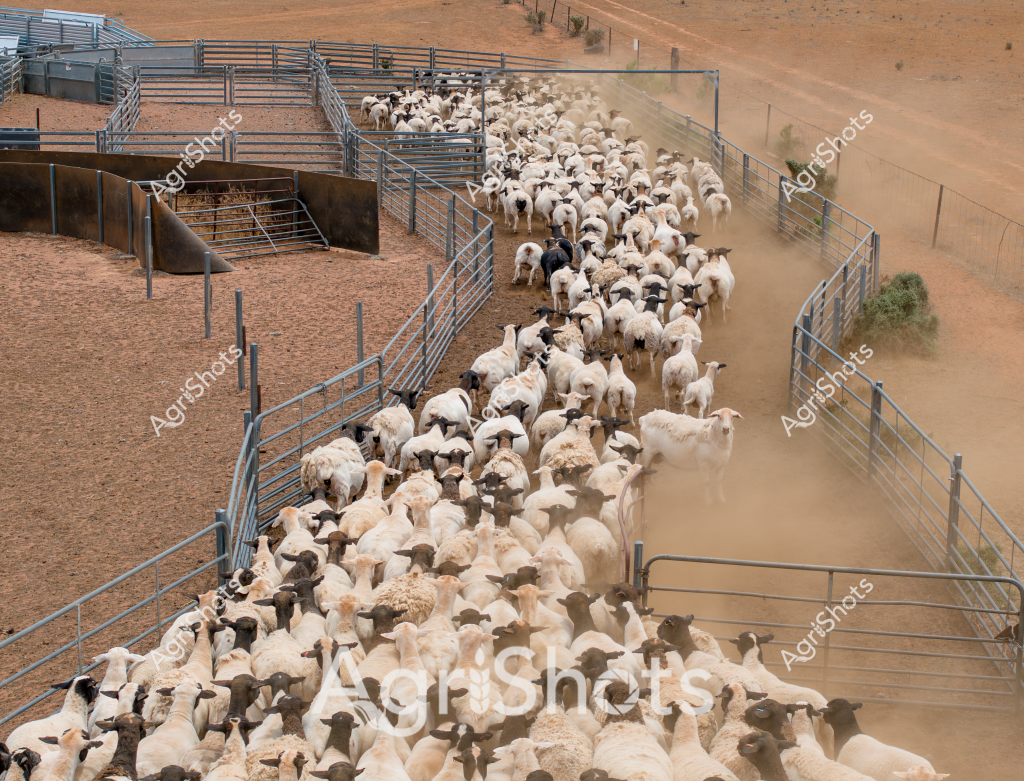
A large mob of Merino sheep moves through a carefully designed livestock handling system on a dry, dusty Australian pastoral property. The blue steel cattle yards create a structured pathway guiding the dense flock of white and black-faced sheep, moving steadily between metal gates and fenced channels. Fine dust rises from their hooves as they navigate the tight corral, highlighting the arid landscape surrounding the metal infrastructure. The precision of the yard design demonstrates modern Australian sheep management techniques, allowing efficient movement and control of the livestock. The image captures the scale and discipline of large-scale sheep farming in Australia's inland regions, where carefully engineered infrastructure supports agricultural productivity in challenging environmental conditions. The flock appears to be predominantly white Merino sheep, with several black-faced animals interspersed throughout, suggesting a mixed breeding program typical of Australian pastoral stations. The earthen ground and sparse vegetation in the background underscore the challenging agricultural environment where these sheep are raised.
 Image
Image
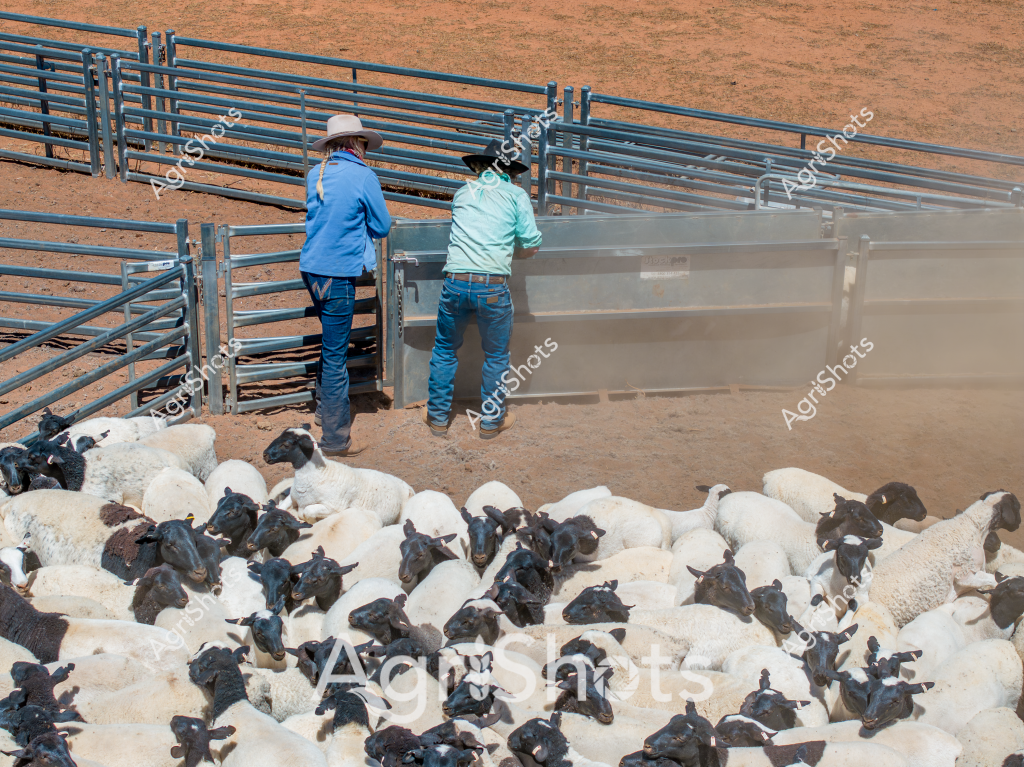
Two men in work attire operate a livestock handling system with a herd of black and white sheep clustered in the holding yards. The men, wearing blue shirts, jeans, and work hats, are positioned near a metal livestock chute and gate system on a dry, reddish-brown earth paddock. A dense group of sheep - predominantly white with black-faced individuals mixed throughout - are tightly packed in the lower portion of the image, waiting to be processed through the metal handling equipment. The metal gates and chute appear to be a standard design for efficiently moving and managing sheep, typical of Australian livestock management practices. The dusty environment and metal infrastructure suggest this is a working sheep station, likely in an arid or semi-arid region of Australia where sheep farming is a critical agricultural activity. The scene captures the methodical nature of livestock management, with the workers carefully positioning the animals through controlled infrastructure, demonstrating the precision and skill required in modern agricultural practices. The mix of white and black-faced sheep indicates a potentially diverse breeding program or mixed flock composition, which is common in Australian sheep production.
 Image
Image
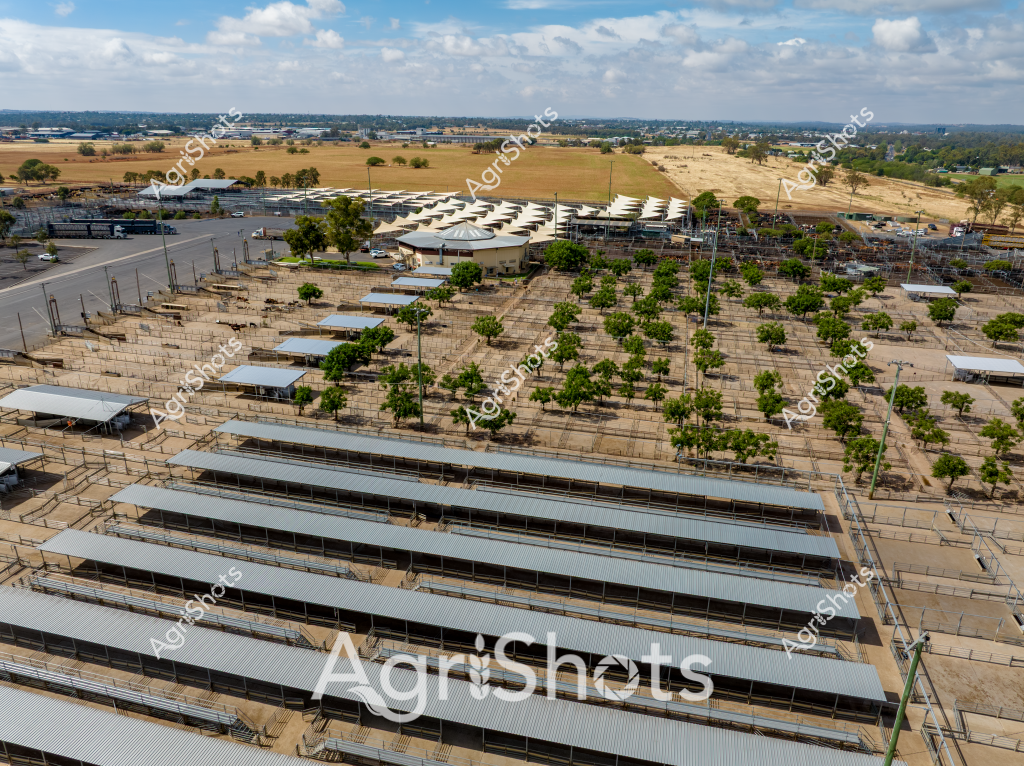
An expansive aerial view of a modern livestock facility reveals a systematic agricultural complex featuring multiple long, covered livestock sheds with metal roofing. Strategically planted trees are interspersed throughout the sandy-colored ground, providing shade and windbreaks across the extensive property. The facility appears designed for efficient animal management, with carefully constructed pens, walking areas, and sheltered spaces that maximize animal welfare and operational productivity. The landscape surrounding the facility is characterized by open paddocks and distant rural infrastructure, with a backdrop of golden fields and scattered trees extending to the horizon. Multiple metal-roofed structures of varying lengths are arranged in parallel rows, suggesting a highly organized approach to livestock management. Lightweight shade structures and carefully planned vegetation contribute to the facility's professional and considered design. The aerial perspective highlights the scale and precision of modern agricultural infrastructure, showcasing how contemporary farming operations integrate functional design with animal husbandry best practices. Fencing, access routes, and strategic building placement demonstrate a sophisticated approach to livestock management in what appears to be an arid or semi-arid Australian agricultural setting. The expansive view captures the intersection of engineering, animal care, and agricultural innovation, revealing a meticulously planned livestock facility that represents the advanced state of Australian agricultural practices.
 Image
Image
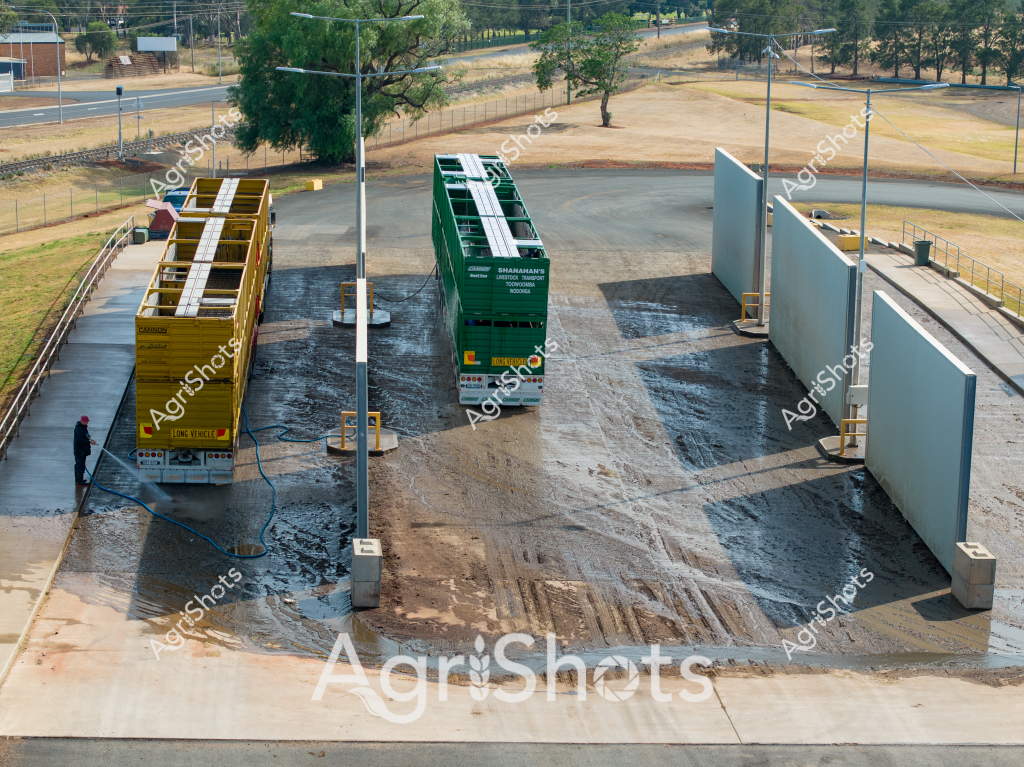
A detailed industrial scene captures a truck washing station with two large transport trailers positioned on a concrete wash pad. A person stands near one of the trucks, operating a high-pressure water hose to clean the vehicle's exterior. The yellow and green trailers are positioned precisely between concrete barriers and metal support structures, suggesting a systematic approach to vehicle maintenance and sanitation. The environment appears to be a rural or industrial setting, with dry grass and scattered trees visible in the background. The concrete wash pad shows evidence of extensive water use, with wet and muddy areas surrounding the trailers. Overhead lighting poles and a fence line indicate this is a purpose-built facility for truck cleaning and maintenance. The wash station demonstrates the meticulous care taken in maintaining commercial transport vehicles, with careful positioning and dedicated infrastructure for thorough cleaning. The scene captures the intersection of agricultural logistics and maintenance, highlighting the professional approach to vehicle upkeep in rural transportation operations. The surrounding landscape is typical of a dry agricultural area, with sparse vegetation and open space, suggesting this is likely in an Australian rural or semi-rural location. The careful design of the wash station reflects the importance of vehicle maintenance in agricultural and transport industries.
 Image
Image
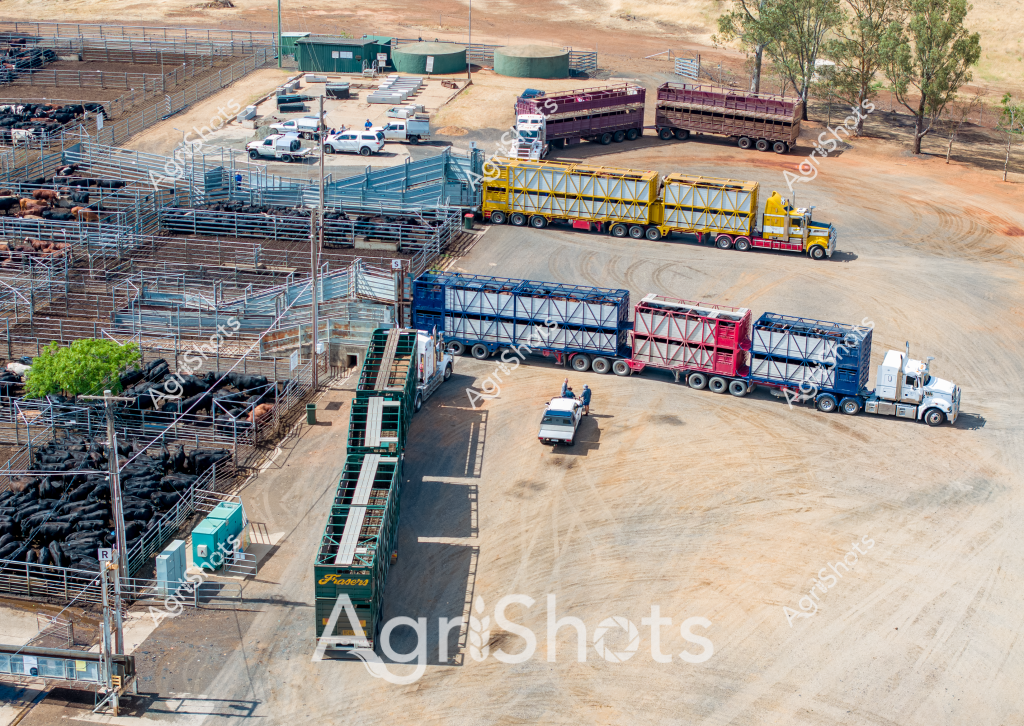
A bustling livestock transport hub captures the essence of Australia's robust cattle industry. Multiple large trucks with extended trailers are positioned within a dirt yard, surrounded by extensive metal cattle yards filled with black cattle. The scene is set in an arid landscape, with sparse trees and a green-roofed processing shed in the background, suggesting a remote cattle station in Western Australia or the Northern Territory. Yellow and white road trains with multiple linked trailers dominate the foreground, their robust design specifically engineered for long-distance livestock transportation across challenging rural terrain. The trucks are strategically parked near loading ramps, ready to transport cattle between properties or to processing facilities. Smaller utility vehicles are scattered around the yard, indicating active staff managing the livestock movement. The metal cattle yards are densely populated with black beef cattle, likely Angus or Wagyu breeds, standing in organized sections separated by robust galvanized steel fencing. The dusty, ochre-colored ground and sparse vegetation highlight the rugged environmental conditions typical of Australian cattle country. Sophisticated livestock handling infrastructure demonstrates the professional and efficient approach to cattle management in Australia's agricultural sector. This aerial view reveals the complex logistics and infrastructure required to support large-scale cattle transportation, showcasing the critical role of road transport in Australia's beef industry supply chain.
 Image
Image
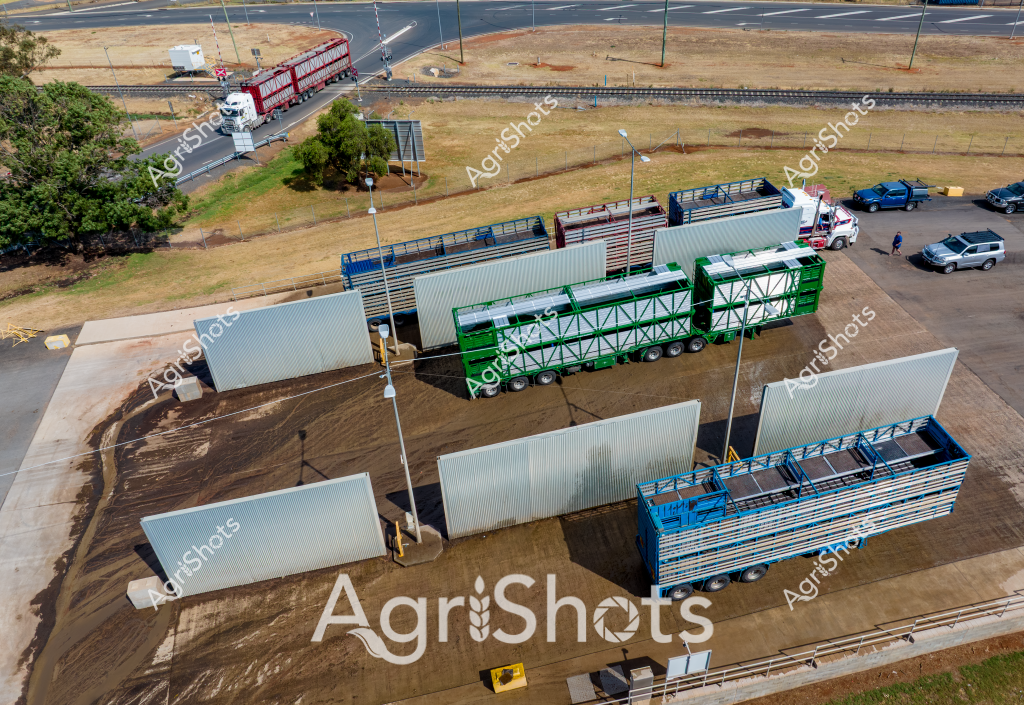
An aerial view of a transport and logistics hub showcases specialized livestock trailers designed for cattle transportation. Multiple multi-axle trucks with green, blue, and white animal transport containers are strategically positioned on a concrete hardstand area adjacent to railway lines. The scene reveals heavy-duty commercial vehicles with intricate steel framing and multiple decks, engineered to safely move livestock across Australian agricultural regions. Surrounding infrastructure includes grassy verges, bitumen roads, and railway tracks, indicating this is a professional livestock transportation staging area. Parked vehicles in the background suggest ongoing logistics operations, with the entire facility demonstrating the sophisticated infrastructure supporting Australia's cattle transport networks. The trailers feature robust steel construction with multiple levels, ventilation gaps, and secure railings - critical design elements for animal welfare during long-distance transportation. The green and blue color schemes of the trailers provide visual contrast against the dusty brown ground and gray infrastructure, highlighting the specialized nature of agricultural transport equipment.
 Image
Image
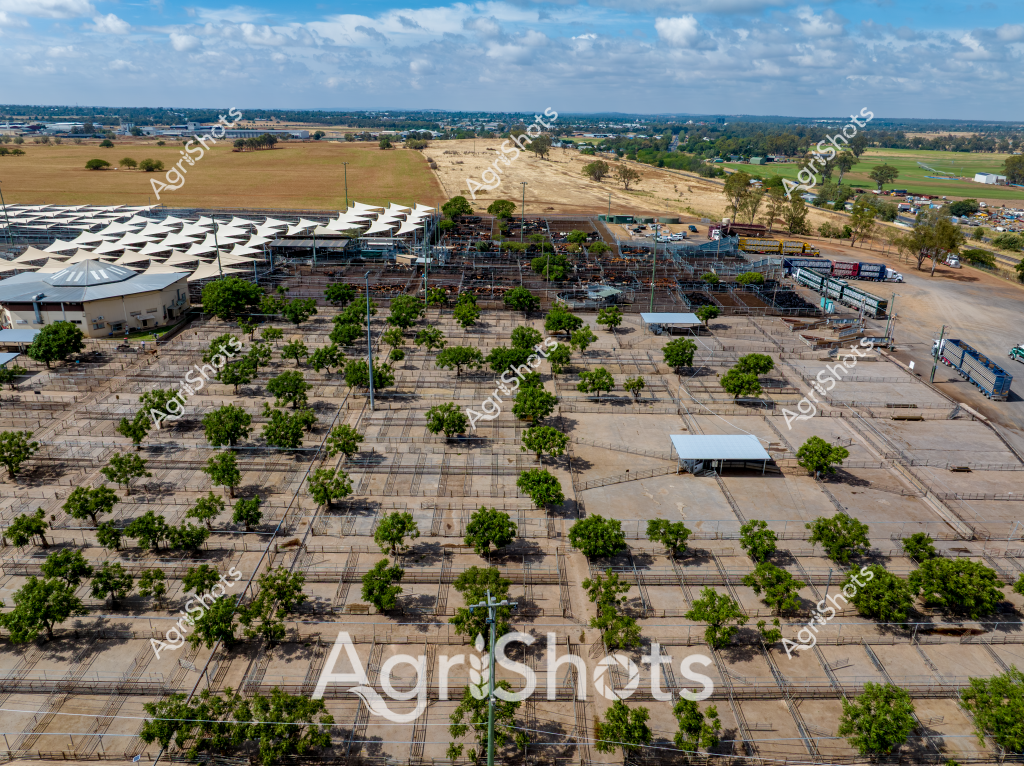
An expansive livestock processing facility captures the essence of Australian agricultural infrastructure, with a meticulously organized layout of multiple cattle yards and shade trees. The aerial view reveals a complex network of fenced paddocks, strategically positioned shelters, and a modern facility with distinctive white-peaked roofing structures. Mature trees are systematically planted throughout the concrete and dirt yards, providing natural shade and breaking up the geometric lines of the infrastructure. The surrounding landscape showcases a classic Australian rural setting, with golden dry paddocks extending to the horizon, punctuated by scattered trees and distant agricultural buildings. The facility appears to be a large-scale cattle processing center, with multiple holding yards, movement gates, and covered processing areas designed for efficient livestock management. The blue sky with scattered white clouds suggests a typical warm Australian day, highlighting the expansive nature of rural agricultural operations. Robust infrastructure and careful landscape design demonstrate the sophisticated approach to livestock management in contemporary Australian agriculture, balancing functional efficiency with environmental considerations. The image represents a sophisticated livestock processing facility that integrates architectural design, animal welfare considerations, and operational efficiency in a comprehensive agricultural setting.
 Image
Image
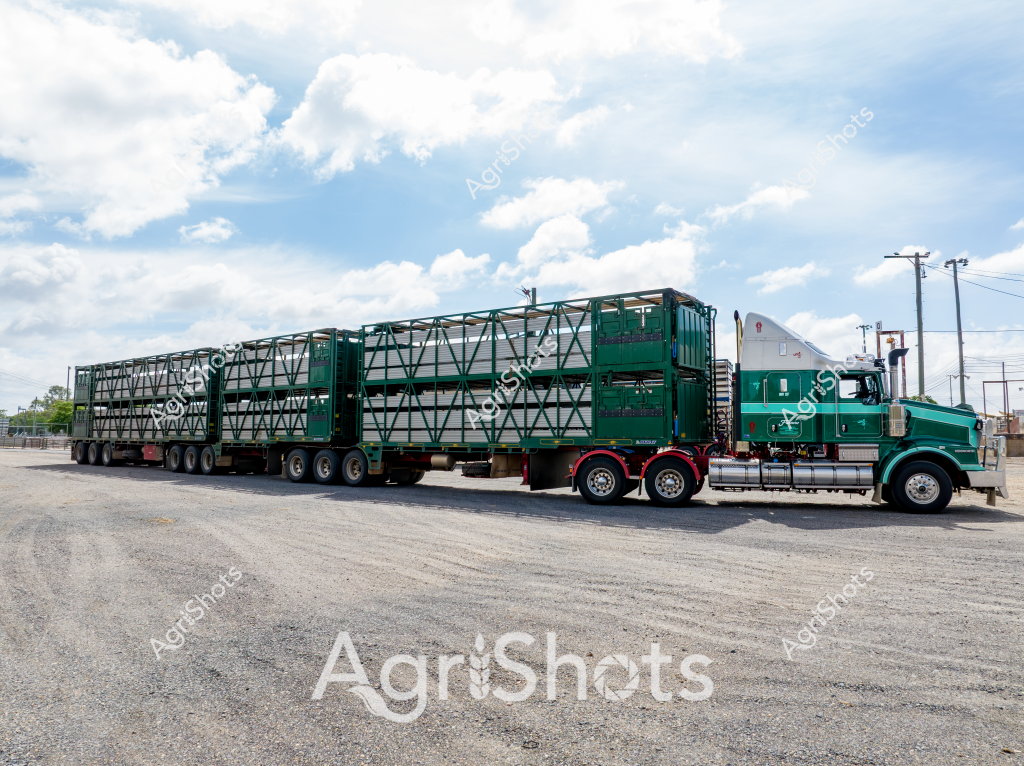
A massive green livestock transport truck with multiple trailers dominates this agricultural logistics scene. The heavy-duty truck, likely a Western Star model, is equipped with three-tiered stock crates designed for safely transporting large numbers of cattle or sheep across rural Australian landscapes. Parked on a gravelly yard with electrical poles and cloudy blue skies in the background, the truck represents the critical transportation infrastructure of Australia's livestock industry. The green and white color scheme of the truck and trailers suggests a professional livestock transport operation, with robust engineering specifically designed to handle long-distance animal transportation in challenging outback conditions. The multiple-trailer configuration indicates the truck's capacity to move significant numbers of livestock efficiently between stations, saleyards, or to market. The image captures the scale and specialized nature of agricultural transportation in Australia, where vast distances and large herds require sophisticated logistics and purpose-built equipment. The truck's sturdy construction and multi-axle design reflect the demanding requirements of moving livestock across some of the world's most challenging agricultural terrains.
 Image
Image
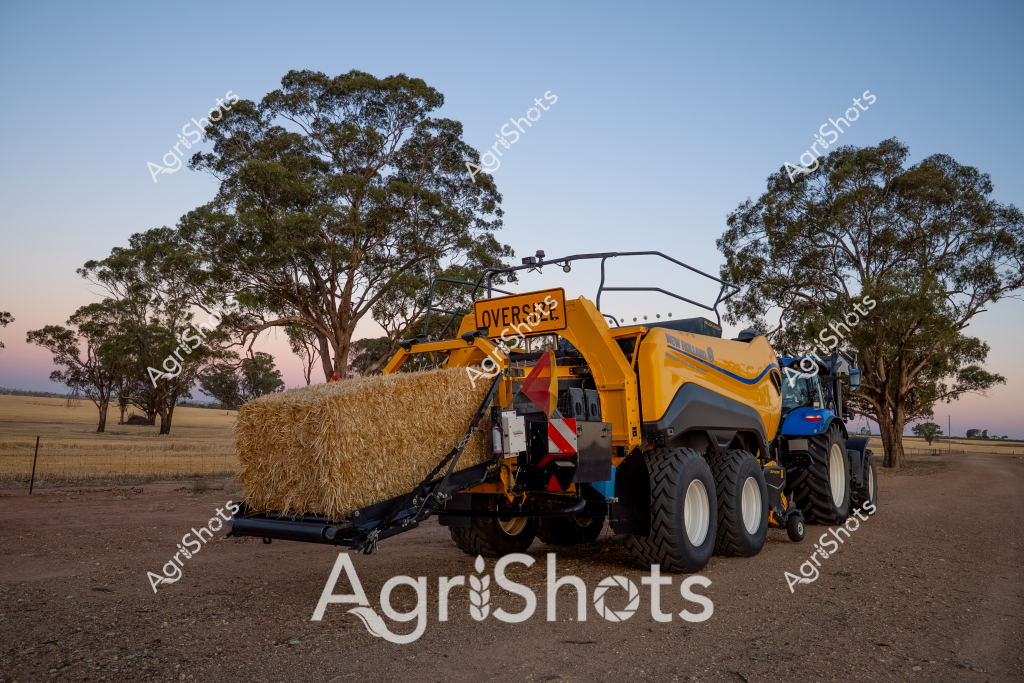
A gleaming yellow New Holland large square baler captures the essence of modern agricultural machinery, positioned against a serene rural landscape of scattered eucalyptus trees at dawn or dusk. The powerful piece of farm equipment is handling a large golden straw bale, demonstrating the precision of contemporary hay harvesting technologies. Crisp white wheels and intricate mechanical components contrast with the bright yellow body of the baler, highlighting the machine's robust design for efficient agricultural operations. The surrounding landscape features a classic Australian farm setting - dry paddocks with sparse trees and a soft, pastel sky creating a tranquil backdrop to the powerful farming equipment. The scene epitomizes the intersection of advanced agricultural technology and the timeless Australian rural environment, showcasing the sophisticated machinery that enables modern farming practices. The baler appears to be parked on a dirt area, likely a farm yard or access road, with native trees framing the background. Its large square bale-handling capability represents the high-efficiency standards of contemporary agricultural equipment, designed to maximize productivity in challenging rural conditions.
 Image
Image
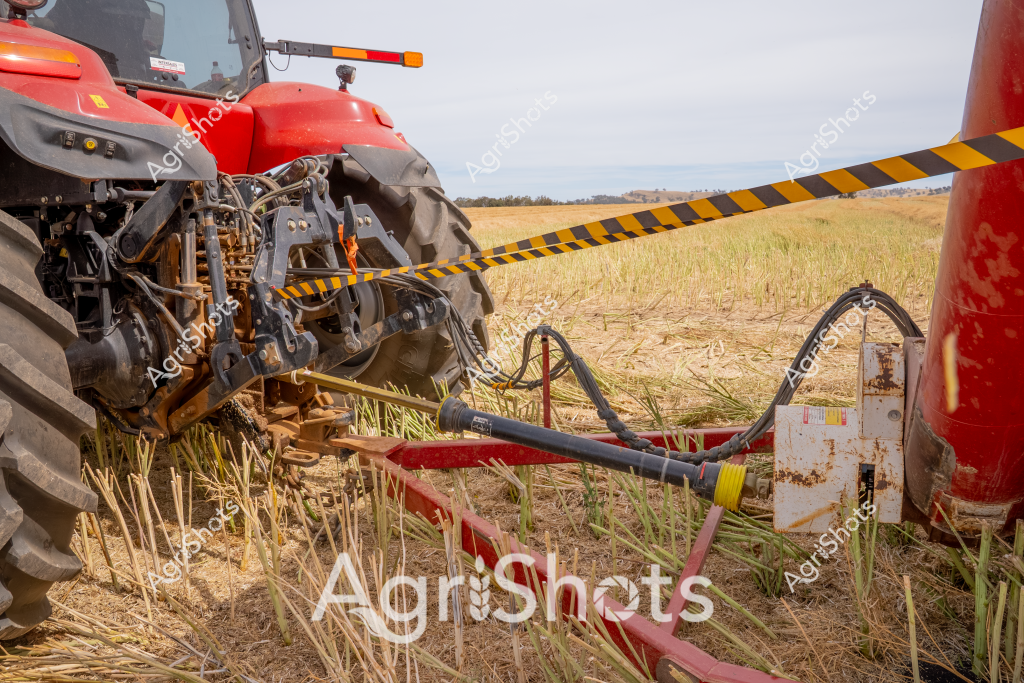
A red tractor positioned in a stubble field, showcasing sophisticated agricultural machinery connections. Intricate hydraulic linkages and robust mechanical attachments are visible, connecting the powerful tractor to an agricultural implement. Yellow and black caution tape-styled markings highlight critical connection points, emphasizing safety and precision in farm equipment integration. The landscape behind reveals a golden-hued harvested field with remnant crop stubble, stretching toward a distant horizon under an overcast sky. Large agricultural tires with deep treads grip the uneven ground, demonstrating the heavy-duty design required for modern farming operations. This image captures the technical complexity of contemporary agricultural machinery, where engineering precision meets rural productivity.
 Image
Image
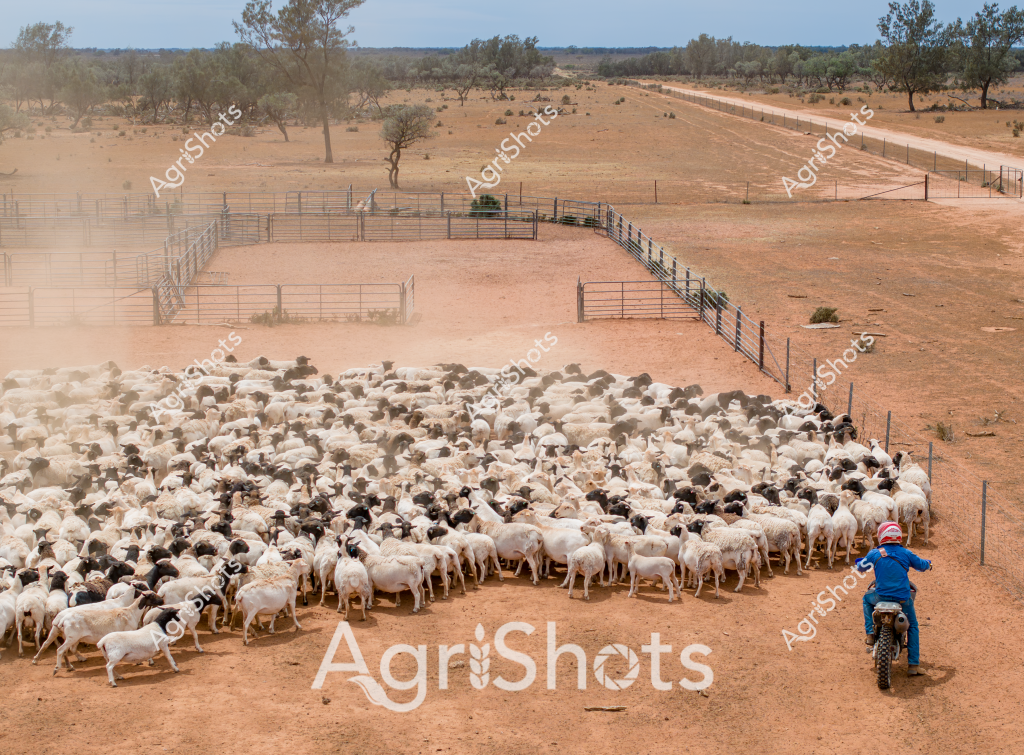
A man on a motorbike guides a large, densely packed mob of mixed-breed sheep through a dusty livestock yard in the Australian outback. The herd, consisting of white and black sheep, is tightly clustered within a series of metal fencing panels that create a precise movement pathway. The landscape is classic arid Australian terrain - reddish-brown earth, sparse eucalyptus trees, and wide-open horizons stretching toward a pale blue sky. Dust billows around the sheep's hooves, creating a hazy atmospheric effect that highlights the dynamic movement of the animals being mustered. The rider, wearing a blue shirt and helmet, skillfully navigates the motorcycle to control the herd's direction, demonstrating the modern techniques used in contemporary Australian livestock management. The fenced paddocks and strategic yard design reveal the sophisticated infrastructure of large-scale sheep farming in remote Australian regions.
 Image
Image
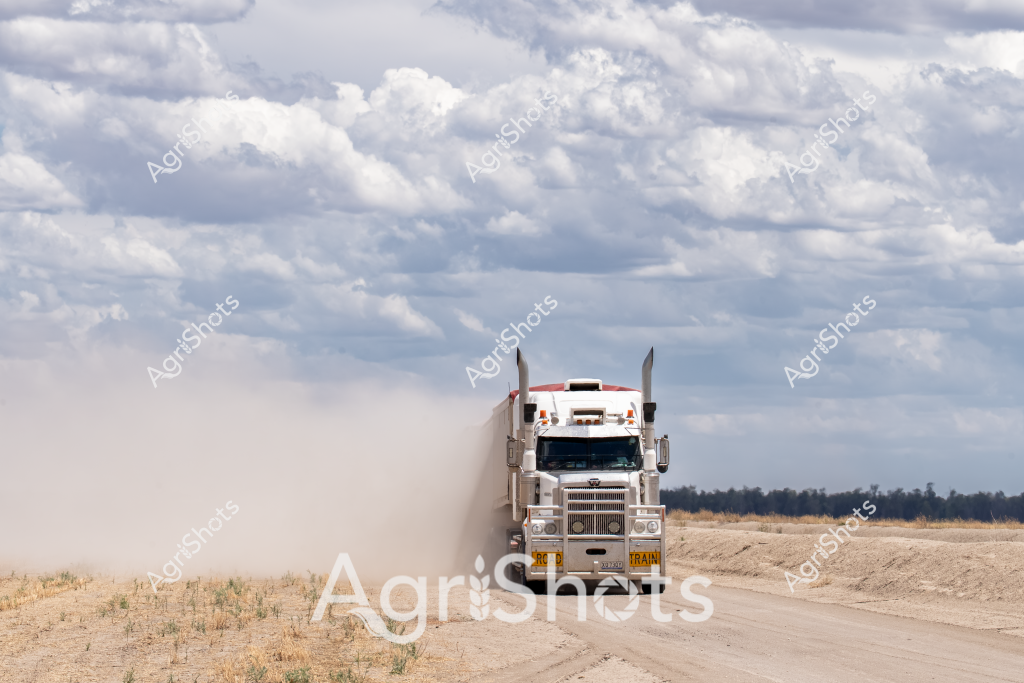
A powerful white Western Star truck kicks up a massive dust cloud as it travels along a dry, dusty rural road under a dramatic cloudy sky. The heavy-duty truck appears to be transporting agricultural goods across an arid landscape, with sparse grassland and distant treeline visible in the background. Thick, billowing cumulus clouds fill the sky, creating a moody atmospheric backdrop that emphasizes the harsh, dry conditions of the Australian outback. The truck's robust design and prominent vertical exhaust stacks suggest it's built for rugged long-distance transport across challenging rural terrain. The image captures the essence of Australian rural logistics and transportation, highlighting the resilience of both the vehicle and the landscape it traverses.
 Image
Image
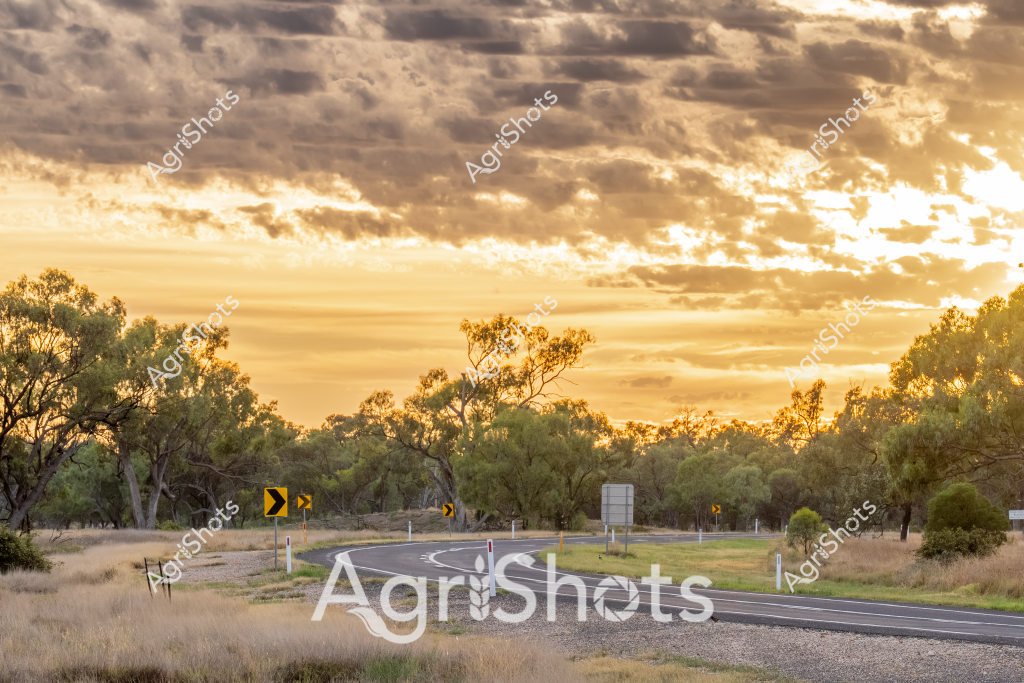
This evocative rural landscape captures a sweeping highway curve at sunset in what appears to be the Australian outback. Golden late-afternoon light bathes the scene, illuminating gnarled eucalyptus trees and dry grasslands surrounding a winding bitumen road. Directional curve warning signs in yellow and black mark the road's trajectory, guiding drivers through the undulating terrain with careful precision. Dense, textured clouds in warm sepia and amber tones create a dramatic backdrop, their layered formations stretching across the expansive sky and casting a rich, atmospheric glow over the surrounding bushland. The road's gentle bend and strategic signage suggest a well-maintained rural highway traversing a classic Australian pastoral landscape, where the rugged beauty of the natural environment meets careful infrastructure design.
 ▶ Video
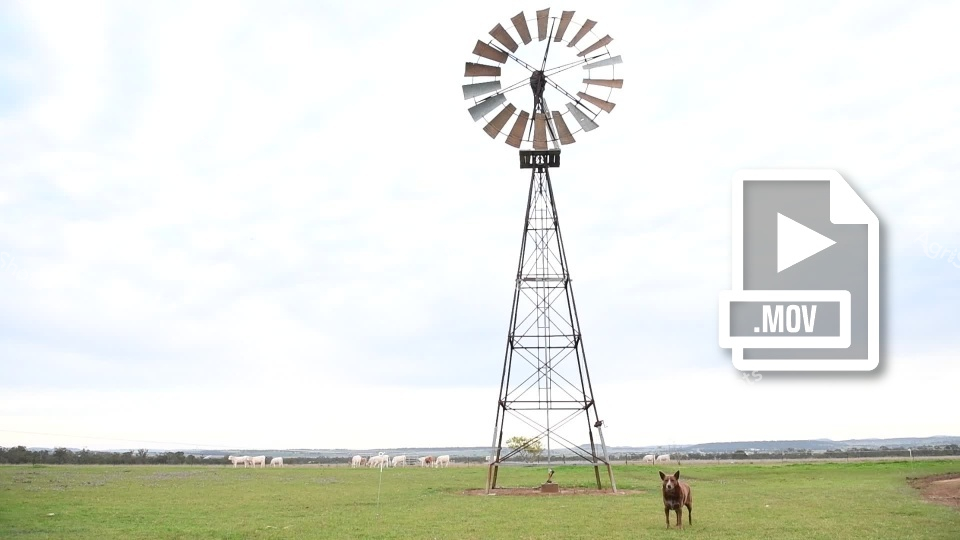
In this serene pastoral scene, a lone horse stands near a classic windmill on a green pasture, with farm structures and distant treelines visible on the horizon. The tall metal windmill, with its distinctive multi-bladed design, dominates the landscape, representing traditional agricultural infrastructure used for water pumping and land management.
 ▶ Video
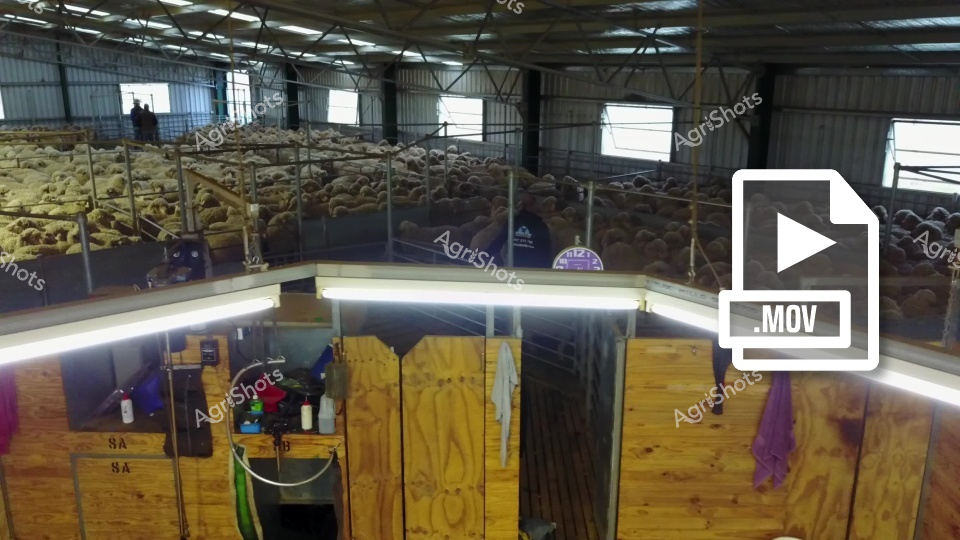
A large shearing shed houses hundreds of merino sheep in holding pens, while the central shearing floor features wooden catching pens and equipment stations where shearers work. The industrial woolshed design with corrugated walls and windows provides natural lighting for the wool harvesting operation. Men working as shearers and station hands move through the facility, managing the flock during the busy shearing season on this New South Wales sheep station.
 Image
Image
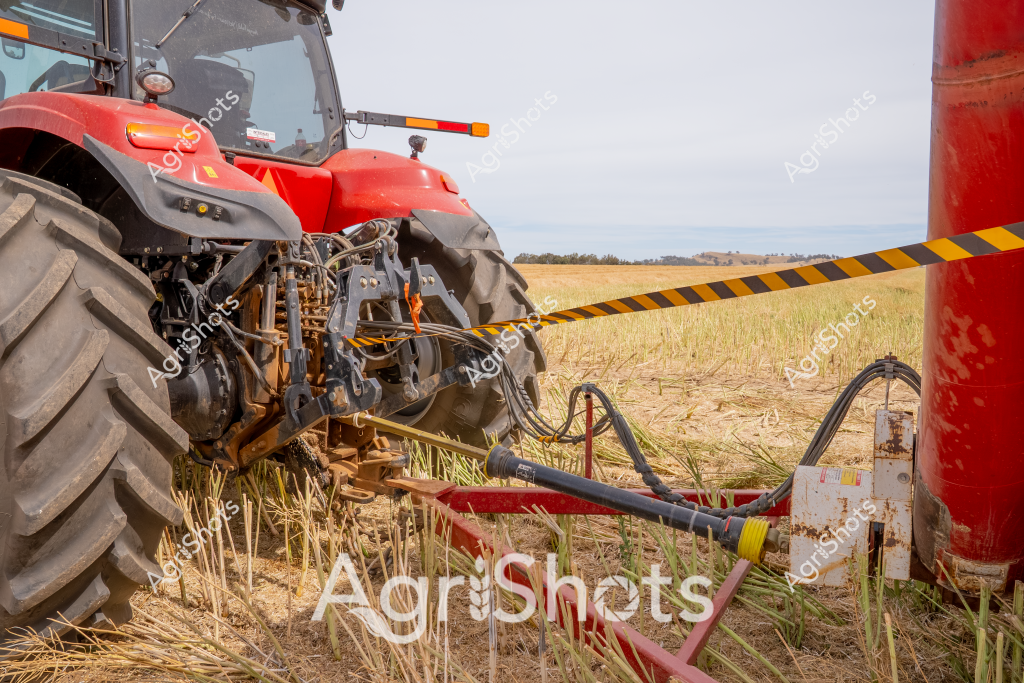
A robust red agricultural tractor stands in a harvested field, its large aggressive tread tires gripping the stubble-covered ground. Complex hydraulic linkages and mechanical connections are clearly visible between the tractor's rear attachment points, revealing sophisticated agricultural engineering. The tractor appears to be positioned for field work, with black hydraulic hoses connecting various mechanical components and a warning tape barrier visible in the background. Dry grass stubble surrounds the machinery, suggesting this is a post-harvest agricultural setting with expansive open paddock landscapes visible in the distance. The gleaming red paint of the tractor contrasts sharply with the muted earth tones of the surrounding agricultural landscape, highlighting modern farming equipment's sophisticated design and functionality.
 ▶ Video
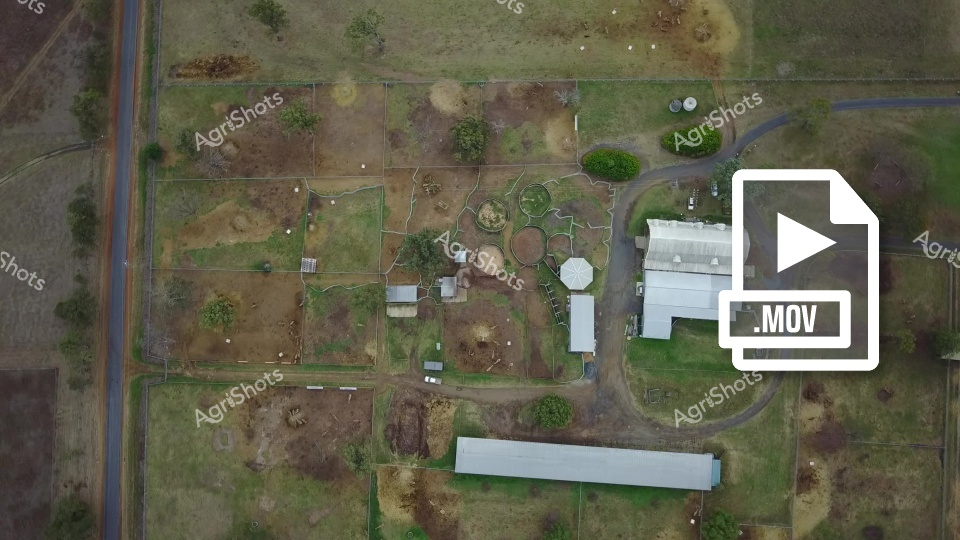
A modern dairy operation in Queensland showcases efficient agricultural infrastructure, with white dairy sheds and circular structures surrounded by green paddocks and access roads. The aerial perspective captures the systematic layout of milking facilities, cattle yards, and support buildings that enable productive dairy farming. Rural roads wind through the property, connecting various operational areas where dairy cattle are processed and managed. The well-organized farm design demonstrates contemporary agricultural planning optimized for dairy production and livestock handling.
 ▶ Video
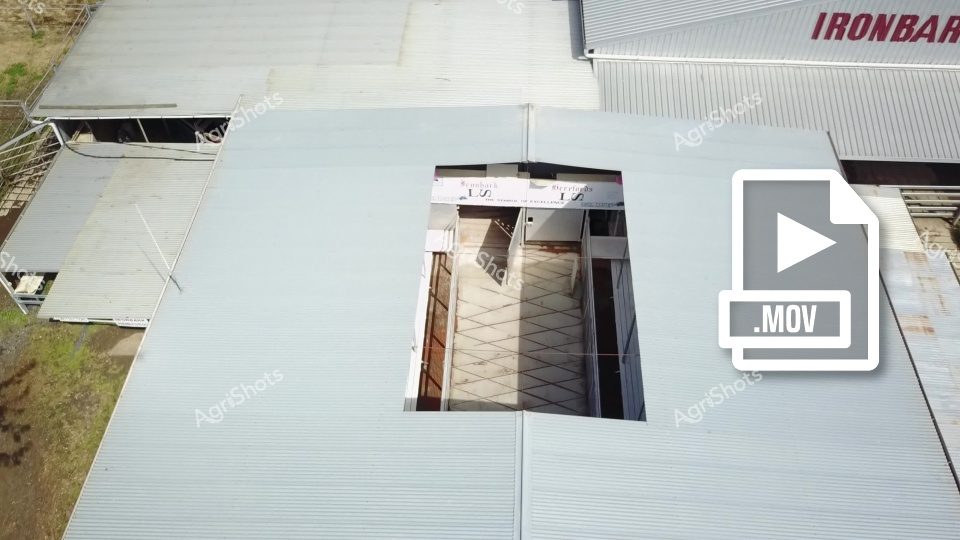
An aerial view captures a modern cattle handling facility with concrete floors and steel yards in New South Wales, showcasing the systematic design of contemporary livestock infrastructure. The facility features multiple holding pens and walkways designed for efficient cattle management, with adjoining sheds providing shelter and storage. The concrete construction and strategic layout demonstrate the evolution of cattle yards from traditional timber structures to durable modern facilities that support the state's significant beef cattle industry.
 ▶ Video
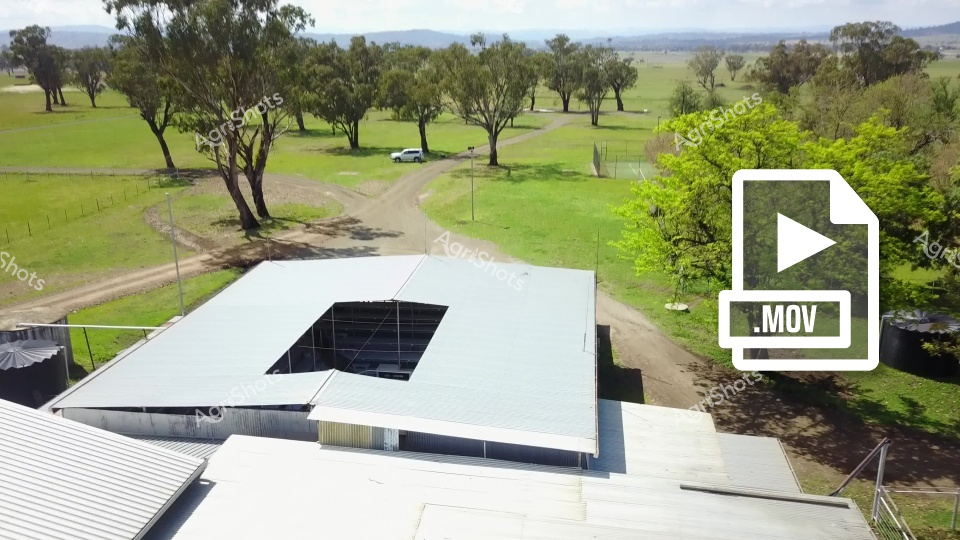
An aerial view of a modern agricultural facility nestled in a lush green landscape, featuring a sleek white building with a distinctive black-windowed design surrounded by mature eucalyptus trees and open paddocks in what appears to be a temperate Australian rural setting. The property showcases expansive grassy fields with scattered trees, a well-maintained dirt road, and a sense of spacious, well-managed agricultural land typical of regional Australia.
 ▶ Video
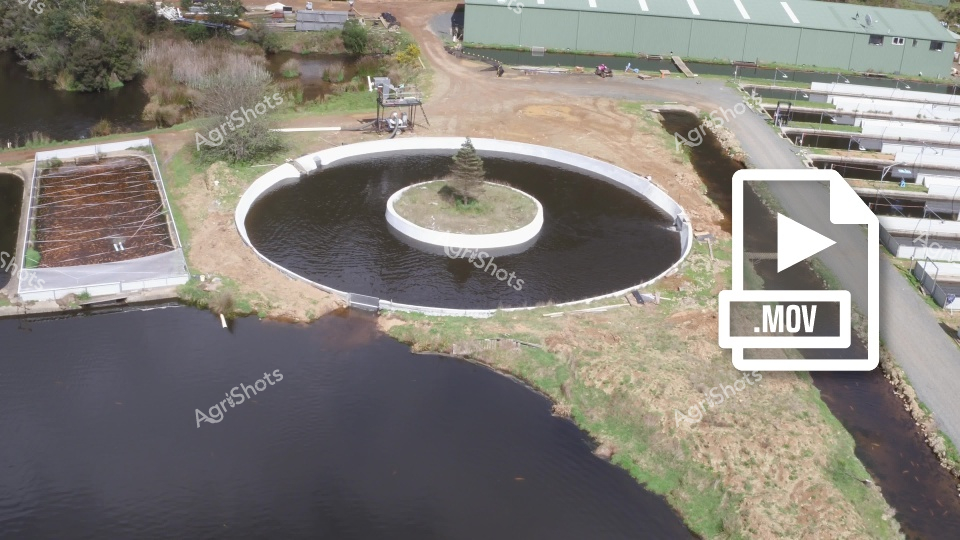
Aerial view of a circular water treatment or aquaculture facility featuring a central circular basin with a small central island, surrounded by additional rectangular water tanks. The site appears to be an agricultural or industrial complex with a green warehouse or building in the background, dirt roads, and various infrastructure elements. The circular design provides an efficient layout for water management or fish farming operations.
 ▶ Video
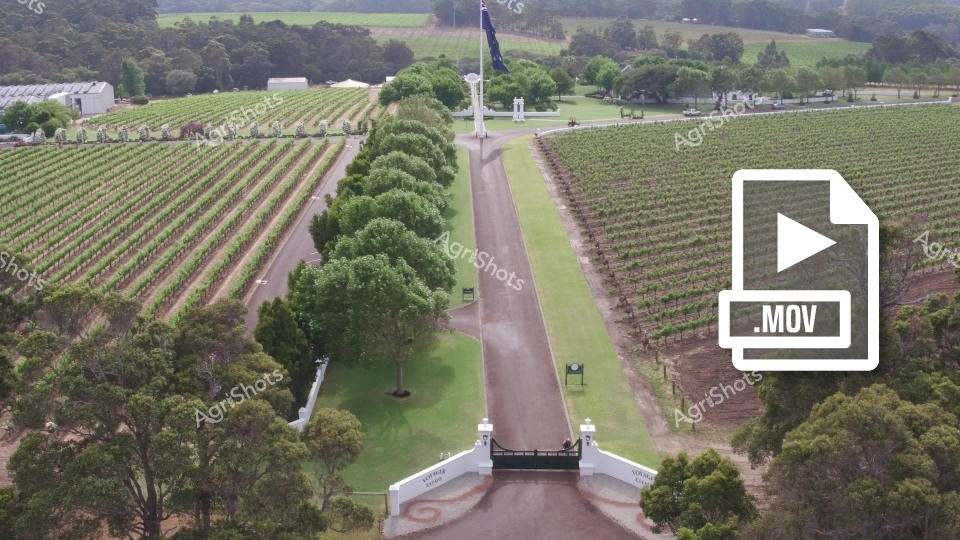
Aerial view of a picturesque vineyard with neatly arranged rows of grapevines stretching out on both sides of a central tree-lined driveway. An Australian flag stands prominently at the end of the path, suggesting this is a winery or agricultural estate in Australia. The meticulously landscaped grounds showcase a symmetrical design with lush green grass, mature trees, and well-maintained agricultural infrastructure.