Results for “corral”
 ▶ Video
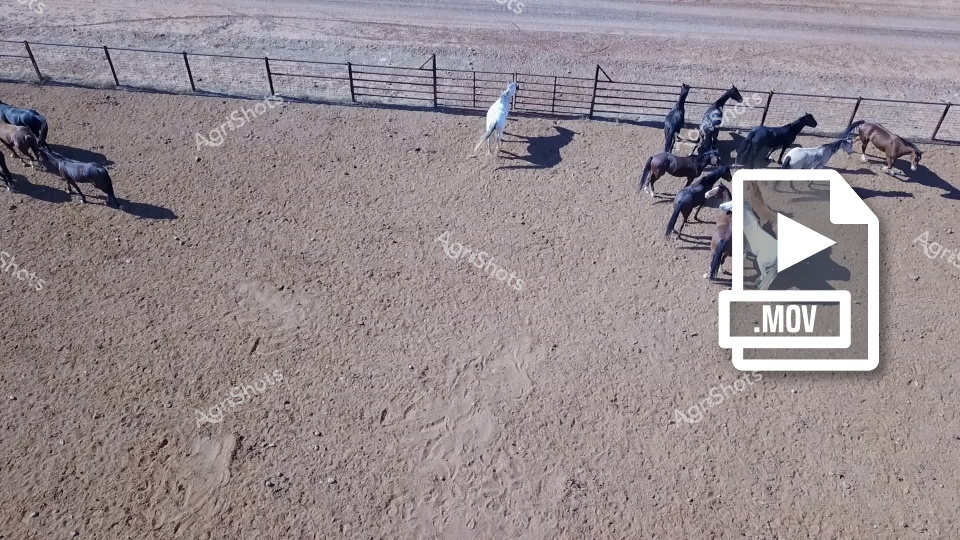
Aerial view of a livestock corral with several horses of different colors, including a white horse, enclosed within a metal fence. The ground is dry and dusty, typical of an arid ranch or farm environment. Horses are scattered across the paddock, suggesting a ranch or training facility setting.
 Image
Image
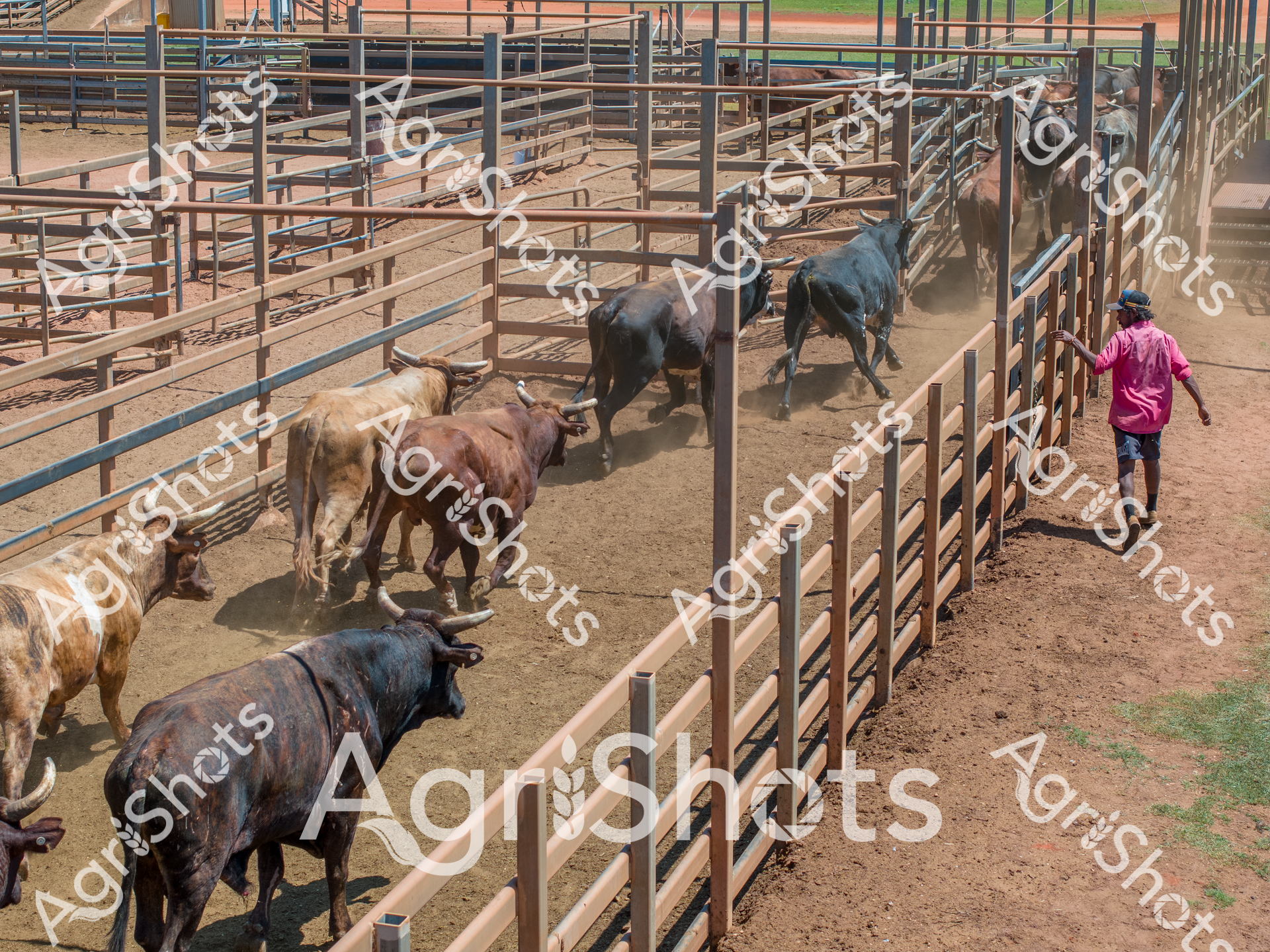
In the dusty cattle yards of Western Australia's Kimberley Region, a stockworker in a bright pink shirt carefully manages a group of mixed-breed cattle through narrow wooden holding pens. The scene captures the essential spring station work of sorting and preparing cattle for export, with dark and light-colored bulls and cows moving through the intricate fencing system under the hot Australian sun.
 Image
Image
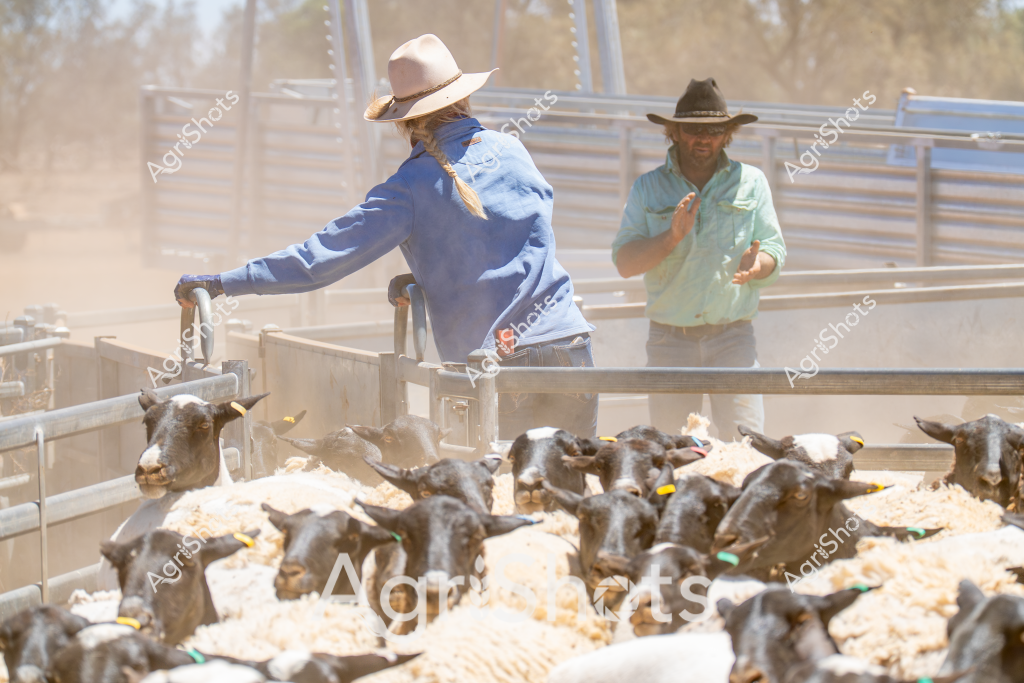
Two people manage a group of goats in a dusty livestock yard, with metal cattle panels creating a confined processing area. A woman wearing a blue jacket and wide-brimmed hat stands at one end of the pen, operating gate controls, while a man in a light green shirt stands nearby, appearing to assist with livestock movement. Multiple dark-colored goats are densely packed in the pen, their heads and bodies visible among wood shavings or straw bedding. Dust hangs in the air, suggesting active movement and handling of the animals, indicating this is likely a routine livestock management activity on an Australian farm or station. The metal yards provide a structured, professional environment for animal handling, with yellow ear tags visible on some of the goats, suggesting they are being sorted, counted, or prepared for veterinary treatment or sale.
 Image
Image
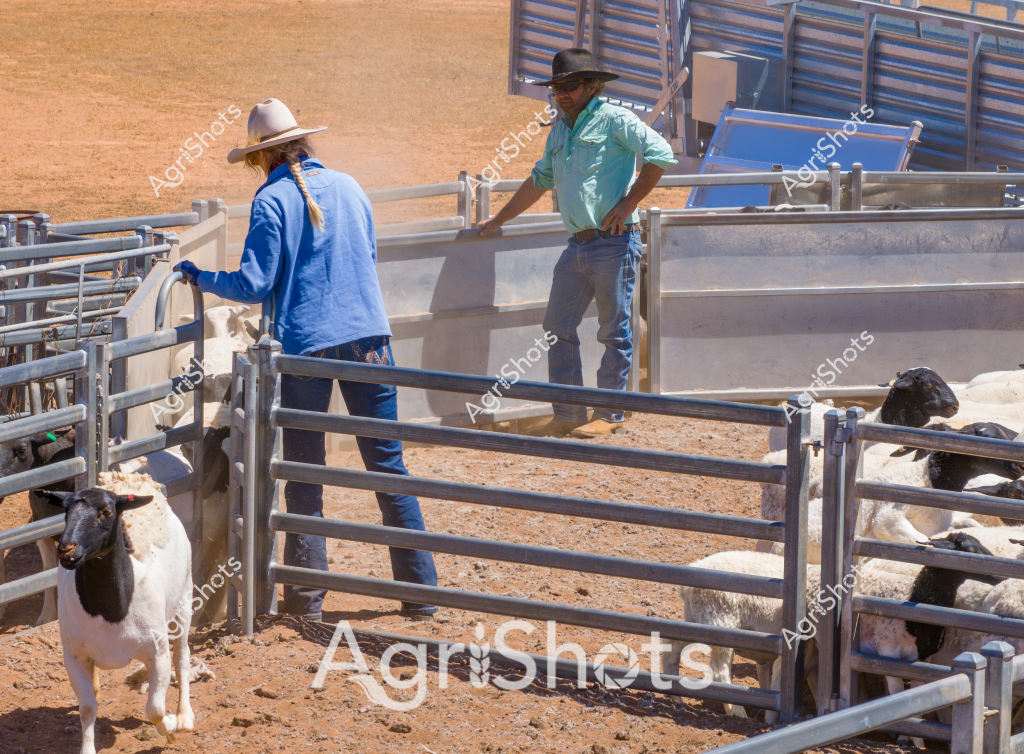
A woman in a bright blue long-sleeved shirt and a light-colored wide-brimmed hat stands alongside a man in a mint green shirt and dark hat within a livestock handling facility. They are working with a small group of sheep in metal livestock yards, with the ground being a sandy, dusty terrain typical of Australian agricultural settings. Several sheep, predominantly white with some dark markings, are contained within the metal gate pens, suggesting this is likely a sheep station or farm in an arid or semi-arid region. The metal yard infrastructure is modern and sturdy, with multiple gate sections and walkways designed for efficient animal movement and management. The scene captures the collaborative nature of livestock handling, with the two workers positioned at different points in the yard, suggesting they are coordinating the sheep's movement or preparation for processing, shearing, or veterinary procedures. The harsh, dry landscape and professional livestock management equipment highlight the resilience and technical expertise required in Australian sheep farming.
 Image
Image
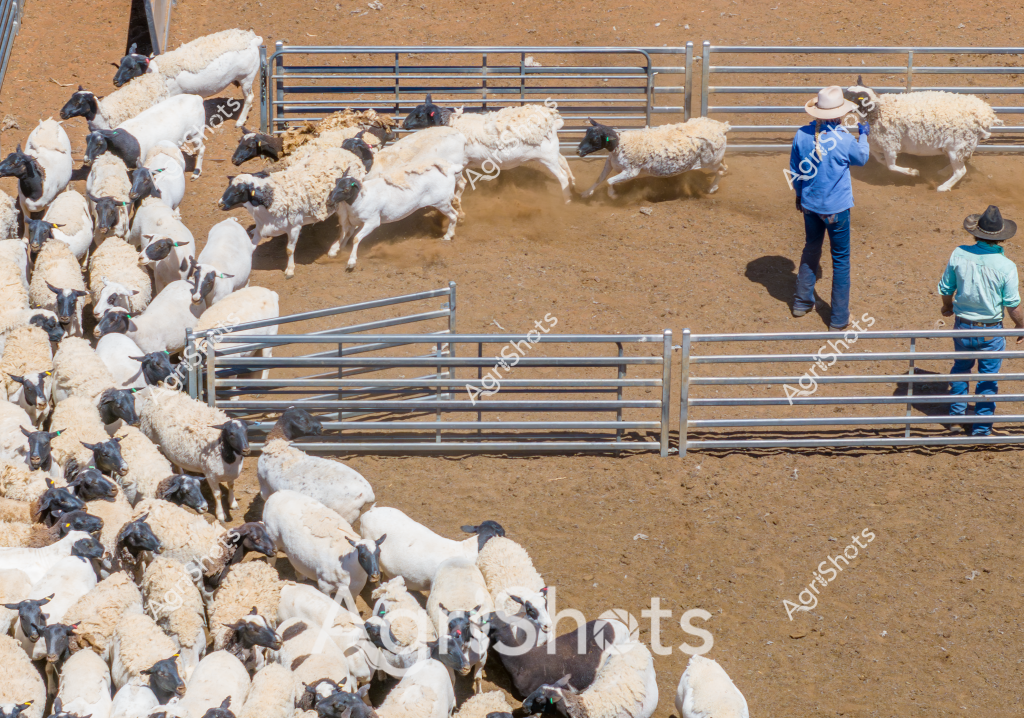
A dynamic sheep mustering scene unfolds in an arid Australian livestock yard, with a large flock of white and black-headed sheep moving through metal livestock gates. Two workers, a man in a blue shirt and another in a turquoise top and wide-brimmed hat, carefully manage the sheep's movement through the paddock's corral system. The sheep appear to be Dorper or Merino crossbreed, with distinctive black heads and white woolly bodies, clustered tightly and moving in coordinated groups across the dusty, sun-baked ground. The metal yard gates create a systematic pathway, guiding the livestock through different pens with precision. Shadows are sharp and defined, indicating bright midday sunlight typical of an Australian rural setting. The scene captures the expertise of stockmen in managing livestock, with their careful positioning and movement controlling the flow of the sheep herd. The environment suggests an inland pastoral station, with hard-packed earth and minimal vegetation, reflecting the challenging conditions of Australian sheep farming. The composition emphasizes the scale and complexity of sheep management, showcasing the critical role of skilled workers and infrastructure in moving and controlling livestock herds across vast agricultural landscapes.
 Image
Image
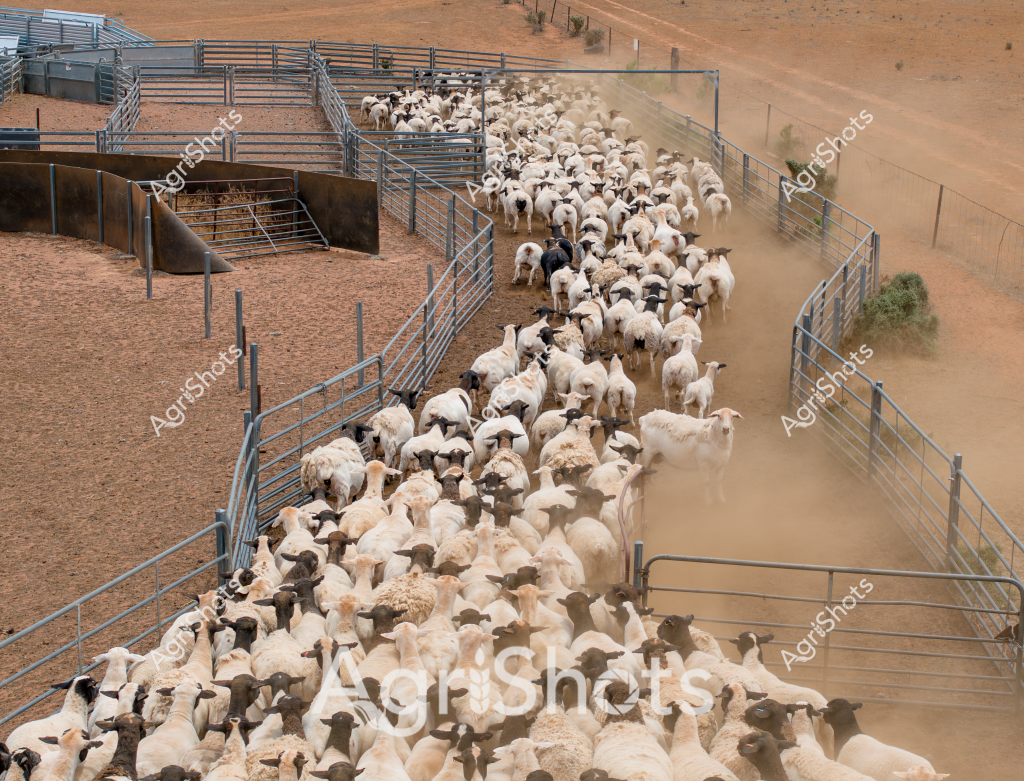
A large mob of Merino sheep moves through a carefully designed livestock handling system on a dry, dusty Australian pastoral property. The blue steel cattle yards create a structured pathway guiding the dense flock of white and black-faced sheep, moving steadily between metal gates and fenced channels. Fine dust rises from their hooves as they navigate the tight corral, highlighting the arid landscape surrounding the metal infrastructure. The precision of the yard design demonstrates modern Australian sheep management techniques, allowing efficient movement and control of the livestock. The image captures the scale and discipline of large-scale sheep farming in Australia's inland regions, where carefully engineered infrastructure supports agricultural productivity in challenging environmental conditions. The flock appears to be predominantly white Merino sheep, with several black-faced animals interspersed throughout, suggesting a mixed breeding program typical of Australian pastoral stations. The earthen ground and sparse vegetation in the background underscore the challenging agricultural environment where these sheep are raised.
 ▶ Video
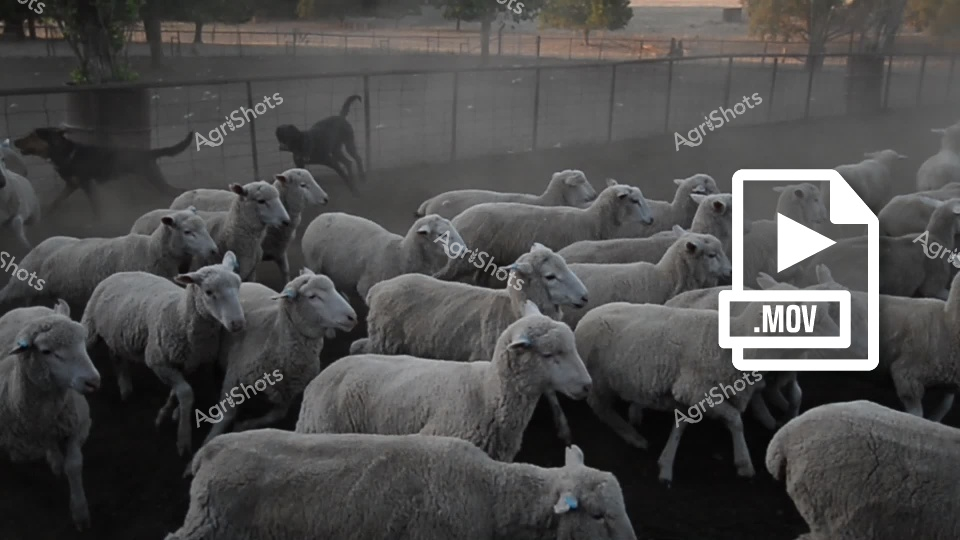
In the soft, misty light of early morning, a dense flock of Merino sheep huddles together in a dusty corral, their woolly coats blending into a uniform gray. Shadowy figures of herding dogs move at the edges of the enclosure, suggesting an imminent muster or movement of the livestock, with the scene capturing the quiet intensity of dawn on an Australian sheep station.
 ▶ Video
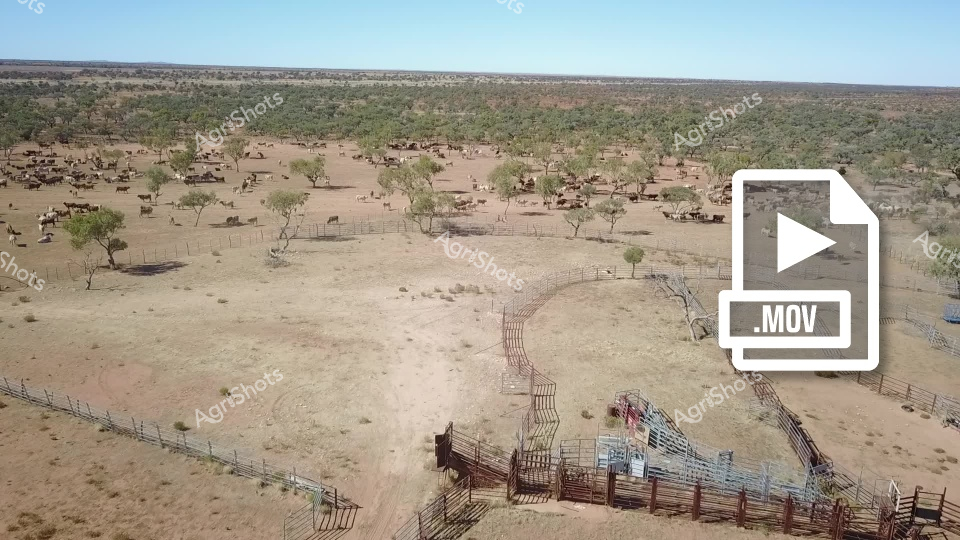
Aerial view of a remote cattle station in arid Australian outback landscape, showing extensive wooden livestock yards and fencing with scattered trees and a large herd of cattle spread across a dry, dusty paddock. The expansive property demonstrates typical pastoral infrastructure used for managing cattle in harsh, sparse grassland environments, with curved corral systems leading to central yard facilities designed for mustering and handling stock.
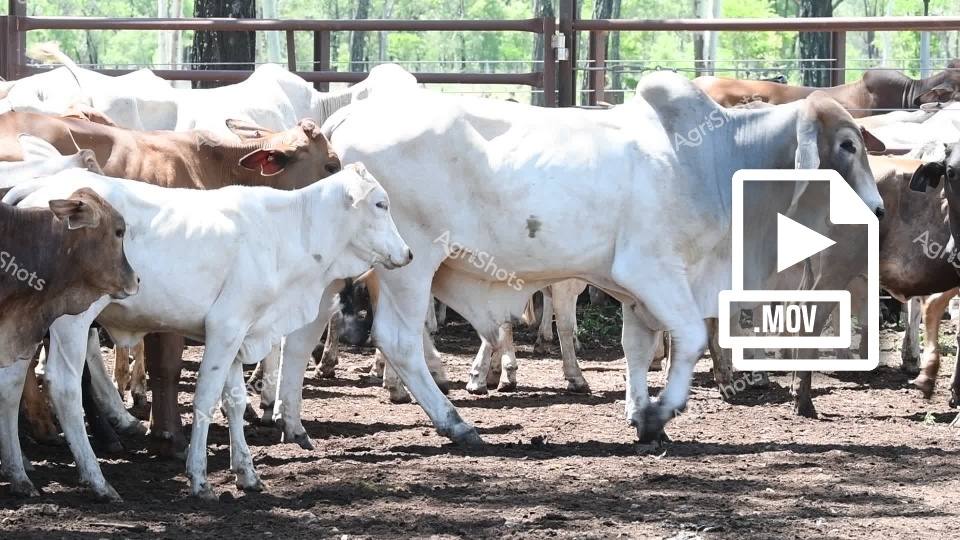 ▶ Video
A herd of white and brown cattle stand in a dusty corral with wooden fencing, showcasing what appears to be a Brahman or Brahma breed known for their distinctive light coloration and heat tolerance. The cattle are clustered together on packed earth, with some animals standing close and others moving slightly, suggesting a typical livestock holding area. The background reveals trees and additional fencing, indicating this is likely a ranch or agricultural livestock management facility.
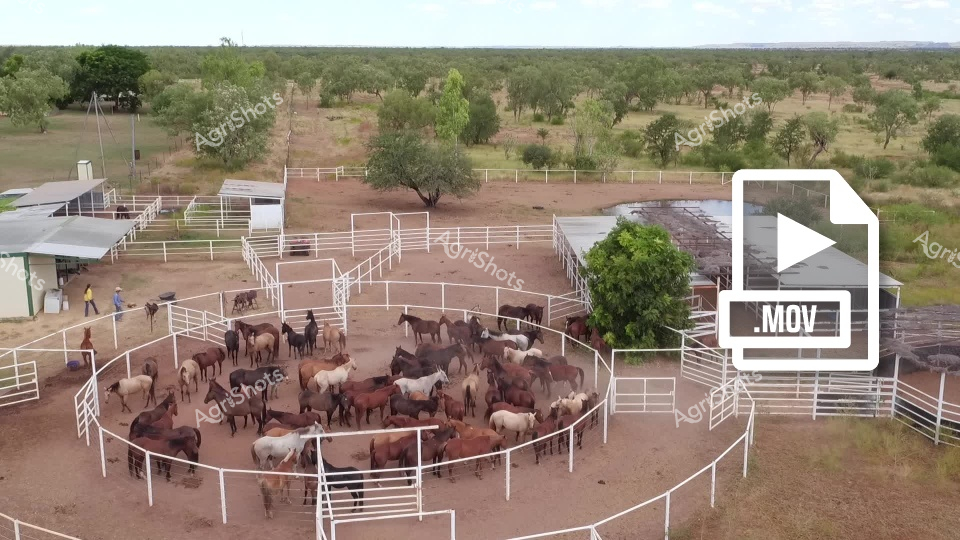 ▶ Video
Aerial view of a horse breeding facility with multiple horses grouped in a large circular white-fenced paddock. The ranch is situated in a semi-arid landscape with scattered trees and green vegetation, featuring several covered structures and additional smaller fenced areas. A diverse herd of horses in various coat colors - including brown, white, and chestnut - are clustered together in the central corral under a sunny sky.
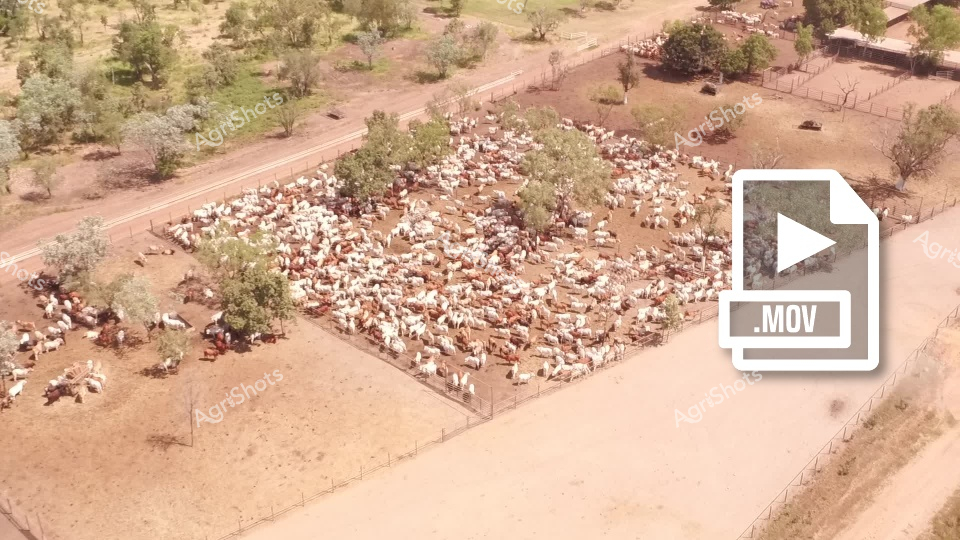 ▶ Video
Aerial view of a large cattle yard in a dry, arid landscape, showing hundreds of white and brown cattle densely packed within a fenced area. Scattered trees provide minimal shade for the livestock, with dirt roads and additional enclosed pastures visible surrounding the main corral. The image captures the scale of cattle farming in a challenging, semi-desert environment.
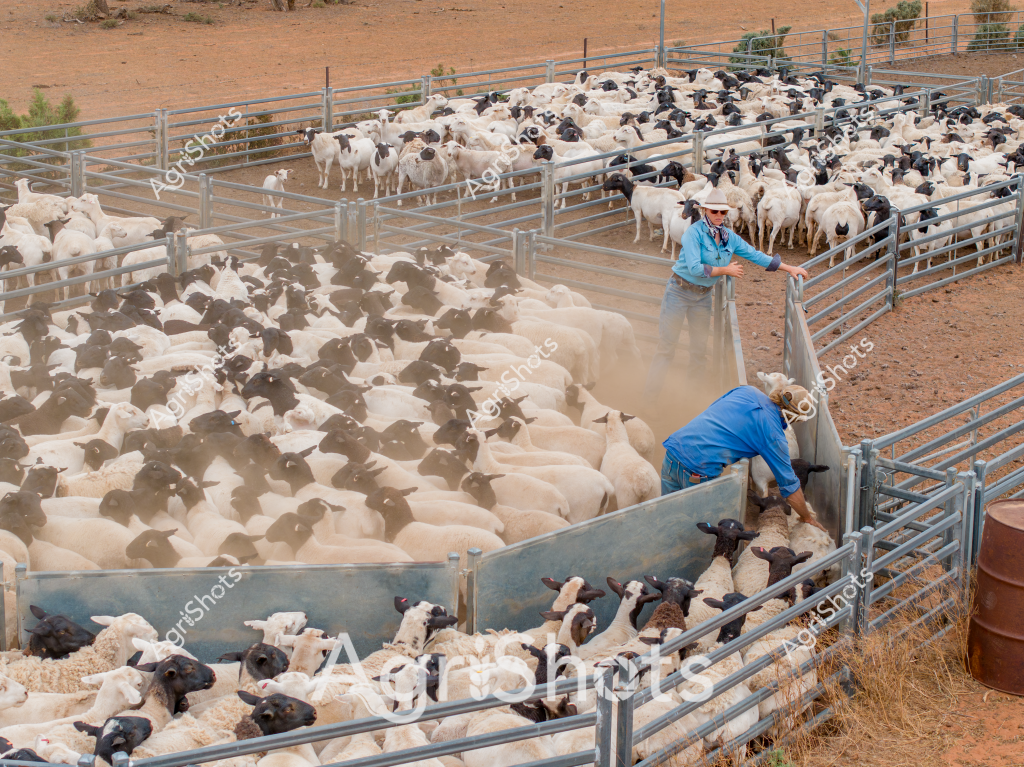 Image
Image
Two men in blue work attire manage a large mob of white and black-headed sheep in a dusty livestock yard. The scene captures a typical Australian sheep farming operation, with densely packed sheep clustered in metal livestock pens under an arid, reddish-brown landscape. One man stands at the gate, while another is positioned within the pen, carefully guiding and sorting the sheep during what appears to be a routine mustering or drafting activity. The sheep look like a mixed flock of Merino and possibly crossbred lambs, with distinctive black and white coloration. Dust rises around their woolly bodies as they move tightly together, creating a textured, monochromatic scene of agricultural activity. The metal yard panels provide structure and control, essential for managing large numbers of livestock in challenging outback conditions. The environment suggests a dry, inland Australian setting - likely in a sheep-producing region such as Western New South Wales, South Australia, or Queensland. The stark contrast between the blue-clothed workers, the gray metal infrastructure, and the reddish earth creates a visually striking representation of Australian sheep farming practices.
 ▶ Video
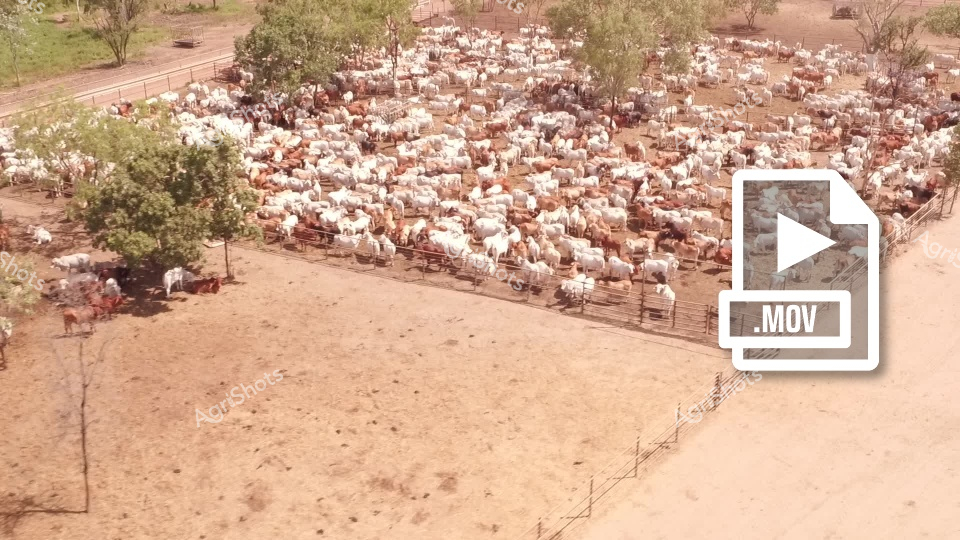
A large herd of mixed-color cattle, predominantly white and reddish-brown, are densely packed inside a fenced corral in an arid, dusty landscape. The livestock are surrounded by sparse trees and fencing, with a dirt ground indicating a dry, potentially Australian or American southwestern cattle ranch setting. The aerial view captures the scale of the cattle operation, showing hundreds of animals clustered tightly together under the open sky.
 ▶ Video
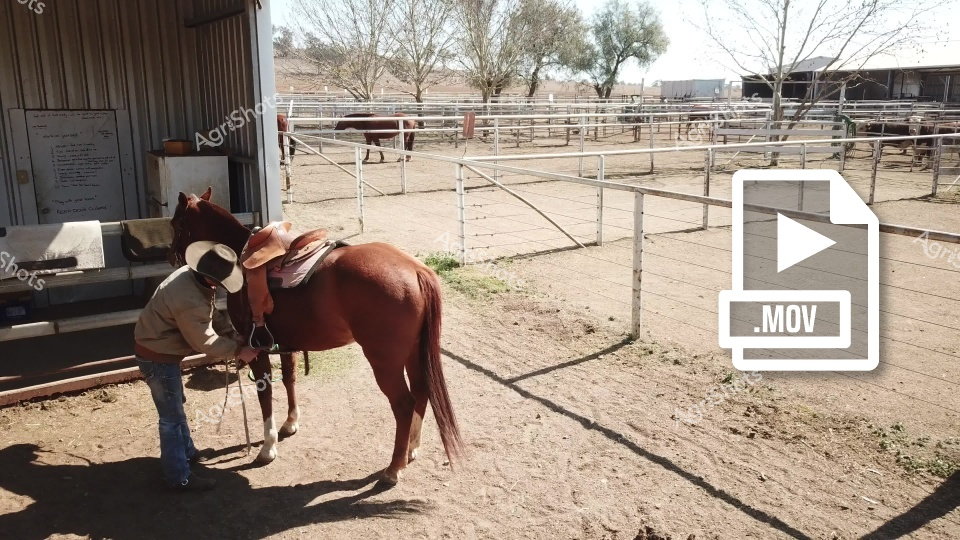
A chestnut-colored horse with a western saddle stands in a dusty corral while a person in a light jacket and jeans carefully tends to the horse's gear. The setting is a sparse ranch or training facility with metal fencing, bare trees, and outbuildings in the background, suggesting a dry, arid environment typical of southwestern United States horse ranches.
 Image
Image
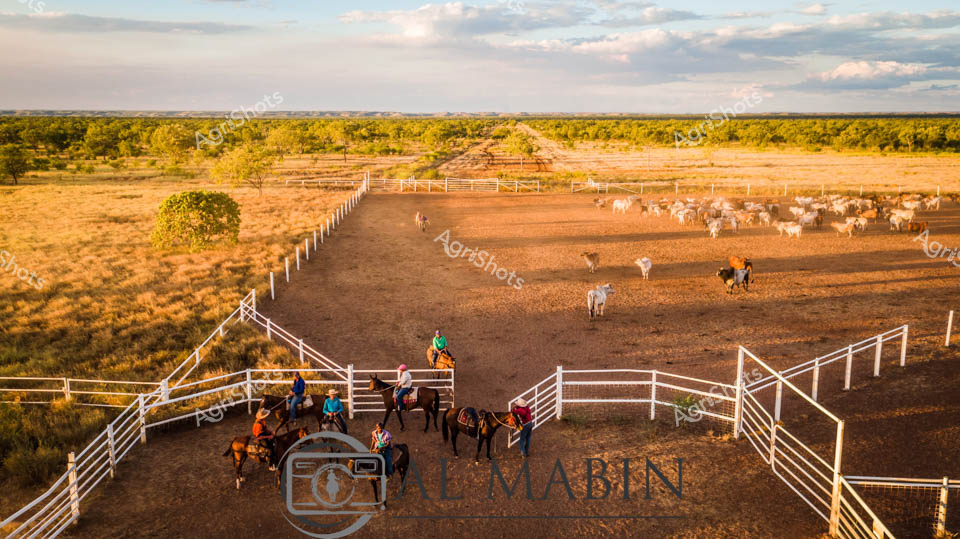
Burnished golden light bathes a quintessential Kimberley cattle station, capturing the rhythmic choreography of mustering at day's end. Pristine white rail fences carve geometric boundaries across the rich terracotta-hued earth, containing a herd of pale Brahman cattle whose distinctive humped silhouettes reflect generations of adaptation to Australia's harsh northern landscapes. Stockmen and stockwomen mounted on well-trained horses navigate the yards with practiced precision, their vibrant shirts of blue, green, and orange providing dynamic contrast against the muted pastoral palette. The expansive paddock stretches toward a horizon studded with resilient woodland, revealing the vast scale of Western Australian agricultural enterprise. Brahman cattle - renowned for their heat tolerance and tick resistance - drift across the dusty corral, their muscular forms telling a story of genetic refinement suited to challenging tropical conditions. Late afternoon sunlight casts long shadows, highlighting the intricate dance between human skill and animal movement that defines mustering culture. This aerial perspective celebrates the technical choreography of stock management, where generations of knowledge converge in a single, seamless moment of rural productivity and connection to country.
 Image
Image
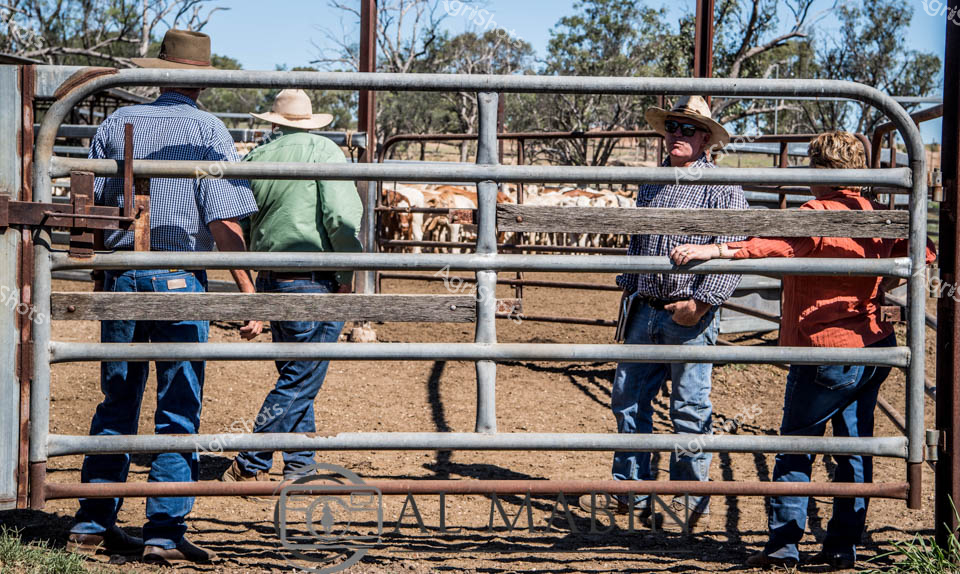
Rural Queensland pulses with quiet intensity as stockmen gather at a cattle yard gate, their weathered postures telling stories of generations working the land. Dressed in classic bush attire - checked shirts, wide-brimmed akubra hats, and well-worn denim - they survey a herd of Charolais cattle in the sun-baked paddock behind the metal gate. The harsh midday light casts sharp shadows across the dusty ground, highlighting the rugged metal infrastructure of the stock yard against a backdrop of sparse eucalyptus trees and endless blue sky. The stockmen stand with the unconscious synchronicity of those who have worked together for years, positioned along the steel gate in a loose formation that suggests both purpose and patient observation. Their clothing - in shades of blue, green, and check patterns - blends with the muted tones of the rural landscape, while the gleaming white Charolais cattle provide a striking contrast in the distant corral. This scene captures the quintessential essence of Australian cattle country - a moment of quiet concentration where generations of agricultural knowledge converge in a simple, powerful tableau of rural working life.
 Image
Image
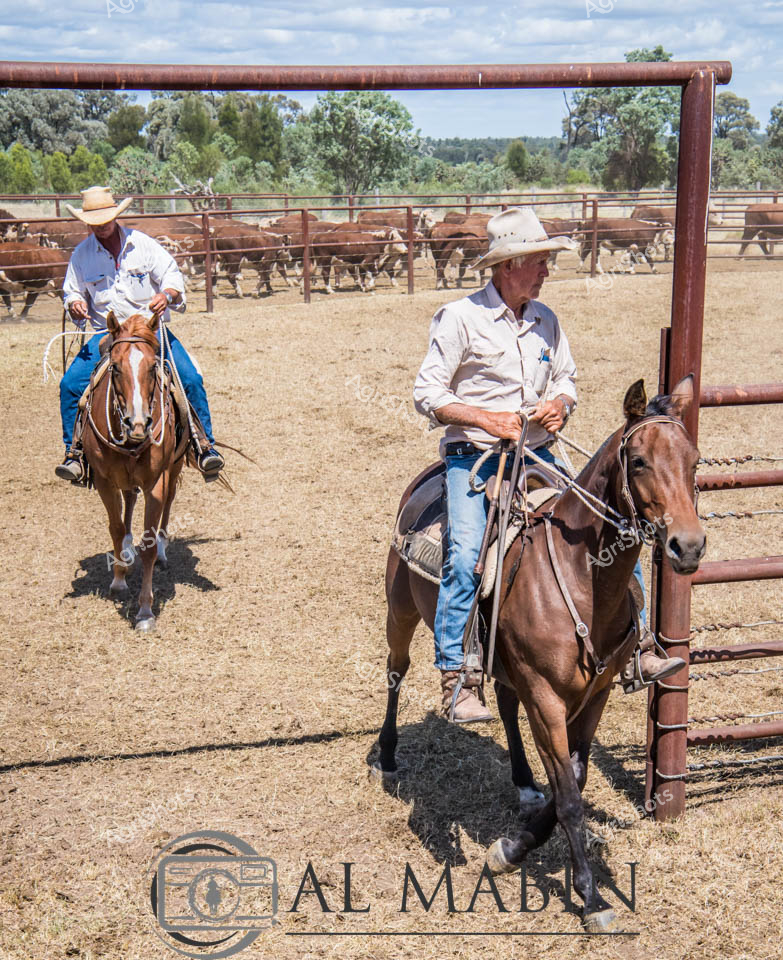
Stockmen guide their seasoned horses through the sun-drenched cattle yards of a Queensland station, embodying the timeless rhythm of rural Australian cattle management. Wearing classic light-colored shirts, wide-brimmed hats, and blue denim, these riders navigate the dusty corral with practiced ease, surrounded by a herd of rich russet-colored Hereford cattle. The landscape beyond reveals a classic pastoral backdrop of scattered eucalyptus trees and expansive grasslands under a soft, cloud-mottled sky, capturing the quintessential working environment of the Queensland. The horses, well-muscled and attuned to their riders, stand quietly amid the metal yard infrastructure, casting sharp shadows on the parched earth - a testament to the harsh yet beautiful Australian agricultural environment. The weathered stockmen exemplify generations of rural skill, their body language and equipment speaking to decades of livestock management expertise. This image pulses with the quiet intensity of cattle mustering - a fundamental practice that has shaped Australia's agricultural identity for generations.
 Image
Image
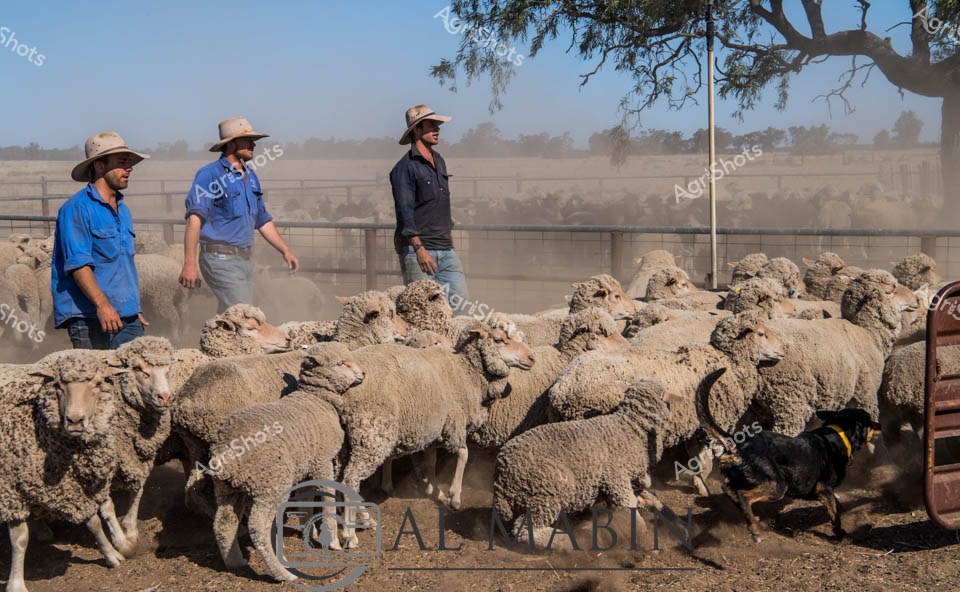
Dusty sunlight filters through a gnarled eucalyptus tree as three seasoned wool producers guide a dense mob of Merino ewes through the sheep yards. The stockmen, dressed in classic Australian farm attire of blue work shirts and wide-brimmed sun hats, move with practiced precision alongside the woolly flock. A working dog weaves skillfully between the sheep, helping to control their movement in the tight corral space. The animals' thick, creamy fleeces are heavy with lanolin, creating a textural landscape of curls and waves that speaks to the quality of Australian merino wool production. Fine dust clouds billow around the livestock, capturing the harsh beauty of a typical sheep station in rural New South Wales. This scene epitomizes the quiet determination of Australian agricultural workers - managing livestock with a blend of expertise, patience, and deep connection to the land.
 Image
Image
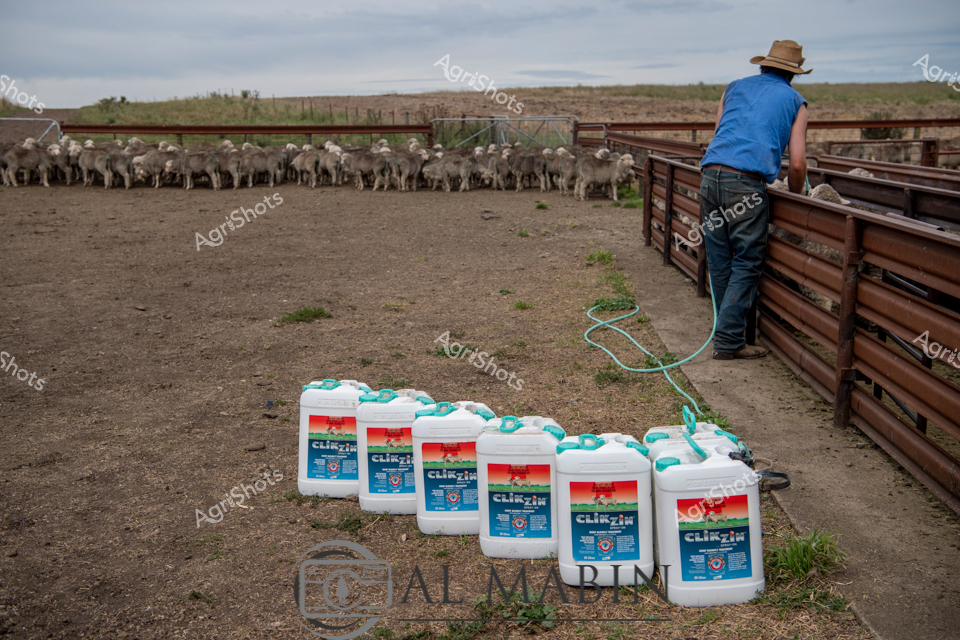
Clik positioning at the sheep yards captures a quintessential moment of Australian livestock management. A stockman in a blue shirt and wide-brimmed hat stands beside wooden livestock yards, overlooking a dense flock of Merino sheep. White Clik animal health containers are strategically placed in the foreground, signaling a critical stage in sheep husbandry - likely preparing for parasite control or wool protection treatment. The expansive, dusty paddock stretches beneath an overcast sky, typical of rural agricultural landscapes in New South Wales. Merino sheep, with their distinctive dense fleece, cluster tightly in the yard, awaiting processing - their pale woolly bodies creating a uniform texture against the earth-toned corral. This scene epitomizes the meticulous care and technological precision of modern Australian sheep farming, where animal health products like Clik play a crucial role in maintaining livestock welfare and productivity.
 Image
Image
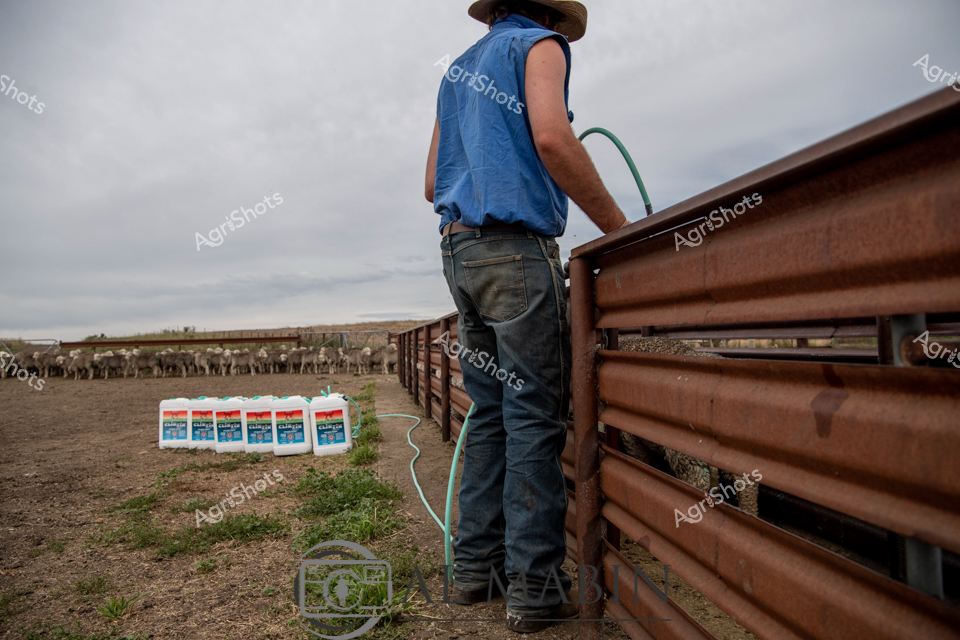
Rugged pastoral landscape under heavy overcast skies, a farm worker stands resolute in the sheep yards, preparing to administer essential animal health treatment. Six white Elanco medication bottles line the ground, signaling a methodical approach to livestock care. Dressed in a blue sleeveless shirt and worn denim jeans, the worker grips a green hose, positioned near a weathered wooden livestock pen housing a large flock of Merino sheep. The earthy brown tones of the corral contrast with the soft gray sky, creating a quintessential Australian agricultural scene that speaks to the diligence and precision of modern sheep farming. In the background, a dense mob of woolly Merinos stands clustered, their pale fleeces a testament to the breed's hardiness in challenging environments. This moment captures the critical intersection of veterinary science and pastoral tradition, where animal welfare and agricultural productivity converge under the expansive New South Wales sky.
 Image
Image
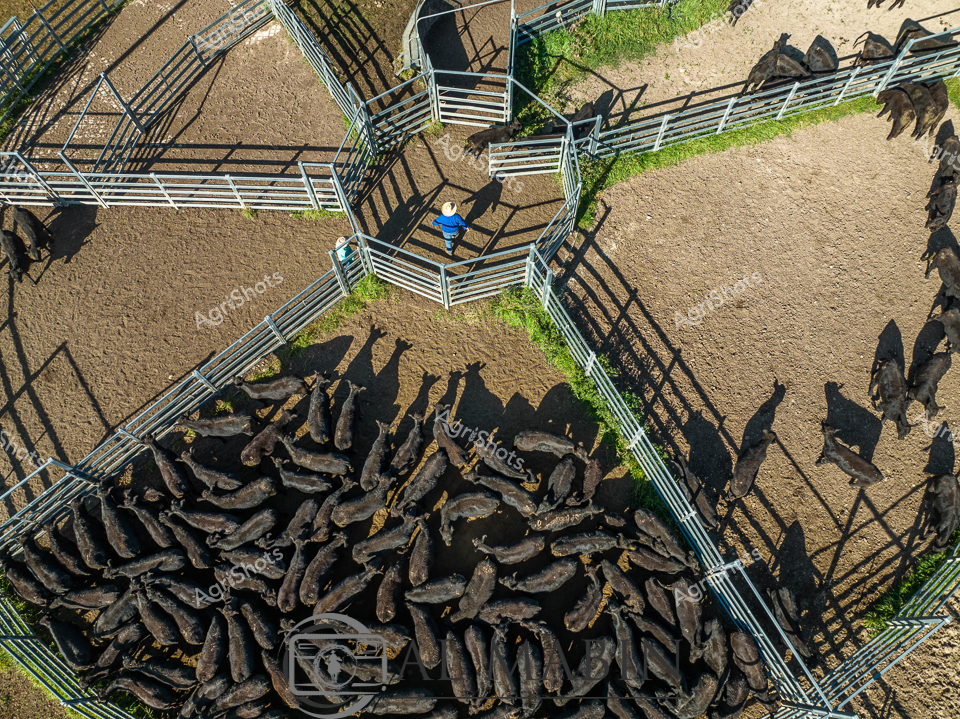
Aerial drone perspective of a meticulously designed cattle holding yard reveals a dense cluster of sleek black Angus cattle tightly grouped within metal livestock fencing. The angular steel gates create a geometric pattern against the rich earthen ground, casting long dramatic shadows across the paddock. A worker in a vivid blue shirt stands centrally within the corral, strategically positioned to manage the herd's movement and flow. These robust beef cattle, renowned for their muscular build and uniform dark coloration, huddle closely together, their powerful bodies creating a textural landscape of muscle and hide. The scene captures the precision of modern cattle management, where infrastructure and animal husbandry intersect with technological oversight. Soft patches of green grass peek through the dusty ground, suggesting this is likely a late winter or early spring gathering in the New England region of New South Wales, where premier beef breeding operations thrive.
 Image
Image
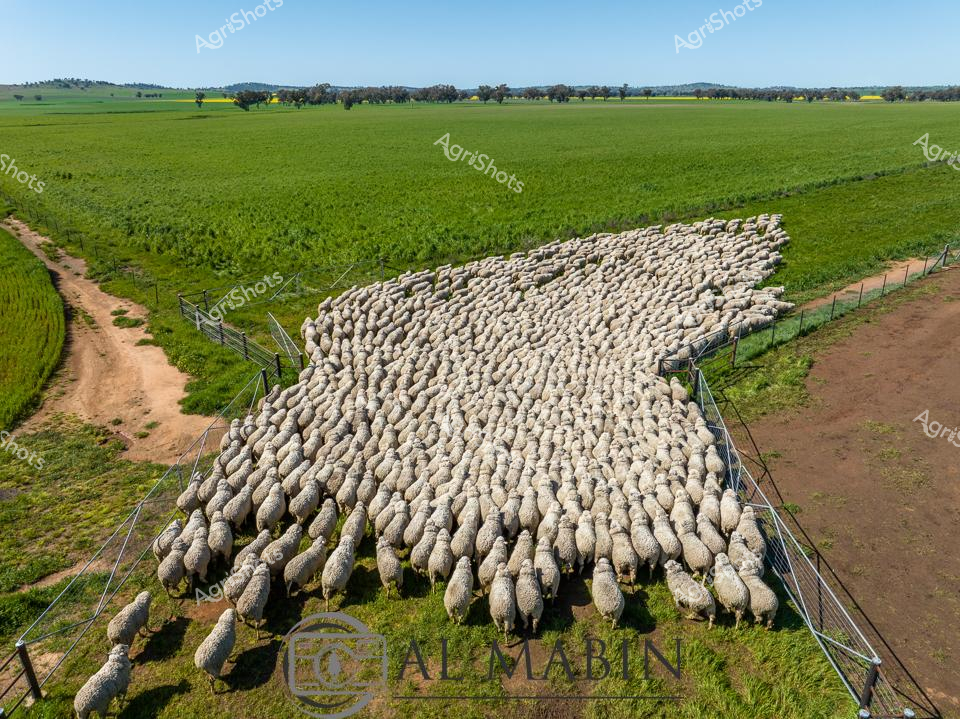
Dusty paddock fences corral a dense flock of Merino ewes, their woolly bodies pressed tightly together in a verdant pasture under a crystalline Australian sky. The expansive rural landscape of New South Wales stretches beyond, rolling green fields punctuated by distant eucalyptus trees and gentle hills. These premium wool-producing sheep huddle within carefully constructed wire boundaries, representing the precision and care of regenerative farming practices. Soft cream and grey fleeces create a remarkable textural mosaic, each animal pressed against its neighbors in a living, breathing collective form that undulates like a woolly cloud across the emerald ground. The rich agricultural terrain speaks to generations of pastoral expertise, with dirt tracks flanking the carefully managed mob and the bright mid-morning light casting crisp shadows that highlight the intricate details of this quintessential Australian agricultural scene.
 Image
Image
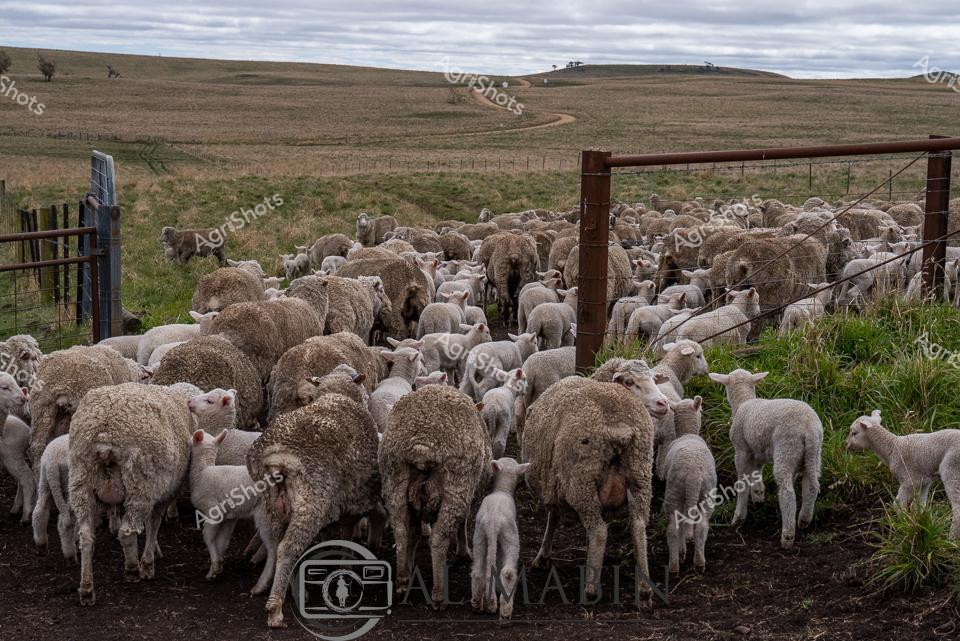
Merino ewes and their lambs crowd together in a tight cluster near a gate, transforming the muddy paddock corral into a living canvas of woolly textures and generations. The overcast sky casts soft, diffused light across the undulating pastoral landscape of rural New South Wales, highlighting the dense fleece of mature sheep and the delicate, lighter-colored coats of newborn lambs. Fencing guides the mob through a controlled movement, with weathered metal gates and wire defining the boundaries of this carefully managed agricultural space. Soft grasses peek through the muddy ground, offering hints of green amidst the earthy browns, while the sheep huddle closely - a testament to the instinctive herding behavior of these resilient Merino breeds. The image captures the essence of Australian sheep farming: a blend of careful animal husbandry, seasonal rhythms, and the stark beauty of rural landscapes where livestock are both an economic resource and a living, breathing part of the agricultural ecosystem. Each woolly back and tiny lamb represents generations of selective breeding and pastoral tradition.
 Image
Image
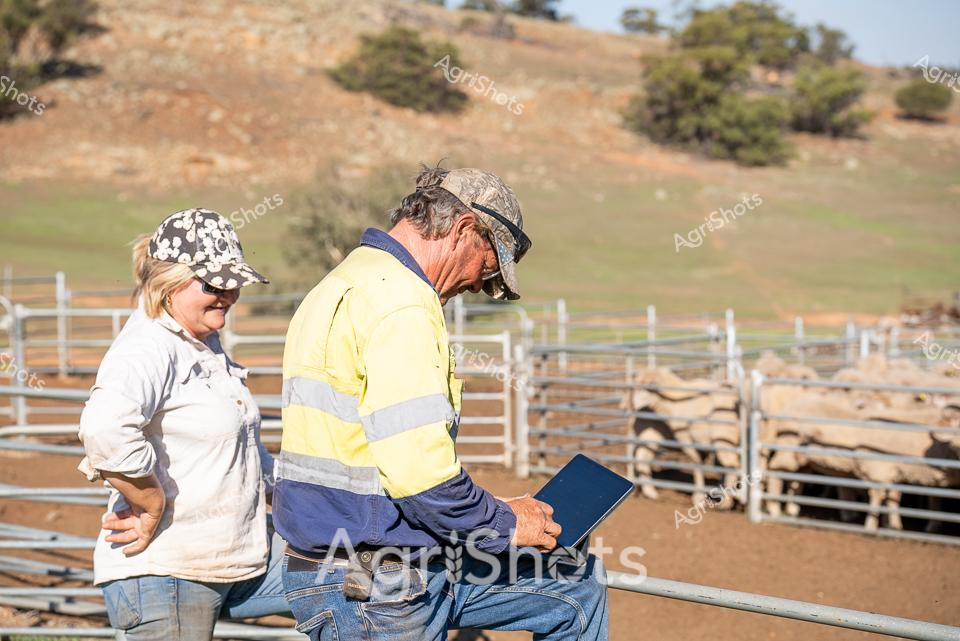
Dusty paddocks and weathered sheep yards frame a moment of agricultural precision in the golden expanses of Western Australia. Two farm workers stand intently focused amid a pen of Merino sheep, their high-visibility workwear cutting a sharp contrast against the russet earth and sparse vegetation. The worker in a yellow and navy safety shirt leans over an iPad, likely tracking livestock data or management details, while his colleague in a white work shirt observes closely, their shared expertise evident in their synchronized concentration. Sturdy metal yard panels corral a small flock of woolly Merinos, their fleeces a soft neutral against the hardscrabble landscape. The harsh midday sunlight casts sharp shadows, highlighting the rugged terrain and the serious, professional demeanor of these agricultural workers engaged in the critical task of stock management. This image captures the meticulous, technology-driven nature of modern sheep farming in the challenging Western Australian outback.