Results for “bush track”
 Image
Image
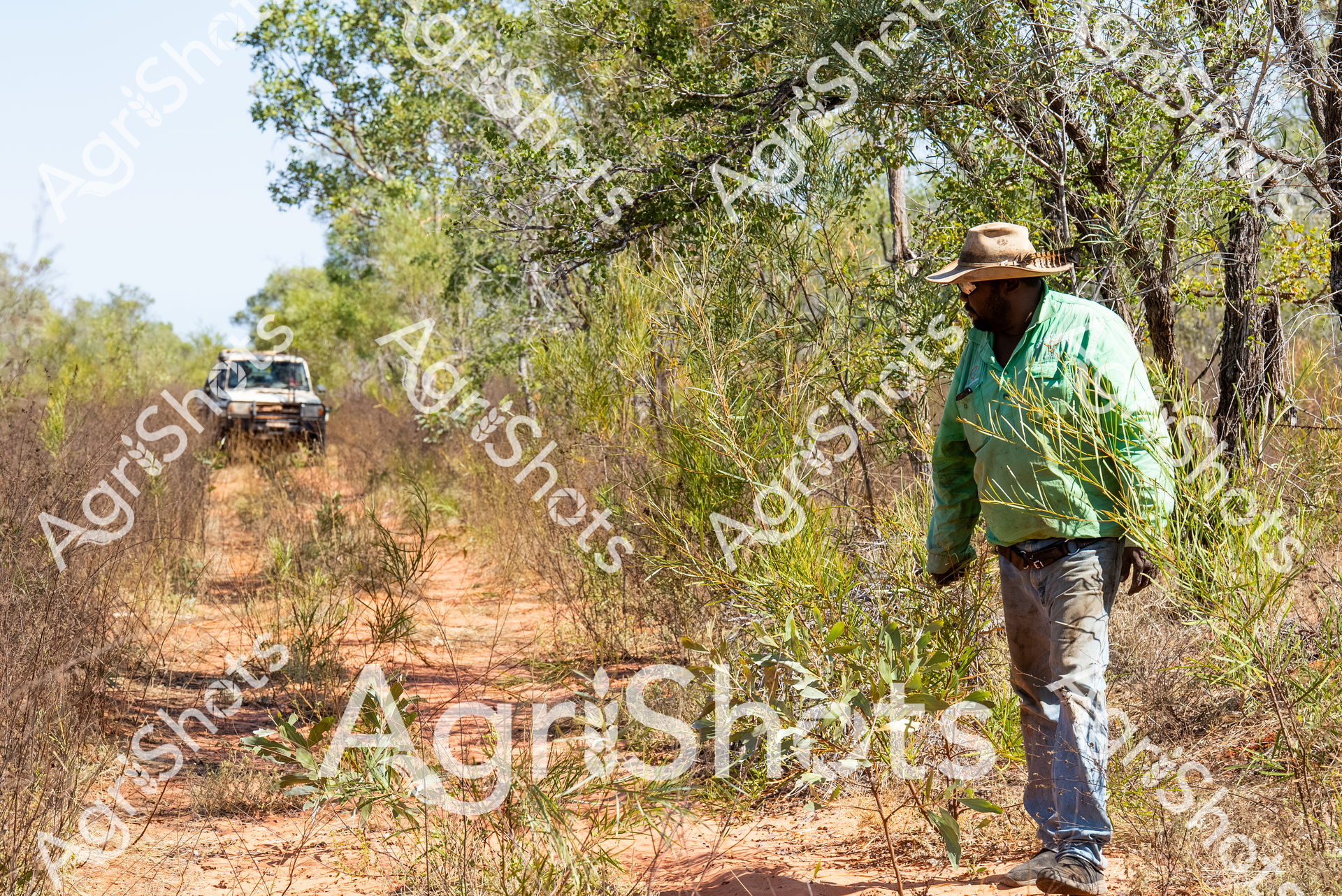
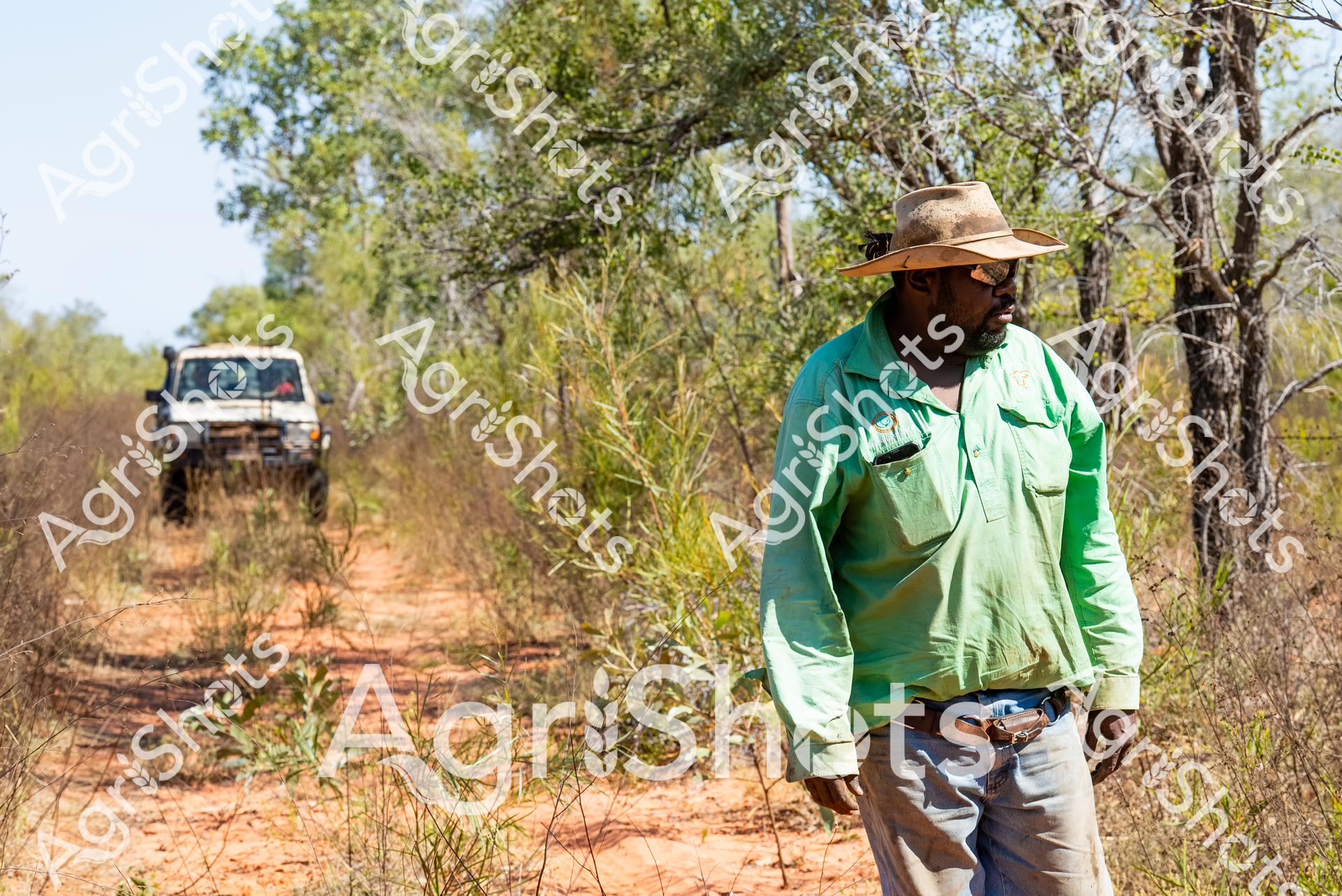
A man wearing a green shirt and wide-brimmed hat walks along a dusty rural track in the Kimberley region of Western Australia, with a four-wheel drive vehicle visible in the background among sparse trees and scrubland. The scene captures the rugged landscape of a pastoral station during springtime, highlighting the remote and challenging environment of northwest Australia.
 Image
Image
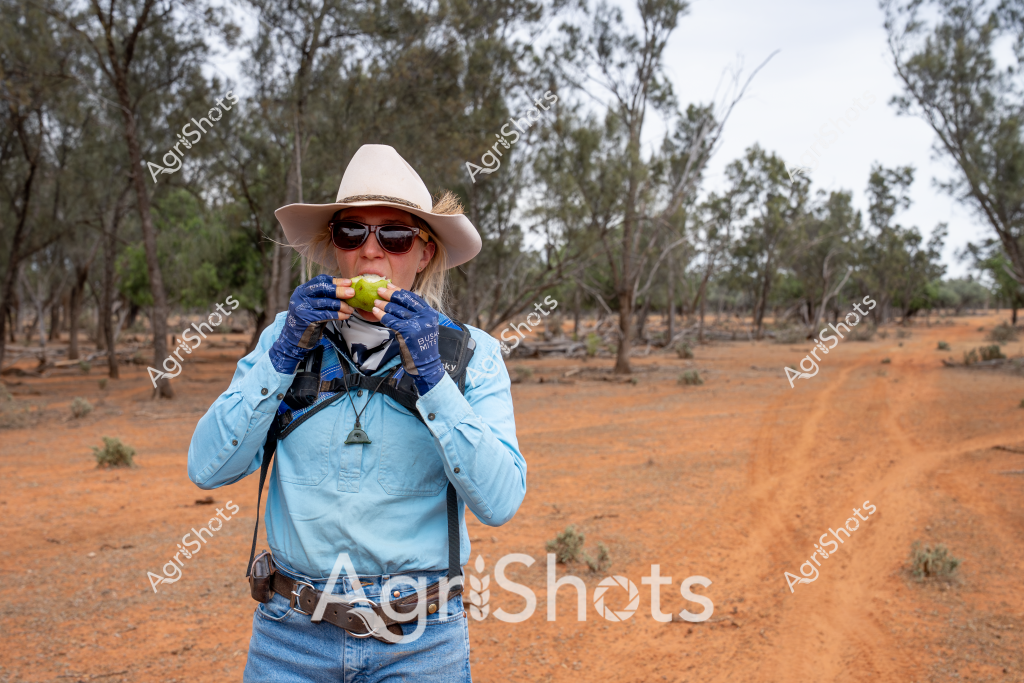
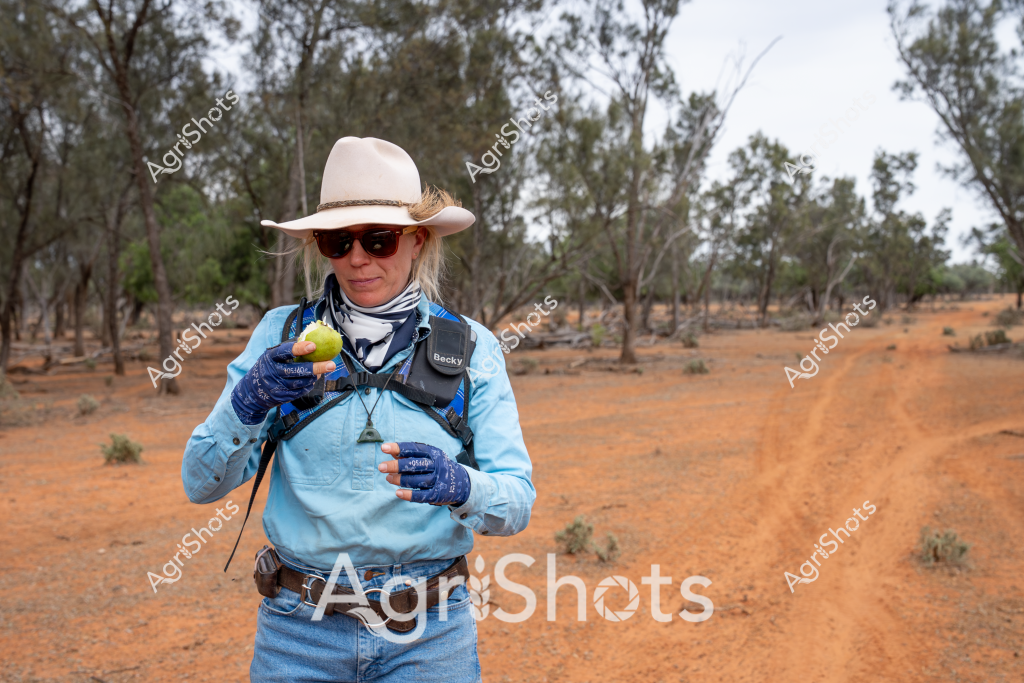
A woman in outback field gear takes a break during her work day, biting into a green apple amidst a dry, eucalyptus-lined landscape. Wearing a wide-brimmed cream hat, dark sunglasses, blue long-sleeved work shirt, and blue protective gloves, she stands on a rusty-orange dirt track surrounded by sparse bushland. Her blue work attire and robust accessories suggest she's likely an agricultural worker, possibly a station worker, ranger, or field researcher traversing a remote Australian landscape. The surrounding terrain appears typical of inland Australia - sparse grey-green trees, reddish soil, and a sense of arid expansiveness that characterizes many of the continent's rural regions. Her posture and equipment indicate she's taking a brief moment of respite, using the apple as a quick energy boost during what seems to be a challenging day of outdoor work in a harsh environment.
 Image
Image
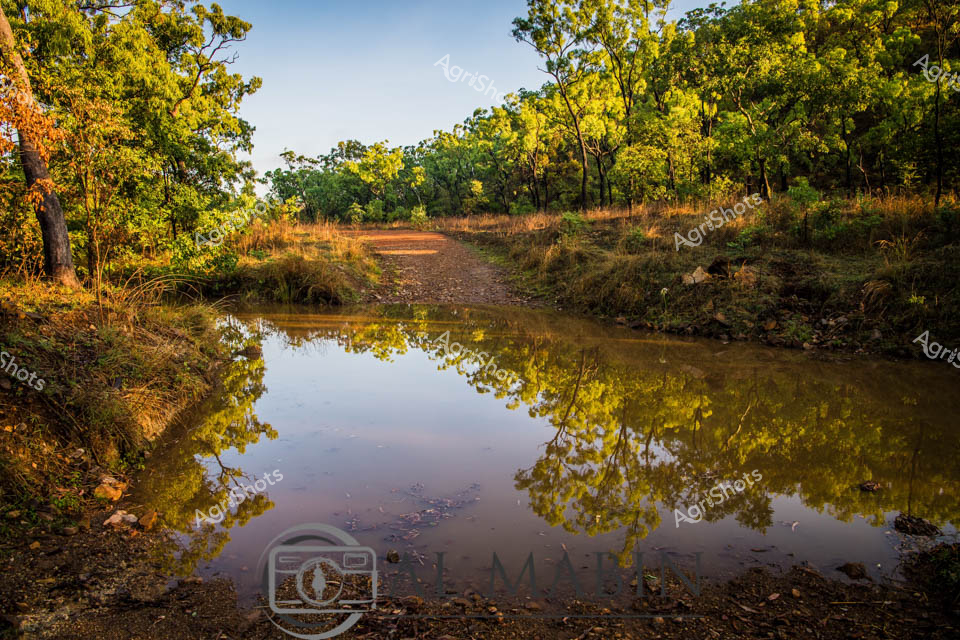
Golden afternoon sunlight bathes a rugged bush track cutting through dry woodland, with a reflective water pool creating a mirror-like surface capturing the vibrant yellow-green canopy of eucalyptus trees. The landscape epitomizes the raw, untamed character of a Queensland cattle station - a quintessential rural Australian scene where pastoral life intersects with ancient, resilient bushland. Weathered earth and scattered stones line the track's edges, suggesting generations of cattle movement and seasonal cycles of drought and renewal. Sparse grasses in burnished ochre and amber tones frame the path, indicating the challenging growing conditions of the region. The water hole, likely a critical resource for livestock during dry periods, reflects the landscape with stunning symmetry, doubling the visual richness of the gnarled tree branches and dappled sunlight. This tranquil yet austere scene captures the essence of remote cattle country - a landscape of endurance, natural beauty, and the subtle rhythms of agricultural life in Australia's rugged interior.
 Image
Image
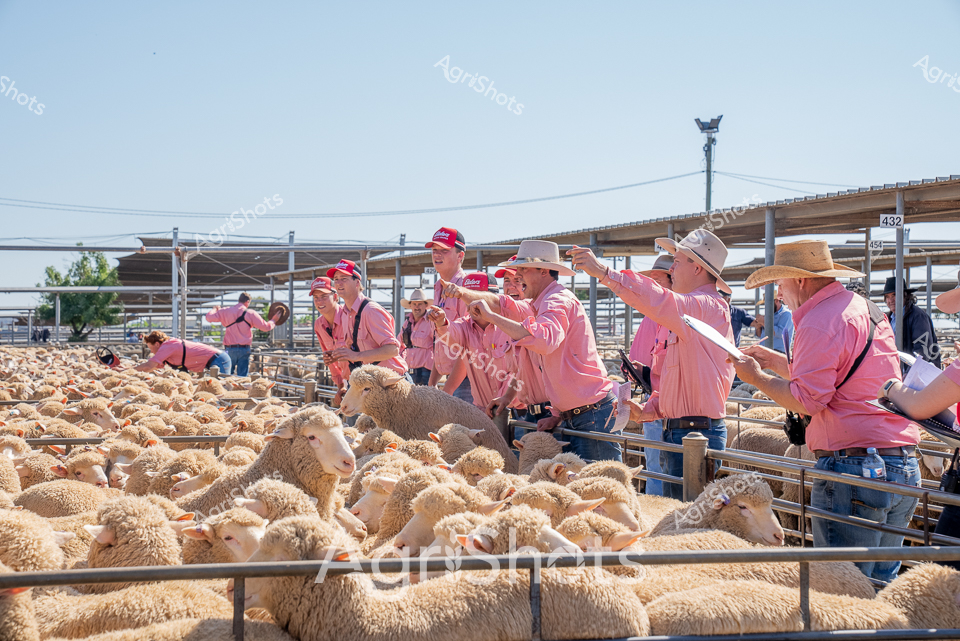
Australian Merino sheep auction in full swing at a bustling livestock sale yard in the Riverina region of New South Wales. Experienced agents in distinctive pink shirts and an array of classic Australian bush hats crowd the metal railings, intently tracking each animal as the sale progresses. A dense flock of woolly Merino sheep fills the holding pen, their creamy fleeces creating a textural landscape of soft curves and intersecting lines. The bright, clear sky and open-sided sale yard suggest a crisp mid-morning in late spring, with harsh sunlight casting minimal shadows across the meticulously organized agricultural space. Auctioneers gesture and call, their movements precise and practiced, signaling bids and guiding the rapid transactions that are crucial to the regional sheep trading economy. The scene captures the quintessential Australian agricultural ritual - a high-stakes, highly choreographed livestock market where generations of farming expertise converge in a vibrant, dynamic exchange.
 Image
Image
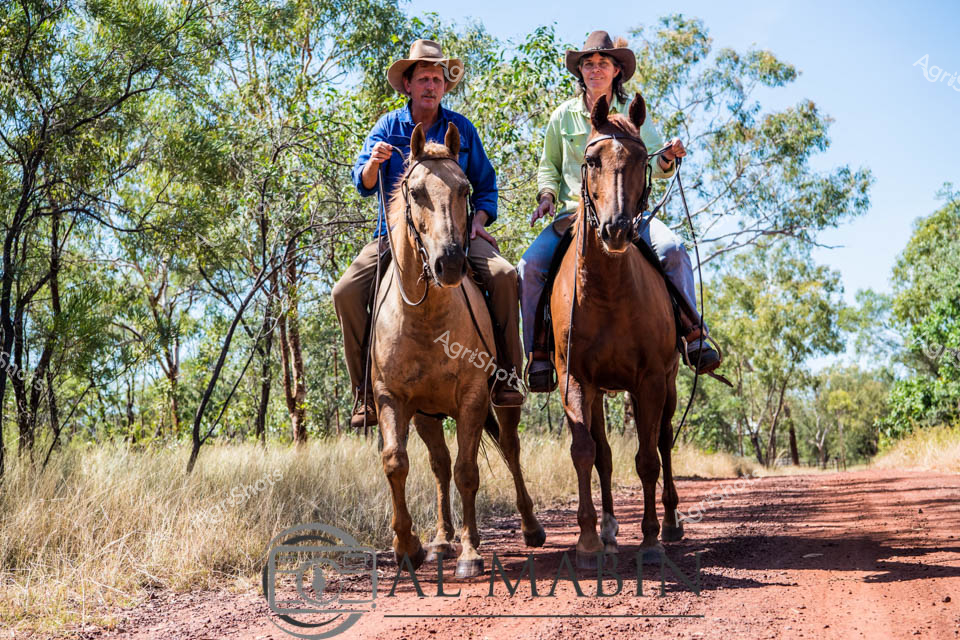
Two horse riders traverse a red dirt road through the Australian bush in the Northern Territory, with the horses moving at a steady pace along the station track. A man and woman, both wearing wide-brimmed hats and riding gear, guide their brown horses through the rural landscape dotted with native trees and golden grassland. The dusty earth beneath the horses' hooves and the sparse vegetation surrounding the dirt road capture the quintessential outback setting of a Northern Territory cattle station. This pastoral scene showcases the enduring tradition of horseback travel across Australia's vast rural properties, where horses remain essential for station work and transportation across remote terrain.
 Image
Image
Two station hands on horseback traverse a dusty red dirt road through the Northern Territory bush, the horses moving at a steady pace beneath the dappled shade of native trees. The riders, wearing traditional broad-brimmed hats and work shirts, embody the timeless spirit of Australian station life as they navigate the golden grasslands dotted with scattered woodland. The earthen track winds through typical NT landscape, where sparse vegetation and hardy trees create a quintessential outback scene of pastoral life and horsemanship.
 Image
Image
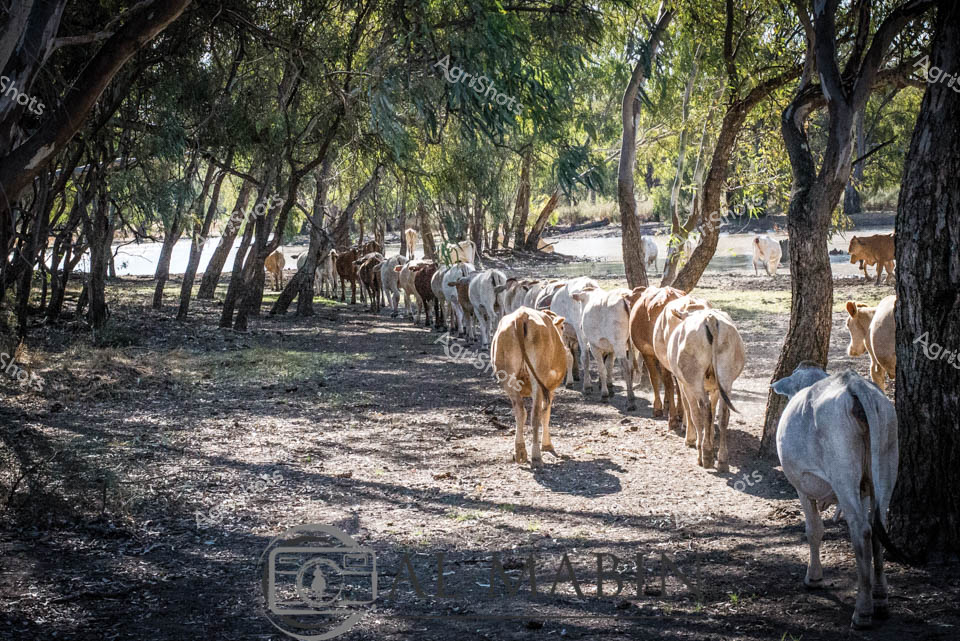
Brahman cattle track dusty shadows beneath a canopy of gnarled eucalyptus trees, their distinctive humped shoulders and loose skin rippling with each measured step along a classic Australian stock route. The mid-morning light filters through silvery-green foliage, casting dappled patterns across the earth worn smooth by generations of livestock movement. Fawn and white cattle move with disciplined precision, their muscular hindquarters and distinctive ear shapes marking them as heat-tolerant Brahman breed - perfectly adapted to traversing challenging inland landscapes. Tightly packed in single file, the herd demonstrates the timeless rhythm of droving - a quintessential practice of Australian pastoral culture that has shaped rural economies for centuries. The path winds between weathered tree trunks, telling a silent story of patient navigation and generational agricultural knowledge. This image captures the raw essence of cattle management - a delicate choreography of animal instinct and human guidance playing out in the harsh yet beautiful Australian bush.
 Image
Image
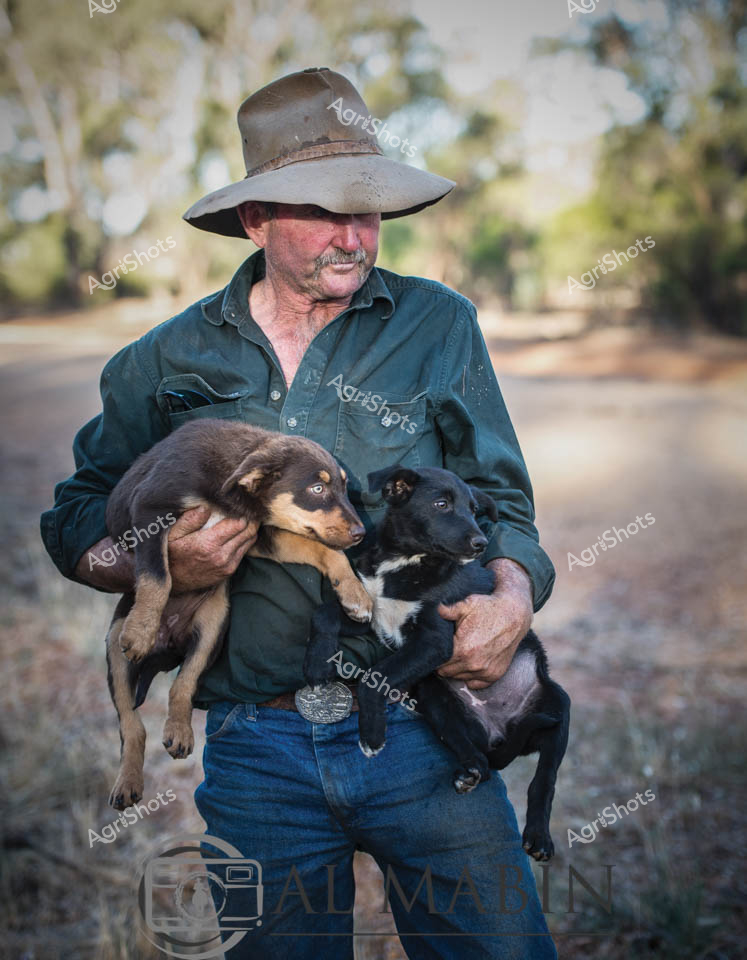
Cradling two young working dogs, a seasoned drover pauses on a dusty rural track, embodying the timeless spirit of Australian agricultural life. Wearing a weathered wide-brimmed hat, faded blue work shirt, and denim jeans, the man's sun-creased face and calloused hands tell stories of decades spent working the land. The puppies - one a warm tan and brown, the other a deep black with white markings - nestle securely in his arms, representing the next generation of stock dogs critical to mustering and managing livestock across vast pastoral landscapes. The background reveals a typical Australian bush setting, with sparse eucalyptus trees and dry, golden-brown ground suggesting late summer or early autumn conditions. His silver belt buckle catches the soft light, a subtle testament to years of service and connection to the land. This portrait captures the profound bond between rural workers, their working animals, and the unforgiving yet beautiful Australian agricultural landscape.
 Image
Image
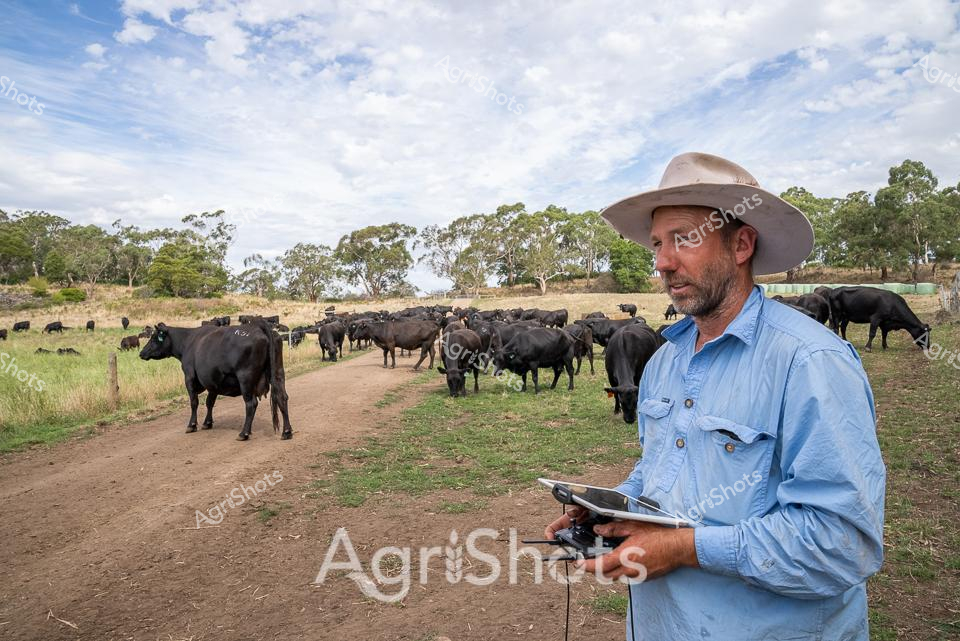
Beneath a soft, cloud-dappled sky in rural Victoria, an experienced cattle farmer stands amid a herd of sleek Black Angus cattle. Wearing a classic wide-brimmed Australian bush hat and a light blue work shirt, he operates a drone controller and tablet, representing the modern intersection of agricultural tradition and cutting-edge technology. The dirt track winds through a paddock dotted with eucalyptus trees, where multiple Angus cattle graze and mill about, their deep black coats gleaming in the diffused sunlight. The scene captures the precision of contemporary agricultural management, where digital tools enable farmers to monitor livestock health, track grazing patterns, and manage large herds with unprecedented efficiency. Mature trees frame the landscape, suggesting a well-established farming property with generations of agricultural knowledge embedded in its soil. The rugged terrain and expansive sky epitomize the quintessential Australian rural environment - a blend of harsh beauty and carefully managed agricultural productivity. This image eloquently illustrates the evolving nature of beef cattle farming, where technological innovation meets time-honored agricultural practices, showcasing how Australian farmers are leveraging advanced tools to enhance livestock management and sustainability.
 Image
Image
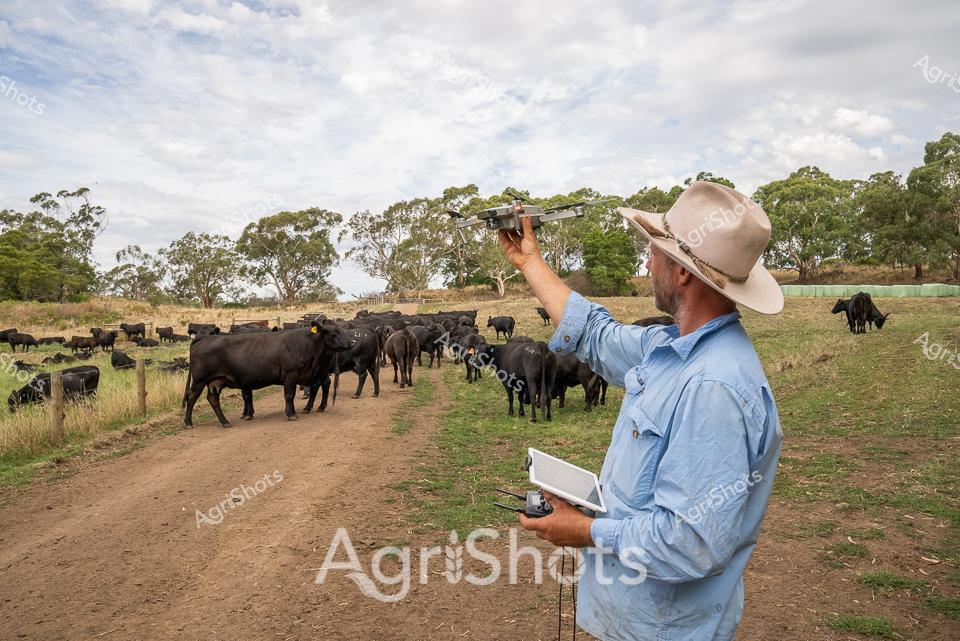
Beneath a soft, clouded sky typical of rural Victoria, an agricultural professional surveys an expansive Angus cattle herd using cutting-edge drone technology. Wearing a classic wide-brimmed Australian bush hat and light blue workshirt, the farmer operates a remote control and tablet, guiding an aerial drone above a dusty paddock lined with eucalyptus trees. The herd of black Angus cattle, marked with distinctive yellow ear tags, grazes and moves along a well-worn dirt track, their sleek dark coats contrasting against the muted greens and browns of the pasture landscape. This scene represents the modern convergence of traditional livestock management and advanced agricultural technology, showcasing how precision farming techniques are transforming cattle monitoring in the Australian agricultural sector. The expansive, open landscape speaks to the vast agricultural regions of Victoria, where innovative farmers are leveraging digital tools to enhance herd management, track animal health, and optimize pastoral productivity. The image captures a moment of technological innovation amidst the timeless rhythms of rural farming life.
 Image
Image
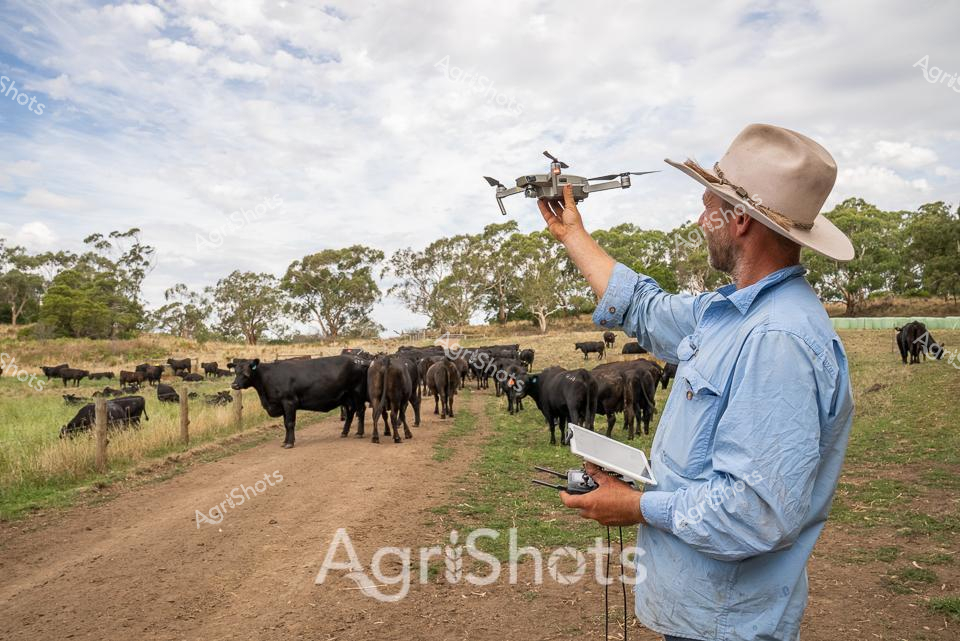
Beneath an expansive clouded sky, a seasoned cattle manager surveys the Angus herd using cutting-edge drone technology on a sprawling Victorian pastoral landscape. Wearing a classic wide-brimmed Australian bush hat and light blue chambray shirt, the farmer stands on a dusty rural track, carefully piloting a quadcopter drone above a paddock populated with sleek black Angus cattle. The sophisticated aerial technology allows precision livestock monitoring, capturing herd movement, pasture conditions, and individual animal health with remarkable efficiency. Eucalyptus trees dot the background, creating a quintessential Australian agricultural scene where traditional farming wisdom meets modern technological innovation. The dark-coated Angus cattle, known for their superior beef qualities, graze peacefully across the undulating grasslands, representing the backbone of Australia's robust livestock industry. This image encapsulates the evolving nature of contemporary agricultural management - where skilled farmers blend generations of practical knowledge with state-of-the-art digital tools to optimize rural productivity.
 Image
Image
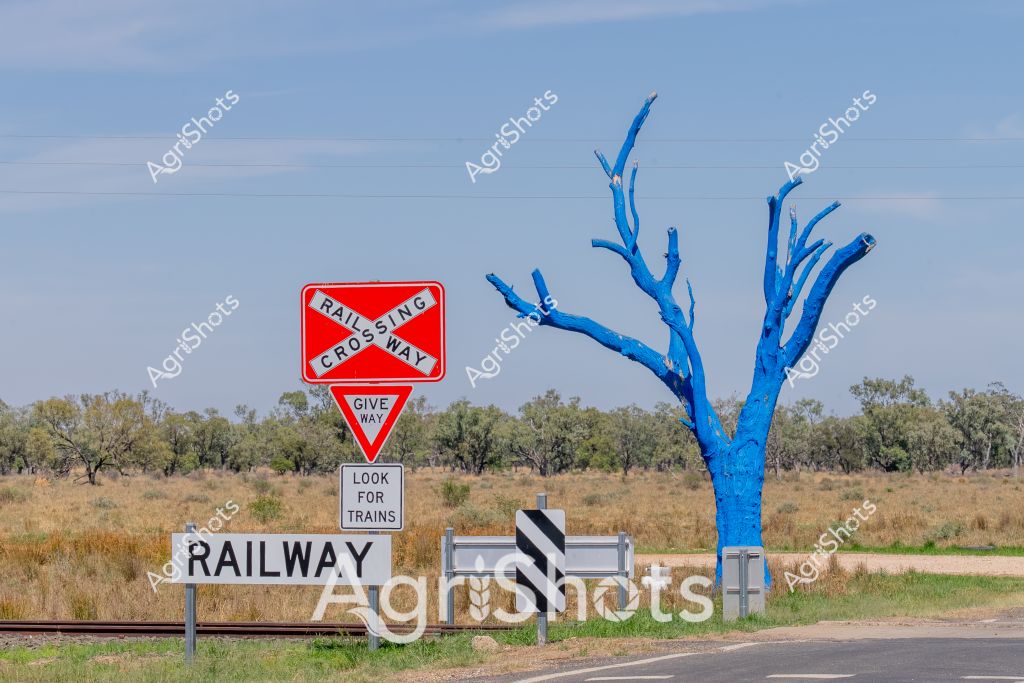
A vivid blue tree stands sentinel beside a railway crossing in a rural Australian landscape, its stark coloration creating a striking contrast against the muted grasslands and scattered gum trees. A prominent red and white railway crossing sign warns travelers to "GIVE WAY" and "LOOK FOR TRAINS", highlighting the potential hazards of this rural intersection. The blue tree, likely an artistic installation or deliberately painted, adds an unexpected and surreal element to the otherwise typical Australian bush scene. Dry grasslands stretch toward the horizon, punctuated by scattered eucalyptus trees, representing the harsh yet beautiful agricultural landscape. The railway tracks cut through the landscape, a critical infrastructure connecting rural communities and supporting agricultural transportation. The clear sky and open terrain capture the essence of a typical Australian rural setting, where infrastructure and nature coexist in a delicate balance.
 Image
Image
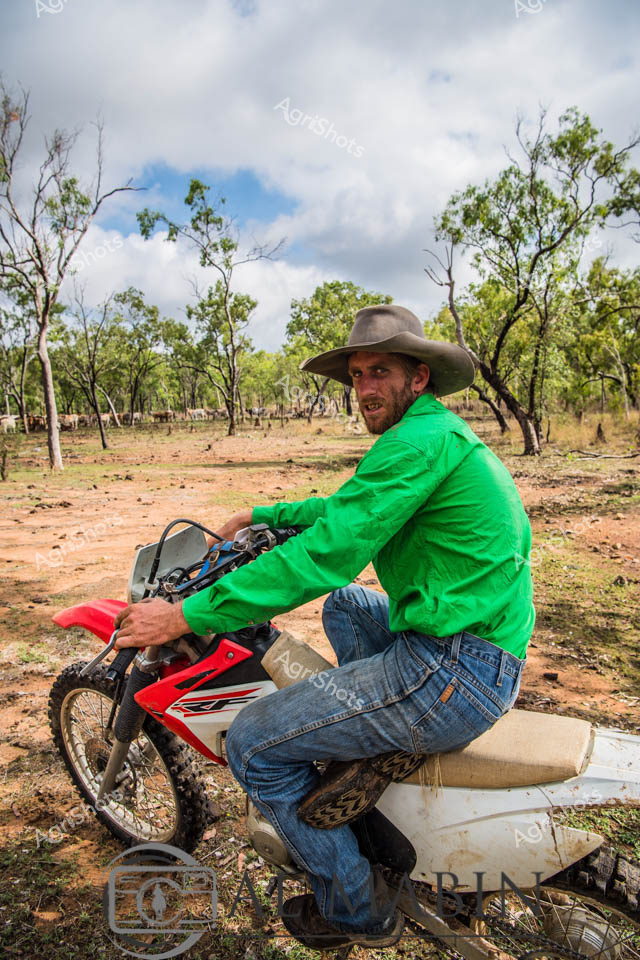
Bush Muster: Outback Dirt Bike Rider A vibrant emerald green work shirt and wide-brimmed akubra define this quintessential Queensland cattle station rider, perched astride a rugged dirt bike against a sparse eucalyptus woodland backdrop. The red and white motorcycle stands in sharp contrast to the weathered, rust-colored earth, capturing the resilient spirit of rural Australian agricultural work. Sparse, lean trees punctuate a rocky landscape that speaks to the challenging terrain of northern Queensland's cattle country, with intermittent clouds suggesting the unpredictable subtropical climate. The rider's denim-clad legs and confident posture reflect years of experience navigating challenging station tracks, essential for mustering cattle across vast pastoral landscapes. His direct gaze and slight smile convey the quiet pride of agricultural workers who maintain Australia's critical beef production infrastructure. This image encapsulates the raw energy and practical skill required to manage livestock in one of the world's most demanding agricultural environments.
 Image
Image
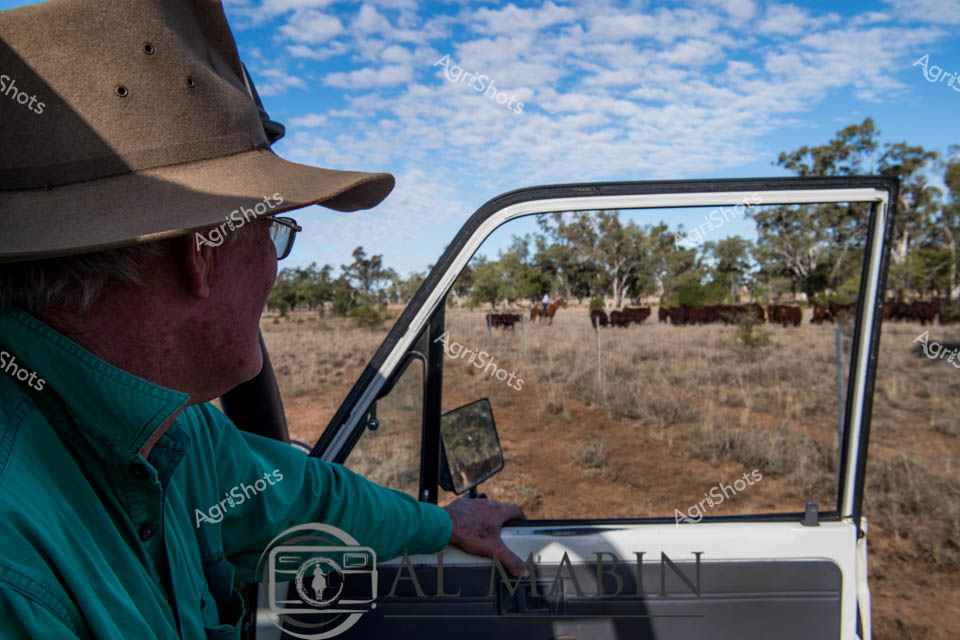
Dusty outback horizons stretch beneath a mackerel sky as an experienced cattleman surveys a Santa Gertrudis herd during mid-morning muster. Wearing a weathered bush hat and emerald green workshirt, the stockman leans from a white utility vehicle, tracking the movement of russet-coated cattle across the sparse grasslands of coastal Queensland. Gnarled eucalyptus trees punctuate the golden-brown landscape, casting intermittent shadows across the sun-baked earth where generations of pastoral management have shaped this working landscape. His keen gaze follows the carefully orchestrated movement of livestock, a testament to the precision and patience required in northern Australian cattle operations. The scene captures the quintessential rhythm of agricultural life - where human skill, robust vehicles, and hardy cattle converge in a delicate choreography of survival and productivity. This image breathes the spirit of remote pastoral Queensland, where resilience is measured in dust, determination, and the unspoken communication between stockman and herd.
 Image
Image
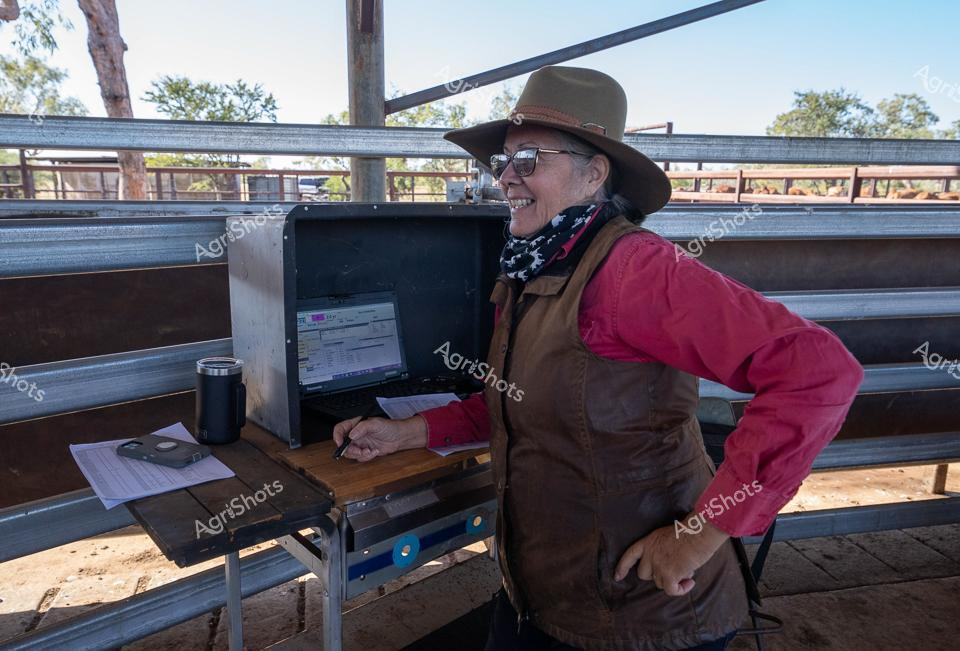
Outback cattle station management comes alive in this vibrant scene of rural technology and agricultural expertise. A seasoned agricultural professional, wearing a classic wide-brimmed bush hat and a warm red and brown layered outfit, leans into a portable workstation within a sturdy steel cattle yard. Her infectious smile and relaxed posture highlight the joy of modern farming, where digital technology meets traditional livestock management. An open laptop displays agricultural software, suggesting she's likely recording cattle data, tracking herd movements, or managing station records. The surrounding metal cattle yards and glimpse of eucalyptus trees in the background frame a quintessential Queensland cattle station workspace. The portable setup - with its rugged laptop enclosure, thermal coffee mug, and positioned paperwork - represents the adaptable, tech-savvy approach of contemporary agricultural professionals who blend cutting-edge digital tools with hands-on rural experience.
 Image
Image
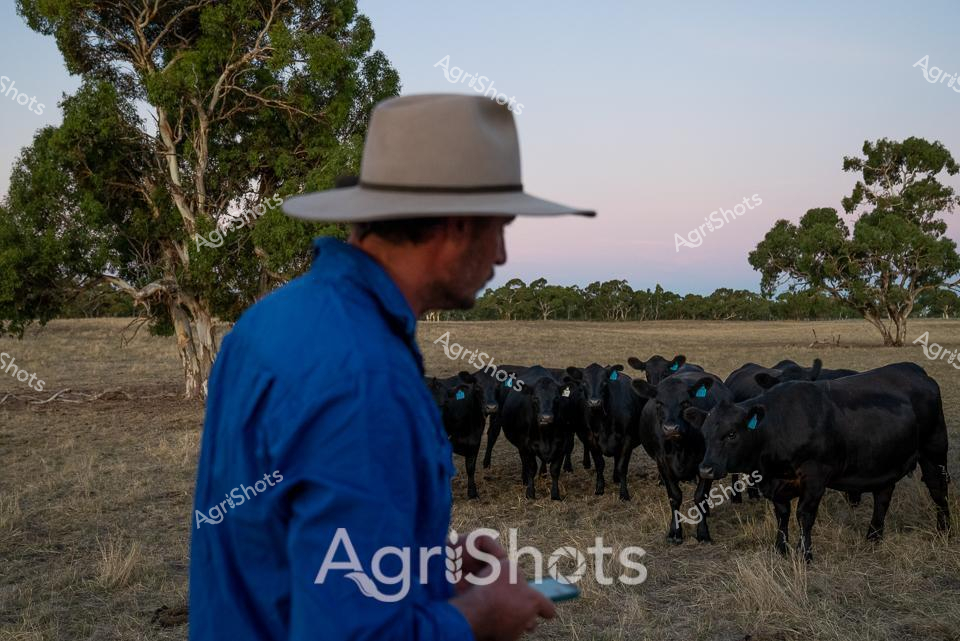
Twilight descends over the vast Murray and Mallee landscape, casting a soft pastel glow across a dry paddock where a group of sleek Black Angus cattle cluster together. Wearing a classic broad-brimmed Australian bush hat and a vivid royal blue work shirt, a cattle farmer stands quietly observing the herd, silhouetted against the backdrop of weathered eucalyptus trees. The black cattle, their coats gleaming with deep midnight hues, bear distinctive blue ear tags indicating careful stud management and tracking. Dry golden grasses crunch underfoot, signaling the end of a long summer day, while the cattle bunch close, radiating a sense of calm and collective presence. The scene captures the essence of Australian agricultural life - a moment of quiet connection between a farmer and the livestock, framed by the timeless beauty of the rural landscape. This image embodies the resilience, precision, and deep connection to land that defines modern stud cattle farming in South Australia.
 Image
Image
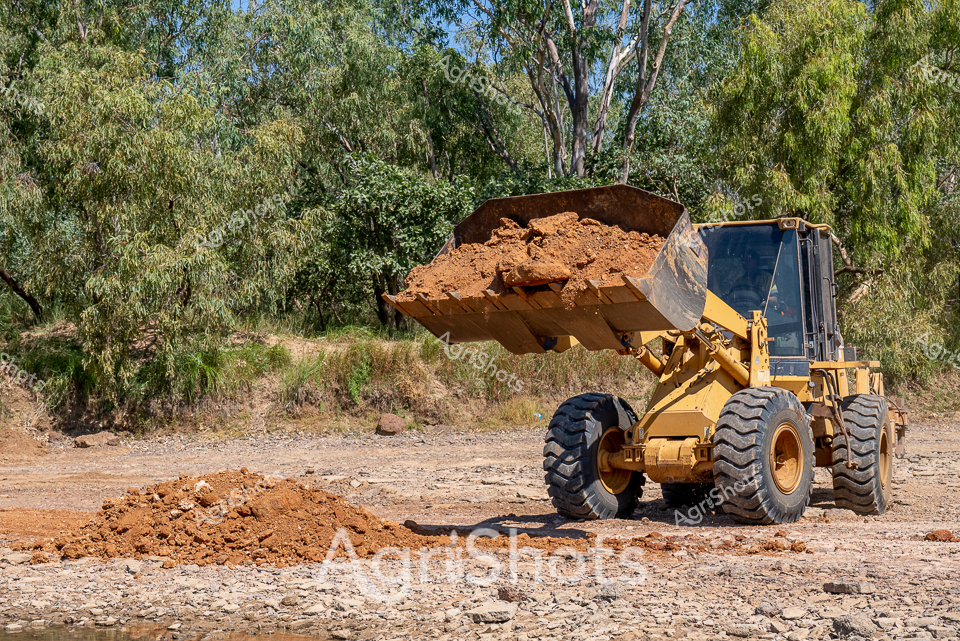
A yellow front-end loader carves a powerful silhouette against the muted eucalyptus woodland of a remote Western Australian station. The machine's robust bucket is loaded with rich, ochre-colored earth, suspended mid-movement across the rugged terrain. Weathered wheel tracks and scattered mounds of excavated soil tell a story of landscape transformation, highlighting the persistent human intervention in Australia's agricultural landscapes. Towering gum trees provide a verdant backdrop, their silvery-green foliage contrasting sharply with the golden machinery and rusty ground. The harsh midday sunlight casts crisp shadows, emphasizing the mechanical precision of the loader against the organic textures of the bush. This scene captures the quintessential spirit of outback infrastructure - resilient, purposeful machinery reshaping the ancient landscape with methodical determination, a testament to the ongoing agricultural development in Western Australia's challenging rural environments.
 Image
Image
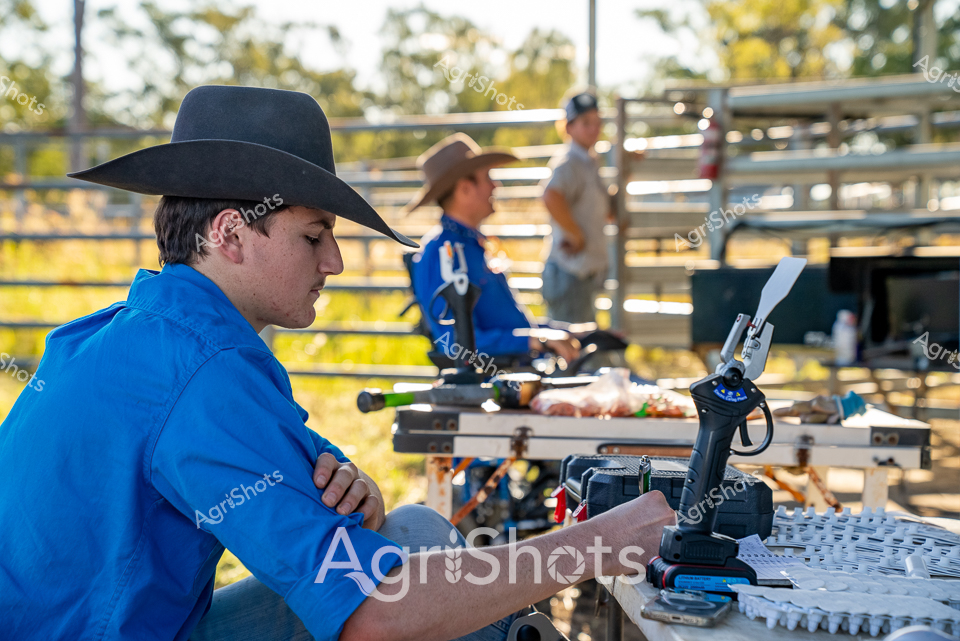
Young agricultural worker calibrates electronic livestock tracking equipment in a sunlit cattle yard. Wearing a classic wide-brimmed Australian bush hat and vivid blue work shirt, the individual carefully operates a sophisticated electronic ear tagging device surrounded by metal livestock processing infrastructure. Soft winter sunlight filters through native trees in the background, casting gentle shadows across the rural workstation. Multiple workers in coordinated blue uniforms collaborate systematically, suggesting a professional cattle management operation utilizing modern technological tools for livestock tracking and identification. The metallic equipment, precise digital interfaces, and structured yard environment represent the intersection of traditional agricultural practices and contemporary data-driven livestock management techniques. The scene captures the meticulous attention to detail required in modern agricultural workflows, where technology enables precise animal monitoring and record-keeping in the Queensland cattle industry.
 Image
Image
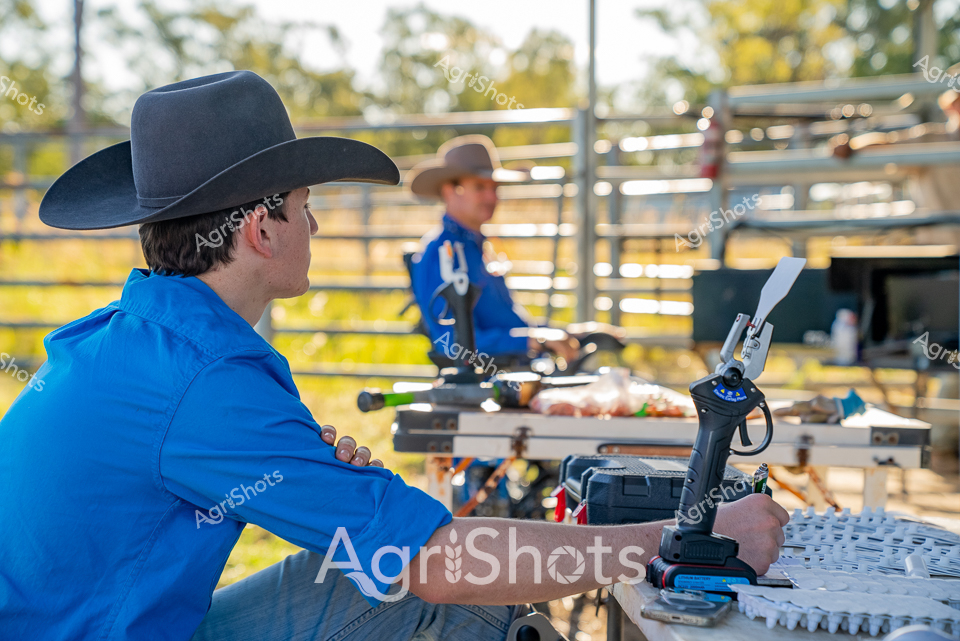
Queensland's golden winter light bathes the cattle yards as a stockman in a crisp blue shirt and classic black Australian bush hat operates sophisticated livestock data recording equipment. Perched on a metallic sorting platform amid the steel yard panels, he carefully manages electronic ear tag scanning and data collection, representing the cutting-edge intersection of traditional cattle handling and modern agricultural technology. Another stockman stands in the background, both focused intently on the precise process of documenting each animal's individual information. The scene captures the meticulous care and technological sophistication of contemporary Australian cattle management, where generations of pastoral knowledge blend seamlessly with digital tracking systems. Soft yellowed paddock grasses and distant tree lines provide a natural backdrop to this moment of rural professional concentration, highlighting the quiet expertise of agricultural workers who blend manual skill with digital precision.
 Image
Image
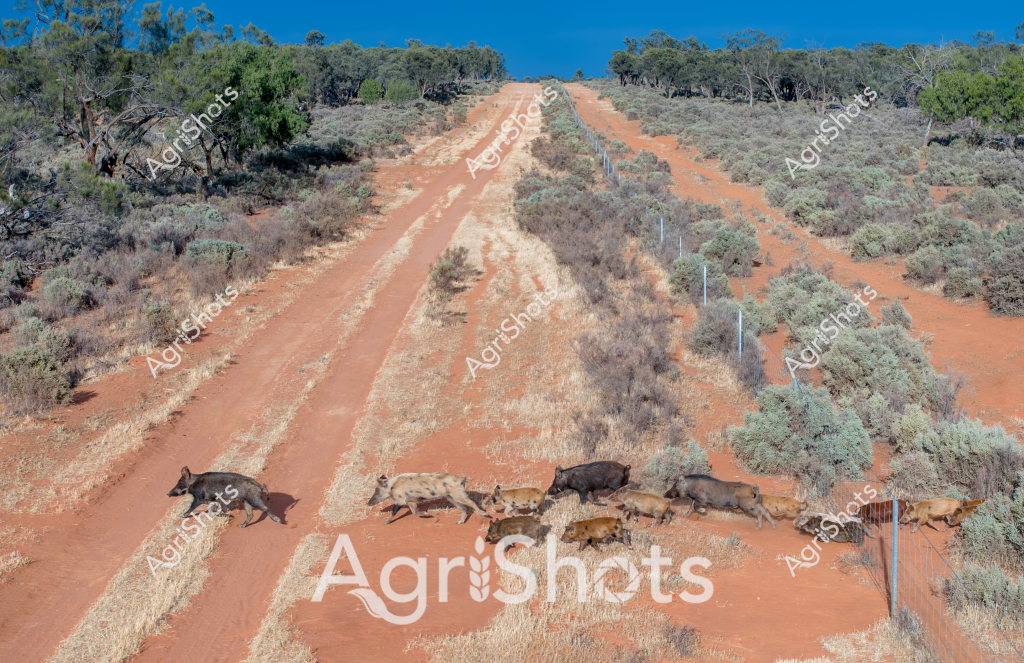
A group of feral pigs traverses a remote Australian dirt track, their dark and varied-colored bodies moving across the rusty-red earth. The landscape is classic Australian outback - sparse eucalyptus trees, silvery-green scrub vegetation, and a wide blue sky stretching across the horizon. These wild pigs, ranging in shades from dark brown to light tan, are crossing a well-worn rural access road that cuts through the arid landscape, likely moving between grazing areas. The surrounding terrain shows typical semi-arid vegetation with low shrubs and scattered trees, characteristic of inland Australian regions. The stark contrast between the reddish-orange soil and the muted green vegetation creates a visually striking scene that captures the rugged nature of Australia's interior landscapes. The image appears to be an aerial or drone perspective, providing a clear view of the pigs' movement across the landscape, highlighting the interaction between wildlife and the extensive rural infrastructure that connects remote areas. This scene represents the ongoing challenge of feral animal management in Australian agricultural regions, where introduced species like wild pigs can significantly impact native ecosystems and farming operations.
 Image
Image
A woman agricultural researcher stands in an arid Australian landscape, wearing protective field gear and holding a piece of fruit. Dressed in a light blue long-sleeved shirt, blue denim jeans, and a wide-brimmed cream cowboy hat, she is equipped with blue work gloves and sunglasses. The background reveals a classic Australian bush setting with sparse eucalyptus trees and rich red-orange dirt road cutting through a dry woodland area. Her personal equipment includes a blue backpack labeled with her name, and she appears to be conducting field research or surveying in a remote rural environment. The landscape suggests drought conditions or a dry seasonal period, with minimal ground vegetation and a sparse, weathered tree line typical of inland Australian agricultural regions.
 Image
Image
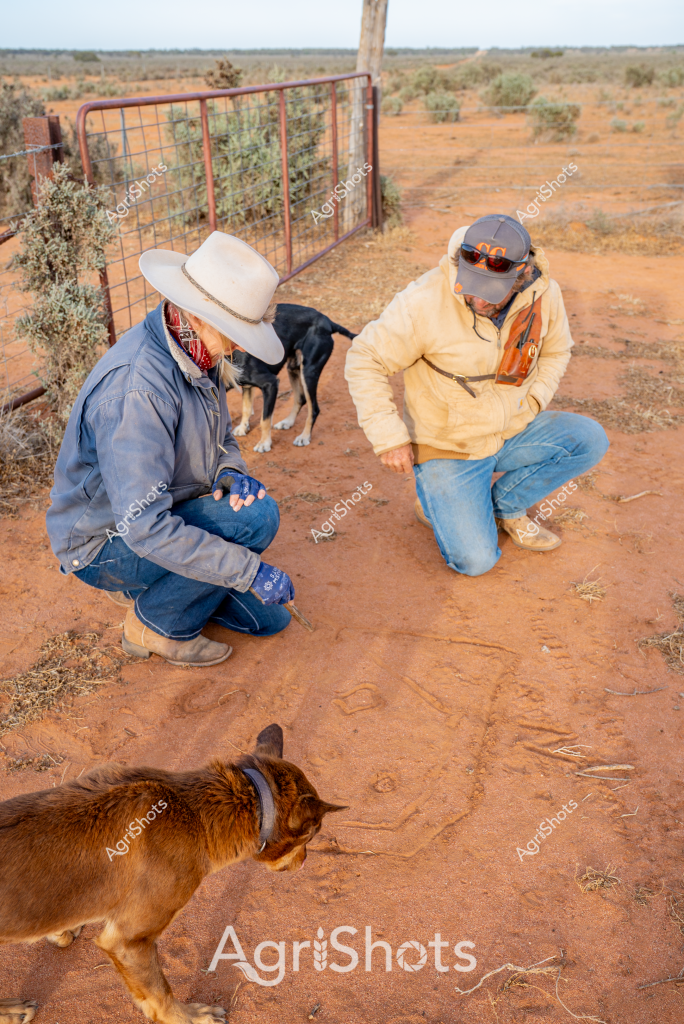
Two men work together in a dry, arid landscape, crouching on red earth surrounded by sparse desert vegetation. One wears a white wide-brimmed hat and blue denim work clothing, while the other is dressed in a light yellow jacket and wearing sunglasses and a cap. Multiple working dogs are present - a dark-colored dog and a reddish-brown dog with a collar, both attentive and close to their handlers. The scene captures a typical rural Australian outback setting, with a wire gate visible in the background and scrubby bushes dotting the reddish sandy ground. The men appear to be examining something on the ground, perhaps tracking, investigating animal signs, or discussing stock management. Their postures suggest collaboration and shared expertise in managing livestock or conducting rural work. The landscape is quintessentially Australian - a harsh, open terrain with minimal vegetation, characteristic of central or western regions where pastoral stations cover vast distances. The men's protective clothing - wide-brimmed hat, sunglasses, long sleeves - indicates adaptation to intense sunlight and challenging environmental conditions typical of remote agricultural areas. Their working dogs demonstrate the crucial role of canine companions in Australian rural work, likely trained for mustering, tracking, or providing support in managing livestock across expansive properties.