Results for “blue-shirt”
 Image
Image
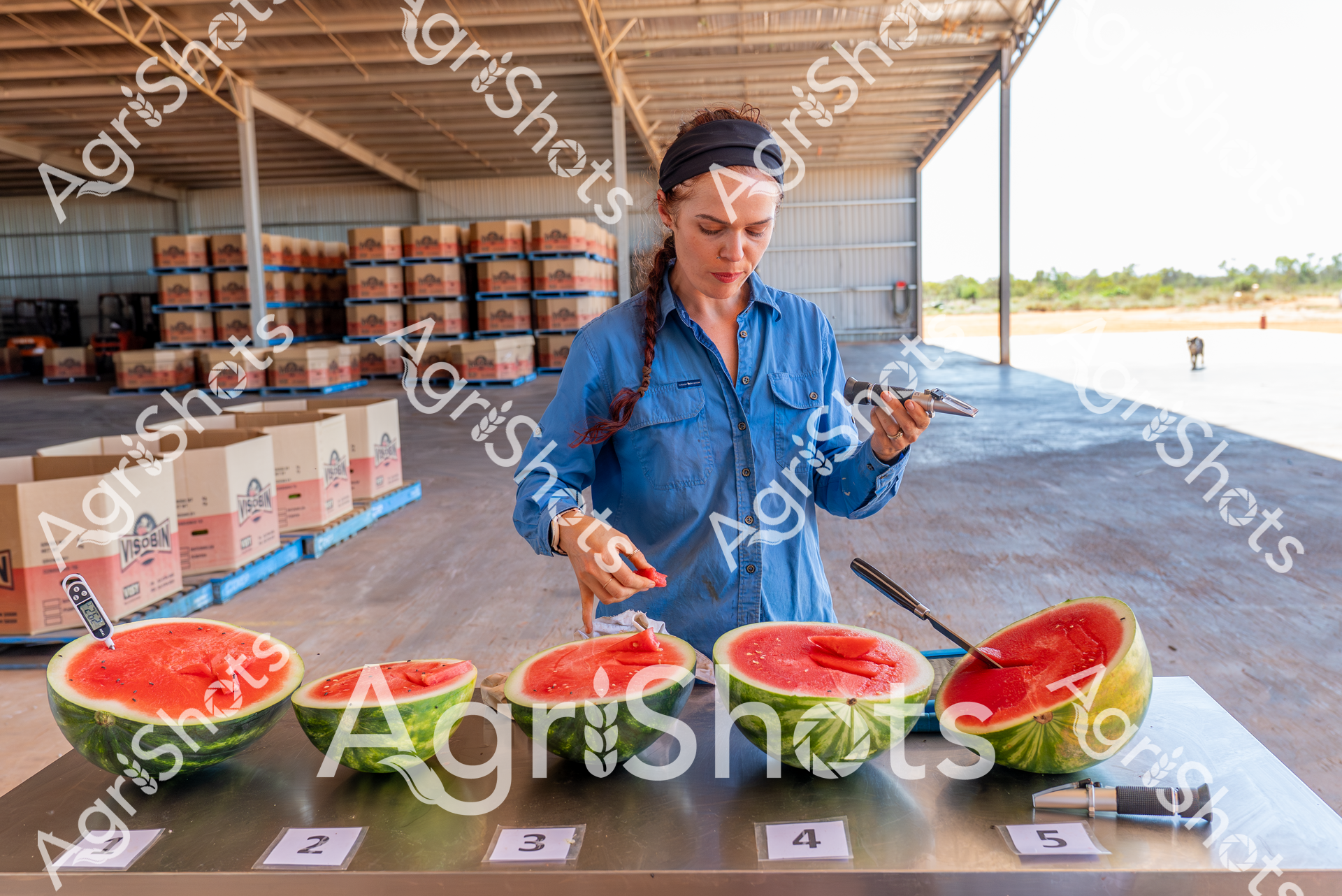
A woman in a blue shirt meticulously tests watermelons in a warehouse, using a refractometer to measure sugar content. Surrounded by stacked produce boxes, she carefully examines five watermelons numbered and laid out on a table, representing precision agricultural practices in the Northern Territory's Barkly Region.
 Image
Image
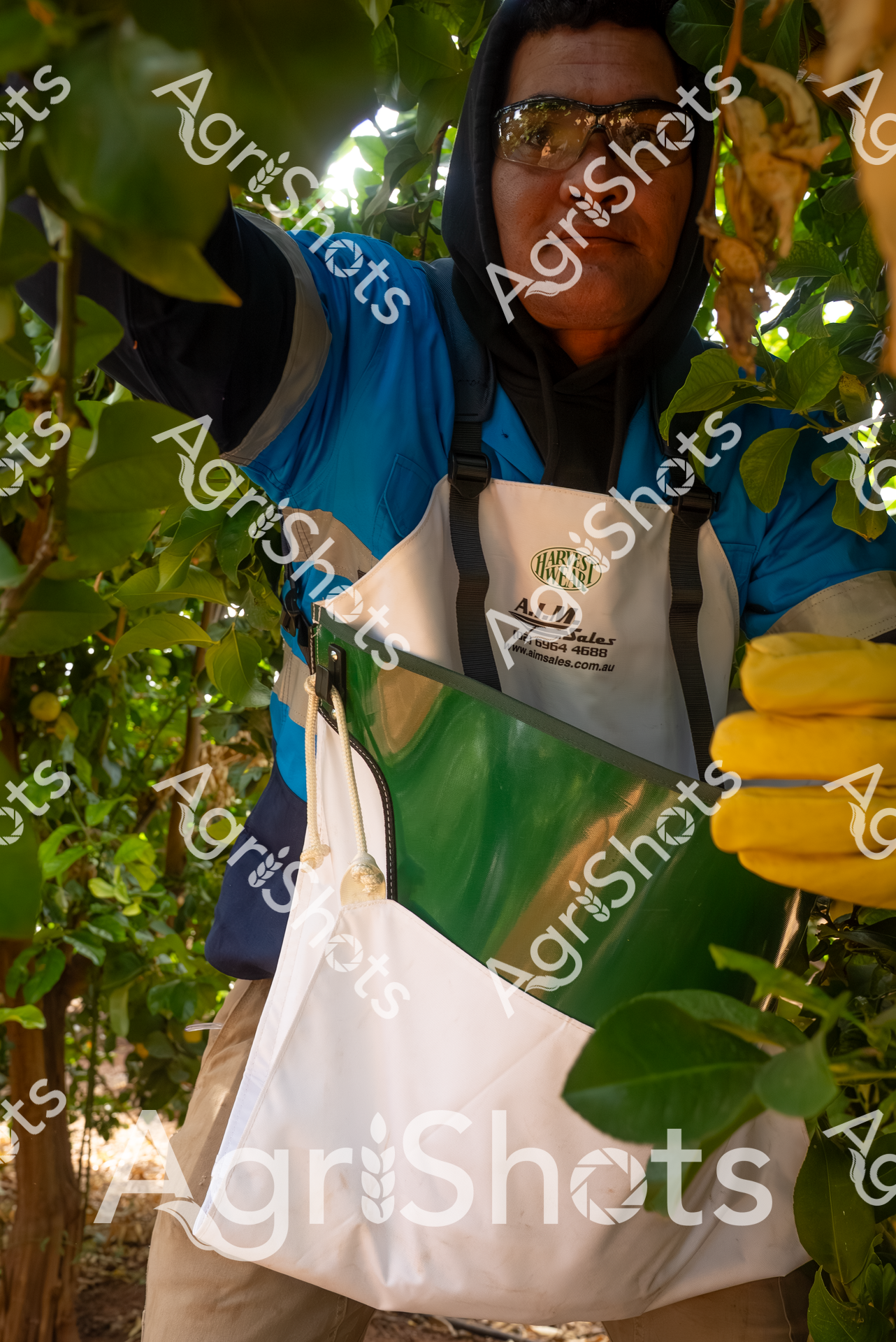
A skilled orchard worker harvests ripe lemons in the lush Riverland region of South Australia during winter. Wearing protective blue and white work gear from Aim Sales, the worker carefully selects fruit among verdant branches, using yellow-gloved hands to collect the bright citrus. Sunlight filters through the green leaves, creating a dappled backdrop that highlights the precision of horticultural work. The worker's specialized harvesting bag hangs ready, emblazoned with company branding, while protective eyewear shields against the crisp winter light. This image captures the careful craft of fruit picking, showcasing the meticulous process of bringing fresh produce from orchard to market. The scene embodies the dedication of agricultural workers in South Australia's thriving citrus industry, revealing the careful attention required in commercial fruit production.
 Image
Image
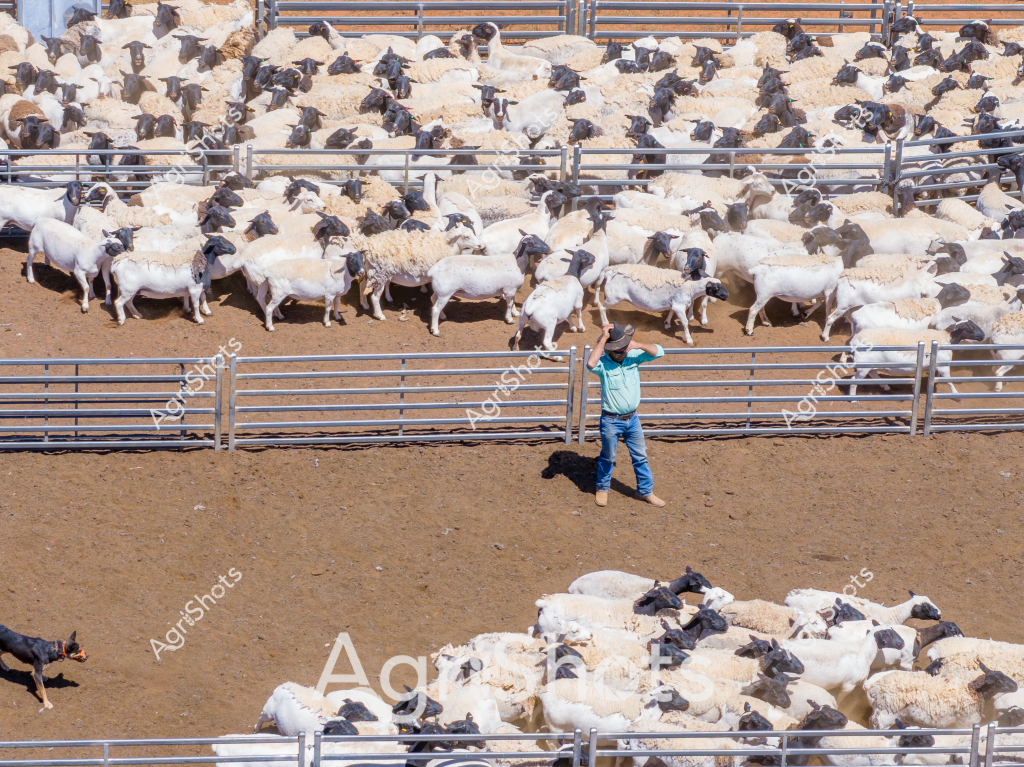
A large flock of white and black-faced sheep are packed tightly within multiple metal livestock yards, with a man in a blue shirt and hat standing among them. The sheep appear to be a mixed breed, likely Dorper or Merino cross, densely clustered across different pen sections on a dry, dusty ground. A working dog can be seen at the bottom left of the image, ready to assist with herding. The metal yard infrastructure creates geometric patterns, with horizontal rails dividing the livestock into controlled groups. The scene captures a typical Australian livestock management scenario, likely in a regional or station setting, where careful animal handling and mustering are essential agricultural practices. The stark contrast between the white sheep, tan ground, and blue-shirted stockman creates a visually striking representation of rural Australian livestock management.
 Image
Image
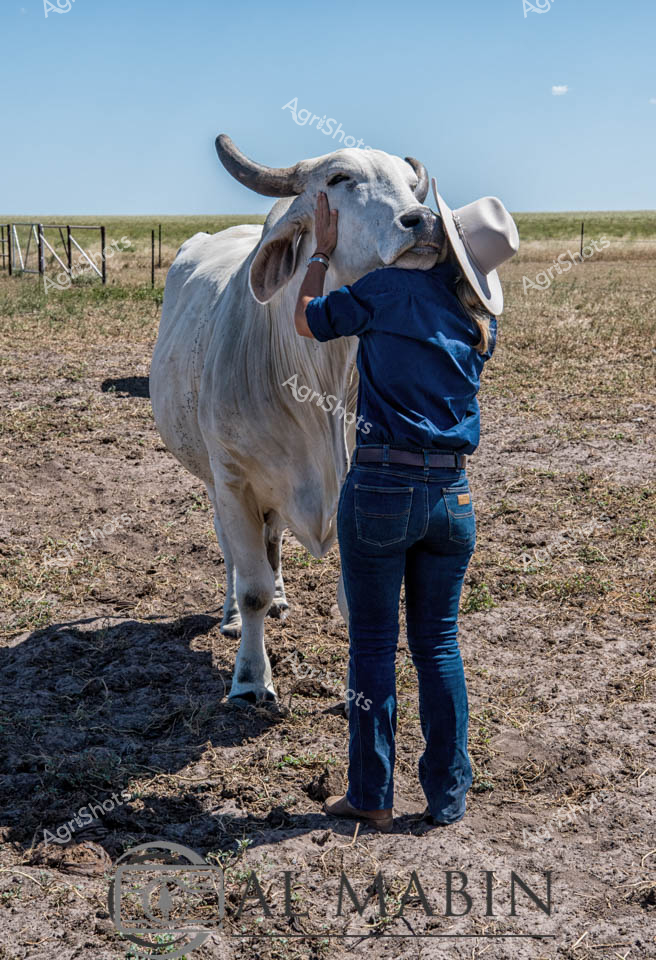
Tender connection unfolds across a vast pastoral landscape, where a pristine white Brahman cattle beast stands alongside a blue-shirted woman in classic outback attire. Her felt hat and denim workwear speak to generations of pastoral tradition, while her gentle touch against the animal's muscular white hide reveals a profound understanding of cattle handling. The expansive Northern Territory station stretches behind them - a sparse, sunbaked terrain of muted grasses and distant fencelines, epitomizing the challenging environment of Australian cattle country. The Brahman, with its distinctive large curved horns and loose, heat-resistant skin, represents a breed perfectly adapted to Australia's harsh tropical conditions. Its pale coat gleams against the dusty ground, casting a deep shadow that highlights the animal's powerful musculature. The intimate moment captured here transcends mere agricultural labor, representing the deep bond between pastoral workers and the livestock - a relationship built on respect, skill, and generations of shared survival in one of the world's most unforgiving landscapes. The scene radiates a sense of quiet companionship, technical mastery, and the enduring spirit of Australian agricultural life - where human and animal work in subtle, sophisticated partnership across immense, challenging territories.
 Image
Image
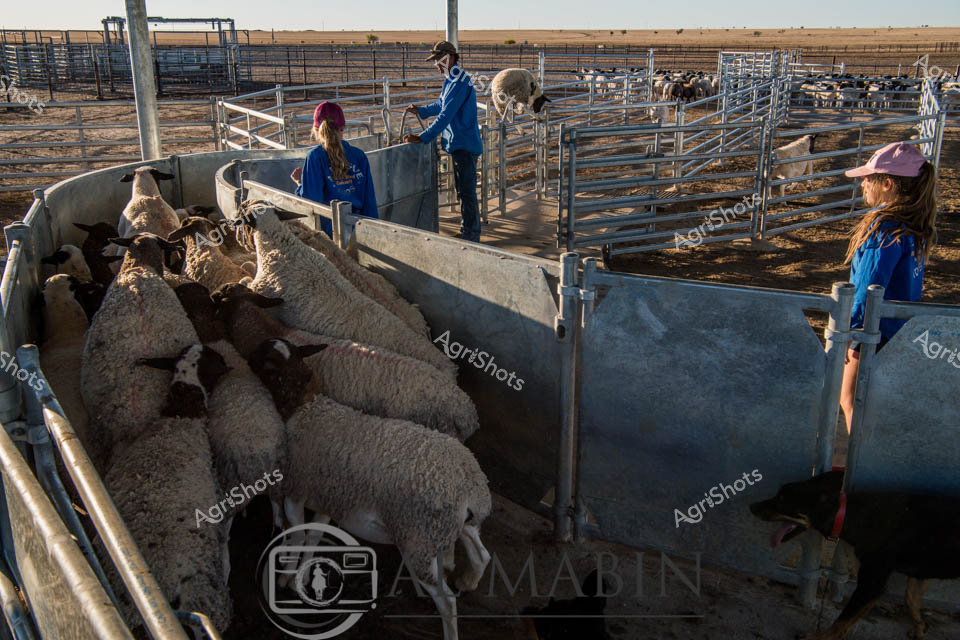
Merino lambs crowd the steel gates of a drafting pen on a sun-drenched western Queensland cattle station, with blue-shirted farm workers carefully managing the livestock movement. The early morning light casts long shadows across the dusty holding yards, revealing the intricate metal infrastructure designed for efficient stock management. Two workers, wearing distinctive blue work shirts and protective hats, strategically position themselves to guide and separate the woolly Dorper sheep through the carefully engineered yards. The crisp, dry landscape stretches endlessly behind the metallic yards, highlighting the harsh yet beautiful central western Queensland environment where pastoral agriculture thrives. Compact and muscular sheep, their thick fleece testament to their breeding, huddle together in the loading pen, awaiting sorting and potential transfer to different paddocks or for market preparation. The scene captures the precision, skill, and daily rhythms of Australian sheep farming - a delicate dance of human expertise and animal husbandry under the expansive outback sky.
 Image
Image
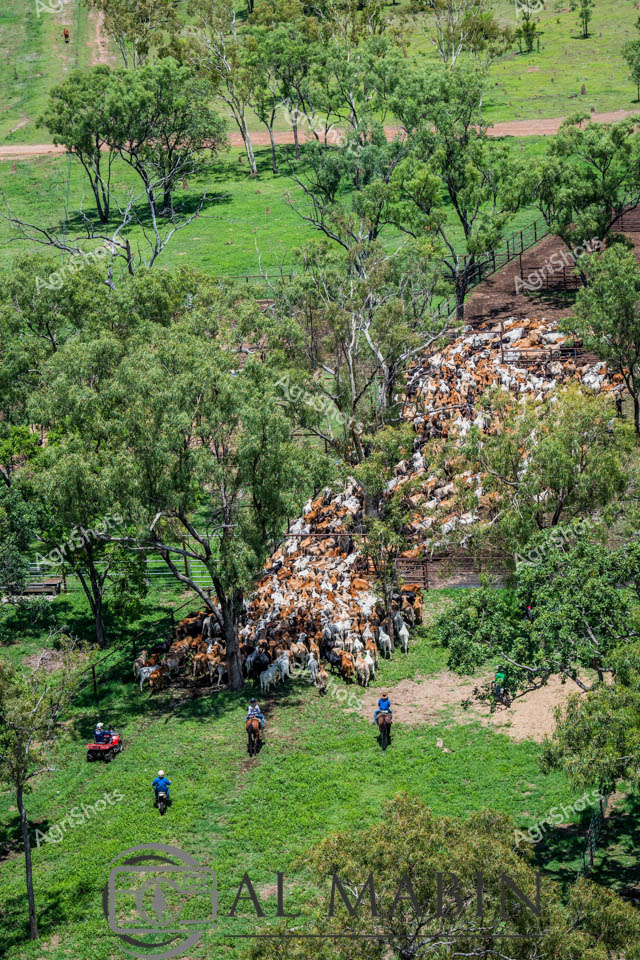
Thundering hooves and dust clouds mark another epic cattle muster across a lush Queensland pastoral landscape. A dense herd of mixed beef cattle - predominantly white and tan Brahman and crossbreed cattle - cluster tightly between weathered gum trees, hemmed in by wooden fencing. Three stockmen on motorbikes navigate the verdant grasslands, skillfully guiding the mob through the undulating terrain with practiced precision. The aerial perspective captures the sweeping green paddocks punctuated by scattered eucalyptus trees, revealing the expansive scale of this working cattle station. Rich ochre and russet tones of the cattle contrast beautifully against the emerald pastures, while the blue-shirted riders move with quiet efficiency, embodying the quintessential Australian rural work ethic. This dynamic scene epitomizes the challenging and iconic work of mustering - a critical process in northern Australian cattle production that requires exceptional horsemanship, technical skill, and deep understanding of livestock behavior.
 Image
Image
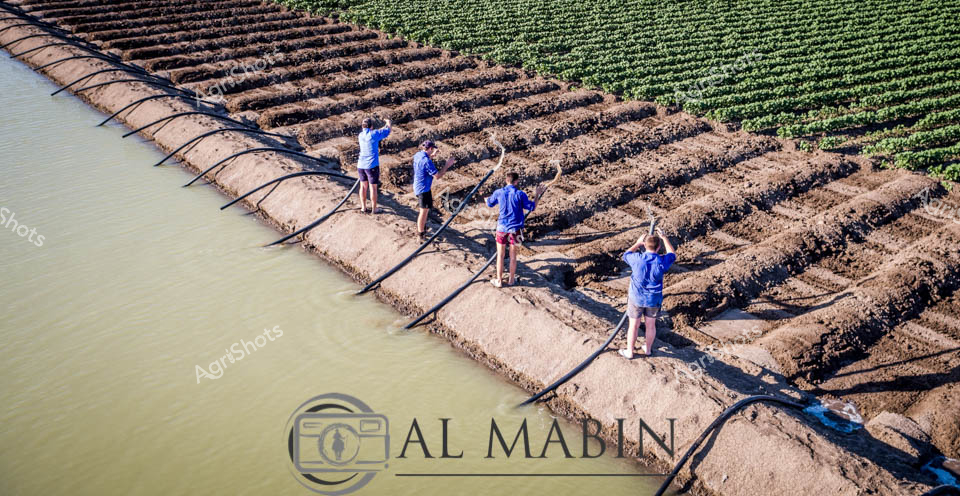
Cascading rows of meticulously cultivated cotton fields stretch across the sun-drenched landscape of northwestern New South Wales, revealing the precision of modern agricultural irrigation. Blue-shirted farm workers carefully monitor the water distribution system, walking along the raised earthen irrigation channels that divide the verdant green and rich brown agricultural plots. Flexible black poly pipes snake along the channel edges, strategically delivering life-giving water to the emerging cotton crop through ingenious siphon systems. The geometric landscape captures the intense discipline of Australian cotton farming, where every meter of ground is carefully managed to maximize yield in an often-harsh agricultural environment. The crisp morning light casts sharp shadows across the meticulously leveled fields, highlighting the intricate water management infrastructure critical to successful crop production in this challenging region. This image embodies the technical sophistication and hard work required to transform arid landscapes into productive agricultural systems in the Walgett Shire region.
 Image
Image
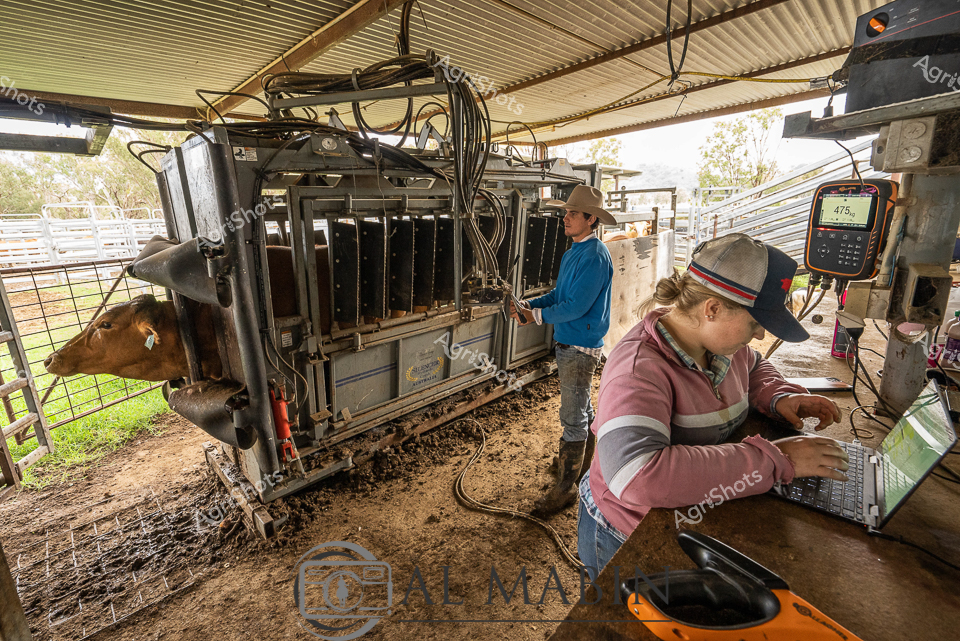
Cattle processing unfolds with precision inside a steel-clad farm shed, where cutting-edge agricultural technology meets traditional livestock management. A powerful Gallagher cattle crush stands centrally, restraining a rust-colored bovine, while a blue-shirted worker in a wide-brimmed stockman's hat carefully monitors the equipment's hydraulic mechanisms. Alongside, a colleague in a pink layered top and cap focuses intently on a laptop, meticulously recording data from the animal's health assessment and vaccination procedure. Mud-splattered metal flooring and industrial infrastructure frame this quintessential rural Australian scene, with soft natural light filtering through the corrugated roof revealing the methodical rhythm of farm operations. Digital readouts and specialized veterinary equipment underscore the high-tech approach to modern cattle management, blending manual expertise with sophisticated tracking and monitoring systems. The atmosphere hums with quiet concentration, each movement deliberate and professional, highlighting the sophisticated skill required in contemporary agricultural practices. Galvanized steel, dusty workwear, and the sturdy frame of livestock create a textural landscape that speaks to the robust, pragmatic spirit of Australian farming.
 Image
Image
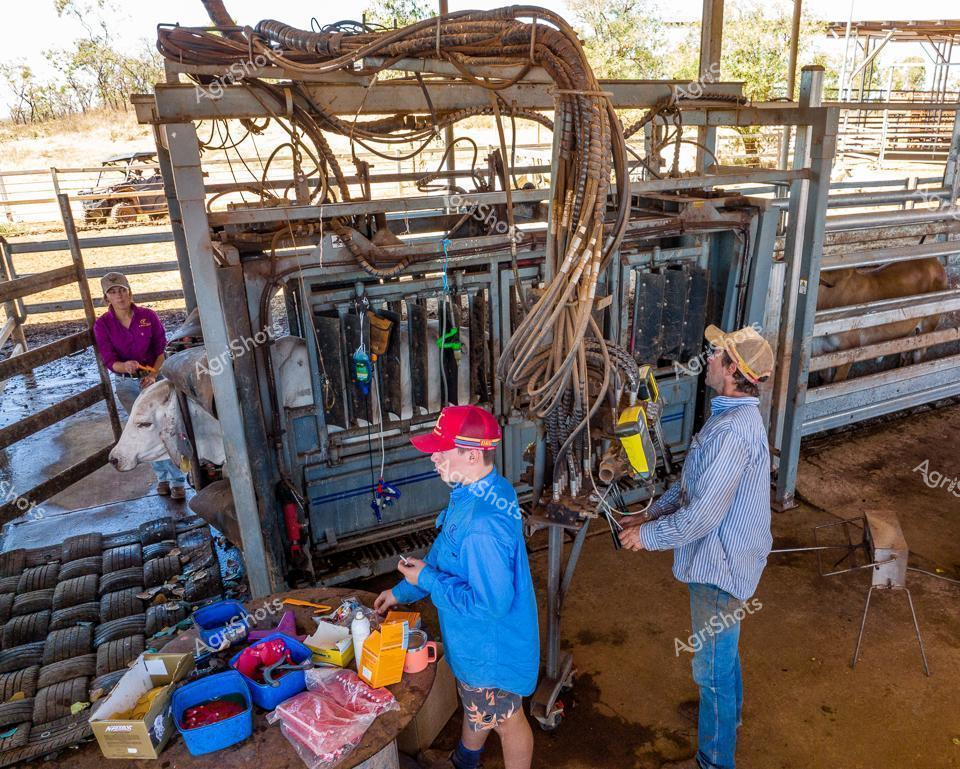
Northern Territory cattle station during mid-morning processing, with a sophisticated hydraulic cattle crush handling a pristine white Brahman breed. Three agricultural workers collaborate efficiently around the robust metal machinery, managing animal health procedures with practiced precision. A blue-shirted worker in a red cap manages equipment and supplies at the workstation, while a colleague in a striped shirt operates technical controls, and a woman in a purple shirt monitors the animal's movement. Tangled industrial cables and hydraulic lines drape across the steel frame, highlighting the complex mechanical infrastructure required for modern livestock management. Rugged outback landscape filters through the cattle yards, with dry vegetation and clear sunlight emphasizing the harsh yet systematic environment of large-scale cattle production. The scene captures the intersection of animal husbandry, technical innovation, and human expertise characteristic of Australia's northern pastoral industries.
 Image
Image
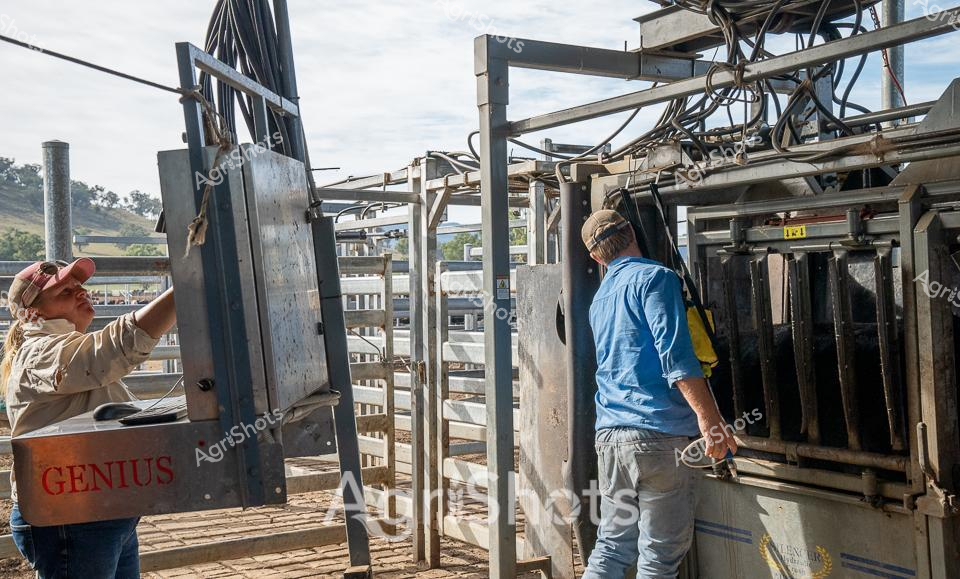
Rural precision meets modern livestock management in this compelling snapshot of cattle handling technology. Two workers operate a sophisticated Genius cattle crush, a critical piece of equipment designed for safe and efficient animal processing. The blue-shirted worker stands positioned near the metal gates, carefully managing the livestock movement, while his colleague in a light-colored shirt assists with the technical mechanisms of the crush. Set in a classic Australian pastoral landscape with rolling hills visible in the background, this scene captures the meticulous care and technological innovation of contemporary cattle farming. The sturdy metal infrastructure of the cattle yards demonstrates the agricultural sector's commitment to animal welfare and operational efficiency. Overhead cables and robust metal framing showcase the sophisticated engineering behind modern livestock management systems. The weathered metal surfaces, industrial gray tones, and functional design of the cattle handling equipment reflect the pragmatic spirit of Australian agricultural practice. Soft natural light and an open-air setting underscore the connection between technological intervention and the natural environment, highlighting the delicate balance between human management and animal husbandry in rural agricultural settings.
 Image
Image
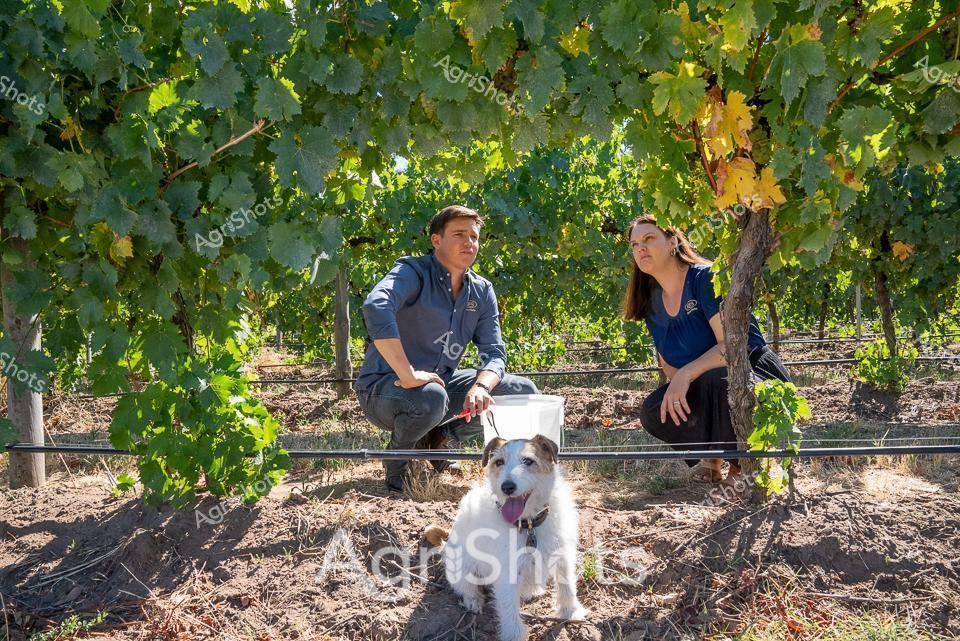
Verdant grapevines cascade with lush green and golden-tinged leaves across a sun-dappled Barossa Valley vineyard, capturing a moment of contemplative pause during harvest season. A blue-shirted worker and a colleague rest among the meticulously trellised vines, their relaxed postures suggesting a break from careful vineyard management. A white and tan terrier sits attentively in the foreground, seemingly part of the agricultural team, tongue softly hanging in the warm light. The ground beneath the vines is dry and carefully maintained, with wire supports guiding the grape clusters' growth - a testament to the precision of South Australian viticulture. Soft shadows and bright sunlight filter through the dense foliage, creating a textural landscape of agricultural expertise and natural beauty. This scene encapsulates the serene yet industrious spirit of wine production in one of Australia's most renowned wine regions, where every element - from the carefully tended vines to the watchful working dog - plays a crucial role in creating world-class wine.
 ▶ Video
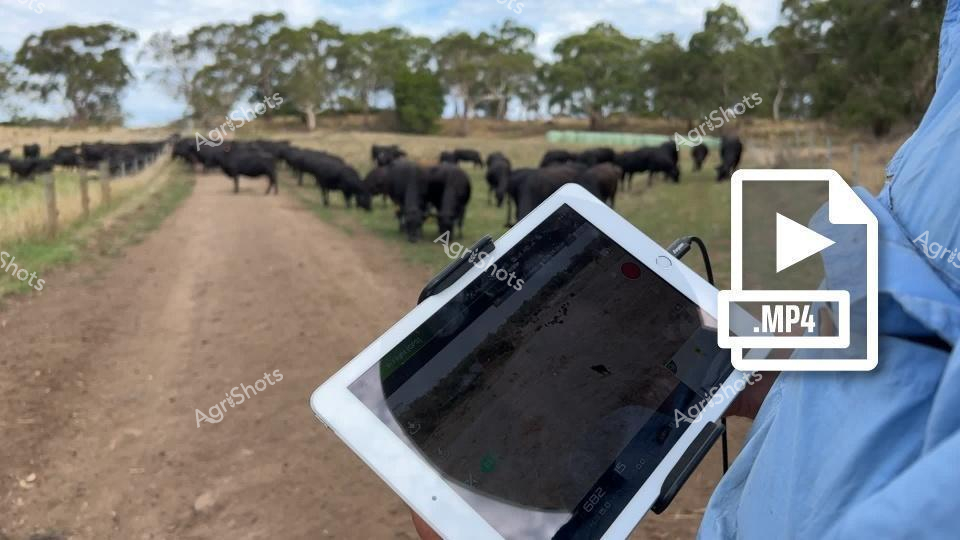
Modern Mustering: Precision Cattle Management in Rural Victoria Cutting-edge agricultural technology meets traditional livestock handling in this evocative rural scene. An iPad displays a digital mapping interface while a herd of black Angus cattle grazes across a dusty dirt track, framed by eucalyptus trees in the background. The tablet represents a sophisticated drone mustering approach, capturing real-time livestock tracking and movement data with pinpoint accuracy. A blue-shirted farm worker operates the device, leveraging digital tools to monitor and manage the stud cattle with unprecedented efficiency. The landscape epitomizes the Australian agricultural sector's technological evolution - seamlessly blending time-honored pastoral practices with advanced digital monitoring systems. Soft overcast light and the muted earth tones of the paddock highlight the technological innovation transforming modern farming, where GPS tracking and remote surveillance have become integral to livestock management.
 Image
Image
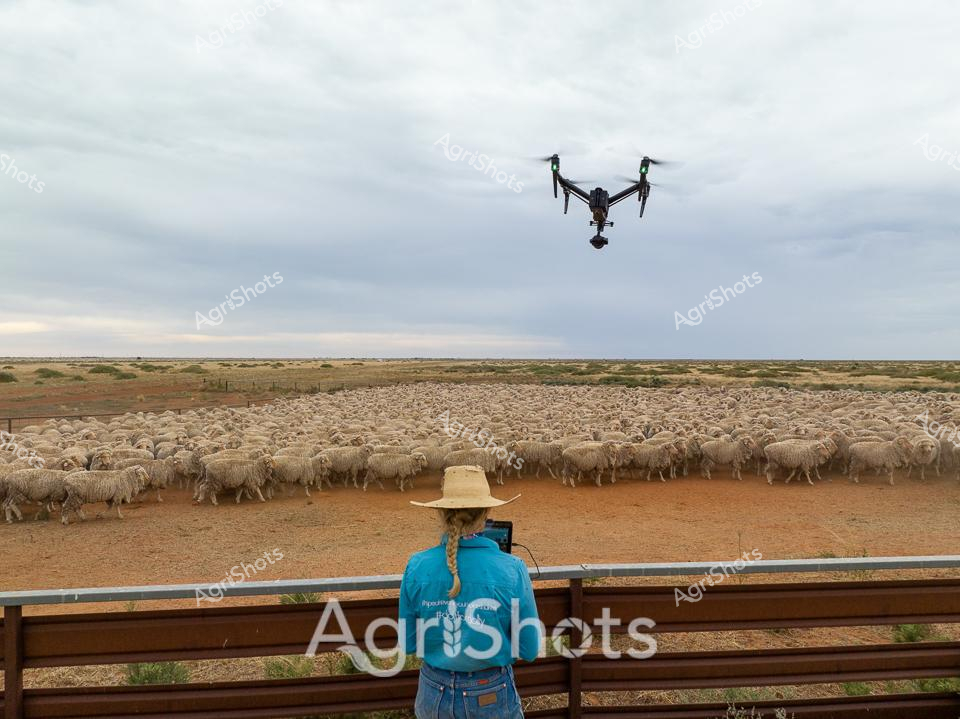
An expansive merino sheep flock clusters across a sun-baked station paddock in rural New South Wales, while a blue-shirted station hand in a wide-brimmed hat observes from a wooden fence line. A drone hovers overhead, capturing the pastoral scene with cutting-edge agricultural technology. The landscape stretches in muted ochre and dusty green hues, revealing the harsh beauty of the Australian agricultural interior - a seemingly endless terrain of weathered earth and densely packed woolly bodies. The merino sheep, tightly grouped and uniform in their creamy fleece, represent the backbone of Australia's pastoral industry, their dense wool a testament to generations of careful breeding. The scene embodies a powerful narrative of technological innovation meeting traditional farming practices, with the aerial drone providing a contemporary perspective on a timeless agricultural landscape. This image captures the intersection of human skill, animal husbandry, and advanced monitoring technology that defines modern Australian agricultural enterprise.
 Image
Image
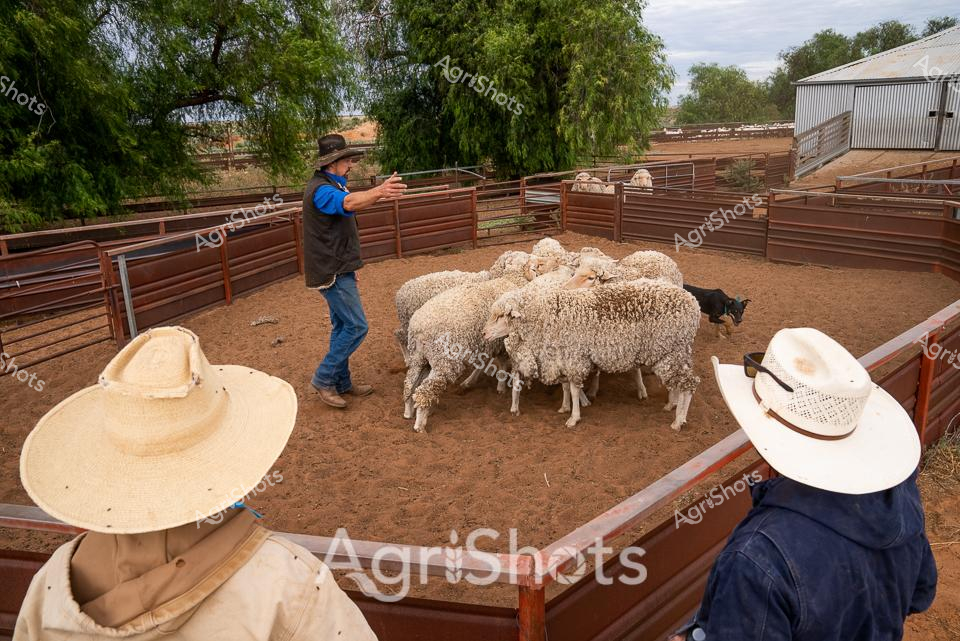
Merino wool producers orchestrate a precise sheep herding demonstration in a dusty rural paddock, showcasing traditional livestock management skills. A blue-shirted stockman directs a tight cluster of woolly Merino sheep within sturdy wooden yards, using subtle hand gestures and body language to control the flock's movement. Two experienced station hands wearing wide-brimmed protective sun hats observe from the yard's perimeter, their stance reflecting generations of agricultural expertise. The rustic stockyard, surrounded by drought-tolerant trees and a corrugated iron shed, epitomizes the resilient landscape of rural New South Wales. Tightly packed sheep display the dense, crimped fleece characteristic of premium Merino wool production - their cream and tan fleeces a testament to careful breeding and agricultural husbandry. The scene captures the nuanced interaction between skilled handlers and livestock, highlighting the intricate communication and respect fundamental to Australian pastoral traditions.
 Image
Image
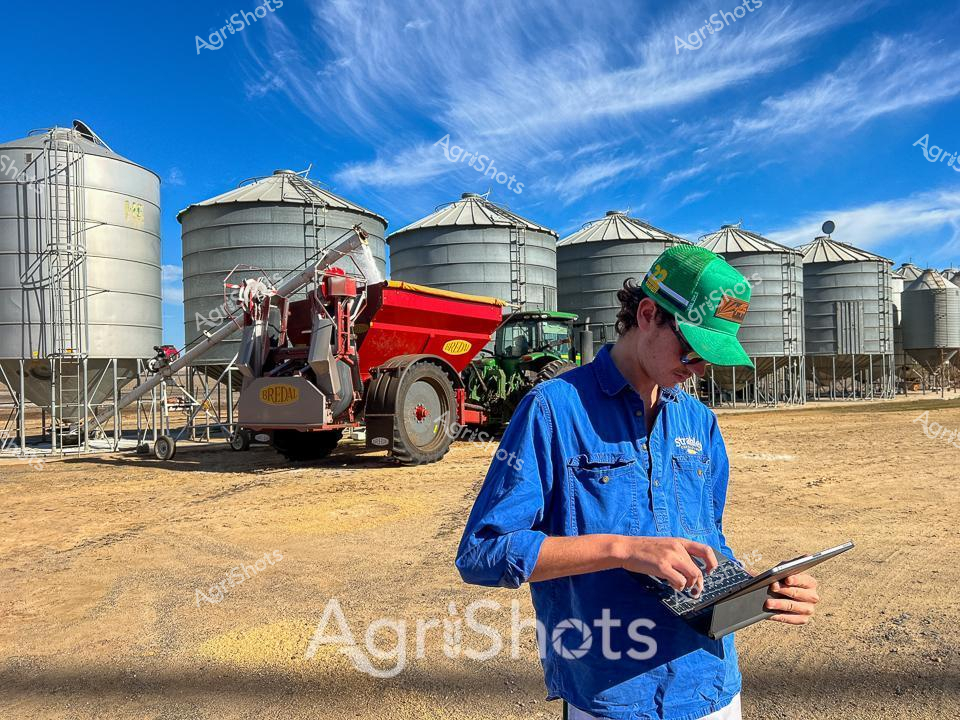
Blazing sunlight floods a sprawling grain storage facility, where gleaming steel silos stand sentinel against a vibrant azure sky streaked with wispy cirrus clouds. A blue-shirted agricultural worker in a bright green cap focuses intently on a tablet, capturing digital data amid the agricultural infrastructure. A bold red Bredal spreading machine sits ready beside a green John Deere tractor, highlighting the advanced technological integration of modern farming. The compacted earth and metallic grain storage bins create a textured landscape of agricultural precision, representing the sophisticated management of rural production. Cutting-edge digital tools and robust machinery underscore the technical expertise required in contemporary agricultural operations, where every data point and equipment choice contributes to efficient crop management. The scene epitomizes the blend of technology, skill, and infrastructure that defines Australian agricultural excellence in the 21st century.
 Image
Image
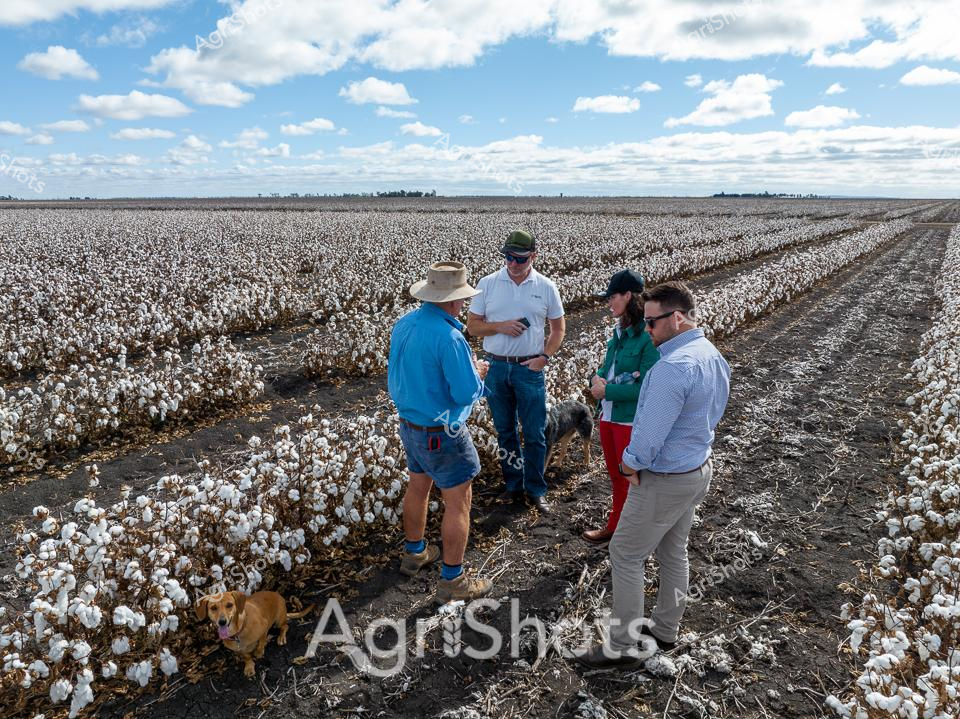
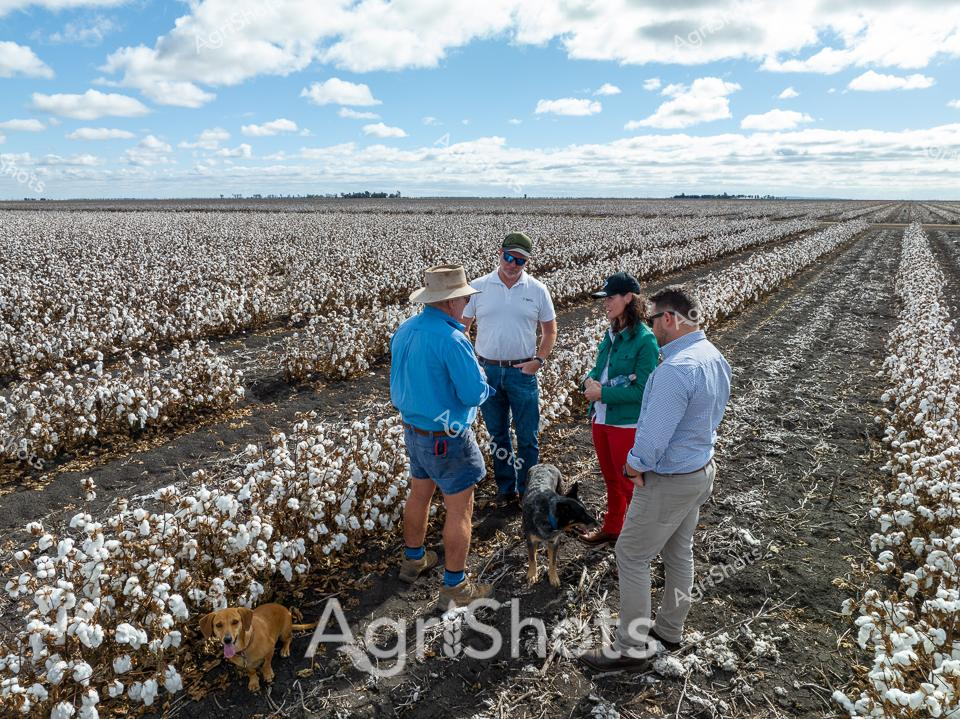
A group of agricultural professionals stand amid the orderly rows, their varied attire reflecting different roles - from a blue-shirted farmer in shorts and sun hat to colleagues in crisp business casual clothing. A loyal golden retriever sits nearby, watching the intense discussion about crop conditions. Their body language suggests a detailed technical assessment, with careful gestures and close examination of the cotton plants. The rich dark soil contrasts dramatically with the fluffy white cotton, creating a textural tableau of agricultural productivity. Dressed in sun protection and practical workwear, these agricultural experts represent the sophisticated collaboration between farming knowledge and modern agricultural science, capturing a moment of collective expertise in the crucial cotton growing region of Queensland.
 Image
Image
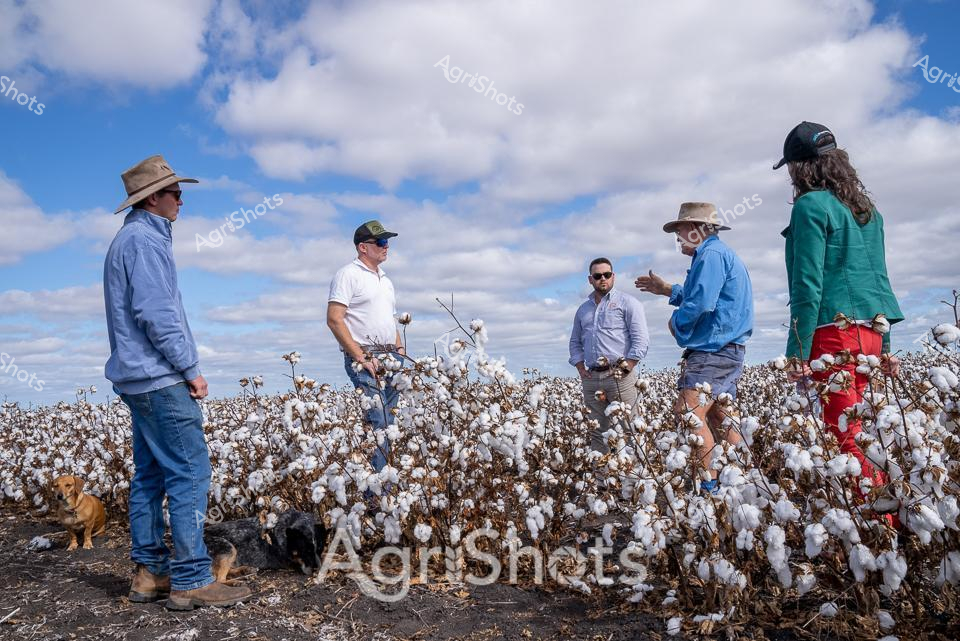
Rippling fields of pristine white cotton stretch across the horizon, punctuated by carefully cultivated rows under a classic Australian big sky. Four agricultural professionals stand amid the mature cotton crop, their postures and attentive conversation suggesting a critical harvest assessment. A blue-shirted farmer in shorts and a wide-brimmed hat anchors one side of the group, accompanied by two canine companions - a golden retriever and another working dog - who quietly observe the discussion. The group's professional agricultural clothing - ranging from blue and white polo shirts to a green jacket and red pants - reflects the collaborative spirit of rural enterprise. Soft cumulus clouds drift overhead, casting gentle shadows across the landscape, while the cotton bolls shimmer like a textured white blanket, signaling the crop's readiness for harvest. This scene captures the essence of Australian agricultural expertise: collaborative, pragmatic, and deeply connected to the land.
 Image
Image
Cotton farmers convene amid a sea of white-bolled cotton fields under a vast Queensland sky mottled with soft cumulus clouds. Five agricultural professionals stand among mature cotton plants, their white fluffy bolls contrasting against dark soil, signaling near-harvest season. A stalwart blue-shirted farmer in a wide-brimmed hat gestures while discussing crop conditions, accompanied by colleagues in varied attire - white polo, blue chambray, and casual field wear. A loyal working dog sits quietly at one farmer's side, underscoring the collaborative and familial nature of agricultural work. Their positioning across the field suggests a technical discussion about crop health, yield potential, or harvesting strategies, revealing the sophisticated management behind modern cotton production. The scene captures the essence of Australian agricultural expertise - collaborative, pragmatic, and deeply connected to the landscape.
 Image
Image
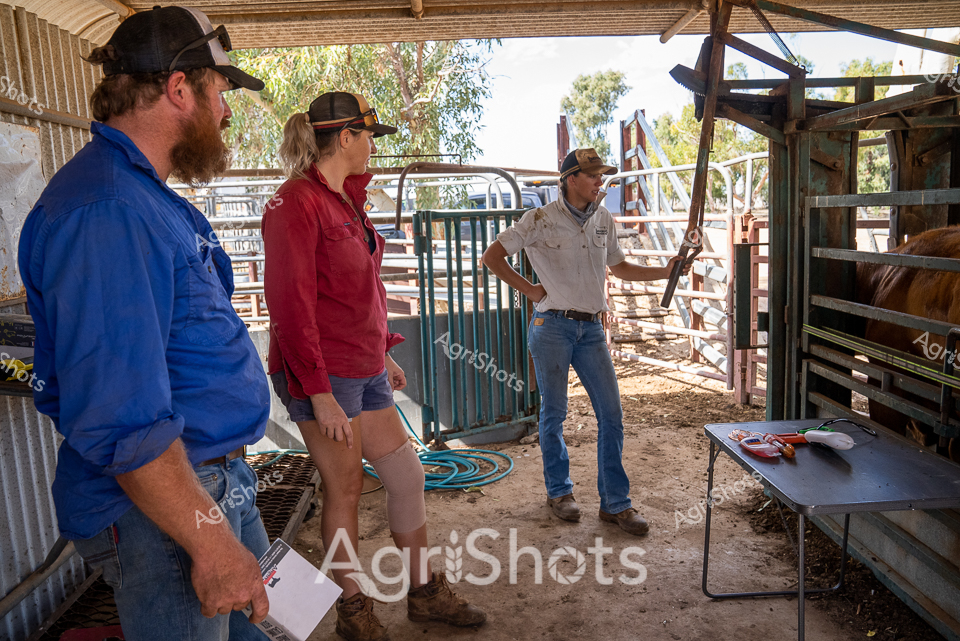
Cattle vaccination preparations unfold in a rustic Western Australian livestock yard, where three agricultural workers stand amid weathered metal cattle gates and a portable processing station. A blue-shirted worker clutches papers, while a colleague in a red shirt and baseball cap observes the proceedings. A third worker in a light shirt stands near a sturdy cattle crush, the essential equipment for safely restraining animals during veterinary procedures. The corrugated iron shelter provides welcome shade from the harsh Australian midday sun, filtering soft light across the dusty yard. Coiled blue hydraulic lines and medical supplies rest on a portable table, signaling the methodical approach to animal health management. Worn boots, practical work attire, and focused body language communicate the professional expertise of these rural agricultural workers. The scene captures the precise choreography of livestock management - a quintessential moment of agricultural practice where animal welfare, technical skill, and rural expertise converge. Utilitarian infrastructure, strategic equipment positioning, and the calm concentration of the workers illustrate the sophisticated approach to modern cattle husbandry in the expansive agricultural landscapes of Western Australia.
 Image
Image
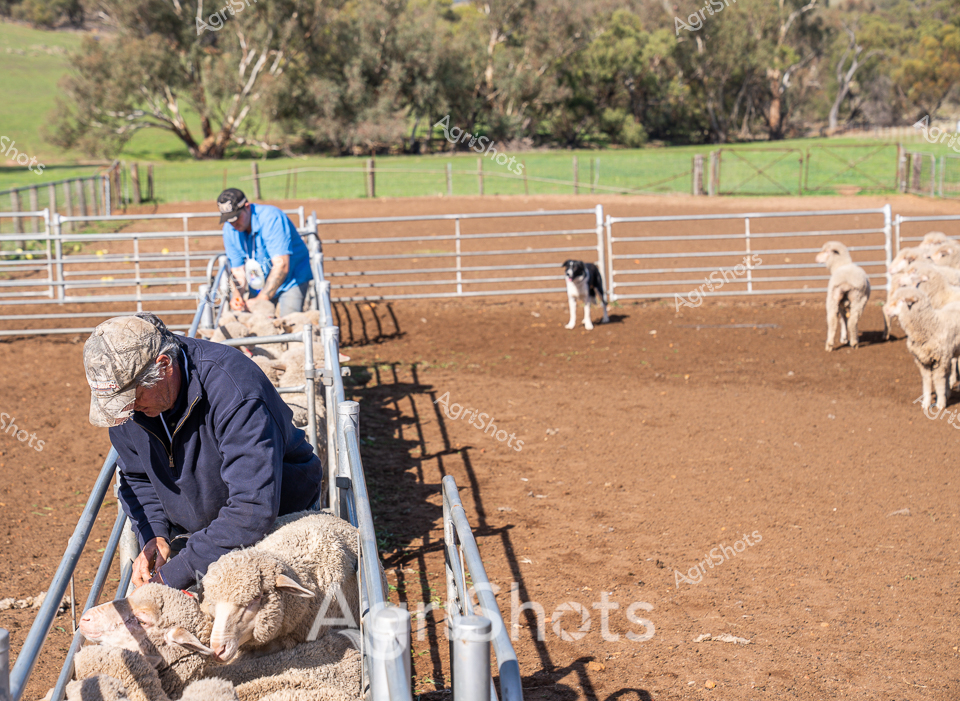
Merino sheep stand quietly in rusty-red earthen yards under the soft light of a West Australian morning. A weathered farmer in a navy jacket and cap works methodically through the mob, carefully handling each animal in the steel sheep race. His blue-shirted companion assists from an elevated position, their practiced movements revealing decades of agricultural expertise. Two alert working dogs - one black and white, one lighter colored - wait attentively at the yard's edges, ready to respond to any subtle command. Eucalyptus trees cast dappled shadows across the paddock's green background, creating a quintessential rural Australian scene of livestock management and animal health practices. The precise, unhurried workflow speaks to generations of agricultural knowledge, where each careful interaction between farmer, animal, and working dog represents the sophisticated skill behind Australia's renowned sheep industry.
 Image
Image
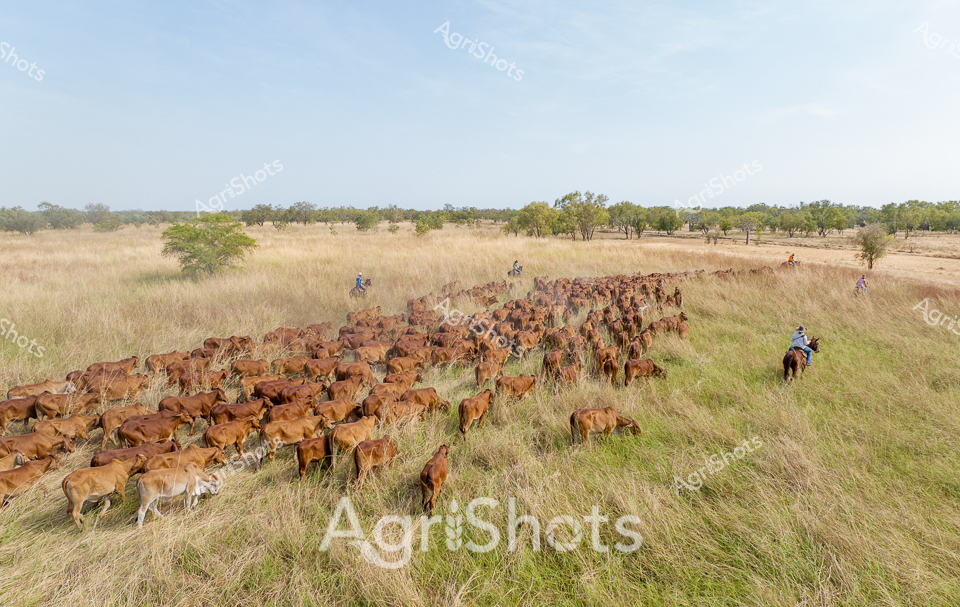
Dusty golden grasslands stretch beneath a pale blue Kimberley sky as a thundering herd of rich russet-brown Brahman cattle moves across the sparse woodland landscape. Stockmen on horseback guide the massive mob with practiced precision, their blue-shirted figures dotted strategically around the herd's perimeter. The lean, heat-resistant cattle - characteristic of Western Australia's northern pastoral regions - move with a collective rhythm, their muscular bodies reflecting generations of adaptation to harsh subtropical environments. Scattered gum trees punctuate the dry savanna, providing sparse shade and defining the expansive station landscape. Each horseback drover moves with quiet efficiency, managing the movement of hundreds of cattle across the undulating terrain with generations of inherited stockmanship skills. This quintessential Australian cattle muster captures the raw energy of northern agricultural practices - a dynamic dance of human skill, animal movement, and rugged landscape that epitomizes the challenging yet timeless art of cattle management in Australia's remote cattle country.
 ▶ Video
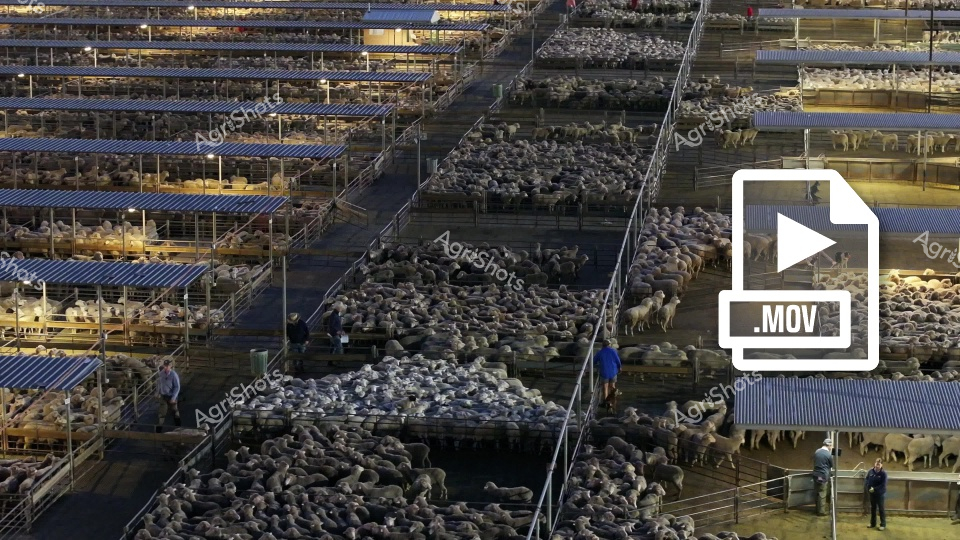
Dusk falls over the expansive Riverina livestock sale yards, a bustling hub of agricultural commerce. Thousands of sheep crowd the meticulously organized pen systems, their woolly bodies creating a dense, undulating landscape of gray and white. Blue-shirted workers move strategically between the pens, their movements deliberate and practiced, guiding and managing the livestock with expert precision. The blue-roofed shed structures create geometric patterns across the scene, with harsh lighting illuminating the sale yards and casting long shadows across the packed paddocks. This is a critical moment in the agricultural supply chain - a sophisticated operation where livestock are assessed, traded, and prepared for their next destination. The image captures the scale and complexity of modern Australian sheep farming, where technology, infrastructure, and human expertise converge to manage large-scale livestock movements with remarkable efficiency.
 Image
Image
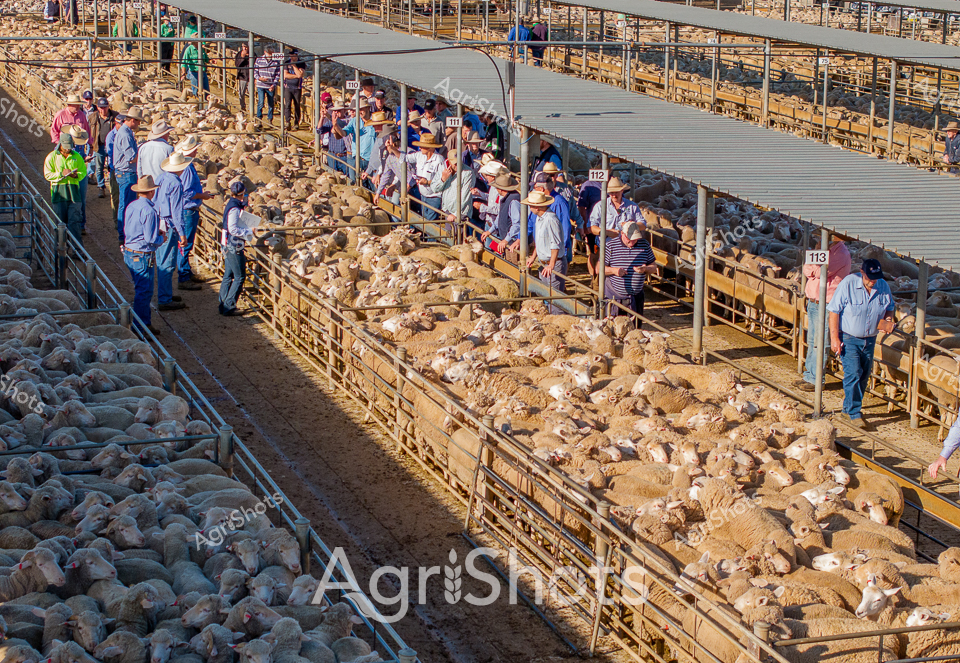
Merino sheep crowd the tiered wooden pens at a bustling livestock sale yard in the Riverina region of New South Wales. Clusters of agricultural workers in wide-brimmed hats and blue work shirts line the walkways, carefully surveying the densely packed flock of woolly sheep. Numbered panels mark each pen section, indicating the organized nature of this rural auction marketplace. The metallic roofing provides shade over the sale yards, creating a structured environment where farmers, agents, and buyers converge to trade livestock. Soft beige and tan tones of the sheep contrast with the weathered wooden fencing and the blue-shirted workers, capturing the quintessential Australian agricultural scene. The image pulses with the energy of commerce and agricultural tradition, showcasing the critical role of livestock markets in supporting rural economies and food production.
 Image
Image
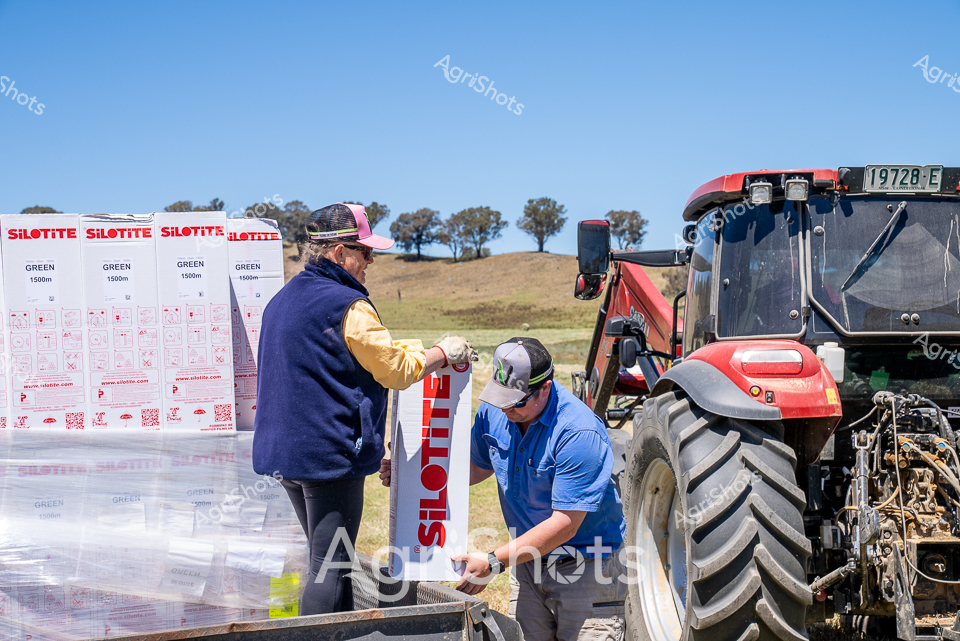
Rural agricultural workflow unfolds on a sun-drenched NSW paddock, where two agricultural workers collaborate around a large red tractor and Silotite silage wrapping equipment. A navy-vested worker in a yellow-sleeved jacket and pink-accented cap stands alongside a blue-shirted colleague, carefully handling white Silotite agricultural wrapping material against a backdrop of golden grasslands and scattered eucalyptus trees. The gleaming red tractor, with its substantial black tyre and complex mechanical detailing, anchors the scene, representing modern farming technology amidst the expansive rural landscape. Crisp blue skies and dry, undulating terrain suggest late summer or early autumn conditions, typical of the Australian agricultural heartland. Precise, methodical movements indicate a professional team engaged in critical seasonal farm preparation, with branded packaging and specialized equipment highlighting the sophisticated nature of contemporary agricultural practices. The scene radiates a sense of focused collaboration, technical expertise, and the enduring connection between farmers and their essential land management tasks.