About this image
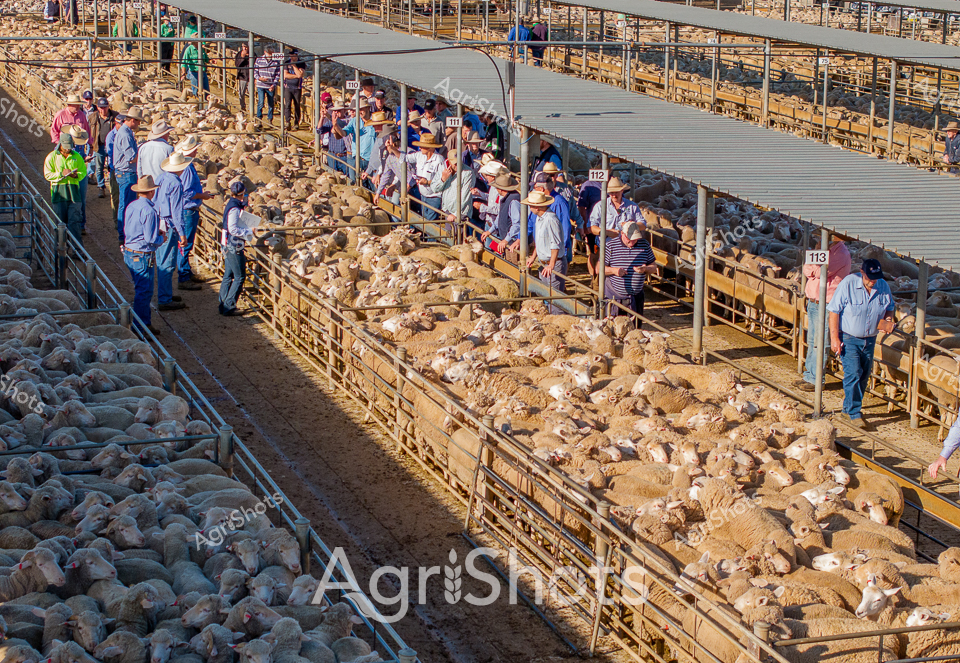
Merino sheep crowd the tiered wooden pens at a bustling livestock sale yard in the Riverina region of New South Wales. Clusters of agricultural workers in wide-brimmed hats and blue work shirts line the walkways, carefully surveying the densely packed flock of woolly sheep. Numbered panels mark each pen section, indicating the organized nature of this rural auction marketplace. The metallic roofing provides shade over the sale yards, creating a structured environment where farmers, agents, and buyers converge to trade livestock. Soft beige and tan tones of the sheep contrast with the weathered wooden fencing and the blue-shirted workers, capturing the quintessential Australian agricultural scene. The image pulses with the energy of commerce and agricultural tradition, showcasing the critical role of livestock markets in supporting rural economies and food production.
Similar media
 Image
Image
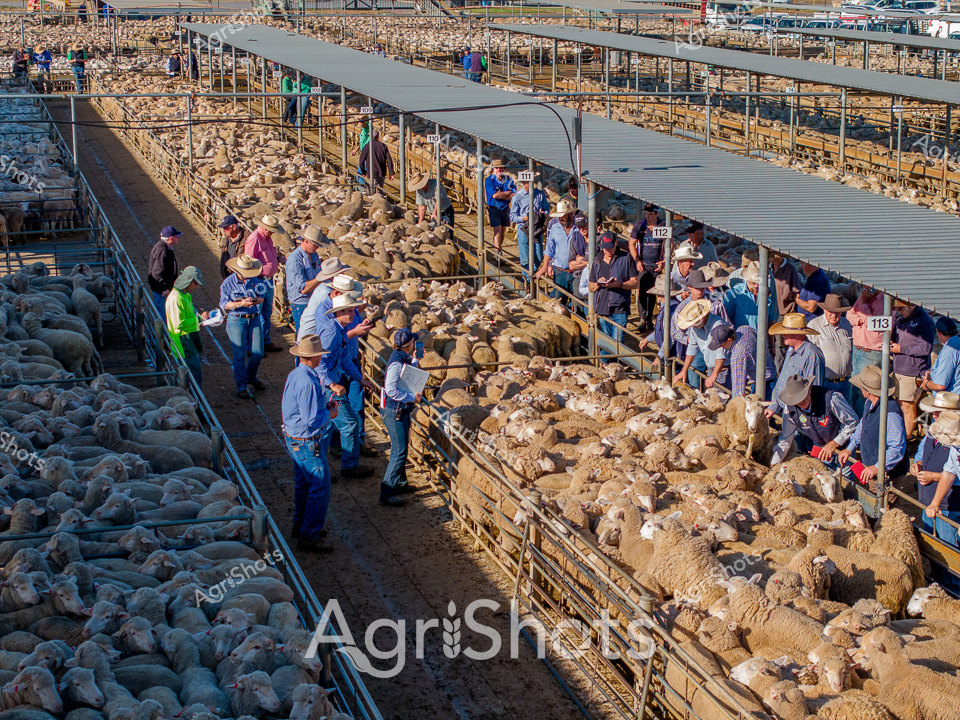
Merino ewes crowd the sale yards during a bustling livestock auction in the heart of New South Wales' Riverina region. Tightly packed within steel-railed pens stretching under long corrugated shelters, hundreds of woolly sheep await their turn, their varied earth-toned fleeces creating a textural landscape of cream, tan, and gray. Farmers and livestock agents in wide-brimmed hats, blue work shirts, and dusty jeans move purposefully between pens, assessing stock with practiced eyes and discussing potential purchases. The midday sunlight casts sharp shadows across the yard, highlighting the systematic organization of the sale process, with numbered sections and carefully segregated lots indicating the professional precision of Australian agricultural trading. This scene captures the rhythm of rural commerce - a choreographed dance of agriculture where livestock change hands, continuing the economic heartbeat of the region's farming communities. The atmosphere vibrates with quiet concentration, professional respect, and the unspoken understanding that each animal represents both livelihood and legacy.
 Image
Image
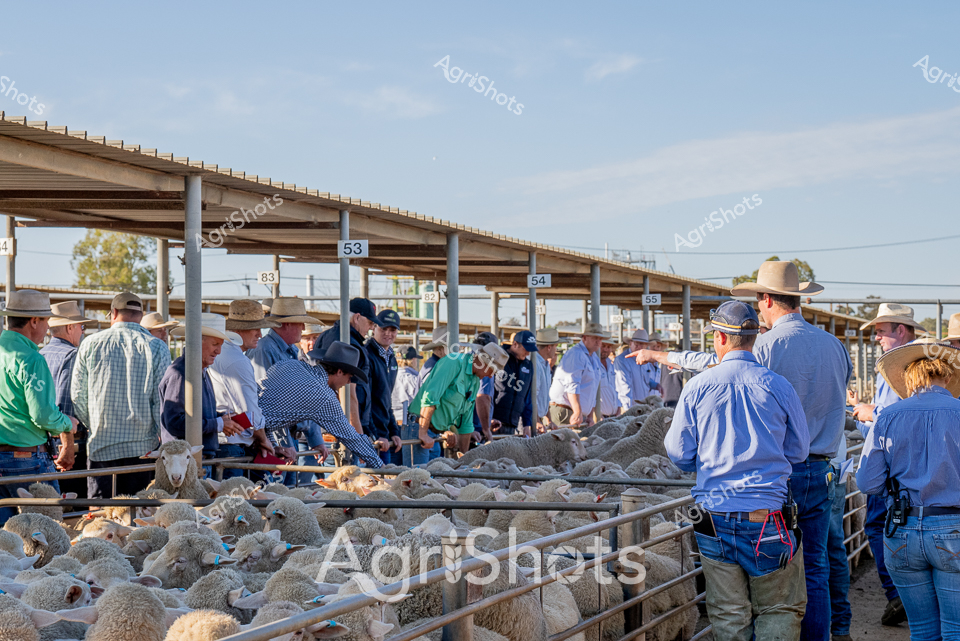
Livestock buyers and station hands converge at a bustling sheep sale in the Riverina region of New South Wales, the midday sun casting sharp shadows across the sale yards. Woolly merino sheep crowd the metal holding pens, their thick fleeces a muted palette of greys and creams, while experienced agents in wide-brimmed akubra hats and blue work shirts survey the livestock with practiced eyes. Numbered pens (53, 54, 55) divide the sale area, creating a methodical grid where potential buyers assess each mob's quality and potential. The scene pulses with quiet intensity - a choreographed agricultural ritual where livestock values are negotiated and rural livelihoods are determined through subtle gestures and murmured conversations. Crisp winter light and the metallic infrastructure of the sale yards frame a quintessential Australian agricultural moment, where generations of farming knowledge converge in a single, purposeful gathering. This is more than a transaction; it's a living cultural practice that connects farmers, traders, and the pastoral economy of rural Australia.
 Image
Image
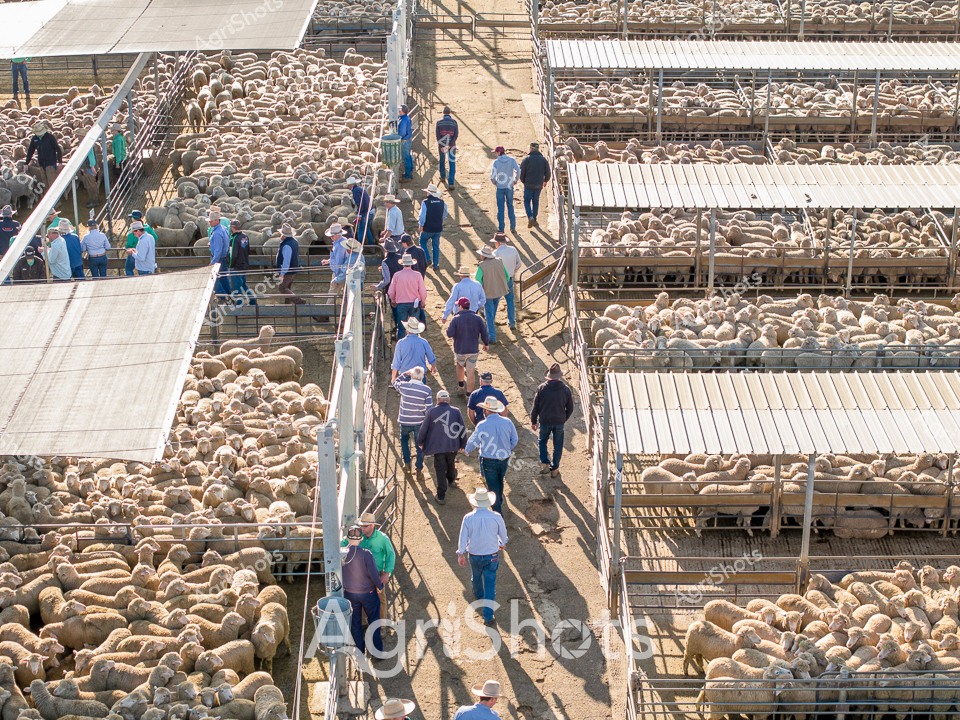
Merino sheep crowd the expansive sale yards of the Riverina region, filling multiple pens under crisp shade sails. Livestock agents in wide-brimmed hats and varied work attire move purposefully along elevated walkways, inspecting and assessing the large woolly flock. The dusty earthen paths between pens create a geometric pattern of movement, with workers navigating the dense sea of sheep during what appears to be a typical morning auction. Soft beige and tan tones of the sheep contrast with the blue and white of the workers' clothing, creating a quintessential Australian agricultural scene. The precise gridwork of metal fencing, the orderly pens, and the methodical movement of agents suggest a well-organized livestock market deeply rooted in rural agricultural tradition. This snapshot captures the economic and cultural heartbeat of sheep farming in New South Wales, where generations of expertise converge in the careful selection and trading of prime Merino stock.
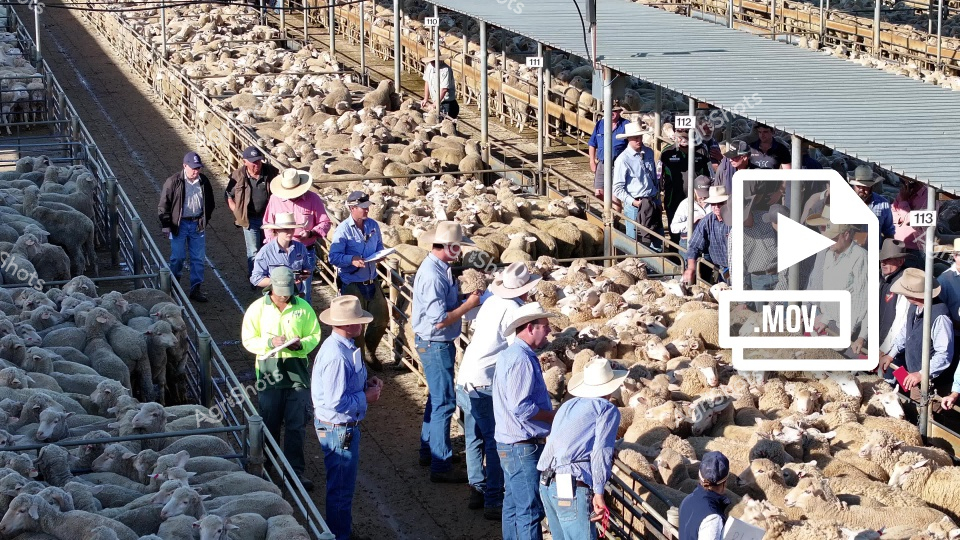 ▶ Video
At a livestock auction in the Riverina region of New South Wales, a large crowd of men wearing hats gather around pens filled with Merino sheep. The sale yards are bustling with activity as farmers and ranchers inspect the woolly livestock, preparing to bid on the sheep during this traditional agricultural event.
 Image
Image
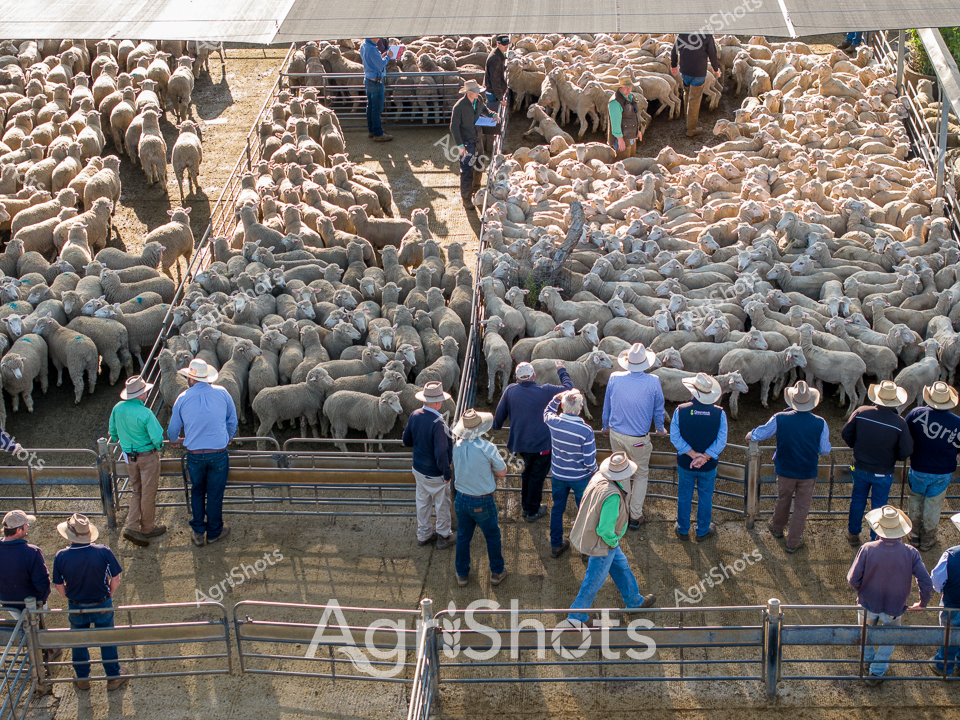
Riverina livestock auction pulses with rural energy as dozens of farmers and agents gather around densely packed sheep yards. Merino ewes and lambs crowd the carefully organized pens, their woolly backs creating a sea of soft greys and creams beneath industrial shade sails. Seasoned farmers in classic Australian rural attire - wide-brimmed akubra hats, blue jeans, and working shirts - stand shoulder-to-shoulder along metal railings, intently assessing the livestock. Their uniform stance and concentrated postures speak to generations of agricultural expertise, each individual carefully evaluating potential purchases. The overhead perspective reveals a meticulously organized sale environment, with multiple interconnected yards allowing strategic movement and assessment of the stock. This quintessential Australian agricultural scene captures the rhythmic commerce of rural life, where livestock trading represents not just economic transaction, but a deeply connected cultural practice of farming communities.
 Image
Image
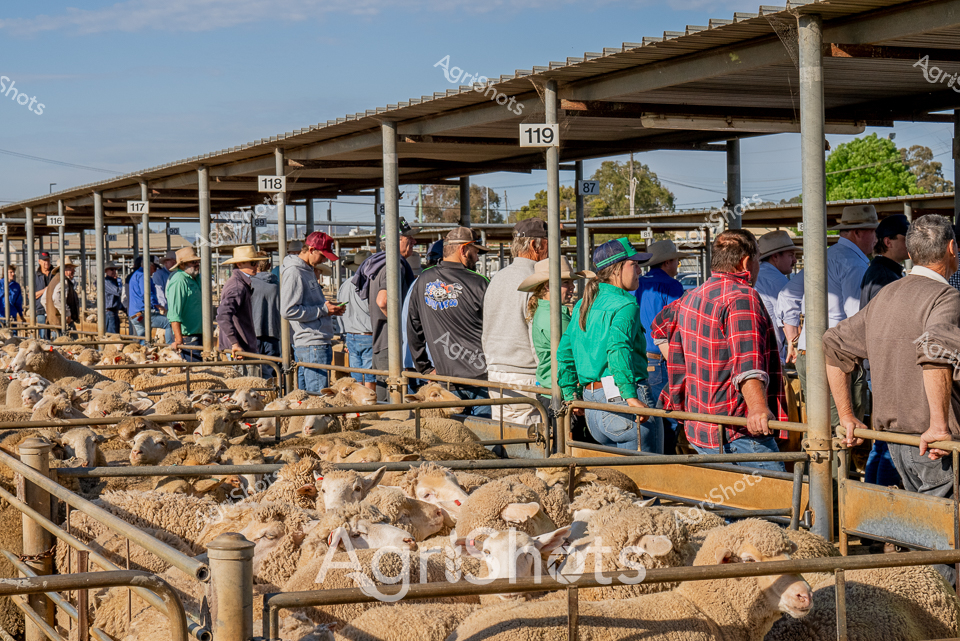
Merino sheep crowd the steel-railed pens at a bustling livestock sale yard in the Riverina region of New South Wales. Clustered behind the animals, a diverse group of rural professionals and farmers stand shoulder-to-shoulder, their backs to the camera, scanning the woolly mob with practiced eyes. Sunlight filters across the corrugated metal roof, casting long shadows over numbered pen sections marked with identifiers like 117, 118, and 119. The crowd wears a uniform of rural workwear - broad-brimmed sun hats, checked flannel shirts, denim jeans, and weathered work jackets in muted blues, greens, and earth tones. These are the agents, buyers, and local farmers who form the backbone of Australia's critical sheep trading ecosystem, their collective attention focused on evaluating the quality and potential of this year's prime Merino flock. The scene captures a quintessential moment of agricultural commerce - a fluid, unspoken dialogue of subtle gestures and keen assessment that has sustained rural communities for generations.
 Image
Image
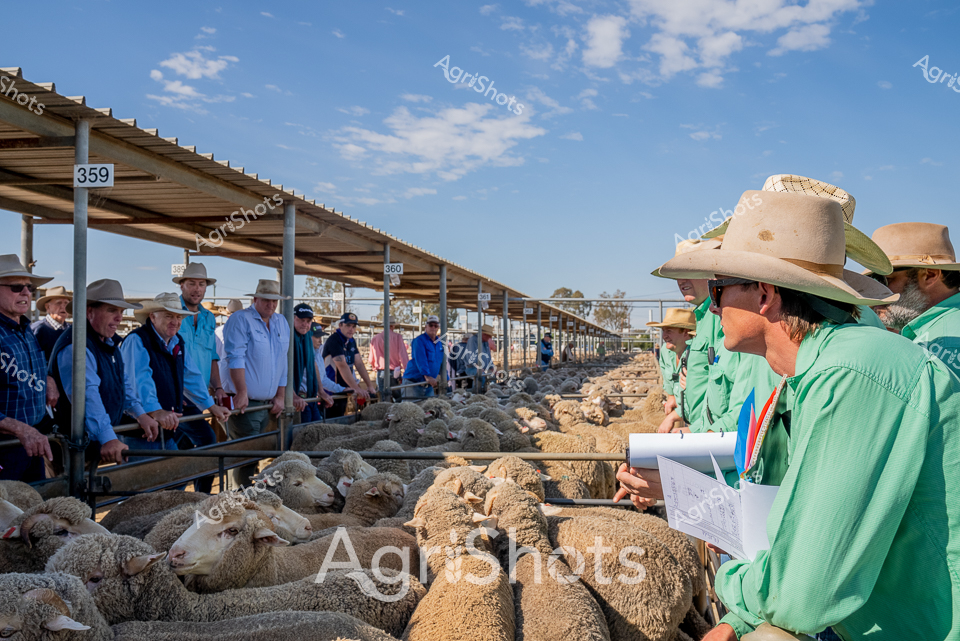
Wool market agents cluster along the metal railings of a sun-drenched livestock sale yard, their keen eyes surveying a dense flock of merino sheep. Dressed in a uniform of blue work shirts, broad-brimmed agricultural hats, and weathered jackets, these rural professionals stand shoulder-to-shoulder in the Riverina region of New South Wales. A shade structure provides minimal relief from the harsh Australian midday light, while the tightly packed sheep fill the concrete holding pens below, their woolly backs creating a textured landscape of cream and pale gold. Each agent leans intently forward, assessing the quality, age, and potential market value of the livestock, their body language speaking to generations of agricultural trading expertise. The scene captures the quintessential rhythm of Australian rural commerce - a precise, unspoken choreography of evaluation, where decades of experience are measured in subtle glances and minimal gestures. This is more than a transaction; it's a cultural ritual that connects farmers, traders, and the fundamental economic pulse of the agricultural heartland.
 Image
Image
Merino sheep crowd the sale yards under a crisp blue sky, packed tightly between metal railings at a livestock auction in the Riverina region of New South Wales. Seasoned agents in wide-brimmed akubra hats and green and blue rural workwear survey the woolly livestock, clipboards in hand, assessing each mob with practiced eyes. Numbered shelter bays line the periphery, marking designated sale pens where farmers and livestock buyers gather to evaluate the quality of the sheep. The woolly Merinos display varying shades of cream and beige, their dense fleeces testament to the region's fine wool production. Soft clouds drift overhead, casting gentle light across the scene of rural commerce, where generations of agricultural knowledge converge in the rhythmic process of livestock trading. The atmosphere hums with quiet concentration, a choreographed dance of assessment, negotiation, and agricultural expertise that has sustained rural communities for generations.