Results for “black and white”
 ▶ Video
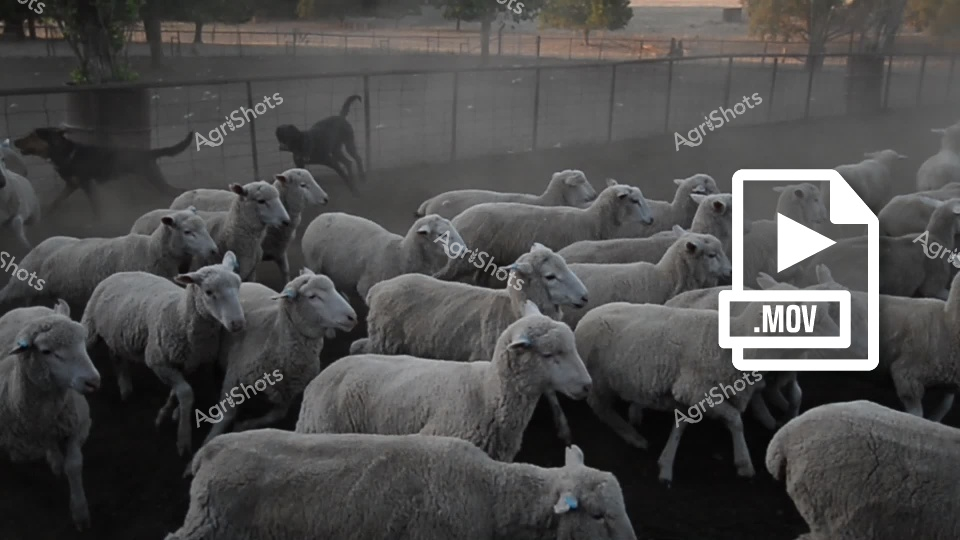
In the soft, misty light of early morning, a dense flock of Merino sheep huddles together in a dusty corral, their woolly coats blending into a uniform gray. Shadowy figures of herding dogs move at the edges of the enclosure, suggesting an imminent muster or movement of the livestock, with the scene capturing the quiet intensity of dawn on an Australian sheep station.
 Image
Image
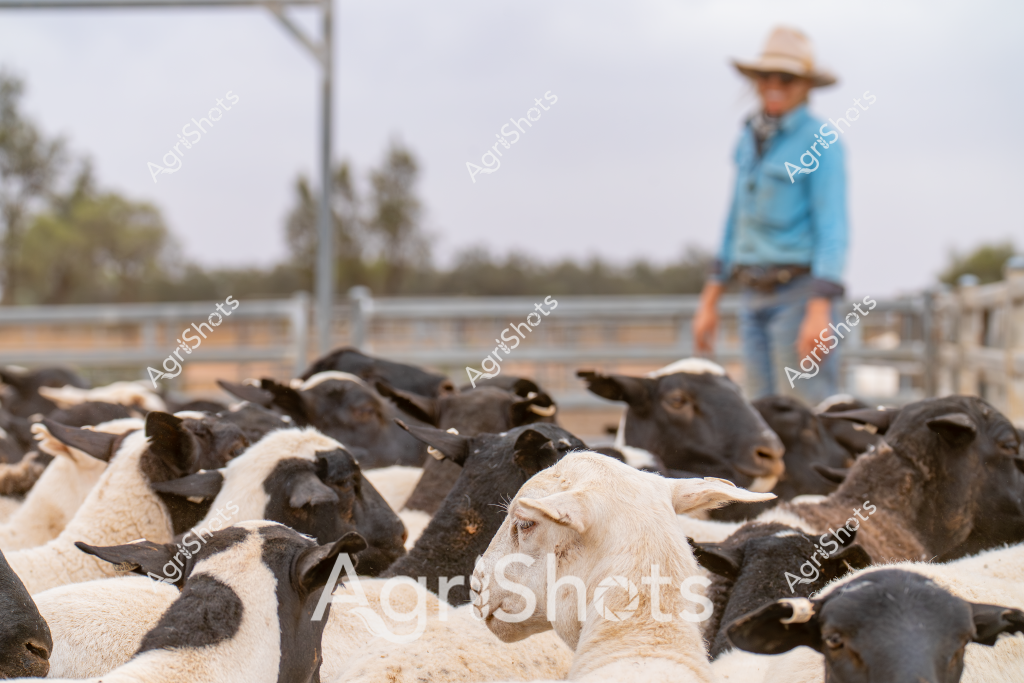
A group of black and white sheep cluster tightly in a livestock yard, with a man stockman standing in the background wearing a wide-brimmed hat and blue work shirt. The sheep appear to be a mix of dark-faced breeds, possibly Dorper or Suffolk crosses, with some white woolly sheep interspersed among the darker animals. The stockman stands casually near a metal fence, overlooking the mob of sheep with a calm, professional demeanor. The landscape is typical of an Australian pastoral setting - dry, with sparse trees and metal yards visible in the background, suggesting a rural station or farm environment. The lighting indicates it's likely a mid-morning or early afternoon scene, with a soft, even light casting subtle shadows across the dusty yard and tightly packed flock. The image captures the everyday work of livestock management, showcasing the close relationship between the stockman and the sheep, and the practical infrastructure of Australian agricultural operations. The tight clustering of the animals and the stockman's relaxed posture suggest a moment of calm during routine farm activities.
 Image
Image
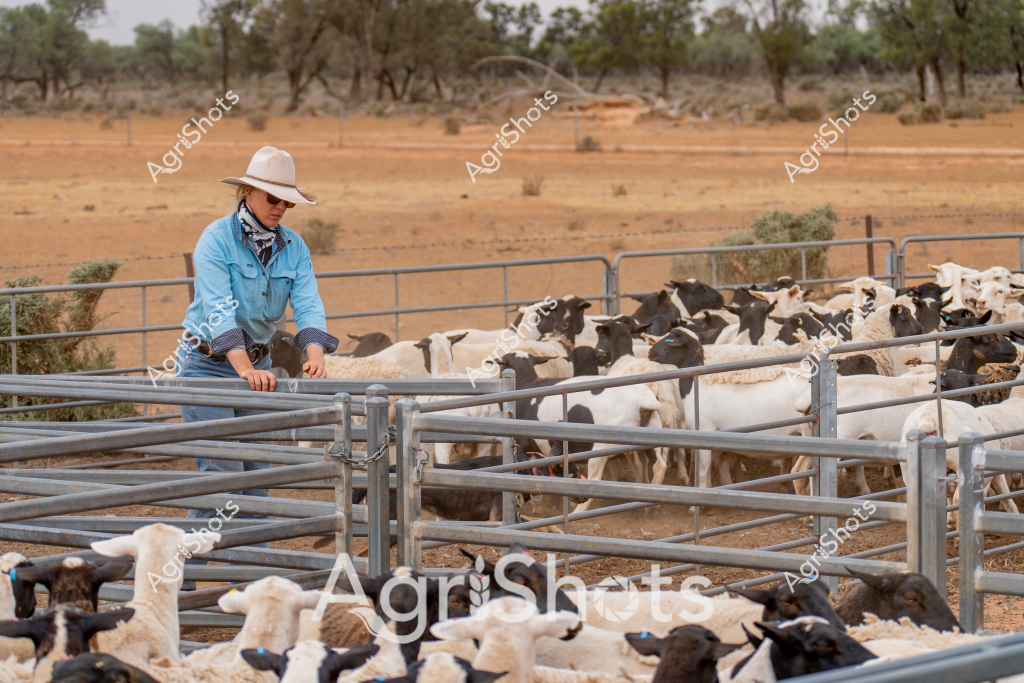
A woman stockman surveys a flock of mixed-breed goats in a dry, sparse paddock typical of Australian outback conditions. Wearing a light blue long-sleeved shirt, white wide-brimmed hat, and sunglasses, she leans against metal livestock yards with a series of interconnected gates. The goats - a mixture of white, black, and brown animals - are tightly packed within the metal fencing, their varied coat colors creating a textured scene against the golden-brown earth and scattered eucalyptus trees in the background. The landscape suggests a drought-affected region, with parched ground and sparse vegetation highlighting the challenging environmental conditions faced by Australian farmers. Her professional stance and careful positioning demonstrate the skill required in managing livestock in harsh rural environments.
 Image
Image
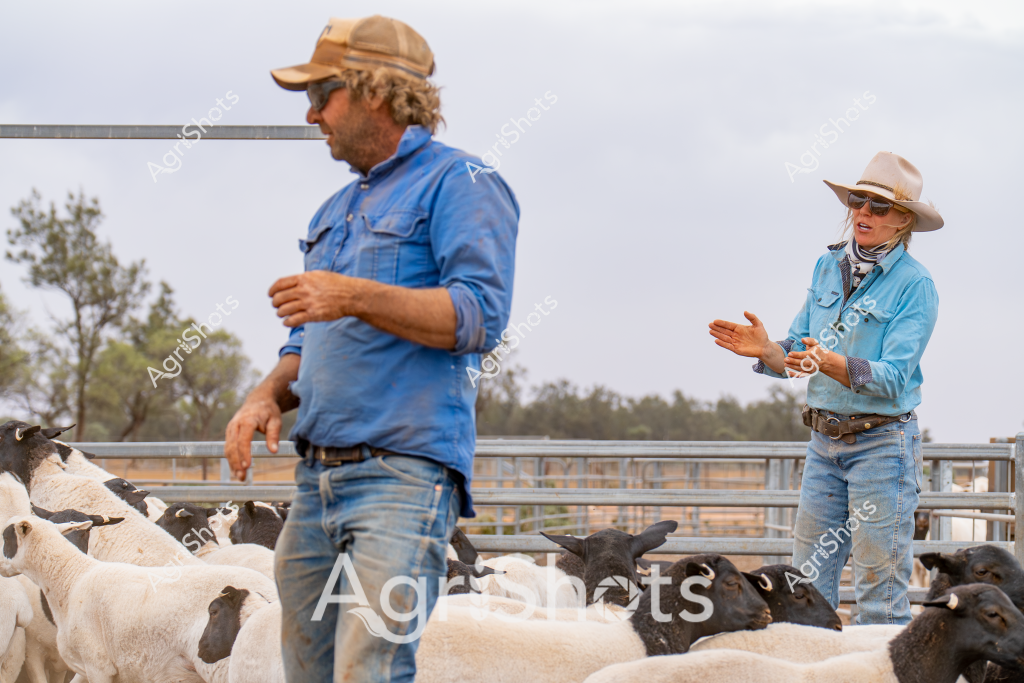
A woman and a man stockman work together in a livestock yard, managing a mixed flock of white and black sheep. Dressed in blue chambray shirts and wearing wide-brimmed hats for sun protection, they appear to be coordinating the movement and sorting of the sheep within metal livestock yards. The landscape in the background suggests an Australian rural setting, with scattered trees and an open sky creating a typical pastoral scene. Their body language indicates careful communication and collaboration, with the woman gesturing and the man positioned among the sheep, demonstrating the teamwork essential in livestock management. The sheep - a mix of white and black woolly animals - are clustered tightly within the yard's metal railings, ready for potential drafting, health checks, or preparation for movement.
 Image
Image
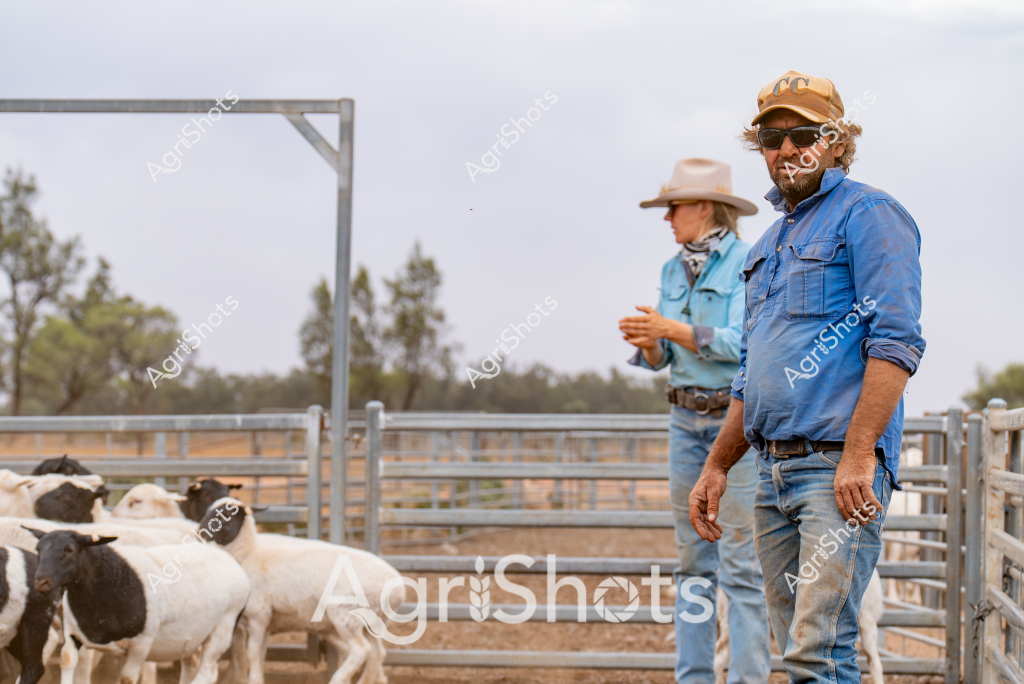
A seasoned man stockman and a woman worker supervise a small herd of black and white sheep in a rural livestock yard, surrounded by metal livestock fencing and distant eucalyptus trees. The man wears a tan cap, sunglasses, and a blue chambray work shirt with rolled-up sleeves, standing confidently in worn denim jeans and boots. His companion, wearing a light-colored wide-brimmed hat and a blue work shirt, stands nearby, both carefully observing the flock of mixed-color sheep clustered in the steel holding pen. The overcast sky and dusty ground suggest a typical Australian pastoral scene, highlighting the ongoing management of livestock in a challenging rural environment. Their professional stance and attentive posture demonstrate the careful husbandry and daily work required in managing a sheep production operation.
 Image
Image
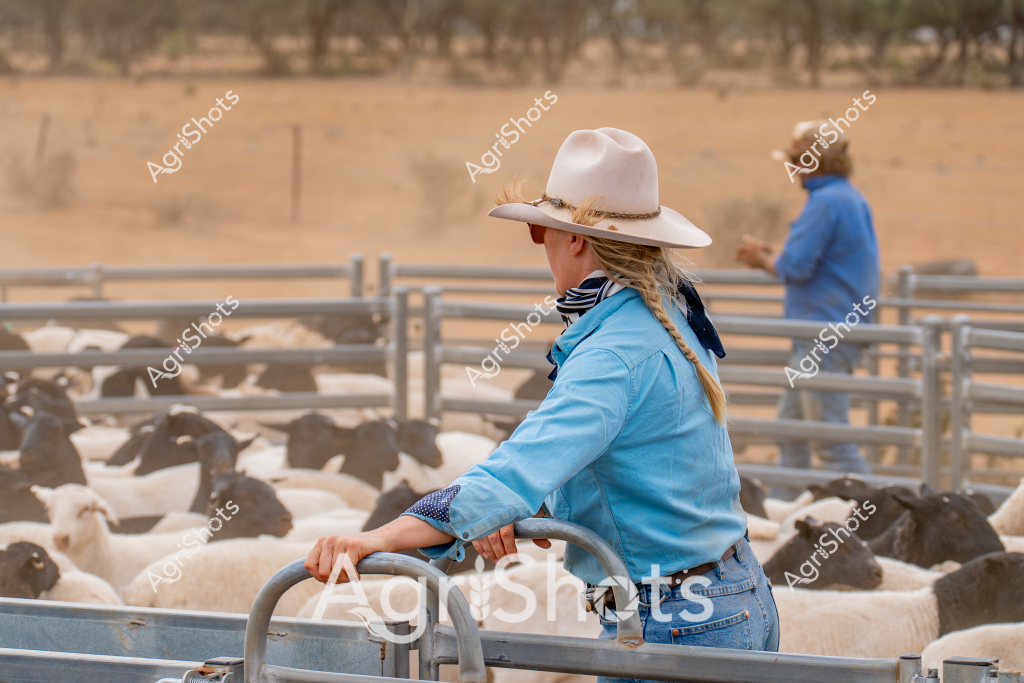
A woman stockman wearing a cream-colored wide-brimmed hat and light blue long-sleeved shirt stands at a livestock yard, carefully observing a flock of black and white sheep. Her braided hair trails down her back, and she leans casually against a metal gate in the foreground, with another worker visible in the background. The dry, golden paddock stretches behind the metal livestock yards, with sparse trees and fencing creating a typical Australian rural landscape. The sheep are tightly clustered within the metal livestock pens, their woolly bodies creating a textured mass of white and dark markings. The scene captures the essence of Australian sheep farming, showcasing the careful management and attentive work of rural stock workers in a classic outback setting. The composition highlights the connection between the stockwoman and the livestock, demonstrating the skill and quiet concentration required in managing sheep. Her outfit - practical blue shirt, robust denim jeans, and protective wide-brimmed hat - speaks to the functional nature of farm work and the need for sun protection in the harsh Australian landscape.
 Image
Image
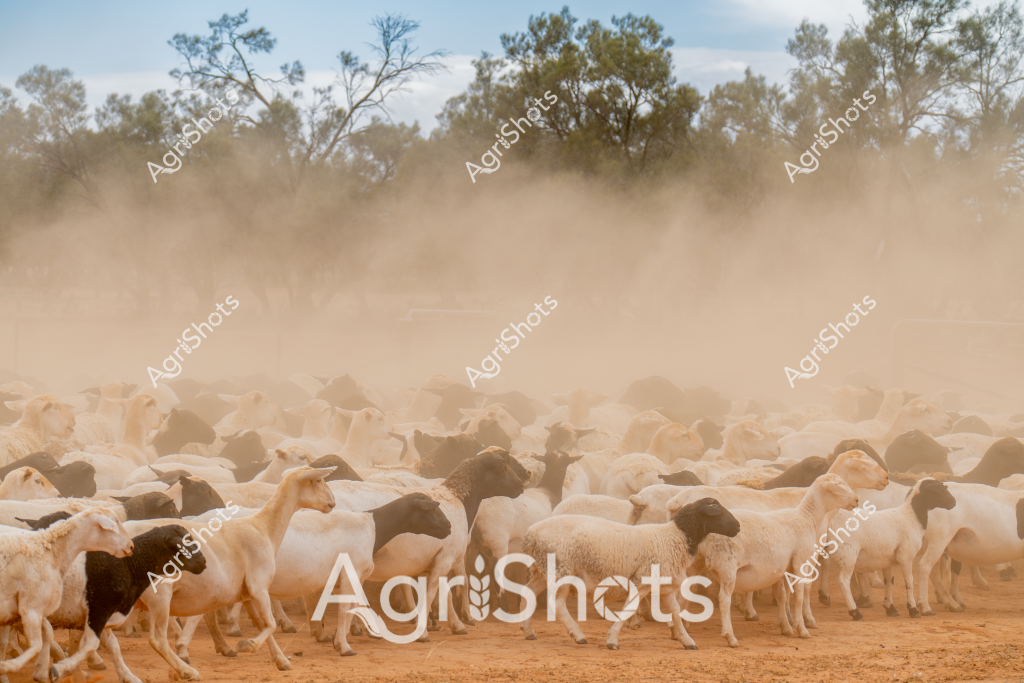
A large flock of mixed-breed sheep kicks up a massive dust cloud during mustering in the Australian outback. Merino and other white and black sheep are tightly clustered on a dry, reddish-brown earth paddock, surrounded by sparse eucalyptus trees in the background. The intense dust storm created by their movement obscures parts of the landscape, highlighting the dynamic nature of livestock management in arid regions. The sheep appear to be in motion, potentially being moved between pastures or preparing for sorting and handling. The scene captures the challenging environmental conditions of rural Australian livestock farming, where dust, heat, and vast open spaces are constant companions to shepherds and their flocks. The stark contrast between the light-colored sheep and the ochre earth creates a powerful visual representation of Australia's agricultural landscape.
 Image
Image
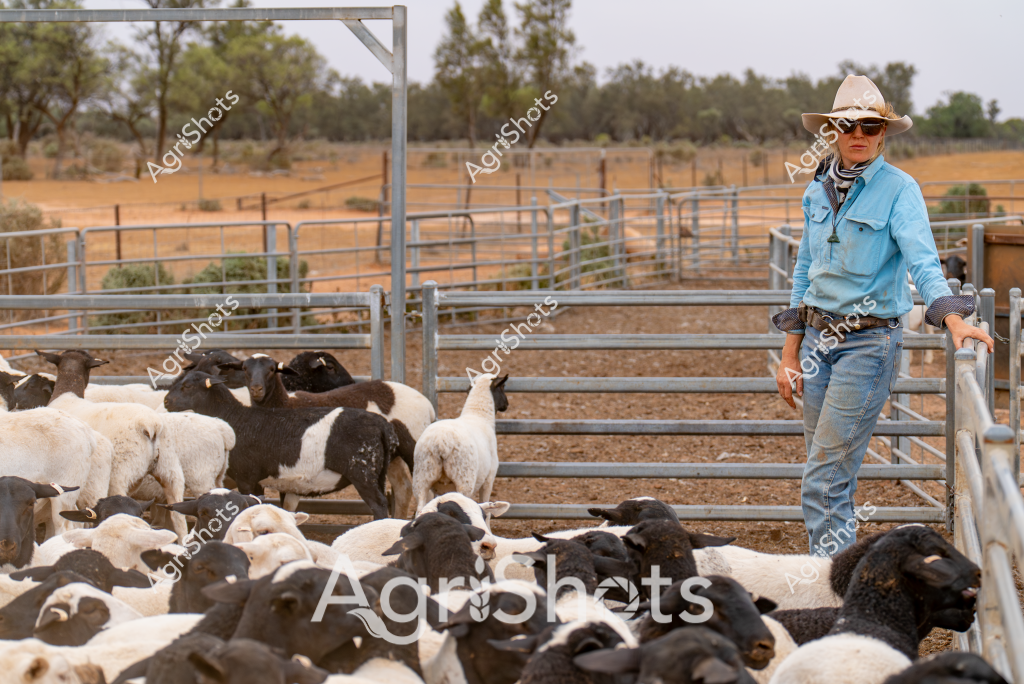
A woman stockman in classic rural attire - blue denim work shirt, jeans, and a light-colored cowboy hat - stands confidently beside metal livestock yards containing a mixed flock of black and white sheep. The paddock appears to be in an arid or semi-arid Australian agricultural setting, with sparse trees and golden-brown earth visible in the background. Multiple breeds of sheep are clustered together in the metal holding pens, with white and dark-colored animals standing and moving about, suggesting a routine livestock management scenario. The woman's stance is alert and professional, leaning against the metal gate, wearing sunglasses and embodying the skilled stockmanship typical of Australian rural workers. The landscape hints at a dry pastoral region, likely in inland Queensland or New South Wales, where sheep farming is a critical agricultural industry. The scene captures the essence of Australian livestock management - a lone stockwoman overseeing a diverse flock in a challenging rural environment, representing the resilience and expertise of agricultural workers in managing livestock under often harsh conditions.
 Image
Image
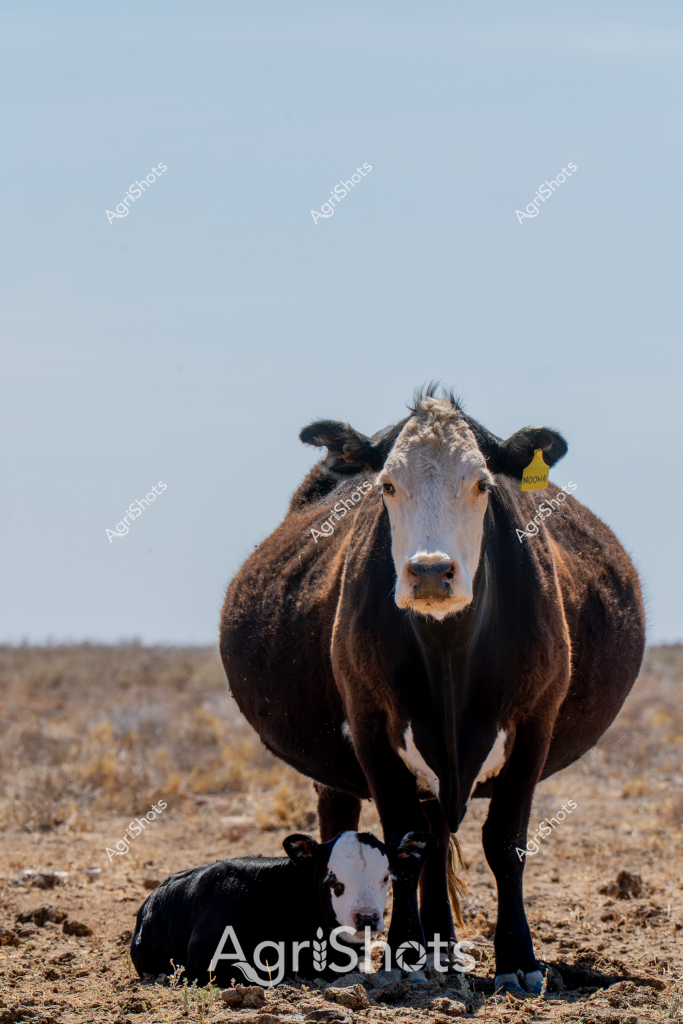
A robust black and white beef cow stands confidently in an arid, rocky landscape, with her newly born black and white calf resting at her feet. The mature cow wears a yellow ear tag, indicating she is part of a managed livestock herd, likely in a dry inland region of Australia. Her sturdy build and protective stance suggest she is a high-quality beef breed, possibly an Angus or Hereford cross, well-adapted to harsh pastoral conditions. The surrounding terrain is sparse and rocky, with minimal vegetation - characteristic of drought-affected or semi-arid grazing lands typical of central or western Australian cattle stations. The pale blue sky and flat horizon emphasize the expansive, unforgiving nature of the landscape. The cow's thick winter coat and the calf's close proximity to her mother hint at the challenges of survival in such an environment. The image captures a powerful moment of maternal protection and resilience, embodying the strength of Australian livestock and the enduring spirit of agricultural communities that thrive in challenging conditions. The close-up perspective allows viewers to appreciate the detailed markings, muscular structure, and stoic demeanor of this cattle breeding pair.
 Image
Image
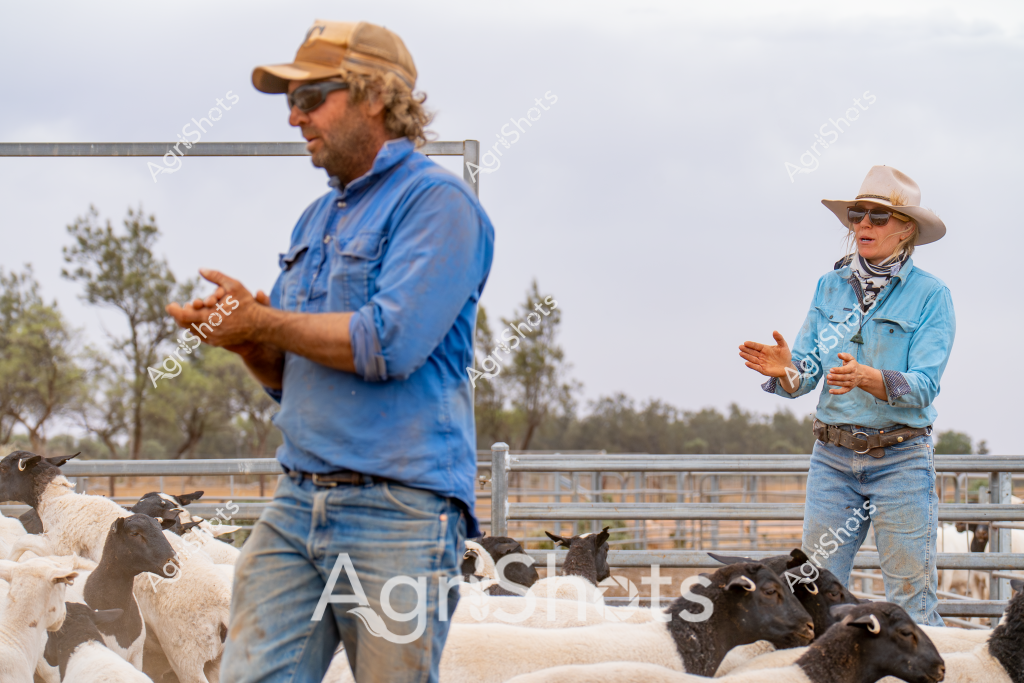
Two experienced farmers in blue work shirts and wide-brimmed hats manage a mixed flock of black and white sheep in a rural livestock yard. A man and a woman stand on opposite sides of a metal livestock pen, both using hand gestures to guide and control the movement of the sheep. The sheep appear to be a mix of dark and light-colored breeds, clustered tightly within the metal gate enclosure. The background reveals a sparse rural landscape with scattered trees and an overcast sky, typical of Australian agricultural settings. Both farmers are wearing practical farm attire - blue chambray shirts, denim jeans, and protective wide-brimmed hats with sunglasses, indicating their professional approach to livestock management. The scene captures the collaborative nature of sheep farming, where coordinated human interaction and careful animal handling are essential skills.
 Image
Image
A large mob of white and black sheep are clustered together, kicking up a dense cloud of dust across a dry, golden paddock. The livestock - likely a mixed flock of Merino and crossbred sheep - stand tightly packed, creating a textural landscape of woolly bodies against the parched earth. Sparse eucalyptus trees line the background, their green canopies contrasting with the dusty brown landscape, suggesting this is during a dry season in rural Australia. The dense dust cloud rising around the sheep indicates movement and the arid conditions typical of many agricultural regions during summer or drought periods. The scene captures the resilience of Australian sheep farming, where livestock must navigate challenging environmental conditions. The soft blue sky and scattered clouds provide a muted backdrop to this quintessential Australian pastoral scene, highlighting the harsh yet beautiful nature of agricultural landscapes.
 Image
Image
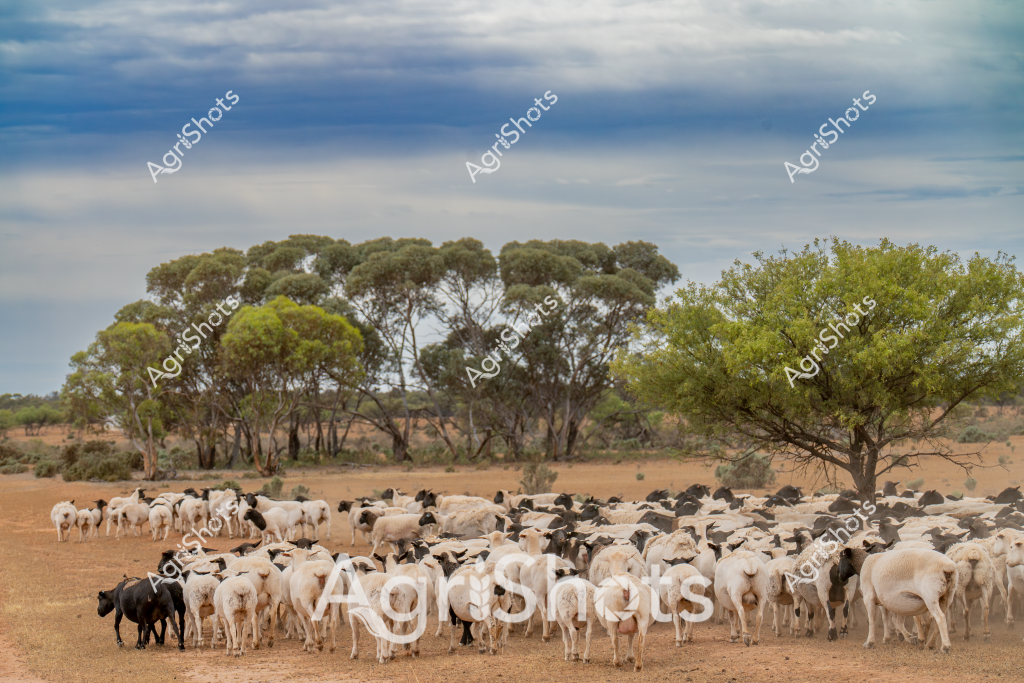
A large flock of white and black sheep clusters together in a dry, dusty paddock surrounded by eucalyptus trees under a soft, cloudy sky. The sheep - a mix of white and dark-colored individuals - stand closely packed, creating a dense woolly landscape against the arid ground. Sparse green trees line the horizon, providing a subtle backdrop to the livestock scene. The landscape appears typical of an Australian pastoral setting, with a wide, open terrain and scattered vegetation characteristic of sheep grazing country. The animals seem calm and grouped together, suggesting they might be resting or being moved between pastures by a nearby livestock manager. The muted color palette of browns, greens, and grays captures the essence of a rural Australian agricultural scene, highlighting the resilience of livestock in challenging environmental conditions.
 Image
Image
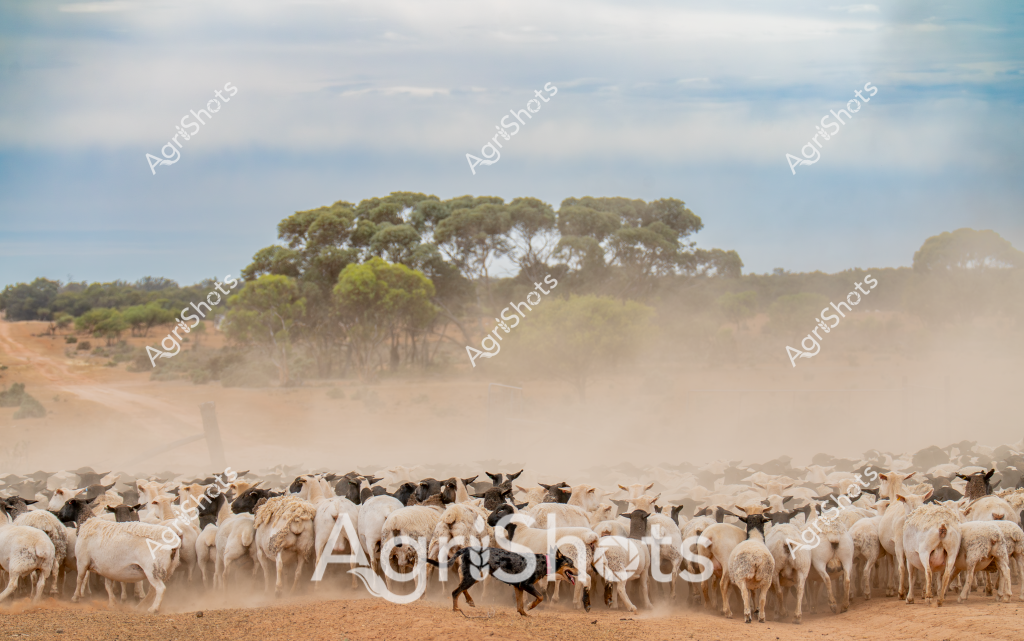
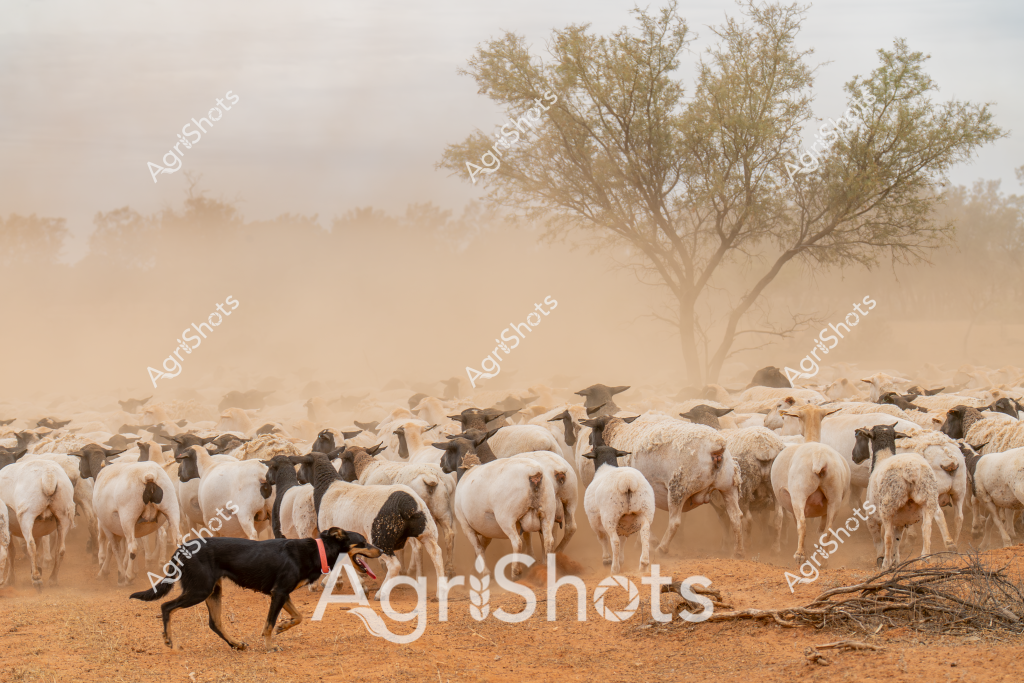
A dust-laden landscape reveals a tightly packed mob of white and black sheep being expertly herded by a black working dog with a red collar. The flock moves across a parched, reddish-brown earth paddock, kicking up a dense cloud of fine dust that softens the background trees and horizon. A solitary tree stands sentinel in the misty distance, its sparse foliage testament to the arid conditions. The sheep - a mix of white and dark-fleeced animals - are tightly clustered, their backs and rumps creating a uniform texture that stretches across the frame. The working dog, likely a skilled Australian Kelpie, moves with purpose alongside the flock, demonstrating the critical role of working dogs in mustering livestock across challenging Australian pastoral landscapes. The scene captures the harsh beauty of outback farming, where livestock management requires resilience and skill in unforgiving environmental conditions.
 Image
Image
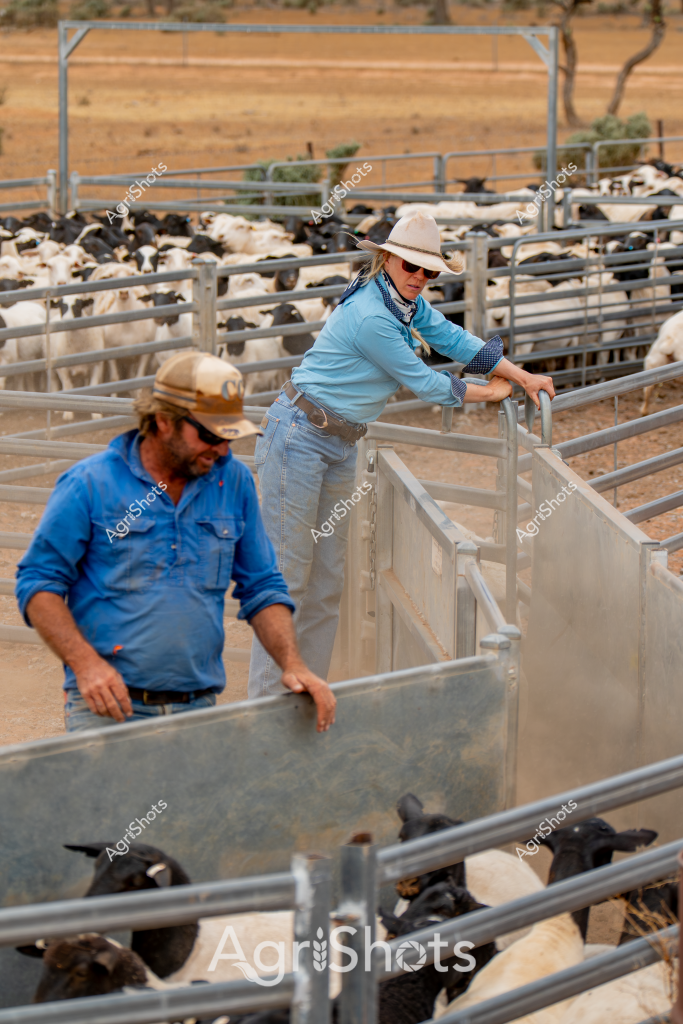
A woman and a man are working together in a livestock yard, managing a flock of black and white sheep. The woman, wearing a white hat, light blue long-sleeved shirt, and blue jeans, leans against a metal livestock gate in the foreground. A man in a blue work shirt stands nearby, both carefully monitoring the sheep contained within the metal yard fencing. The livestock yard appears to be in a dry, arid landscape with sandy ground and sparse vegetation visible in the background. Metal livestock gates and fencing create a systematic pen system, typical of Australian rural livestock management. Multiple groups of sheep - both black and white - are clustered within the different fenced sections, suggesting this is likely a sheep station or farm in an inland region. The scene captures the careful, methodical work of livestock management, with the workers positioned strategically to control and monitor the animal movement. Their clothing - practical work shirts, jeans, and a protective hat - reflects the functional approach to agricultural work in challenging rural environments. The metal infrastructure and careful positioning of the workers demonstrate the professional approach to sheep farming in what appears to be a challenging, dry Australian landscape.
 Image
Image
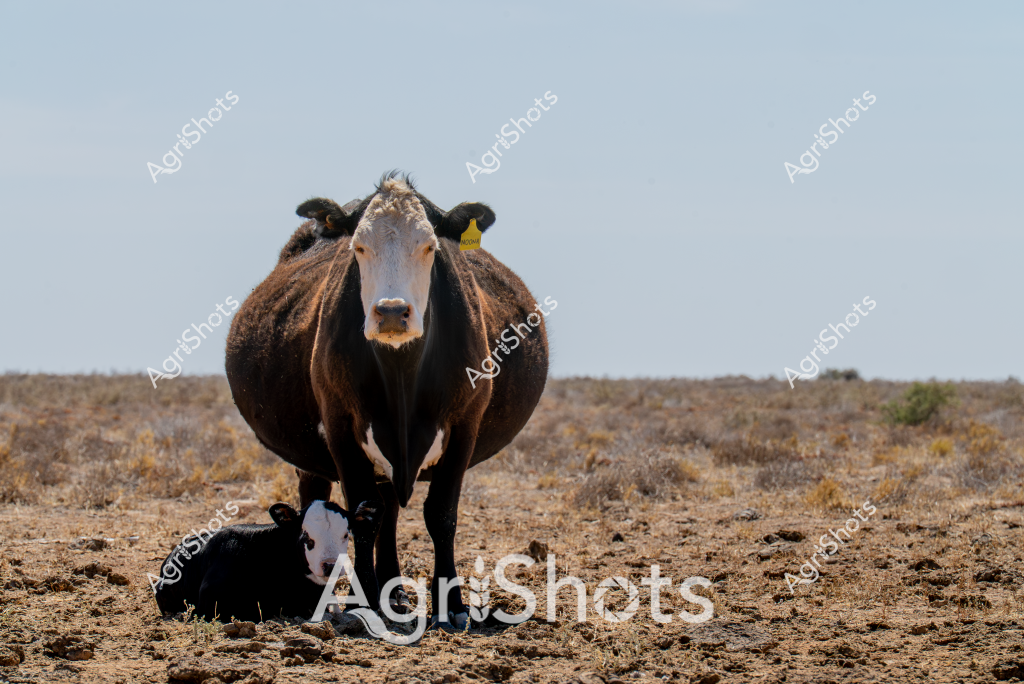
A robust beef cow stands confidently on a dry, sparse pasture, her muscular body showcasing the resilience of Australian cattle breeding. She wears a yellow ear tag, indicating she's part of a managed herd, and is accompanied by a young black and white calf resting at her feet. The landscape appears arid and expansive, with scattered low vegetation and a pale blue horizon typical of Australia's rural rangelands. The cow's rich brown coat has deep variations in color, from almost black along her back to lighter shades across her belly and face. Her stance is protective, with the calf positioned closely beneath her, highlighting the maternal instincts crucial for survival in challenging agricultural environments. The ground is rocky and parched, suggesting this might be during a dry season or in a drought-affected region. The image captures the essence of Australian cattle farming - hardy animals adapted to tough conditions, representing the backbone of the nation's agricultural industry. The wide-open space and minimal vegetation underscore the challenging yet beautiful nature of extensive cattle grazing systems prevalent across Australia's interior.
 Image
Image
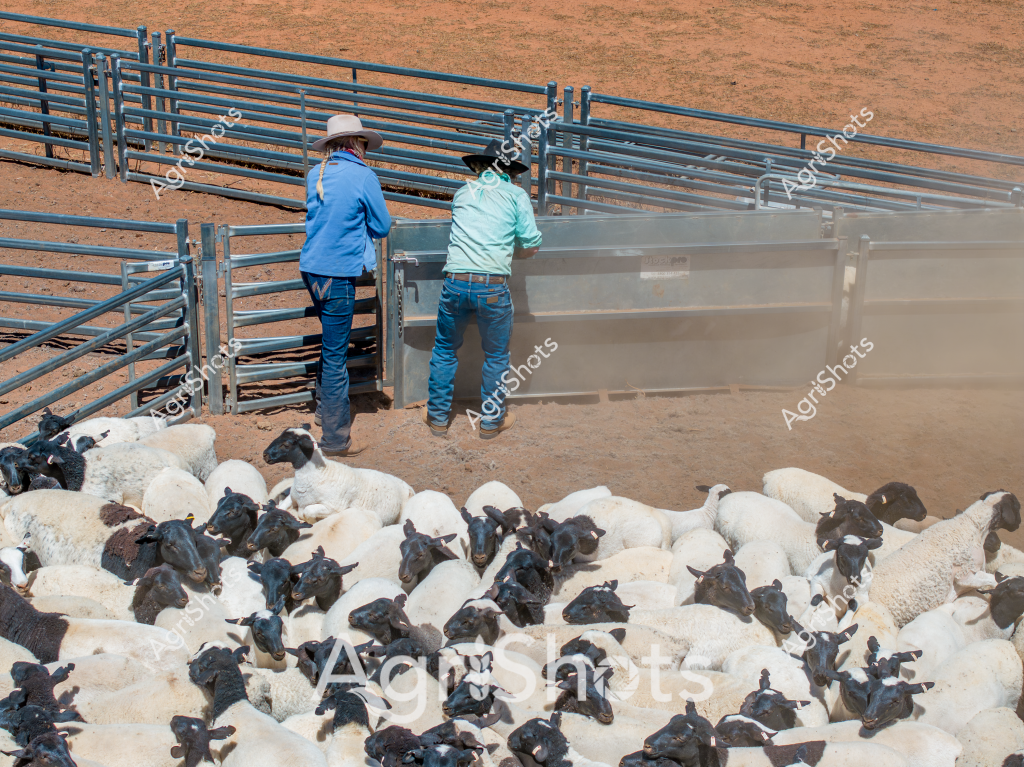
Two men in work attire operate a livestock handling system with a herd of black and white sheep clustered in the holding yards. The men, wearing blue shirts, jeans, and work hats, are positioned near a metal livestock chute and gate system on a dry, reddish-brown earth paddock. A dense group of sheep - predominantly white with black-faced individuals mixed throughout - are tightly packed in the lower portion of the image, waiting to be processed through the metal handling equipment. The metal gates and chute appear to be a standard design for efficiently moving and managing sheep, typical of Australian livestock management practices. The dusty environment and metal infrastructure suggest this is a working sheep station, likely in an arid or semi-arid region of Australia where sheep farming is a critical agricultural activity. The scene captures the methodical nature of livestock management, with the workers carefully positioning the animals through controlled infrastructure, demonstrating the precision and skill required in modern agricultural practices. The mix of white and black-faced sheep indicates a potentially diverse breeding program or mixed flock composition, which is common in Australian sheep production.
 Image
Image
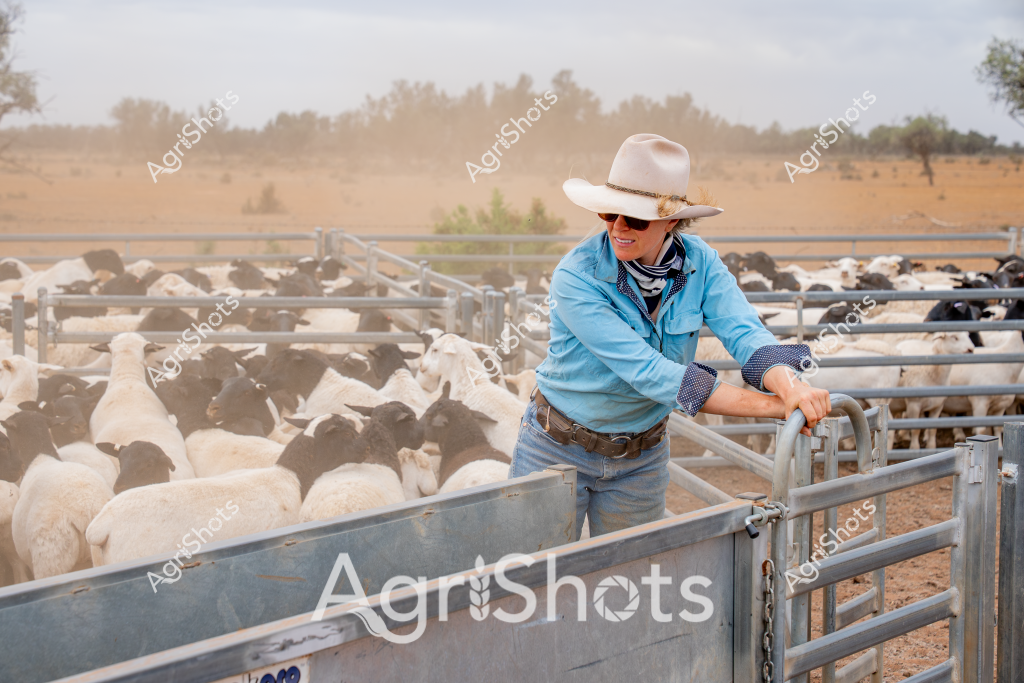
A woman stockman in a blue work shirt and wide-brimmed white hat leans against a metal livestock gate, carefully monitoring a large flock of sheep in a dusty paddock. The sheep - a mix of white and black woolly animals - are densely packed within metal yard panels, creating a textured landscape of livestock. The background reveals a dry, arid Australian rural landscape with scattered trees and golden-brown earth, suggesting challenging drought conditions. Her blue shirt, sunglasses, and relaxed posture indicate an experienced agricultural worker comfortable in the harsh rural environment. Dust hangs in the air, adding a sense of atmospheric texture to the scene and highlighting the challenging conditions of outback sheep farming. The metal livestock gates and fencing demonstrate the structured management of the agricultural property.
 Image
Image
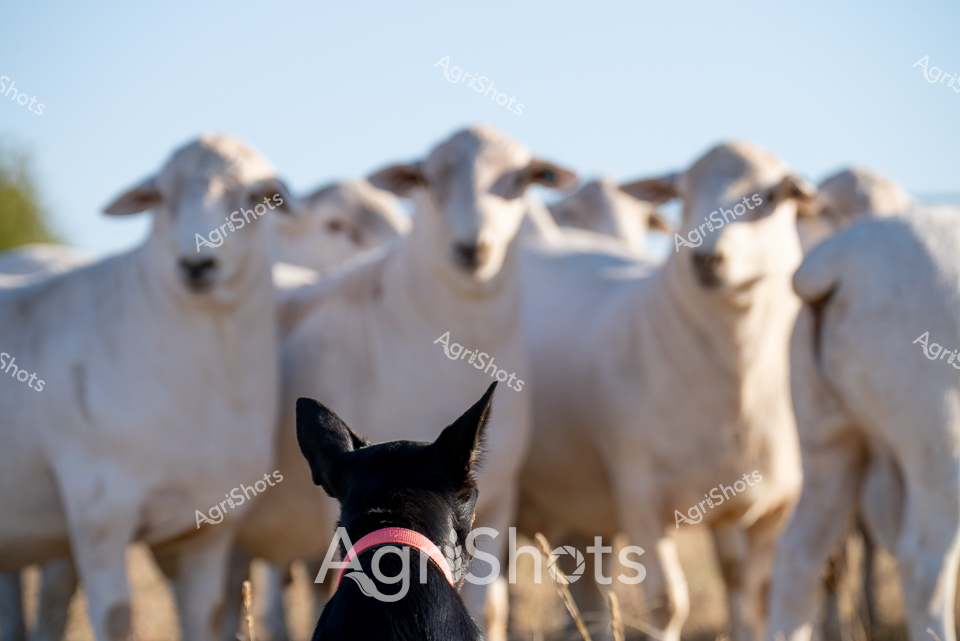
In the golden light of a late summer morning, a vigilant black dog stands guard before a pristine flock of Aussie White rams. The sheep cluster together, their woolly bodies gleaming like polished ivory against the soft, bleached landscape of the Central West region of New South Wales. Sharp ears pricked and alert, the black canine - wearing a soft pink collar - forms a striking contrast to the pale mob of rams, embodying the classic partnership between working dogs and livestock in Australian agriculture. The Boyd feeder stands quietly in the background, a testament to the modern management techniques of this stud farm. The rams appear calm and well-conditioned, their uniform coloration and muscular frames suggesting careful breeding and expert husbandry. Soft grasses and a pale blue sky complete the pastoral scene, capturing the serene yet industrious spirit of Australian sheep farming. This image encapsulates the precision and partnership that define contemporary agricultural practices - a Black and White working dog protecting a valuable flock of pure-bred rams, under the expansive skies of rural New South Wales.
 Image
Image
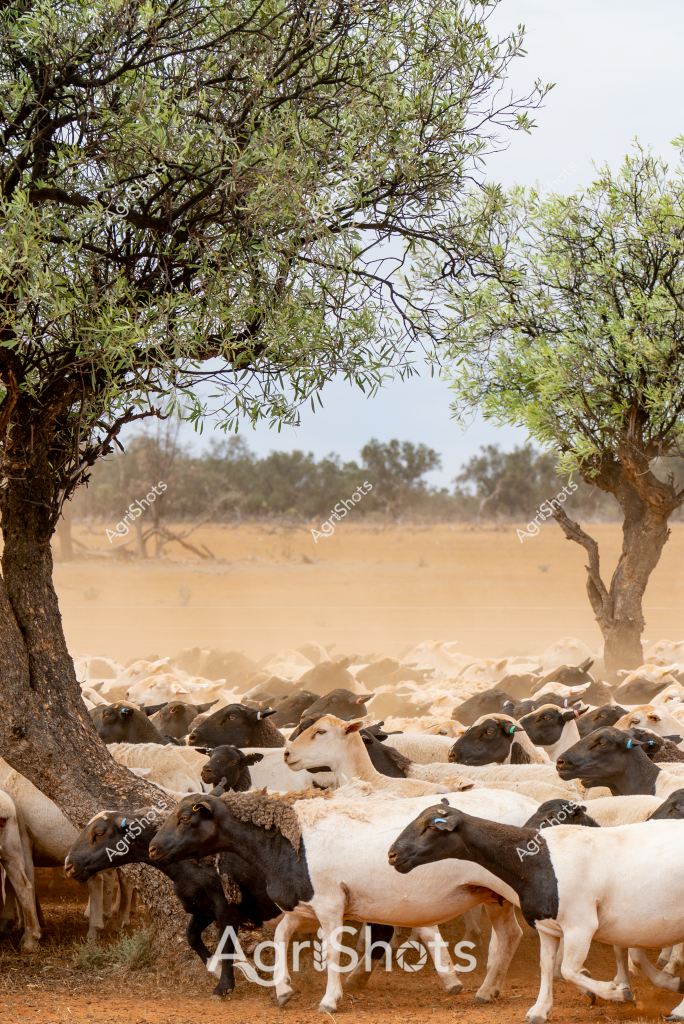
A large flock of white and black sheep huddle beneath olive trees in a dusty, arid landscape. The sheep, a mix of light-colored and dark-colored individuals, are densely packed together, seeking shade from the harsh midday sun. Sparse, twisted trees with silvery-green foliage frame the scene, their branches spreading wide to provide minimal protection from the heat. The ground is a pale, dry earth tone, suggesting a drought-affected or semi-arid region typical of Australian pastoral lands. The sheep appear calm and stationary, clustered tightly together in a survival strategy against the harsh environmental conditions. This image captures the resilience of livestock in challenging Australian agricultural landscapes, where animals must adapt to sparse vegetation and demanding climate conditions.
 Image
Image
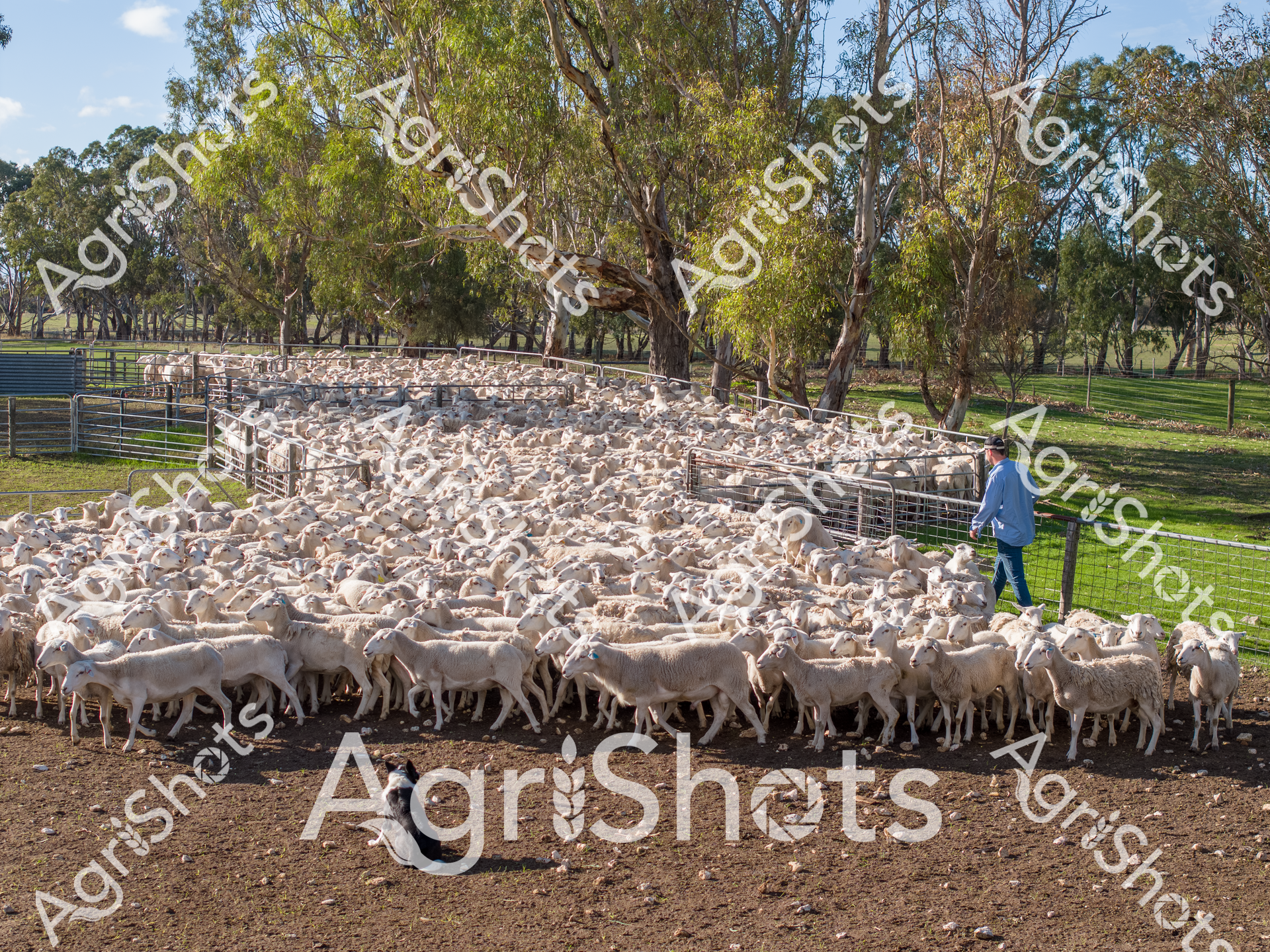
A dense flock of pristine white Aussie White sheep clusters tightly within meticulously constructed metal livestock yards, their woolly bodies creating a uniform sea of pale cream against the dark earth. A skilled stockworker in a blue jacket stands alongside the yard, managing the mob with quiet expertise, while a black and white working dog sits attentively in the foreground, ready for potential direction. The surrounding landscape reveals a classic South Australian agricultural setting - mature eucalyptus trees casting dappled shadows across verdant pasture, suggesting a winter scene during what farmers might call a "green drought" where grass appears promising but ground moisture remains scarce. The precise arrangement of the sheep, packed closely together, speaks to careful livestock management and the intricate skills of Australian farmers who must navigate challenging environmental conditions. Bare tree branches and the controlled containment of the animals highlight the strategic approach required in contemporary agricultural practice, where every animal represents significant economic and emotional investment. The scene captures the resilience and methodical nature of sheep farming in the Australian landscape - a testament to generations of agricultural knowledge and adaptation.
 Image
Image
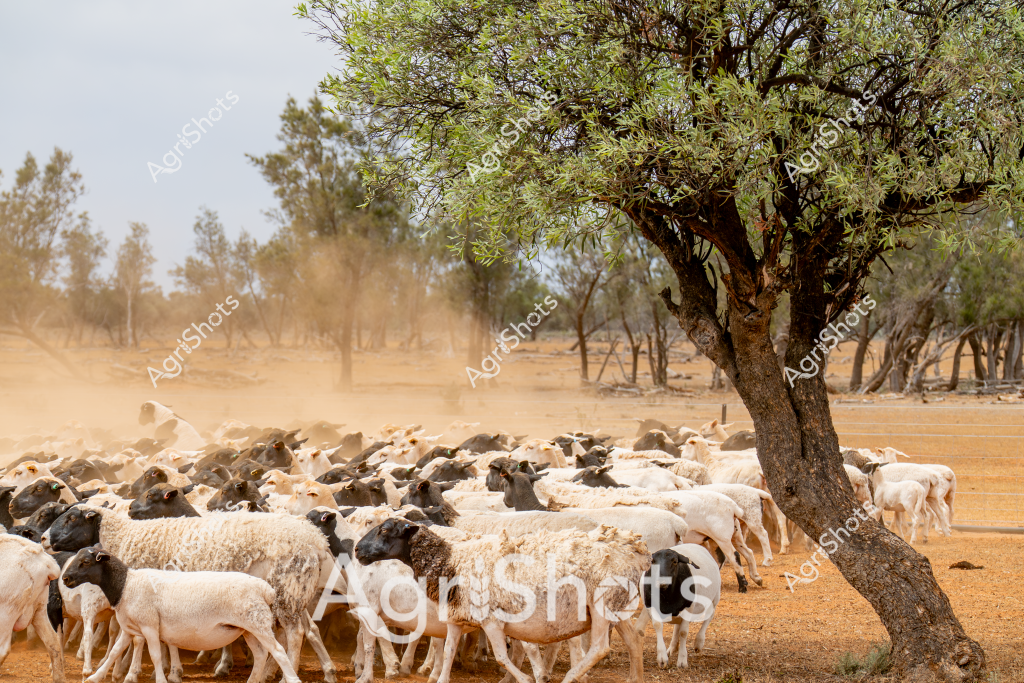
A large flock of black and white sheep huddles together under a mature tree in a dry, dusty paddock. The landscape appears arid, with sparse vegetation and a background of scattered trees creating a classic Australian pastoral scene. Clouds of dust rise around the sheep as they cluster together, seeking shade from the intense sunlight. The mix of white and dark-colored sheep suggests a diverse flock, likely a combination of Merino and other breed types common in Australian livestock farming. The gnarled tree provides a focal point, its branches spreading wide to offer limited relief from the harsh environmental conditions. The scene captures the resilience of Australian sheep farming in challenging drought-like conditions, with the animals tightly packed together in a survival strategy against the unforgiving landscape.
 Image
Image
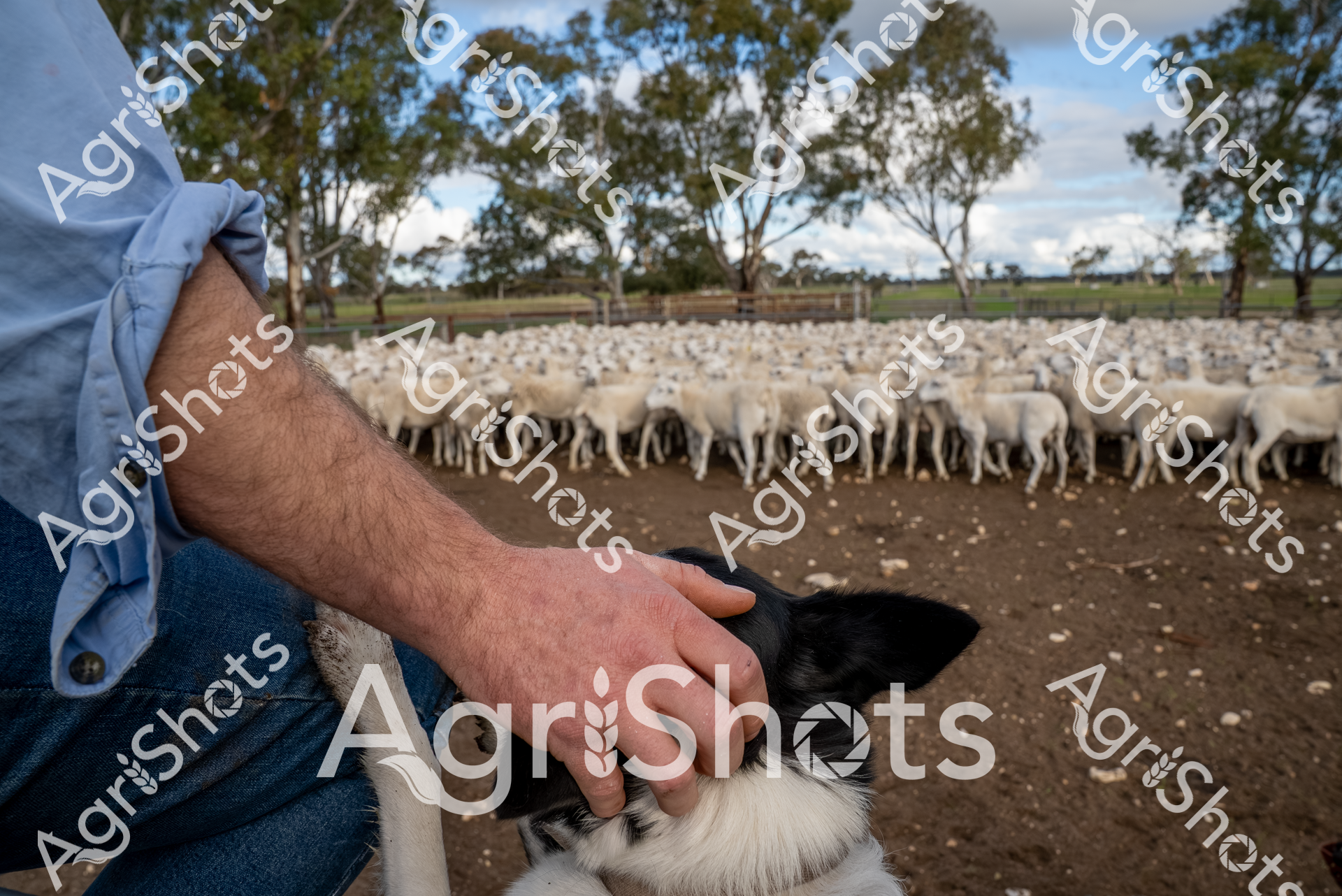
Beneath a pale winter sky, a seasoned farmer's weathered hand rests tenderly on a loyal working dog in a dusty sheep yard. The expansive South Australian landscape unfolds behind them, scattered eucalyptus trees punctuating the distant horizon, their muted green foliage contrasting with the parched earth. A dense flock of pristine white Merino sheep huddles tightly in the background, their woolly bodies creating a living carpet across the paddock, revealing the harsh conditions of a green drought. The farmer's blue work shirt and denim-clad arm speak to generations of agricultural resilience, while the black and white border collie sits attentively, a critical partner in managing the mob. This image captures the profound connection between farmer, working dog, and livestock - a timeless tableau of Australian agricultural life that resonates with the unspoken understanding and mutual dependence that defines rural existence in the challenging southeastern region of South Australia.
 Image
Image
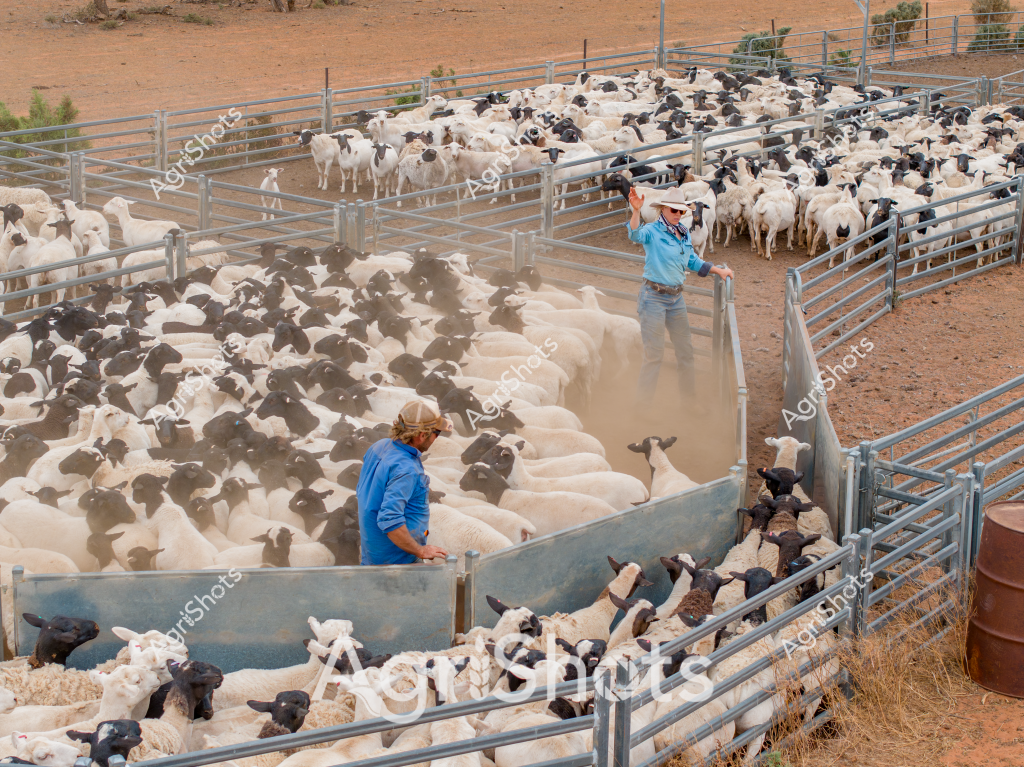
A dusty sheep yards scene captures two workers managing a large flock of black and white sheep in a metal livestock holding pen. A woman in a blue shirt and a man in a blue shirt and cap are strategically positioned within the fenced area, carefully directing and sorting the densely packed mob of sheep. The arid, reddish-brown ground and metal yard infrastructure suggest this is a typical livestock management scene in the Australian outback or pastoral region. Dozens of sheep - predominantly white with black faces and legs, characteristic of breeds like Merino or Dorper - are tightly clustered in different pens, creating a textured landscape of woolly bodies. Dust rises from the animals' movement, indicating active livestock handling during what appears to be a warm, dry day. The metal gates and sorting infrastructure demonstrate the sophisticated approach to sheep management in Australian agriculture, where precise handling and sorting are critical to pastoral operations.
 Image
Image
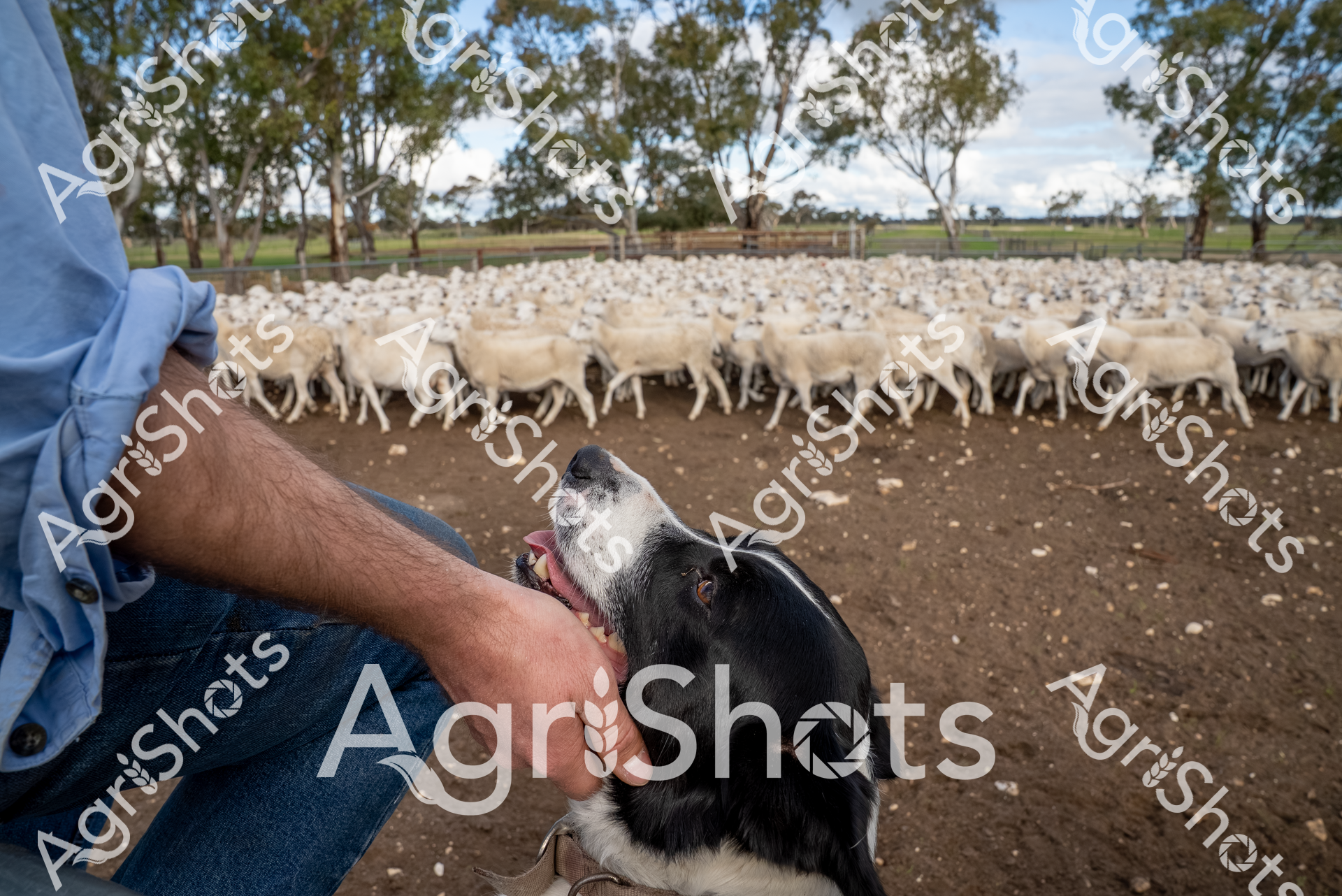
A seasoned stock manager guides his loyal Border Collie during a sheep mustering operation in the semi-arid landscapes of South Australia's southeast region. The expansive paddock, dotted with eucalyptus trees, reveals a dense flock of Aussie White sheep tightly packed in a holding yard, their pristine white fleeces contrasting against the dusty, stone-strewn ground. In the foreground, the black and white working dog sits attentively beside a weathered hand, tongue slightly extended, demonstrating the deep bond between farmer and canine companion. The scene captures the resilience of Australian agricultural life during a "green drought" - where the landscape appears deceptively verdant but lacks substantial moisture. Dressed in a blue work shirt, the farmer's connection to the livestock and working dog speaks to generations of pastoral tradition. The soft winter light filters through scattered trees, casting a muted glow over the meticulously managed livestock operation, highlighting the skill and dedication required in modern sheep farming.