Results for “Wildlife”
 Image
Image
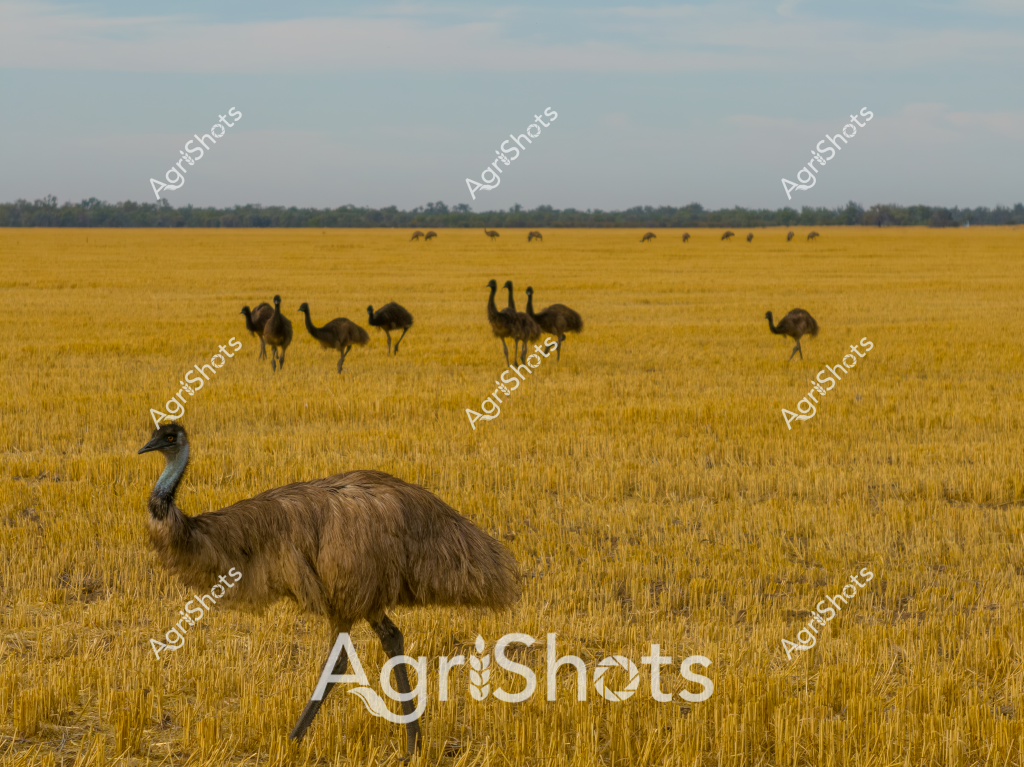
A striking landscape showcasing a flock of emus roaming across a golden wheat stubble field after harvest. The majestic native Australian birds - with their distinctive brown feathered plumage and long legs - are scattered across the expansive yellow landscape, some standing in small groups while others move individually through the short-cut crop remnants. In the background, a distant treeline marks the horizon under a soft, pale blue sky, creating a quintessential Australian agricultural scene that captures the unique wildlife interaction with farming landscapes. The emus appear relaxed and natural, moving freely across the harvested paddock, demonstrating the coexistence of native fauna and agricultural environments. Their earthy brown coloration contrasts beautifully with the bright golden-yellow of the stubble field, creating a visually compelling image that speaks to the wide-open spaces of rural Australia. The scene epitomizes the intersection of wildlife and agriculture, showing how these remarkable birds navigate and inhabit working farmlands, moving with characteristic grace across the post-harvest terrain. The stubble field's uniform texture and color suggest a recently harvested wheat crop, typical of agricultural regions in states like Western Australia, South Australia, or New South Wales.
 Image
Image
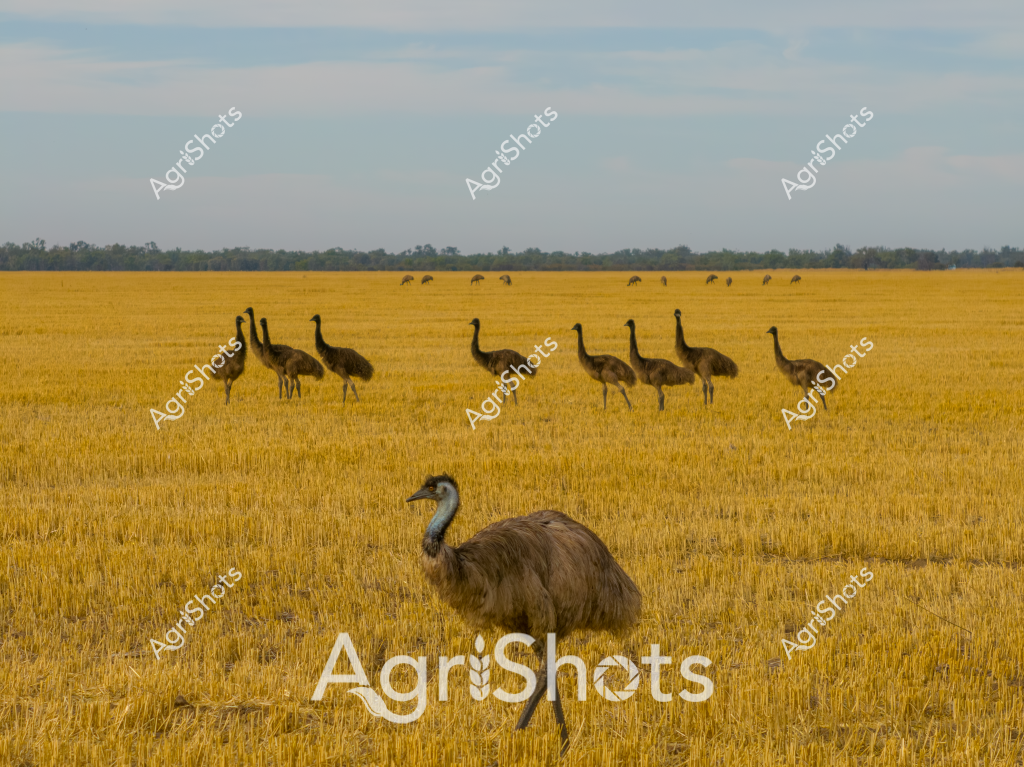
A stunning landscape capturing a large group of emus foraging across a golden wheat stubble field after harvest. The tall, distinctive birds with their brown-grey plumage are scattered across the sun-drenched landscape, some in small clusters and others spread out individually. In the foreground, a single emu stands prominently, its feathered body creating a textural contrast against the closely-cropped yellow wheat stubble. The background reveals a distant treeline and soft blue-grey sky, typical of an Australian rural agricultural scene. Multiple emus can be seen grazing in the mid-ground, creating a sense of peaceful movement across the expansive harvested paddock. The image captures the unique relationship between Australian wildlife and agricultural landscapes, with the emus seamlessly integrating into the post-harvest agricultural environment.
 Image
Image
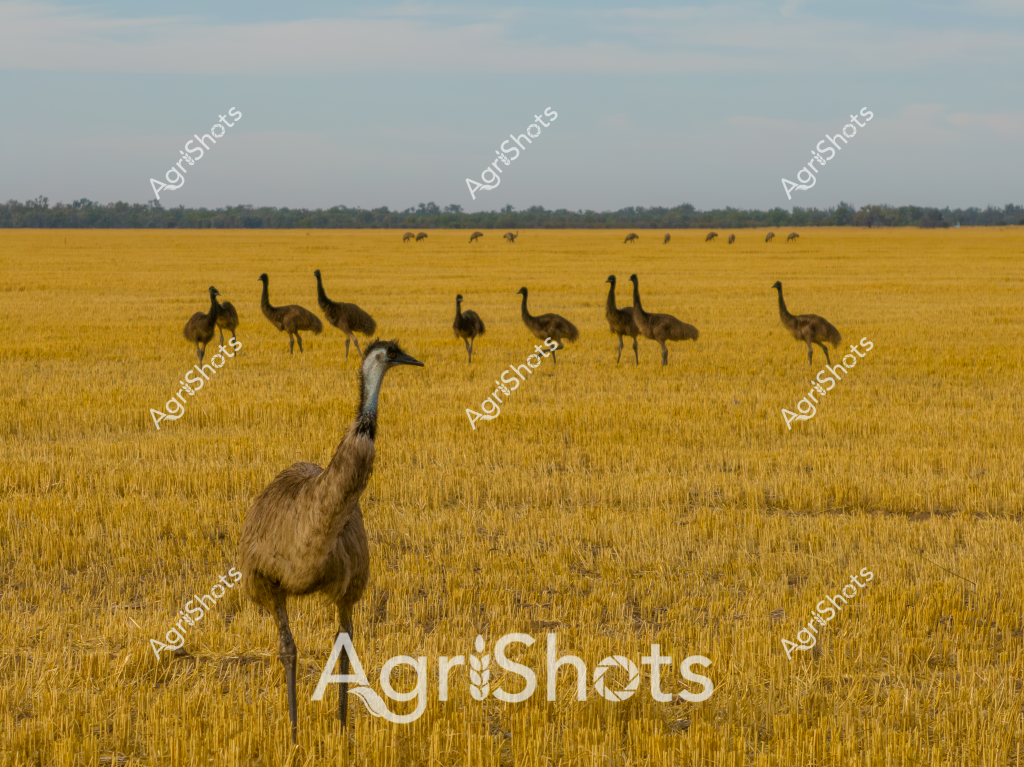
A striking landscape featuring a group of emus wandering across a golden wheat stubble field after harvest. These large, distinctive Australian birds are scattered across the expansive, sun-bleached paddock, with some birds in the foreground and others dispersed in the background. The landscape stretches to a distant treeline, creating a classic Australian agricultural scene that captures the vast, open nature of rural farming country. The wheat field appears recently harvested, with short stubble creating a uniform golden-yellow texture that extends to the horizon. Multiple emus, with their characteristic long necks and brown-feathered bodies, move casually across the landscape, showcasing the wildlife that coexists with agricultural environments. The soft blue-grey sky provides a muted backdrop to the vibrant yellow field, creating a sense of spaciousness and tranquility typical of Australian rural landscapes. This image perfectly encapsulates the intersection of wildlife and agriculture, highlighting the unique ecosystem of Australian farmland where native birds like emus roam freely across harvested crop fields. The scene speaks to the broader narrative of Australian agricultural landscapes - vast, open, and rich with natural beauty.
Image
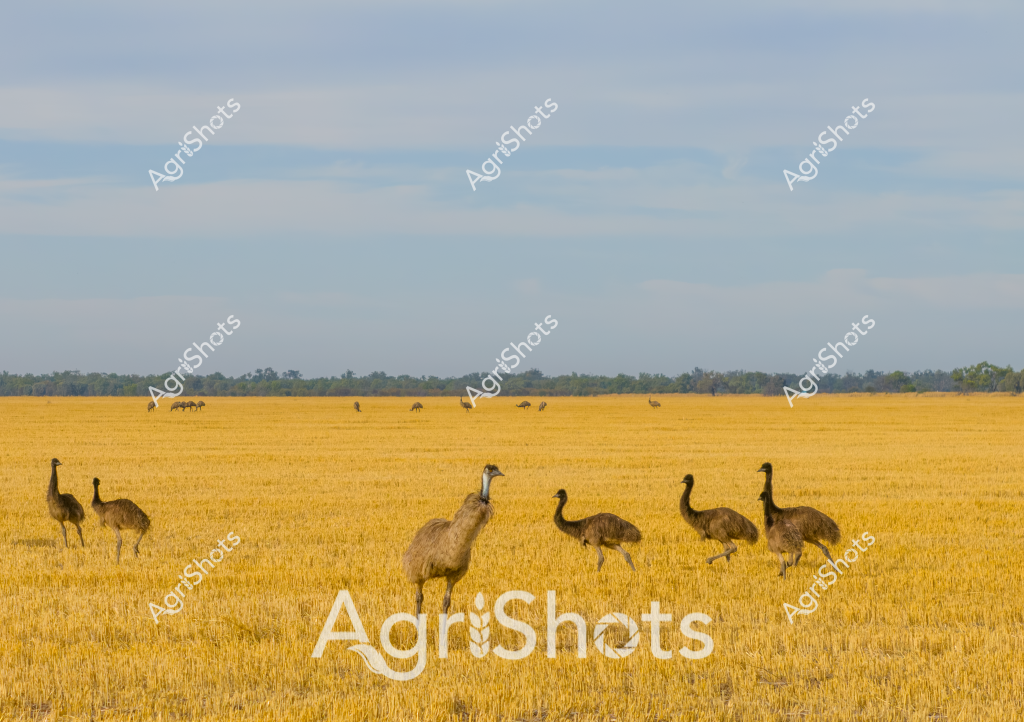
A striking landscape showcasing a group of emus roaming across a golden wheat or barley stubble field after harvest. Multiple emus - perhaps 8-10 birds - are scattered across the expansive yellow landscape, their distinctive brown feathered bodies contrasting sharply with the pale golden crop remnants. The birds appear relaxed, some standing individually while others are clustered in small groups, creating a natural and serene agricultural scene typical of Australian inland farming regions. The wide-open paddock stretches to a distant treeline on the horizon, with a soft blue-grey sky providing a muted backdrop. This image captures the quintessential relationship between Australian wildlife and agricultural landscapes, where native birds like emus freely inhabit harvested crop fields. The stubble field suggests recent grain harvesting, with short crop stalks remaining after the main harvest has been collected. The composition highlights the vastness of Australian agricultural spaces, where wildlife and farming coexist. Emus, native to Australia, are perfectly adapted to these open grassland and agricultural environments, moving with a distinctive stride across the golden field. Their presence adds a dynamic, wild element to the carefully cultivated agricultural landscape.
 Image
Image
A stunning landscape showcasing a group of emus wandering through a golden wheat stubble field after harvest. The birds, with their distinctive long necks and brown feathered bodies, are scattered across the foreground and background of the image, standing among the short, uniform wheat stalks. The landscape stretches wide and flat, with a line of trees and vegetation marking the distant horizon under a soft, pale blue sky. These native Australian birds appear relaxed, some standing tall while others move casually across the harvested agricultural field, creating a quintessential rural Australian scene that captures the intersection of wildlife and farming landscapes. The rich yellow-gold color of the stubble field provides a striking contrast to the emus' earthy brown plumage, highlighting the beauty of Australia's agricultural regions during the post-harvest season.
 Image
Image
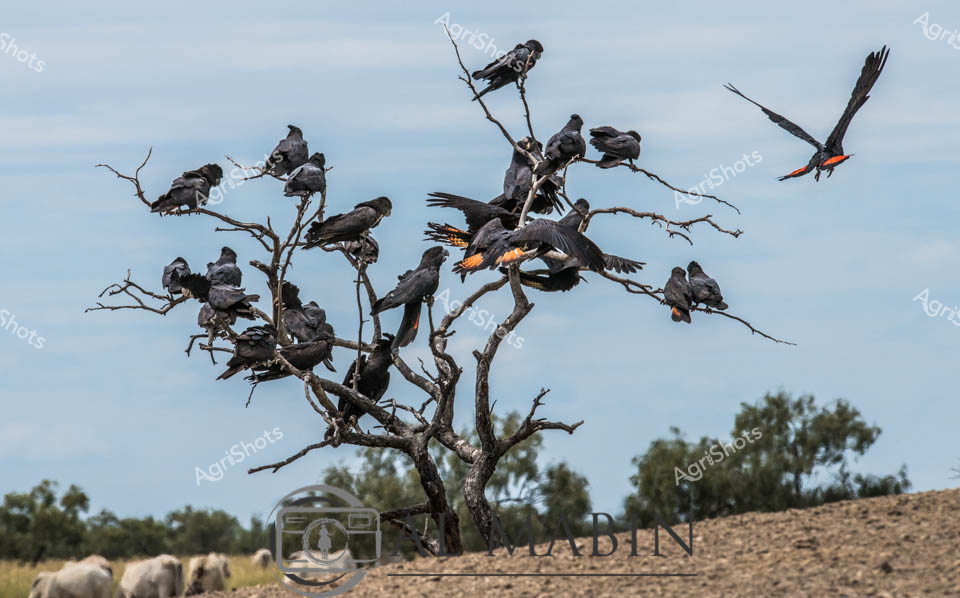
A dramatic gathering of black birds dominates a stark Northern Territory landscape, perched across every branch of a weathered, leafless tree. The birds - likely black cockatoos or ravens - create a living sculpture against the pale blue sky, their dark forms punctuated by flashes of vivid red and orange wing markings. One bird takes flight, wings outstretched, adding dynamic movement to the composition. In the background, sparse scrubland and distant trees suggest the harsh, open terrain of Australia's interior. The bare tree, with its twisted branches, stands as a testament to the resilient ecosystem of the station landscape, while the congregated birds speak to the complex social behaviors of these intelligent avian species.
 Image
Image
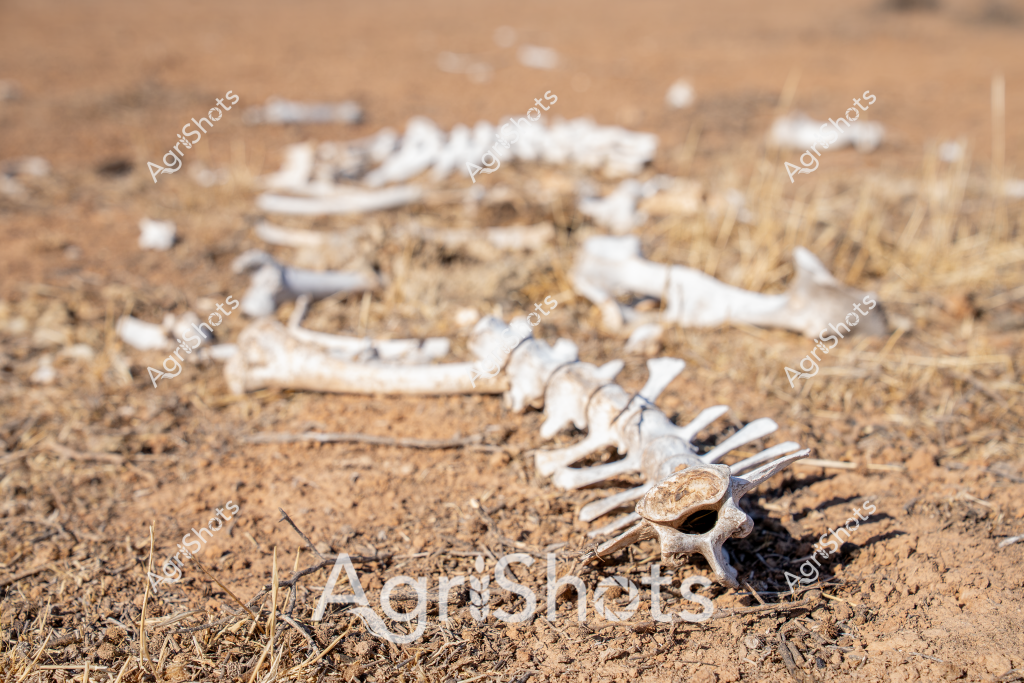
A haunting scene of scattered animal skeletal remains lies across a dry, dusty landscape with sparse grasses and sandy-brown earth. The bleached white bones are arranged in a fragmented, disarticulated pattern, suggesting the skeletal remains of a single animal that has decomposed over time. The stark white bones contrast sharply against the muted tan and brown tones of the ground, creating a poignant visual representation of environmental harshness and the cycle of life and death in an arid ecosystem. Each vertebra, rib, and bone fragment is weathered and sun-bleached, indicating prolonged exposure to the elements. The image evokes a sense of desolation and the unforgiving nature of drought-affected landscapes, where survival is a constant struggle and life can quickly fade into these fragile, skeletal reminders.
 Image
Image
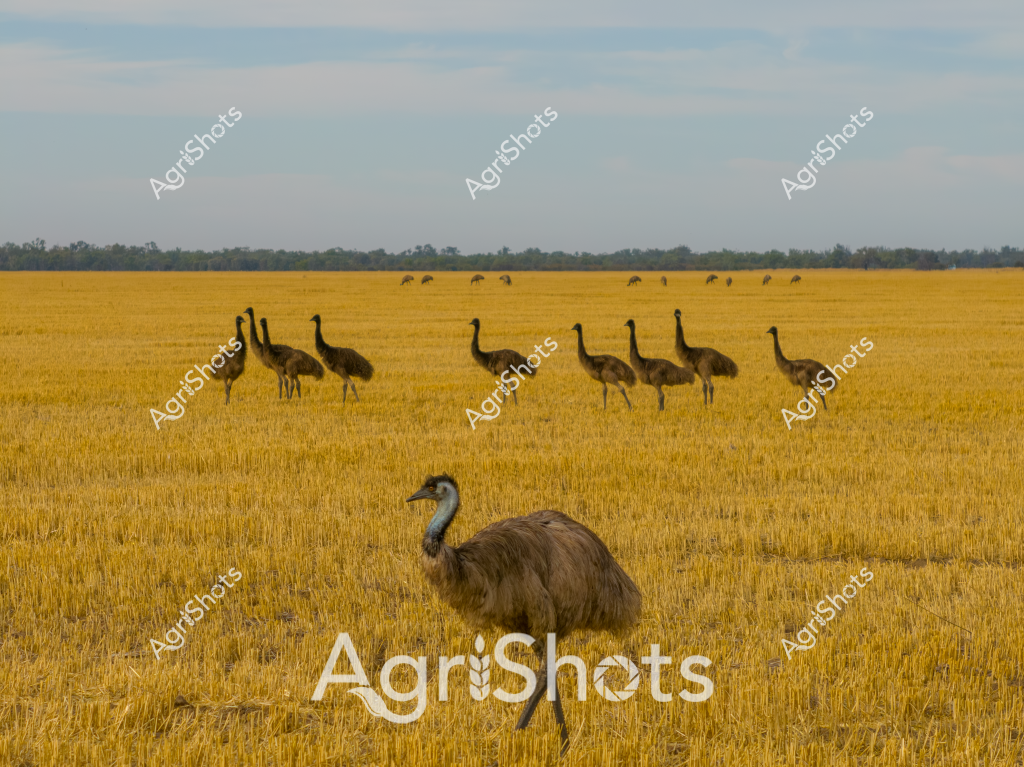
A magnificent scene of emus wandering across a golden wheat stubble field, capturing the quintessential Australian agricultural landscape. A large, solitary emu stands prominently in the foreground, its rich brown feathers contrasting against the pale yellow harvested field. Several more emus are scattered across the middle ground, creating a natural, wide-ranging flock that seems perfectly at home in this vast agricultural setting. In the background, a distant treeline marks the horizon, with a soft blue-grey sky creating a serene atmosphere typical of rural Australian paddocks. The stubble field suggests a recently harvested wheat crop, with short golden stalks covering the ground, providing a perfect foraging environment for these iconic native birds. The image beautifully illustrates the coexistence of wildlife and agricultural landscapes, showcasing how native fauna interact with cultivated farmland in Australia's extensive grain-growing regions.
 Image
Image
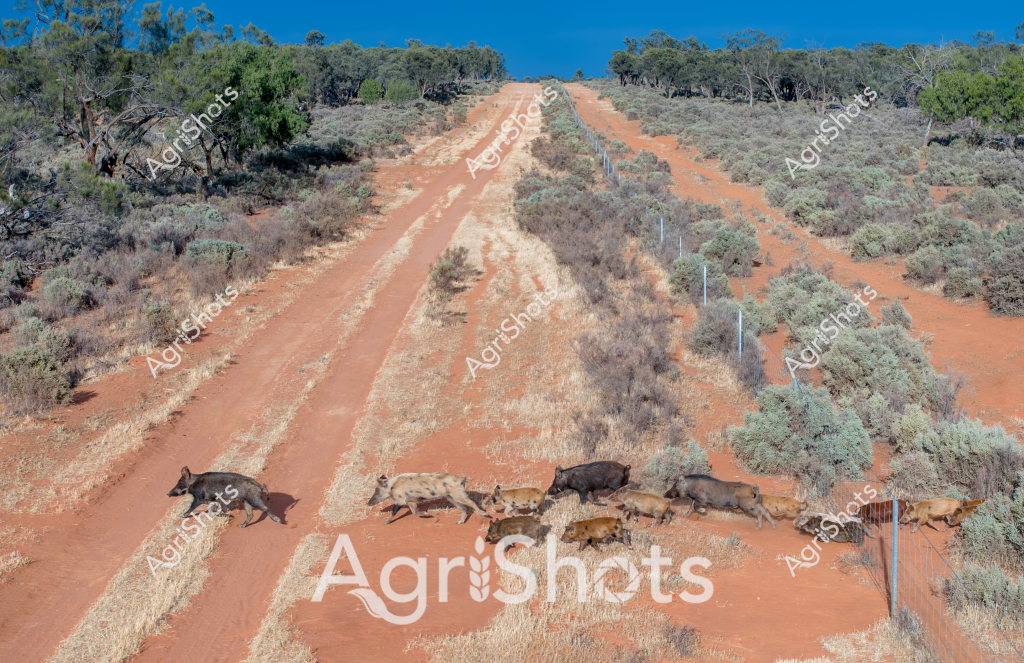
A group of feral pigs traverses a remote Australian dirt track, their dark and varied-colored bodies moving across the rusty-red earth. The landscape is classic Australian outback - sparse eucalyptus trees, silvery-green scrub vegetation, and a wide blue sky stretching across the horizon. These wild pigs, ranging in shades from dark brown to light tan, are crossing a well-worn rural access road that cuts through the arid landscape, likely moving between grazing areas. The surrounding terrain shows typical semi-arid vegetation with low shrubs and scattered trees, characteristic of inland Australian regions. The stark contrast between the reddish-orange soil and the muted green vegetation creates a visually striking scene that captures the rugged nature of Australia's interior landscapes. The image appears to be an aerial or drone perspective, providing a clear view of the pigs' movement across the landscape, highlighting the interaction between wildlife and the extensive rural infrastructure that connects remote areas. This scene represents the ongoing challenge of feral animal management in Australian agricultural regions, where introduced species like wild pigs can significantly impact native ecosystems and farming operations.
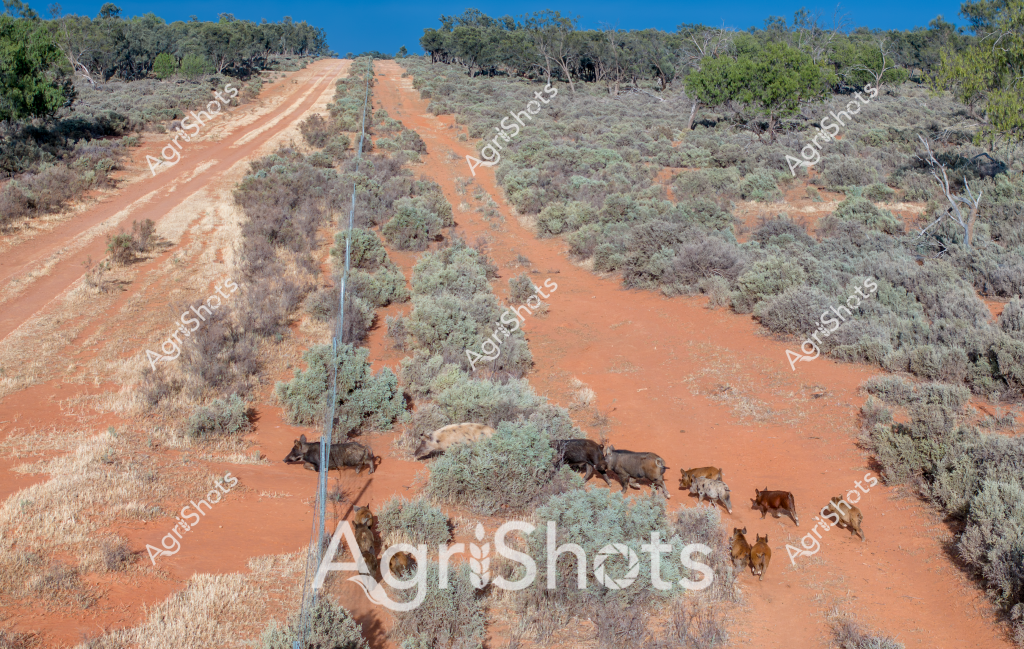 Image
Image
A herd of feral goats traverses a remote, rusty-red dirt track cutting through the arid Australian landscape. Sparse grey-green shrubs and scattered eucalyptus trees line the rugged terrain, creating a typical outback scene of harsh, rocky country. Several adult goats and young kids move together across the wide, dusty trail, their mottled brown and white coats blending with the surrounding scrubland. The steep track winds upward between rocky slopes, revealing the challenging topography of what appears to be a remote station or pastoral property in central Australia. The bright blue sky and reddish earth create a stark, dramatic contrast, highlighting the resilience of wildlife in this unforgiving environment. The goats move with purposeful unity, navigating the challenging landscape with sure-footed ease typical of feral herds adapted to Australia's tough interior regions.
 Image
Image
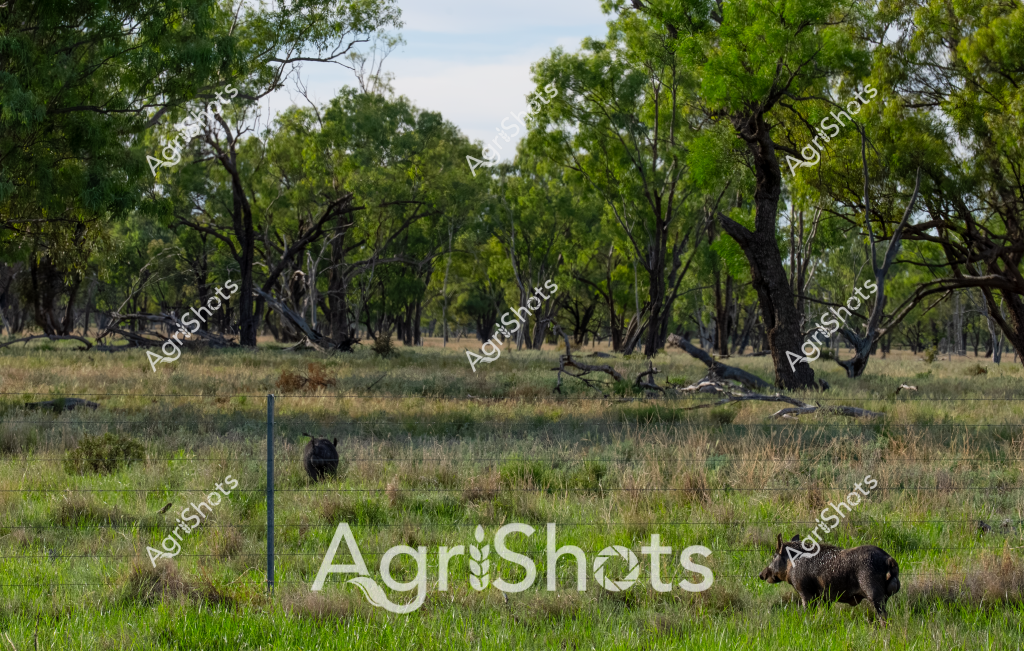
In this rural landscape, two black wild boars graze in a fenced grassland surrounded by mature eucalyptus trees. The scene captures a typical Australian woodland pasture, with scattered gray-green trees and dry grass creating a muted, natural backdrop. Fallen branches and weathered logs are scattered across the grassy field, suggesting an undisturbed natural environment. One boar stands closer to the foreground, while another is positioned further back near a fence line, both quietly foraging among the grass and low vegetation. The landscape appears to be in a temperate region, with the sparse, twisted trees and dry grass indicating potential drought or dry seasonal conditions typical of parts of rural Australia. The image provides a glimpse into the wild fauna inhabiting Australia's agricultural landscapes, showcasing the interaction between wildlife and traditional farming environments.
 Image
Image
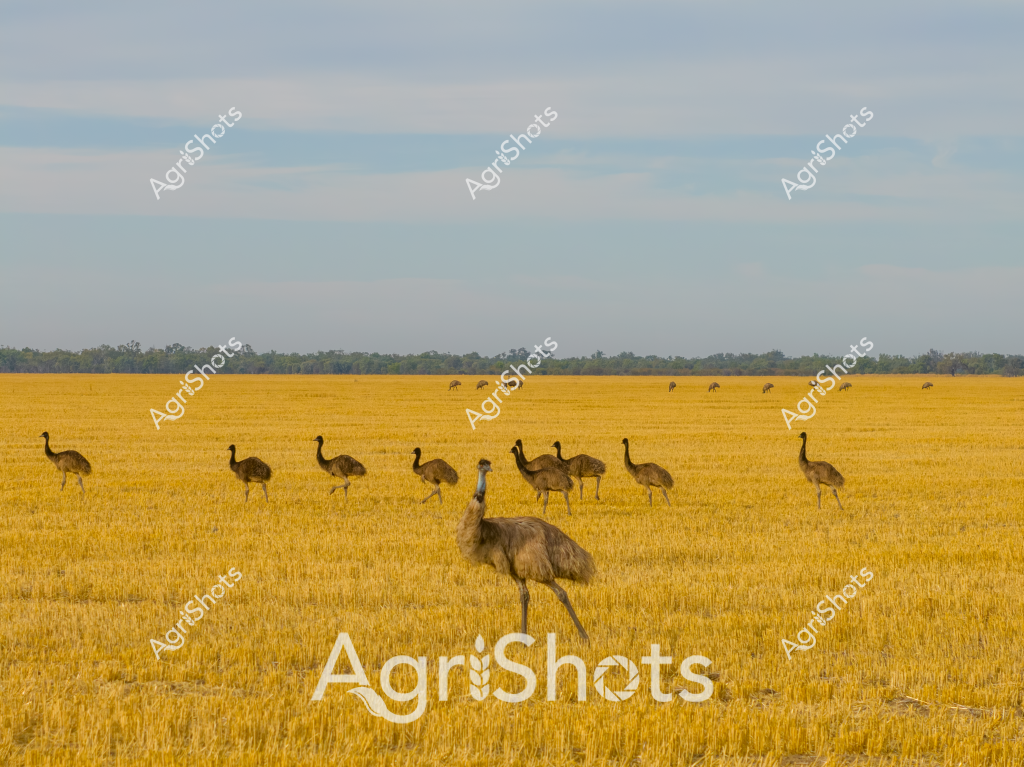
A sprawling golden wheat field stretches across the landscape, populated by a flock of alert emus standing among the harvested stubble. The birds, with their distinctive long legs and curved necks, are scattered across the yellow-brown field, creating a striking contrast against the ripened crop. In the background, a distant treeline marks the horizon under a soft, muted blue sky with gentle cloud formations. The scene captures a quintessential Australian agricultural landscape, where native wildlife coexists with broad-acre farming. These large flightless birds move with careful steps through the post-harvest field, their brown-gray plumage blending subtly with the dried crop stalks. The expansive paddock suggests a typical wheat-growing region, likely in one of Australia's agricultural states such as Western Australia, New South Wales, or Victoria.
 Image
Image
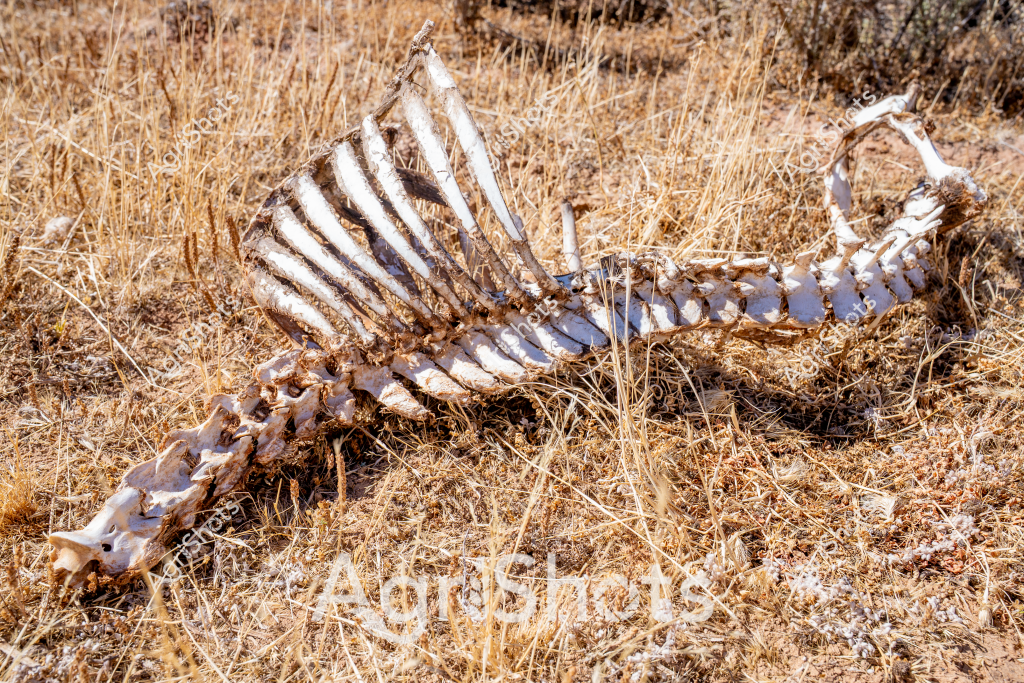
A skeletal remains of an animal, likely a large mammal, lies decomposing in dry golden grasslands. The bleached white bones are completely exposed, with vertebrae, ribs, and skeletal structure clearly visible against the sun-bleached grass and sparse shrubs. The skeleton appears weathered and scattered, suggesting it has been exposed to the elements for an extended period. The arid, drought-like environment indicates a harsh landscape where animal mortality is a natural part of the ecosystem's cycle. Subtle earth tones of browns and tans dominate the scene, creating a stark and somber portrait of the raw, unforgiving nature of an agricultural or wilderness landscape.
 Image
Image
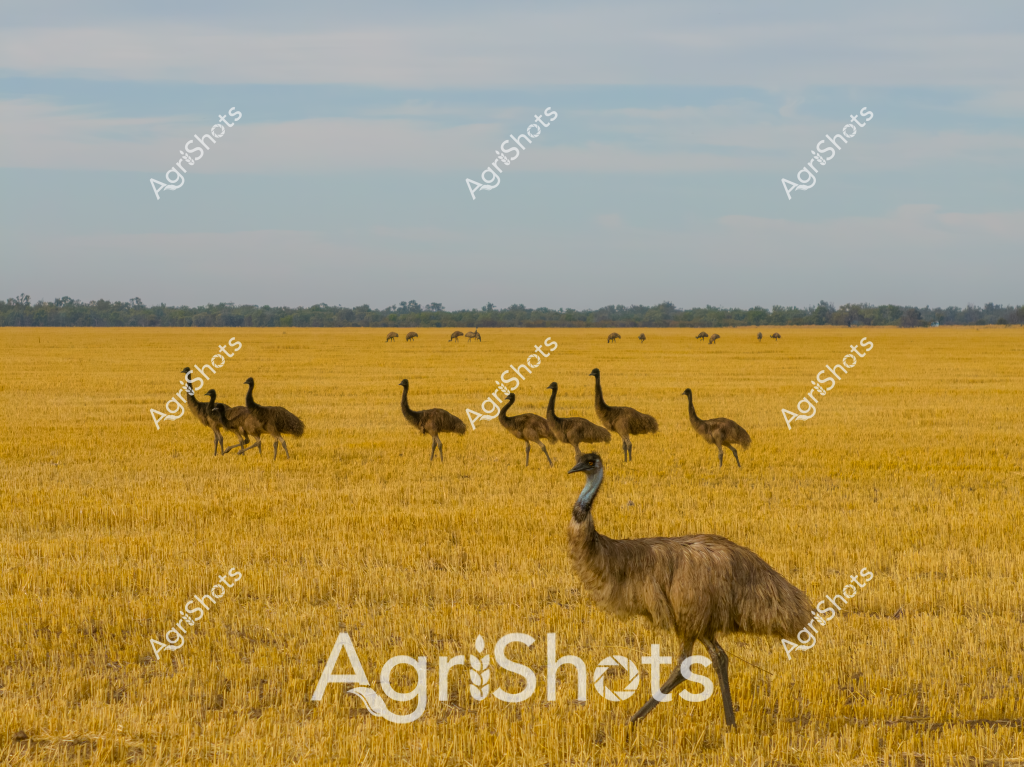
A flock of emus wander across a golden wheat stubble paddock, their distinctive long-legged silhouettes creating a striking scene against the harvest-ready landscape. The birds move in a loose group, with several individuals spread across the foreground and background of the expansive yellow field. Soft blue-gray skies create a muted backdrop to the warm-toned grassland, with distant tree lines marking the horizon. These native Australian birds appear relaxed, moving naturally through the post-harvest agricultural landscape, their brown-feathered bodies blending subtly with the dry stubble. The image captures a quintessential Australian rural scene, where wildlife and agricultural land intersect seamlessly. The wide-open paddock demonstrates the vast scale of Australian agricultural landscapes, with the emus moving freely across the recently harvested wheat field.
 Image
Image
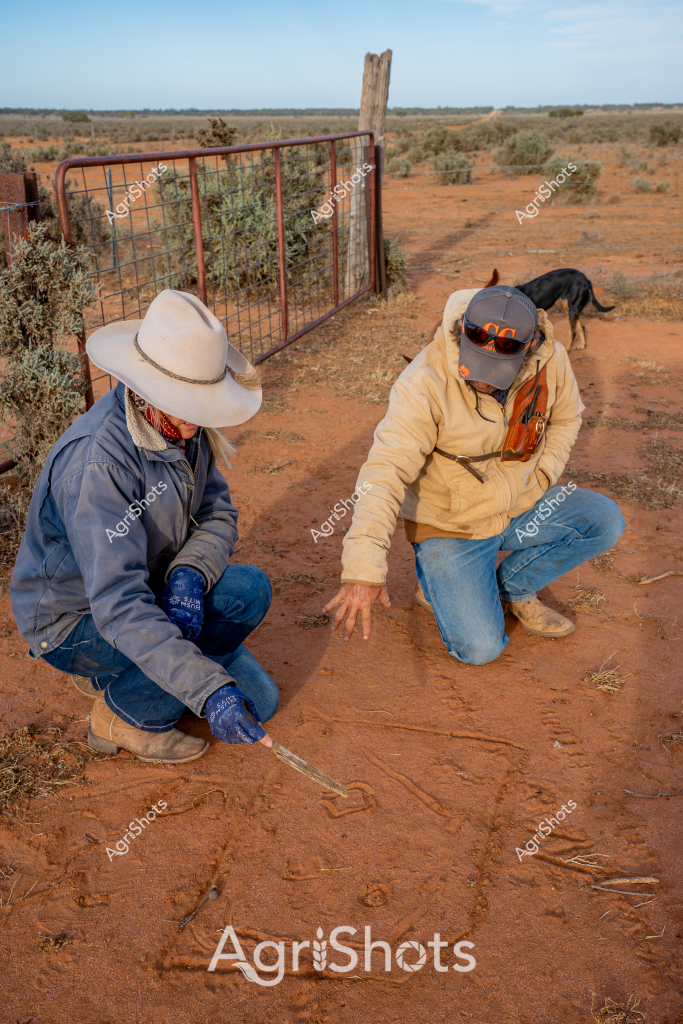
Two workers examine ground tracks in an arid Australian outback landscape, carefully studying animal or wildlife movement patterns. A man wearing a white wide-brimmed hat and blue work jacket and another worker in a light yellow jacket and cap crouch down on the deep rusty-red soil, intently tracing markings on the ground. A black dog stands in the background near a wire mesh gate, surveying the sparse landscape of low scrub and distant horizon. The environment suggests a remote station or rural property, with scattered saltbush and sparse vegetation typical of central Australian terrain. The workers appear to be conducting environmental tracking, wildlife monitoring, or land management research, demonstrating the meticulous observation skills required in rural Australian agricultural and conservation work. The scene captures the essence of outback fieldwork - two experienced professionals using close observation and local knowledge to understand subtle environmental indicators. Their careful postures and focused examination of ground tracks reveal the deep connection between agricultural workers and the landscape, highlighting the importance of detailed environmental understanding in managing remote Australian properties.
 Image
Image
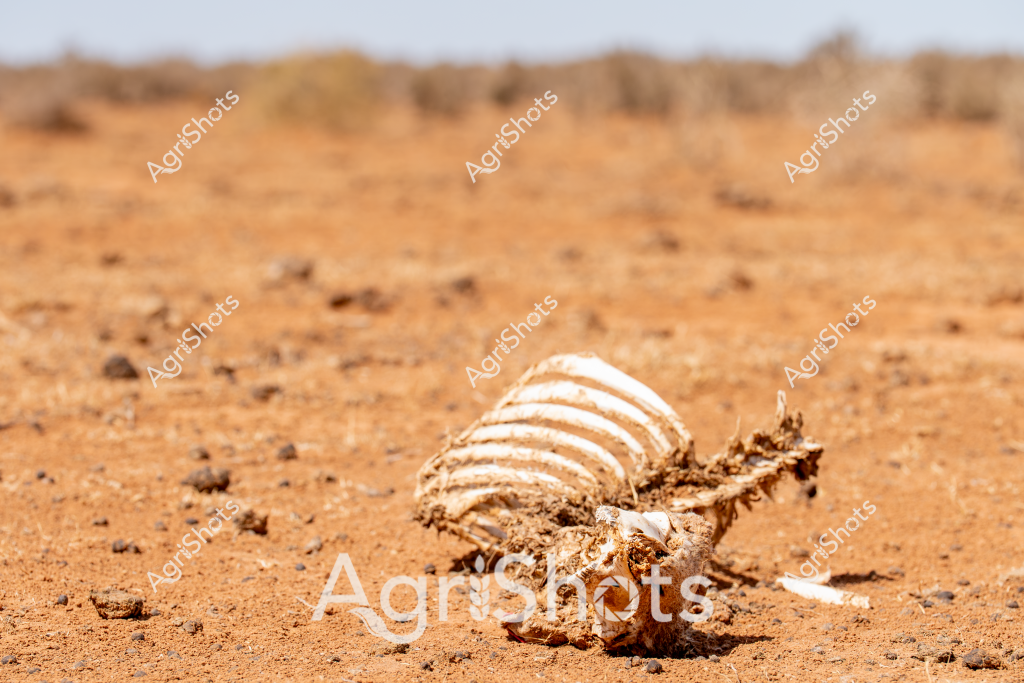
A bleached animal skeleton lies partially decomposed on a dry, reddish-orange desert landscape, revealing the stark ribcage and skeletal structure against the arid, rocky ground. The parched earth surrounding the bones is cracked and barren, with sparse vegetation and distant shrubs indicating an extreme drought environment typical of Australia's interior regions. Weathered and sun-bleached, the skeletal remains tell a grim story of survival and the unforgiving nature of the outback's harsh conditions. The monochromatic palette of rust-colored soil and white bone fragments creates a haunting visual that captures the raw, unrelenting reality of life and death in an uncompromising landscape. This image powerfully illustrates the challenging environmental conditions that test the resilience of both wildlife and agricultural systems in Australia's most arid zones.
 Image
Image
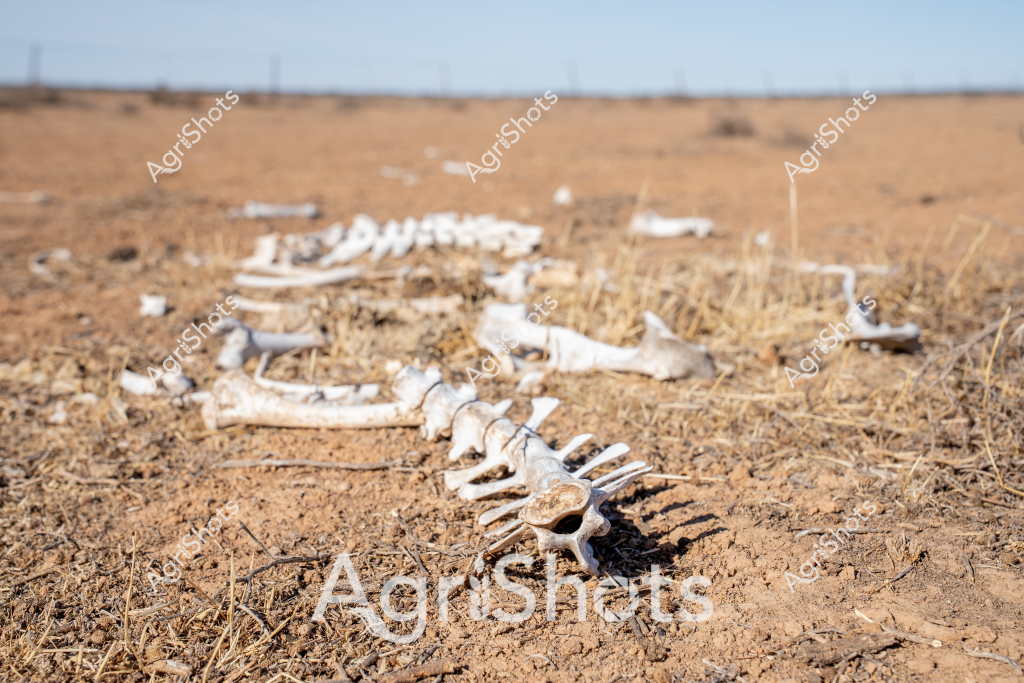
Based on the image and our agricultural stock photography guidelines, here's a detailed description: Skeletal remains of an animal are scattered across a dry, arid landscape, revealing the harsh realities of drought conditions in the Australian outback. Bleached white bones are carefully positioned against the parched, reddish-brown earth, with sparse dry grasses and scattered stones surrounding the skeletal fragments. The barren terrain stretches to a distant horizon, punctuated by faint power lines or fence posts, creating a stark visual representation of environmental stress. The bone structure appears to be from a large mammal, possibly cattle or a large wild animal, with vertebrae and other skeletal elements spread across the ground in a fragmented pattern. The image captures the unforgiving nature of extreme drought, where life struggles to survive and the landscape becomes a bleached memorial to the challenges of survival in Australia's most challenging agricultural regions. The scene powerfully illustrates the impact of prolonged dry conditions on livestock and wildlife, serving as a stark reminder of the environmental challenges faced by Australian farmers and graziers in arid and semi-arid zones.
 Image
Image
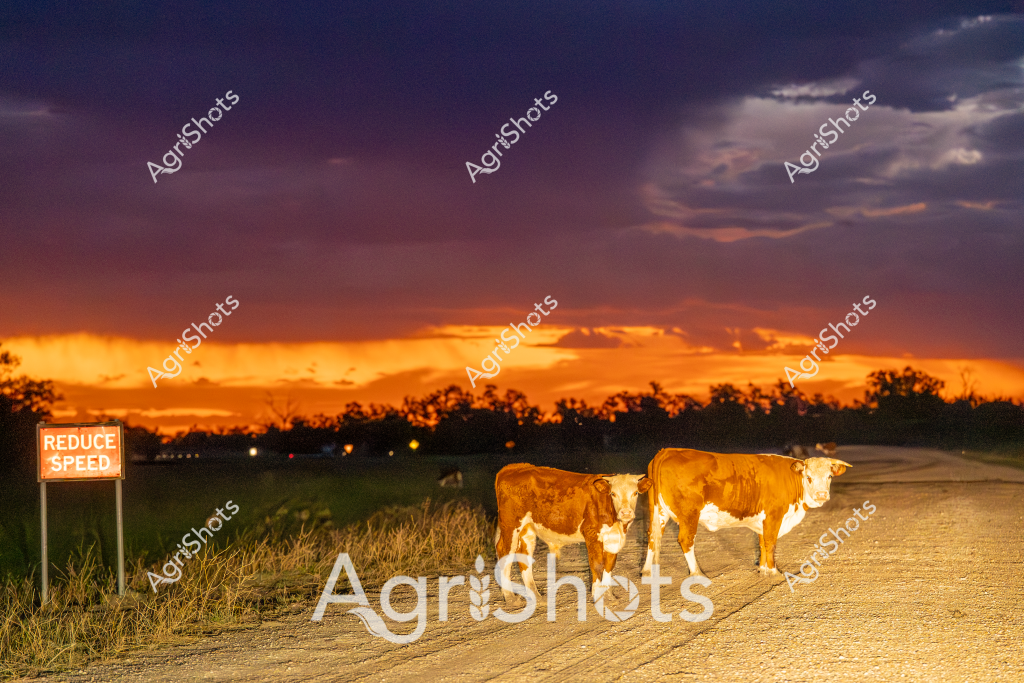
A sunset landscape captures two golden-brown cattle standing on a dusty rural road, with a "Reduce Speed" sign visible nearby. The sky blazes with dramatic orange and deep purple clouds, creating a stunning backdrop of warm light across the horizon. Silhouetted trees line the distant treeline, while the cattle stand calmly on the dirt road, their tan and white coats illuminated by the evening's golden glow. The "Reduce Speed" sign suggests this is a typical rural Australian road where livestock might unexpectedly cross, requiring drivers to be cautious. The scene epitomizes the tranquil yet potentially hazardous nature of Australian rural roads, where farm animals and wildlife frequently interact with transportation routes. The image powerfully captures the intersection of agricultural life and rural infrastructure, with the cattle appearing calm and unperturbed by their roadside location. The stunning sunset provides a dramatic, almost cinematic quality to this everyday rural scene, highlighting the beauty of Australia's agricultural landscapes.
 Image
Image
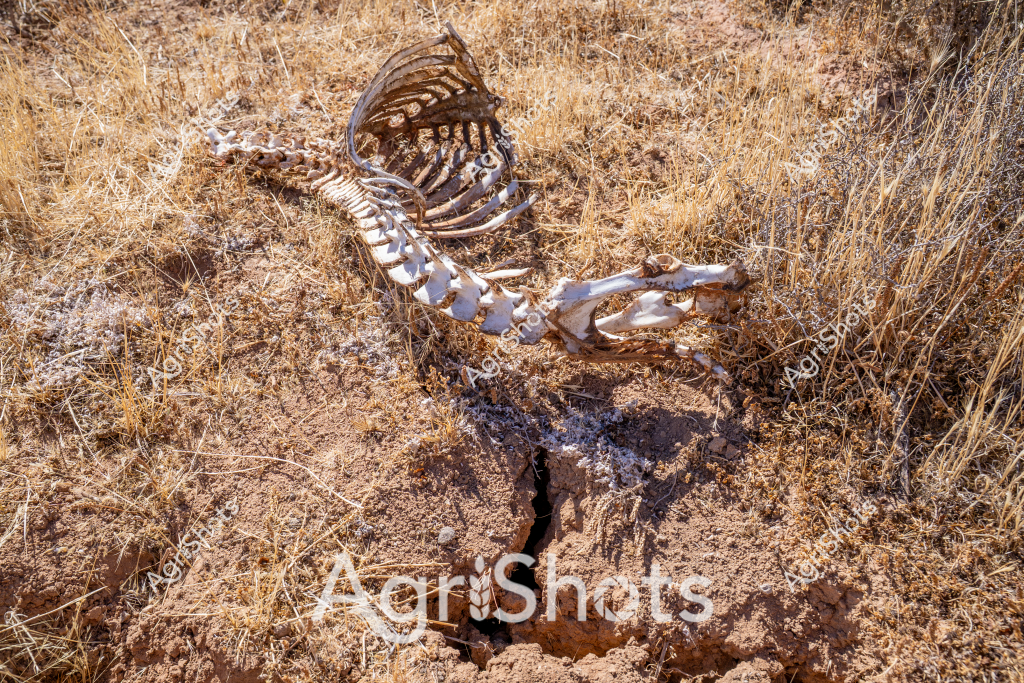
A skeletal remains of an animal lies exposed in a dry, golden grassland, partially nestled in a small eroded ground crack. The bleached white bones are fully articulated, showing the complete skeletal structure from skull to tail, with the ribcage prominently curved and limbs extended. Surrounding the skeleton is a landscape of drought-parched grass in shades of tan and brown, with sparse, weathered vegetation indicating harsh environmental conditions. The skeletal remains appear to have been naturally exposed by environmental processes, suggesting a potentially long period of decomposition in this arid setting. The stark white bones create a striking contrast against the muted, sun-bleached landscape, offering a raw and unfiltered glimpse of the natural cycle of life and death in an unforgiving ecosystem.
 Image
Image
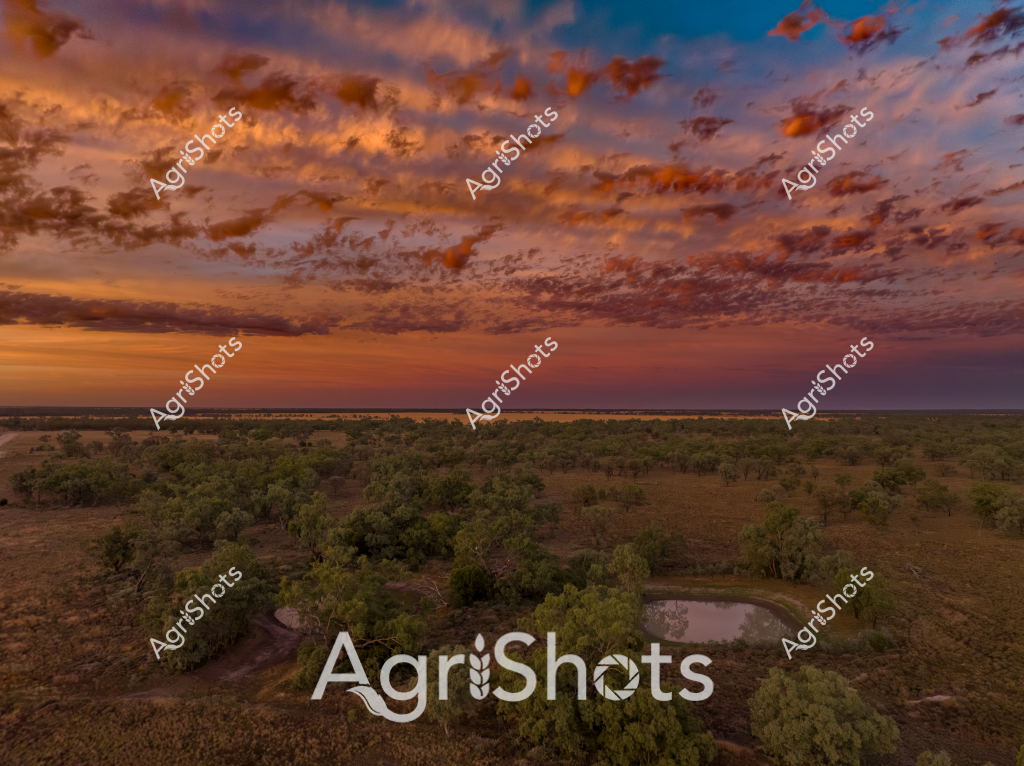
The image captures a stunning Australian rural landscape at sunset, showcasing a vast, green-timbered wilderness with a small dam or waterhole nestled among the trees. The sky is a breathtaking canvas of golden, orange, and deep blue hues, with dramatic cloud formations creating an intricate textural display across the horizon. Sparse eucalyptus trees dot the landscape, their dark green forms providing contrast against the warm, glowing sky and the surrounding dry grasslands. The small water body reflects the surrounding landscape, suggesting this is likely an arid or semi-arid region where water is a precious resource for both wildlife and potential agricultural activities. The expansive view suggests this could be a cattle station or vast pastoral property in the Australian outback, with the dramatic sunset highlighting the raw, untouched beauty of the rural environment. The scene conveys a sense of solitude, vastness, and the rugged resilience characteristic of Australian rural landscapes.
 ▶ Video
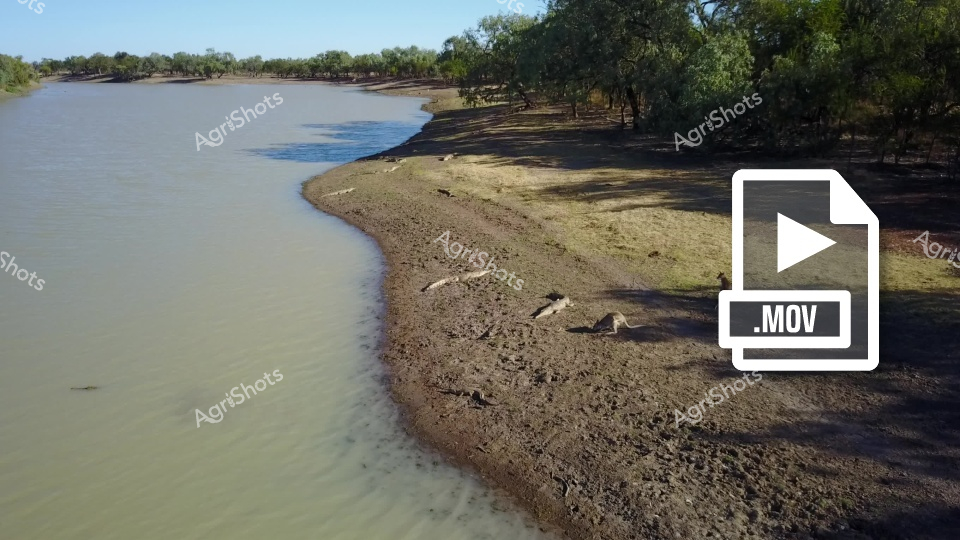
Parched riverbank reveals the harsh realities of drought along an inland waterway, with muddy shorelines and sparse vegetation marking the water's receding edge. Gnarled river red gums and sparse woodland punctuate the landscape, casting long shadows across the dry, cracked earth. A series of wildlife - likely kangaroos - rest on the exposed riverbed, seeking respite in the shade and proximity to the diminishing water source. The .MOV video file tag suggests this is a dynamic scene capturing the living landscape of an Australian river system during an extended dry period. Muted browns, greys, and dusty greens dominate the color palette, emphasizing the arid conditions. The scene powerfully illustrates the environmental challenges faced by rural and agricultural communities during prolonged drought conditions.
 ▶ Video
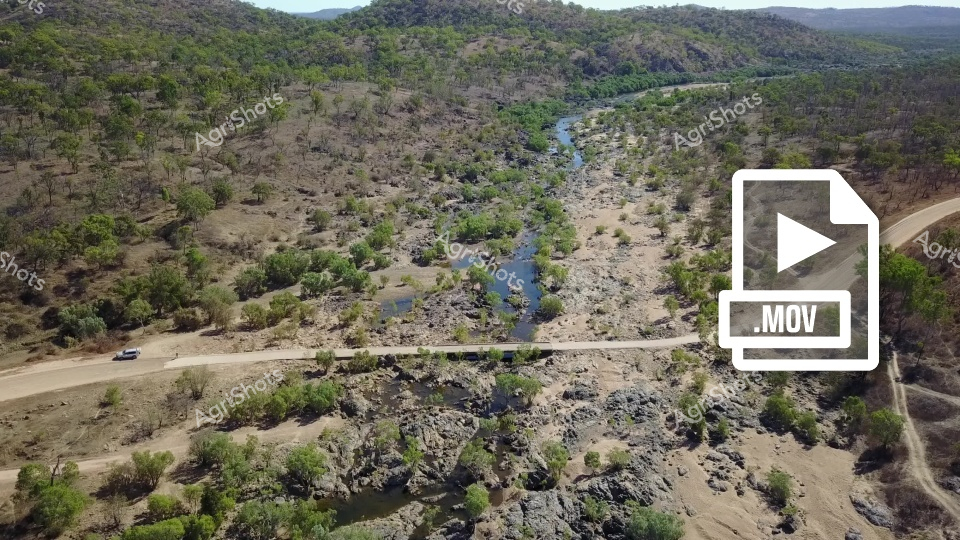
A rocky river meanders through a rugged Australian landscape in this dramatic aerial view, capturing the harsh beauty of a semi-arid region. A narrow dirt road crosses the watercourse via a small bridge, with rocky terrain and scattered eucalyptus trees dominating the surrounding countryside. The landscape reveals the challenging environmental conditions typical of inland Australia, with sparse vegetation and rocky ground indicating periods of drought and limited rainfall. Layers of rocky outcrops and undulating hills create a textured panorama stretching to the distant mountain ranges, showcasing the resilient ecosystem of the region. The blue water of the river provides a vital lifeline through the otherwise dry landscape, highlighting the importance of water sources in sustaining vegetation and wildlife in these remote areas. From this elevated perspective, the intricate natural patterns of the Australian wilderness are revealed in stunning detail, demonstrating the raw and unforgiving beauty of the continent's interior.
 ▶ Video
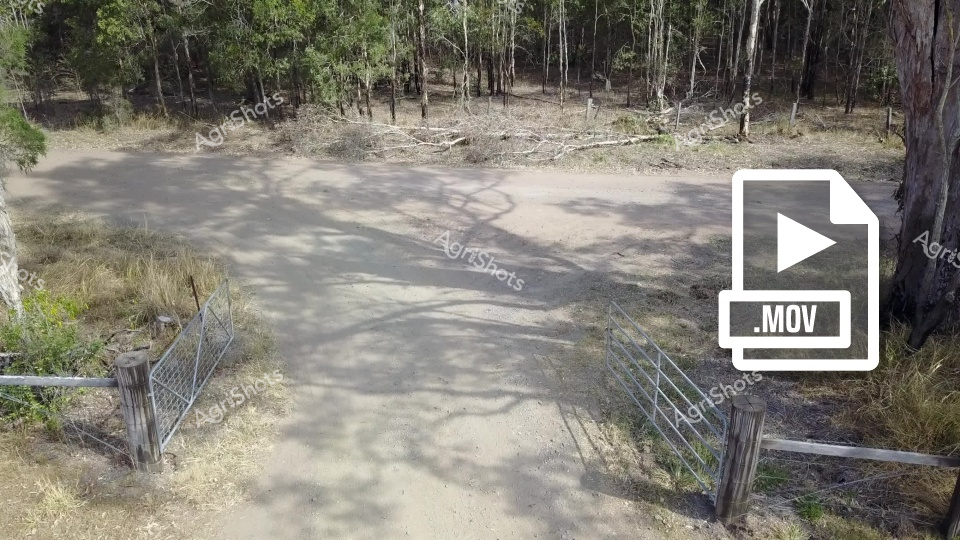
A tranquil moment in the Australian bush reveals a rustic farm entrance framed by tall, resilient eucalyptus trees, their leaves shimmering in the warm sunlight of early afternoon. The gravelly road hints at the rugged charm of rural life, shaded by soft, dappled shadows cast by the overhead canopy. A sturdy gate, slightly ajar, invites exploration into the vast pastures beyond, where the call of nature blends harmoniously with the subtle chirping of local wildlife. The earthy tones of the landscape—rich browns of the dirt path and golden hues of dried grasses—contrast beautifully with the refreshing greens of the surrounding foliage, conveying a sense of serenity and natural abundance. This scene encapsulates a moment of potential and promise, with the open gate symbolizing possibilities for farming endeavors or leisurely country strolls. The unassuming beauty of this setting reflects the essence of rural communities, where everyday life unfolds at a gentle pace amidst nature’s bounty. The quiet atmosphere evokes a sense of peace, an idyllic snapshot of the Australian agricultural heartland.
 ▶ Video
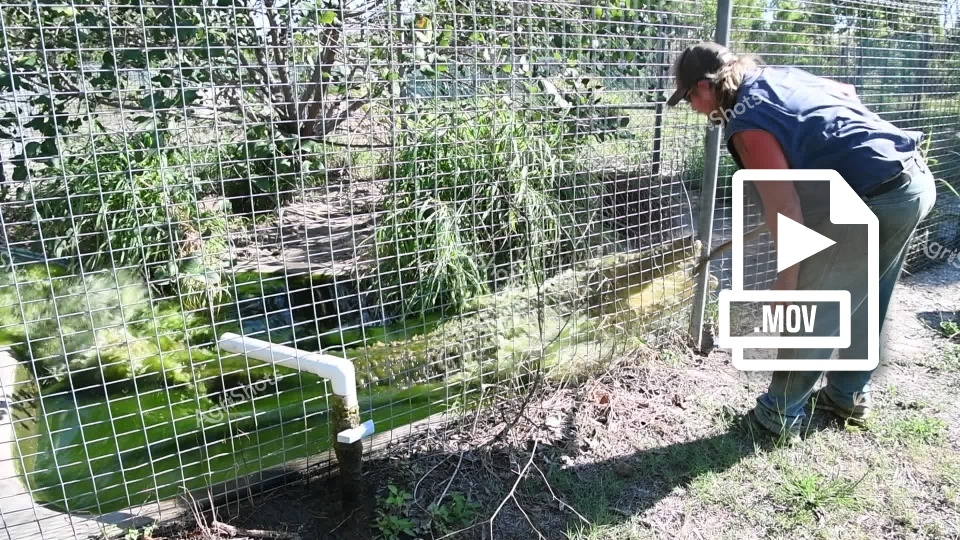
A woman wearing a blue shirt and cap works on constructing or repairing a wire mesh enclosure in a garden or wildlife area. White PVC pipes are integrated into the fencing, and the ground is covered with mulch and vegetation. The enclosure appears to be part of a controlled habitat or garden space, with green plants visible through the wire mesh.