Results for “Water Tank”
 Image
Image
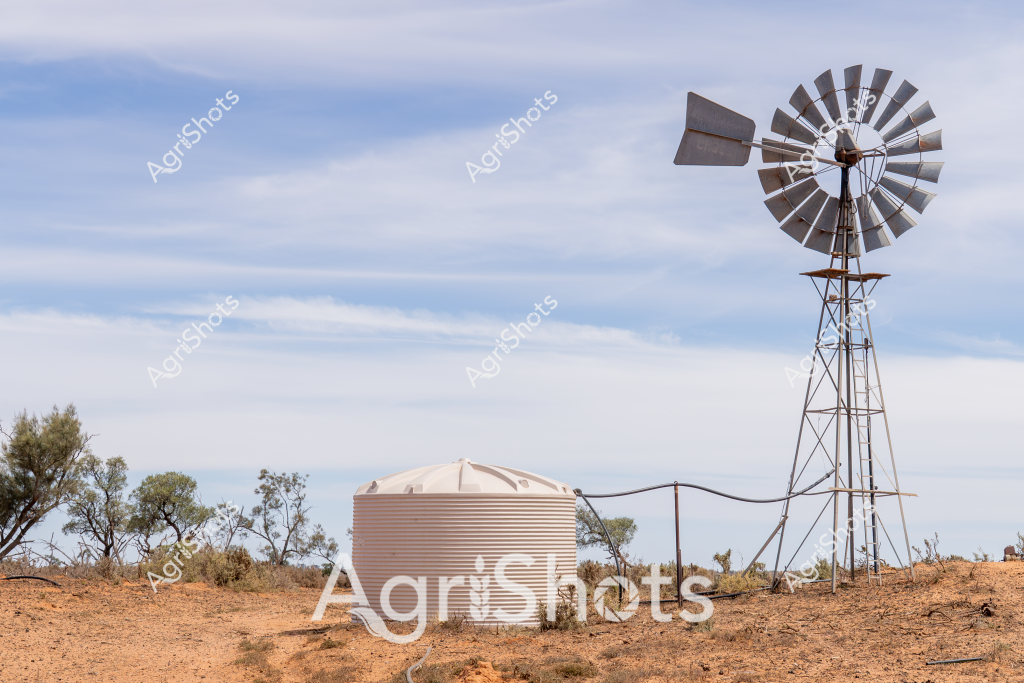
A classic Australian rural landscape captures a weathered windmill and water tank in an arid, drought-affected setting. The tall metal windmill stands prominently against a soft blue sky, its metal blades positioned to catch any available breeze. A corrugated steel water tank sits nearby, providing crucial water storage for the surrounding sparse landscape. Scattered native scrub and sparse trees dot the reddish-brown earth, highlighting the challenging environmental conditions typical of inland Australia. The scene embodies the resilience of rural infrastructure, with the windmill representing generations of agricultural adaptation to harsh, dry environments. The muted color palette of dusty browns, soft blues, and silvery metal tones speaks to the austere beauty of Australia's agricultural heartland.
 Image
Image
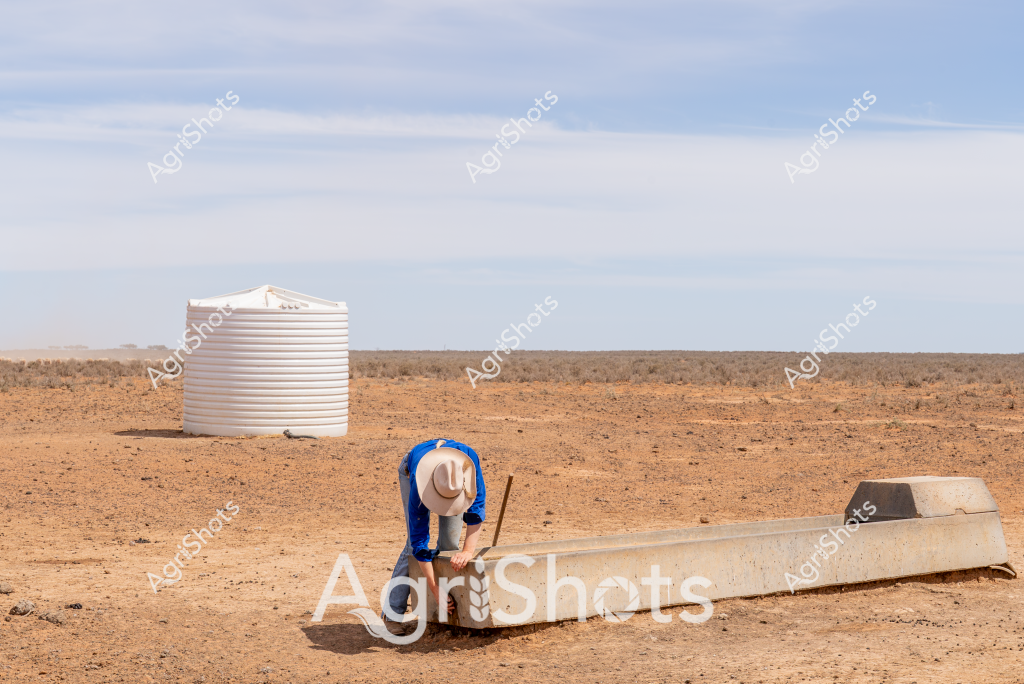
A man in a blue shirt and wide-brimmed hat bends over a concrete water trough in a sun-baked, arid landscape. The expansive paddock stretches to a distant horizon, with sparse, dry vegetation covering the reddish-brown earth. A large white water tank stands sentinel nearby, highlighting the critical importance of water infrastructure in this harsh, drought-affected environment. The scene captures the challenging conditions faced by farmers in rural Australia, with the lone figure working diligently to maintain essential water resources for livestock or agricultural needs. The pale blue sky and flat, open terrain emphasize the isolation and resilience required in such remote agricultural settings.
 Image
Image
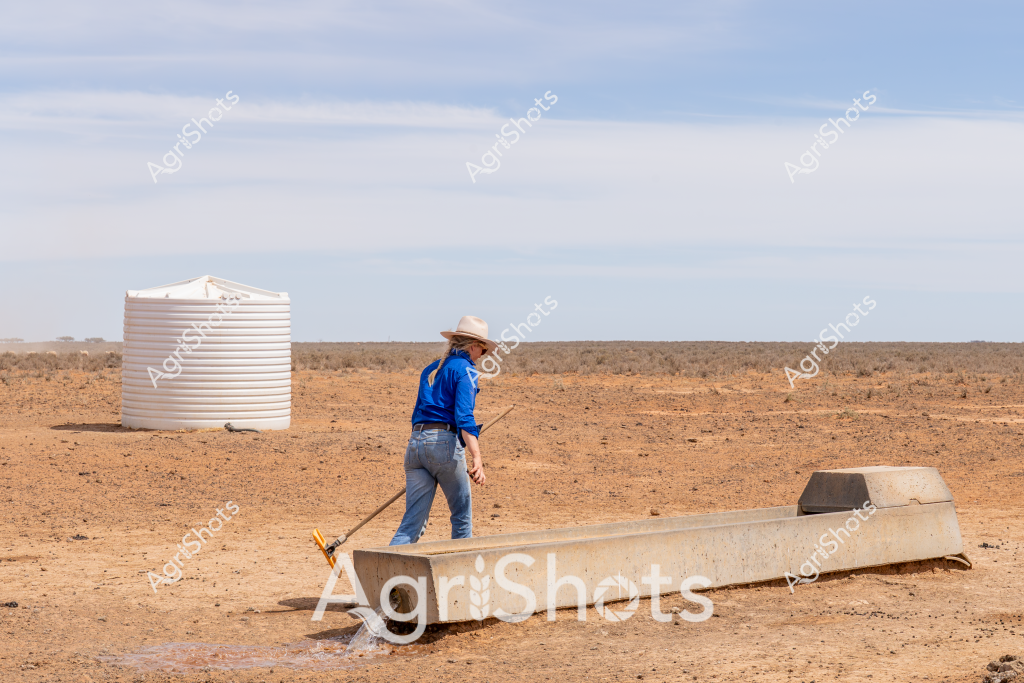
A woman in a blue long-sleeved shirt and wide-brimmed hat stands in a dry, expansive rural landscape, examining a concrete water trough beside a large white water storage tank. The arid paddock stretches to the horizon, with reddish-brown soil and sparse vegetation typical of drought-affected Australian agricultural regions. Her stance suggests careful inspection of critical water infrastructure, highlighting the challenges of managing agricultural resources in harsh, water-scarce environments. The wide-open landscape and essential water infrastructure underscore the resilience required in Australian farming, where water management is crucial for survival during extended dry periods.
 Image
Image
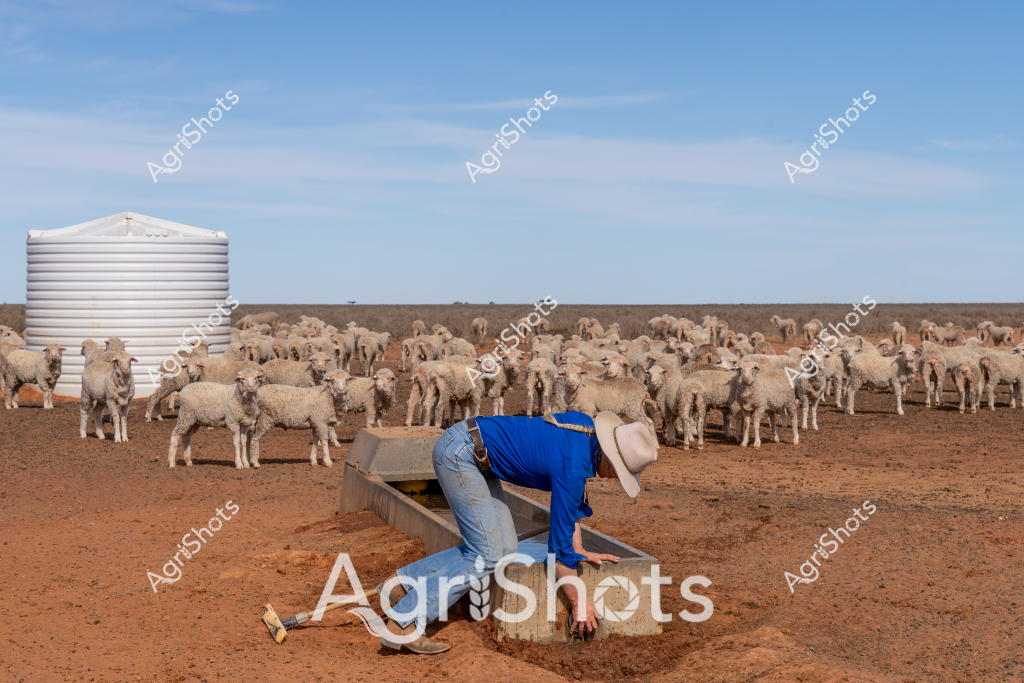
A man in a blue work shirt and wide-brimmed hat tends to a large flock of Merino sheep in a dry, arid landscape of central Australia. A large white water tank stands prominently in the background, while dozens of woolly sheep crowd the reddish-brown earth around a livestock water trough. The stockman is bent over, carefully managing the water supply for the flock, which appears to be a substantial breeding mob spread across the sparse paddock. The clear blue sky and open horizon emphasize the challenging environment of outback sheep farming, where water management is critical for livestock survival. Dusty ground and scattered vegetation highlight the harsh conditions of this rural agricultural setting, showcasing the resilience required in Australian sheep farming. The scene captures the essential daily work of a sheep station worker, demonstrating the careful husbandry needed to maintain livestock in a drought-prone landscape. The white water tank and metal trough are crucial infrastructure that enables sheep farming in these challenging environmental conditions.
 Image
Image
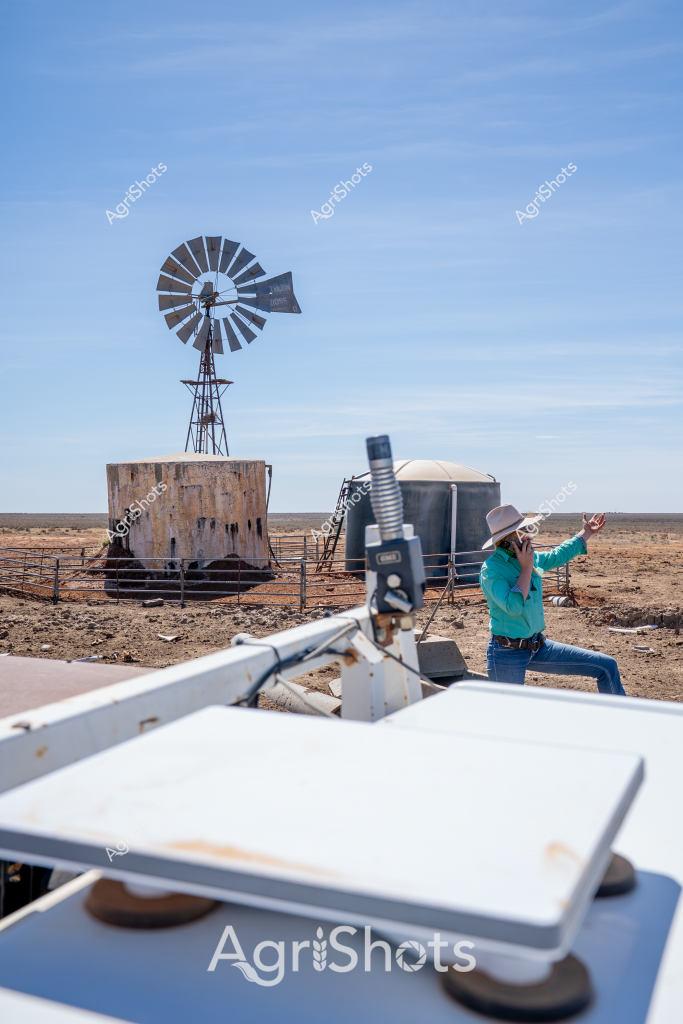
A woman in a teal shirt and wide-brimmed hat stands near a classic windmill and water tank in a stark, arid landscape. The windmill's metal blades rise against a clear blue sky, positioned next to a weathered cylindrical water tank enclosed by a metal fence. In the foreground, scientific or surveying equipment is visible, suggesting the woman is conducting environmental or agricultural research in this remote, dry terrain. The landscape appears to be a typical Australian outback scene - flat, dusty ground stretching to a distant horizon, with minimal vegetation indicating challenging drought conditions. The bright turquoise of the woman's shirt provides a vivid contrast to the muted browns and grays of the surrounding environment, highlighting human presence in this harsh but essential agricultural setting.
 Image
Image
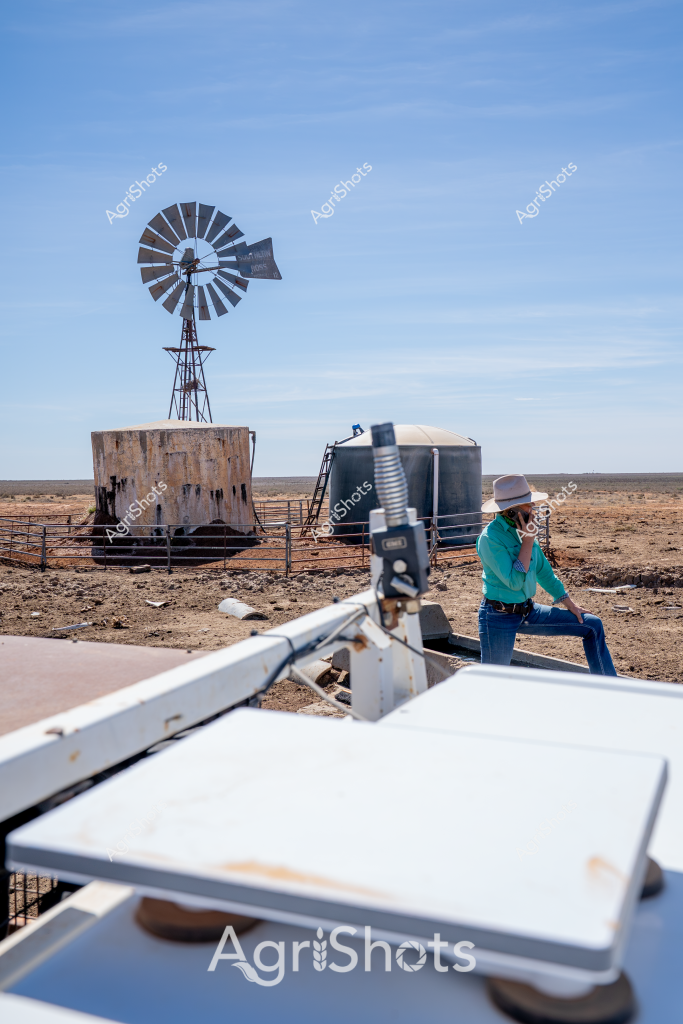
A windmill and water storage setup dominates this arid rural landscape, capturing the essence of remote Australian farming infrastructure. A person wearing a turquoise shirt and a wide-brimmed hat sits contemplatively near water tanks, surrounded by a stark, dusty terrain that stretches to a flat horizon under a clear blue sky. An old metal windmill stands prominently, its multiple blades positioned to catch even the slightest breeze, alongside a weathered concrete water storage tank enclosed by metal fencing. The scene epitomizes the resilience of agricultural operations in harsh, dry environments, where water management is critical for survival. Rusted equipment and minimal vegetation underscore the challenging conditions of this remote agricultural setting, highlighting the technological adaptations farmers use to sustain operations in Australia's unforgiving outback landscape.
 Image
Image
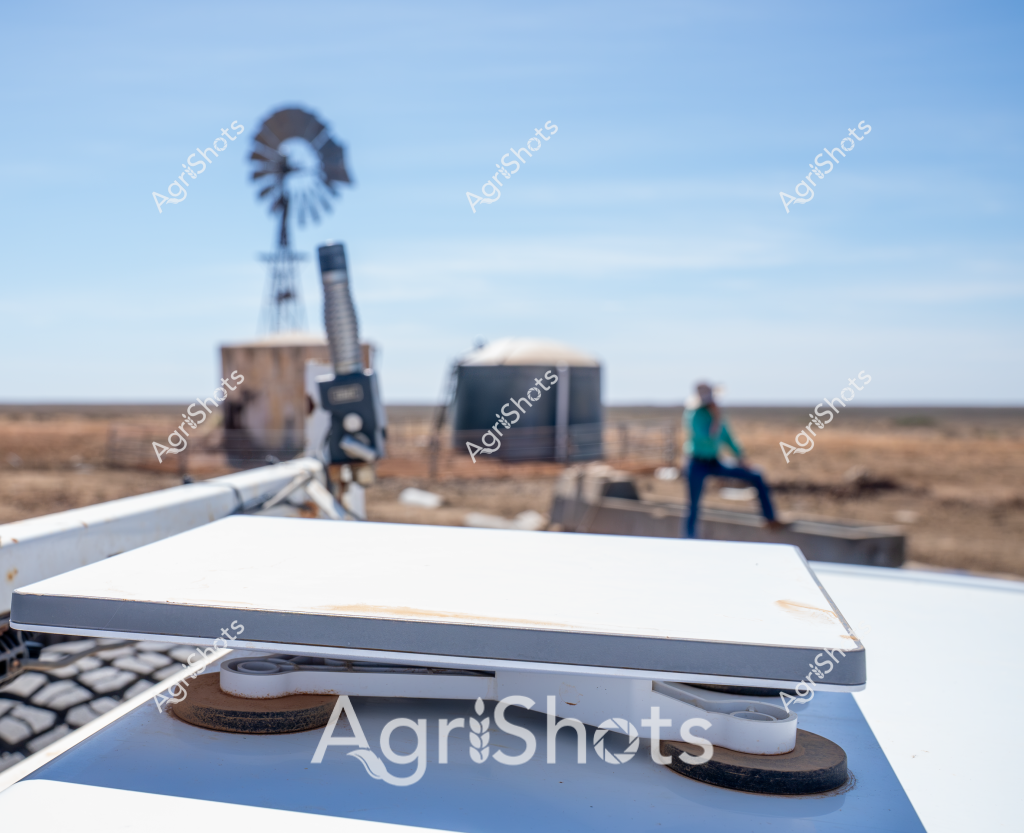
A rural scene captures an agricultural monitoring setup in a dry, expansive landscape, featuring a windmill and technical equipment in the background. In the foreground, a sophisticated white monitoring device with gray trim sits precisely positioned, its sensors and mounting points suggesting advanced data collection capabilities. A person wearing a teal-colored jacket stands near some equipment modules, indicating ongoing field research or environmental monitoring. The stark, arid terrain stretches to the horizon, with a classic Australian windmill standing tall against the clear blue sky, symbolizing traditional water management techniques alongside modern technological approaches. The muted earth tones of the landscape - browns and tans - contrast sharply with the crisp white of the monitoring equipment and the vibrant teal of the worker's clothing, creating a compelling visual narrative of contemporary agricultural science in action. The scene represents the intersection of traditional farming infrastructure and cutting-edge environmental monitoring technology, typical of agricultural research in Australia's challenging rural environments. The careful placement of equipment suggests precise data collection, potentially related to soil conditions, climate monitoring, or agricultural research.
 Image
Image
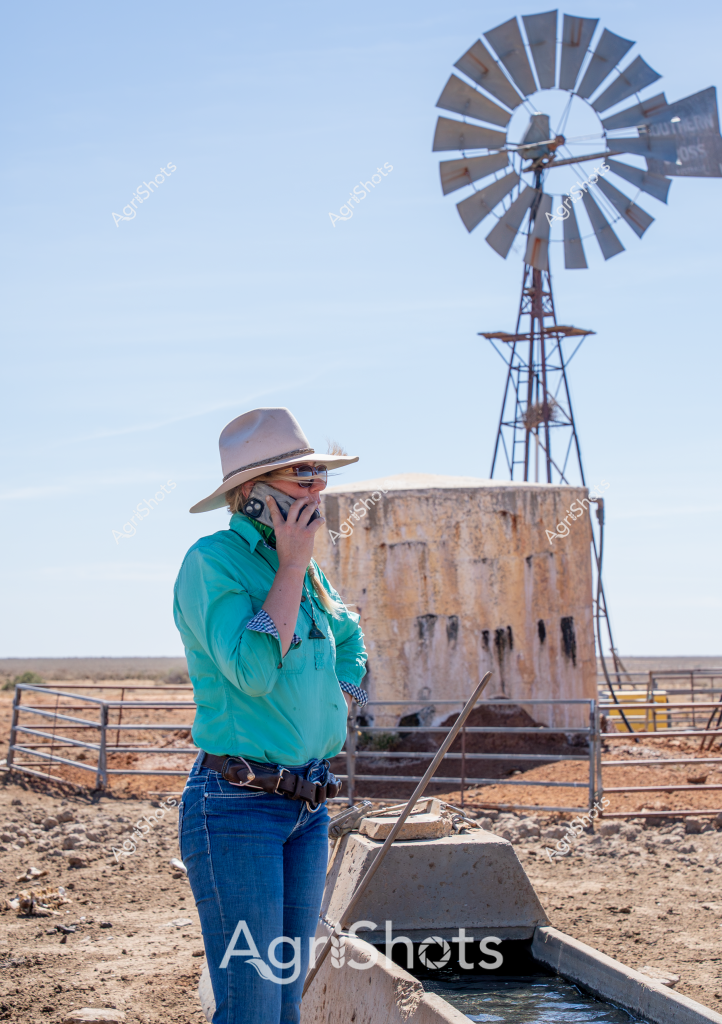
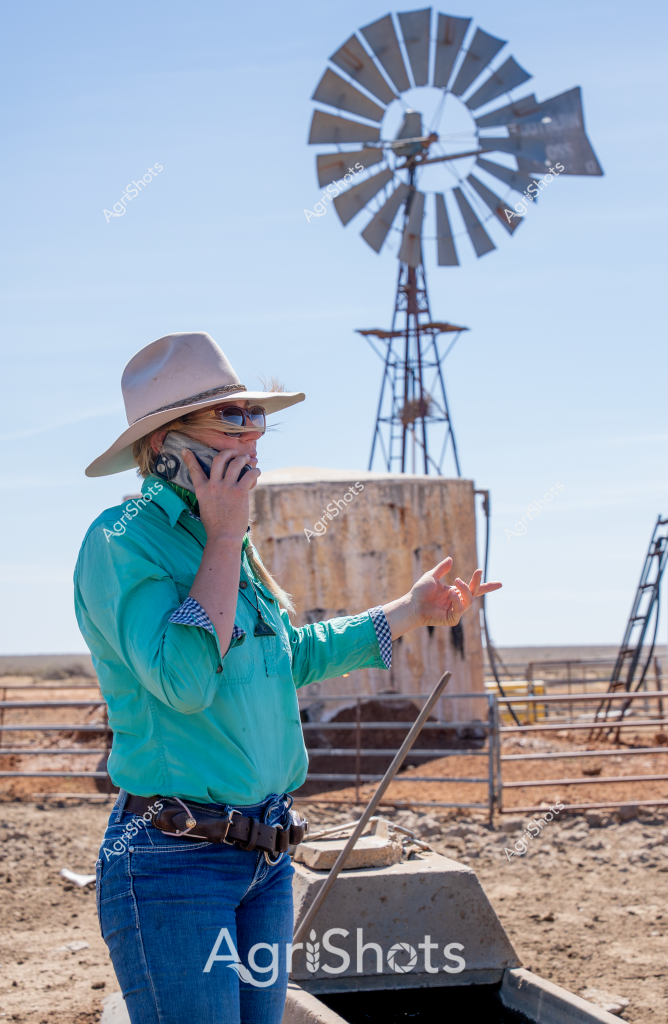
A woman farmer stands in a sun-bleached rural landscape, talking on a mobile phone beside a classic Australian windmill and water tank. Wearing a cream Akubra hat, turquoise long-sleeved shirt, and blue jeans, she appears to be managing a remote pastoral property. The metal windmill towers above a concrete water trough, with a rusted water storage tank visible in the background. The surrounding terrain is arid and rocky, typical of Australia's inland agricultural regions, with a clear blue sky suggesting a hot, dry day. Her stance and communication suggest she is coordinating farm operations or checking on livestock in this challenging outback environment. The scene captures the essence of contemporary rural Australian agriculture - a blend of traditional infrastructure like the windmill and modern communication technology, with a resilient farmer adapting to the demands of managing agricultural land in a harsh landscape.
 Image
Image
A woman wearing a broad-brimmed hat and teal work shirt stands in a dry, arid landscape beside a classic windmill and water tank. She is talking on a mobile phone while gesturing with her other hand, her stance conveying a sense of focused communication amid the stark rural setting. The windmill's metal blades stand silhouetted against a clear blue sky, while a concrete water tank and sparse fencing suggest this is a remote agricultural property. Her outfit - a crisp turquoise shirt, blue jeans, and a neutral-toned hat - reflects typical Australian rural workwear, highlighting the resilience and practical nature of farmers working in challenging outback conditions. The scene captures the essence of modern agricultural communication, where technology meets traditional farming landscapes.
 Image
Image
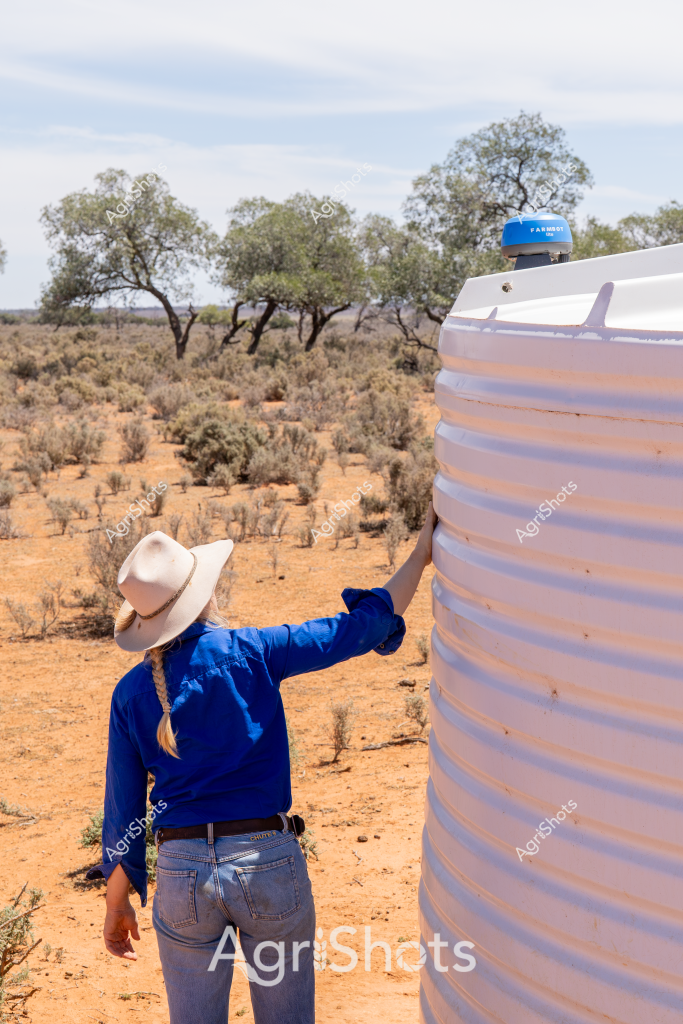
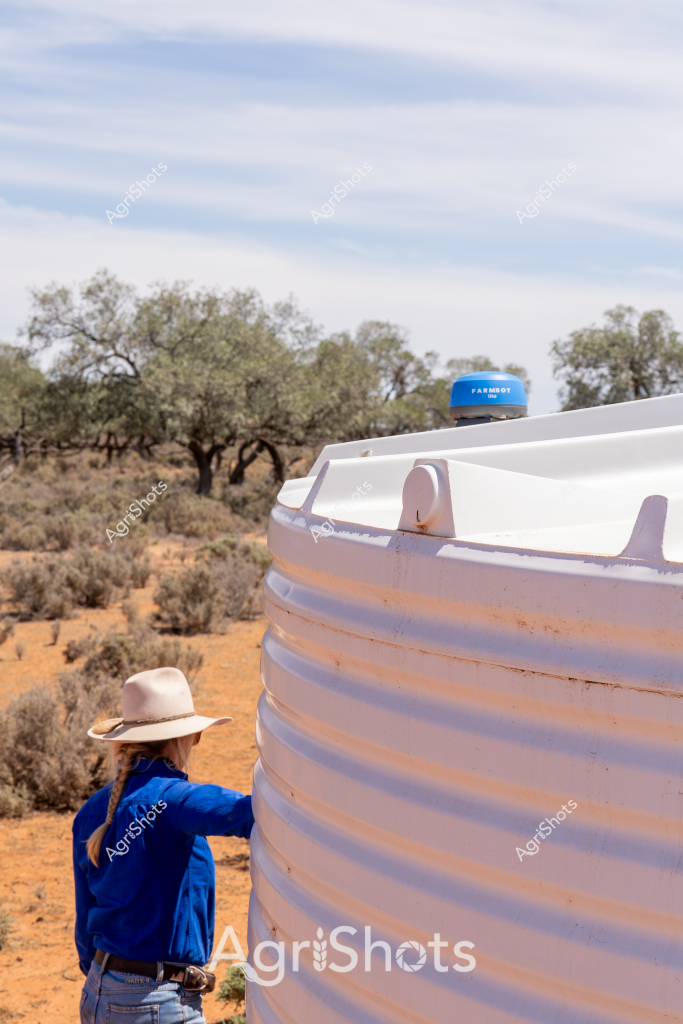
A woman wearing a wide-brimmed sun hat and bright blue long-sleeved shirt stands beside a large white water storage tank in an arid Australian landscape. The background reveals sparse, weathered trees and low scrubby bushes characteristic of an inland pastoral region, with reddish-brown soil and muted grey-green vegetation stretching to the horizon. She appears to be checking or maintaining the water tank, which has a blue sensor or monitoring device mounted on top, critical infrastructure for managing water resources in a dry environment. The scene captures the resilience and practical necessities of rural Australian agricultural life, where water management is essential for survival. The stark landscape and solitary figure highlight the challenging conditions faced by farmers and agricultural workers in remote areas, where each water resource is precious and carefully monitored.
 Image
Image
A woman in a blue jacket and wide-brimmed sun hat stands beside a large white water tank in an arid Australian landscape. Sparse eucalyptus trees and low scrubby bushes dot the rusty red earth in the background, typical of a dry inland pastoral setting. The water tank, with a blue top, appears to be a critical water storage resource in this harsh environment. The scene captures the resilience of rural workers managing water infrastructure in a challenging, drought-prone region. The woman's posture suggests careful inspection or maintenance of the water tank, highlighting the importance of water management in Australian agricultural landscapes.
 Image
Image
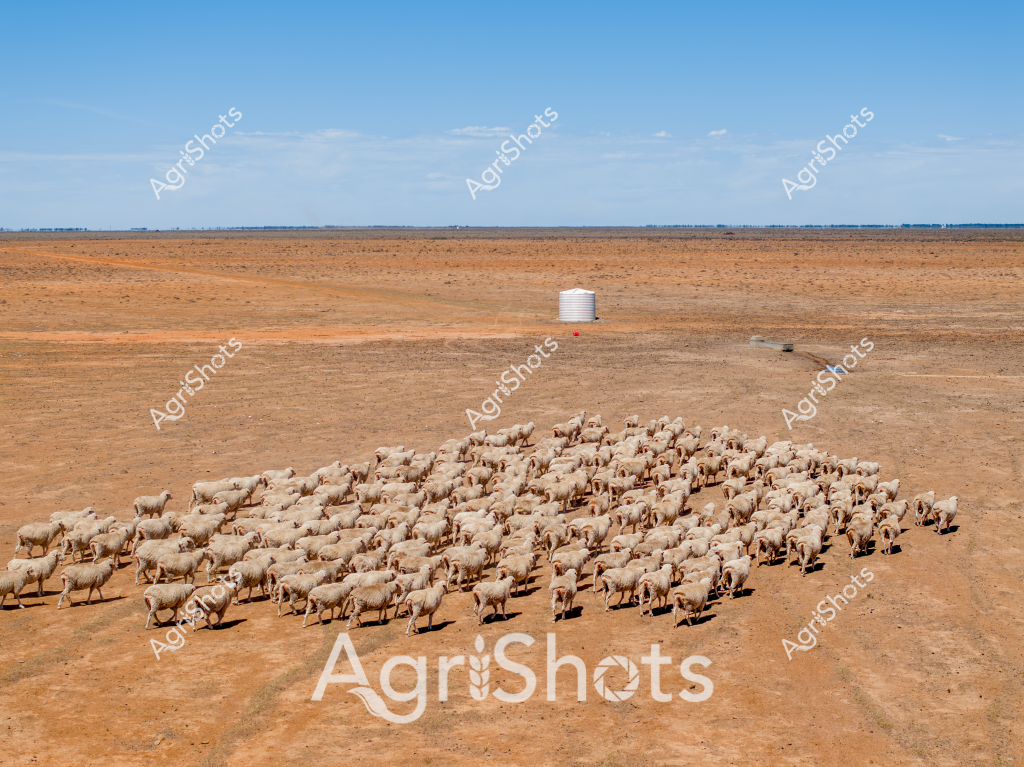
A large flock of Merino sheep huddles together in a stark, arid landscape under a clear blue sky. The dry, reddish-brown earth stretches to the horizon, punctuated by a single white water tank in the distance. The sheep appear tightly grouped, their woolly bodies creating a dense mass against the barren backdrop, highlighting the challenging drought conditions typical of Australian inland regions. A faint track leads toward the water tank, suggesting the animals are likely seeking hydration in this harsh environment. The image powerfully captures the resilience of Australian livestock farming, where animals must survive in extremely dry and unforgiving terrain. The uniform tan-colored landscape and the clustered sheep create a compelling visual narrative of survival and agricultural adaptation in one of the world's most challenging farming environments.
 Image
Image
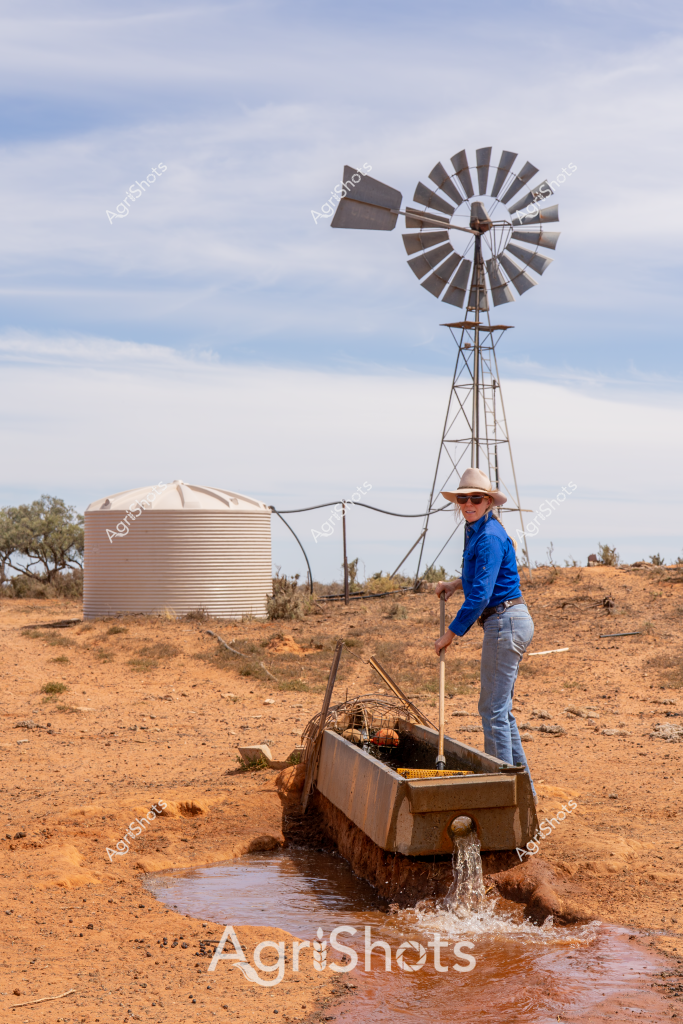
A woman in a blue long-sleeved shirt and wide-brimmed hat stands beside a windmill and water tank in a stark, arid Australian outback landscape. She is positioned near a rustic water trough where water is flowing, indicating a critical rural water infrastructure setup typical of remote pastoral properties. The scene captures the challenging environment of inland Australia, with reddish-brown soil, sparse vegetation, and a pale blue sky suggesting dry, hot conditions. The traditional windmill towers overhead, its metal blades positioned to catch wind and pump groundwater, while the corrugated steel water tank provides essential water storage. This image exemplifies the resilience and ingenuity of Australian farmers in managing water resources in harsh, drought-prone regions, showcasing the essential infrastructure that supports agricultural activities in remote areas.
 Image
Image
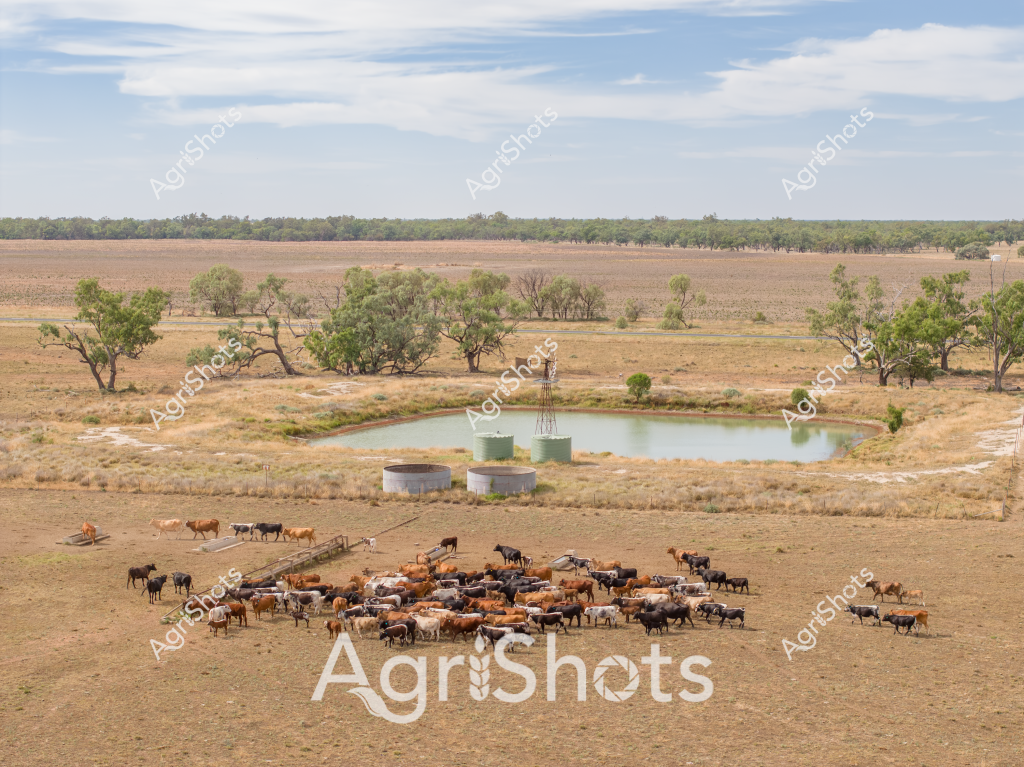
A classic Australian pastoral scene captures a small herd of mixed-breed cattle clustered around a water dam in a dry, expansive landscape. The circular water dam, accompanied by windmill and water storage tanks, sits in the center of a parched paddock with scattered eucalyptus trees and sparse grassland stretching toward distant tree lines. Multiple cattle breeds are represented - including black, brown, and white animals - huddled together near the water source in what appears to be a challenging dry season environment. The landscape suggests an inland Queensland or New South Wales pastoral station, with its characteristic wide-open terrain and minimal vegetation indicative of prolonged drought conditions. A windmill stands sentinel beside the water dam, a quintessential feature of Australian rural infrastructure, providing critical water access for livestock in arid agricultural regions. The scene powerfully illustrates the resilience of Australian cattle farming, where strategic water management is essential for survival during harsh environmental conditions.
 Image
Image
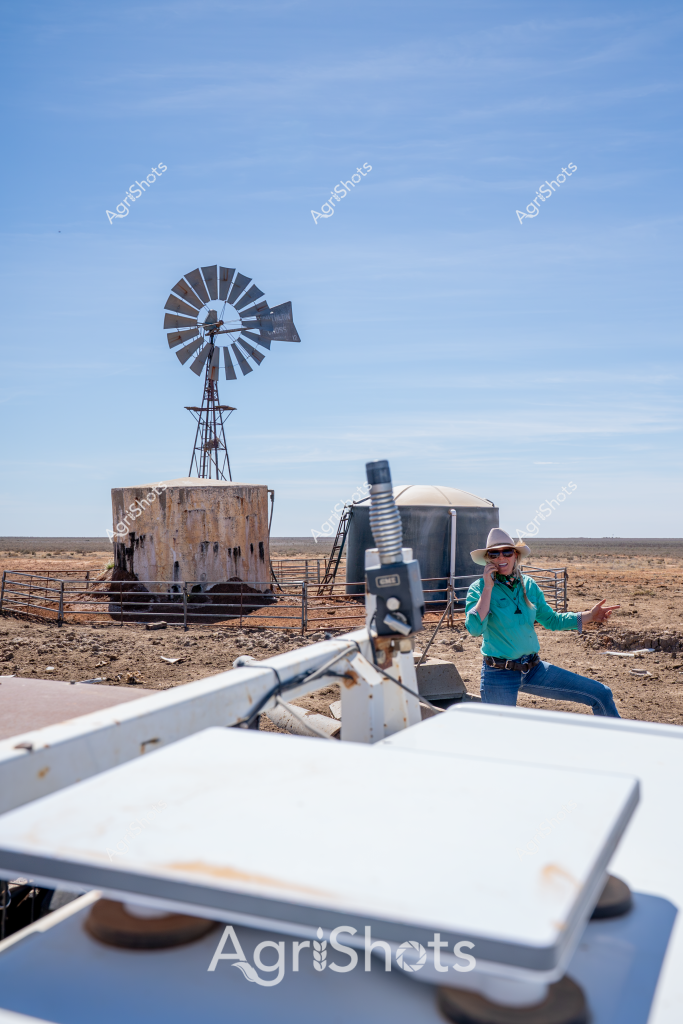
A woman in a turquoise shirt and wide-brimmed hat stands amid a stark, arid landscape, conducting agricultural field research or survey work near a classic windmill and water storage tank. The windmill, a quintessential feature of Australian rural infrastructure, rises against a clear blue sky, its metal blades poised to catch the slightest breeze. A white instrument or measurement device is mounted in the foreground, suggesting scientific data collection or environmental monitoring. The surrounding terrain is a palette of browns and tans - dry, compacted earth characteristic of drought-affected or semi-arid regions of Australia. This scene captures the resilience of agricultural workers and the essential infrastructure that supports farming in challenging environmental conditions, where water management and precise environmental measurements are critical to survival and productivity.
 Image
Image
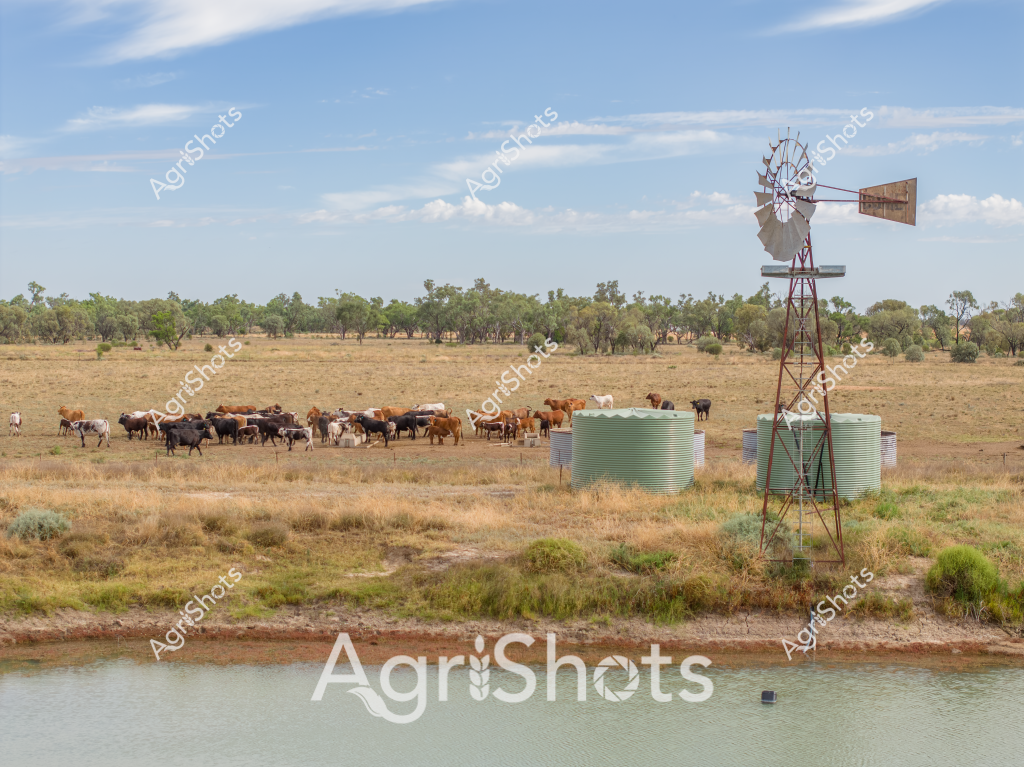
A classic Australian rural landscape captures a herd of mixed-breed cattle gathered near water storage tanks and a traditional windmill. Approximately 30-40 cattle of various colors - including brown, white, and black - cluster together in a dry, golden-grassed paddock with scattered eucalyptus trees in the background. A classic green corrugated water tank and tall metal windmill stand sentinel near a small dam or water hole in the foreground, providing essential water infrastructure for the livestock. The scene epitomizes a typical pastoral setting in rural Australia, likely in an inland region such as western New South Wales or Queensland. The landscape appears dry and somewhat sparse, with low grasses and scattered vegetation suggesting potential drought conditions. A bright blue sky with wispy clouds creates a sense of expansive openness characteristic of Australian agricultural regions. The windmill, a quintessential feature of outback farming, represents traditional water management techniques still used in many rural properties. The cattle seem to be resting and grazing, demonstrating the resilience of livestock in challenging environmental conditions. This image captures the essence of Australian cattle farming - adaptability, resourcefulness, and the stark beauty of rural landscapes.
 Image
Image
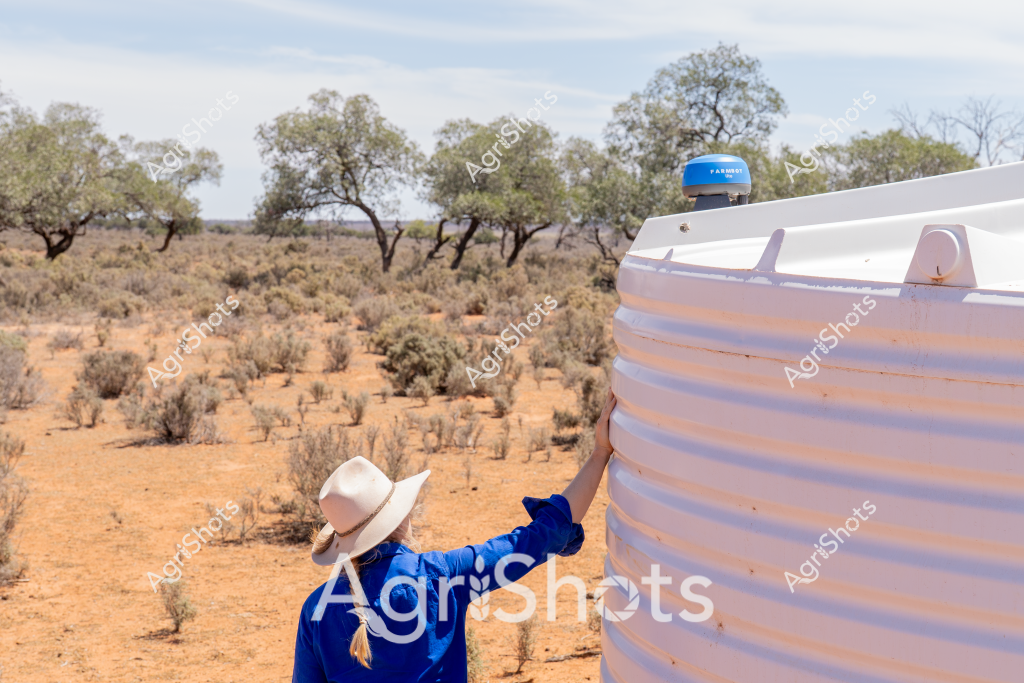
A woman wearing a blue shirt and a wide-brimmed sun hat stands beside a large white water tank in a dry, arid Australian landscape. Sparse trees and low scrubby bushes stretch across the dusty, reddish-brown terrain, typical of an inland pastoral region. The water tank appears to be a critical resource in this harsh environment, with a blue sensor or monitoring device mounted on its top. The scene captures the challenging conditions of rural Australian agriculture, where water storage is essential for survival in drought-prone areas. The woman's posture suggests she is checking or maintaining the water infrastructure, highlighting the ongoing management required in such remote and challenging landscapes.
 Image
Image
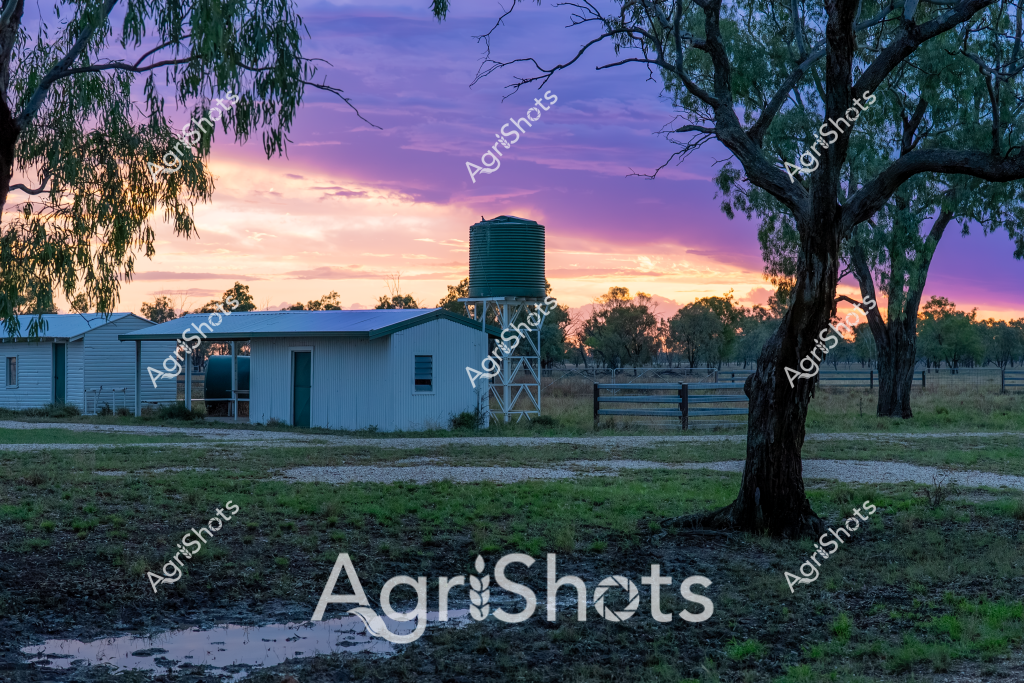
A tranquil rural sunset illuminates a quintessential Australian farm setting, with a green water tank standing prominently beside a weathered corrugated iron shed. Eucalyptus trees frame the landscape, their silhouettes etched against a stunning purple and orange sky that signals the day's end. The grassy paddock in the foreground shows signs of recent rainfall, with small puddles reflecting the dramatic twilight colors. A wooden fence line stretches into the distance, defining the property's boundary and adding depth to the pastoral scene. The water tank, mounted on a sturdy metal frame, represents critical infrastructure for rural water management, highlighting the importance of water resources in this agricultural environment. The soft evening light creates a serene atmosphere, capturing the quiet beauty of an Australian rural landscape at dusk.
 Image
Image
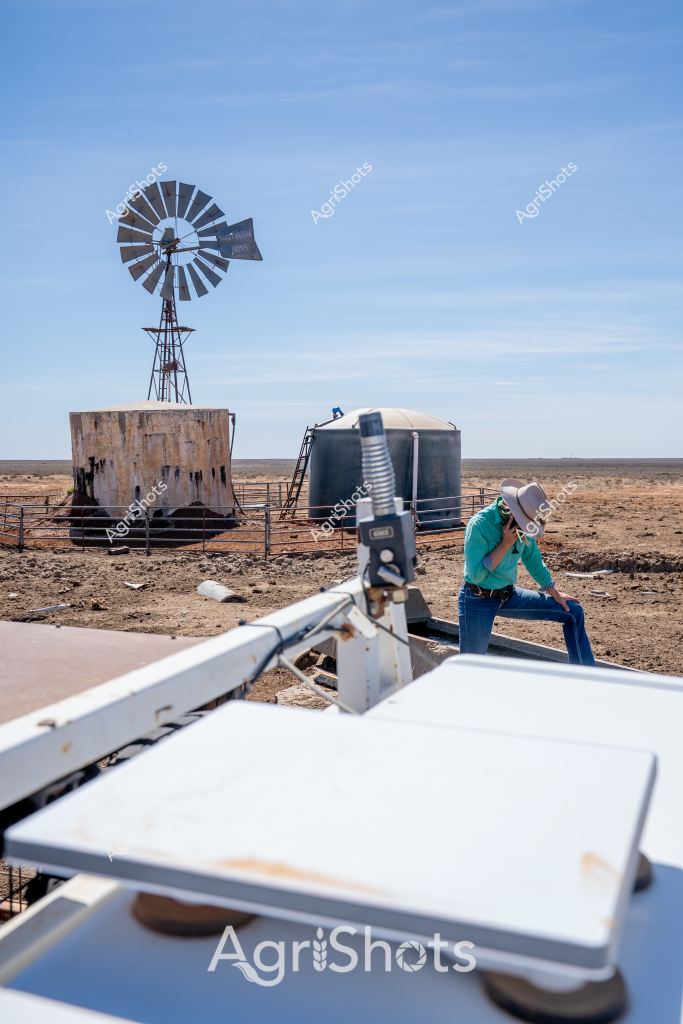
A lone figure in a turquoise shirt and wide-brimmed hat sits contemplatively beside a classic Australian windmill in an expansive, arid landscape. The rusted metal windmill stands tall next to weathered water tanks, surrounded by a barren, rocky terrain that epitomizes the challenging conditions of outback farming. A white equipment surface dominates the foreground, suggesting this is a working agricultural site where water infrastructure is critical for survival in a dry environment. The clear blue sky stretches endlessly, emphasizing the isolation and resilience required in remote agricultural settings. Water storage tanks and the iconic windmill represent the essential infrastructure that enables farming and livestock management in Australia's harsh, drought-prone regions. The scene captures the solitude and quiet determination of rural workers who maintain agricultural operations in extremely challenging environments.
 Image
Image
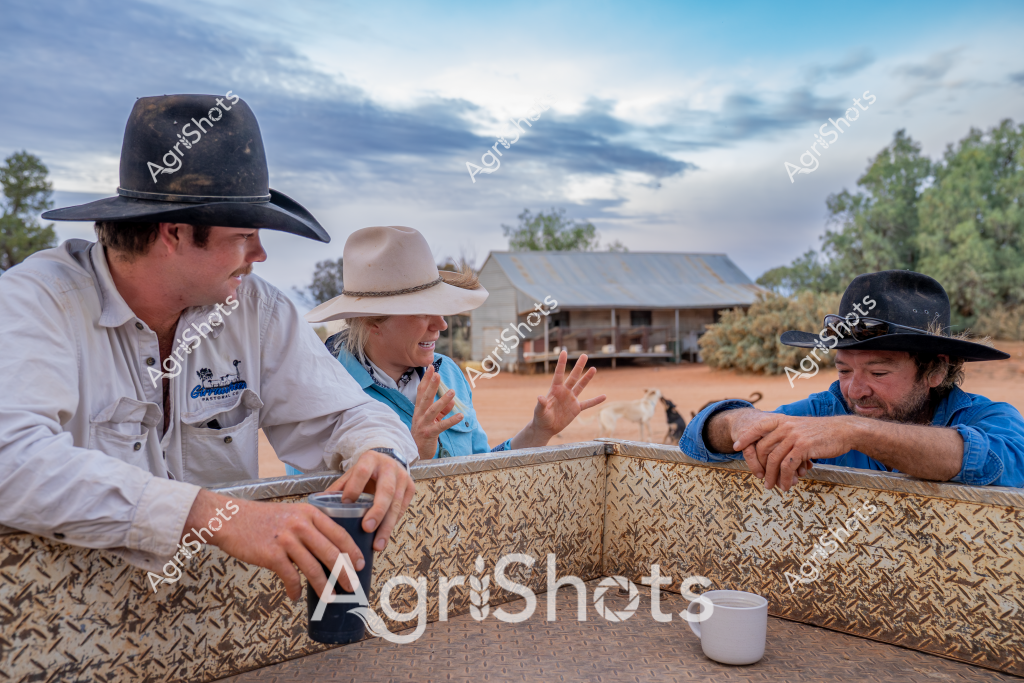
Three men in wide-brimmed Australian bush hats are engaged in conversation around a textured metal surface, with a rustic rural station building in the background. A white mug sits on the surface, suggesting an informal workplace discussion. The men are dressed in light-colored work shirts - white and blue - and appear to be agricultural workers or station hands, likely discussing daily operations or work plans. The setting looks like a remote Australian cattle station, with reddish dirt ground, scattered trees, and a corrugated iron shed, creating a quintessential outback rural atmosphere. The cloudy sky suggests early morning or late afternoon, with soft light casting subtle shadows across the landscape. Their body language and positioning indicate a collaborative, relaxed workplace interaction typical of Australian rural communities.
 Image
Image
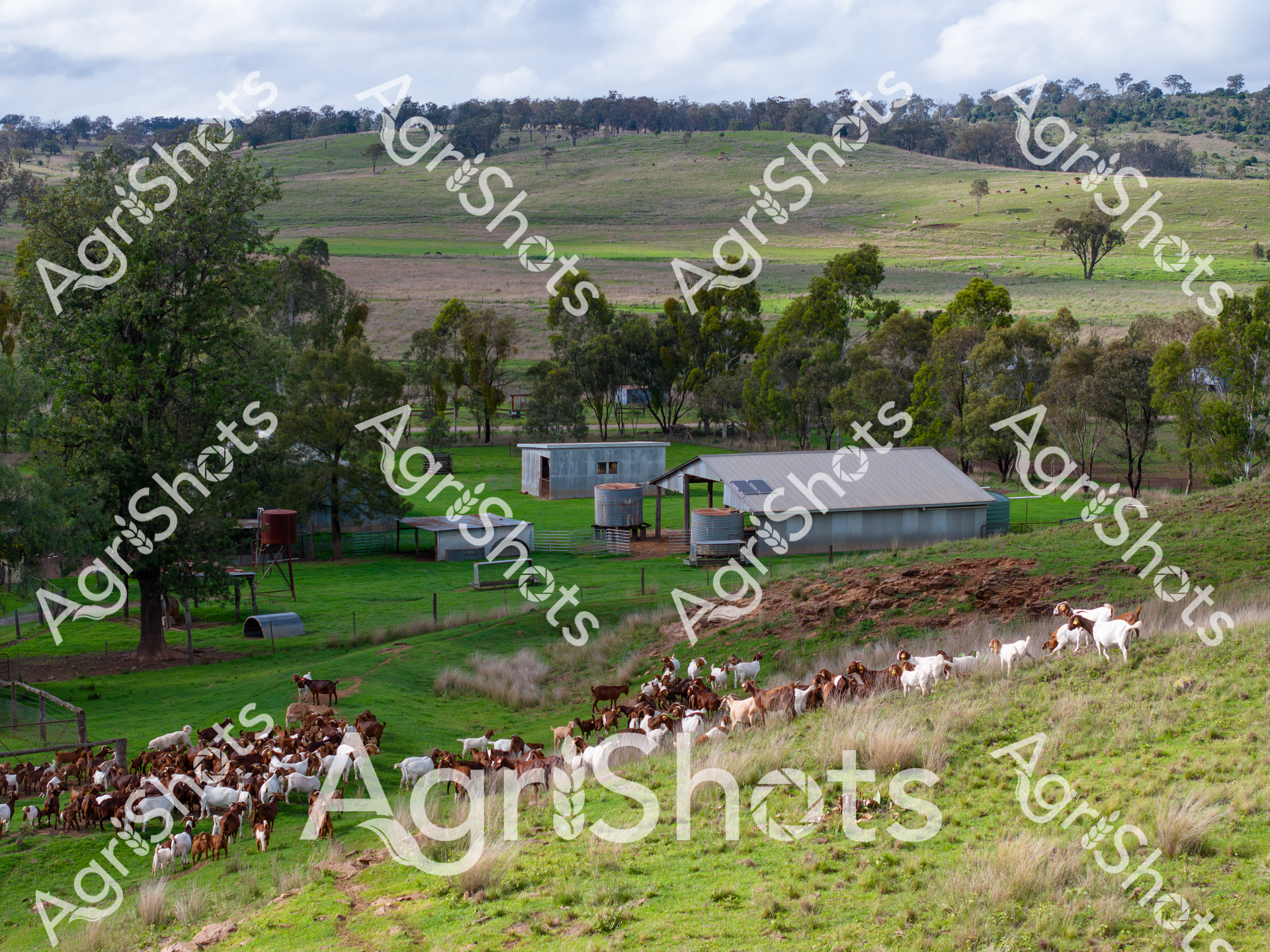
Rural Queensland Bounty: A Darling Downs Goat Farming Landscape Lush emerald pastures cascade across the undulating Darling Downs landscape, where a thriving herd of Boer goats grazes contentedly near weathered farm infrastructure. Crisp summer sunlight illuminates a collection of galvanized steel sheds and water tanks, their muted greys contrasting against the vibrant green grasslands. The mixed herd - predominantly white and rich chocolate-brown Boer goats - clusters near a small farm complex, displaying the genetic diversity of a carefully managed agricultural operation. Rolling hills in the background showcase classic Queensland rural terrain, dotted with scattered eucalyptus trees and offering a sense of expansive pastoral tranquility. Silver-grey corrugated buildings suggest a functional, no-nonsense approach to farming, while the verdant paddocks hint at excellent seasonal conditions and sustainable land management. This image captures the essence of Australian small livestock farming: resilient, practical, and harmoniously integrated with the natural environment.
 Image
Image
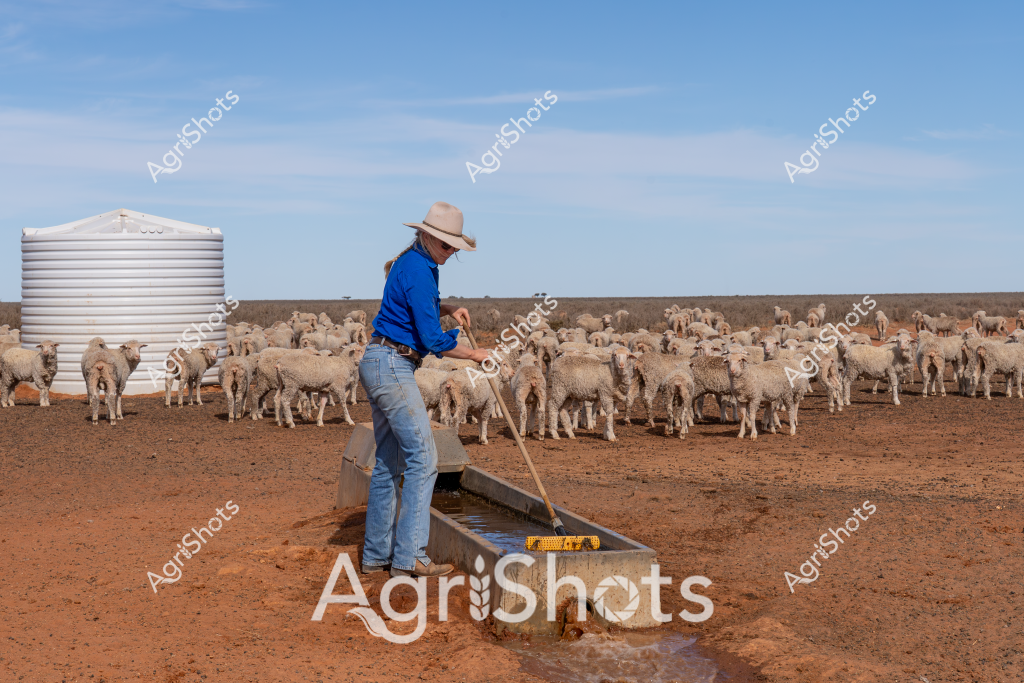
A woman in a blue long-sleeved shirt and wide-brimmed hat tends to a large flock of merino sheep in an arid Australian landscape. Standing beside a water trough near a large white water tank, she is surrounded by dozens of woolly sheep on a dry, reddish-brown earth paddock. The expansive background reveals a flat, sparse horizon typical of inland Australian pastoral regions, with a clear blue sky stretching overhead. Her stance suggests careful monitoring and management of the livestock, using the water trough to ensure the sheep remain hydrated in the harsh, dry environment. The white water tank and carefully positioned trough highlight the critical infrastructure required to support livestock in challenging agricultural conditions, demonstrating the resilience and strategic planning of Australian sheep farmers. The scene captures the essence of outback sheep farming - a solitary worker maintaining a flock in a demanding landscape, where water management and animal care are paramount to survival. The merino sheep, with their distinctive thick woolly coats, cluster around the water source, reflecting the symbiotic relationship between the farmer and the livestock in this unforgiving terrain.
 Image
Image
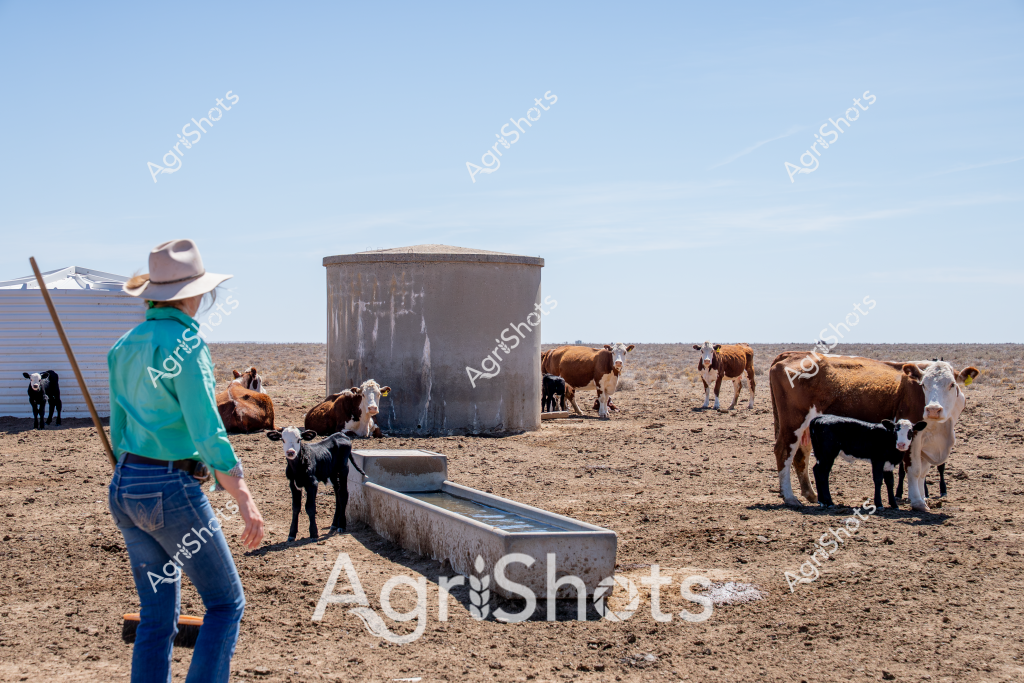
A man stockman in a turquoise shirt and wide-brimmed hat surveys a dry, arid cattle paddock with several brown and white beef cattle. A large grey water storage tank and concrete water trough stand in the center of the barren landscape, providing essential hydration for the small herd. Multiple cows and calves, including some black and some brown and white-marked animals, are scattered around the water infrastructure, indicating a typical rural Australian cattle station environment. The ground is dusty and brown, suggesting drought or dry seasonal conditions typical of Australia's interior regions. The stockman's stance - with a long stick or staff - suggests he is monitoring the livestock and checking their access to water in this harsh, open landscape.
 Image
Image
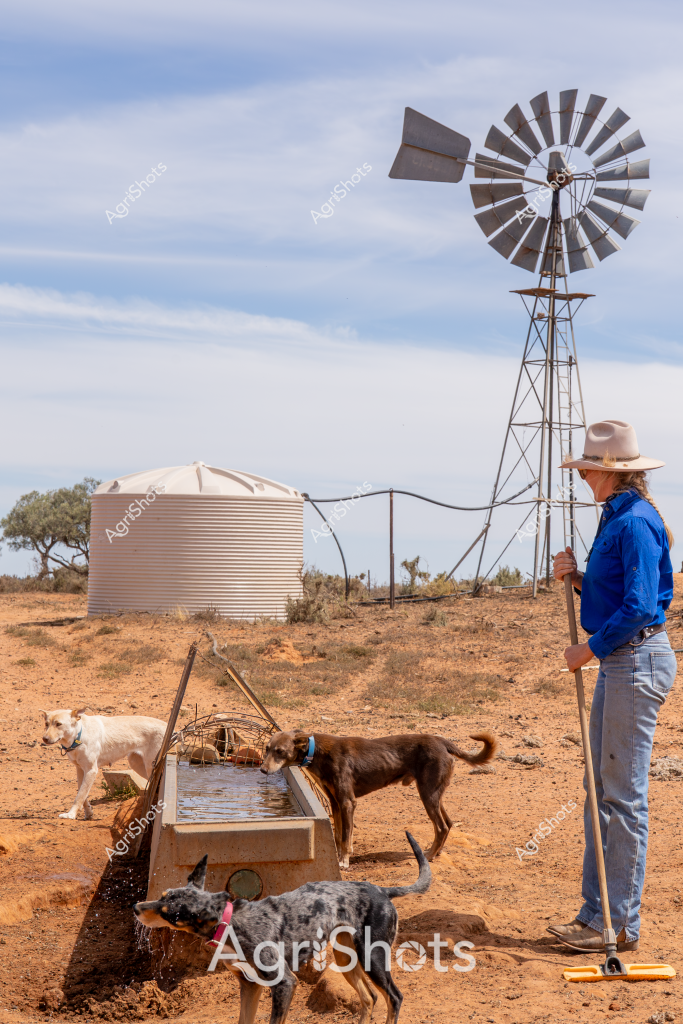
A woman farmer stands beside a windmill on an arid rural property, surveying the dry landscape with three working dogs around a water trough. The scene captures a typical Australian outback setting, with reddish-brown earth, a large corrugated water tank, and a classic metal windmill tower against a pale blue sky. The woman wears a blue long-sleeved shirt, light-colored jeans, and a broad-brimmed hat, embodying the resilient spirit of rural Australian agriculture. Three dogs - a white dog, a brown dog, and a blue merle dog - are gathered around a concrete water trough, drinking or waiting attentively. The windmill, a crucial piece of infrastructure in remote agricultural areas, stands ready to pump groundwater, highlighting the importance of water management in harsh, dry environments. The sparse vegetation and rocky ground underscore the challenging conditions faced by farmers in this region, with sparse trees and scrub vegetation scattered across the background.