Results for “Water Supply”
 Image
Image
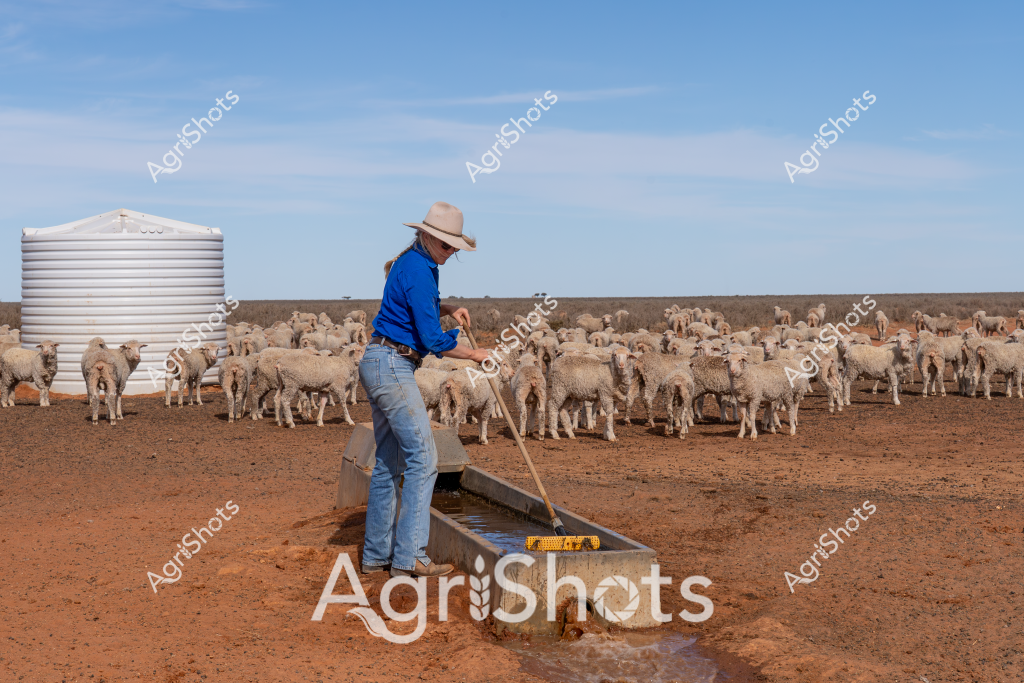
A woman in a blue long-sleeved shirt and wide-brimmed hat tends to a large flock of merino sheep in an arid Australian landscape. Standing beside a water trough near a large white water tank, she is surrounded by dozens of woolly sheep on a dry, reddish-brown earth paddock. The expansive background reveals a flat, sparse horizon typical of inland Australian pastoral regions, with a clear blue sky stretching overhead. Her stance suggests careful monitoring and management of the livestock, using the water trough to ensure the sheep remain hydrated in the harsh, dry environment. The white water tank and carefully positioned trough highlight the critical infrastructure required to support livestock in challenging agricultural conditions, demonstrating the resilience and strategic planning of Australian sheep farmers. The scene captures the essence of outback sheep farming - a solitary worker maintaining a flock in a demanding landscape, where water management and animal care are paramount to survival. The merino sheep, with their distinctive thick woolly coats, cluster around the water source, reflecting the symbiotic relationship between the farmer and the livestock in this unforgiving terrain.
 Image
Image
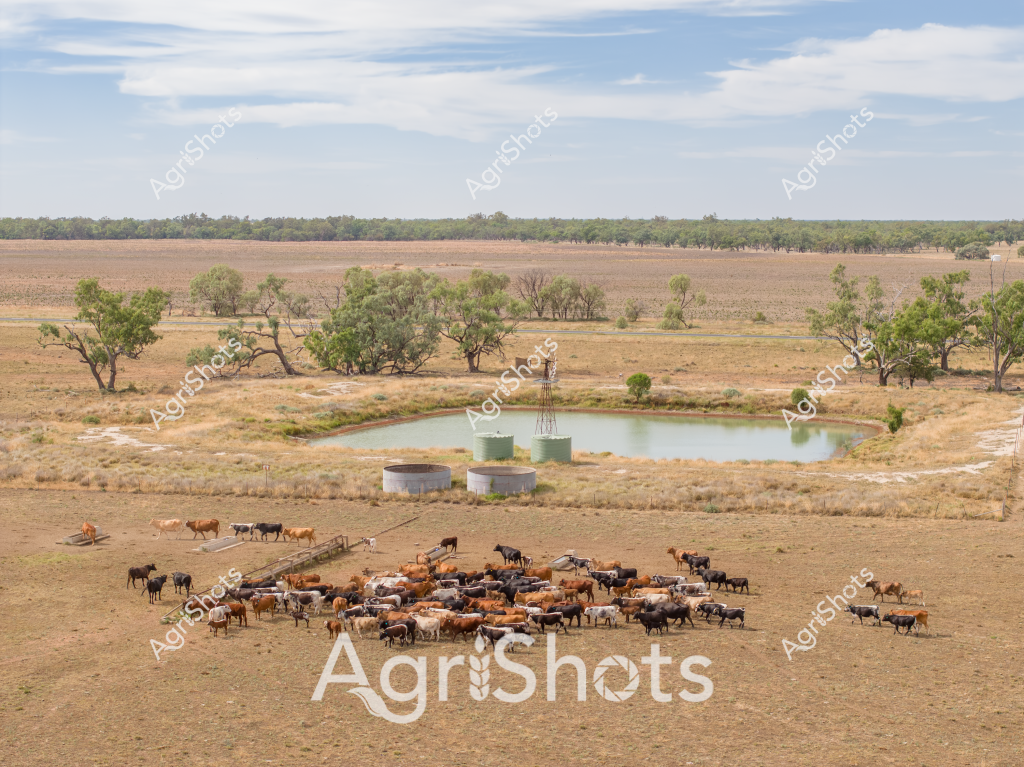
A classic Australian pastoral scene captures a small herd of mixed-breed cattle clustered around a water dam in a dry, expansive landscape. The circular water dam, accompanied by windmill and water storage tanks, sits in the center of a parched paddock with scattered eucalyptus trees and sparse grassland stretching toward distant tree lines. Multiple cattle breeds are represented - including black, brown, and white animals - huddled together near the water source in what appears to be a challenging dry season environment. The landscape suggests an inland Queensland or New South Wales pastoral station, with its characteristic wide-open terrain and minimal vegetation indicative of prolonged drought conditions. A windmill stands sentinel beside the water dam, a quintessential feature of Australian rural infrastructure, providing critical water access for livestock in arid agricultural regions. The scene powerfully illustrates the resilience of Australian cattle farming, where strategic water management is essential for survival during harsh environmental conditions.
 Image
Image
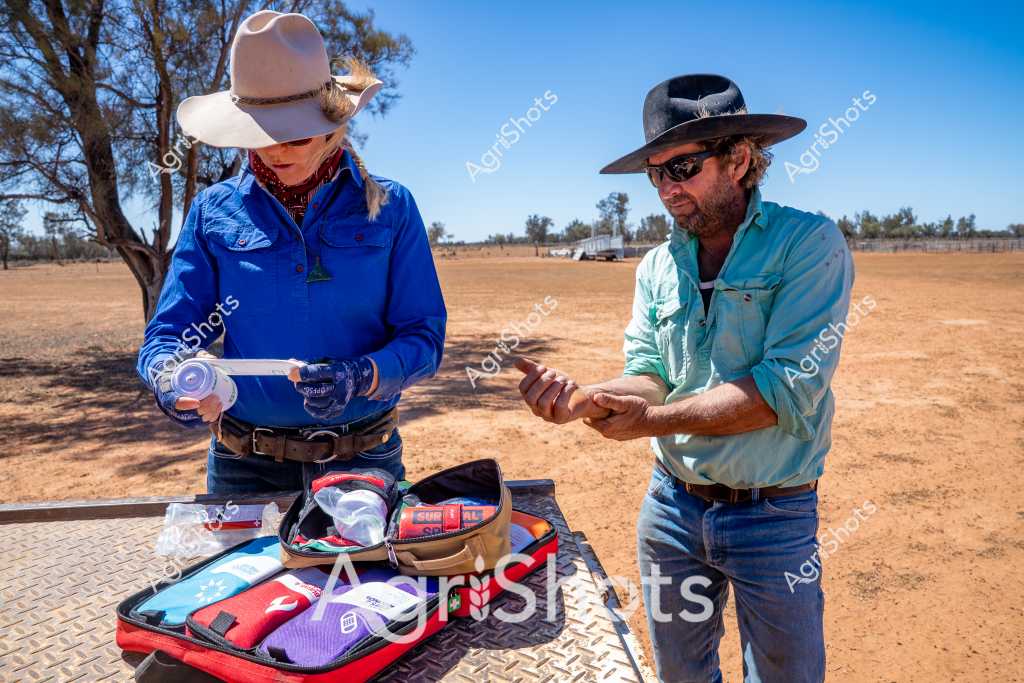
A woman in a wide-brimmed hat and blue long-sleeved shirt and a man in a turquoise shirt and wide-brimmed hat stand beside an open first aid kit on a dusty, sun-baked rural landscape. They appear to be checking medical supplies or preparing emergency equipment, with the arid Australian outback stretching behind them - sparse trees and dry ground indicating a challenging environmental setting. The red first aid kit is open, revealing various medical items and supplies, suggesting they are likely agricultural workers or rural health professionals preparing for potential medical needs in a remote location. The bright blue sky and harsh, open terrain speak to the rugged conditions of Australian rural work environments. Their protective clothing - wide-brimmed hats, long-sleeved shirts, and sturdy work attire - reflects practical preparation for working in intense sunlight and challenging outdoor conditions.
 Image
Image
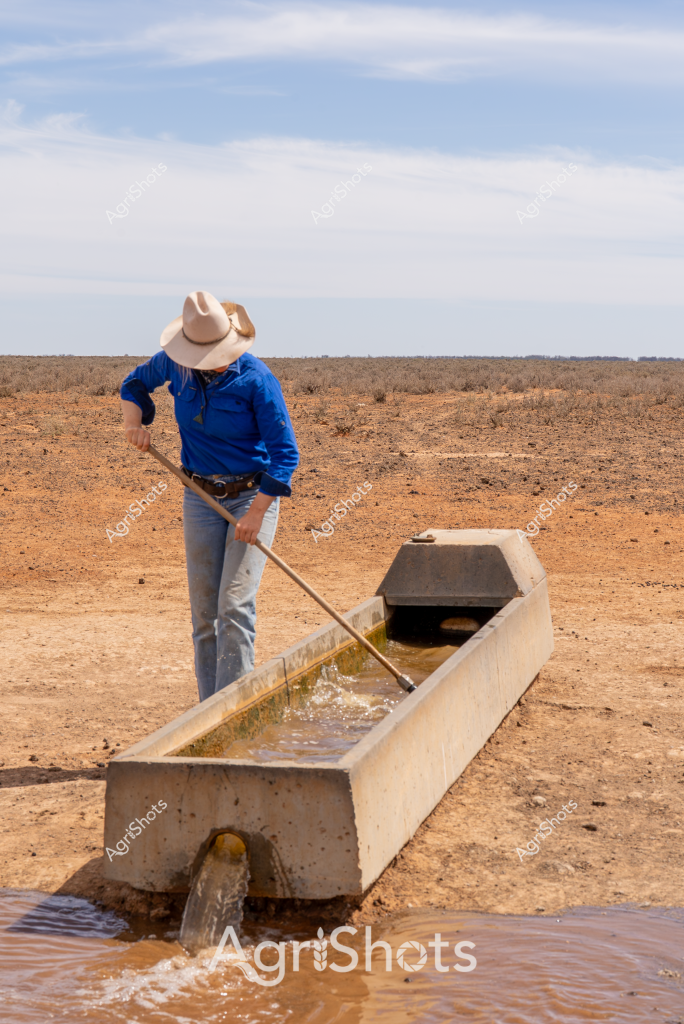
A woman in a blue long-sleeved shirt and wide-brimmed hat stands beside a concrete water trough in a parched, rust-colored landscape. She is carefully managing water flow, using a pole or implement to adjust the water running through the concrete channel. The surrounding terrain is a dry, barren expanse of reddish-brown earth with sparse vegetation, typical of an arid Australian agricultural region experiencing drought conditions. The concrete water infrastructure appears critical for livestock survival in this harsh environment, with water trickling from the trough into a pooling area below. The expansive, empty horizon and cloudless sky emphasize the stark, challenging landscape that farmers and graziers must navigate in rural Australia.
 Image
Image
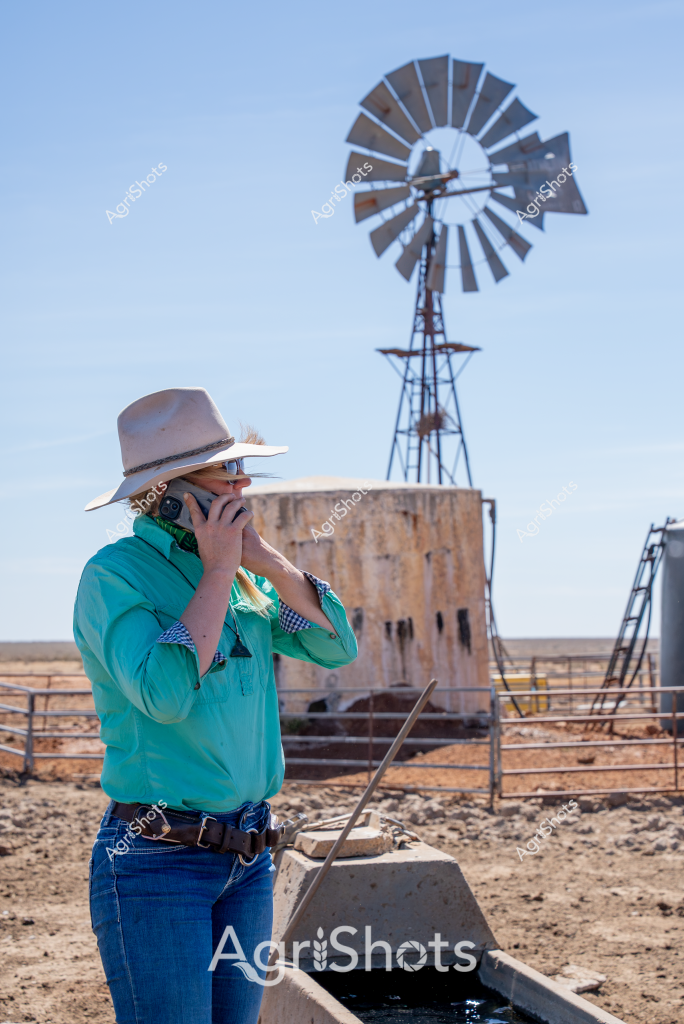
A woman in a teal work shirt and wide-brimmed hat stands amid a dry, arid rural landscape, talking on a mobile phone near a classic Australian windmill and water tank. The rural setting captures the essence of remote station life, with a metal windmill towering against a clear blue sky and a concrete water trough in the foreground. Her outfit - a bright turquoise long-sleeved shirt, blue jeans, and a neutral-toned rural work hat - speaks to practical station wear for harsh outback conditions. The windmill, a quintessential piece of Australian agricultural infrastructure, stands tall on a metal tower, its multiple metal blades designed to pump groundwater in this seemingly dry, rocky terrain. The landscape suggests a remote farming or cattle station location, likely in Western Australia, Northern Territory, or Queensland, where water infrastructure is critical for livestock and agricultural survival.
 Image
Image
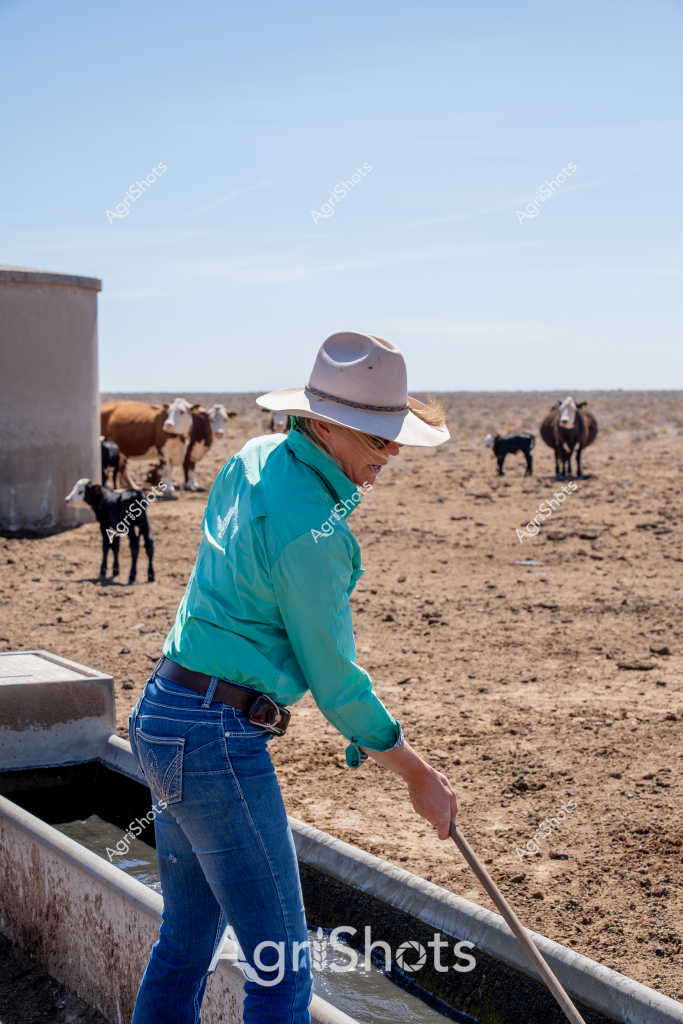
A woman livestock manager wearing a white wide-brimmed hat and bright turquoise long-sleeved shirt stands in a dry, arid landscape, carefully tending to the small herd of cattle and goats. The barren paddock surrounds a white water storage tank, with sparse, dusty ground stretching to the horizon. She leans over a concrete water trough, using a long pole to manage the water supply for her animals, demonstrating the challenging conditions of rural agricultural work. Several cattle and black goats are scattered around the tank, highlighting the sparse grazing conditions typical of drought-affected regions. Her blue jeans and cowboy hat suggest practical, hardworking attire designed for the harsh outdoor environment, while her careful attention to the livestock speaks to the resilience of Australian farmers managing stock in difficult conditions. The scene captures the essence of rural agricultural life - a careful balance of resource management, animal husbandry, and survival in an unforgiving landscape. The clear blue sky and open terrain emphasize the isolation and challenge of maintaining a livestock operation in what appears to be a particularly dry and demanding environment.
 Image
Image
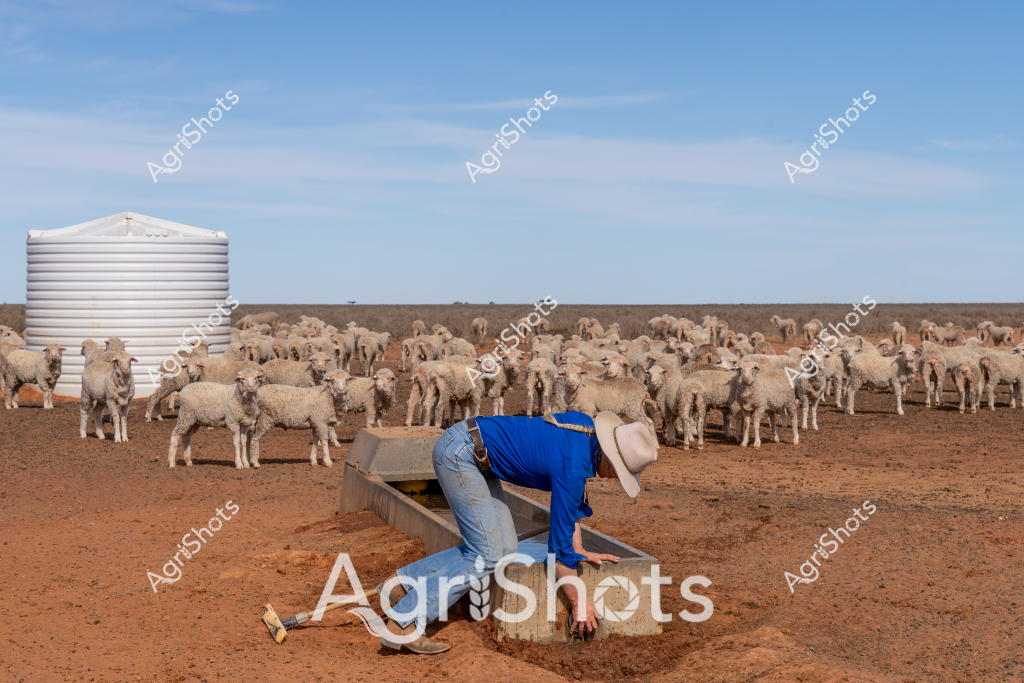
A man in a blue work shirt and wide-brimmed hat tends to a large flock of Merino sheep in a dry, arid landscape of central Australia. A large white water tank stands prominently in the background, while dozens of woolly sheep crowd the reddish-brown earth around a livestock water trough. The stockman is bent over, carefully managing the water supply for the flock, which appears to be a substantial breeding mob spread across the sparse paddock. The clear blue sky and open horizon emphasize the challenging environment of outback sheep farming, where water management is critical for livestock survival. Dusty ground and scattered vegetation highlight the harsh conditions of this rural agricultural setting, showcasing the resilience required in Australian sheep farming. The scene captures the essential daily work of a sheep station worker, demonstrating the careful husbandry needed to maintain livestock in a drought-prone landscape. The white water tank and metal trough are crucial infrastructure that enables sheep farming in these challenging environmental conditions.
 ▶ Video
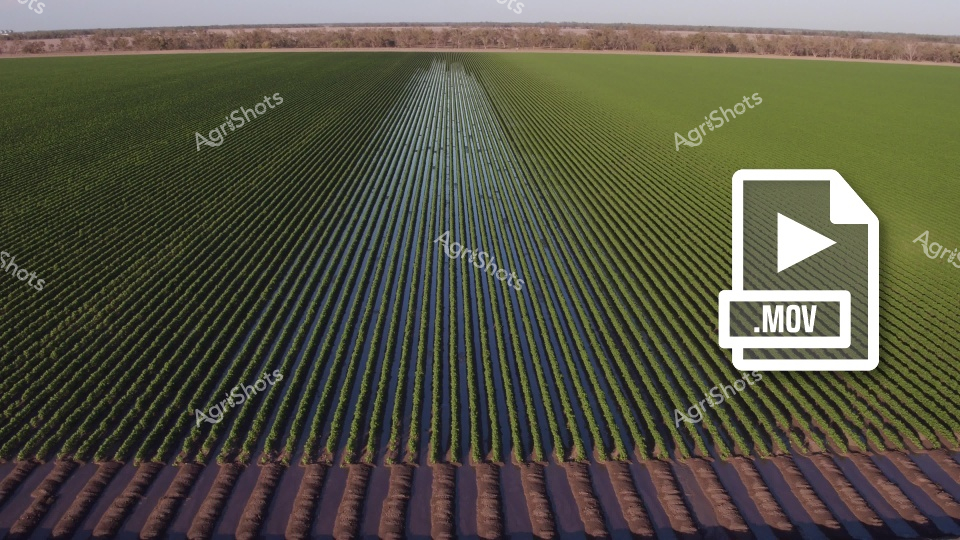
Aerial view of a cotton crop growing in orderly rows across a vast paddock in the Walgett Shire Region of New South Wales. The green cotton plants create distinctive parallel lines stretching to the horizon, with poly pipe irrigation infrastructure visible between the crop rows ensuring adequate water supply. The systematic planting pattern demonstrates modern cropping techniques used in commercial cotton production, with the field extending toward trees visible in the distance under overcast skies.
 Image
Image
A large flock of sheep gathers along the muddy banks of a drought-affected water source in South Australia's Yorke Peninsula, with the animals clustered together seeking water during harsh dry conditions. The parched landscape stretches under a partly cloudy sky, highlighting the challenging drought conditions affecting livestock in this rural region. Dust and dry earth dominate the scene as the sheep congregate around the diminished water supply, demonstrating the impact of extended dry weather on agricultural operations.
 Image
Image
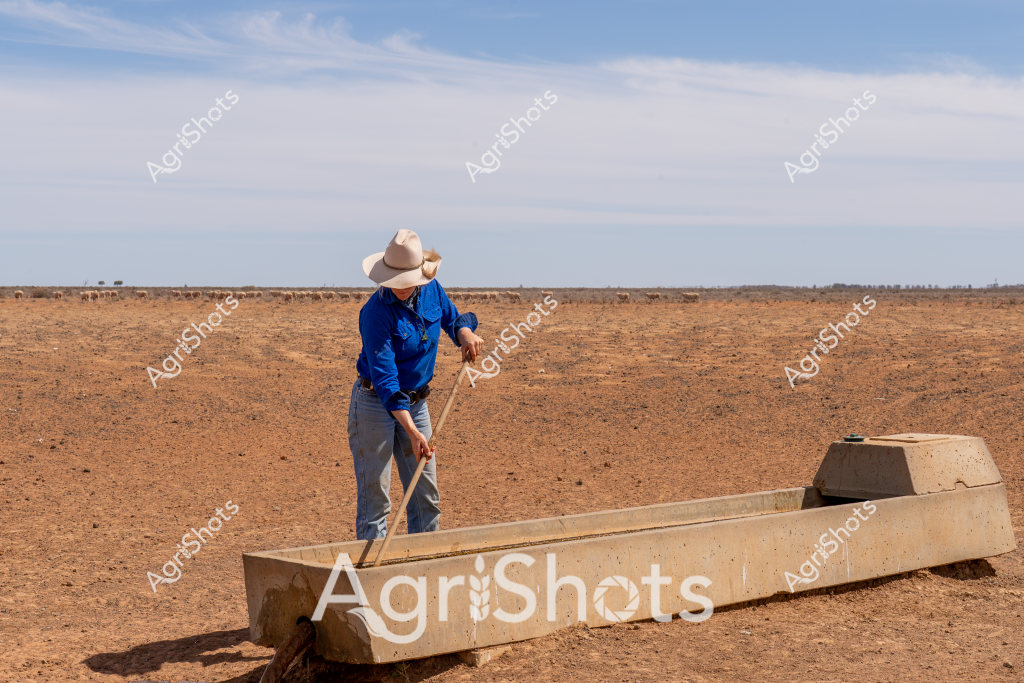
A man farmer stands beside a long concrete water trough in a dry, expansive pastoral landscape, wearing a light-colored wide-brimmed hat and a bright blue long-sleeved work shirt. The ground is a rich terracotta-colored earth, parched and cracked, stretching to a distant horizon where a small herd of cattle can be seen grazing. The concrete trough, a critical water infrastructure element, runs lengthwise across the foreground, with the farmer carefully using a long pole to manage or clean the water supply. The sky is a soft pale blue with wispy clouds, suggesting a hot, dry day typical of Australian agricultural regions during drought conditions. This image captures the resilience of farmers working in challenging environmental conditions, highlighting the importance of water management and infrastructure in sustaining livestock in arid landscapes.
 Image
Image
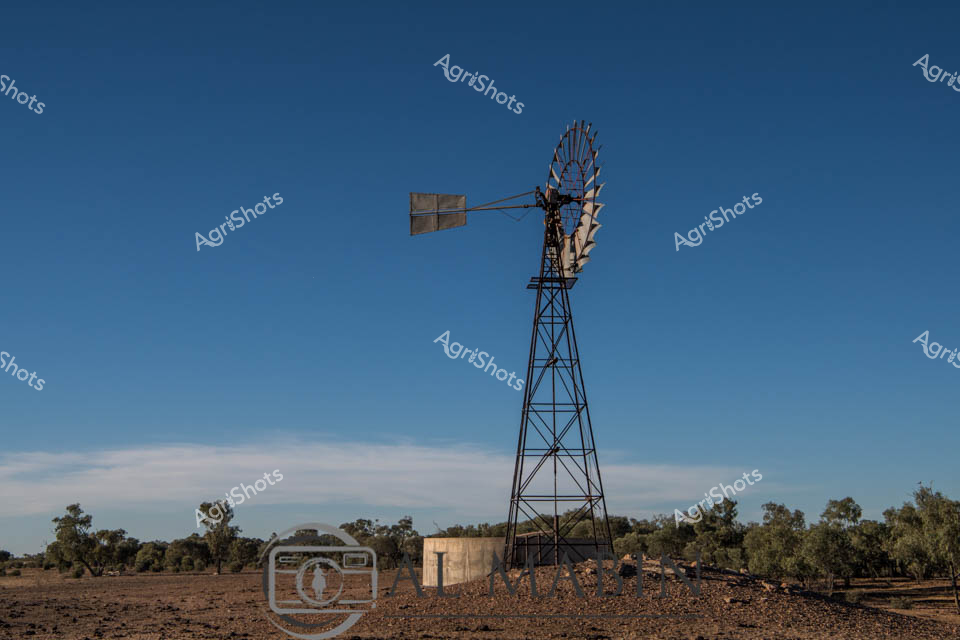
Windswept Outback Water Supply A classic Australian windmill stands sentinel in a rugged, arid landscape, its steel lattice tower rising against an impossibly blue Queensland sky. The traditional windmill, with its intricate multi-blade wheel and angular metal framework, represents generations of agricultural innovation in remote pastoral regions. Surrounding the windmill, rocky ground and scattered olive-green trees punctuate the sparse terrain, indicating the challenging environmental conditions of the Australian interior. A concrete water tank nestles beside the windmill, crucial infrastructure for sustaining livestock and agricultural operations in this water-scarce environment. The windmill's delicate metalwork and precisely angled blades contrast beautifully with the harsh, sun-baked landscape, embodying the resilience and engineering resourcefulness of rural Australian farming communities. This timeless scene captures the essence of outback sustainability - a carefully designed mechanical solution transforming subtle environmental energy into life-giving water for agricultural survival.
 Image
Image
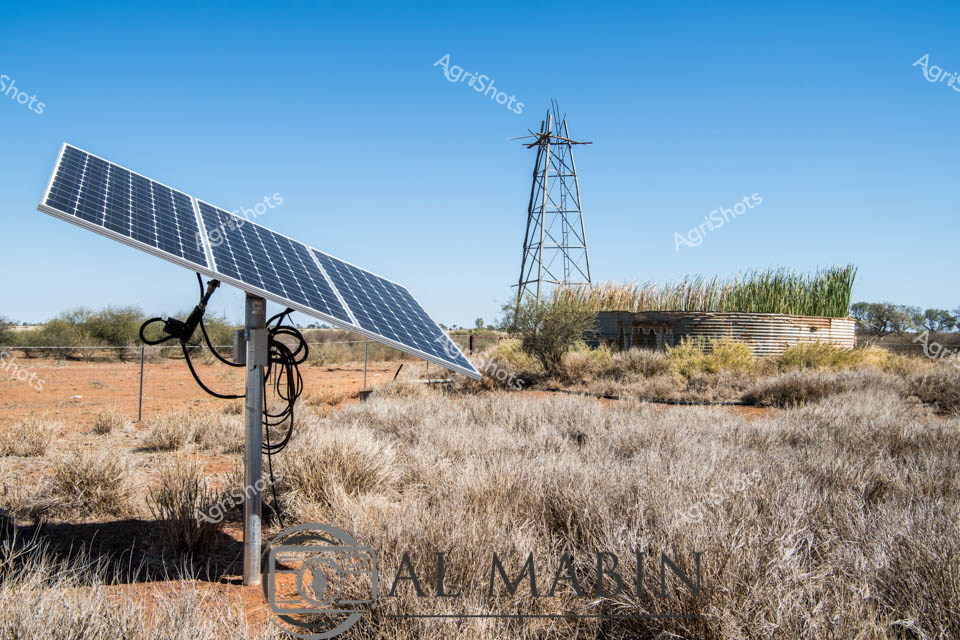
Arid Outback Solar Irrigation Setup Rust-red earth and silvery drought-resistant grasses frame a quintessential Australian agricultural innovation - a solar-powered water pumping system. Gleaming photovoltaic panels angle precisely to capture maximum sunlight, mounted on a sturdy steel frame against the expansive Queensland landscape. A weathered windmill tower stands sentinel nearby, its metal lattice frame a testament to traditional rural water management techniques now complemented by renewable energy technology. A corrugated steel water tank nestles among sparse bushland, promising crucial water supply for livestock or crop irrigation in this challenging environment. The brilliant azure sky stretches uninterrupted, highlighting the stark beauty of remote agricultural infrastructure that enables farming in marginal lands. This scene represents resilience and technological adaptation - how Australian farmers leverage solar technology to sustain agricultural production in harsh, water-scarce regions.
 Image
Image
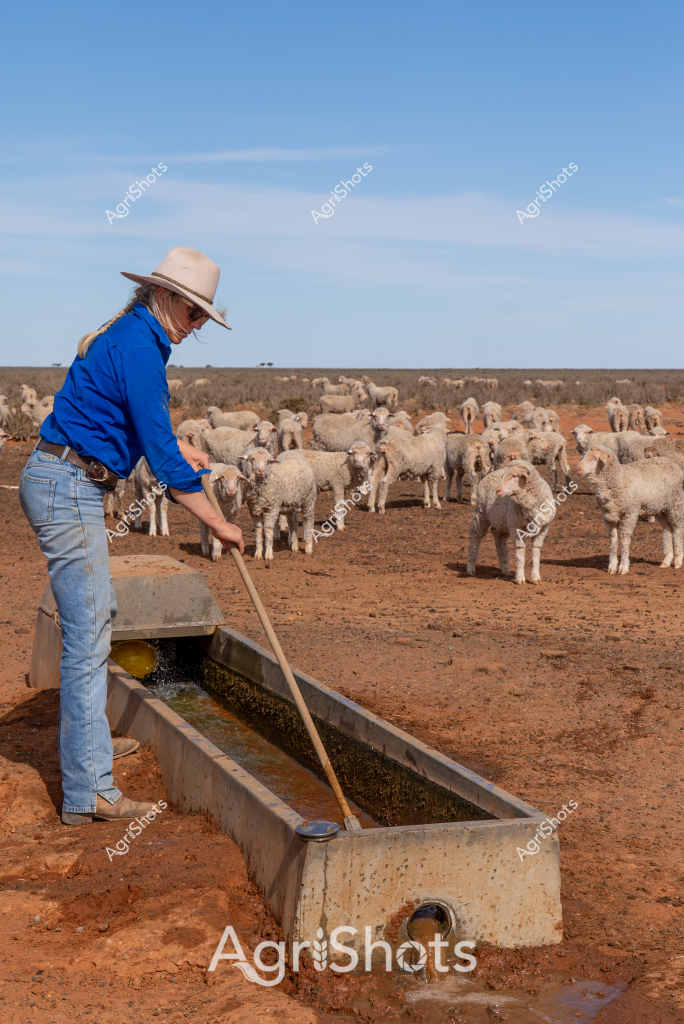
A woman stockman in a bright blue long-sleeved shirt and light blue jeans manages a flock of Merino sheep in an arid Australian landscape. Standing beside a concrete water trough, she uses a long pole to adjust or clean the water supply for the livestock. The dry, reddish-brown earth stretches to the horizon, dotted with dozens of woolly white sheep clustered together in the background. Her wide-brimmed light-colored hat provides protection from the intense sunlight, while the clear blue sky suggests a typical hot, dry day in the Australian outback. This scene captures the challenging yet essential work of managing livestock in harsh rural conditions, highlighting the critical role of water infrastructure in sustaining sheep farming in remote agricultural regions.
 Image
Image
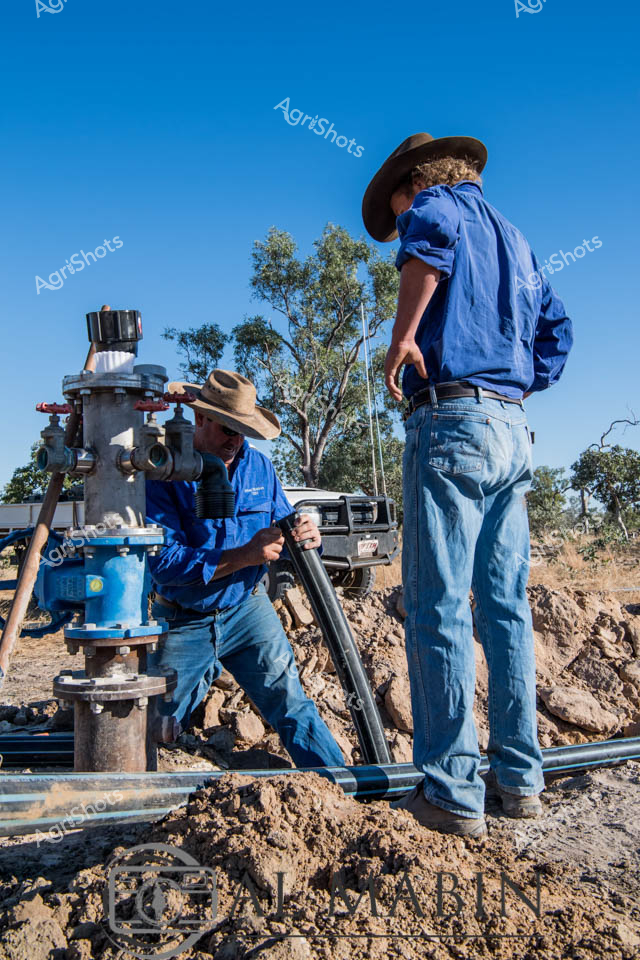
Remote Queensland bore maintenance under brilliant azure skies: two station workers in classic blue workshirts and wide-brimmed sun hats carefully inspect and manage critical water infrastructure. One worker crouches intently near a substantial blue industrial pump mechanism, manipulating a black poly pipe section, while his colleague stands observing the technical work. The rocky, ruddy earth surrounding the installation speaks to the harsh, unforgiving landscape of the outback, with sparse eucalyptus trees offering minimal shade against the intense midday sunlight. Their sturdy denim work pants, practical boots, and focused postures reveal generations of agricultural expertise - understanding that reliable water supply is the lifeblood of remote cattle stations. This scene captures the essential, unglamorous yet crucial work of maintaining rural water systems, where precision and resilience are as important as the heavy-duty equipment itself. The image radiates a sense of quiet competence, typical of skilled station hands who keep isolated properties functioning through meticulous attention to infrastructure.
 Image
Image
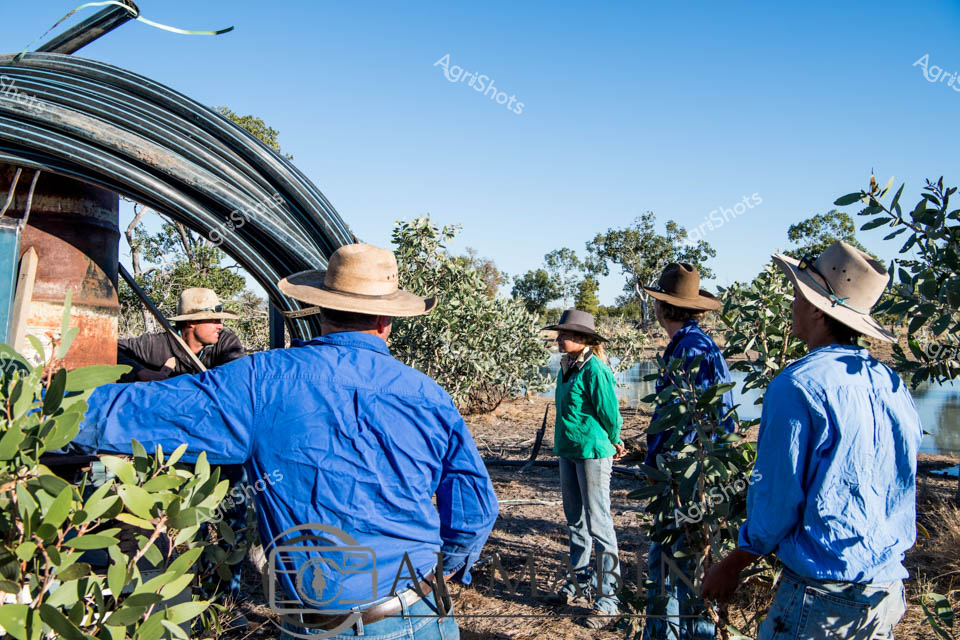
Queensland cattle station workers cluster around a water infrastructure setup, their blue workshirts and wide-brimmed akubra hats creating a uniform silhouette against the sparse, sun-drenched landscape. A curved metal bore structure arches overhead, with black poly pipes suggesting a complex water reticulation system for remote pastoral operations. The workers, positioned amid sparse grey-green eucalyptus and native scrub, appear focused on equipment maintenance or operational discussions, their body language suggesting collaborative problem-solving in a challenging agricultural environment. Bright mid-morning sunlight casts sharp shadows, highlighting the rugged terrain and highlighting the practical, hard-wearing nature of station work. A green-shirted worker provides a visual counterpoint to the predominantly blue workplace attire, breaking the visual monotony of the arid backdrop. The scene captures the essence of Australian agricultural resilience - workers managing critical water infrastructure in a landscape that demands constant attention and technical skill. The waterline infrastructure, poly pipes, and strategic positioning of the workers communicate the precision and planning required in remote cattle station management, where water supply can mean the difference between survival and loss in harsh pastoral conditions.
 Image
Image
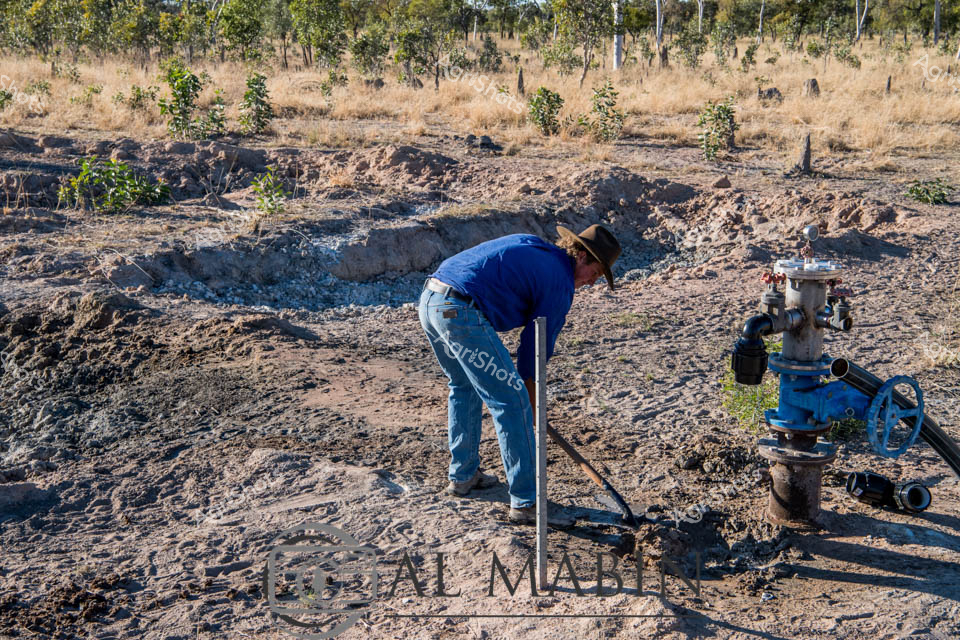
A station hand in a crisp blue work shirt and wide-brimmed hat bends intently over a weathered bore pump in a sun-drenched Queensland pastoral landscape. Dry golden grasses and scattered eucalyptus trees frame the rugged terrain, highlighting the challenging environment of remote agricultural operations. The blue industrial pump stands as a critical piece of infrastructure, connected to a network of poly pipes that deliver precious water across the arid station grounds. Disturbed earth and carefully dug trenches surrounding the pump reveal the manual labor required to maintain water supply systems in this unforgiving landscape. The worker's careful posture suggests meticulous attention to mechanical details, a hallmark of skilled station maintenance. Harsh sunlight casts sharp shadows across the dusty ground, emphasizing the stark beauty of rural Queensland's working landscapes and the essential role of water infrastructure in sustaining agricultural production.
 ▶ Video
Dusty cattle yards stretch beneath a muted, overcast sky in central Queensland, where sparse eucalyptus trees punctuate a weathered pastoral landscape. A dedicated farm worker in a deep blue work shirt carefully inspects a concrete water trough, checking the critical water supply for a small herd of mixed-breed cattle grazing in the background. The trough, stained and worn from years of service, reflects the harsh agricultural environment, with muddy water pooling around its base and a pipe feeding fresh water into its reservoir. Sturdy cattle - a mix of dark and light breeds - graze casually across the parched paddock, their movements slow and deliberate in the dry seasonal conditions. The scene captures the resilience of Australian agricultural practice, where water management is crucial to livestock survival in marginal grazing lands. Rugged work boots, dusty ground, and the utilitarian infrastructure speak to the practical, no-nonsense approach of rural Australian farmers maintaining their herds through challenging environmental conditions.
 Image
Image
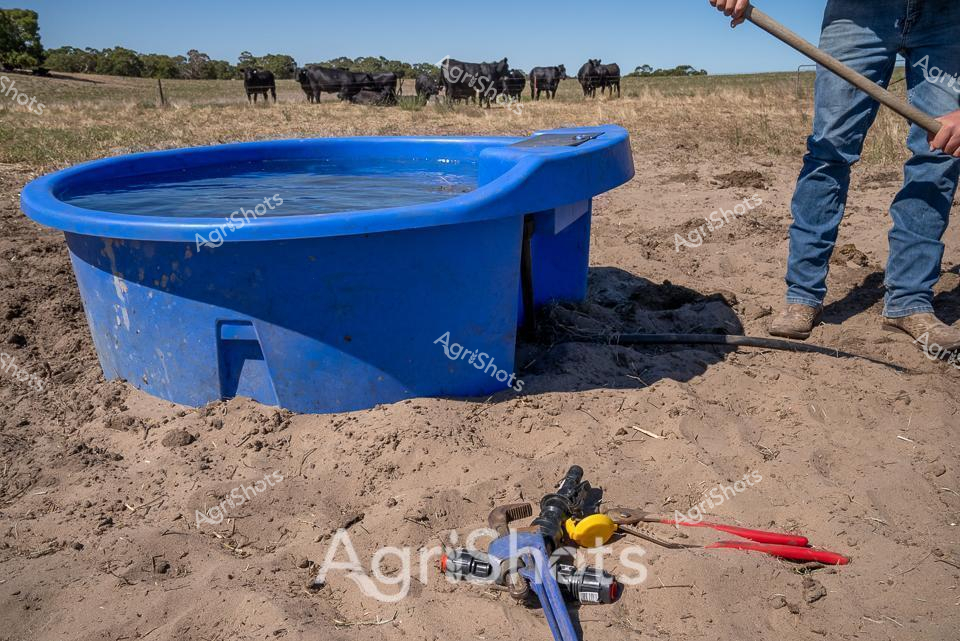
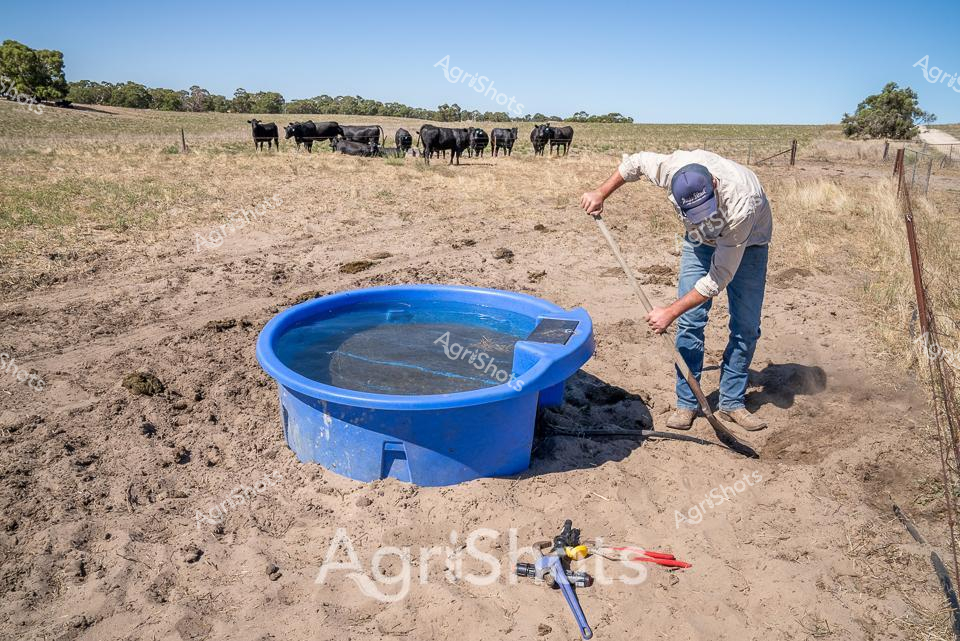
On a sun-drenched paddock in South Australia's Murray and Mallee region, a blue water trough stands resolute against the dry, cracked earth, providing essential hydration for a herd of sleek Angus cattle grazing in the background. The robust Plasson trough, partially embedded in the dusty ground, brims with clean water, its vibrant azure surface a stark contrast to the parched landscape. Nearby, irrigation equipment lies ready - blue pipes, connectors, and red attachments scattered on the ground, indicating careful water management in this challenging agricultural environment. A farm worker, dressed in classic blue denim, stands partially in frame, holding a long tool, suggesting ongoing maintenance and care of the livestock's critical water supply. The black Angus cattle, muscular and calm, cluster together in the distant pasture, their dark coats absorbing the intense Australian sunlight, while the foreground tells a story of practical, resilient farming infrastructure designed to sustain livestock through harsh conditions. This image captures the essence of agricultural resourcefulness in a demanding rural landscape, where every drop of water and careful preparation can mean the difference between survival and struggle.
 Image
Image
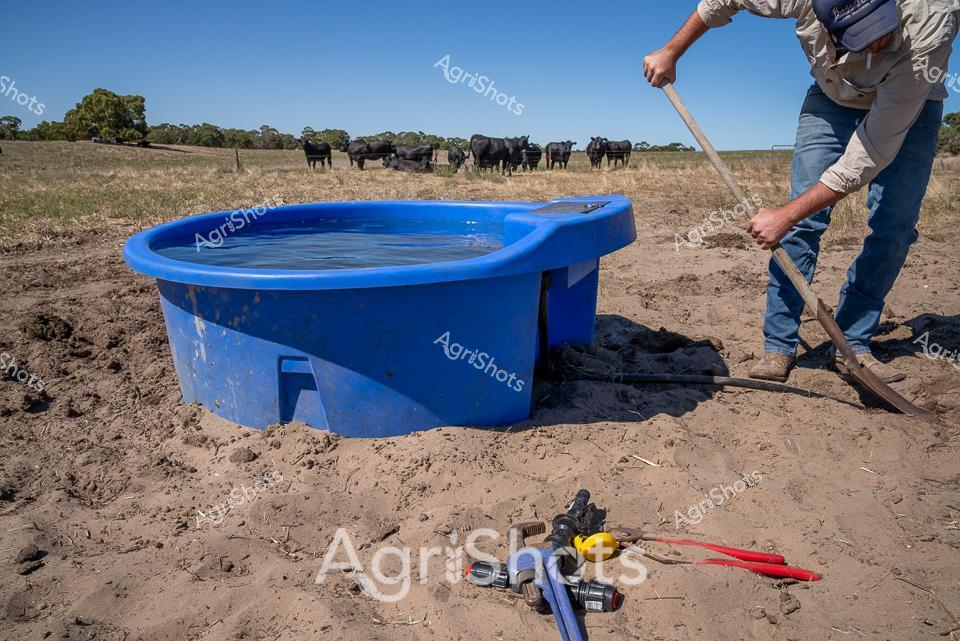
Rural Water Management on an Angus Cattle Station Beneath a cloudless azure sky, a seasoned farmworker carefully tends to a brilliant blue water trough in a dry, dusty paddock of the Murray and Mallee region. A herd of black Angus cattle graze in the background, their dark coats contrasting against the sun-bleached grasslands and scattered gum trees. The worker, dressed in practical denim and a light-colored work shirt, meticulously adjusts the water supply, ensuring the livestock have access to clean, fresh water during what appears to be a scorching summer day. A Plasson water system component lies nearby, highlighting the precision of modern agricultural water management techniques. The parched earth surrounding the trough tells a story of challenging drought conditions, where every drop of water is precious. This scene captures the resilience and daily dedication of Australian farmers, working tirelessly to maintain their herds in harsh rural landscapes where water is the lifeline of agricultural productivity.
 Image
Image
Scorching sunlight beats down on a dusty paddock in South Australia's Murray and Mallee region, where a cluster of glossy black Angus cattle stand watchful in the background. A large blue water trough sits partially buried in the dry earth, its robust Plasson design a critical lifeline during the harsh summer season. A farm worker, dressed in practical work attire of light-colored long sleeves and denim jeans, carefully positions tools near the trough, preparing to maintain or adjust the water supply critical for the cattle's survival. Scattered tools - red-handled pliers, yellow-accented equipment - rest on the cracked ground, telling a story of ongoing farm maintenance and careful animal husbandry. The deep azure of the water trough contrasts sharply with the parched brown landscape, a vivid reminder of the challenging agricultural conditions in this remote stud cattle region. The scene captures the resilience of Australian farming - a carefully orchestrated balance between human intervention and the natural rhythms of livestock management.
 Image
Image
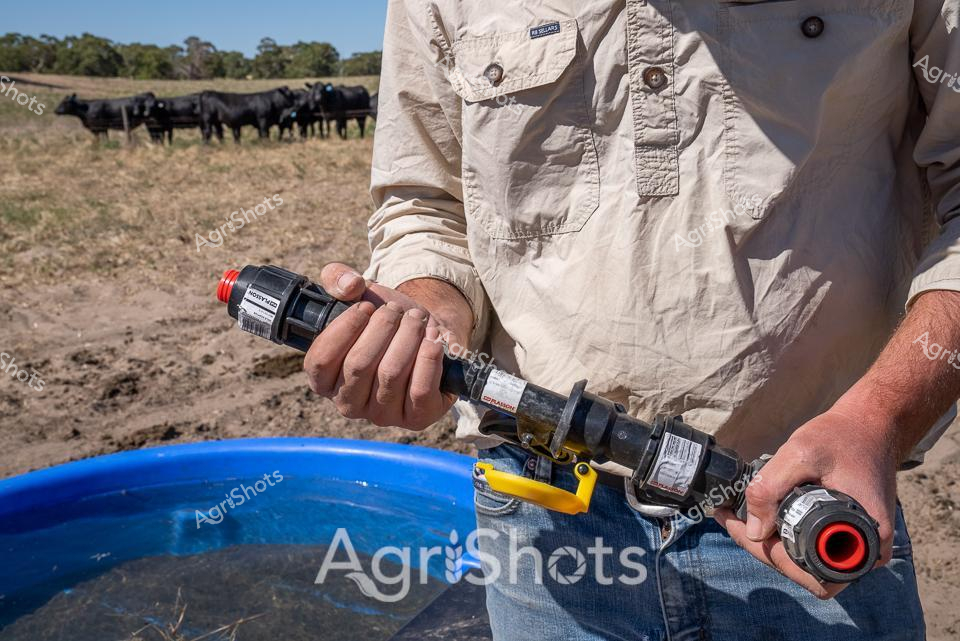
Cattle hydration unfolds on a sun-baked South Australian pasture, where an agricultural worker tends to a vital task of livestock management. In the background, a herd of black Angus cattle stands clustered in the dusty paddock, their dark coats contrasting against the dry, golden landscape typical of the Murray and Mallee region. The worker, dressed in a light, practical khaki work shirt, carefully operates a Plasson water connector, precisely attaching the robust black and red fittings to ensure a steady water supply into the large blue trough. His weathered hands demonstrate the careful, experienced touch of a seasoned farm worker, methodically securing the water infrastructure that is critical to cattle health in the harsh Australian rural environment. The bright blue water trough sits stark against the earthy tones of the surrounding landscape, a lifeline for the stud cattle grazing nearby. This moment captures the essence of rural agricultural care - attentive, precise, and fundamentally connected to the land and its livestock.
 Image
Image
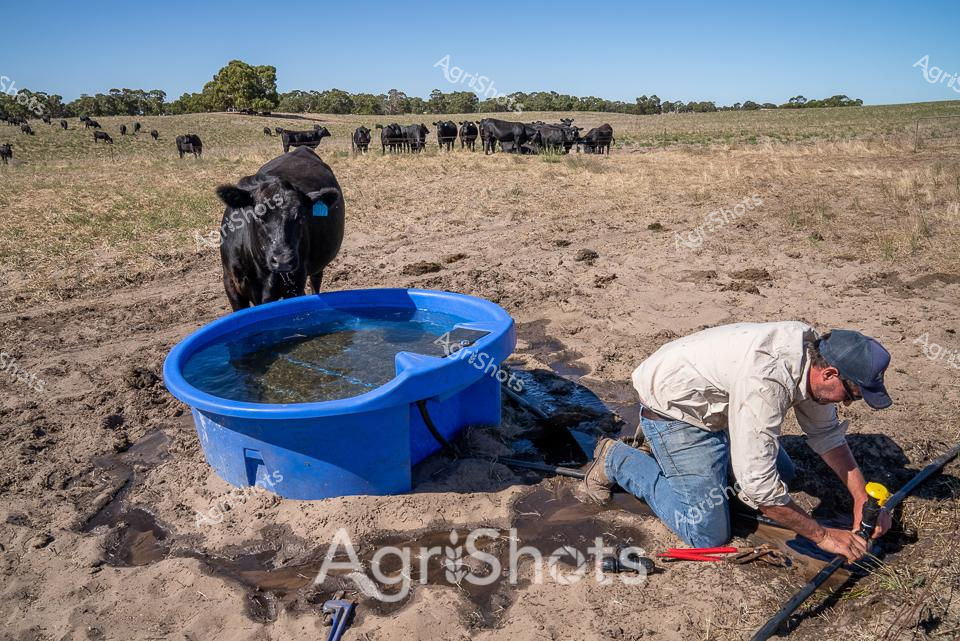
Weathered hands work methodically against the parched earth of a South Australian pastoral landscape, where a cluster of Black Angus cattle await water in a brilliant blue stock tank. A farmer in faded denim and a worn cap adjusts pipe fittings, ensuring a critical water supply for the herd during the dry season. The Murray and Mallee region's unforgiving terrain stretches behind him - golden grasslands punctuated by scattered eucalyptus trees, the harsh sunlight revealing every textural detail of the dusty paddock. A large Angus cow stands sentinel beside the water tank, her midnight-black coat gleaming and a blue ear tag marking her lineage, while the herd mates cluster watchfully in the background. The scene captures the resilience of Australian agricultural workers and their careful stewardship of livestock, where every connection, every pipe, and every drop of water represents survival in an challenging environment. This image speaks to the quiet determination of rural life - a testament to generations of farming expertise adapting to the continent's uncompromising climate.
 Image
Image
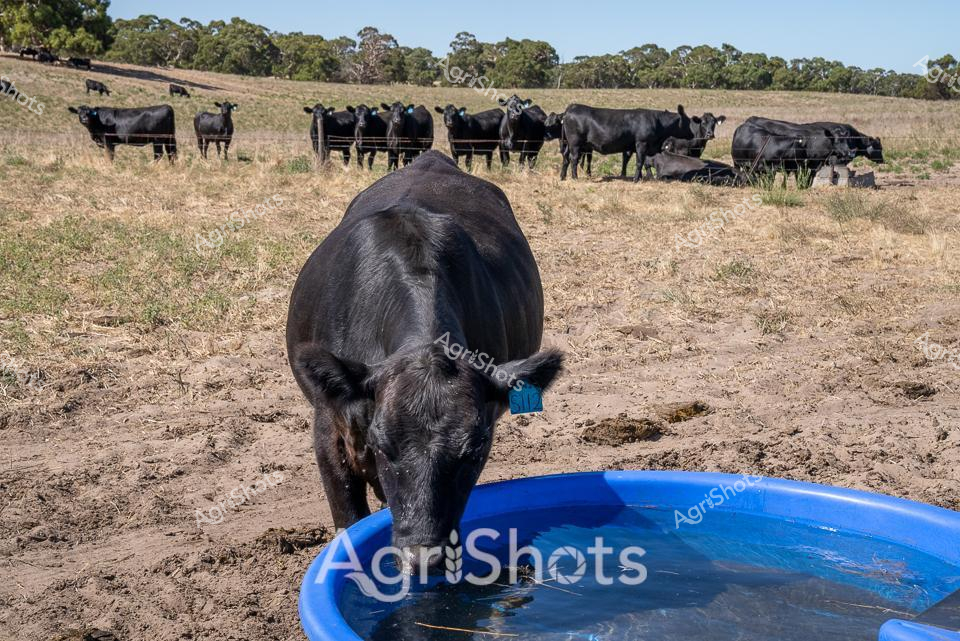
Black Angus cattle cluster across a dry, golden pasture under the expansive blue skies of South Australia's Murray and Mallee region. In the foreground, a robust Angus cow drinks deeply from a bright blue water trough, her sleek black coat contrasting against the parched landscape. Behind her, the herd stands stoically, their muscular frames testament to the resilience of this premier beef breed in challenging rural conditions. The paddock reveals a mix of sparse grass and bare earth, indicating the harsh summer season typical of the region's agricultural zones. A backdrop of scattered eucalyptus trees provides minimal shade, highlighting the importance of water management in this arid agricultural environment. The blue ear tag and the carefully maintained water supply demonstrate sophisticated stud cattle management, showcasing the precision and care inherent in modern Australian livestock farming.
 Image
Image
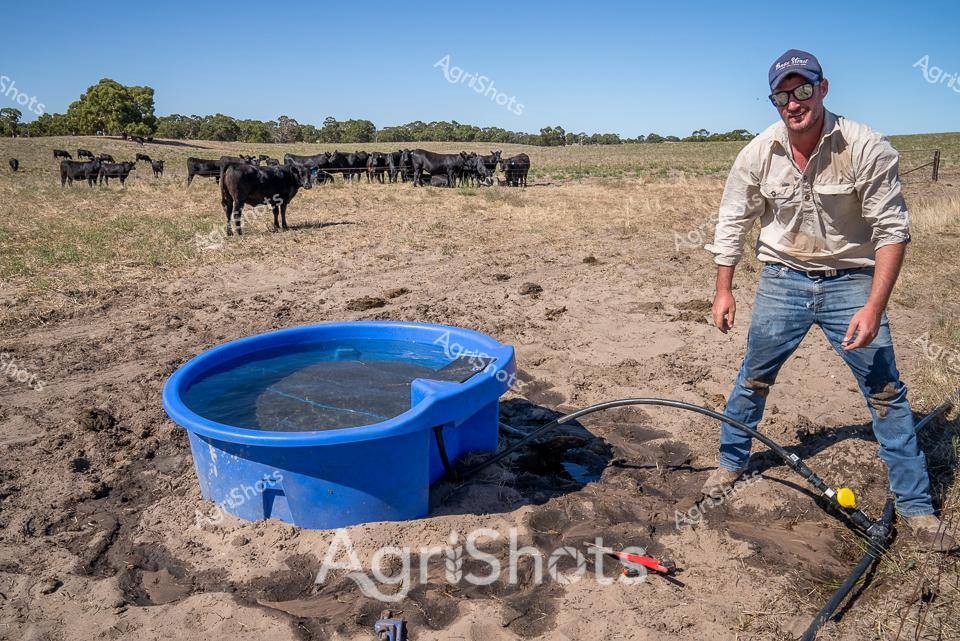
Dry golden paddocks stretch beneath a clear blue sky as a rancher stands beside a vibrant blue water trough, carefully managing hydration for a herd of black Angus cattle. The parched landscape speaks to the challenges of livestock management during a harsh Australian summer, with the cattle clustered in the background seeking respite from the heat. Wearing a light khaki work shirt, jeans, and a branded cap, the farmer connects a water line to the robust plastic trough, ensuring a critical water supply for his valuable stud cattle. The deep blue of the water container contrasts sharply with the dusty earth, highlighting the careful infrastructure required to support livestock in arid conditions. Black Angus cattle, known for their resilience and premium beef quality, graze quietly in the paddock, their dark coats absorbing the intense sunlight. This image captures the essence of rural Australian agricultural practice - resourceful, pragmatic, and deeply connected to the challenging landscape.