Results for “Stockwork”
 Image
Image
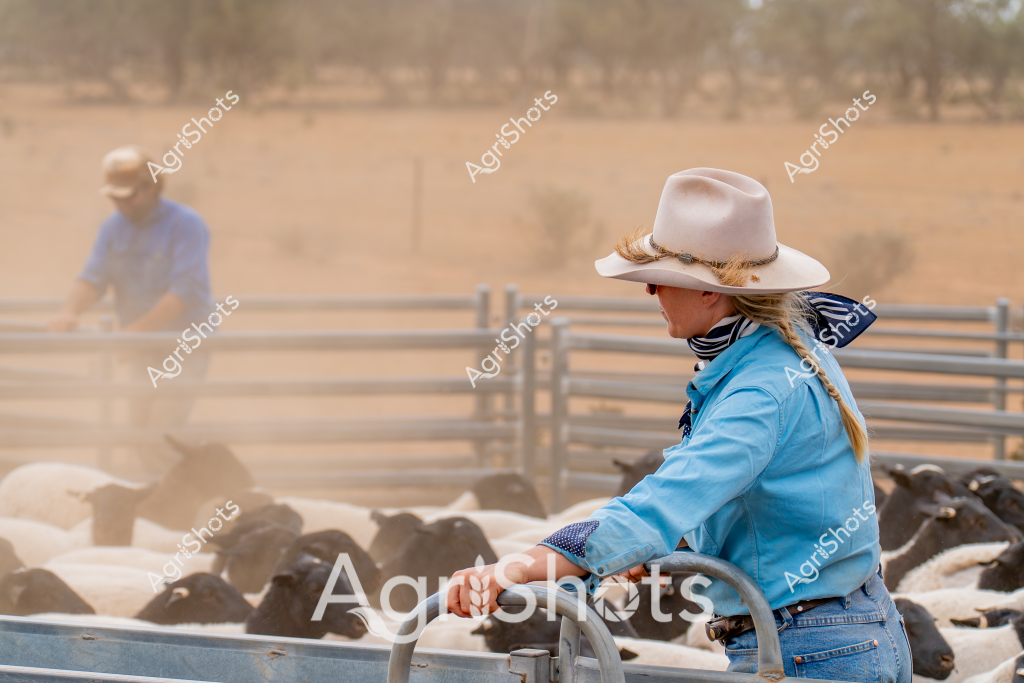
A woman stockman in a classic white wide-brimmed hat and blue jacket carefully manages a mob of black sheep within dusty metal livestock yards. Her blue work shirt and striped neck scarf indicate professional rural attire, while her positioning suggests experienced livestock handling. In the background, another worker is partially visible, also engaged in managing the animals during what appears to be a dry, sunlit mustering operation in an arid Australian paddock. The landscape is characterized by golden-brown earth, sparse vegetation, and wooden fence rails, capturing the challenging environmental conditions typical of extensive sheep farming regions. Dust rises around the sheep, highlighting the physical demands of stock management in rural Australia and showcasing the skill required to control and move livestock in harsh pastoral settings.
 ▶ Video
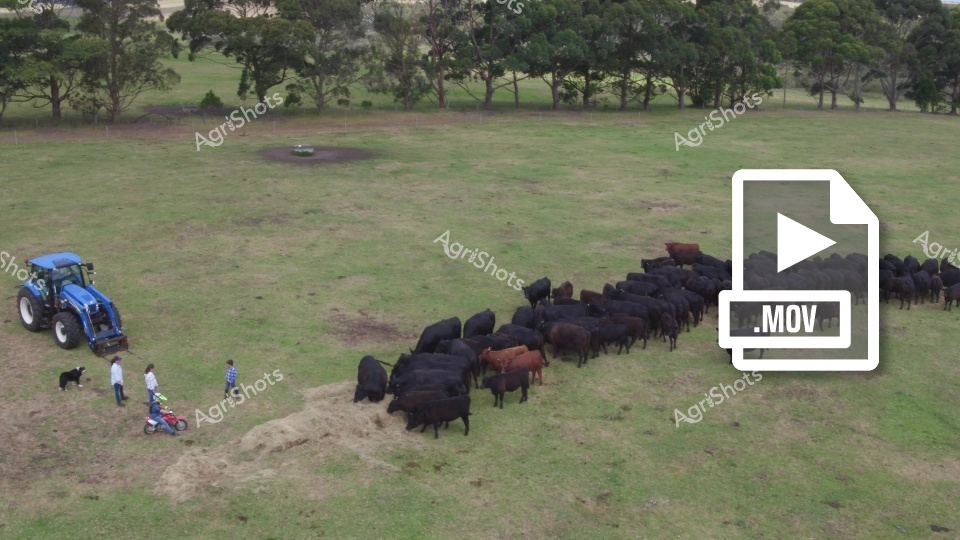
A blue New Holland tractor and several farm workers coordinate a cattle mustering operation across green Western Australian pastureland. A large herd of predominantly black beef cattle, likely Angus, moves in formation across the paddock while children on motorbikes assist with the mustering activities. The aerial perspective captures the collaborative nature of modern livestock management, with people and machinery working together to guide the cattle through the rural landscape. Scattered trees dot the expansive station property, creating a quintessential scene of Australian agricultural life where traditional stockwork meets contemporary farming methods.
 Image
Image
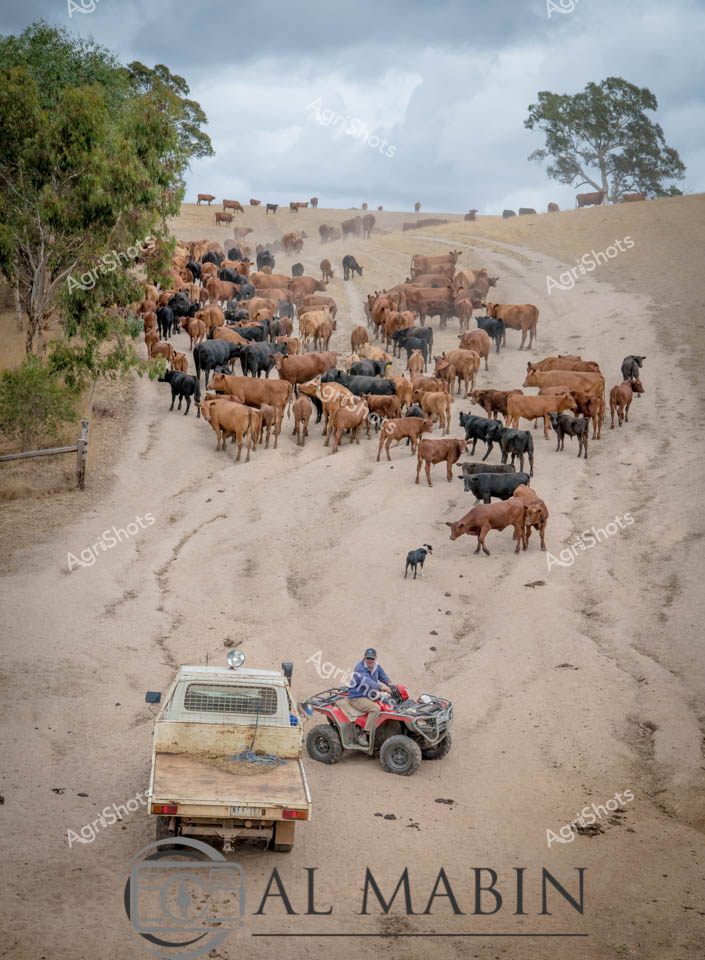
A large herd of mixed cattle, including both black and brown Senepol cattle, fills a dusty dirt road during a mustering operation in rural Victoria. A farm worker on a Honda motorbike guides the cattle while a Toyota ute follows behind, demonstrating the coordinated effort required for effective livestock management. The cattle move along the winding dirt track between rolling paddocks dotted with native trees, with more cattle visible grazing on the hillside in the distance. This aerial perspective captures the scale and organization of modern Australian beef cattle operations, showing the integration of traditional stockwork with practical farm vehicles.
 Image
Image
A man working as a sheep handler operates in well-organized sheep yards in Victoria, carefully tagging Merino sheep as part of routine livestock management. The handler works methodically at a drafting station under a covered shelter, with various tools and spray markers arranged on his workbench for the ear tagging process. Behind him, the extensive yard system with metal railings stretches across the rural property, designed for efficient sheep handling and drafting operations. This scene captures the essential stockwork involved in modern sheep farming, where proper identification and record-keeping are crucial for flock management and traceability.
 Image
Image
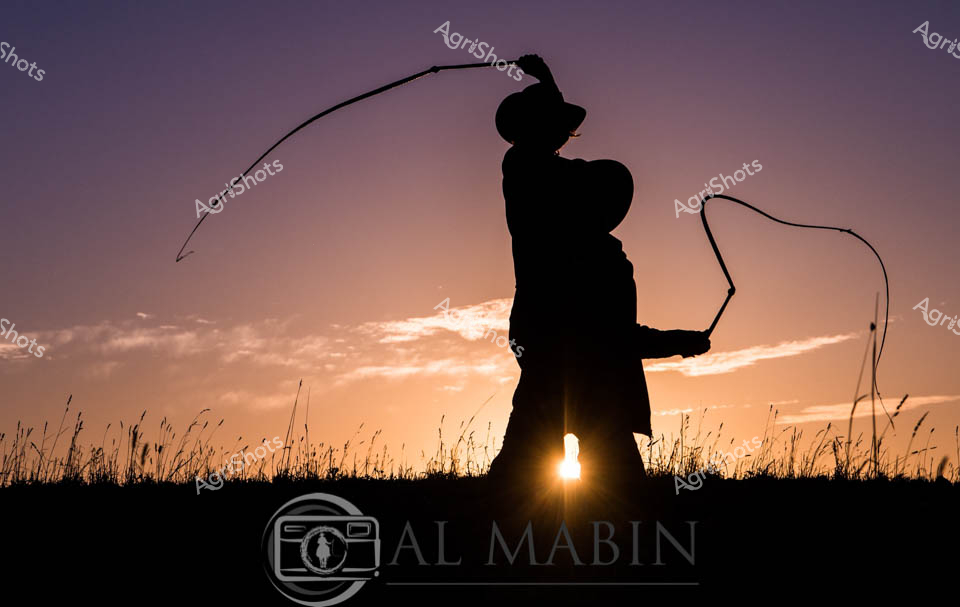
A figure holds a stockwhip silhouetted against a dramatic sunset sky in South Australia, with the sun's rays piercing between their legs as they stand in a grassy paddock. The purple and orange twilight colors create a striking backdrop as the person practices their whip work in the rural landscape. The scene captures the essence of traditional Australian stockwork against the golden hour lighting.
 Image
Image
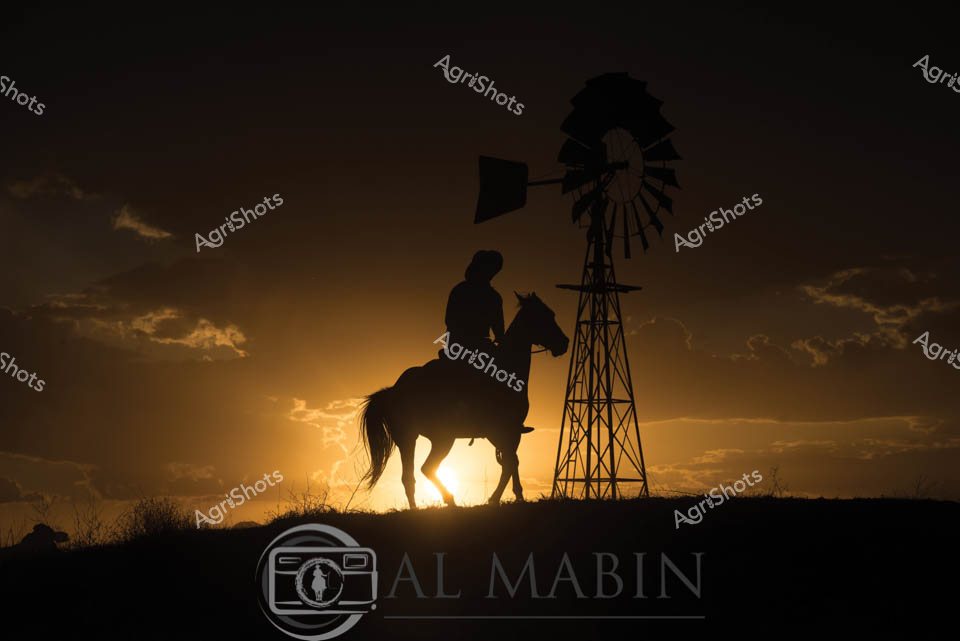
A figure on horseback is silhouetted against a dramatic sunset sky beside a classic farm windmill, creating an iconic scene of Australian rural life. The rider and horse appear as dark silhouettes against the golden light, capturing the timeless connection between stockwork and the land. The windmill's distinctive lattice tower and multi-bladed wheel structure stands prominently against the moody sky, representing essential water infrastructure on remote stations. This evocative scene embodies the enduring spirit of droving and stock route traditions across Australia's pastoral landscapes.
 Image
Image
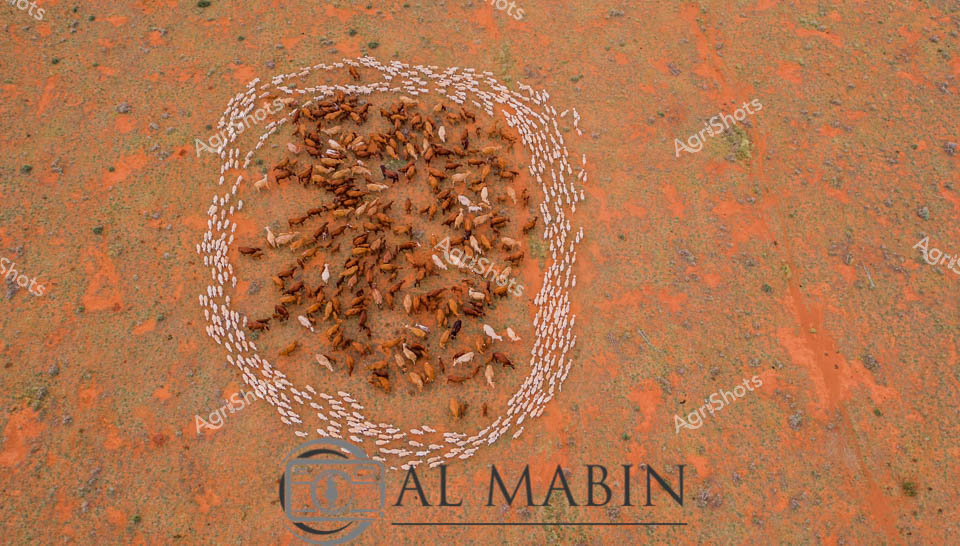
Dusty ochre earth cradles a mesmerizing aerial portrait of livestock mustering in Australia's western plains. A tight circular formation reveals brown and white Dorper sheep clustered densely in the center, surrounded by an intricate white-flecked perimeter suggesting the dynamic movement of working dogs herding the flock. The rich terracotta landscape speaks to the arid New South Wales interior, where pastoral operations demand precision and skill to manage livestock across vast, challenging terrains. The circular composition captures the strategic choreography of mustering - a quintessential Australian agricultural practice where stockmen and their canine companions guide sheep with remarkable efficiency. Soft gradations of rust, orange, and muted greens in the ground suggest late afternoon light, when the day's heat begins to soften and stockwork reaches its rhythmic peak. The photograph elevates pastoral work from mere labor to an elegant dance of survival and management across the continent's challenging landscapes.
 Image
Image
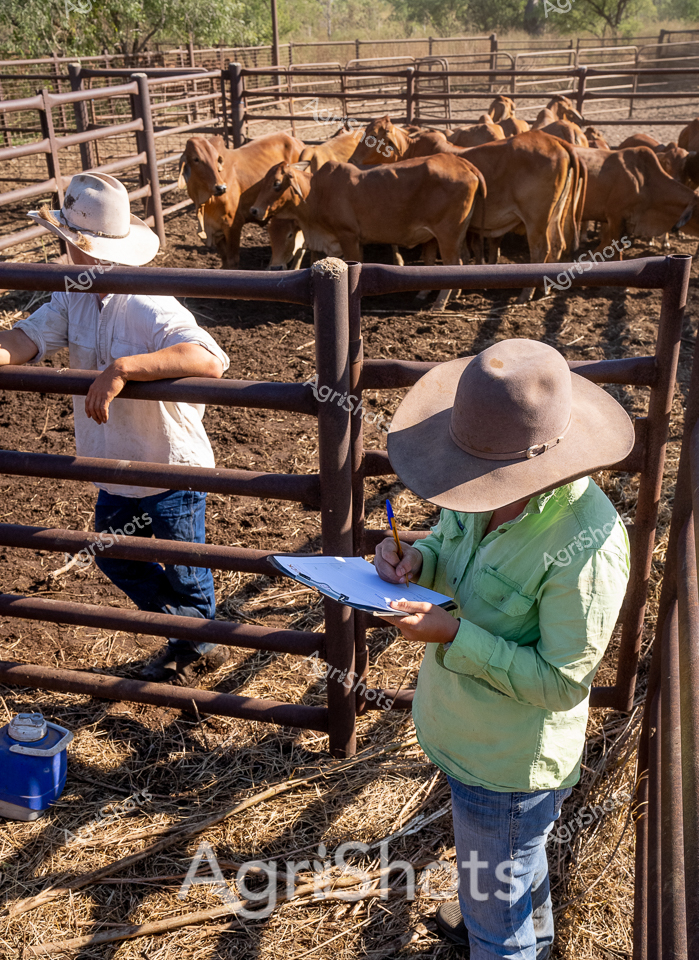
In the sun-baked cattle yards of Western Australia's rugged Kimberley region, two rural workers tend to a herd of rich copper-colored Brahman cattle. Steaming earth and weathered timber yards frame the scene, with straw scattered across the ground reflecting the harsh pastoral landscape. One worker in a light green shirt carefully documents details on a clipboard, while the other leans against the steel rail fence, surveying the compact herd of muscular cattle with their distinctive humped shoulders and loose skin - hallmarks of the heat-tolerant Brahman breed. Wide-brimmed stockman's hats shield them from the intense Australian sunlight, a practical uniform of the remote station life. The cattle stand closely grouped, their sleek coats gleaming with health, a testament to careful management in this challenging agricultural environment. This image captures the quiet concentration and systematic approach of contemporary Australian cattle station operations, where careful record-keeping and animal husbandry are as crucial as traditional stockwork.
 Image
Image
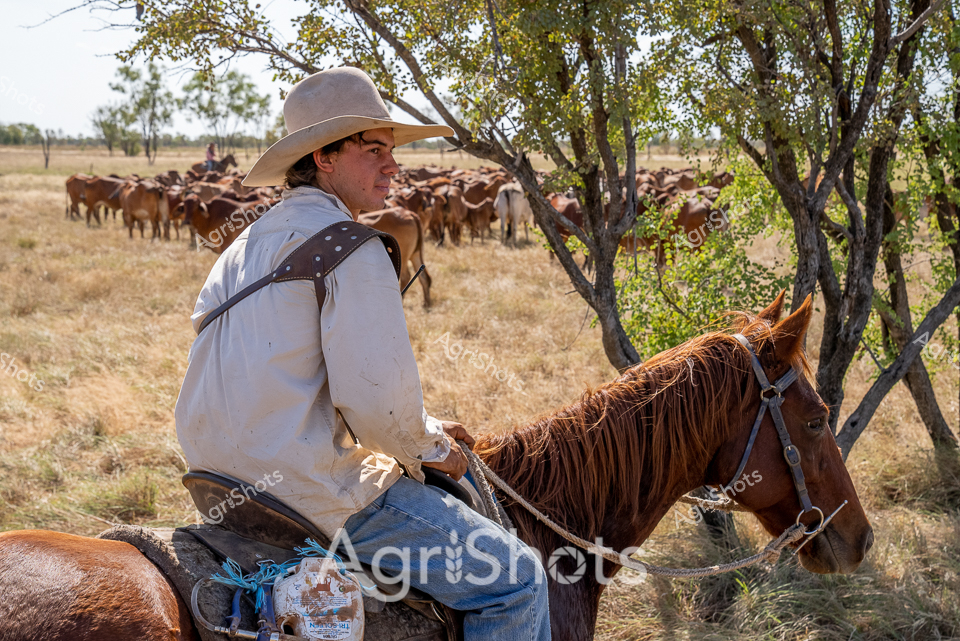
Stockman rides a chestnut mare across a sun-drenched paddock in the rugged Kimberley region of Western Australia, orchestrating a disciplined muster of Brahman cattle. His weathered felt akubra and crisp white long-sleeved shirt speak to generations of pastoral tradition, while his well-worn leather gear and steady posture reveal years of stockwork experience. The golden grasslands stretch beneath scattered boab trees, their twisted branches casting dappled shade on the dusty earth, creating a quintessential Australian pastoral landscape of sparse, resilient beauty. A substantial herd of rich russet and grey Brahman cattle moves with quiet purpose behind him, their distinctive humps and loose skin adapted perfectly to the harsh northern Australian environment. The horse and rider move as a single unit, communicating with subtle shifts of weight and gentle rein guidance - a partnership forged through countless kilometres of mustering across challenging station country. This image captures the timeless rhythm of cattle management in one of Australia's most remote and unforgiving agricultural landscapes, where skill, endurance, and deep connection to the land define the stockman's way of life.
 Image
Image
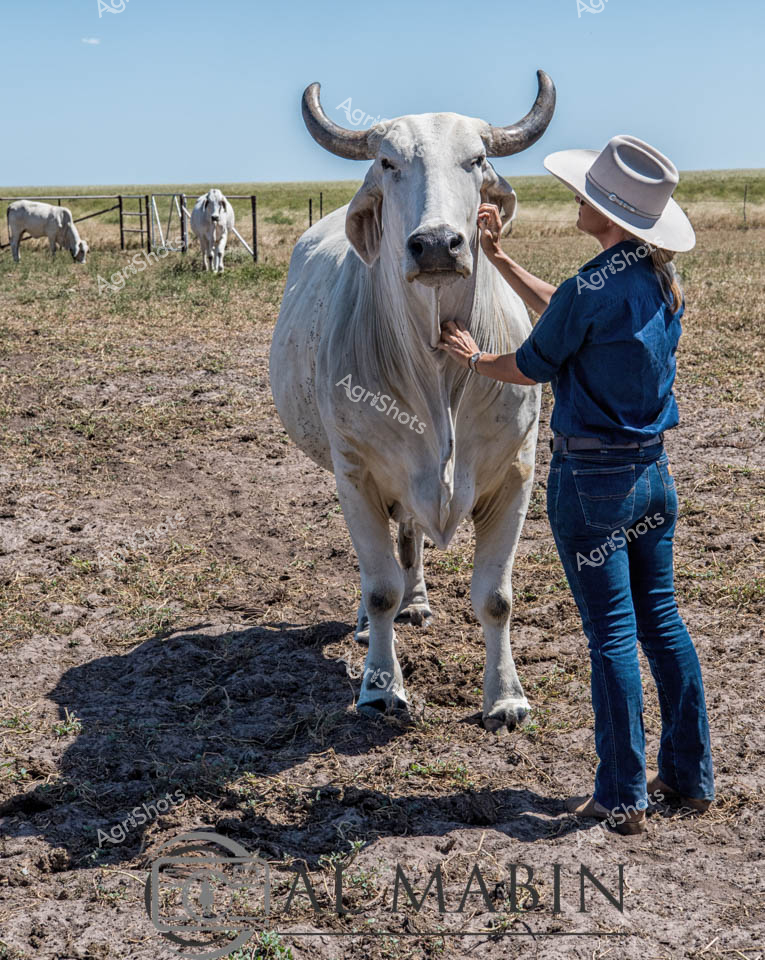
A majestic white Brahman bull stands proudly in the harsh, sunbaked landscape of the Northern Territory, his impressive curved horns and loose, rippling skin marking him as a breed perfectly adapted to Australia's challenging tropical cattle country. A stockworker in classic blue shirt and wide-brimmed hat gently touches the bull's side, demonstrating the close relationship between pastoral workers and the livestock. The paddock stretches out behind them, a sparse grassland with distant fencelines and additional pale cattle grazing under a clear azure sky, capturing the essence of extensive beef production in northern Australia. The bull's muscular frame and distinctive loose-skinned appearance highlight the Brahman breed's genetic resilience, developed to withstand extreme heat and resist tropical parasites. Soft earth and scattered dry grasses underneath create a textural foreground, while the animal's deep shadow emphasizes the intense midday sunlight characteristic of station life. This image encapsulates the strength, endurance, and intimate connection between Australian cattlemen and their robust Brahman herds, key contributors to the nation's significant beef production industry.
 Image
Image
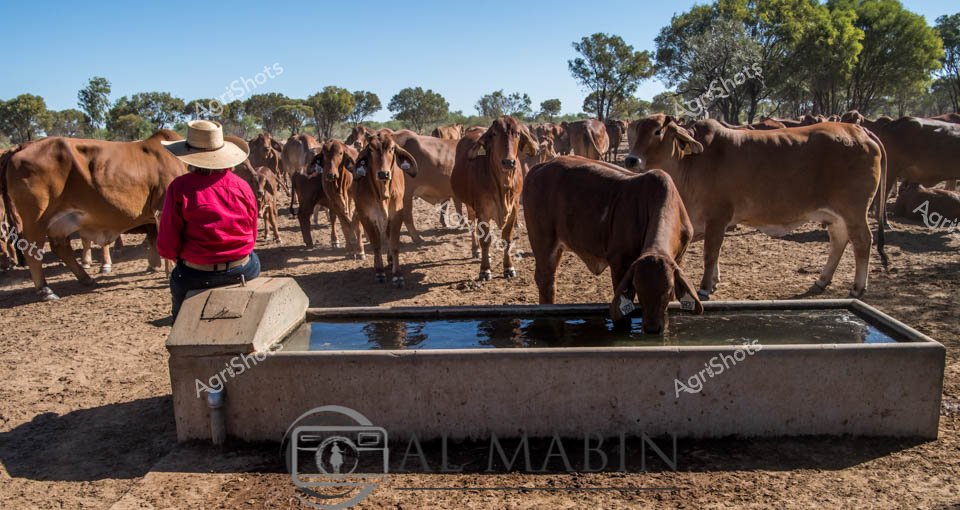
Brahman cattle cluster around a concrete water trough under the harsh midday Queensland sun, their rich chestnut-red coats gleaming against the dusty, parched landscape. A stockworker in a vibrant pink long-sleeved shirt and wide-brimmed hat surveys the herd, standing sentinel beside the critical water source. The cattle, predominantly Brahman breed with their distinctive humps and loose skin, demonstrate the resilience of this breed perfectly adapted to Australia's challenging agricultural environments. Sparse eucalyptus trees punctuate the background, offering minimal shade to the compact herd gathered around the water trough. The ground is dry and compacted, typical of station country, highlighting the importance of reliable water infrastructure in maintaining livestock health during dry seasons. This scene captures the essence of Australian pastoral agriculture - a testament to human ingenuity and animal hardiness in managing livestock across demanding rural landscapes.
 Image
Image
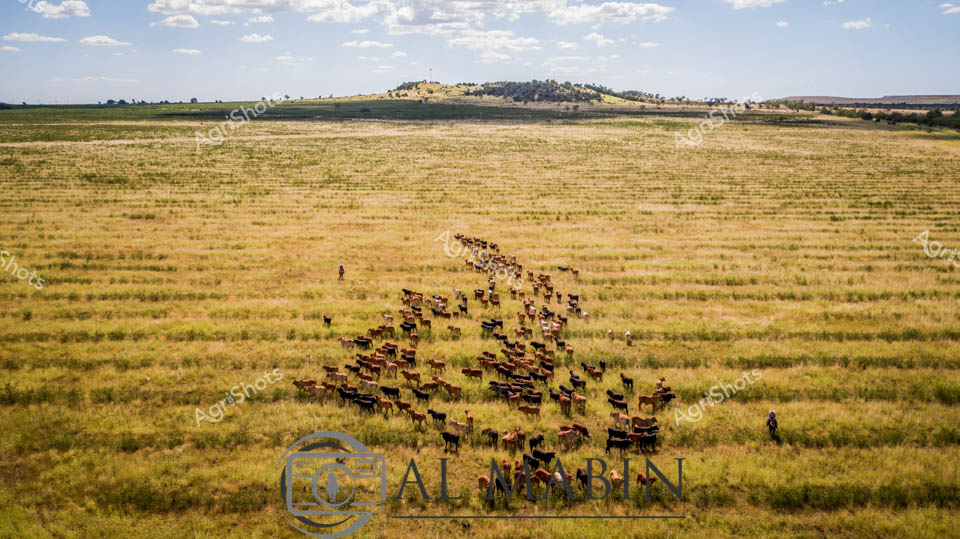
Dusty golden grasslands stretch beneath a soft blue sky, punctuated by wispy clouds, as a substantial herd of Brahman cattle moves across the expansive Queensland station landscape. The distinctive humped cattle, with their light grey to white coats, flow like a living river through the dry seasonal pasture, guided by stockworkers on horseback who navigate the edges of the herd. Rich ochre and brown tones of the cattle contrast brilliantly against the pale wheat-colored grasslands, creating a dynamic tableau of pastoral movement and agricultural tradition. Multiple riders carefully manage the cattle's direction, using generations of inherited skill and horsemanship to guide the animals across the undulating terrain. In the distance, rocky outcrops and isolated trees break the horizon line, providing a sense of scale and rugged Australian agricultural geography. This quintessential mustering scene captures the essence of northern Australian cattle production - a delicate choreography of human, horse, and livestock working in harmony across a vast, challenging landscape.
 Image
Image
Brahman cattle graze across a sun-drenched pastoral landscape, their distinctive copper-red coats gleaming against the muted golden grasses of a Queensland cattle station. The robust herd, characterized by their large, pendulous ears and muscular bodies, represents the iconic Brahman breed perfectly adapted to Australia's challenging tropical and subtropical environments. Scattered throughout the pasture, these resilient animals stand quietly, their deep-chested frames highlighting their genetic strength and suitability for extensive grazing systems. In the background, a stockworker on horseback subtly manages the herd, embodying the traditional cattle station work practices that have defined Australian rural life for generations. Delicate white wildflowers punctuate the dry grassland, adding a subtle textural contrast to the scene's earthy palette. The expansive landscape stretches toward distant treelines, capturing the immense scale of Queensland's agricultural territories. The image speaks to the enduring relationship between Australian farmers, the livestock, and the challenging yet beautiful landscapes they inhabit - a testament to the resilience and sophisticated agricultural practices that underpin the nation's beef production industry.
 Image
Image
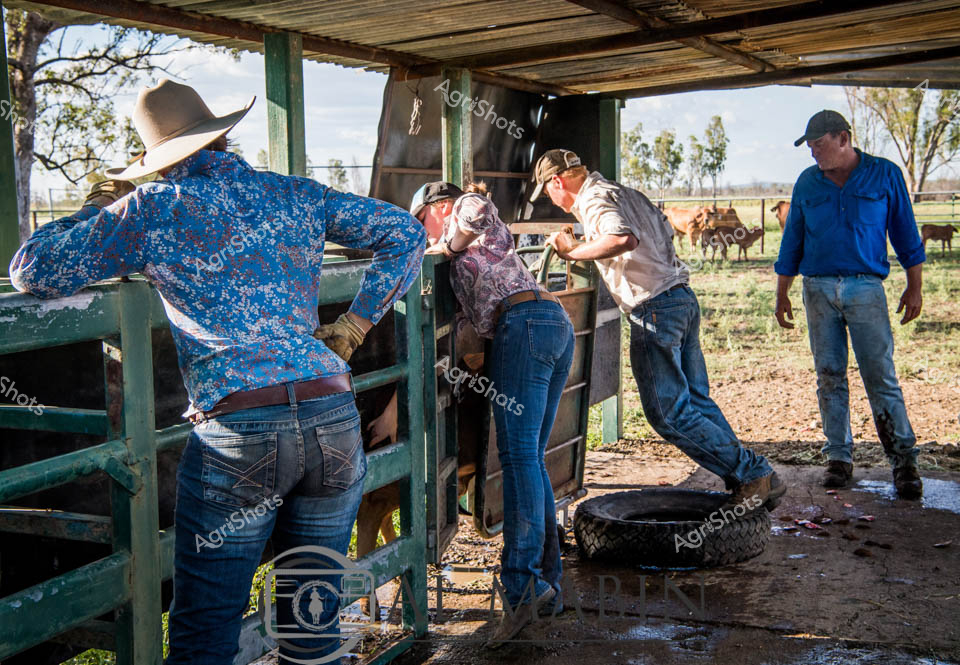
Dusty cattle yards echo with purpose on a crisp Queensland morning, where a seasoned crew works efficiently during livestock branding operations. A stockworker in a vivid blue floral shirt and cream cowboy hat stands alongside colleagues, their coordinated movements revealing generations of agricultural expertise. Brahman cattle, recognizable by their distinctive humps and loose skin, await processing in the sturdy green metal yards, with paddocks and sparse trees visible in the background. One worker leans into the metal gate, carefully managing a calf during the critical branding process, while another provides steady support. The scene captures the raw essence of rural Australian cattle station life - a blend of skilled labor, traditional techniques, and the unspoken communication that defines professional agricultural teams. Weathered denim, work boots, and well-worn caps underscore the practical, no-nonsense approach of these experienced stockmen, highlighting the demanding yet precise nature of cattle management in the Australian outback.
 Image
Image
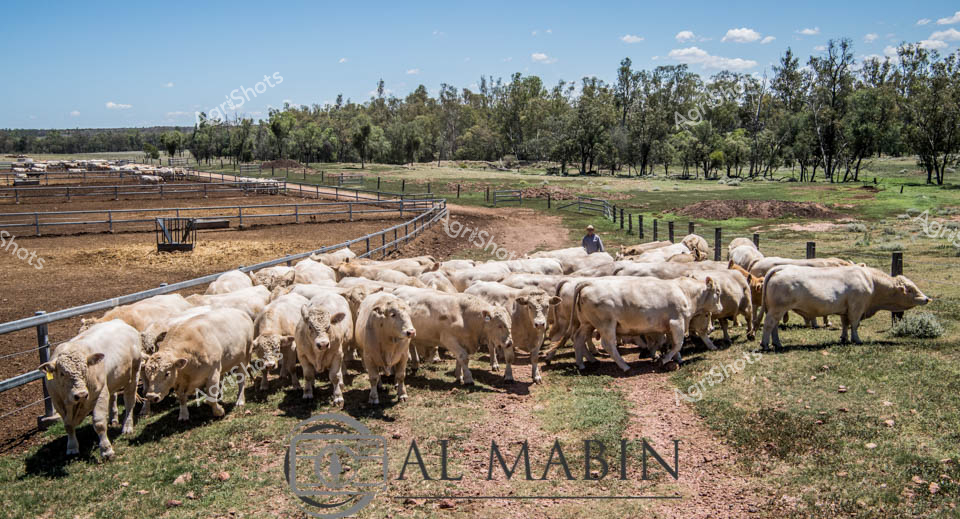
A herd of pristine white Charolais cattle congregate along a dusty dirt path, flanked by steel livestock fencing in the expansive Queensland of Queensland. The bright midday sun casts sharp shadows across the pastoral landscape, illuminating the muscular bodies of these premium beef cattle against a backdrop of scattered eucalyptus trees and golden-brown paddocks. A lone stockworker moves quietly among the herd, guiding them with subtle movements and years of agricultural expertise. The cattle cluster together, their pale coats gleaming, representing the pinnacle of Australian beef breeding - robust, well-muscled animals selected for superior genetic lines and optimal meat production. Dry grass and reddish earth underfoot tell the story of a challenging rural environment where resilience and careful management are key to agricultural success.
 Image
Image
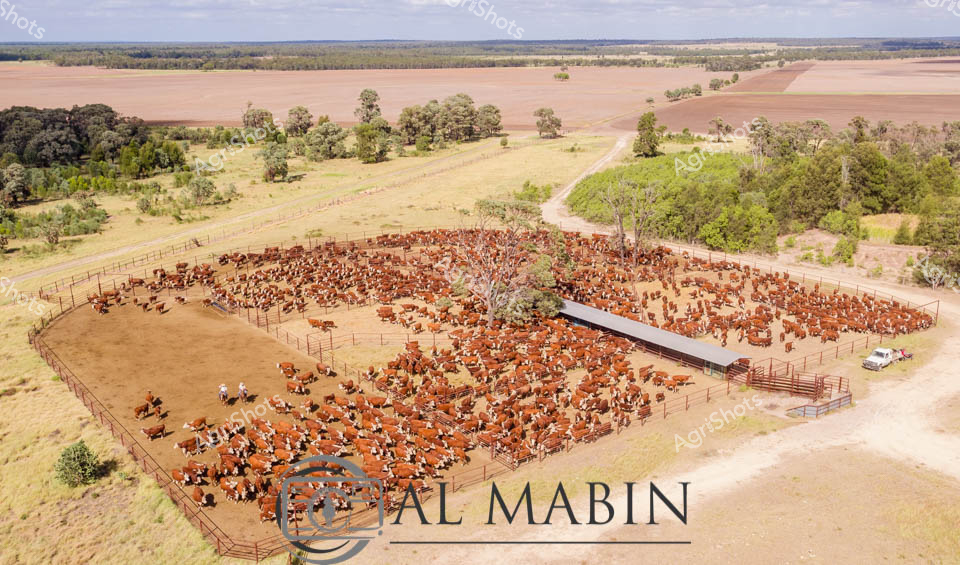
Vast horizons of Queensland's pastoral landscape embrace a bustling cattle yard at the heart of an expansive agricultural enterprise. Hundreds of rich russet-colored Hereford cattle cluster densely within a carefully constructed fenced paddock, their compact bodies creating a living carpet of burnished terracotta against the dusty earth. A long timber and metal shade structure provides shelter, while a white utility vehicle and distant tree lines frame the scene, suggesting the sophisticated infrastructure of modern cattle management. Two stockworkers and what appear to be working dogs move strategically among the herd, their movements purposeful and practiced in the choreography of mustering. The surrounding countryside unfolds in a patchwork of golden grasslands, dark green woodland clusters, and ploughed earth fields, capturing the quintessential Australian rural vista of Queensland's agricultural heartland.
 Image
Image
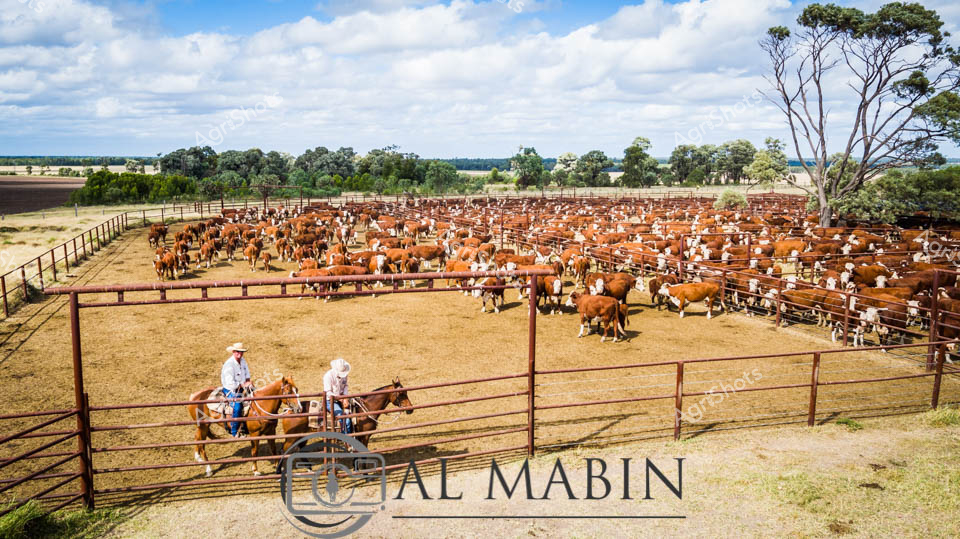
Burnished copper-red Hereford cattle cluster in the expansive yards of a Queensland cattle station, their compact bodies creating a living tapestry against the sun-bleached earth. Two stockworkers on horseback, dressed in classic Australian rural attire of wide-brimmed hats and dusty work clothing, navigate the perimeter of the meticulously constructed steel yard fencing. Sparse eucalyptus trees punctuate the distant horizon, casting slim shadows across the golden grasslands of the Queensland. The late morning light bathes the scene in a crisp, clear brilliance, highlighting the muscular frames of the cattle and the disciplined movement of the horses. This is a quintessential moment of Australian agricultural practice - the careful, skilled management of beef cattle through traditional mustering techniques that have defined rural Queensland for generations.
 Image
Image
Golden afternoon light bathes a working sheep station in Central West Queensland, where precision and patience define the drafting process. A stockworker in a vivid blue work shirt and cap stands amid gleaming galvanized steel sheep yards, carefully managing a small group of Dorper sheep. The distinctive white-bodied, black-headed Dorpers move carefully through the metal gates, their muscular frames highlighting the breed's robust meat-production qualities. Corrugated iron sheds cast long shadows across the dusty yard, creating geometric patterns of light and metal that speak to generations of pastoral infrastructure. The grated flooring beneath the animals allows for efficient waste management, demonstrating the considered design of modern agricultural facilities. Every element of the scene - from the worker's measured movements to the sheep's controlled progress - reflects the quiet expertise of Australian livestock management.
 Image
Image
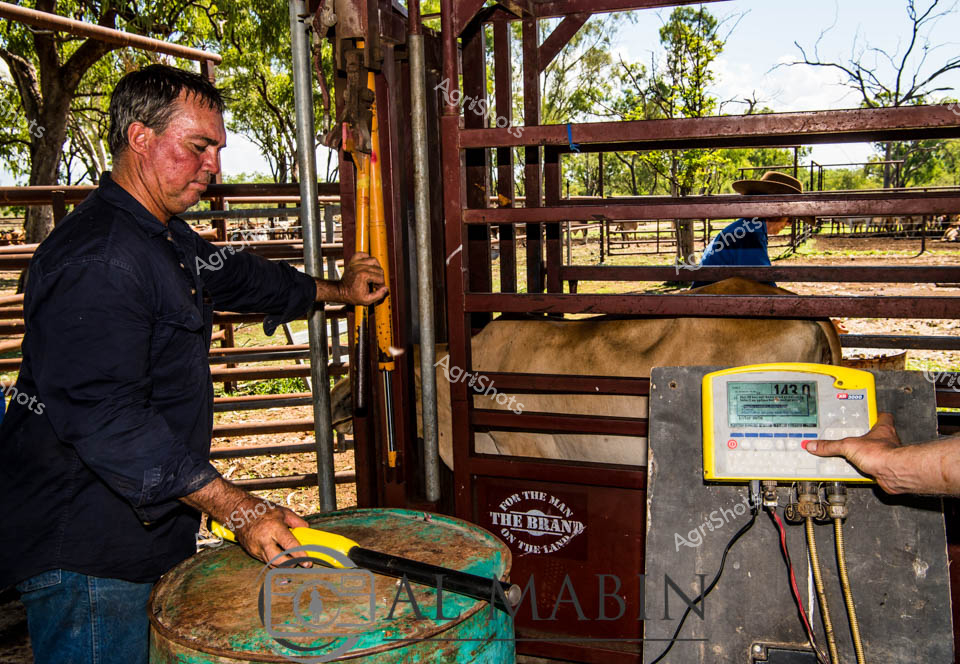
Weathered hands navigate the cattle yards under the dappled sunlight of a Queensland station. A stockworker in a dark blue long-sleeve shirt operates a rustic green barrel near a sophisticated Trutest digital weighing and identification system, preparing to tag and record essential data for the herd. Sturdy metal cattle gates and wooden fencing define the working space, with sparse eucalyptus trees creating a classic Australian rural backdrop. The digital equipment stands ready, its yellow and white display indicating precision in livestock management, while the worn barrel suggests years of practical agricultural experience. This scene captures the nuanced blend of traditional farming techniques and modern agricultural technology - a testament to the strategic and meticulous nature of cattle station operations. The muted earth tones, from the stockman's clothing to the weathered infrastructure, speak to the resilient spirit of rural Australian agricultural practices.
 Image
Image
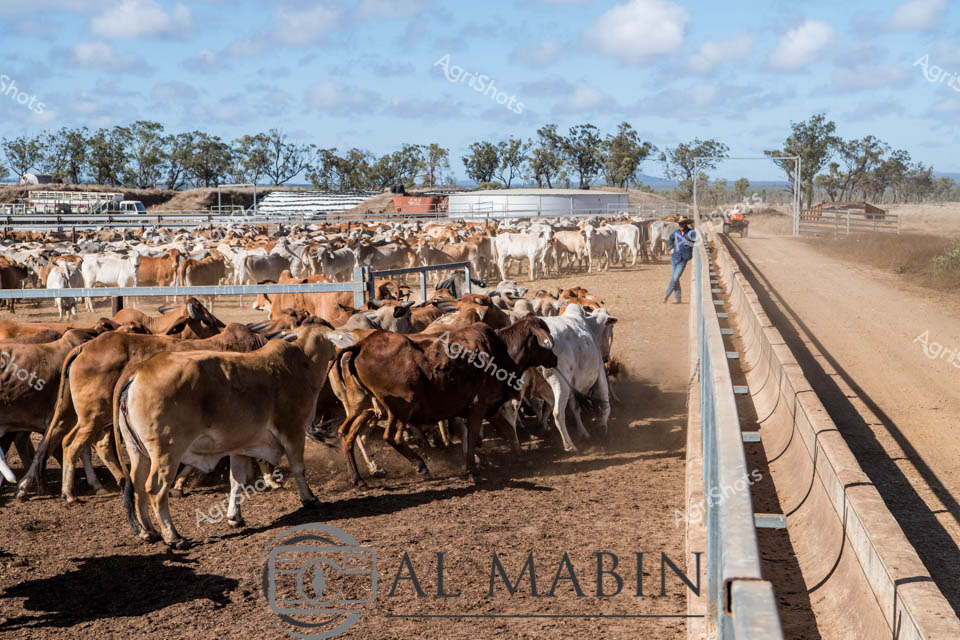
Brahman and composite beef cattle surge through a dusty cattle yard at The feedlot in regional Queensland. The herd, a mixture of rich tan and pale cream-colored animals, moves along a concrete-lined feed alley with precision and purpose. A stockworker in blue clothing stands watchfully beside the metal yard infrastructure, overseeing the cattle's movement during feeding time. Sparse eucalyptus trees line the horizon under a soft blue sky with scattered clouds, creating a quintessential Australian agricultural landscape. The cattle display the robust muscling and heat-tolerant characteristics typical of Brahman-cross breeds, perfectly adapted to the challenging Queensland climate. Dust rises from their hooves, capturing the dynamic energy of modern large-scale cattle management, where precision feeding and careful animal husbandry represent the cutting edge of beef production.
 Image
Image
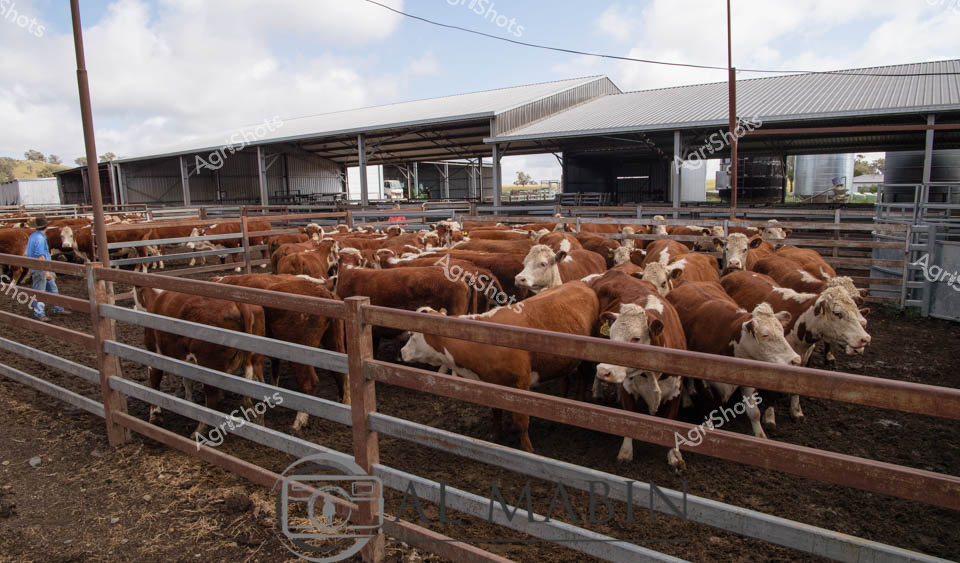
Robust Hereford cattle cluster tightly in a steel-framed livestock yard, their rich chestnut and white coats gleaming under the soft, diffused light of a cloudy rural morning. The herd stands clustered within sturdy wooden and metal fencing, surrounded by a modern steel-roofed agricultural shed that speaks to contemporary Australian cattle management practices. A stockworker in a blue shirt stands nearby, subtly overseeing the group, representing the quiet expertise of rural agricultural professionals. The earthen yard shows signs of recent cattle movement, with compressed dirt and minimal vegetation reflecting the controlled environment of a professional cattle operation. These muscular Herefords, known for their exceptional beef qualities, represent the genetic precision and careful breeding characteristic of Australian stud cattle enterprises. The scene captures the essence of modern agricultural production - efficient, purposeful, and deeply connected to the land.
 Image
Image
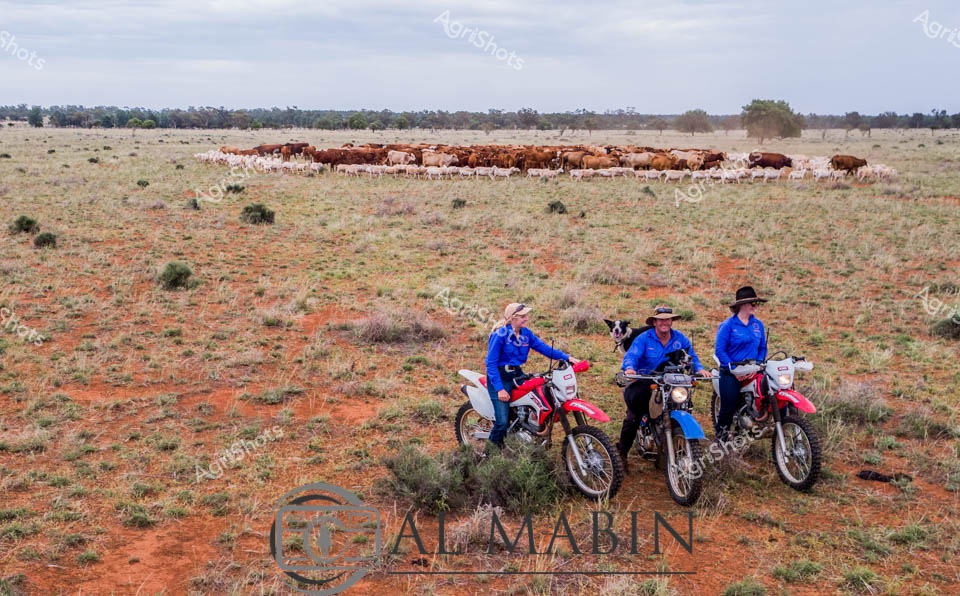
Thundering across the russet earth of western New South Wales, three stockworkers on Yamaha trail bikes navigate the arid pastoral landscape during a cattle and sheep muster. Dressed in vibrant royal blue work shirts and wide-brimmed agricultural hats, the riders guide their motorcycles through sparse saltbush and windswept grasslands, herding a substantial mob of reddish-brown cattle intermixed with white Dorper sheep. The overcast grey sky stretches endlessly above the expansive plains, creating a muted backdrop that emphasizes the earthy ochre tones of the ground and the vivid contrast of the riders' coordinated uniforms. Their precise movements and positioned motorcycles demonstrate the modern agricultural techniques used in mustering livestock across challenging terrain, showcasing the skill and efficiency of contemporary Australian pastoral workers. The scene captures the raw essence of outback farming - a delicate choreography of human skill, machinery, and animal husbandry set against the expansive, unforgiving Australian landscape.
 Image
Image
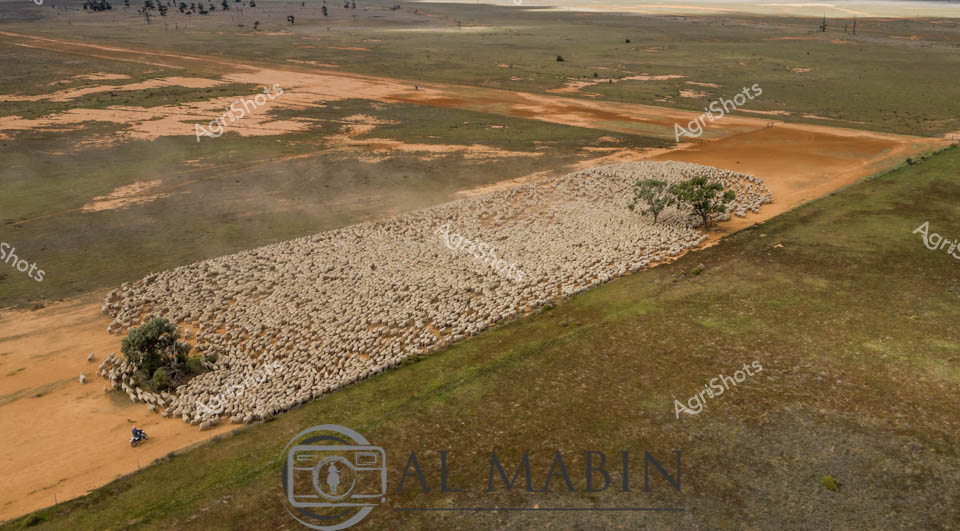
Merino sheep huddle together in a dense, pristine white flock across the rusty orange and sage green pastoral landscape of inland New South Wales. A lone tree stands sentinel, providing sparse shade as the mob stretches across a rectangular paddock boundary, meticulously managed by a stockworker on a motorbike. The aerial perspective reveals the intricate patchwork of agricultural terrain - dusty ochre earth contrasting with weathered green pastures, showcasing the harsh beauty of Australian sheep country. Thousands of woolly bodies create a textural carpet, their collective movement suggesting recent mustering from a vast station property. The expansive horizon speaks to the immense scale of Australian agricultural landscapes, where livestock production demands precision, skill, and an intimate understanding of challenging environmental conditions. The golden morning light casts long shadows, highlighting the geometric lines of human intervention in this wild, remote ecosystem.
 Image
Image
A vast merino flock surges across the arid landscape of a New South Wales station, kicking up a billowing dust cloud that stretches toward the horizon. A lone stockworker on a motorbike guides the dense white mass of woolly bodies along a defined paddock boundary, skillfully herding thousands of sheep with precision and expertise. The golden-brown earth contrasts sharply with the verdant green strip of pasture, revealing the harsh yet spectacular terrain of Australian sheep country. Windswept and sun-bleached, the scene captures the raw intensity of rural mustering - a timeless dance between human, animal, and landscape that defines Australian agricultural heritage. Dust swirls and sheep move as a living, breathing entity, embodying the resilience and scale of sheep farming in the Australian outback.