About this image
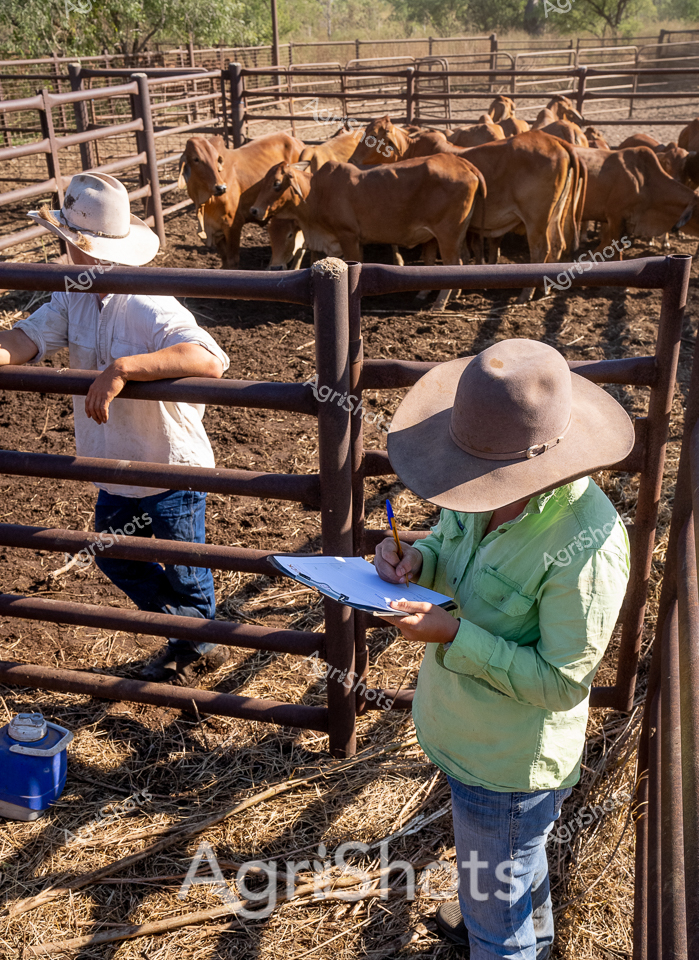
In the sun-baked cattle yards of Western Australia's rugged Kimberley region, two rural workers tend to a herd of rich copper-colored Brahman cattle. Steaming earth and weathered timber yards frame the scene, with straw scattered across the ground reflecting the harsh pastoral landscape. One worker in a light green shirt carefully documents details on a clipboard, while the other leans against the steel rail fence, surveying the compact herd of muscular cattle with their distinctive humped shoulders and loose skin - hallmarks of the heat-tolerant Brahman breed. Wide-brimmed stockman's hats shield them from the intense Australian sunlight, a practical uniform of the remote station life. The cattle stand closely grouped, their sleek coats gleaming with health, a testament to careful management in this challenging agricultural environment. This image captures the quiet concentration and systematic approach of contemporary Australian cattle station operations, where careful record-keeping and animal husbandry are as crucial as traditional stockwork.
Similar media
 Image
Image
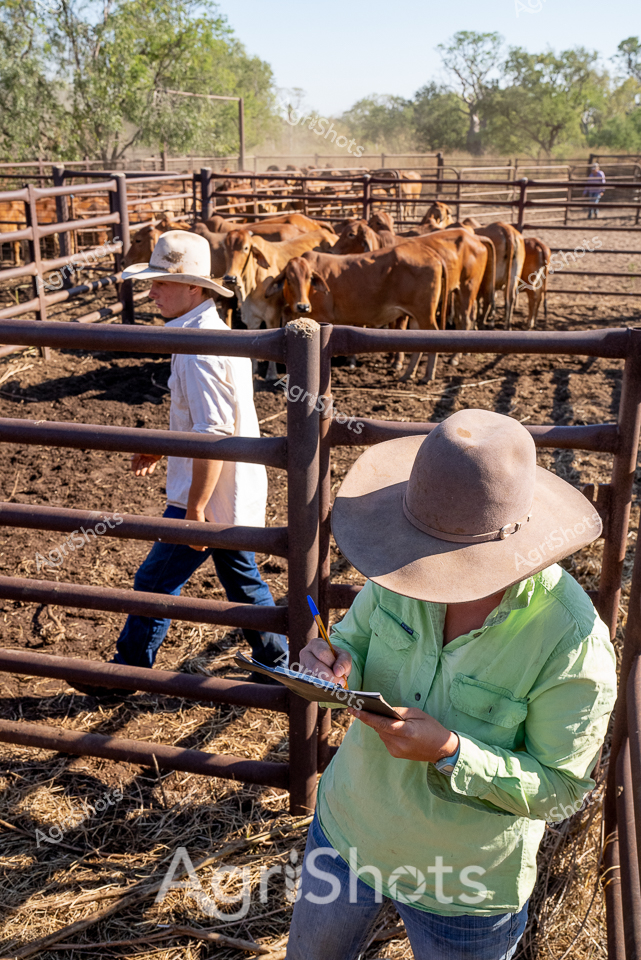
A stockworker in a soft sage-green shirt and wide-brimmed hat leans against the steel gate, meticulously recording details on a clipboard - her posture speaks of quiet concentration and practiced efficiency. Another worker in a crisp white shirt stands nearby, surveying the herd with the calm expertise of someone who understands every subtle movement and potential challenge of cattle management. The landscape behind them is quintessential Kimberley - sparse eucalyptus trees and dusty earth creating a muted, golden-brown backdrop that stretches towards a hazy horizon. Straw and packed dirt carpet the yards, revealing the daily rhythms of station life where precision and patience are as essential as the robust livestock themselves. These moments of careful stock management represent the backbone of Australia's northern cattle industry - a delicate dance of human skill and animal husbandry played out under an unforgiving sky.
 Image
Image
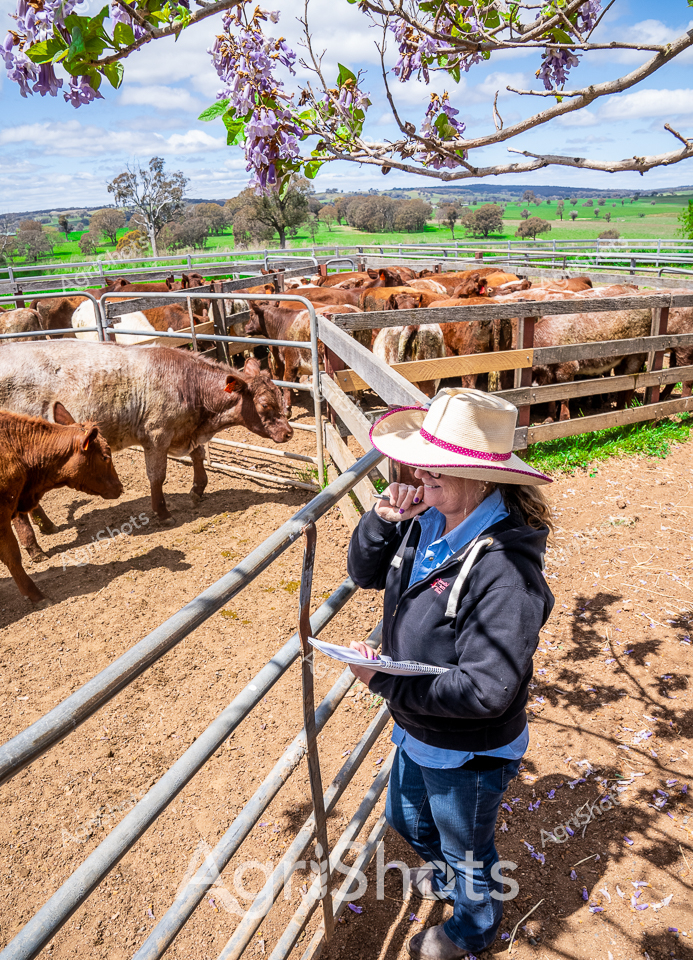
Jacaranda blossoms frame a pastoral scene of cattle yards in rural New South Wales, where a focused agricultural worker stands amid a herd of rich, russet-colored Shorthorn cattle. Wearing a crisp white and pink-trimmed sun hat, the individual leans against metal stock yard rails, carefully recording observations on a clipboard while surveying the livestock. The golden dirt of the yard contrasts with vibrant green paddocks and distant blue-tinged hills, creating a quintessential Australian agricultural landscape bathed in soft midday light. Muscular beef cattle crowd the yards, their varied shades of brown and red telling a story of careful breeding and livestock management. The scene captures the meticulous work of stud cattle breeding - a delicate balance of scientific observation and traditional farming practice. Purple jacaranda petals scattered on the ground add a gentle, ephemeral touch to this moment of concentrated agricultural expertise, highlighting the beauty and precision of modern rural work.
 Image
Image
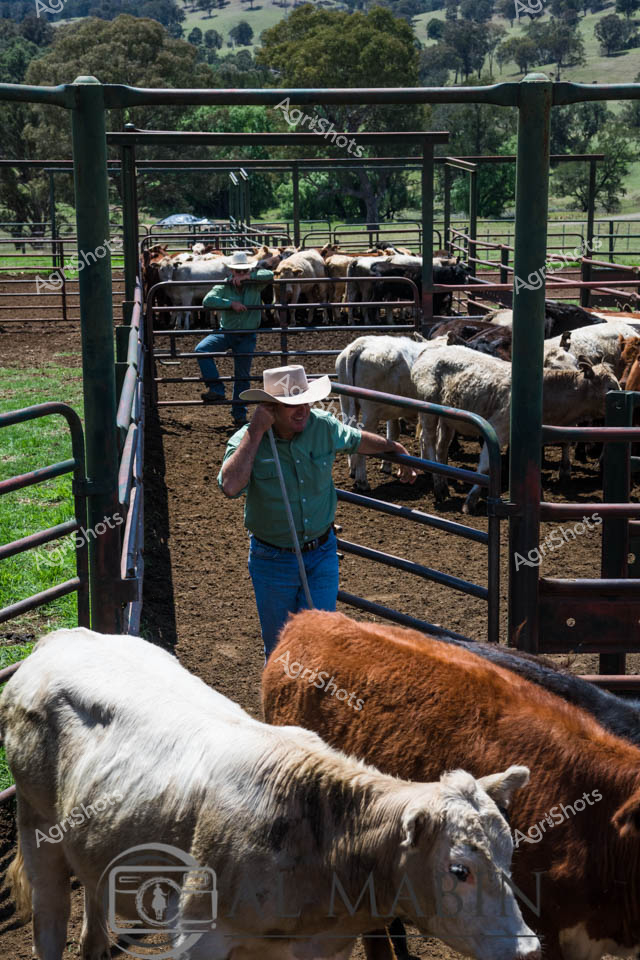
Weathered cattle yards nestled in a lush New South Wales pasture become a hub of agricultural activity during this mid-morning livestock management session. A stockman in a sage green shirt and light-colored wide-brimmed hat carefully monitors the cattle, his posture relaxed yet purposeful as he leans against the steel yard gates. Robust beef cattle - a mix of white and chestnut-colored animals - mill within the segmented metal yard, awaiting drafting and sorting. The verdant green grass of the surrounding paddock contrasts sharply with the dusty earth of the working yards, highlighting the dynamic interface between pastoral landscape and livestock management. Sturdy steel yard panels in deep green create a structured framework for moving and separating cattle, demonstrating the precision of modern Australian cattle farming techniques. The rolling tree-studded hills in the background frame this quintessential rural scene, capturing the essence of livestock production in the Australian agricultural landscape.
 Image
Image
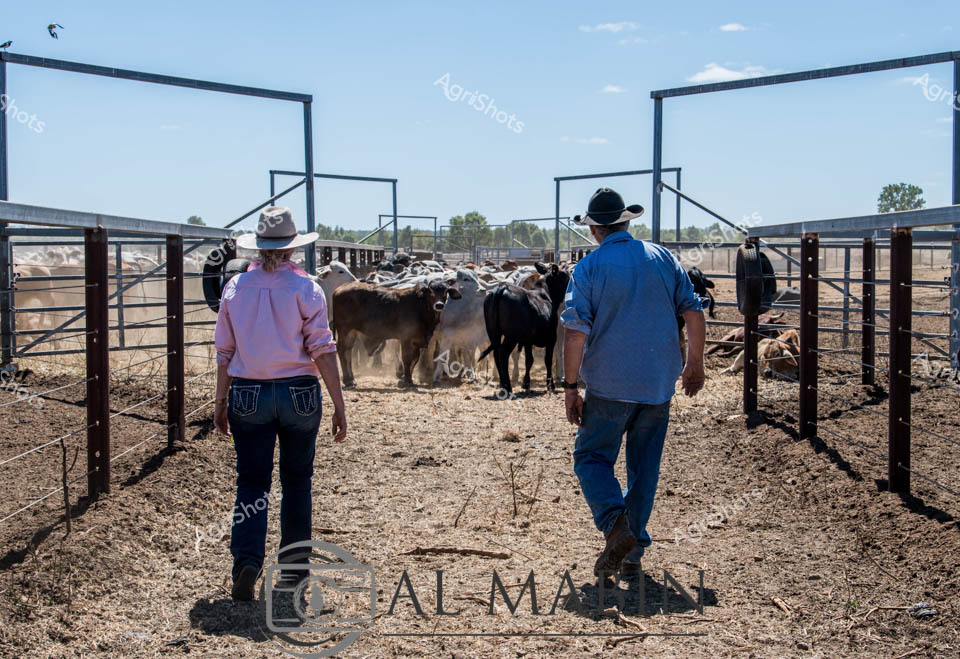
Two cattle handlers walk through a steel-framed feedlot pen under a brilliant blue Queensland sky, carefully monitoring a herd of mixed beef cattle. The ground is dusty and trampled, reflecting the harsh conditions of large-scale livestock management. Dressed in classic rural workwear - the individual on the left wearing a pink long-sleeved shirt and dark jeans, the person on the right in a blue work shirt and denim - they move with purpose among the crowded animals. Black and grey cattle cluster together, their muscular bodies pressed close within the metal yard boundaries, representing typical beef production stock. The crisp morning light casts sharp shadows across the feedlot, highlighting the geometric lines of the metal cattle yards and emphasizing the structured environment of modern agricultural livestock management. This scene captures the essence of Queensland's beef industry: professional, pragmatic, and focused on efficient animal husbandry in a challenging agricultural landscape.
 Image
Image
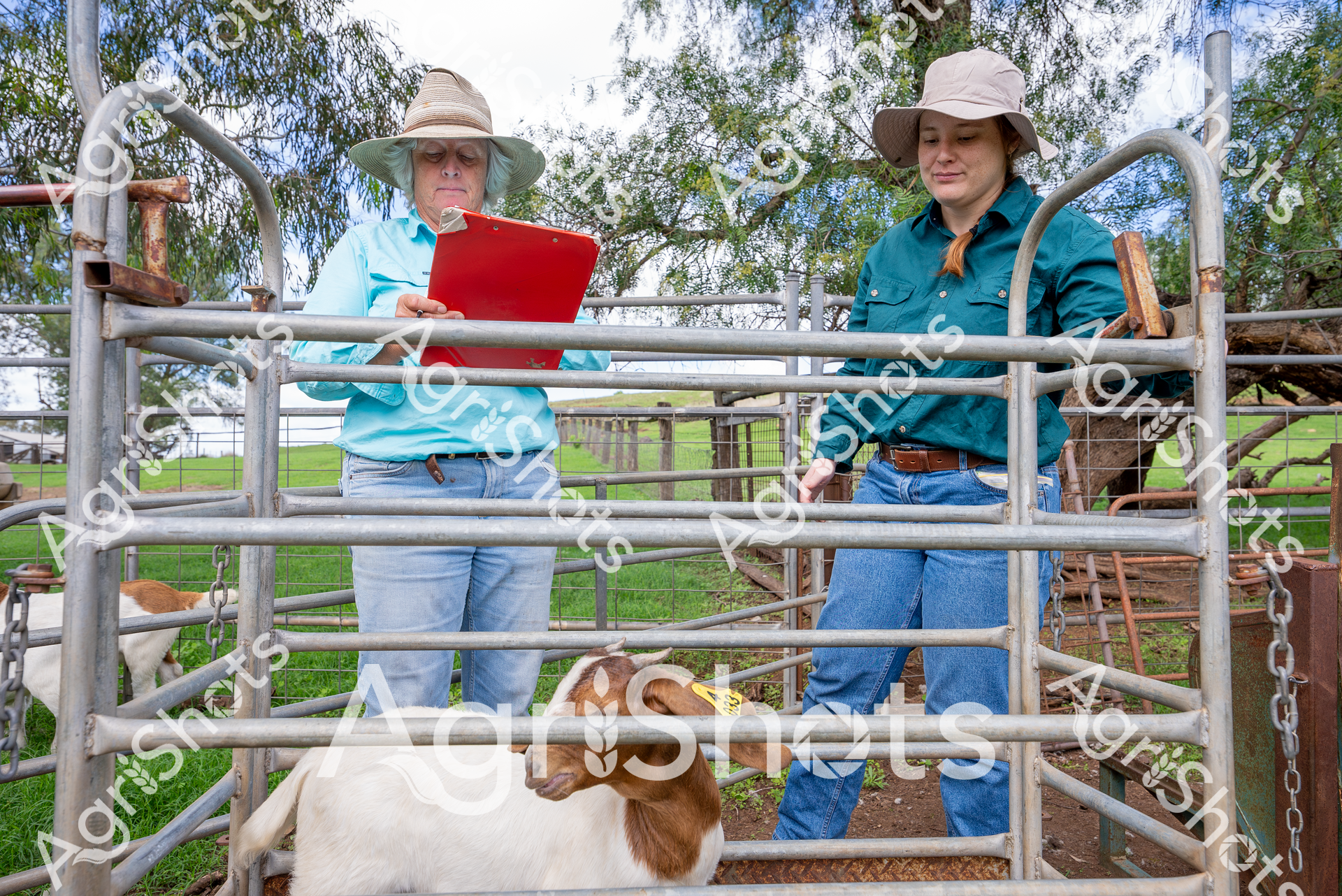
On a sun-drenched summer's day in Queensland's Darling Downs, two women collaborate in a well-maintained livestock yard, their agricultural expertise evident in every purposeful movement. A mature and a younger woman, both wearing protective sun hats and practical farm attire - one in a soft blue shirt, the other in teal - stand behind metal livestock gates alongside a handsome Boer goat. The elder carefully records details on a vibrant red clipboard, likely documenting the animal's weight or health statistics, while the younger woman observes with a keen, professional demeanor. The verdant pasture and scattered eucalyptus trees in the background frame this quintessential Australian agricultural scene, highlighting the precision and care integral to modern stud goat breeding. Their matching wide-brimmed hats and focused expressions speak to the generational knowledge transfer that sustains rural farming communities, capturing a moment of quiet expertise in the ongoing narrative of Australian agricultural practice.
 Image
Image
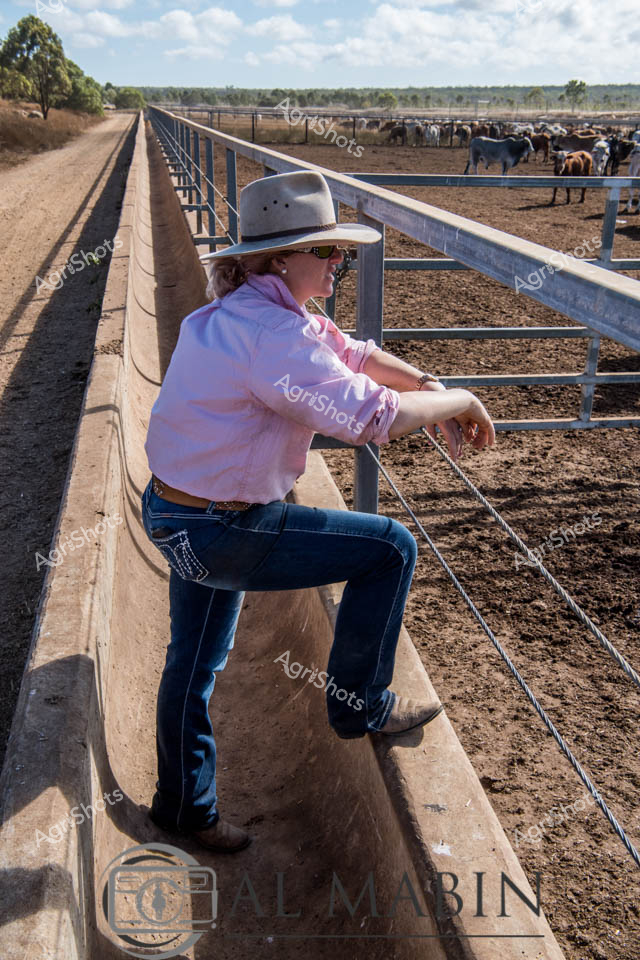
Perched on the concrete feed alley of a vast Queensland cattle feedlot, a stockwoman surveys the expansive pen of Brahman and composite beef cattle. Dressed in a crisp pink long-sleeved shirt, well-worn blue jeans, and a classic Australian bush hat, she leans against the steel guardrail with a confident, practiced stance. The dusty earthen feedlot stretches into the distance, lined with robust metal infrastructure and populated by a herd of muscular cattle - a mix of light and dark-colored animals clustered around feed lanes. Harsh sunlight and scattered clouds paint the wide horizon, highlighting the arid landscape typical of northern Australian cattle country. Her posture speaks of intimate knowledge of livestock management, a quiet vigilance over the carefully engineered agricultural environment. The scene captures the precision and scale of modern beef production - where technology, infrastructure, and human expertise converge to manage large herds in challenging rural conditions.
 Image
Image
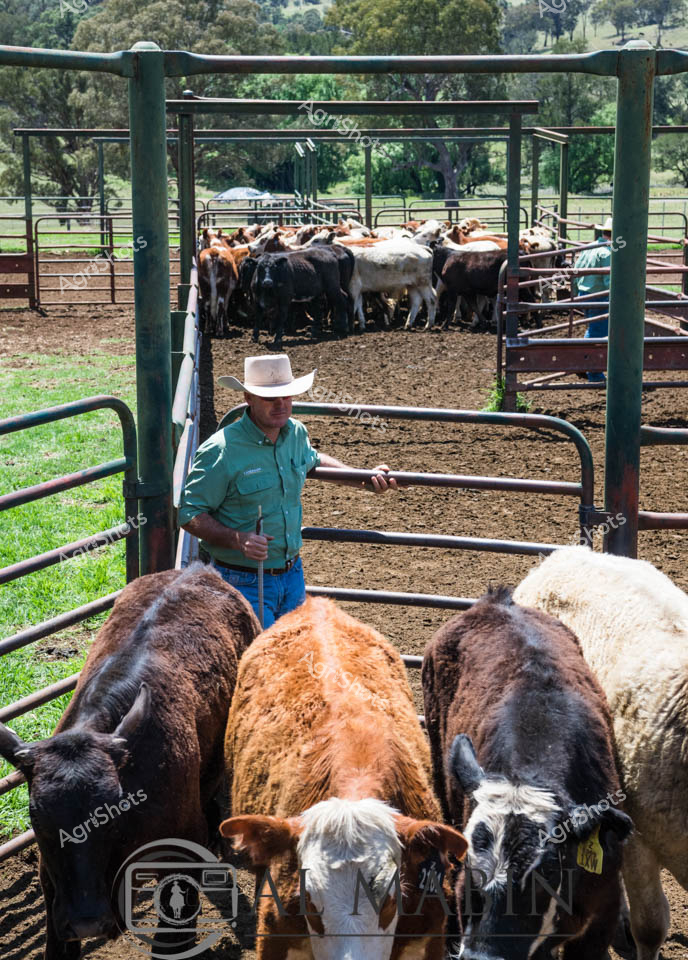
Dusty cattle yards shimmer under the golden light of a late morning in rural New South Wales. A seasoned stockman in a crisp turquoise work shirt and classic broad-brimmed akubra hat stands poised within a green metal livestock handling system, carefully managing a mob of mixed-breed cattle. Dark chocolate, rust-red, and white Hereford and Angus cattle cluster tightly in the yards, their muscular bodies reflecting the genetic quality of Australian beef breeding. The meticulously maintained paddock showcases the sophisticated infrastructure of modern cattle management, with steel gates, smooth dirt surfaces, and lush green grass surrounding the working area. The stockman's practiced stance and calm demeanor speak to generations of agricultural expertise, guiding these valuable animals with precision and care. This scene captures the essence of Australian pastoral life - where animal husbandry meets agricultural science, and traditional skills blend seamlessly with contemporary farming techniques.
 Image
Image
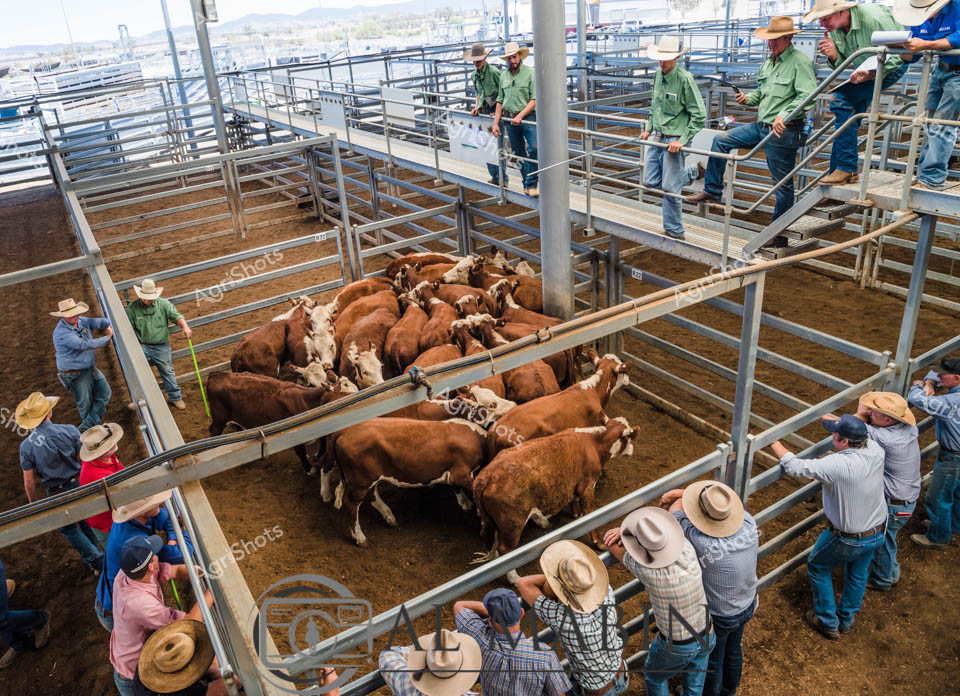
Seasoned cattle agents converge at the bustling regional livestock sale yards, their weathered Akubra hats casting shadows over a tightly packed pen of prime beef cattle. Rich russet and chestnut-colored bovines huddle together, their muscular frames testament to quality breeding from the New England tablelands of New South Wales. Handlers in crisp green work shirts and well-worn denim move with practiced efficiency around the metal livestock pens, their positions strategically arranged to monitor and guide the herd during the auction process. The multi-level steel framework creates a complex grid of observation points, allowing agents to assess the cattle from various angles. Sunlight streams across the indoor sale yard, highlighting the varied coat colors and markings of the cattle - some solid brown, others with distinctive white patches. The atmosphere crackles with professional concentration, a subtle tension of assessment and potential transaction hanging in the air. This scene captures the heartbeat of Australian agricultural commerce - a meticulously organized marketplace where experienced professionals evaluate livestock with expert precision, continuing a generations-old tradition of rural trade and animal husbandry.