Results for “Herding Dogs”
 Image
Image
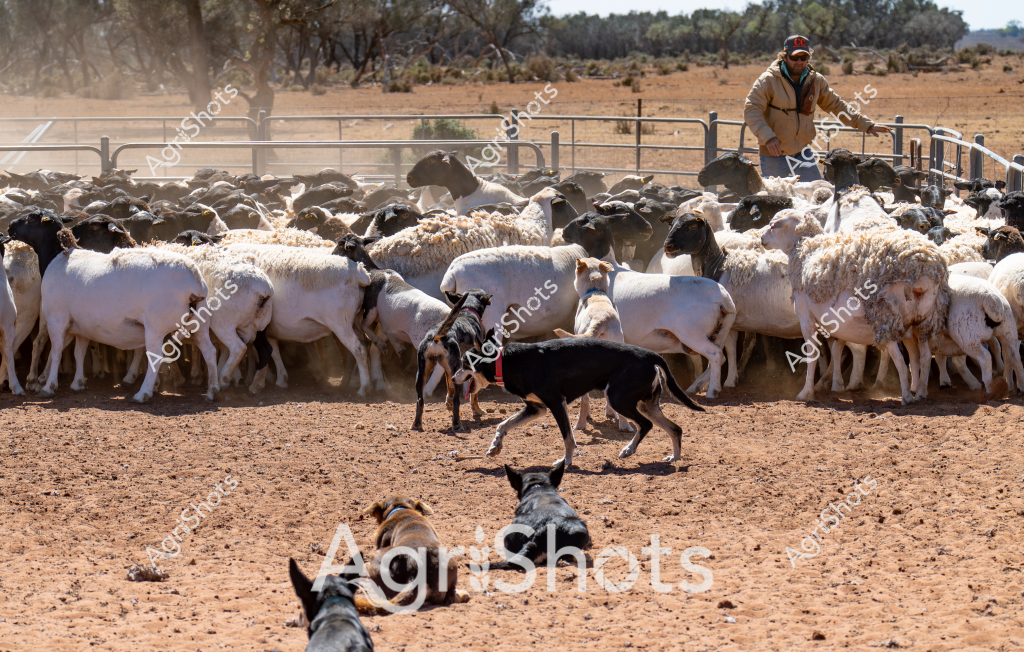
A skilled stockman and his working dogs expertly muster a large flock of white and dark-colored sheep in a dusty livestock yard in the Australian outback. Multiple black and tan Kelpie dogs move strategically around the densely packed sheep, guiding and controlling their movement within the metal yard gates. The dry, reddish-brown earth kicks up clouds of dust as the dogs weave between the sheep, demonstrating the precision and skill of Australian working dogs in managing livestock. A man in a tan work jacket stands on an elevated section of the yard, overseeing the mustering operation. The harsh, arid landscape with scattered trees in the background suggests this is a remote pastoral station in central or western Australia, typical of the challenging environments where sheep farming takes place. The scene captures the essential partnership between human, dog, and livestock that defines Australian agricultural practice.
 Image
Image
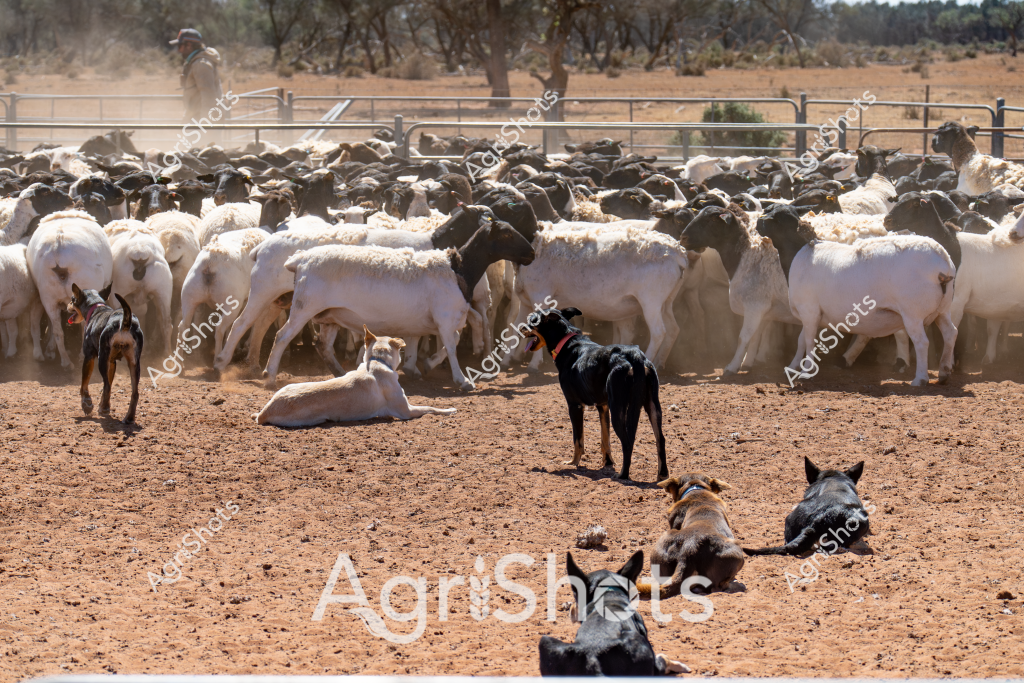
A large herd of predominantly white sheep with some black sheep are gathered in a dusty, fenced paddock with several working dogs managing the mob. A black and white dog stands alertly in the foreground, while others are resting on the dry, reddish-brown earth. In the background, a person on horseback can be seen behind the metal yard fencing, suggesting this is a typical Australian sheep station mustering scene. The bright white coats of the Dorper or White Dorper sheep stand out against the arid landscape, with sparse trees and shrubs visible in the distance. Multiple herding dogs of different colors are strategically positioned around the sheep, demonstrating their crucial role in controlling and moving the livestock across the challenging outback terrain. The harsh, dry environment and the coordinated effort of the stockman and dogs highlight the resilience required in Australian sheep farming.
 Image
Image
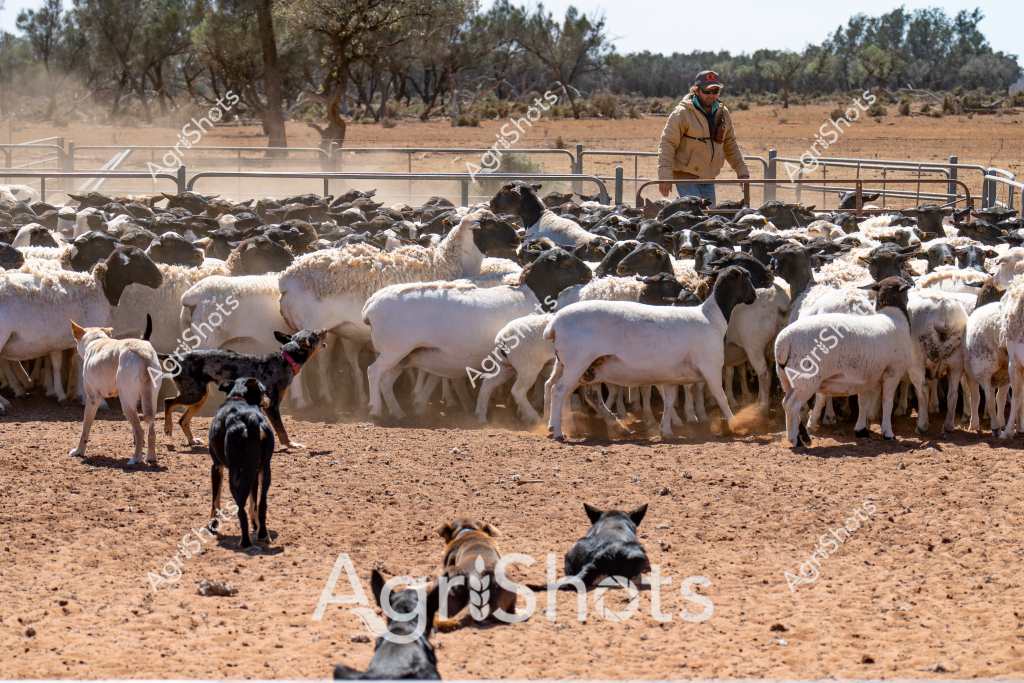
A skilled stockman manages a large flock of white and black sheep within a dusty, fenced yard in what appears to be an arid Australian pastoral region. Several working dogs, likely Australian Kelpies, are strategically positioned around the mob, helping control the tightly packed herd. The dry, reddish-brown ground and sparse trees in the background suggest this is a typical scene from a sheep station in inland Australia, possibly in Western Australia, Queensland, or the Northern Territory. The stockman, dressed in a tan jacket and cap, stands on the edge of the yard, overseeing the sheep herding process. The flock appears to be a mix of white-fleeced sheep, potentially Merino or crossbred lambs, and darker-colored animals. The working dogs are alert and positioned to assist in moving and containing the sheep, demonstrating the critical role of these intelligent canines in Australian livestock management. The scene captures the essence of rural Australian agricultural practice - a blend of human skill, working dog expertise, and livestock management in a challenging, dry landscape. Dust rising from the ground and the tightly clustered sheep suggest active movement and the ongoing process of mustering or yard work typical of sheep farming operations.
 Image
Image
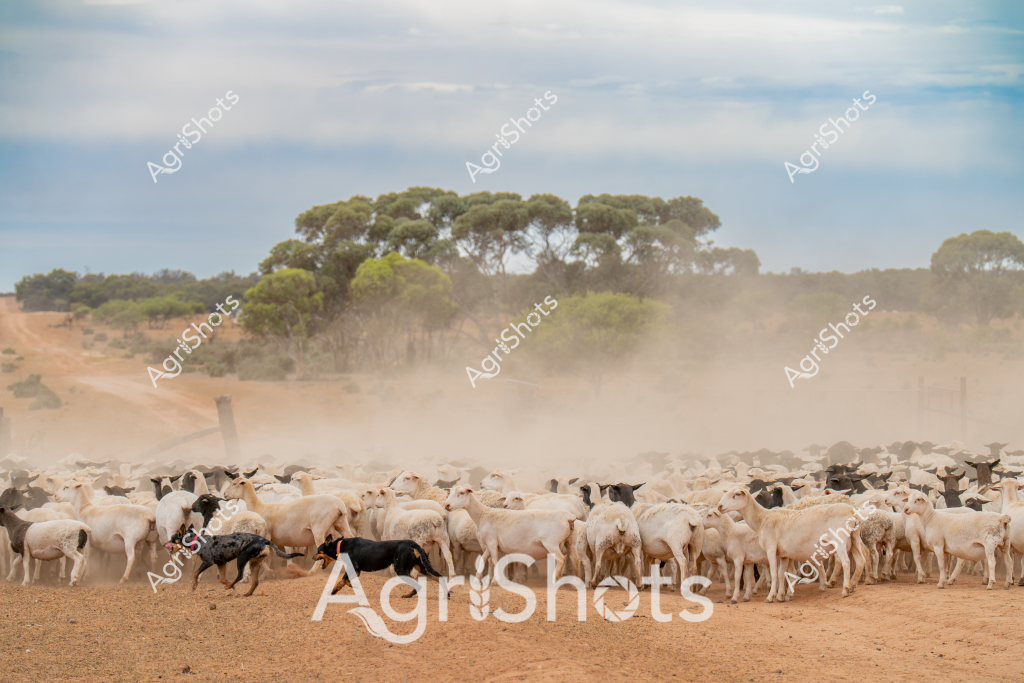
A large flock of white and black sheep gather tightly in a dusty, arid paddock, with several working dogs moving among them. The landscape is characteristic of an Australian rural setting, featuring sparse, golden-brown earth and eucalyptus trees clustered in the distant background. Dry soil kicks up a fine dust cloud around the mob of sheep, suggesting hot, dry conditions typical of an Australian summer or drought period. The working dogs, black and white in color, are actively herding and managing the sheep, weaving between the tightly packed animals with purpose and skill. These are likely Merino sheep, a breed renowned in Australian agriculture for their high-quality wool production. The dense clustering of the animals indicates they are being carefully controlled and directed, possibly during mustering, yard preparation, or movement between paddocks. The scene captures the essence of Australian pastoral farming - a landscape of sparse vegetation, resilient livestock, and the critical role of working dogs in managing large herds across challenging terrain. The muted color palette of beige earth, pale sky, and green-grey trees emphasizes the harsh but beautiful nature of rural agricultural environments.
 Image
Image
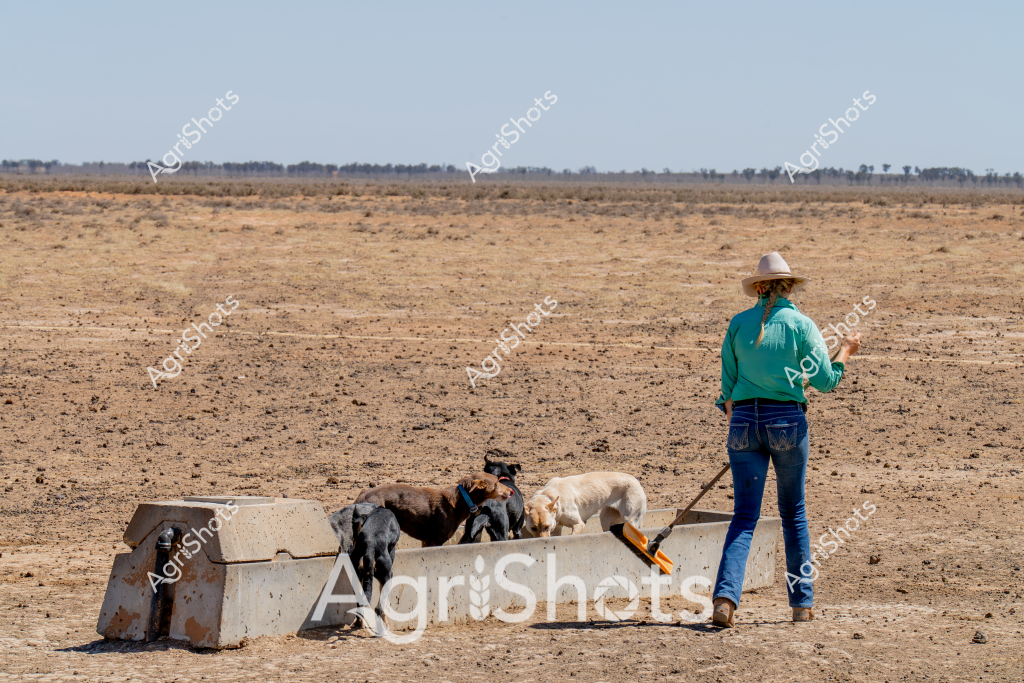
A woman stockman stands in a drought-affected paddock, managing a small group of working dogs near a concrete water trough. The landscape is a stark, dry expanse of reddish-brown earth stretching to a distant tree line, highlighting the harsh agricultural conditions. The woman wears a turquoise long-sleeved shirt, blue jeans, and a light-colored wide-brimmed hat, typical of rural Australian work attire. Several dogs of different colors - including black and tan - are gathered around the concrete water infrastructure, appearing to be working dogs trained to assist in livestock management. The barren background and dry ground illustrate the challenging environmental conditions faced by Australian farmers, with the scene capturing the resilience and daily work of agricultural workers in managing livestock during difficult drought periods. The image speaks to the ongoing challenges of rural Australian agriculture, showcasing the relationship between farmers, their working animals, and the demanding landscape. The concrete trough provides a critical water source in this arid environment, demonstrating the importance of water infrastructure in sustaining agricultural operations during dry seasons.
 Image
Image
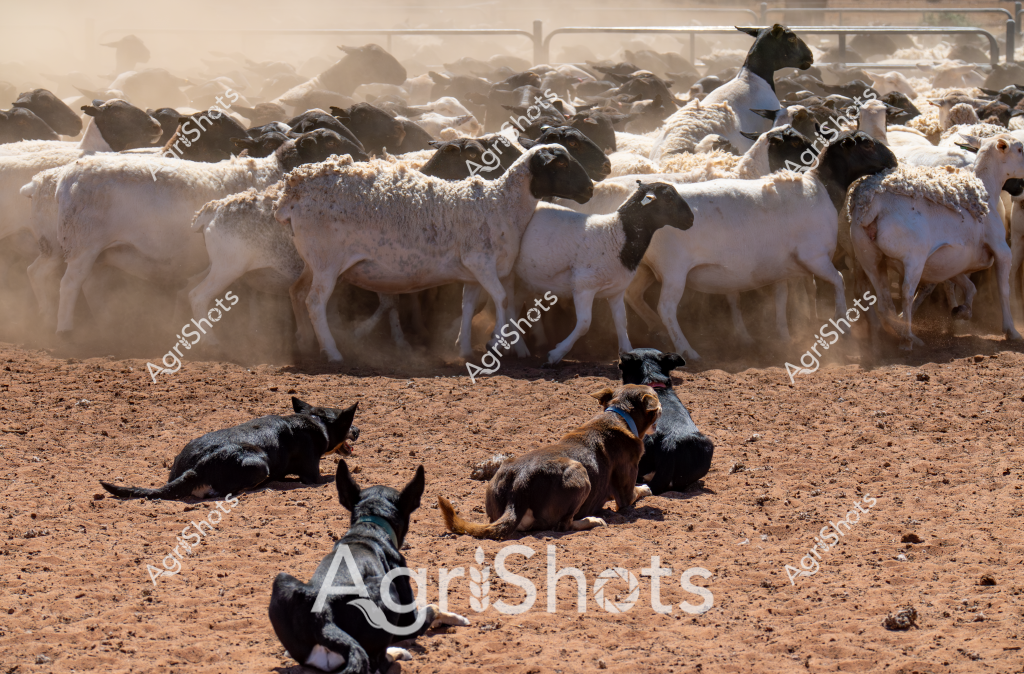
A large flock of white and black Dorper sheep stands tightly packed in a dusty livestock yard, kicking up a haze of dry earth in the background. In the foreground, several black working dogs lie resting on the reddish-brown dirt, cooling off after what appears to be an intense mustering session. The sheep, primarily white with black heads and markings typical of Dorper breed, are clustered together near metal yard fencing, creating a dense mass of woolly bodies. The scene captures the harsh conditions of an Australian pastoral setting, likely in a dry inland region such as Queensland or Western New South Wales. The ground is parched and cracked, indicating dry seasonal conditions, while the dust cloud suggests intense heat and arid environmental conditions. The working dogs, looking exhausted but alert, demonstrate the critical role of canine helpers in managing large livestock herds. The image powerfully illustrates the challenging environment of Australian sheep farming, where livestock management requires resilience and specialized skills. The tight grouping of the Dorper sheep and the strategically positioned working dogs showcase the coordinated effort required to handle livestock in demanding outback conditions.
 Image
Image
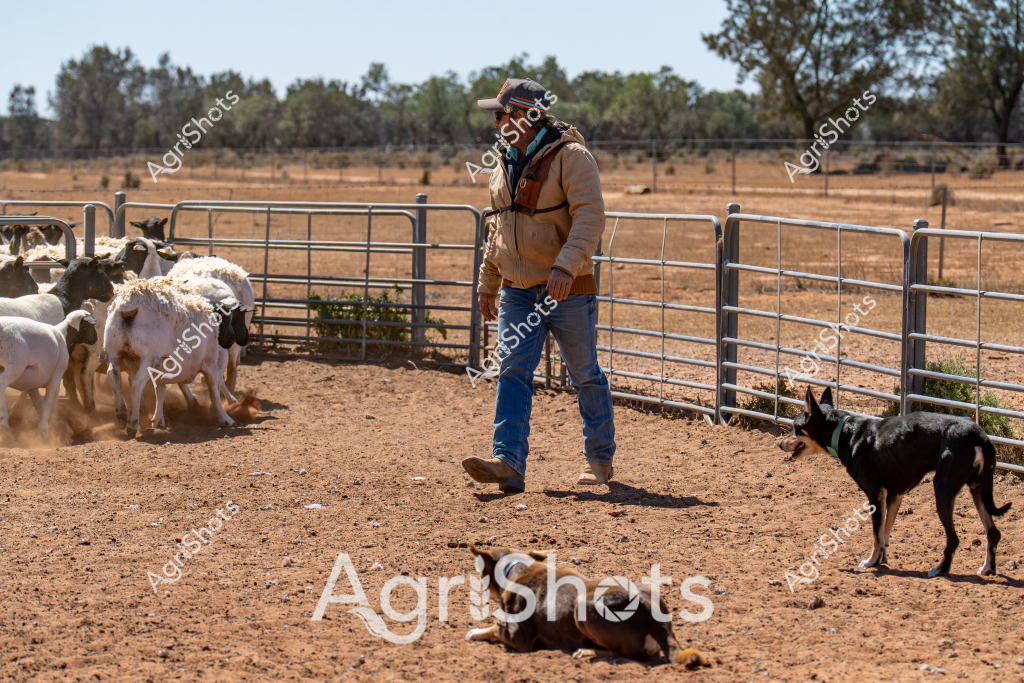
A man stockman stands in a dry, dusty yard managing a small flock of white sheep within metal livestock gates. A black working dog sits attentively nearby, while another dog lies on the ground, both ready to assist with stock movement. The landscape is typical of an Australian rural setting, with sparse paddocks and scattered eucalyptus trees visible in the background. The stockman wears traditional farm attire - a tan jacket, blue jeans, and a cap - suggesting a typical day of livestock management in what appears to be an arid or drought-affected region. The ground is hard-packed dirt, with minimal vegetation, highlighting the challenging environmental conditions common in Australian agricultural areas. The scene captures the essence of rural stock management, where skilled workers and their trained dogs work together to control and move livestock in harsh, dry conditions. The interaction between the stockman, his dogs, and the sheep demonstrates the precision and teamwork required in Australian farming.
 Image
Image
A classic Australian livestock mustering scene captures working dogs expertly managing a large flock of white and dark-colored sheep in a dusty, arid paddock. Several black and tan dogs are positioned strategically around the mob, some standing alert while others rest on the dry, reddish-brown earth. The sheep are densely packed within a metal yard fence, with trees and scrubland visible in the background, suggesting a typical Australian pastoral setting. The working dogs, likely Australian Kelpies or similar herding breeds, demonstrate the critical role of canine partners in managing livestock across vast rural properties. Their positioning shows practiced skill - some standing vigilant, others resting but ready to spring into action at a moment's notice. The dense dust cloud and tight grouping of sheep indicate active movement and controlled herding. The harsh, sunbaked landscape with its red soil and sparse vegetation is characteristic of inland Australian agricultural regions, likely in a state like Queensland or Western Australia. The scene captures the demanding nature of sheep farming in challenging environmental conditions, highlighting the resilience and expertise required in Australian pastoral agriculture.
 Image
Image
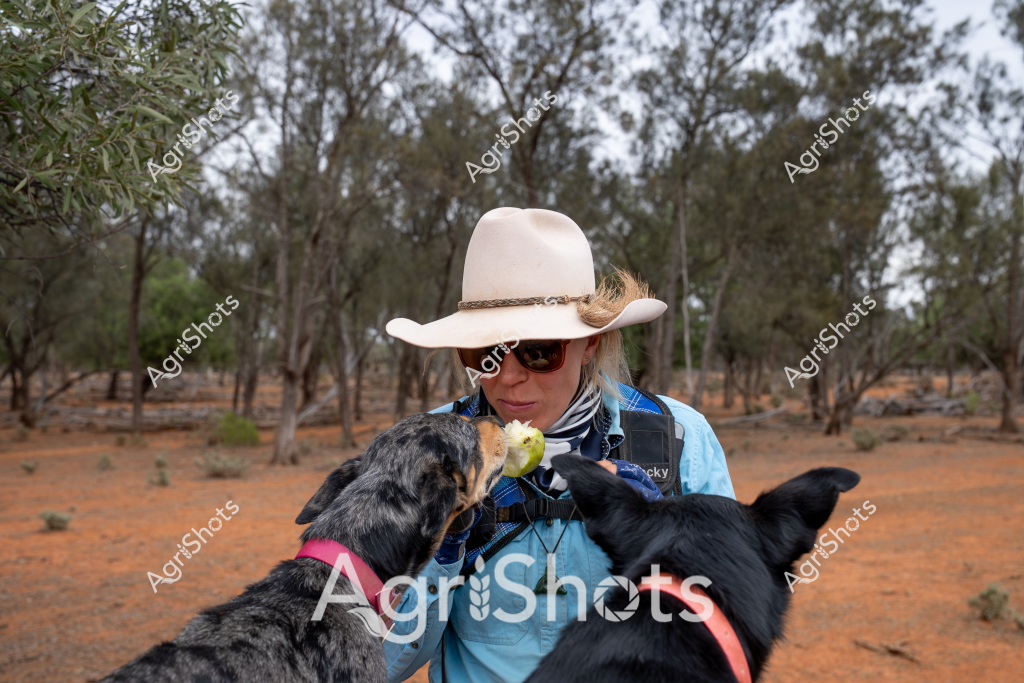
A woman wearing a white wide-brimmed hat and sunglasses stands in a dry, arid landscape with sparse trees and reddish soil, holding two working dogs. One dog appears to be taking a bite from an apple or similar fruit she is offering. The woman is dressed in a blue shirt with a patterned scarf, suggesting she is likely a livestock manager or farm worker in an outback or rural Australian setting. The surrounding landscape looks like a typical arid region, with scrubby trees and open ground, characteristic of many inland agricultural areas in Australia. Her interaction with the dogs indicates a close working relationship, common among rural workers who rely on well-trained canine companions for managing livestock or farm tasks. The scene captures the essence of rural Australian agricultural life - resilient, practical, and closely connected to the challenging landscape.
 Image
Image
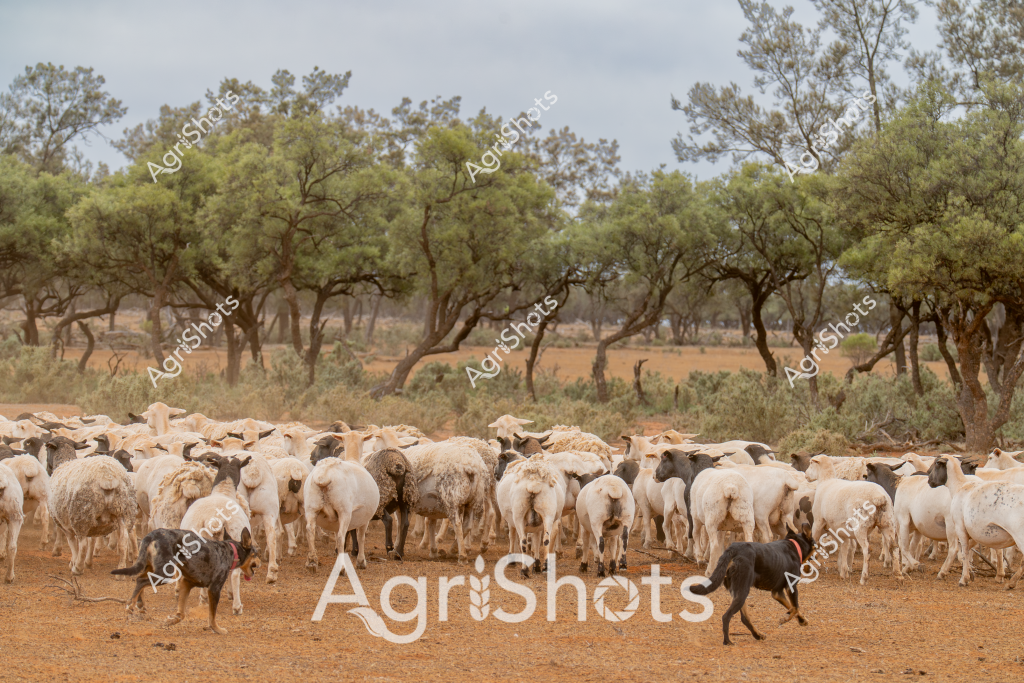
A substantial flock of white and dark-colored sheep cluster tightly together on a dry, reddish-brown earth paddock, surrounded by sparse acacia and eucalyptus trees. Two working dogs, likely Australian Kelpies, move strategically around the herd, herding and controlling the sheep's movement with practiced precision. The landscape suggests an arid or semi-arid region, with muted green trees providing a soft backdrop against the dusty ground where the sheep are densely packed. The animals appear to be Merino or crossbred sheep, their woolly backs facing mostly outward, creating a textured mass of cream and darker fleece. The scene captures the quintessential Australian pastoral setting - a moment of controlled movement during mustering, where skilled working dogs and the natural landscape work in harmony to manage livestock in challenging environmental conditions. The image represents the resilience of Australian agricultural practices, showcasing how farmers and their canine partners navigate vast, challenging terrains to manage livestock effectively. The dogs' positioning and the sheep's tight formation demonstrate the sophisticated communication and training required in rural stock management.
 Image
Image
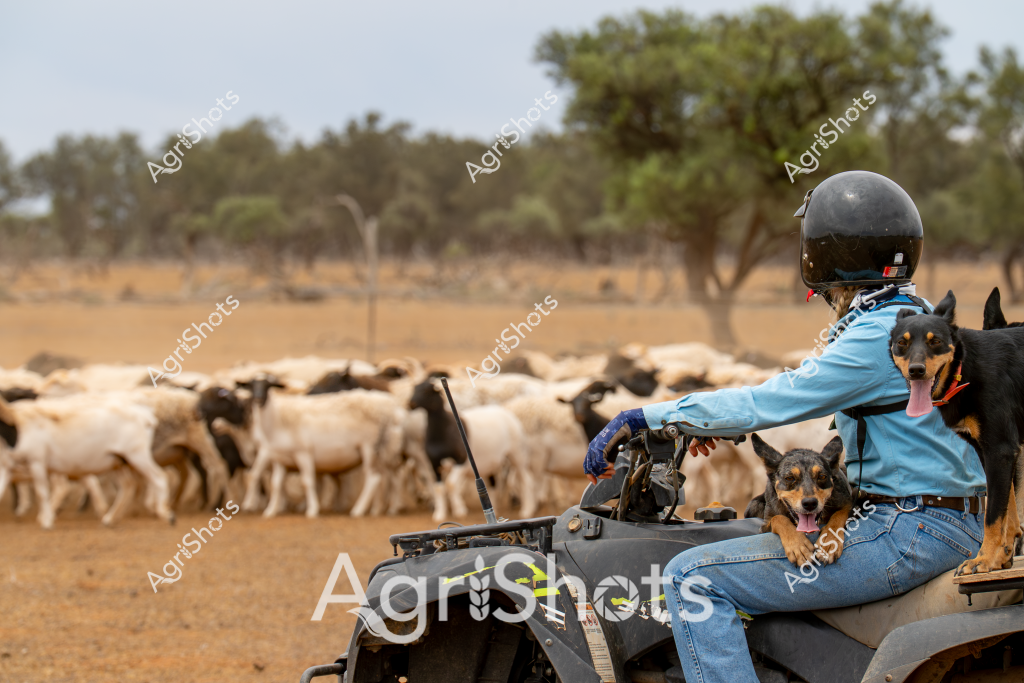
A woman herds a flock of white and dark-colored goats across a dry, dusty paddock using an all-terrain vehicle (ATV) in what appears to be an arid Australian rural landscape. Two working dogs accompany her on the ATV, both alert and ready to assist with livestock management. Sparse trees and golden-brown grasslands stretch into the background, indicating a typical Australian pastoral setting during a dry season. The woman wears a light blue long-sleeved shirt, protective helmet, and denim jeans, representing the practical attire of Australian livestock managers. The goat herd moves compactly across the open ground, showing the coordinated effort between the herder, her dogs, and the ATV in managing livestock in challenging environmental conditions. The scene captures the resilience and adaptability of Australian agricultural workers, demonstrating how modern technology and traditional herding practices combine to manage livestock in harsh rural environments. The ATV provides mobility and efficiency, while the working dogs remain critical partners in controlling and directing the animal movement.
 Image
Image
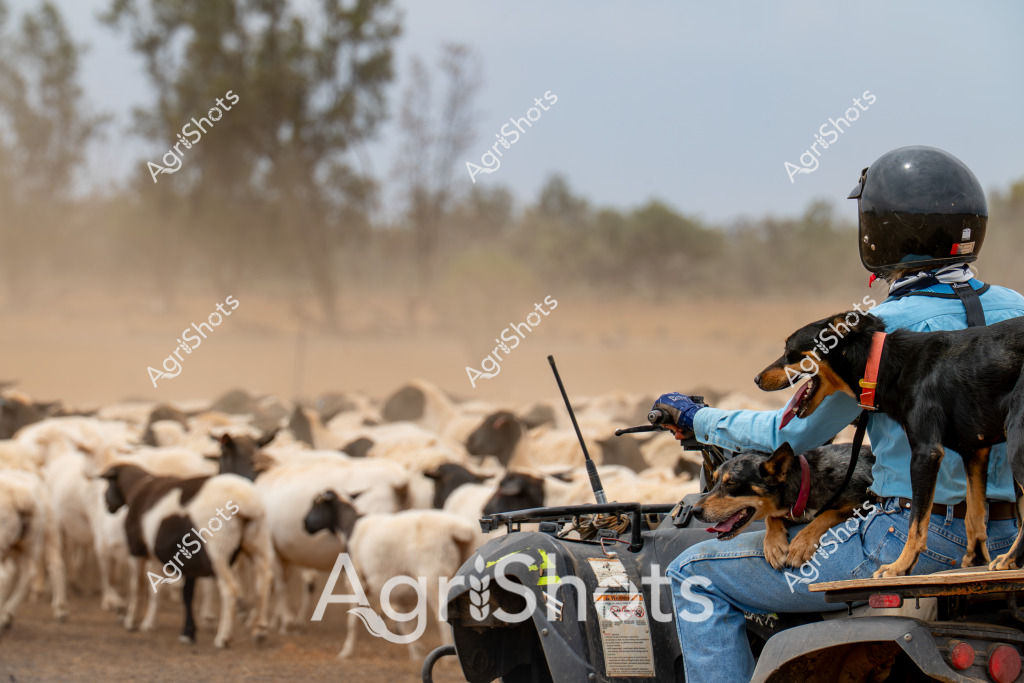
A stockman wearing a blue shirt and helmet sits on an all-terrain vehicle (ATV) with working dogs, mustering a large flock of mixed-breed sheep across a dusty, arid landscape in rural Australia. Two alert herding dogs perch on the ATV, their keen eyes tracking the movement of the sheep, which appear to be a combination of white and dark-fleeced animals. The dry paddock stretches out with sparse trees and golden-brown vegetation in the background, indicating challenging drought conditions typical of the Australian outback. Dust rises from the ground as the sheep move, creating a hazy atmosphere that speaks to the harsh environmental conditions faced by livestock and farmers. The scene captures the essential partnership between the stockman, his working dogs, and the sheep - a quintessential image of Australian agricultural resilience and traditional livestock management techniques.
 Image
Image
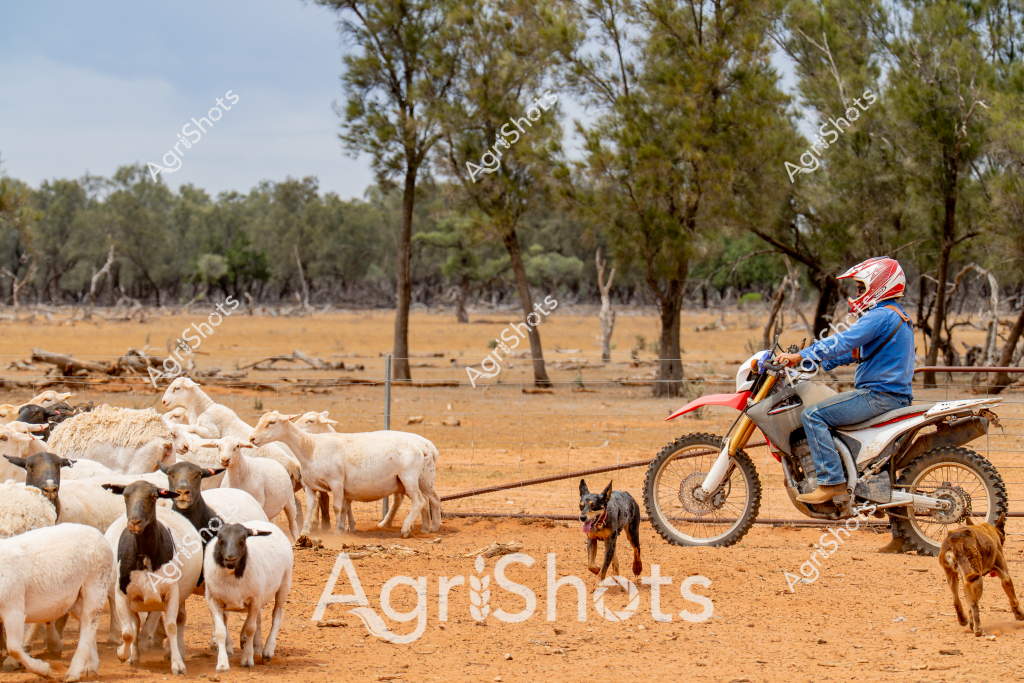
A man on a dirt bike herds a flock of white and black sheep across a dry, sparse paddock in what appears to be an arid Australian pastoral landscape. Accompanied by working dogs, he uses the motorcycle to navigate the dusty terrain, guiding the mixed-breed sheep through a grove of scattered eucalyptus trees. The rider, wearing a blue jacket and red motorcycle helmet, employs a long rope to help control the movement of the livestock, demonstrating a modern approach to mustering sheep in challenging drought-like conditions. Two alert working dogs - likely Australian Cattle Dogs or kelpies - assist in directing the sheep, running alongside the bike and helping to keep the flock together. The landscape is characterized by a golden-brown earth, sparse vegetation, and widely spaced trees, typical of inland Australian agricultural regions during dry seasons. This scene captures the adaptability of contemporary Australian farmers, using motorcycles and working dogs to manage livestock in harsh environmental conditions.
 Image
Image
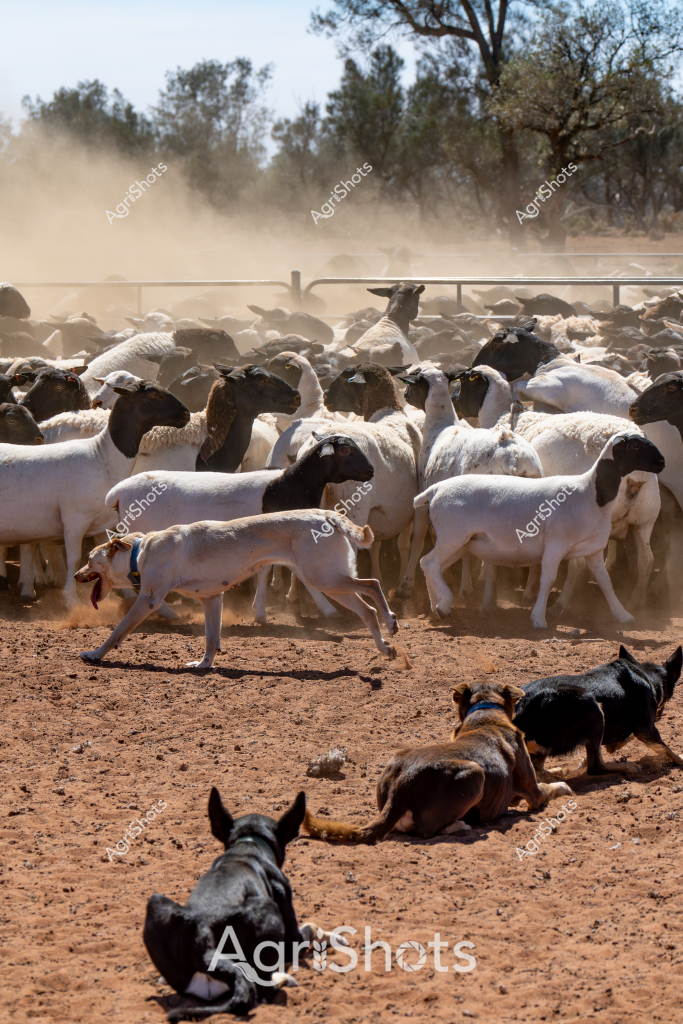
A dusty livestock mustering scene captures a large flock of white and black sheep being herded by working dogs in a dry, arid paddock. Several black and brown working dogs strategically move around the tightly packed mob of sheep, kicking up red earth and creating a swirling dust cloud. The sheep appear to be a mixed breed, predominantly white with black faces, likely Dorper or Merino cross, tightly clustered within a metal yard fence. In the foreground, some dogs rest on the ground while others actively work to control the movement of the sheep, demonstrating the classic Australian livestock management technique of using highly trained herding dogs to manage stock in challenging outback conditions. The background shows sparse trees and a dry landscape typical of rural Australian grazing country, with the intense dust and close animal grouping suggesting hot, dry weather conditions during mustering season. The scene powerfully illustrates the critical role of working dogs in Australian agricultural practices, showcasing their skill, discipline, and importance in managing livestock across vast, harsh agricultural landscapes.
 Image
Image
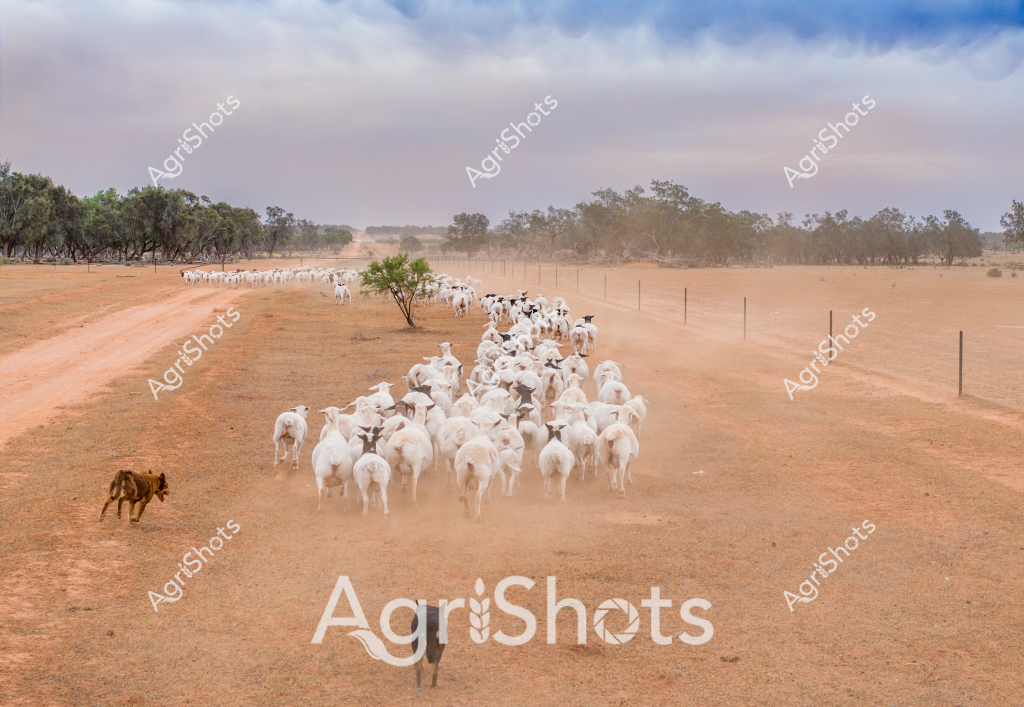
A large mob of white livestock - likely Merino sheep - are being expertly herded across a dry, dusty rural landscape by a working dog. The flock moves along a dirt track with sparse trees and fencing, creating a cloud of reddish-orange dust in their wake. A single working dog, likely a Kelpie, guides the sheep from behind, demonstrating the classic Australian pastoral scene of mustering livestock across an arid station property. The landscape suggests a drought-affected region, with minimal vegetation and a wide, open terrain typical of Australia's interior. Sparse eucalyptus trees line the distant horizon, breaking up the flat landscape and providing minimal shade. The image captures the challenging environmental conditions and the resilience of Australian agricultural practices, with the sheep moving steadily under the watchful eye of their canine handler across the seemingly endless paddock.
 Image
Image
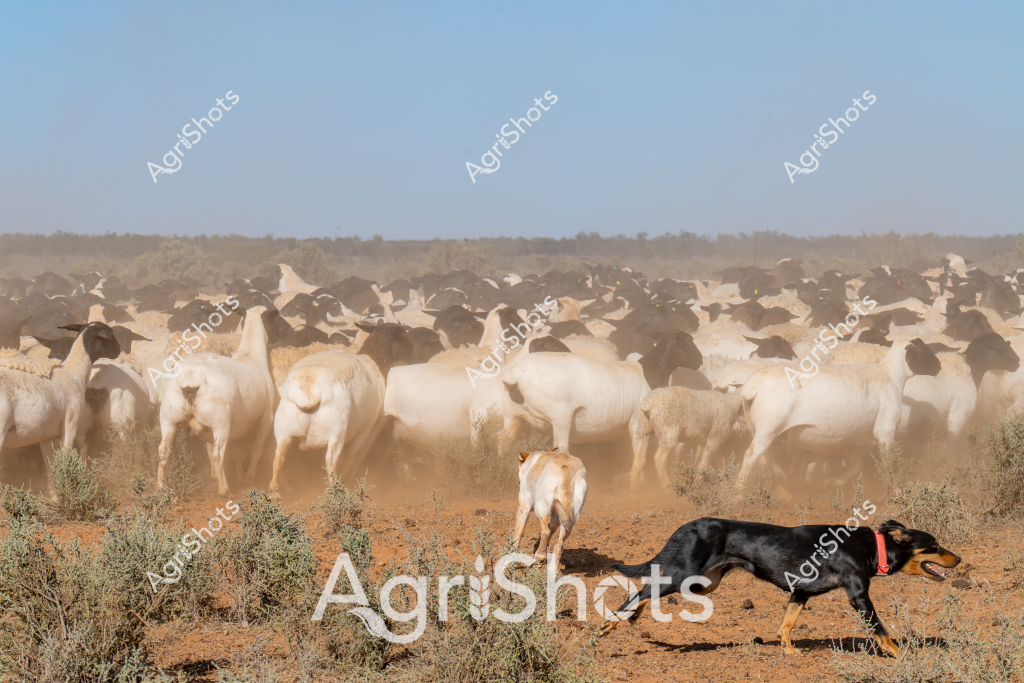
A large herd of light-colored sheep kicks up dust in a dry, arid landscape, with two working dogs herding the mob across a sparse, reddish-brown paddock. A black and tan dog runs alongside the herd, expertly guiding the sheep's movement with precision and skill. A lighter-colored dog stands slightly apart, also part of the mustering effort. The background reveals a line of trees and scrubby vegetation, creating a typical Australian outback pastoral scene. Dusty conditions and the tight grouping of the sheep suggest an experienced team of working dogs and likely a stockman managing this livestock movement across a challenging rural terrain. The image captures the essence of Australian sheep farming, highlighting the critical role of working dogs in managing large herds across expansive, dry landscapes.
 Image
Image
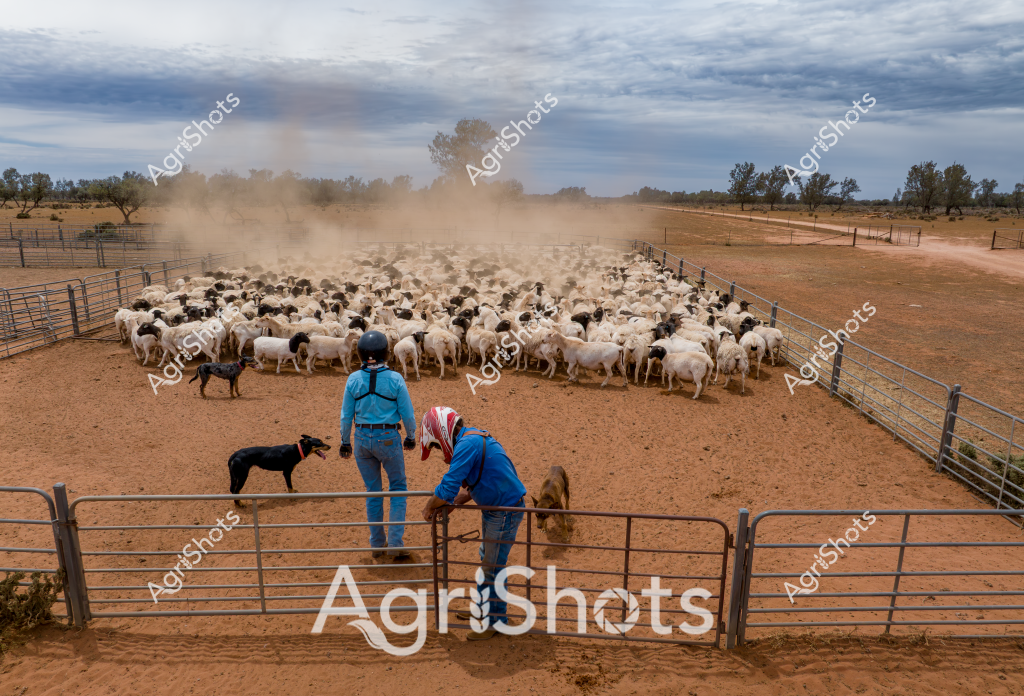
A substantial mob of white and dark-colored sheep crowd together, raising a fine cloud of reddish-brown dust against the overcast sky. A woman in blue clothing and a wide-brimmed hat stands near the metal gate, while another worker bends to interact with the livestock. Several working dogs are positioned around the flock, helping to control and direct the sheep's movements. The arid landscape features sparse trees in the background and metal livestock yards with multiple paddock sections, typical of Australian sheep station infrastructure. The scene captures the challenging and dynamic nature of sheep management in a dry rural environment, with the dust and tight grouping of animals suggesting active mustering or sorting activities.
 Image
Image
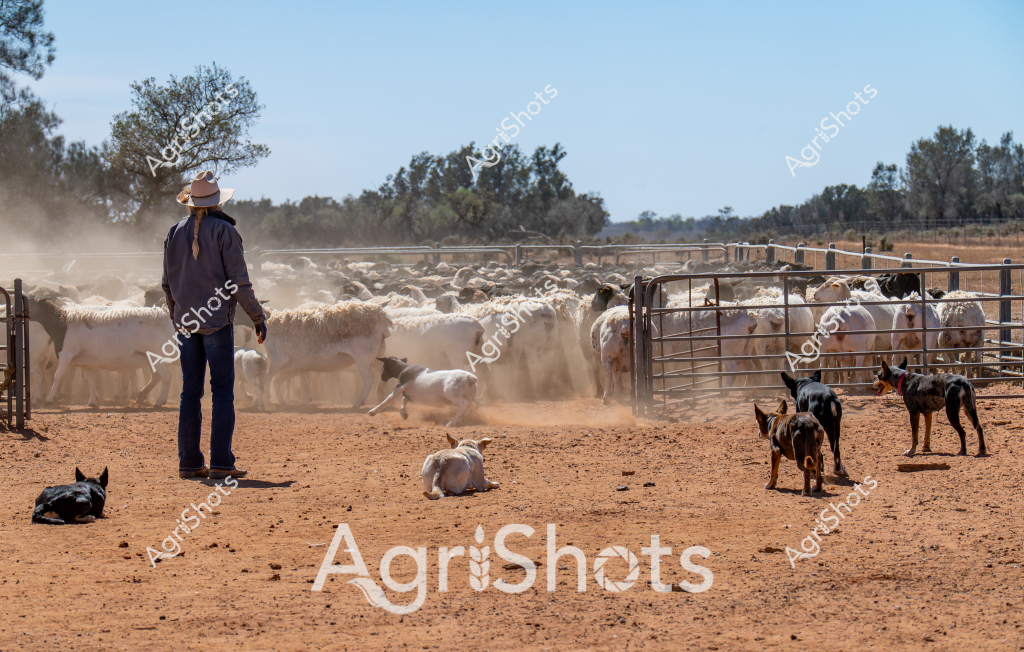
A man stockman stands amid a dusty livestock yard, surrounded by a large flock of white sheep and several working dogs. The scene captures a typical Australian sheep station during mustering, with dry, reddish-brown earth and metal yard fencing creating a stark backdrop. Multiple herding dogs of different colors are positioned around the yard, some sitting and some actively moving, assisting in controlling the tightly packed sheep mob. The stockman, wearing a wide-brimmed hat and dark clothing, stands facing away from the camera, observing the sheep as they move and kick up clouds of dust. Some sheep are pressed against the metal yard gates, while others mill about in the central area. The dogs appear to be working collaboratively, with some sitting attentively and others actively herding. In the background, sparse trees and shrubs line the horizon, typical of an arid or semi-arid Australian pastoral landscape. The bright, clear sky and harsh sunlight emphasize the dry conditions, suggesting this is likely during a hot summer day in one of Australia's inland sheep-farming regions. The scene powerfully illustrates the challenging environment and skilled work of Australian livestock management.
 Image
Image
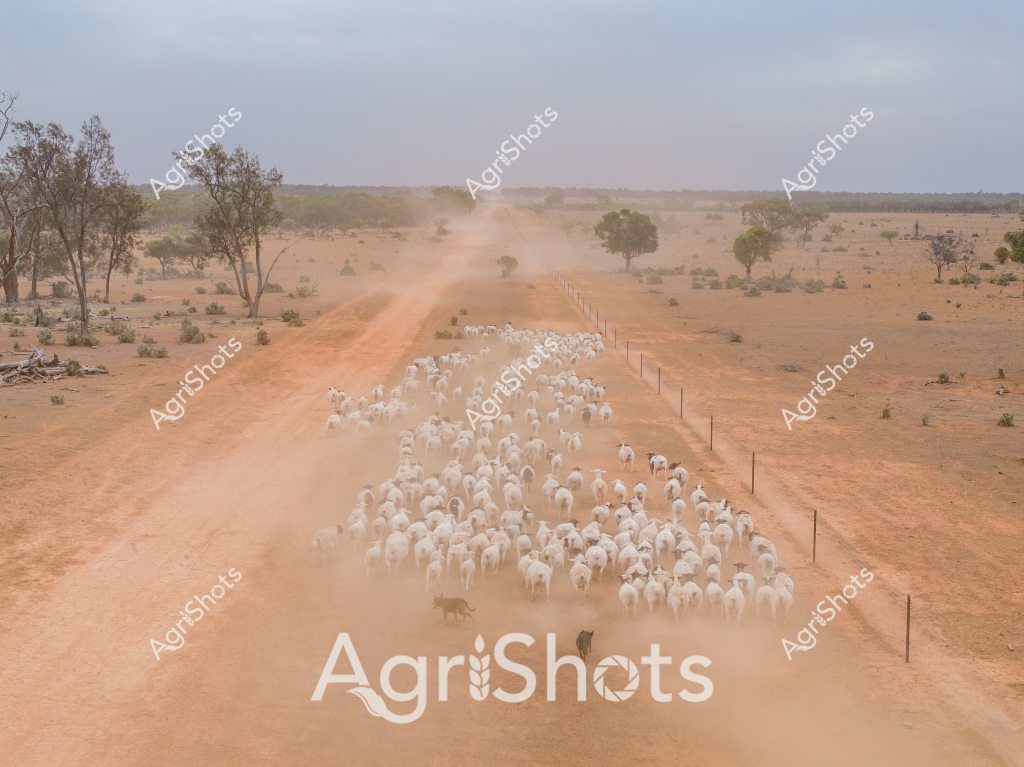
A large herd of white sheep trudges along a dusty orange dirt road through an arid Australian landscape, creating a billowing cloud of red dust behind them. Sparse eucalyptus trees and scrubby bushes dot the sparse, dry paddock on either side of the fenced road, indicating this is likely a remote cattle station in central or western Australia during a dry season. The livestock appear to be moving together, guided by unseen stockmen, across the expansive, sunbaked terrain that characterizes much of Australia's interior rural regions. Fence lines run parallel to the road, defining a clear path through the seemingly endless ochre-colored landscape. The dust kicked up by the sheep's movement creates a misty, atmospheric quality to the scene, highlighting the challenging environmental conditions of this agricultural setting. The image captures the resilience of Australian pastoral farming, where livestock are moved across vast distances under harsh, dry conditions.
 Image
Image
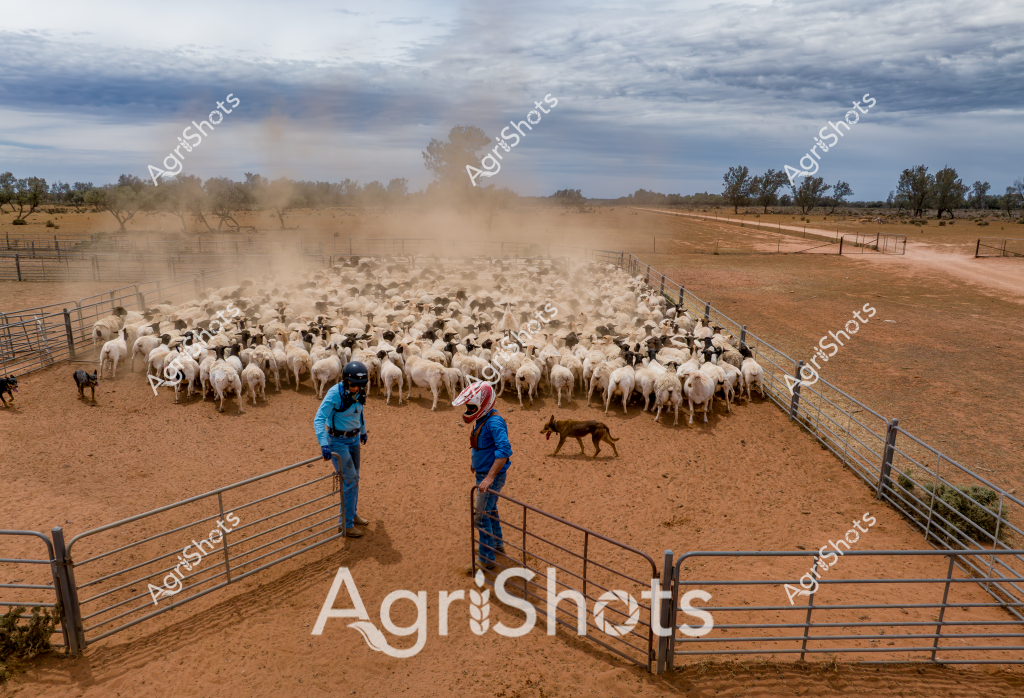
A dusty sheep mustering scene captures the essence of Australian pastoral life, with a large flock of white and black-faced sheep crowded into a dirt yard. Two men in blue work attire stand near the metal gates, overseeing the livestock operation under a dramatic cloudy sky. Herding dogs move strategically around the edges of the densely packed mob, helping to control the movement of the sheep. The arid landscape, with sparse trees and reddish-brown earth, highlights the challenging environment of rural Australian sheep farming. Dust billows around the flock, creating a hazy atmosphere that speaks to the hard work and skill required in managing livestock in this harsh terrain. The scene represents the traditional methods of sheep farming, with experienced stockmen and working dogs managing a large number of sheep in a compact yard.
 ▶ Video
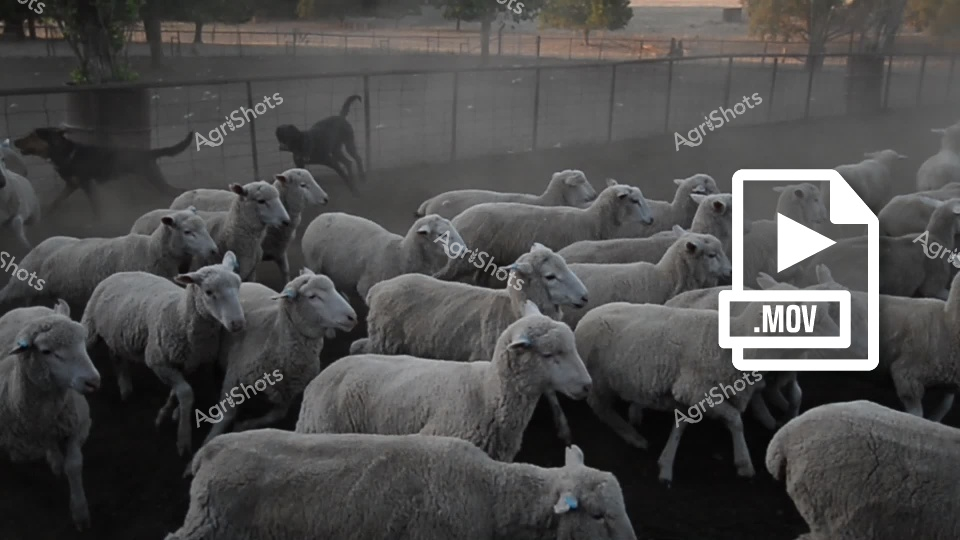
In the soft, misty light of early morning, a dense flock of Merino sheep huddles together in a dusty corral, their woolly coats blending into a uniform gray. Shadowy figures of herding dogs move at the edges of the enclosure, suggesting an imminent muster or movement of the livestock, with the scene capturing the quiet intensity of dawn on an Australian sheep station.
 Image
Image
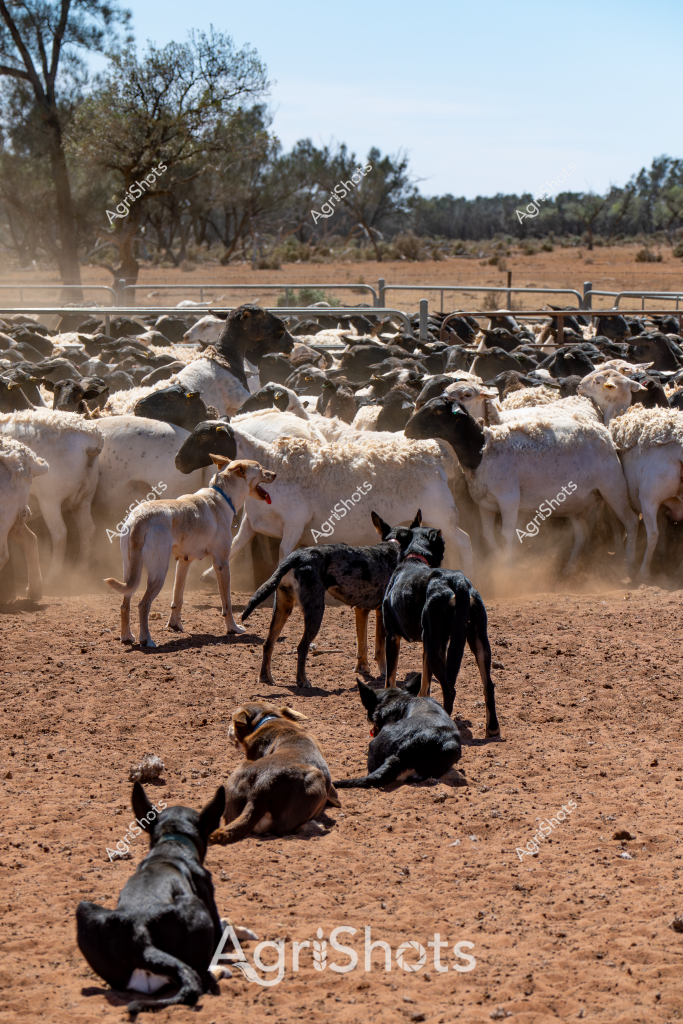
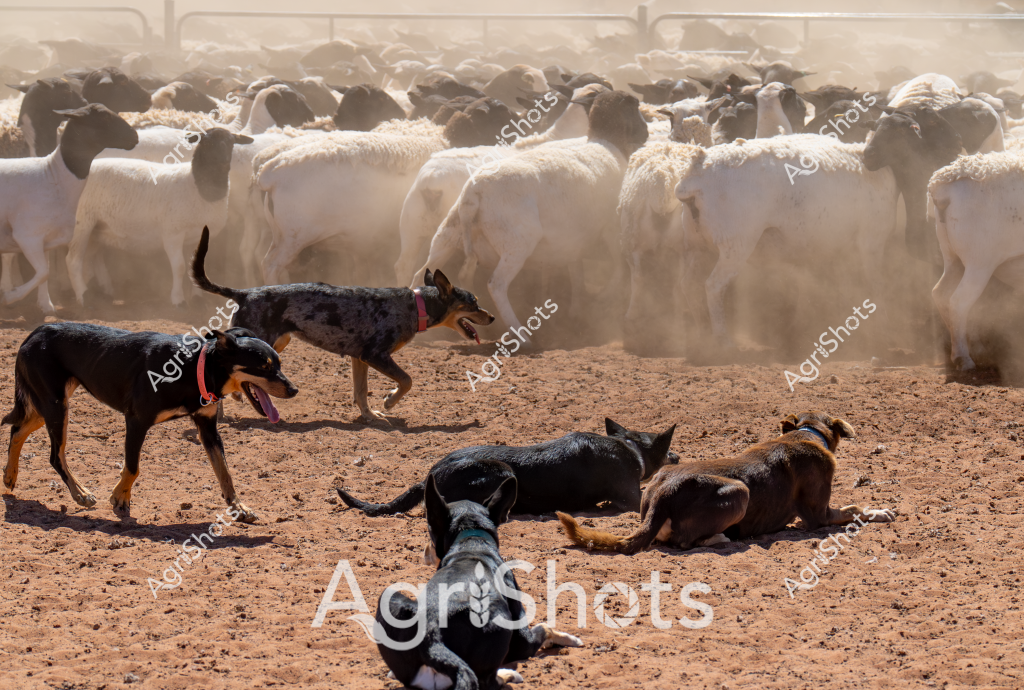
A classic Australian livestock herding scene unfolds, showcasing working dogs managing a large flock of white sheep in a dusty, arid paddock. Several hardy cattle dogs, including black and mottled grey breeds, are strategically positioned around the herd, with some standing alert and others resting on the dry, reddish-brown ground. The dense mob of sheep, predominantly white with dark faces, creates a cloud of dust as they cluster tightly together, suggesting an intense mustering or movement operation. The dogs appear to be experienced working dogs, wearing red collars and displaying a calm, disciplined approach to herding. Some dogs are standing, while others are lying down, indicating a well-trained team that understands their roles in managing the livestock. The barren, compacted earth and the swirling dust highlight the harsh conditions typical of Australian pastoral landscapes, where skilled dogs are crucial in moving and controlling large sheep herds across challenging terrain. This image captures the essence of Australian agricultural practice - the partnership between working dogs and farmers in managing livestock in demanding environmental conditions. The scene represents the resilience, skill, and teamwork required in Australia's extensive sheep farming industry.
 Image
Image
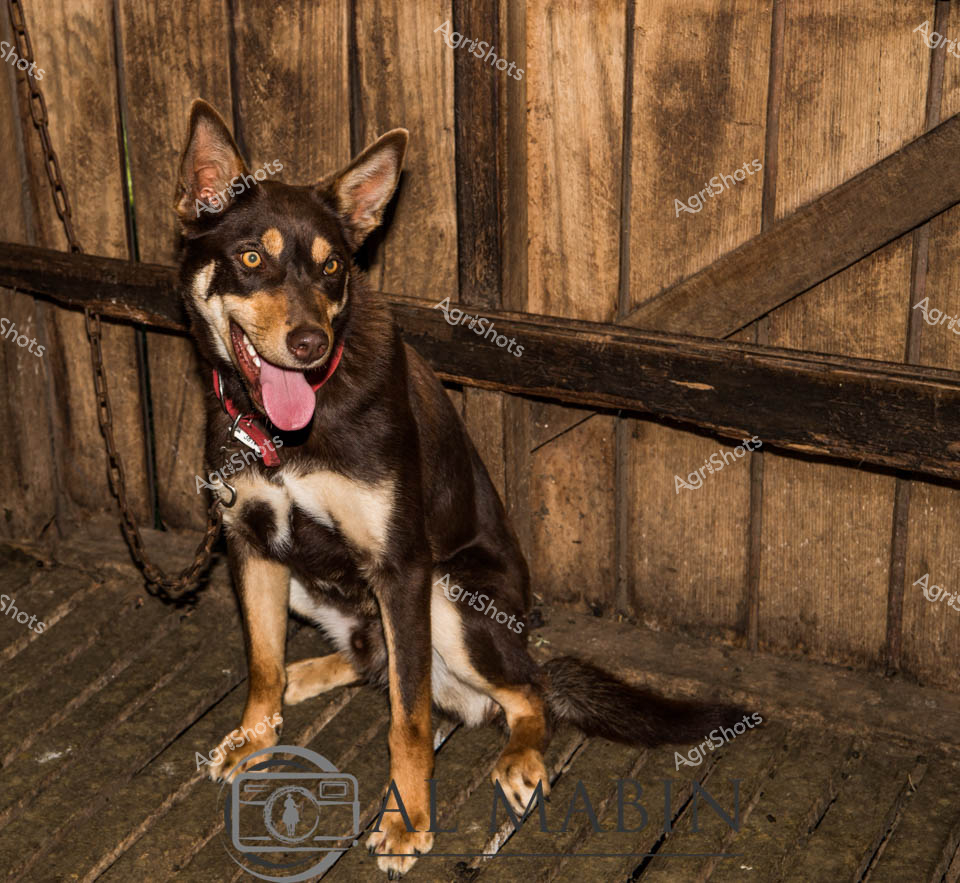
Kelpie on High Alert: A Rustic Timber Yard Scene A vibrant Kelpie herding dog sits attentively within a weathered timber sheep yard, embodying the quintessential Australian rural working dog breed. Her rich chocolate and tan coat contrasts against the aged wooden planks, with alert golden-yellow eyes scanning the environment with intense focus. The dog wears a vivid red collar, signaling her status as a trained working animal, and her pink tongue hangs out with an energetic, ready-to-work expression. Rough-hewn timber beams frame the scene, suggesting this is a classic Tasmanian farm infrastructure - a sturdy, functional space designed for livestock management. Her muscular frame and keen posture demonstrate why Kelpies are renowned as exceptional herding dogs, bred to work tirelessly in challenging agricultural landscapes. The atmospheric lighting and textured wooden backdrop evoke the timeless connection between Australian working dogs and the rural agricultural landscape, capturing a moment of quiet preparedness in the daily rhythm of farm life.
 Image
Image
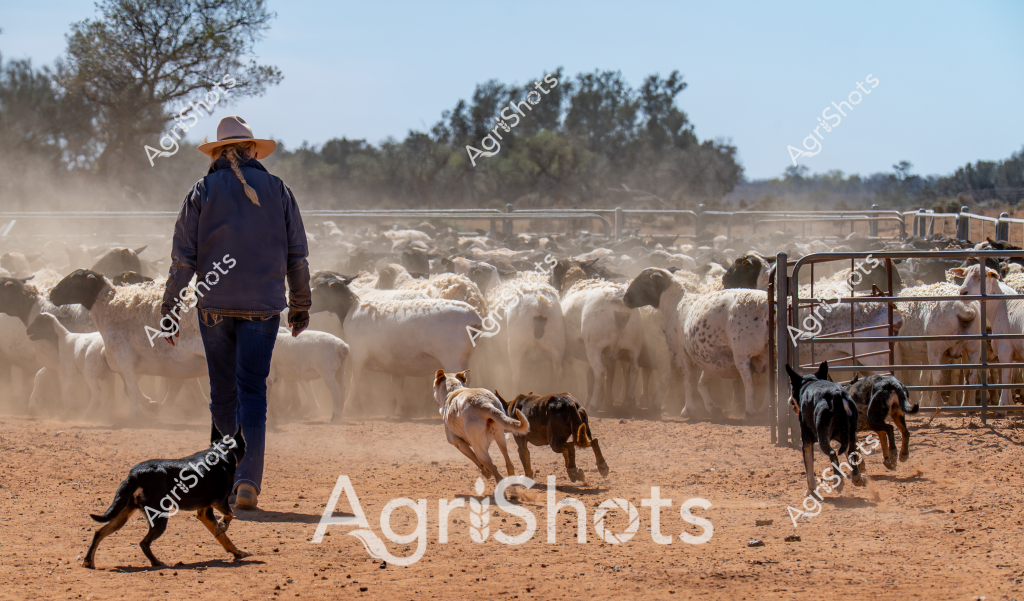
A stockman stands amid a dusty livestock yard, overseeing a large flock of white and speckled sheep. Wearing a navy jacket and wide-brimmed sun hat, the person is accompanied by several working dogs that are carefully herding and controlling the sheep's movement. The ground is a dry, reddish-brown earth, kicking up clouds of dust as the animals move, with metal livestock gates and fencing surrounding the paddock. Several working dogs - some black and white, others tan and white - are strategically positioned to guide and control the sheep's direction. The background shows sparse trees and scrubland, typical of an Australian rural station or farm setting, suggesting this is a cattle or sheep property in an arid or semi-arid region. The scene captures the hard work and skill of Australian livestock management, with the dogs and stockman working in unison to move and control the flock.