Results for “Hats”
 Image
Image
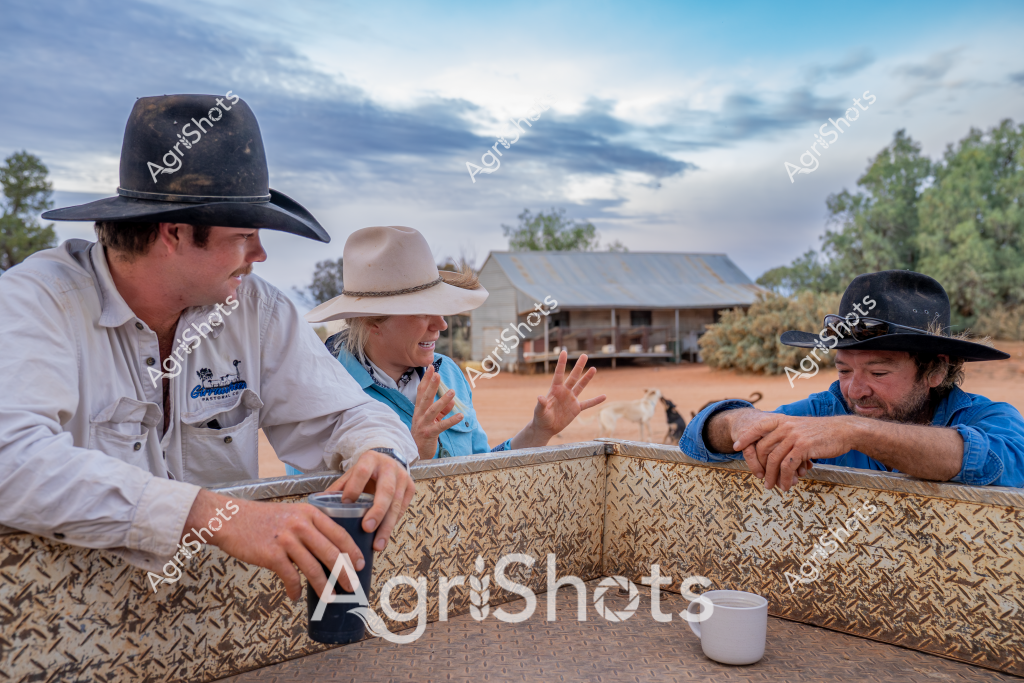
Three men in wide-brimmed Australian bush hats are engaged in conversation around a textured metal surface, with a rustic rural station building in the background. A white mug sits on the surface, suggesting an informal workplace discussion. The men are dressed in light-colored work shirts - white and blue - and appear to be agricultural workers or station hands, likely discussing daily operations or work plans. The setting looks like a remote Australian cattle station, with reddish dirt ground, scattered trees, and a corrugated iron shed, creating a quintessential outback rural atmosphere. The cloudy sky suggests early morning or late afternoon, with soft light casting subtle shadows across the landscape. Their body language and positioning indicate a collaborative, relaxed workplace interaction typical of Australian rural communities.
 Image
Image
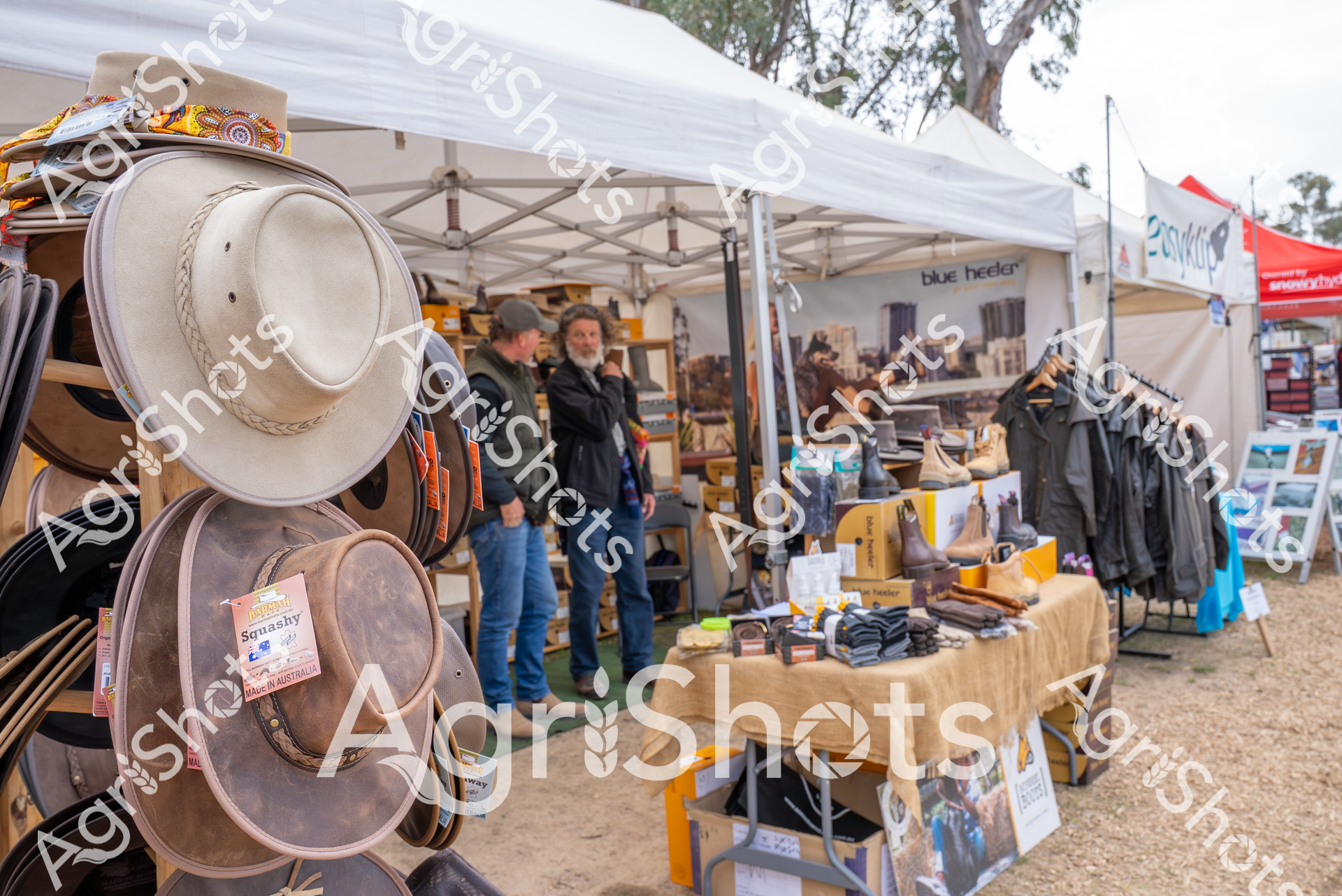
At the Henty Field Days in New South Wales, a Blue Heeler vendor booth showcases rural Australian merchandise, featuring rugged outdoor clothing, leather hats, and boots. Two men stand among display tables filled with clothing and accessories, representing the classic style and practicality of rural Riverina region fashion during a spring agricultural event.
 Image
Image
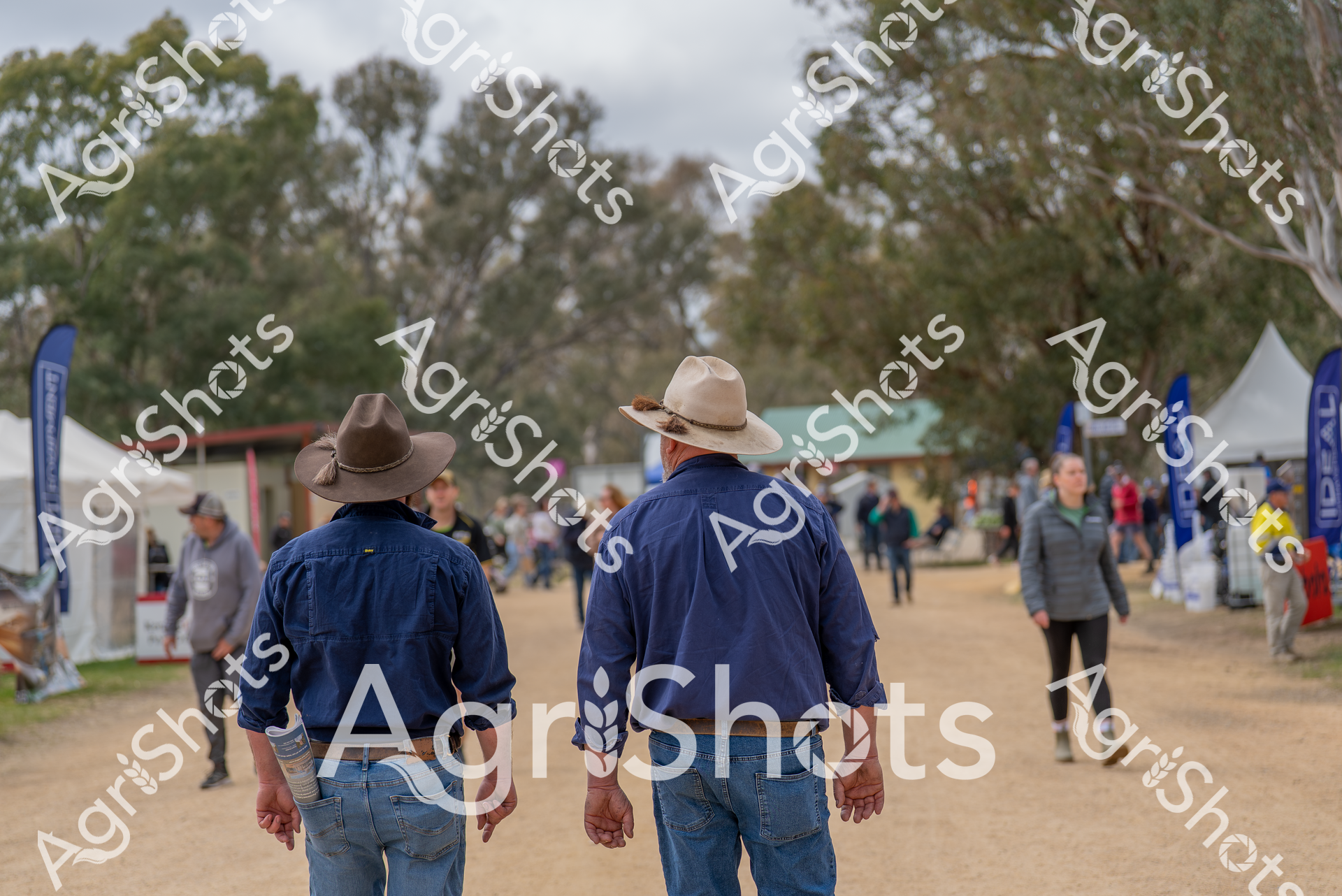
Two men wearing wide-brimmed hats and blue shirts walk through the Henty Field Days event in rural New South Wales. The agricultural expo takes place outdoors among trees, with white tents and various attendees visible in the background, capturing the essence of rural community gatherings in the Riverina region during springtime.
 Image
Image
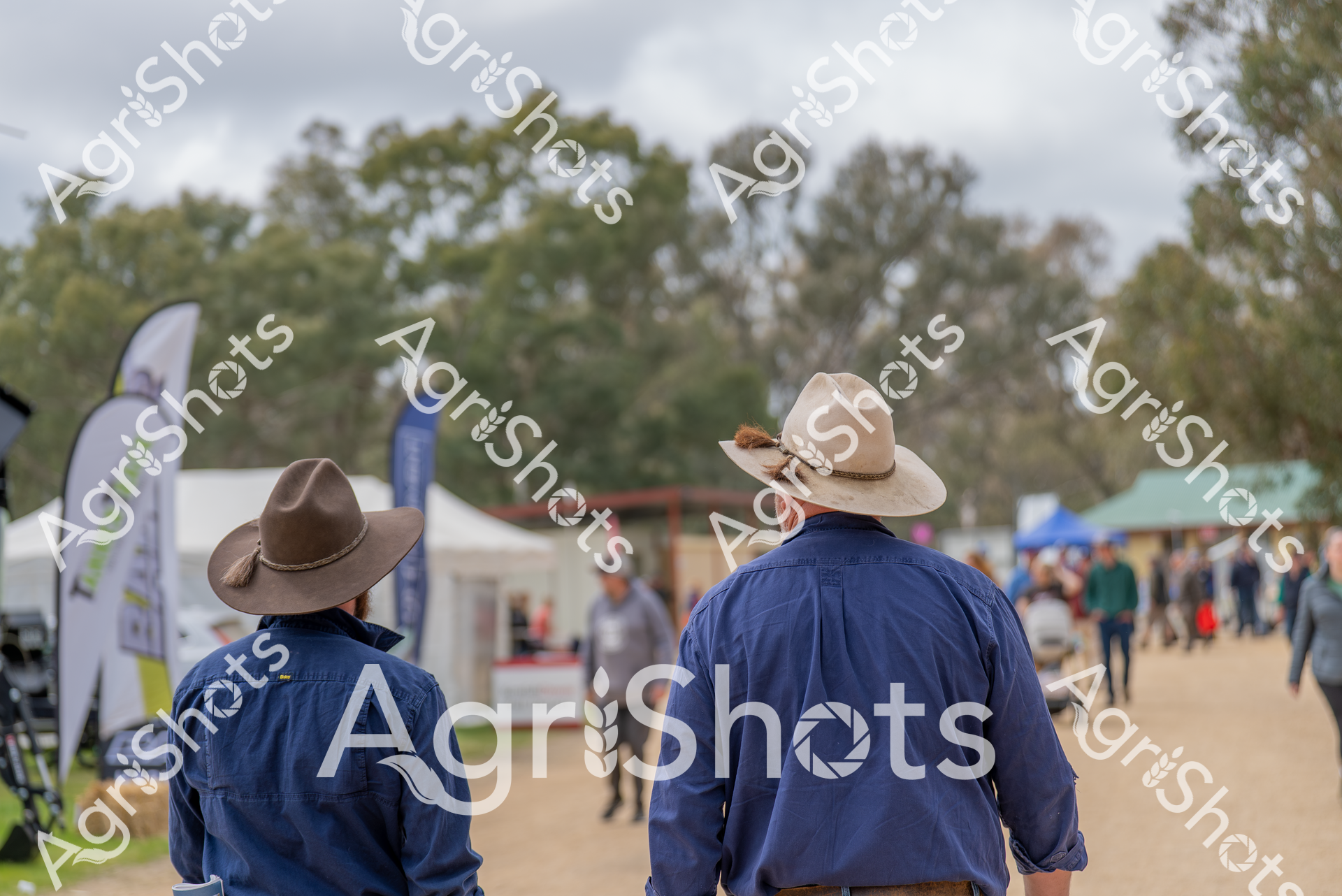
Two men in blue shirts and wide-brimmed hats stand facing away from the camera at a rural agricultural event, with event tents and attendees visible in the background. The scene appears to be the Henty Field Days in New South Wales, showcasing the region's agricultural community during springtime.
 Image
Image
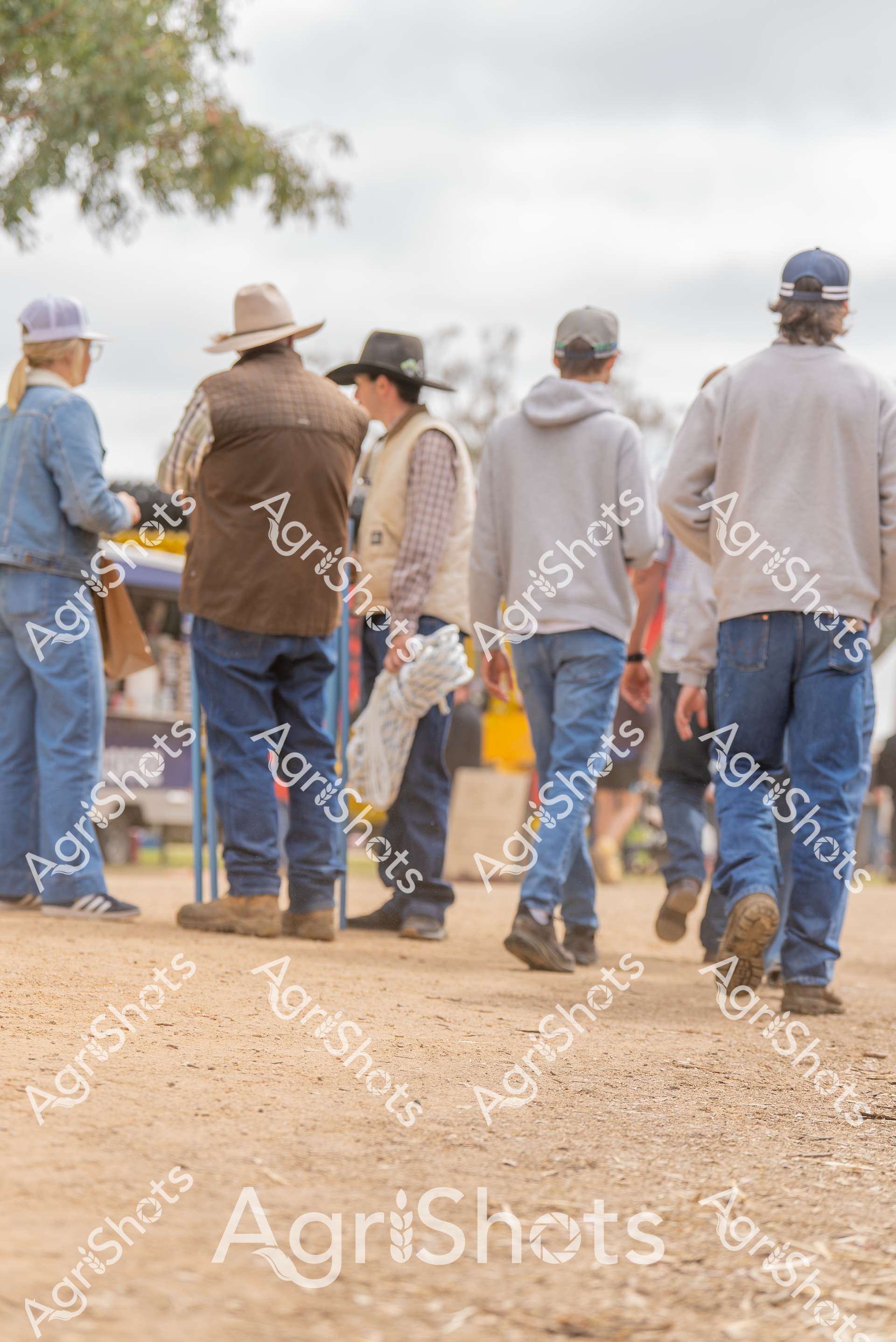
A group of farmers and agricultural professionals gather at a field day event in rural New South Wales, standing in a line on dusty ground near a tree. They are dressed in typical rural attire including jeans, work boots, hats, and casual jackets, representing the agricultural community of the Riverina region during springtime. The image captures the camaraderie and practical spirit of agricultural professionals at a regional farming event.
 Image
Image
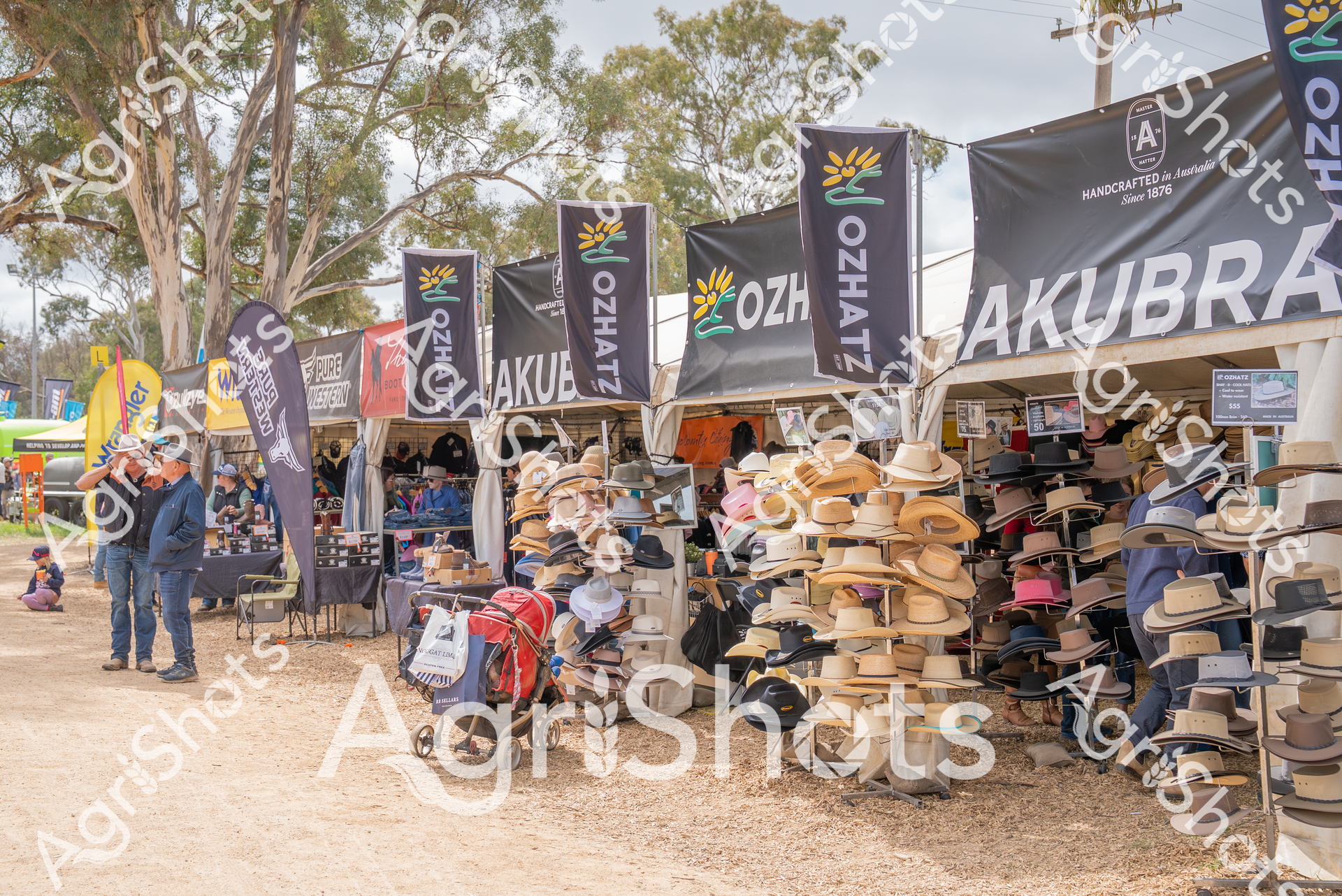
At the Henty Field Days in New South Wales, the Ozhat stall displays a colorful array of wide-brimmed hats under black branded banners. The outdoor event showcases rural merchandise, with straw and felt hats neatly arranged on stands, attracting visitors browsing the dusty fairground surrounded by gum trees.
 Image
Image
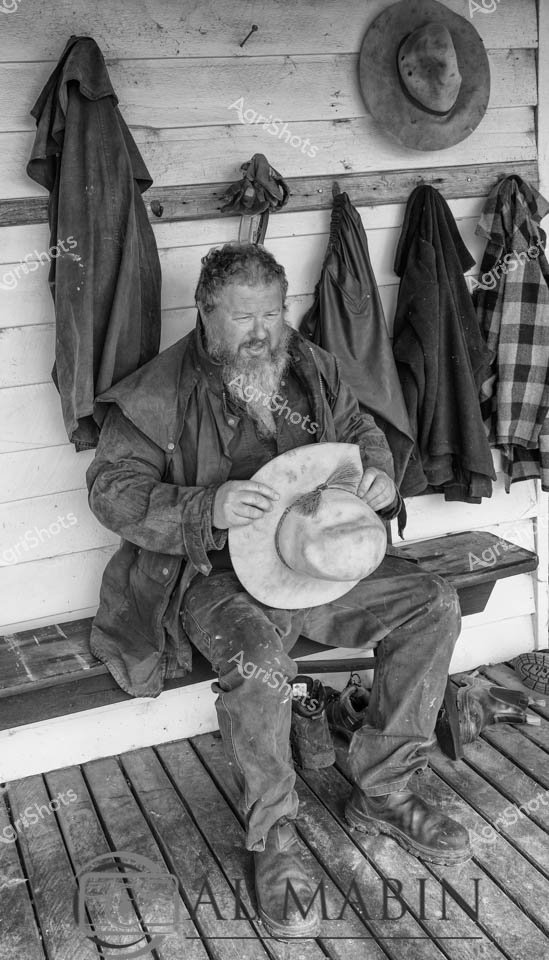
A bearded man working as a stockman sits on wooden decking, holding his hat while taking a rest break. He's positioned against a rustic timber wall with various work coats and hats hanging on pegs behind him, his weathered boots and clothing reflecting the demanding nature of cattle work. The black and white photograph captures an authentic moment of rural life in Western Australia's Lake Muir region, showcasing the traditional attire and rugged character of Australian beef cattle operations.
 Image
Image
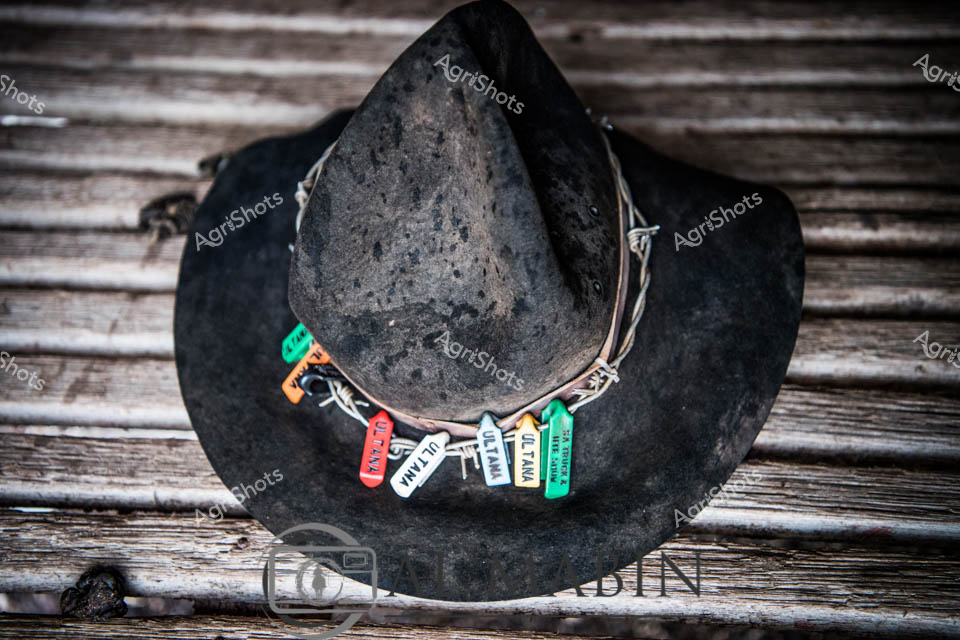
Weathered and iconic, this black woolshed hat tells a story of rural resilience on the Yorke Peninsula. Draped with a collection of colorful livestock ear tags, the well-worn hat speaks to decades of agricultural practice in South Australia. Each small tag represents a moment of livestock management - carefully tracking individual animals through shearing seasons and farm transitions. The hat's deep charcoal surface bears the textural marks of countless days under harsh sunlight and during challenging farm work, its wide brim a testament to protection from the elements. Resting against aged wooden planks, likely from an authentic shearing shed, the hat embodies the quiet dignity of generational farming. The vibrant tags - in crisp reds, greens, and whites - contrast beautifully against the hat's dark patina, symbolizing the meticulous record-keeping that underpins modern agricultural practices.
 Image
Image
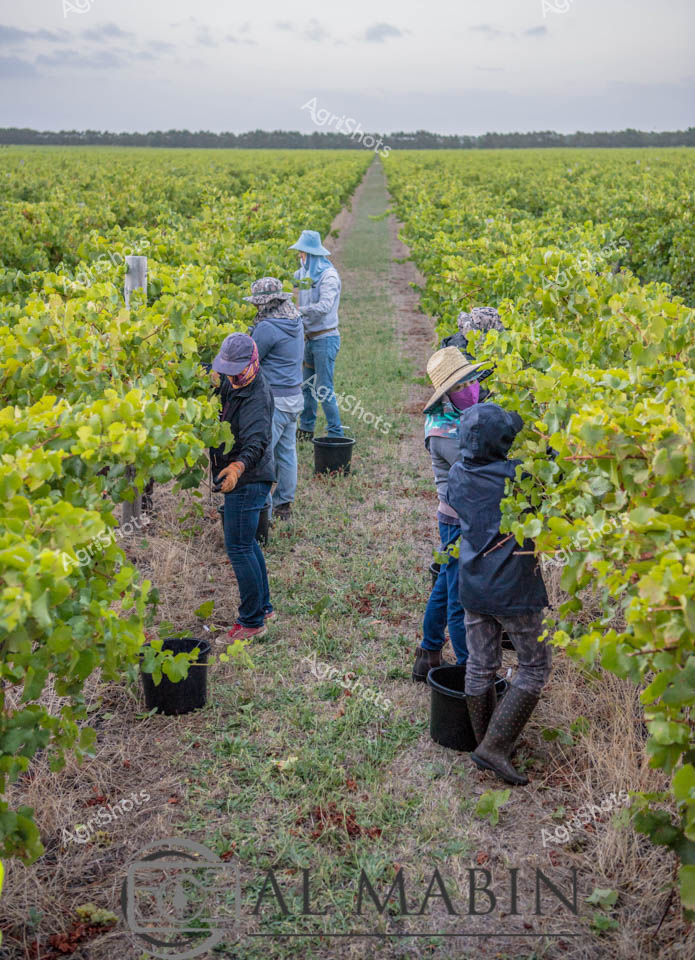
Agricultural workers harvest grapes in the lush green vineyards of South Australia's renowned Coonawarra Region. Several figures wearing protective hats work methodically along the vineyard rows, carefully picking grapes into collection buckets during the crucial harvest season. The expansive vineyard stretches toward a tree-lined horizon under an overcast sky, showcasing the region's premium wine-producing landscape. Workers move systematically through the neat rows of healthy grapevines, their faces not visible as they focus intently on gathering the seasonal crop.
 Image
Image
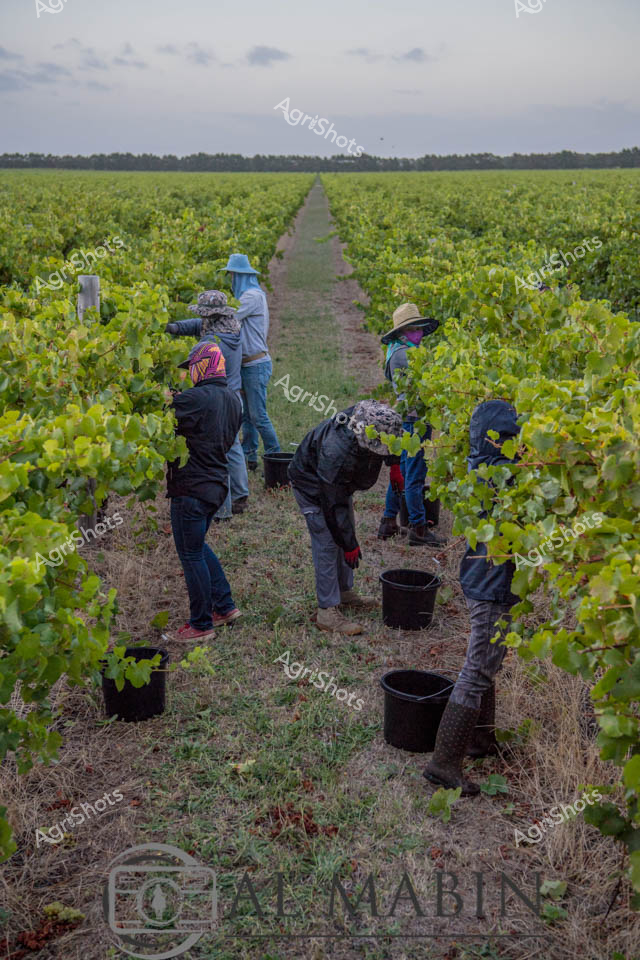
Agricultural workers harvest grapes in the renowned Coonawarra wine region of South Australia, their faces not visible as they work methodically through the vineyard rows. Farm workers wearing hats for sun protection bend over collection buckets, carefully picking clusters during the crucial harvest season. The expansive vineyard stretches toward distant trees under an overcast sky, with neat vine rows creating geometric patterns across the landscape. Black harvesting buckets dot the dirt pathways between the lush green grape vines, capturing the essence of South Australia's premium wine production.
 Image
Image
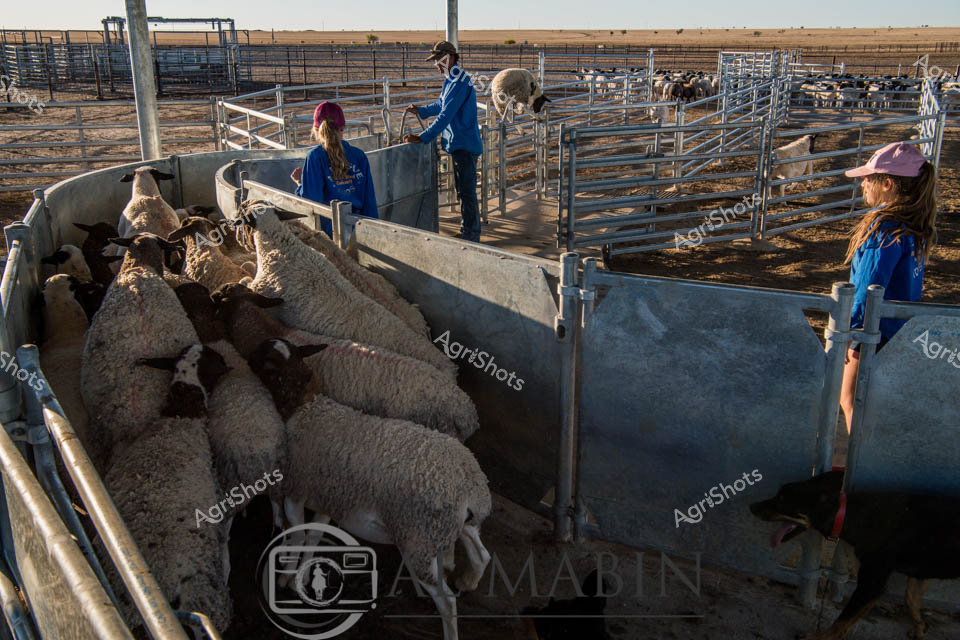
Merino lambs crowd the steel gates of a drafting pen on a sun-drenched western Queensland cattle station, with blue-shirted farm workers carefully managing the livestock movement. The early morning light casts long shadows across the dusty holding yards, revealing the intricate metal infrastructure designed for efficient stock management. Two workers, wearing distinctive blue work shirts and protective hats, strategically position themselves to guide and separate the woolly Dorper sheep through the carefully engineered yards. The crisp, dry landscape stretches endlessly behind the metallic yards, highlighting the harsh yet beautiful central western Queensland environment where pastoral agriculture thrives. Compact and muscular sheep, their thick fleece testament to their breeding, huddle together in the loading pen, awaiting sorting and potential transfer to different paddocks or for market preparation. The scene captures the precision, skill, and daily rhythms of Australian sheep farming - a delicate dance of human expertise and animal husbandry under the expansive outback sky.
 Image
Image
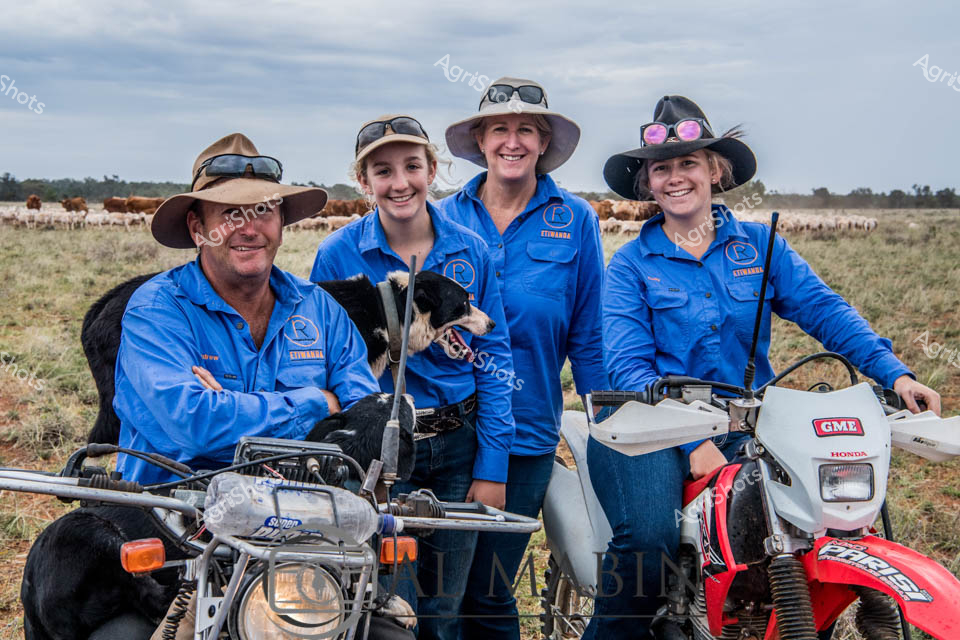
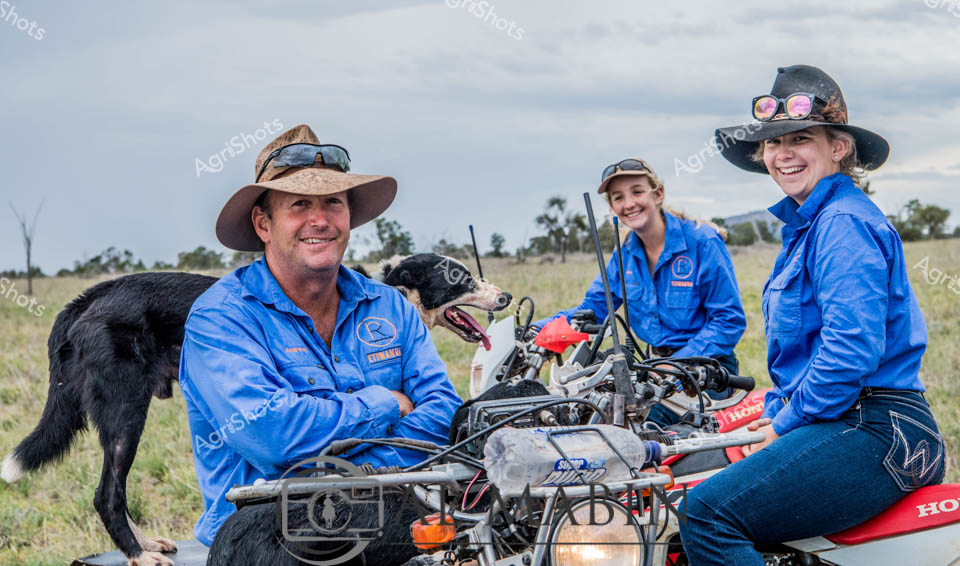
Australian agricultural stock photography capture of a vibrant cattle station mustering team, dressed in coordinated royal blue work shirts, positioned with motorbikes and a working dog amid a expansive grey-skied western plains grassland. The four-person crew represents multigenerational farm workers, wearing distinctive wide-brimmed hats for sun protection - ranging from classic bush style to contemporary riding caps - radiating collaborative energy and professional pride. A Honda and another motorbike stand ready for cattle management, with a black and white working dog integrated seamlessly into the team's workflow. The background reveals a scattered herd of cattle grazing on dry seasonal pastures, indicating this is likely a late winter or early spring muster in New South Wales' western agricultural region. Their matching uniform and confident postures highlight modern agricultural practice, showcasing women's significant roles in contemporary farming operations. The scene embodies resilience, teamwork, and the dynamic spirit of Australian rural enterprise, capturing the essence of professional livestock management under challenging environmental conditions.
 Image
Image
On the sweeping grasslands of western New South Wales, a dedicated agricultural team prepares for cattle mustering with precision and spirit. A black working dog stands alertly beside a team member in a crisp blue uniform, perched on a rugged Yamaha motorbike against a softly overcast sky. The team - wearing distinctive wide-brimmed hats and matching blue work shirts - radiate professional camaraderie, with wide smiles reflecting the collaborative energy of modern agricultural practice. Their robust Honda motorbike, equipped with essential mustering gear, sits ready in the grassy paddock, symbolizing the technological edge of contemporary livestock management. Sunglasses and protective clothing underscore the practical approach of these agricultural professionals, who blend traditional farming skills with contemporary efficiency. The expansive grey-toned landscape behind them hints at the vast, challenging terrains of Australian pastoral regions, where skill, teamwork, and resilience define successful livestock operations.
 Image
Image
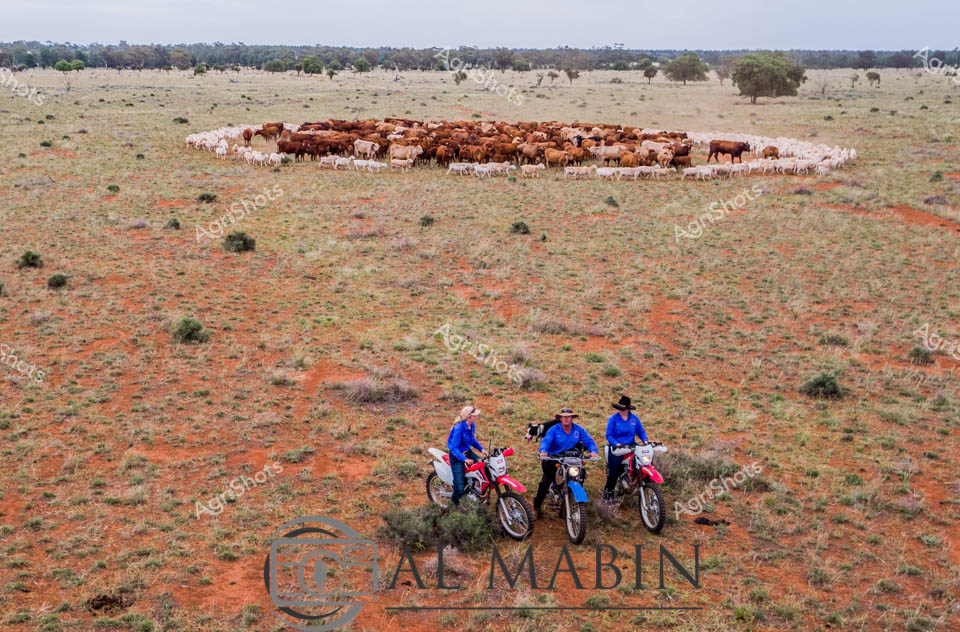
Dusty red earth meets steel-grey skies as four station workers on motorbikes survey a vast pastoral landscape near the Western Plains of New South Wales. Dressed in crisp blue work shirts and protective wide-brimmed hats, the team sits astride a mix of blue and red off-road motorcycles - Yamaha and Honda models purpose-built for rugged station work. In the background, a substantial herd of Dorper sheep grazes across the sparse, scrubby grasslands, their white and tan bodies creating a subtle contrast against the muted landscape. The scene captures the essence of modern Australian livestock management - efficient, technologically equipped workers using motorcycles to muster and monitor livestock across expansive agricultural terrain. A working dog accompanies the riders, embodying the collaborative spirit of station life where every team member plays a crucial role in managing the land and livestock. The overcast sky and windswept vegetation suggest early morning conditions, perfect for moving stock before the heat of the day intensifies.
 Image
Image
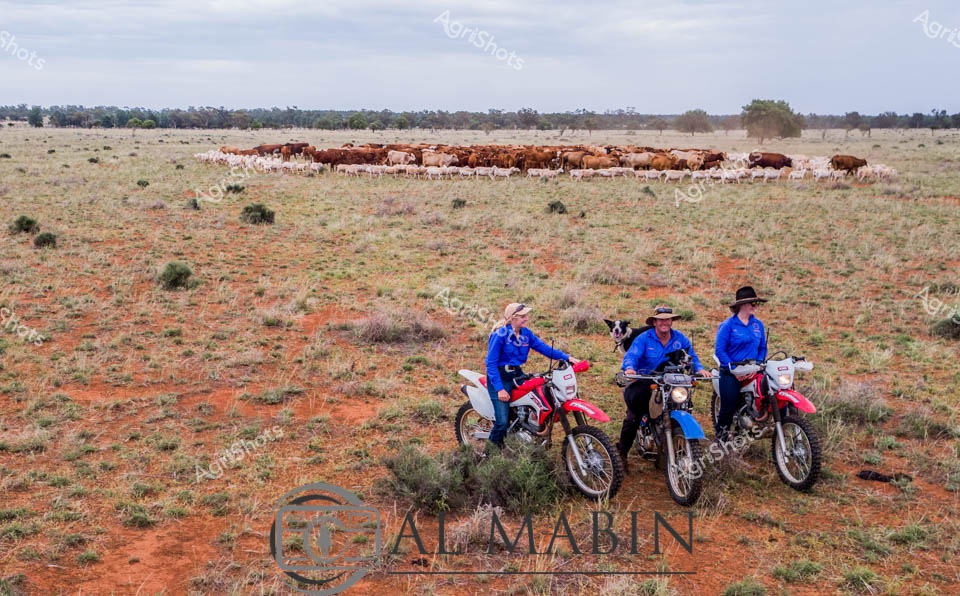
Merino and Dorper sheep form a tight circular mob across rusty red earth, surrounded by sparse eucalyptus woodlands under a slate-grey NSW western plains sky. Three stockmen in brilliant blue workshirts and wide-brimmed hats patrol the herd's perimeter on red and white Yamaha trail bikes, carefully maintaining the livestock's formation during mid-morning mustering. The landscape speaks of resilience - scattered saltbush and hardy grasses punctuate the oxidized soil, while mature trees provide occasional windbreak against the wide-open horizon. These riders demonstrate generations of Australian agricultural skill, using motorcycles to efficiently manage stock across challenging terrain where traditional horse and dog mustering would consume significantly more time and energy. The scene captures the precision and adaptability of modern pastoral work, where technology and traditional livestock management techniques merge seamlessly under the vast, unforgiving outback sky. Every element - from the tightly clustered animals to the strategically positioned riders - communicates a choreographed dance of agricultural expertise unique to Australian rural culture.
 Image
Image
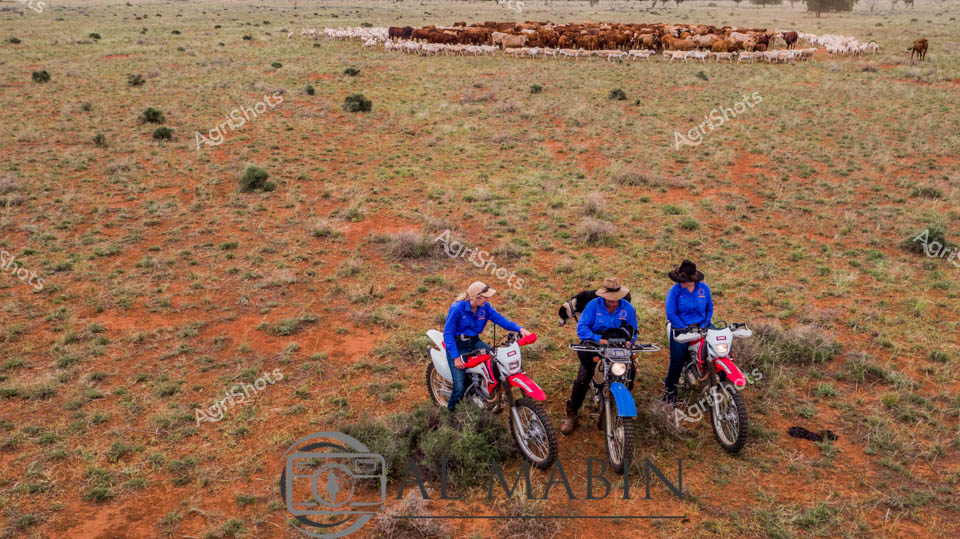
Thundering across the russet earth of western New South Wales, three stockworkers on Yamaha trail bikes navigate the arid pastoral landscape during a cattle and sheep muster. Dressed in vibrant royal blue work shirts and wide-brimmed agricultural hats, the riders guide their motorcycles through sparse saltbush and windswept grasslands, herding a substantial mob of reddish-brown cattle intermixed with white Dorper sheep. The overcast grey sky stretches endlessly above the expansive plains, creating a muted backdrop that emphasizes the earthy ochre tones of the ground and the vivid contrast of the riders' coordinated uniforms. Their precise movements and positioned motorcycles demonstrate the modern agricultural techniques used in mustering livestock across challenging terrain, showcasing the skill and efficiency of contemporary Australian pastoral workers. The scene captures the raw essence of outback farming - a delicate choreography of human skill, machinery, and animal husbandry set against the expansive, unforgiving Australian landscape.
 Image
Image
Dusty red earth stretches beneath a muted grey sky as three stockmen on Yamaha trail bikes navigate the sparse Western Plains landscape of New South Wales. Dressed in vivid blue work shirts and wide-brimmed hats, the riders maneuver their motorcycles between scattered saltbush and sparse ground cover, preparing to muster a mixed herd of beef cattle and Dorper sheep clustered in the distant background. The undulating terrain tells a story of resilience - a classic Australian pastoral scene where modern agricultural technology meets traditional livestock management techniques. Their motorbikes, painted in bold blue and red, contrast sharply with the ochre ground, symbolizing the dynamic intersection of innovation and time-honored farming practices. In the distance, the livestock huddle together, a living testament to the careful management and skill of these riders who are orchestrating their movement across the expansive grazing lands. This image captures the essence of Australian rural life - resourceful, tough, and intimately connected to the challenging landscape.
 Image
Image
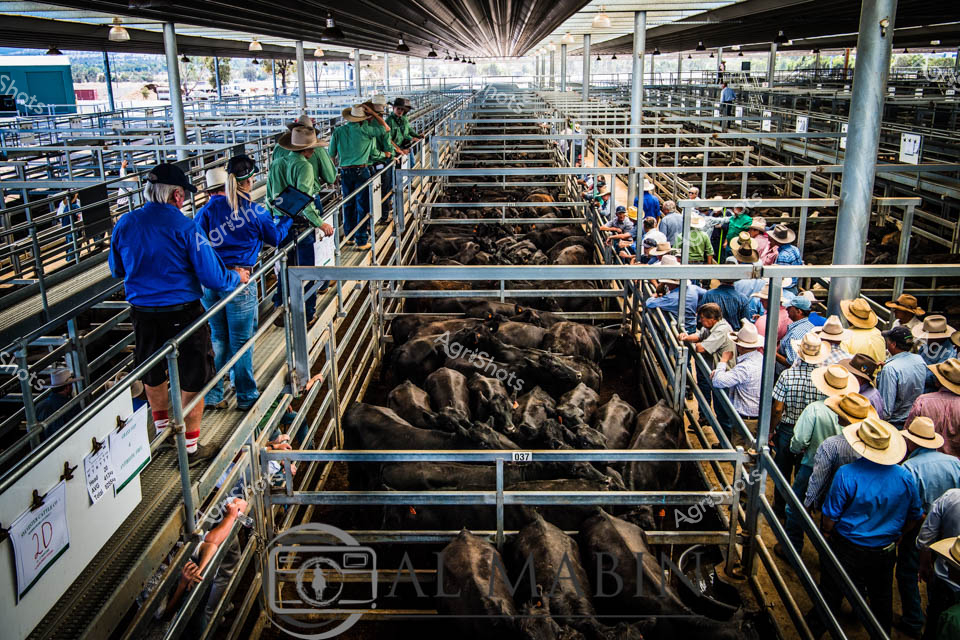
Australian cattle sale yards pulse with agricultural energy - a quintessential rural marketplace where livestock commerce unfolds. Black Angus cattle are densely packed into steel-railed pens, representing prime beef stock awaiting auction. Experienced agents and farmers crowd the elevated walkways, wearing a uniform of wide-brimmed akubra hats in earthy tones - green, blue, and straw-colored - scanning the livestock with practiced eyes. The industrial infrastructure of metal walkways and systematic pens creates a structured environment, with numbered sections and strategic viewing platforms allowing thorough livestock assessment. Natural light filters through the covered pavilion, highlighting the muscular frames and dark coats of the cattle, while the crowd's concentrated expressions reveal the serious business of agricultural trading. This scene epitomizes the critical connection between rural producers and market systems, capturing a moment of economic and agricultural significance in the New England region of New South Wales.
 Image
Image
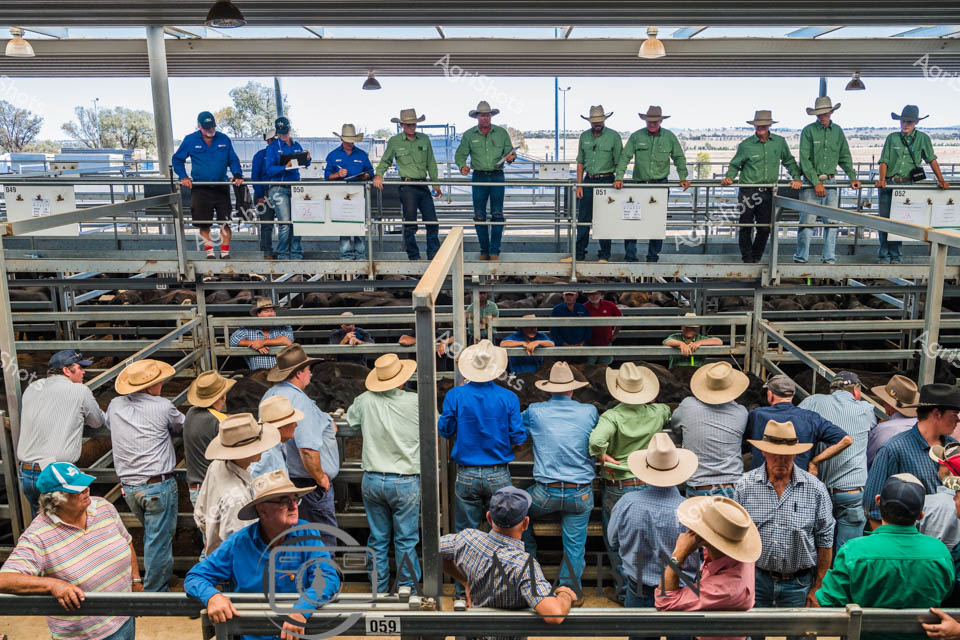
Cattle buyers and agents converge at the New England Region livestock sale yards, a bustling hub of agricultural commerce. Rows of stockmen in wide-brimmed akubra hats - a palette of blues, greens, and neutrals - crowd the multi-tiered metal pens, intently focused on assessing the quality of cattle below. The overhead industrial shed provides shelter, with natural light filtering through, illuminating the rhythmic process of rural livestock trading. Professionally dressed agents in blue uniforms stand on the upper level, clipboard and stock lists in hand, while farmers and buyers in classic rural attire examine potential purchases from multiple angles. This scene captures the precise, methodical nature of Australian cattle trading - a critical moment in the agricultural supply chain where livestock value is determined through expert evaluation and negotiation. The dense arrangement of hat-wearing professionals, the structured metal infrastructure, and the controlled environment reflect the sophisticated, business-like approach to primary industry in regional New South Wales.
 Image
Image
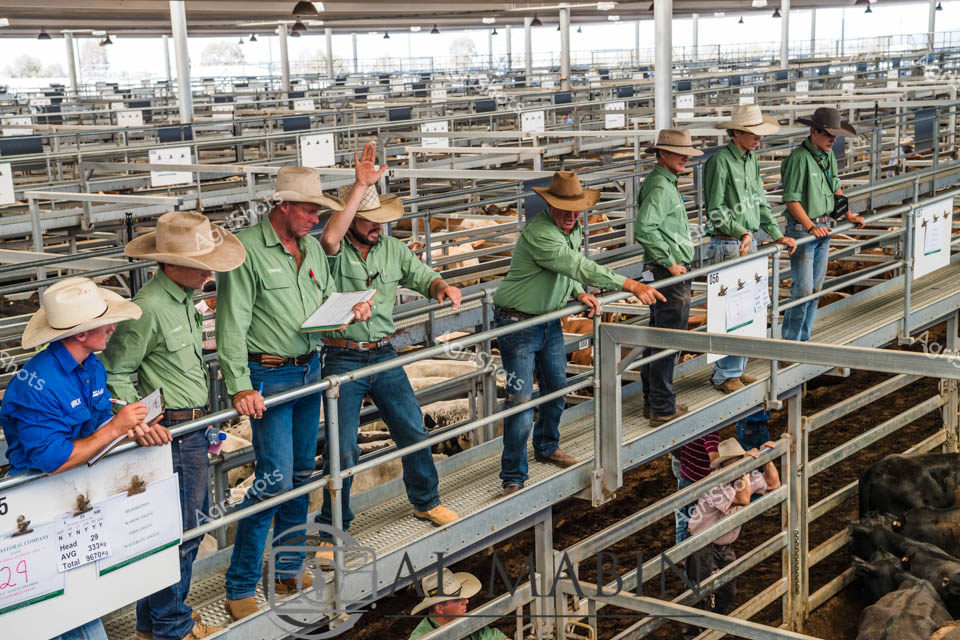
Livestock agents survey the morning's cattle auction from a raised steel walkway, their uniform of sage green shirts and wide-brimmed straw hats signaling decades of agricultural expertise. Meticulously arranged steel pens stretch below them, housing groups of cattle awaiting sale, with white identification boards marking each pen's lot details. One agent in a blue shirt takes notes while another raises a hand, potentially signaling a bid or communicating with colleagues across the expansive sale yard. The structured metal infrastructure of the livestock market reflects the precision and organization of Australia's beef industry, with multiple levels allowing agents to carefully assess each animal's potential. Cool morning light filters through the industrial shed, highlighting the weathered denim and sun-creased faces of professionals who have dedicated their lives to agricultural trading. This scene captures the rhythmic, systematic nature of rural livestock commerce in the New England region of New South Wales, where generations of agricultural knowledge converge in a single, methodical moment.
 Image
Image
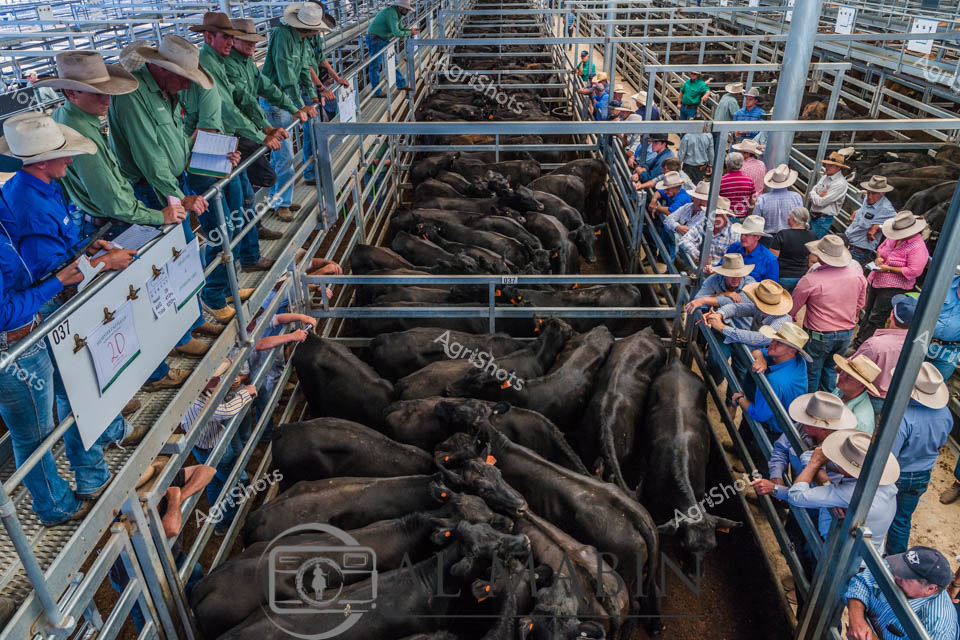
Black Angus cattle pack tightly into metal livestock pens at a bustling regional cattle sale yard, likely in New England, New South Wales. Experienced livestock agents in wide-brimmed rural hats - a blend of blue, green, and cream workwear - crowd the elevated walkways, carefully evaluating the herd. Numbered identification tags hang from the pens, signaling the systematic organization of the auction process. The densely packed cattle, uniformly dark and muscular, represent a premium beef breed, their sleek black coats indicating high-quality stock ready for sale. Weathered hands grip clipboard and railings, with agents positioned strategically to observe each animal's condition and potential market value. The metallic infrastructure, saturated with the earthy tones of livestock and dust, captures the intense, methodical rhythm of Australian agricultural commerce - a quintessential scene of rural economic exchange where generations of farming knowledge converge in a single, purposeful moment.
 Image
Image
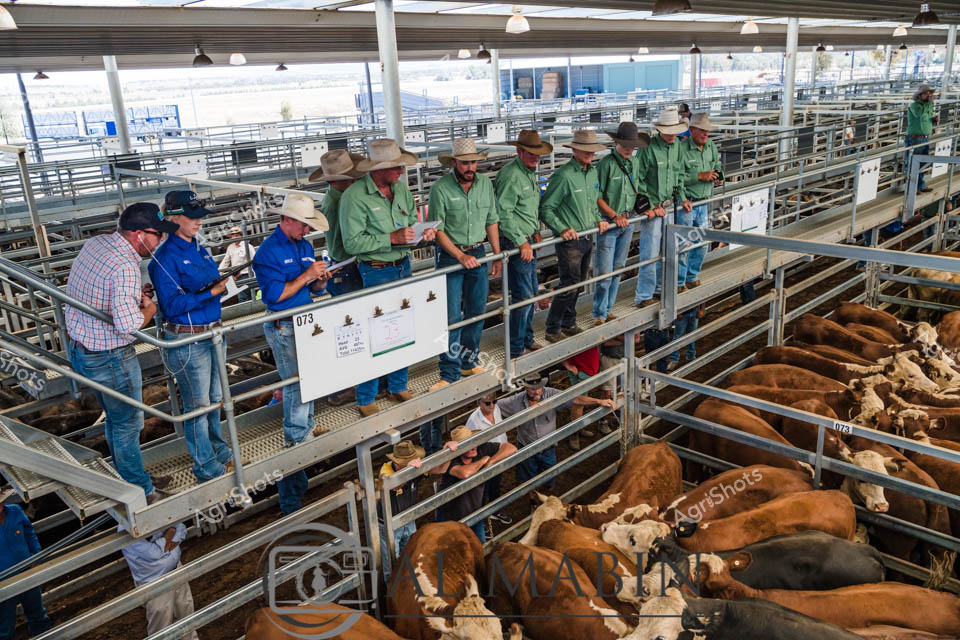
Cattle auction at a modern livestock sale yard in New South Wales' New England Region pulses with agricultural energy. Seasoned agents and buyers lean against steel railings, surveying a pen of robust beef cattle - a mix of rich brown, tan, and black hides clustered below. Dressed in classic rural workwear - crisp blue and green shirts, wide-brimmed protective hats, well-worn denim - the professionals stand in a precise line, intently assessing the livestock inventory. Industrial overhead lighting illuminates the metallic infrastructure of sorting pens, with numbered identification markers indicating each cattle lot. The scene captures the methodical choreography of agricultural commerce, where generations of farming expertise converge to evaluate and trade livestock. Cool, clinical, yet deeply connected to the rhythms of rural production, this snapshot represents a critical moment in Australia's beef supply chain, where individual animals transition from farm to market with calculated precision.
 Image
Image
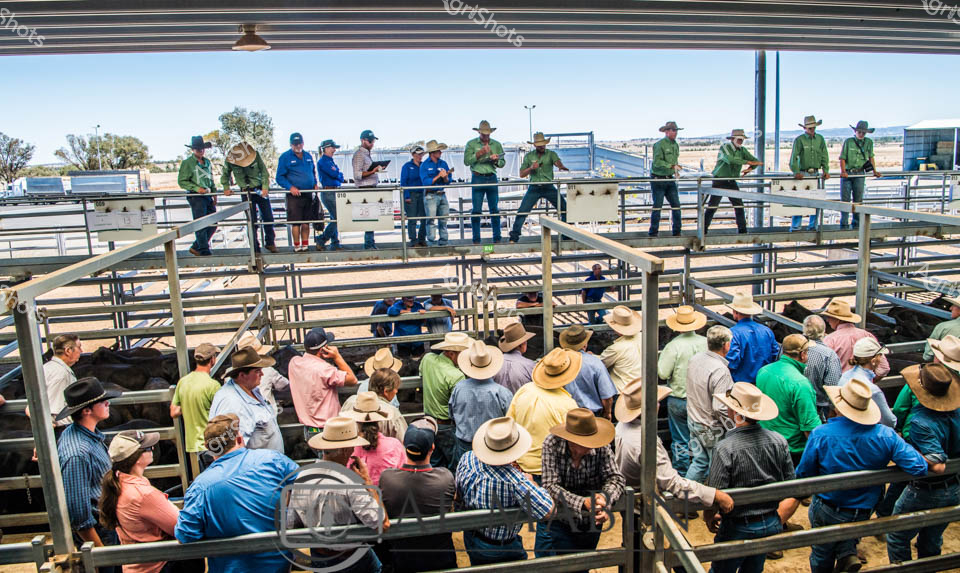
Sun-drenched and bustling, this quintessential Australian livestock auction captures the heartbeat of rural commerce in the New England Region of New South Wales. Ranchers and agricultural professionals crowd the steel-framed sale yards, their wide-brimmed akubra hats creating a sea of neutral tones - khaki, beige, and olive green - against the metallic infrastructure. Cattle pens below hold a dark herd, waiting silently as buyers and agents strategically position themselves to assess the livestock, their body language and clustered stance speaking volumes about the high-stakes agricultural trading taking place. Overhead, a structured metal awning provides shade, while the bright, clear sky suggests a crisp morning in what appears to be late winter or early spring. The audience is tightly packed, wearing classic rural workwear - checked shirts, hardy denim, and protective hats - a uniform that speaks to generations of agricultural tradition. Agents in uniform green and blue shirts stand on an elevated platform, surveying the scene with professional concentration, their positioning highlighting the structured, methodical nature of livestock auctions in rural Australian agricultural markets.
 Image
Image
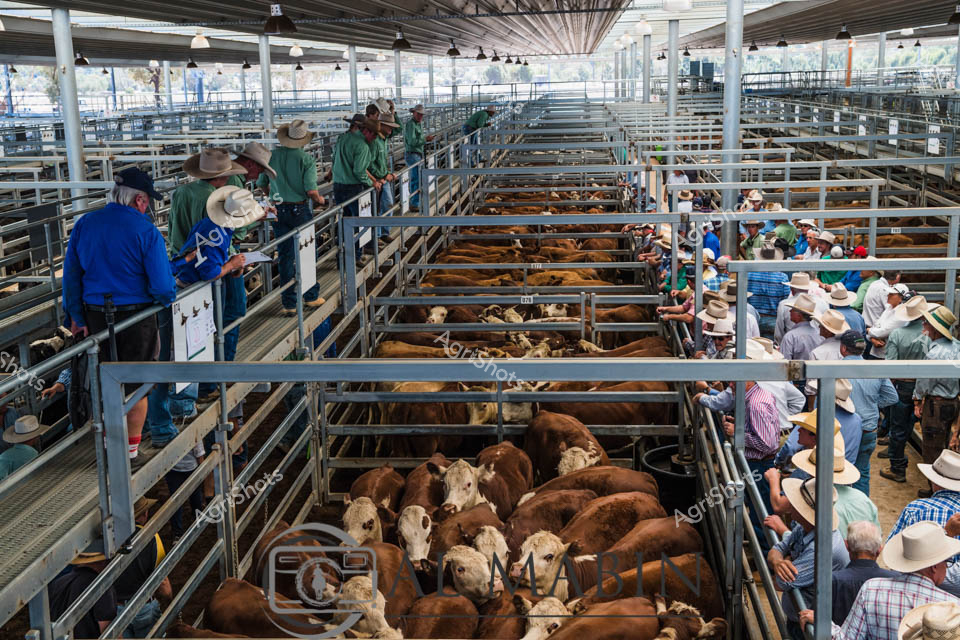
Cattle surge through steel-railed pens at a bustling regional livestock sale yard, capturing the dynamic heart of Australia's beef trading ecosystem. Rich auburn and cream-colored beef cattle cluster tightly, their muscular frames testament to careful breeding and pastoral management. Stockmen in classic Australian rural attire - wide-brimmed akubra hats, crisp work shirts in blue, green, and checked patterns - move purposefully along elevated walkways, monitoring the auction's progression. The industrial-scale steel infrastructure, with its precise grid of pens and overhead lighting, provides a stark mechanical contrast to the organic movement of livestock below. Buyers and agents cluster in small groups, their body language and positioning suggesting intense professional assessment of each animal's potential. This scene represents a crucial economic moment in Australia's agricultural supply chain - where individual beasts are evaluated, traded, and their genetic potential and market value determined through generations of agricultural expertise.