About this image
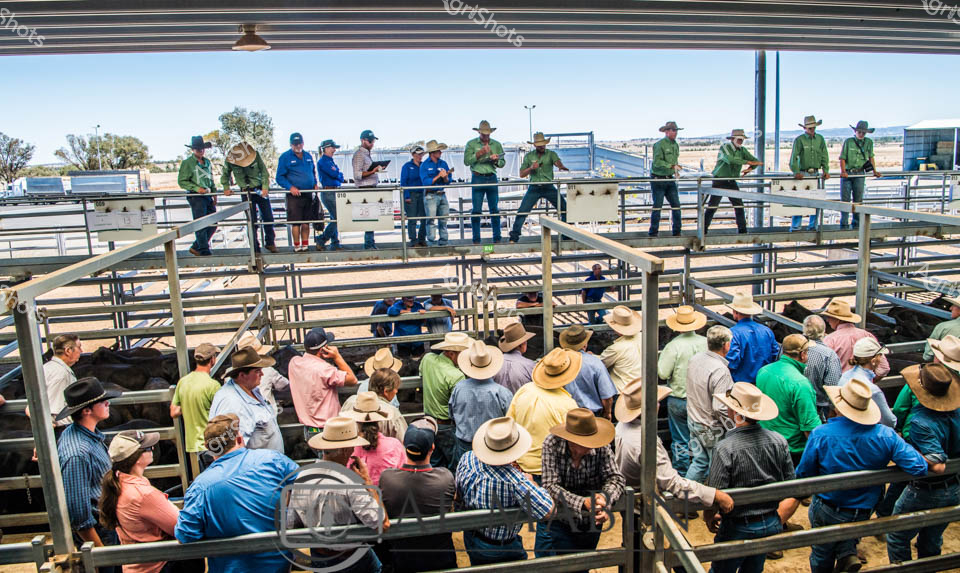
Sun-drenched and bustling, this quintessential Australian livestock auction captures the heartbeat of rural commerce in the New England Region of New South Wales. Ranchers and agricultural professionals crowd the steel-framed sale yards, their wide-brimmed akubra hats creating a sea of neutral tones - khaki, beige, and olive green - against the metallic infrastructure. Cattle pens below hold a dark herd, waiting silently as buyers and agents strategically position themselves to assess the livestock, their body language and clustered stance speaking volumes about the high-stakes agricultural trading taking place. Overhead, a structured metal awning provides shade, while the bright, clear sky suggests a crisp morning in what appears to be late winter or early spring. The audience is tightly packed, wearing classic rural workwear - checked shirts, hardy denim, and protective hats - a uniform that speaks to generations of agricultural tradition. Agents in uniform green and blue shirts stand on an elevated platform, surveying the scene with professional concentration, their positioning highlighting the structured, methodical nature of livestock auctions in rural Australian agricultural markets.
Similar media
 Image
Image
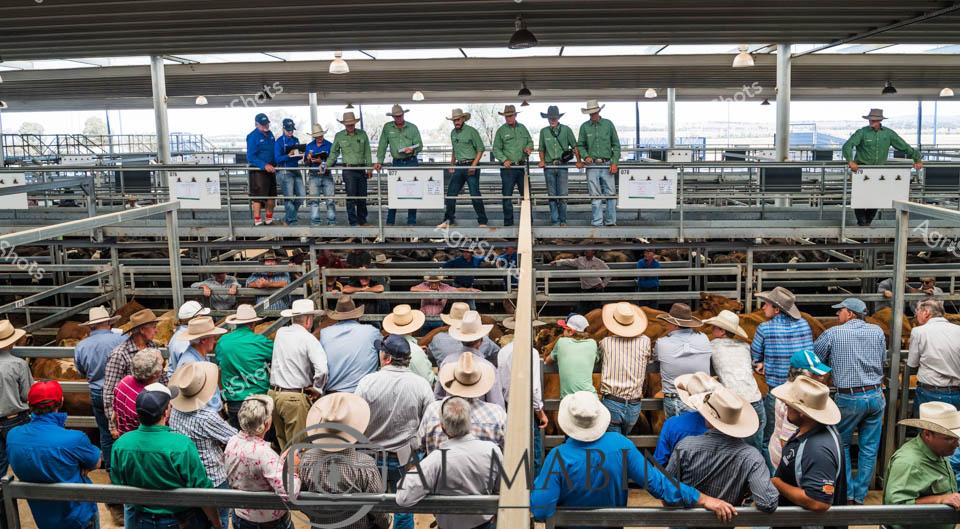
Cattle Auction Intensity at New England Livestock Sales Seasoned stockmen and rural buyers crowd the tiered sale yards, their wide-brimmed akubras casting shadows over sun-weathered necks. The raised platform hosts a line of agents in forest green and electric blue shirts, surveying the pens below filled with prime beef cattle. Rows of farmers and graziers lean intently against metal railings, their collective attention focused on the livestock market's rhythmic pulse. Overhead industrial lighting illuminates the steel-framed pavilion, capturing the concentrated energy of agricultural commerce where generations of rural knowledge converge. Checkered shirts, denim, and work boots form a uniform of pragmatic rural professionalism, while the cattle stand patient and disciplined in their allocated pens. This is more than a sale - it's a complex choreography of agricultural economics, where each subtle gesture and nod can represent significant investment and livelihood for New South Wales' farming communities.
 Image
Image
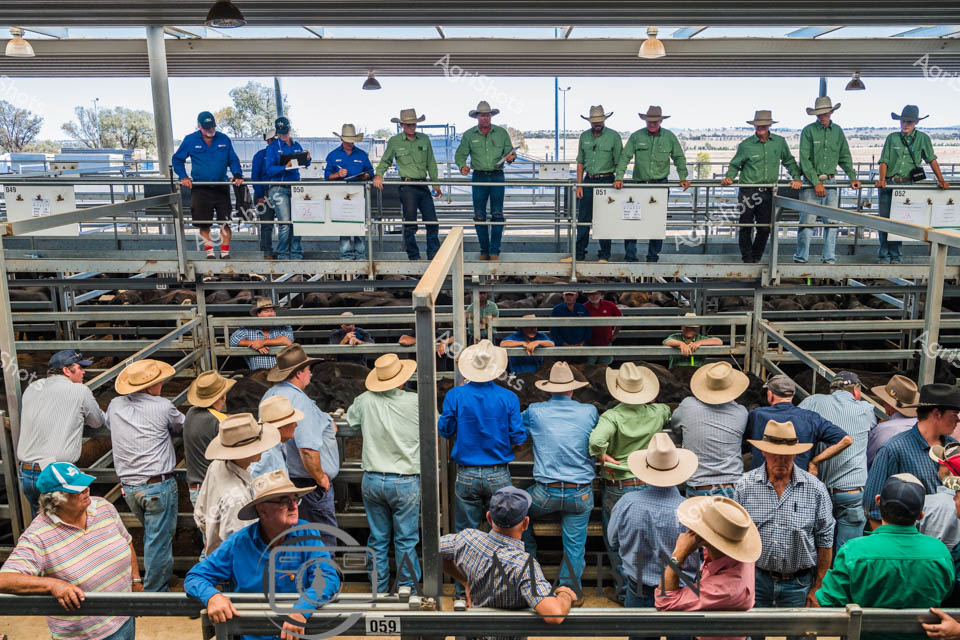
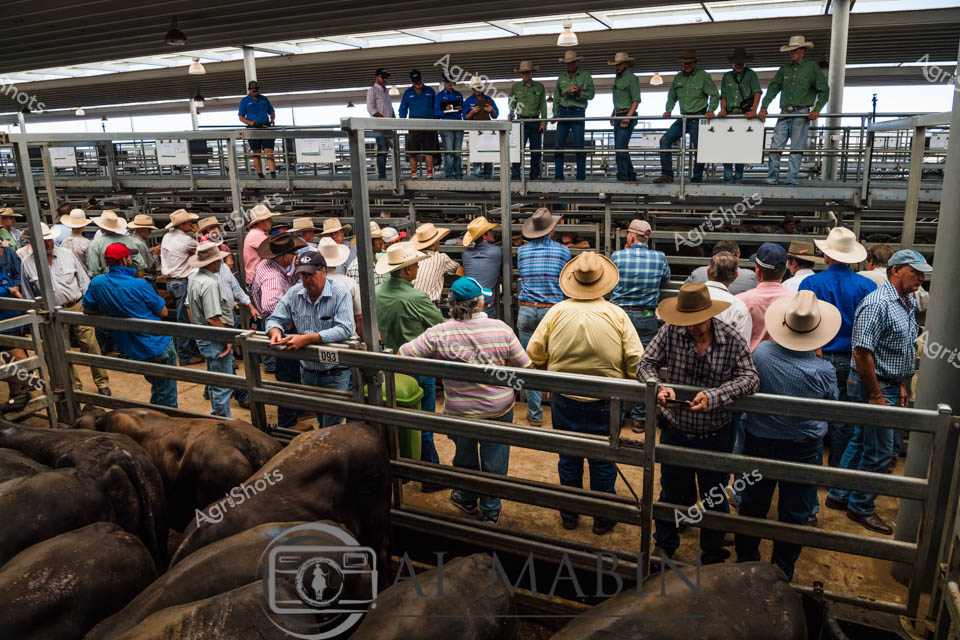
Cattle buyers and agents converge at the New England Region livestock sale yards, a bustling hub of agricultural commerce. Rows of stockmen in wide-brimmed akubra hats - a palette of blues, greens, and neutrals - crowd the multi-tiered metal pens, intently focused on assessing the quality of cattle below. The overhead industrial shed provides shelter, with natural light filtering through, illuminating the rhythmic process of rural livestock trading. Professionally dressed agents in blue uniforms stand on the upper level, clipboard and stock lists in hand, while farmers and buyers in classic rural attire examine potential purchases from multiple angles. This scene captures the precise, methodical nature of Australian cattle trading - a critical moment in the agricultural supply chain where livestock value is determined through expert evaluation and negotiation. The dense arrangement of hat-wearing professionals, the structured metal infrastructure, and the controlled environment reflect the sophisticated, business-like approach to primary industry in regional New South Wales.
 Image
Image
Stockmen in crisp green shirts and wide-brimmed akubras gather at the livestock sale yards, their postures alert and focused. Perched on multi-level steel pens, they survey a carefully orchestrated cattle auction in the New England region of New South Wales. The harsh midday sunlight casts sharp shadows across the dusty yards, highlighting the disciplined choreography of rural commerce. Clustered below, potential buyers in checked shirts and straw hats lean intently into the sale proceedings, their body language suggesting close assessment of each potential purchase. The steel gates and numbered pens create a geometric framework that frames these agricultural professionals, representing generations of farming expertise and economic negotiation. This scene captures the quintessential rhythm of Australian rural trade - a precise, understated performance where fortunes are quietly determined and livestock are traded with practiced efficiency.
 Image
Image
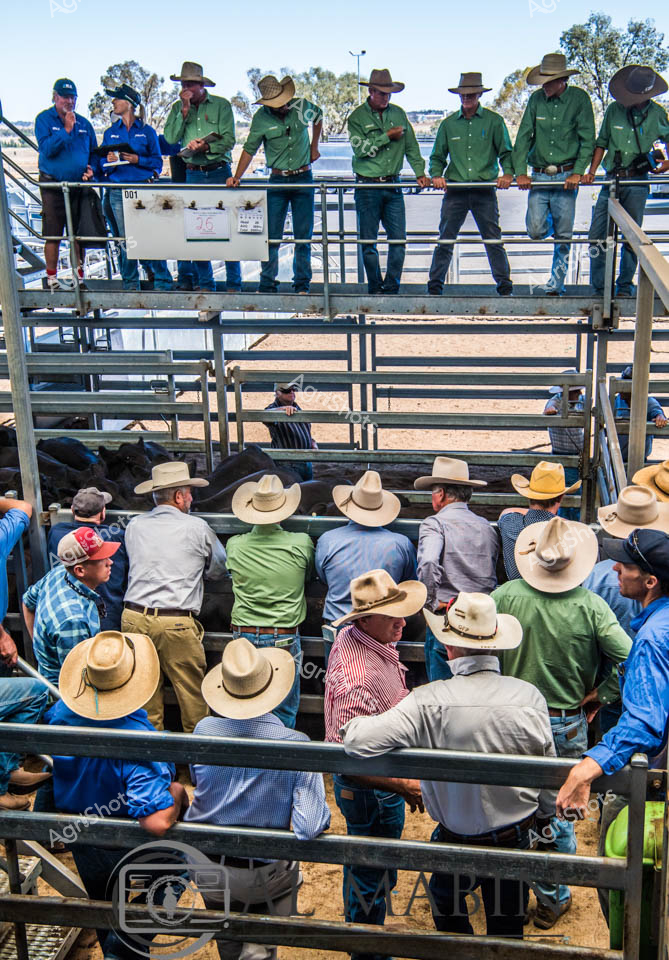
Rural cattle auction in full swing at a regional sale yard, capturing the quintessential rhythm of agricultural commerce in the New England or Riverina districts of New South Wales. Weathered stockmen and agents cluster around metal livestock pens, their wide-brimmed akubra hats creating a uniform sea of cream and tan against the dusty yards. Uniformed in crisp blue, green, and checked shirts, the group stands shoulder-to-shoulder, leaning over metal railings with professional concentration, their backs turned to the photographer in a study of collective focus. The scene pulses with the pragmatic energy of livestock trading - a carefully choreographed dance of assessment, negotiation, and rural economic exchange. Overhead, officials in green work shirts stand on an elevated platform, tracking details and managing the auction's flow, while below, potential buyers survey the cattle with practiced eyes. The harsh Australian sunlight casts sharp shadows, highlighting the utilitarian architecture of the sale yards and the robust, no-nonsense attire of the agricultural professionals.
 Image
Image
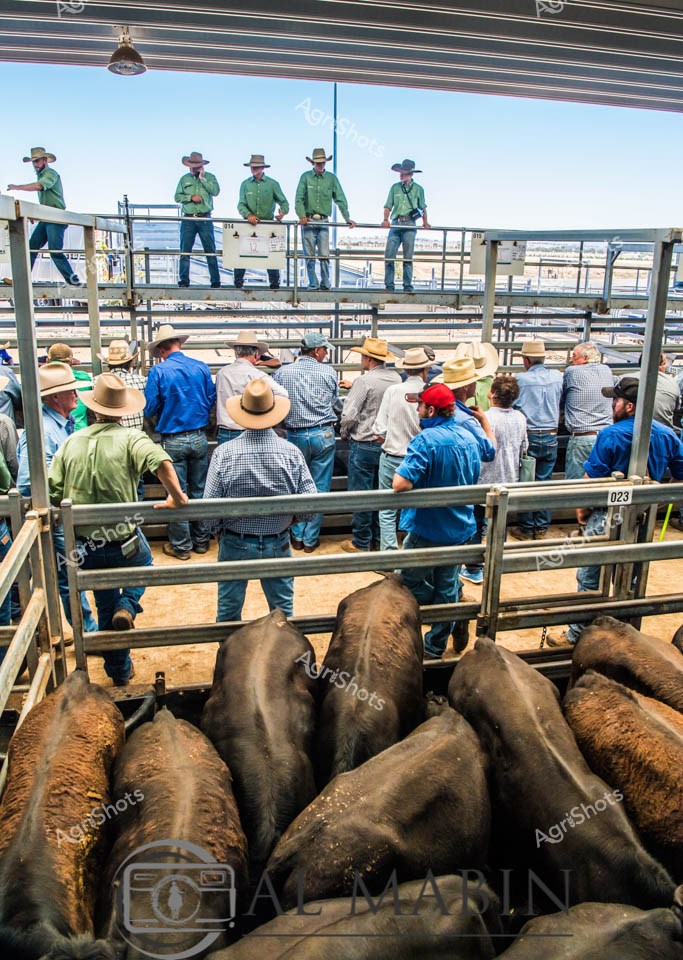
Cattle auctioneers and buyers converge at a bustling livestock sale yard in New South Wales' New England Region, a quintessential scene of rural agricultural commerce. Five professional agents in crisp green shirts and wide-brimmed hats survey the proceedings from an elevated metal walkway, overlooking a pen filled with robust beef cattle. Below them, a crowd of potential buyers dressed in classic rural attire - checkered shirts, denim jeans, and an array of straw and felt hats in shades of tan and cream - listen intently to the auction details. The cattle, a mix of rich brown and darker-coated animals, stand closely packed in a metal holding pen, their muscular forms a testament to the region's significant beef production. Harsh overhead lighting and the metallic infrastructure create a stark, utilitarian environment that speaks to the serious business of livestock trading. The scene captures the essence of Australian agricultural trade - methodical, professional, and deeply connected to the rural economic landscape.
 Image
Image
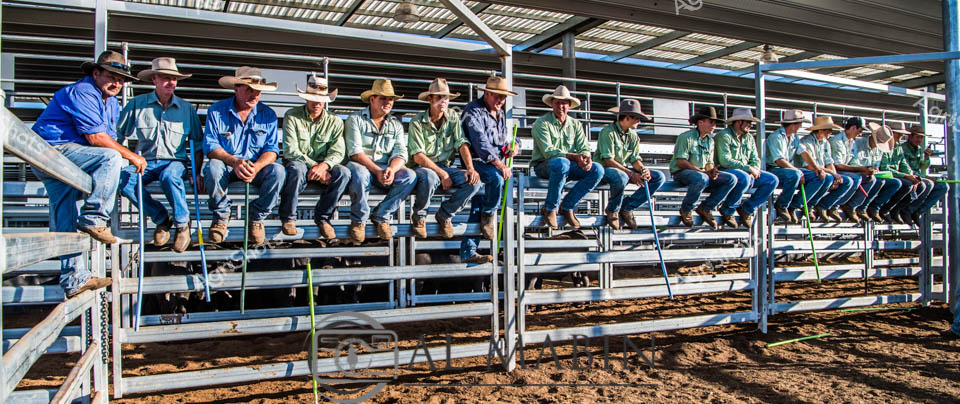
Rural rhythms pulse through this quintessential Australian livestock sale yard, capturing a line of seasoned stock agents perched methodically on steel cattle yards' viewing platforms. Dressed in the uniform of the bush - pressed moleskin jeans, crisp collared shirts, and wide-brimmed akubra hats ranging from dusty blues to soft khakis - these men represent generations of agricultural expertise. The metallic yard infrastructure creates a structured backdrop against the rich earthen ground, with precise rows of agents surveying potential livestock purchases with practiced, discerning gazes. Soft morning light filters through the corrugated steel roof, casting subtle shadows across their weathered faces and sturdy work attire. Each agent sits with a particular posture - relaxed yet alert - reflecting decades of rural market experience in the New England region of New South Wales. Their collective presence embodies the quiet professionalism of Australia's livestock trading culture, where subtle nods and minimal gestures can represent significant financial transactions. The composition speaks to the unspoken communication and deep understanding that characterizes these agricultural marketplaces - a timeless ritual of rural commerce where stock agents play a crucial intermediary role between producers and buyers, maintaining the complex economic ecosystem of Australian pastoral industries.
 Image
Image
Cattle auction day pulses with anticipation at the New England Region livestock saleyards. Ranchers and agricultural workers cluster along steel-railed pens, their wide-brimmed stockman's hats creating a sea of neutral tones - cream, beige, khaki, and deep blue. Dark Angus cattle huddle compactly in the lower pen, their muscular black bodies creating a stark contrast against the industrial metal infrastructure. Observers stand on multiple levels of the covered pavilion, some in blue work shirts, others in green and plaid, collectively representing the region's farming community. The upper deck hosts what appear to be managers and senior agricultural professionals, overlooking the proceedings with professional detachment. This scene captures the quintessential rhythms of rural agricultural commerce - a meticulously organized marketplace where livestock are evaluated, traded, and the economic heartbeat of the region's pastoral industries continues its steady pulse.
 Image
Image
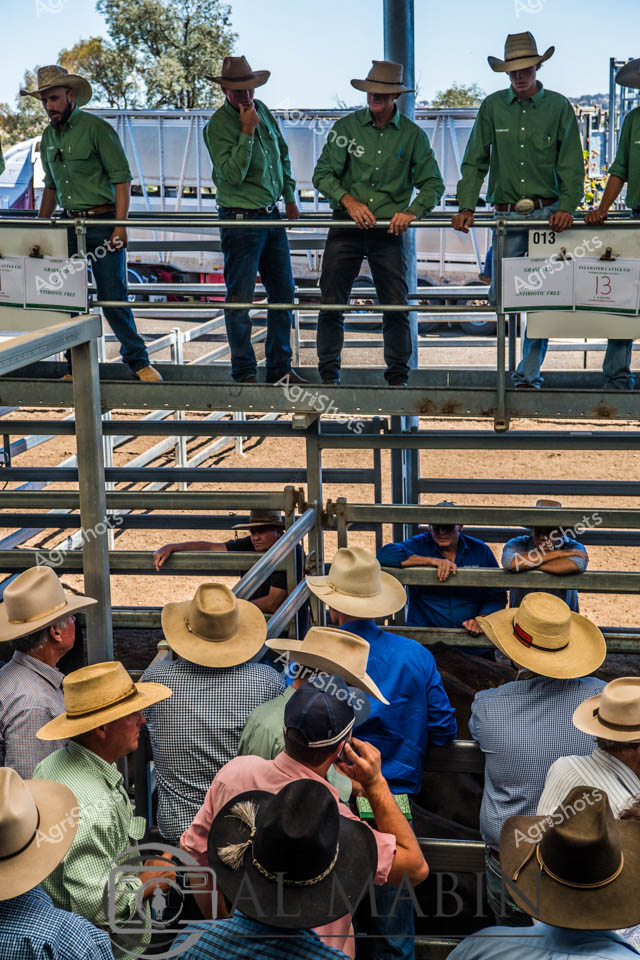
Rural auction dynamics unfold at a classic Australian livestock sale yard, capturing the essence of agricultural commerce in the New England or Riverina regions of New South Wales. Uniformed agents in sage green shirts and wide-brimmed hats stand positioned on a raised platform, overlooking the proceedings with professional scrutiny. In the foreground, three cattlemen wearing traditional wide-brimmed stockman's hats - in shades of straw, tan, and golden weave - sit with backs turned, their plaid and dotted shirts reflecting the classic rural fashion. The steel-and-corrugated infrastructure frames the scene, with numbered panels suggesting an organized, systematic approach to livestock trading. The atmosphere pulses with quiet intensity, a testament to the measured precision of agricultural transactions where significant economic decisions are made with minimal fanfare. Soft shadows and neutral tones communicate the pragmatic, no-nonsense environment of a cattle sale, where generations of farming knowledge converge in a single, crucial moment of economic exchange.