Results for “Dusty Paddock”
 Image
Image
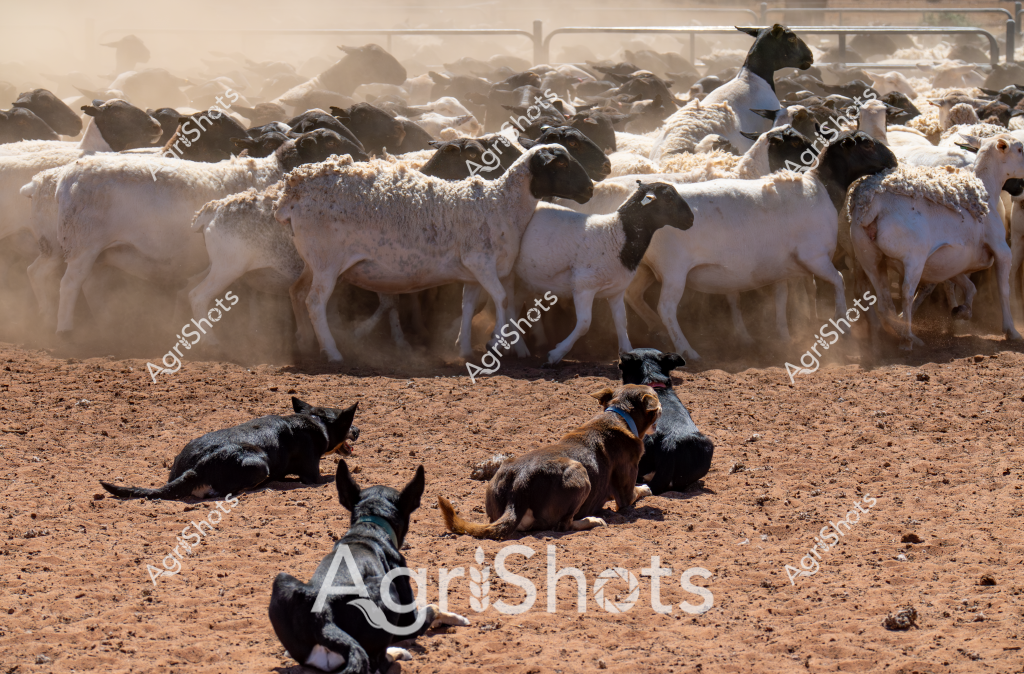
A large flock of white and black Dorper sheep stands tightly packed in a dusty livestock yard, kicking up a haze of dry earth in the background. In the foreground, several black working dogs lie resting on the reddish-brown dirt, cooling off after what appears to be an intense mustering session. The sheep, primarily white with black heads and markings typical of Dorper breed, are clustered together near metal yard fencing, creating a dense mass of woolly bodies. The scene captures the harsh conditions of an Australian pastoral setting, likely in a dry inland region such as Queensland or Western New South Wales. The ground is parched and cracked, indicating dry seasonal conditions, while the dust cloud suggests intense heat and arid environmental conditions. The working dogs, looking exhausted but alert, demonstrate the critical role of canine helpers in managing large livestock herds. The image powerfully illustrates the challenging environment of Australian sheep farming, where livestock management requires resilience and specialized skills. The tight grouping of the Dorper sheep and the strategically positioned working dogs showcase the coordinated effort required to handle livestock in demanding outback conditions.
 Image
Image
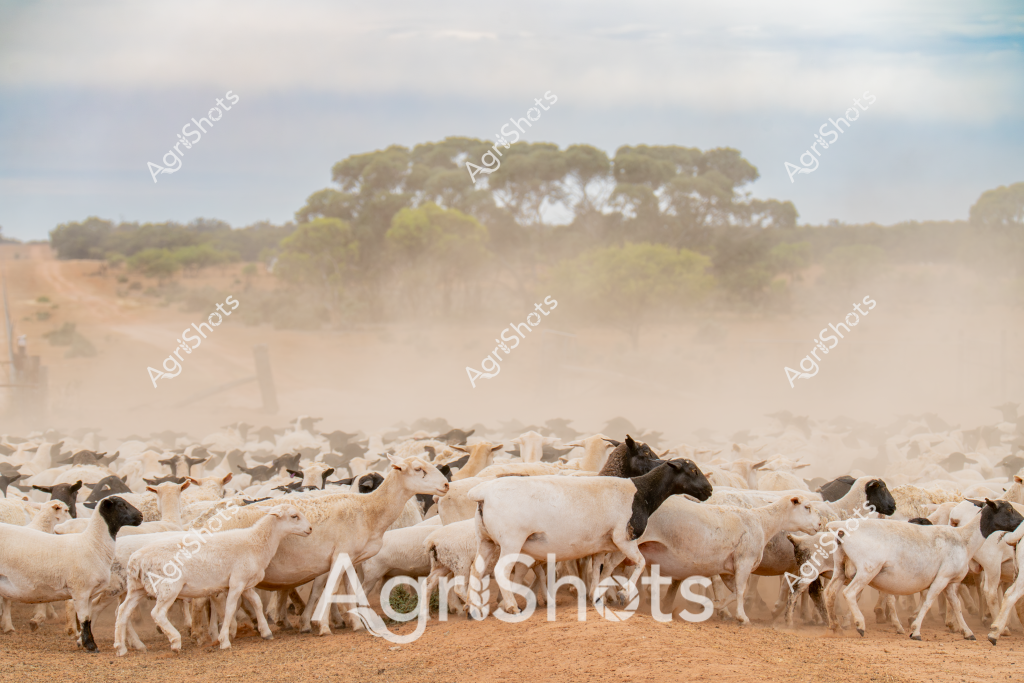
A large flock of light-colored sheep moves across a dusty rural landscape, kicking up a dense cloud of earthen particles. The mob comprises predominantly white sheep with some black-headed individuals scattered throughout the herd, creating a distinctive visual pattern against the dry, compacted ground. Sparse trees and vegetation line the distant horizon, suggesting an arid Australian pastoral setting, likely in a region experiencing dry seasonal conditions. The sheep appear to be moving with purpose, potentially being mustered by unseen livestock managers, their dense clustering indicating coordinated movement across the sparse paddock. The warm, muted color palette of beige earth, pale sheep, and soft green-gray vegetation captures the quintessential Australian rural landscape, highlighting the resilience of both the livestock and the environment. The scene evokes the challenging conditions of Australian sheep farming, where careful management and adaptation are critical to survival. The dust cloud surrounding the sheep emphasizes the intensity of their movement and the dry, potentially drought-affected terrain they traverse.
 Image
Image
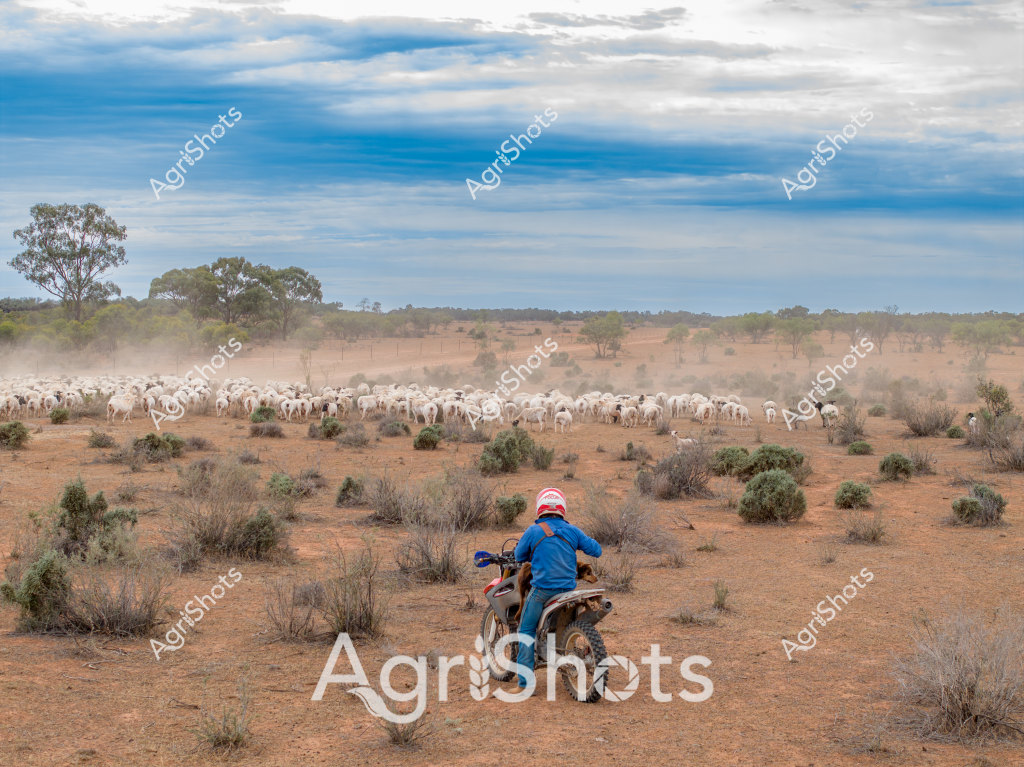
A motorcyclist herds a large flock of white sheep across a dry, expansive Australian outback landscape. The rider, wearing a blue jacket and distinctive helmet, navigates the dusty terrain on a trail bike, expertly guiding the sheep through sparse scrubland with scattered native bushes. The landscape is characterized by reddish-brown earth, low saltbush and bluebush shrubs, and eucalyptus trees dotting the distant horizon. Pale blue skies with soft cloud formations provide a dramatic backdrop to the pastoral scene, highlighting the challenging environment of inland Australia. A slight dust cloud rises from the sheep's movement, emphasizing the arid conditions and the dynamic nature of livestock mustering in remote agricultural regions. The image captures the quintessential Australian rural experience of managing livestock across vast, unforgiving landscapes.
 Image
Image
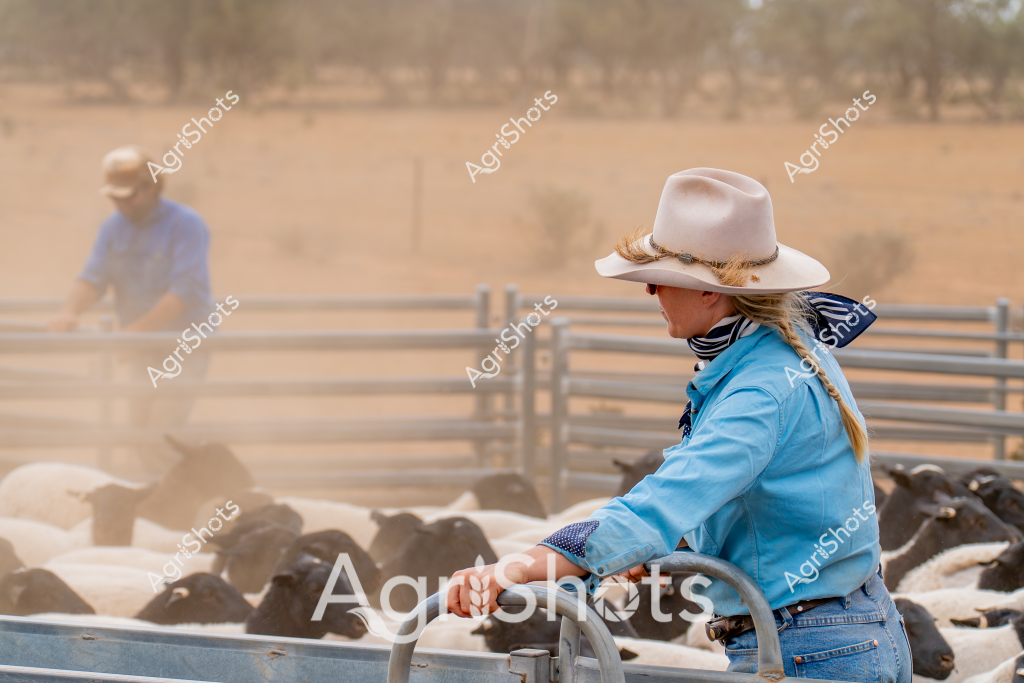
A woman stockman in a classic white wide-brimmed hat and blue jacket carefully manages a mob of black sheep within dusty metal livestock yards. Her blue work shirt and striped neck scarf indicate professional rural attire, while her positioning suggests experienced livestock handling. In the background, another worker is partially visible, also engaged in managing the animals during what appears to be a dry, sunlit mustering operation in an arid Australian paddock. The landscape is characterized by golden-brown earth, sparse vegetation, and wooden fence rails, capturing the challenging environmental conditions typical of extensive sheep farming regions. Dust rises around the sheep, highlighting the physical demands of stock management in rural Australia and showcasing the skill required to control and move livestock in harsh pastoral settings.
 Image
Image
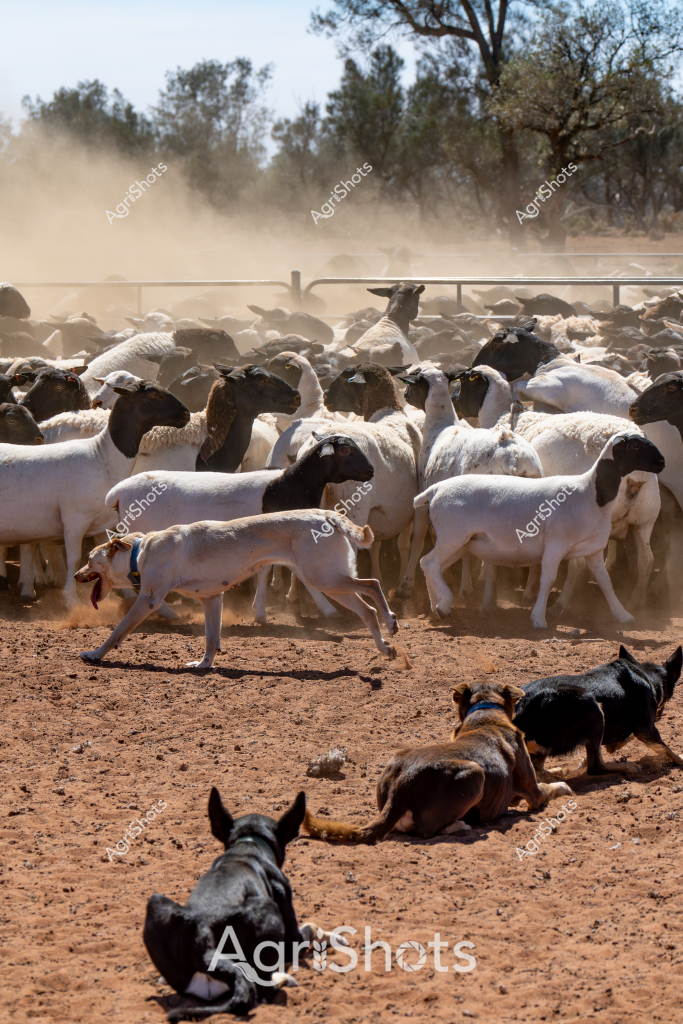
A dusty livestock mustering scene captures a large flock of white and black sheep being herded by working dogs in a dry, arid paddock. Several black and brown working dogs strategically move around the tightly packed mob of sheep, kicking up red earth and creating a swirling dust cloud. The sheep appear to be a mixed breed, predominantly white with black faces, likely Dorper or Merino cross, tightly clustered within a metal yard fence. In the foreground, some dogs rest on the ground while others actively work to control the movement of the sheep, demonstrating the classic Australian livestock management technique of using highly trained herding dogs to manage stock in challenging outback conditions. The background shows sparse trees and a dry landscape typical of rural Australian grazing country, with the intense dust and close animal grouping suggesting hot, dry weather conditions during mustering season. The scene powerfully illustrates the critical role of working dogs in Australian agricultural practices, showcasing their skill, discipline, and importance in managing livestock across vast, harsh agricultural landscapes.
 Image
Image
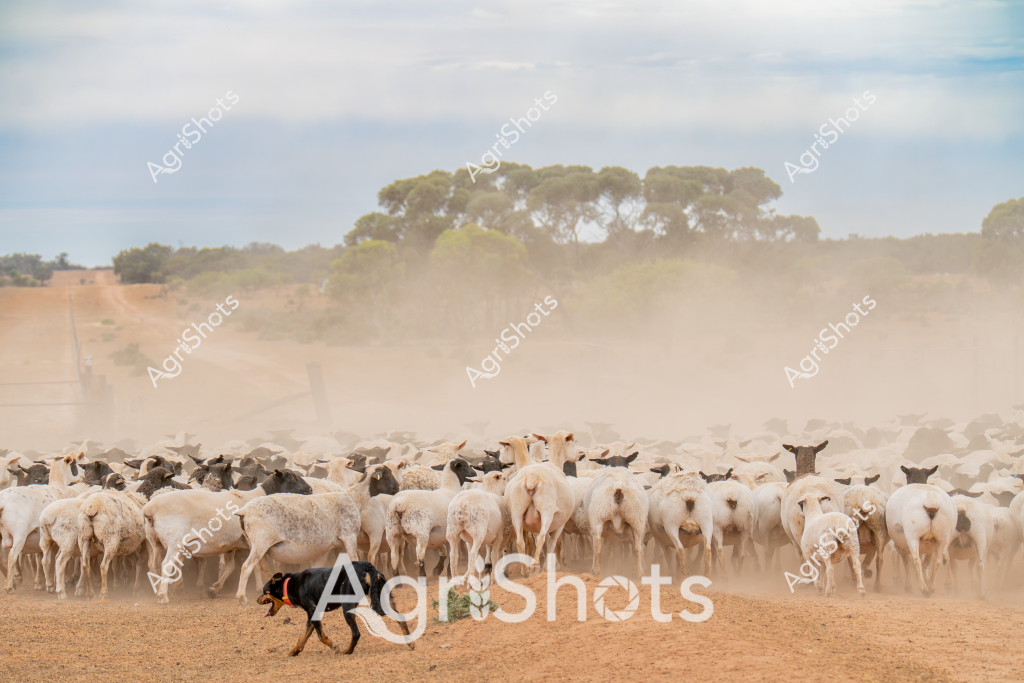
A hardworking sheepdog herds a large flock of white Merino sheep across a dusty rural paddock in the Australian outback. The compact black and tan working dog moves with precision, guiding hundreds of woolly sheep through a cloud of golden ochre dust. Sparse eucalyptus trees and scrubland line the distant horizon under a soft, pale blue sky, creating a classic Australian pastoral landscape. The tight mob of sheep, predominantly white with some darker individuals, stand closely packed together, their woolly backs and rumps facing various directions as they move across the dry, compact earth. The scene captures the essential partnership between skilled working dogs and livestock in Australian agriculture, highlighting the challenging yet beautiful environment of rural sheep farming. The swirling dust and dense flock demonstrate the harsh but productive nature of sheep management in Australia's arid agricultural regions.
 Image
Image
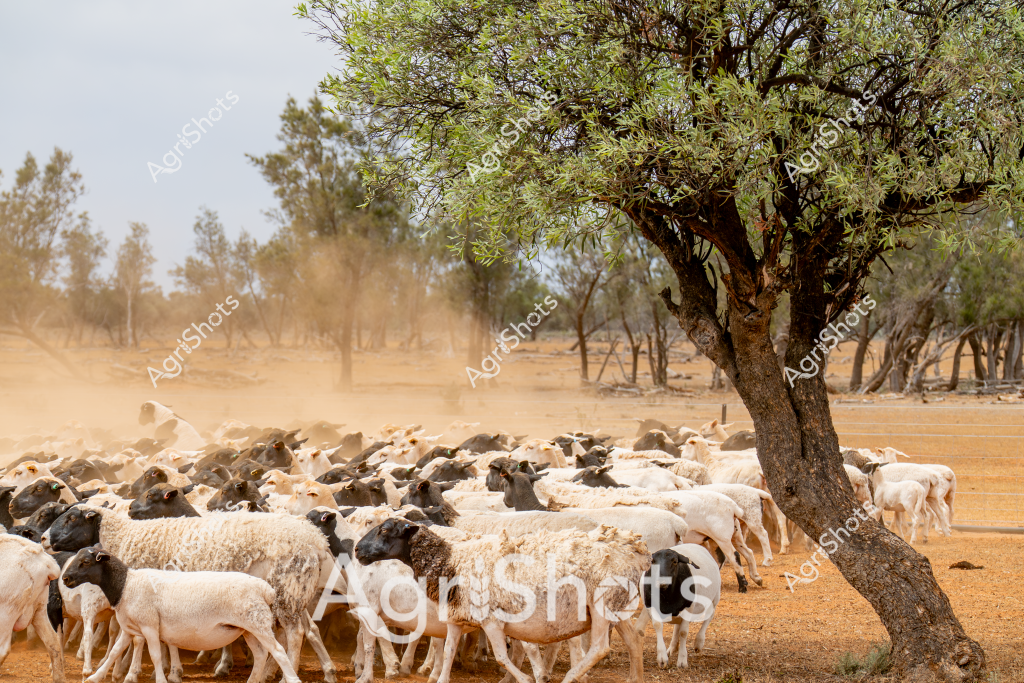
A large flock of black and white sheep huddles together under a mature tree in a dry, dusty paddock. The landscape appears arid, with sparse vegetation and a background of scattered trees creating a classic Australian pastoral scene. Clouds of dust rise around the sheep as they cluster together, seeking shade from the intense sunlight. The mix of white and dark-colored sheep suggests a diverse flock, likely a combination of Merino and other breed types common in Australian livestock farming. The gnarled tree provides a focal point, its branches spreading wide to offer limited relief from the harsh environmental conditions. The scene captures the resilience of Australian sheep farming in challenging drought-like conditions, with the animals tightly packed together in a survival strategy against the unforgiving landscape.
 Image
Image
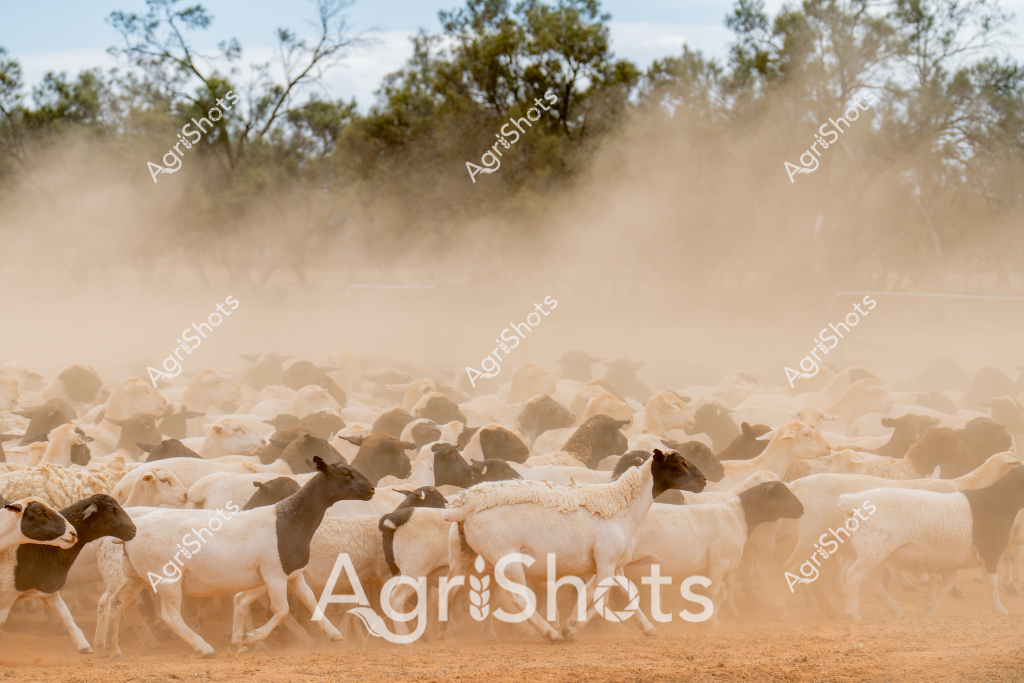
A large herd of sheep generates a massive dust cloud in a dry, arid Australian landscape. The flock consists of white and dark-colored sheep, tightly clustered together and kicking up ochre-colored earth beneath their hooves. Sparse eucalyptus trees and native scrub vegetation form a muted green backdrop against the dusty beige terrain. The dense mob of sheep appears to be moving or being mustered, creating a swirling cloud of fine dust that obscures parts of the landscape. The scene captures the harsh, dynamic environment of outback livestock management, where animals navigate challenging dry conditions with resilience. The image powerfully illustrates the intersection of livestock, landscape, and the demanding nature of Australian pastoral agriculture.
 Image
Image
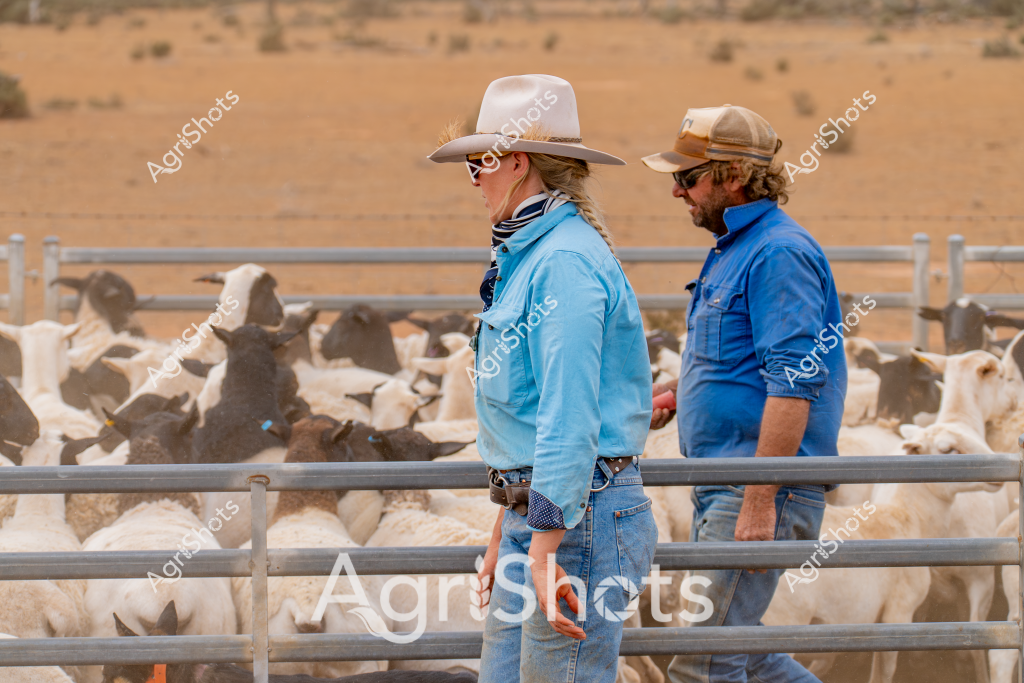
Two people work together managing a herd of goats in an arid, dusty paddock with scattered vegetation. A woman in a white wide-brimmed hat, blue long-sleeved shirt, and denim jeans stands alongside a man in a blue work shirt and cap, both observing the mixed-color goat herd within a metal stock fence. The landscape is a golden-brown expanse typical of Australian outback or pastoral regions, with sparse shrubs and dry ground stretching to the horizon. Their professional stance and coordinated blue clothing suggest they are experienced livestock managers monitoring the herd during what appears to be a dry season. The goats cluster together, a mixture of white, black, and brown animals pressed close within the metal yard, representing the challenges of livestock management in an arid agricultural environment.
 Image
Image
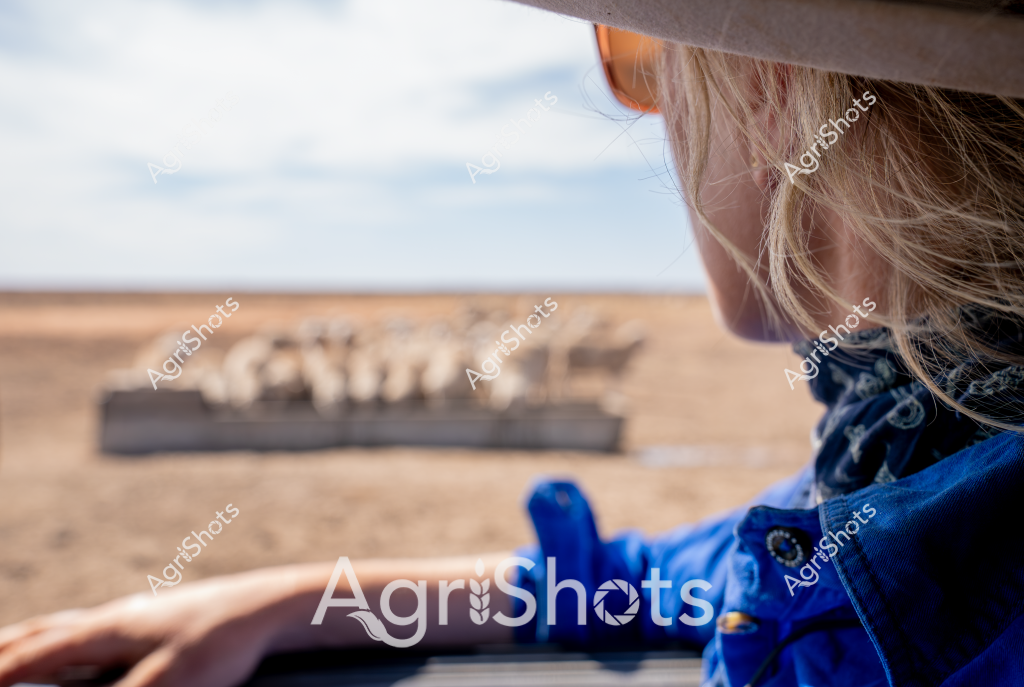
A woman in a blue jacket observes a flock of sheep in a dry, expansive landscape. She appears to be looking out over a dusty paddock where a group of light-colored sheep are standing near a long feeding trough. The background reveals a flat, arid terrain stretching to a pale, cloud-spotted horizon. The scene captures a moment of quiet observation, with the woman's perspective suggesting a connection to the agricultural landscape and the livestock. Her blonde hair is partially visible, and she seems to be monitoring the sheep, which are clustered together in the middle distance, highlighting the challenges of pastoral farming in an dry environment.
 Image
Image
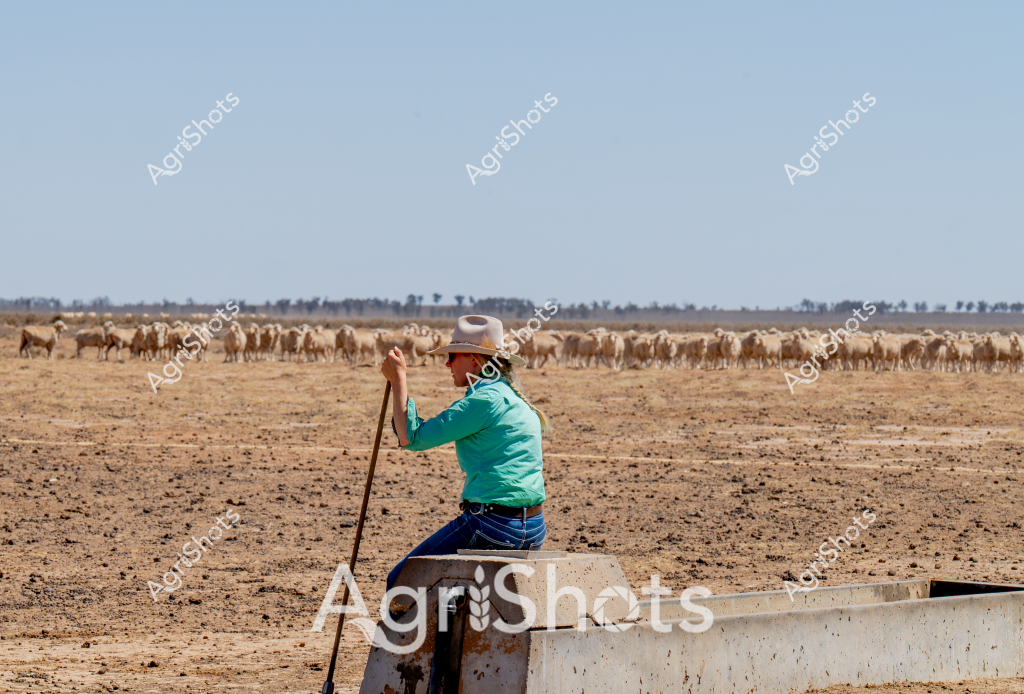
A woman stockman sits atop a concrete water trough, surveying a large herd of light-colored cattle grazing across a dry, dusty paddock under a pale blue sky. Wearing a green shirt, blue jeans, and a wide-brimmed hat, she leans on a long wooden stock stick, embodying the resilient spirit of Australian rural life. The landscape appears parched and sun-baked, with sparse vegetation and a distant line of trees marking the horizon, suggesting challenging drought conditions typical of inland Australia. The herd, likely beef cattle, spreads out across the expansive golden-brown landscape, their pale bodies creating a textured pattern against the arid ground. The scene captures the essence of pastoral management - a lone stockwoman monitoring the livestock in a harsh, unforgiving environment that demands constant vigilance and skill. Her posture and positioning reveal an intimate connection with the land and the animals, representing the enduring tradition of Australian agriculture. This image powerfully illustrates the challenging conditions faced by farmers and livestock managers in rural Australia, where survival depends on careful stewardship and adaptability in an often unforgiving landscape.
 Image
Image
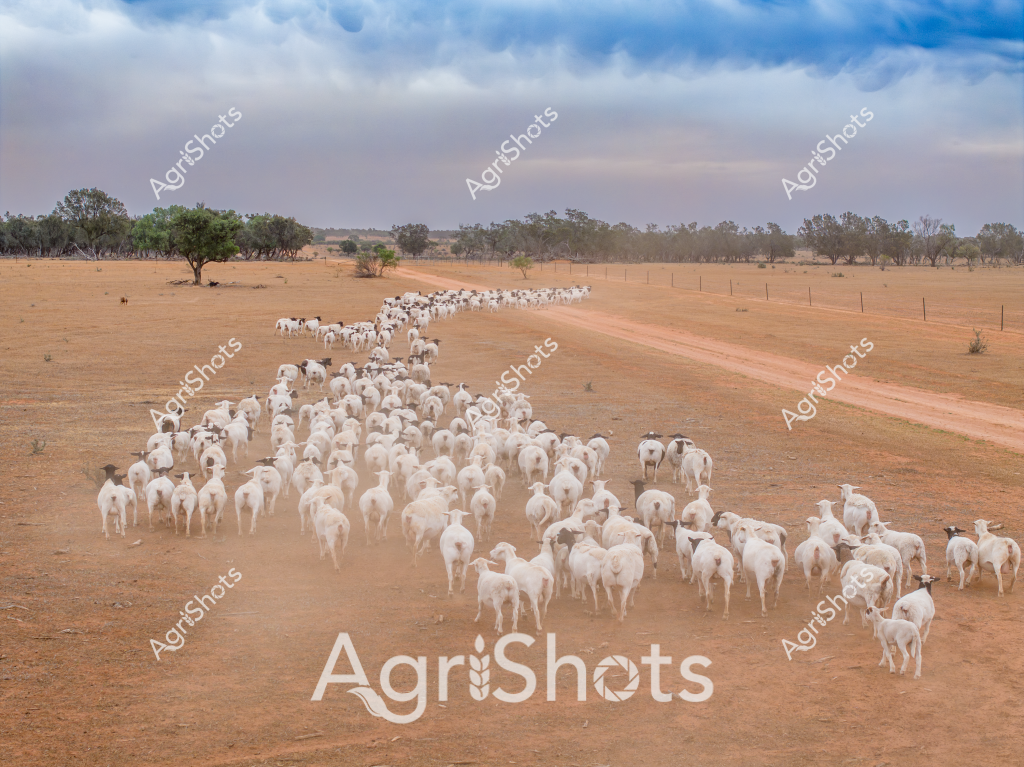
A large herd of white sheep moves across a dry, dusty paddock in what appears to be an Australian outback or pastoral landscape. The expansive terrain is characterized by sparse trees, reddish-brown earth, and a wide dirt track running alongside the flock. Scattered eucalyptus trees dot the horizon, creating a classic Australian rural scene with muted greens and browns contrasting against a cloudy sky with soft blue and gray tones. The sheep - likely Merino or a similar white wool breed - are tightly clustered, moving in a long, winding column across the parched landscape. Their pure white coats stand out starkly against the ochre-colored ground, creating a striking visual pattern of movement and density. The dusty environment suggests challenging drought conditions typical of many Australian agricultural regions. This image captures the essence of large-scale sheep farming in Australia, where herds are moved across vast properties to access grazing areas. The landscape speaks to the resilience of both the animals and the farmers who manage these extensive agricultural operations, navigating harsh environmental conditions with skill and determination.
 Image
Image
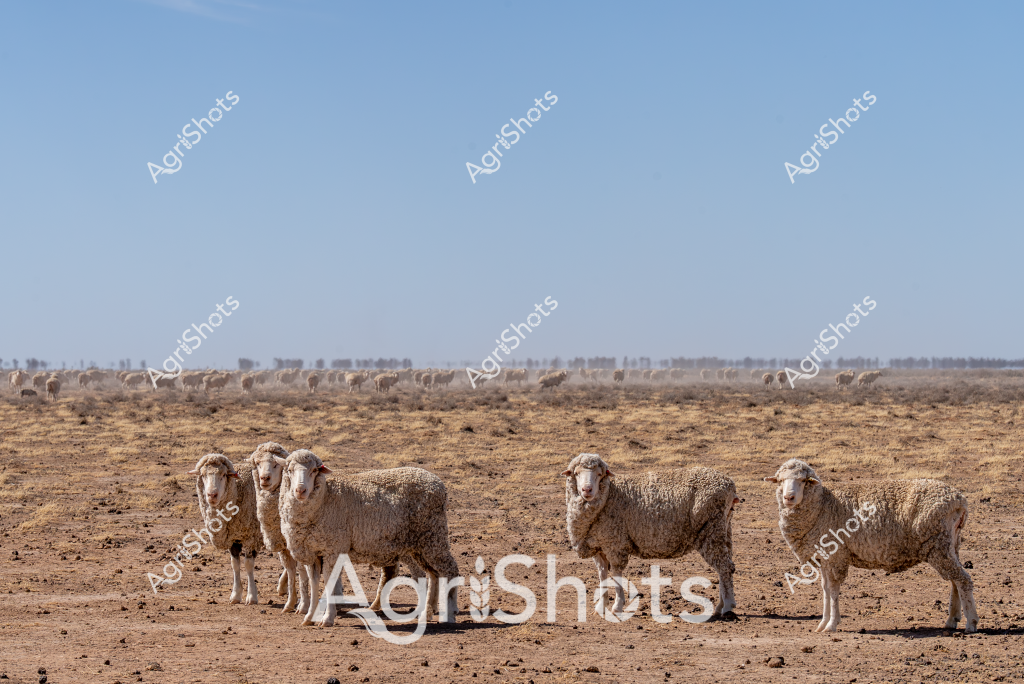
A small mob of Merino sheep stand clustered on a dry, dusty paddock under a clear blue sky, with more sheep visible in the distant background. The woolly white and cream-colored sheep appear hardy and well-conditioned, adapted to the arid Australian landscape. Sparse scrub and yellow-brown grassland stretch to the horizon, indicating challenging drought conditions typical of inland grazing regions. The sheep are standing relatively still, suggesting the harsh, unforgiving environment where water and feed are scarce. Their thick, dense fleece provides protection from the intense sunlight and heat, highlighting the resilience of Merino sheep in marginal agricultural zones. The expansive, open landscape communicates the vast scale of Australian sheep farming, where animals must survive in challenging terrain and climate conditions.
 Image
Image
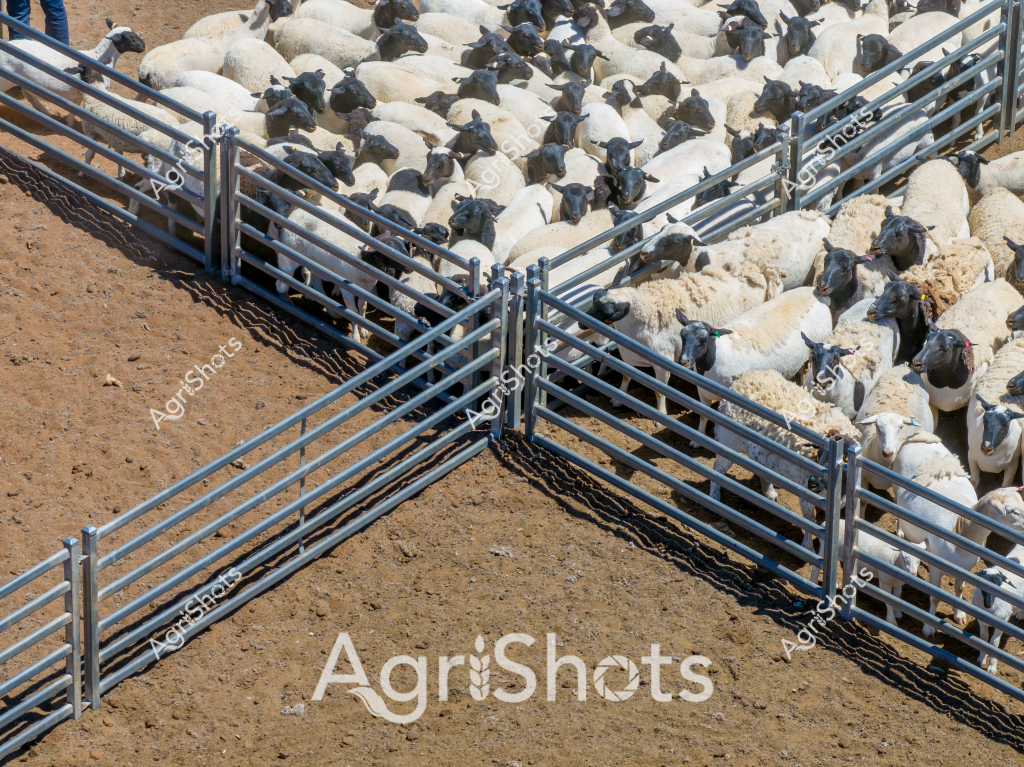
A large mob of black-and-white sheep are densely packed into a series of intersecting metal livestock yards, creating a geometric pattern of animals and steel gates. The sheep appear to be a mix of dark-faced breeds, possibly Black Suffolk or Dorper crosses, tightly clustered in a dry, dusty paddock with a brown earth floor. Precision metal gates form a complex funnel-like configuration, designed to efficiently control and direct the movement of the livestock during mustering or processing. The tight arrangement of sheep suggests they are being prepared for either shearing, veterinary treatment, or transportation, highlighting the systematic approach of modern Australian livestock management. The metallic gray yards contrast sharply with the white and dark woolly bodies of the sheep, creating a striking visual representation of agricultural infrastructure and animal husbandry.
 Image
Image
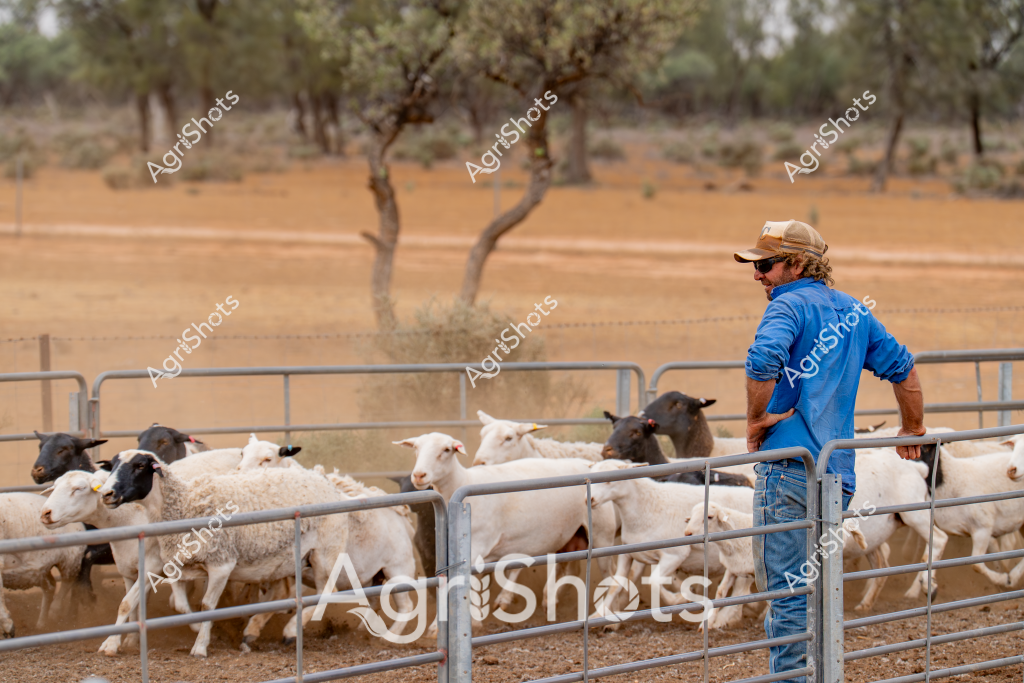
A stockman in a bright blue long-sleeved shirt and cap stands observing a mob of white and dark-colored sheep inside a metal livestock yard. The pastoral scene unfolds against a dry, dusty paddock with sparse trees and golden-brown ground typical of an Australian agricultural landscape. Multiple sheep - a mix of white and darker-colored animals - are clustered within the metal gate pens, suggesting a livestock management or handling operation. The stockman is positioned sideways, leaning against the fence and surveying the flock, demonstrating the quiet concentration required in sheep station work. Sparse, twisted trees in the background and the arid terrain indicate this is likely an inland region, possibly in Queensland or Western Australia, where sheep farming is a critical agricultural activity. The scene captures the essence of rural Australian livestock management - a solitary worker carefully monitoring a valuable agricultural asset in a challenging environmental setting.
 Image
Image
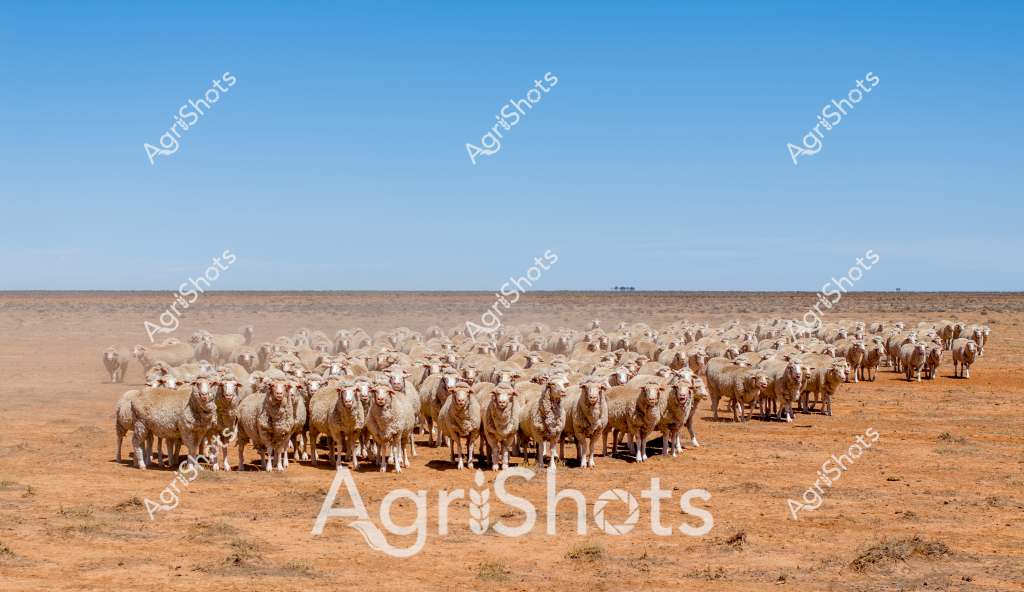
A vast flock of Merino sheep huddles together in a dry, dusty paddock under a clear blue sky, showcasing the challenging conditions of Australian pastoral landscapes. The golden-brown earth stretches to the horizon, highlighting the harsh, arid environment typical of inland grazing regions. These woolly sheep, with their thick, valuable fleece, are tightly clustered, creating a dense mass of white against the stark, parched landscape. The image captures the resilience of both the livestock and the agricultural practices that sustain them in challenging drought-like conditions. A sense of endurance and survival permeates the scene, illustrating the daily reality of sheep farming in Australia's more arid agricultural zones. The uniform grouping of the sheep suggests careful management and the experienced hand of a skilled livestock manager guiding the flock through difficult terrain.
 Image
Image
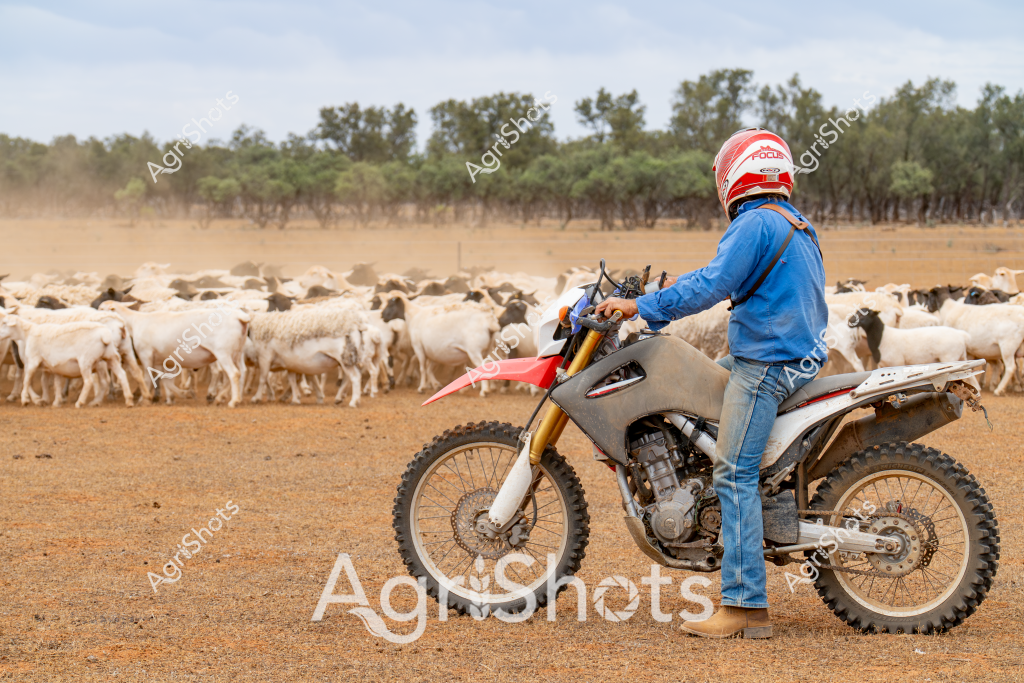
A man on a dirt bike manages a large herd of white goats in a dry, sparse landscape. Wearing a blue long-sleeved shirt, jeans, and a red and white protective helmet, the rider navigates his off-road motorcycle through the dusty paddock. A substantial mob of goats, predominantly white with some darker-colored animals, clusters together in the background, surrounded by sparse trees and scrubland. The arid environment suggests this is likely a station or large pastoral property in outback Australia, where motorcycles have become an essential tool for livestock management. The scene captures the modern approach to mustering and moving livestock, showcasing how technology and traditional farming practices intersect in rural Australian agriculture.
 Image
Image
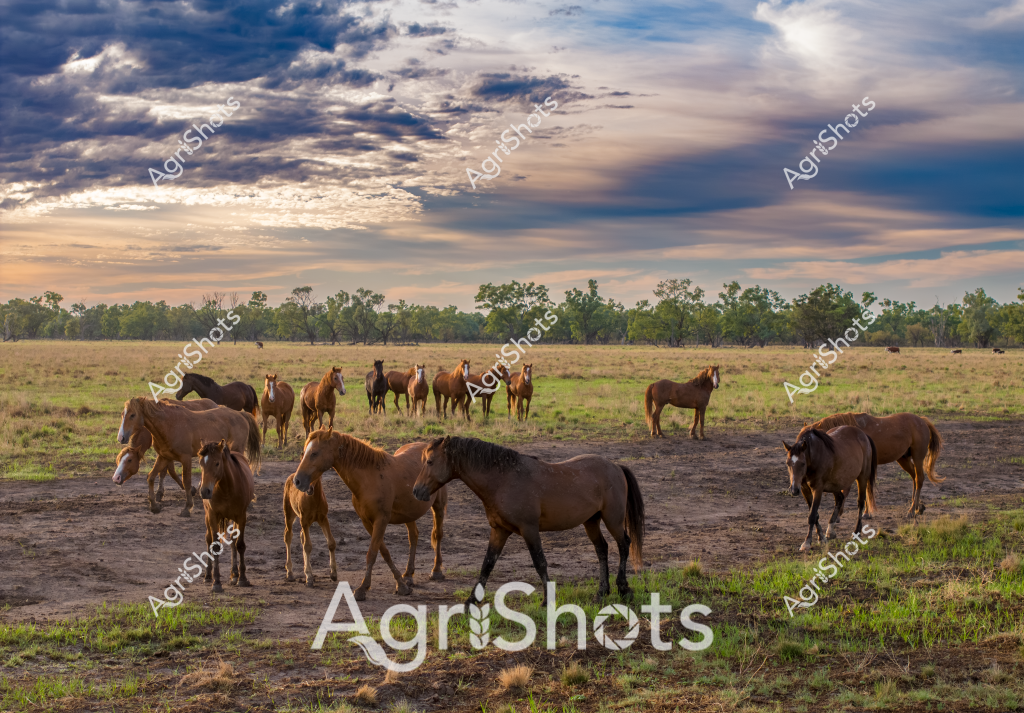
A stunning rural landscape captures a herd of horses grazing across a dry, dusty paddock under a dramatic cloudy sunset sky. Approximately 15-20 horses of various brown and chestnut colors are scattered across the grassland, some standing close together while others are more isolated. The horses represent a mix of breeds, likely Australian stock horses or station horses, standing in a large open pasture with trees lining the distant horizon. The ground shows a mix of dry earth and patchy grass, indicating challenging environmental conditions typical of Australian rural landscapes. Soft evening light breaks through the multilayered cloud formations, casting a warm glow across the scene and creating a sense of peaceful solitude in the vast agricultural setting. The horses appear relaxed, some grazing while others stand alert, embodying the resilience and freedom of Australian pastoral life.
 Image
Image
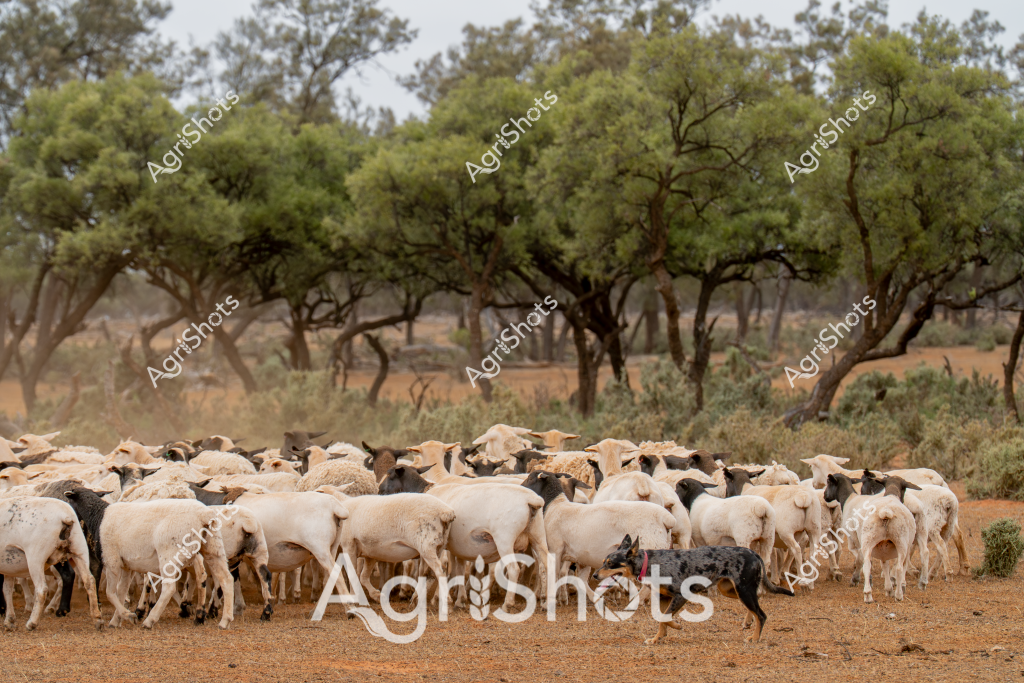
A working dog carefully herds a large flock of white and black sheep across a dry, dusty paddock in the Australian outback. The dense mob of sheep, predominantly white with some black-faced individuals, stands tightly clustered on reddish-brown earth, surrounded by scattered eucalyptus trees with their distinctive green foliage. A lone black and white cattle dog weaves strategically around the flock, demonstrating the classic Australian pastoral scene of livestock management in a challenging rural landscape. The trees provide a sparse backdrop, casting subtle shadows across the ground and highlighting the aridity of the environment. This image captures the essence of Australian sheep farming - a delicate balance of skilled animal husbandry, working dogs, and survival in a harsh, drought-prone landscape where every animal and blade of vegetation must be carefully managed. The scene reflects the resilience of Australian agricultural practices, where livestock are moved and managed with precision in environments that demand adaptability and skill from both human and animal workers. The contrast between the woolly sheep and the dry, sparse landscape underscores the challenges of sheep farming in rural Australia.
 Image
Image
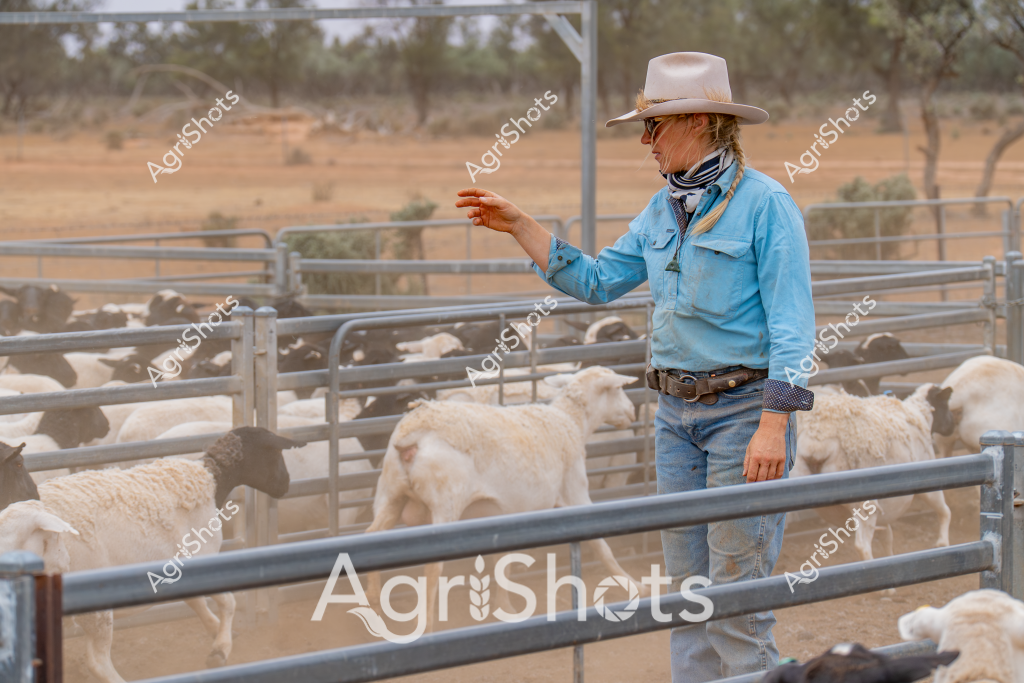
A woman stockman in a light blue work shirt, pale cowboy hat, and blue jeans stands amid a livestock yard, managing a flock of white sheep. The rural Australian landscape stretches behind her - a dry, dusty paddock with sparse trees and golden-brown vegetation typical of an arid agricultural region. Metal livestock yards with sturdy steel fencing contain the sheep, which appear to be Merino or similar wool-producing breed, clustered together in the enclosed space. The stockman gestures with her hand, likely directing or assessing the flock, wearing a face covering and demonstrating the practical, hardy approach of Australian rural workers. Her stance and attire reflect generations of agricultural expertise, with the harsh landscape serving as a backdrop to this everyday scene of livestock management. The image captures the essence of Australian sheep farming - a blend of professional skill, rugged environment, and the ongoing work of agricultural production. The muted color palette of blue shirt, tan landscape, and gray metal fencing creates a harmonious visual representation of life on a rural station.
 Image
Image
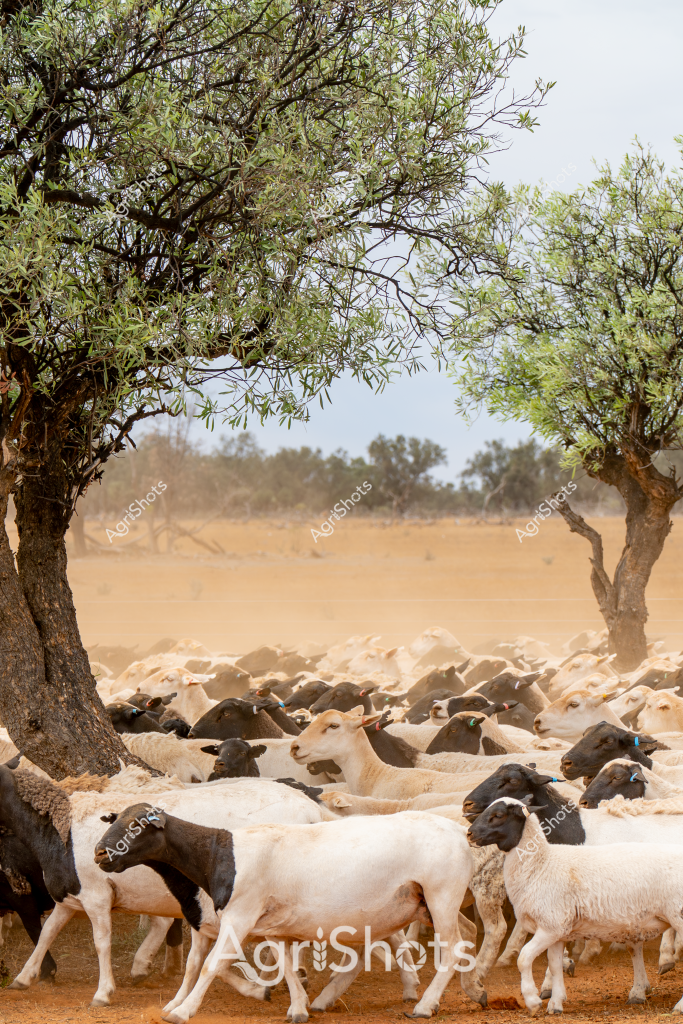
A large herd of white and black sheep huddle together under olive trees in a dry, dusty paddock. The flock is densely packed, with a mix of light-colored and dark-colored sheep seeking shade from the harsh Australian landscape. Sparse trees frame the scene, their branches spreading wide to provide minimal relief from what appears to be an arid, sun-baked environment. The ground is a pale brown, indicating dry conditions typical of rural Australian grazing lands. The sheep appear calm and closely grouped, demonstrating the typical behavior of livestock in challenging pastoral settings. The image captures the resilience of both the animals and the landscape, highlighting the harsh yet beautiful nature of Australian sheep farming. The composition showcases the typical scene of a sheep station, where animals cluster together for comfort and protection in a challenging environment. Dust hangs in the air, creating a soft, hazy backdrop that emphasizes the heat and dryness of the location. The mix of black and white sheep suggests a diverse flock, potentially a crossbreed or mixed-breed herd adapted to survive in tough agricultural conditions.
 Image
Image
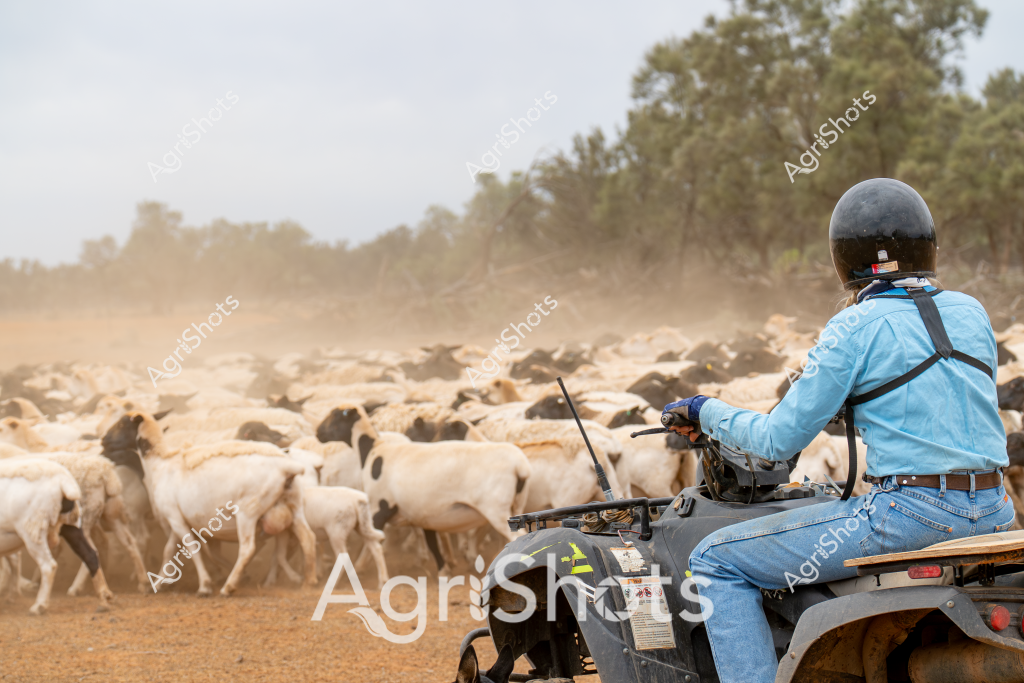
A man on an all-terrain vehicle (ATV) guides a large flock of white and mixed-colored goats across a dry, dusty paddock in rural Australia. Wearing a blue shirt, helmet, and carrying a radio, the livestock manager carefully steers the ATV through the herd, raising a cloud of fine dirt behind him. The landscape is characterized by sparse ground vegetation and distant eucalyptus trees, suggesting a dry pastoral region typical of Australia's inland areas. Dozens of goats move together in a tight cluster, their varied coat colors of white, tan, and brown creating a mottled appearance against the brown earth. The scene captures the challenging yet essential work of livestock management in an arid agricultural setting, highlighting the skill required to muster and control a large herd across open terrain. The dust and movement convey the dynamic nature of pastoral farming, with the ATV serving as a critical tool for modern livestock handling.
 Image
Image
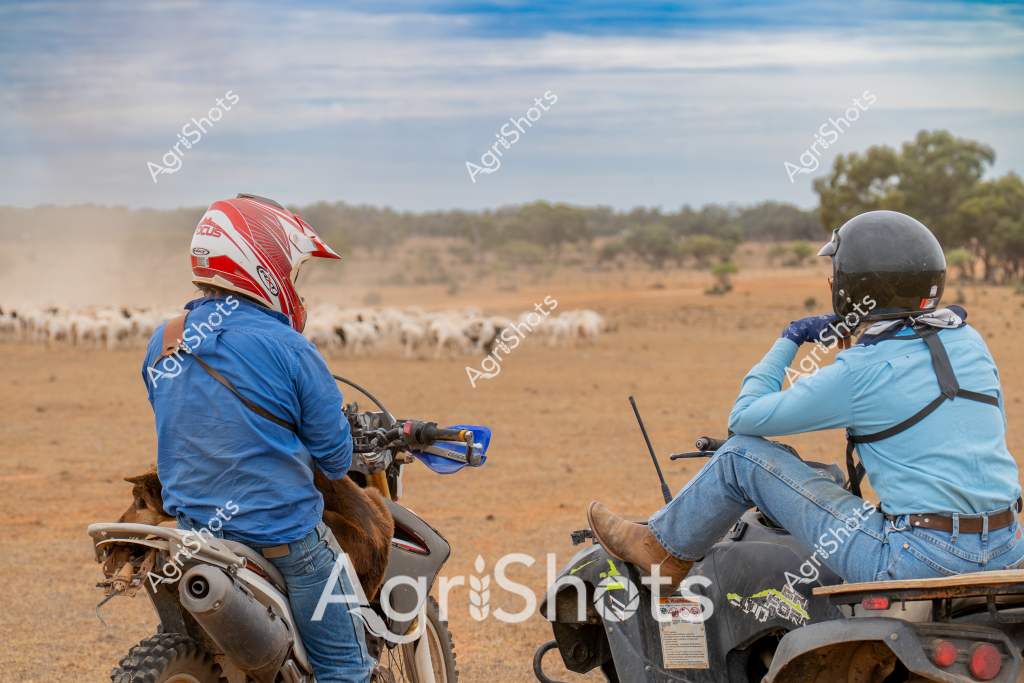
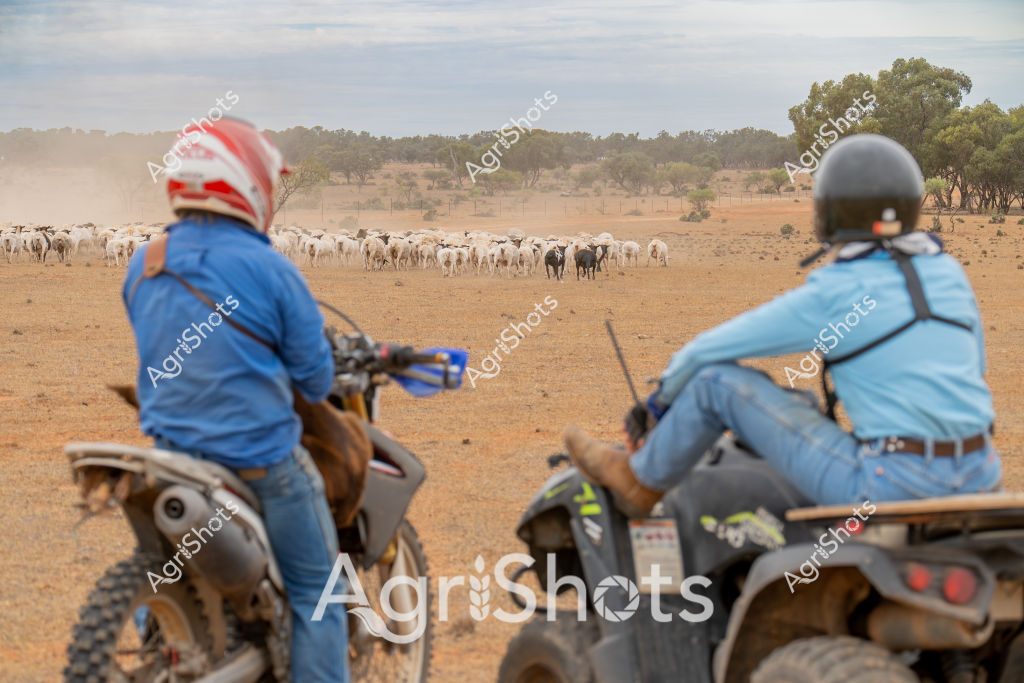
Two men on motorbikes survey a mob of white sheep across a dry, dusty paddock in rural Australia. The men wear blue shirts and protective helmets, with one in a red motocross helmet and the other in a black helmet, seated on an all-terrain vehicle and a motorcycle. The landscape is a typical Australian pastoral scene - golden-brown grass, sparse trees on the horizon, and a vast open sky with soft blue and white clouds. Several dozen sheep are grazing in the background, creating a light dust cloud as they move slowly across the arid terrain. The scene captures the essence of modern Australian livestock management, where motorcycles and quad bikes have replaced traditional horse-based mustering techniques. The dry conditions suggest this could be during a prolonged drought period, typical of many Australian agricultural regions.
 Image
Image
Two men on motorcycles muster a large herd of white and grey cattle across a dry, dusty paddock in what appears to be an arid or semi-arid region of Australia. The landscape is characterized by sparse eucalyptus trees on the horizon, reddish-brown earth, and minimal ground vegetation, suggesting challenging drought conditions. Both riders wear blue jackets and protective helmets, using their motorbikes to efficiently guide and move the livestock across the open terrain. The cattle are tightly grouped, moving as a cohesive mob through the sparse, sun-baked landscape. A light haze of dust rises behind the herd, indicating their movement and the dry environmental conditions. The scene captures the quintessential Australian agricultural practice of livestock management in a challenging rural environment.