Results for “Agricultural Facility”
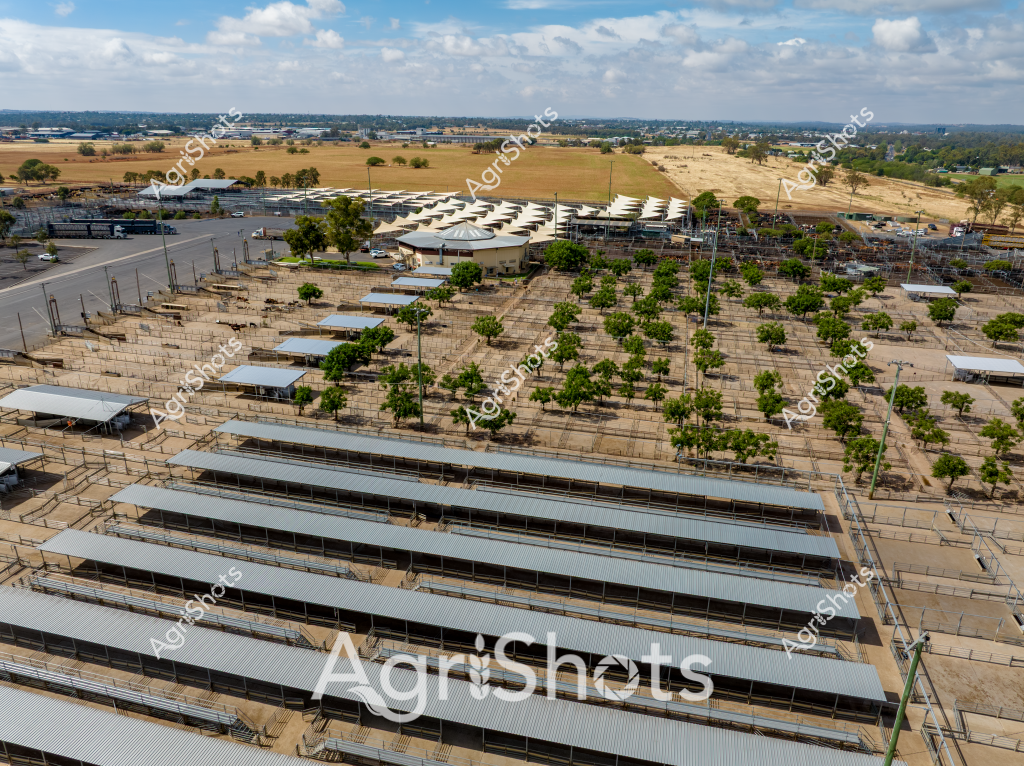
An expansive aerial view of a modern livestock facility reveals a systematic agricultural complex featuring multiple long, covered livestock sheds with metal roofing. Strategically planted trees are interspersed throughout the sandy-colored ground, providing shade and windbreaks across the extensive property. The facility appears designed for efficient animal management, with carefully constructed pens, walking areas, and sheltered spaces that maximize animal welfare and operational productivity.

The landscape surrounding the facility is characterized by open paddocks and distant rural infrastructure, with a backdrop of golden fields and scattered trees extending to the horizon. Multiple metal-roofed structures of varying lengths are arranged in parallel rows, suggesting a highly organized approach to livestock management. Lightweight shade structures and carefully planned vegetation contribute to the facility's professional and considered design.

The aerial perspective highlights the scale and precision of modern agricultural infrastructure, showcasing how contemporary farming operations integrate functional design with animal husbandry best practices. Fencing, access routes, and strategic building placement demonstrate a sophisticated approach to livestock management in what appears to be an arid or semi-arid Australian agricultural setting.

The expansive view captures the intersection of engineering, animal care, and agricultural innovation, revealing a meticulously planned livestock facility that represents the advanced state of Australian agricultural practices. Image

An expansive aerial view of a modern livestock facility reveals a systematic agricultural complex featuring multiple long, covered livestock sheds with metal roofing. Strategically planted trees are interspersed throughout the sandy-colored ground, providing shade and windbreaks across the extensive property. The facility appears designed for efficient animal management, with carefully constructed pens, walking areas, and sheltered spaces that maximize animal welfare and operational productivity. The landscape surrounding the facility is characterized by open paddocks and distant rural infrastructure, with a backdrop of golden fields and scattered trees extending to the horizon. Multiple metal-roofed structures of varying lengths are arranged in parallel rows, suggesting a highly organized approach to livestock management. Lightweight shade structures and carefully planned vegetation contribute to the facility's professional and considered design. The aerial perspective highlights the scale and precision of modern agricultural infrastructure, showcasing how contemporary farming operations integrate functional design with animal husbandry best practices. Fencing, access routes, and strategic building placement demonstrate a sophisticated approach to livestock management in what appears to be an arid or semi-arid Australian agricultural setting. The expansive view captures the intersection of engineering, animal care, and agricultural innovation, revealing a meticulously planned livestock facility that represents the advanced state of Australian agricultural practices.
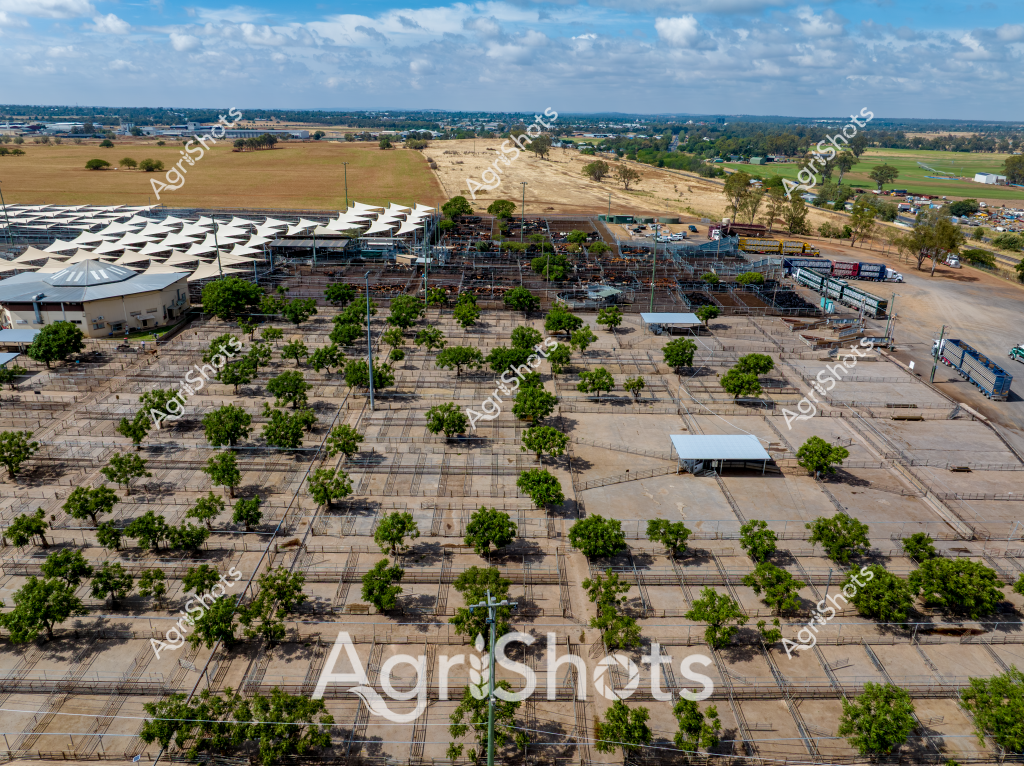
An expansive livestock processing facility captures the essence of Australian agricultural infrastructure, with a meticulously organized layout of multiple cattle yards and shade trees. The aerial view reveals a complex network of fenced paddocks, strategically positioned shelters, and a modern facility with distinctive white-peaked roofing structures. Mature trees are systematically planted throughout the concrete and dirt yards, providing natural shade and breaking up the geometric lines of the infrastructure.

The surrounding landscape showcases a classic Australian rural setting, with golden dry paddocks extending to the horizon, punctuated by scattered trees and distant agricultural buildings. The facility appears to be a large-scale cattle processing center, with multiple holding yards, movement gates, and covered processing areas designed for efficient livestock management.

The blue sky with scattered white clouds suggests a typical warm Australian day, highlighting the expansive nature of rural agricultural operations. Robust infrastructure and careful landscape design demonstrate the sophisticated approach to livestock management in contemporary Australian agriculture, balancing functional efficiency with environmental considerations.

The image represents a sophisticated livestock processing facility that integrates architectural design, animal welfare considerations, and operational efficiency in a comprehensive agricultural setting. Image

An expansive livestock processing facility captures the essence of Australian agricultural infrastructure, with a meticulously organized layout of multiple cattle yards and shade trees. The aerial view reveals a complex network of fenced paddocks, strategically positioned shelters, and a modern facility with distinctive white-peaked roofing structures. Mature trees are systematically planted throughout the concrete and dirt yards, providing natural shade and breaking up the geometric lines of the infrastructure. The surrounding landscape showcases a classic Australian rural setting, with golden dry paddocks extending to the horizon, punctuated by scattered trees and distant agricultural buildings. The facility appears to be a large-scale cattle processing center, with multiple holding yards, movement gates, and covered processing areas designed for efficient livestock management. The blue sky with scattered white clouds suggests a typical warm Australian day, highlighting the expansive nature of rural agricultural operations. Robust infrastructure and careful landscape design demonstrate the sophisticated approach to livestock management in contemporary Australian agriculture, balancing functional efficiency with environmental considerations. The image represents a sophisticated livestock processing facility that integrates architectural design, animal welfare considerations, and operational efficiency in a comprehensive agricultural setting.
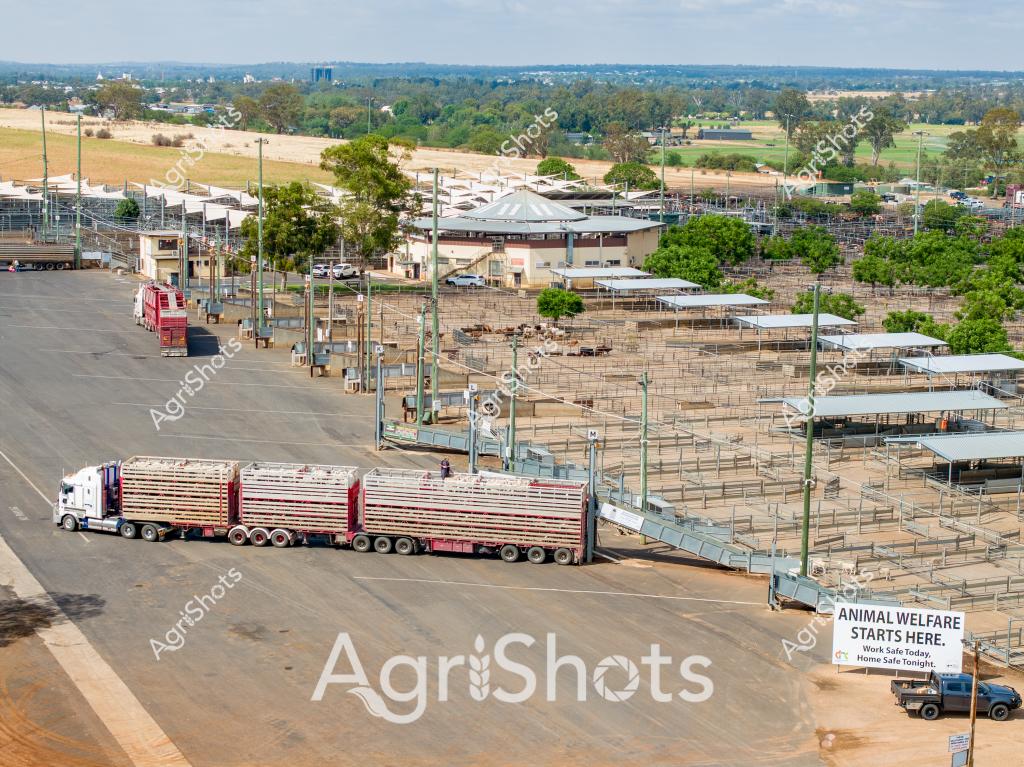
This image captures a comprehensive view of a livestock sale yard or agricultural processing facility, likely in an Australian rural setting. A large, multi-trailer livestock transport truck is positioned at the entry point of an expansive facility with multiple covered holding pens and infrastructure. The "Animal Welfare Starts Here" sign prominently indicates the facility's commitment to ethical livestock handling practices.

The landscape reveals a broad agricultural setting with green trees and distant urban structures visible on the horizon, suggesting this is near a regional town or city. Multiple steel-framed holding pens with white shade covers are systematically arranged, demonstrating a modern, structured approach to livestock management. Green steel support poles create a grid-like framework throughout the facility, enabling efficient animal movement and processing.

The transport truck appears to be a standard Australian road train configuration, with multiple trailers designed for long-distance livestock transportation, typical of cattle or sheep movements across vast pastoral regions. The facility's infrastructure suggests this is a sophisticated livestock sales yard, likely used for cattle or sheep auctions, with carefully designed loading ramps and holding areas to ensure animal welfare and efficient agricultural commerce.

The scene represents a key node in Australia's agricultural supply chain, where livestock are professionally managed, transported, and traded with systematic precision and care. Image

This image captures a comprehensive view of a livestock sale yard or agricultural processing facility, likely in an Australian rural setting. A large, multi-trailer livestock transport truck is positioned at the entry point of an expansive facility with multiple covered holding pens and infrastructure. The "Animal Welfare Starts Here" sign prominently indicates the facility's commitment to ethical livestock handling practices. The landscape reveals a broad agricultural setting with green trees and distant urban structures visible on the horizon, suggesting this is near a regional town or city. Multiple steel-framed holding pens with white shade covers are systematically arranged, demonstrating a modern, structured approach to livestock management. Green steel support poles create a grid-like framework throughout the facility, enabling efficient animal movement and processing. The transport truck appears to be a standard Australian road train configuration, with multiple trailers designed for long-distance livestock transportation, typical of cattle or sheep movements across vast pastoral regions. The facility's infrastructure suggests this is a sophisticated livestock sales yard, likely used for cattle or sheep auctions, with carefully designed loading ramps and holding areas to ensure animal welfare and efficient agricultural commerce. The scene represents a key node in Australia's agricultural supply chain, where livestock are professionally managed, transported, and traded with systematic precision and care.
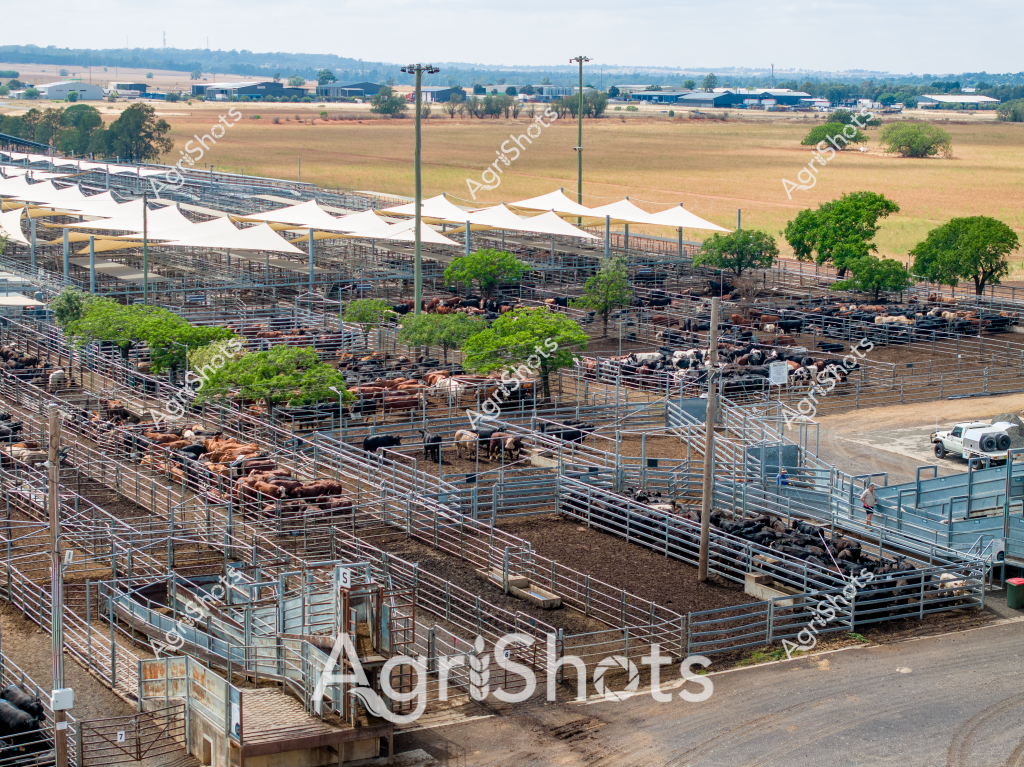
A comprehensive livestock holding facility spreads across a rural landscape, featuring multiple steel-fenced yards housing diverse cattle herds. White shade structures provide protection for the animals, while carefully positioned green trees offer additional shelter and visual breaks between the paddocks. Multiple breeds of cattle - including some with reddish-brown coats and others with darker markings - are grouped in separate enclosures, indicating a professional cattle management operation. Tall light poles provide illumination across the extensive yards, and a white utility vehicle is parked near the processing area, suggesting active agricultural management. The surrounding landscape reveals a broad, flat terrain with distant farm buildings and tree lines, typical of an Australian cattle station or agricultural precinct. The systematic layout demonstrates sophisticated livestock infrastructure, with meticulously organized zones for animal sorting, movement, and temporary holding. Image

A comprehensive livestock holding facility spreads across a rural landscape, featuring multiple steel-fenced yards housing diverse cattle herds. White shade structures provide protection for the animals, while carefully positioned green trees offer additional shelter and visual breaks between the paddocks. Multiple breeds of cattle - including some with reddish-brown coats and others with darker markings - are grouped in separate enclosures, indicating a professional cattle management operation. Tall light poles provide illumination across the extensive yards, and a white utility vehicle is parked near the processing area, suggesting active agricultural management. The surrounding landscape reveals a broad, flat terrain with distant farm buildings and tree lines, typical of an Australian cattle station or agricultural precinct. The systematic layout demonstrates sophisticated livestock infrastructure, with meticulously organized zones for animal sorting, movement, and temporary holding.
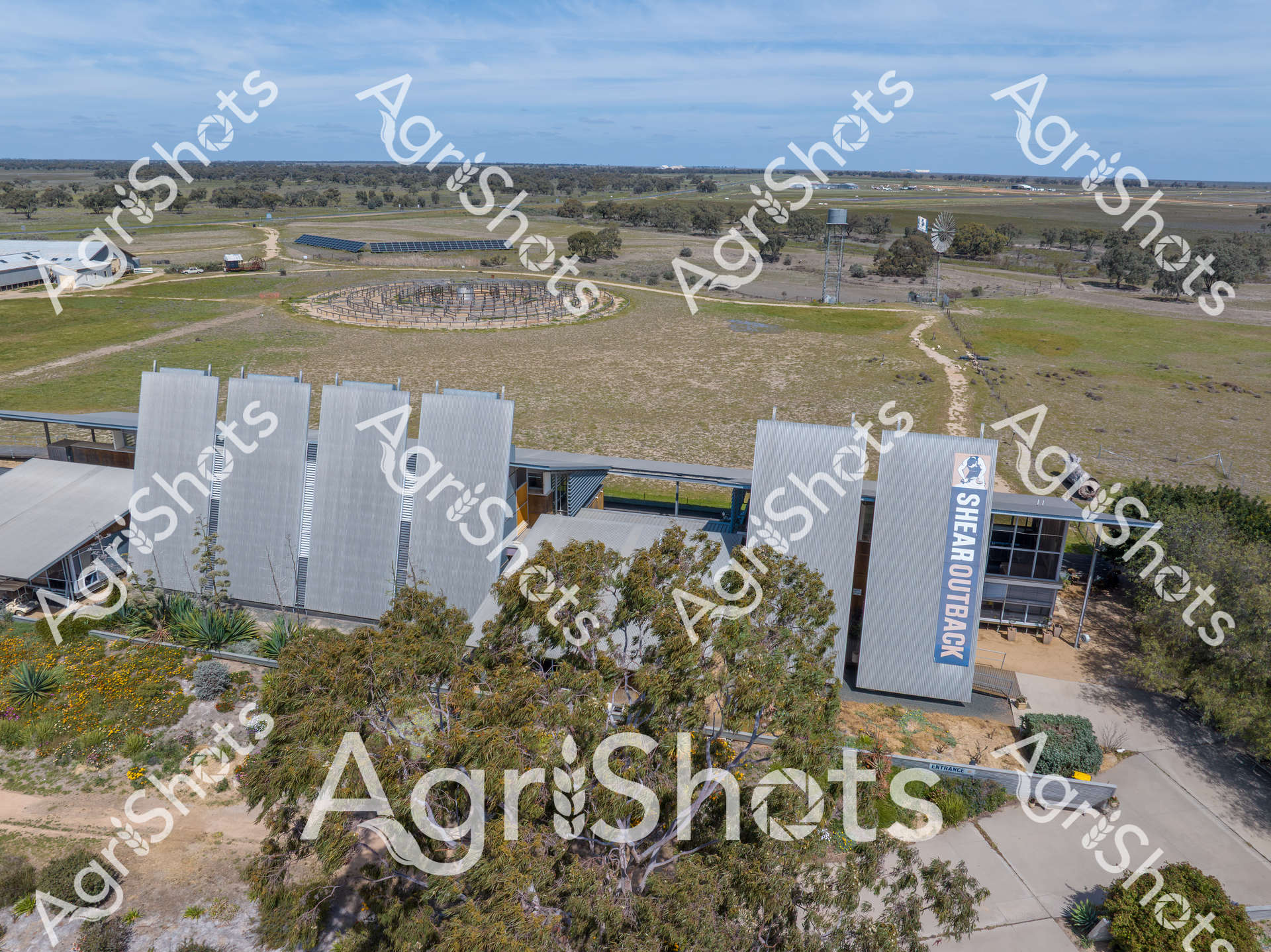
An aerial view of Shear Outback, a rural agricultural tourism site in New South Wales' Riverina region. The landscape features modern shearing facilities, solar panels, a circular sheep yard, and native trees, highlighting the area's sheep farming heritage and sustainable agricultural practices. Image

An aerial view of Shear Outback, a rural agricultural tourism site in New South Wales' Riverina region. The landscape features modern shearing facilities, solar panels, a circular sheep yard, and native trees, highlighting the area's sheep farming heritage and sustainable agricultural practices.
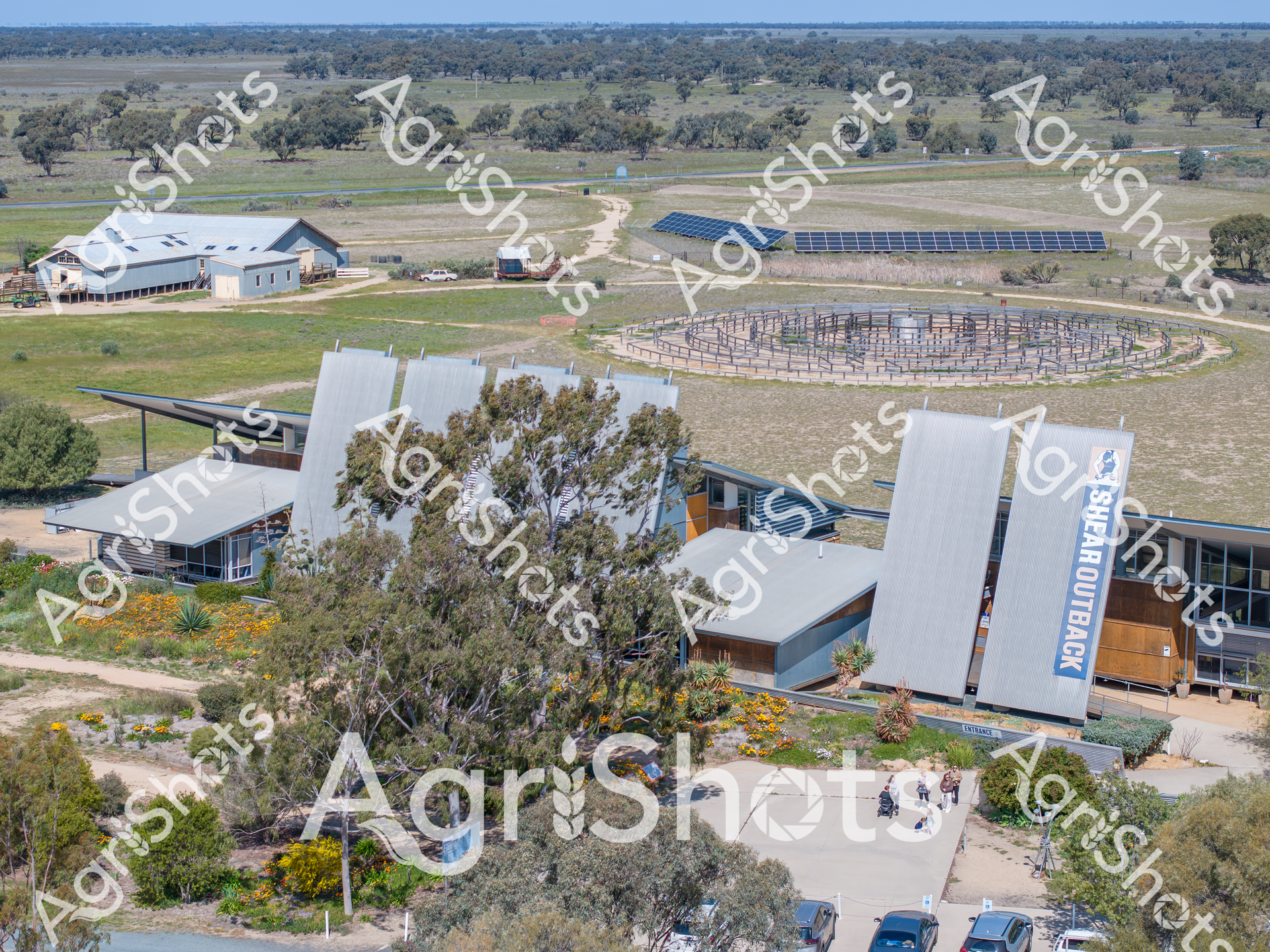
Aerial view of the Shear Outback agricultural tourism site in New South Wales' Riverina region, showcasing modern sustainable buildings, solar panels, and a circular sheep yards. The landscape features native trees, flowering gardens, and a comprehensive sheep shearing facility that highlights Australia's wool industry heritage and agricultural innovation. Image

Aerial view of the Shear Outback agricultural tourism site in New South Wales' Riverina region, showcasing modern sustainable buildings, solar panels, and a circular sheep yards. The landscape features native trees, flowering gardens, and a comprehensive sheep shearing facility that highlights Australia's wool industry heritage and agricultural innovation.
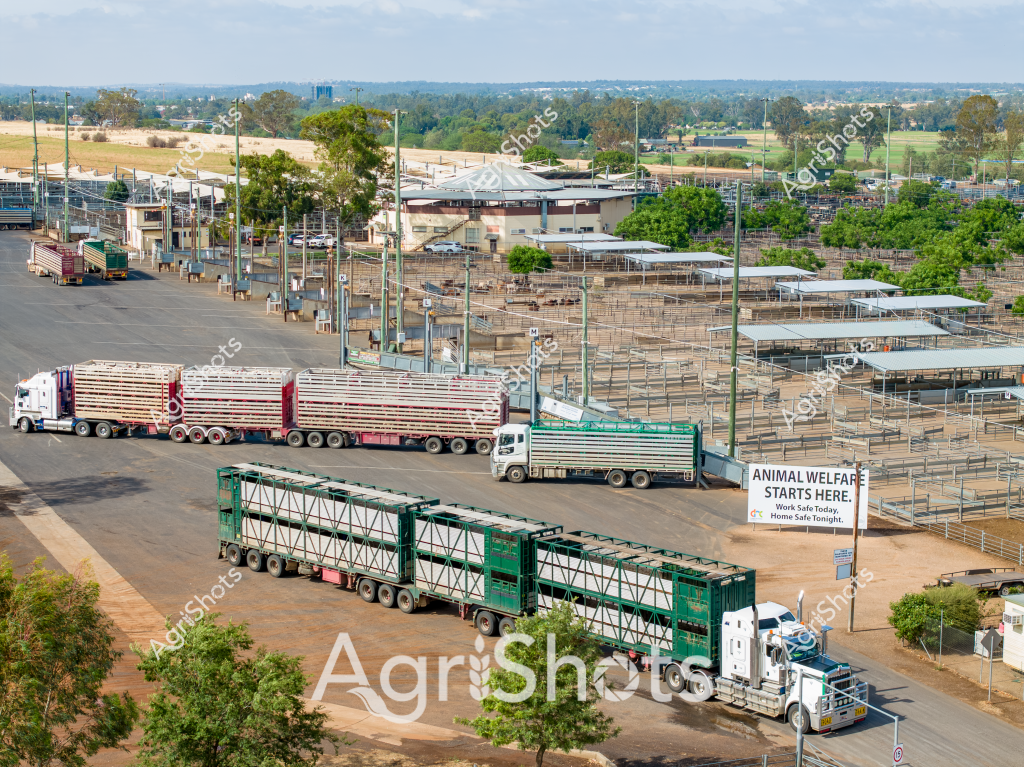
This image captures a comprehensive view of a modern livestock transportation and welfare facility, likely a livestock selling center or saleyards. Multiple large, multi-tiered livestock transport trucks are parked in the foreground, featuring green and white trailers specifically designed for animal transportation. The facility includes extensive metal livestock holding pens with white shade covers, creating a systematic layout for animal movement and management.

A prominent "ANIMAL WELFARE STARTS HERE" sign emphasizes the facility's commitment to livestock care, with the additional text "Work Safe Today, Home Safe Tonight" suggesting a focus on both animal and worker safety. The surrounding landscape reveals a semi-rural setting with trees, distant buildings, and an expansive horizon typical of Australian agricultural regions.

The transport trucks are heavy-duty, long-combination vehicles characteristic of Australian livestock logistics, engineered to safely transport large numbers of animals across vast distances. Multiple levels and compartments in the trailers allow for segregation and safe transport of different livestock groups. The facility's infrastructure demonstrates a highly organized approach to livestock management, with carefully designed infrastructure that prioritizes animal welfare and efficient transportation.

The scene represents a critical node in Australia's livestock supply chain, where animals are prepared for transport, sale, or movement between agricultural properties. The meticulously planned layout and robust infrastructure highlight the professional standards of modern Australian livestock management. Image

This image captures a comprehensive view of a modern livestock transportation and welfare facility, likely a livestock selling center or saleyards. Multiple large, multi-tiered livestock transport trucks are parked in the foreground, featuring green and white trailers specifically designed for animal transportation. The facility includes extensive metal livestock holding pens with white shade covers, creating a systematic layout for animal movement and management. A prominent "ANIMAL WELFARE STARTS HERE" sign emphasizes the facility's commitment to livestock care, with the additional text "Work Safe Today, Home Safe Tonight" suggesting a focus on both animal and worker safety. The surrounding landscape reveals a semi-rural setting with trees, distant buildings, and an expansive horizon typical of Australian agricultural regions. The transport trucks are heavy-duty, long-combination vehicles characteristic of Australian livestock logistics, engineered to safely transport large numbers of animals across vast distances. Multiple levels and compartments in the trailers allow for segregation and safe transport of different livestock groups. The facility's infrastructure demonstrates a highly organized approach to livestock management, with carefully designed infrastructure that prioritizes animal welfare and efficient transportation. The scene represents a critical node in Australia's livestock supply chain, where animals are prepared for transport, sale, or movement between agricultural properties. The meticulously planned layout and robust infrastructure highlight the professional standards of modern Australian livestock management.
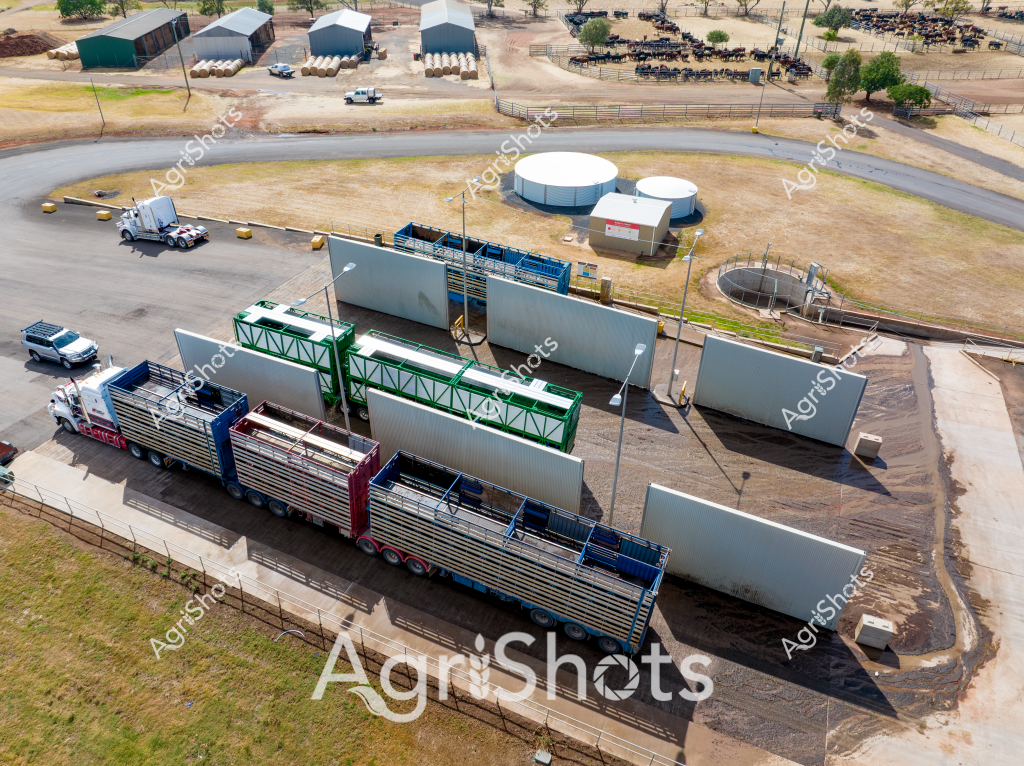
An aerial view of a livestock processing facility reveals a complex agricultural infrastructure designed for efficient cattle management. Large white modular walls and green-framed structures create a systematic loading and unloading area for semi-trailer trucks. White cylindrical water tanks and circular holding pens surround the central processing zone, indicating a modern cattle handling facility likely located in a dry, arid region with sparse vegetation and dusty ground.

A semi-trailer truck is positioned within the loading zone, suggesting preparation for transporting livestock. The surrounding landscape features several industrial-style sheds with metal roofing in green and grey tones, and a series of fenced paddocks where numerous dark-colored cattle can be seen clustered together.

The infrastructure demonstrates precision engineering typical of contemporary Australian agricultural operations, with carefully designed pathways, sturdy infrastructure, and strategic layout to maximize efficiency in livestock movement and processing. Gravel and concrete surfaces provide durable, functional spaces for heavy vehicle and animal traffic, reflecting the demanding environmental conditions of rural livestock production zones.

The aerial perspective offers a comprehensive view of the facility's layout, highlighting the sophisticated systems developed to manage large-scale cattle operations in challenging agricultural environments. Image

An aerial view of a livestock processing facility reveals a complex agricultural infrastructure designed for efficient cattle management. Large white modular walls and green-framed structures create a systematic loading and unloading area for semi-trailer trucks. White cylindrical water tanks and circular holding pens surround the central processing zone, indicating a modern cattle handling facility likely located in a dry, arid region with sparse vegetation and dusty ground. A semi-trailer truck is positioned within the loading zone, suggesting preparation for transporting livestock. The surrounding landscape features several industrial-style sheds with metal roofing in green and grey tones, and a series of fenced paddocks where numerous dark-colored cattle can be seen clustered together. The infrastructure demonstrates precision engineering typical of contemporary Australian agricultural operations, with carefully designed pathways, sturdy infrastructure, and strategic layout to maximize efficiency in livestock movement and processing. Gravel and concrete surfaces provide durable, functional spaces for heavy vehicle and animal traffic, reflecting the demanding environmental conditions of rural livestock production zones. The aerial perspective offers a comprehensive view of the facility's layout, highlighting the sophisticated systems developed to manage large-scale cattle operations in challenging agricultural environments.
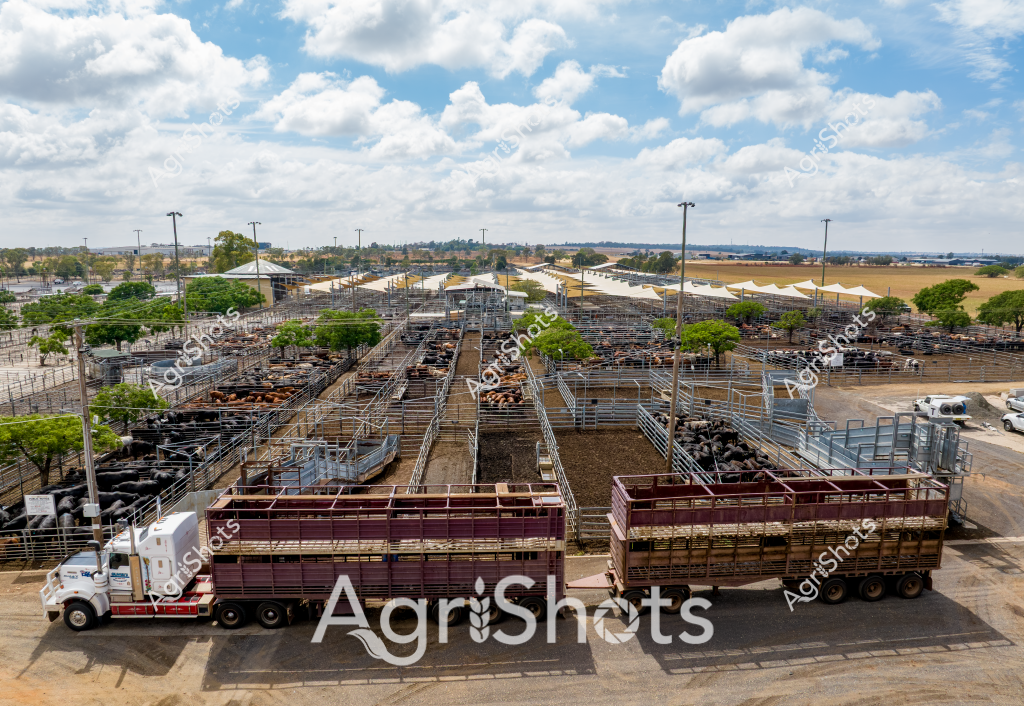
A sprawling livestock saleyard in an open rural landscape, with multiple metal cattle pens stretching across the scene under a bright, cloud-dotted sky. Rows of black cattle are penned in carefully organized enclosures, with green trees interspersed between the metal fencing and walkways. Two large livestock transport trucks with burgundy trailers are parked in the foreground, ready to load or unload cattle. The facility appears to be a modern, well-organized beef cattle operation, with high metal fencing, shade structures, and carefully planned infrastructure designed for efficient animal management. Tall light poles dot the landscape, providing illumination for round-the-clock operations, while the surrounding terrain shows a gently rolling horizon with farmland and distant treelines visible in the background.

The scene captures the scale and precision of contemporary Australian cattle farming, showcasing the infrastructure required to manage large herds in a systematic and controlled environment. Metallic fencing, carefully arranged pens, and strategic placement of trees and shade structures demonstrate the sophisticated approach to livestock management in modern agricultural practices. Image

A sprawling livestock saleyard in an open rural landscape, with multiple metal cattle pens stretching across the scene under a bright, cloud-dotted sky. Rows of black cattle are penned in carefully organized enclosures, with green trees interspersed between the metal fencing and walkways. Two large livestock transport trucks with burgundy trailers are parked in the foreground, ready to load or unload cattle. The facility appears to be a modern, well-organized beef cattle operation, with high metal fencing, shade structures, and carefully planned infrastructure designed for efficient animal management. Tall light poles dot the landscape, providing illumination for round-the-clock operations, while the surrounding terrain shows a gently rolling horizon with farmland and distant treelines visible in the background. The scene captures the scale and precision of contemporary Australian cattle farming, showcasing the infrastructure required to manage large herds in a systematic and controlled environment. Metallic fencing, carefully arranged pens, and strategic placement of trees and shade structures demonstrate the sophisticated approach to livestock management in modern agricultural practices.
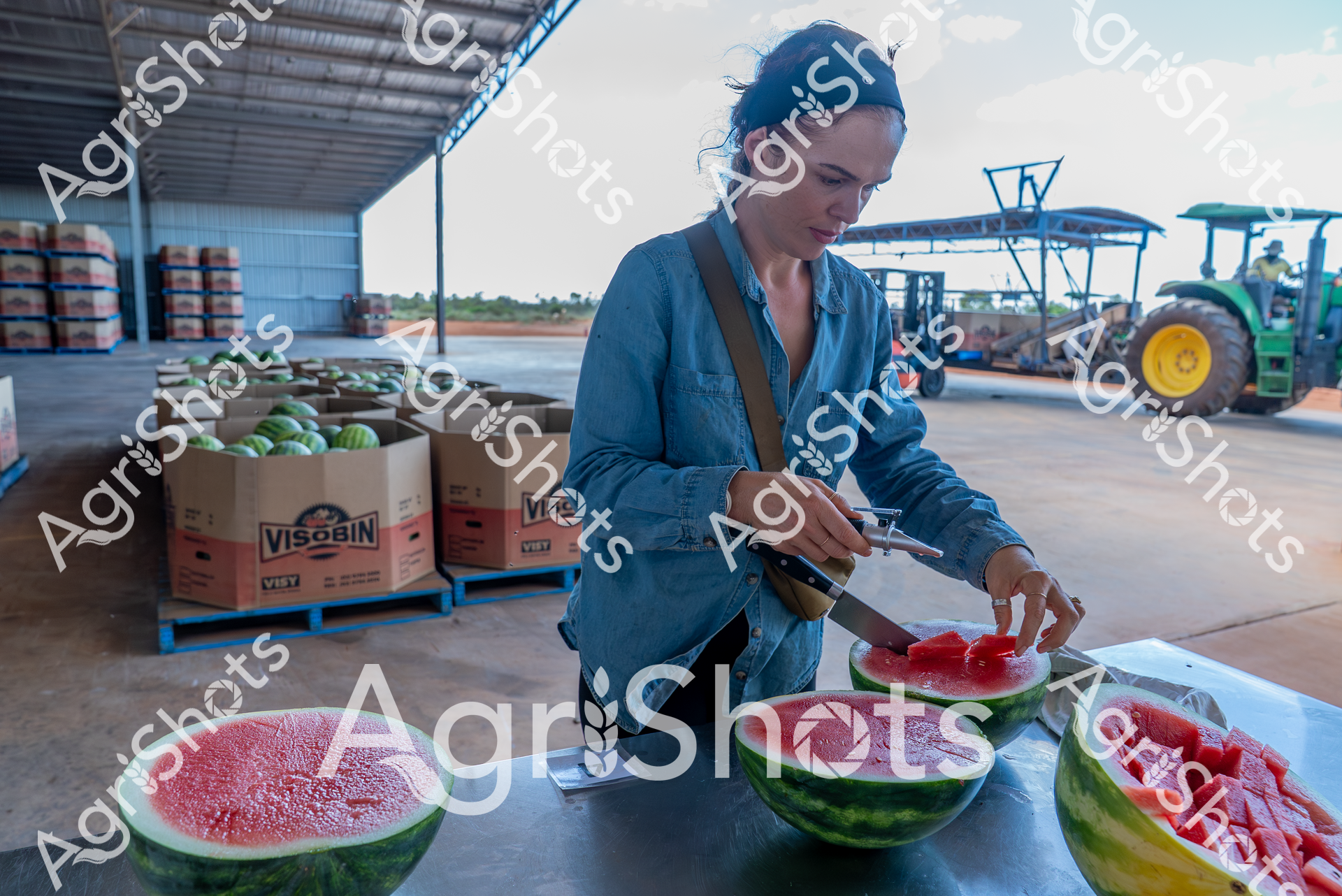
A woman in a denim shirt carefully tests the sugar content of watermelons using a refractometer at an agricultural facility. Stacked Visobin boxes and a green tractor are visible in the background, suggesting this is a professional produce testing environment in the Northern Territory's Barkly Region during winter. Image

A woman in a denim shirt carefully tests the sugar content of watermelons using a refractometer at an agricultural facility. Stacked Visobin boxes and a green tractor are visible in the background, suggesting this is a professional produce testing environment in the Northern Territory's Barkly Region during winter.
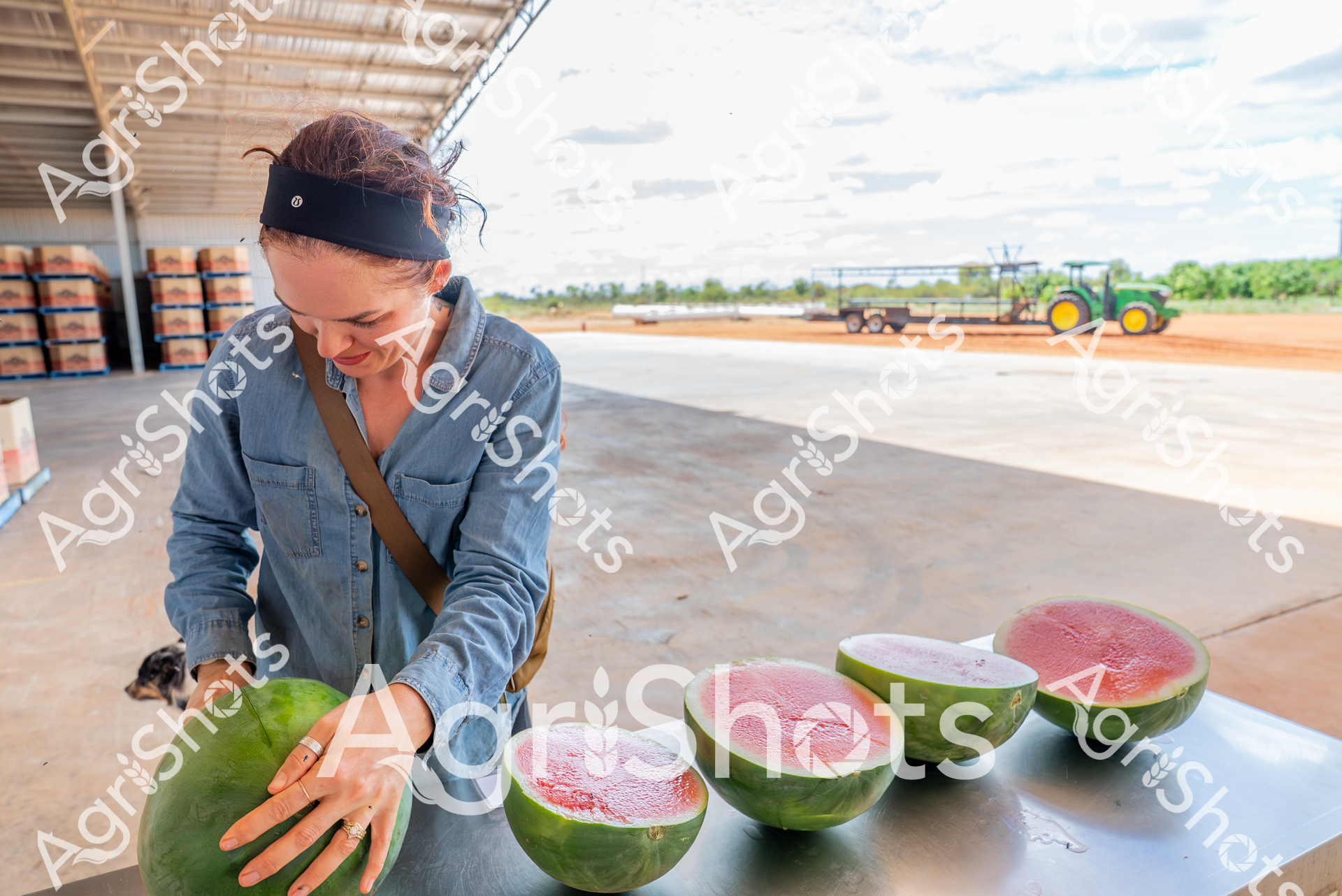
A woman in a denim shirt and black headband inspects watermelons at an agricultural facility, with stacked produce crates and a green tractor visible in the background. She carefully examines the vibrant red and green watermelons, surrounded by the expansive landscape of what appears to be the Northern Territory's Barkly Region during winter. Image

A woman in a denim shirt and black headband inspects watermelons at an agricultural facility, with stacked produce crates and a green tractor visible in the background. She carefully examines the vibrant red and green watermelons, surrounded by the expansive landscape of what appears to be the Northern Territory's Barkly Region during winter.
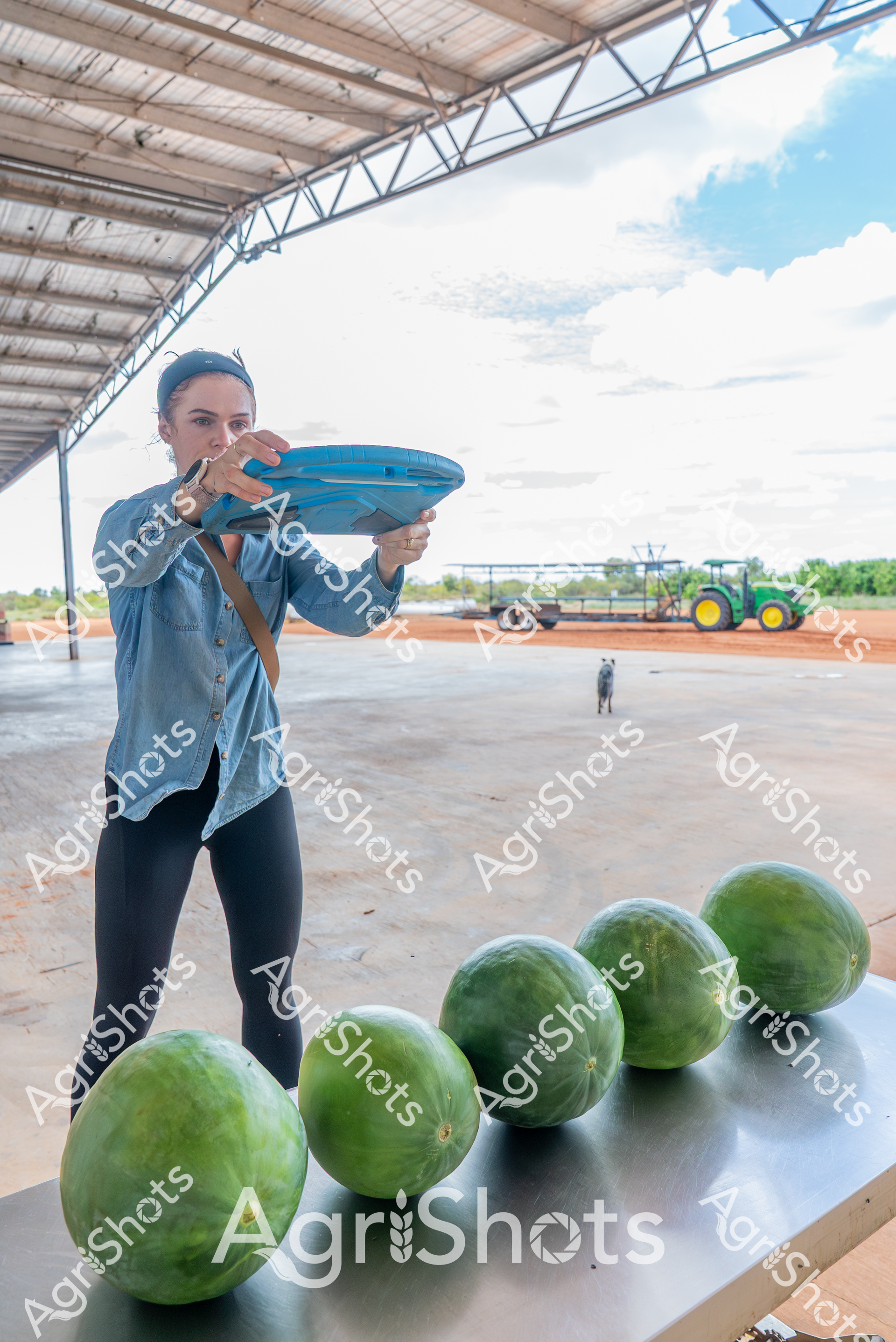
A woman in a denim shirt and black leggings checks the Brix sugar content of large green watermelons using a blue refractometer. The scene is set in an agricultural facility in the Northern Territory's Barkly Region, with a green tractor and open-air structure in the background, highlighting the importance of produce quality testing in horticulture. Image

A woman in a denim shirt and black leggings checks the Brix sugar content of large green watermelons using a blue refractometer. The scene is set in an agricultural facility in the Northern Territory's Barkly Region, with a green tractor and open-air structure in the background, highlighting the importance of produce quality testing in horticulture.
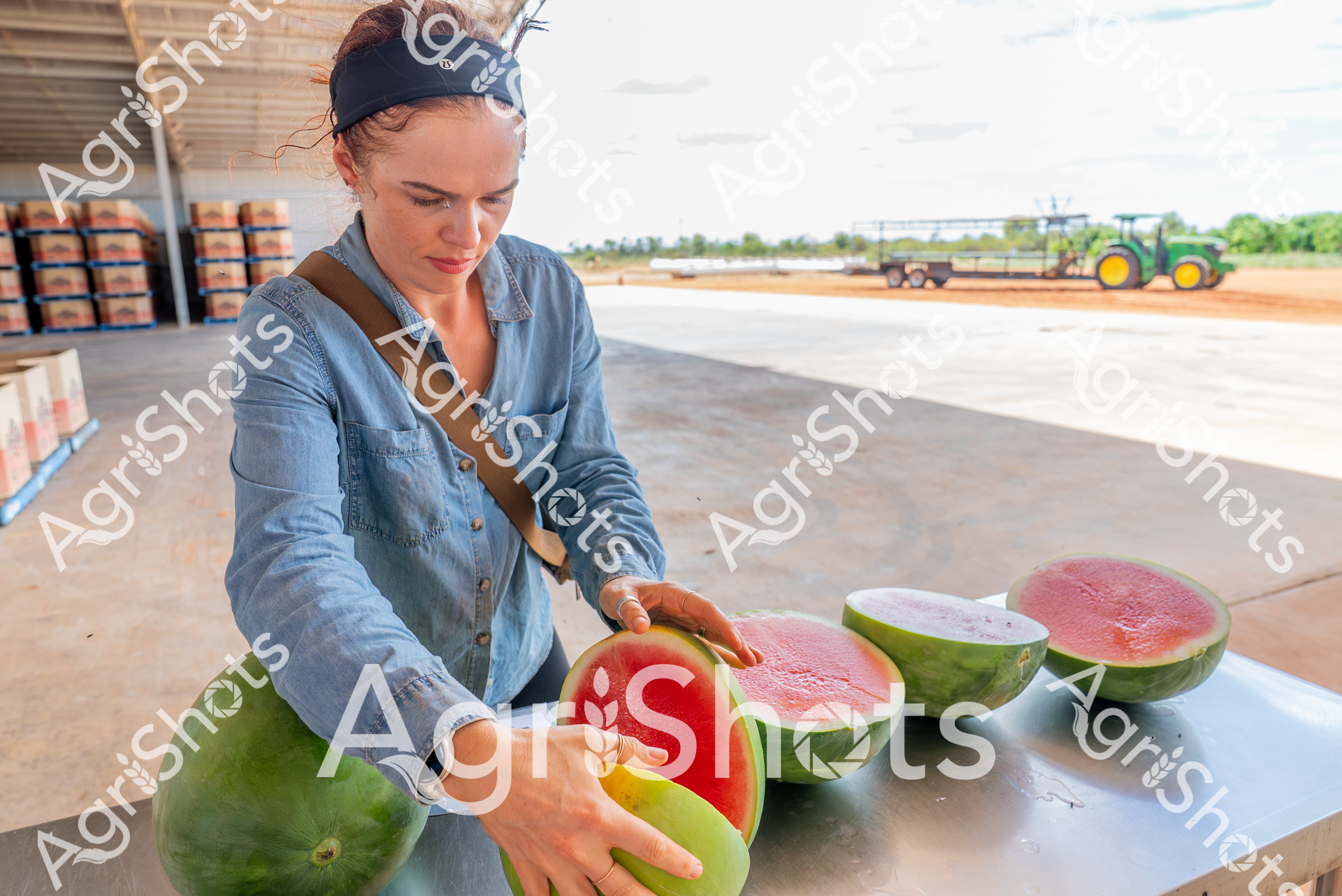
A woman in a denim shirt examines watermelons at an agricultural facility, with stacked produce crates and a green tractor visible in the background. She carefully checks the ripeness and quality of the watermelons, demonstrating the careful selection process in modern fruit production. Image

A woman in a denim shirt examines watermelons at an agricultural facility, with stacked produce crates and a green tractor visible in the background. She carefully checks the ripeness and quality of the watermelons, demonstrating the careful selection process in modern fruit production.
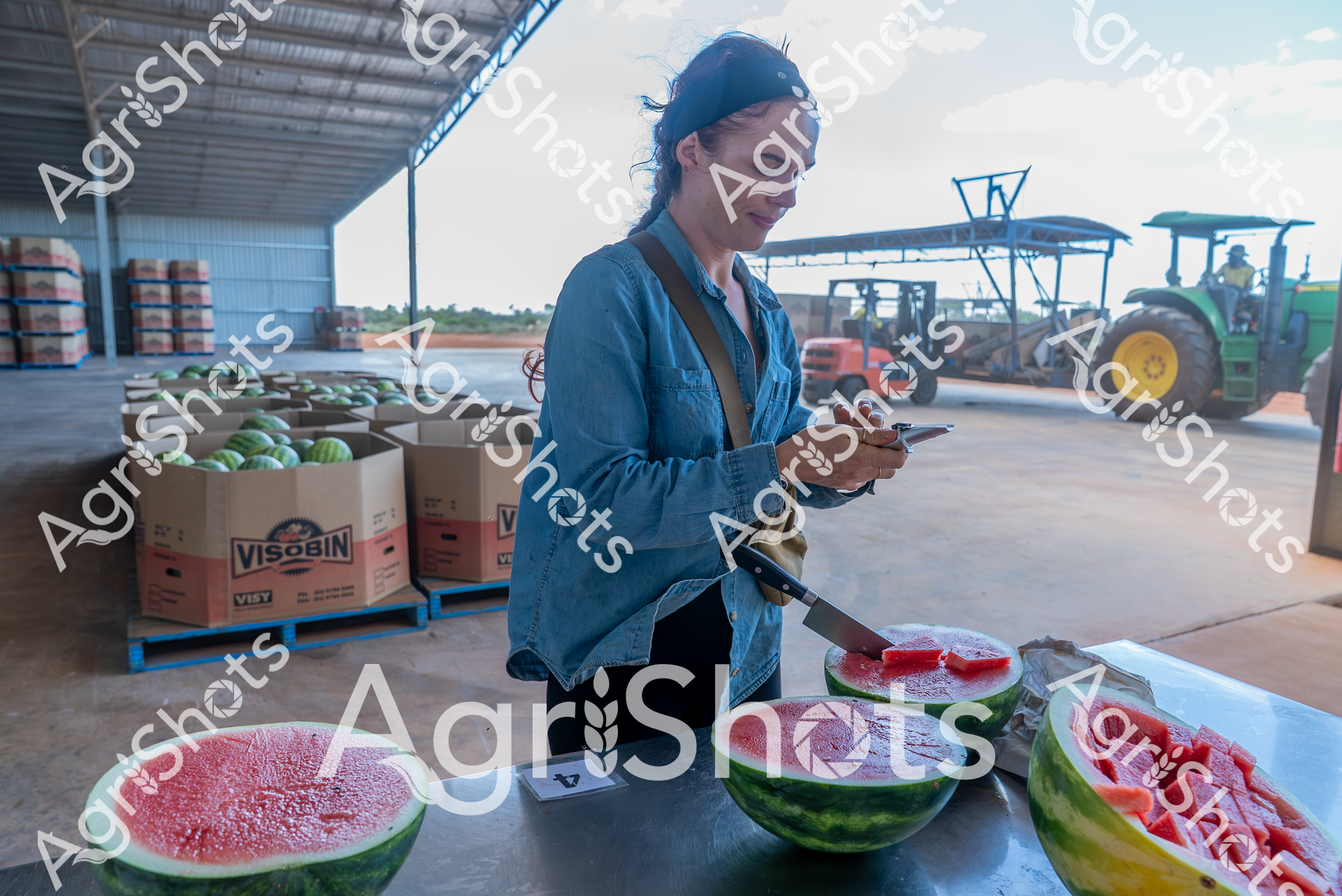
A woman in a denim jacket checks watermelon quality at an agricultural facility, using her phone near stacked Visogen boxes and farming equipment. The scene captures a moment of produce inspection, with sliced watermelons on display and tractors in the background, highlighting agricultural work in the Northern Territory's Barkly Region. Image

A woman in a denim jacket checks watermelon quality at an agricultural facility, using her phone near stacked Visogen boxes and farming equipment. The scene captures a moment of produce inspection, with sliced watermelons on display and tractors in the background, highlighting agricultural work in the Northern Territory's Barkly Region.
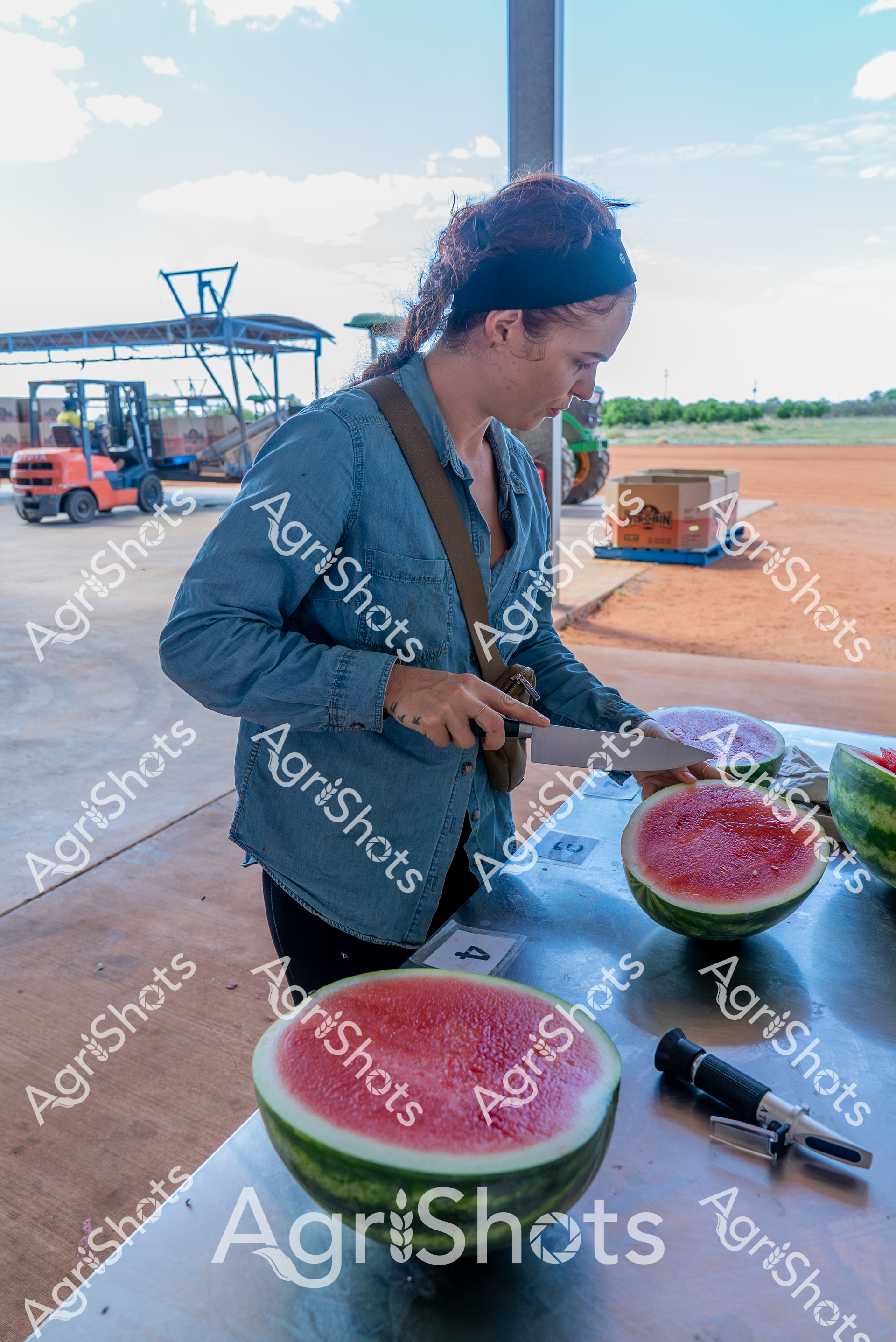
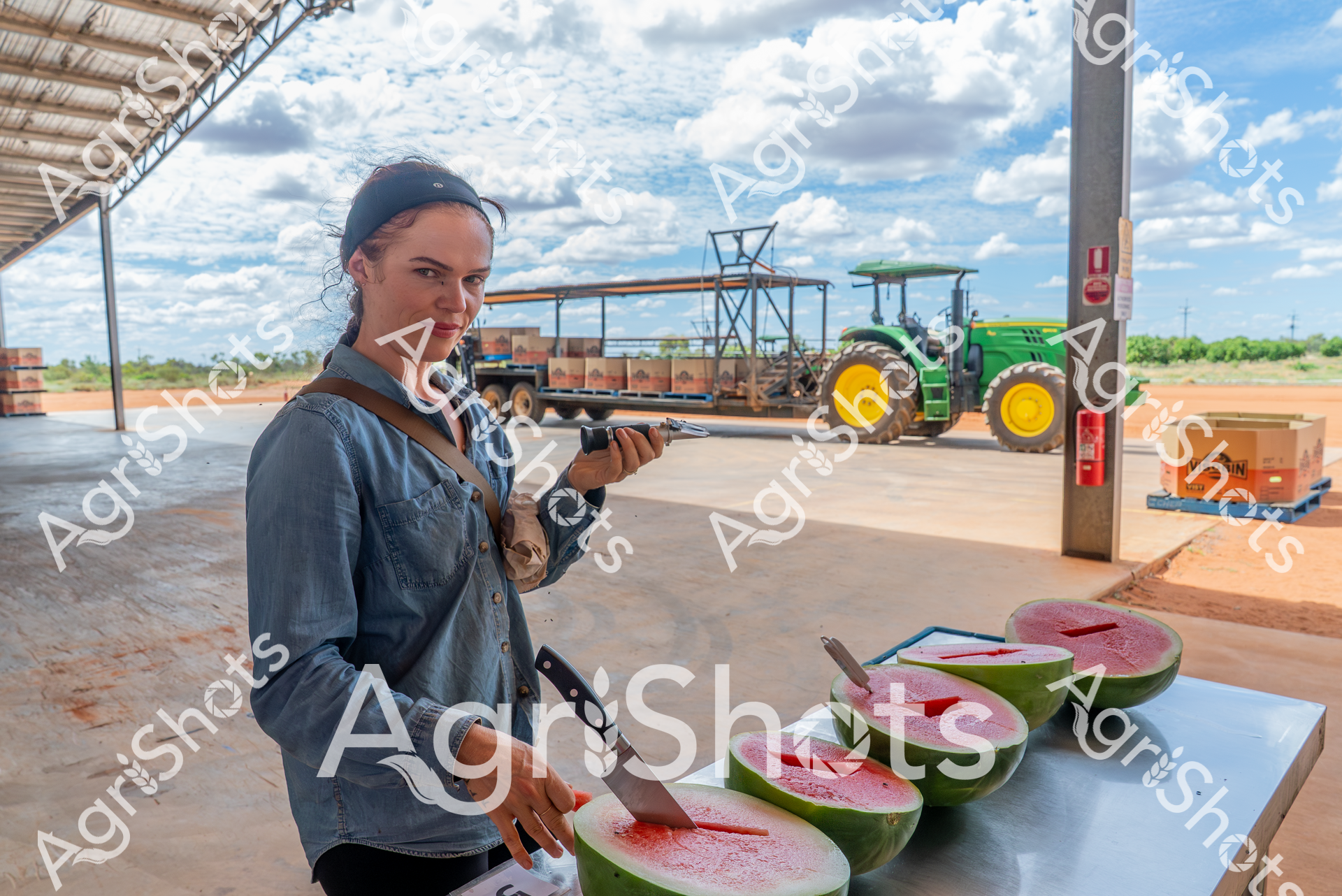
A woman in a denim shirt checks the sugar content of watermelons using a refractometer at an agricultural facility. The scene is set in a rural outdoor location with equipment and vehicles in the background, highlighting the importance of quality testing in produce agriculture. Image

A woman in a denim shirt checks the sugar content of watermelons using a refractometer at an agricultural facility. The scene is set in a rural outdoor location with equipment and vehicles in the background, highlighting the importance of quality testing in produce agriculture.

A woman in a denim shirt checks the sugar content of watermelons at an agricultural facility in the Barkly Region of Northern Territory. With a green tractor and harvesting equipment in the background, she carefully cuts and tests the ripeness of the watermelons during the winter season, showcasing women's important role in agricultural production. Image

A woman in a denim shirt checks the sugar content of watermelons at an agricultural facility in the Barkly Region of Northern Territory. With a green tractor and harvesting equipment in the background, she carefully cuts and tests the ripeness of the watermelons during the winter season, showcasing women's important role in agricultural production.
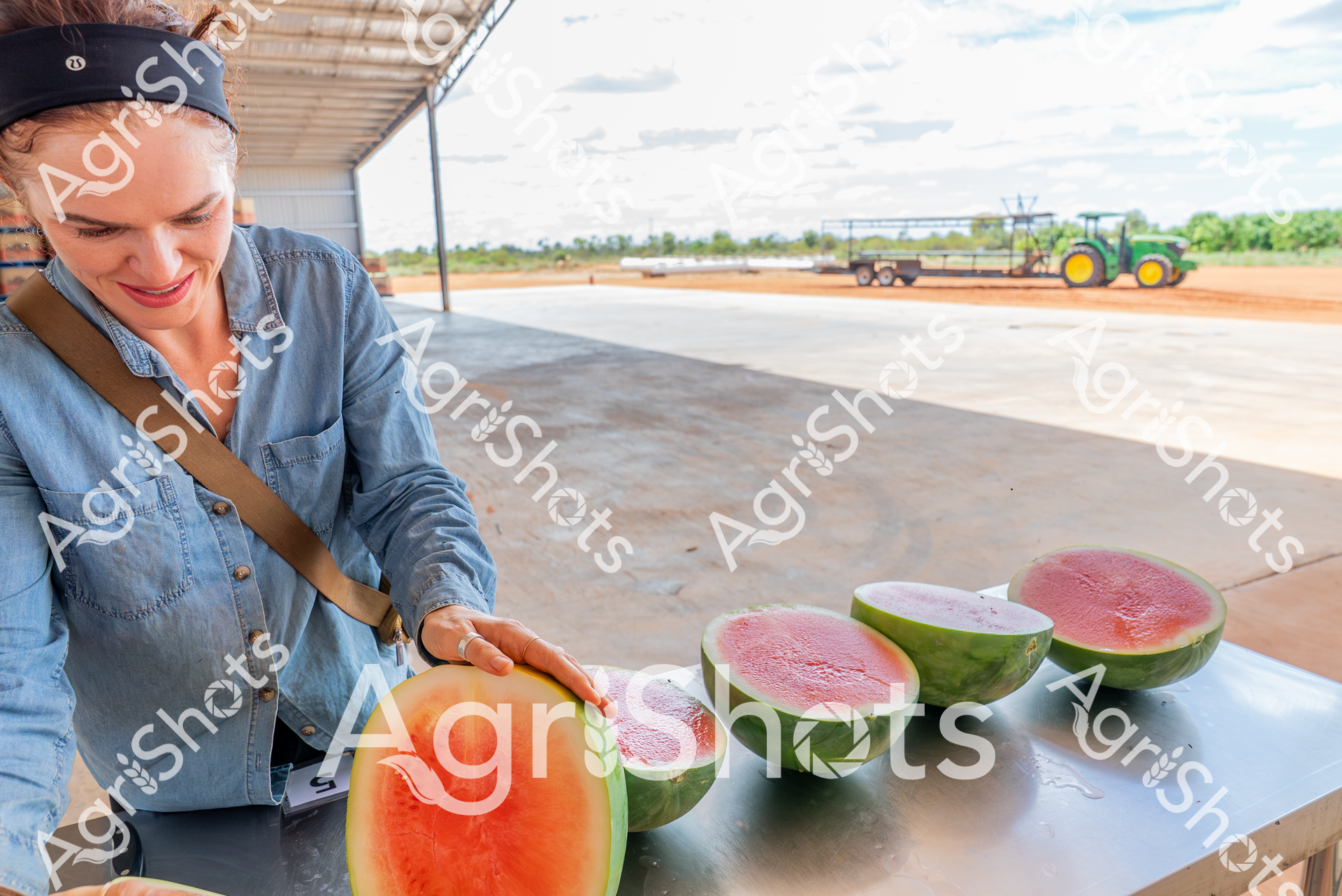
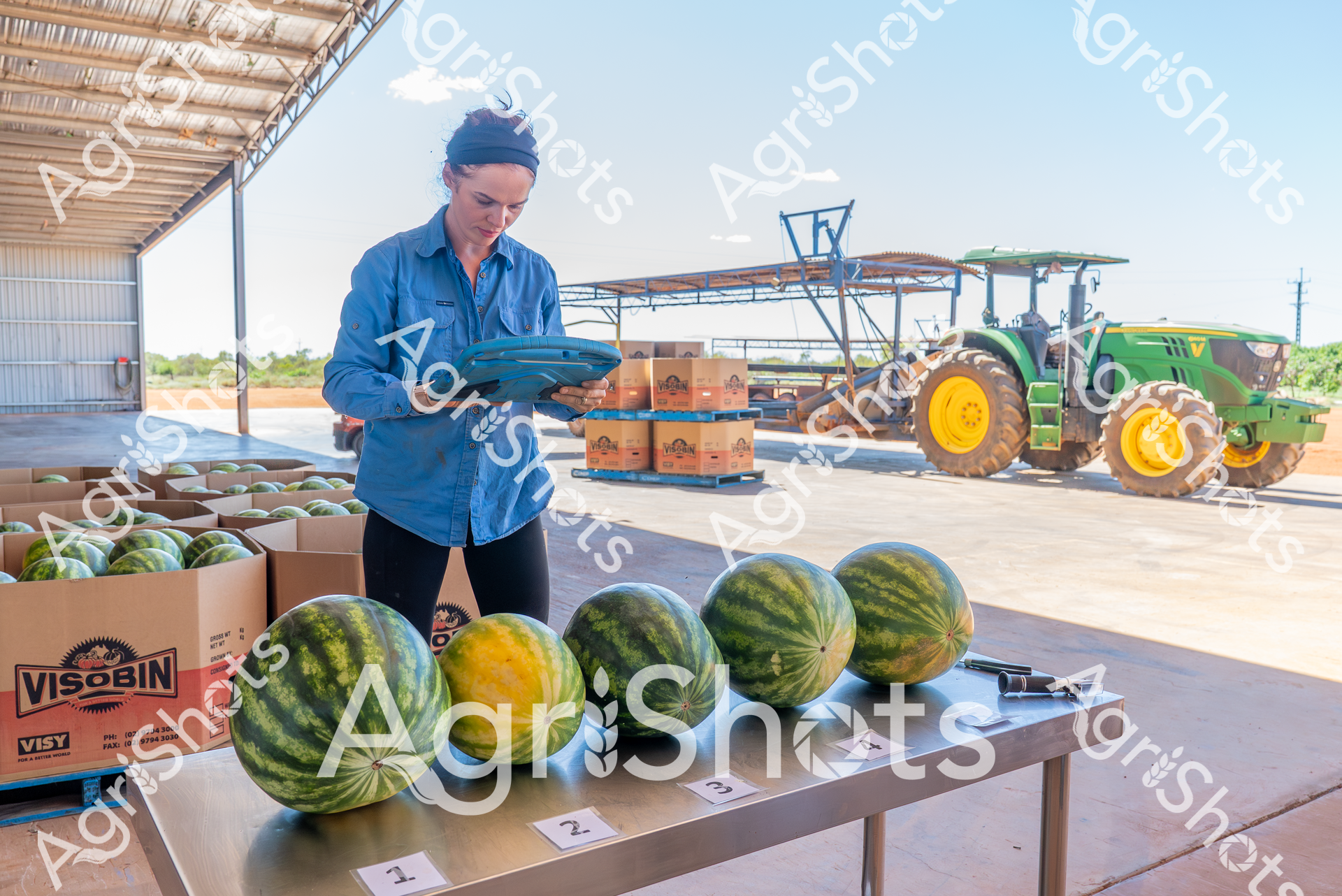
A woman in a denim shirt and black headband checks the sugar content of watermelons at an agricultural facility. In the background, a green tractor sits on a dusty lot, highlighting the farming environment of the Northern Territory's Barkly Region during winter harvest season. Image

A woman in a denim shirt and black headband checks the sugar content of watermelons at an agricultural facility. In the background, a green tractor sits on a dusty lot, highlighting the farming environment of the Northern Territory's Barkly Region during winter harvest season.

A woman in a blue denim shirt inspects watermelons at an agricultural facility, with a green tractor and storage boxes in the background. She carefully examines the large, striped melons lined up on a metal table, likely testing their sugar content or quality during the winter harvest in the Northern Territory's Barkly Region. Image

A woman in a blue denim shirt inspects watermelons at an agricultural facility, with a green tractor and storage boxes in the background. She carefully examines the large, striped melons lined up on a metal table, likely testing their sugar content or quality during the winter harvest in the Northern Territory's Barkly Region.

In a large warehouse, freshly harvested watermelons are displayed on a table, numbered and ready for quality testing. Stacked boxes of Visoon brand watermelons and forklifts in the background suggest this is a professional agricultural facility in the Northern Territory's Barkly Region, likely during the winter harvest season. Image

In a large warehouse, freshly harvested watermelons are displayed on a table, numbered and ready for quality testing. Stacked boxes of Visoon brand watermelons and forklifts in the background suggest this is a professional agricultural facility in the Northern Territory's Barkly Region, likely during the winter harvest season.
Aerial view of a large white and blue agricultural facility, likely a livestock barn or processing center, situated on a rural property with trees, wooden fencing, and a mix of dirt and green pasture areas. The long, angled building has a distinctive roof and appears to be part of a comprehensive farm operation, with multiple structures and paddocks visible in the surrounding landscape. ▶ Video

Aerial view of a large white and blue agricultural facility, likely a livestock barn or processing center, situated on a rural property with trees, wooden fencing, and a mix of dirt and green pasture areas. The long, angled building has a distinctive roof and appears to be part of a comprehensive farm operation, with multiple structures and paddocks visible in the surrounding landscape.
Black and white dairy cows rest inside a corrugated metal barn with filtered sunlight streaming through, revealing a typical indoor cattle shelter with overhead structural supports. The herd appears calm and clustered together, suggesting a well-managed agricultural facility designed for livestock comfort and protection from external elements. ▶ Video

Black and white dairy cows rest inside a corrugated metal barn with filtered sunlight streaming through, revealing a typical indoor cattle shelter with overhead structural supports. The herd appears calm and clustered together, suggesting a well-managed agricultural facility designed for livestock comfort and protection from external elements.
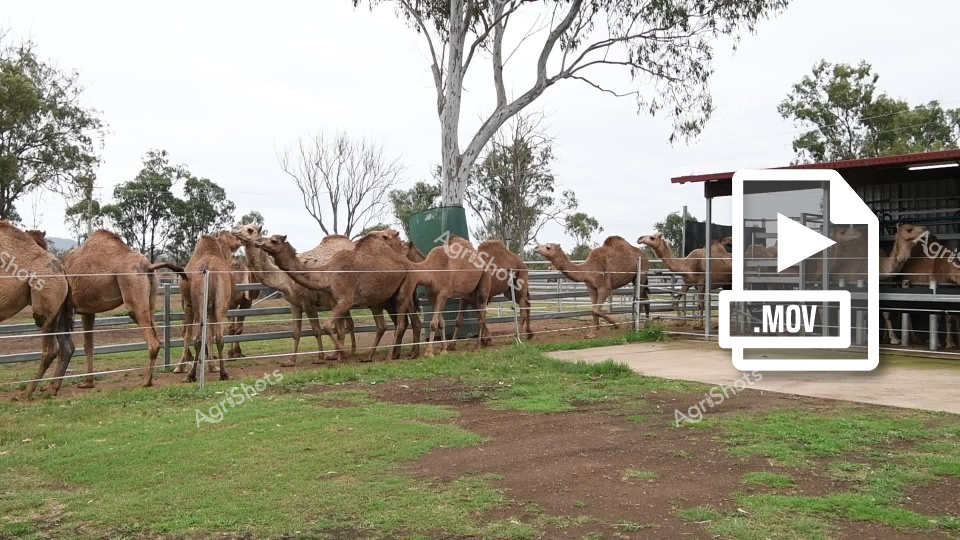
A herd of brown camels stands in a fenced paddock with gum trees and green grass, indicating an Australian agricultural facility likely in a regional area. These dromedary camels are carefully contained within metal livestock yards, suggesting they are part of a managed camel breeding or farming operation, possibly in central or western Australia. ▶ Video

A herd of brown camels stands in a fenced paddock with gum trees and green grass, indicating an Australian agricultural facility likely in a regional area. These dromedary camels are carefully contained within metal livestock yards, suggesting they are part of a managed camel breeding or farming operation, possibly in central or western Australia.
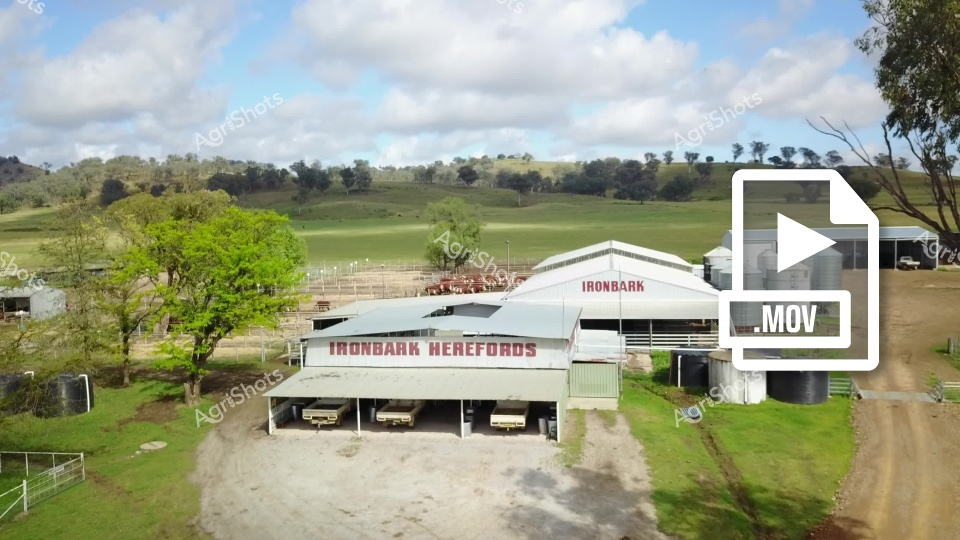
Aerial view of the Ironbark Herefords agricultural facility, showcasing a white farm shed and infrastructure set against rolling green pastures. The property features multiple buildings, cattle yards, and a dirt access road, with lush green trees and hills creating a picturesque rural landscape under a partly cloudy sky. ▶ Video

Aerial view of the Ironbark Herefords agricultural facility, showcasing a white farm shed and infrastructure set against rolling green pastures. The property features multiple buildings, cattle yards, and a dirt access road, with lush green trees and hills creating a picturesque rural landscape under a partly cloudy sky.
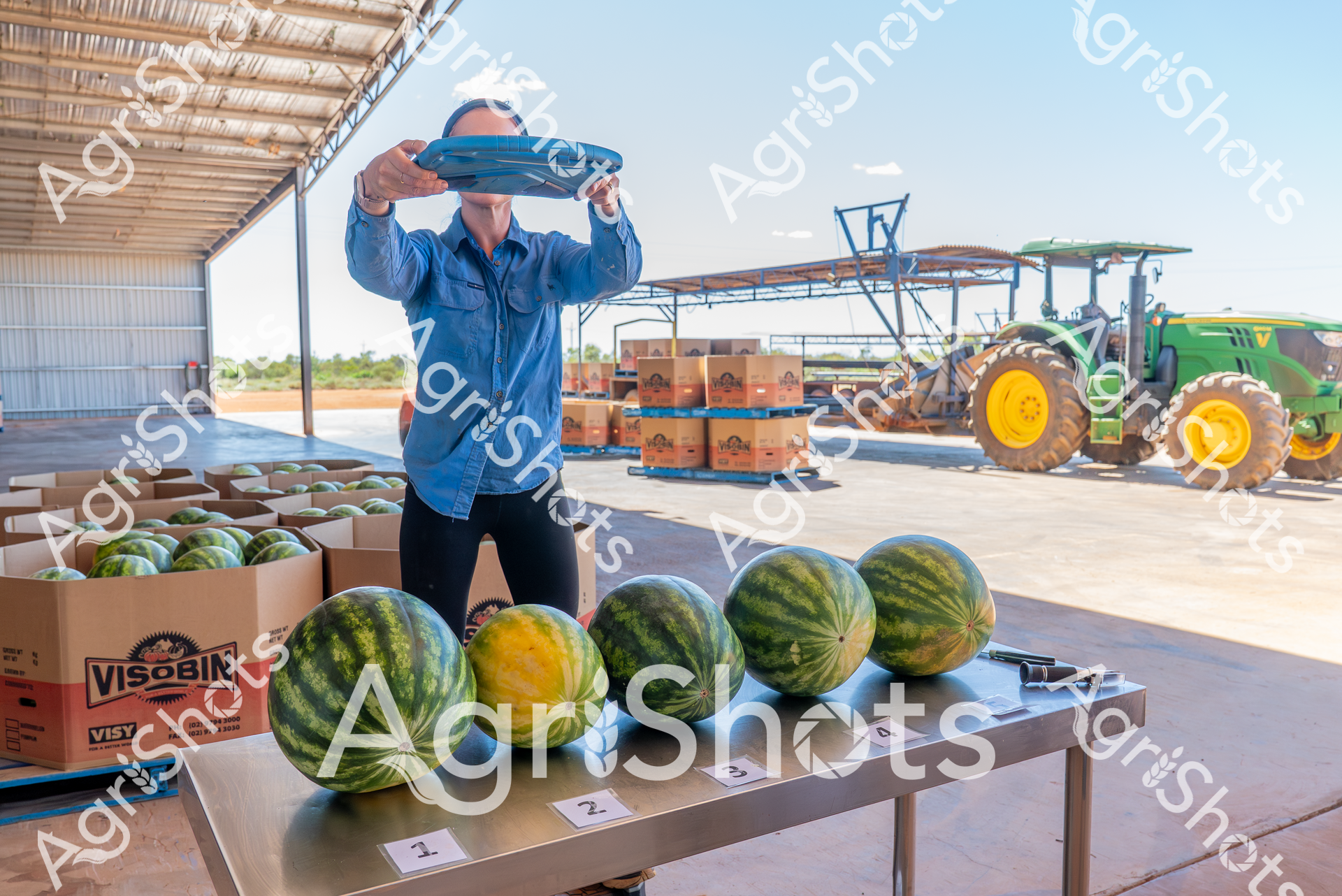
A woman in a blue denim shirt checks the Brix sugar content of watermelons using a refractometer at an agricultural facility. Stacked boxes of watermelons and a green tractor are visible in the background, suggesting a professional produce testing environment in the Northern Territory's Barkly Region during winter. Image

A woman in a blue denim shirt checks the Brix sugar content of watermelons using a refractometer at an agricultural facility. Stacked boxes of watermelons and a green tractor are visible in the background, suggesting a professional produce testing environment in the Northern Territory's Barkly Region during winter.