Browse the collection
 Image
Black Berkshire piglets huddle together amidst vibrant green grass in a lush pasture, representing contemporary regenerative farming practices in Victoria's Heathcote region. These young pigs display distinctive black coats with subtle variations in tone, some sporting small white markings, nestled among delicate grass blades and scattered ground debris. Their compact bodies and alert expressions suggest early-stage development in an extensive farming environment, highlighting a commitment to ethical, free-range agricultural methods. The piglets appear robust and healthy, their smooth skin and attentive postures indicating careful husbandry and optimal environmental conditions. Soft natural lighting illuminates their forms, creating a sense of pastoral tranquility and emphasizing the interconnectedness between livestock and landscape. This intimate scene captures the essence of small-scale, sustainable pig farming, where animal welfare and environmental stewardship are paramount.
 Image
Nestled in the lush pastures of Victoria's Heathcote region, a sow and her newborn piglets rest in a verdant grassland. The mother pig, tagged with a numbered identifier, lies protectively beside her litter of black and white spotted piglets. These young Duroc or mixed-breed piglets cluster close, their small bodies creating a tight huddle among the tall green grasses. The scene captures the nurturing heart of regenerative farming, where animals are raised in natural, open environments that allow for natural behaviors and maternal bonding. Soft morning light filters through the grass, highlighting the textured grey and pink skin of the piglets and their mother. This intimate moment represents the careful livestock management practiced in contemporary Australian agricultural systems, balancing animal welfare with productive farming techniques.
 Image
Black Berkshire piglets cluster together in lush pasture grass, embodying the emerging regenerative farming practices of Victoria's Heathcote agricultural region. These young pigs, with their distinctive black coats and soft pink snouts, nestle closely among vibrant green blades, suggesting a free-range, low-stress farming approach. Their compact, muscular bodies and alert expressions demonstrate the robust genetics of heritage breed swine, perfectly adapted to the undulating landscape. Soft mid-morning sunlight filters through the grass, casting gentle shadows and highlighting the piglets' smooth, dark skin with subtle variations of charcoal and slate. The intimate grouping speaks to the social nature of pigs, with each young animal positioned protectively near its siblings, reflecting natural herd behavior. This scene captures the essence of modern sustainable agriculture - where animal welfare, ecological sensitivity, and quality livestock production converge in the picturesque Victorian countryside.
 Image
Nestled in the undulating grasslands of Victoria's Heathcote region, a seasoned farmer in a navy blue jacket and cap surveys a small herd of heritage breed pigs grazing in a vibrant, wildflower-scattered paddock. A mature sow with distinctive dark grey coloration stands watchful near her litter of tiny piglets, their soft pink bodies contrasting against the lush green and yellow grass. The scene captures a moment of pastoral tranquility, highlighting regenerative farming practices where livestock move freely and interact naturally with the landscape. Sunlight bathes the field, casting soft shadows and illuminating the delicate yellow wildflowers scattered among the grasses, suggesting late spring or early summer conditions. The farmer's relaxed posture and attentive gaze reflect years of agricultural experience, demonstrating a deep connection between farmer, animals, and land. This image embodies the sustainable, holistic approach of modern small-scale pig farming, where animal welfare and environmental harmony take precedence over industrial production methods.
 Image
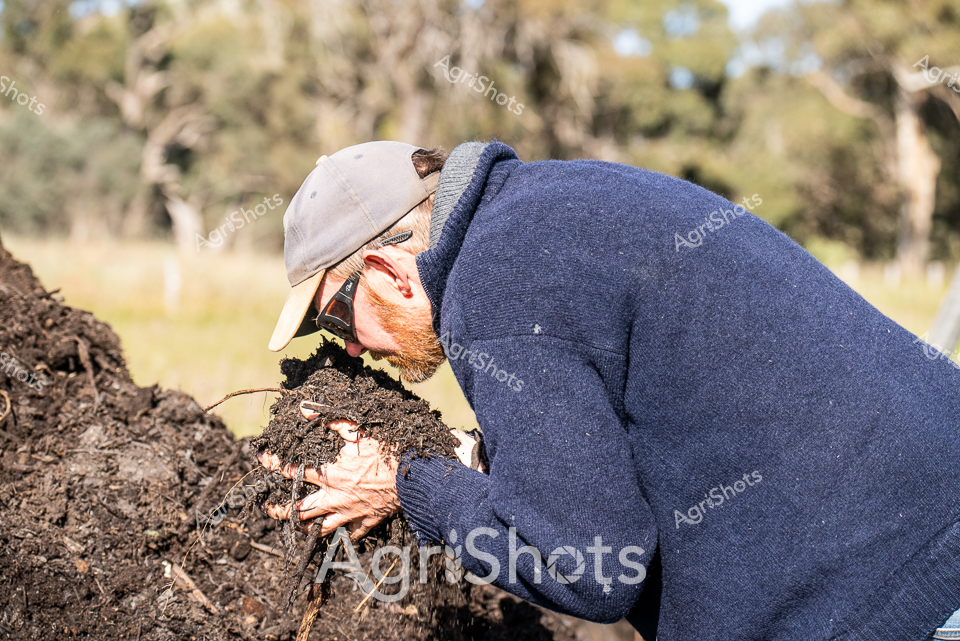
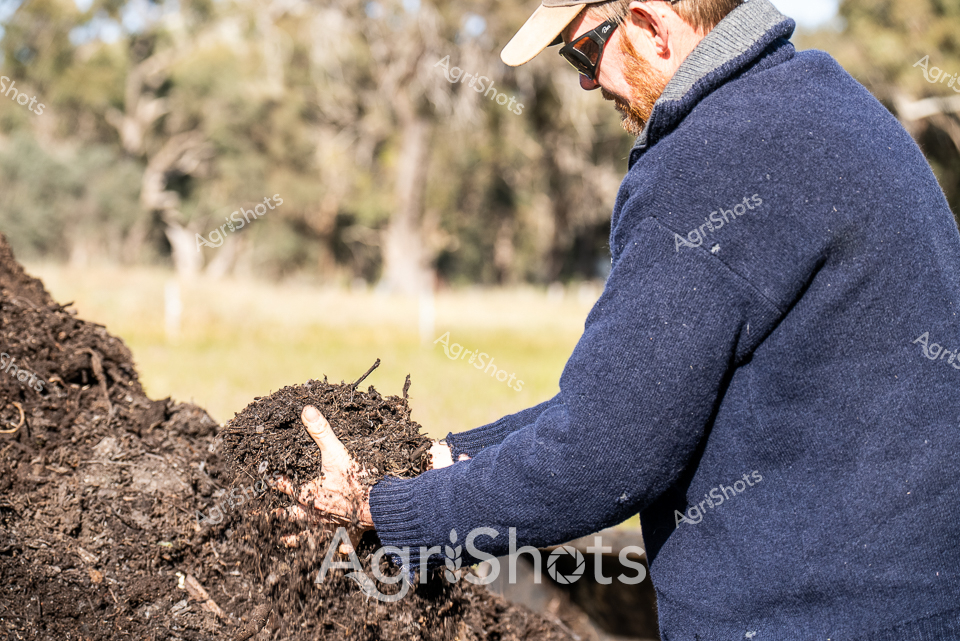
Weathered hands cradle dark, rich soil in a quiet moment of agricultural intimacy. An experienced farmer in a navy blue sweater and light cap leans intently into a mound of composting organic matter, examining the intricate ecosystem of decomposing material. The backdrop suggests a Victorian farmland - soft green pastures and scattered gum trees creating a gentle, diffused landscape. This scene captures the essence of regenerative farming practices, where soil health is viewed as a living, breathing resource rather than merely a growing medium. The deep brown of the compost contrasts beautifully with the blue knit sweater, symbolizing the connection between human stewardship and natural cycles of renewal. Every handful of this carefully managed organic waste represents potential - future nutrients, improved soil structure, and sustainable agricultural resilience.
 Image
Cattle data collection unfolds in a weathered Victorian livestock yard, where precision meets pastoral expertise. A woman in a blue long-sleeved shirt and tan cap operates a Gallagher digital weighing system, her clipboard poised to record critical livestock metrics against a backdrop of metal cattle yards. Her colleague in a vibrant red jacket stands nearby, both focused on evaluating the herd's condition and performance. The sophisticated electronic equipment - an orange and black digital readout with a sleek interface - contrasts with the traditional rural setting, highlighting modern agricultural technology's role in livestock management. Soft overcast light illuminates the scene, suggesting an early morning or late afternoon data collection session, with russet and brown cattle visible through the metal yard panels. This image captures the intersection of technological innovation and hands-on agricultural practice, representing the sophisticated data-driven approach of contemporary Australian livestock farming.
 Image
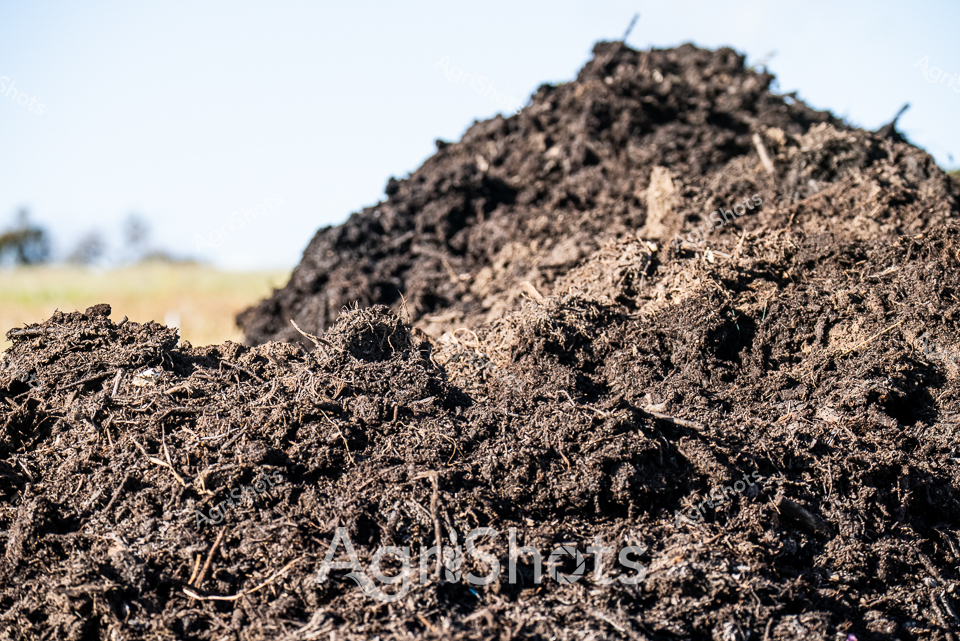
Rich, dark compost teems with organic potential, its complex texture telling a story of regenerative agricultural practice. Layers of decomposed green waste, manure, and agricultural residue create a complex mosaic of earthy browns and deep charcoal tones, revealing the intricate microbial landscape that drives soil health. Each clump represents a transformative process where waste becomes nutrition, embodying Victoria's commitment to sustainable farming techniques. Tiny fragments of plant matter, twigs, and fibrous materials are visible throughout the pile, demonstrating the comprehensive recycling approach of modern regenerative agriculture. The background hints at an expansive rural landscape, suggesting this composting operation is part of a broader ecosystem of environmental stewardship. This rich, living substrate represents more than mere waste - it's a critical component of soil regeneration, carbon sequestration, and sustainable food production.
 Image
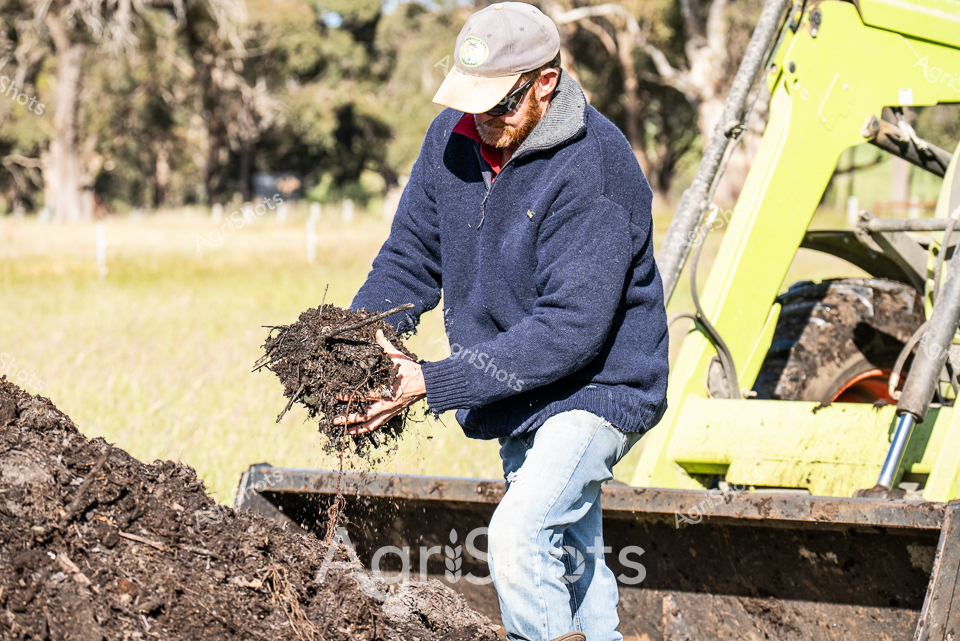
Weathered hands sift through rich, dark compost on a crisp Victorian morning, revealing the intricate work of regenerative agriculture. Dressed in a navy fleece and light cap, a seasoned farm worker carefully examines the organic matter beside a vibrant lime-green agricultural machine, symbolizing the careful balance between technological innovation and natural process. The surrounding landscape speaks of open farmland, with scattered trees and a soft golden grassland stretching into the background, capturing the essence of Australian rural sustainability. Soil particles cascade between weathered fingers, demonstrating the meticulous attention to soil health and nutrient recycling that defines modern ecological farming practices. The scene embodies the quiet dedication of agricultural workers who understand that healthy soil is the foundation of productive, sustainable agriculture. Every handful of compost represents a commitment to waste reduction, biodiversity, and the regenerative cycles that sustain our agricultural ecosystems.
 Image
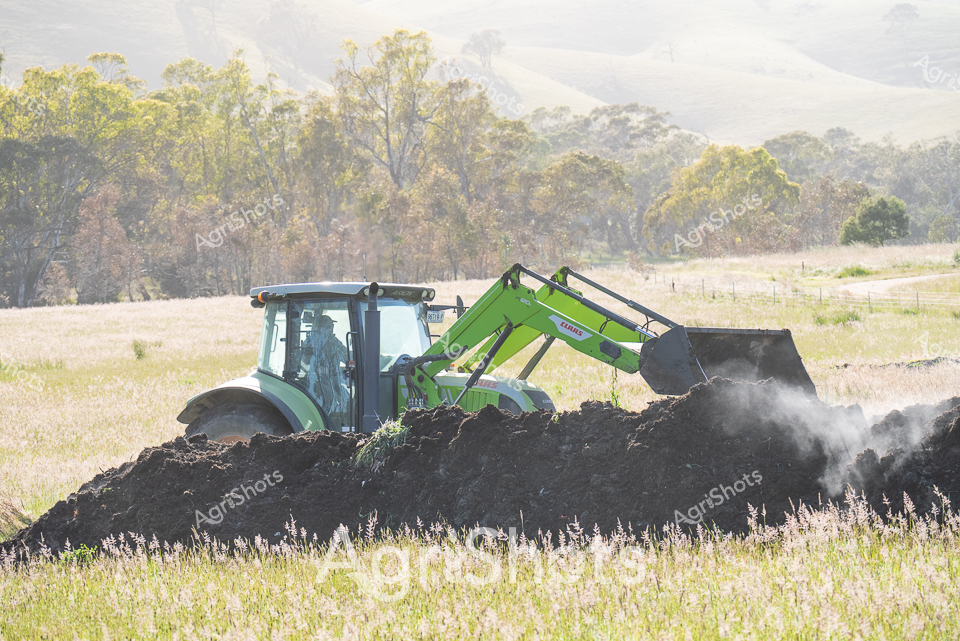
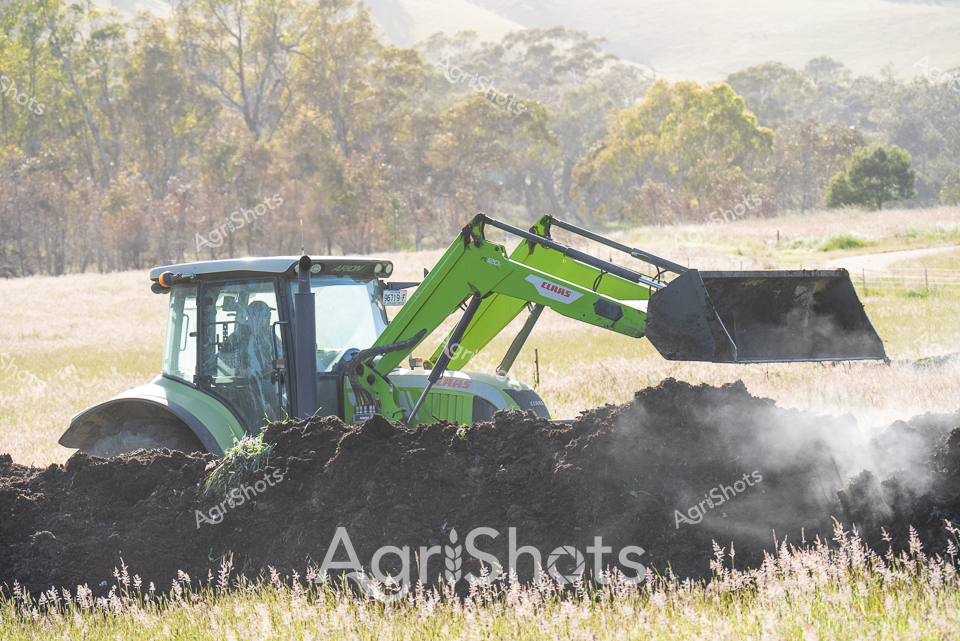
In the verdant farmlands of Victoria, a vibrant green Claas tractor navigates through a misty morning landscape, methodically turning a massive pile of rich, dark compost. Steam rises from the decomposing organic matter, signaling the active biological processes transforming agricultural waste into nutrient-dense soil amendment. The powerful front-end loader effortlessly manipulates the steaming heap, demonstrating the precision of modern regenerative farming techniques that prioritize soil health and sustainability. Surrounding grasslands shimmer with early morning dew, while a backdrop of eucalyptus trees creates a soft, muted green and grey palette that speaks to the Australian agricultural ecosystem. The composting operation represents a critical step in circular farming practices, recycling green waste and manure into valuable fertiliser that will nurture future crops. This scene captures the intersection of advanced agricultural technology and ecological mindfulness, where mechanical efficiency meets natural biological cycles. The tractor's lime-green hydraulic loader stands in sharp contrast to the dark, rich compost, symbolizing the innovative approach to waste reduction and soil regeneration that is transforming contemporary agricultural practices across Victoria's diverse farming regions.
 Image
Green-hued Claas tractor churns through a steaming pile of organic compost, embodying Victoria's regenerative agricultural practices. Misty morning light filters through eucalyptus trees in the background, casting a soft glow across the dry grassland. The powerful front-end loader lifts and turns dark, rich composting material, generating small clouds of steam and dust that speak to the decomposition process. Rural paddocks stretch out around the machine, highlighting the expansive agricultural landscape of Victoria's farming regions. This image captures the sustainable farming techniques transforming agricultural waste into valuable soil nutrition, representing a critical approach to environmental stewardship and land management. The tractor's vibrant green color symbolizes the eco-friendly ethos of modern agricultural practices, blending technological innovation with natural recycling processes.
 Image
Cattle data collection unfolds on a crisp Victorian pastoral morning, where an agricultural specialist in a vivid red jacket stands within a modern steel cattle yard. Focused and methodical, the worker speaks on a mobile phone while operating advanced monitoring equipment, an orange Gallagher data collector positioned nearby on a portable stand. Sleek beef cattle - a mix of rich brown and white-patched breeds - wait patiently behind galvanized steel livestock gates, their muscular forms suggesting prime commercial stock. The landscape behind suggests a typical southern Australian grassland setting, with soft grey skies and muted green pastures creating a subdued backdrop to the precision agricultural work in progress. The worker's attire - faded blue denim, sturdy work boots, and a grey cap - speaks to the practical, no-nonsense approach of modern agricultural professionals who blend technological expertise with traditional livestock management skills. This scene captures the intersection of digital technology and rural agricultural practice, where data-driven insights support contemporary cattle management strategies.
 Image
Rural precision agriculture unfolds in a Victorian cattle yard as a dedicated agricultural professional meticulously records livestock data. Dressed in a crisp light blue work shirt and cap, she stands amid gleaming steel cattle gates, focusing intently on a clipboard and digital weighing equipment. An orange-trimmed digital scale and monitoring device sits ready, highlighting the technological sophistication of modern farm management. Beef cattle can be seen in the background, framed by the metallic yard infrastructure, suggesting a carefully managed herd assessment process. The overcast sky and green pasture backdrop create a soft, professional atmosphere that speaks to the methodical nature of contemporary agricultural practice. This image captures the intersection of traditional livestock husbandry and cutting-edge data collection, representing the evolving skill set of today's agricultural workers - precise, tech-savvy, and deeply connected to the land.
 Image
Black Berkshire pigs forage through lush pasture grasses under the warm Victorian sun, their sleek charcoal-colored bodies moving purposefully through verdant paddock vegetation. A professional agricultural worker in a vibrant purple branded shirt and blue cap stands watchfully nearby, surveying the herd with an experienced eye. The expansive rural landscape of the Heathcote region unfolds behind her, with scattered eucalyptus trees and distant metal water tanks creating a quintessential Australian farming backdrop. These heritage breed pigs represent a progressive approach to regenerative agriculture, grazing freely and naturally in an open-field environment that promotes animal welfare and ecological sustainability. The image captures the intersection of modern agricultural practice and traditional livestock rearing, highlighting the role of women in contemporary farming. Soft natural light bathes the scene, emphasizing the rich textures of grass, animal fur, and the rolling pastoral terrain, embodying the dynamic spirit of Victorian agricultural innovation.
 Image
A striking herd of robust black heritage pigs grazes intently through lush pasture grasses, representing a progressive approach to regenerative farming in Victoria's Heathcote region. The sleek, muscular swine - likely a traditional breed such as Berkshire or Large Black - move as a coordinated group, their dark coats contrasting beautifully against the verdant green grasslands and scattered eucalyptus trees of the rural landscape. In the background, a silvered water tank punctuates the pastoral scene, suggesting sustainable agricultural infrastructure supporting this free-range pig production system. These animals appear healthy and alert, their compact bodies and attentive postures reflecting excellent animal welfare practices typical of modern ethical farming approaches. The soft natural lighting and expansive paddock environment capture the essence of Australian small-scale large-scale farming, where animal movement and natural grazing behaviors are prioritized. Each pig displays distinctive markings and muscular definition, highlighting the genetic quality and careful breeding management of this agricultural operation.
 Image
Harnessing cutting-edge agricultural technology, a skilled farm worker conducts livestock data collection in a modern cattle yard. Dressed in a light blue work shirt and gray shorts, she stands confidently beside a Gallagher digital weighing system, carefully recording cattle metrics. The orange digital readout and sleek electronic equipment contrast with the rugged metal cattle gates and grassy paddock beyond, where a curious beef animal peers through the infrastructure. Her professional attire - including a protective hard hat, robust work boots, and a handheld device - speaks to the precision and technical expertise required in contemporary agricultural management. A two-way radio mounted on her shoulder suggests she's connected to a broader farm operation, ready to communicate critical information. The overcast sky and green pasture indicate this is likely a temperate agricultural region of Victoria, capturing the essence of modern Australian cattle farming. This scene epitomizes the evolving role of women in agriculture, showcasing technical skill, data-driven decision-making, and the sophisticated intersection of animal husbandry and digital technology.
 Image
Rural Livestock Data Collection: A Precision Agriculture Moment Bathed in soft overcast light, two agricultural professionals stand intently within a modern steel cattle yard, engaged in livestock data management. The individual in a vibrant red jacket and weathered denim watches alongside a colleague in a light blue shirt and cap, who operates a rugged handheld electronic device for capturing animal information. Rust-colored beef cattle cluster in the adjacent metal penning, their muscular forms suggesting prime breeding stock in a classic Victorian grassland setting. The sophisticated digital data collector represents cutting-edge agricultural technology, bridging traditional livestock management with precision farming techniques. Neutral tones of grey metal fencing contrast against the warm browns of the cattle and the bright primary clothing colors, creating a compelling visual narrative of contemporary agricultural practice. This scene epitomizes the sophisticated, data-driven approach of modern Australian agricultural management, where technology and traditional livestock expertise converge.
 Image
A livestock handler in a vibrant red shirt and cap operates a Hunter-branded cattle crush at a National Stock Yard Systems facility, carefully managing a chestnut-brown beef cow during routine processing. The metallic silver livestock handling equipment stands robust and precise, designed for safe and efficient animal management in rural Victoria. Careful, deliberate movements characterize the handler's interaction with the animal, highlighting the professional approach to livestock handling in Australian agricultural operations. Denim jeans, a classic workwear choice, complement the practical red shirt, embodying the functional fashion of rural workers. The cattle crush's intricate mechanical framework demonstrates sophisticated agricultural engineering, with multiple adjustment points and secure restraint mechanisms visible. This scene captures the methodical, technical nature of modern cattle management, where animal welfare and operational efficiency converge in a carefully controlled environment.
 Image
Livestock management unfolds in a classic Victorian cattle yard, where agricultural precision meets rural expertise. A team member in a vibrant red work shirt and another in a soft blue jacket stand side-by-side, focused intently on the livestock within metal livestock handling gates. A sophisticated Gallagher digital weighing system sits prominently in the foreground, its orange and black digital display capturing critical data about the herd. The surrounding landscape speaks of open pastoral country, with distant eucalyptus trees and overcast skies typical of southern Australian agricultural regions. Cattle cluster quietly in the metal yards, their soft earth tones contrasting with the metallic infrastructure, representing the careful intersection of modern agricultural technology and traditional livestock management. This image captures the professional, methodical approach of contemporary Australian agricultural workers, highlighting the blend of technological innovation and hands-on expertise that characterizes rural production.
 Image
Nestled in the verdant pastures of Victoria, a seasoned farmer tends to a rich, dark compost heap on a crisp morning. Wearing a navy blue woolen sweater and a light cap, the individual carefully examines the decomposing organic matter, his gloved hand sifting through the nutrient-dense soil. Surrounding him, a soft-focused backdrop of eucalyptus trees hints at the expansive rural landscape, embodying the essence of regenerative agricultural practices. The composting process represents a critical element of sustainable farming, transforming green waste and manure into a powerful natural fertiliser. Each handful of dark, crumbly material tells a story of biological recycling - breaking down organic components to create life-giving nutrients for future crops. The scene captures the meticulous care and environmental consciousness of modern Australian agricultural methods, showcasing how waste reduction and soil health are interconnected. The muted color palette - deep blues, rich browns, and soft greens - reflects the harmony between the farmer and the natural ecosystem. This image encapsulates the sophisticated, science-driven approach to contemporary farming, where every handful of soil represents potential, renewal, and environmental stewardship.
 Image
Precision livestock management unfolds in a Victorian cattle yard, where cutting-edge digital technology meets pastoral expertise. Sleek metallic cattle yards create a structured grid, housing a diverse herd of brown, white, and cream-colored cattle, their muscular frames pressed against silver-grey steel panels. A vibrant orange and black Gallagher digital weighing system stands ready, its sophisticated digital display perched on a fence post, alongside a matching protective carry case - emblematic of modern agricultural data collection. The overcast sky and muted grassland backdrop suggest a crisp morning in late autumn or early winter, typical of Victoria's southern agricultural regions. Every element speaks to the methodical approach of contemporary cattle farming: technological precision married with traditional livestock management. The scene captures the nuanced intersection of animal husbandry and digital innovation, where each beast is tracked, measured, and monitored with scientific accuracy, reflecting Australia's world-leading agricultural practices.
 Image
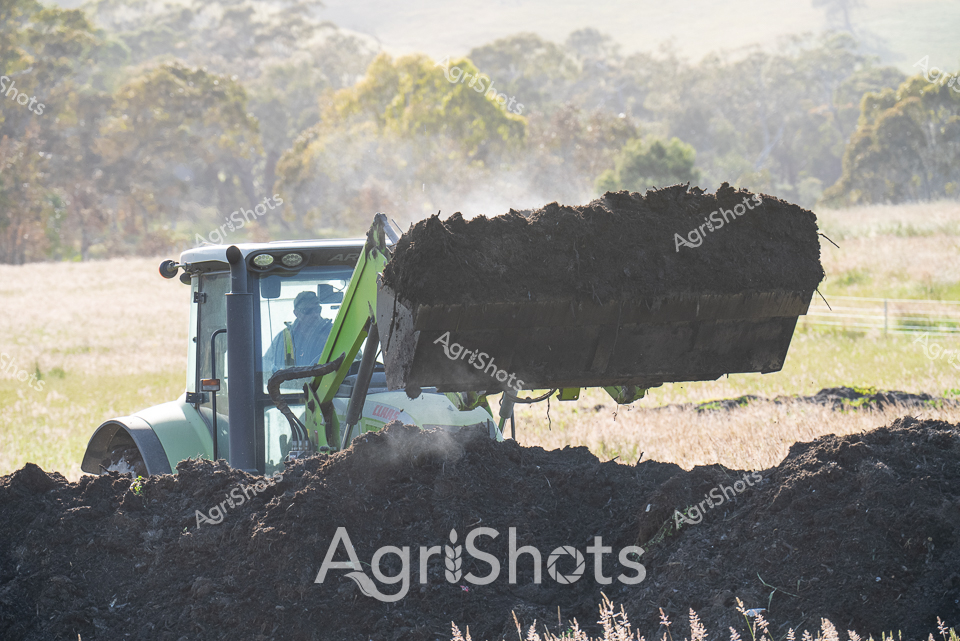
Composting Takes Flight: A Regenerative Farming Portrait A lime-green agricultural machine emerges through misty morning light, methodically turning dark, rich compost on a Victorian farmscape. The powerful tractor, silhouetted against soft eucalyptus woodland in the background, carries a massive bucket laden with organic material - likely a combination of green waste, agricultural residues, and nutrient-dense manure. Steam rises from the decomposing heap, suggesting active biological transformation and the intense microbial activity breaking down complex organic matter. The operator, barely visible through the machine's cab, guides the equipment with precision, engaging in a critical process of soil regeneration and sustainable farming practice. Textured mounds of composting material - deep charcoal and earth-brown in color - create a dramatic landscape of renewal, highlighting the intricate relationship between agricultural waste management and ecological restoration. This scene captures the essence of modern regenerative agriculture: transforming waste into valuable resources, rebuilding soil health, and creating a more sustainable future for farming.
 Image
Rural precision: a cattle management specialist in a vibrant red jacket stands amid steel livestock yards, wielding an electronic data collection device. The scene captures modern agricultural technology in action, with a Gallagher monitoring system perched on the metal railings, tracking individual animal metrics. Soft overcast light filters across the paddock, highlighting the calm herd of mixed-breed cattle - predominantly brown and cream-colored animals standing quietly behind the galvanized steel gate panels. The worker, dressed in classic blue denim and work boots, speaks into a mobile phone while simultaneously operating specialized livestock tracking equipment, embodying the sophisticated intersection of traditional farming and digital agricultural innovation. Grassy ground and distant tree lines suggest a typical Victorian agricultural landscape, where precision data collection is transforming livestock management. The orange and black digital interface of the monitoring equipment signals the high-tech approach to contemporary cattle farming, where every animal's health and performance can be meticulously tracked and analyzed.
 Image
A livestock manager in a bright red jacket and baseball cap works diligently in a steel cattle yard, operating advanced digital livestock monitoring equipment. The scene captures a quintessential moment of modern agricultural technology, with a sophisticated Gallagher data collection device mounted on a portable stand, connected to tracking systems for precise animal management. Soft overcast light illuminates the metal cattle gates and rocky ground, suggesting a crisp rural Victorian morning. Calm beef cattle - likely Angus or Hereford breeds - stand in the background behind sturdy galvanized steel yard panels, indicating a carefully managed herd. The worker stands with one hand raised, potentially adjusting monitoring equipment or signaling to livestock, demonstrating the blend of hands-on farming expertise and digital precision that characterizes contemporary agricultural practice. His work attire - rugged blue jeans, robust work boots, and weather-resistant jacket - speaks to the practical, no-nonsense approach of Australian farm professionals who must navigate complex technological and environmental challenges.
 Image
Dust billows around a vibrant green Claas tractor as it methodically turns a massive compost heap on a misty Victorian rural landscape. The machine's front loader carefully manipulates dark, rich organic matter, demonstrating cutting-edge regenerative farming techniques that transform green waste and agricultural byproducts into nutrient-dense soil amendments. Soft morning light filters through a backdrop of eucalyptus trees, casting a golden haze across the pasture and highlighting the intricate process of sustainable agricultural waste recycling. The composting operation represents a critical approach to soil health, biodiversity, and environmental stewardship, capturing the innovative spirit of modern Australian agriculture. Delicate grasses frame the foreground, contrasting with the deep black and rich brown tones of the decomposing organic material being carefully managed by the skilled machine operator. This scene embodies the intersection of technology, environmental consciousness, and agricultural productivity that defines contemporary farming practices in Victoria.