Browse the collection
 Image
Hampshire and Duroc cross breeding pigs gather in a sun-drenched paddock near a corrugated iron shelter, embodying the robust agricultural landscape of Victoria's Heathcote region. The mixed-breed swine, predominantly charcoal-grey with distinctive white bands, represent a strategic approach to regenerative farming practices. Dry golden grasses carpet the ground, contrasting against the lush green trees and scattered eucalypts in the distant background, while a classic rural windmill punctuates the expansive blue sky. These sturdy pigs display varied markings - some solid dark, others with striking bi-color patterns - suggesting careful breeding selection for meat quality and resilience. The corrugated shelter provides essential shade and protection, a hallmark of modern large-scale farming techniques that balance animal welfare with agricultural productivity. The scene captures the essence of Australian rural enterprise: pragmatic, innovative, and deeply connected to the land, where each element - from the livestock to the landscape - tells a story of sustainable agricultural management.
 Image
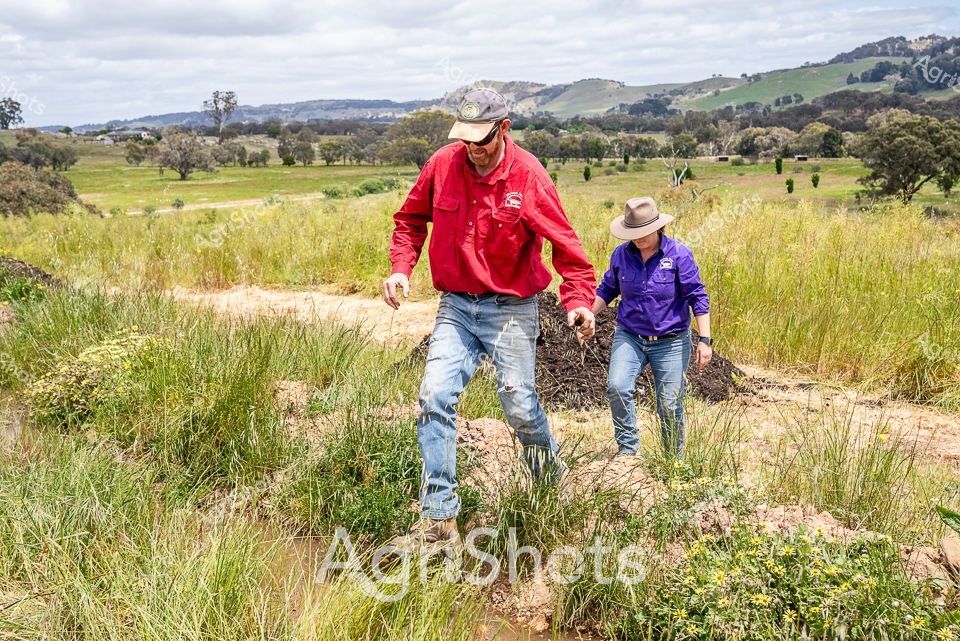
Venturing through golden grasslands beneath an overcast Victorian sky, two agricultural professionals survey a regenerative farming landscape. Dressed in vibrant field attire - one in a bold red work shirt, the other in a deep purple top - they navigate a rugged terrain of native grasses and scattered eucalyptus trees. Their measured steps suggest careful assessment of soil health and biodiversity, emblematic of modern sustainable agricultural practices. The rolling hills of the background create a quintessential Australian rural panorama, with gentle green slopes punctuated by mature trees and distant paddocks. Rough ground underfoot reveals exposed earth and native grasses, highlighting the intricate relationship between land management and ecological restoration. Their coordinated movements and protective headwear signal a collaborative approach to understanding and enhancing agricultural ecosystems. The scene captures the essence of contemporary agricultural stewardship: combining scientific observation, environmental consciousness, and practical land management. Their presence represents the growing commitment to regenerative farming techniques that prioritize soil health, biodiversity, and sustainable land use in the Australian agricultural sector.
 Image
Rural Technology Integration: A farmer in a vibrant red work shirt and dark cap navigates agricultural data technology with precision. Seated in what appears to be a farm office or workshop, he intently studies digital information across multiple screens - a desktop monitor displaying livestock management software and a handheld Gallagher device providing real-time agricultural data. The workspace is cluttered with technical equipment, suggesting a modern approach to farming that blends traditional agricultural expertise with cutting-edge digital tools. Soft natural light filters through a window, illuminating the concentrated workspace where technology enables sophisticated farm management. The farmer's weathered hands demonstrate skill in manipulating both digital interfaces and rugged agricultural equipment, symbolizing the evolving nature of contemporary agricultural practices in Victoria. His baseball cap and professional demeanor reflect the serious, professional approach of modern agricultural workers who leverage technology to optimize farming operations. The scene captures a moment of technological engagement, where data analysis meets hands-on agricultural experience - a testament to the sophisticated, tech-driven approach of contemporary Australian farming professionals.
 Image
Solar-powered agricultural data management unfolds in a sunlit workspace overlooking rural paddocks. A seasoned farm professional in a vibrant red shirt and cap focuses intently on digital agricultural technology, working with a Gallagher monitoring system displayed on a desktop monitor. An orange-edged tablet device sits nearby, suggesting advanced precision agriculture tools that enable modern farmers to track and analyze critical farm information. Soft natural light filters through the window, illuminating the workspace with a gentle atmosphere of technological innovation meeting traditional farming expertise. The scene captures the sophisticated intersection of rural work and digital innovation, where data-driven insights support agricultural productivity. Sophisticated monitoring equipment and careful attention to technological detail reflect the modern farmer's commitment to efficient, informed agricultural management.
 Image
Rural Technology Hub: Agricultural Innovation at Work A seasoned agricultural professional in a vibrant red work jacket and weathered cap leans intently over a workstation, bridging traditional farming expertise with modern digital tools. Multiple screens display agricultural management software, with a larger monitor showcasing a landscape of farmers walking through green fields. In the foreground, a rugged orange-trimmed tablet device provides data input, suggesting advanced field monitoring technology from Gallagher, a leading agricultural equipment brand. The workspace reflects a contemporary rural office environment, with natural light filtering through a window and glimpses of farming equipment and resources scattered across the desk. This scene captures the evolving intersection of agricultural practice and digital innovation, where experienced farmers leverage cutting-edge technology to enhance productivity and management. The carefully arranged workspace speaks to methodical planning, data-driven decision making, and the sophisticated technical skills of modern agricultural professionals.
 Image
In a rural office bathed in soft natural light, an experienced agricultural professional in a vibrant red jacket and cap analyzes farm data on multiple screens. A Gallagher dashboard illuminates the LG monitor, displaying complex performance graphs and metrics that track critical agricultural insights. Sophisticated handheld devices and communication equipment surround the workstation, suggesting advanced technological integration in modern farming practices. The workspace reveals a blend of traditional work surfaces - wooden shelves, scattered notebooks - alongside cutting-edge digital tools, symbolizing the evolution of agricultural management. Subtle post-it notes and rugged communication devices hint at the meticulous planning and constant connectivity required in contemporary agricultural operations. This scene captures the intersection of data-driven decision-making and hands-on rural expertise, showcasing how technology is transforming agricultural productivity and management in Victoria.
 Image
In a sunlit agricultural office overlooking a rural Victorian landscape, an experienced farm technician in a vibrant red jacket and cap carefully monitors farm data systems. Seated at a workstation with multiple screens, he operates a Gallagher agricultural management device alongside a laptop, meticulously analyzing digital dashboards and agricultural monitoring interfaces. Sophisticated electronic equipment surrounds him - handheld devices, rugged tablets, and professional-grade computer monitors - reflecting the increasingly technological nature of modern farming operations. Soft natural light filters through nearby windows, illuminating the workspace's organized clutter of technical manuals, safety equipment, and professional reference materials. The scene captures the intersection of traditional agricultural expertise and cutting-edge digital management technologies, showcasing how contemporary farmers leverage sophisticated data systems to optimize farm productivity and decision-making. This image represents the evolving landscape of agricultural management, where technological proficiency is as crucial as traditional farming knowledge.
 Image
In a quiet rural office bathed in soft natural light, a farm professional in a vibrant red shirt and dark cap focuses intently on agricultural data management. Surrounded by modern technology, he navigates complex digital systems using a laptop, desktop monitor, and a rugged Gallagher handheld device, likely tracking livestock information or farm inventory. The workspace reveals the precision and technological sophistication of contemporary agricultural management, with various tools and electronic devices neatly arranged around a compact workstation. A window offers a glimpse of what appears to be a typical Victorian agricultural landscape, suggesting this is likely a farm office in rural Victoria. The careful arrangement of equipment and the concentrated posture of the worker highlight the blend of traditional farming expertise with cutting-edge digital technologies that characterize modern agricultural operations. Rich textures of wood, metal, and digital screens create a compelling visual narrative of agricultural innovation and data-driven farm management.
 Image
Rural technology specialist in a vibrant red work shirt and cap focuses intently on agricultural data management at a compact workstation. An LG monitor displays dense spreadsheet columns, while a rugged Gallagher handheld device sits prominently in the foreground, suggesting precision agricultural monitoring and record-keeping. The workspace reveals a practical, no-nonsense approach to farm management, with post-it notes, tools, and communication devices clustered around multiple computing screens. Soft winter light filters through a nearby window, illuminating the detailed digital workflow of modern agricultural operations in Victoria. The scene captures the intersection of traditional farming expertise and contemporary digital technologies, highlighting how rural professionals now leverage sophisticated data systems to track and optimize agricultural processes. Each element - from the well-worn keyboard to the carefully positioned electronic devices - speaks to a methodical, tech-savvy approach to agricultural management.
 Image
Robust black pigs mill across sun-drenched straw in a gently undulating Victorian pastoral landscape, where distant hills and scattered gum trees frame a quintessential Australian livestock setting. A Zoetis Eryvac vaccine box dominates the foreground, held by a hand against the backdrop of the herd, signaling proactive animal health management in modern regenerative farming practices. The piggery paddock reveals a rustic metal shelter and a farm worker in a purple shirt overseeing the herd, embodying the careful stewardship characteristic of intensive yet conscientious agricultural systems. These muscular black pigs, likely bred for meat production, demonstrate the robust health of a well-managed stock, their dark coats contrasting sharply with the golden dry grass and brilliant blue cloudscape overhead. The image captures a moment of agricultural diligence - preventative healthcare meeting expansive rural terrain, where each carefully administered vaccine represents a commitment to animal welfare and sustainable farming. Soft cumulus clouds drift across an endless sky, providing a sense of scale and serenity to this industrious agricultural scene in the heart of Victoria's farming country.
 Image
Dark-coated heritage breed pigs roam across a golden, straw-covered paddock under a expansive blue sky peppered with soft cumulus clouds. The rural Victorian landscape unfolds in the background, with rolling green hills, distant mountain ranges, and scattered paddock trees creating a quintessential Australian agricultural scene. A Zoetis Eryvac vaccine box dominates the foreground, highlighting modern livestock management practices focused on animal health and biosecurity. The robust black pigs move independently across the dry pasture, their muscular frames and alert postures suggesting a well-managed free-range farming environment. Rugged fence lines and the open terrain underscore the extensive nature of pig farming in this region, where animal welfare and regenerative agricultural techniques are paramount. The crisp lighting and wide-open landscape communicate a sense of spaciousness, freedom, and the critical role of veterinary interventions in maintaining livestock health and productivity.
 Image
Rugged rural technology comes to life in this intimate workplace scene. A worker in a vibrant red shirt and cap stands intently at a workstation, navigating agricultural data on multiple screens - a large desktop monitor and a laptop, with a Gallagher handheld device providing additional digital interface. Soft winter light filters through a nearby window, illuminating the compact workspace filled with practical tools, sticky notes, and electronic equipment. The scene captures the modern farmer's blend of traditional hands-on work and sophisticated digital management, highlighting how contemporary agricultural professionals leverage technology to track, analyze, and optimize farm operations. Utilitarian details like measuring tools, communication devices, and carefully organized work surfaces underscore the precision and methodical approach of agricultural management in the digital age. The muted colors and focused posture of the worker suggest a quiet concentration on detailed data analysis, representing the evolving intersection of technology and rural work.
 Image
Black Berkshire piglets graze across a lush pasture in the rolling countryside near Heathcote, Victoria, representing a progressive approach to regenerative farming. The dense green grass provides a vibrant backdrop for the distinctive dark-skinned pigs, whose sleek, charcoal-colored coats contrast beautifully with the sunlit landscape. In the background, a farmer in a purple top and blue jeans walks attentively among the herd, suggesting careful livestock management and hands-on agricultural practice. These heritage breed pigs appear healthy and well-adapted, moving naturally through the grassland with an ease that speaks to extensive, free-range farming techniques. The scene captures the essence of modern Australian agricultural innovation - where traditional livestock breeding meets sustainable land management. Soft eucalyptus trees and gentle hills frame the pasture, creating a quintessential Victorian agricultural tableau that celebrates both animal welfare and ecological mindfulness.
 Image
Precision and care define this moment in a modern cattle management facility. A stockman in a vivid red shirt and weathered cap operates a Hunter-series National Stockyard Systems cattle crush, carefully positioning the hydraulic gates to safely restrain a brown and white beef animal. The metallic grey infrastructure of the weighing and handling system gleams with industrial strength, its robust design engineered for safe and efficient livestock processing. Detailed markings and adjustment mechanisms are visible on the crush's frame, reflecting the technical sophistication of contemporary agricultural equipment. The stockman's measured movements demonstrate years of experience, his body language revealing a calm expertise in managing livestock with minimal stress. This scene captures the intersection of animal husbandry, technological innovation, and human skill that characterizes modern Australian cattle farming - a nuanced dance of technology, technique, and respect for livestock.
 Image
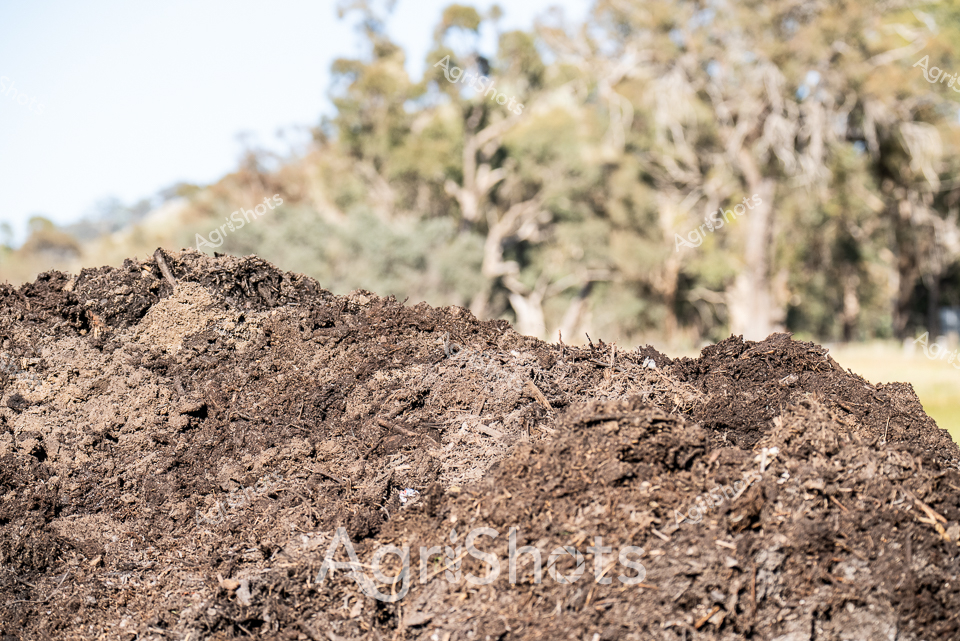
Rich, dark compost mounds rise in undulating waves, showcasing the intricate textures of decomposed organic matter. Broken twigs, leaf fragments, and dark humus blend together in a complex tapestry of earthy browns and charcoal grays, revealing the intricate process of nutrient recycling. Soft-focus eucalyptus trees in the background suggest a Victorian agricultural landscape, hinting at regenerative farming practices that transform green waste into vital soil nutrition. The compost pile represents a critical element of sustainable agriculture - converting agricultural and organic waste into living, fertile soil amendment that will nourish future crops. Sunlight filters softly across the scene, casting gentle shadows that highlight the varied textures and irregular contours of the decomposing material. This image captures the essential agricultural process of composting: a powerful method of waste reduction, soil regeneration, and ecological renewal that sits at the heart of modern sustainable farming practices.
 Image
Black and white heritage breed pigs cluster near a corrugated iron shelter on a sun-drenched Victorian pastoral landscape. The robust swine, likely a heritage breed like Berkshire or Large Black, display muscular frames and distinctive dark coloration, standing on golden straw bedding within a fenced paddock. Rolling hills and scattered eucalyptus trees create a quintessential Australian rural backdrop, with fluffy cumulus clouds drifting across a brilliant blue sky. This scene captures the essence of regenerative farming practices, where livestock are provided spacious, natural environments that allow for animal welfare and environmental sustainability. The metal shelter offers shade and protection, while the open landscape permits natural foraging and movement behaviors typical of more humane agricultural approaches. The image radiates a sense of calm productivity, highlighting the careful balance between agricultural infrastructure and natural ecosystem in contemporary Australian farming.
 Image
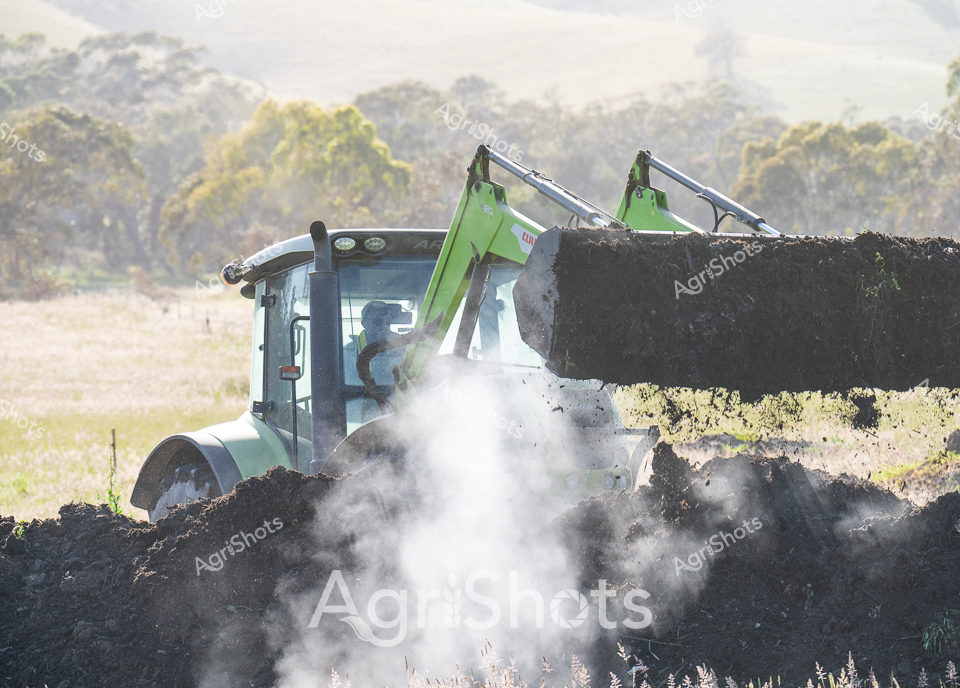
In the misty pastures of rural Victoria, a robust green Claas tractor manages an expansive composting operation, steam rising from rich, dark organic matter. The machine's hydraulic loader manipulates massive blocks of decomposing material, part of an innovative regenerative farming process that transforms green waste and agricultural byproducts into nutrient-dense fertiliser. Soft morning light filters through eucalyptus trees in the background, casting a golden hue across the undulating landscape and highlighting the intricate agricultural work underway. The composting process demonstrates a sophisticated approach to sustainable land management, where waste materials are carefully processed to restore soil health and support biodiversity. Wisps of steam suggest the active biological breakdown occurring within the organic piles, revealing the dynamic transformation of agricultural residues into valuable soil amendments. This scene epitomizes modern Australian agricultural practices - technologically advanced, environmentally conscious, and deeply connected to the natural cycles of renewal and regeneration.
 Image
Black Duroc and Yorkshire crossbred pigs graze across a sun-drenched paddock near Heathcote, Victoria, their dark charcoal and slate-grey bodies contrasting against dry golden straw and pale green grasslands. A rustic timber shelter stands sentinel, offering shade and protection, with distant gum trees and a classic windmill punctuating the undulating rural landscape beneath a luminous blue and cloud-scattered sky. These robust heritage breed pigs represent a nuanced approach to regenerative farming, grazing naturally while maintaining proximity to their shelter, embodying the balance between traditional agricultural practices and contemporary sustainable livestock management. The scene captures the essence of Australian pastoral farming - spacious, textured, and intimately connected to the landscape - where animal welfare and environmental sensitivity converge. Soft shadows and gentle morning light suggest early summer, with the surrounding ecosystem appearing healthy and interconnected. The carefully maintained paddock demonstrates meticulous farm management, where each element serves a purposeful ecological function.
 Image
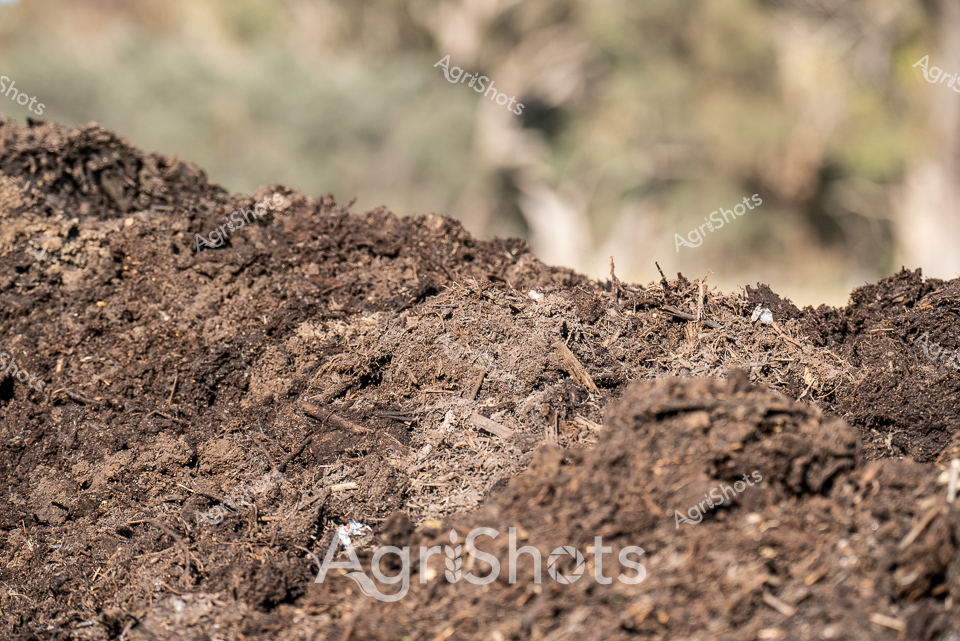
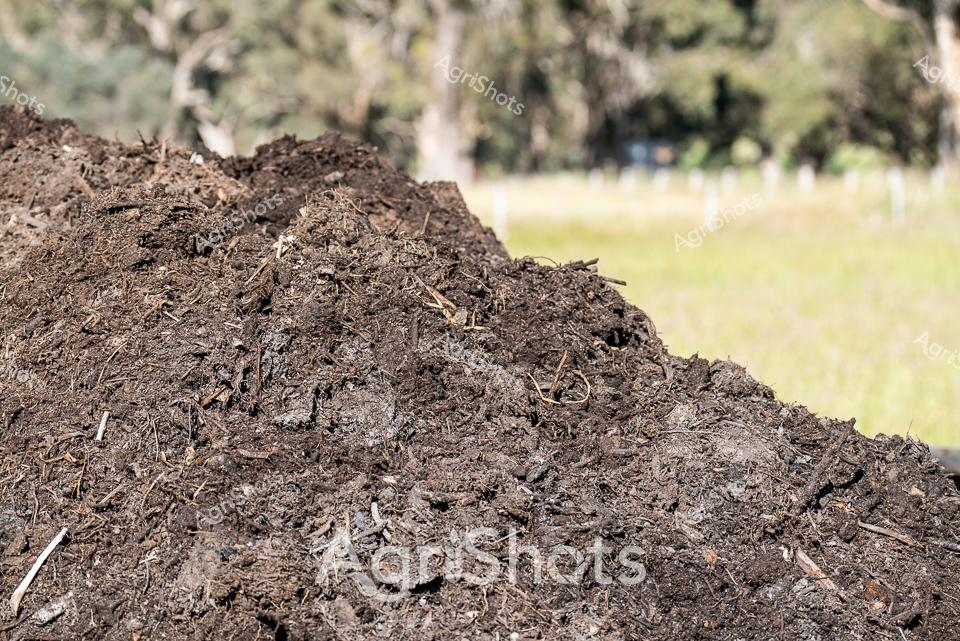
Rich, dark compost mounds rise like earthen waves, revealing the intricate textures of decomposing organic matter. Fragments of plant material, woody stems, and decaying debris interweave through the rich brown substrate, creating a complex tapestry of regenerative agricultural practice. This close-up captures the vital process of composting - transforming green waste and organic materials into nutrient-dense soil amendment that supports sustainable farming ecosystems. The granular, layered composition speaks to the intricate biological processes of decomposition, where microorganisms break down complex materials into simple, life-giving nutrients. Soft-focus background hints at a rural Victorian landscape, suggesting this composting operation is part of a broader regenerative farming strategy focused on soil health and waste reduction. The earthy palette of deep browns, ranging from rich chocolate to warm umber, highlights the textural complexity of this fundamental agricultural practice that turns waste into valuable resource.
 Image
Dark, rich organic compost rises in a textured mound of decomposing agricultural waste, revealing the intricate process of regenerative farming practices. Fragments of woody material, plant stems, and finely broken-down organic matter create a complex landscape of dark brown and charcoal hues, highlighting the nutrient-dense composition. Sunlight filters across the background, illuminating a soft green pasture and distant tree line, suggesting this composting site is located in a rural Victorian agricultural setting. The carefully managed heap represents a critical element of sustainable farming - transforming green waste and potentially animal manure into valuable soil enrichment through natural decomposition processes. Each layer tells a story of ecological recycling, where discarded organic material is transformed into a powerful fertiliser that will nurture future crops and support soil biodiversity. The meticulously constructed compost pile embodies the principles of waste reduction and regenerative agricultural techniques, demonstrating how farmers can create value from what might otherwise be considered waste.
 Image
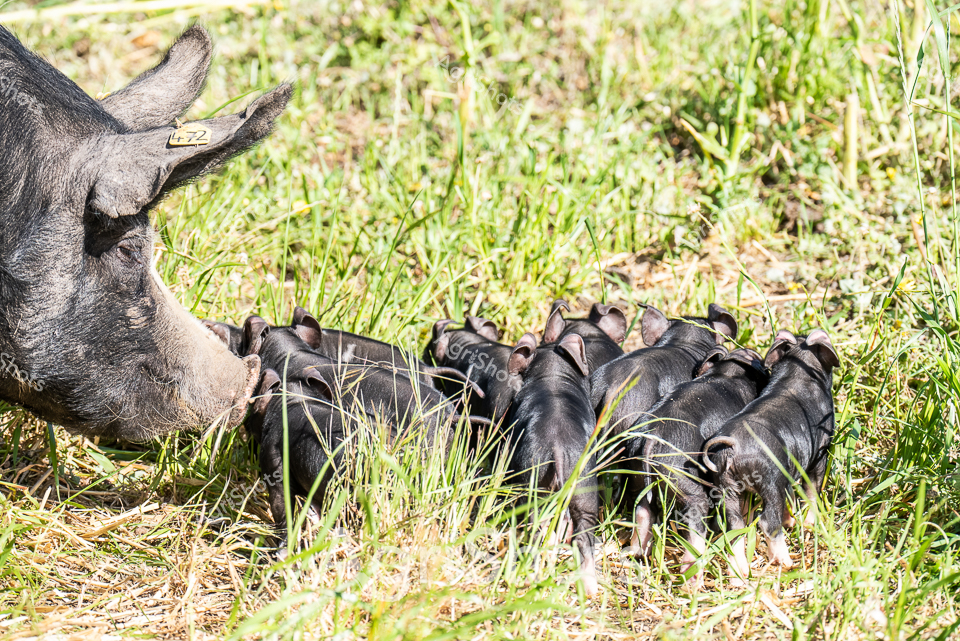
A sow and her piglets nestled in lush pasture grasses, capturing a tender moment of maternal care on a progressive Victorian piggery. The mature black and white spotted pig, identified by her yellow ear tag numbered 472, stands protectively over her newly born grey-skinned offspring. Soft yellow wildflowers and varied green grasses create a textured backdrop, suggesting early spring or late winter in the Heathcote region. The piglets, compact and vulnerable, huddle close to their mother's body, their sleek dark skin contrasting against the verdant ground. This scene represents a contemporary approach to regenerative farming, where livestock are integrated with natural landscapes, allowing animals more freedom and connection to their environmental roots. The image speaks to sustainable agricultural practices that prioritize animal welfare and ecological balance, showcasing how modern Australian farmers are reimagining large-scale farming with compassion and environmental consciousness.
 Image
Black-coated piglets cluster tightly around their sow in a lush pasture grass setting, revealing an intimate moment of nurturing in a regenerative farming landscape. The mother pig, wearing a numbered ear tag, provides a protective presence as her young offspring huddle close, their sleek dark bodies pressed against each other and her side. Soft green grasses and scattered dry vegetation create a natural backdrop, suggesting this is likely a free-range or pasture-based pig farming environment in Victoria's Heathcote region. The scene captures the essence of modern sustainable agricultural practices, where animal welfare and natural behaviors are prioritized. Each piglet appears healthy and robust, with uniform dark coloration typical of specialized breeding programs. The soft natural lighting and organic setting highlight the progressive approach to livestock management, demonstrating how contemporary farmers are integrating animal welfare with ecological considerations.
 Image
Rural precision agriculture unfolds in a Victorian cattle yard as a dedicated agricultural professional meticulously records livestock data. Dressed in a crisp light blue work shirt and cap, she stands amid gleaming steel cattle gates, focusing intently on a clipboard and digital weighing equipment. An orange-trimmed digital scale and monitoring device sits ready, highlighting the technological sophistication of modern farm management. Beef cattle can be seen in the background, framed by the metallic yard infrastructure, suggesting a carefully managed herd assessment process. The overcast sky and green pasture backdrop create a soft, professional atmosphere that speaks to the methodical nature of contemporary agricultural practice. This image captures the intersection of traditional livestock husbandry and cutting-edge data collection, representing the evolving skill set of today's agricultural workers - precise, tech-savvy, and deeply connected to the land.
 Image
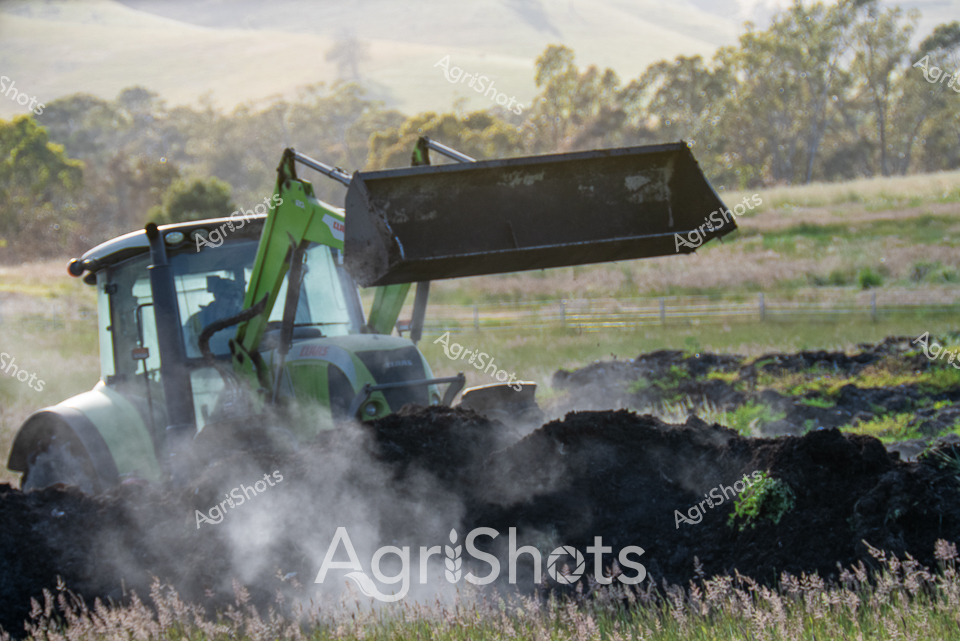
A lime-green Claas tractor moves methodically through a misty morning landscape in rural Victoria, turning and mixing large mounds of organic compost. Steam rises from the dark, rich soil as the front-end loader blade shifts decomposing green waste and manure, creating an intricate dance of agricultural recycling. The surrounding paddock features soft, diffused light filtering through eucalyptus trees, with native grasses framing the edge of the composting area. This regenerative farming technique demonstrates sustainable waste reduction and soil enrichment, where organic matter is transformed into valuable fertiliser through careful mechanical processing. The tractor's powerful hydraulics lift and rotate the composting material, releasing wisps of steam that highlight the biological decomposition occurring within the dark, textured piles. The scene captures the intersection of modern agricultural technology and ecological sustainability, showcasing how large-scale farming can work in harmony with natural biological processes.