Browse the collection
 Image
Sun-drenched pastures of Victoria's Heathcote region unfold as an experienced farmer tends to a black heritage breed sow and her litter of piglets. Dressed in a navy blue pullover and baseball cap, the farmer stands watchfully amid tall grasses and yellow wildflowers, observing the young piglets nestled close to their mother. The mature sow, tagged with the number 472, displays a robust and alert presence, her dark bristled coat contrasting beautifully against the verdant green landscape. Small piglets huddle together in the grass, their dark grey and black coats blending with the rich earth, showcasing the natural behaviors of free-range, regenerative farming practices. Soft morning light bathes the scene, highlighting the interconnectedness between farmer, livestock, and the agricultural landscape. This image captures the essence of small-scale, sustainable pig farming in Victoria - a testament to careful husbandry, animal welfare, and the deep connection between farmers and the livestock.
 Image
Farm Biosecurity Vigilance: Rural Gateway to Sustainable Agriculture A weathered metal gate stands sentinel across a dusty farm access road, emblazoned with a stark red and white biosecurity warning sign. The crisp blue sky and golden grasslands of rural New South Wales stretch beyond, punctuated by scattered eucalyptus trees and a green Claas tractor working in the distant paddock. The biosecurity notice delivers a clear message of controlled access - visitors must phone ahead, obtain approval, and strictly limit potential contamination risks to this carefully managed agricultural environment. Wire fencing reinforces the boundary, reflecting the agricultural sector's commitment to protecting crop and livestock health through rigorous preventative measures. A thin dirt track winds through regenerative farming landscape, suggesting the delicate balance between agricultural productivity and environmental stewardship. The scene captures the modern Australian farming ethos: methodical, cautious, and deeply respectful of the intricate ecological systems that underpin agricultural success.
 Image
Farm biosecurity stands vigilant in the golden paddocks of rural New South Wales, where a green Claas tractor awaits behind a stark warning sign. The rust-red gate bears a prominent "VISITORS" sign detailing strict agricultural entry protocols, emphasizing the critical importance of preventing pest and disease transmission in modern farming practices. Crisp blue skies stretch endlessly above a sun-bleached landscape, with a solitary eucalyptus tree punctuating the distant horizon, highlighting the expansive nature of Australian agricultural terrain. The tractor's gleaming green paintwork contrasts sharply with the dry, ochre ground, suggesting regenerative farming techniques that carefully manage delicate dryland ecosystems. Metallic fence wires and the official biosecurity notice create a powerful visual narrative of protection, scientific management, and the sophisticated approach required in contemporary agricultural operations. This image encapsulates the blend of technological innovation, environmental stewardship, and stringent safety protocols that define Australian farming in the 21st century.
 Image
Free-range black heritage breed sow nurtures her litter of small piglets in a vibrant spring pasture near Heathcote, Victoria. The mature pig stands protectively beside her dark-coated offspring nestled in lush green grass dotted with yellow wildflowers. A farmer in a navy blue jacket, cap, and mud-caked boots observes the scene, representing a commitment to regenerative and ethical farming practices. Rolling hills and open farmland stretch into the background under a clear blue sky, suggesting a crisp morning with ideal conditions for free-range pig husbandry. The earthy tones of the pig's coat contrast beautifully with the verdant grasslands, highlighting the natural, low-stress environment of this small-scale agricultural operation. An ear tag on the sow indicates careful livestock management and tracking, embodying modern agricultural techniques balanced with animal welfare considerations.
 Image
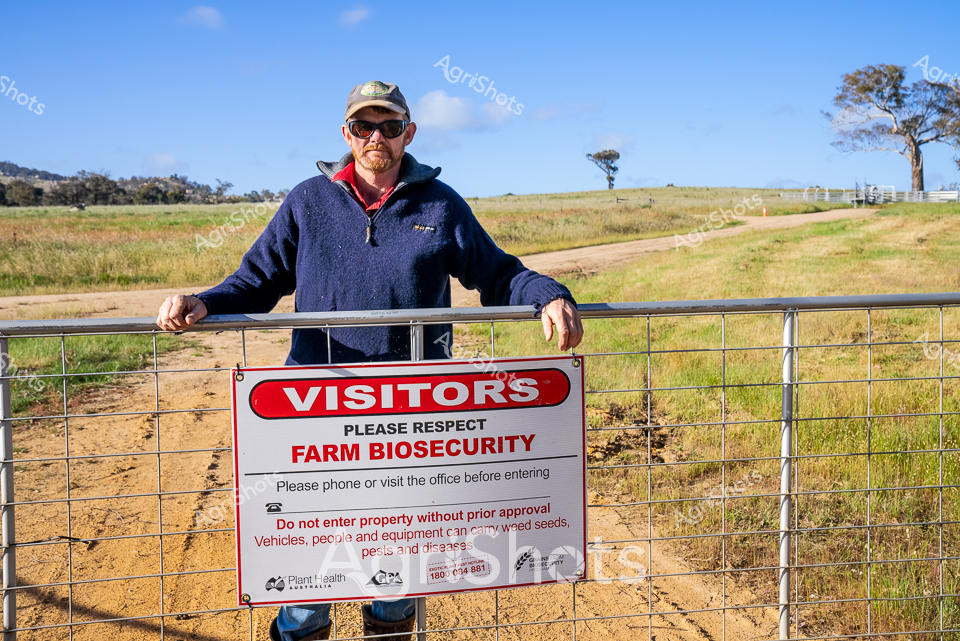
Rural Biosecurity Guardian: A seasoned farmer stands resolute at the entry gate of the property, embodying the critical farm safety protocols of modern Australian agriculture. Dressed in a navy blue fleece and protective cap, he anchors himself against a metal gate adorned with a bold red and white biosecurity warning sign. The expansive paddock behind him stretches toward distant tree-lined horizons, typical of the New South Wales rural landscape - a mix of golden grasses and open grasslands under a clear azure sky. The biosecurity sign emphatically communicates strict entry requirements: visitors must contact the office before entering, with clear warnings about vehicle, equipment, and personnel restrictions to prevent potential contamination or disease spread. His stance - grounded, watchful, protective - reflects the agricultural sector's increasing focus on biosecurity as a critical defense for livestock and crop health. This image captures the intersection of traditional farming wisdom and contemporary agricultural risk management, highlighting the farmer's role as a careful steward of both land and livelihood.
 Image
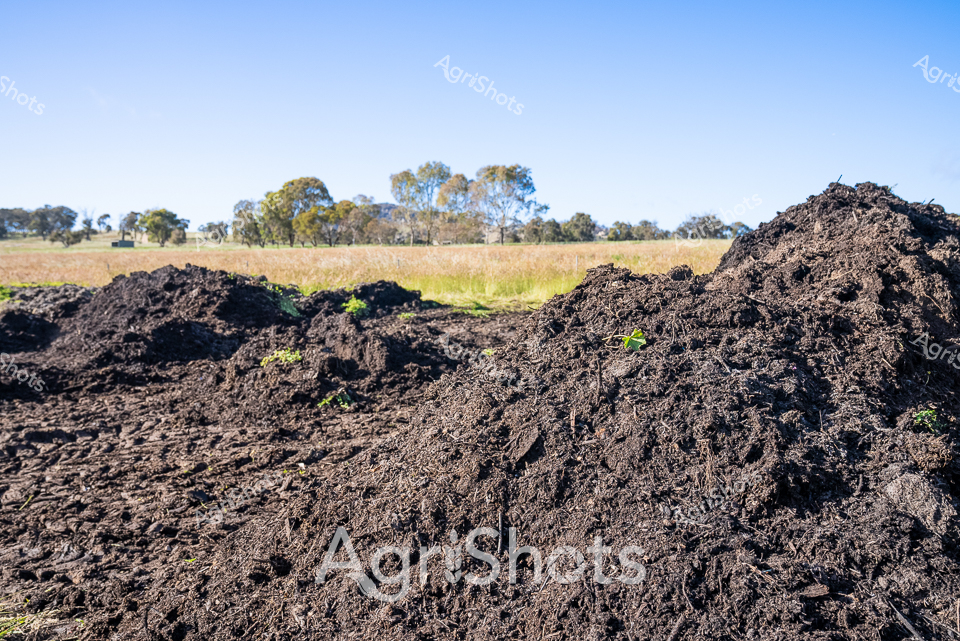
Dark, rich compost heaps dominate the foreground, their deep charcoal-brown surfaces revealing complex textures and occasional hints of bright green emerging seedlings. Rolling golden pastureland stretches behind, punctuated by scattered eucalyptus trees under a clear azure sky - quintessential Victorian agricultural landscape. These substantial organic matter mounds represent a critical regenerative farming technique, transforming green waste and agricultural byproducts into nutrient-dense soil amendments. The carefully constructed compost piles demonstrate sophisticated waste reduction and recycling practices, with meticulously layered organic materials slowly decomposing to create vital fertiliser for future crops. Sunlight illuminates the scene, casting subtle shadows across the undulating heaps and highlighting the rich biological processes at work. This image captures the essence of sustainable agricultural practices, where waste becomes a valuable resource and ecological cycles are carefully managed to support ongoing land productivity.
 Image
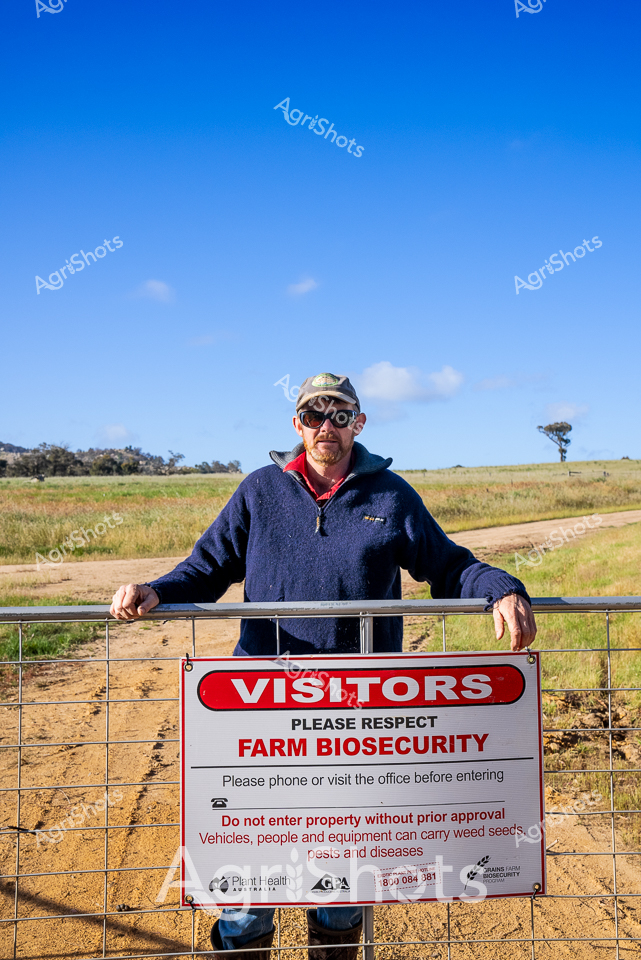
A weathered farm manager stands resolute at the entrance to his rural property, embodying the critical importance of biosecurity in modern agricultural practice. Dressed in a navy fleece and a well-worn cap, he grips the metal gate adorned with a prominent red and white "VISITORS" warning sign, which details strict protocols for farm entry. The landscape behind him stretches across a golden-brown paddock under a brilliant azure sky, with a distant lone tree punctuating the horizon - a quintessential Australian agricultural scene. His protective stance and the explicit signage communicate the serious responsibilities of modern farming: preventing the spread of weeds, pests, and diseases that could devastate agricultural operations. The crisp, clear environment and the farmer's determined expression highlight the intersection of tradition and contemporary agricultural management, where careful biosecurity measures are as crucial as the land itself. This image captures the vigilance and professionalism required to maintain the health and productivity of rural enterprises in challenging environmental conditions.
 Image
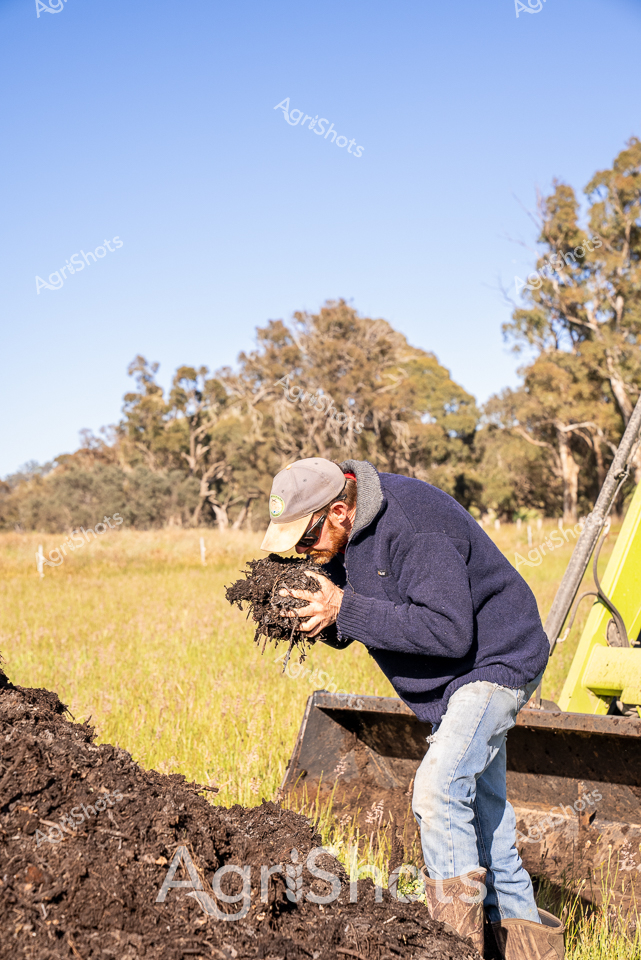
Nestled in a golden grassland under the expansive Victorian sky, an agricultural worker cradles a handful of rich, dark compost with an intimate, investigative gesture. Wearing a navy blue sweater and flat cap, the individual bends carefully over a mound of organic matter, examining the complex texture and quality of the decomposed material. The surrounding landscape speaks of regenerative farming practices - mature eucalyptus trees frame a distant treeline, while the vibrant yellow agricultural equipment suggests modern sustainable agricultural techniques. This moment captures the nuanced relationship between farmer and soil, highlighting the critical work of composting and organic waste recycling in contemporary agricultural systems. The scene radiates a sense of careful stewardship, with the worker's focused posture demonstrating a profound connection to the land and its natural cycles of renewal and growth. Every handful of compost represents potential - a transformative medium that can restore soil health, sequester carbon, and support more resilient farming ecosystems.
 Image
Black Berkshire pigs graze across a golden, late-summer pasture in Victoria's rolling Heathcote region, with rugged hills rising softly in the background. The mature sows and young piglets roam freely near a weathered metal livestock shelter, representing a progressive approach to regenerative farming practices. Crisp morning light bathes the landscape, highlighting the rich earthen tones of dry grasslands and the deep charcoal-black coats of the heritage breed pigs. In the foreground, a farm worker observes the herd, their protective stance suggesting careful animal husbandry and attentive management of this sustainable agricultural enterprise. The scene captures the essence of small-scale large-scale farming, where animal welfare and environmental sensitivity converge in the picturesque Victorian countryside. Each pig moves with deliberate purpose, foraging among the sun-bleached grasses, embodying the natural rhythms of agricultural life in this serene pastoral setting.
 Image
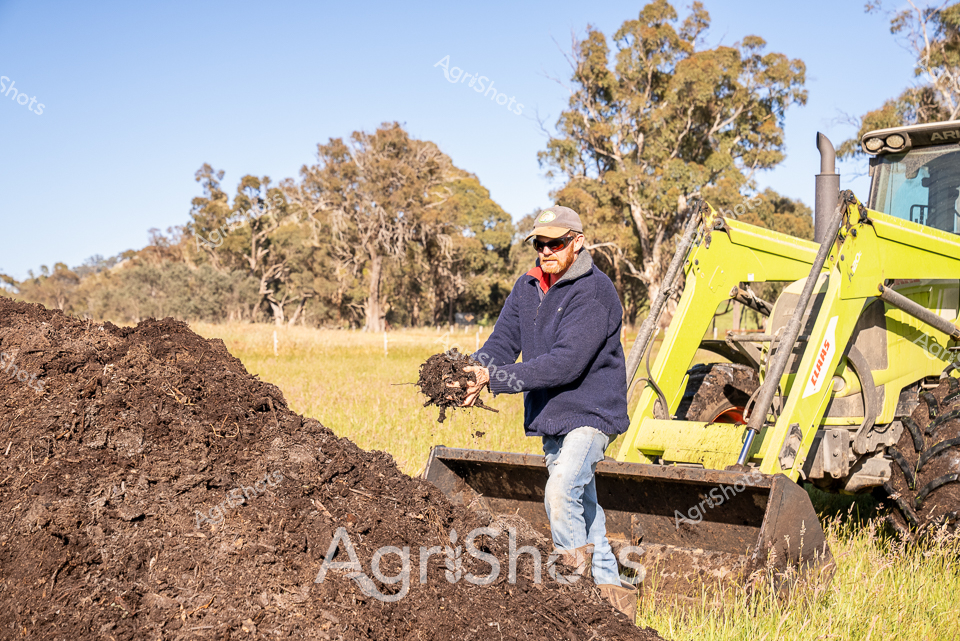
Perched on a bright yellow tractor loader, a seasoned farmer examines a handful of rich, dark compost in the golden light of a Victorian morning. The expansive paddock stretches out around him, dotted with mature eucalyptus trees casting dappled shadows across the grassland. Wearing a navy fleece, cap, and sunglasses, the farmer appears focused as he evaluates the organic matter - a critical component of regenerative agricultural practices. The massive pile of composting material represents a sustainable approach to soil management, transforming green waste and organic materials into nutrient-rich fertilizer that will rejuvenate the agricultural landscape. His Claas tractor, a vibrant lime-green beacon against the earthy browns and muted greens of the rural setting, stands ready to continue spreading and processing the compost. This scene captures the essence of modern Australian farming - a careful balance of technological innovation, environmental stewardship, and hands-on expertise that defines contemporary agricultural sustainability.
 Image
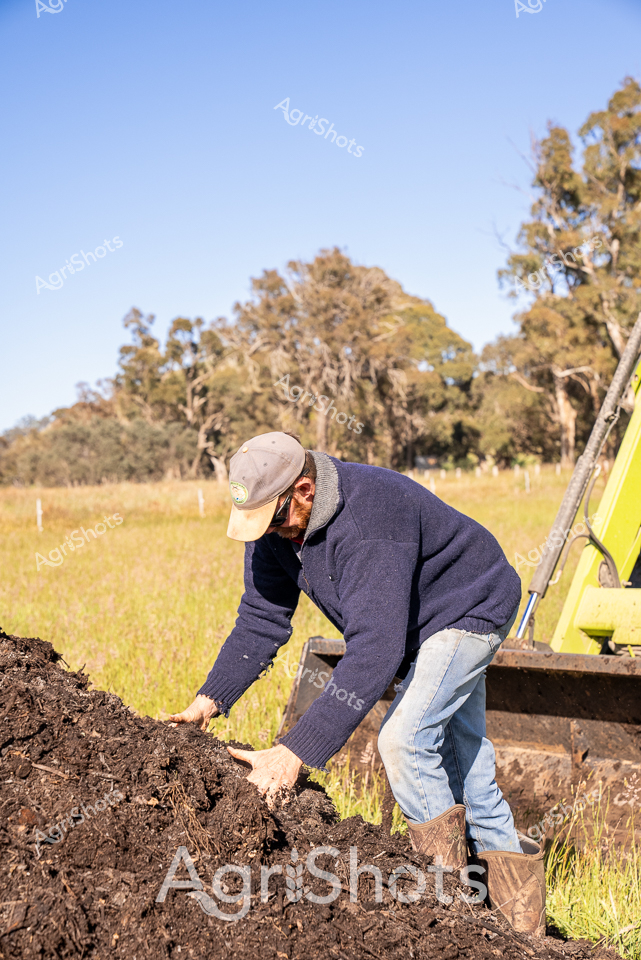
Bathed in golden morning light, a farmer tends to a rich, dark compost heap on the edge of a grassy paddock in rural Victoria. Wearing a navy blue knitted sweater, faded denim jeans, and sturdy work boots, the individual carefully manipulates the organic matter with weathered hands, their cap casting a shadow over focused movements. The surrounding landscape reveals a classic Australian agricultural setting - eucalyptus trees framing the background, their muted green and brown tones contrasting against a crisp blue sky. This scene captures the essence of regenerative farming practices, where green waste and organic materials are transformed into nutrient-rich soil amendments. A bright yellow piece of agricultural equipment - likely a tractor or implement - sits nearby, suggesting the technical infrastructure supporting sustainable land management. The image embodies the physical labor, environmental consciousness, and quiet dedication inherent in contemporary Australian agricultural work, highlighting the critical role of soil health in sustainable farming ecosystems.
 Image
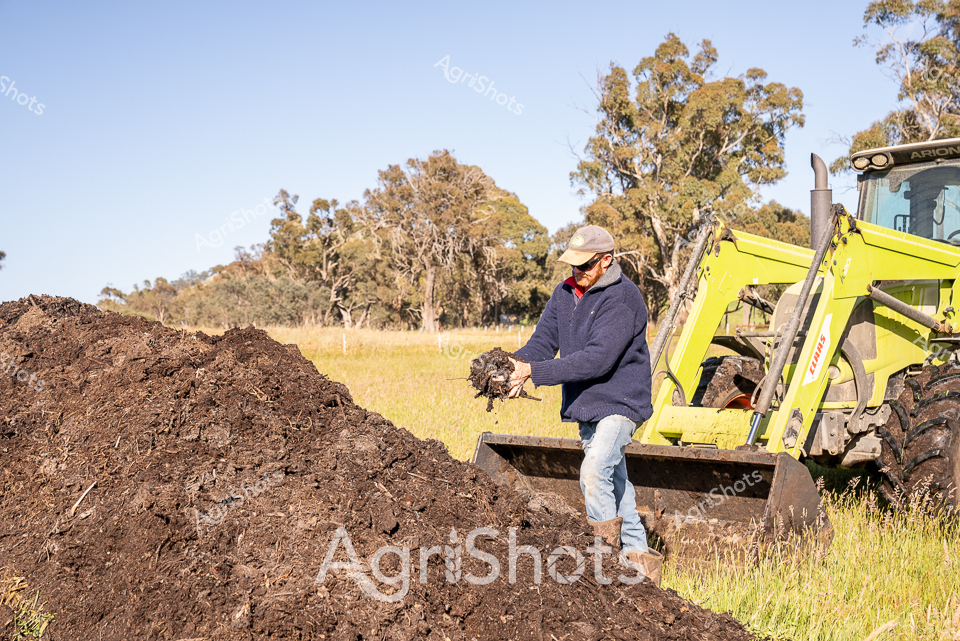
Regenerative Agriculture in Action: Composting on a Victorian Farm A farmer evaluates rich, dark organic compost from a yellow front-end loader, carefully examining the nutrient-dense soil amendment under the golden light of mid-morning. Dressed in a navy fleece, cap, and sturdy work jeans, the agricultural worker stands amidst a landscape of mature eucalyptus trees and grassland, embodying the principles of sustainable farming practices. The substantial compost heap - a deep chocolate brown with varied textures of decomposed green waste and organic matter - represents a critical step in regenerative agricultural techniques that restore soil health and reduce waste. The bright yellow Claas tractor's loader provides mechanical support, highlighting the intersection of technology and ecological farming methods. Soft winter sunlight filters through the surrounding woodland, casting gentle shadows across the grassy paddock and illuminating the nuanced textures of soil and vegetation. This image captures the meticulous care and scientific approach of modern Australian agriculture, where waste recycling, soil regeneration, and environmental stewardship are paramount to sustainable food production.
 Image
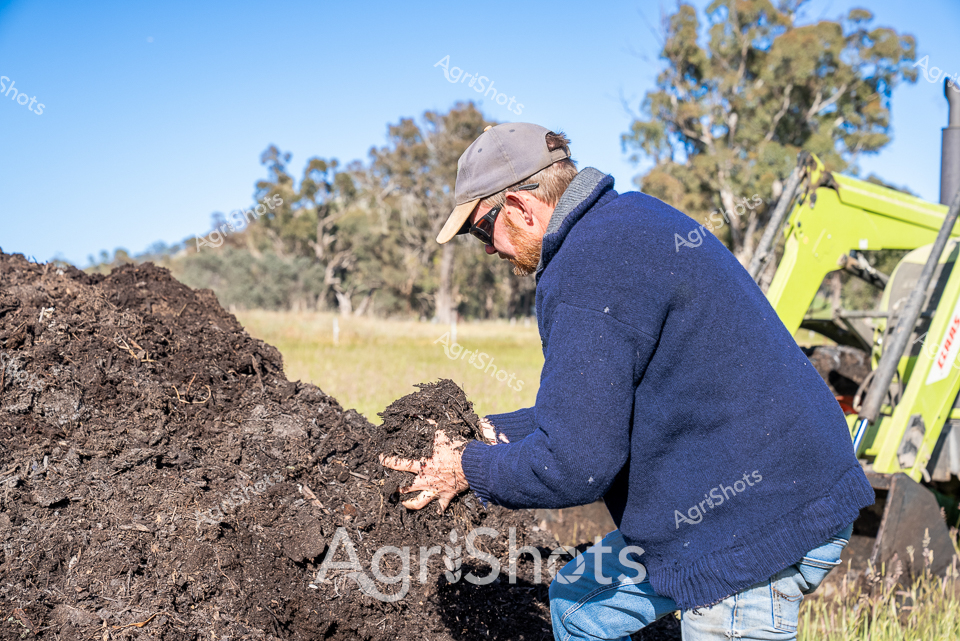
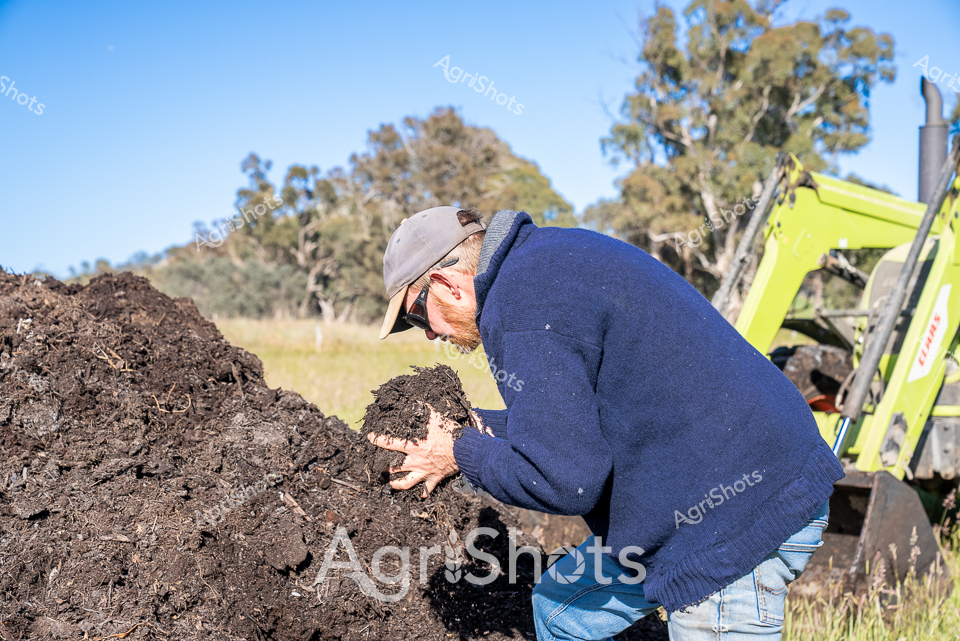
A seasoned agricultural worker carefully inspects a towering mound of rich, dark compost under the warm Australian sun. Wearing a navy blue knit sweater and a light cap, he cradles a handful of decomposed organic matter, studying its texture and composition with practiced expertise. In the background, a bright lime-green tractor stands ready, suggesting an active agricultural operation amid a landscape of scattered eucalyptus trees and open grassland. The compost heap - a critical component of regenerative farming practices - represents a sustainable approach to waste reduction and soil health, transforming green waste and potentially manure into nutrient-rich fertilizer. His weathered hands and focused posture reveal decades of agricultural knowledge, demonstrating the intricate relationship between farmers and the land in Victoria's agricultural heartland. The scene captures the essence of modern sustainable farming: recycling, regeneration, and careful stewardship of natural resources.
 Image
A seasoned farmer in a navy blue jumper and grey cap carefully examines dark, rich compost material on a rural Victorian property. His weathered hands gently cradle a handful of nutrient-dense organic matter, revealing the intricate textures of decomposed green waste and agricultural residue. A vibrant lime-green tractor sits in the background, hinting at the modern machinery supporting regenerative farming practices. The landscape unfolds with eucalyptus trees scattered across a gently undulating paddock, bathed in soft natural light that suggests early morning or late afternoon. This moment captures the essence of sustainable agricultural techniques, where waste becomes a valuable resource for soil health and future crop productivity. The scene embodies a holistic approach to farming - recycling, rebuilding soil biodiversity, and maintaining a deep connection between the farmer and the land.
 Image
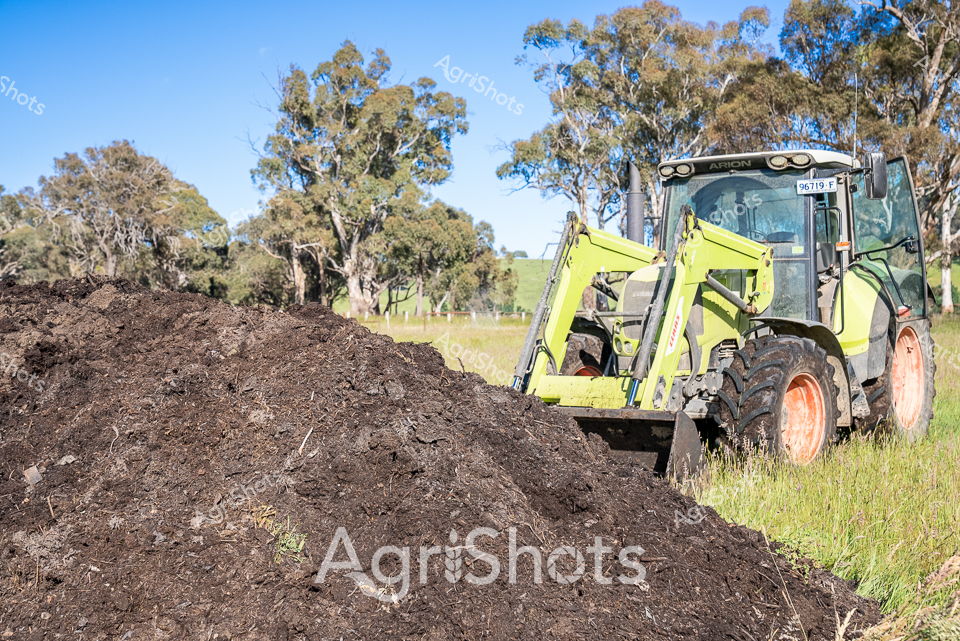
Rich, dark compost rises in a towering mound against the golden-green pastoral landscape of rural Victoria. A vibrant lime-green Claas tractor with powerful front-mounted loader stands ready to manage organic waste recycling, representing cutting-edge regenerative agricultural practices. Eucalyptus trees frame the background, their silvery-green foliage contrasting with the deep brown soil heap - a testament to sustainable farming's commitment to transforming green and agricultural waste into nutrient-rich fertiliser. The robust tractor, gleaming under clear blue skies, symbolizes modern Australian agricultural innovation. Its precise positioning suggests careful management of composting processes, where organic materials are systematically transformed into valuable soil amendments. The textural complexity of the compost pile - with its variegated dark browns and rich black tones - speaks to the intricate biological processes of decomposition and renewal. This scene captures the essence of contemporary sustainable agriculture: turning waste into resource, embracing circular economic principles, and working in harmony with natural ecological systems. The expansive paddock and scattered eucalypts provide a quintessentially Australian backdrop to this demonstration of agricultural environmental stewardship.
 Image
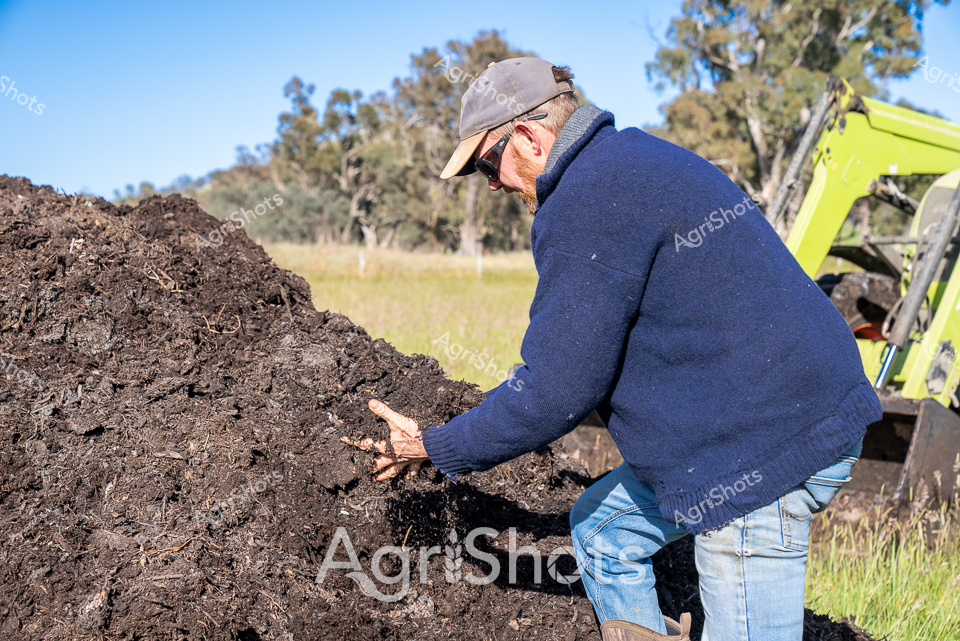
Weathered hands sift through rich, dark compost on a crisp Victorian morning, revealing the intricate work of regenerative agricultural practices. Wearing a navy blue wool sweater and a worn cap, an experienced farmer examines the quality of organic matter, showcasing the meticulous process of soil regeneration. A bright green tractor - likely a Claas model - stands nearby, highlighting the intersection of modern agricultural technology and sustainable farming methods. The surrounding landscape of scattered eucalyptus trees and open grasslands speaks to the expansive agricultural regions of Victoria, where innovative waste recycling and soil health techniques are transforming traditional farming approaches. The textured, dark compost pile demonstrates the careful balance of green waste, manure, and organic materials that contribute to soil biodiversity and reduced agricultural waste. This image captures the thoughtful, hands-on expertise of farmers committed to sustainable land management and ecological restoration.
 Image
Weathered hands, clad in a deep navy blue sweater, cradle a handful of white mineral supplement - a critical nutritional resource for livestock management in rural Victoria. The rough, sun-lined palm carefully holds the crystalline agricultural supplement, likely a salt or mineral blend designed to support cattle health and supplement pasture nutrition. Soft focus suggests an outdoor agricultural setting, with hints of green grass and a muted blue background indicating a typical Victorian farmland environment. These carefully measured minerals represent precision agriculture - a testament to contemporary farmers' scientific approach to animal husbandry and nutrition. The tactile connection between the experienced hands and the mineral supplement speaks to generations of agricultural knowledge, where every handful represents careful stewardship of livestock and land. The crisp white minerals against the weathered skin and navy fabric create a powerful visual narrative of agricultural expertise and attentive farm management.
 Image
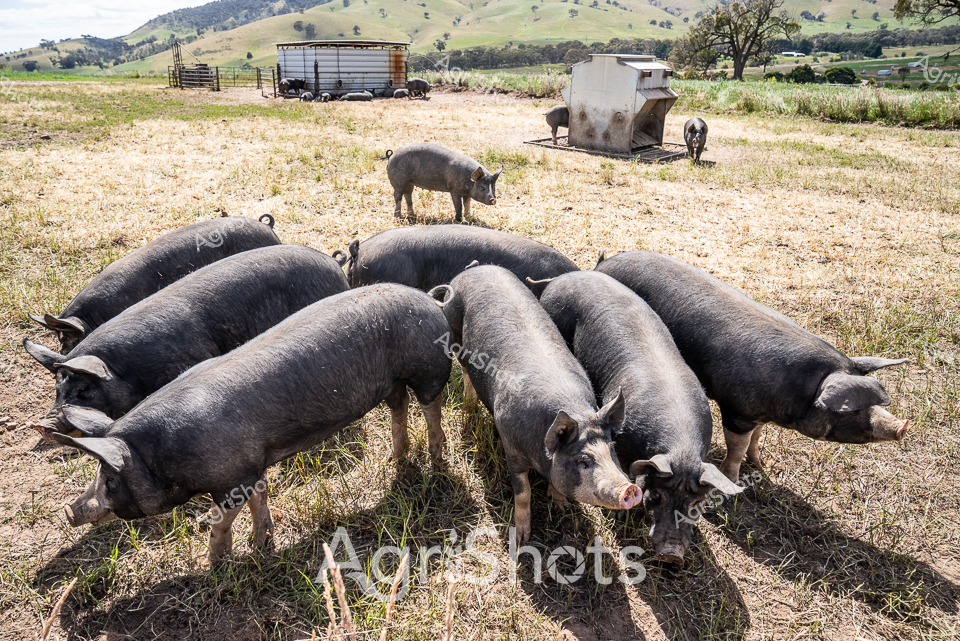
Black Yorkshire and Duroc crossbred pigs cluster across a sun-drenched, late summer paddock near Heathcote, Victoria. The lean, muscular swine display the robust characteristics of intensive yet regenerative farming practices, their charcoal-grey coats contrasting against the dry golden grasslands and distant rolling hills. Scattered across the sparse pasture, the herd demonstrates calm and social behavior, with several individuals grazing near modest white farm structures and metal feeders. One smaller pig stands slightly apart, suggesting varying ages and stages of development within this carefully managed livestock group. The harsh Australian rural landscape provides a stark backdrop - sparse vegetation, weathered fence lines, and a water tank hint at the challenging agricultural environment these animals inhabit. Soft mountain ranges in the background frame the scene, embodying the resilient spirit of Victorian agricultural production.
 Image
Cattle bask under a patchy blue sky as agricultural workers manage livestock in a sophisticated National Stockyard Systems cattle handling facility. A worker in a vibrant red shirt and another in a light blue top collaborate closely around the metallic silver cattle crush, positioning the robust herd for weighing and assessment. The precision-engineered steel gates and panels of the loading area provide a stark industrial contrast to the surrounding grassland, highlighting modern agricultural technology's role in livestock management. Muscular beef cattle - a mix of rich brown and black coats - stand patiently within the sturdy galvanized steel yards, representing the careful animal husbandry practices of Victoria's agricultural sector. The sophisticated weighing infrastructure allows for meticulous data collection, critical for tracking animal health, growth rates, and market readiness. This scene epitomizes the intersection of technological innovation and traditional farming practices, showcasing the professional, data-driven approach of contemporary Australian cattle producers.
 Image
Muscled Murray Grey and Hereford cattle cluster within the gleaming steel framework of a National Stock Yard Systems cattle crush near Heathcote, Victoria. Pale cream and light brown bovines stand patiently, yellow ear tags marking each individual, as farm workers in vibrant red and blue jackets prepare for livestock weighing and processing. The steel loading yards reflect the harsh Australian agricultural landscape - dusty ground, scattered grey-green trees on the horizon, and a pale winter sky casting soft light across the paddock. Precision agricultural equipment surrounds the cattle, with sophisticated metal gates and weighing systems designed to handle livestock efficiently and humanely. These robust cattle represent the pinnacle of Australian beef breeding, their calm demeanor and muscular frames testament to generations of careful genetic selection and expert pastoral management. The scene captures a moment of controlled agricultural activity, where modern technology and traditional livestock handling merge seamlessly in the working rural landscape.
 Image
Gleaming galvanized steel National Stock Yard Systems equipment frames the scene, with a sophisticated cattle crush standing ready for animal processing and weighing. A person in a vibrant red jacket and another in a blue top move purposefully around the animal, representing the skilled workforce managing rural agricultural operations. The yard's earthen ground, sparse grass, and expansive clouded sky of Victoria's pastoral landscape create a sense of wide-open agricultural potential. Advanced livestock handling infrastructure demonstrates the technological sophistication of contemporary cattle management, where animal welfare and operational efficiency converge. The soft light and open environment capture a moment of controlled agricultural practice, where human expertise and livestock intersect with calculated, professional precision.
 Image
Bathed in soft morning light, a pristine white Murray Grey cattle stands stoically in the steel-grey livestock yards, embodying the quiet precision of modern Australian agricultural practice. A woman in a vibrant blue jacket works systematically in the background, operating electronic weighing equipment near a Gallagher digital scale, representing the technological sophistication of contemporary farm management. The meticulously designed National Stock Yard Systems' metal gates and pens create a structured environment that speaks to efficient livestock handling, with carefully maintained gravel and grass surfaces providing a clean, functional workspace. The cow's calm demeanor and the methodical movements of the agricultural worker capture the symbiotic relationship between human and animal in rural production systems, highlighting the skill and care inherent in livestock management. The soft overcast sky and neat pastoral setting underscore the professional and controlled nature of contemporary cattle farming in Victoria, where precision, animal welfare, and data-driven decision-making are paramount. This image epitomizes the modern Australian agricultural sector - technically advanced, environmentally aware, and deeply respectful of its livestock.
 Image
Mustering day unfolds in the expansive Victorian cattle yards, where a sturdy Murray Grey stands sentinel as agricultural workers prepare for livestock processing. The metallic gleam of a National Stock Yard Systems cattle crush dominates the foreground, its precision engineering designed for safe and efficient animal handling. A worker in a vibrant red jacket and another in a blue top navigate the complex gate system, their movements deliberate and practiced against a backdrop of cloudy skies and sparse grassland. The bovine subject, a robust Murray Grey with a rich tan coat, watches intently - seemingly aware of the impending weighing and health check procedures. Mud-packed earth and scattered grass patches speak to the rugged agricultural landscape, while the sophisticated steel infrastructure represents the modern approach to livestock management. This scene captures the intersection of animal husbandry, technological innovation, and the enduring skill of Australian farm workers, embodying the precision and care fundamental to agricultural operations.
 Image
Robust Murray Grey cattle gather in a meticulously engineered livestock yard, embodying the precision of modern Australian agricultural infrastructure. Set against a soft, clouded Victorian sky, the scene captures a critical moment of stock management at a rural property. A cattle crush from National Stock Yard Systems dominates the foreground, its galvanized steel framework designed for safe and efficient animal handling. A rancher in a vibrant red jacket and another in a bright blue top work methodically, positioning the animals for weighing and assessment. The lead cattle, a muscular tan-colored Murray Grey, stands prominently in the foreground, its sleek coat and powerful build a testament to careful breeding and husbandry. The surrounding yard - a grid of sturdy metal panels and gates - represents the intersection of animal welfare, technological innovation, and agricultural expertise that defines contemporary Australian cattle farming.