About this image
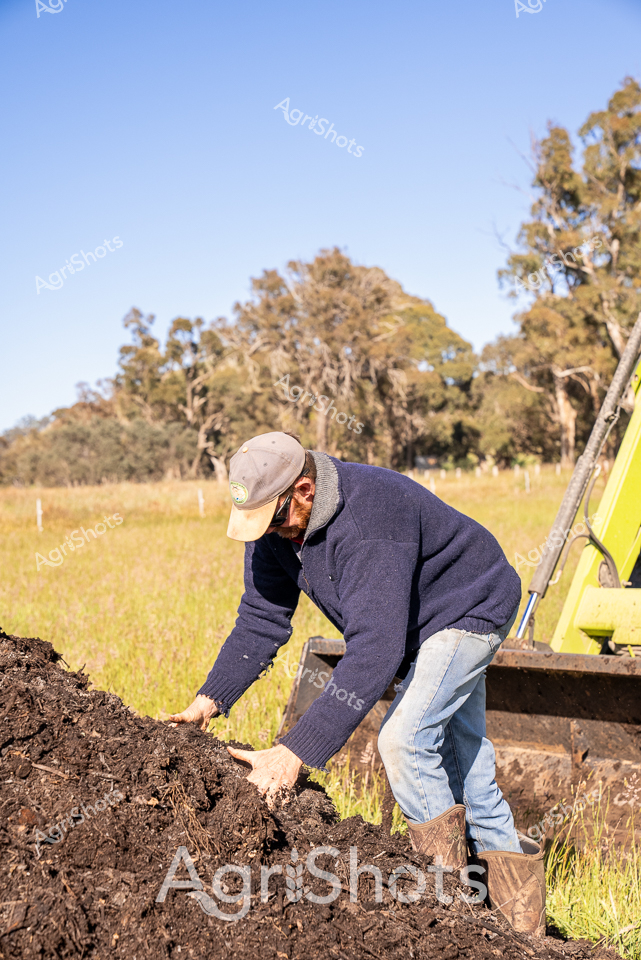
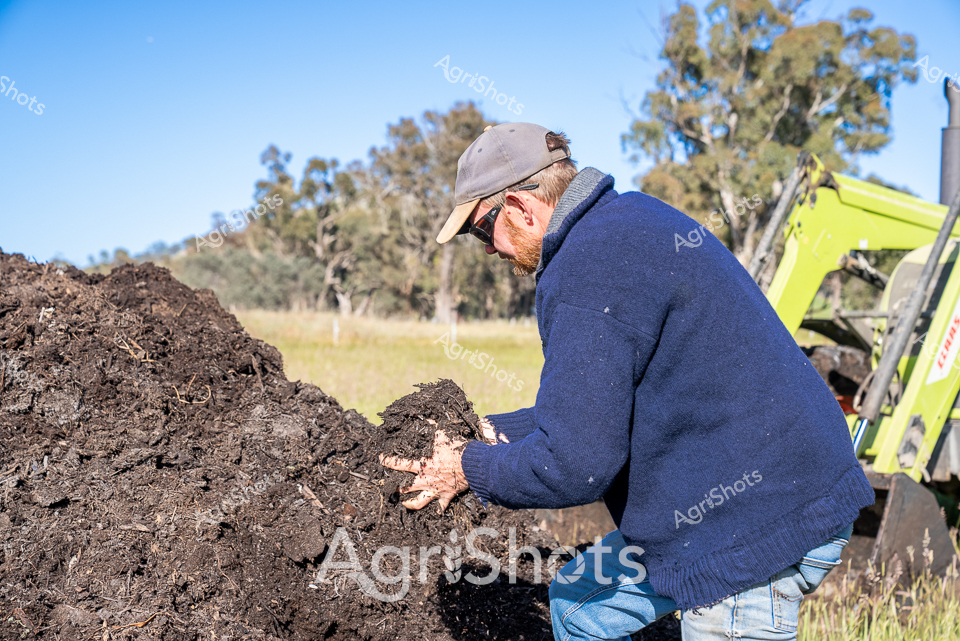
Bathed in golden morning light, a farmer tends to a rich, dark compost heap on the edge of a grassy paddock in rural Victoria. Wearing a navy blue knitted sweater, faded denim jeans, and sturdy work boots, the individual carefully manipulates the organic matter with weathered hands, their cap casting a shadow over focused movements. The surrounding landscape reveals a classic Australian agricultural setting - eucalyptus trees framing the background, their muted green and brown tones contrasting against a crisp blue sky. This scene captures the essence of regenerative farming practices, where green waste and organic materials are transformed into nutrient-rich soil amendments. A bright yellow piece of agricultural equipment - likely a tractor or implement - sits nearby, suggesting the technical infrastructure supporting sustainable land management. The image embodies the physical labor, environmental consciousness, and quiet dedication inherent in contemporary Australian agricultural work, highlighting the critical role of soil health in sustainable farming ecosystems.
Similar media
 Image
Image
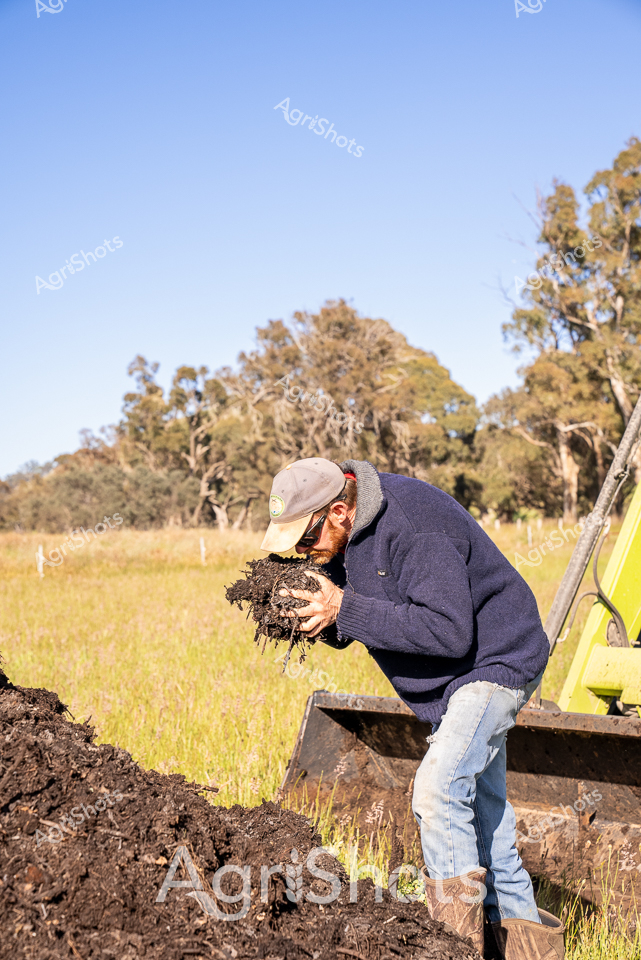
Nestled in a golden grassland under the expansive Victorian sky, an agricultural worker cradles a handful of rich, dark compost with an intimate, investigative gesture. Wearing a navy blue sweater and flat cap, the individual bends carefully over a mound of organic matter, examining the complex texture and quality of the decomposed material. The surrounding landscape speaks of regenerative farming practices - mature eucalyptus trees frame a distant treeline, while the vibrant yellow agricultural equipment suggests modern sustainable agricultural techniques. This moment captures the nuanced relationship between farmer and soil, highlighting the critical work of composting and organic waste recycling in contemporary agricultural systems. The scene radiates a sense of careful stewardship, with the worker's focused posture demonstrating a profound connection to the land and its natural cycles of renewal and growth. Every handful of compost represents potential - a transformative medium that can restore soil health, sequester carbon, and support more resilient farming ecosystems.
 Image
Image
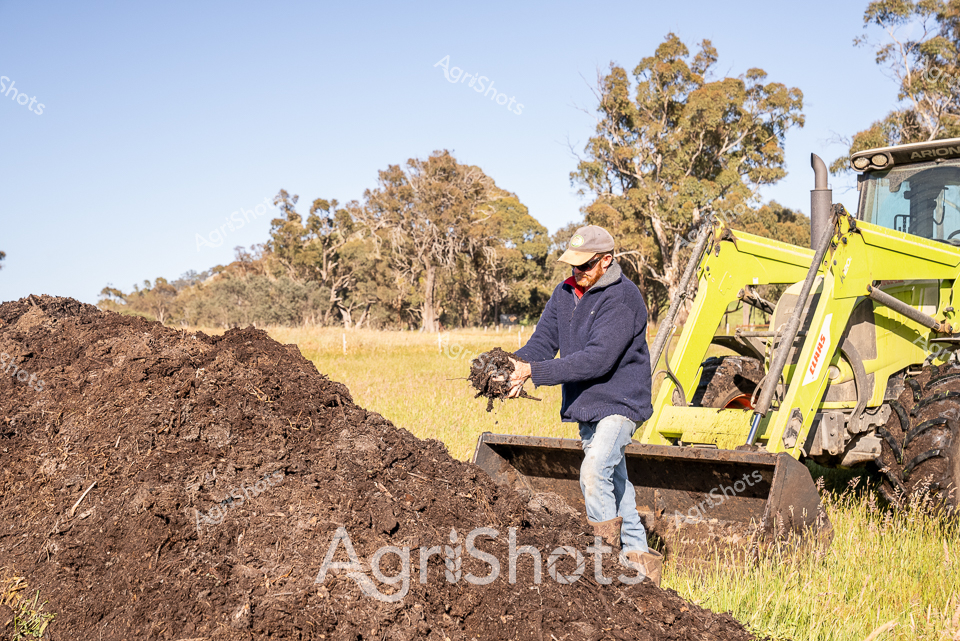
Regenerative Agriculture in Action: Composting on a Victorian Farm A farmer evaluates rich, dark organic compost from a yellow front-end loader, carefully examining the nutrient-dense soil amendment under the golden light of mid-morning. Dressed in a navy fleece, cap, and sturdy work jeans, the agricultural worker stands amidst a landscape of mature eucalyptus trees and grassland, embodying the principles of sustainable farming practices. The substantial compost heap - a deep chocolate brown with varied textures of decomposed green waste and organic matter - represents a critical step in regenerative agricultural techniques that restore soil health and reduce waste. The bright yellow Claas tractor's loader provides mechanical support, highlighting the intersection of technology and ecological farming methods. Soft winter sunlight filters through the surrounding woodland, casting gentle shadows across the grassy paddock and illuminating the nuanced textures of soil and vegetation. This image captures the meticulous care and scientific approach of modern Australian agriculture, where waste recycling, soil regeneration, and environmental stewardship are paramount to sustainable food production.
 Image
Image
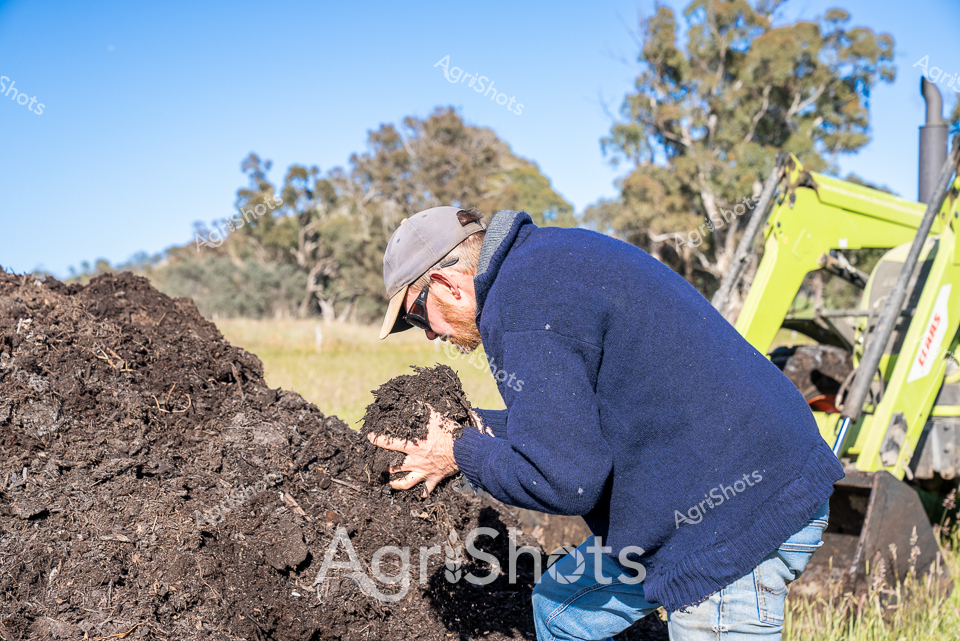
A seasoned farmer in a navy blue jumper and grey cap carefully examines dark, rich compost material on a rural Victorian property. His weathered hands gently cradle a handful of nutrient-dense organic matter, revealing the intricate textures of decomposed green waste and agricultural residue. A vibrant lime-green tractor sits in the background, hinting at the modern machinery supporting regenerative farming practices. The landscape unfolds with eucalyptus trees scattered across a gently undulating paddock, bathed in soft natural light that suggests early morning or late afternoon. This moment captures the essence of sustainable agricultural techniques, where waste becomes a valuable resource for soil health and future crop productivity. The scene embodies a holistic approach to farming - recycling, rebuilding soil biodiversity, and maintaining a deep connection between the farmer and the land.
 Image
Image
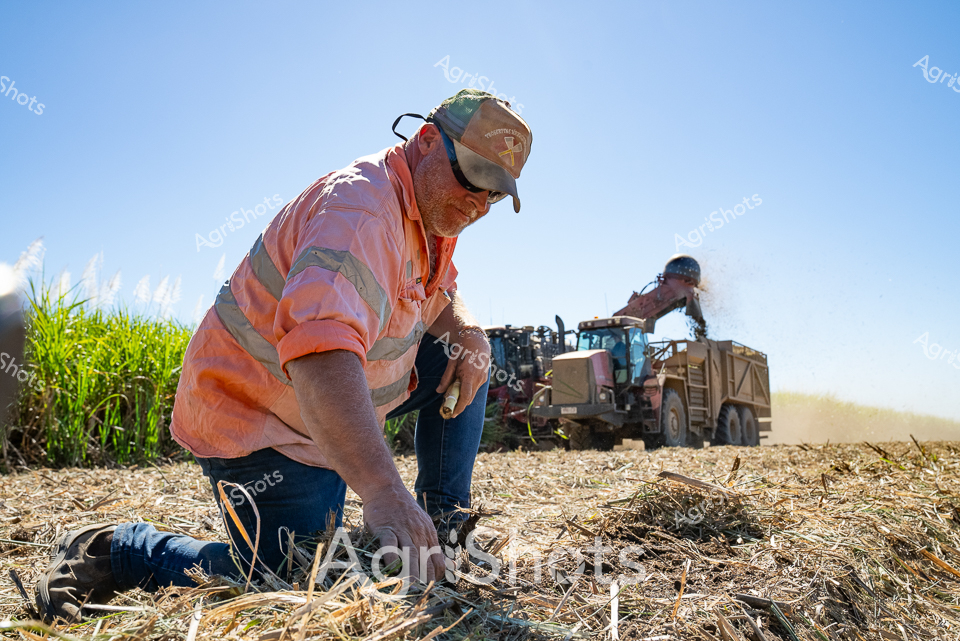
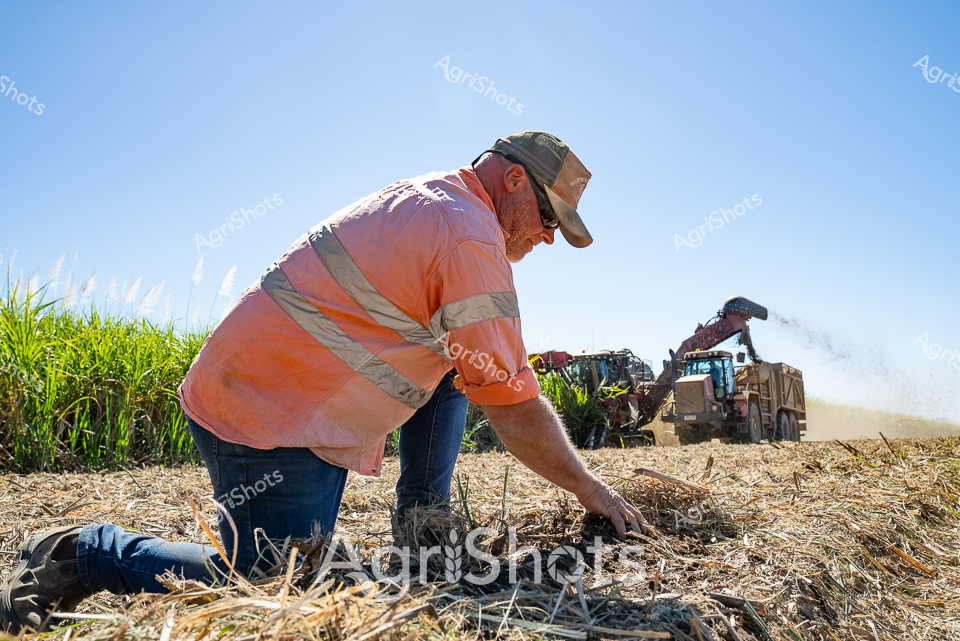
Burnished winter sunlight bathes a sugarcane harvest in Queensland's Whitsundays region, capturing the raw intensity of agricultural labor. A worker in a vivid high-visibility orange shirt and protective cap crouches amidst the harvested cane stubble, intently examining the ground with the practiced eye of an experienced farm worker. Behind him, a massive cane harvester rumbles through the field, its mechanical arm rhythmically sweeping cut sugarcane into a trailing transport bin, creating a billowing dust cloud that speaks to the precision of modern agricultural machinery. His weathered hands and posture reveal decades of fieldwork, a testament to the enduring skill and resilience of rural workers who transform landscapes and sustain communities. The scene is a symphony of industrial agriculture - muted earth tones of dried cane stalks contrasting with the bright safety gear, machinery moving with purposeful power against a crystalline blue sky. Every element communicates the hard, strategic work of transforming a living crop into a crucial global commodity, capturing a moment of focused human intervention in the natural cycle of cultivation.
 Image
Image
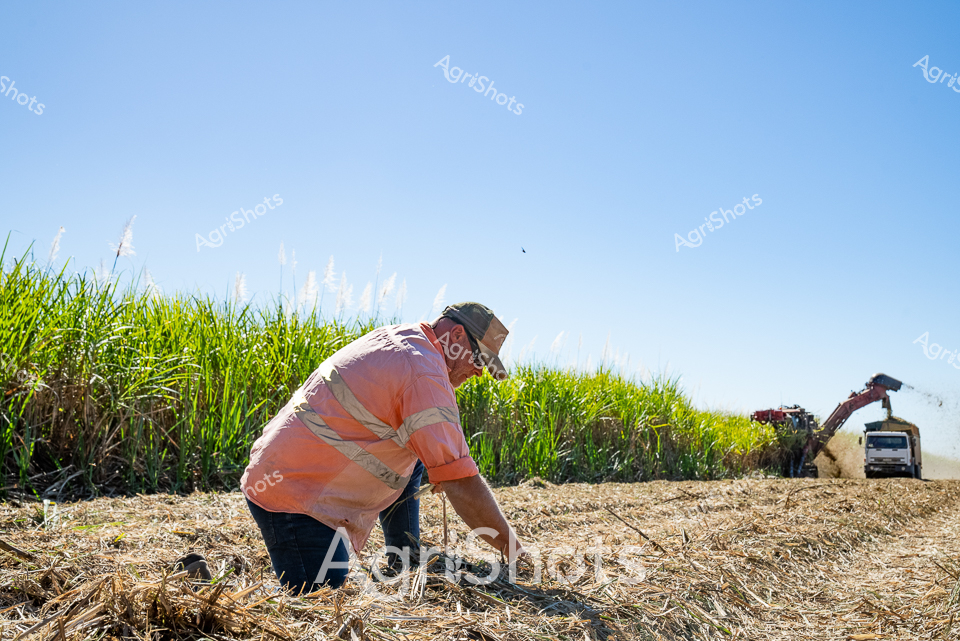
Burnished sunlight bathes a sprawling sugarcane field during harvest season, capturing the quintessential rhythms of Queensland agriculture. A worker in a high-visibility salmon-pink safety shirt bends low, inspecting the freshly cut cane stubble, while a mechanical harvester in the background methodically processes the bright green sugarcane stalks. The landscape stretches beneath a crystalline azure sky, with wispy grass plumes framing the edges of the cultivated field. Dust rises around the harvesting equipment, signaling the intense mechanical choreography of modern agricultural production. The worker's posture - bent, attentive, focused - speaks to the precision and care embedded in rural Australian farming practices. This scene encapsulates the Whitsundays region's agricultural heritage: a harmony of human skill, mechanical innovation, and the fertile subtropical landscape, captured in the crisp, clear light of a winter morning.
 Image
Image
A seasoned agricultural worker carefully inspects a towering mound of rich, dark compost under the warm Australian sun. Wearing a navy blue knit sweater and a light cap, he cradles a handful of decomposed organic matter, studying its texture and composition with practiced expertise. In the background, a bright lime-green tractor stands ready, suggesting an active agricultural operation amid a landscape of scattered eucalyptus trees and open grassland. The compost heap - a critical component of regenerative farming practices - represents a sustainable approach to waste reduction and soil health, transforming green waste and potentially manure into nutrient-rich fertilizer. His weathered hands and focused posture reveal decades of agricultural knowledge, demonstrating the intricate relationship between farmers and the land in Victoria's agricultural heartland. The scene captures the essence of modern sustainable farming: recycling, regeneration, and careful stewardship of natural resources.
 Image
Image
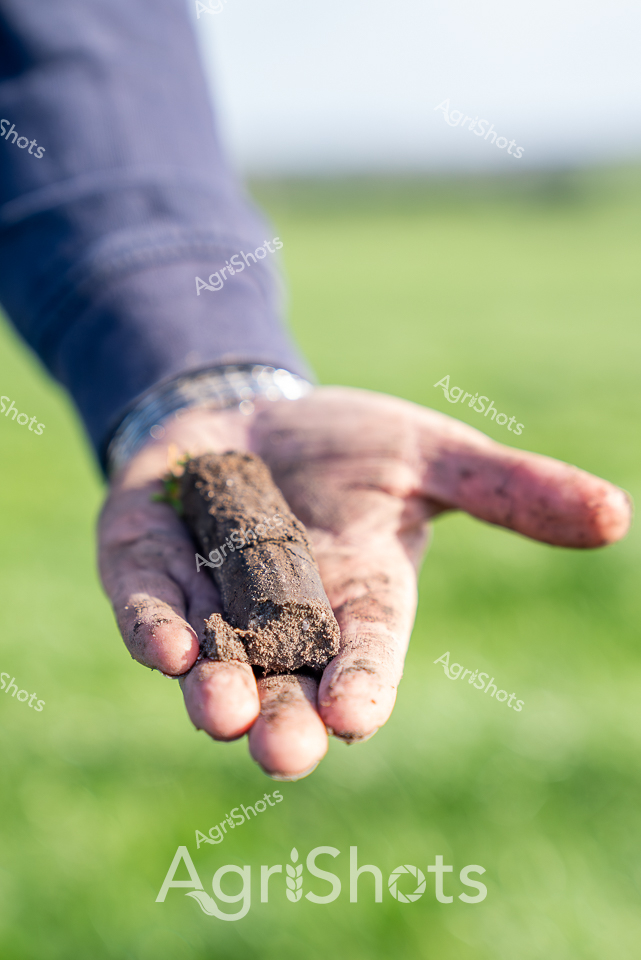
Weathered, soil-stained fingers cradle a rich clod of earth, revealing the intimate connection between farmer and land. The hand, emerging from a deep blue sleeve, holds a compacted core of soil with a reverence that speaks to generations of agricultural wisdom. Soft green pastures blur in the background, suggesting a cool winter morning where ground conditions are carefully assessed for optimal farming potential. This tactile moment captures the essence of agronomic investigation - feeling the texture, density, and moisture content of the soil that will nurture future crops or sustain grazing livestock. The earthy brown fragment displays intricate crumbly textures and subtle root fragments, telling a story of biological complexity and agricultural stewardship. Each grain and subtle variation represents crucial data for understanding land health, crop potential, and the delicate ecosystem beneath our feet.
 Image
Image
Sugarcane harvest pulses with industrial precision across a sun-drenched Queensland winter landscape. A worker in a high-visibility orange shirt with reflective safety stripes crouches intently among dry cane stubble, examining the ground with focused expertise. Behind him, massive agricultural machinery - a cane harvester and tractor - move methodically through the verdant green sugarcane field, generating plumes of dust that drift against a crystalline blue sky. His protective cap and sunglasses shield him from the intense regional sunlight, while his muscular frame demonstrates the physical demands of agricultural work in Australia's tropical north. The scene captures the raw intersection of human skill and mechanical power, where generations of agricultural knowledge merge with modern farming technology. Every element speaks to the meticulous process of transforming sprawling sugarcane fields into a critical national commodity, revealing the quiet concentration and robust infrastructure that drives Queensland's agricultural economy.