Browse the collection
 Image
Brahman cattle crowd the dusty cattle yards under a crisp blue Kimberley sky, their rich copper-brown coats gleaming in the morning sunlight. A network of sturdy metal yard panels contains the herd, creating a complex maze of pens where the muscular cattle bunch tightly, their distinctive humped shoulders and loose skin typical of the heat-tolerant Brahman breed. A stockworker in light clothing stands among the animals, carefully managing the mob during a routine mustering operation on a vast Western Australian station. The surrounding landscape reveals a classic Kimberley backdrop - sparse eucalyptus trees and scrubland stretching to the horizon, suggesting the challenging terrain of northern Australia's pastoral regions. Shadows are sharp and defined, indicating an early morning scene with perfect conditions for cattle work before the intense heat of the day takes hold. This image captures the essence of Australian cattle production - a delicate dance of human skill, animal management, and harsh yet beautiful agricultural landscape.
 Image
Golden light bathes the expansive cattle yards, where a dense herd of burnished bronze Brahman cattle fill the dusty holding pens. The robust, heat-adapted cattle crowd together, their distinctive humped shoulders and loose skin reflecting generations of breeding for the harsh Kimberley landscape. Wooden rail fences and metal gates create a structured network through which stockworkers in wide-brimmed hats and sturdy work attire carefully manage the livestock. Sparse trees and scrubland stretch across the background, defining the rugged Western Australian pastoral setting with its clear azure sky and sun-bleached earth. A small number of workers move strategically through the yards, their positioning calculated to guide and control the movement of the substantial herd. The scene captures the quintessential Australian cattle station experience - a testament to the skill, resilience, and agricultural heritage of the region's pastoral communities.
 Image
Brahman cattle crowd the meticulously engineered stockyards of a remote Kimberley station, their russet-brown bodies packed tightly within interconnected paddocks under the vast Western Australian sky. The expansive landscape reveals a classic pastoral scene - sparse eucalyptus woodland stretching to the horizon, punctuated by weathered grey trees and sun-bleached ground. Robust metal yards with strategic holding pens demonstrate sophisticated cattle management, allowing efficient mustering and processing of the distinctive hump-shouldered Brahman breed renowned for their heat and tick resistance. Brilliant azure skies and dappled sunlight highlight the intricate choreography of agricultural infrastructure, where generations of pastoral knowledge converge in this precisely designed livestock management system. The dense cluster of cattle suggests an active mustering operation, with the carefully constructed yards representing the intersection of traditional cattle station practices and modern agricultural engineering. This aerial perspective captures the raw beauty of Australia's northern pastoral landscape - a testament to human adaptation and livestock husbandry in one of the world's most challenging environments.
 Image
Dusty cattle yards under the golden light of late afternoon echo with the quiet concentration of rural work. A woman in a mint green shirt and wide-brimmed hat stands focused, blue clipboard in hand, carefully drafting a pen of burnished copper-red Brahman cattle. The robust steel yard panels create geometric lines that contain the herd, their muscular bodies pressed close together on the compacted earth. Western Australia's harsh pastoral landscape stretches behind the yards, sparse trees and sun-bleached ground telling stories of resilience and precision agriculture. These Brahmans, with their distinctive humps and loose skin adapted to tropical climates, represent the backbone of northern Australian cattle production - hardy genetics perfectly matched to challenging environmental conditions. Her measured movements and attentive posture speak to the skill and patience required in livestock management, capturing a moment of deliberate human-animal interaction that is quintessentially Australian agricultural work.
 Image
Brahman cattle crowd the dusty yards of a remote Western Australian cattle station in the rugged Kimberley region. Burnished copper-colored animals with distinctive humps and pendulous ears pack tightly between weathered red steel gates, while two stockworkers in a bright lime green and salmon pink shirt monitor the herd. The golden late afternoon light casts long shadows across the parched earth, highlighting the muscular frames of these heat-tolerant cattle bred for surviving in harsh tropical landscapes. Gnarled trees and scrub woodland frame the background, suggesting the unforgiving yet beautiful Australian pastoral environment. This scene captures the essence of northern Australian cattle management - skilled mustering, robust infrastructure, and livestock perfectly adapted to challenging conditions. The tight clustering of cattle and watchful stance of the workers convey the precision and constant attention required in large-scale cattle production across Western Australia's extensive pastoral stations.
 Image
Burnished golden light bathes a bustling cattle yard in the Kimberley region of Western Australia, where a dense herd of muscular Brahman cattle cluster in carefully constructed metal pen systems. The expansive landscape surrounding the yards features scattered eucalyptus trees and a vast blue sky, capturing the quintessential pastoral atmosphere of northern Western Australia. Several stockworkers move confidently among the herd, their postures relaxed yet alert, wearing practical work attire of jeans, long-sleeved shirts, and wide-brimmed hats that provide protection from the intense regional sun. The cattle - predominantly a rich tawny brown with distinctive humped shoulders typical of the Brahman breed - are tightly packed into interconnected yards, suggesting they are being prepared for mustering, sorting, or potential transportation. A large white umbrella provides shade for the workers, a practical solution in this harsh agricultural environment where temperatures can soar. The scene represents the sophisticated livestock management practices of Australian cattle stations, where generations of expertise combine with modern infrastructure to handle large herds across challenging terrain.
 Image
Brahman cattle cluster tightly in a dusty yard under the expansive West Australian landscape, their burnished copper-brown coats gleaming in the harsh midday sunlight. Wooden stock yards with curved fencing create a complex network of holding pens, surrounded by sparse eucalyptus woodland stretching to the distant horizon. A stockworker stands balanced on the yard railings, observing the herd's movement with practiced concentration, while a white umbrella provides minimal shade against the intense heat. The aerial perspective reveals the intricate design of the mustering operation, with cattle carefully channeled through carefully constructed pathways designed to minimize stress and maximize efficiency. Sparse ground vegetation and the reddish earth underscore the challenging agricultural environment of Western Australia's cattle stations, where pastoral management requires skill, resilience, and deep understanding of both landscape and livestock. The scene captures the raw essence of Australian beef production - a delicate choreography of human expertise and animal husbandry set against an unforgiving but beautiful pastoral backdrop.
 Image
Brahman cattle cluster in sun-baked yards under the vast Kimberley sky, their rich copper-brown hides gleaming against the russet earth. Timber and wire yards create geometric pathways guiding the muscular cattle, their distinctive humped shoulders and loose skin adapted perfectly to Australia's harsh northern landscapes. A large white umbrella provides sparse shade, while weathered timber rails and metal gates define the working space of this remote station. Stockworkers move quietly among the herd, their movements deliberate and practiced, managing these resilient cattle bred to thrive in challenging tropical conditions. Surrounding native trees - gnarled boabs and sparse eucalypts - frame the scene, highlighting the rugged beauty of Western Australia's pastoral country. This image captures the essence of northern Australian cattle production: resilience, space, and the intricate dance between human management and animal husbandry.
 Image
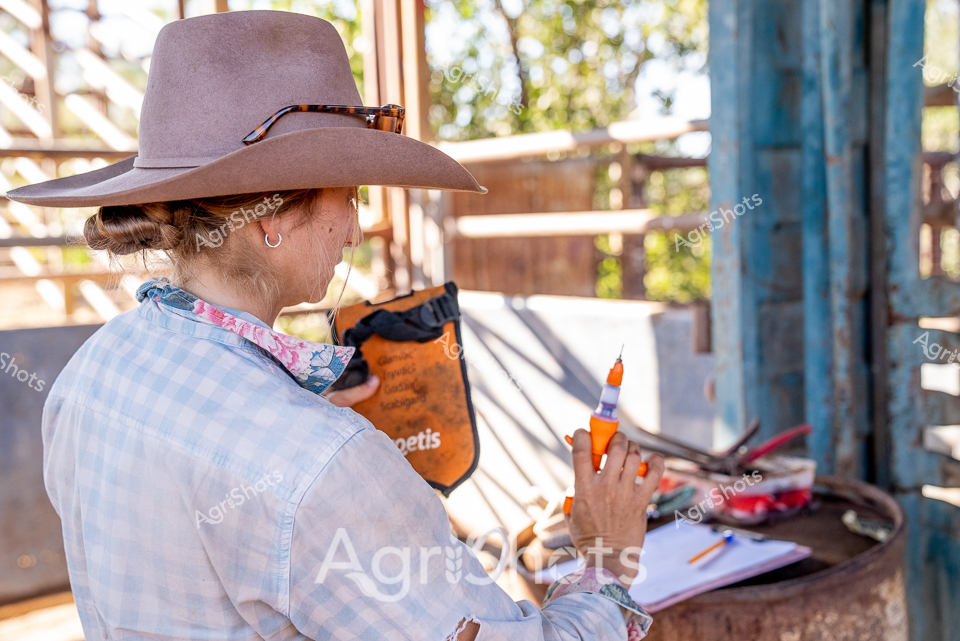
Framed by weathered blue yards and dappled morning sunlight, a station worker wearing a classic wide-brimmed Australian bush hat carefully prepares for cattle vaccination. Her pale blue checked shirt and floral scarf speak to the practical yet personal style of rural agricultural workers. Holding an orange Zoetis vaccine container, she stands focused at the cattle crush, surrounded by the rugged infrastructure of a Kimberley region cattle station. The scene captures the precise, methodical nature of animal health management in Western Australia's challenging pastoral landscape. Soft shadows and the worn timber of the yards suggest early dry season conditions, when careful livestock management is critical to station operations. This image epitomizes the skilled, dedicated women who play pivotal roles in Australia's expansive cattle industry, combining technical expertise with deep agricultural knowledge.
 Image
Brahman cattle crowd the dusty holding yards under a brilliant blue Kimberley sky, their rich copper-brown hides gleaming in the intense Western Australian sunlight. Sturdy steel livestock fencing creates a complex network of pens, with ranch workers positioned strategically among the densely packed herd. These heat-tolerant cattle, characteristic of the region's robust beef industry, stand shoulder-to-shoulder in the dry, compact yard, surrounded by sparse woodland and scrub typical of the expansive Kimberley landscape. The scene captures the precision of cattle management, with workers carefully navigating between the animals, likely preparing for mustering or station operations. An umbrella provides minimal shade, highlighting the challenging environmental conditions of this remote agricultural setting. The cattle's uniform coloration - ranging from warm terracotta to deep russet browns - creates a striking visual texture against the earth-toned yard and pale blue horizon. This image encapsulates the essence of Western Australian pastoral life: resilient livestock, skilled workers, and the unforgiving yet beautiful landscape of the northern agricultural frontier. The composition speaks to the hard work, expertise, and connection to land that defines Australia's cattle industry.
 Image
Dusty ochre earth and scattered ghost gums frame this aerial view of a remote Kimberley cattle station in Western Australia's rugged north. A dense herd of rich reddish-brown Brahman cattle clusters around rustic timber cattle yards, their muscular bodies creating a living tapestry against the parched landscape. Silvered machinery and white supply containers sit adjacent to weathered shed structures, suggesting the robust infrastructure required to manage livestock in this unforgiving environment. A small azure waterhole provides a startling contrast of green and blue amidst the burnt sienna and olive tones of the surrounding bushland, highlighting the critical importance of water sources in this arid agricultural terrain. Thin dirt tracks wind through sparse woodland, connecting different zones of the station and revealing the expansive scale of this pastoral enterprise. The scene captures the essence of Australian cattle farming - resilient, strategic, and intimately connected to a challenging but beautiful landscape that demands both respect and ingenuity.
 Image
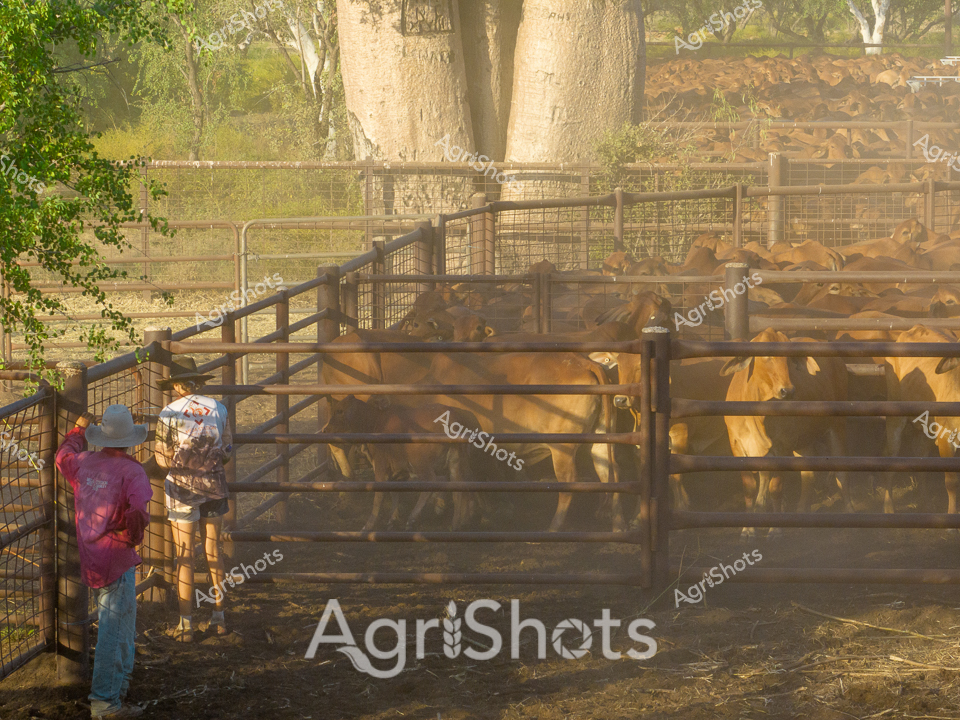
Golden light filters through the dusty cattle yards, casting long shadows across the weathered wooden gates and wire mesh pens. A pair of stock workers stand quietly observing a mob of golden-hued Brahman cattle, their distinctive humped shoulders and loose skin marking them as quintessential northern Australian beef producers. The massive boab tree in the background anchors the scene, its pale trunk a sentinel of the harsh pastoral landscape of Western Australia. Stockmen dressed in practical work attire - one in a vibrant pink shirt and broad-brimmed hat, the other in neutral tones - survey the herd with practiced eyes, their stance suggesting decades of accumulated knowledge about cattle handling. The early morning mist and soft sunlight create an almost ethereal quality, transforming the utilitarian cattle yards into a tableau of rural industry and connection to land. These moments capture the essence of station life: patient observation, quiet communication, and the rhythmic work of managing livestock in one of Australia's most challenging agricultural environments.
 Image
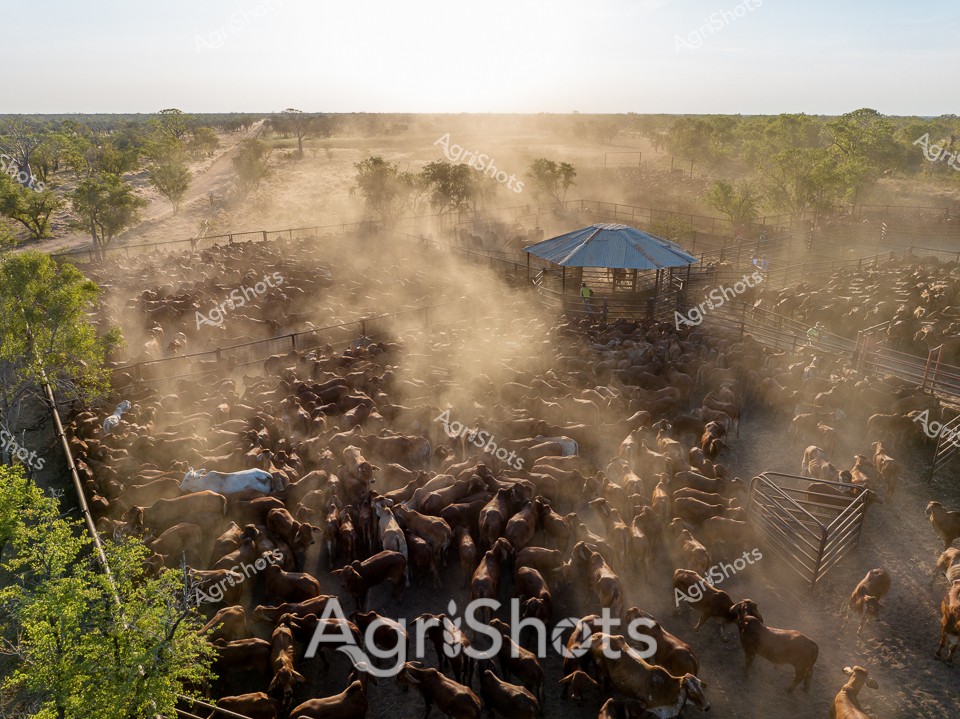
Dust billows through the cattle yards as a massive herd of Brahman cattle clusters tightly, their muscular bodies creating a sea of tan and white in the golden morning light. The blue-roofed central shelter stands as a focal point amidst the expansive Western Australian landscape, surrounded by weathered wooden fences and scattered gum trees. These hardy cattle, with their distinctive humps and loose skin - perfectly adapted to the harsh Australian climate - bunch together, creating a mesmerizing pattern of movement and stillness. The early light catches the swirling dust, transforming the scene into a dynamic canvas of earth tones and atmospheric haze. A quintessential station scene captures the raw energy of cattle mustering, showcasing the rugged beauty of Australia's pastoral heartland. The image speaks to the immense scale of cattle farming in Western Australia, where vast stations stretch across challenging terrain, and skilled stockmen manage enormous herds with precision and care.
 Image
Dusty red earth and silvery-green boabs frame a bustling cattle yard in Western Australia's rugged Kimberley region. Hundreds of distinctive Brahman cattle, with their signature humps and loose skin, crowd the carefully constructed wooden yards, creating a dense sea of burnt orange and rich brown hides. The aerial perspective reveals the intricate layout of holding pens, shade structures, and muster lanes, highlighting the sophisticated infrastructure of this remote station. Soft morning light casts long shadows across the landscape, illuminating the fine details of the cattle's muscular bodies and the weathered timber of the yards. A small shed with a white umbrella provides a focal point amidst the controlled chaos of the cattle, while vehicles and equipment nearby suggest the ongoing work of mustering and managing this substantial herd. The scene captures the essence of northern Australian cattle farming - a delicate balance of human management and natural landscape, where generations of skill and resilience are evident in every carefully designed element of the station.
 Image
Golden dawn breaks over a vast cattle yard, casting a warm, ethereal light across a densely packed herd of Brahman cattle. Dust rises in delicate plumes around their muscular bodies, creating a misty, almost mystical atmosphere typical of early morning on a Western Australian cattle station. The distinctive humped Brahman breeds, with their light-colored coats and resilient build, stand closely together, their forms blending into a living landscape of powerful agricultural productivity. A corrugated iron shelter stands sentinel in the background, providing minimal shade and structure to the expansive yard. The scene captures the raw essence of pastoral life - the quiet strength of livestock, the interplay of light and dust, and the unspoken rhythm of station work before the day's mustering begins. Each animal seems both individual and part of a collective organism, representing the backbone of Australia's robust beef industry against a backdrop of native trees and soft, emerging sunlight.
 Image
Yellow Caterpillar wheel loader moving reddish-brown earth in a rugged West Australian pastoral landscape. Powerful machinery churns dusty soil, creating a dramatic plume of ochre-colored particles against a backdrop of silvery-green eucalyptus woodland. The heavy-duty equipment sits on rocky ground near a shallow water course, suggesting land preparation or site maintenance work typical of remote agricultural stations. Massive wheel treads grip the uneven terrain, demonstrating the robust engineering required to operate in challenging Western Australian environments. Sunlight filters through the woodland, casting dynamic shadows and highlighting the machine's bright yellow paintwork against the muted earth tones. This scene captures the uncompromising spirit of agricultural infrastructure and landscape management in one of Australia's most demanding rural regions.
 Image
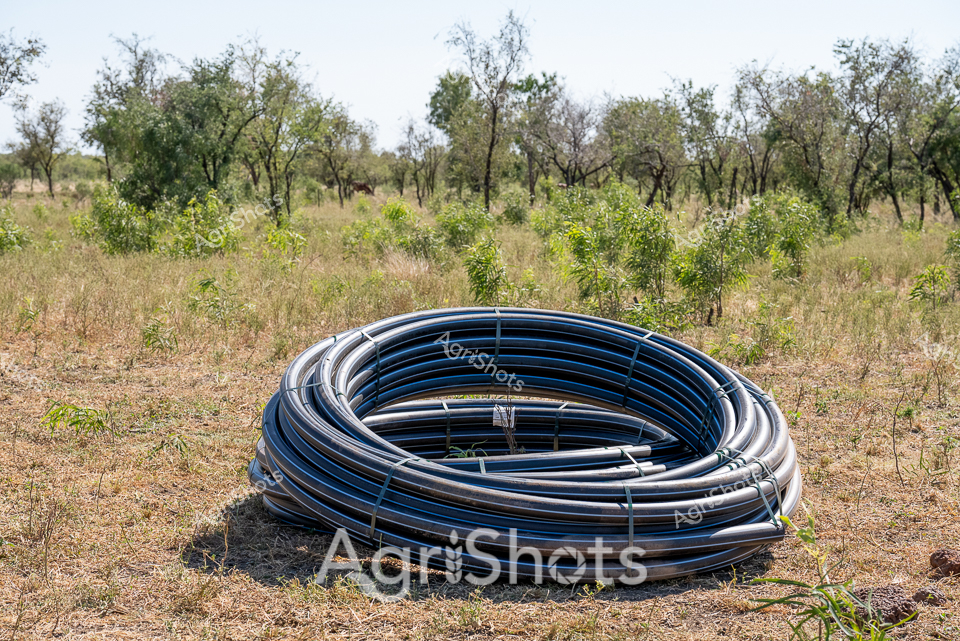
Coiled lengths of blue-black poly pipe rest on dusty ground, waiting to be deployed across a sun-drenched pastoral landscape. Sparse eucalyptus trees dot the golden grasslands, their silvery-green foliage creating a quintessential Western Australian agricultural backdrop. These high-density polyethylene irrigation pipes, likely Plasson brand, represent critical infrastructure for water management in harsh rural environments. The pipes' smooth, uniform curves contrast with the rugged, textured terrain, symbolizing human engineering adapting to challenging agricultural conditions. Scattered young trees suggest land regeneration or strategic farm forestry, highlighting the careful balance between productivity and sustainable land use. The muted palette of browns, greens, and deep blue-blacks captures the resilient spirit of Australian agricultural landscapes, where water infrastructure is as vital as the crops and livestock it supports.
 Image
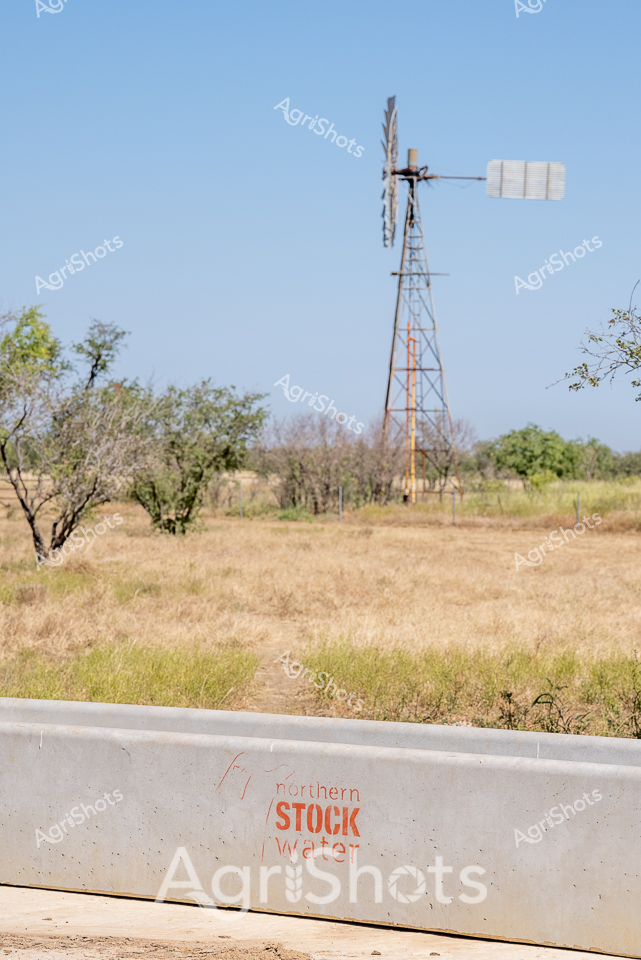
Northern pastoral landscape bathed in soft midday light, where a classic steel windmill rises against an expansive blue sky. Weathered grasslands stretch across the foreground, punctuated by scattered drought-resistant trees with muted green and grey foliage, typical of Western Australia's arid agricultural regions. The windmill, a quintessential symbol of rural water infrastructure, stands tall on a rust-tinted metal tower, its blades poised to catch any passing breeze and pump precious groundwater. A concrete water trough marked with "Northern Stock Water" rests in the foreground, a critical lifeline for livestock survival in this harsh environment. The landscape speaks of resilience - sparse vegetation, open terrain, and the ever-present windmill representing generations of pastoral farming adaptation. Soft yellowed grasses and scattered trees create a textural canvas that captures the essence of Australia's northern agricultural frontier, where water management is key to survival.
 Image
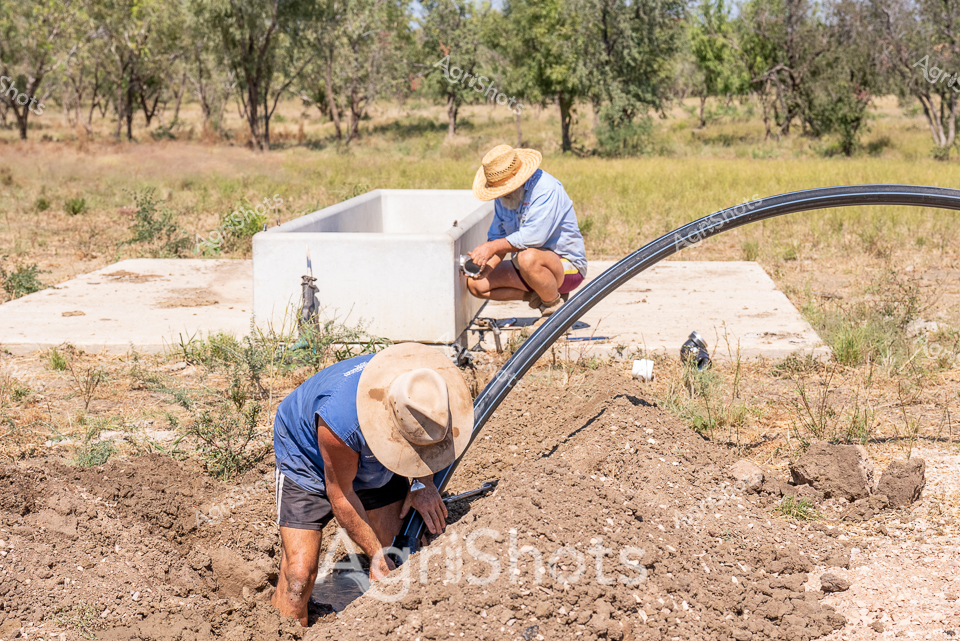
Rural waterworks maintenance under the harsh Western Australian sun. Two workers in wide-brimmed sun hats labor at an isolated station water point, surrounded by sparse eucalyptus woodland and dry grassland. One worker bends low, carefully manipulating underground poly piping, while the other crouches near a white water trough, likely performing hydraulic system repairs or installation. The ground is parched and rocky, revealing the challenging agricultural landscape of inland Western Australia. Weathered blue work shirts and khaki shorts speak to practical station attire designed for extreme environmental conditions. A curved black poly pipe arches dramatically across the foreground, highlighting the critical infrastructure that enables livestock water supply in this arid region, where water management is essential for pastoral survival. The scene captures the meticulous, physical nature of remote agricultural maintenance - workers quietly executing precise technical tasks that are fundamental to sustaining pastoral enterprises across vast, unforgiving terrains. Muted earth tones of brown, tan, and dusty green create a quintessential Australian rural aesthetic, emphasizing the resilience required to work in such demanding environments.
 Image
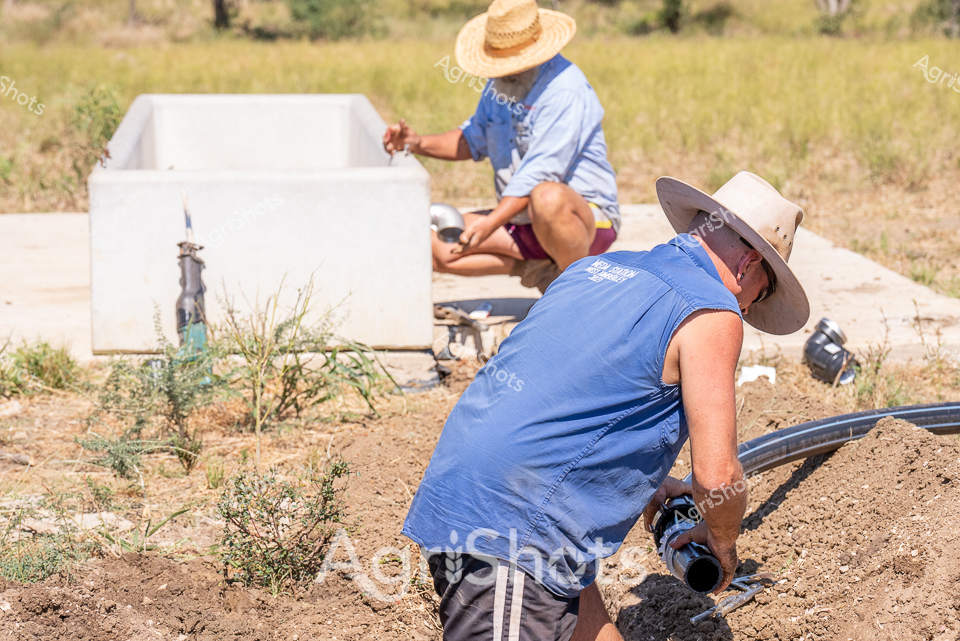
Rural water infrastructure maintenance unfolds under the harsh Western Australian sun, where two agricultural workers carefully manage station water systems. Dressed in protective blue work shirts and wide-brimmed sun hats, they navigate a dusty paddock near a white water storage trough, handling irrigation pipes and fittings. One worker crouches intently, manipulating black polyethylene piping with practiced expertise, while the other examines equipment nearby, their postures reflecting years of practical agricultural experience. The surrounding landscape is typical of inland station country - sparse grasslands, reddish-brown earth, and scattered native vegetation creating a textured backdrop of arid resilience. Plasson fittings and robust water infrastructure components suggest meticulous preparation against the challenging environmental conditions of Western Australia's agricultural regions. The scene captures the quiet determination of rural workers ensuring critical water supply for livestock and station operations, their measured movements a testament to the precision required in remote agricultural management.
 Image
Rural Irrigation Preparation in the West Australian Landscape Coiled lengths of dark blue poly pipe rest among sparse grasses and low scrubland, nestled against a backdrop of weathered eucalyptus trees typical of Western Australia's expansive agricultural terrain. The irrigation equipment - likely Plasson brand pipes - awaits deployment across a dry pastoral station, signaling farmers' ongoing preparation for water management in this challenging environment. Muted greens of scattered saplings contrast with the parched golden groundcover, revealing the harsh seasonal conditions of the region. These heavy-duty polyethylene pipes represent critical infrastructure for sustaining agricultural productivity in a landscape where water conservation is paramount. The scene captures the resilience of agricultural practice in Western Australia's challenging climate, with carefully stored irrigation materials ready to support crop and livestock survival through potentially extended dry periods. The composition speaks to the strategic planning and technical sophistication required to maintain agricultural operations in one of the world's most unforgiving agricultural environments.
 Image
Rural Irrigation Preparation in the West Australian Landscape A seasoned agricultural worker carefully manages irrigation infrastructure amid a sun-drenched olive grove in Western Australia. Dressed in a light blue shirt, khaki shorts, and a protective straw hat, the worker arranges a stack of black poly pipes essential for water distribution across the dry pastoral terrain. The surrounding landscape reveals sparse, rugged trees characteristic of the region's arid agricultural zones, with scattered low vegetation and dusty ground indicating the challenging growing conditions. Plasson fittings glint among the pipes, signaling professional-grade equipment designed for reliable water management in harsh environments. The worker's careful handling suggests meticulous preparation for the upcoming growing season, balancing physical labor with strategic agricultural planning. Soft blue skies and the muted green-grey palette of the landscape create a quintessential West Australian agricultural scene, capturing the resilience and technical expertise required to cultivate productive farmland in a challenging climate.
 Image
Beneath a sun-drenched rural landscape of scattered gum trees and dry grass, a seasoned agricultural worker prepares irrigation infrastructure on what appears to be a Western Australian station. Wearing a wide-brimmed straw hat and light blue work shirt, the individual stands near a collection of dark blue poly pipes, likely Plasson brand irrigation equipment. The surrounding environment suggests late summer or early autumn, with sparse vegetation and a weathered terrain typical of arid agricultural regions. Coiled lengths of heavy-duty irrigation pipe rest on the ground, ready to be deployed across the paddock to support drought-resistant crops or pastoral land. The scene captures the essential work of water management in challenging agricultural landscapes, highlighting the resilience and practical expertise of rural workers who maintain agricultural productivity in harsh Australian conditions. The muted color palette of blues, greens, and browns speaks to the practical, no-nonsense approach of station life in Western Australia.
 Image
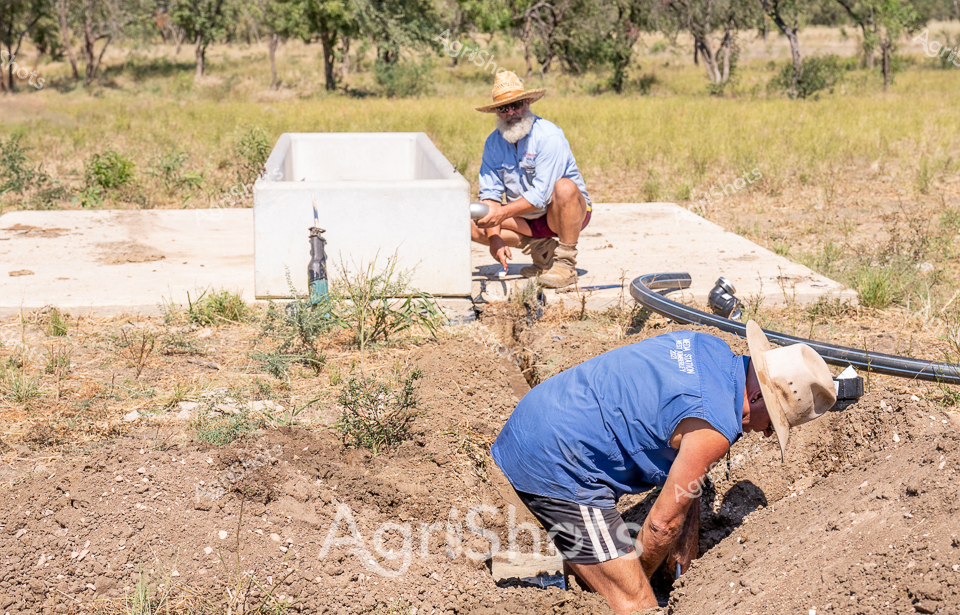
Rural water infrastructure maintenance unfolds under the harsh Western Australian sun, capturing the resilience of agricultural workers managing critical station resources. An experienced worker in a blue shirt and wide-brimmed hat carefully excavates around a white water infrastructure point, revealing pipes and fittings essential for livestock water supply. The rugged pastoral landscape surrounds them - sparse eucalyptus trees, dry golden grasses, and red-brown earth characterizing the challenging agricultural terrain of Western Australia's remote regions. Another worker observes from a crouched position near a concrete water storage structure, their collaborative effort highlighting the precision and physical demands of maintaining water systems across expansive agricultural properties. Plasson pipe fittings and robust irrigation infrastructure suggest a methodical approach to water management in an environment where reliable water access is crucial for livestock survival. The scene radiates a sense of quiet determination, with muted blues, browns, and the weathered textures of working attire reflecting the uncompromising nature of agricultural life in this arid landscape.