About this image
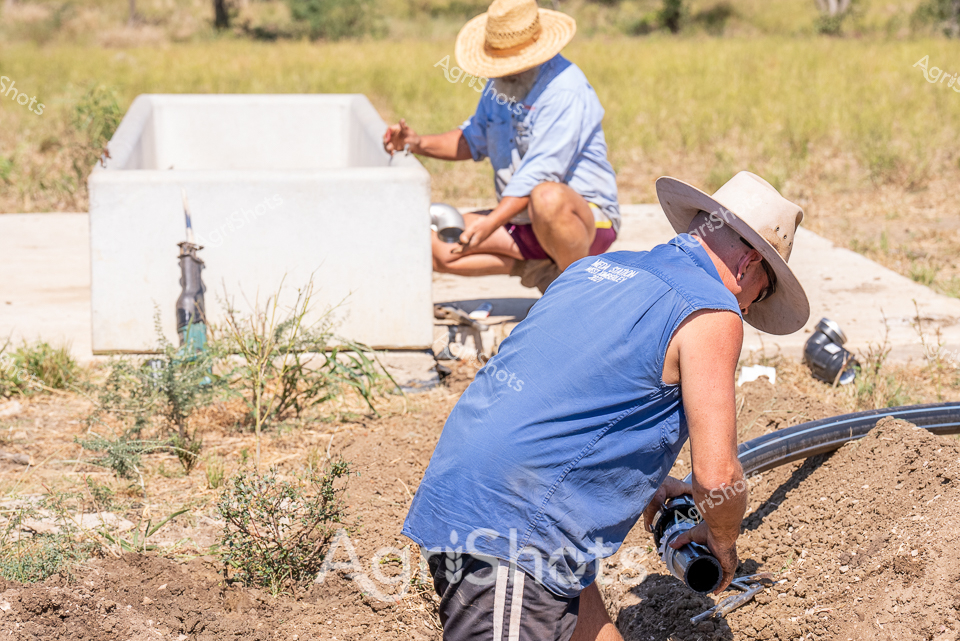
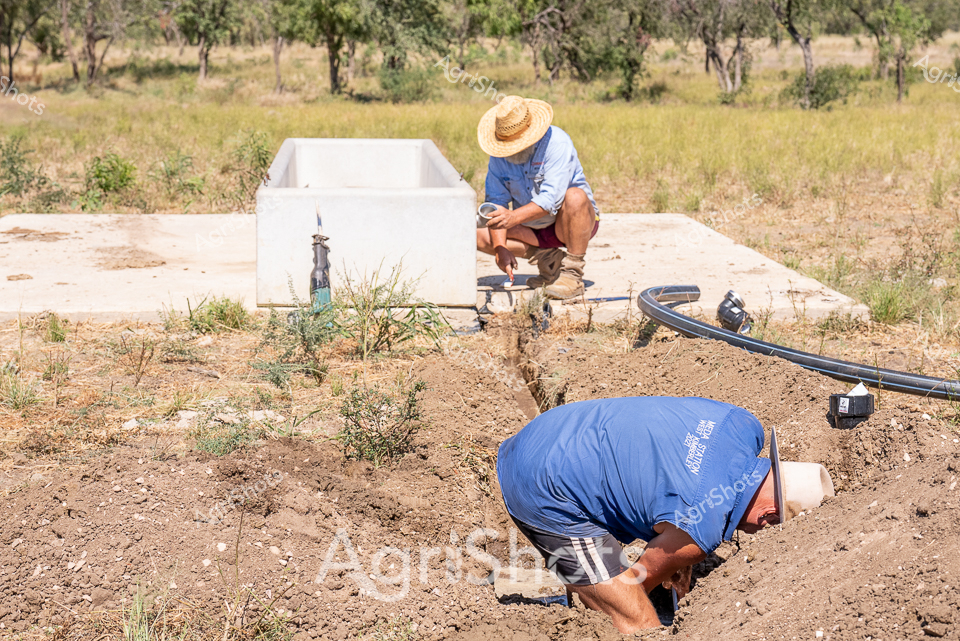
Rural water infrastructure maintenance unfolds under the harsh Western Australian sun, where two agricultural workers carefully manage station water systems. Dressed in protective blue work shirts and wide-brimmed sun hats, they navigate a dusty paddock near a white water storage trough, handling irrigation pipes and fittings. One worker crouches intently, manipulating black polyethylene piping with practiced expertise, while the other examines equipment nearby, their postures reflecting years of practical agricultural experience. The surrounding landscape is typical of inland station country - sparse grasslands, reddish-brown earth, and scattered native vegetation creating a textured backdrop of arid resilience. Plasson fittings and robust water infrastructure components suggest meticulous preparation against the challenging environmental conditions of Western Australia's agricultural regions. The scene captures the quiet determination of rural workers ensuring critical water supply for livestock and station operations, their measured movements a testament to the precision required in remote agricultural management.
Similar media
 Image
Image
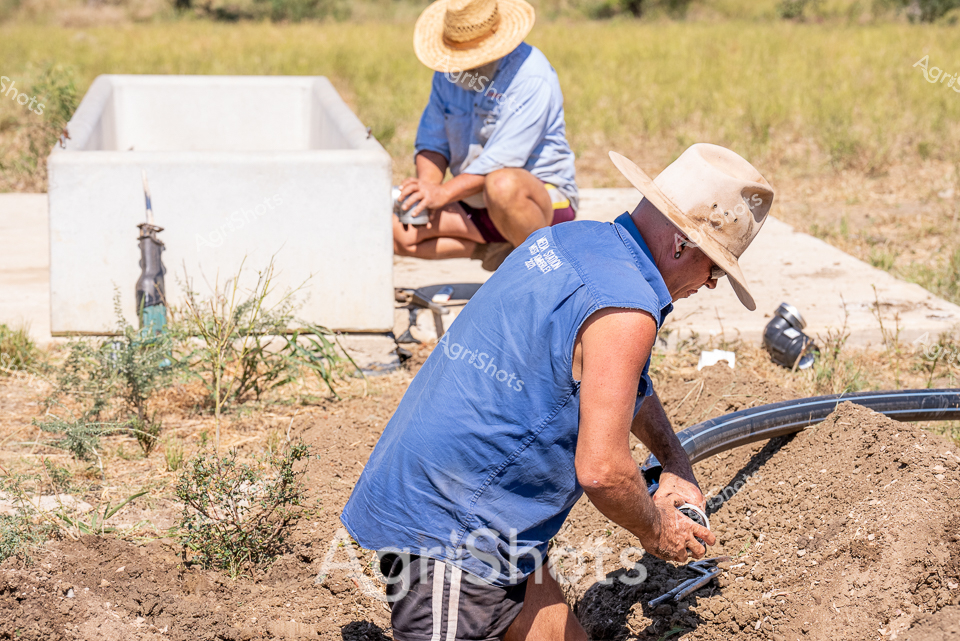
Rural water infrastructure maintenance in the arid landscape of Western Australia. A farm worker in a blue shirt and wide-brimmed sun hat carefully manages water pipe connections near a white water trough, surrounded by sparse dry grassland. The rugged terrain suggests a remote pastoral station where reliable water supply is critical for livestock survival. Weathered hands manipulate black pipe fittings, likely a Plasson connection system designed for durability in harsh agricultural environments. Intense midday sunlight casts sharp shadows, highlighting the physical labor required to maintain essential water infrastructure in this challenging landscape. The scene captures the quiet determination of agricultural workers who ensure critical water resources remain functional in remote Australian stations, where every drop of water is precious for survival.
 Image
Image
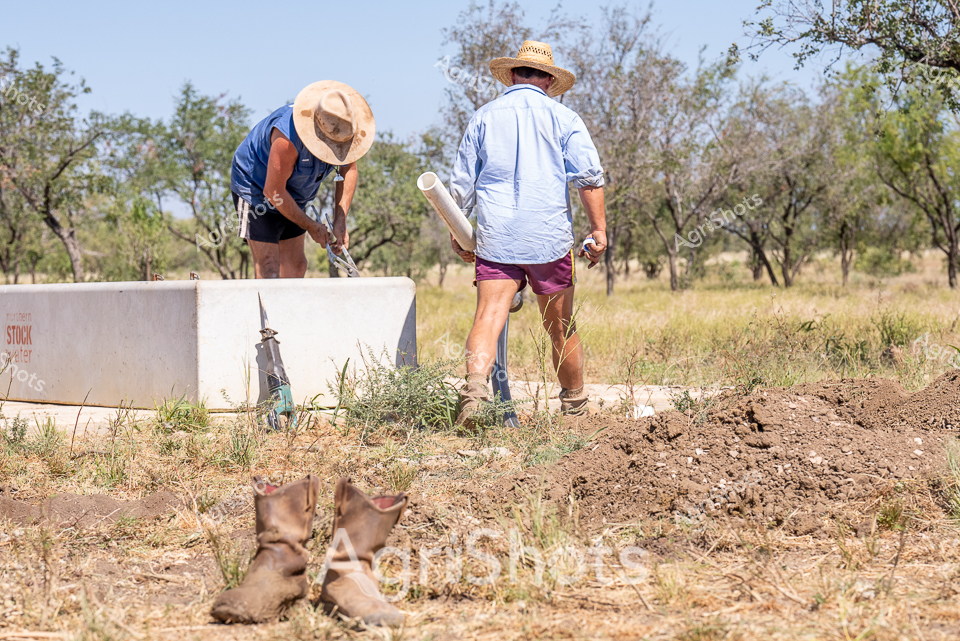
Rural water infrastructure maintenance unfolds under the harsh midday sun of Western Australia's pastoral landscape. Two workers wearing wide-brimmed straw hats - one in a blue shirt and another in a light blue button-up and burgundy shorts - carefully manage water supply equipment near a concrete storage tank. A Plasson pipe fitting and white conduit tube suggest they are engaged in repairing or installing critical stock water infrastructure essential for livestock survival in this arid environment. The dry grassland surrounds them, dotted with sparse trees and scrubby vegetation typical of a northern Western Australian station. In the foreground, several small animals - possibly young foxes or dingoes - rest on the disturbed earth near the work site, adding an unexpected wildlife element to this agricultural scene. The workers' robust physical labor and protective clothing reflect the challenging conditions of remote agricultural work. Rough ground, scattered rocks, and mechanically exposed soil indicate active infrastructure maintenance, highlighting the constant effort required to sustain agricultural operations in Australia's unforgiving rural landscapes. The muted earth tones, sun-bleached vegetation, and industrial equipment create a quintessential image of outback resilience and practical necessity.
 Image
Image
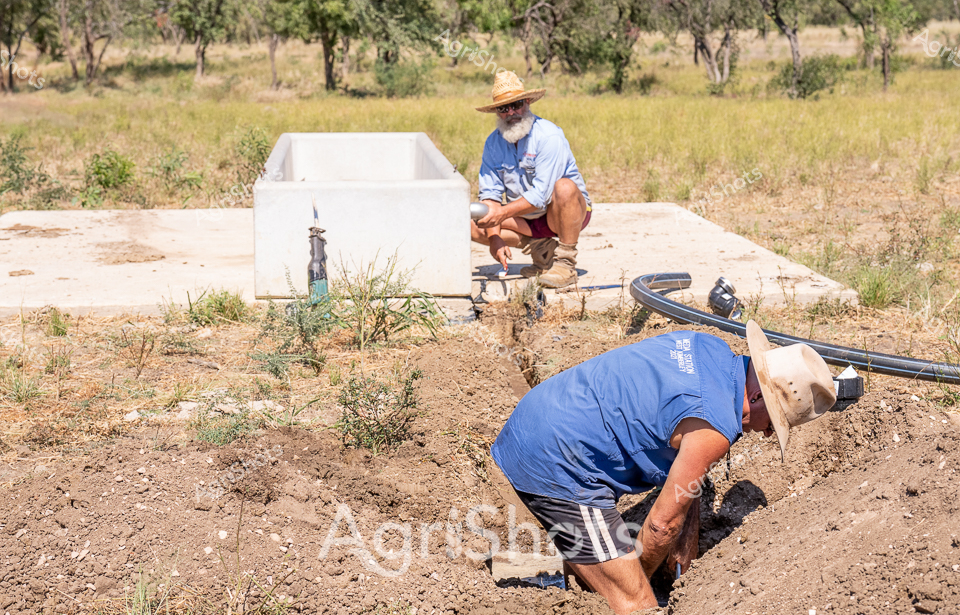
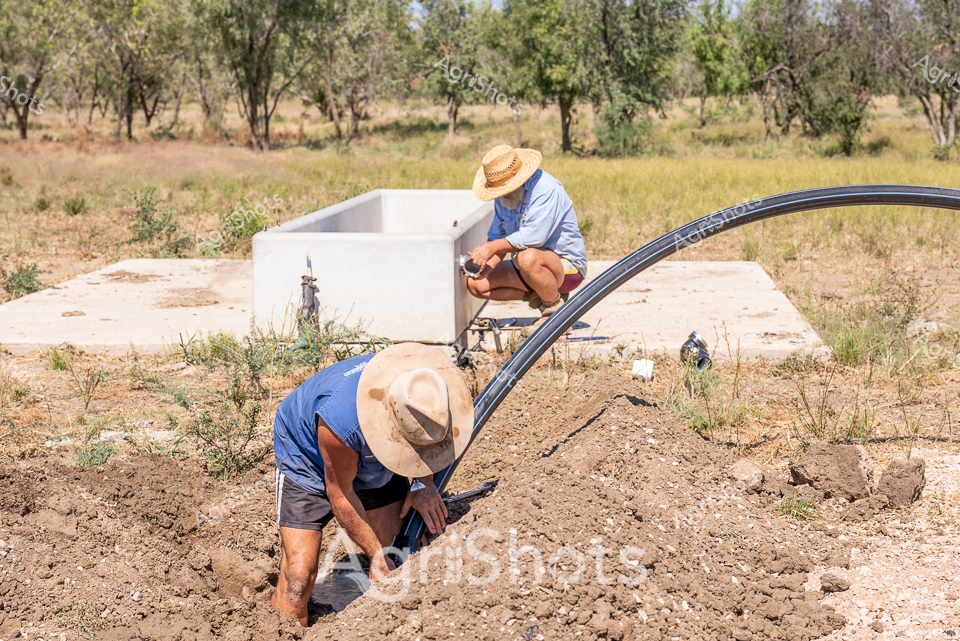
Rural water infrastructure maintenance unfolds under the harsh Western Australian sun, capturing the resilience of agricultural workers managing critical station resources. An experienced worker in a blue shirt and wide-brimmed hat carefully excavates around a white water infrastructure point, revealing pipes and fittings essential for livestock water supply. The rugged pastoral landscape surrounds them - sparse eucalyptus trees, dry golden grasses, and red-brown earth characterizing the challenging agricultural terrain of Western Australia's remote regions. Another worker observes from a crouched position near a concrete water storage structure, their collaborative effort highlighting the precision and physical demands of maintaining water systems across expansive agricultural properties. Plasson pipe fittings and robust irrigation infrastructure suggest a methodical approach to water management in an environment where reliable water access is crucial for livestock survival. The scene radiates a sense of quiet determination, with muted blues, browns, and the weathered textures of working attire reflecting the uncompromising nature of agricultural life in this arid landscape.
 Image
Image
Rural waterworks maintenance under the harsh Western Australian sun. Two workers in wide-brimmed sun hats labor at an isolated station water point, surrounded by sparse eucalyptus woodland and dry grassland. One worker bends low, carefully manipulating underground poly piping, while the other crouches near a white water trough, likely performing hydraulic system repairs or installation. The ground is parched and rocky, revealing the challenging agricultural landscape of inland Western Australia. Weathered blue work shirts and khaki shorts speak to practical station attire designed for extreme environmental conditions. A curved black poly pipe arches dramatically across the foreground, highlighting the critical infrastructure that enables livestock water supply in this arid region, where water management is essential for pastoral survival. The scene captures the meticulous, physical nature of remote agricultural maintenance - workers quietly executing precise technical tasks that are fundamental to sustaining pastoral enterprises across vast, unforgiving terrains. Muted earth tones of brown, tan, and dusty green create a quintessential Australian rural aesthetic, emphasizing the resilience required to work in such demanding environments.
 Image
Image
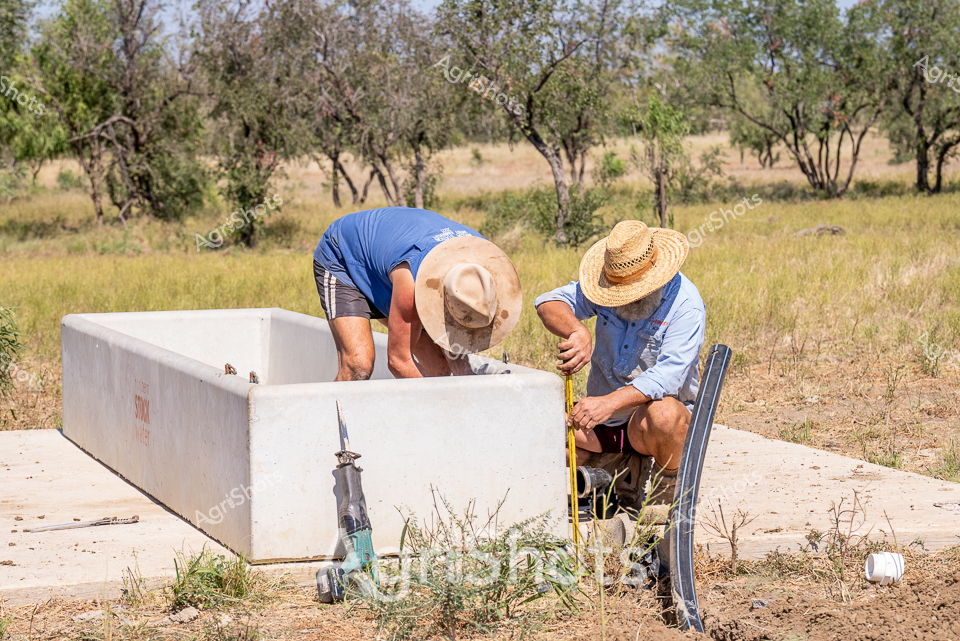
Rural Water Infrastructure Development in the West Australian Rangelands Beneath sparse eucalyptus trees and sun-bleached grasslands, two agricultural workers carefully inspect a substantial concrete water storage trough. Wearing wide-brimmed straw hats to shield from intense midday sunlight, they lean intently over the stark white rectangular structure, measuring and assessing its installation. A measuring tape and specialized water fitting are visible, suggesting precise technical work related to station water supply systems. The parched golden grasses and scattered woodland backdrop speak to the challenging environmental conditions of Western Australia's northern pastoral regions. Their blue and chambray work shirts, robust work shorts, and protective headwear communicate the practical, no-nonsense approach of rural infrastructure maintenance professionals. This scene captures the critical behind-the-scenes labor of water resource management - ensuring reliable livestock hydration across vast, arid agricultural landscapes where every drop of water is precious.
 Image
Image
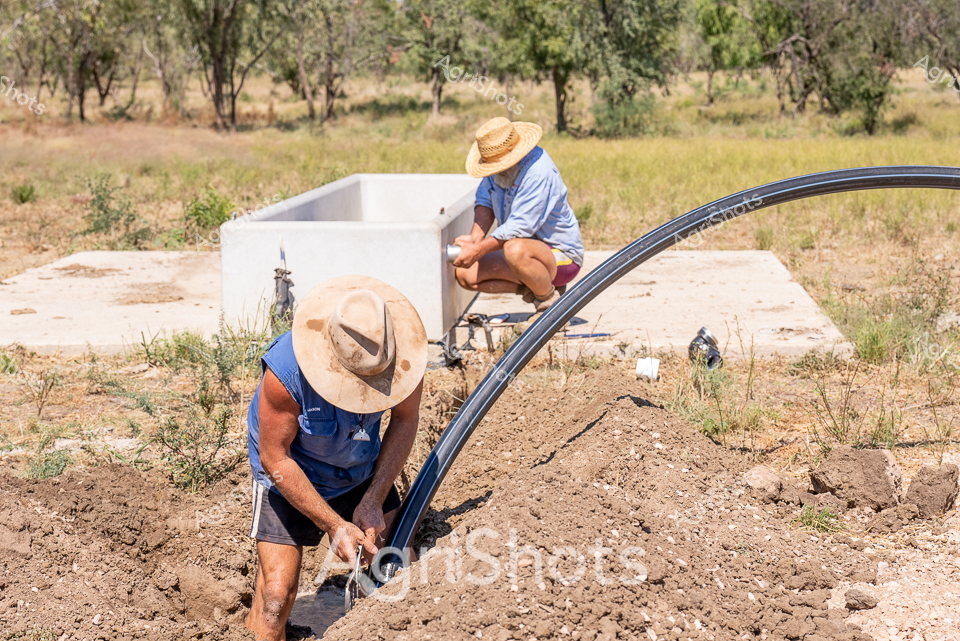
Rural hydration infrastructure under construction in the West Australian rangelands. Two agricultural workers wearing wide-brimmed straw sun hats labour together to install a critical water supply pipeline, their blue work shirts and shorts indicating intense physical effort in the arid landscape. One worker carefully aligns a curved black poly pipe into a concrete water trough, while his colleague crouches nearby, supporting the installation process. Sparse eucalyptus trees and dry grassland stretch across the rocky terrain, suggesting a remote pastoral station where water infrastructure is essential for livestock survival. The curved pipe gleams against the dusty earth, representing precision engineering adapted to challenging agricultural environments. Harsh sunlight and open ground reveal the demanding physical work required to maintain agricultural systems in Western Australia's unforgiving rural regions.
 Image
Image
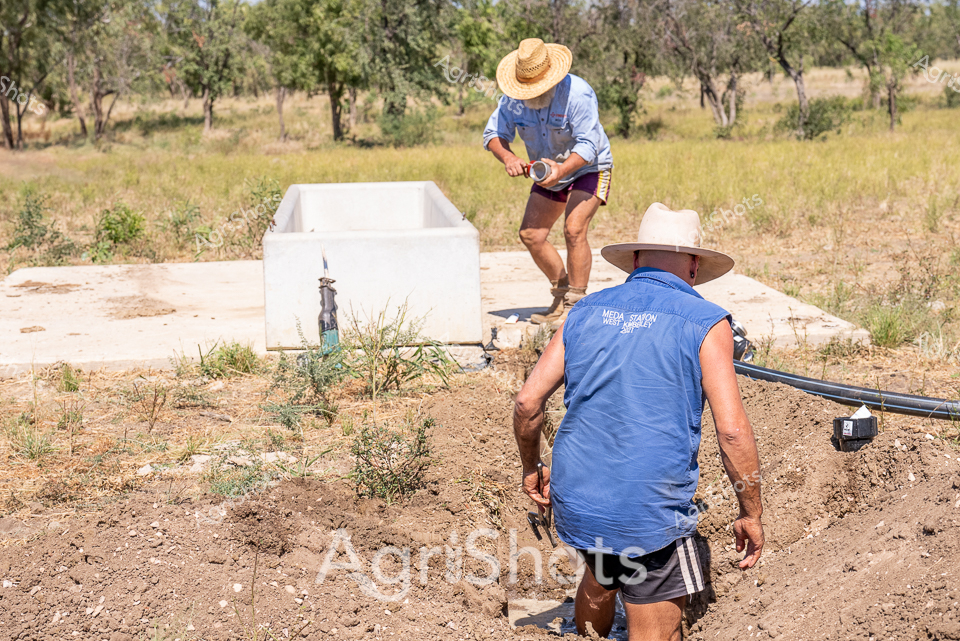
Scorched earth and sparse gum trees frame a critical moment of rural infrastructure maintenance. Two workers in broad-brimmed sun hats - one wearing a blue "Medcalf Station" vest - carefully inspect a white concrete water trough set against the dry, ochre-toned landscape of Western Australia. Their focused movements suggest meticulous work adjusting water supply pipes, essential for sustaining livestock in this harsh pastoral environment. The midday sunlight casts sharp shadows, highlighting the rugged terrain and emphasizing the challenging conditions of remote station life. Weathered ground surrounding the water infrastructure tells a story of persistent drought and the constant battle to maintain critical water resources. The scene captures the resilience and practical expertise required to manage agricultural operations in one of Australia's most unforgiving landscapes.
 Image
Image
Rural water infrastructure maintenance unfolds under the harsh midday sun of Western Australia's arid pastoral landscape. A worker in a wide-brimmed straw hat and blue shirt crouches beside a white concrete water infrastructure platform, carefully examining pipe connections and fittings. Another worker in a deep blue shirt bends low, performing detailed ground-level work on a trenched pipeline installation, surrounded by sparse grasslands and scattered eucalyptus trees typical of the station country. Plasson pipe fittings gleam against the dusty earth, suggesting precision engineering meeting challenging environmental conditions. The manual labor reveals the intricate process of maintaining critical water supply systems for livestock and agricultural operations. Curved black water pipes trace a deliberate path through the rocky ground, highlighting the strategic planning required in remote agricultural settings. The scene captures the resilience of agricultural workers managing essential infrastructure under demanding climatic conditions, with the bleached grasses and sparse woodland backdrop emphasizing the rugged Western Australian agricultural environment. Careful, methodical work ensures water connectivity across vast, challenging terrain.