Browse the collection
 Image
Dusty golden light bathes a rugged Kimberley cattle station, where a dense herd of reddish-brown Brahman cattle clusters tightly within sturdy steel yard fencing. Robust hay bales rest in the foreground, their warm wheat-colored texture contrasting against the sparse, weathered landscape of scattered gum trees and sun-baked earth. Sprawling paddocks stretch beneath a pale blue sky, revealing the harsh yet beautiful terrain of Western Australia's northern pastoral region. These heat-tolerant Brahman cattle, with their distinctive humps and loose skin, represent the resilient backbone of Australia's extensive beef production systems, perfectly adapted to surviving in challenging tropical environments. The scene captures the essence of northern Australian cattle management - a delicate balance of human infrastructure and nature's raw intensity, where mustering and careful stock handling are critical to survival. Weathered fence lines, strategic yards, and strategic hay provisions demonstrate the sophisticated agricultural practices that sustain livestock in this unforgiving landscape.
 Image
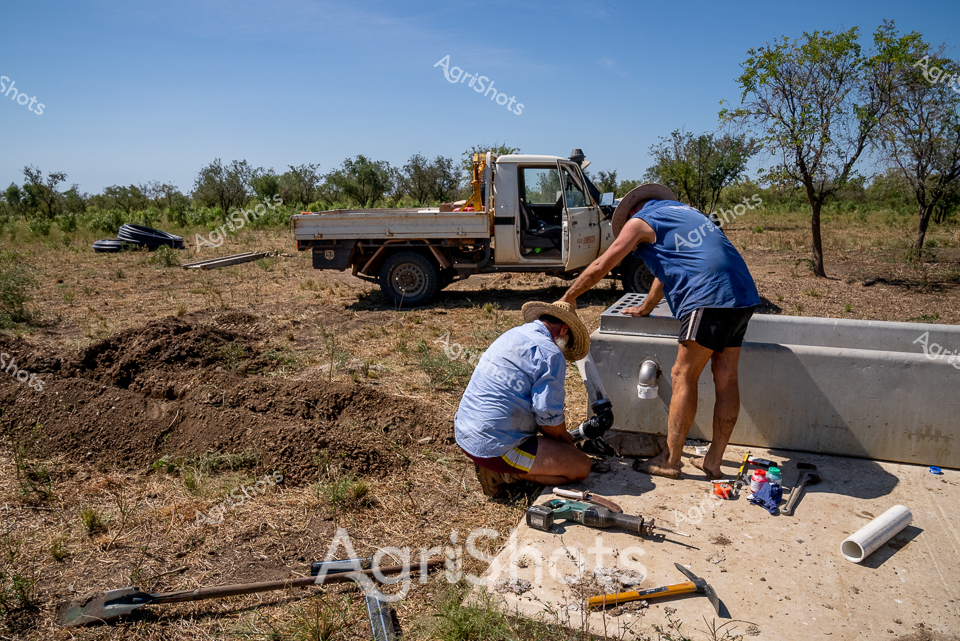
Rural waterworks maintenance under the harsh midday sun. Two workers wrestle with a large metal water trough in a sparse, dry paddock surrounded by scattered olive-green trees and dusty ground. A silver utility truck stands nearby, loaded with equipment and pipes, suggesting an ongoing infrastructure repair project. One worker in a blue shirt crouches low, manipulating pipe connections, while the other leans over the trough, both engaged in precise, physically demanding labor. Scattered tools - wrenches, pipe sections, and connection fittings - lie on the ground, testament to the technical skill required for remote agricultural water supply systems. The scene captures the resilience of rural workers maintaining critical infrastructure in challenging environmental conditions, with the bleached landscape and clear blue sky emphasizing the stark beauty of Australian agricultural landscapes.
 Image
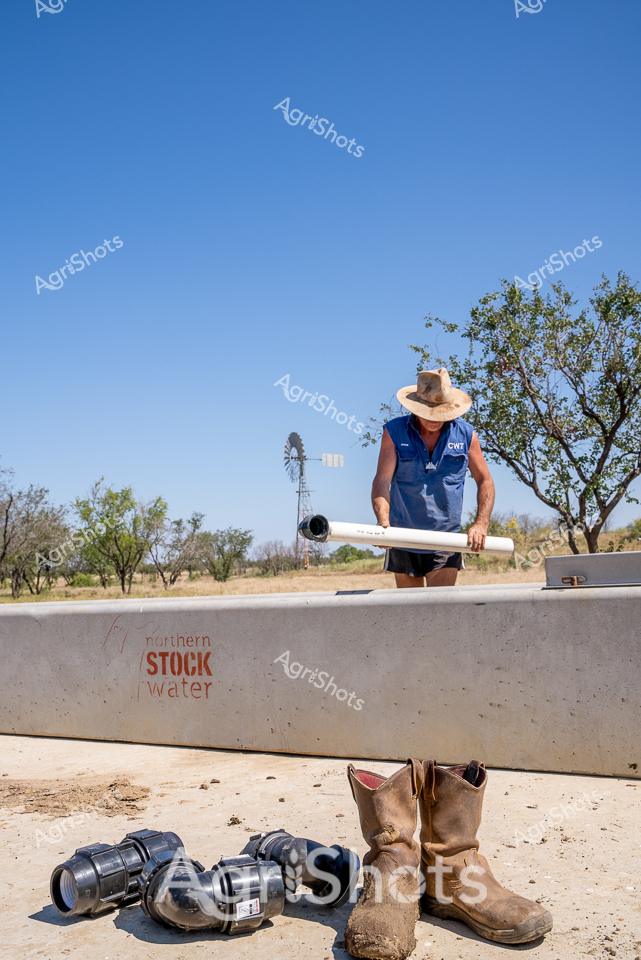
Northern Territory stock water infrastructure under the vast azure skies of inland Australia. A weathered rural worker in a blue singlet and wide-brimmed sun hat carefully handles a white irrigation pipe beside a concrete stock water trough, with "Northern Stock Water" branding visible. Rugged work boots stand sentinel on the dusty ground, alongside heavy-duty pipe fittings, telling a story of resilience and practical rural engineering. A classic windmill rises in the background, punctuating the sparse landscape of scattered gum trees and sun-bleached earth - a quintessential scene of agricultural water management in remote Western Australia. The harsh, clear midday light emphasizes the critical importance of water infrastructure in sustaining livestock and agricultural operations across challenging arid landscapes. Every element speaks to the pragmatic, no-nonsense approach of Australian bush workers managing precious water resources with skill and determination.
 Image
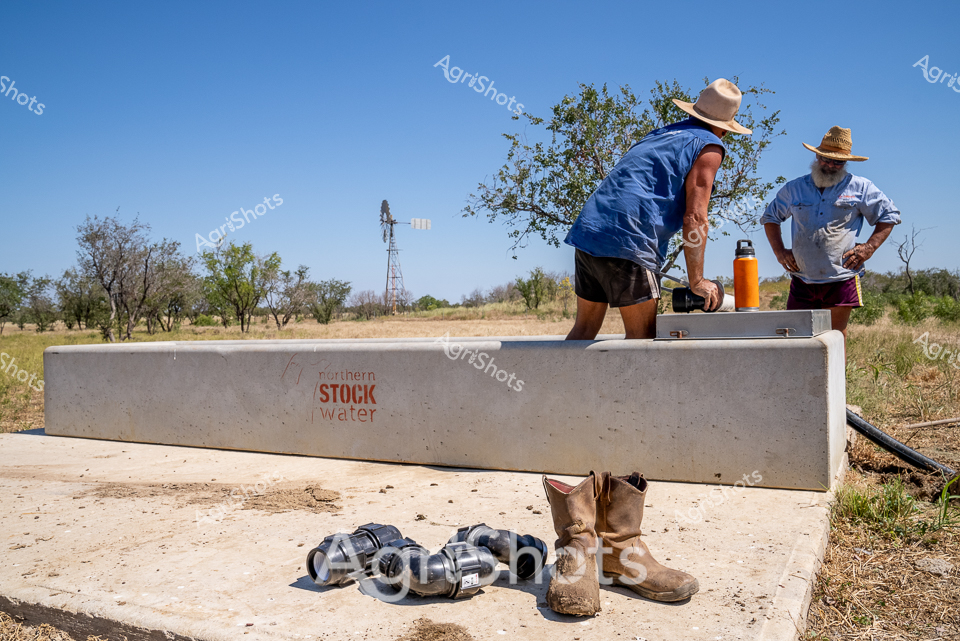
Northern Territory Stock Water Infrastructure Scorching midday sun beats down on a remote pastoral landscape, where two workers tend to a critical water infrastructure point. A concrete stock water trough emblazoned with "Northern Stock Water" branding stands ready to supply essential hydration for livestock across this arid grassland. Weathered work boots and rugged straw hats protect the workers from the intense heat, while a vintage windmill turns lazily in the background, symbolizing generations of agricultural resilience. One worker in a blue work shirt leans over the trough, adjusting pipe fittings and checking water flow, while his colleague stands nearby in a light grey shirt, observing the maintenance work. Scattered around the concrete installation are heavy-duty pipe connections and mechanical components, testament to the technical skill required to maintain water systems in challenging outback environments. Sparse trees and dry grasslands stretch to the horizon, highlighting the harsh yet beautiful Western Australian landscape where every drop of water is precious. The scene captures the essence of rural infrastructure - practical, robust, and absolutely essential to survival in one of the world's most unforgiving environments.
 Image
Brahman cattle cluster in sun-baked yards under the vast Kimberley sky, their rich copper-brown hides gleaming against the russet earth. Timber and wire yards create geometric pathways guiding the muscular cattle, their distinctive humped shoulders and loose skin adapted perfectly to Australia's harsh northern landscapes. A large white umbrella provides sparse shade, while weathered timber rails and metal gates define the working space of this remote station. Stockworkers move quietly among the herd, their movements deliberate and practiced, managing these resilient cattle bred to thrive in challenging tropical conditions. Surrounding native trees - gnarled boabs and sparse eucalypts - frame the scene, highlighting the rugged beauty of Western Australia's pastoral country. This image captures the essence of northern Australian cattle production: resilience, space, and the intricate dance between human management and animal husbandry.
 Image
Brahman cattle cluster tightly in a dusty yard under the expansive West Australian landscape, their burnished copper-brown coats gleaming in the harsh midday sunlight. Wooden stock yards with curved fencing create a complex network of holding pens, surrounded by sparse eucalyptus woodland stretching to the distant horizon. A stockworker stands balanced on the yard railings, observing the herd's movement with practiced concentration, while a white umbrella provides minimal shade against the intense heat. The aerial perspective reveals the intricate design of the mustering operation, with cattle carefully channeled through carefully constructed pathways designed to minimize stress and maximize efficiency. Sparse ground vegetation and the reddish earth underscore the challenging agricultural environment of Western Australia's cattle stations, where pastoral management requires skill, resilience, and deep understanding of both landscape and livestock. The scene captures the raw essence of Australian beef production - a delicate choreography of human expertise and animal husbandry set against an unforgiving but beautiful pastoral backdrop.
 Image
Burnished golden light bathes a bustling cattle yard in the Kimberley region of Western Australia, where a dense herd of muscular Brahman cattle cluster in carefully constructed metal pen systems. The expansive landscape surrounding the yards features scattered eucalyptus trees and a vast blue sky, capturing the quintessential pastoral atmosphere of northern Western Australia. Several stockworkers move confidently among the herd, their postures relaxed yet alert, wearing practical work attire of jeans, long-sleeved shirts, and wide-brimmed hats that provide protection from the intense regional sun. The cattle - predominantly a rich tawny brown with distinctive humped shoulders typical of the Brahman breed - are tightly packed into interconnected yards, suggesting they are being prepared for mustering, sorting, or potential transportation. A large white umbrella provides shade for the workers, a practical solution in this harsh agricultural environment where temperatures can soar. The scene represents the sophisticated livestock management practices of Australian cattle stations, where generations of expertise combine with modern infrastructure to handle large herds across challenging terrain.
 Image
Brahman cattle crowd the dusty yards of a remote Western Australian cattle station in the rugged Kimberley region. Burnished copper-colored animals with distinctive humps and pendulous ears pack tightly between weathered red steel gates, while two stockworkers in a bright lime green and salmon pink shirt monitor the herd. The golden late afternoon light casts long shadows across the parched earth, highlighting the muscular frames of these heat-tolerant cattle bred for surviving in harsh tropical landscapes. Gnarled trees and scrub woodland frame the background, suggesting the unforgiving yet beautiful Australian pastoral environment. This scene captures the essence of northern Australian cattle management - skilled mustering, robust infrastructure, and livestock perfectly adapted to challenging conditions. The tight clustering of cattle and watchful stance of the workers convey the precision and constant attention required in large-scale cattle production across Western Australia's extensive pastoral stations.
 Image
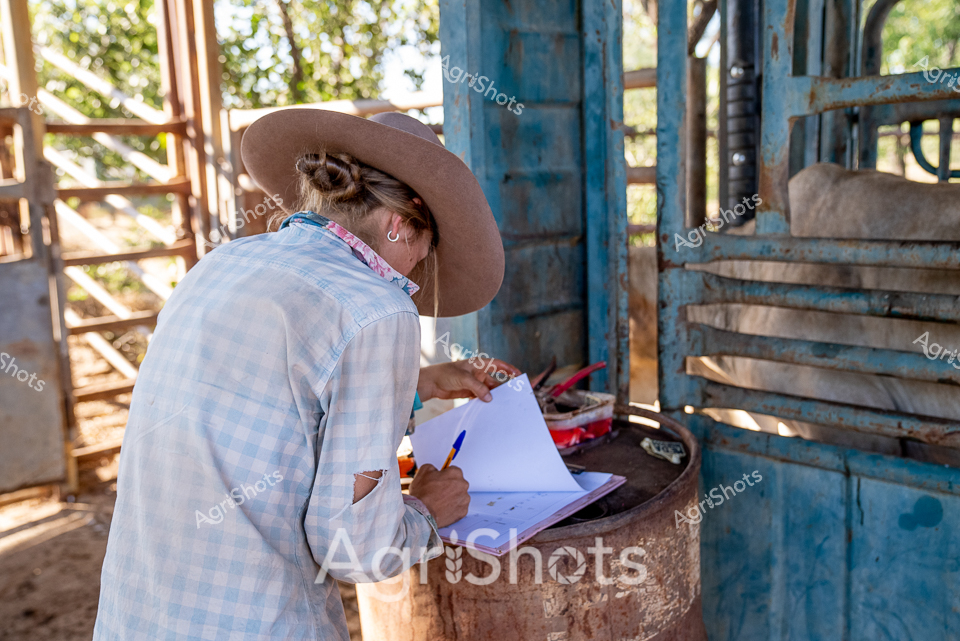
Rural Cattle Management in the Kimberley A station worker in a soft blue checked shirt and wide-brimmed hat stands within the weathered blue metal gates of a cattle yard, carefully documenting livestock health records. The rugged Kimberley landscape filters soft sunlight through timber yards and metal infrastructure, capturing a quintessential moment of agricultural documentation. Poised over a rustic metal drum serving as a makeshift workstation, the worker meticulously completes paperwork, likely recording vaccination details or animal health observations. The scene epitomizes the precise and methodical approach of modern cattle station management, where detailed record-keeping is as crucial as physical livestock handling. Worn metal gates, sun-bleached timber, and the blue-toned environment suggest a typical Western Australian pastoral setting, where attention to animal health occurs in challenging, remote environments. This image captures the quiet professionalism of agricultural workers who maintain Australia's vital livestock industries through careful, unglamorous daily tasks.
 Image
Dusty cattle yards under the golden light of late afternoon echo with the quiet concentration of rural work. A woman in a mint green shirt and wide-brimmed hat stands focused, blue clipboard in hand, carefully drafting a pen of burnished copper-red Brahman cattle. The robust steel yard panels create geometric lines that contain the herd, their muscular bodies pressed close together on the compacted earth. Western Australia's harsh pastoral landscape stretches behind the yards, sparse trees and sun-bleached ground telling stories of resilience and precision agriculture. These Brahmans, with their distinctive humps and loose skin adapted to tropical climates, represent the backbone of northern Australian cattle production - hardy genetics perfectly matched to challenging environmental conditions. Her measured movements and attentive posture speak to the skill and patience required in livestock management, capturing a moment of deliberate human-animal interaction that is quintessentially Australian agricultural work.
 Image
Burnished gold Brahman cattle crowd the sturdy metal yards of a remote Kimberley station, their muscular bodies pressed together under the dappled shade of eucalyptus trees. A stockman in a crisp white shirt and wide-brimmed hat moves deliberately among the herd, guiding them with practiced ease through the drafting process. The rich terracotta earth beneath their hooves contrasts sharply with the golden-brown coats of the cattle, highlighting the rugged beauty of Western Australia's pastoral landscape. Two other workers stand quietly at the yard's edge, their weathered clothing and relaxed postures speaking to generations of agricultural expertise. The harsh midday light emphasizes the lean, heat-adapted bodies of these Brahman cattle, bred to thrive in Australia's challenging northern environments. This scene captures the essence of northern Australian cattle management - a delicate dance of human skill and animal resilience under an unforgiving sun.
 Image
Kimberley cattle station veterinary care unfolds in this vivid rural tableau. Two workers in wide-brimmed akubras - one in a soft blue checked shirt, the other in a coral-pink vest - collaborate intently at a weathered blue livestock crush. Sunlight filters through distant gum trees, casting dappled shadows across the dusty cattle yard. The scene captures a critical moment of animal health management, with paperwork and equipment suggesting a systematic vaccination process for a Brahman cattle herd. Mud-splattered clothing and focused postures reveal the physical demands of station work in Western Australia's rugged northern landscape. The blue metal cattle yard panels and rustic wooden infrastructure frame a quintessential Australian agricultural moment - precise professional care meeting the robust challenges of remote cattle production.
 Image
Dusty red earth and silvery-green boabs frame a bustling cattle yard in Western Australia's rugged Kimberley region. Hundreds of distinctive Brahman cattle, with their signature humps and loose skin, crowd the carefully constructed wooden yards, creating a dense sea of burnt orange and rich brown hides. The aerial perspective reveals the intricate layout of holding pens, shade structures, and muster lanes, highlighting the sophisticated infrastructure of this remote station. Soft morning light casts long shadows across the landscape, illuminating the fine details of the cattle's muscular bodies and the weathered timber of the yards. A small shed with a white umbrella provides a focal point amidst the controlled chaos of the cattle, while vehicles and equipment nearby suggest the ongoing work of mustering and managing this substantial herd. The scene captures the essence of northern Australian cattle farming - a delicate balance of human management and natural landscape, where generations of skill and resilience are evident in every carefully designed element of the station.
 Image
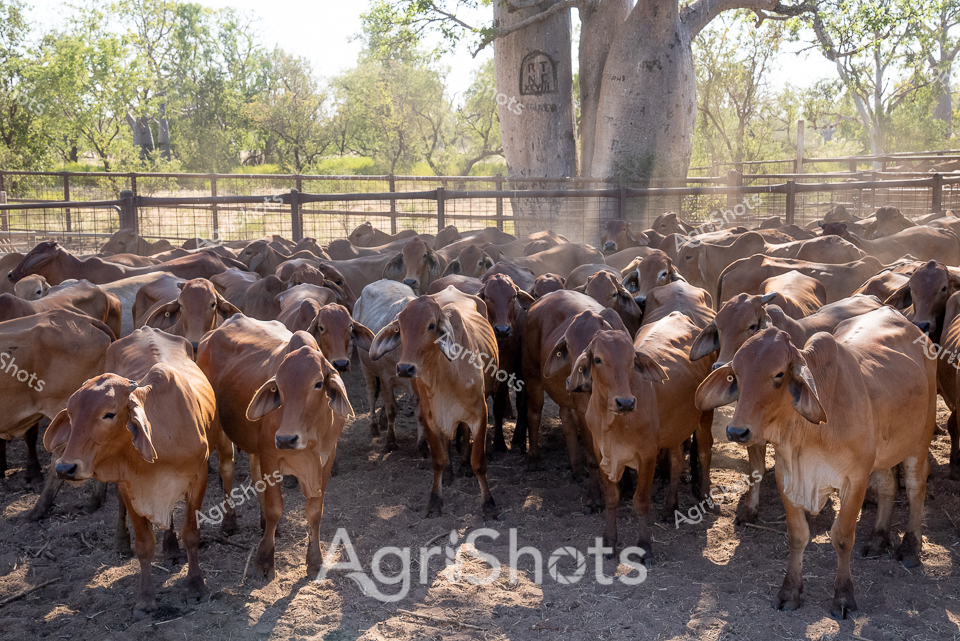
Burnished copper-red Brahman cattle cluster tightly in a dusty cattle yard, their distinctive large ears and loose skin defining the classic tropical beef breed. The powerful herd stands clustered beneath a towering boab tree, its massive pale trunk offering sparse midday shade in the harsh Kimberley landscape. Wire panel fencing contains the muscular animals, whose uniform rich tan coats gleam with health and genetic consistency, testament to careful station breeding practices. Sunlight filters through sparse woodland in the background, creating a soft haze that highlights the tight grouping of these robust cattle, bred for heat tolerance and resilience in Western Australia's unforgiving northern environments. The ground is packed earth, trampled and dry, speaking to the seasonal rhythms of cattle management in one of Australia's most challenging agricultural regions. Each animal stands solidly, their collective presence embodying the quiet strength of pastoral enterprise in remote northern Australia.
 Image
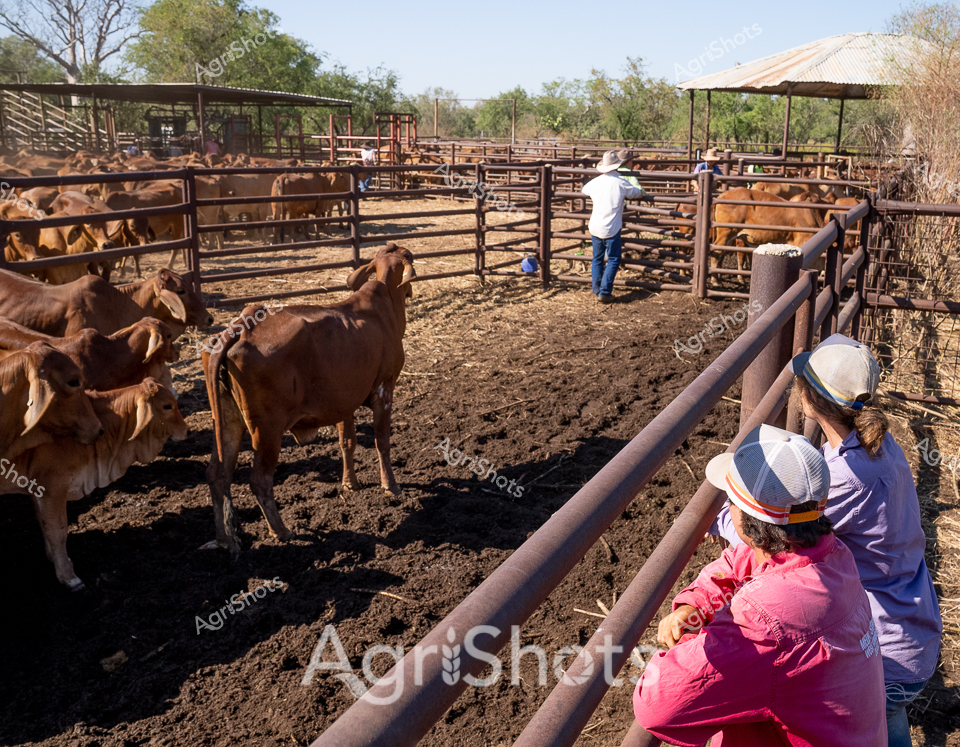
In the rugged Kimberley region of Western Australia, a quiet morning unfolds in the cattle yards. Burnished red Brahman cattle stand clustered in the dusty holding pens, their distinctive humped shoulders and loose skin reflecting generations of adaptation to harsh tropical conditions. Two workers dressed in practical station wear - one in a white shirt and wide-brimmed hat, another in a pink jacket and cap - navigate the metal rail fencing, preparing to draft and process the herd. The earthen ground is trampled and compact, telling stories of countless cattle movements, while the corrugated iron shelters and wooden yards speak to the pragmatic infrastructure of remote cattle stations. Soft winter light filters through sparse trees, casting long shadows across the scene and highlighting the powerful, lean bodies of these resilient cattle bred for surviving in challenging Australian pastoral landscapes.
 Image
Ochre-hued Brahman cattle cluster in expansive timber cattle yards, their distinctive humped silhouettes creating a living mosaic across the red dirt landscape of a remote Western Australian cattle station. The aerial perspective reveals intricate wooden fencing systems meandering through sparse woodland, with weathered gum trees casting long shadows across the dusty paddocks. Muscular cattle with their characteristic loose skin and prominent shoulder humps bunch tightly in separate pens, showcasing the resilience of this heat-tolerant breed perfectly adapted to Australia's harsh northern environments. Stockmen's horses wait patiently in the background, ready for mustering duties across the seemingly endless pastoral landscape stretching to the horizon. The early morning light bathes the scene in warm golden tones, highlighting the rich terracotta earth and the burnished copper-red coats of the Brahman herd. This quintessential Australian pastoral scene captures the raw beauty of extensive cattle farming in the continent's challenging northern territories, where generations of skill and endurance have shaped agricultural practices.
 Image
Brahman cattle crowd the dusty yards under the golden afternoon light of the Kimberley region, Western Australia. Two stockworkers, one in a bright pink shirt and the other in deep purple, manage the draft with quiet expertise, guiding the herd through metal gates and fence panels. Reddish-brown cattle with characteristic humps and loose skin typical of the Brahman breed shift and mill within the confined space, raising a fine cloud of ochre dust that softens the surrounding landscape of scrub trees and blue sky. The scene pulses with the controlled energy of pastoral work - a precise choreography of human skill and animal movement that speaks to generations of agricultural practice in Australia's northern cattle country. Metal gates create geometric divisions in the earthen yard, while the robust cattle stand testament to generations of breeding adapted to harsh tropical conditions. This moment captures the essence of station life - methodical, resilient, and intimately connected to the challenging landscape of Western Australia's remote cattle territories.
 Image
Brahman cattle crowd the meticulously engineered stockyards of a remote Kimberley station, their russet-brown bodies packed tightly within interconnected paddocks under the vast Western Australian sky. The expansive landscape reveals a classic pastoral scene - sparse eucalyptus woodland stretching to the horizon, punctuated by weathered grey trees and sun-bleached ground. Robust metal yards with strategic holding pens demonstrate sophisticated cattle management, allowing efficient mustering and processing of the distinctive hump-shouldered Brahman breed renowned for their heat and tick resistance. Brilliant azure skies and dappled sunlight highlight the intricate choreography of agricultural infrastructure, where generations of pastoral knowledge converge in this precisely designed livestock management system. The dense cluster of cattle suggests an active mustering operation, with the carefully constructed yards representing the intersection of traditional cattle station practices and modern agricultural engineering. This aerial perspective captures the raw beauty of Australia's northern pastoral landscape - a testament to human adaptation and livestock husbandry in one of the world's most challenging environments.
 Image
Brahman cattle huddle in rusty steel yards under the harsh midday sun of Western Australia's Kimberley region. Weathered stockyard panels cast long shadows across the baked earth, creating geometric patterns of light and shade. A worker in a sage green shirt and wide-brimmed hat surveys the herd, her posture suggesting years of patient station experience. The golden-brown cattle, characteristic of the heat-tolerant Brahman breed, cluster together, their muscular bodies reflecting the unforgiving landscape. Another worker in the background moves deliberately among the animals, guiding them through the drafting process with quiet expertise. The scene captures the quintessential rhythm of pastoral life - a delicate choreography of human skill and animal management set against a backdrop of scrubby trees and endless horizon, where generations of agricultural workers have shaped Australia's cattle industry.
 Image
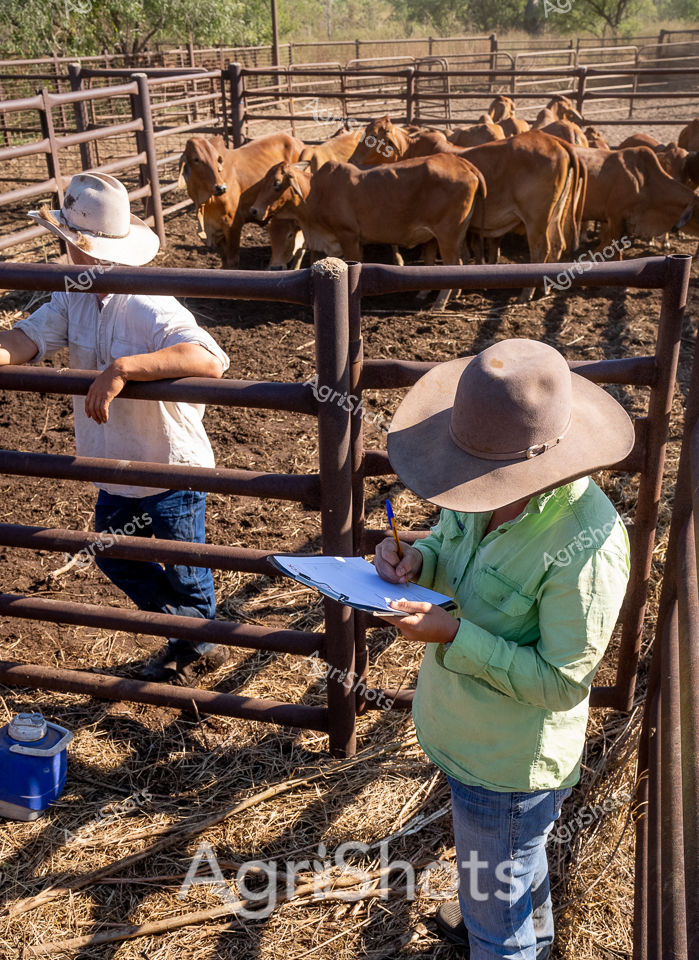
A stockworker in a soft sage-green shirt and wide-brimmed hat leans against the steel gate, meticulously recording details on a clipboard - her posture speaks of quiet concentration and practiced efficiency. Another worker in a crisp white shirt stands nearby, surveying the herd with the calm expertise of someone who understands every subtle movement and potential challenge of cattle management. The landscape behind them is quintessential Kimberley - sparse eucalyptus trees and dusty earth creating a muted, golden-brown backdrop that stretches towards a hazy horizon. Straw and packed dirt carpet the yards, revealing the daily rhythms of station life where precision and patience are as essential as the robust livestock themselves. These moments of careful stock management represent the backbone of Australia's northern cattle industry - a delicate dance of human skill and animal husbandry played out under an unforgiving sky.
 Image
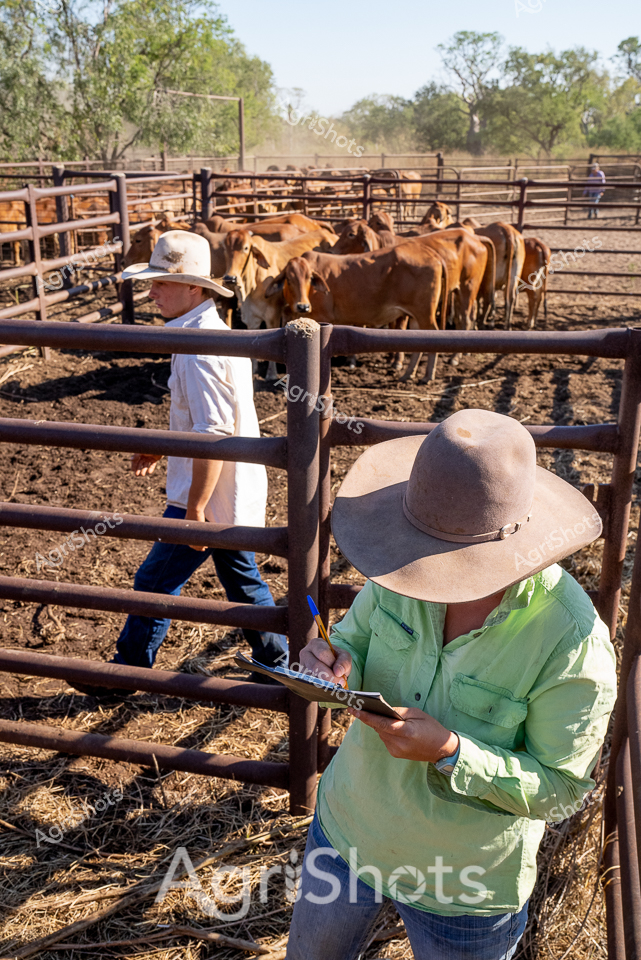
In the sun-baked cattle yards of Western Australia's rugged Kimberley region, two rural workers tend to a herd of rich copper-colored Brahman cattle. Steaming earth and weathered timber yards frame the scene, with straw scattered across the ground reflecting the harsh pastoral landscape. One worker in a light green shirt carefully documents details on a clipboard, while the other leans against the steel rail fence, surveying the compact herd of muscular cattle with their distinctive humped shoulders and loose skin - hallmarks of the heat-tolerant Brahman breed. Wide-brimmed stockman's hats shield them from the intense Australian sunlight, a practical uniform of the remote station life. The cattle stand closely grouped, their sleek coats gleaming with health, a testament to careful management in this challenging agricultural environment. This image captures the quiet concentration and systematic approach of contemporary Australian cattle station operations, where careful record-keeping and animal husbandry are as crucial as traditional stockwork.
 Image
Dusty blue cattle yards echo with the rhythmic work of station hands in the sun-drenched Kimberley. A weathered blue cattle crush restrains a sturdy Brahman beast, its distinctive loose skin and heat-resistant coat marking it as quintessentially northern Australian livestock. One worker in a checked shirt and wide-brimmed akubra leans against a rusted barrel, meticulously recording details, while another in a faded red shirt manages the animal's positioning. Harsh midday light casts sharp shadows across the corrugated iron roof, highlighting the utilitarian precision of rural veterinary practice. The metal infrastructure - weathered, robust, and functional - tells a story of generations of cattle management in Western Australia's unforgiving pastoral landscape. This scene captures the essential agricultural work of vaccination and animal health, where human skill and mechanical infrastructure combine to maintain the resilience of Australia's cattle industry.
 Image
Golden light bathes the expansive cattle yards, where a dense herd of burnished bronze Brahman cattle fill the dusty holding pens. The robust, heat-adapted cattle crowd together, their distinctive humped shoulders and loose skin reflecting generations of breeding for the harsh Kimberley landscape. Wooden rail fences and metal gates create a structured network through which stockworkers in wide-brimmed hats and sturdy work attire carefully manage the livestock. Sparse trees and scrubland stretch across the background, defining the rugged Western Australian pastoral setting with its clear azure sky and sun-bleached earth. A small number of workers move strategically through the yards, their positioning calculated to guide and control the movement of the substantial herd. The scene captures the quintessential Australian cattle station experience - a testament to the skill, resilience, and agricultural heritage of the region's pastoral communities.
 Image
Capturing the essential work of rural cattle management, this image unfolds in a weathered blue cattle yard typical of Western Australia's rugged Kimberley region. A rancher wearing a classic wide-brimmed Australian bush hat and a soft blue checked shirt leans over a metal cattle crush, meticulously documenting animal health records. Worn steel gates and rustic infrastructure frame the scene, suggesting the harsh yet precise environment of a remote cattle station. The worker's focused posture reveals the careful attention required in livestock vaccination and record-keeping, with tools and paperwork carefully arranged on the industrial metal surface. Soft morning light filters through the yards, highlighting the textural interplay of weathered blue metal, crisp white documentation, and the subtle textures of rural workwear. This image embodies the quiet professionalism of Australian agricultural workers - methodical, resilient, and intimately connected to the land and livestock that define their livelihood.