Browse the collection
 Image
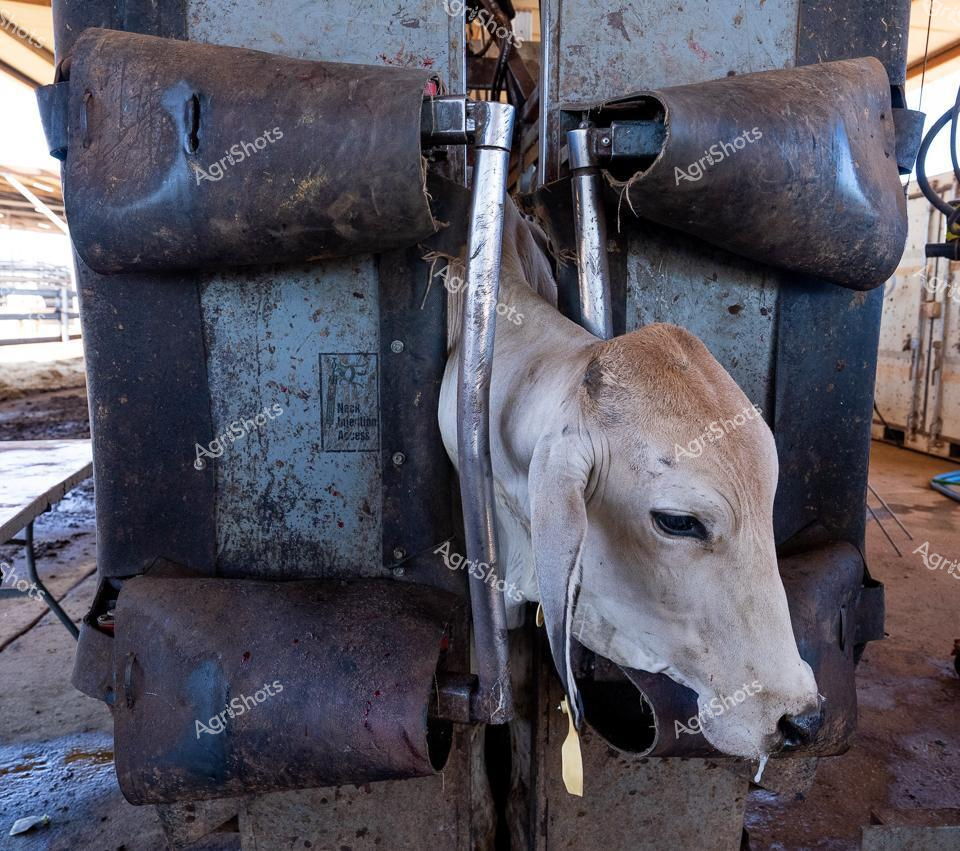
In the heart of the Northern Territory's cattle country, a pale Brahman heifer stands restrained within a robust steel cattle crush, her cream-colored hide contrasting against weathered dark metal infrastructure. The industrial-grade restraining equipment, marked with faded identification tags, represents a critical moment in station livestock management - a precise, controlled environment where animal health and safety protocols are meticulously executed. Sturdy hydraulic bars and heavy-duty steel panels enclose the animal, allowing precise handling for essential procedures like vaccination, tagging, or health inspection. The crush's utilitarian design speaks to generations of pastoral engineering, creating a secure interface between human agricultural practice and livestock welfare. Ambient dust and worn metal surfaces communicate the unrelenting environmental challenges of remote cattle station operations, where precision equipment must endure extreme temperatures and demanding conditions. This scene captures the clinical yet necessary process of animal husbandry, where each carefully managed interaction ensures the health and productivity of Australia's renowned beef herds.
 Image
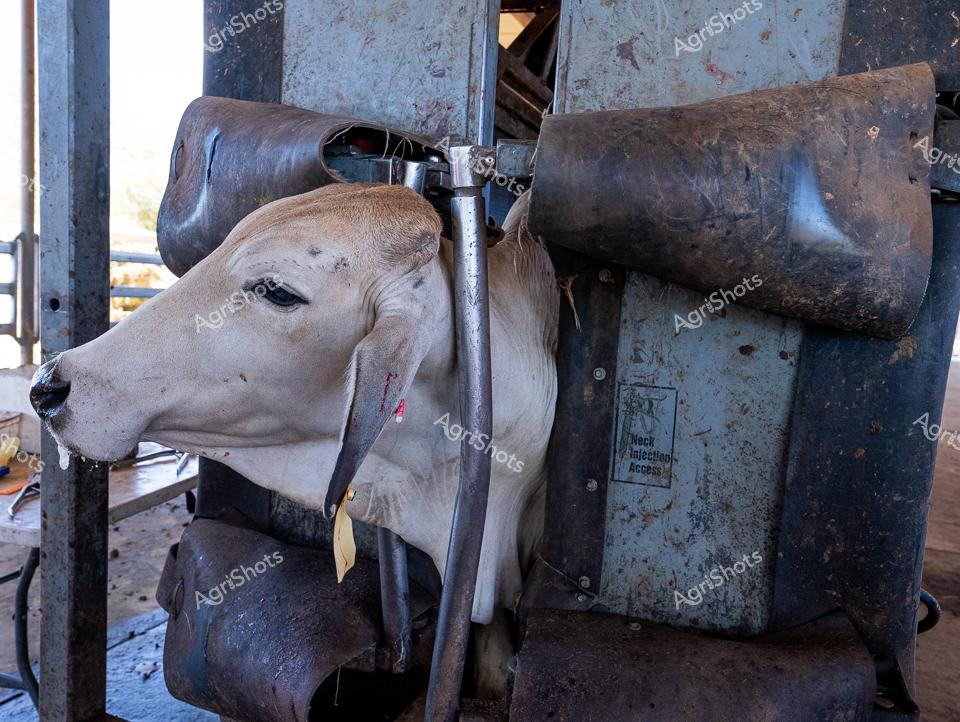
A pale Brahman cattle beast stands quietly in a robust steel cattle crush, its distinctive pale hide marked with subtle weathering. Industrial-grade blue-grey metallic restraint panels enclose the animal, with a 'Neck Injection Access' panel visible, highlighting the precision infrastructure of modern cattle processing. The crush's heavy-duty design speaks to the rugged Northern Territory cattle station environment, where efficient livestock management is critical to agricultural operations. Worn metal surfaces and strategic mechanical components reveal years of practical use, capturing the functional aesthetic of outback agricultural infrastructure. The animal appears calm and controlled, demonstrating the carefully engineered design that minimizes stress during essential veterinary and management procedures. This image epitomizes the sophisticated yet unadorned technology that underpins Australia's beef production systems, where animal welfare and operational efficiency converge in remote pastoral landscapes.
 Image
A stockworker in a vibrant teal shirt and cap operates a high-tech cattle processing station, capturing the precision of modern northern Australian agricultural practices. The robust steel cattle crush - a critical piece of livestock handling equipment - stands ready, surrounded by a complex network of hydraulic controls, digital readers, and industrial machinery. Yellow digital EID (Electronic Identification) readers and control panels suggest advanced tracking and management technology integral to contemporary cattle station operations. The weathered metal infrastructure and industrial setting evoke the rugged Northern Territory landscape, where sophisticated livestock management meets harsh environmental conditions. Every component of this scene speaks to the technical expertise and careful animal handling required in large-scale cattle production, highlighting the intersection of traditional stockmanship and cutting-edge agricultural technology. The muted industrial colors - teal, steel gray, yellow - and the worker's focused posture communicate the serious, methodical nature of cattle station work.
 Image
Outback cattle processing unfolds with precision in a rugged Northern Territory station workshop. Two seasoned stockmen operate a robust cattle crush, their movements deliberate and practiced as they manage livestock induction equipment. The industrial workspace is a symphony of weathered machinery - a blue-grey cattle handling unit dominates the scene, surrounded by essential tools, lubricant containers, and well-worn work surfaces. A green-shirted worker carefully manages electronic monitoring equipment while his colleague in neutral tones prepares processing materials, reflecting the practical, no-nonsense approach of Territory cattle station operations. The dirt floor and complex overhead pipe infrastructure speak to the harsh, functional environment of remote Australian cattle management. Yellow safety containers and industrial equipment underscore the technical sophistication behind seemingly traditional agricultural practices. This is a moment of controlled efficiency, where generations of agricultural knowledge merge with modern technological precision - quintessential Northern Territory cattle station work capturing the resilience and skill of Australian agricultural professionals.
 Image
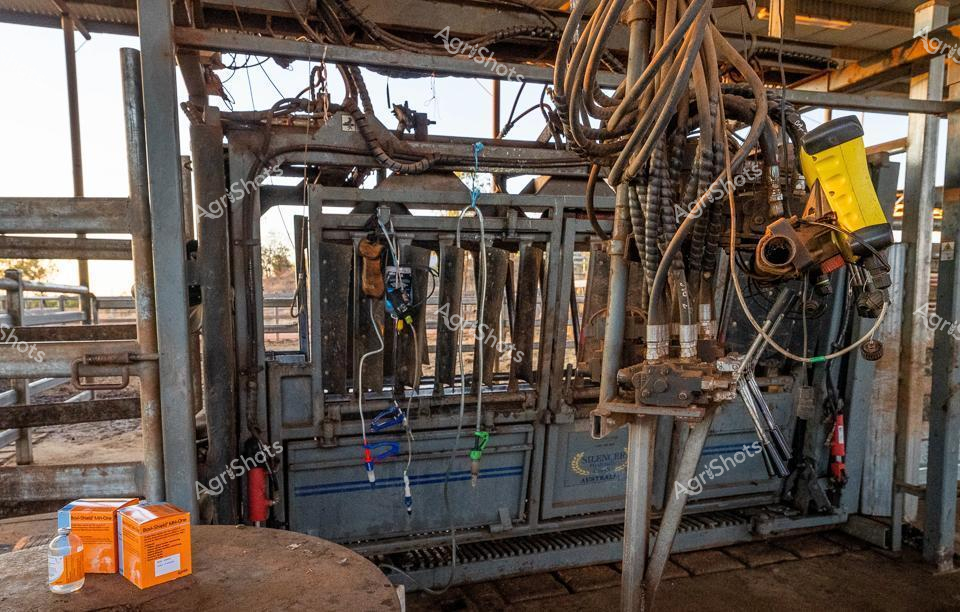
Dusty golden light filters through the rustic cattle yard, illuminating a robust livestock processing station engineered for efficient animal management. The industrial-grade cattle crush stands as a centerpiece, surrounded by a complex network of hydraulic lines, control mechanisms, and essential veterinary equipment. Vibrant orange medication boxes from Zoetis sit in the foreground, suggesting an upcoming cattle health intervention typical of professional Northern Territory station operations. Robust steel infrastructure, weathered by years of harsh outback conditions, frames the scene with utilitarian precision - each component carefully designed to safely restrain and treat livestock during critical management procedures. Multiple colored cables and control mechanisms hang strategically, indicating the technical sophistication required in modern cattle station animal husbandry. The environment speaks to the demanding yet methodical nature of beef production in Australia's challenging tropical landscapes, where precision and animal welfare converge in specialized agricultural infrastructure.
 Image
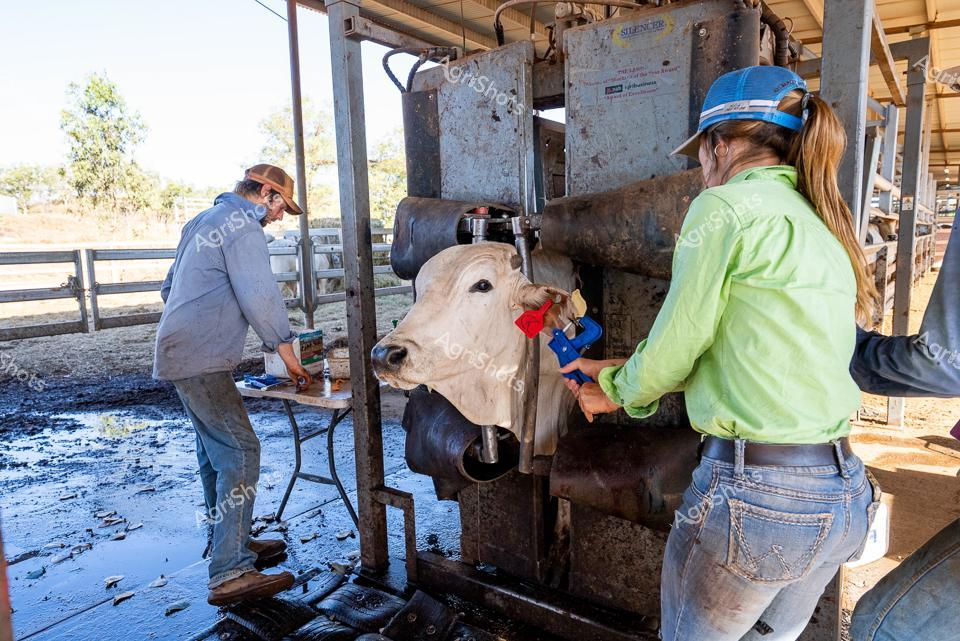
Cattle mustering and processing unfold at a Northern Territory cattle station, capturing the disciplined choreography of livestock management. A sturdy Brahman cow stands patient and restrained within a metal cattle crush, her pale cream hide contrasting against weathered steel infrastructure. Two agricultural workers - one in a blue cap and bright green work shirt, the other in a gray long-sleeved shirt and wide-brimmed hat - collaborate efficiently around the animal, performing routine health checks or induction procedures. The ground is muddied and worn, telling of countless similar interactions, while sunlight filters across timber yards and distant scrub vegetation, suggesting a typical dry season morning. Industrial equipment like the Silencer cattle handling system provides critical support, enabling safe and controlled interactions between humans and livestock. This scene epitomizes the precision, skill, and quiet teamwork fundamental to Australia's extensive cattle production landscape, where modern agricultural technology meets traditional stockmanship.
 Image
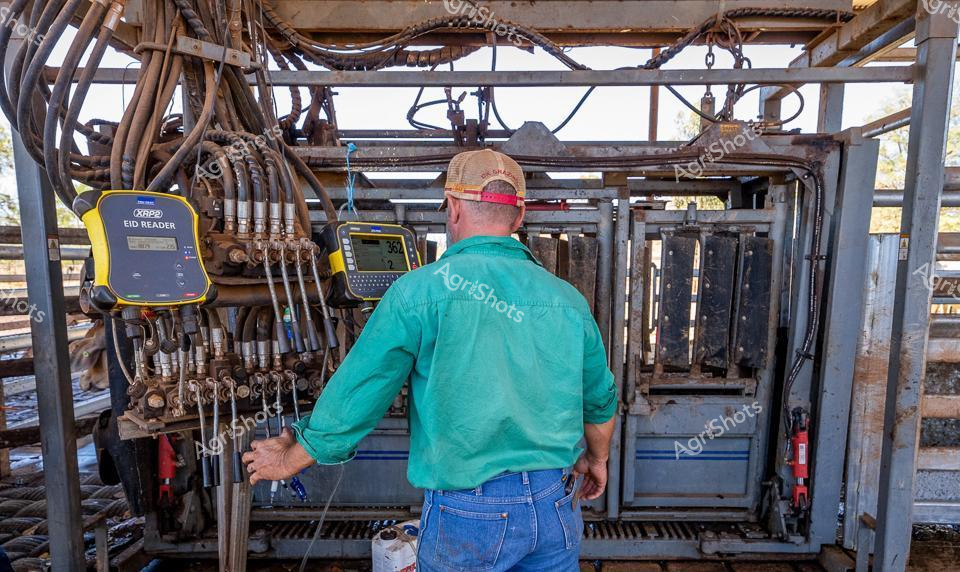
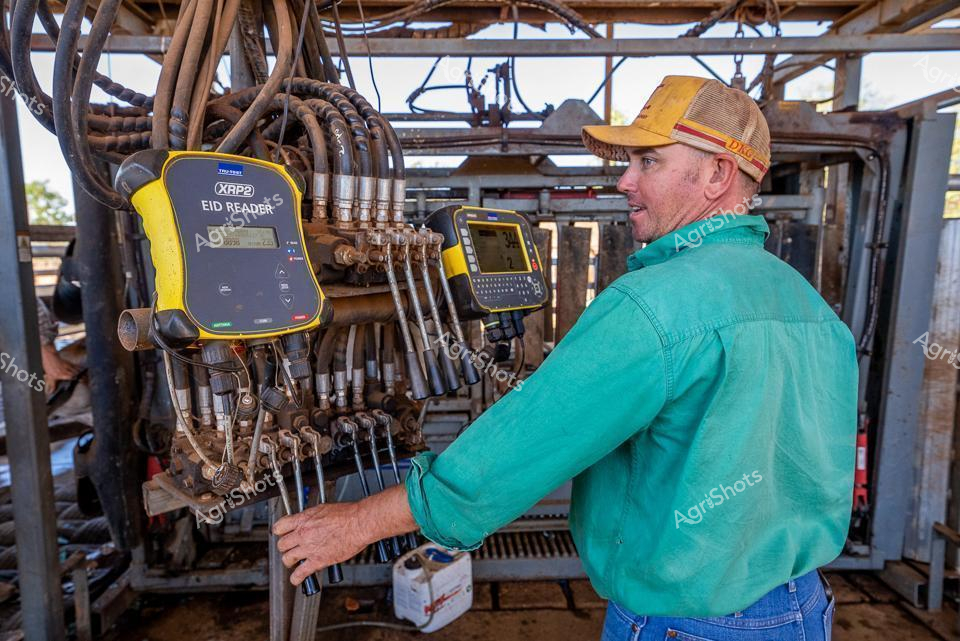
A seasoned stockman in a vivid emerald work shirt and ochre trucker cap operates an advanced electronic cattle identification system in a robust steel cattle yard. The yellow XRP EID (Electronic Identification) reader displays critical data as multiple hydraulic squeeze chute controls stand ready, revealing a sophisticated modern cattle processing setup typical of Northern Territory station operations. Metallic pipes and robust agricultural infrastructure frame the scene, showcasing the technological precision of contemporary cattle management. The stockman's focused posture and careful interaction with the electronic equipment highlight the blend of traditional pastoral skills and cutting-edge agricultural technology. Harsh sunlight filters through the yard's structural framework, casting sharp shadows and emphasizing the robust, functional design of the cattle handling equipment. This image captures the essence of Northern Territory cattle station workflow - where skill, technology, and rugged landscape converge in the critical task of livestock management.
 Image
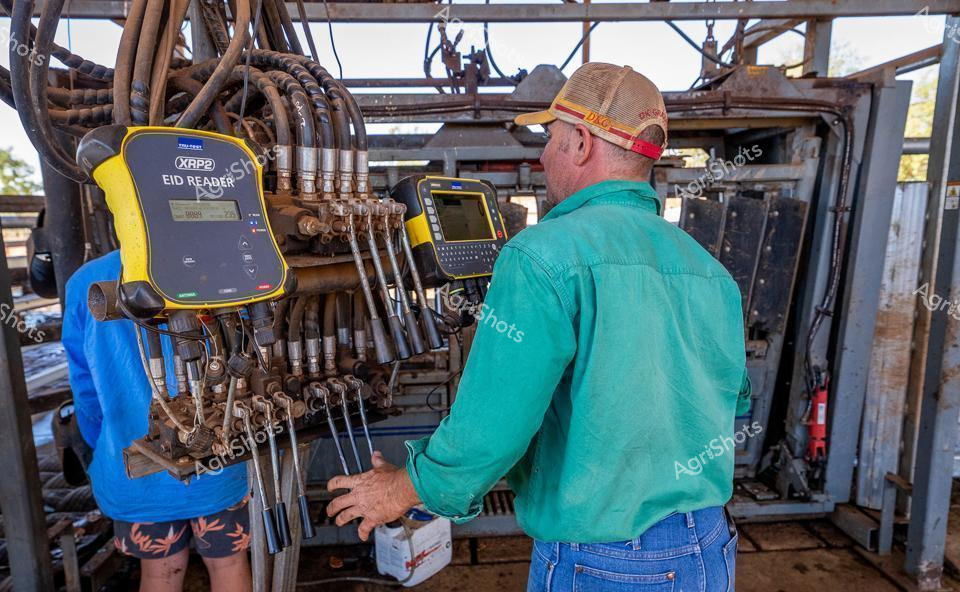
A seasoned station worker in a vivid turquoise work shirt and mesh-backed cap operates an electronic cattle identification system in a robust steel cattle yard. The sophisticated NLIS (National Livestock Identification System) EID reader stands prominently in yellow against a complex network of hydraulic crush gates and metal infrastructure, capturing the high-tech precision of modern Australian cattle management. Brahman cattle - renowned for their heat tolerance and prominent in Northern Territory stations - are being systematically processed, with each animal electronically tagged and logged to ensure traceability and biosecurity. The industrial steel framework, weathered and robust, frames a scene of methodical agricultural technology, where generations of pastoral knowledge merge seamlessly with digital tracking systems. Harsh sunlight filters across the metallic surfaces, casting sharp shadows that highlight the intricate mechanical details of the cattle handling equipment, embodying the uncompromising efficiency of Northern Territory beef production. This image encapsulates the contemporary Australian cattle industry - a perfect intersection of traditional pastoral skills and cutting-edge agricultural technology.
 Image
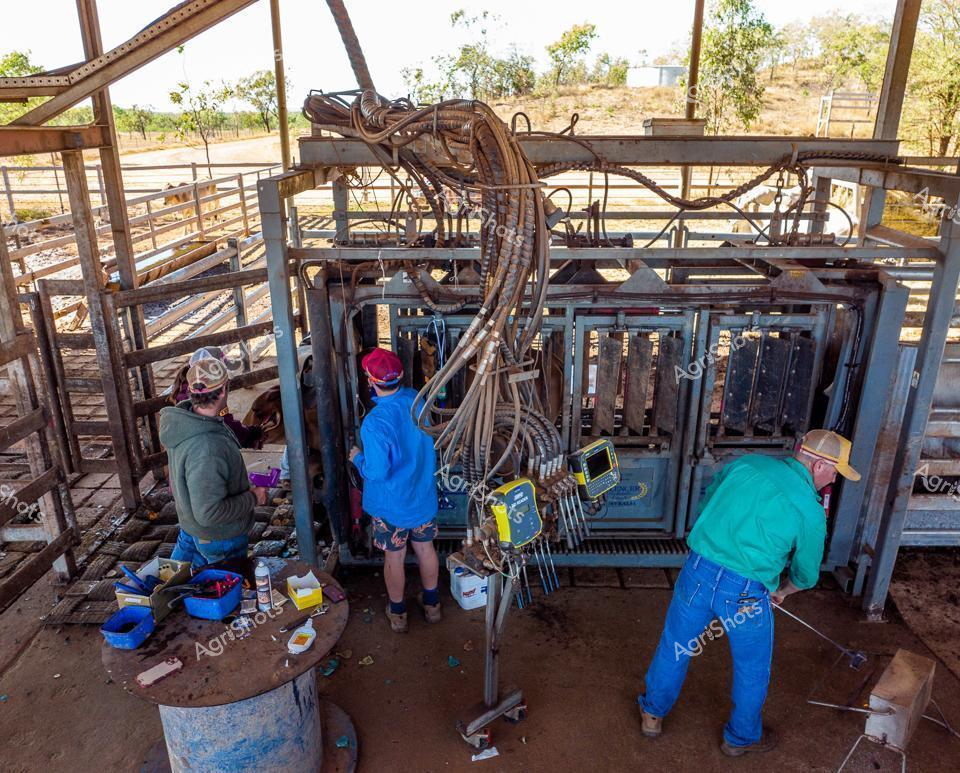
Cattle processing unfolds with precision at a remote Northern Territory cattle station, where three skilled workers operate a robust hydraulic cattle crush. Dressed in a palette of blues, greens, and earth tones, the team works methodically around the heavy-duty metal infrastructure, managing complex hydraulic lines and equipment. A yellow electronic monitoring device sits ready, indicating modern agricultural technology integrated into traditional livestock management practices. The rugged, sun-drenched landscape stretches beyond the wooden and metal yards, with sparse trees and open terrain typical of Australia's northern pastoral regions. Specialized equipment like the Silencer cattle handling system demonstrates the careful balance of animal welfare and operational efficiency in beef production. The scene captures the technical expertise and collaborative effort required in managing Brahman cattle, a breed renowned for its adaptability to harsh tropical environments.
 Image
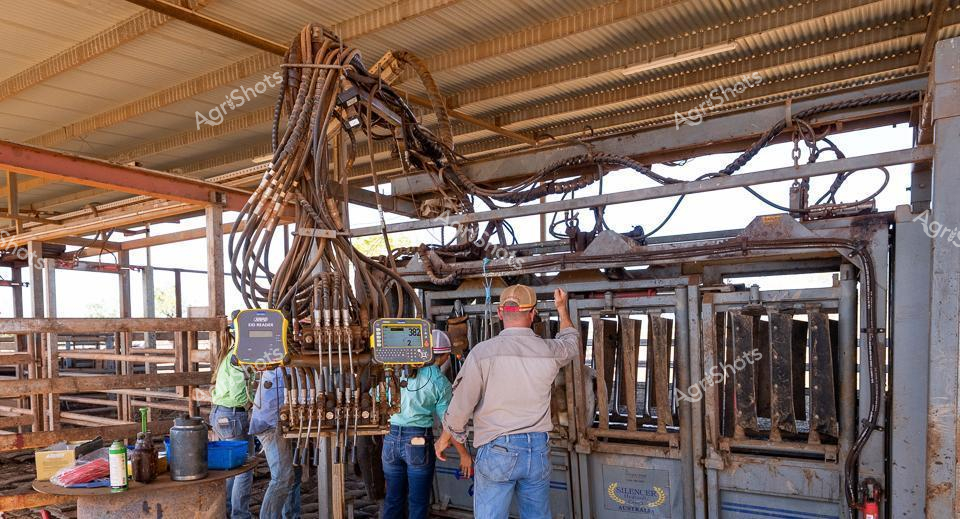
Dusty light filters through the corrugated iron roof of a robust cattle yard, where seasoned station workers manage a cattle induction process. A complex network of rusty steel pipes and hydraulic cattle crush equipment creates an intricate industrial framework, highlighting the precision of modern northern Australian cattle management. Three workers wearing practical work attire - jeans, long-sleeved shirts, and a distinctive cap - operate electronic monitoring equipment alongside the heavy-duty metal infrastructure. The Silencer cattle handling system stands prominently, its mechanical frame designed to safely restrain and process livestock with minimal stress. Weathered blue and grey metal surfaces, tangled hydraulic lines, and industrial equipment speak to the robust engineering required in remote cattle station operations. This scene captures the intersection of agricultural expertise, technological innovation, and the challenging environment of Northern Territory cattle production, where every movement is calculated and every piece of equipment serves a critical purpose in managing valuable Brahman cattle herds.
 Image
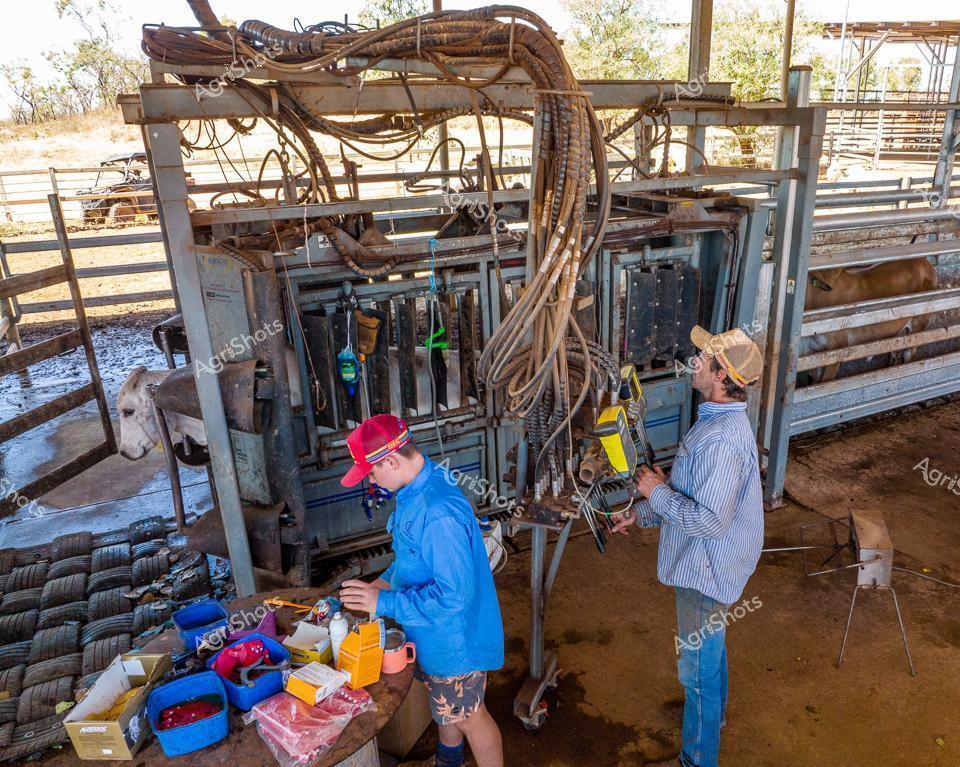
In the dusty cattle yards of the Northern Territory, two workers tend to livestock processing with practiced efficiency. A complex metal cattle crush stands as the centerpiece, its rusted hydraulic arms and tangled cables revealing years of hard service under the harsh Australian sun. A worker in a bright blue jacket and red cap carefully prepares equipment alongside another in a striped shirt and wide-brimmed hat, surrounded by colorful plastic containers of supplies and tools. A pale Brahman cattle beast waits patiently in the adjacent pen, its distinctive loose skin and heat-adapted features marking it as quintessentially suited to this challenging landscape. The scene captures the methodical rhythm of station life - a blend of technical precision and raw agricultural practicality, where animal health management meets the unforgiving beauty of the Australian outback. Utilitarian and workmanlike, every element speaks to the careful, considered approach required to manage livestock in one of the world's most demanding agricultural environments.
 Image
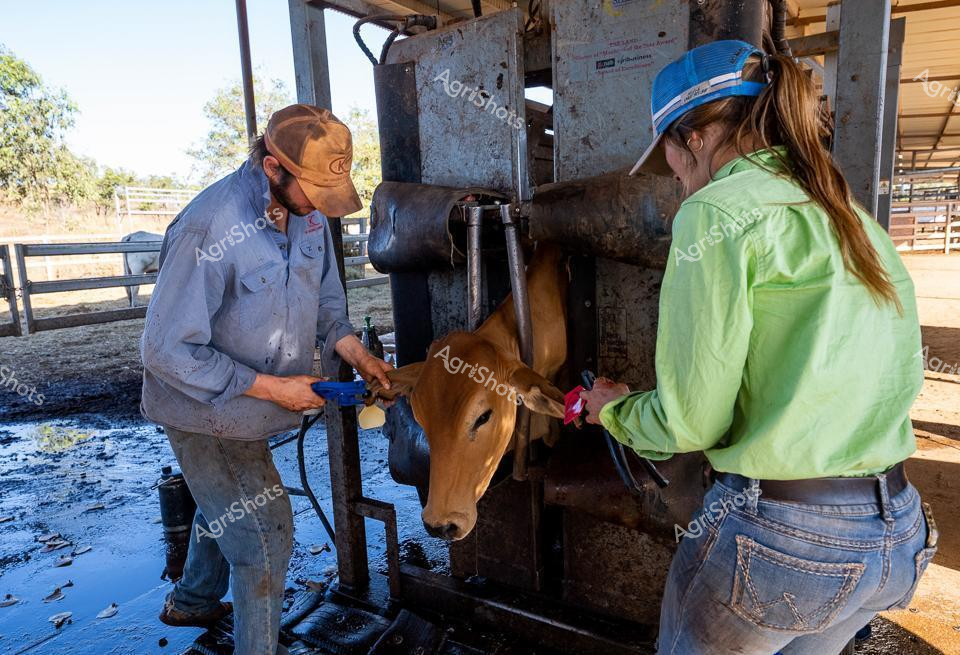
Brahman cattle induction unfolds in a dusty Northern Territory cattle yard, where skilled station workers carefully manage a young beast through the processing chute. A worker in a faded blue work shirt and brown cap operates the hydraulic Catagra cattle crush, while his colleague in a bright lime-green shirt and blue cap assists from the opposite side. The robust Brahman, with its distinctive loose skin and alert ears, stands calmly within the metal framework, representing the resilience of cattle bred for harsh tropical conditions. Puddles of muddy water reflect the harsh sunlight, highlighting the rugged infrastructure typical of remote Australian cattle stations. The scene captures the precision and care integral to livestock management, where animal welfare and operational efficiency intersect. Industrial metal equipment, weathered by years of use, frames the methodical process of preparing cattle for life on the station, embodying the quiet expertise of Australian agricultural workers.
 Image
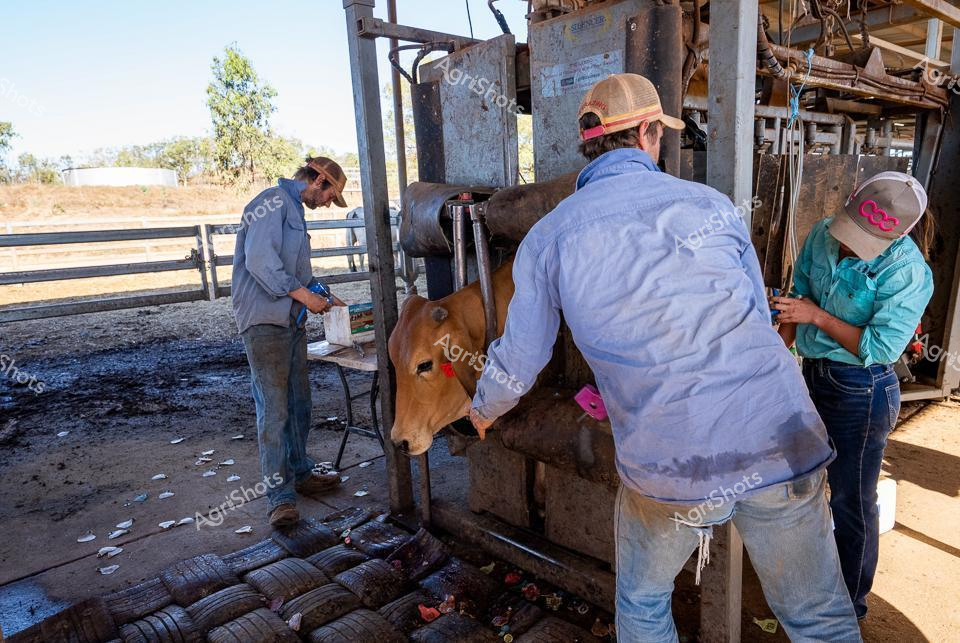
Cattle induction unfolds in the stark Northern Territory landscape, where a compact cattle yard becomes a hub of methodical rural activity. A tawny Brahman heifer stands quietly in the metal cattle crush, her distinctive pale coat marked with subtle coloration against the dusty, tire-lined processing area. Three workers in practical workwear - blue chambray shirts, sturdy jeans, and protective caps - collaborate with practiced efficiency, each managing a specific task in the livestock management process. The harsh sunlight casts sharp shadows across the compacted earth, highlighting the industrial infrastructure of gates, chutes, and processing equipment typical of large pastoral stations. One worker prepares medication or identification tools, while another carefully manages the animal's movement, demonstrating the careful balance of animal handling and agricultural technology. The scene captures the rhythmic precision of cattle station operations, where generations of knowledge merge with modern veterinary practices to maintain herd health and productivity in Australia's challenging rural environments.
 Image
Verdant mangrove forests embrace the sinuous blue waters of a pristine tropical river in Australia's Northern Territory. Lush green trees line the riverbanks with dense, interconnected canopies, creating a vibrant ecological corridor that stretches toward the horizon. The early morning light casts a soft azure glow across the landscape, revealing subtle reflections and the glassy surface of the waterway. This aerial perspective captures the extraordinary biodiversity of the region, where intricate ecosystems thrive in the transitional zones between land and water. The rich emerald and olive tones of the vegetation contrast beautifully with the deep blue-gray of the river, illustrating the dynamic natural environment characteristic of northern Australian waterways. Such landscapes are critical habitats supporting diverse wildlife and representing the complex environmental systems that define Australia's tropical zones.
 Image
Water buffalo thunder across dusty savanna plains in Australia's rugged Northern Territory, kicking up ochre-colored earth beneath a crystalline blue sky. A classic Territory cattle muster captures the raw energy of these powerful bovine herds moving across sparse grasslands dotted with hardy eucalyptus and acacia trees. The muscular grey-black buffalo move in tight formation, their robust bodies and curved horns reflecting generations of adaptation to this challenging tropical landscape. Scattered sparse trees provide minimal shade, highlighting the harsh yet beautiful ecosystem of northern Australia's agricultural heartland. Dry season grasses crunch underfoot, creating a fine dust cloud that trails behind the herd, symbolizing the timeless rhythms of pastoral life. This scene epitomizes the resilience of Australia's cattle industry, where mustering remains a critical skill in managing livestock across vast, unforgiving terrains.
 Image
Sweeping aerial vista of a sinuous river cutting through the expansive Northern Territory landscape, revealing the raw beauty of Australia's remote inland regions. Lush green riparian forests line the river's banks, creating a verdant corridor that contrasts dramatically with the rust-brown plains stretching to the horizon. The waterway reflects a brilliant azure sky, its surface a mirror of tranquil stillness, suggesting the critical importance of water resources in this arid agricultural terrain. Sparse vegetation and open grasslands demonstrate the resilient ecosystem of the NT, where pastoral and agricultural operations navigate challenging environmental conditions. The landscape speaks to the delicate balance of agricultural development and natural preservation, with the river serving as a lifeline for potential grazing lands and ecosystem sustainability. Captured during the golden hours of early morning, the image showcases the magnificent scale and untamed potential of Australia's northern agricultural frontier, where every hectare tells a story of survival, adaptation, and human endeavor.
 Image
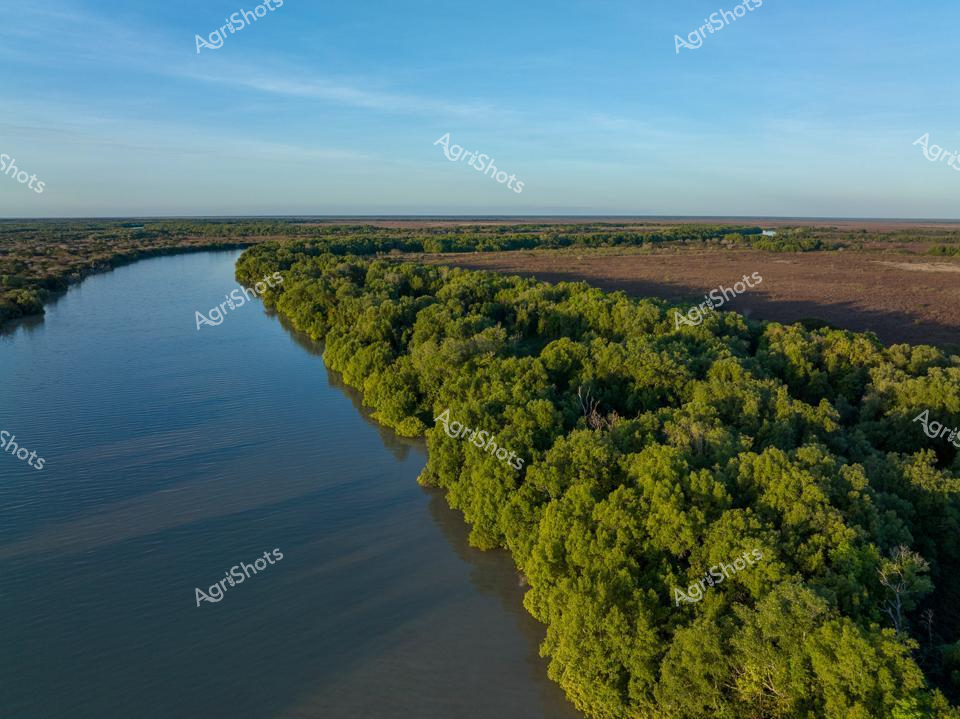
Serpentine River Sanctuary: A Verdant Northern Territory Vista Emerald-green forests cascade along the sinuous banks of a broad, reflective waterway, capturing the pristine wilderness of Australia's Northern Territory. The lush riparian corridor stands in sharp contrast to the ochre-toned floodplains stretching beyond, creating a breathtaking aerial perspective of untouched ecological diversity. Soft azure skies drift above the landscape, suggesting early morning light filtering across this remote agricultural frontier. Dense mangrove-like vegetation hugs the river's edge, forming an impenetrable green barrier that speaks to the robust ecosystem's resilience and ecological complexity. The water's surface appears calm and deep, reflecting the surrounding greenery and hinting at the critical hydrology supporting this remarkable landscape. This panoramic view encapsulates the raw, untamed beauty of Australia's northern wilderness - a testament to the intricate relationship between water, vegetation, and the expansive, uninterrupted horizons that define the region's agricultural and environmental potential.
 Image
Water buffalo herd grazes across the expansive golden grasslands of the Northern Territory, their muscular black bodies clustered together under a pale blue morning sky. Mature buffalo with curved horns and sleek wet coats move deliberately through the dry seasonal landscape, representing a critical livestock breed in Australia's tropical northern agricultural regions. The herd displays a robust, powerful presence - each animal muscular and well-conditioned, reflecting the resilient nature of these animals adapted to harsh savanna environments. Sunlight casts soft shadows across the undulating terrain, highlighting the textural variations of short grasses and scattered ground vegetation. These water buffalo, descendants of Indonesian imports from decades past, now form an established population crucial to northern Australian agricultural production, demonstrating remarkable genetic adaptation to challenging subtropical ecosystems. The scene captures the quintessential Northern Territory pastoral landscape - vast, open, and defined by tough livestock thriving in seemingly inhospitable conditions.
 Image
Dusty stockroute dissects a sun-bleached savanna landscape, where a disciplined herd of water buffalo traverses the dry season terrain. Dark charcoal-grey buffalo move in tight formation along a rust-red dirt track, their muscular bodies casting long shadows across the golden grasslands punctuated by scattered eucalyptus and acacia trees. The wide-open northern Australian pastoral scene captures the essence of Territory cattle management - a timeless rhythm of mustering and movement under an expansive cerulean sky. Sparse woodland margins frame the herd's deliberate progression, highlighting the resilience of these robust animals adapted to harsh tropical woodlands. Each buffalo demonstrates collective discipline, walking single file along the narrow path worn through the dry winter pastures, embodying generations of pastoral enterprise in Australia's remote northern regions. The aerial perspective reveals the intricate relationship between livestock, landscape, and the strategic pathways that connect grazing lands in this unforgiving but magnificent agricultural frontier.
 Image
Meandering through the expansive landscape of Australia's Northern Territory, this majestic river cuts a brilliant turquoise path between lush green forests and golden-brown grasslands. The aerial perspective reveals the serpentine waterway, flanked by dense riparian vegetation, flowing beneath a pristine azure sky that stretches to the distant horizon. A solitary bridge spans the river, connecting the verdant woodland regions and hinting at the critical transportation and agricultural infrastructure of this remote region. The landscape transitions from rich forest greens to ochre-toned plains, demonstrating the dynamic ecosystems that characterize the NT's agricultural frontier. Soft morning light bathes the scene, casting long shadows and highlighting the textural contrasts between the smooth water surface and the intricate canopy of trees. This sweeping vista captures the raw, untamed beauty of Australia's tropical north - a landscape of profound ecological diversity and immense agricultural potential, where water is the lifeblood of both natural and cultivated systems.
 Image
Water buffalo herd thunders across a dusty Northern Territory grassland, kicking up ochre-colored earth beneath a brilliant azure sky. Muscular dark-skinned bovines cluster tightly, their curved horns silhouetted against scattered eucalyptus and woodland trees standing sentinel on the parched landscape. The dry season's harsh conditions are evident in the scorched ground and sparse vegetation, highlighting the resilience of these hardy animals adapted to Australia's challenging tropical environments. Dust clouds billow around the herd, creating a sense of movement and energy that captures the raw, untamed spirit of pastoral cattle management in the Top End. These water buffalo represent a critical agricultural resource, their robust frames testament to generations of survival in one of Australia's most unforgiving landscapes. The scene embodies the rugged intersection of wildlife, agriculture, and landscape that defines the Northern Territory's unique agricultural heritage.
 Image
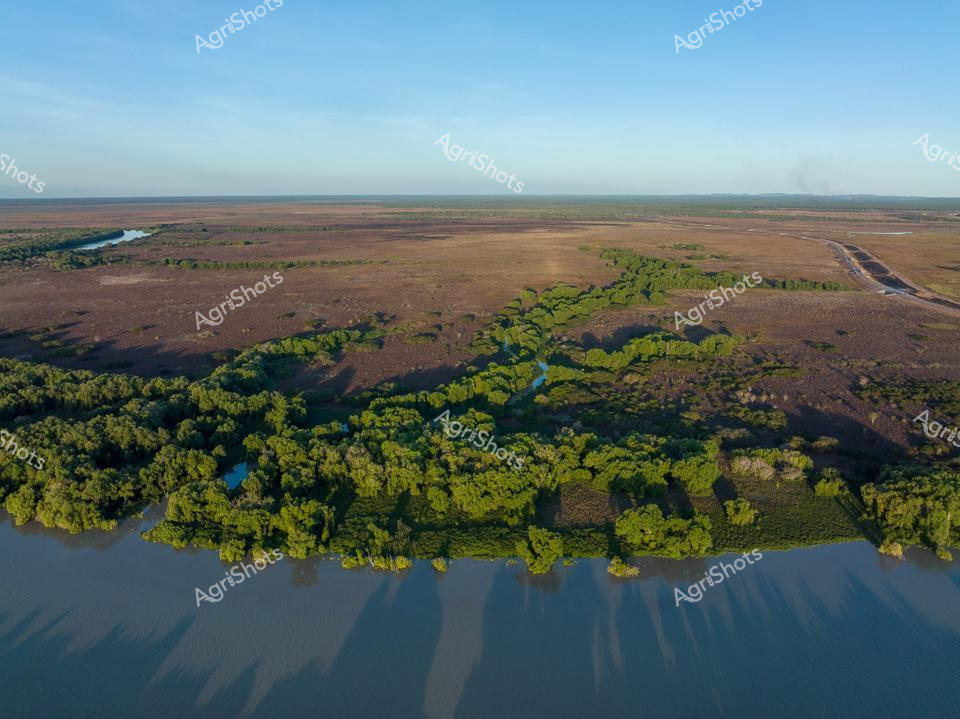
Aerial vista of the Northern Territory's expansive riverine landscape, where verdant green riparian forests contrast dramatically with the ochre-toned savanna plains. A sinuous river meanders through a lush corridor of dense woodland, its blue-grey waters reflecting the vibrant emerald canopy and creating mirror-like shadows along its banks. The landscape speaks to the resilient ecosystem of Australia's tropical north, where water is the lifeline connecting diverse terrains - from dense forest to open grassland. Sweeping horizons showcase the immense scale of the territory, with subtle variations in terrain revealing the complex geological and ecological tapestry of this remote region. The early morning light casts a soft azure glow across the sky, highlighting the pristine wilderness and the delicate balance between water, vegetation, and arid ground. This breathtaking panorama captures the raw, untouched beauty of Australia's northern wilderness, a landscape that epitomizes the continent's extraordinary ecological diversity.
 Image
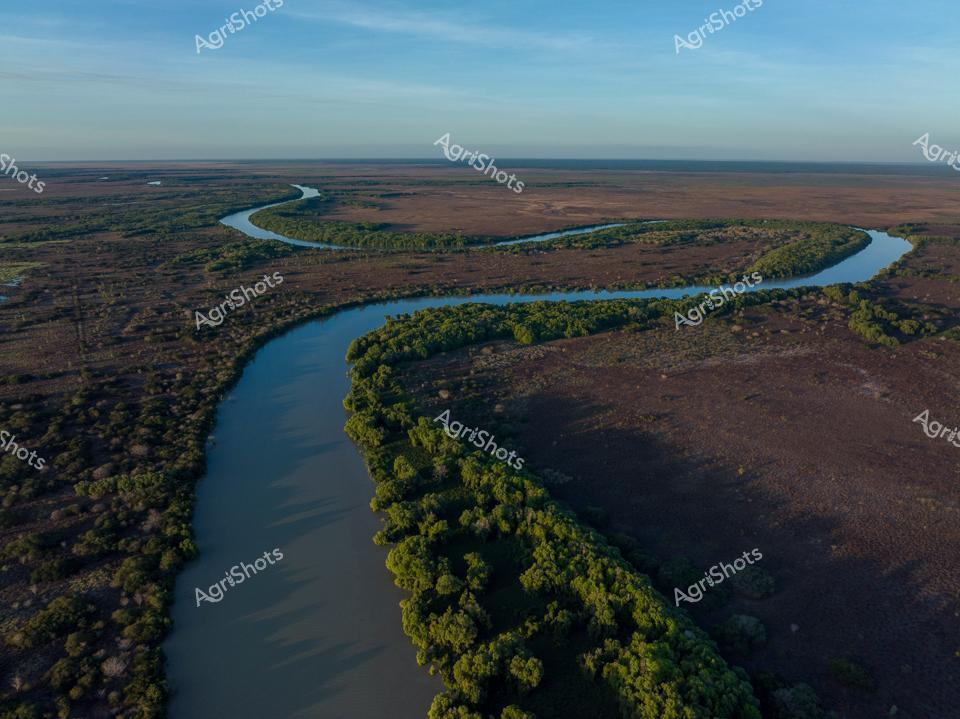
Serpentine Waterway of the Northern Territory A sinuous river winds through the expansive landscape of Australia's Northern Territory, its deep blue-green waters carving a mesmerizing path through a rugged, ochre-toned terrain. Dense green riparian forests hug the riverbanks, creating a stark contrast with the surrounding brown and amber grasslands that stretch to the horizon. The aerial perspective reveals the river's elegant meanders, highlighting the intricate relationship between water and land in this remote, untamed ecosystem. Early morning or late afternoon light bathes the landscape, casting soft shadows and accentuating the topographical nuances of this quintessential Top End environment. The image captures the raw, elemental beauty of Australia's interior - a testament to the resilient and dynamic natural systems that define the continent's heartland. This vista embodies the dramatic and untouched character of the Northern Territory's riverine landscapes, offering a breathtaking glimpse into one of the world's most unique ecological regions.
 Image
Water buffalo herd grazes across a sun-drenched paddock in Australia's rugged Northern Territory, their midnight-black hides contrasting against the bleached golden grasses and scattered eucalyptus woodland. These robust Asiatic bovines, descendants of animals imported to northern Australia in the late 19th century, stand stoically under an expansive cerulean sky, embodying the resilience of tropical agricultural landscapes. Muscular and compact, each buffalo displays powerful curved horns and a thick, battle-hardened physique perfectly adapted to the harsh savanna environment. The dry season landscape reveals sparse, cured grasses and weathered tree lines, capturing the unforgiving beauty of the Top End's pastoral terrain. This tight mob represents the ongoing legacy of buffalo farming in remote Australian regions, where these hardy animals contribute to beef production and land management in challenging climatic conditions. The scene radiates a sense of quiet strength, with the herd's collective presence speaking to generations of agricultural adaptation in one of Australia's most demanding frontier ecosystems.