About this image
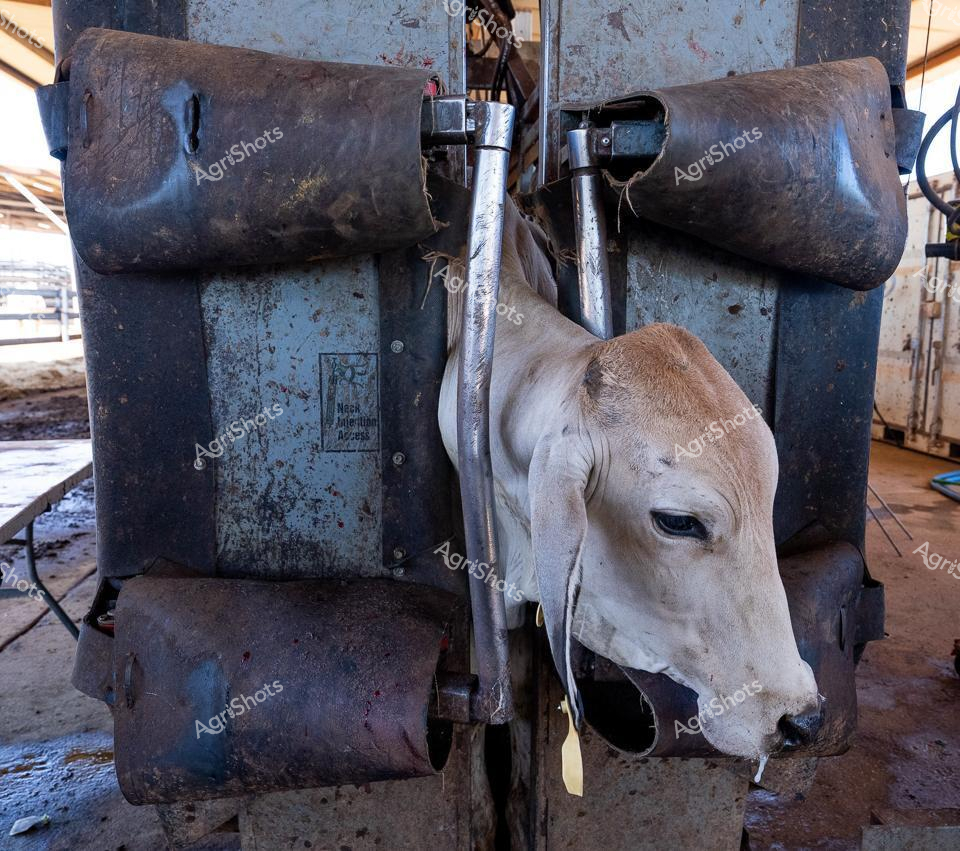
In the heart of the Northern Territory's cattle country, a pale Brahman heifer stands restrained within a robust steel cattle crush, her cream-colored hide contrasting against weathered dark metal infrastructure. The industrial-grade restraining equipment, marked with faded identification tags, represents a critical moment in station livestock management - a precise, controlled environment where animal health and safety protocols are meticulously executed. Sturdy hydraulic bars and heavy-duty steel panels enclose the animal, allowing precise handling for essential procedures like vaccination, tagging, or health inspection. The crush's utilitarian design speaks to generations of pastoral engineering, creating a secure interface between human agricultural practice and livestock welfare. Ambient dust and worn metal surfaces communicate the unrelenting environmental challenges of remote cattle station operations, where precision equipment must endure extreme temperatures and demanding conditions. This scene captures the clinical yet necessary process of animal husbandry, where each carefully managed interaction ensures the health and productivity of Australia's renowned beef herds.
Similar media
 Image
Image
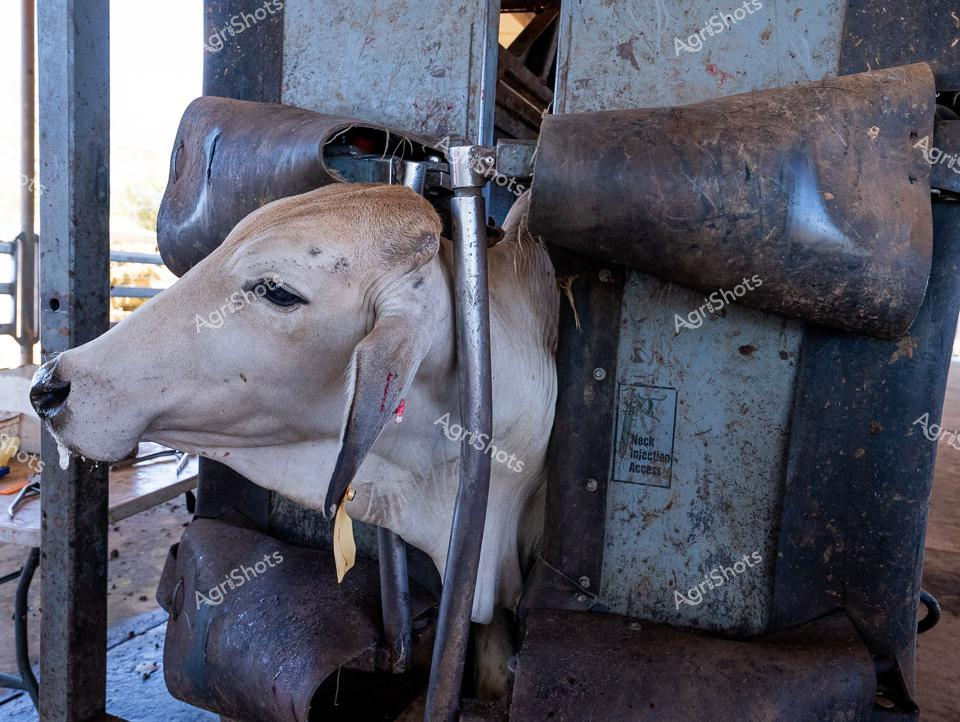
A pale Brahman cattle beast stands quietly in a robust steel cattle crush, its distinctive pale hide marked with subtle weathering. Industrial-grade blue-grey metallic restraint panels enclose the animal, with a 'Neck Injection Access' panel visible, highlighting the precision infrastructure of modern cattle processing. The crush's heavy-duty design speaks to the rugged Northern Territory cattle station environment, where efficient livestock management is critical to agricultural operations. Worn metal surfaces and strategic mechanical components reveal years of practical use, capturing the functional aesthetic of outback agricultural infrastructure. The animal appears calm and controlled, demonstrating the carefully engineered design that minimizes stress during essential veterinary and management procedures. This image epitomizes the sophisticated yet unadorned technology that underpins Australia's beef production systems, where animal welfare and operational efficiency converge in remote pastoral landscapes.
 Image
Image
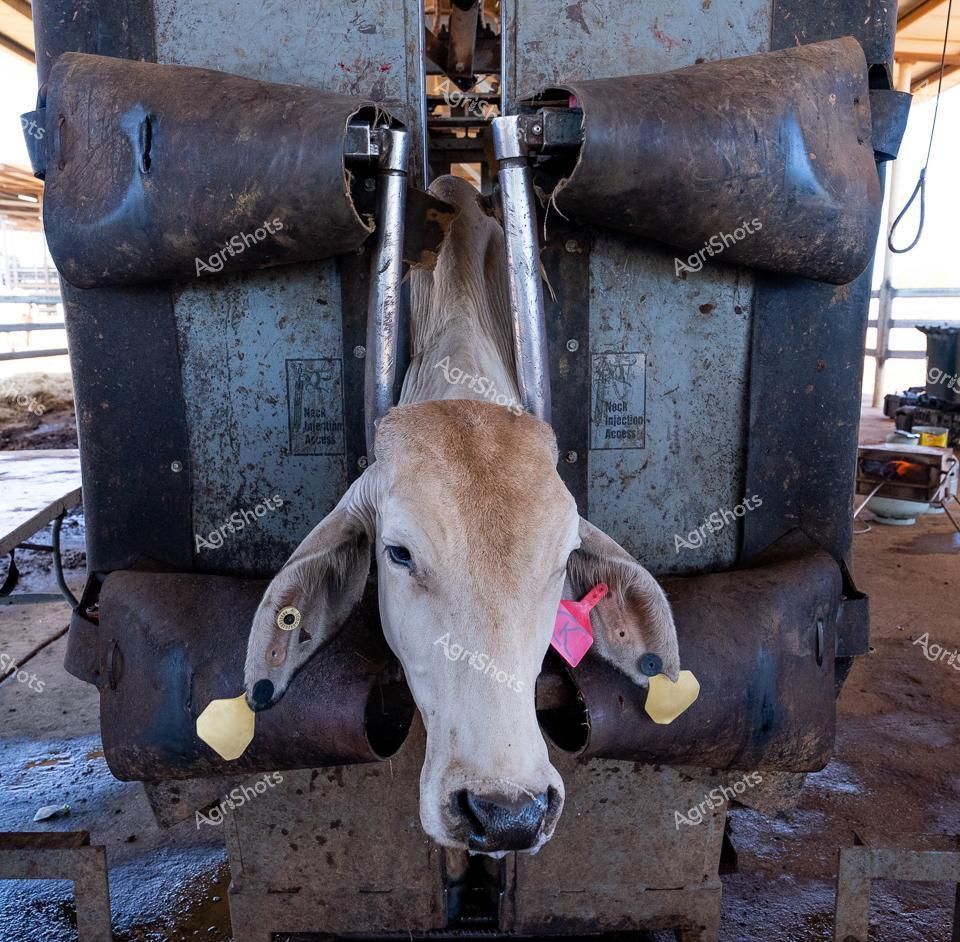
In the heart of Australia's Northern Territory, a pale Brahman heifer stands resolute within the heavy steel frames of a cattle crush at a remote station. Her cream-colored hide gleams against the weathered blue-grey metal, while yellow ear tags and a bright pink identification marker punctuate her distinctive coloration. Industrial machinery surrounds her, telling a story of careful livestock management and agricultural precision. The crush's robust mechanical components - with their industrial textures and mechanical complexity - frame the animal, suggesting a moment of controlled processing typical of modern cattle station operations. Soft morning light filters through the shed, highlighting the intricate details of the equipment and the animal's calm demeanor. This image captures the quintessential intersection of animal husbandry and agricultural technology, where safety, efficiency, and animal welfare converge in the unforgiving landscapes of northern Australian cattle country.
 Image
Image
Gleaming milking cups descend onto the flanks of Jersey cattle in a state-of-the-art rotary dairy platform. The metallic blue and silver machinery cradles each cow in a precise mechanical embrace, transforming the ancient art of milk production into a symphony of agricultural efficiency. Soft beige and white-marked Jersey cows stand quietly, their muscular forms illuminated by industrial lighting against the corrugated steel backdrop of the milking shed. Intricate clusters of stainless steel milking equipment hang suspended, ready to extract nature's liquid gold with mechanical precision. The rhythmic hum of machinery and the gentle movement of the rotating platform speaks to the modernized dairy industry of Western Australia, where technology and animal husbandry merge in a dance of agricultural innovation. Every surface tells a story of hard work - from the worn metal railings to the carefully maintained milking equipment, capturing the essence of rural productivity and the sophisticated systems that feed a hungry world.
 Image
Image
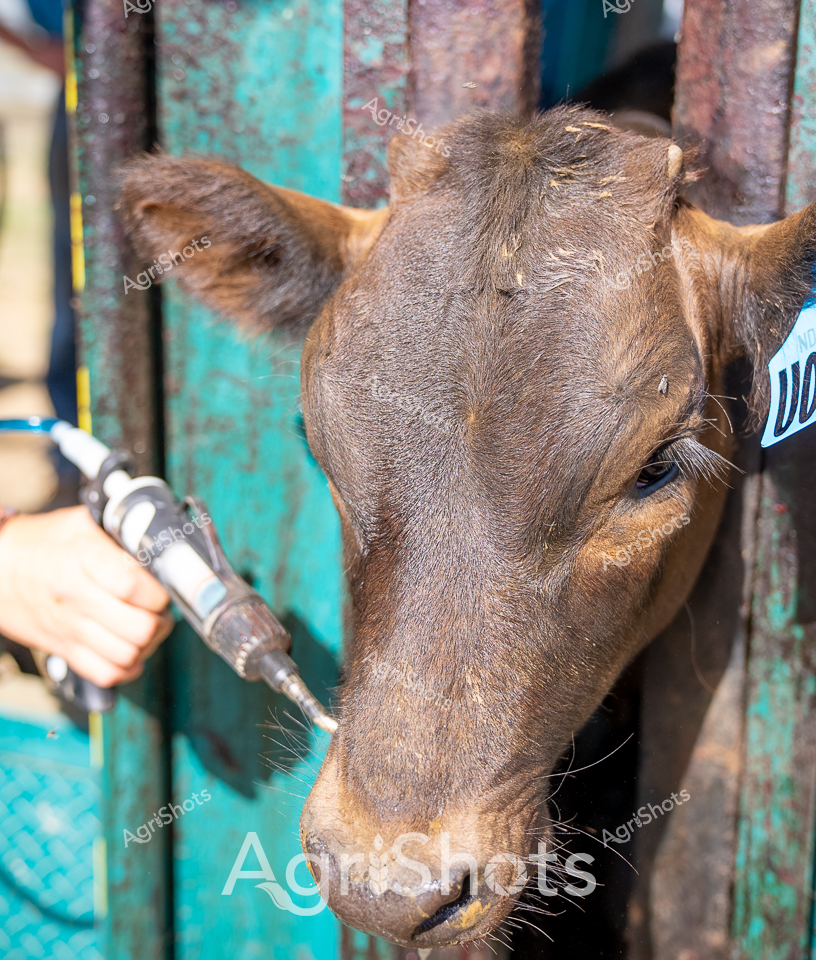
A young dairy calf stands stoically within the weathered teal-green metal bars of a cattle crush, awaiting routine vaccination. Soft brown fur covers its delicate frame, with ears alert and eyes calm despite the medical procedure about to commence. A gloved hand carefully positions a sterile vaccination needle, highlighting the precise and compassionate animal health practices essential to Australian livestock management. The tight framing captures the intimate moment of veterinary intervention, showcasing the careful balance between agricultural technology and animal welfare. Warm sunlight filters across the scene, suggesting a typical summer day in the New England region of New South Wales, where cattle farming is a critical part of the rural economic landscape. The blue identification tag and modern vaccination equipment underscore the systematic and professional approach to livestock management, reflecting generations of agricultural expertise.
 Image
Image
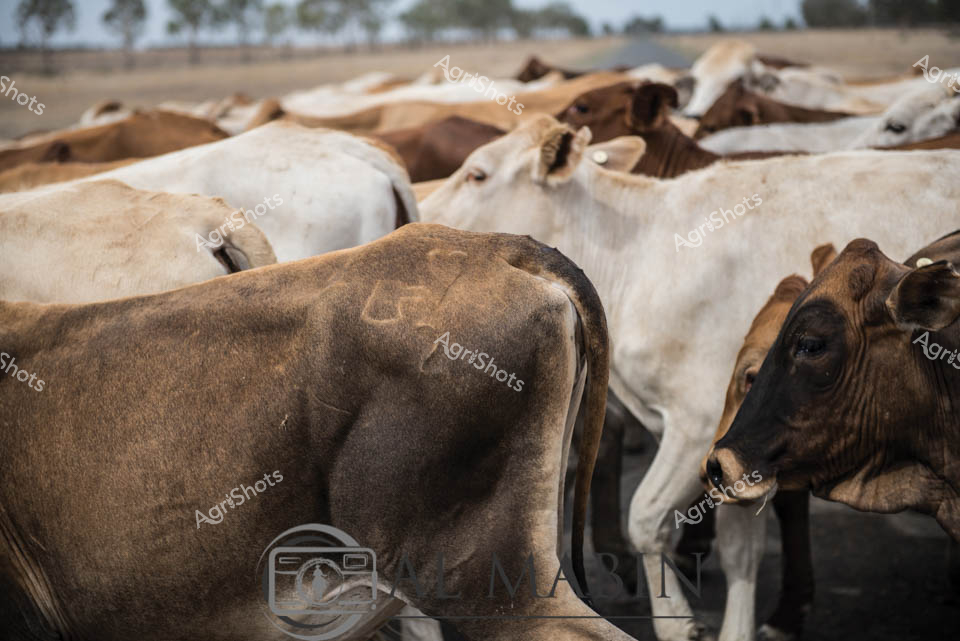
Dusty cattle congregate along a sun-baked stock route, their lean bodies a testament to the harsh Australian pastoral landscape. Brahman cattle, distinguished by their distinctive humps and loose skin, stand clustered in shades of rich brown and pale cream, their resilient breed perfectly adapted to the challenging tropical and subtropical environments. The scene captures the rhythmic movement of a cattle drive, with animals pressed close together, their muscular flanks bearing the textural marks of travel and survival. Warm earth tones dominate the image - deep bronze and soft beige hides reflect the unforgiving sunlight, while the distant landscape hints at sparse grasslands and open terrain typical of Queensland's interior. These hardy cattle represent the backbone of Australia's beef industry, their genetic heritage combining Indian and British bloodlines to create a breed capable of thriving in extreme conditions. The tight composition emphasizes the collective endurance of the herd, each animal a living symbol of agricultural resilience against an expansive, challenging backdrop.
 Image
Image
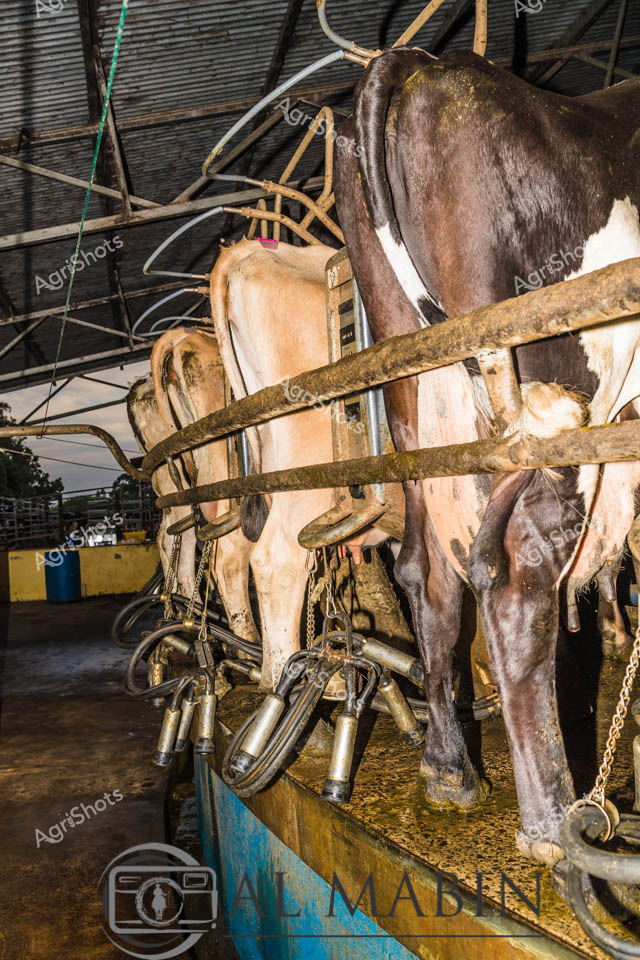
Silvery corrugated walls rise above a gleaming rotary milking platform, where Holstein and Jersey dairy cows stand tethered in their precision-engineered stations. Mechanical milking cups hang pendulously from stainless steel clusters, ready to extract liquid gold from the cows' swollen udders in a rhythmic, mechanical ballet of agricultural productivity. The platform's blue and yellow trim speaks to the robust, no-nonsense aesthetic of modern dairy farming, where technology and animal husbandry intersect with clinical efficiency. Rich browns and cream-colored hides of the cattle contrast against the metallic infrastructure, highlighting the organic nature of this industrial process. Early morning light filters through the shed, casting shadows that emphasize the structured choreography of milk production - a testament to Western Australian agricultural innovation. Each cow stands calm and patient, part of a sophisticated system that transforms raw biological process into a critical component of the global food supply chain.
 Image
Image
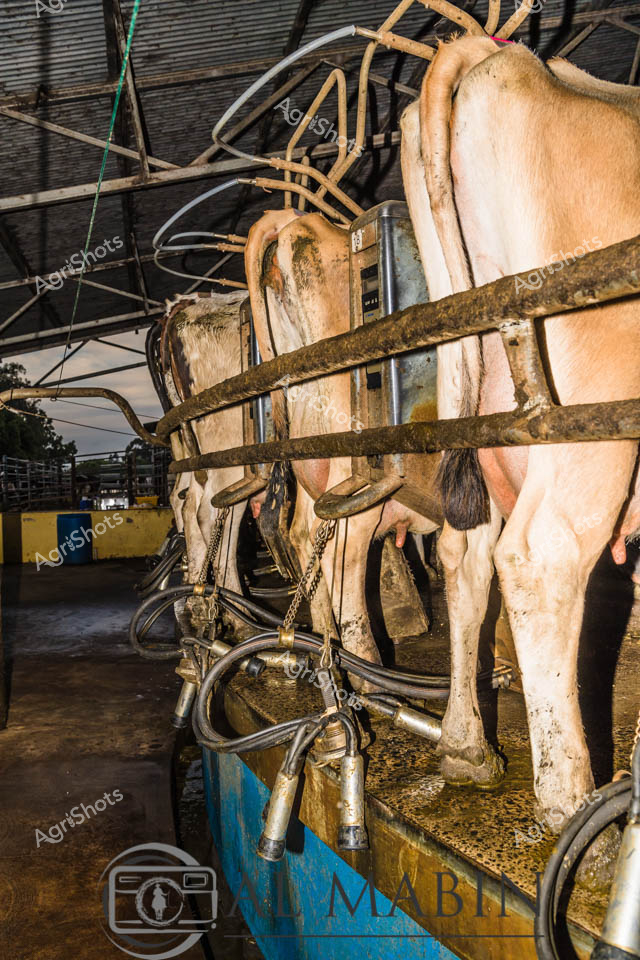
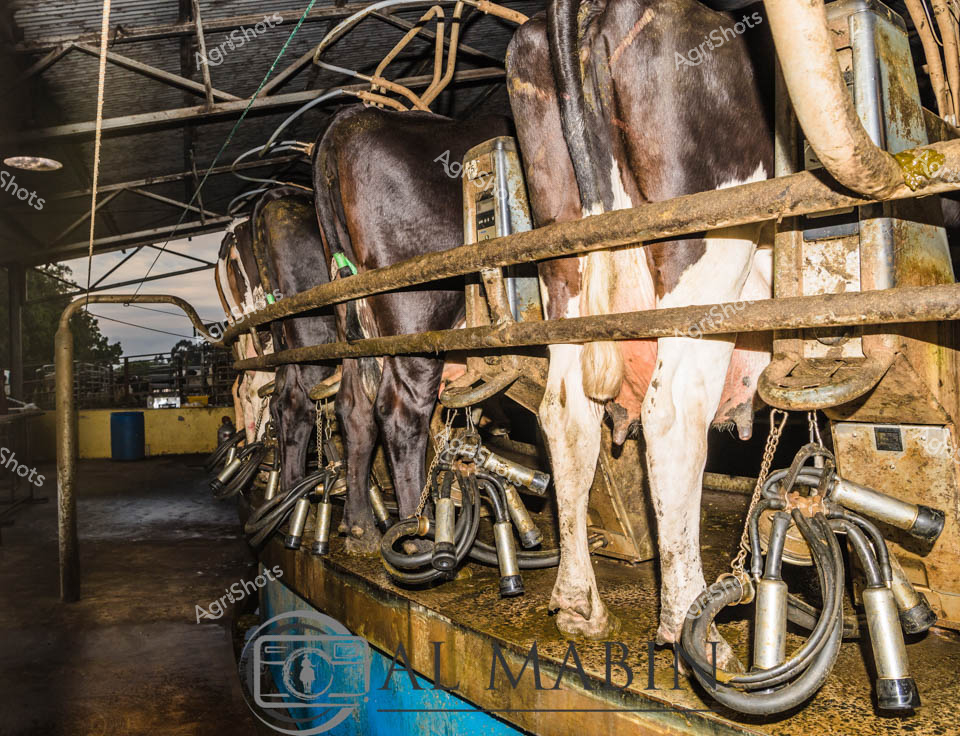
Midnight steel and polished udders converge in this intimate portrait of modern dairy production. A rotary milking platform captures Holstein cattle in their nightly rhythm, each animal standing precisely aligned within a gleaming industrial framework of metal rails and suspended milking clusters. The machinery's industrial palette of gunmetal grey, rust-tinged bronze, and cool metallics contrasts with the animals' rich chocolate and cream-colored hides, creating a mesmerizing industrial agricultural tableau. Intricate chains and precise mechanical connections link each bovine to the automated milking system, revealing the sophisticated engineering behind contemporary milk production. Condensation and ambient moisture create a soft gleam across surfaces, suggesting the cool, controlled environment of a professional dairy facility. This image encapsulates the precision, technology, and methodical nature of Western Australian dairy farming - a testament to agricultural innovation where biological rhythms meet mechanical efficiency.
 Image
Image
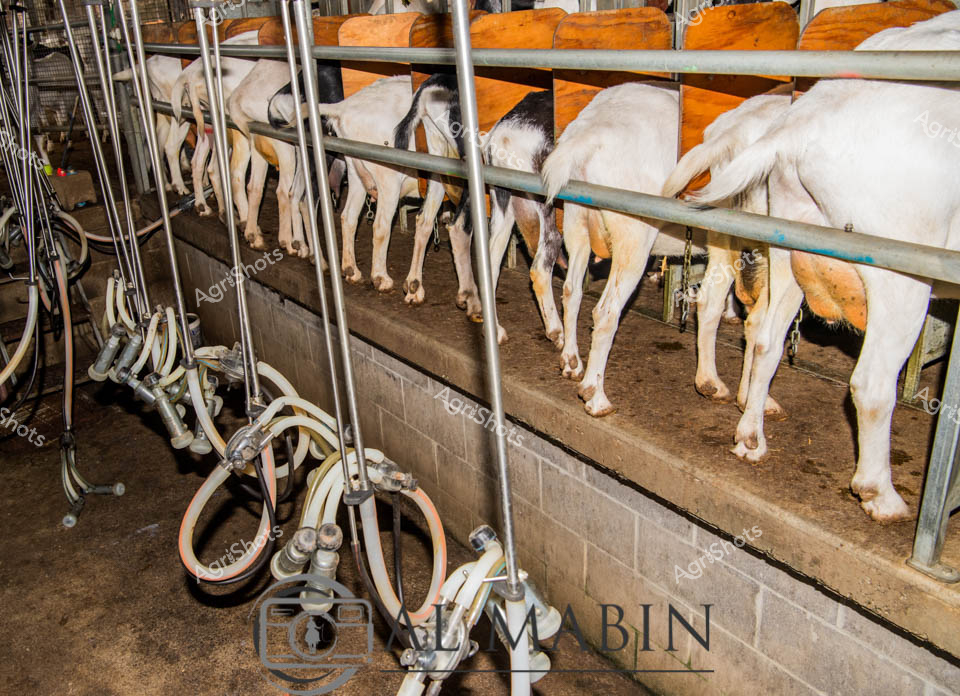
Industrial precision meets pastoral agriculture in this stark milking shed, where a line of pristine white dairy goats stand restrained in mechanical milking stations. Gleaming stainless steel clusters of milking cups hang ready to extract fresh milk, their industrial design a sharp contrast to the soft organic forms of the goats. The concrete block walls and metal infrastructure suggest a modern, efficient dairy operation typical of progressive agricultural practices in New South Wales. Each goat is positioned with clinical efficiency, their pale bodies creating a rhythmic visual pattern against the utilitarian backdrop, while the metallic equipment speaks to the technological advancement of contemporary goat farming. The cool, controlled environment captures the intersection of animal husbandry and mechanical innovation, highlighting the systematic approach to dairy production that defines contemporary Australian agricultural enterprises. Muted tones of grey, white, and metallic silver dominate the scene, emphasizing the clinical and productive nature of this specialized farming environment.