Browse the collection
 Image
Merino lambs pack tightly into rusty steel yards under the watchful eye of a vigilant working dog, embodying the precision of modern Australian livestock management. The black and tan canine, wearing a protective muzzle, patrols the metal rail fenceline with disciplined intensity, representing generations of herding expertise. Pale, woolly Merino lambs cluster together, their soft fleeces creating a textured landscape of cream and beige against the dusty earth and weathered infrastructure. Early morning sunlight casts long shadows across the compact yard, highlighting the angular lines of the livestock handling system and the muscular stance of the working dog. This scene captures the silent choreography of farm work - where trained animals and robust infrastructure combine to manage precious agricultural assets with quiet efficiency. The image speaks to the resilience of rural Australian agricultural practices, where every element, from the dog's focused gaze to the carefully designed sheep yards, plays a critical role in maintaining livestock health and productivity.
 Image
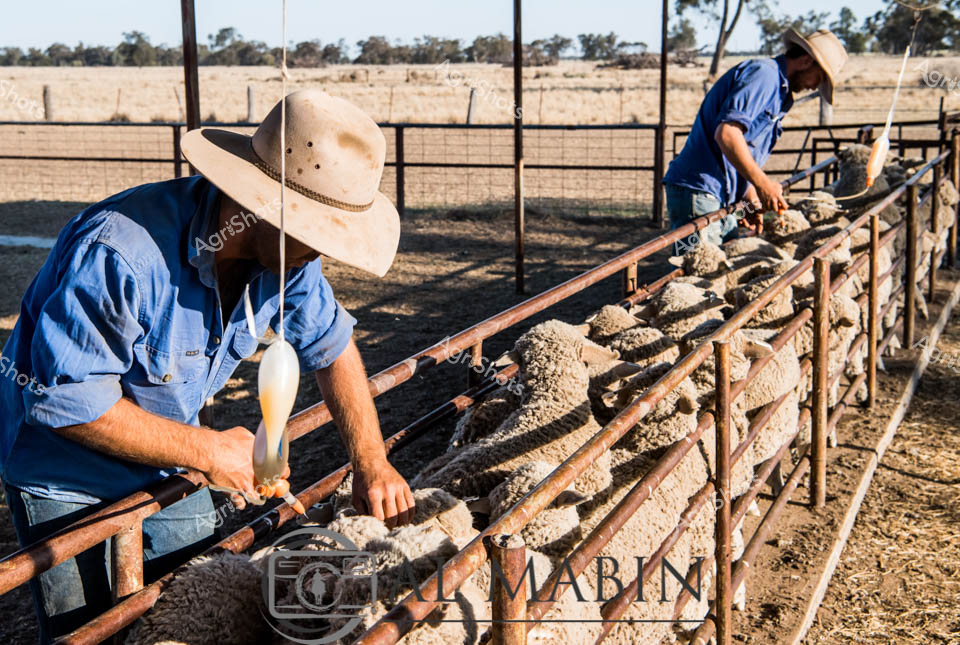
Merino wool producers work diligently in the harsh golden paddocks of rural New South Wales, carefully vaccinating a pen of woolly Merino lambs during shearing season. Wearing classic blue workshirts and wide-brimmed agricultural hats, the stockmen methodically move along the metal livestock yards, administering health treatments to each young sheep. The dry, dusty landscape stretches behind them, punctuated by sparse eucalyptus trees on the distant horizon, capturing the unforgiving yet beautiful Australian pastoral environment. Precise and practiced, one worker handles a vaccination tool while another manages the sheep's movement, their coordinated efforts reflecting generations of agricultural expertise. The lambs, tightly packed within the steel yard rails, represent the backbone of Australia's renowned wool industry - their dense, curling fleeces a testament to careful breeding and meticulous animal husbandry. Warm sunlight casts long shadows across the compacted earth, highlighting the textural details of woolly coats, weathered clothing, and rustic farm infrastructure.
 Image
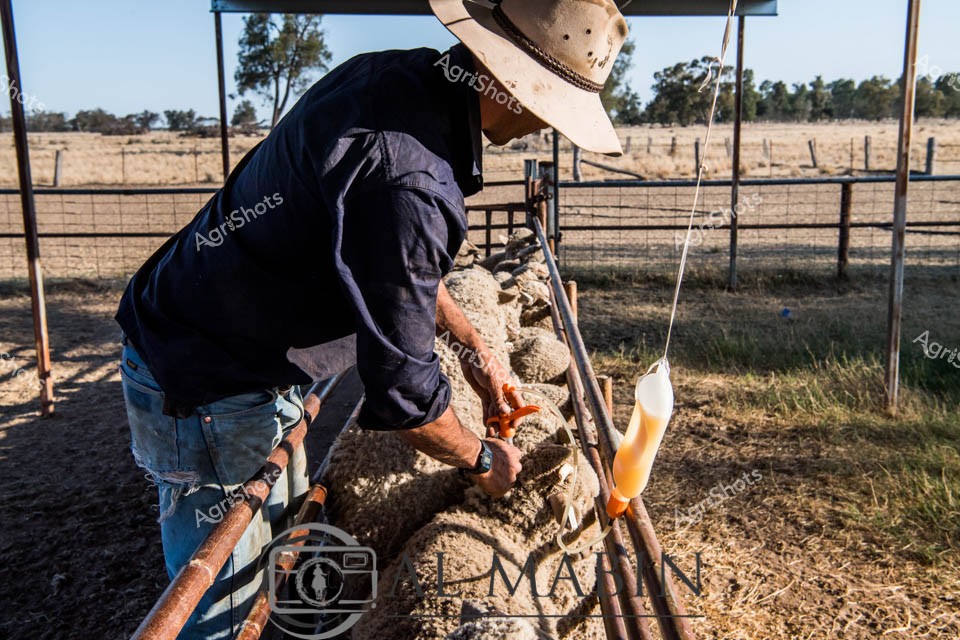
Merino sheep cluster tightly in the dusty yards of a classic New South Wales pastoral property, their woolly bodies pressed against steel rails under the harsh midday sunlight. A farm worker in a navy work shirt and wide-brimmed stockman's hat carefully administers livestock vaccination, moving methodically along the line of sheep with practiced precision. An orange vaccine bottle hangs from the yard's infrastructure, ready for the next dose, while the dry paddock and distant eucalyptus trees define the quintessential Australian rural landscape. The scene captures the critical moments of animal health management, where routine medical care ensures the wellbeing of a valuable merino flock. Weathered fence posts, parched ground, and the worker's focused movements speak to the resilience and daily diligence of Australian agricultural practice. Every gesture reflects generations of farming knowledge - a choreography of care that sustains both livestock and livelihood under challenging environmental conditions.
 Image
Merino lamb vaccination unfolds under the harsh midday sun of rural New South Wales, a quintessential moment of agricultural care. A weathered farmworker in a wide-brimmed khaki hat and navy work shirt carefully administers a health treatment to a cluster of woolly Merino lambs within sturdy metal livestock yards. Dusty golden paddocks and distant eucalyptus trees frame the scene, capturing the unforgiving yet beautiful Australian pastoral landscape. Rusted equipment and worn fence lines speak to generations of agricultural resilience, while the precise handling of the lamb demonstrates the skill and dedication of Australian farmers. The orange vaccination tool contrasts sharply with the soft cream and grey fleece of the Merino lambs, highlighting the critical intersection of animal husbandry and veterinary science. This image epitomizes the meticulous care and expertise required in maintaining the health of Australia's prized sheep flocks, a cornerstone of the nation's agricultural heritage.
 Image
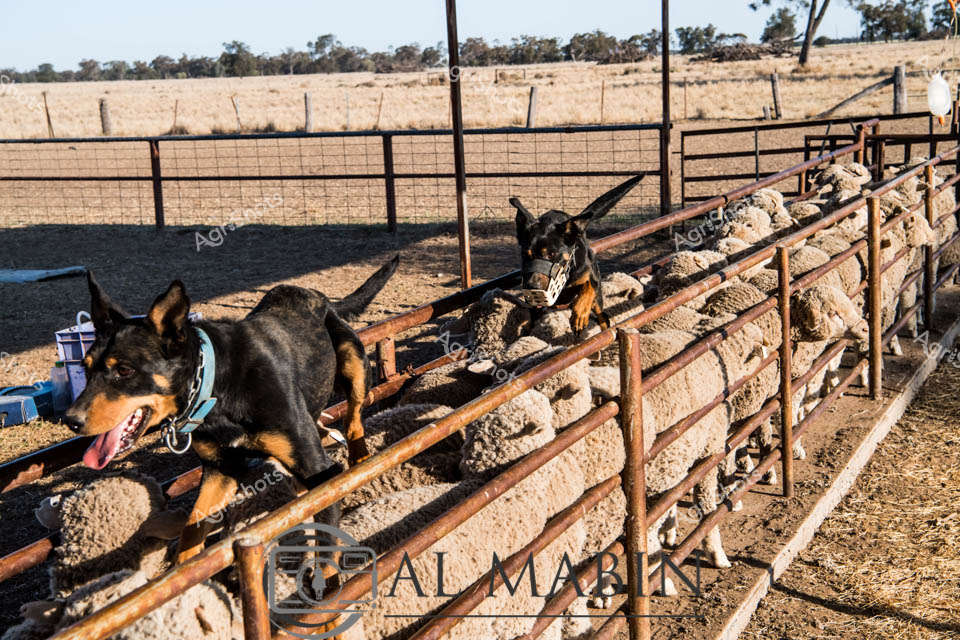
Merino lambs cluster tightly in rustic steel yard pens under the golden light of an early morning in rural New South Wales. Two alert working dogs - a blue-collared kelpie and a vigilant companion - maintain watchful positions along the fence line, their muscular frames poised and ready to assist with livestock management. The dry, ochre-colored paddock stretches behind them, dotted with sparse eucalyptus trees, highlighting the challenging agricultural terrain of the Australian interior. Weathered metal yard panels create geometric lines against the parched landscape, emphasizing the structured approach to livestock handling. One dog pants slightly, tongue extended, reflecting the ambient warmth, while the other stands attentively monitoring the woolly flock of young merino lambs. This scene captures the quintessential partnership between skilled working dogs and sheep farmers, representing the backbone of Australia's agricultural heritage - a testament to precision, endurance, and the nuanced skill required in rural livestock management.
 Image
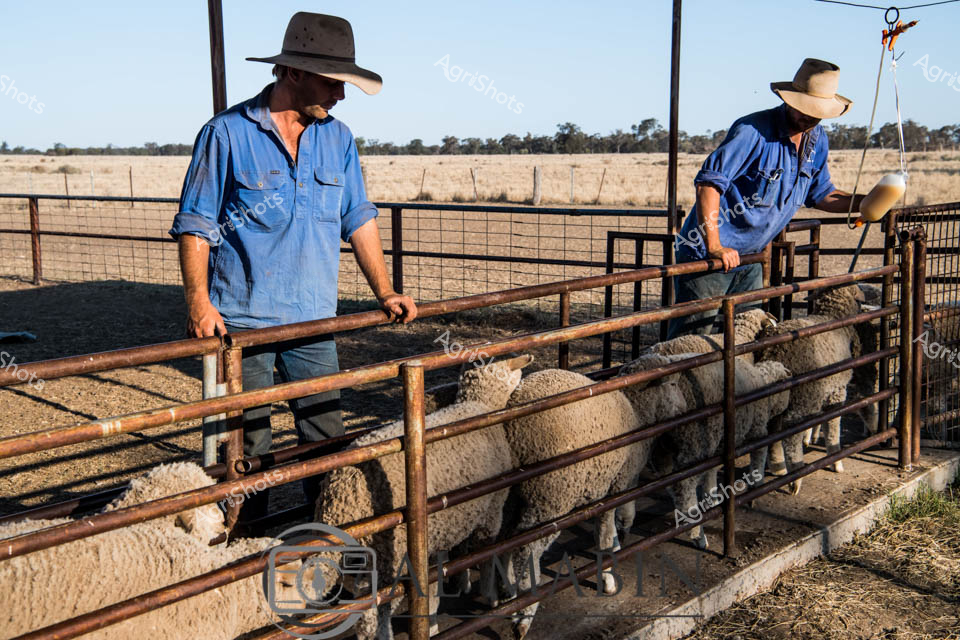
Merino sheep crowd the metal loading yards under the vast, open skies of rural New South Wales. Two farm workers in classic blue workshirts and wide-brimmed sun hats stand vigilant, leaning against rusty steel gates that contain the woolly flock. The golden, dry pasture stretches endlessly in the background, punctuated by distant eucalyptus trees - a quintessential Australian agricultural landscape bathed in harsh midday sunlight. These seasoned farmhands are preparing for livestock management, likely a routine vaccination or health check of the prized Merino sheep. Their weathered hands grip the yards' railings, a testament to generations of pastoral expertise. The sheep - compact, dense-fleeced, and uniform in their robust conditioning - represent the backbone of Australia's renowned wool industry, their soft grey-white coats contrasting against the rusty metalwork and dusty earth. The scene captures the unspoken rhythm of agricultural work: methodical, purposeful, connected to the land. Dust hangs subtly in the air, hinting at the day's heat and the constant movement of livestock, while the carefully constructed yards speak to the precision and care inherent in modern Australian sheep farming.
 Image
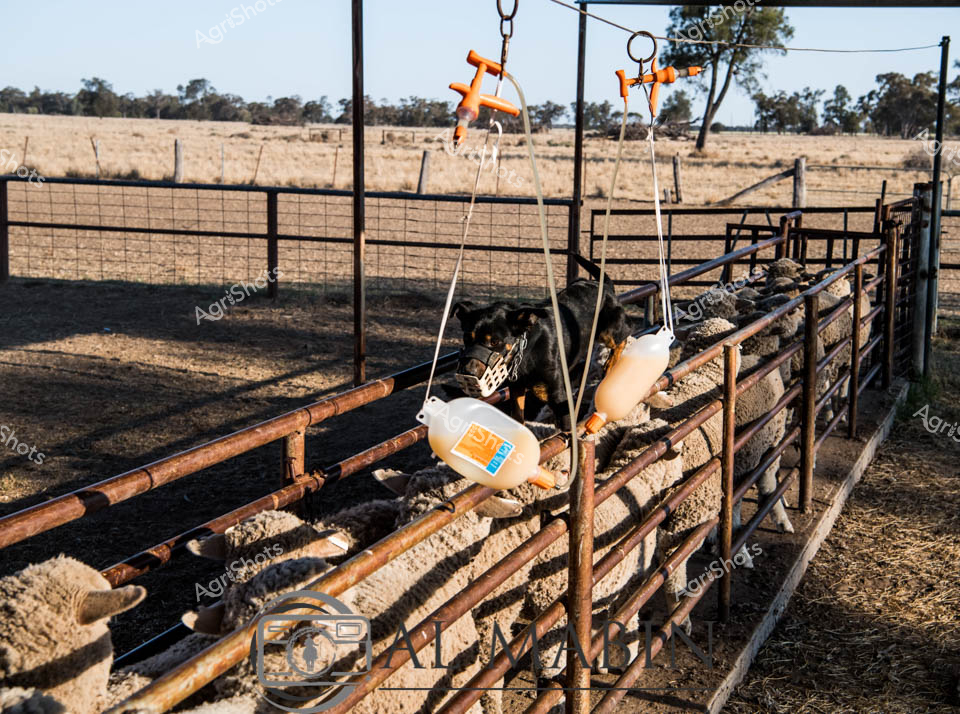
A dusty New South Wales sheep yard captures the essence of rural livestock management during the dry season. Merino lambs crowd together in rusty metal yards, their woolly backs a stark contrast against the parched golden pasture and sparse eucalyptus trees in the background. Hanging from the yard's infrastructure are orange-capped vaccination bottles, suspended strategically for efficient animal health management. The harsh sunlight casts long shadows across the compacted earth, highlighting the functional design of the stockyard's metal gates and rails. A working dog sits attentively in the background, ready to assist in moving and controlling the flock. The scene epitomizes the resilience of Australian agricultural practices, where careful animal husbandry meets the challenging environmental conditions of the inland pastoral regions.
 Image
A hardworking farm dog stands alert in rustic sheep yards during the dry season, with dusty golden paddocks stretching behind weathered metal gates. The canine wears a protective muzzle while supervising a livestock vaccination station, with bright orange dosing equipment suspended above white medical containers. Merino sheep crowd together along the rustic metal rail pens, their dense woolly bodies pressed close in the harsh midday sunlight. The landscape reveals the quintessential Australian rural setting - sparse trees on the horizon, parched earth, and the unmistakable resilience of agricultural infrastructure designed to manage livestock health. Overhead orange vaccination applicators stand ready, symbolizing the precision and care involved in modern sheep farming. The scene captures the raw essence of agricultural practice in regional Australia - where working dogs, specialized equipment, and careful animal management come together under challenging environmental conditions.
 Image
Dusty merino sheep crowd the metal yard gates as two farmhands in blue work shirts and wide-brimmed sun hats methodically tend to the flock. One worker carefully handles a white vaccination bottle, preparing to treat the livestock against potential diseases in this harsh Australian pastoral landscape. The golden dry grasslands and scattered eucalyptus trees in the background speak to the unforgiving drought conditions typical of rural New South Wales. Rust-colored yard panels cast long shadows across the packed earth, highlighting the precision and care required in livestock management. Each movement is deliberate and practiced - a testament to generations of agricultural expertise embedded in these rural workers. The scene captures the quintessential Australian agricultural moment: resilient farmers maintaining the livestock's health under challenging environmental conditions, their actions a quiet demonstration of dedication to the land and their animals.
 Image
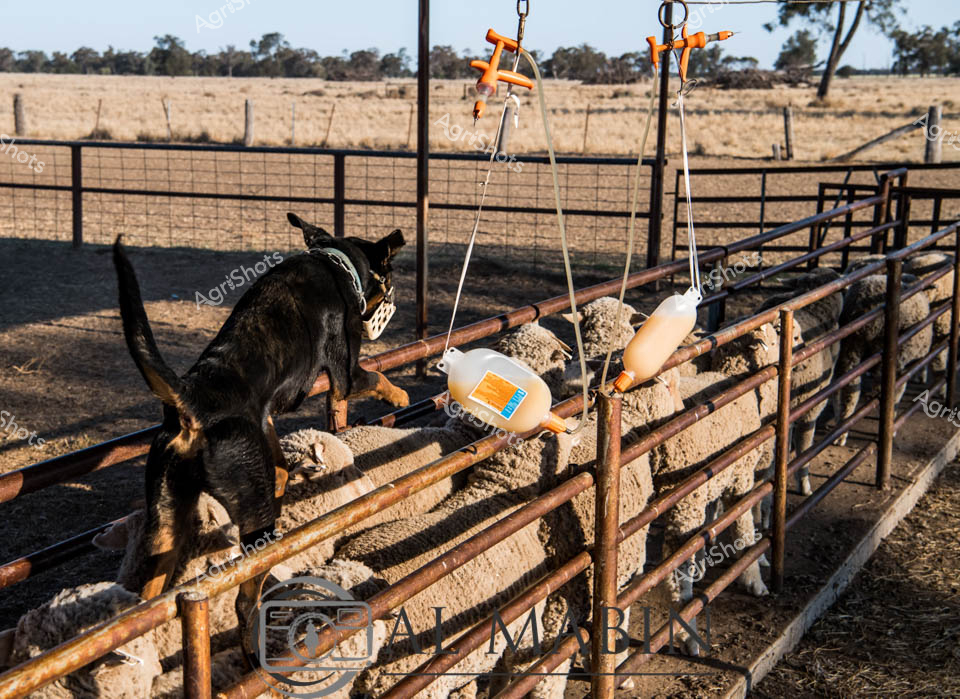
In the golden light of early morning, a working dog stands alert in a rustic sheep yard, surrounded by a mob of woolly Merino lambs. Suspended vaccination bottles hang from metal supports, their bright orange caps contrasting against the dusty, sun-bleached paddock backdrop. The black and tan working dog, wearing a protective muzzle, surveys the livestock with keen concentration, embodying the essential partnership between canine and farmer in Australian sheep production. Rusted metal yard gates and fence panels create a structured environment, highlighting the practical infrastructure of rural livestock management. The dry, sparse landscape of what appears to be rural New South Wales stretches behind the yards, with sparse trees on the horizon suggesting the challenging agricultural conditions of the region. This image captures the resilience, precision, and daily care integral to Australian sheep farming - a testament to the meticulous animal health practices that sustain one of the country's most important agricultural industries.
 Image
Dust billows behind an agricultural harvester as it methodically traverses a dry, golden paddock in rural New South Wales. The machine, designed for precision farming, moves steadily across meticulously prepared rows of earth, leaving behind a textured landscape of parallel tracks. Low-hanging clouds create a muted, atmospheric backdrop of soft greys and blues, contrasting with the earthy browns of the harvested field. Dense eucalyptus woodland lines the distant horizon, a classic Australian agricultural scene capturing the expansive nature of broad-acre farming. The harvester appears robust and purposeful, its metallic grey and dark panels suggesting industrial strength and agricultural innovation. This image encapsulates the essence of modern Australian agricultural practice - technological efficiency meeting vast, challenging landscapes, where farmers leverage sophisticated equipment to manage crops in often harsh environmental conditions.
 Image
Artisan tea tree oil producers stand amid gleaming stainless steel distillation equipment in a corrugated iron shed, capturing the essence of Australian agricultural craft. An older worker in a checked blue and white flannel shirt carefully manages the intricate extraction process, with large conical distillation vessels and processing machinery surrounding her. Soft natural light filters through the shed, highlighting the metallic surfaces and industrial precision of the small-scale production environment. The scene captures the meticulous care of rural entrepreneurs transforming native botanical resources into valuable essential oils, a hallmark of Australian agricultural innovation. Gleaming metal pipes, valves, and measuring equipment underscore the technical expertise required in this specialized agricultural processing. The weathered shed and focused demeanor of the workers speak to generations of knowledge and commitment to extracting the pure, potent essence of tea tree - a quintessential Australian botanical with global medicinal and commercial significance.
 Image
Merino lambs cluster in densely packed paddocks, their dark bodies contrasting against the parched golden landscape of western New South Wales. The aerial perspective reveals the harsh realities of drought-affected agricultural terrain, where carefully managed feedlot infrastructure supports livestock survival. Geometric fenced sections divide the dry earth, with a small water dam providing critical hydration amid the sparse eucalyptus woodland and distant mountain ranges. Sparse green trees punctuate the landscape's dusty palette, offering minimal shelter to the tightly grouped cattle. The intricate layout demonstrates precision agricultural management, where every square meter of land is strategically utilized to maintain livestock health during challenging environmental conditions. The panoramic view captures the resilience of Australian pastoral systems, showcasing how large-scale farming techniques adapt to extreme climatic pressures.
 Image
Smoldering stubble burns across a freshly harvested paddock, wisps of silvery smoke curling against the pale winter sky of rural New South Wales. Steaming piles of agricultural residue slowly consume themselves, releasing tendrils of gray mist that drift lazily across the cleared farming landscape. The controlled burn represents a critical agricultural practice, clearing fields after harvest and returning nutrients to the soil while preparing ground for the next planting season. Surrounding tree lines of eucalyptus and native grasses frame the scene, creating a textural border of muted greens against the rich brown earth. Wisps of steam and smoke create an ethereal quality, softening the harsh lines of the recently worked field and highlighting the methodical approach of Australian agricultural land management. The soft morning light catches the edges of the burning crop residue, creating a dynamic interplay of warmth and cooling smoke that speaks to the cyclical nature of farming in the Australian agricultural landscape.
 Image
A farm worker in a weathered khaki bucket hat and shirt carefully operates the heavy-duty latch on an agricultural trailer or storage unit marked with a large numeral '4'. The muted sage and tan tones of his workwear blend seamlessly with the industrial grey metal paneling of the trailer, suggesting a typical rural Australian work environment. Rugged red chains hang alongside the trailer, indicating robust industrial equipment designed for harsh agricultural conditions. The worker's focused posture and careful hand movements suggest precision and care in managing agricultural machinery, likely preparing equipment for transporting crops, livestock feed, or agricultural supplies. The scene captures the quiet concentration of rural labor, highlighting the meticulous attention to detail required in farm operations. Textured surfaces and subdued colors evoke the functional, no-nonsense aesthetic of Australian agricultural infrastructure, where durability and practicality are paramount.
 Image
Aerial harvest of tea tree plantation in coastal New South Wales, capturing the precision of modern agricultural machinery. A robust harvester moves methodically through neat, regimented rows of vibrant green tea tree, systematically cutting and collecting the aromatic crop. The industrial-green harvester works in tandem with a matching truck, transferring freshly cut vegetation across the sun-drenched agricultural landscape. Contrasting textures emerge between the dense, uniform greenery of the plantation and the dry, ochre-toned earth surrounding the harvesting zone, highlighting the structured intervention of agricultural practice. Soft morning light casts subtle shadows across the undulating terrain, revealing the meticulous grid-like planting pattern that maximizes land efficiency. This scene epitomizes the sophisticated, mechanized approach of contemporary Australian agricultural production, where technological innovation meets carefully managed natural resources.
 Image
Amid the rustic workshop of a rural processing facility, an experienced operator meticulously manages a gleaming stainless steel oil extraction unit. Wearing a classic blue and white checked flannel shirt and glasses, the worker carefully monitors the tea tree oil production process, with an vintage military-style truck visible in the background, suggesting a long-established agricultural enterprise. Precision metal equipment dominates the scene - conical funnels, collection bins, and filtering apparatus create an industrial yet carefully maintained workspace. Soft natural light filters through the corrugated metal shed, highlighting the careful movements of someone deeply familiar with the nuanced craft of essential oil production. The environment speaks to the heritage of Australian agricultural processing, where generations of knowledge combine with specialized technical equipment to transform raw botanical materials into valuable export commodities. Every surface and piece of machinery reflects decades of expertise in extracting and preserving the distinctive essence of tea tree, a quintessential Australian botanical product renowned worldwide for its medicinal and therapeutic properties.
 Image
Aerial harvest of tea tree plantation in coastal New South Wales, capturing the precision of modern agricultural machinery. A specialized harvester slices through dense green tea tree rows, its mechanical arm sweeping low and collecting fragrant green foliage directly into a waiting transport trailer. The machine's metallic green and grey tones contrast sharply against the uniform bright green plantation and dusty brown earth track, revealing the methodical process of commercial essential oil production. Mounted high in the harvester's cabin, an operator guides the complex equipment with expert skill, transforming rows of cultivated shrubs into valuable raw material for cosmetic, medicinal, and aromatherapy industries. This snapshot of agricultural innovation demonstrates the sophisticated techniques used in NSW's specialty crop farming, where mechanization meets sustainable land management. The crisp morning light illuminates the texture of freshly cut tea tree leaves, highlighting the economic and ecological significance of this carefully managed agricultural landscape.
 Image
Capturing the essence of small-scale agricultural processing, this evocative scene reveals two experienced operators carefully managing a tea tree oil extraction setup. Nestled in a corrugated iron shed, an older individual wearing a blue work shirt and bucket hat collaborates closely with a partner in a blue-and-white checked flannel, both intently focused on operating sophisticated distillation equipment. Gleaming stainless steel containers and pipes suggest precision and care in their artisan production process, with coiled orange cables and industrial infrastructure framing the workspace. The soft natural light filtering through the shed hints at an early morning or late afternoon workflow, typical of dedicated primary producers working during the cooler hours. Their collaborative body language speaks to decades of shared expertise in processing this valuable essential oil crop, a cornerstone of Australian botanical exports. The meticulously organized workspace reflects the professionalism and attention to detail required in specialized agricultural value-adding enterprises, particularly in the nuanced tea tree oil industry of New South Wales.
 Image
Aerial view of an expansive feedlot during a challenging drought season in rural New South Wales. Hundreds of black beef cattle cluster in carefully sectioned paddocks, their dark forms creating a stark contrast against the parched, dusty earth. A large turquoise water dam sits to the left, a critical lifeline in the arid landscape, while carefully constructed feed lanes and fenced sections demonstrate precision agricultural management. Scattered trees on the paddock perimeters provide minimal shade, highlighting the harsh environmental conditions challenging livestock production. The scene captures the resilience of Australian beef farming - a strategic response to drought through large-scale cattle management, where structured feeding and water supply systems sustain herds through extreme climatic stress. The meticulously organized feedlot represents a sophisticated approach to agricultural sustainability, where every element of cattle care is systematically designed to maintain herd health and productivity in unforgiving rural conditions.
 Image
Australian Agricultural Workers at Morning Muster Three seasoned farm workers stand resolute against the stark pastoral landscape, their wide-brimmed akubra hats shielding them from the early morning sunlight. Dressed in classic rural workwear - navy and blue chambray shirts, well-worn denim jeans, and sturdy work boots - they lean casually on sheep yards' metal railings with professional ease. The worker on the left cradles a working dog, likely a kelpie or cattle dog, signaling the essential partnership between farmers and their canine companions in managing livestock. Behind them, a sparse eucalyptus tree and distant sheep paddocks define the quintessential New South Wales rural setting, with a corrugated iron shelter providing minimal shade. The scene captures a moment of preparation, likely before sheep vaccination or health checks, with the workers' confident postures and alert dog suggesting years of agricultural expertise. Dust, machinery, and livestock markers hint at the complex, challenging work of modern Australian sheep farming, where animal health and efficient management are critical to success.
 Image
Verdant rows of meticulously planted tea tree plantation stretch across the landscape, revealing a precision agricultural operation in rural New South Wales. A harvesting machine and transport truck navigate the edge of the dense green plantation, capturing the mechanical rhythm of modern agricultural production. The vibrant emerald-green plantation contrasts sharply with the adjacent dry, brown earth, highlighting the carefully managed ecosystem of tea tree cultivation. Geometric lines of young trees create a mesmerizing visual pattern, demonstrating the scale and systematic approach of commercial tea tree farming. The aerial perspective showcases the sophisticated agricultural machinery moving between rows, efficiently collecting the valuable crop used in essential oils and medicinal products. This scene epitomizes the innovation and strategic land management of Australian agricultural industries, where advanced farming techniques transform landscapes into productive, high-value plantations.
 Image
Harvesting golden tea tree fields stretches across the horizon, with a vintage green agricultural harvester cutting precise rows through the lush crop. Dense woodland frames the expansive plantation, creating a striking contrast between the cultivated landscape and natural bushland. The robust harvesting machine, likely a John Deere model, navigates the field with mechanical precision, its lime-green body standing out against the yellow-green crop. Multiple cutting heads extend from the machine, systematically gathering the tea tree crop with industrial efficiency. The aerial perspective captures the scale of modern agricultural operations in regional New South Wales, highlighting the intricate relationship between machinery, landscape, and agricultural production. Soft morning light bathes the scene, revealing the textural complexity of the tea tree plantation and the carefully managed agricultural environment.
 Image
Industrial-grade agricultural machinery transforms organic compost at a rural processing facility, steam rising from dark brown and golden organic matter in dramatic morning light. A robust military-style truck with an elevated cabin sits prominently in the foreground, its weathered olive-green chassis contrasting against the dusty earth and steaming compost heap. The operator, visible in a high-visibility yellow jacket, manages the complex process of organic waste decomposition, likely processing tea tree mulch or agricultural residue typical of New South Wales farming regions. Clouded skies provide a muted backdrop, suggesting early autumn or late winter conditions when agricultural processing and land preparation are critical. Thick plumes of thermal vapor drift from the decomposing organic material, illustrating the intense biological transformation occurring through controlled agricultural techniques. The rugged machinery and industrial landscape communicate the technical sophistication of modern agricultural waste management and sustainable farming practices.