About this image
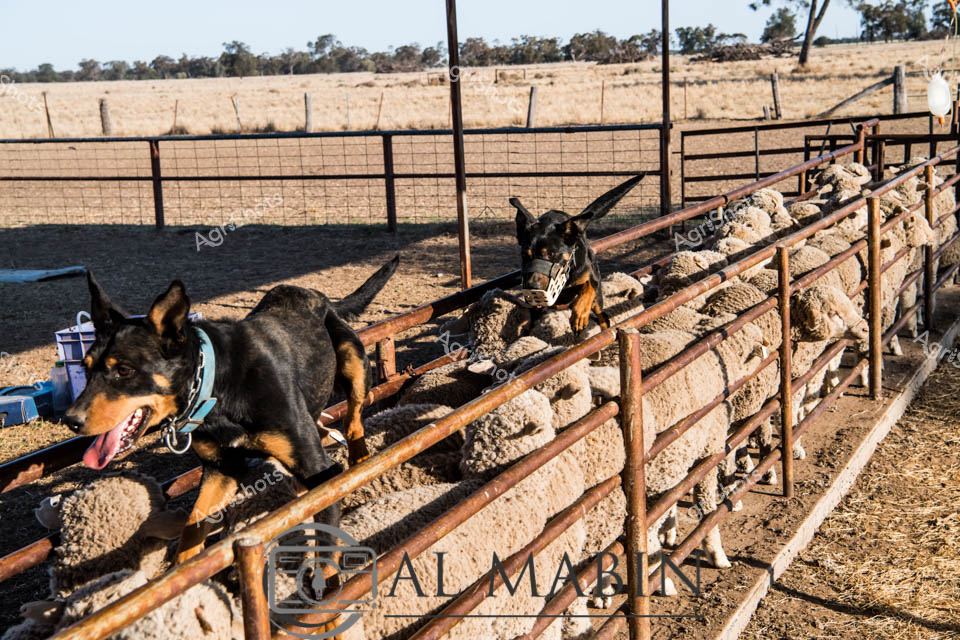
Merino lambs cluster tightly in rustic steel yard pens under the golden light of an early morning in rural New South Wales. Two alert working dogs - a blue-collared kelpie and a vigilant companion - maintain watchful positions along the fence line, their muscular frames poised and ready to assist with livestock management. The dry, ochre-colored paddock stretches behind them, dotted with sparse eucalyptus trees, highlighting the challenging agricultural terrain of the Australian interior. Weathered metal yard panels create geometric lines against the parched landscape, emphasizing the structured approach to livestock handling. One dog pants slightly, tongue extended, reflecting the ambient warmth, while the other stands attentively monitoring the woolly flock of young merino lambs. This scene captures the quintessential partnership between skilled working dogs and sheep farmers, representing the backbone of Australia's agricultural heritage - a testament to precision, endurance, and the nuanced skill required in rural livestock management.
Similar media
 Image
Image
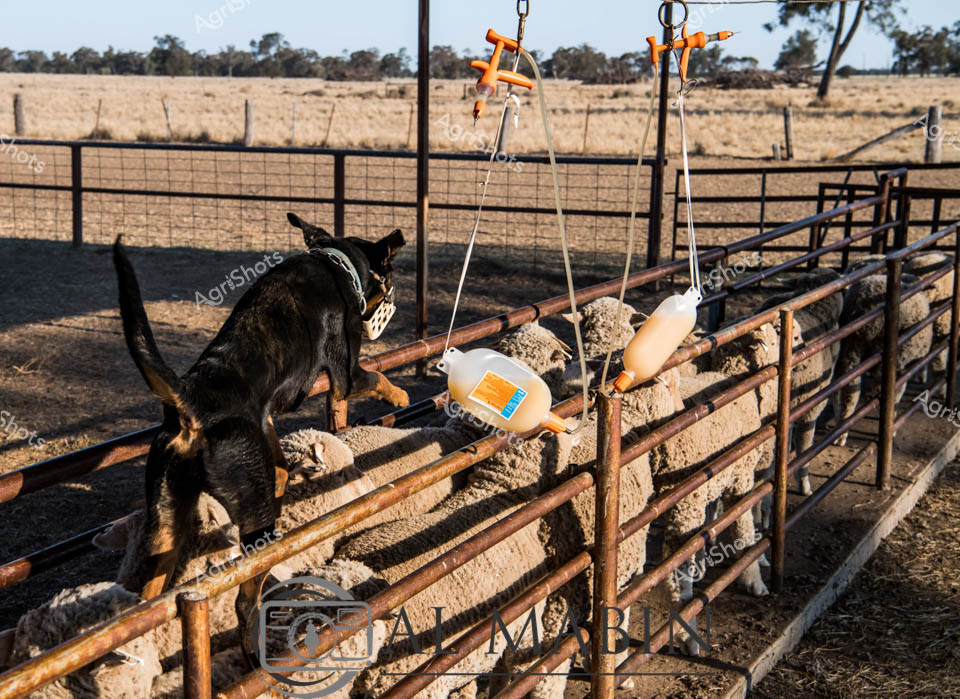
In the golden light of early morning, a working dog stands alert in a rustic sheep yard, surrounded by a mob of woolly Merino lambs. Suspended vaccination bottles hang from metal supports, their bright orange caps contrasting against the dusty, sun-bleached paddock backdrop. The black and tan working dog, wearing a protective muzzle, surveys the livestock with keen concentration, embodying the essential partnership between canine and farmer in Australian sheep production. Rusted metal yard gates and fence panels create a structured environment, highlighting the practical infrastructure of rural livestock management. The dry, sparse landscape of what appears to be rural New South Wales stretches behind the yards, with sparse trees on the horizon suggesting the challenging agricultural conditions of the region. This image captures the resilience, precision, and daily care integral to Australian sheep farming - a testament to the meticulous animal health practices that sustain one of the country's most important agricultural industries.
 Image
Image
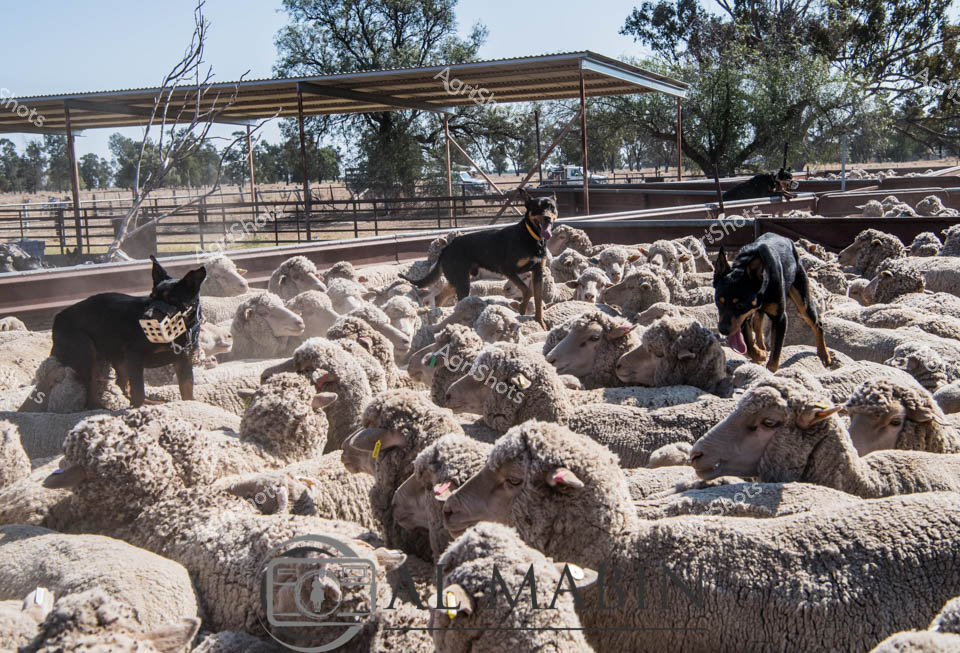
Merino ewes cluster tightly in a sun-drenched livestock yard, casting clouds of pale dust into the crisp rural air. Two working dogs navigate the dense flock with practiced precision, their black and tan coats contrasting against the sea of woolly white bodies. The steel-framed sheep yards stretch beneath a corrugated iron shelter, typical of Australian pastoral infrastructure, with paddock trees and distant fencelines suggesting a classic New South Wales grazing landscape. Thick, tight fleeces indicate these are pure Merino sheep, prized for their exceptional wool quality. Yellow ear tags mark individual animals, while the dogs - likely kelpies or Australian working dogs - demonstrate generations of selective breeding for livestock management skills. Their calm, controlled movements part the flock with minimal stress, showcasing the intuitive communication between canine workers and their agricultural environment. The scene captures the essence of Australian sheep farming: disciplined, efficient, and deeply connected to the land. Harsh sunlight, dust, and the tightly packed sheep communicate the resilience required in rural agricultural practices, where every movement and interaction is purposeful and precise.
 Image
Image
Rich earth tones of russet, chocolate, and ash characterize the herd, with several pristine white Brahman bulls standing out among the darker breeds. The sparse, sunbaked landscape frames the scene - eucalyptus trees casting dappled shadows against a crystalline blue sky, revealing the harsh yet beautiful Australian pastoral environment. Dry ground and scattered sparse vegetation underscore the resilience required of both cattle and farmers in this challenging agricultural terrain. The robust metal fencing, weathered to a deep rust-brown, contains the herd tightly, speaking to generations of pastoral infrastructure and careful livestock management. This image captures the essence of northern Australian cattle breeding - a testament to agricultural endurance in one of the world's most demanding farming landscapes.
 Image
Image
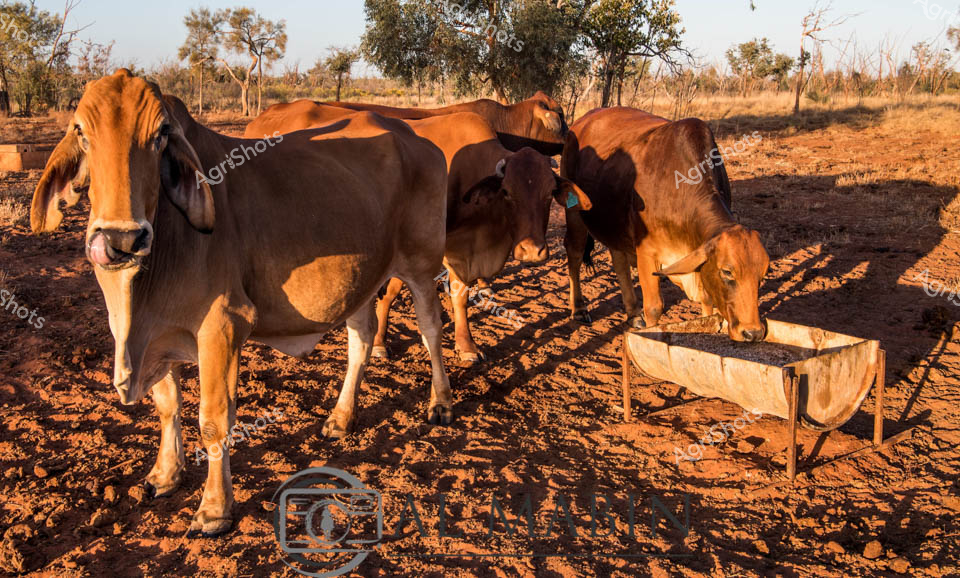
Brahman cattle cluster around a weathered feed trough on a scorching Queensland station, their burnished copper and chestnut coats gleaming against the sun-baked ochre earth. The arid landscape stretches behind them, dotted with sparse eucalyptus and acacia trees, their branches casting long shadows across the dusty ground. These resilient Brahman crossbreeds, renowned for their heat tolerance and adaptability, stand steadily in the golden late afternoon light, some drinking from the trough while others survey the rugged pastoral terrain. Their muscular frames and distinctive large ears reflect generations of breeding designed to thrive in Australia's challenging northern agricultural regions. The scene captures the raw essence of outback cattle farming - a testament to agricultural endurance where livestock and landscape merge in a timeless, unforgiving environment. Rich textures of dry soil, weathered metal, and sleek animal hides create a composition that speaks to the hardy spirit of rural Queensland.
 Image
Image
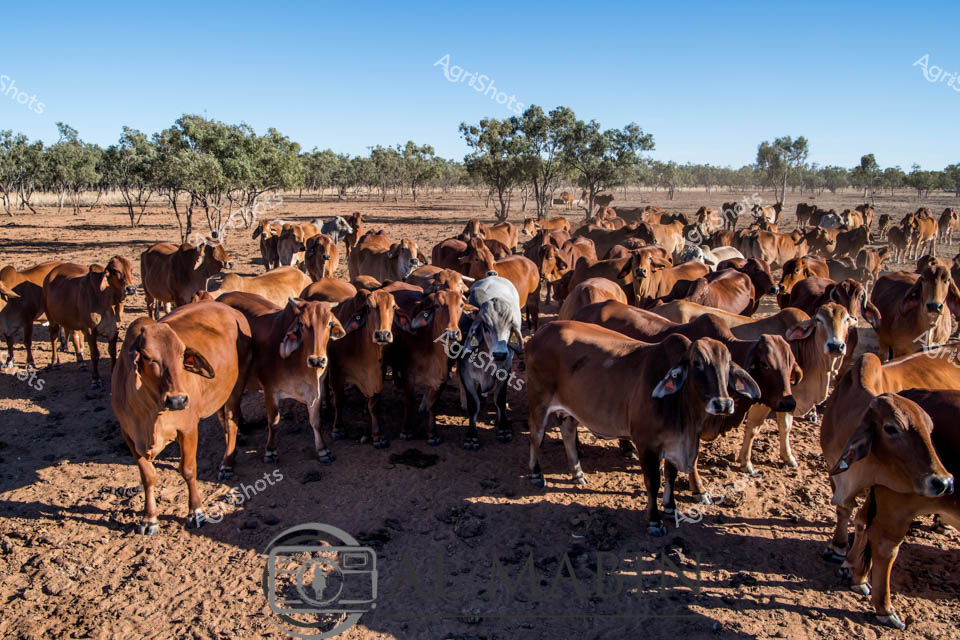
Australian Brahman cattle cluster tightly across a sun-baked paddock, their rich copper and chestnut hides gleaming against the dusty, ochre landscape of a classic Queensland cattle station. Scattered eucalyptus trees provide minimal shade across the sparse, arid terrain, creating a quintessential outback pastoral scene under a cloudless azure sky. The herd - predominantly featuring the distinctive Brahman breed with their characteristic humps and loose skin - stands clustered together, showcasing the resilience of these cattle specifically bred to thrive in challenging tropical and subtropical environments. One white-coated animal stands out among the predominantly reddish-brown mob, highlighting the genetic diversity within this robust breed. The dry ground and sparse vegetation tell a story of persistent drought conditions, yet the cattle appear hardy and well-managed, a testament to Australian agricultural expertise in maintaining livestock in extreme conditions. This image captures the raw, unfiltered essence of northern Australian cattle production - a landscape of endurance, adaptation, and agricultural skill.
 Image
Image
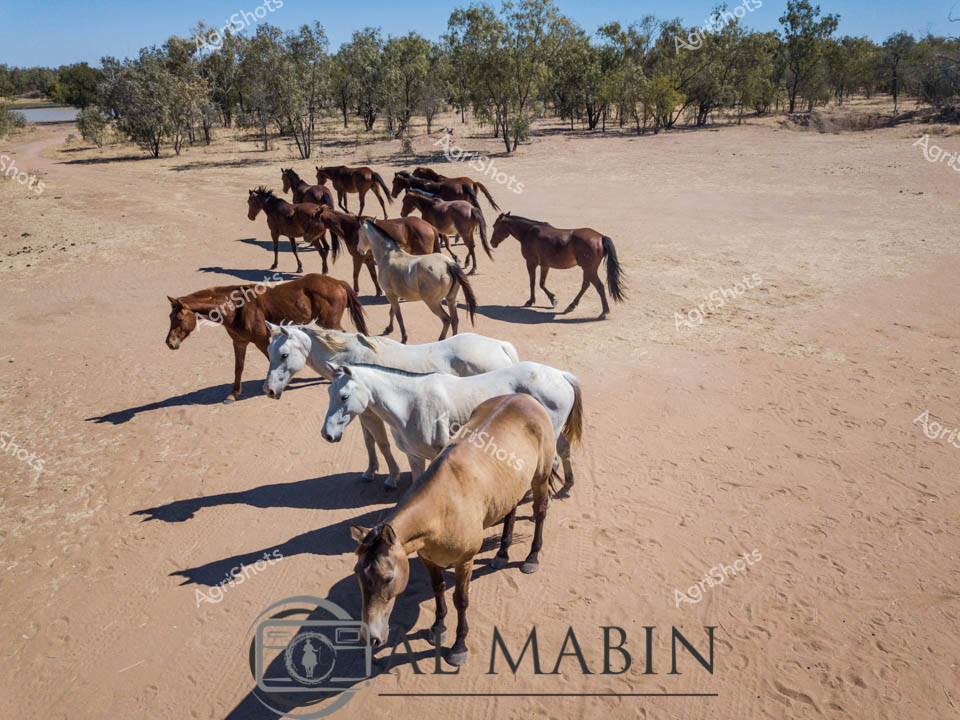
Wild brumbies roam the arid central Australian landscape, casting long shadows across the parched earth during the harsh midday sun. A diverse herd of horses - ranging from rich chestnut and dark bay to striking white and palomino - wander across the dusty, ochre-colored terrain dotted with sparse eucalyptus trees. The horses move with a quiet, unhurried grace, their muscular bodies a testament to their resilience in this unforgiving environment. Sparse ground vegetation and the scattered woodland backdrop highlight the stark beauty of Australia's inland regions, where these feral horses have adapted to survive in challenging conditions. The herd's varied coat colors create a stunning visual palette against the monotone landscape, each horse casting a sharp, elongated shadow that emphasizes the intense sunlight and dry seasonal conditions. This powerful image captures the spirit of Australia's wild horse population, known as brumbies, embodying the untamed freedom and raw survival instinct of these iconic animals in their natural habitat.
 Image
Image
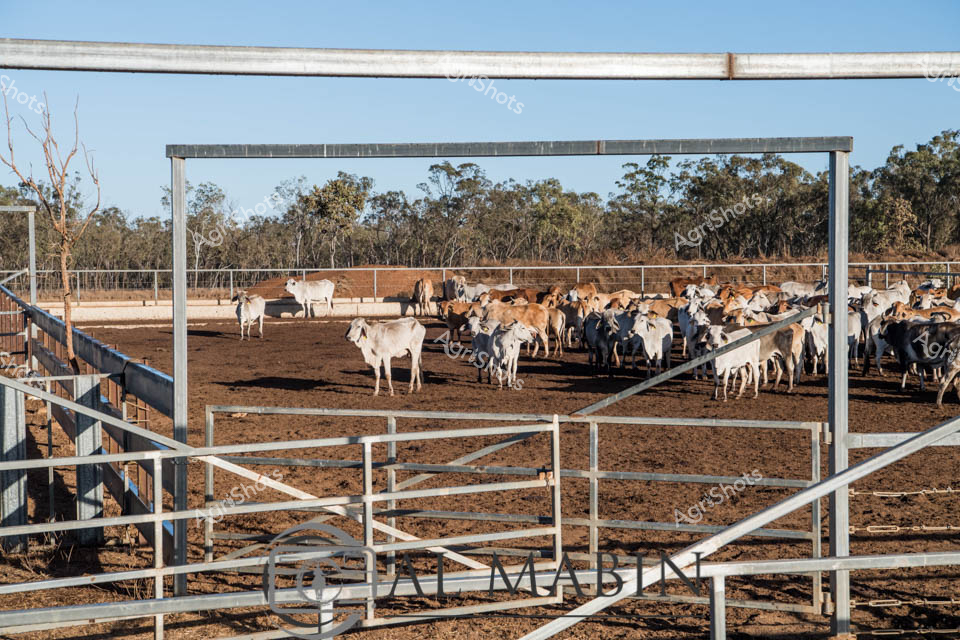
Brahman and composite beef cattle cluster in a dusty, sun-drenched feedlot paddock, framed by sturdy steel gates and livestock yards. The dry, packed earth reflects the harsh midday light of a typical Queensland agricultural landscape, with scattered eucalyptus trees providing a sparse backdrop of muted greens and grays. A mix of light gray, white, and brown cattle stand closely together, representing classic Brahman genetics and crossbred beef herds common in northern Australian cattle operations. Metallic steel infrastructure - including robust rectangular gate frames and horizontal rail fencing - creates geometric lines that contrast with the organic movement of the herd. The scene captures the precision of modern cattle management, where controlled environments and strategic feeding protocols optimize livestock production in challenging agricultural terrain. This image epitomizes the resilience of Australian beef production, showcasing the specialized infrastructure and breed adaptations that enable cattle farming in arid and semi-arid regions.
 Image
Image
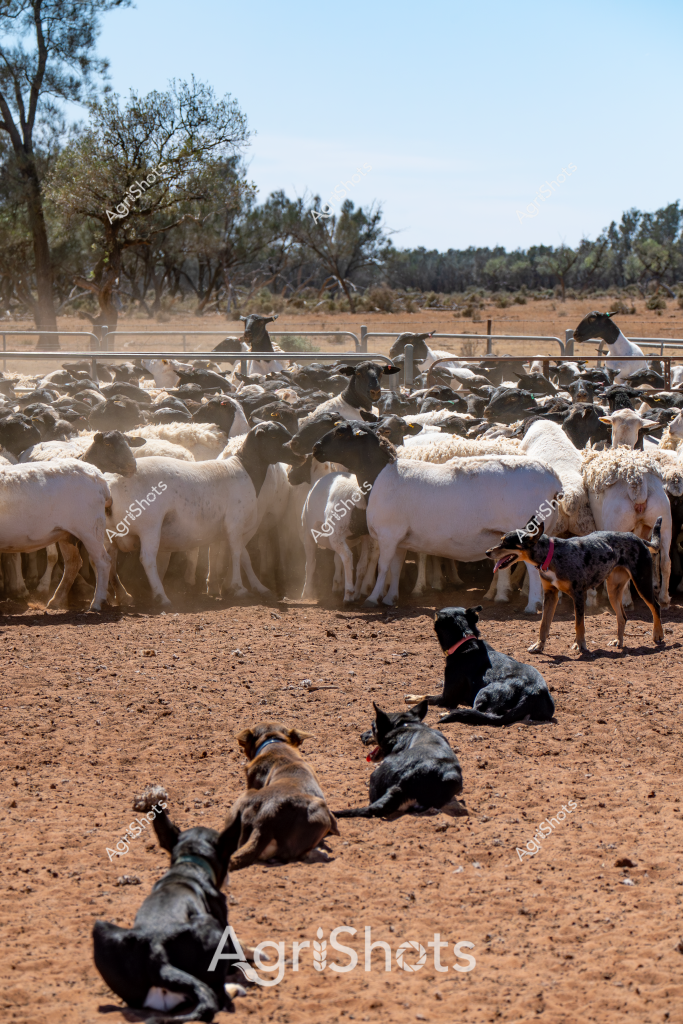
A typical Australian sheep station scene showcases a large mob of white sheep densely packed within a dusty yard, surrounded by metal livestock fencing. Several working dogs - black and brown in color - rest on the dry, reddish-brown earth in the foreground, vigilantly monitoring the flock. The dogs, appearing tired from mustering, are lying down in strategic positions around the yard, with some standing near the sheep. The landscape reveals a classic arid Australian setting, with sparse eucalyptus trees in the background and a clear blue sky overhead. The sheep, likely a Merino breed common in Australian agriculture, are tightly clustered, creating a cloud-like mass of white amid the swirling dust. A few dogs of different coat colors, including a black and a mottled grey/brown dog, are positioned to control and protect the herd. The image captures the essence of Australian pastoral farming - the hard work of livestock management, the partnership between skilled working dogs and farmers, and the challenging environmental conditions of rural Australia. The dry, compact ground and sparse vegetation highlight the resilience required in sheep farming across the continent's more arid regions.