Browse the collection
 Image
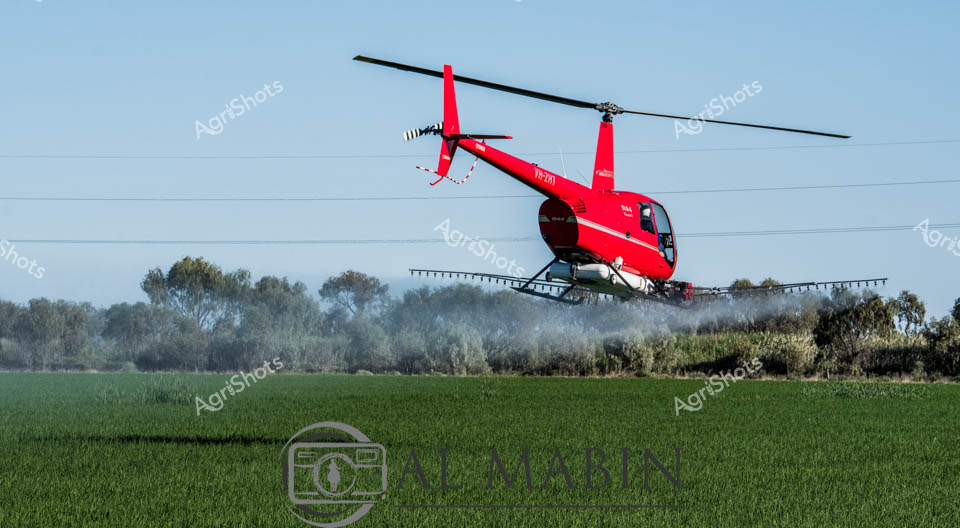
Cutting a vibrant crimson arc across the misty Riverina landscape, an agricultural helicopter sweeps low over lush green crops, executing precise aerial crop spraying. The Robinson R44 helicopter hovers just meters above the verdant field, its extended spray boom releasing a fine agricultural treatment with mechanical precision. Soft morning light filters through distant tree lines, creating a ethereal haze that softens the boundaries between sky and cultivated land. Powerful rotor blades generate a localized wind that ripples through the young crop, demonstrating the efficiency of modern agricultural technology in managing large-scale farming operations. The bright red helicopter stands in stark contrast to the muted green and grey tones of the rural environment, symbolizing the technological intervention in contemporary agricultural practices. This dynamic scene captures the intersection of advanced agricultural techniques and the timeless rhythms of crop cultivation in New South Wales' fertile Riverina region.
 Image
Spotted Heritage: A Berkshire Sow Nurtures Her Litter A robust Berkshire sow, her slate-grey and pink coat mottled with distinctive markings, anchors this pastoral scene of maternal care. Nestled in a dry, sun-baked paddock with cracked earth and sparse ground cover, she stands vigilantly while her pale pink piglets cluster around her udders, some nursing intently, others exploring their immediate terrain. The late morning sunlight casts sharp shadows across the landscape, highlighting the muscular contours of the mother pig and the delicate forms of her young offspring. This free-range setting captures the essence of traditional pig farming in New South Wales' New England region, where heritage breed livestock thrive in open, natural environments. The varied textures of soil, skin, and sparse vegetation create a raw, authentic agricultural tableau that speaks to generations of farming practice. Each piglet, from those firmly attached to her teats to those tentatively wandering nearby, represents the ongoing cycle of agricultural renewal and sustenance.
 Image
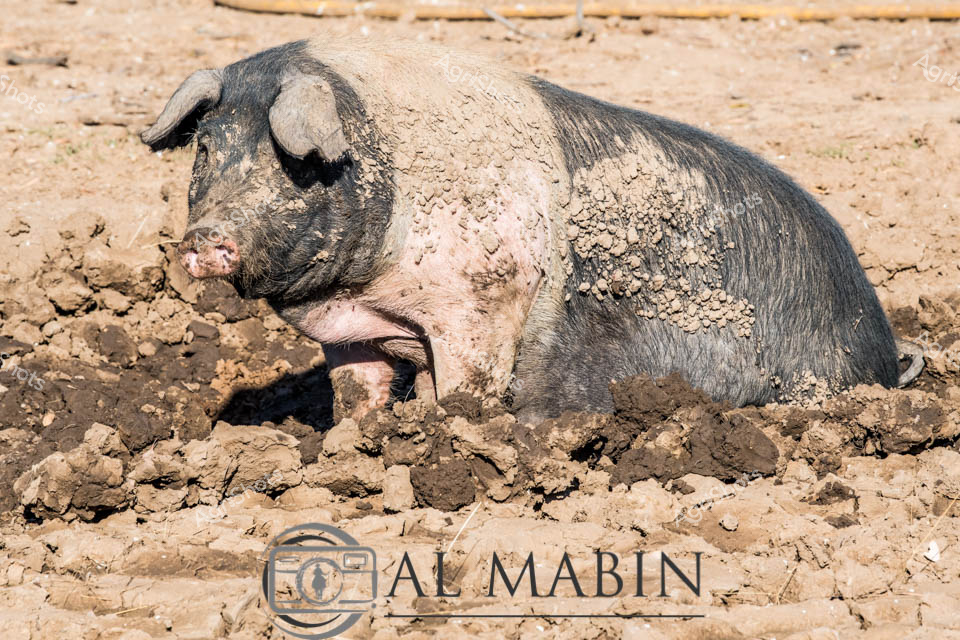
A robust heritage breed pig wallows contentedly in a muddy enclosure, its mottled black and pink skin caked with rich, textured earth. The animal appears to be a rare breed - possibly a Berkshire or Large Black - demonstrating classic pig behavior of seeking cooling relief from the intense Australian midday sun. Clods of clay-like soil cling to its substantial body, highlighting the creature's natural tendency to regulate body temperature through mud bathing. The ground appears dry and compacted, suggesting this is likely a pastoral setting in the New England region of New South Wales, where livestock farming represents a critical agricultural sector. The stark landscape and the pig's relaxed posture communicate a sense of rugged resilience characteristic of Australian agricultural environments.
 Image
A sow tends to her litter of pink piglets in a dusty, enclosed paddock on a New England Region farm in New South Wales. The mature black and white spotted breeding sow stands protectively amid her numerous offspring, who scatter across the dry, compacted earth near a wire fence. Young piglets of varying sizes huddle and explore, their soft pink skin contrasting against the earthy brown ground and metallic fence posts. The scene captures the intense labor of pig farming, where careful breeding and management ensure the health and growth of the next generation of livestock. Soft midday sunlight casts minimal shadows, suggesting a warm, dry season typical of the New South Wales agricultural landscape.
 Image
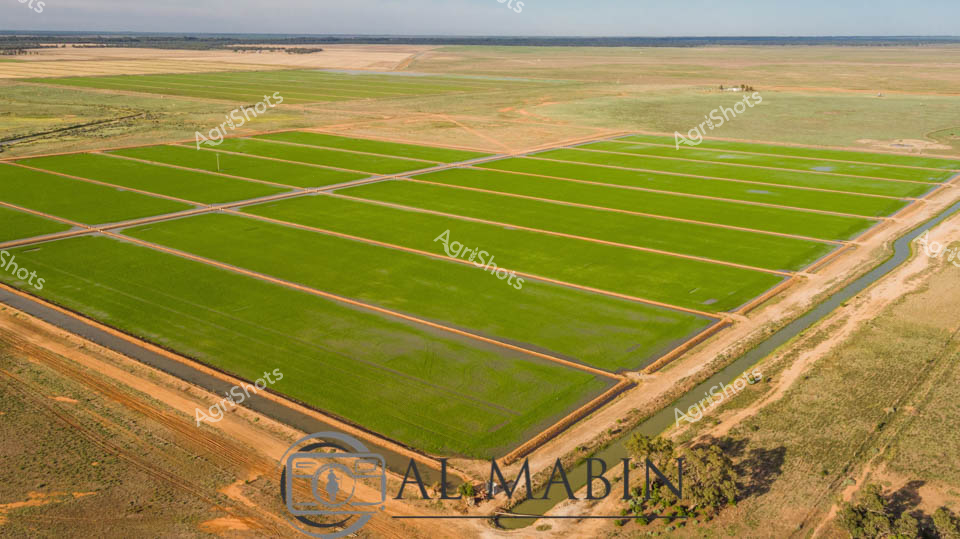
Verdant geometric precision sweeps across this aerial view of an expansive irrigated agricultural landscape in rural New South Wales. Meticulously planned rectangular crop fields in vibrant emerald green stretch across the arid terrain, divided by precisely engineered water channels and access tracks. The systematic grid of cultivation reveals sophisticated agricultural engineering, where carefully measured irrigation routes deliver precious water resources to each precisely delineated agricultural plot. Rich ochre and tan earth tones frame the brilliant green fields, creating a stark contrast that highlights the transformative power of strategic water management in challenging dryland environments. Irrigation channels trace the field boundaries like silvery arteries, delivering life-giving moisture to crops that represent resilience and agricultural innovation in one of Australia's most demanding agricultural regions. This landscape eloquently demonstrates how strategic water infrastructure and modern farming techniques can transform seemingly marginal land into productive agricultural ecosystems, turning challenging terrain into a canvas of agricultural productivity.
 Image
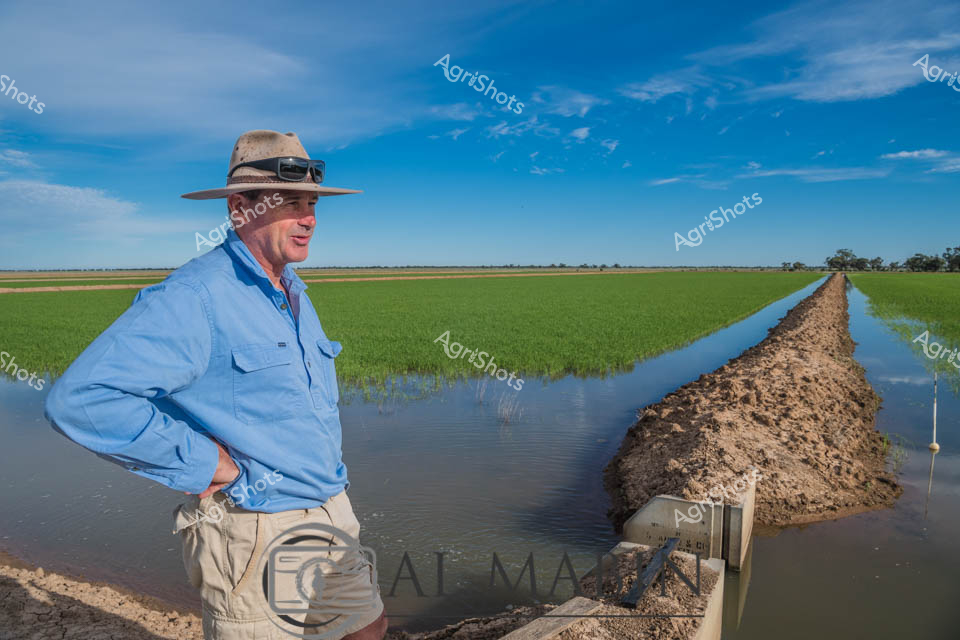
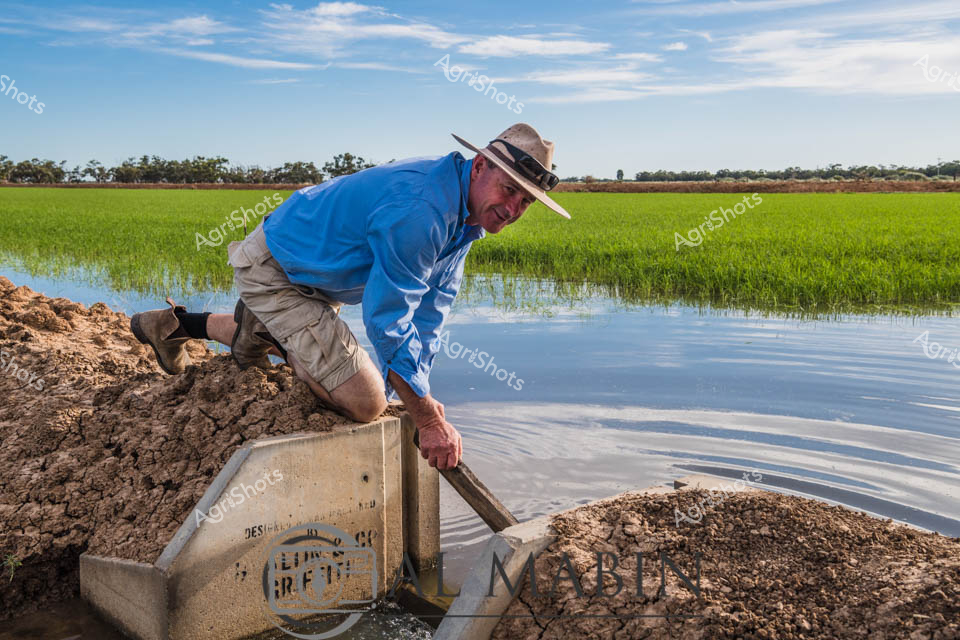
A seasoned rice farmer surveys his meticulously irrigated paddy fields in the expansive Riverina region of New South Wales, embodying the precision and expertise of Australian agricultural practice. Wearing a classic rural ensemble of a light blue work shirt, khaki shorts, and a weathered wide-brimmed hat, he stands confidently beside a precisely constructed irrigation channel filled with reflective water. The landscape stretches out in a geometric pattern of vibrant green rice shoots and carefully leveled earth, demonstrating the sophisticated water management techniques critical to successful crop cultivation in this arid environment. The azure sky and soft cloud formations create a stunning backdrop to the orderly agricultural landscape, highlighting the harmony between human intervention and natural systems. A water control gate is visible, representing the intricate infrastructure that enables controlled flooding and precise water distribution across the rice fields. The farmer's relaxed yet attentive posture suggests years of experience and a deep connection to the land, capturing the essence of agricultural expertise in the Australian rural context.
 Image
Lush maize stretches across the horizon, a verdant carpet of corn reaching toward a dramatic sky of soft blue and sweeping cloud formations. The agricultural landscape captures the expansive potential of irrigation farming in New South Wales, with dense green corn rows standing in precise military alignment alongside a dusty agricultural access road. The crop appears robust and healthy, showcasing the remarkable productivity of carefully managed farmland under the vast Australian sky. Subtle variations of green dominate the scene, from the deep emerald of mature corn leaves to the lighter sage tones of younger growth, creating a textural tapestry that speaks to agricultural expertise and environmental harmony. The wide dirt track running alongside the cornfield suggests ongoing agricultural management, with clear evidence of careful land preparation and systematic cultivation techniques. This image embodies the quiet resilience of Australian agricultural landscapes - fertile, structured, and promising, representing the critical backbone of rural economic production.
 Image
A farmer in a blue long-sleeved shirt and wide-brimmed hat carefully adjusts a water control gate in a lush rice paddy, surrounded by the verdant landscapes of the Riverina region in New South Wales. The concrete irrigation gate stands firmly in the foreground, partially embedded in rich, dark soil, while vibrant green rice shoots emerge from the mirror-like water surface. Crisp morning light illuminates the scene, casting soft shadows and highlighting the precise, deliberate movements of the farmer as he manages water flow across the meticulously cultivated agricultural landscape. The expansive field stretches toward a distant treeline, revealing the precision and scale of modern rice farming in Australia. His weathered hands and focused posture speak to generations of agricultural expertise, carefully controlling water levels critical to successful rice cultivation. The serene blue sky with delicate wispy clouds provides a perfect backdrop to this quintessential Australian agricultural moment, capturing the intricate relationship between farmer, land, and water in one of the country's most productive agricultural regions.
 Image
Rural irrigation transforms the arid landscape of New South Wales, channeling life-giving water through a precisely engineered drainage canal alongside a verdant corn field. The meticulously constructed water channel cuts a linear path between a dusty dirt road and rows of lush green maize, creating a stark geometric contrast against the natural undulating terrain. Mature eucalyptus trees dot the distant horizon, casting subtle shadows across the expansive agricultural landscape under a soft, cloud-dappled sky of azure and pale blue. The irrigation channel, with its raw earth banks and flowing water, represents the critical infrastructure that enables agricultural productivity in challenging Australian agricultural regions. Vibrant corn plants stand in uniform rows, their deep green leaves suggesting healthy growth and the potential for a bountiful harvest. This scene captures the essential relationship between strategic water management and successful crop production, highlighting the sophisticated agricultural techniques that sustain farming communities in rural New South Wales.
 Image
Skimming low over a lush green rice paddy in the Riverina region of New South Wales, a vibrant red helicopter conducts precision agricultural spraying. The aircraft hovers just meters above the verdant crop, releasing a fine mist of agricultural treatment across the meticulously planted field. Eucalyptus trees frame the background, their silvery-green foliage creating a quintessential Australian rural landscape under a clear blue sky. Power lines stretch across the horizon, highlighting the intersection of modern agricultural technology and traditional farming landscapes. The helicopter's sleek red body contrasts dramatically with the green rice fields below, demonstrating the cutting-edge methods used in contemporary Australian agricultural practice. This aerial application technique allows for efficient, targeted crop management, minimizing ground disturbance while ensuring optimal coverage of the emerging rice crop.
 Image
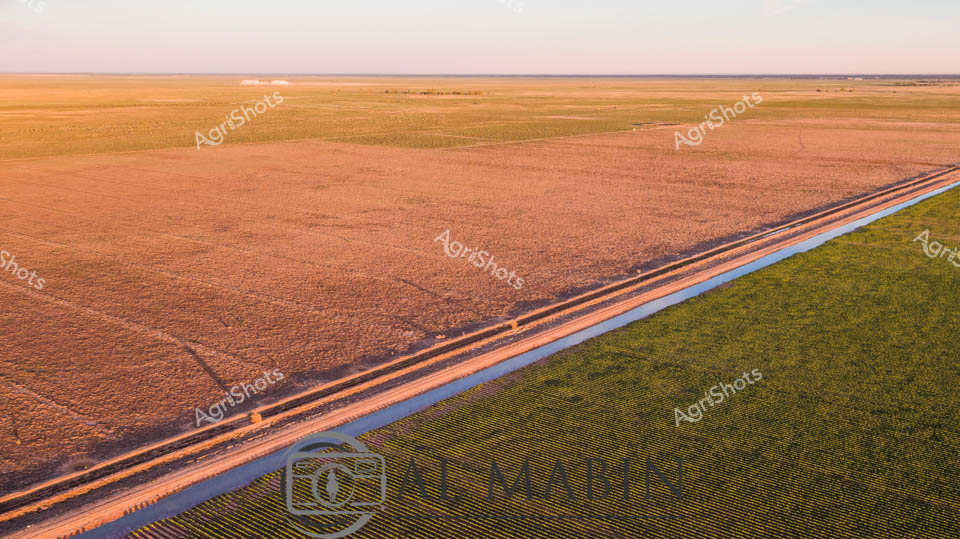
Golden harvest meets precision agriculture in this expansive aerial vista of a cotton farm near Walgett, New South Wales. The landscape unfolds in a mesmerizing geometric tapestry of burnt orange and verdant green, bisected by razor-straight irrigation channels that slice through the terrain with engineered perfection. Burnished dry earth transitions into lush green cotton rows, revealing the transformative power of strategic water management in Australia's challenging agricultural zones. The warm, soft light suggests early morning or late afternoon, casting a luminous amber glow across the undulating plains and highlighting the intricate patterns of agricultural cultivation. Parallel irrigation channels gleam like silver threads, delivering life-giving water to the meticulously planted crops and demonstrating the sophisticated hydrology essential to cotton production in this arid region. This sweeping panorama captures the delicate balance between harsh environmental conditions and human agricultural innovation, showcasing how technology and careful land management can sustain productive farming in one of the world's most demanding landscapes.
 Image
Cutting a brilliant scarlet arc against the pale blue winter sky, an agricultural helicopter hovers low over an emerald green crop field in the Riverina region of New South Wales. The Robinson R44 helicopter, equipped with a precise crop spraying attachment, methodically navigates just meters above the uniform grassland, delivering targeted agricultural treatment with surgical accuracy. Its distinctive red fuselage creates a dramatic visual contrast with the expansive green landscape, where neat rectangular paddocks stretch towards a distant treeline. Specialized aerial crop management like this represents the pinnacle of modern agricultural technology, allowing farmers to efficiently apply fertilizers, pesticides, or irrigation treatments across large land parcels with minimal ground disturbance. The helicopter's specialized boom attachment ensures even distribution, minimizing waste and environmental impact while maximizing agricultural productivity. This image captures the innovative spirit of Australian agricultural practices, where advanced machinery and precision techniques transform vast rural landscapes into highly optimized productive systems.
 Image
Free Range Pig Farming in New England, New South Wales A robust scene of mixed-breed pigs roaming a weathered earth paddock reveals the nuanced realities of contemporary Australian pig production. Dark, mature sows with textured, sun-weathered skin nestle alongside clusters of pale pink piglets, their small forms creating delicate contrast against the dusty, compacted ground. The landscape suggests late summer in the New England region - dry, sparse vegetation and hard-baked soil indicating challenging agricultural conditions. Mature sows display varying coat colors from charcoal grey to mottled black, representing diverse breeding lines selected for resilience and productivity. The piglets move with characteristic curiosity, some huddling close to maternal figures, others exploring the immediate environment with the uninhibited energy of youth. This frame captures the raw, unfiltered essence of free-range animal husbandry - a delicate balance between natural behaviors and managed agricultural practice.
 Image
Rugged rural vitality radiates from this candid agricultural portrait of a seasoned farmer and a young piglet nestled in the dappled sunlight of a pastoral setting. Wearing a weathered wide-brimmed hat and vibrant green button-up shirt, the farmer cradles a pale pink piglet with tender expertise, his sun-weathered skin and broad smile reflecting generations of livestock experience. The verdant backdrop of tree branches suggests a late spring or early summer morning, with soft filtered light creating a sense of nurturing and connection between farmer and animal. The piglet, small and delicate, appears calm and secure in the strong, work-roughened hands that support it, embodying the careful husbandry practices of sustainable pig farming in the New England region of New South Wales. His eye patch hints at a lifetime of hard work and resilience typical of Australian agricultural professionals who maintain intimate connections with the livestock. This image captures the essence of free-range pig farming - a relationship built on care, respect, and generations of agricultural knowledge passed down through hands-on experience.
 Image
Sunlight bathes the golden pastoral landscape of New England, New South Wales, revealing a sprawling agricultural property with scattered gum trees punctuating the dry summer grasslands. Water tanks and a modest farm shed anchor the foreground, suggesting a carefully managed mixed farming enterprise where extensive grazing practices meet strategic infrastructure. The undulating terrain rises toward distant forested hills, creating a classic Australian rural panorama of sparse, resilient vegetation and open paddocks designed for livestock management. Scattered trees provide critical shade and windbreaks across the dusty, ochre-toned landscape, highlighting the farmer's understanding of environmental conditions and animal welfare. The cloudscape overhead presents a delicate mackerel sky, promising potential moisture in this seemingly arid environment. This aerial perspective captures the essence of Australian agricultural resilience - a carefully balanced ecosystem where human intervention and natural landscape coexist with pragmatic harmony.
 Image
Aerial survey of the agricultural complex, revealing the intricate design of a modern piggery nestled in the arid landscapes of New South Wales. Weathered earth tones dominate the scene, with a sparse, golden-brown paddock surrounding precision-engineered livestock infrastructure. A substantial white-clad shelter anchors the composition, its metallic surface casting long shadows across the dry terrain, while mature trees provide strategic shade and windbreak for the agricultural operation. Carefully constructed fencing delineates different zones of the property, suggesting a methodical approach to free-range and controlled farming environments. The overhead perspective captures the harmonious balance between utilitarian agricultural architecture and the harsh, minimalist Australian rural landscape, highlighting the resilience and strategic planning required in contemporary livestock management. Stark sunlight emphasizes the textural contrasts between the manufactured structures and the natural surroundings, creating a compelling visual narrative of agricultural innovation in challenging environmental conditions.
 Image
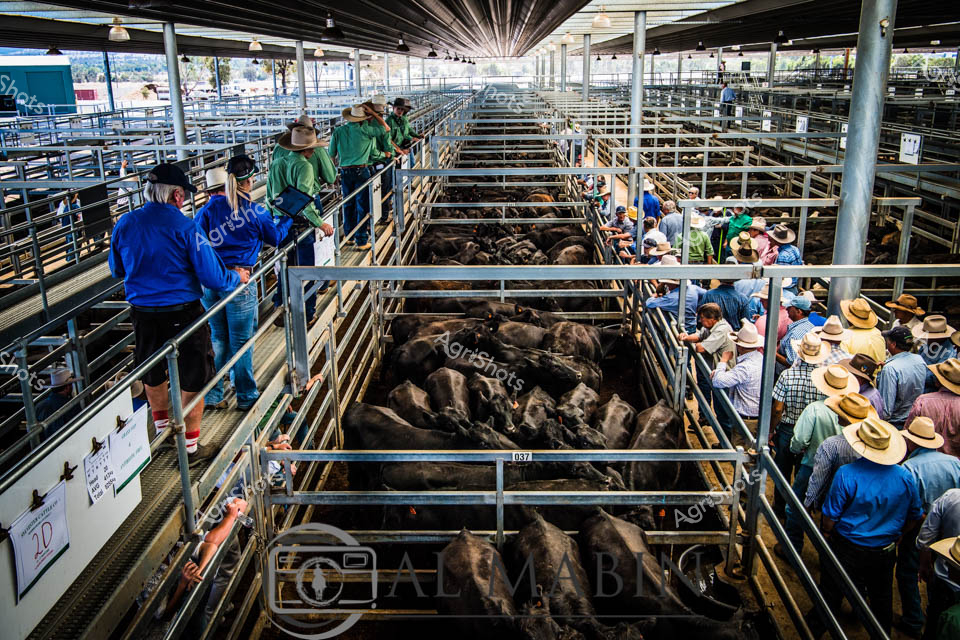
Australian cattle sale yards pulse with agricultural energy - a quintessential rural marketplace where livestock commerce unfolds. Black Angus cattle are densely packed into steel-railed pens, representing prime beef stock awaiting auction. Experienced agents and farmers crowd the elevated walkways, wearing a uniform of wide-brimmed akubra hats in earthy tones - green, blue, and straw-colored - scanning the livestock with practiced eyes. The industrial infrastructure of metal walkways and systematic pens creates a structured environment, with numbered sections and strategic viewing platforms allowing thorough livestock assessment. Natural light filters through the covered pavilion, highlighting the muscular frames and dark coats of the cattle, while the crowd's concentrated expressions reveal the serious business of agricultural trading. This scene epitomizes the critical connection between rural producers and market systems, capturing a moment of economic and agricultural significance in the New England region of New South Wales.
 Image
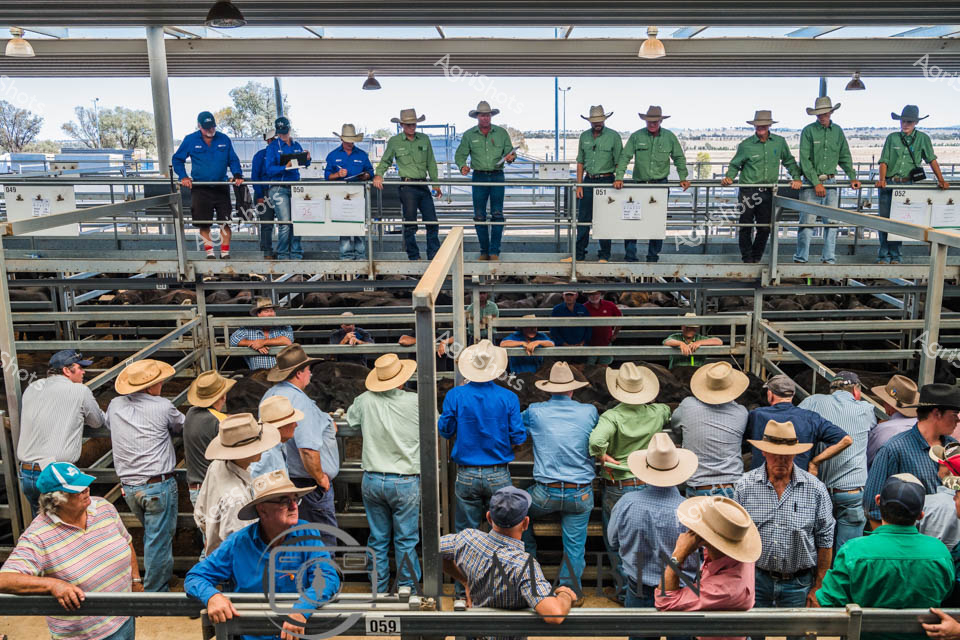
Cattle buyers and agents converge at the New England Region livestock sale yards, a bustling hub of agricultural commerce. Rows of stockmen in wide-brimmed akubra hats - a palette of blues, greens, and neutrals - crowd the multi-tiered metal pens, intently focused on assessing the quality of cattle below. The overhead industrial shed provides shelter, with natural light filtering through, illuminating the rhythmic process of rural livestock trading. Professionally dressed agents in blue uniforms stand on the upper level, clipboard and stock lists in hand, while farmers and buyers in classic rural attire examine potential purchases from multiple angles. This scene captures the precise, methodical nature of Australian cattle trading - a critical moment in the agricultural supply chain where livestock value is determined through expert evaluation and negotiation. The dense arrangement of hat-wearing professionals, the structured metal infrastructure, and the controlled environment reflect the sophisticated, business-like approach to primary industry in regional New South Wales.
 Image
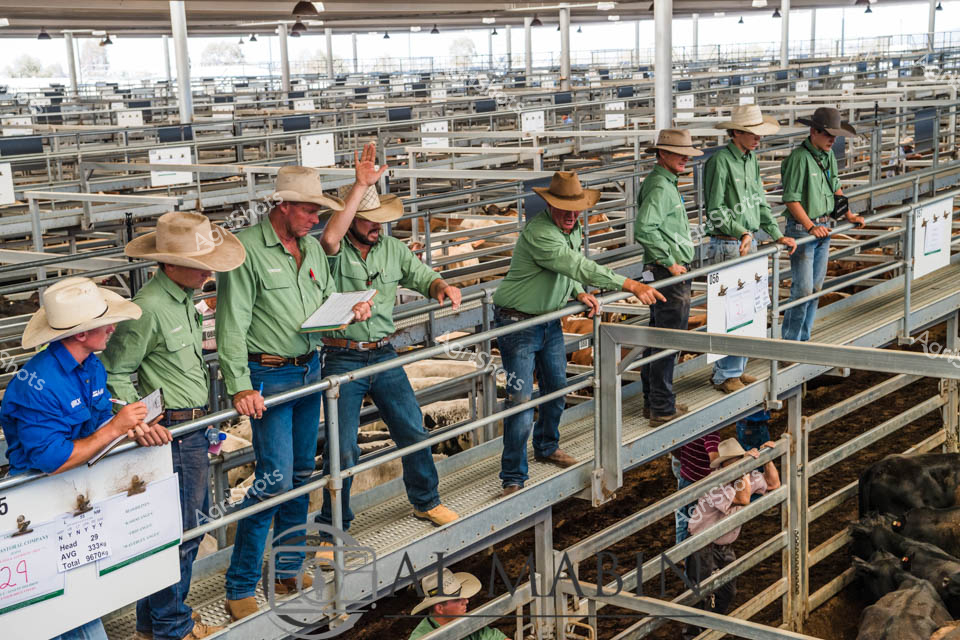
Livestock agents survey the morning's cattle auction from a raised steel walkway, their uniform of sage green shirts and wide-brimmed straw hats signaling decades of agricultural expertise. Meticulously arranged steel pens stretch below them, housing groups of cattle awaiting sale, with white identification boards marking each pen's lot details. One agent in a blue shirt takes notes while another raises a hand, potentially signaling a bid or communicating with colleagues across the expansive sale yard. The structured metal infrastructure of the livestock market reflects the precision and organization of Australia's beef industry, with multiple levels allowing agents to carefully assess each animal's potential. Cool morning light filters through the industrial shed, highlighting the weathered denim and sun-creased faces of professionals who have dedicated their lives to agricultural trading. This scene captures the rhythmic, systematic nature of rural livestock commerce in the New England region of New South Wales, where generations of agricultural knowledge converge in a single, methodical moment.
 Image
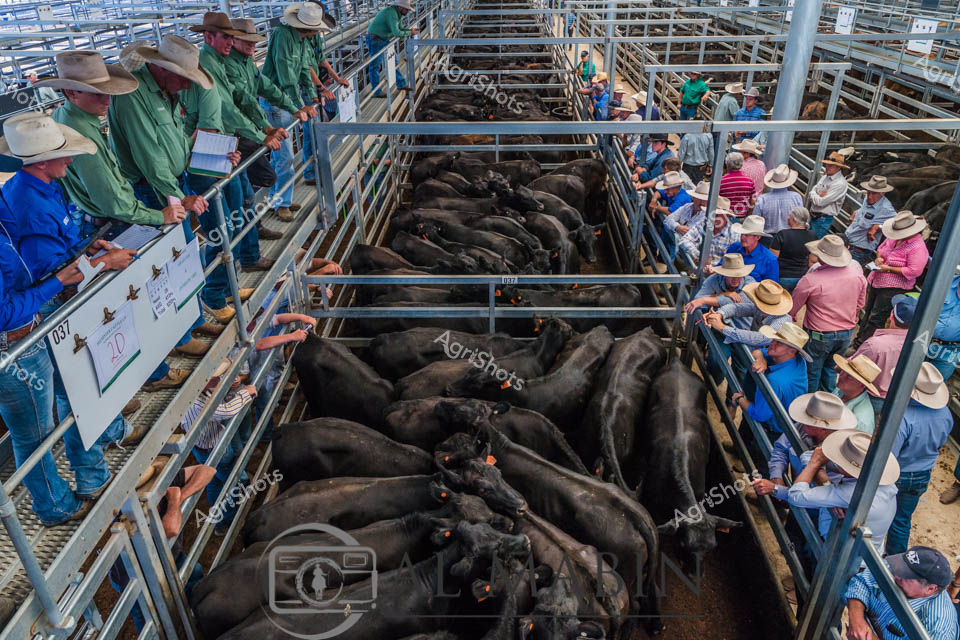
Black Angus cattle pack tightly into metal livestock pens at a bustling regional cattle sale yard, likely in New England, New South Wales. Experienced livestock agents in wide-brimmed rural hats - a blend of blue, green, and cream workwear - crowd the elevated walkways, carefully evaluating the herd. Numbered identification tags hang from the pens, signaling the systematic organization of the auction process. The densely packed cattle, uniformly dark and muscular, represent a premium beef breed, their sleek black coats indicating high-quality stock ready for sale. Weathered hands grip clipboard and railings, with agents positioned strategically to observe each animal's condition and potential market value. The metallic infrastructure, saturated with the earthy tones of livestock and dust, captures the intense, methodical rhythm of Australian agricultural commerce - a quintessential scene of rural economic exchange where generations of farming knowledge converge in a single, purposeful moment.
 Image
Sunbaked earth and scattered gum trees frame a stark rural piggery in New South Wales' New England region. A farmer in a wide-brimmed hat and blue jeans surveys a group of mixed breed pigs - predominantly dark-skinned with a few lighter specimens - grazing across the dry paddock. The pigs, a combination of standard commercial breeds, move with deliberate purpose across the dusty ground, their muscular bodies reflecting both free-range and large-scale farming practices typical of Australian agricultural systems. Pale shadows suggest mid-morning light, with the surrounding landscape speaking to the harsh, arid conditions of inland agricultural zones. The pigs display varied coloration - charcoal, slate, and cream - highlighting genetic diversity within the herd. In the background, white farm structures and trees provide minimal visual relief against the monochromatic earth tones. The scene captures the pragmatic reality of livestock management: a solitary farmer monitoring his animals in an environment that demands resilience and careful husbandry. This image speaks to the ongoing story of Australian agricultural production - adapting to challenging landscapes while maintaining productive livestock systems.
 Image
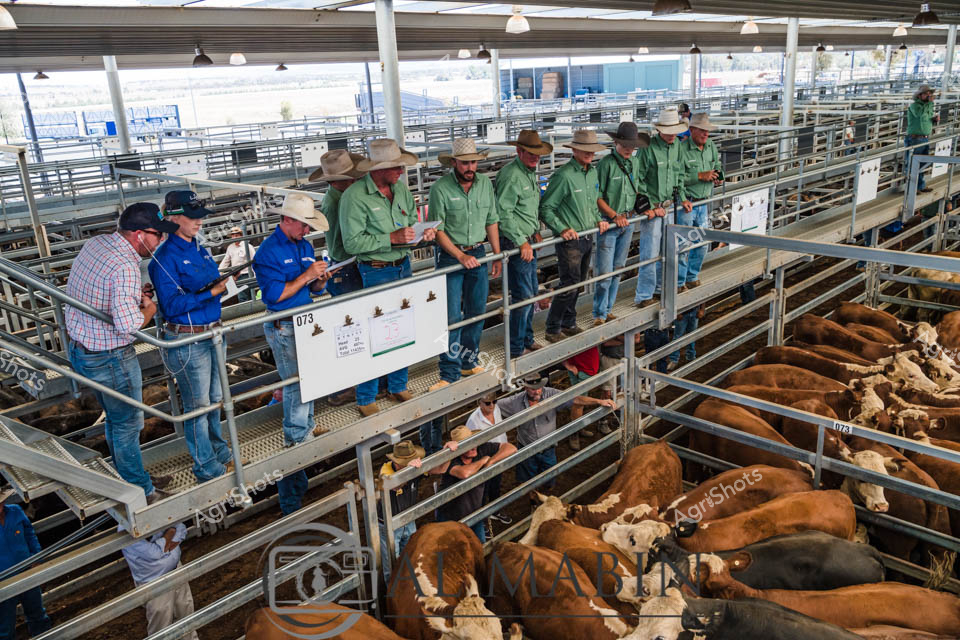
Cattle auction at a modern livestock sale yard in New South Wales' New England Region pulses with agricultural energy. Seasoned agents and buyers lean against steel railings, surveying a pen of robust beef cattle - a mix of rich brown, tan, and black hides clustered below. Dressed in classic rural workwear - crisp blue and green shirts, wide-brimmed protective hats, well-worn denim - the professionals stand in a precise line, intently assessing the livestock inventory. Industrial overhead lighting illuminates the metallic infrastructure of sorting pens, with numbered identification markers indicating each cattle lot. The scene captures the methodical choreography of agricultural commerce, where generations of farming expertise converge to evaluate and trade livestock. Cool, clinical, yet deeply connected to the rhythms of rural production, this snapshot represents a critical moment in Australia's beef supply chain, where individual animals transition from farm to market with calculated precision.
 Image
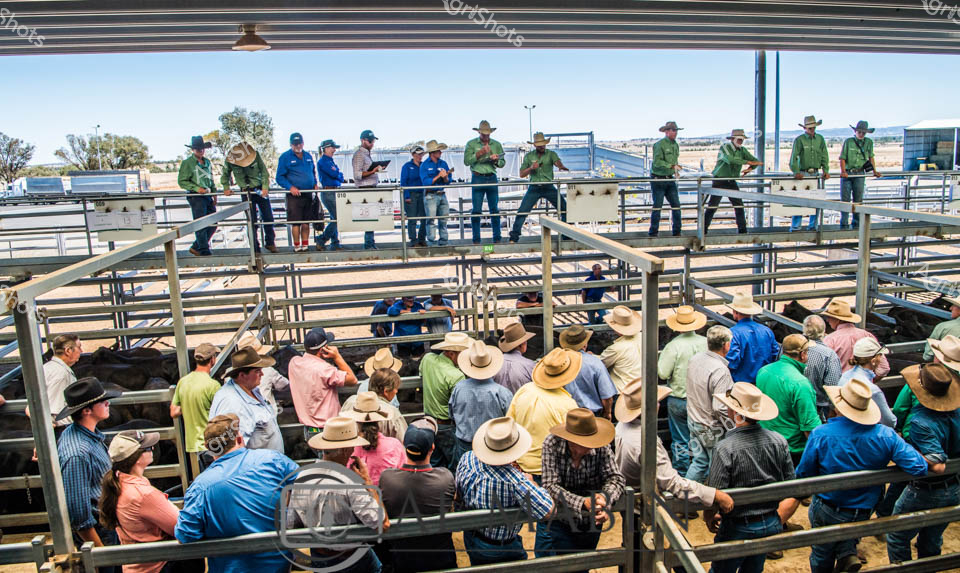
Sun-drenched and bustling, this quintessential Australian livestock auction captures the heartbeat of rural commerce in the New England Region of New South Wales. Ranchers and agricultural professionals crowd the steel-framed sale yards, their wide-brimmed akubra hats creating a sea of neutral tones - khaki, beige, and olive green - against the metallic infrastructure. Cattle pens below hold a dark herd, waiting silently as buyers and agents strategically position themselves to assess the livestock, their body language and clustered stance speaking volumes about the high-stakes agricultural trading taking place. Overhead, a structured metal awning provides shade, while the bright, clear sky suggests a crisp morning in what appears to be late winter or early spring. The audience is tightly packed, wearing classic rural workwear - checked shirts, hardy denim, and protective hats - a uniform that speaks to generations of agricultural tradition. Agents in uniform green and blue shirts stand on an elevated platform, surveying the scene with professional concentration, their positioning highlighting the structured, methodical nature of livestock auctions in rural Australian agricultural markets.
 Image
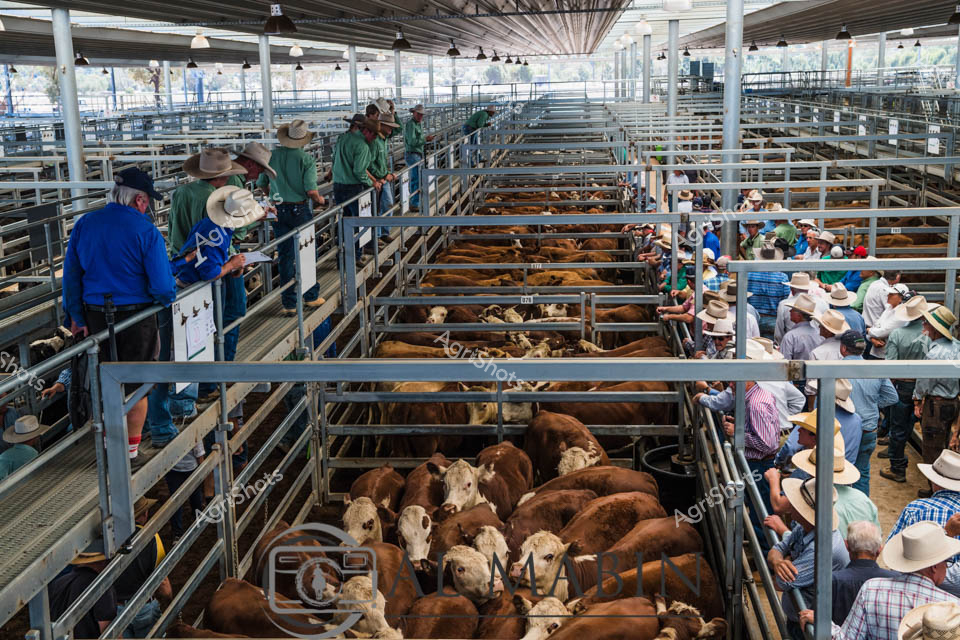
Cattle surge through steel-railed pens at a bustling regional livestock sale yard, capturing the dynamic heart of Australia's beef trading ecosystem. Rich auburn and cream-colored beef cattle cluster tightly, their muscular frames testament to careful breeding and pastoral management. Stockmen in classic Australian rural attire - wide-brimmed akubra hats, crisp work shirts in blue, green, and checked patterns - move purposefully along elevated walkways, monitoring the auction's progression. The industrial-scale steel infrastructure, with its precise grid of pens and overhead lighting, provides a stark mechanical contrast to the organic movement of livestock below. Buyers and agents cluster in small groups, their body language and positioning suggesting intense professional assessment of each animal's potential. This scene represents a crucial economic moment in Australia's agricultural supply chain - where individual beasts are evaluated, traded, and their genetic potential and market value determined through generations of agricultural expertise.