Browse the collection
 Image
Image
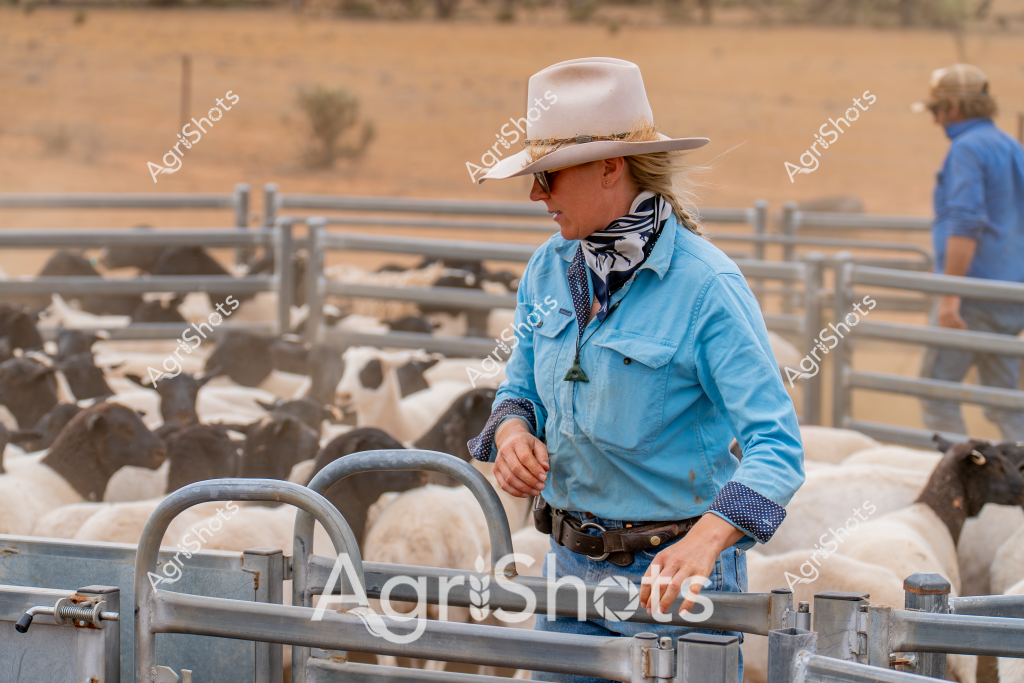
A woman stockman in a light blue work shirt and white Akubra hat stands near a livestock handling yard, surrounded by a flock of black and white goats. Her navy patterned bandana and sunglasses suggest preparation for a day of careful stock management in an arid, dusty paddock environment. Metal livestock gates and panels create a structured processing area where she appears focused and ready to guide the animals. Another worker in a blue shirt can be seen in the background, indicating this is a professional livestock operation. The landscape behind her is characterized by dry, golden-brown terrain with sparse vegetation, typical of an Australian rural setting during drought or dry season conditions.
 Image
Image
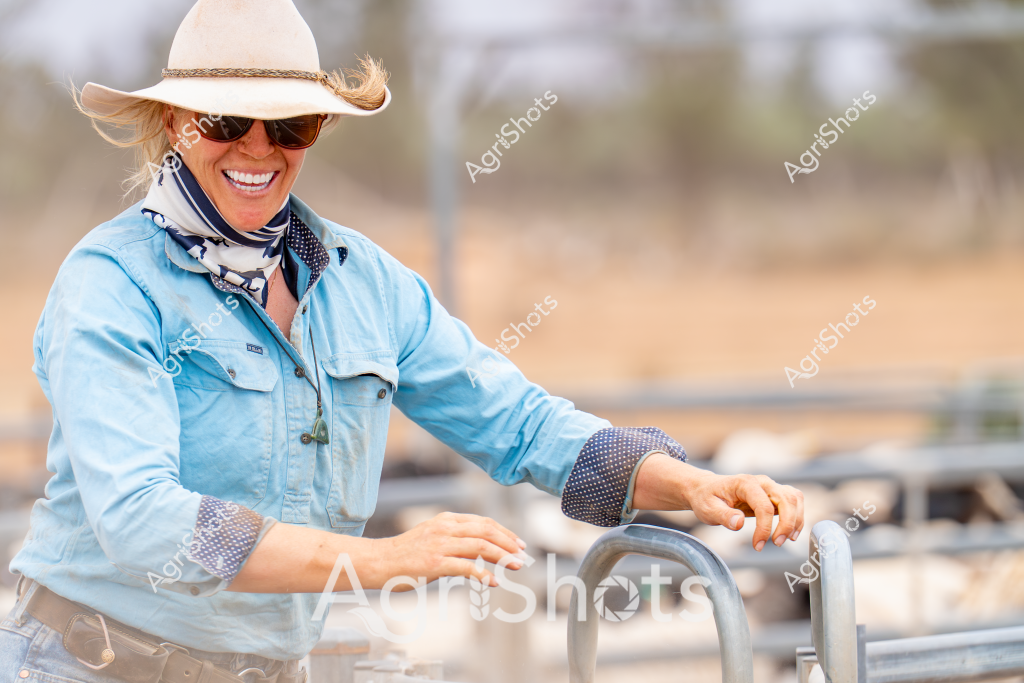
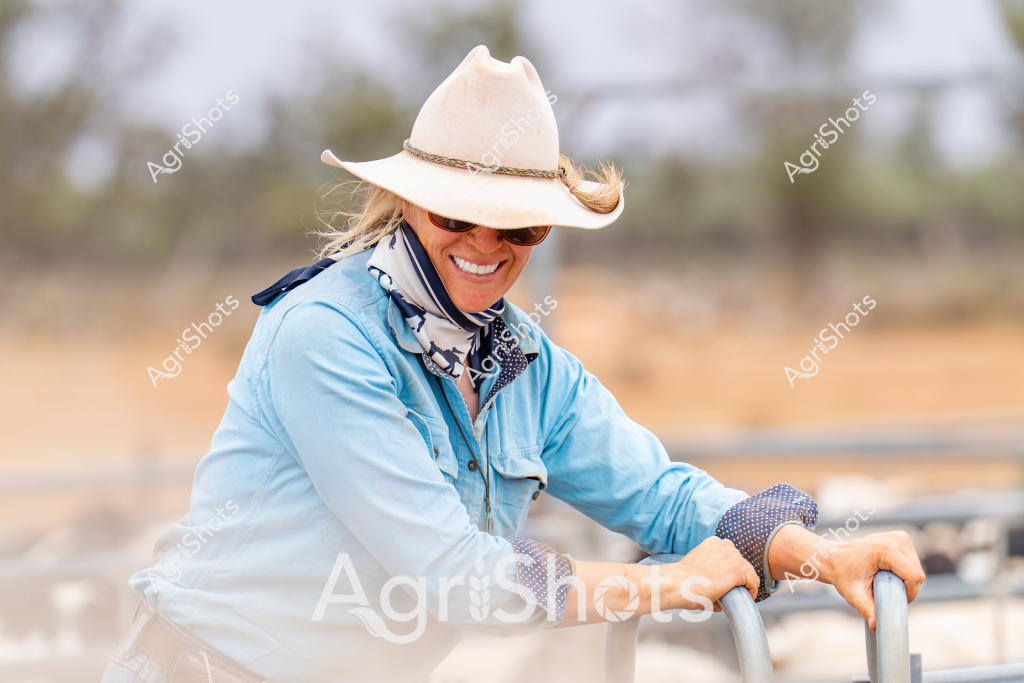
A woman farmer in a light blue chambray shirt and white wide-brimmed hat stands at a metal gate in an arid rural landscape. Her sunglasses and cheerful smile suggest confidence and enjoyment while working outdoors, with a blurred background of dry paddocks and scattered trees. She is wearing practical workwear with rolled chambray sleeves and a patterned navy scarf, typical of Australian agricultural attire. The soft focus and warm tones indicate this is likely a late morning or early afternoon scene during a dry season. Her relaxed but alert posture and positioning near rural infrastructure conveys her connection to the land and her professional role in managing the property.
 Image
Image
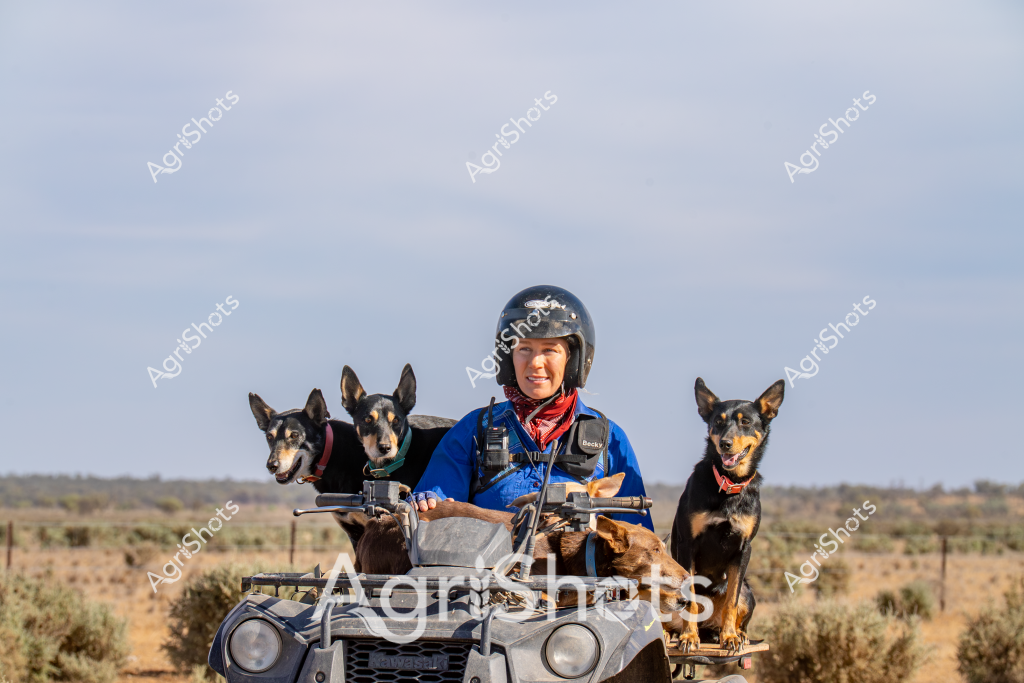
A woman in a blue jacket and protective helmet sits on an all-terrain vehicle (ATV) surrounded by four alert Australian Cattle Dogs in an arid outback landscape. The dogs, with their distinctive black and tan markings, are perched confidently on the quad bike, wearing colorful bandanas and looking attentively across the sparse shrubland. The scene captures the close working relationship between a livestock manager and her highly trained working dogs in a remote Australian pastoral setting. The expansive background shows a flat, sparse terrain with low scrub vegetation and a pale, overcast sky, typical of central Australian rangelands. The woman appears relaxed but focused, suggesting this is a routine patrol or mustering activity on a vast rural property. Her professional gear - including a helmet, blue working jacket, and communication radio - indicates the serious and technical nature of managing livestock in challenging outback conditions.
 Image
Image
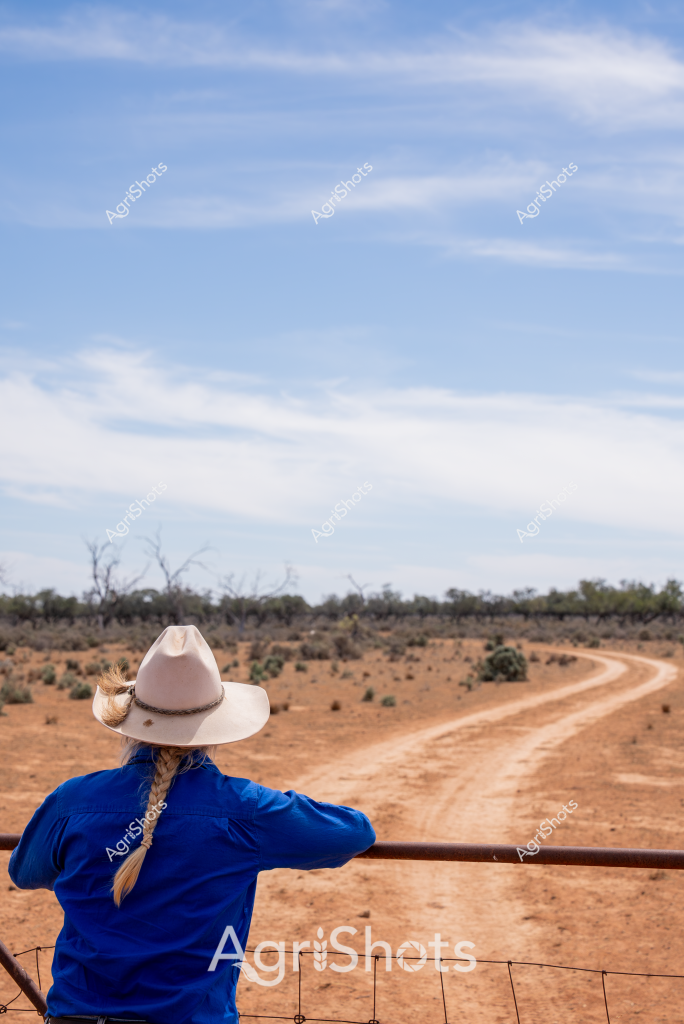
A woman in a bright blue work shirt and white cowboy hat stands at a fence, gazing across a vast, arid Australian landscape. The scene captures a quintessential outback vista with a winding dirt track stretching through sparse, reddish-brown terrain dotted with low scrub and scattered trees in the distant background. The wide-open sky is a soft blue with wispy clouds, creating a sense of expansive solitude typical of rural Australian regions. Her back is turned, showing her observing the rugged landscape, her braided hair visible beneath her hat - embodying the resilience and quiet contemplation of rural workers. The image conveys a powerful sense of isolation, connection to land, and the enduring spirit of agricultural workers in challenging environments.
 Image
Image
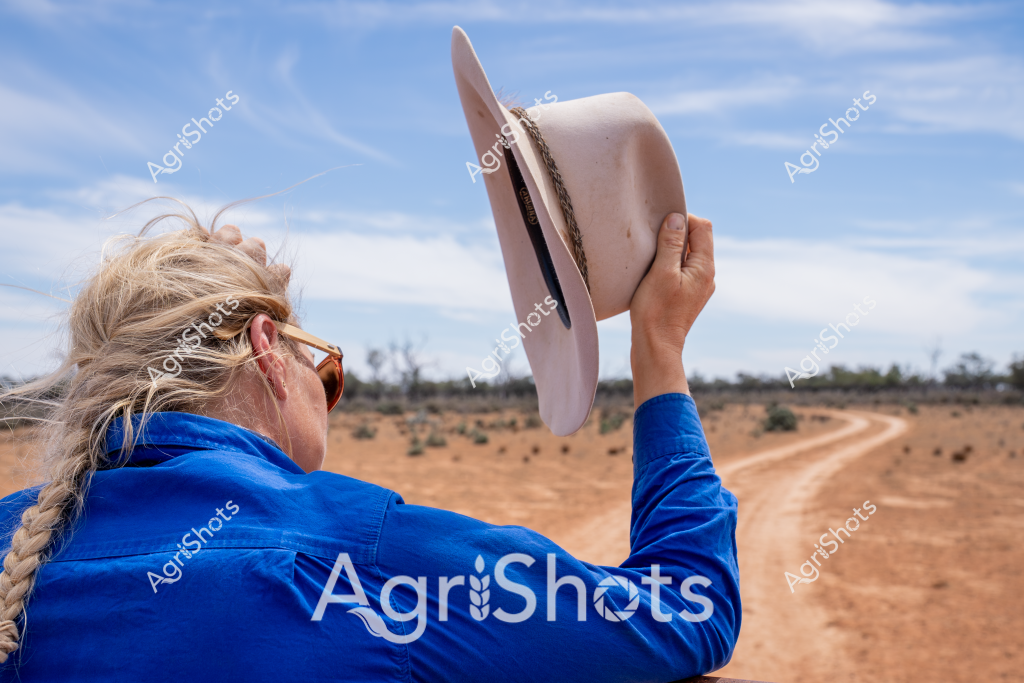
A woman in a bright blue work shirt stands on a dry, dusty rural track, holding up a wide-brimmed hat against a pale blue sky. Her blonde hair is pulled back in a braid, and she's wearing sunglasses, facing away from the camera towards an expansive arid landscape. The scene captures the harsh beauty of the Australian outback, with a dirt road stretching into the distance through sparse, scrubby terrain. Her raised hat suggests a moment of pause, perhaps to shield from the intense sunlight or to get a better view of the surrounding landscape. The blue of her shirt stands out vividly against the ochre and brown tones of the dry ground, embodying the resilience of rural workers in challenging environmental conditions.
 Image
Image
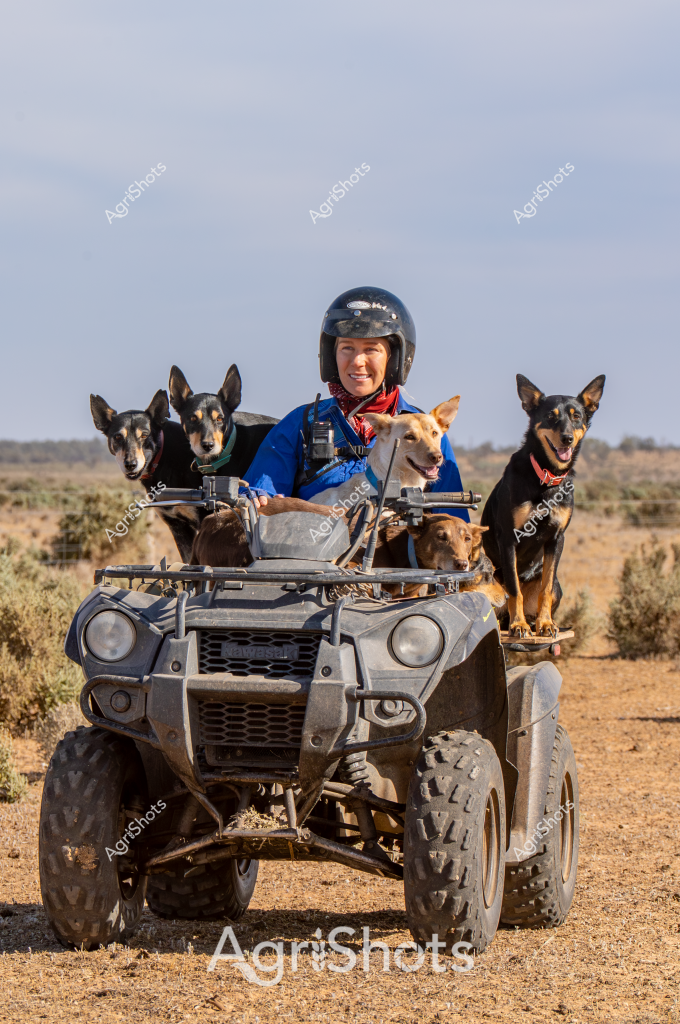
A woman wearing a blue jacket and protective helmet sits on an all-terrain vehicle (ATV) in an arid Australian landscape, accompanied by four alert working dogs. The rugged quad bike is positioned in a sparse desert environment with low scrubby vegetation and a muted blue sky in the background. Four dogs - a mix of what appear to be Australian cattle dog breeds - are positioned strategically around the vehicle, two on each side, looking attentive and ready for work. The scene captures the essence of rural Australian farm management, highlighting the partnership between a skilled worker and her highly trained canine companions in navigating challenging outback terrain. The dogs, wearing bandanas, demonstrate the close working relationship between humans and animals in agricultural settings, showcasing the adaptability and teamwork required in remote Australian landscapes. The image embodies the spirit of rural Australian agriculture - resilient, practical, and built on strong working partnerships between people, animals, and robust machinery designed to handle extreme environmental conditions.
 Image
Image
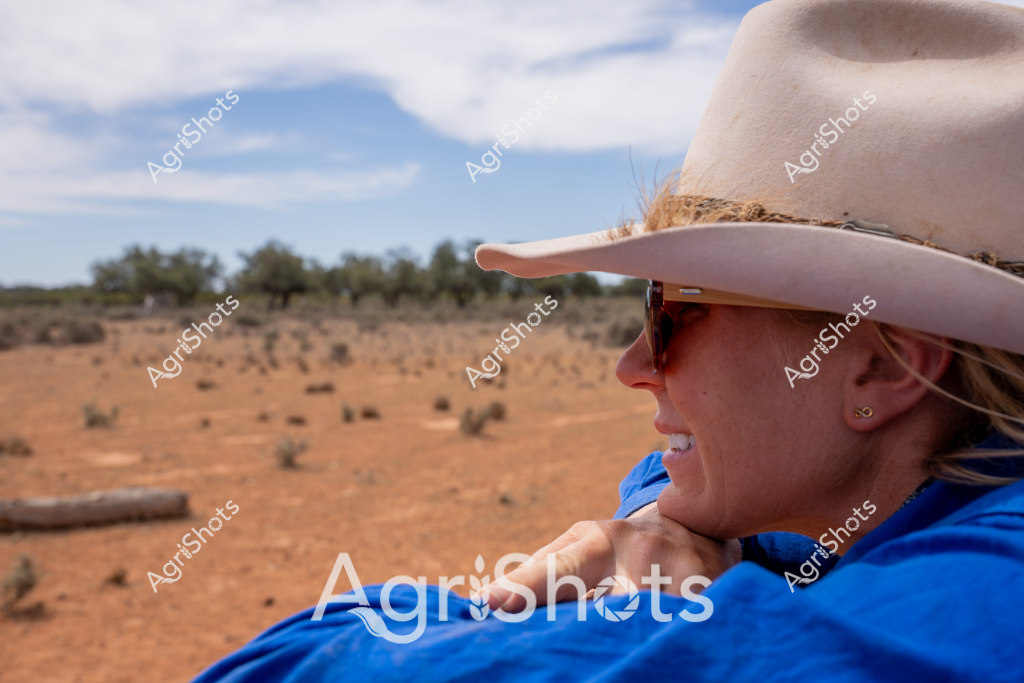
A woman wearing a light-colored wide-brimmed cowboy hat and sunglasses looks out across a sun-baked, rust-colored Australian outback landscape. She is dressed in a bright blue top and appears contemplative, surveying the arid terrain with its scattered sparse vegetation and distant trees. The sky is a soft blue with wispy clouds, creating a sense of expansive openness typical of remote rural Australian settings. Her profile suggests a calm, experienced demeanor of someone accustomed to working in challenging agricultural environments. The image captures a moment of quiet observation, reflecting the resilience and connection to land that characterizes rural Australian life.
 Image
Image
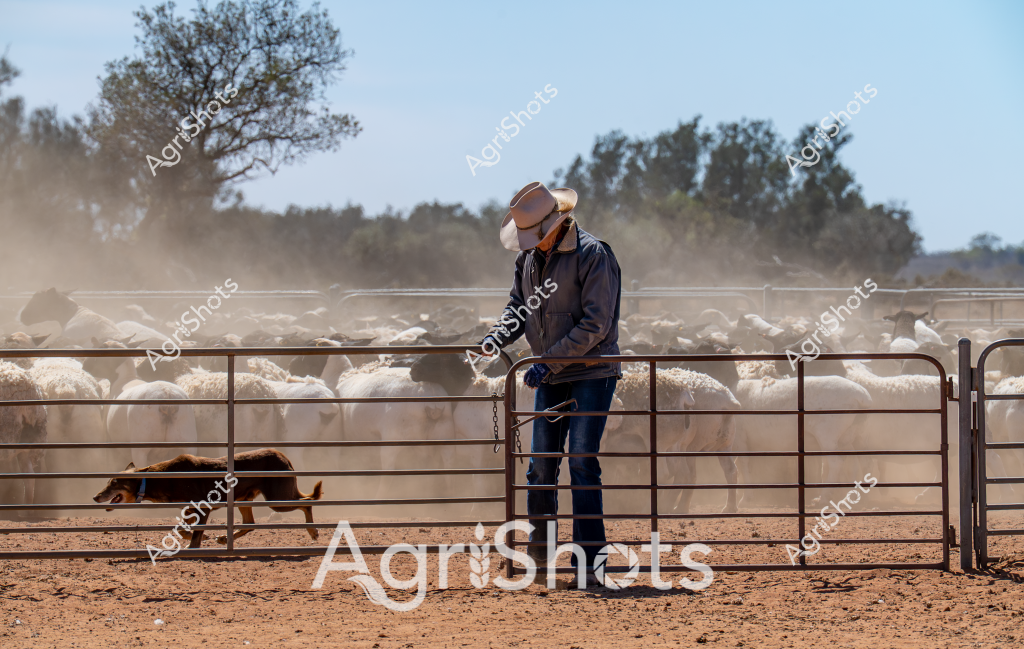
A seasoned man stockman stands amid a dusty sheep yard, carefully managing a flock of white sheep within metal livestock gates. A working dog moves purposefully near his feet, ready to assist with herding. The dry, reddish-brown paddock is surrounded by sparse trees and scrubland, creating a classic Australian rural scene with significant dust being kicked up by the densely packed sheep. The stockman wears a dark jacket, blue jeans, and a wide-brimmed hat, embodying the traditional attire of an experienced Australian livestock manager. The harsh, arid environment and tightly controlled livestock yard suggest this is likely a station or large pastoral property in one of Australia's inland regions, where careful stock management is critical to agricultural success.
 Image
Image
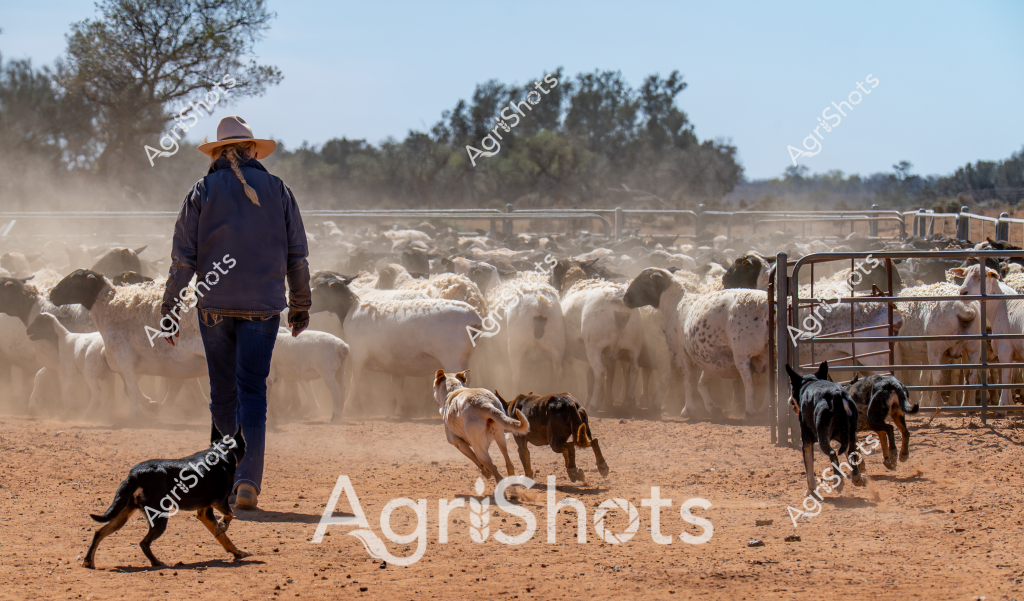
A stockman stands amid a dusty livestock yard, overseeing a large flock of white and speckled sheep. Wearing a navy jacket and wide-brimmed sun hat, the person is accompanied by several working dogs that are carefully herding and controlling the sheep's movement. The ground is a dry, reddish-brown earth, kicking up clouds of dust as the animals move, with metal livestock gates and fencing surrounding the paddock. Several working dogs - some black and white, others tan and white - are strategically positioned to guide and control the sheep's direction. The background shows sparse trees and scrubland, typical of an Australian rural station or farm setting, suggesting this is a cattle or sheep property in an arid or semi-arid region. The scene captures the hard work and skill of Australian livestock management, with the dogs and stockman working in unison to move and control the flock.
 Image
Image
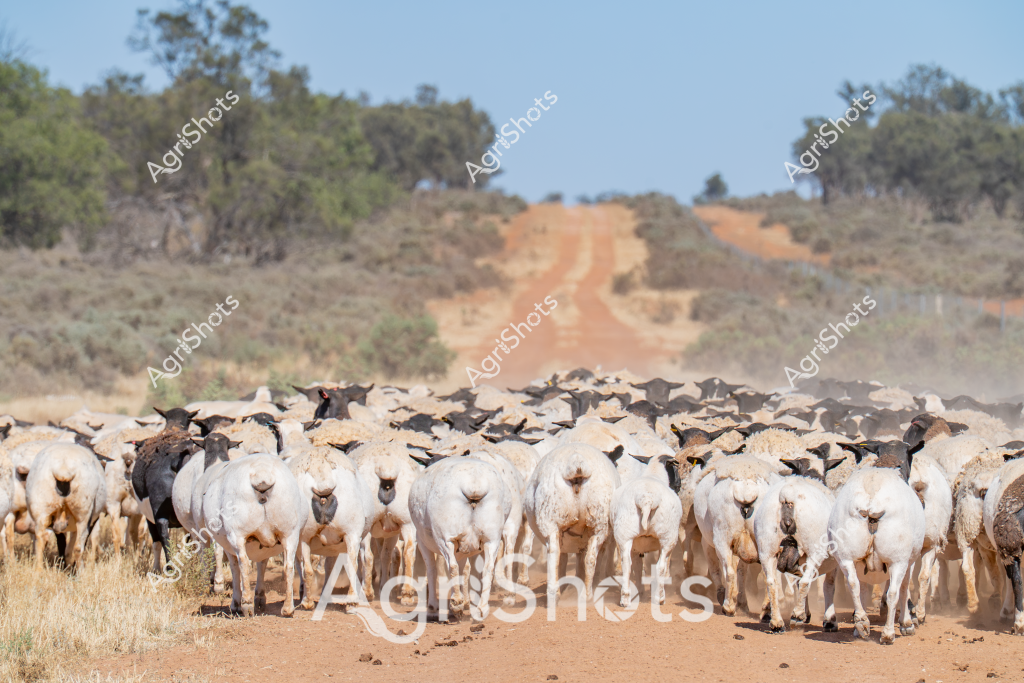
A large flock of sheep, predominantly white with some darker individuals, travels along a dusty dirt road in an arid Australian pastoral landscape. The image captures the rear view of the tightly packed mob, with dozens of sheep walking uniformly, their woolly backsides creating a textured pattern of white and cream. Sparse eucalyptus trees and scrubland border the reddish-brown dirt track, which stretches into the distant blue horizon. The scene epitomizes the classic Australian sheep farming experience, showing the scale and movement of livestock across a dry, expansive rural terrain. Dust kicks up around the hooves of the sheep, indicating their steady movement and the dry conditions of the landscape. The composition highlights the resilience of sheep farming in challenging Australian outback environments, where large mobs are moved between grazing areas or to market.
 Image
Image
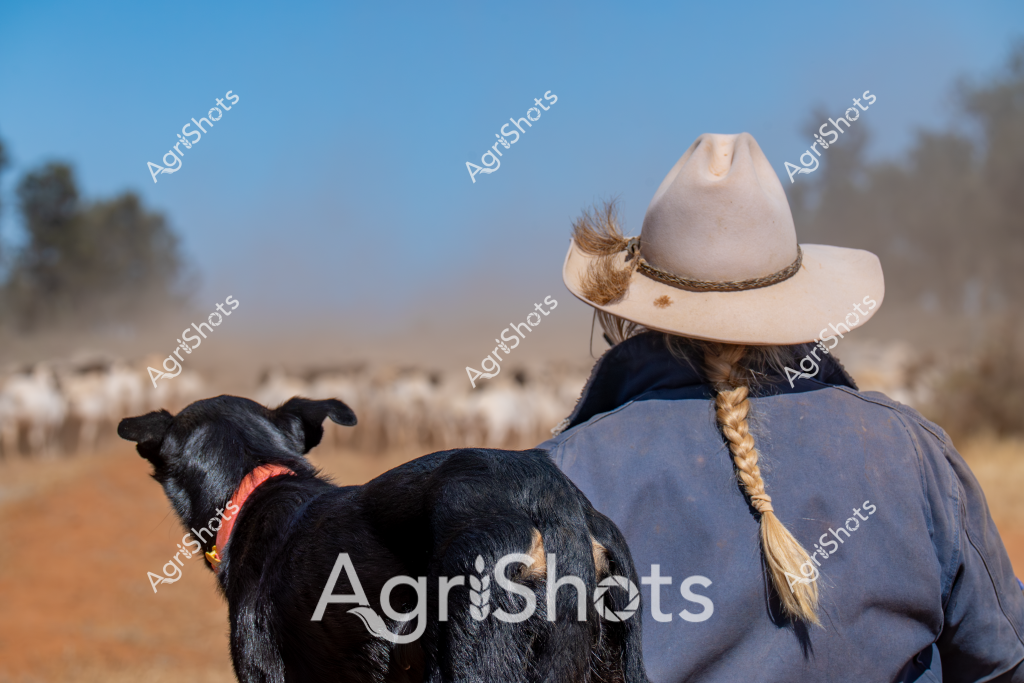
A woman stockman stands in a dusty rural landscape, wearing a light-colored wide-brimmed hat and blue jacket, with a black working dog beside her. In the background, a large herd of white sheep spreads across the dry paddock, creating a soft, misty horizon line. The woman's braided hair hangs down her back, and she and her dog appear to be quietly overseeing the livestock movement. The scene captures the quintessential Australian pastoral landscape - a sun-drenched field with sparse trees in the distance, highlighting the expansive nature of rural livestock management. The black dog, wearing a red collar, stands attentively beside the stockwoman, suggesting a close working relationship typical of Australian farm animal handling.
 Image
Image
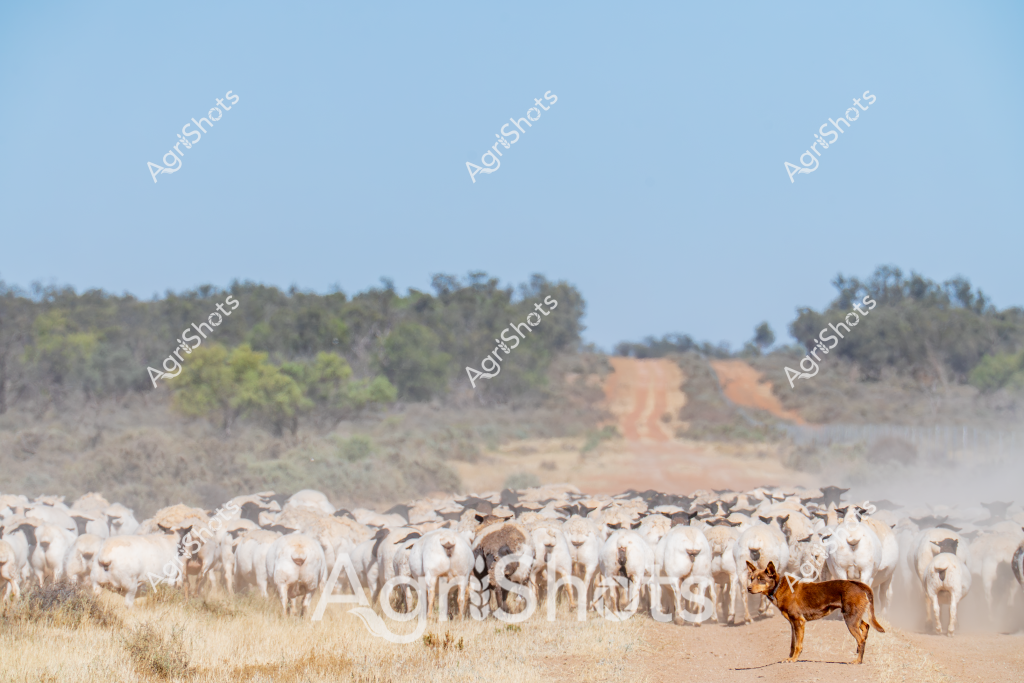
A dingo stands alert on a dusty rural track, watching over a large flock of white sheep being herded across an arid Australian landscape. The compact, reddish-brown canine appears vigilant and focused, positioned to the side of the sheep mob as they raise a cloud of fine dust along the dirt road. In the background, sparse eucalyptus trees and scrubland stretch toward a distant treeline under a clear blue sky, typical of an Australian pastoral setting. The image captures the essential working relationship between livestock guardian dogs and sheep herds, highlighting the dog's crucial role in managing and protecting the flock across vast, open grazing lands. The scene represents the rugged and challenging environment of Australian livestock farming, where animals and working dogs must be resilient and adaptable to survive in harsh conditions.
 Image
Image
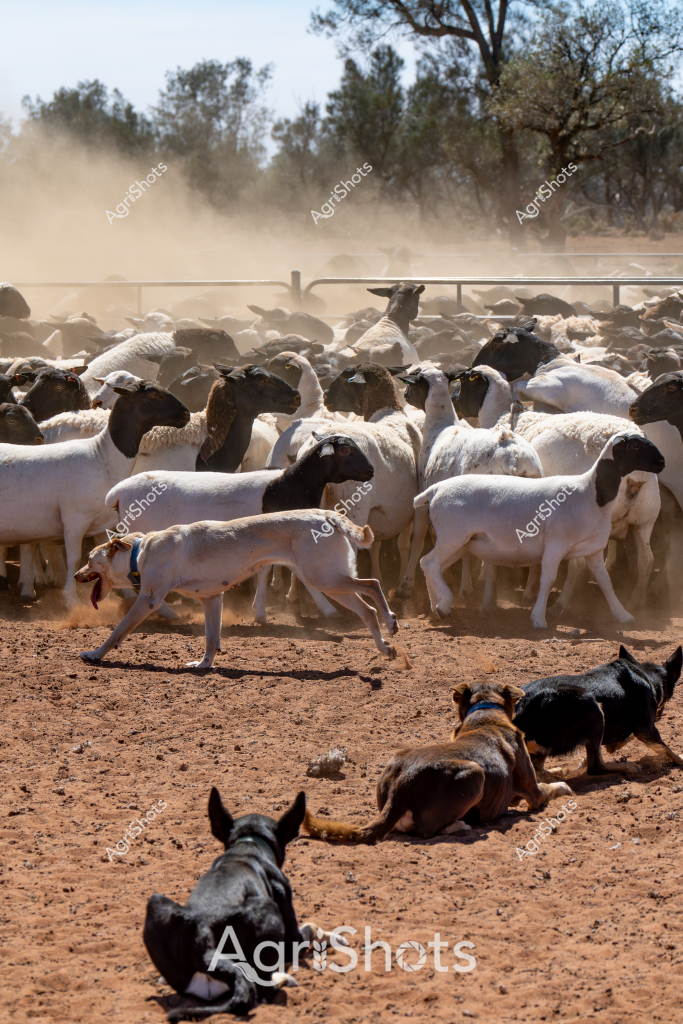
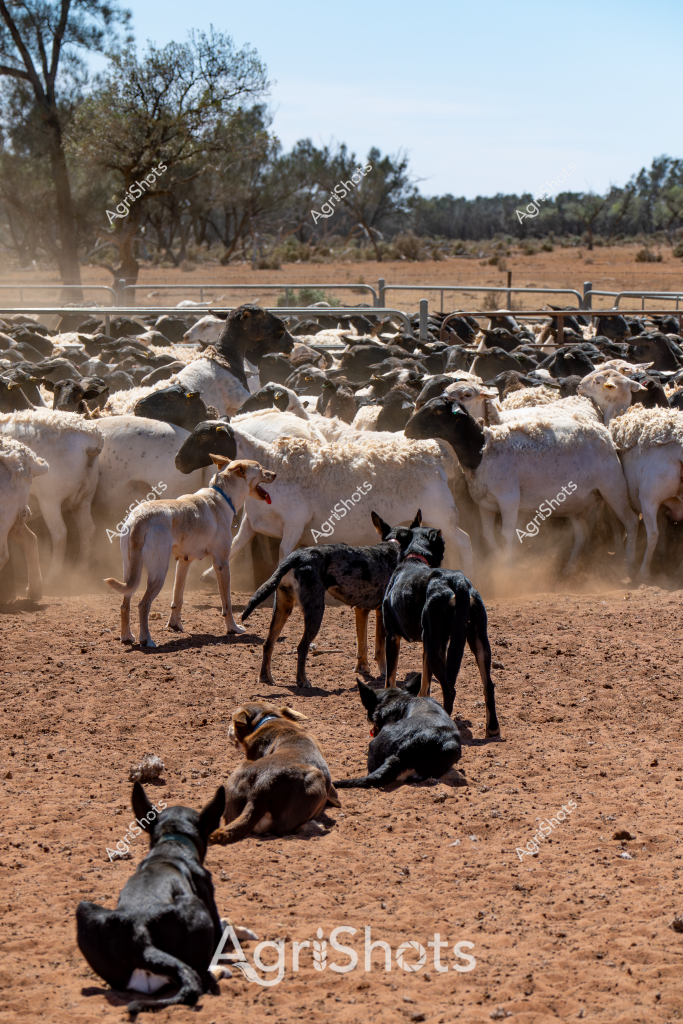
A dusty livestock mustering scene captures a large flock of white and black sheep being herded by working dogs in a dry, arid paddock. Several black and brown working dogs strategically move around the tightly packed mob of sheep, kicking up red earth and creating a swirling dust cloud. The sheep appear to be a mixed breed, predominantly white with black faces, likely Dorper or Merino cross, tightly clustered within a metal yard fence. In the foreground, some dogs rest on the ground while others actively work to control the movement of the sheep, demonstrating the classic Australian livestock management technique of using highly trained herding dogs to manage stock in challenging outback conditions. The background shows sparse trees and a dry landscape typical of rural Australian grazing country, with the intense dust and close animal grouping suggesting hot, dry weather conditions during mustering season. The scene powerfully illustrates the critical role of working dogs in Australian agricultural practices, showcasing their skill, discipline, and importance in managing livestock across vast, harsh agricultural landscapes.
 Image
Image
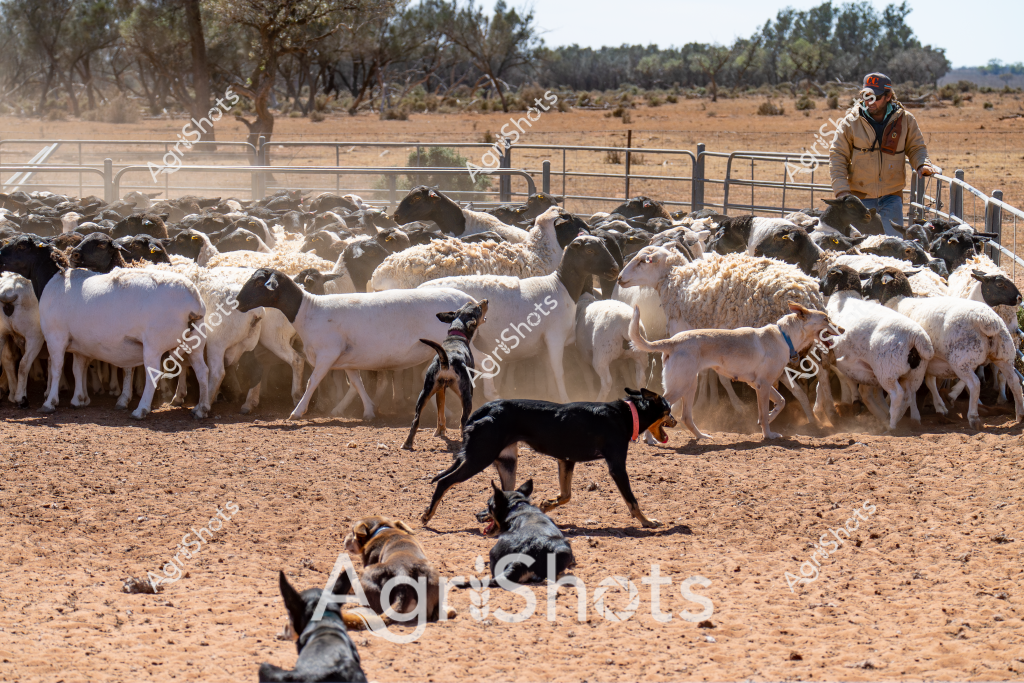
A skilled man livestock manager stands alongside a large mob of white and black sheep in a dry, dusty paddock in what appears to be an arid Australian agricultural setting. Several working dogs - black and tan kelpies - are positioned around the flock, helping to control and guide the sheep within metal yard fencing. The landscape is characterized by reddish-brown earth, sparse vegetation, and scattered eucalyptus trees in the background, suggesting this is likely a station or rural property in an inland region experiencing dry conditions. The sheep appear to be a mixed flock, predominantly white with some black-faced individuals, potentially a breed like Dorper or a crossbred meat sheep variety. The working dogs are intensely focused, moving strategically around the tightly packed group of animals to maintain their position and assist the livestock manager in mustering and controlling the flock. The scene captures the quintessential Australian agricultural landscape - a testament to the resilience of farmers and working animals in challenging environmental conditions. The man is dressed in practical work attire, including a tan jacket and hat, reflecting the functional approach to livestock management in rural Australia.
 Image
Image
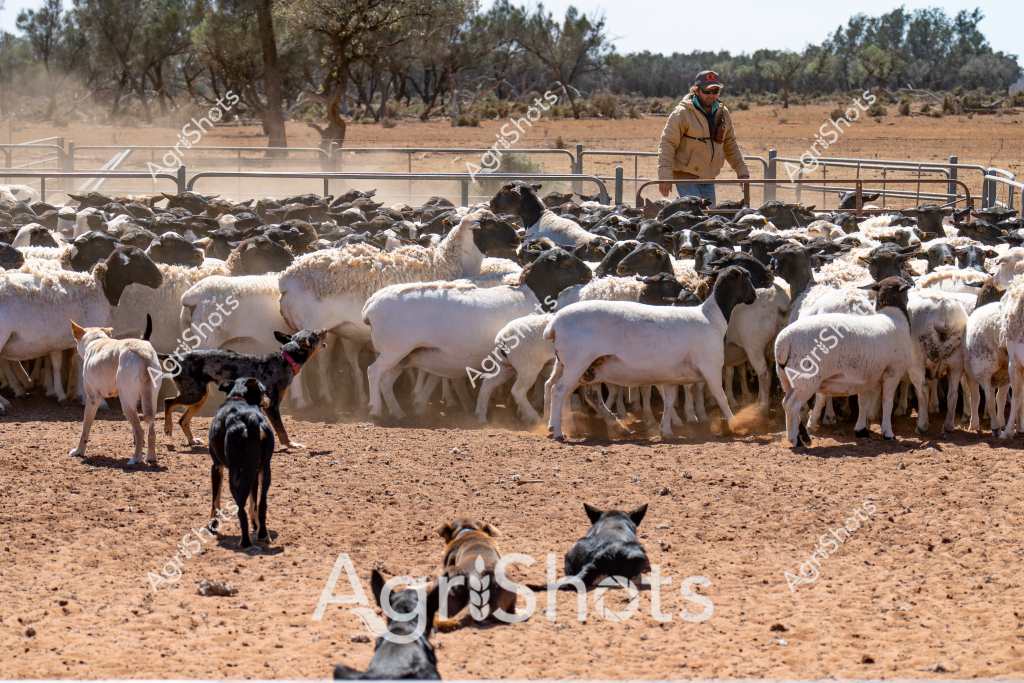
A skilled stockman manages a large flock of white and black sheep within a dusty, fenced yard in what appears to be an arid Australian pastoral region. Several working dogs, likely Australian Kelpies, are strategically positioned around the mob, helping control the tightly packed herd. The dry, reddish-brown ground and sparse trees in the background suggest this is a typical scene from a sheep station in inland Australia, possibly in Western Australia, Queensland, or the Northern Territory. The stockman, dressed in a tan jacket and cap, stands on the edge of the yard, overseeing the sheep herding process. The flock appears to be a mix of white-fleeced sheep, potentially Merino or crossbred lambs, and darker-colored animals. The working dogs are alert and positioned to assist in moving and containing the sheep, demonstrating the critical role of these intelligent canines in Australian livestock management. The scene captures the essence of rural Australian agricultural practice - a blend of human skill, working dog expertise, and livestock management in a challenging, dry landscape. Dust rising from the ground and the tightly clustered sheep suggest active movement and the ongoing process of mustering or yard work typical of sheep farming operations.
 Image
Image
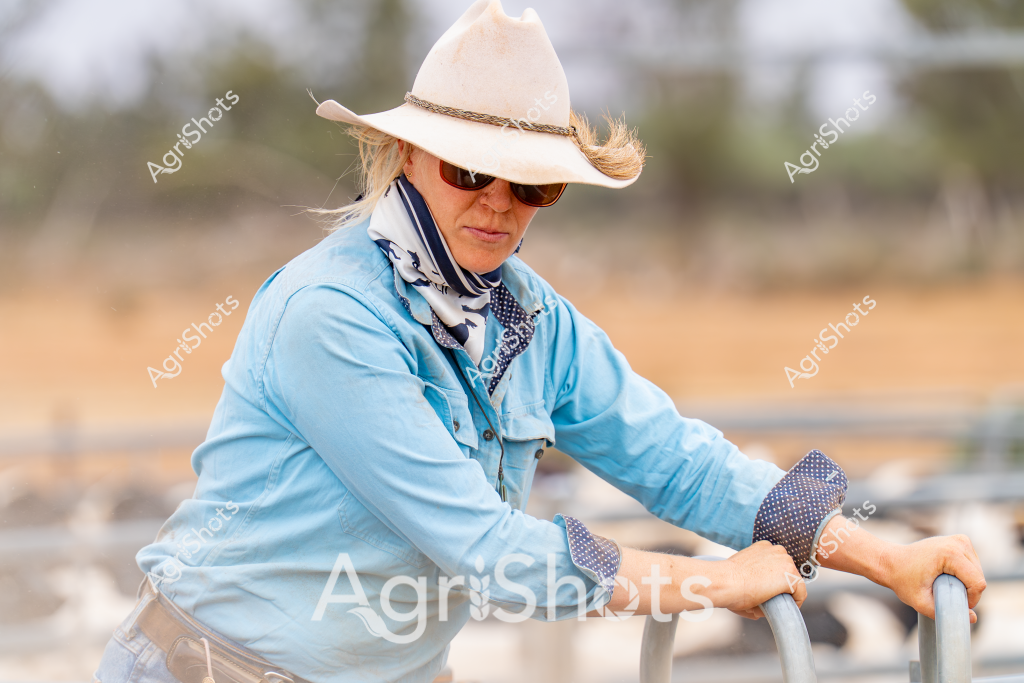
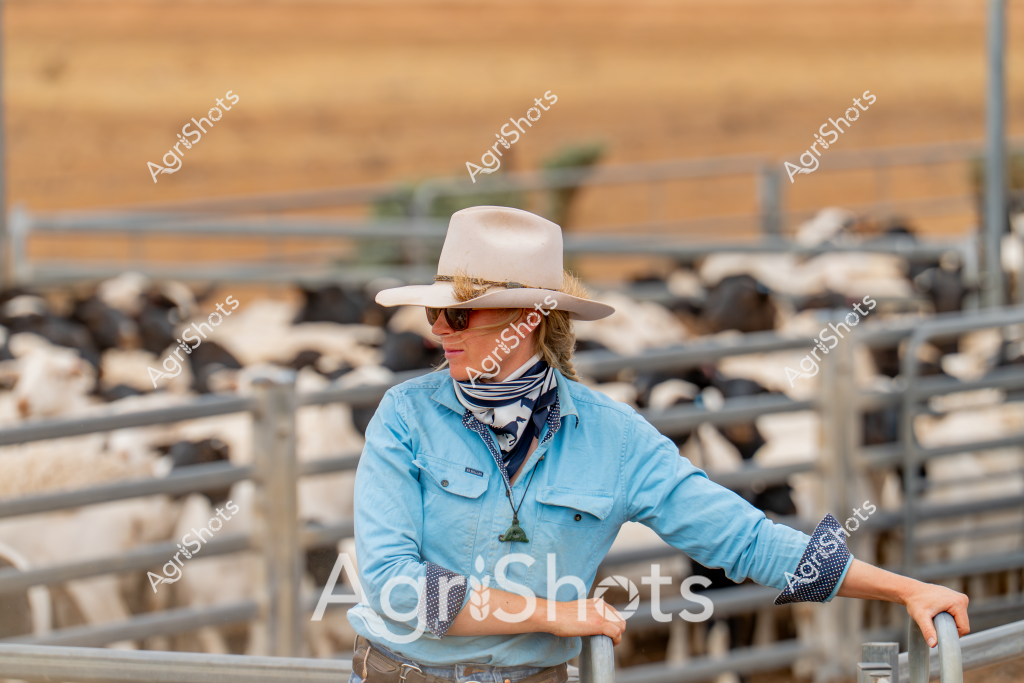
A woman stockman wearing a white wide-brimmed cowboy hat, sunglasses, and a light blue long-sleeved shirt with rolled-up polka-dot cuffs stands leaning on a metal gate or fence. Her navy patterned scarf and rural Australian landscape in the background suggest she is working on a cattle or sheep station. The blurred dry grassland and scattered trees create a typical outback setting, with muted golden and beige tones indicating a potentially dry season. Her posture and attire reflect the practical, hardworking nature of Australian rural workers, showcasing the resilience and professionalism of women in agriculture. The soft focus and natural lighting emphasize the quiet concentration of her work, capturing a moment of contemplation or brief pause during a day of farm management.
 Image
Image
A woman stockman wearing a white wide-brimmed hat and sunglasses stands confidently in a livestock yard, leaning against metal fencing with a herd of sheep visible in the background. Dressed in a light blue work shirt with rolled-up sleeves and a striped neck scarf, she embodies the practical and resilient spirit of Australian rural workers. The metal yard panels create a structured environment, containing a dense flock of sheep with varying shades of white and gray wool. The warm, golden-toned background suggests a typical Australian pastoral landscape, likely during mid-morning or early afternoon. Her posture and attire reflect the professional and no-nonsense approach of contemporary livestock management, showcasing the ongoing role of skilled workers in managing agricultural operations.
 Image
Image
A classic Australian livestock mustering scene captures working dogs expertly managing a large flock of white and dark-colored sheep in a dusty, arid paddock. Several black and tan dogs are positioned strategically around the mob, some standing alert while others rest on the dry, reddish-brown earth. The sheep are densely packed within a metal yard fence, with trees and scrubland visible in the background, suggesting a typical Australian pastoral setting. The working dogs, likely Australian Kelpies or similar herding breeds, demonstrate the critical role of canine partners in managing livestock across vast rural properties. Their positioning shows practiced skill - some standing vigilant, others resting but ready to spring into action at a moment's notice. The dense dust cloud and tight grouping of sheep indicate active movement and controlled herding. The harsh, sunbaked landscape with its red soil and sparse vegetation is characteristic of inland Australian agricultural regions, likely in a state like Queensland or Western Australia. The scene captures the demanding nature of sheep farming in challenging environmental conditions, highlighting the resilience and expertise required in Australian pastoral agriculture.
 Image
Image
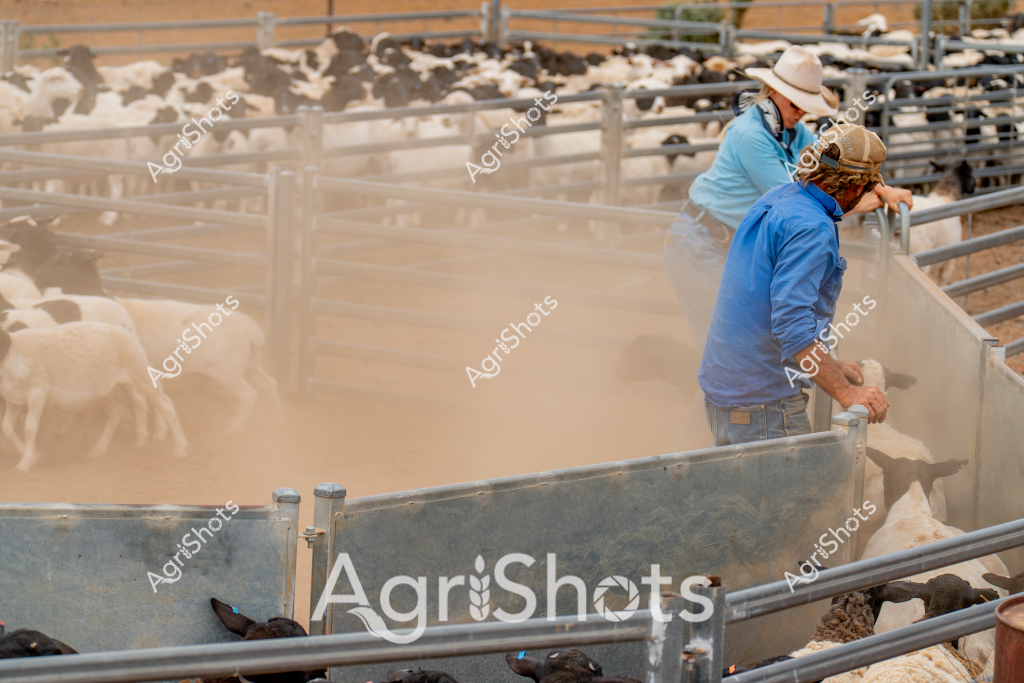
Two workers manage a dusty livestock yard, with sheep penned in metal fencing and dust swirling around their feet. A man in a white hat and light blue shirt and another worker in a blue jacket are positioned at different points of the curved metal livestock handling system, carefully controlling the movement of the sheep. The agricultural setting is characterized by metallic yard infrastructure, multiple paddocks, and a dry, dusty environment typical of Australian livestock management. Dust clouds rise around the animals, creating a hazy atmospheric effect that highlights the dynamic nature of stock handling. The workers appear focused and professional, demonstrating the skilled labor required in managing livestock in challenging rural conditions. The scene captures the essence of Australian sheep farming, with precision and careful animal management evident in every aspect of their work.
 Image
Image
A woman stockman wearing a light blue long-sleeved shirt and a cream-colored cowboy hat leans on a metal gate, smiling broadly in a rural Australian landscape. Her neck is adorned with a patterned scarf, and she's wearing work gloves, suggesting she's in the midst of daily farm activities. The background reveals a soft, blurred rural setting with trees and dry grasslands, typical of an Australian pastoral scene. Her relaxed posture and wide smile convey a sense of contentment and connection to the land, embodying the resilient spirit of rural Australian agricultural workers. The soft lighting and her casual yet purposeful stance capture a moment of quiet satisfaction in the working day of a professional in the agricultural sector.
 Image
Image
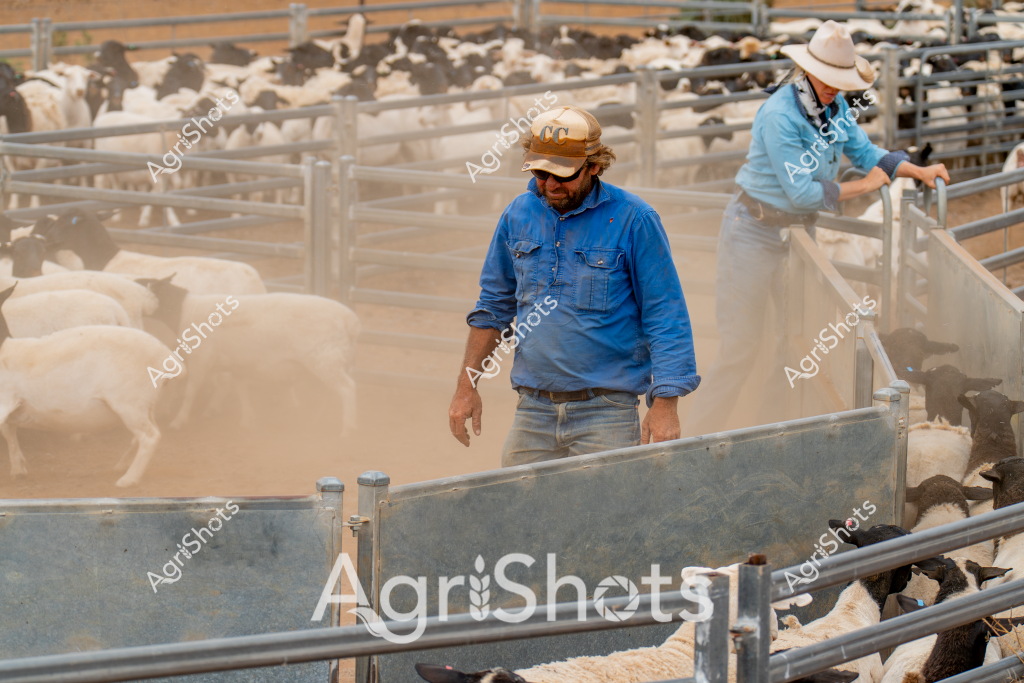
A man stockman in a blue work shirt and golden "CC" cap stands amid a dusty sheep yard, carefully monitoring a large flock of white sheep contained within metal livestock gates. Another worker in a light blue shirt and white hat can be seen in the background, managing the opposite side of the pen. The scene captures the intense concentration and precise movements required in rural livestock management, with fine dust rising around the animals and creating a soft, textured atmosphere. Multiple sheep of varying shades - white, cream, and some darker individuals - are densely packed within the metal yard infrastructure, highlighting the scale of this sheep management operation. The weathered metal gates, dust-covered ground, and focused demeanor of the stockmen convey the hardworking, pragmatic nature of Australian agricultural practices.
 Image
Image
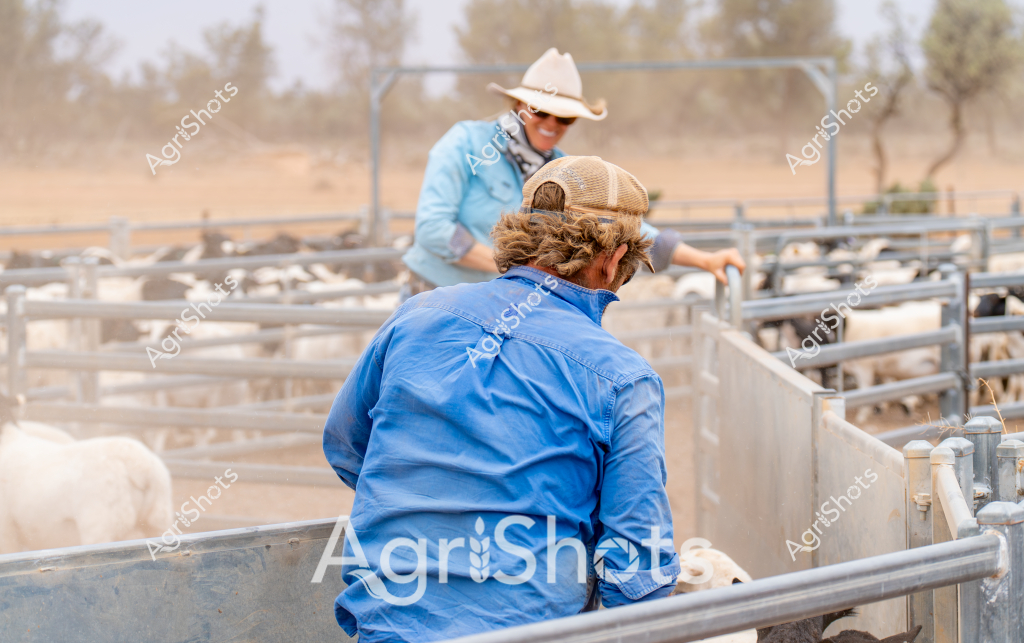
Two workers in blue shirts and protective hats manage a mob of sheep in a rural livestock yard during what appears to be a dry, dusty day. A woman in a light blue shirt and white cowboy hat stands at one end of the metal livestock pen, while another worker in a blue shirt faces away in the foreground. The metal cattle yards create a structured grid against a sparse, arid landscape with scattered trees visible in the background. Sunlight casts a warm, hazy atmosphere over the scene, highlighting the textured landscape and the workers' focused movements as they manage the livestock. The curly-haired worker's cap and protective clothing underscore the practical approach to stock management in challenging rural conditions. The image captures the essence of Australian livestock management - resilient workers navigating harsh environmental conditions while carefully handling the sheep herd. The metal infrastructure and protective clothing speak to the professional and methodical approach to agricultural work in challenging rural settings.
 Image
Image
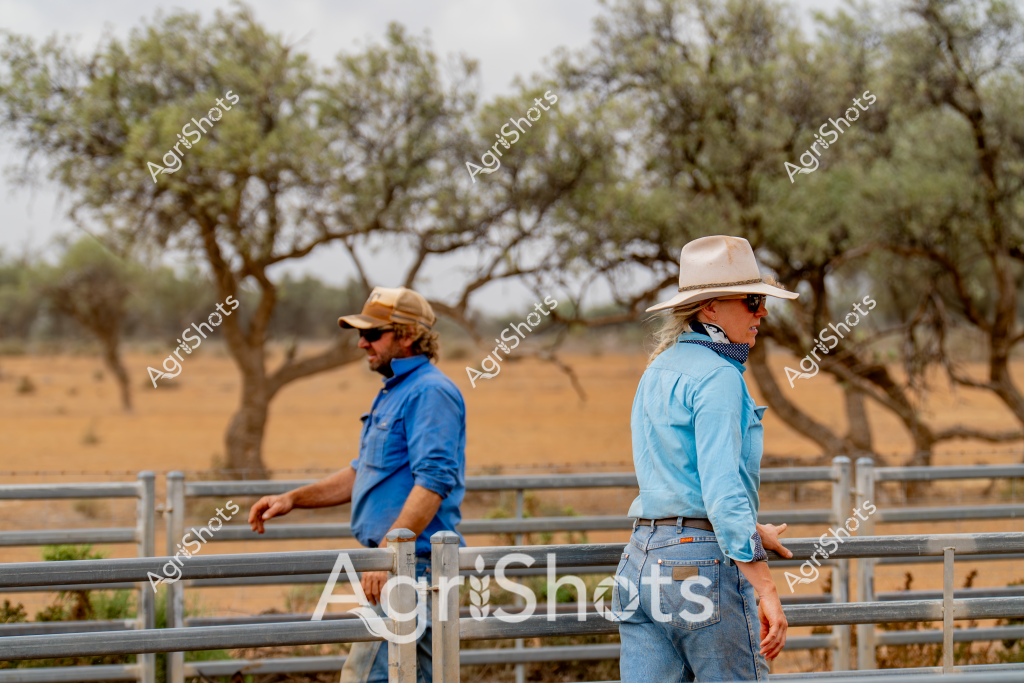
Two rural workers in agricultural attire stand beside metal livestock yards in a dry, tree-lined landscape. A woman wearing a cream-colored wide-brimmed hat and light blue long-sleeved shirt faces away from a man in a blue work shirt, both leaning casually against metal fence rails. The background reveals sparse olive-green trees scattered across a dusty golden paddock, suggesting an arid Australian rural setting. Their positioning and clothing indicate they are likely station workers or livestock managers engaged in a moment of observation or discussion about farm operations. The wide-brimmed hats, long-sleeved shirts, and sturdy denim jeans are typical of Australian rural workwear designed for protection from harsh sun and challenging outdoor conditions. The scene captures the quiet concentration and professional stance of agricultural workers, emphasizing the connection between people and the challenging landscape of rural Australia. Their relaxed but purposeful posture suggests an intimate understanding of the environment and their agricultural responsibilities.
 Image
Image
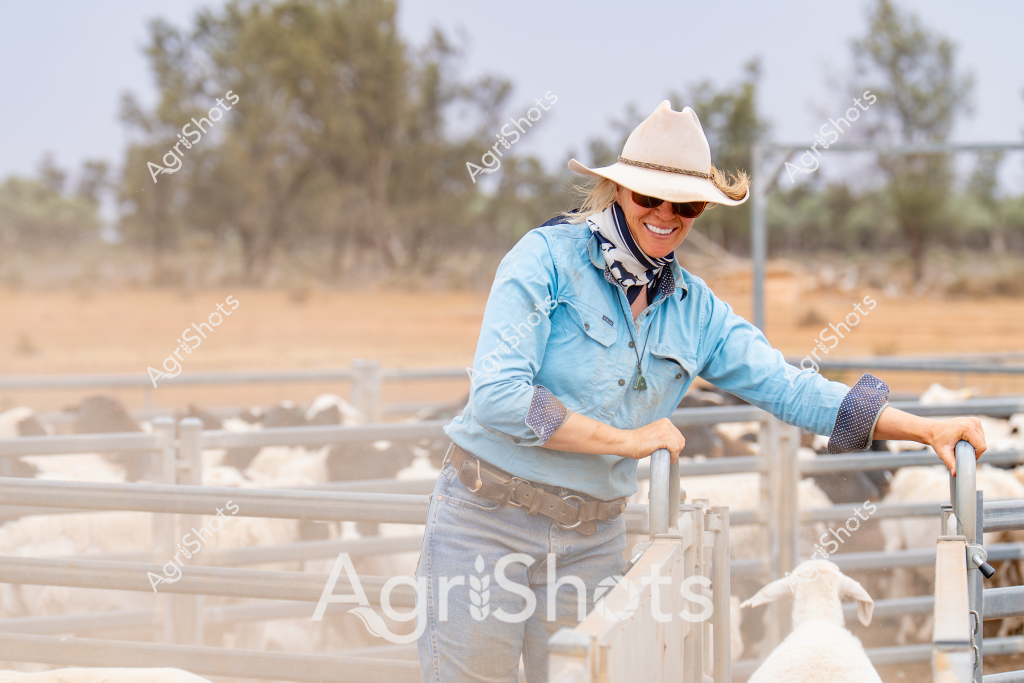
A woman stockman stands confidently in a rural sheep paddock, wearing a light blue work shirt, cowboy hat, and sunglasses. She leans against a metal livestock gate with a herd of white sheep visible in the background, surrounded by dry bushland with scattered trees. The landscape suggests an arid or semi-arid region of Australia, with a golden-brown ground and sparse vegetation typical of pastoral areas. Her attire - a crisp chambray shirt, wide-brimmed hat, and relaxed posture - reflects the practical and resilient style of Australian rural workers. The scene captures the essence of contemporary agricultural work, where women play a significant role in livestock management and station operations. Her body language demonstrates a comfortable expertise, showing her connection to the land and the animals under her care.