Browse the collection
 Image
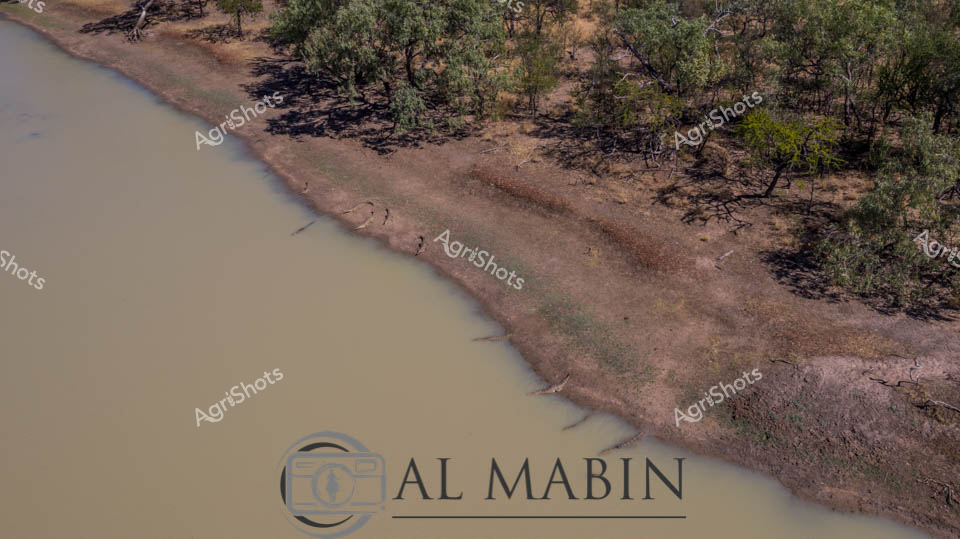
Aerial vista of a parched riverbank along an inland waterway in remote Queensland. Turbid, sediment-laden water laps against the eroded clay shoreline, revealing the harsh contours of a landscape shaped by prolonged dry conditions. Scattered eucalyptus trees cast elongated shadows across the reddish-brown earth, their sparse foliage testament to the unforgiving climate. The riverbank's ragged edge hints at potential wildlife habitation, with hints of survival etched into the cracked ground and murky waters. Muted earth tones of ochre, slate grey, and dusty green dominate the composition, capturing the essence of an Australian pastoral landscape locked in the grip of seasonal extremes.
 Image
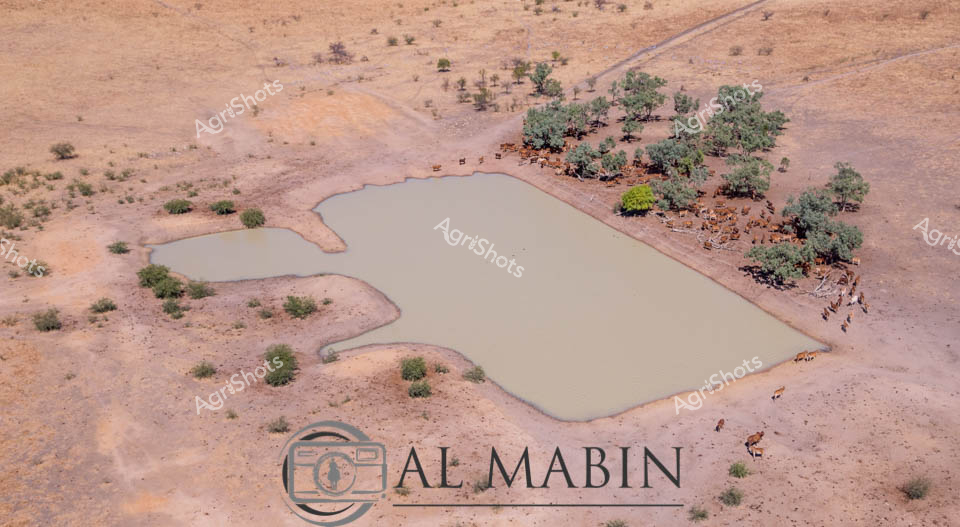
Dusty ochre plains stretch beneath an expansive Australian sky, where a carefully engineered water dam provides life-giving sustenance to a herd of Brahman cattle. The irregular-shaped earthen dam, milky-gray and reflective, sits embedded in the arid landscape, surrounded by scattered eucalyptus trees and sparse native ground vegetation. Hardy Brahman cattle, distinguished by their distinctive humps and loose skin adapted to tropical climates, cluster around the water's edge and under the sparse tree cover, seeking respite from the intense heat. The aerial perspective reveals the strategic placement of this water infrastructure, critical to pastoral operations in remote Queensland cattle stations where water management determines survival. Rugged, resilient landscape meets calculated agricultural engineering - a quintessential scene of Australia's northern pastoral regions where generations of graziers have transformed challenging terrain into productive cattle country. The muted earth tones of rust, tan, and sage green speak to the enduring relationship between land, livestock, and those who work to sustainably manage these harsh but beautiful environments.
 Image
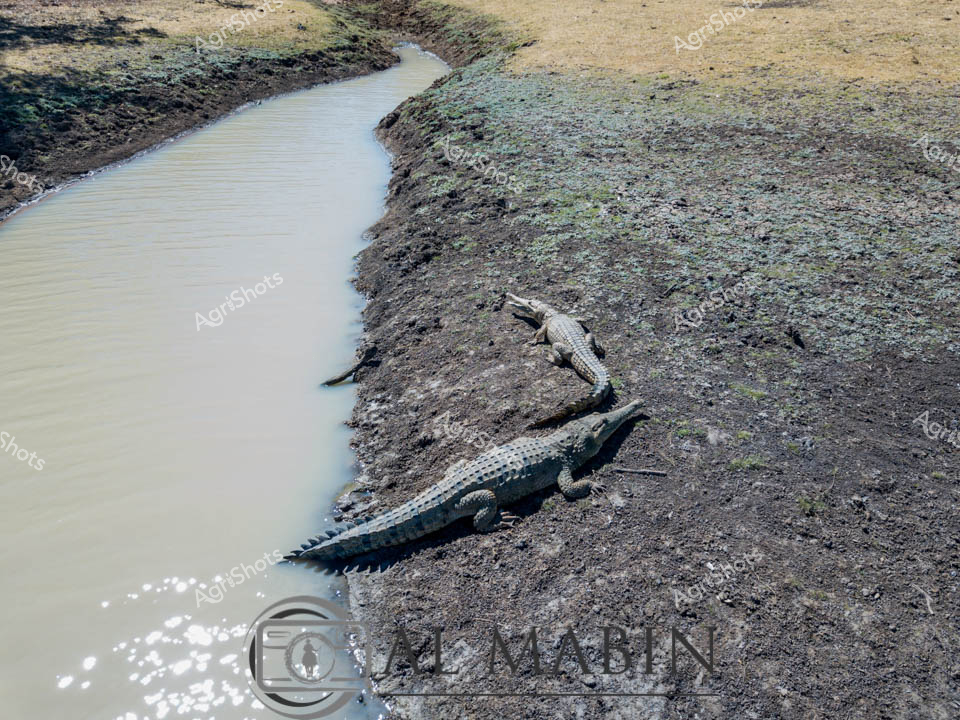
Saltwater crocodiles bask along the sun-baked banks of a remote Queensland waterway, their prehistoric forms blending seamlessly with the rugged pastoral landscape. Two massive reptiles sprawl on the muddy shoreline, their armored scales casting subtle shadows across the cracked earth, mere meters from the milky-brown river channel. The harsh afternoon light reveals every textured contour of their powerful bodies, highlighting the prehistoric adaptations that have survived countless dry seasons in this unforgiving terrain. One crocodile stretches partially onto the bank, while another remains partially submerged, embodying the delicate balance of predator and environment that defines Australia's northern wilderness. The surrounding landscape speaks of resilience - scrubby vegetation clinging to weathered soil, the water's surface reflecting the intense heat of a tropical station country afternoon. This scene captures the raw, untamed essence of Queensland's remote waterways, where wildlife and landscape exist in a timeless, uncompromising harmony.
 Image
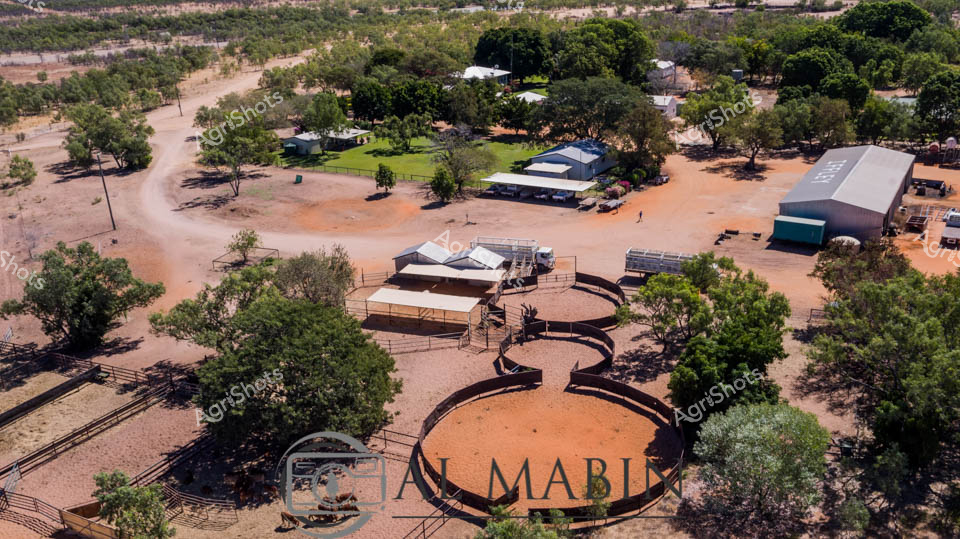
Nestled in the arid heartland of Queensland, this aerial view captures the intricate layout of a classic Australian cattle station. Rusty-red earth surrounds a network of circular cattle yards, their curved fences creating elegant geometric patterns against the dusty landscape. Weathered sheds and homestead buildings cluster around the yards, sheltered by mature gum trees casting long shadows across the sun-baked ground. The property reveals the sophisticated infrastructure of modern pastoral agriculture - carefully designed livestock handling facilities surrounded by sparse, resilient vegetation typical of inland Australia. Massive steel gates and sturdy wooden fence lines demonstrate the engineering required to manage livestock in challenging environments. The blue-grey buildings contrast sharply with the terracotta ground, highlighting the human intervention in this unforgiving landscape where generations of agricultural expertise have transformed raw wilderness into productive pastoral land.
 Image
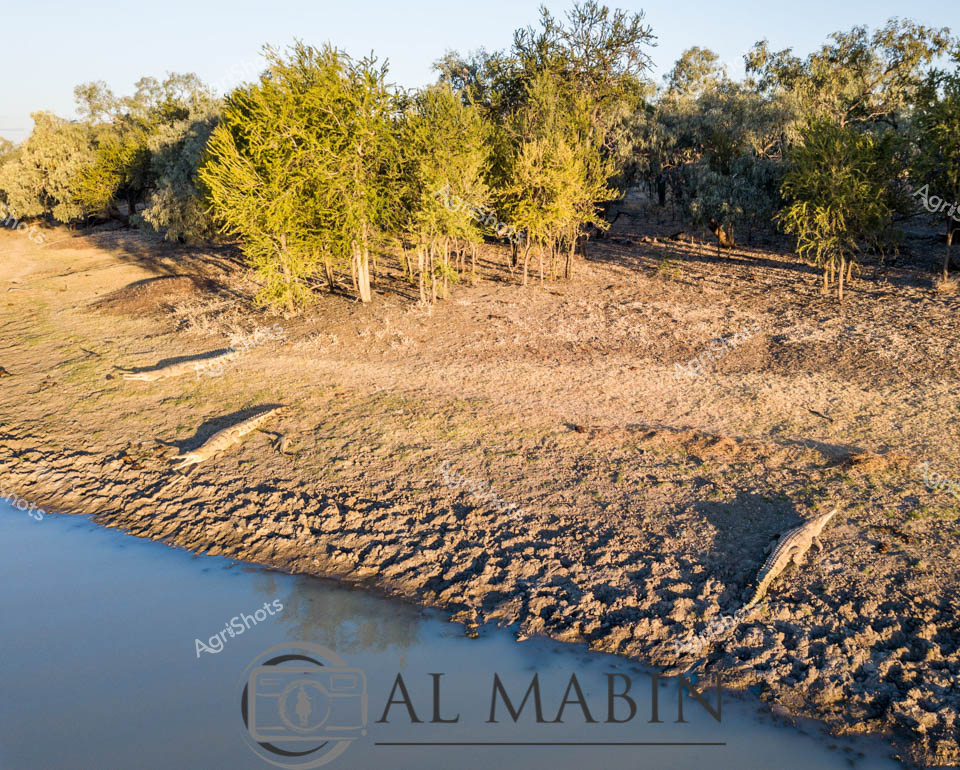
Aerial view of a drought-parched riverbank on a remote Queensland cattle station, captured in the golden light of early morning. Cracked, sun-baked earth stretches between a murky blue waterway and a sparse grove of eucalyptus and acacia trees, their yellow-green foliage casting long shadows across the barren landscape. The waterline reveals the harsh impact of prolonged dry conditions, with eroded, textured banks telling a story of water scarcity and environmental challenge. Sparse vegetation clings to life, a testament to the resilience of Australia's inland ecosystems during difficult seasons. Weathered tree trunks and scattered roots break the monotony of the dusty ground, creating a stark contrast between the blue water and the ochre earth. This powerful image encapsulates the delicate balance of survival in Australia's unforgiving rural landscapes, where water is the most precious resource.
 Image
Parched earth fragments scatter across a sunbaked landscape, revealing the brutal impact of prolonged drought on Australian agricultural terrain. Cracked clay soil breaks into angular, tessellated pieces, each fragment a testament to the unforgiving climate that challenges rural communities. The pale ochre and beige tones speak of moisture's complete depletion, with sharp-edged fragments creating a mosaic of environmental stress. Harsh sunlight casts deep shadows between the broken ground, highlighting the textural complexity of the dried surface. These fractured earth patterns are a stark visual narrative of climate vulnerability, representing the ongoing challenges faced by farmers and graziers across Queensland's arid regions. The image captures the raw, uncompromising beauty of a landscape pushed to its absolute limits, where every crack tells a story of resilience and survival.
 Image
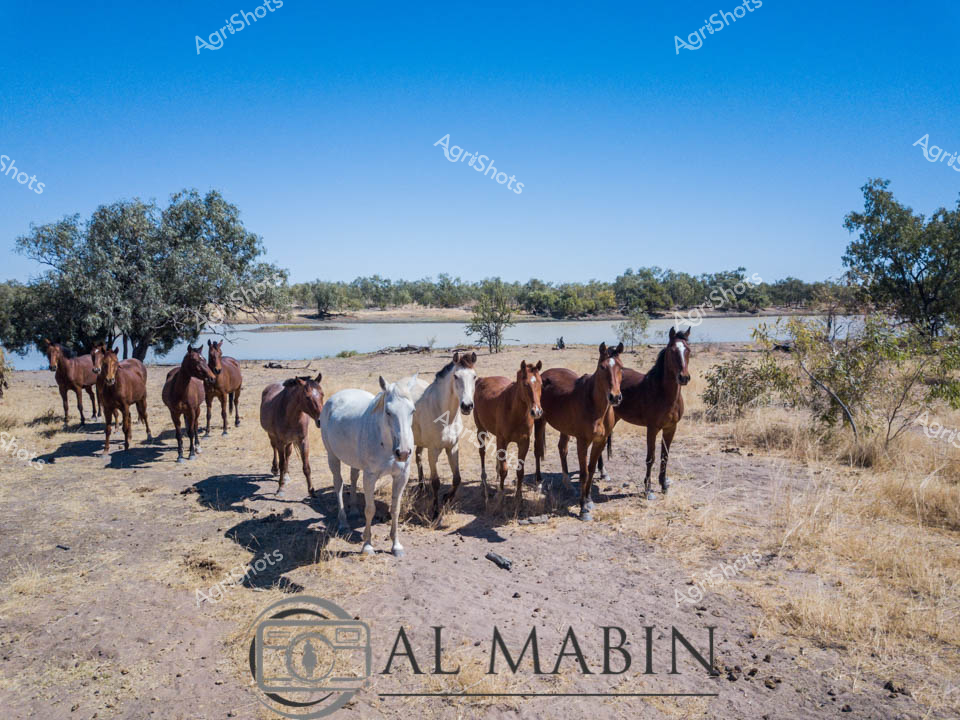
Dusty hooves and sun-bleached coats define this quintessential Queensland pastoral scene, where a mixed herd of horses congregates near a languid river system. White and chestnut horses mingle amid the earthy browns, their muscular forms casting long shadows across the parched ground. Silvery-green gum trees punctuate the landscape, offering sparse shade in the relentless Australian midday heat, while the distant waterway promises respite from the arid surroundings. These robust station horses, likely descendants of hardy stock bred for rugged inland conditions, stand companionably together - a testament to the resilient equine breeds that have shaped Australia's agricultural heritage. The rocky, sunbaked terrain speaks to the challenging environment of inland Queensland, where water is a precious resource and survival demands strength and adaptation. The photographic signature captures the raw beauty of the Australian outback, celebrating the stoic spirit of livestock and landscape in perfect, unvarnished harmony.
 Image
Aerial view of a classic Queensland cattle station, revealing the rugged beauty of Australia's pastoral heartland. A scattered cluster of weathered outbuildings and homestead structures nestle among mature trees, surrounded by ochre-red earth and sparse woodland. A mob of cattle grazes loosely in the foreground, their dark shapes creating a natural pattern against the sun-baked ground, highlighting the intricate relationship between livestock and landscape. Verdant green patches of carefully maintained lawn contrast sharply with the arid surroundings, demonstrating the strategic water management crucial to survival in this challenging environment. Dusty tracks wind between buildings and paddocks, telling stories of generations of pastoral work and connection to the land. The image captures the timeless essence of a working cattle station - a testament to resilience, agricultural skill, and the profound connection between Australian farmers and their challenging but beautiful landscape.
 Image
Barbed wire stretches across a sun-baked, sandy earth, casting sharp shadows that bisect the arid landscape. The weathered wire, rusted and taut, tells a story of boundary and endurance in the harsh Australian outback. Cracked, textured ground hints at prolonged drought conditions, with scattered debris and minute geological fractures creating a complex topographical canvas. The muted ochre and tan palette speaks to the unforgiving nature of rural Queensland's landscape, where survival demands resilience. Each barbed strand represents a line of demarcation - a testament to human agricultural persistence in challenging terrain.
 Image
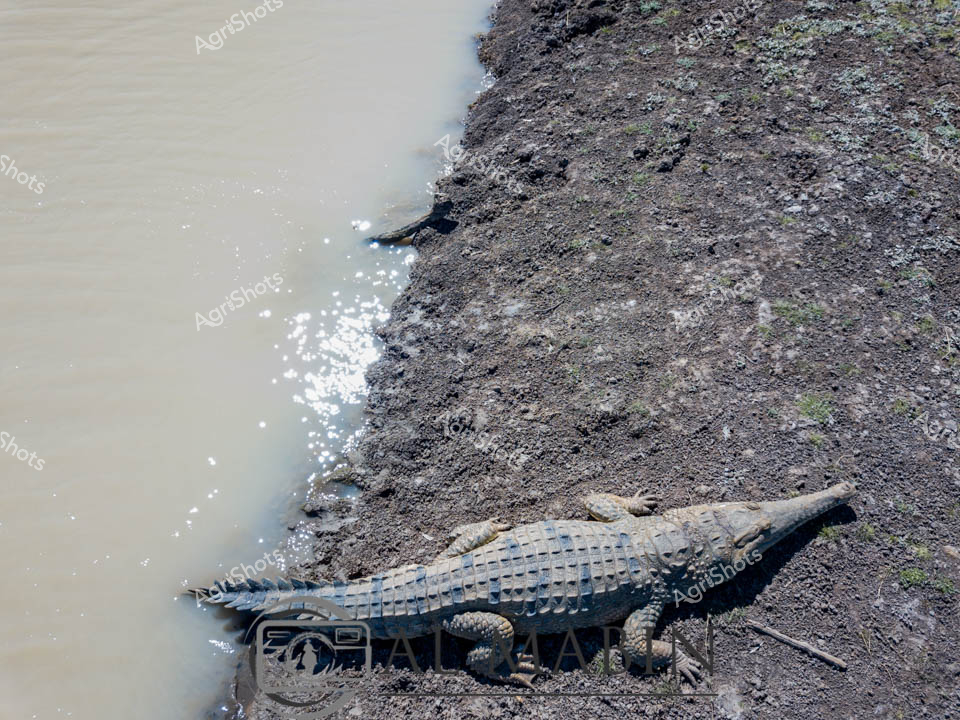
Saltwater crocodile basking on the muddy bank of a remote Queensland river, its scaled hide blending seamlessly with the rugged terrain. The prehistoric predator stretches out along the water's edge, muscles taut beneath its armored skin, soaking up the warmth of the harsh Australian sun. Turbid waters lap against the shoreline, creating a sparkling contrast between the murky river and the dark, textured ground. This powerful reptile embodies the untamed wilderness of northern Australia's rural landscapes, a living testament to the raw, unforgiving nature of outback waterways. Specks of vegetation cling to the rocky shoreline, hinting at the resilient ecosystem that thrives in these challenging conditions. The scene captures the primal essence of Queensland's remote waterways, where wildlife and landscape merge in a delicate, dangerous balance.
 Image
Aerial survey of a remote Queensland cattle station, revealing the lifeblood of pastoral enterprise - water management. A serpentine waterhole curves through the arid landscape, its green-tinged waters reflecting the sparse eucalyptus woodland and rust-red earth typical of Australia's northern cattle country. The dam, strategically positioned to sustain livestock during harsh dry seasons, sits nestled among weathered gum trees and rocky terrain, showcasing the resilience of agricultural infrastructure in challenging environments. Surrounding paddocks stretch toward the horizon, punctuated by subtle variations in vegetation that hint at careful land management practices. The muted palette of ochre, sage, and slate blue captures the unforgiving beauty of the Australian outback, where every water source is a critical resource for cattle stations supporting the nation's vital beef production. This expansive vista epitomizes the intersection of natural landscape and agricultural sustainability, a testament to generations of pastoral expertise in transforming marginal lands into productive agricultural systems.
 Image
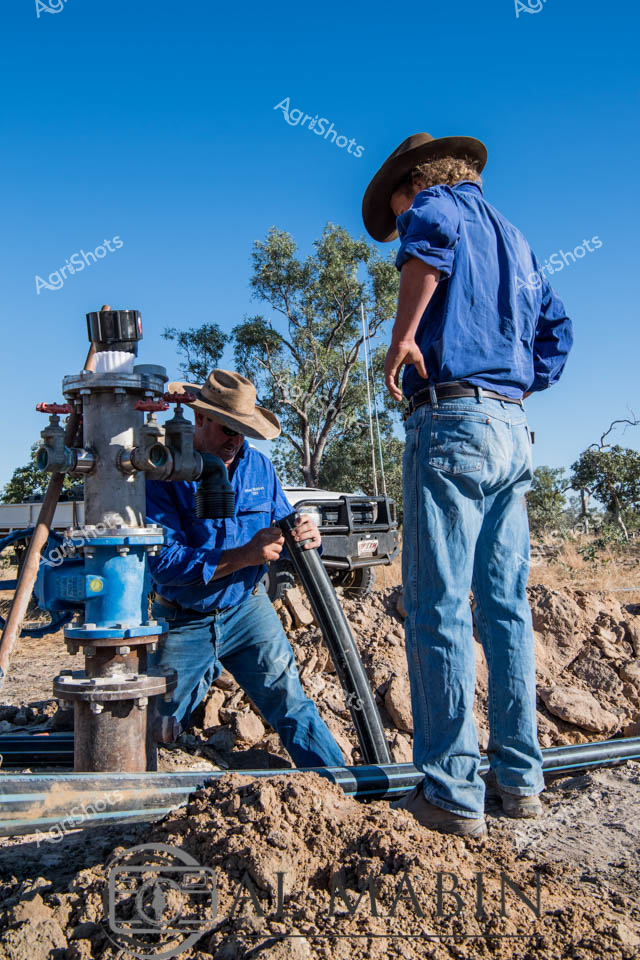
Remote Queensland bore maintenance under brilliant azure skies: two station workers in classic blue workshirts and wide-brimmed sun hats carefully inspect and manage critical water infrastructure. One worker crouches intently near a substantial blue industrial pump mechanism, manipulating a black poly pipe section, while his colleague stands observing the technical work. The rocky, ruddy earth surrounding the installation speaks to the harsh, unforgiving landscape of the outback, with sparse eucalyptus trees offering minimal shade against the intense midday sunlight. Their sturdy denim work pants, practical boots, and focused postures reveal generations of agricultural expertise - understanding that reliable water supply is the lifeblood of remote cattle stations. This scene captures the essential, unglamorous yet crucial work of maintaining rural water systems, where precision and resilience are as important as the heavy-duty equipment itself. The image radiates a sense of quiet competence, typical of skilled station hands who keep isolated properties functioning through meticulous attention to infrastructure.
 Image
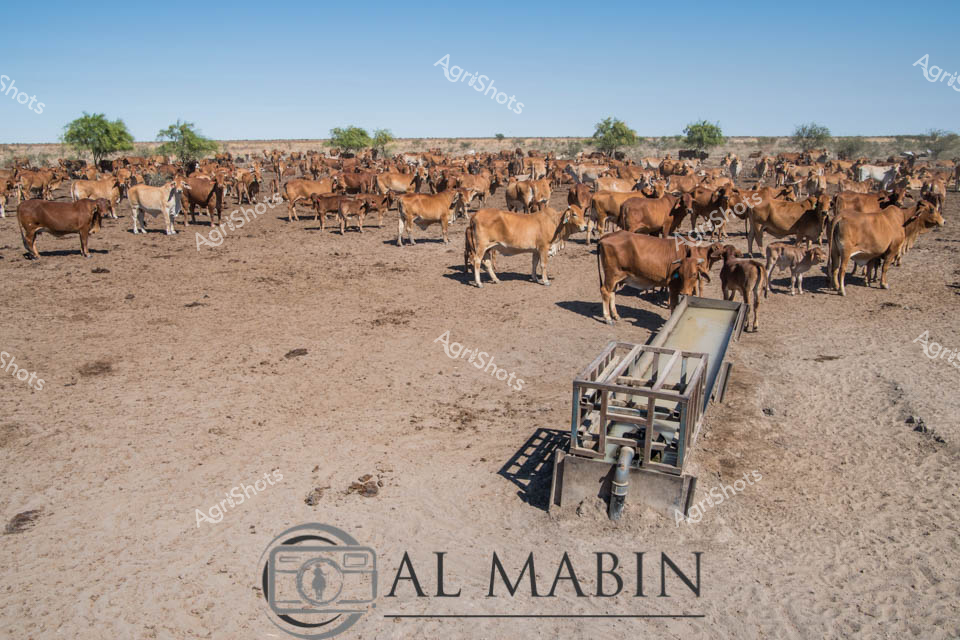
Brahman cattle cluster around a metal water trough in a parched central Queensland pastoral landscape. The golden-brown herd, characteristic of heat-tolerant Brahman breed, stands clustered on dusty, sun-baked earth, with sparse acacia trees dotting the distant horizon. Sturdy metal infrastructure breaks the arid landscape, providing critical hydration for these resilient livestock in a challenging environment. The metallic water trough gleams against the earthy tones, a testament to pastoral engineering designed to support cattle production in harsh Australian rangelands. Overhead, a cloudless cerulean sky suggests mid-day heat, highlighting the importance of strategic water access for cattle management. This scene encapsulates the resilience of Australian beef production - where advanced agricultural infrastructure meets the demanding conditions of extensive grazing systems in remote Queensland stations.
 Image
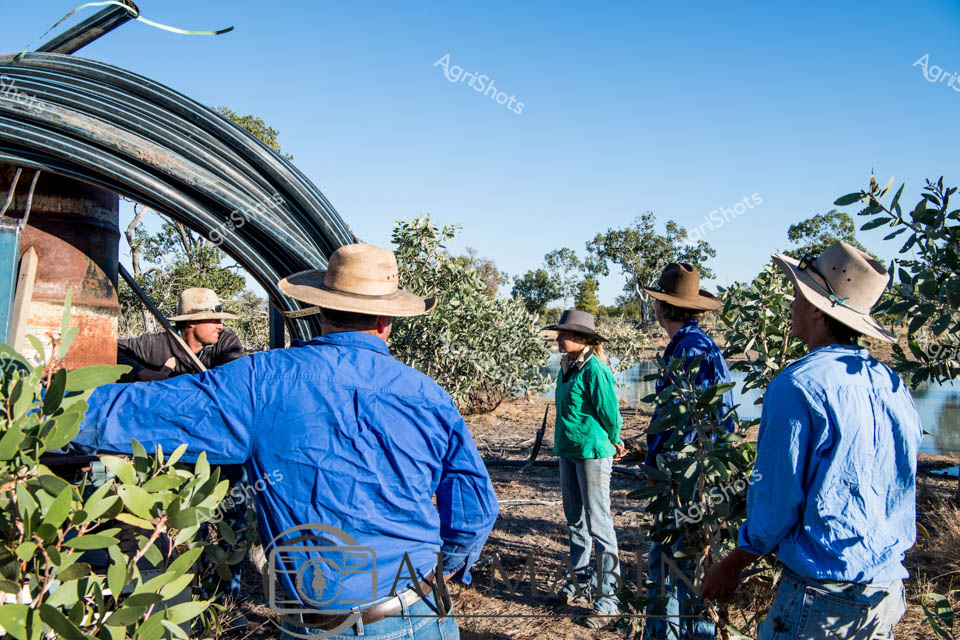
Queensland cattle station workers cluster around a water infrastructure setup, their blue workshirts and wide-brimmed akubra hats creating a uniform silhouette against the sparse, sun-drenched landscape. A curved metal bore structure arches overhead, with black poly pipes suggesting a complex water reticulation system for remote pastoral operations. The workers, positioned amid sparse grey-green eucalyptus and native scrub, appear focused on equipment maintenance or operational discussions, their body language suggesting collaborative problem-solving in a challenging agricultural environment. Bright mid-morning sunlight casts sharp shadows, highlighting the rugged terrain and highlighting the practical, hard-wearing nature of station work. A green-shirted worker provides a visual counterpoint to the predominantly blue workplace attire, breaking the visual monotony of the arid backdrop. The scene captures the essence of Australian agricultural resilience - workers managing critical water infrastructure in a landscape that demands constant attention and technical skill. The waterline infrastructure, poly pipes, and strategic positioning of the workers communicate the precision and planning required in remote cattle station management, where water supply can mean the difference between survival and loss in harsh pastoral conditions.
 Image
Brahman cattle surge through a sun-drenched paddock, kicking up a billowing cloud of ochre dust beneath a canopy of gnarled eucalyptus trees. The herd moves with purposeful intensity, their distinctive humped shoulders and loose skin characteristic of the robust Brahman breed - perfectly adapted to Australia's challenging tropical climate. Muscular bronze and rust-colored bodies create a dynamic scene of pastoral motion, with heat shimmering and dust swirling around their powerful frames. The landscape speaks of a quintessential Queensland cattle station - sparse, rugged bushland with scattered gum trees providing sparse shade against the relentless northern Australian sun. Each animal moves with a combination of strength and practiced coordination, representing generations of selective breeding and agricultural expertise. The raw energy of the scene captures the essence of Australian cattle farming - a testament to the resilience of both livestock and the farmers who manage these expansive pastoral landscapes.
 Image
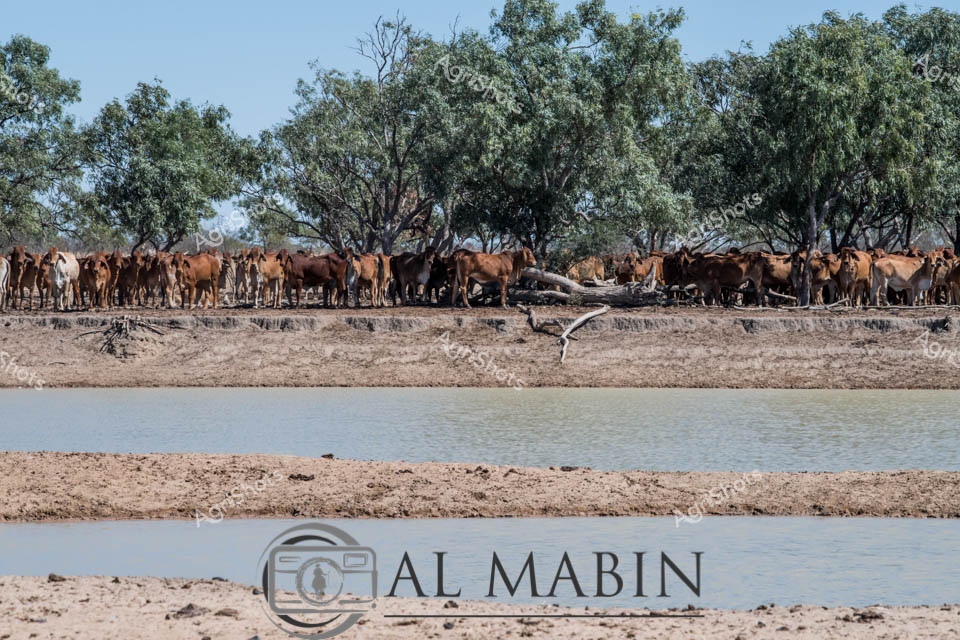
Brahman cattle cluster along a dry riverbank under the expansive blue skies of rural Queensland, seeking shade from gnarled eucalyptus trees. The herd - predominantly rich chestnut and russet brown - stands clustered near a water source, their muscular bodies and distinctive humps characteristic of this hardy tropical cattle breed. Dusty earth tones contrast sharply with the silvery-green foliage, creating a quintessential Australian pastoral landscape that speaks to the resilience of both livestock and landscape. Weathered banks reveal the impact of prolonged dry conditions, with the water source looking critical to survival in this unforgiving environment. The scene embodies the quiet determination of beef production in one of the world's most challenging agricultural terrains.
 Image
Brahman cattle huddle in the stark midday heat along a dusty waterhole on a remote Queensland cattle station. The rich russet-brown herd clusters tightly near a curved water source, seeking respite from the intense dry season landscape. Sparse eucalyptus trees provide minimal shade across the rocky, parched terrain, highlighting the resilience of these distinctive cattle with their prominent humps and loose skin - adaptations perfectly suited to Australia's challenging northern pastoral regions. The scene captures the harsh beauty of extensive cattle farming, where water access is critical to survival in these arid landscapes. Weathered earth tones dominate the composition - sandy ground, silvery-green tree foliage, and the warm burnt-orange coats of the Brahman cattle create a quintessential Australian pastoral tableau. This image embodies the endurance of cattle farming in Queensland's unforgiving agricultural frontier, where livestock management requires intimate knowledge of land and livestock.
 Image
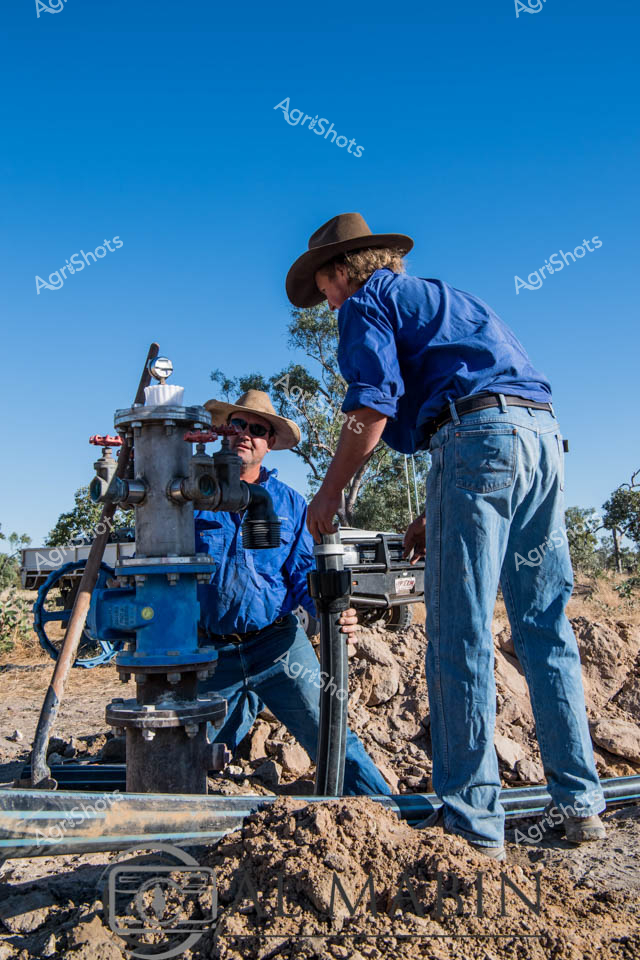
Remote Queensland Station Water Infrastructure Maintenance Rugged station workers wrestle with a critical water infrastructure component under a vast, cloudless azure sky. Dressed in characteristic blue work shirts and wide-brimmed akubra hats, these seasoned rural professionals carefully inspect and adjust a substantial bore water pump mounted amid rocky, sun-baked terrain. One worker crouches closely examining the industrial blue metallic pump mechanism, while his colleague stands attentively, ready to assist or provide guidance. The machinery - a robust industrial water pump with multiple pipe connections - represents the lifeline of agricultural operations in this unforgiving landscape. Surrounding rocky ground and scattered native vegetation highlight the challenging environment where reliable water infrastructure is crucial for pastoral survival. Their deliberate, expert movements suggest years of experience managing critical station resources, understanding that every mechanical adjustment could mean the difference between thriving and struggling livestock operations. The scene epitomizes the resilience and technical skill of Australian rural workers, who maintain complex systems in isolated locations where self-sufficiency isn't just a virtue - it's a necessity. Their coordinated effort captures the essence of outback station management: practical knowledge, teamwork, and unwavering dedication to keeping critical infrastructure operational.
 Image
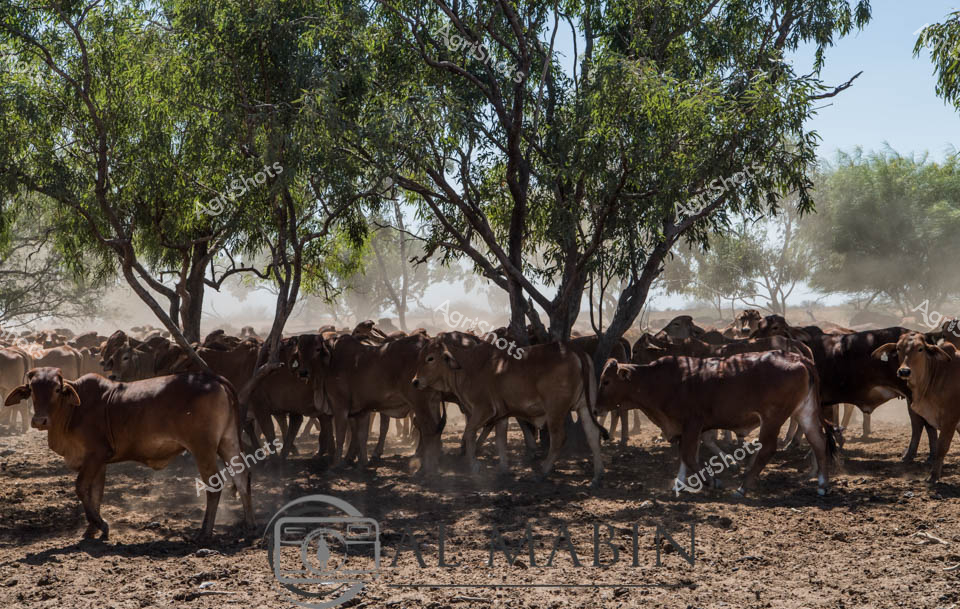
Under the dappled shade of eucalyptus trees, a dense herd of Brahman cattle cluster together on the parched earth of a Queensland cattle station. The robust, heat-tolerant cattle—distinguished by their distinctive loose skin and prominent humps—stand closely packed, creating a living landscape of muscular brown and grey bodies against the dusty, sun-baked ground. Soft plumes of dry earth rise around their feet, testament to the unforgiving arid environment of northern Australia. Brahman cattle, renowned for their resilience in harsh tropical conditions, demonstrate their adaptability in this quintessential pastoral scene, where the interplay of light, dust, and animal forms speaks to the challenging yet vital role of cattle production in Australian agriculture. The trees provide sparse but critical shelter, their silvery-green leaves contrasting with the earthy tones of the livestock, capturing the raw beauty of station life during the dry season.
 Image
A weary station hand pauses mid-task, leaning on a wooden implement under the unforgiving Queensland sun. Clad in a deep blue work shirt and a classic wide-brimmed stockman's hat, the worker catches a moment of respite in a rugged, rocky landscape dotted with sparse trees. The dry, dusty terrain speaks to the harsh conditions of remote Australian pastoral country, where every task requires intense physical labor and resilience. His posture suggests a brief moment of recuperation during what is likely a grueling day of maintenance work on a remote cattle station. The interplay of harsh sunlight and the worker's weathered appearance captures the raw essence of rural Australian agricultural life - a world of endurance, hard work, and connection to the unforgiving landscape. The image embodies the spirit of station hands who keep the agricultural backbone of Queensland running through their daily dedication and strength.
 Image
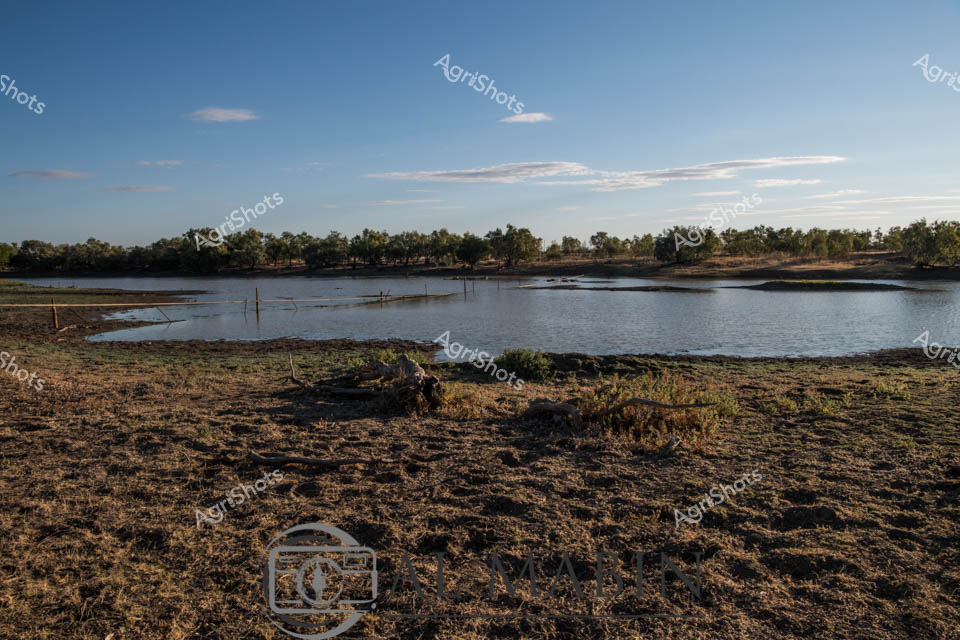
Expansive drought-affected riverbank captures the harsh resilience of a Queensland cattle station during a dry season. Muddy, cracked earth surrounds a shrinking water body, with sparse vegetation clinging to the parched landscape. Weathered wooden posts partially submerged in the water hint at past livestock management practices, while the distant treeline of hardy bushland provides a muted green backdrop against a pristine blue sky. The scene speaks to the challenging environmental conditions faced by Australian beef producers, where water management is critical for survival. Subtle textures of broken ground and remnant vegetation illustrate the delicate balance between survival and desolation in this unforgiving pastoral environment. The wide-open vista and stark contrast between water and land underscore the raw beauty and inherent struggle of agricultural life in remote Queensland.
 Image
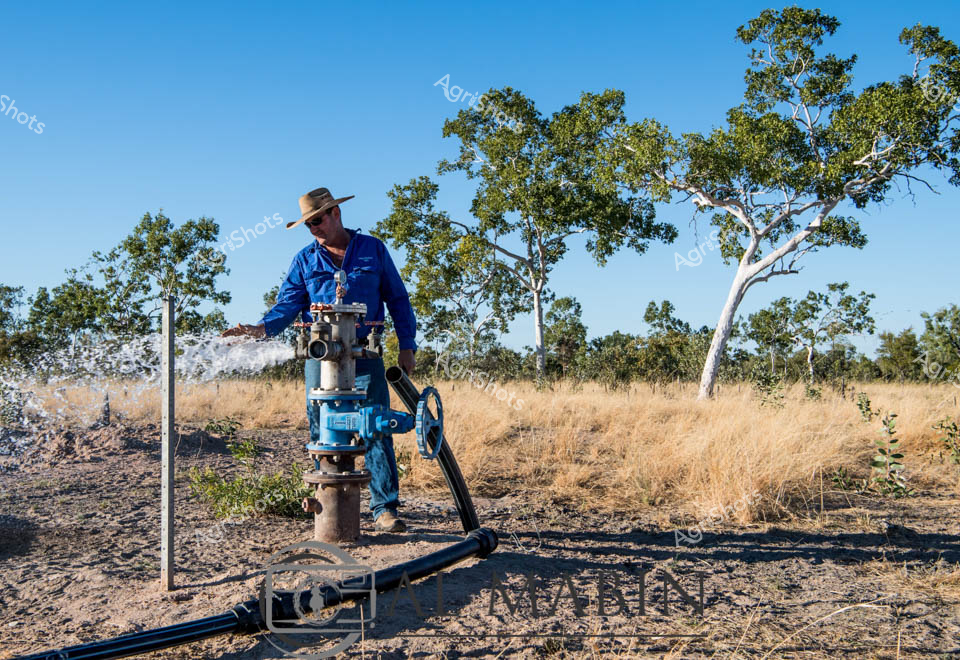
In the arid expanses of a Queensland cattle station, a station hand in a vivid blue work shirt and wide-brimmed hat operates a robust water bore pump. Surrounded by silvery-green eucalyptus trees and dry golden grasslands under a crystalline azure sky, he carefully manages the water infrastructure critical to rural survival. The industrial blue pump connects to black poly pipes, releasing a sparkling jet of water that will likely feed stock troughs across the parched landscape. Weathered earth and sparse native vegetation speak to the challenging environment of outback Queensland, where water management is an art form of survival and agricultural sustainability. The scene captures the quiet determination of rural workers who maintain essential infrastructure in some of Australia's most demanding agricultural terrains. Every movement and mechanism represents generations of knowledge about surviving and thriving in harsh, beautiful landscapes where water is more precious than gold.
 Image
Aerial survey of a classic Queensland pastoral homestead, revealing the intricate landscape design of a rural property. Lush green trees encircle a central lawn area, creating a verdant oasis amidst the arid surrounding landscape. White-roofed buildings cluster strategically, suggesting generations of agricultural planning and strategic infrastructure development. A circular cluster of trees near the center provides a focal point, with a blue water tank standing as a critical lifeline in the dry environment. The property demonstrates the careful balance between built structures and natural vegetation, typical of successful outback agricultural management. Ochre-red earth tones contrast beautifully with the deep greens of mature trees, capturing the resilient spirit of Queensland's rural landscape.
 Image
Parched earth fragments into a complex mosaic of golden-tan fractures and deep ebony shadows, revealing the harsh reality of drought conditions in regional Queensland. Intricate cracks spread like a network of dry riverbeds, each fissure telling a story of prolonged heat and water scarcity that challenges agricultural landscapes. The clay-like surface bears the textural evidence of extreme moisture loss, with sharp-edged fragments creating a natural abstract pattern that speaks to the resilience and vulnerability of Australian agricultural environments. Harsh sunlight accentuates the dramatic topography of the cracked ground, casting dramatic shadows that highlight every angular break and surface imperfection. This visceral representation of environmental stress captures the raw essence of rural survival, where every crack represents the delicate balance between agricultural sustainability and climatic extremes.