About this image
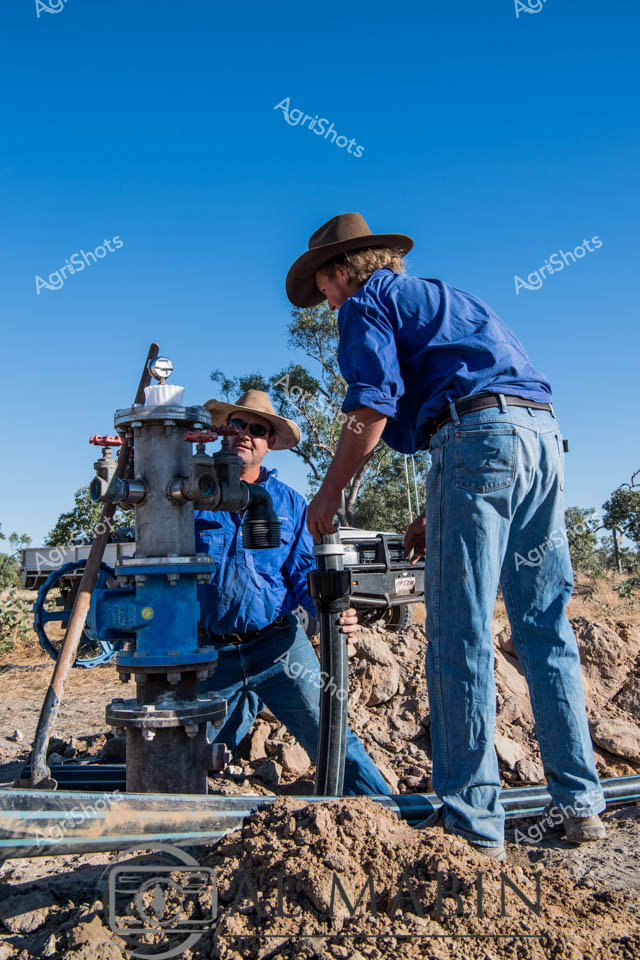
Remote Queensland Station Water Infrastructure Maintenance Rugged station workers wrestle with a critical water infrastructure component under a vast, cloudless azure sky. Dressed in characteristic blue work shirts and wide-brimmed akubra hats, these seasoned rural professionals carefully inspect and adjust a substantial bore water pump mounted amid rocky, sun-baked terrain. One worker crouches closely examining the industrial blue metallic pump mechanism, while his colleague stands attentively, ready to assist or provide guidance. The machinery - a robust industrial water pump with multiple pipe connections - represents the lifeline of agricultural operations in this unforgiving landscape. Surrounding rocky ground and scattered native vegetation highlight the challenging environment where reliable water infrastructure is crucial for pastoral survival. Their deliberate, expert movements suggest years of experience managing critical station resources, understanding that every mechanical adjustment could mean the difference between thriving and struggling livestock operations. The scene epitomizes the resilience and technical skill of Australian rural workers, who maintain complex systems in isolated locations where self-sufficiency isn't just a virtue - it's a necessity. Their coordinated effort captures the essence of outback station management: practical knowledge, teamwork, and unwavering dedication to keeping critical infrastructure operational.
Similar media
 Image
Image
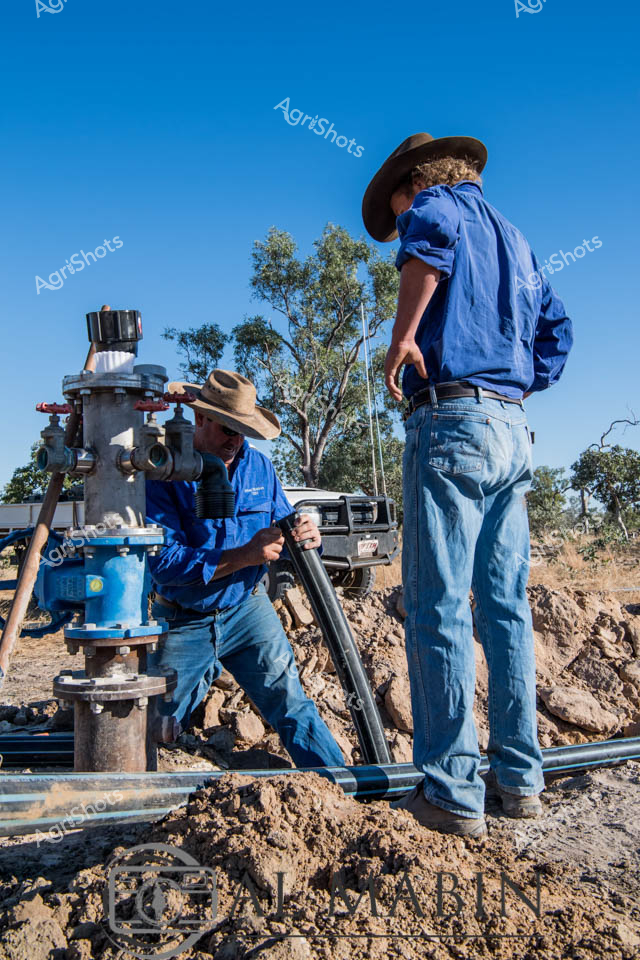
Remote Queensland bore maintenance under brilliant azure skies: two station workers in classic blue workshirts and wide-brimmed sun hats carefully inspect and manage critical water infrastructure. One worker crouches intently near a substantial blue industrial pump mechanism, manipulating a black poly pipe section, while his colleague stands observing the technical work. The rocky, ruddy earth surrounding the installation speaks to the harsh, unforgiving landscape of the outback, with sparse eucalyptus trees offering minimal shade against the intense midday sunlight. Their sturdy denim work pants, practical boots, and focused postures reveal generations of agricultural expertise - understanding that reliable water supply is the lifeblood of remote cattle stations. This scene captures the essential, unglamorous yet crucial work of maintaining rural water systems, where precision and resilience are as important as the heavy-duty equipment itself. The image radiates a sense of quiet competence, typical of skilled station hands who keep isolated properties functioning through meticulous attention to infrastructure.
 Image
Image
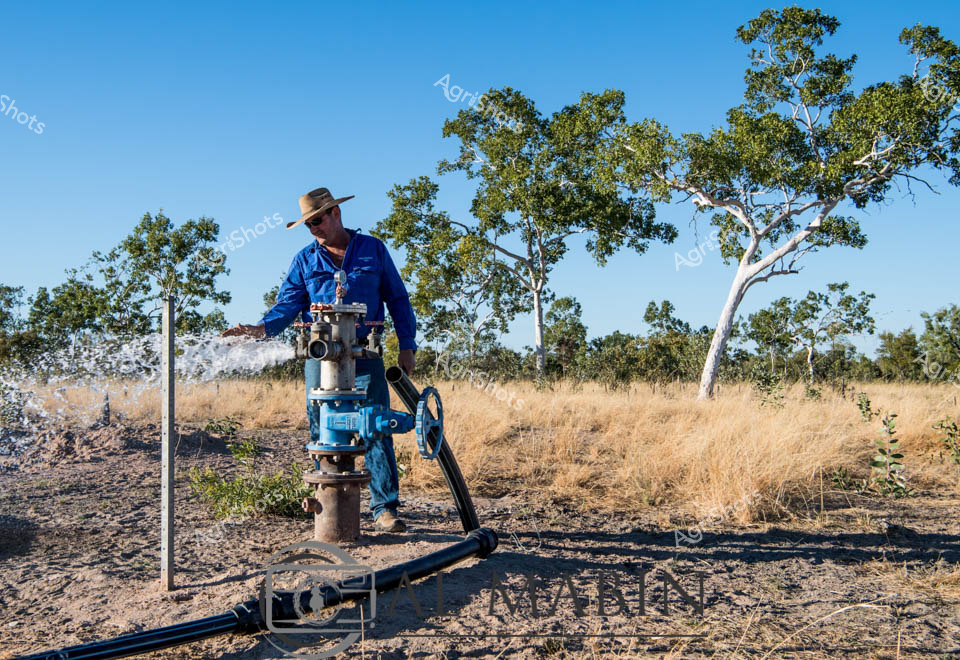
In the arid expanses of a Queensland cattle station, a station hand in a vivid blue work shirt and wide-brimmed hat operates a robust water bore pump. Surrounded by silvery-green eucalyptus trees and dry golden grasslands under a crystalline azure sky, he carefully manages the water infrastructure critical to rural survival. The industrial blue pump connects to black poly pipes, releasing a sparkling jet of water that will likely feed stock troughs across the parched landscape. Weathered earth and sparse native vegetation speak to the challenging environment of outback Queensland, where water management is an art form of survival and agricultural sustainability. The scene captures the quiet determination of rural workers who maintain essential infrastructure in some of Australia's most demanding agricultural terrains. Every movement and mechanism represents generations of knowledge about surviving and thriving in harsh, beautiful landscapes where water is more precious than gold.
 Image
Image
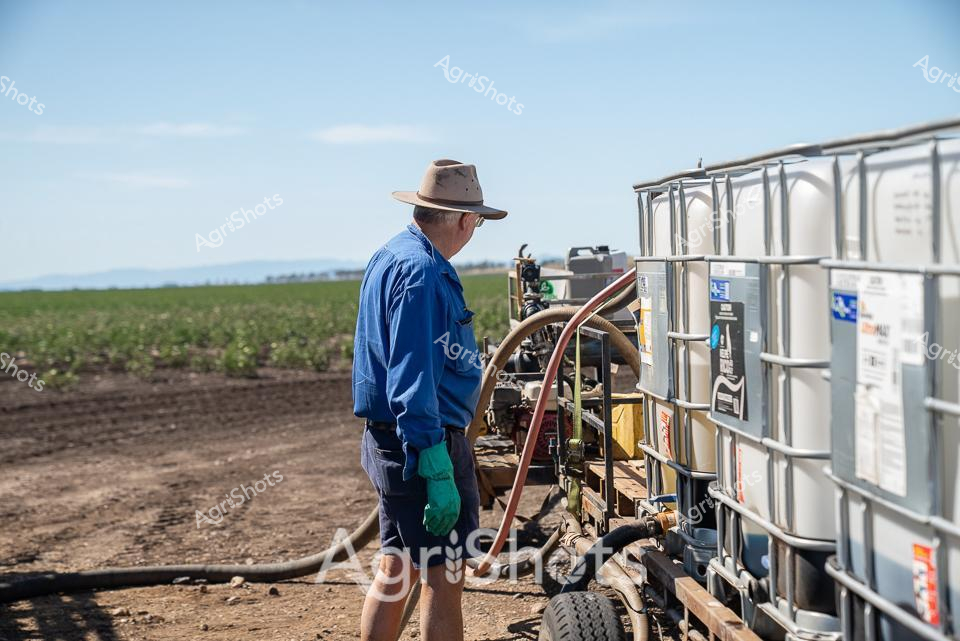
Rural irrigation and crop management unfold across a sunbaked agricultural landscape, where a seasoned farmer in a weathered wide-brimmed hat and blue work shirt carefully tends to chemical spraying equipment. Pristine white chemical storage tanks stand in precise alignment, connected by robust red and green hoses to a mechanical spraying rig positioned on dusty, tilled earth. The farmer, wearing protective green gloves, surveys the agricultural field - a verdant crop stretching towards distant mountain ranges under a pale blue summer sky, suggesting this is likely a wheat or grain paddock in New South Wales. The scene captures the meticulous precision of modern agricultural practice, where careful chemical application and crop protection are essential to successful farming. Robust industrial equipment contrasts with the soft natural landscape, representing the intersection of technological intervention and natural growth. The farmer's stance - measured, attentive - speaks to generations of agricultural knowledge and the constant vigilance required in dryland farming. The muted color palette of blue, green, white, and brown creates a distinctly Australian rural aesthetic, highlighting the functional beauty of agricultural work and the challenging environments in which farmers operate.
 Image
Image
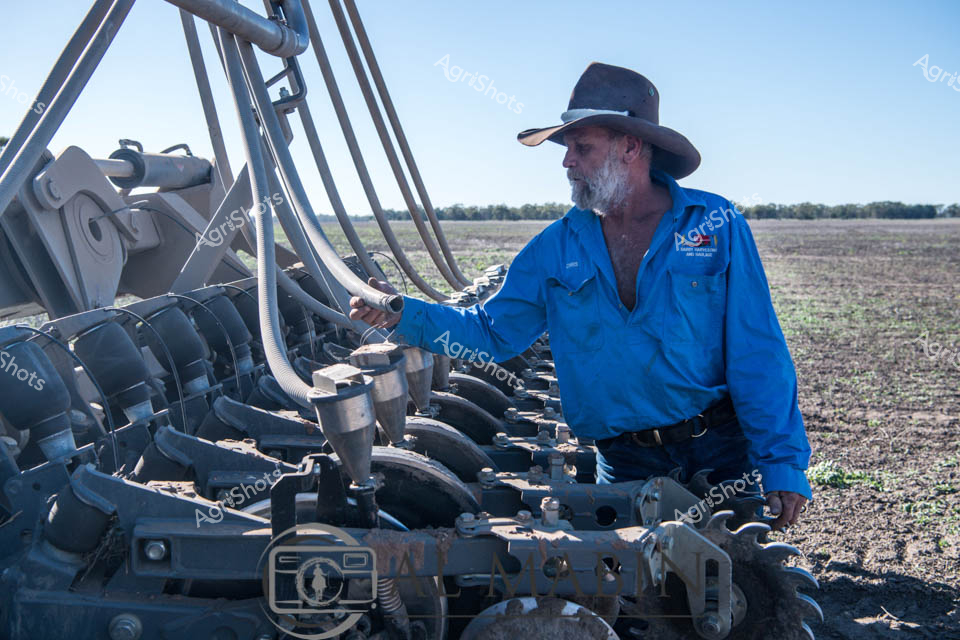
Weathered and focused, an experienced farmer stands beside a precision air seeder on a vast Queensland cropping landscape. Wearing a classic wide-brimmed Australian working hat and a vibrant blue agricultural workwear shirt, he carefully inspects the complex machinery's disc planting mechanisms. The metallic gray air seeder, with its intricate array of precision discs and hydraulic systems, sits poised on a recently prepared wheat field, the bare earth revealing rich, dark soil ready for planting. Expansive flat farmlands stretch to the distant treeline under a clear blue sky, suggesting early morning light and optimal planting conditions. The detailed machinery reflects years of agricultural engineering, with each disc and connection engineered for maximum efficiency in grain crop establishment. This scene captures the essence of modern Australian broadacre farming - a blend of technological sophistication, personal expertise, and an intimate connection between farmer and land.
 Image
Image
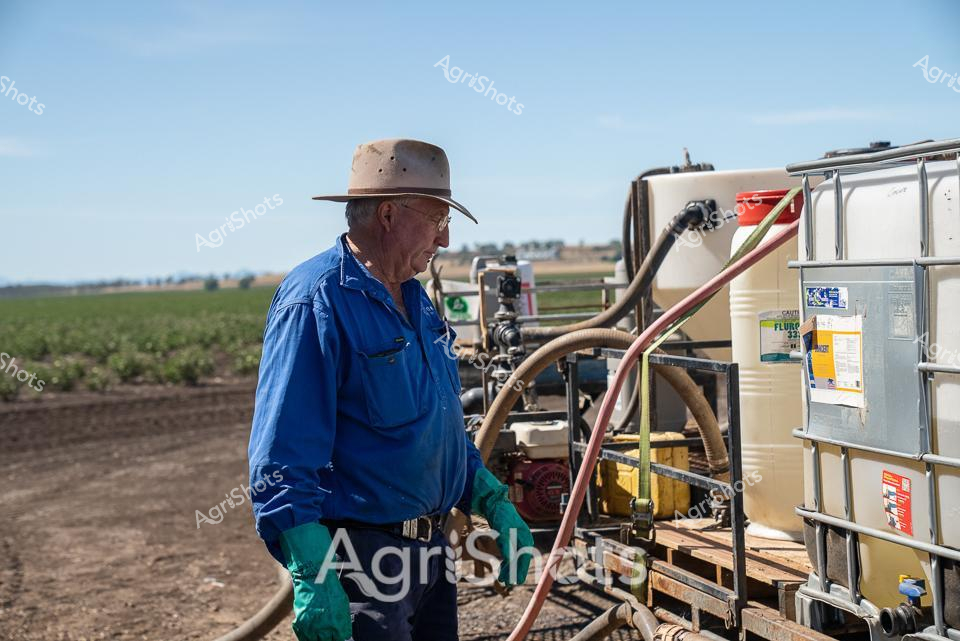
Weathered and focused, an experienced farmer stands amid the dry, expansive agricultural landscape of rural New South Wales, carefully managing crop protection equipment. Dressed in a classic blue work shirt, tan wide-brimmed hat, and protective green chemical-resistant gloves, he tends to a large agricultural spraying unit mounted on a trailer. The intricate network of pipes, tanks, and machinery suggests precision agricultural practices, with multiple hoses connected to a robust white chemical container. The surrounding fields stretch to the horizon, revealing a meticulously prepared paddock with recently tilled soil, indicating careful land management. Bright midday sunlight bathes the scene, highlighting the mechanical complexity of the spraying equipment and the farmer's methodical approach to crop treatment. This image captures the essence of modern Australian agricultural work - a blend of technical expertise, careful preparation, and deep connection to the land.
 Image
Image
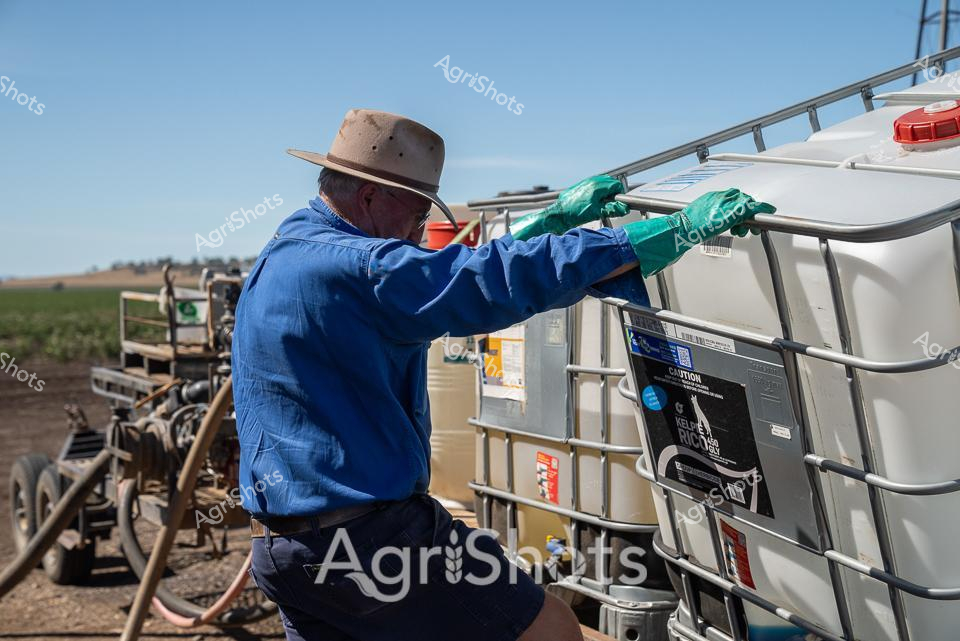
Sunlight bathes the rural landscape as an experienced agricultural worker carefully manages crop protection chemicals. Wearing a classic wide-brimmed Australian farmer's hat and a crisp blue work jacket, the worker meticulously handles a white industrial container, wearing protective green chemical-resistant gloves. Agricultural machinery and irrigation equipment sit in the background, suggesting a carefully maintained farming operation in a dry, expansive field typical of New South Wales. The worker's purposeful stance and careful handling demonstrate the precision and safety protocols essential in modern agricultural practice. Green fields stretch to the horizon, highlighting the careful stewardship of the land and the critical role of agricultural workers in managing crop health and productivity. The scene captures the intersection of advanced agricultural technology, personal expertise, and environmental responsibility that defines contemporary Australian farming.
 Image
Image
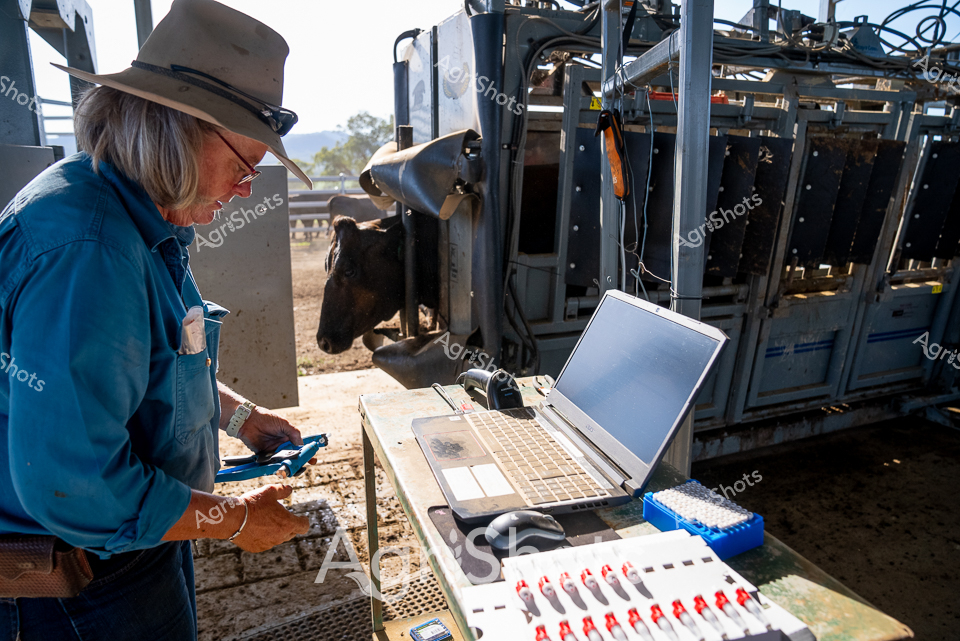
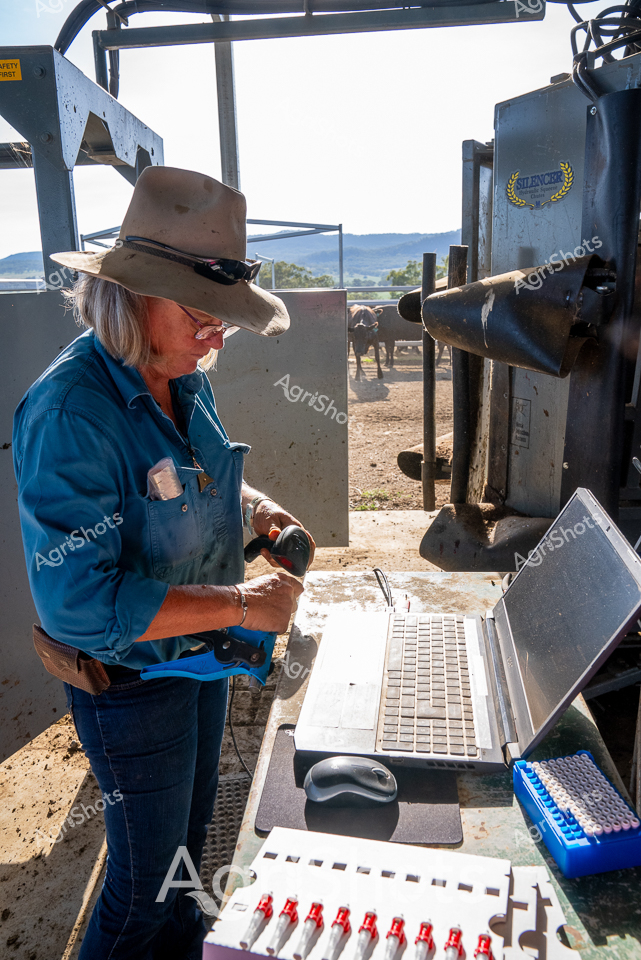
Autumn sunlight bathes a high-tech cattle management scene in the New England region of New South Wales. A seasoned agricultural professional wearing a wide-brimmed hat and blue workwear stands beside a sophisticated cattle crush, her attention focused on complex data collection. A sleek laptop sits ready, surrounded by testing equipment and sample containers, while a dark Wagyu cattle beast is carefully secured in the precision-engineered restraint system behind her. Advanced DNA testing and livestock recording technology merge seamlessly with traditional farming expertise in this moment. The woman's weathered hands manipulate scientific equipment with practiced precision, highlighting the sophisticated intersection of modern agricultural science and hands-on rural knowledge. Crisp white and red sample markers line the workspace, suggesting meticulous record-keeping and genetic analysis. The metallic grey cattle crush stands as a testament to agricultural innovation, its robust engineering contrasting with the soft natural light and dusty rural landscape visible in the background. This image captures the quiet concentration of agricultural professionals who blend technical skill, technological insight, and deep understanding of livestock management.
 Image
Image
Bathed in the golden light of a late summer afternoon, a seasoned agricultural professional works methodically in the cattle yards of New England, New South Wales. Wearing a classic wide-brimmed bush hat and a deep blue work shirt, she stands at a sophisticated mobile data collection station, her focus intent on capturing critical livestock information. Surrounded by metal cattle handling equipment, including a robust Silencer cattle crush, she operates a laptop and scanning device, likely conducting DNA testing or recording essential herd data. The dusty yard behind her hints at the robust cattle operation - possibly a Wagyu breeding facility - with hints of cattle visible in the background. A series of red-tagged testing modules and high-tech recording equipment underscore the sophisticated blend of traditional farming and modern agricultural technology. Her posture speaks to years of experience, comfortable and precise in this rugged workplace that bridges manual labor with cutting-edge agricultural science. This image captures the essence of contemporary Australian agricultural practice: a woman deeply engaged in her work, seamlessly integrating technological innovation with the timeless rhythms of livestock management.