Browse the collection
 Image
Image
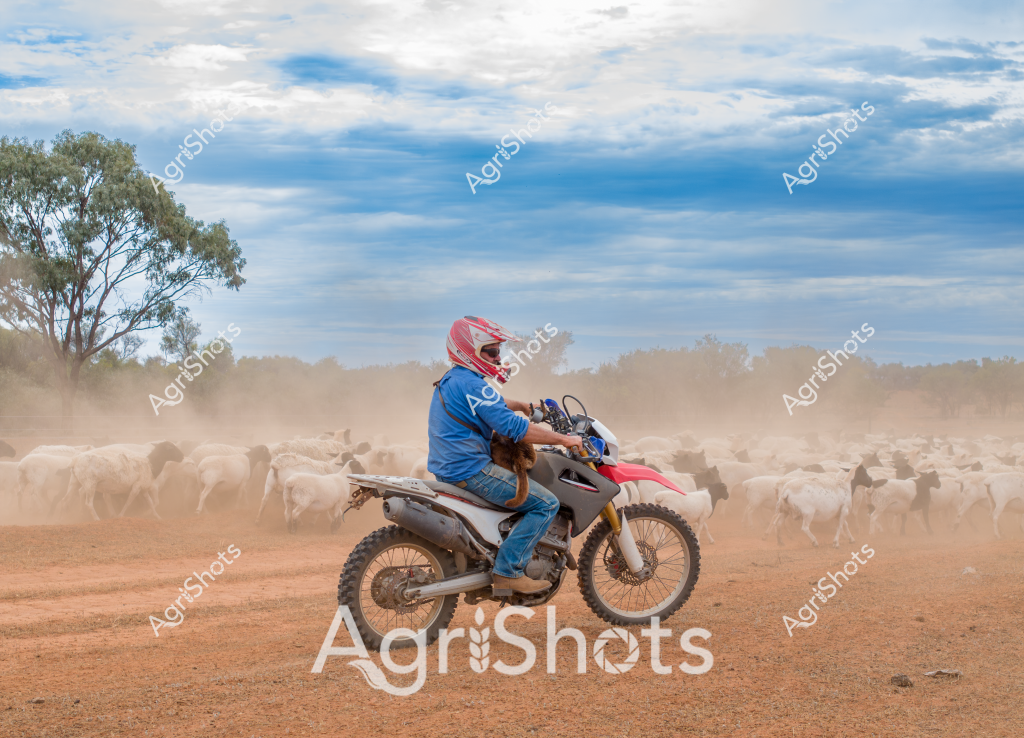
A skilled motorcyclist on a dirt bike navigates through a dusty livestock paddock, herding a large mob of white sheep across the arid Australian landscape. Wearing a red helmet and blue clothing, the rider skillfully maneuvers the motorcycle, kicking up a cloud of reddish-brown dust while keeping the sheep tightly grouped. Eucalyptus trees line the background under a expansive blue and white clouded sky, creating a quintessential Australian rural scene. The motorcycle serves as a modern herding tool, replacing traditional horseback mustering and demonstrating the adaptive nature of contemporary agricultural practices. The dry, compact ground and scattered vegetation highlight the challenging conditions of outback farming, where technology and human skill come together to manage livestock across vast, unforgiving terrain.
 Image
Image
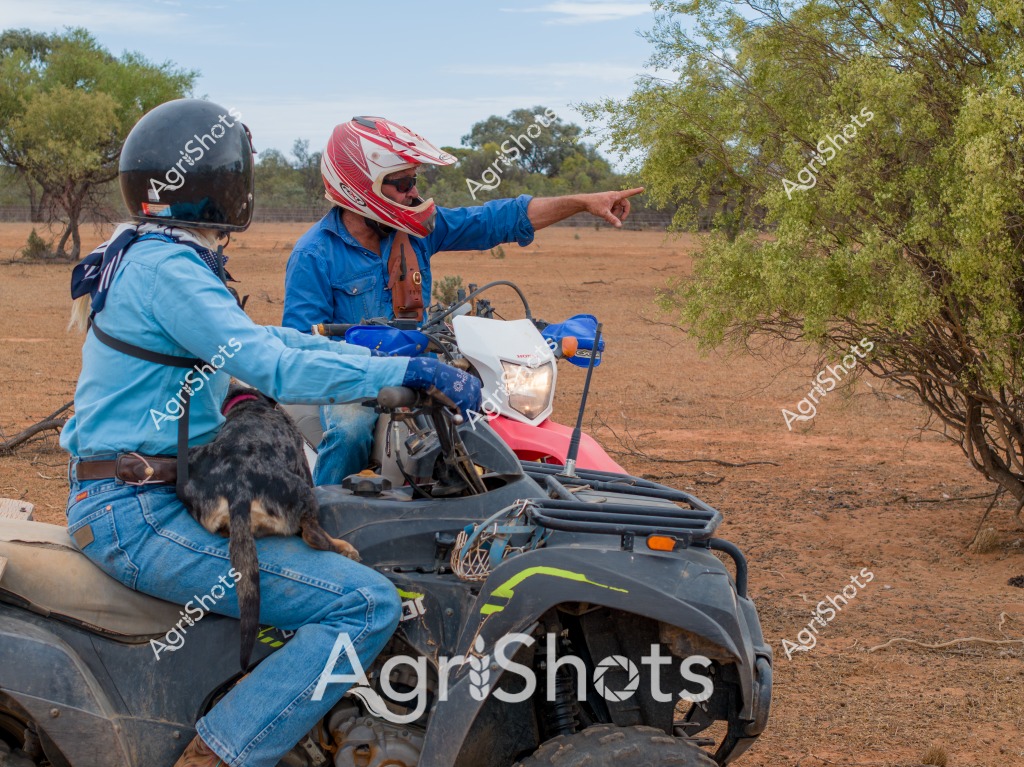
Two men on an all-terrain vehicle (ATV) navigate a dry, sparse landscape with scattered trees and reddish-brown soil. A man in a blue shirt and red motorcycle helmet points to something in the distance, while another man wearing a blue shirt and black helmet sits behind him. A black and white spotted dog is perched on the back of the ATV, seemingly a working companion on what appears to be a rural property or cattle station. The ATV is equipped with a headlight and robust frame, typical of vehicles used for farm work or property management in remote Australian regions. The sparse vegetation and dusty ground suggest an arid or semi-arid environment, likely during a dry season or in a drought-affected area.
 Image
Image
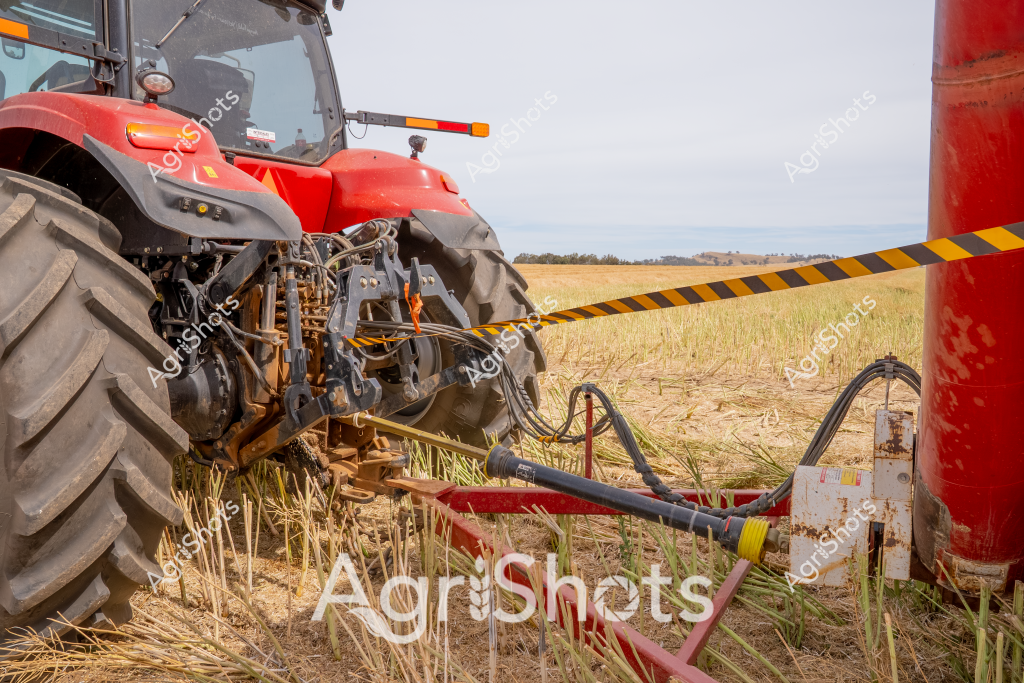
A robust red agricultural tractor stands in a harvested field, its large aggressive tread tires gripping the stubble-covered ground. Complex hydraulic linkages and mechanical connections are clearly visible between the tractor's rear attachment points, revealing sophisticated agricultural engineering. The tractor appears to be positioned for field work, with black hydraulic hoses connecting various mechanical components and a warning tape barrier visible in the background. Dry grass stubble surrounds the machinery, suggesting this is a post-harvest agricultural setting with expansive open paddock landscapes visible in the distance. The gleaming red paint of the tractor contrasts sharply with the muted earth tones of the surrounding agricultural landscape, highlighting modern farming equipment's sophisticated design and functionality.
 Image
Image
A woman in a purple and white floral blouse is preparing multiple small plastic containers of what appears to be a cheese-topped dish. She is carefully sprinkling shredded yellow cheese over several pre-portioned meals arranged on a kitchen counter. The dishes seem to contain a brownish base layer, likely a meat or bean mixture, now generously covered with the grated cheese. Her hand is partially visible, holding a utensil and meticulously distributing the cheese evenly across each container. The scene suggests meal preparation, possibly for batch cooking or portioning out meals for the week ahead. A green-packaged ingredient container is visible in the background, indicating this is a home cooking scenario with attention to detail and portion control.
 Image
Image
A stunning aerial view captures a small herd of cattle traversing a quintessential Australian outback dirt track, surrounded by rusty red earth and scattered grey-green shrubs. The unmade road cuts a stark line through the arid landscape, with native eucalyptus trees dotting the horizons and a deep blue sky overhead. Several cattle walk in single file along the track, their dark bodies creating a rhythmic pattern against the ochre-colored ground. The image exemplifies the vast, rugged terrain of inland Australia, where livestock management often involves navigating extensive, remote station country. Sparse vegetation and the characteristic red soil highlight the challenging environmental conditions of pastoral regions, showcasing the resilience required in Australian cattle farming. The aerial perspective provides a dramatic illustration of the immense scales and isolation inherent in Australian agricultural landscapes.
 Image
Image
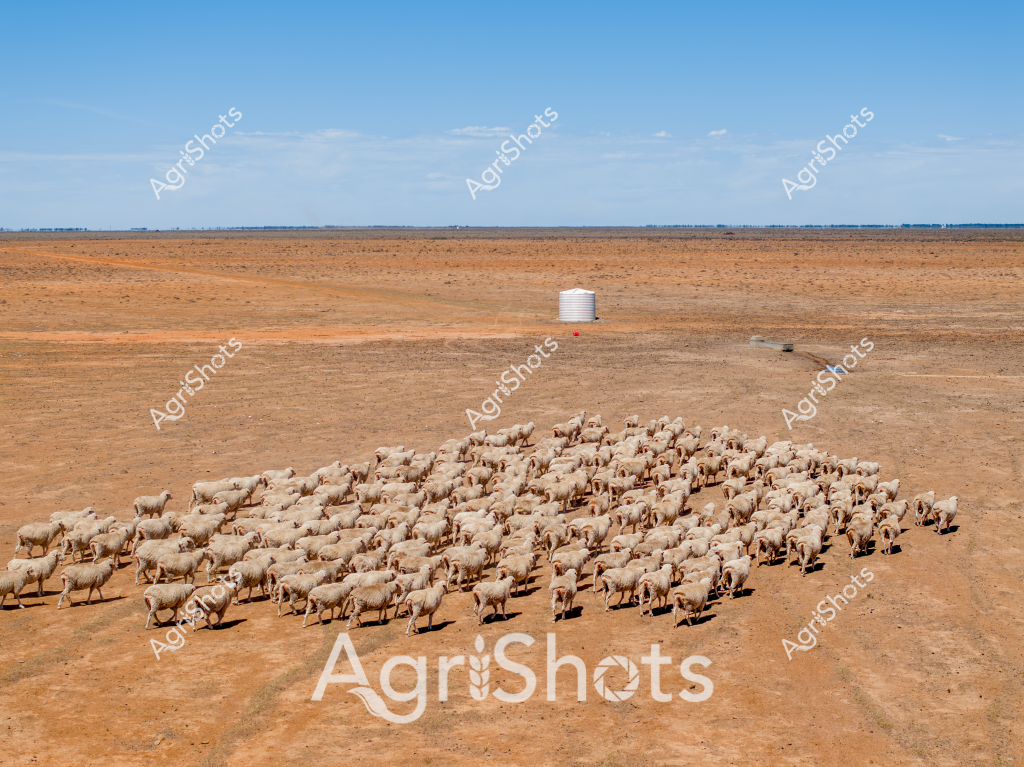
A large flock of Merino sheep huddles together in a stark, arid landscape under a clear blue sky. The dry, reddish-brown earth stretches to the horizon, punctuated by a single white water tank in the distance. The sheep appear tightly grouped, their woolly bodies creating a dense mass against the barren backdrop, highlighting the challenging drought conditions typical of Australian inland regions. A faint track leads toward the water tank, suggesting the animals are likely seeking hydration in this harsh environment. The image powerfully captures the resilience of Australian livestock farming, where animals must survive in extremely dry and unforgiving terrain. The uniform tan-colored landscape and the clustered sheep create a compelling visual narrative of survival and agricultural adaptation in one of the world's most challenging farming environments.
 Image
Image
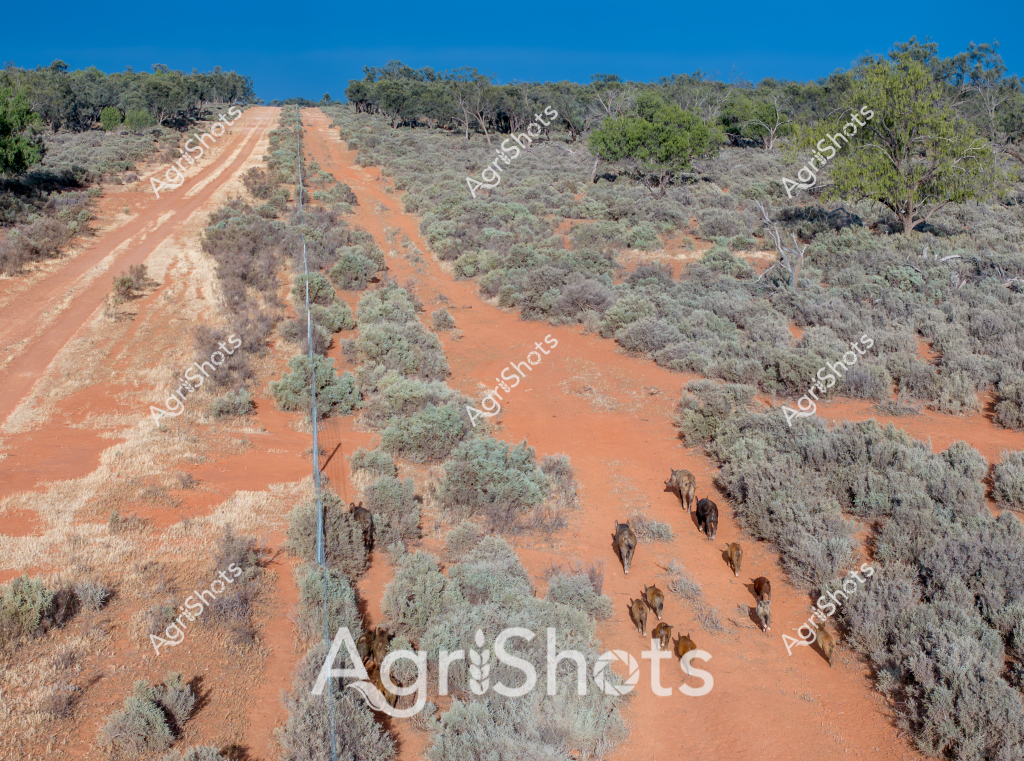
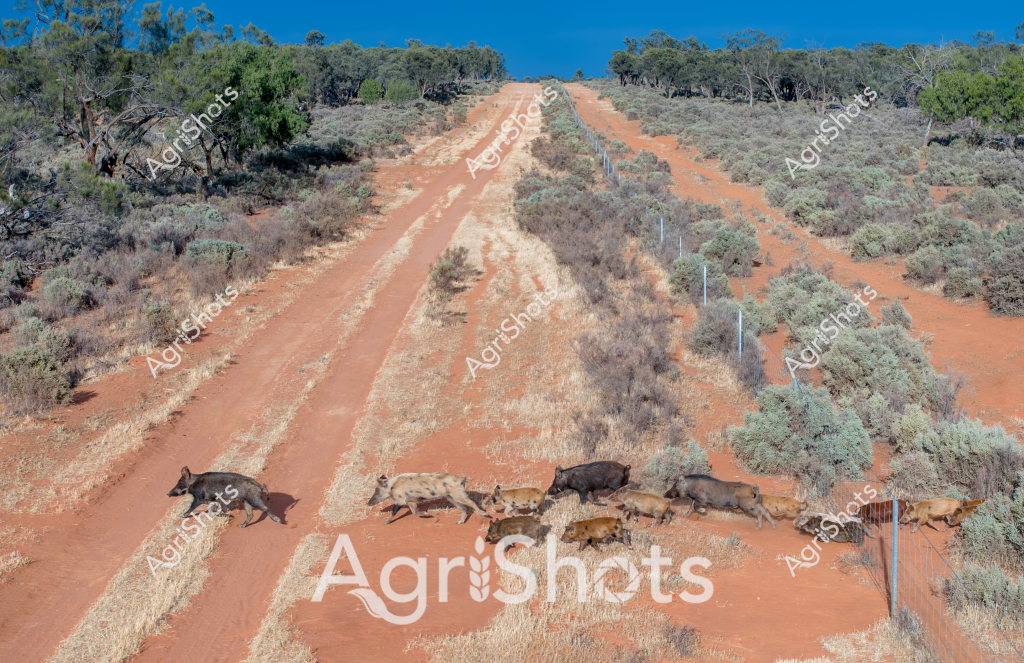
A group of feral pigs traverses a remote Australian dirt track, their dark and varied-colored bodies moving across the rusty-red earth. The landscape is classic Australian outback - sparse eucalyptus trees, silvery-green scrub vegetation, and a wide blue sky stretching across the horizon. These wild pigs, ranging in shades from dark brown to light tan, are crossing a well-worn rural access road that cuts through the arid landscape, likely moving between grazing areas. The surrounding terrain shows typical semi-arid vegetation with low shrubs and scattered trees, characteristic of inland Australian regions. The stark contrast between the reddish-orange soil and the muted green vegetation creates a visually striking scene that captures the rugged nature of Australia's interior landscapes. The image appears to be an aerial or drone perspective, providing a clear view of the pigs' movement across the landscape, highlighting the interaction between wildlife and the extensive rural infrastructure that connects remote areas. This scene represents the ongoing challenge of feral animal management in Australian agricultural regions, where introduced species like wild pigs can significantly impact native ecosystems and farming operations.
 Image
Image
A golden wheat field stretches across the landscape under a dramatic sky of layered, billowing clouds. Dark storm clouds mix with bright white puffs, creating a dynamic backdrop for the ripe, golden grain ready for harvest. Scattered eucalyptus trees punctuate the horizon, breaking up the vast, uniform wheat paddock with their distinctive silhouettes. The landscape captures the quintessential Australian agricultural scene - a broad, open crop field under an expansive sky that speaks to the dramatic and often challenging conditions of rural farming. Soft shadows and the rich golden hue of the wheat suggest it's midday, with sunlight illuminating the ripened crop and creating a sense of abundance and potential in this classic broadacre farming vista. The image embodies the resilience and beauty of Australian agricultural landscapes, where wheat production is a critical part of the nation's rural economy. The carefully cultivated field represents months of preparation, careful cultivation, and hope for a successful harvest season.
 Image
Image
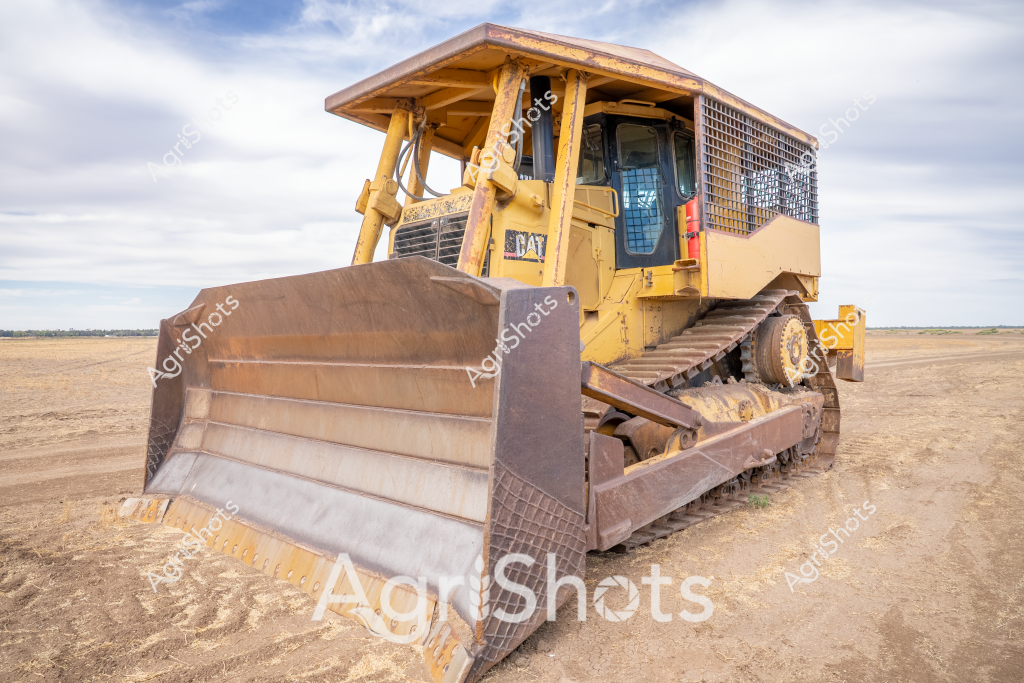
A yellow Caterpillar (CAT) bulldozer sits on a dry, dusty landscape, showcasing the robust machinery used in Australian agricultural and construction operations. The heavy-duty tracked vehicle features a large metal blade at the front, designed for earth-moving, land clearing, and site preparation tasks. Its weathered yellow paint and sturdy construction reflect the demanding conditions of rural and industrial environments. The expansive flat terrain stretches to the horizon, with a cloudy sky providing a muted backdrop that emphasizes the machine's significant presence. The bulldozer's protective cabin and mesh safety guards highlight the engineering considerations for operator protection in challenging work settings. This powerful piece of equipment represents the critical role of heavy machinery in developing and maintaining agricultural and construction landscapes across Australia.
 Image
Image
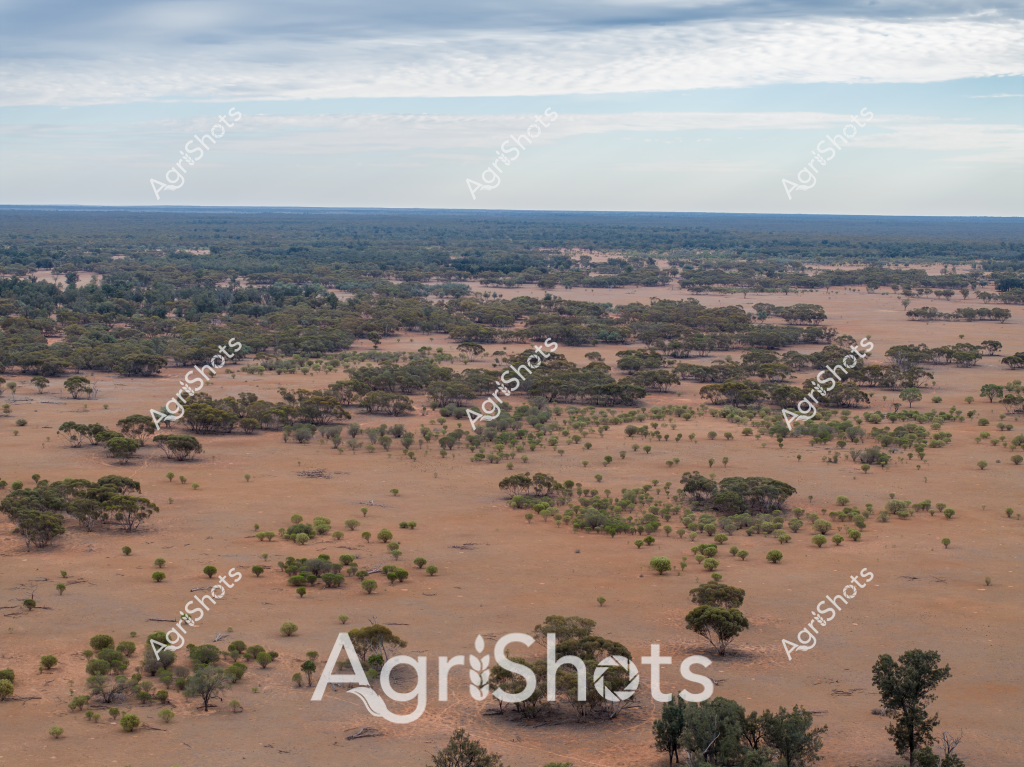
A vast, arid landscape stretches across the horizon, revealing a classic Australian savanna ecosystem with scattered acacia and eucalyptus trees dotting a sun-baked, reddish-brown terrain. The landscape demonstrates the harsh, drought-affected environment typical of Australia's interior regions, where sparse vegetation and wide-open spaces characterize the geography. Green trees cluster in small groups, creating natural islands of vegetation amid the dry, dusty ground, highlighting the resilience of plant life in challenging conditions. The overhead sky features soft, layered cloud formations in muted blues and greys, suggesting potential rainfall but also emphasizing the expansive, open nature of the landscape. This scene captures the raw, unforgiving beauty of Australia's agricultural hinterlands, where vegetation adapts to extreme environmental conditions and demonstrates the profound relationship between landscape and survival. The image provides a compelling visual narrative of ecological adaptation in one of the world's most challenging agricultural environments.
 Image
Image
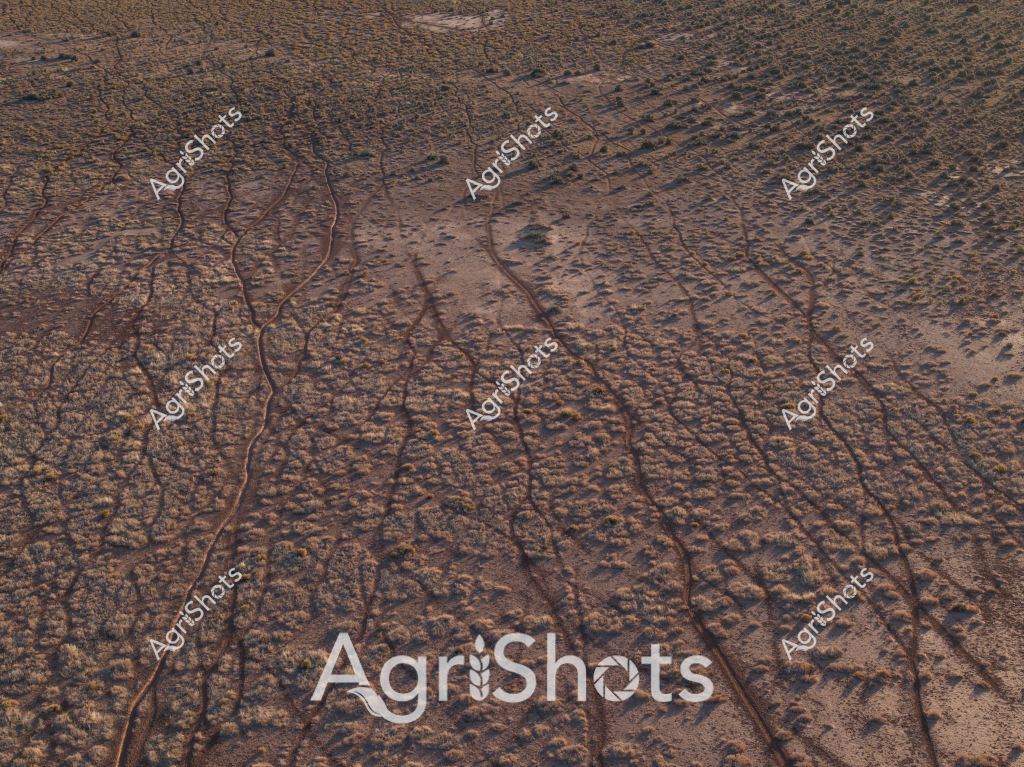
This image reveals a stark, drought-affected landscape characterized by cracked, parched earth with intricate patterns of dried mud and sparse vegetation. The terrain appears completely arid, with a textured surface of brown and reddish-tan tones creating a mosaic of deep cracks and weathered ground. Thin, serpentine lines trace across the landscape, likely dried-up water channels or erosion patterns, highlighting the extreme dryness of the environment. The ground looks heavily desiccated, with a tight, compressed texture that suggests prolonged lack of moisture. This aerial view captures the harsh reality of drought conditions, where the earth has been baked and fractured by intense heat and absence of rainfall, presenting a raw and unforgiving agricultural landscape typical of Australia's more challenging environmental regions. The image powerfully illustrates the impact of drought on agricultural lands, showing how the ground becomes a network of interconnected cracks and dried-out surfaces, transforming what was once potentially fertile ground into a challenging terrain for farming and livestock management. The monochromatic palette of browns and tans emphasizes the severity of the environmental stress, serving as a stark visual document of the climate challenges faced by Australian farmers and land managers.
 Image
Image
A woman in a soft floral blouse is preparing multiple individual meal portions, spreading shredded cheese generously over what appears to be a meat-based dish in small plastic containers. The precise portioning suggests meal preparation or catering, with each container carefully filled with a consistent amount of ground meat and topped with bright yellow grated cheese. A green bottle is visible in her hand, likely a seasoning or sauce to complete the dish. The gray kitchen countertop provides a neutral backdrop to the systematic food preparation, highlighting the methodical approach to creating these individual servings. The cheese appears freshly grated, adding a vibrant yellow color to the meal portions and promising a rich, melted topping when heated.
 Image
Image
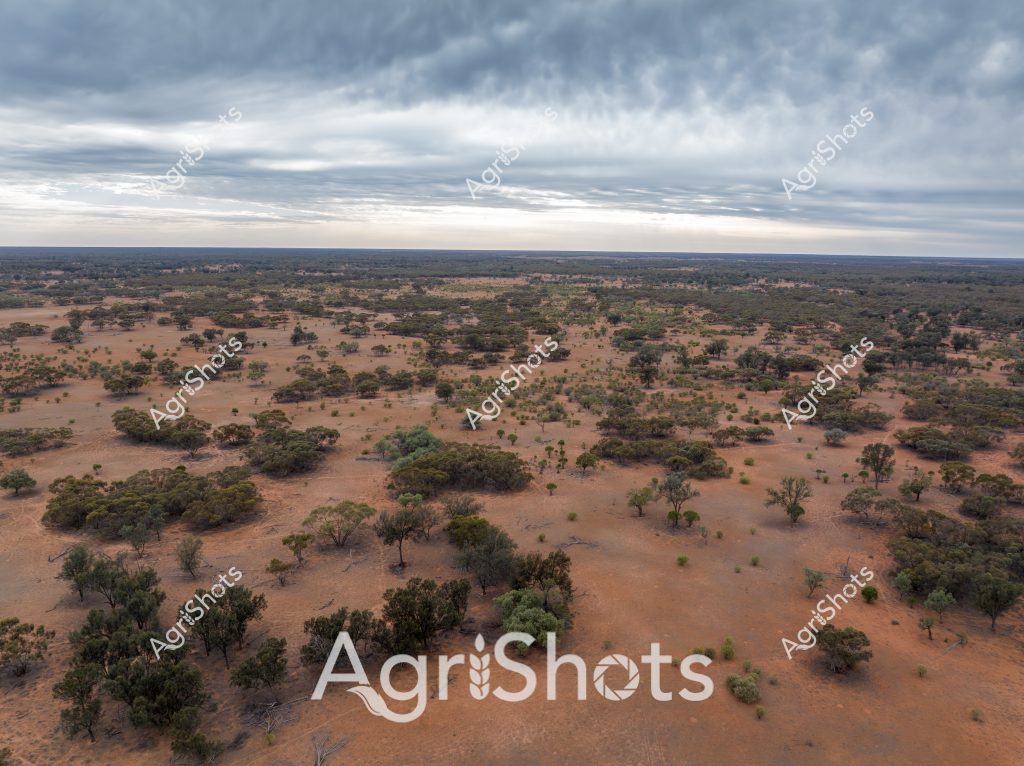
A vast, arid Australian landscape stretches beneath an overcast, moody sky, revealing a classic outback terrain of scattered eucalyptus trees and sparse vegetation across rust-red soil. The expansive scene captures the challenging environmental conditions typical of inland Australia, with dense tree clusters interrupting the otherwise open terrain. Muted green vegetation punctuates the reddish-brown ground, creating a textural mosaic that speaks to the resilience of plant life in drought-prone regions. Low-lying scrub and isolated trees are distributed across the landscape, demonstrating the sparse vegetation characteristic of semi-arid agricultural zones. The cloudy, subdued sky creates a sense of atmospheric tension, with layers of gray and silver clouds suggesting the possibility of rare rainfall in this harsh environment. This aerial perspective provides a compelling view of Australia's challenging agricultural landscape, highlighting the subtle beauty and environmental complexity of the continent's interior regions.
 Image
Image
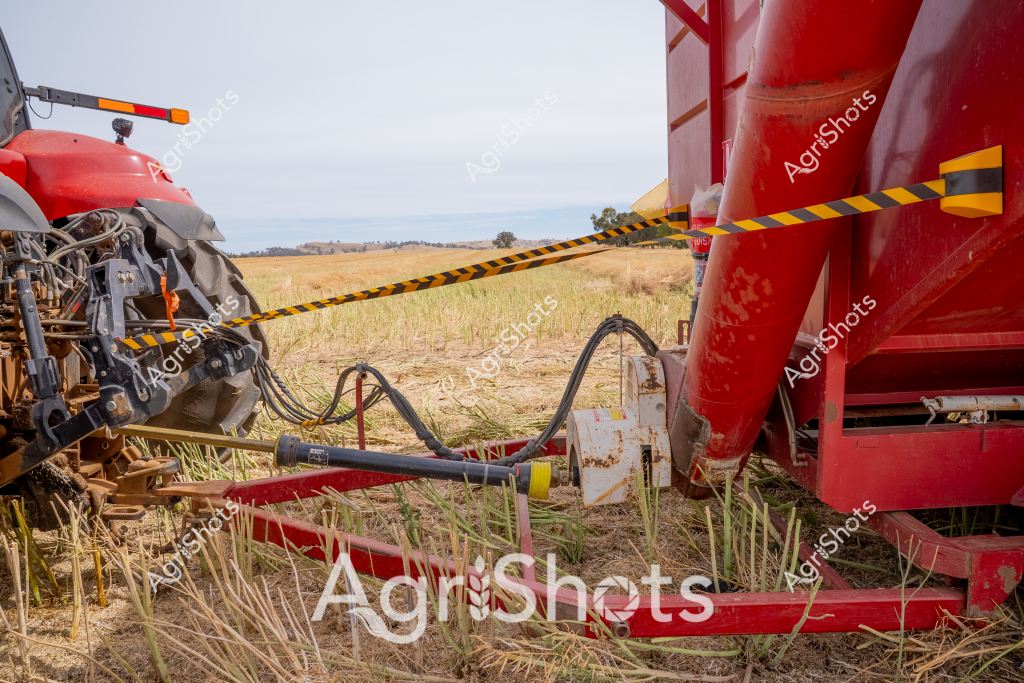
A red agricultural harvester and tractor are connected by hydraulic lines in a dry stubble field, showcasing modern farming equipment during harvest season. Distinctive black and yellow caution tape stretches between the machinery's connection points, highlighting safety protocols in agricultural operations. The golden-brown wheat or grain stubble covers the ground, indicating a recently harvested paddock with a sparse landscape of distant trees and open horizon. Mechanical components of the tractor reveal complex hydraulic systems and robust agricultural engineering, with the bright red paint of the machinery standing out against the muted landscape. Flexible hydraulic hoses curve between the machines, demonstrating the intricate connections required for efficient modern farming techniques. The scene captures the intersection of technological precision and agricultural landscape, reflecting the sophisticated approach to crop harvesting in contemporary farming.
 Image
Image
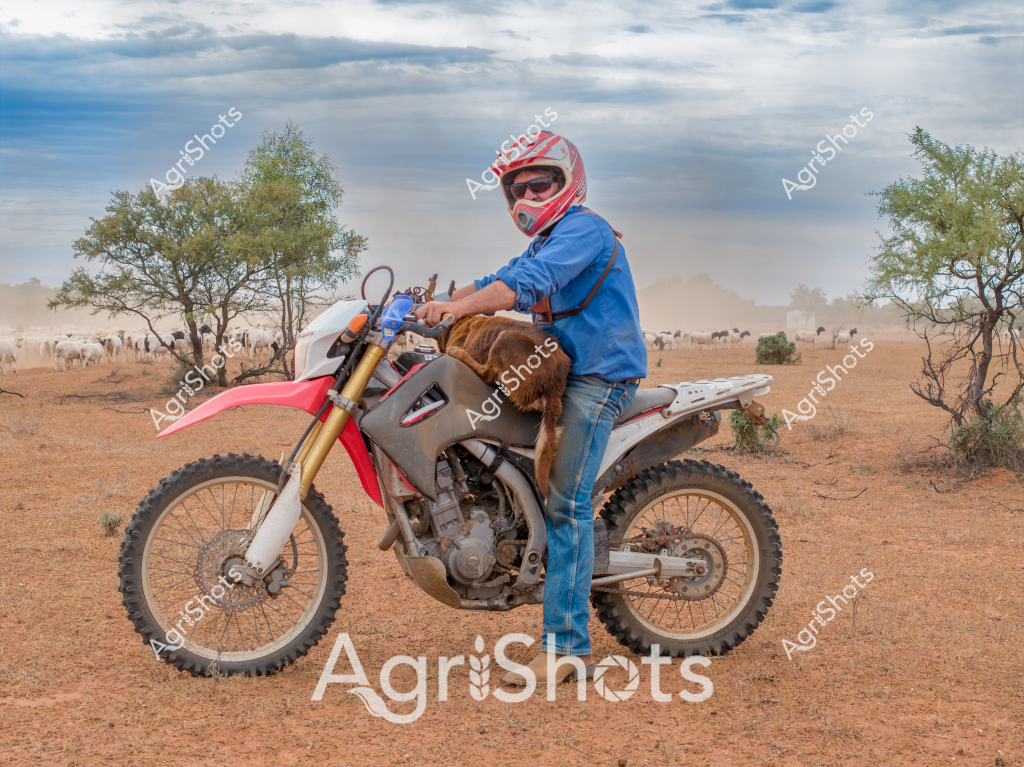
A man on a dirt bike rides through a dry, dusty pastoral landscape with a herd of cattle grazing in the background. Wearing a red and white motocross helmet, blue shirt, and jeans, he navigates a red and white dirt bike across the arid terrain. Sparse trees and shrubs dot the reddish-brown landscape, creating a classic Australian outback scene. The rider appears to be a stockman or farm worker moving across a large cattle station, with a group of light-colored cattle visible in the distance. The sky is overcast with layers of cloudy gray and blue, suggesting the challenging environmental conditions typical of rural Australian grazing lands. The knobby off-road tires of the motorcycle are well-suited to traversing the rough, dry ground, highlighting the essential role of robust transportation in managing large agricultural properties.
 Image
Image
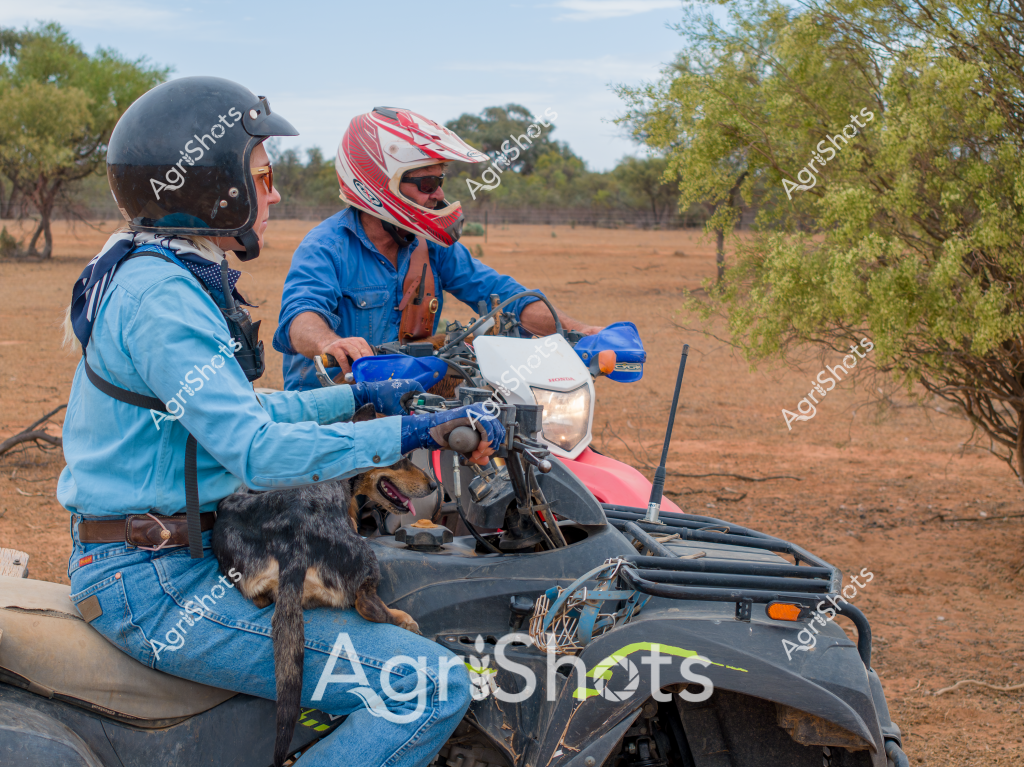
Two men on an all-terrain vehicle (ATV) traverse a dry, arid landscape with sparse trees and reddish-brown soil, typical of Australia's rural interior. One man wears a black helmet and a light blue long-sleeved shirt, while the other sports a red and white racing-style helmet and a blue work shirt. A small dark-colored dog sits on the ATV between them, suggesting this is a working vehicle used for farm or station duties. The rugged quad bike is equipped with additional storage racks and appears to be a robust model designed for challenging outback terrain. Protective gear like helmets and sturdy denim jeans indicate the serious approach to safety when navigating rough rural landscapes. The surrounding environment shows scattered acacia or eucalyptus trees, with a dry, dusty ground that hints at challenging environmental conditions typical of Australian agricultural regions. The scene captures the resilience and practical nature of rural workers, using specialized equipment to traverse vast, challenging landscapes in what seems to be a remote agricultural setting during what appears to be a dry season or drought-affected period.
 Image
Image
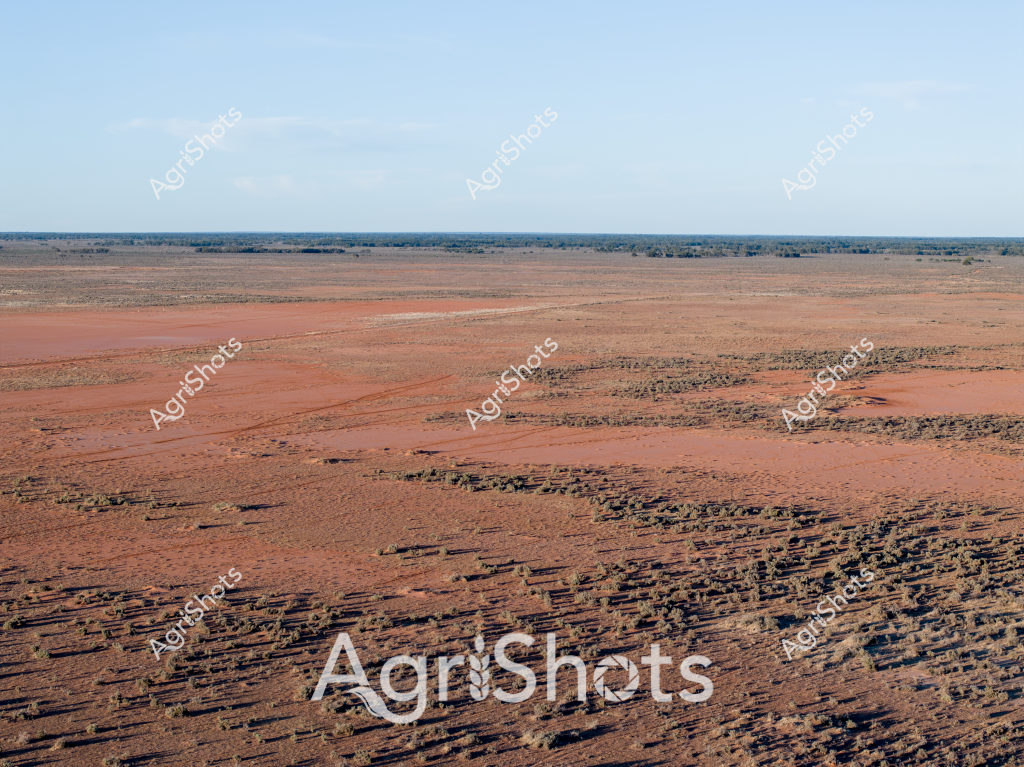
An expansive arid landscape stretches across the image, revealing the harsh, rust-colored terrain of the Australian outback. The ground appears deeply cracked and parched, with scattered low scrub and sparse vegetation breaking the monotony of the red-orange earth. Thin tracks cut across the landscape, indicating minimal human or vehicle movement through this challenging environment. The horizon is a flat line where reddish-brown ground meets a pale blue sky, creating a sense of vast, uninterrupted space typical of Australia's inland regions. This image powerfully captures the stark beauty and extreme conditions of a drought-affected agricultural landscape, demonstrating the challenging environment faced by farmers and graziers in Australia's interior. The texture of the ground suggests significant water stress, with intricate patterns of cracking and erosion visible across the wide-open space. Sparse, resilient vegetation clusters in small groups, highlighting the landscape's minimal moisture and harsh growing conditions. The scene epitomizes the resilience required in Australian agricultural practice, where farmers must adapt to some of the most challenging environmental conditions on the planet.
 Image
Image
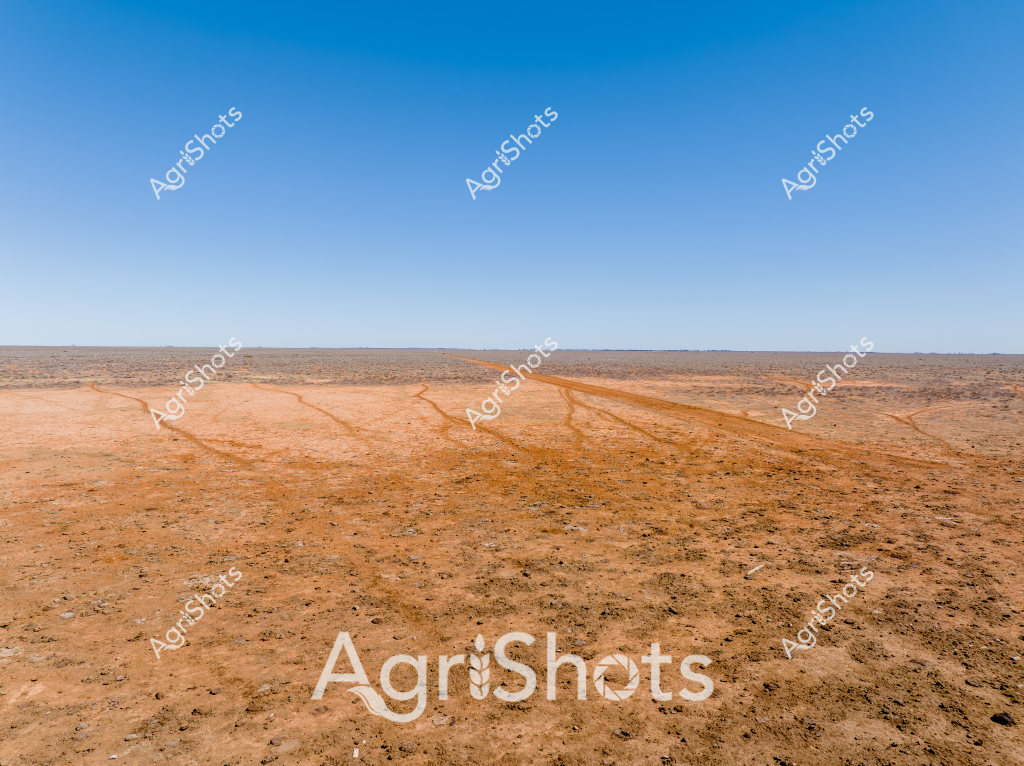
A vast, arid landscape stretches beneath an expansive blue sky, revealing a dry, reddish-orange terrain marked by faint vehicle tracks. The ground appears parched and barren, characteristic of drought-affected Australian outback regions, with rocky, sparse ground extending to a distant horizon. Multiple wheel tracks cut across the landscape, creating thin lines that snake through the dusty, sun-baked earth, suggesting recent vehicle movement across this remote and challenging terrain. The image captures the harsh environmental conditions typical of Australia's interior, where agricultural and pastoral activities must contend with extreme dry seasons and challenging landscape conditions. The stark contrast between the deep blue sky and the burnt-orange ground emphasizes the stark, unforgiving nature of this arid environment, highlighting the resilience required for survival and agricultural operations in such challenging regions.
 Image
Image
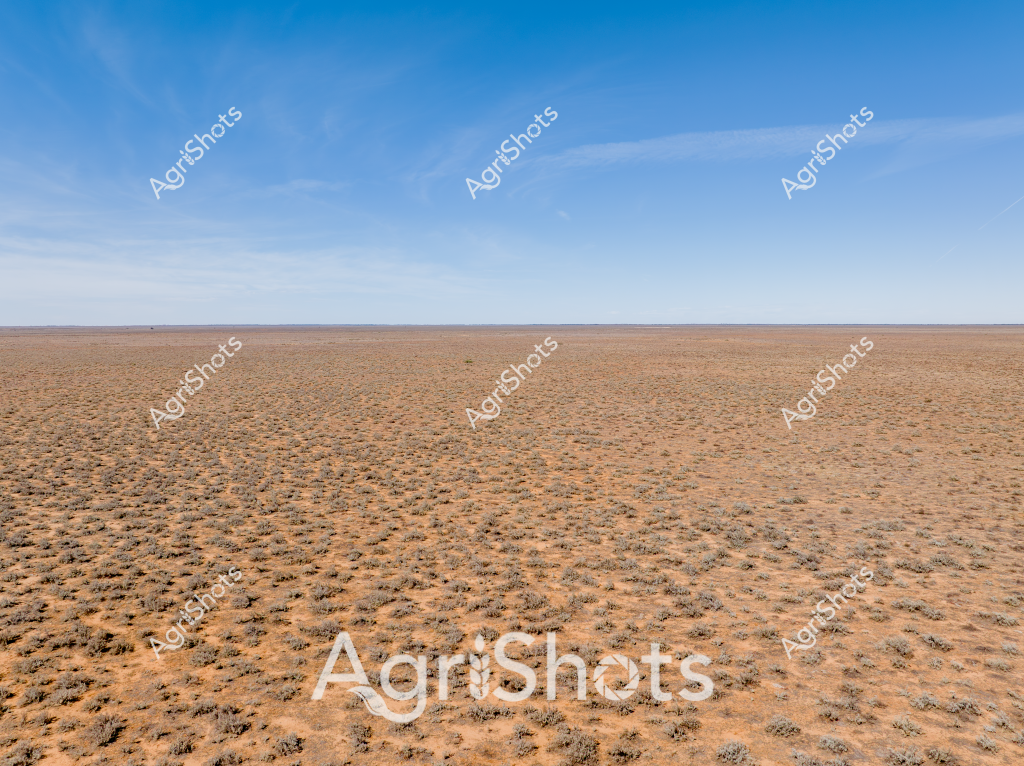
A vast, arid landscape stretches to the distant horizon, revealing a sparse, rocky terrain typical of Australia's dry inland regions. The ground is covered in a mottled pattern of reddish-brown earth interspersed with low, scattered sparse vegetation - characteristic of drought-affected pastoral lands. The sky is a clear, pale blue with subtle wispy clouds, suggesting an expansive and unforgiving environment that challenges agricultural productivity. This scene captures the harsh reality of drought conditions in the Australian outback, where vegetation struggles to survive in the minimal rainfall and extreme temperatures. The landscape speaks to the resilience required in Australian agriculture, where farmers and graziers must adapt to some of the most challenging environmental conditions on the planet. The image provides a raw, unfiltered view of the Australian interior, showcasing the rugged terrain that defines much of the continent's agricultural frontier. Every detail emphasizes the stark, minimalist beauty of a landscape shaped by extreme climatic conditions.
 Image
Image
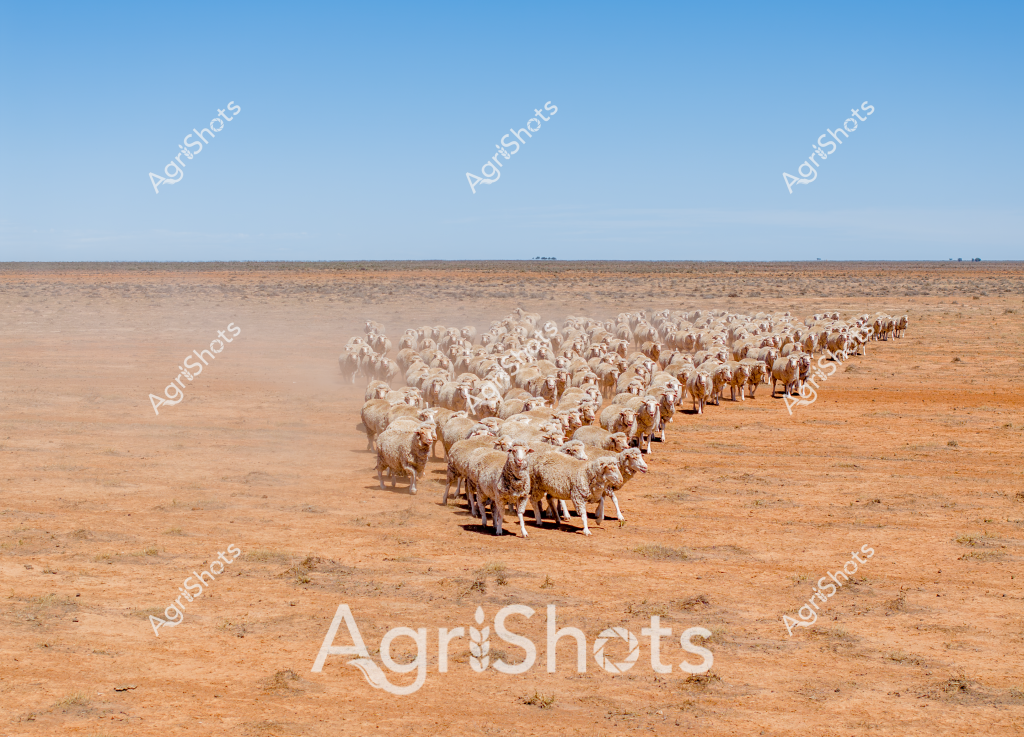
A large flock of Merino sheep stands tightly grouped in a stark, rust-colored landscape under a clear blue sky, showcasing the challenging conditions of an Australian outback station. The woolly white and cream-colored sheep create a dense, uniform mass against the arid, dusty ground, highlighting the resilience of both the animals and the agricultural enterprise. Sparse, low vegetation dots the surrounding terrain, emphasizing the harsh, dry environment typical of inland Australia. The sheep appear well-maintained, their thick fleeces suggesting they are being carefully managed despite the challenging drought-like conditions. The expansive horizon and flat landscape create a sense of isolation and vastness characteristic of large Australian pastoral properties. This image captures the essence of extensive sheep farming in Australia's challenging interior regions, where livestock management requires skill, persistence, and adaptation to extreme environmental conditions.
 Image
Image
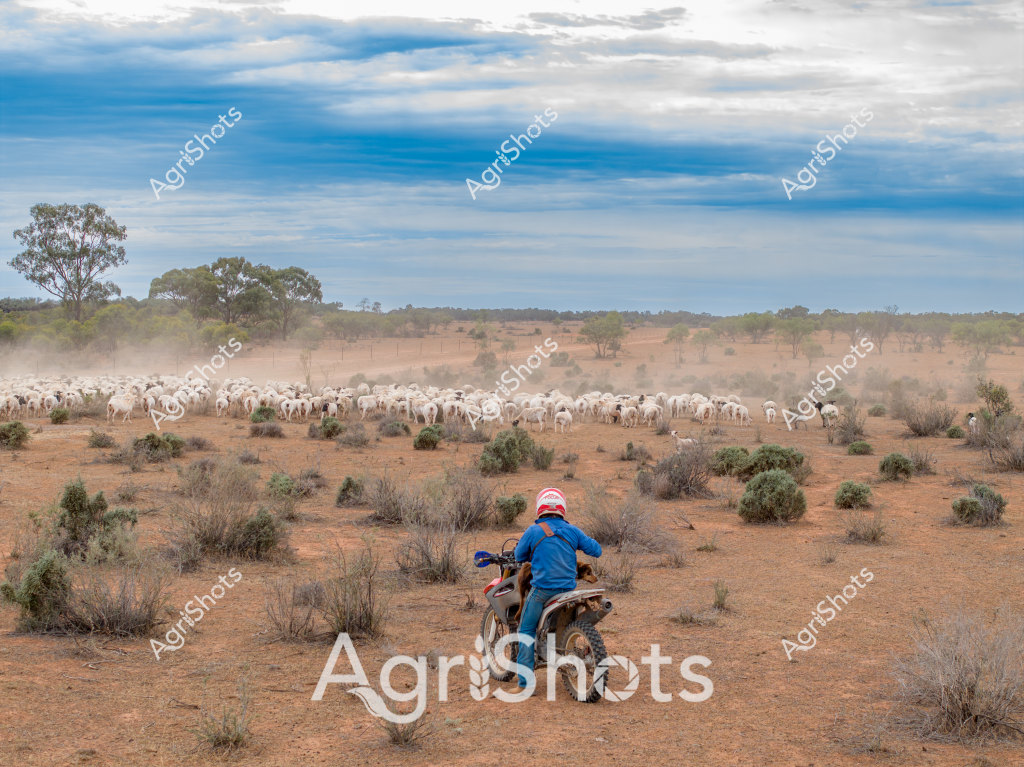
A motorcyclist herds a large flock of white sheep across a dry, expansive Australian outback landscape. The rider, wearing a blue jacket and distinctive helmet, navigates the dusty terrain on a trail bike, expertly guiding the sheep through sparse scrubland with scattered native bushes. The landscape is characterized by reddish-brown earth, low saltbush and bluebush shrubs, and eucalyptus trees dotting the distant horizon. Pale blue skies with soft cloud formations provide a dramatic backdrop to the pastoral scene, highlighting the challenging environment of inland Australia. A slight dust cloud rises from the sheep's movement, emphasizing the arid conditions and the dynamic nature of livestock mustering in remote agricultural regions. The image captures the quintessential Australian rural experience of managing livestock across vast, unforgiving landscapes.
 Image
Image
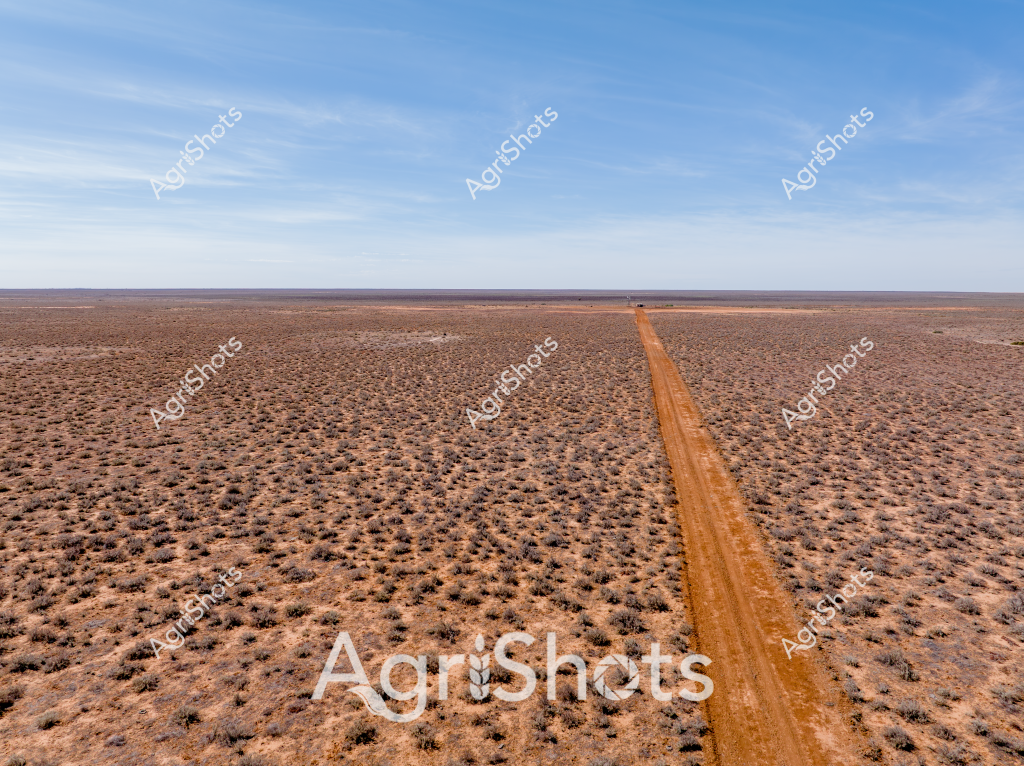
A stark aerial view captures the expansive, arid landscape of the Australian interior, where a long, rust-colored dirt track cuts a perfectly straight line through a sparse, rocky terrain. The landscape is dominated by reddish-brown earth scattered with low, weathered shrubs, creating a textured surface that stretches to the horizon. Wispy clouds drift across a pale blue sky, emphasizing the immense emptiness and isolation of this remote region. The dirt road provides the only visible sign of human intervention, stretching like a precise line drawn across the rugged, drought-affected landscape. The image powerfully illustrates the challenging environmental conditions of Australia's outback, where vast, seemingly endless spaces are punctuated only by the most minimal signs of human presence or infrastructure. The scene evokes the resilience required to traverse and survive in such a harsh, unforgiving environment, where the landscape itself becomes a testament to the extreme conditions of Australia's interior regions.
 Image
Image
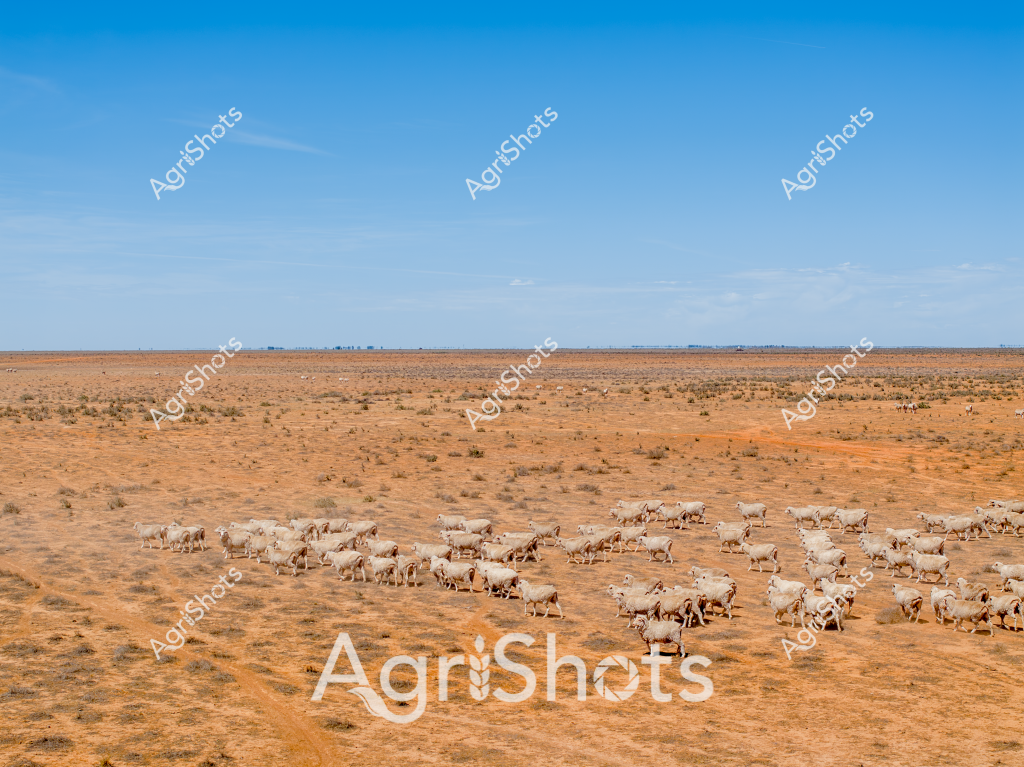
A vast, arid landscape stretches across the horizon, dotted with a substantial flock of white and brown sheep grazing on the dry, rusty-orange terrain. The sparse vegetation and expansive blue sky suggest this is a challenging drought-affected region, likely in outback Australia. The sheep, appearing to be a mixed breed of possibly Merino and crossbred stock, are clustered together, moving slowly across the parched ground in search of sparse vegetation. The landscape's monotone color palette - burnt oranges, pale yellows, and dusty browns - emphasizes the harsh environmental conditions these resilient livestock must endure. A distant line of low trees marks the horizon, providing the only break in the flat, unforgiving landscape that typifies many of Australia's extensive pastoral regions.
 Image
Image
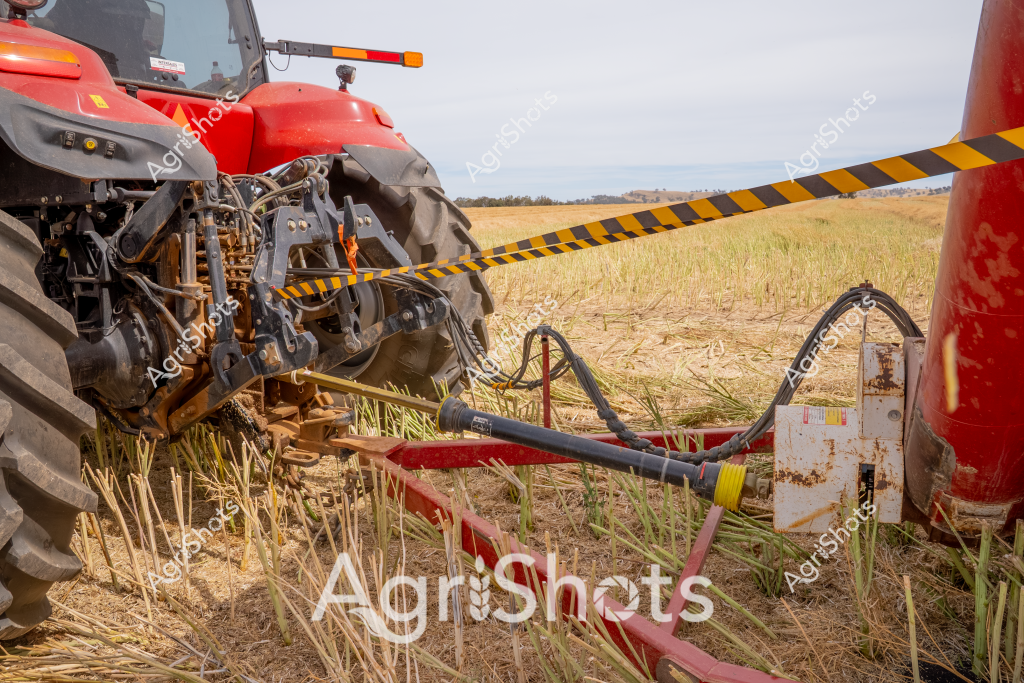
A red tractor positioned in a stubble field, showcasing sophisticated agricultural machinery connections. Intricate hydraulic linkages and robust mechanical attachments are visible, connecting the powerful tractor to an agricultural implement. Yellow and black caution tape-styled markings highlight critical connection points, emphasizing safety and precision in farm equipment integration. The landscape behind reveals a golden-hued harvested field with remnant crop stubble, stretching toward a distant horizon under an overcast sky. Large agricultural tires with deep treads grip the uneven ground, demonstrating the heavy-duty design required for modern farming operations. This image captures the technical complexity of contemporary agricultural machinery, where engineering precision meets rural productivity.