Browse the collection
 Image
Nestled in the verdant Tasmanian landscape, a meticulously cultivated lavender field stretches towards a serene lake, capturing the quintessential beauty of agricultural tourism. Rows of vibrant purple lavender plants create a mesmerizing geometric pattern, their dense clusters planted with precision on black landscape fabric. Elegant eucalyptus trees frame the scene, their silvery-green foliage contrasting beautifully with the rich purple blooms and the soft blue waters of the lake in the background. Gentle rolling hills and dense forest complete the picturesque vista, showcasing Tasmania's lush agricultural potential and natural beauty. The crisp, clear sky with fluffy white clouds suggests a perfect late spring or early summer day, ideal for lavender cultivation and farm visitation. This stunning landscape represents the intersection of agricultural innovation, natural beauty, and Tasmania's thriving boutique farming sector, highlighting the state's potential for specialized crop production and agritourism.
 Image
Newborn yellow chicks huddle together amid a sea of cracked eggshells, capturing the precise moment of emergence in a precision poultry hatchery. Soft downy feathers contrast against the perforated metal tray, where pale brown and cream-toned eggs reveal the delicate process of hatching. Dozens of fragile chicks cluster tightly, their tiny bodies radiating a uniform buttery yellow, representing the first hours of life in an large-scale agricultural breeding environment. Each egg shows signs of careful cracking, with some shells still bearing remnants of the emerging chick's first breakthrough. The metallic grid beneath provides a structured, clinical backdrop to this intimate biological transformation, highlighting the systematic approach of modern agricultural production.
 Image
A man working in a commercial poultry hatchery tends to newly hatched chicks and unhatched eggs in wire baskets within industrial incubation equipment. The worker, wearing a mask, carefully manages the hatching process as hundreds of yellow chicks emerge from their shells in the large-scale farming operation. Broken eggshells fill one basket while fluffy day-old chicks crowd together in adjacent containers, representing the early stage of commercial chicken production in Tasmania's poultry industry.
 Image
A farm worker in an orange high-visibility shirt tends to rows of white chickens in an large-scale poultry farming facility in Tasmania. The modern barn features multiple levels of housing with hundreds of chickens densely packed on wire flooring, showcasing the scale of commercial egg production. Automated feeding and watering systems run throughout the facility, while the worker moves through the aisles monitoring the flock's health and welfare. This scene captures the industrial nature of contemporary poultry farming, where efficiency and biosecurity measures are essential for maintaining large-scale egg production operations.
 Image
Neat rows of vibrant purple lavender plants create geometric patterns across a cultivated field in Tasmania, with grass pathways winding between the aromatic herb crops. The lavender farm stretches toward a serene lake backdrop, framed by native trees and rolling hills under partly cloudy skies. This picturesque agricultural landscape showcases Tasmania's thriving specialty crop production, with the flowering lavender plants ready for harvest in what appears to be the peak growing season.
 Image
A woman farm worker in an orange high-visibility shirt tends to newly hatched chicks inside a commercial poultry hatchery in Tasmania. The industrial incubation units line the walls while hundreds of yellow and brown chicks fill wire trays on the floor, representing the large-scale farming operations typical of modern Australian poultry production. The scene captures the critical early stages of chicken hatching and handling in this agricultural facility.
 Image
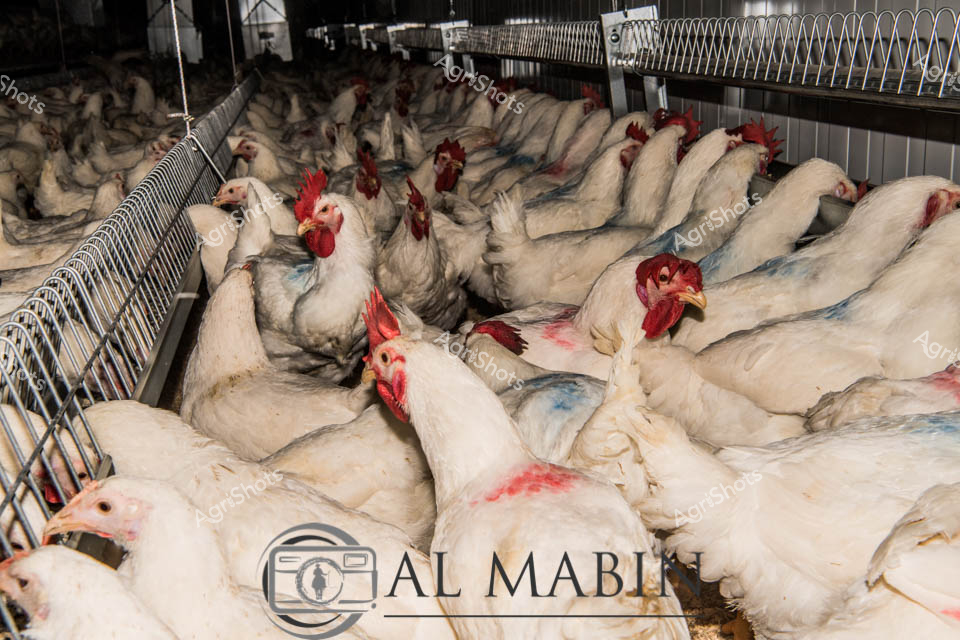
Layer upon layer of white-feathered chickens crowd tightly within a steel-framed battery cage system, their bright red combs standing in stark contrast to their pale plumage. These commercial laying hens represent the intense efficiency of modern poultry production, packed closely together with minimal individual space. The uniform white birds demonstrate selective breeding for maximum egg production, their bodies pressed against metal wire dividers that segment and constrain their movement. Red markings on some birds suggest potential stress or pecking interactions within the densely populated environment. The industrial precision of the housing - with its repeated geometric lines and uniform metal infrastructure - speaks to the systematic approach of contemporary agricultural practices. Despite the clinical setting, there's an undeniable visual complexity in the layered textures of feathers, wire, and the rhythmic patterns created by the closely confined birds, captured under the Al Mabiti agricultural photography brand.
 Image
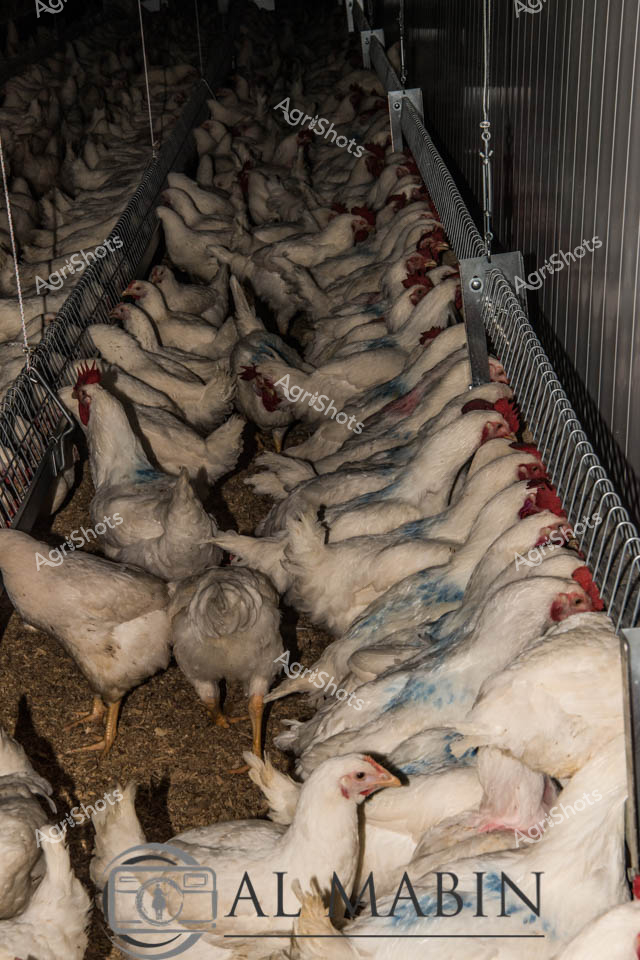
Battery-caged white leghorn chickens crowd tightly in narrow wire enclosures, their pale feathered bodies pressed against each other in a uniform mass. Stark industrial lighting illuminates the dense layers of poultry, revealing blue identification markings and bright red combs against their pristine white plumage. The metallic grid of cages creates rigid geometric lines, emphasizing the systematic and controlled environment of large-scale egg production. Each bird is positioned with minimal space, representing standard commercial farming practices for maximizing egg yield. The ground beneath is covered with feed and droppings, creating a textured base that underscores the industrial nature of this agricultural setting.
 Image
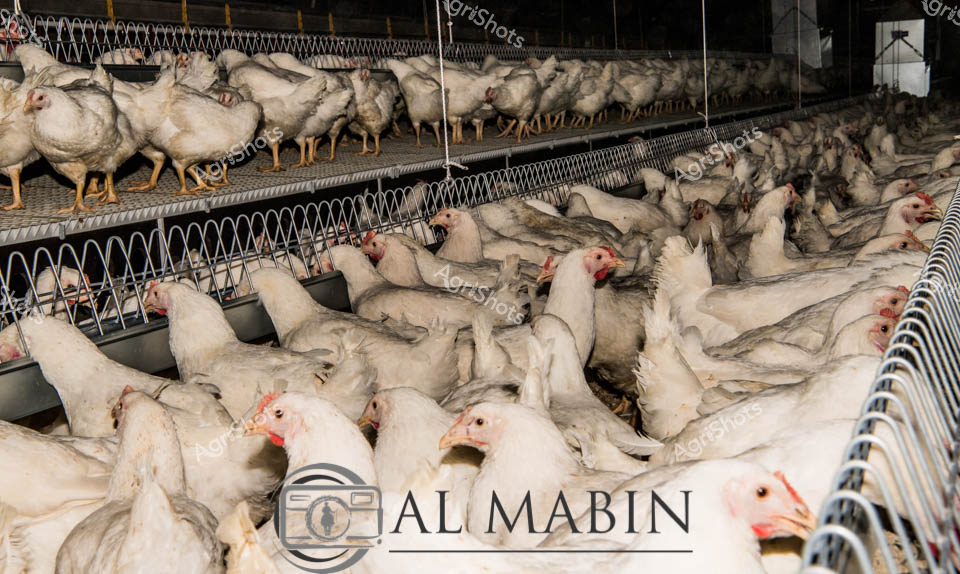
Densely packed white chickens crowd the multi-tiered wire battery cages of a commercial egg production facility, their pale feathered bodies pressed tightly against each other. Stark industrial lighting illuminates the uniform flock, their reddish combs providing the only splash of color against the monochromatic metallic infrastructure. Each level of the systematic steel framing contains rows of birds, meticulously arranged to maximize production efficiency in this large-scale agricultural environment. The cramped conditions reveal the industrial scale of modern poultry farming, where chickens are viewed as units of production rather than living creatures. Red-combed hens huddle together, their movements restricted by the narrow wire mesh that defines their entire existence.
 Image
Battery-caged white leghorn chickens crowd densely across multiple wire-mesh levels in this industrial poultry production scene. Pure white feathered birds with bright red combs are tightly packed, with minimal movement space, highlighting large-scale commercial egg production techniques. Uniform metal infrastructure creates strict horizontal and vertical lines, emphasizing the systematic, controlled environment of modern agricultural livestock management. The chickens appear uniform and standardized, their pale plumage creating a monochromatic landscape broken only by occasional hints of red comb coloration. The image reveals the industrial scale of chicken farming, where efficiency and systematic organization define the agricultural approach to livestock management.
 Image
White leghorn chickens densely populate a mechanized indoor poultry barn, their pale feathered bodies clustered across a sawdust-covered floor. A metal feeding and watering infrastructure bisects the crowded space, constraining the birds' movement and maximizing production efficiency. The chickens' bright red combs stand in sharp contrast to their uniform white plumage, representing a highly standardized breeding line optimized for egg production. Wire-mesh barriers and precise environmental controls highlight the industrial scale of contemporary agricultural livestock management. Stark lighting and tight framing emphasize the regulated, controlled nature of modern large-scale farming practices, revealing both the technological precision and potential ethical complexities of industrial animal husbandry.
 Image
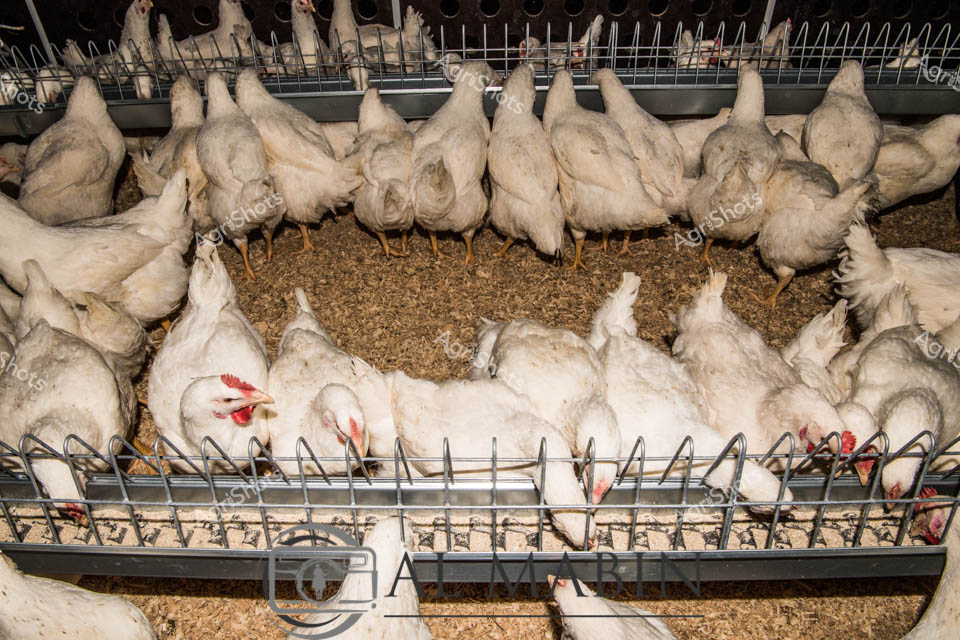
White leghorn chickens crowd tightly in a mechanized battery cage system, their pale feathered bodies pressed close together on a bed of wood shavings. Metallic wire grid barriers separate the dense layers of poultry, representing an industrial egg production environment typical of modern large-scale agricultural practices. The chickens appear uniform and pale, their red combs providing stark accent against the monochromatic beige and grey tones of the enclosure. Each bird stands or sits in a carefully regimented space, reflecting the systematic approach of commercial poultry farming. The tightly controlled environment suggests precision and efficiency, with minimal space allocated per bird and structured feeding and roosting zones. Dark substrate beneath the cages and the uniform positioning of the chickens underscore the highly regulated nature of contemporary egg production systems, revealing the industrial scale of Australian agricultural livestock management.
 Image
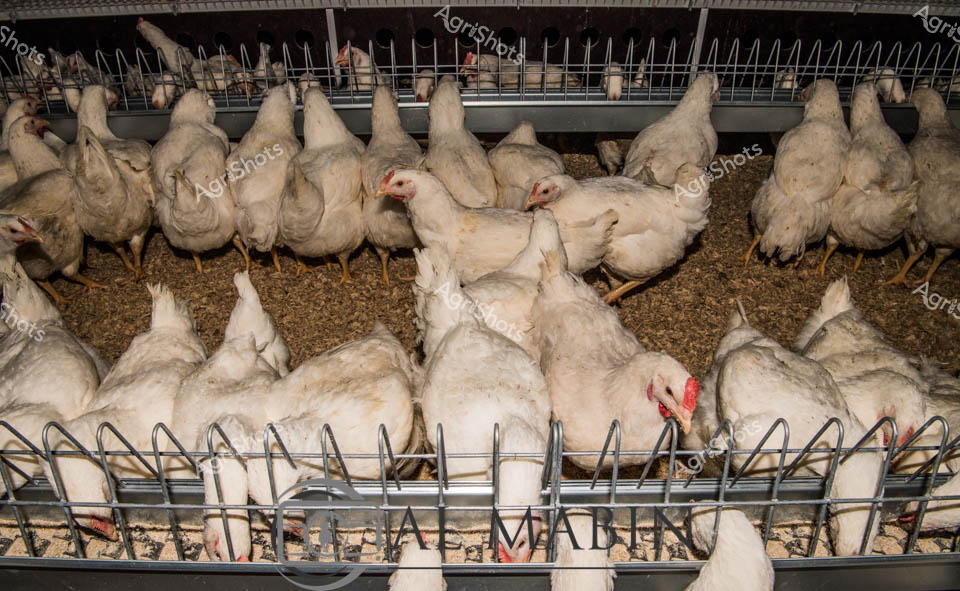
Battery-caged white leghorn chickens crowd densely within multiple wire enclosures, their pale feathered bodies pressed tightly against metal dividers. The industrial agricultural setting reveals a systematic, uniform arrangement with layers of birds positioned across stacked metal cages lined with scattered grain and organic debris. Stark overhead lighting casts uniform shadows, emphasizing the mechanical precision of large-scale poultry production. Each bird appears similar - pale cream-colored plumage, some with reddened combs, standing or sitting in constrained positions that highlight the efficiency-driven environment of commercial egg production. The image captures the industrial scale of modern agricultural practices, where livestock are positioned as uniform production units rather than individual creatures. Textural details of wire mesh, feathered bodies, and granular bedding create a complex visual landscape that speaks to contemporary food system infrastructures.
 Image
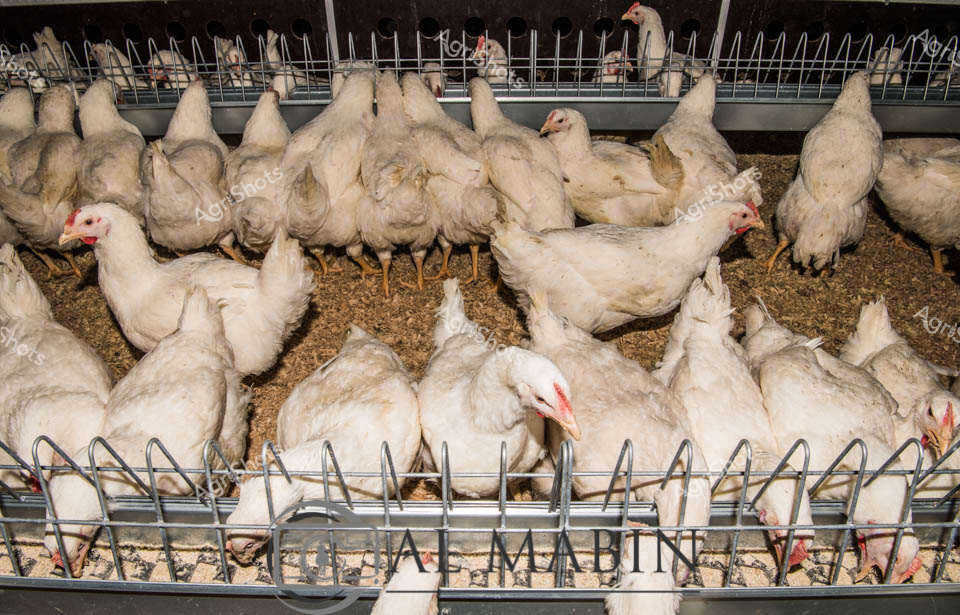
White Leghorn broiler chickens crowd a multi-tiered battery cage system, densely packed across metal wire enclosures lined with bedding material. The industrial poultry shed reveals a tightly controlled agricultural environment, designed for efficient meat production with uniform white feathered birds standing shoulder-to-shoulder. Fluorescent lighting casts a clinical illumination across the uniform flock, highlighting their plump bodies and bright red combs against the neutral palette of beige and gray. Wire partitions segment the space, creating standardized living units that maximize spatial efficiency and streamline livestock management. The chickens' clustered postures reflect the confined conditions of large-scale farming, their movements restricted yet synchronized in a choreographed landscape of industrial agriculture.
 Image
Battery-raised white leghorn chickens crowd the metal wire flooring of a modern large-scale egg production facility. Uniform in color and size, the pale feathered birds stand shoulder to shoulder beneath a row of suspended red feeders and drinkers. Precise industrial infrastructure - galvanized steel mesh, mechanical feeding systems, and controlled environment design - characterizes this systematic approach to poultry farming. Each chicken occupies a tightly regulated space, reflecting contemporary agricultural efficiency and mass production techniques prevalent in Tasmania's commercial egg industry. The gridded composition and monochromatic palette emphasize the standardized, mechanized nature of contemporary livestock management.
 Image
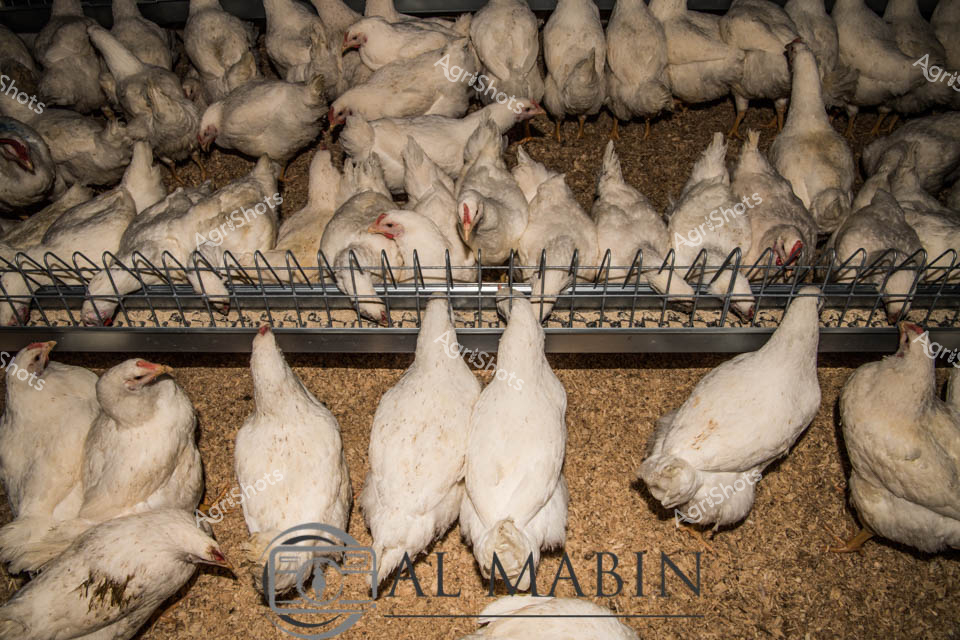
Battery-caged broiler chickens huddle tightly along a wire mesh feeder, their pristine white feathers a stark contrast against the brown substrate of their confined environment. The uniform positioning and dense clustering reveal an industrial-scale poultry production setting, typical of modern large-scale farming practices in Tasmania's agricultural sector. Each bird appears similarly developed, suggesting a carefully managed breed selected for rapid growth and consistent meat production. Reddish combs peek through the sea of white plumage, a subtle biological marker amid the mechanized precision of their living space. The wire grid of the feeder creates a rigid geometric counterpoint to the soft, rounded forms of the chickens, symbolizing the intersection of biological life and industrial agricultural systems. This image captures the clinical efficiency of contemporary poultry farming, where standardization and maximum yield are paramount, presenting a matter-of-fact view of Australia's food production infrastructure.
 Image
Battery hens crowd densely across layered wire cages and sawdust-covered floors, their pristine white feathers contrasting against the industrial metal infrastructure. Rows of pale birds perch unnaturally close together, their bodies pressed against metal dividers in a uniform grid of commercial egg production. The chickens' red combs provide stark crimson accents against their monochromatic plumage, highlighting the clinical efficiency of this large-scale farming environment. Soft golden sawdust covers the floor, absorbing waste and providing minimal bedding for the tightly confined animals.
 Image
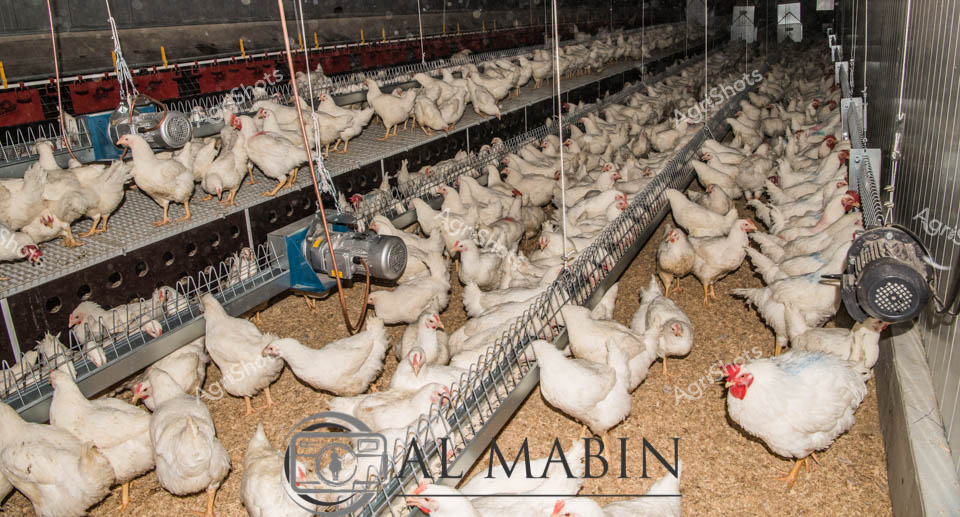
Industrial poultry production in full view, this image captures a dense flock of white chickens populating a multi-tiered metal battery cage system. Rows of pristine white birds crowd the galvanized wire shelving, their red combs standing out against uniform feathered bodies. Sawdust or wood shavings cover the floor, providing bedding material in this tightly controlled agricultural environment. Mechanical feeders and ventilation equipment suggest a high-efficiency modern chicken farm, likely located in Tasmania's agricultural regions. The uniform spacing, metallic infrastructure, and densely packed livestock represent contemporary industrial egg production techniques, where systematic design maximizes output and controlled conditions.
 Image
White leghorn chickens crowd a multi-tiered battery cage system, densely packed with minimal space between them. The industrial poultry facility reveals rows of wire mesh cages, each level filled with pale-feathered birds, a few sporting bright red combs standing out against their uniform plumage. A blue identification mark is visible on one of the chickens, suggesting systematic tracking and management. The metallic infrastructure of feeding troughs and cage supports creates a grid-like visual pattern, highlighting the systematic and efficient nature of large-scale egg production. Harsh overhead lighting casts sharp shadows, emphasizing the confined environment and mechanical precision of modern large-scale farming practices.
 Image
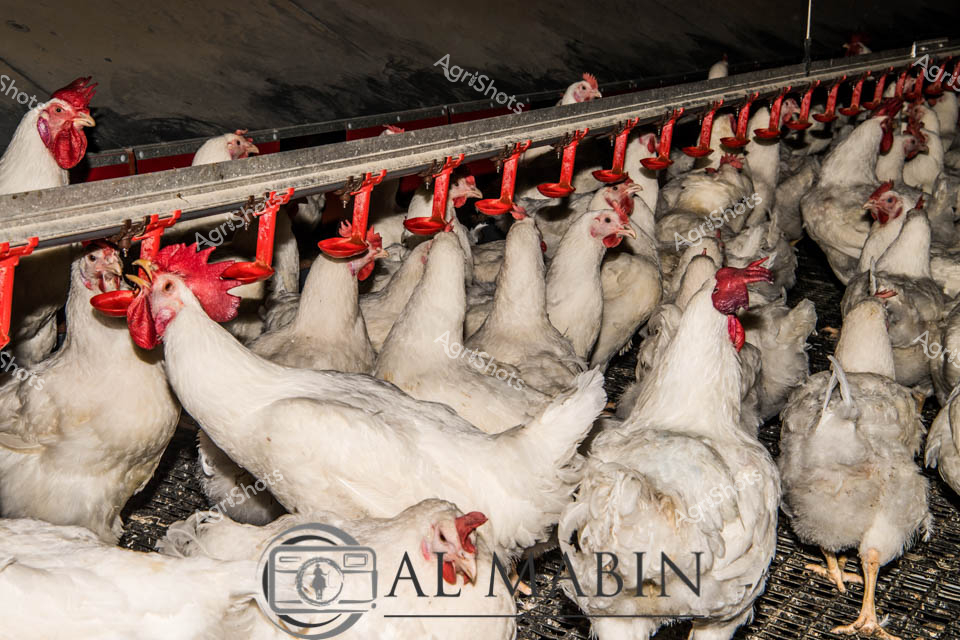
White leghorn hens cluster densely in a mechanized egg production facility, tightly arranged along a linear red feeding system. Each bird stands in close proximity on a textured metal grid floor, their pristine white feathers contrasting sharply with bright red combs and wattles. Automated red feed troughs line the overhead rail, providing consistent access to nutrition in this carefully controlled industrial agricultural environment. The densely packed arrangement highlights contemporary large-scale poultry farming practices, where efficiency and systematic production are paramount. Stark fluorescent lighting illuminates the uniform flock, emphasizing the standardized and pragmatic approach to large-scale egg production. The image captures the clinical precision of modern agricultural systems, where chickens are managed as a precise biological production unit, optimized for maximum economic output.
 Image
Pristine white leghorn chickens crowd a modern industrial poultry shed, their bright red combs standing out against uniform feathered bodies. Tightly packed within metal wire partitions, the densely clustered birds rest on a bed of straw-colored substrate, representing contemporary egg production techniques. Overhead lighting and metallic structural elements create a clinical, systematic environment that speaks to efficient agricultural practices. Each chicken appears remarkably similar - pure white plumage, alert posture, clustered in precise formations that maximize space utilization. The blue-tinted markings visible on some birds suggest tracking or management protocols typical in large-scale farming operations. This scene captures the industrialized nature of contemporary egg production, where animal biology meets precision agricultural engineering, revealing the systematic approach to protein supply in modern Australian agricultural landscapes.
 Image
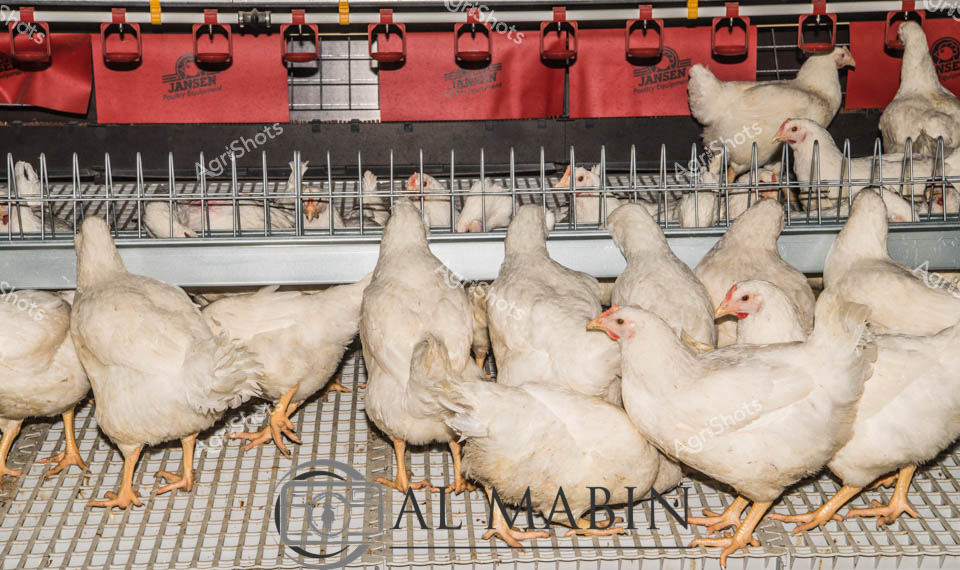
White leghorn chickens crowd a multi-tiered wire battery cage system in a modern industrial poultry facility. Sleek red Jansen agricultural equipment panels line the upper background, suggesting sophisticated Dutch or European farming technology. The chickens stand closely together on galvanized steel mesh flooring, their pale feathers creating a uniform texture against the metallic infrastructure. The uniform positioning of the birds and precise engineering of their environment reflects the systematic approach of large-scale livestock management. Bright fluorescent lighting illuminates every detail, emphasizing the clinical, efficient design of contemporary agricultural production spaces.
 Image
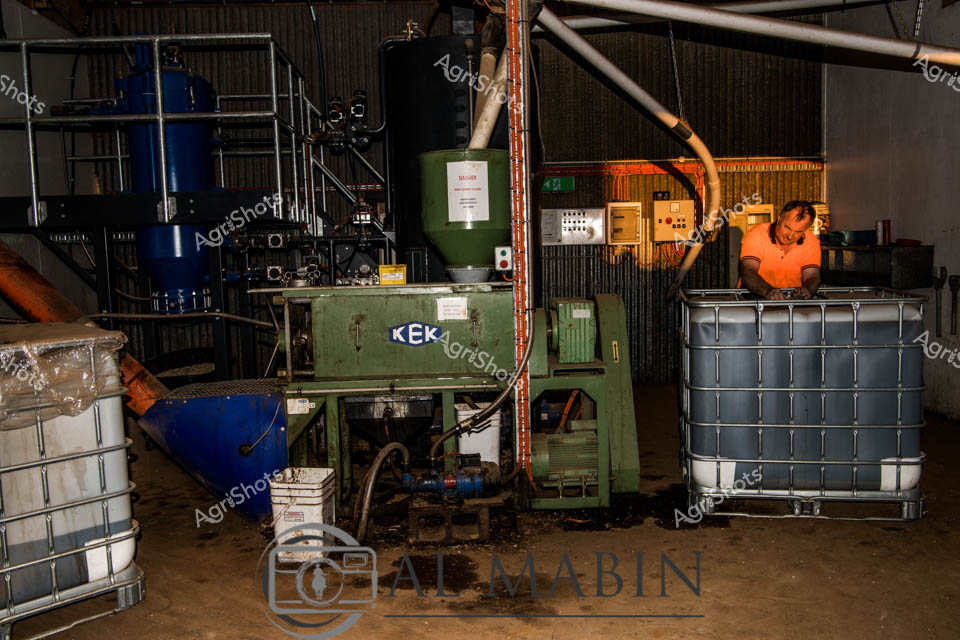
A worker in an orange safety shirt operates specialized poultry processing equipment inside an industrial farm facility in Tasmania. The green KEK machinery, surrounded by large storage containers and processing tanks, forms part of an large-scale egg production operation. Blue storage vessels and white industrial containers are positioned throughout the workspace, highlighting the scale of modern commercial poultry farming. The indoor facility showcases the mechanized infrastructure required for large-scale chicken and egg production systems.
 Image
White leghorn chickens crowd densely on a wire mesh feeding platform, their pale feathers contrasting against the rich brown substrate of what appears to be an large-scale agricultural poultry shed. Each bird is tightly positioned, demonstrating the efficient space utilization typical of modern egg production systems. The uniform coloration of the chickens suggests a carefully bred commercial laying flock, likely selected for maximum egg productivity. Soft ambient lighting reveals the textural details of their feathered bodies, highlighting the close proximity and systematic arrangement characteristic of contemporary agricultural practices. Red combs provide subtle punctuation against the monochromatic palette of whites and browns, while the wire grid beneath them serves as both structural support and pragmatic management infrastructure. This image encapsulates the industrialized approach to protein production, where biological efficiency and controlled environment are paramount in contemporary Australian agricultural systems.