Browse the collection
 Image
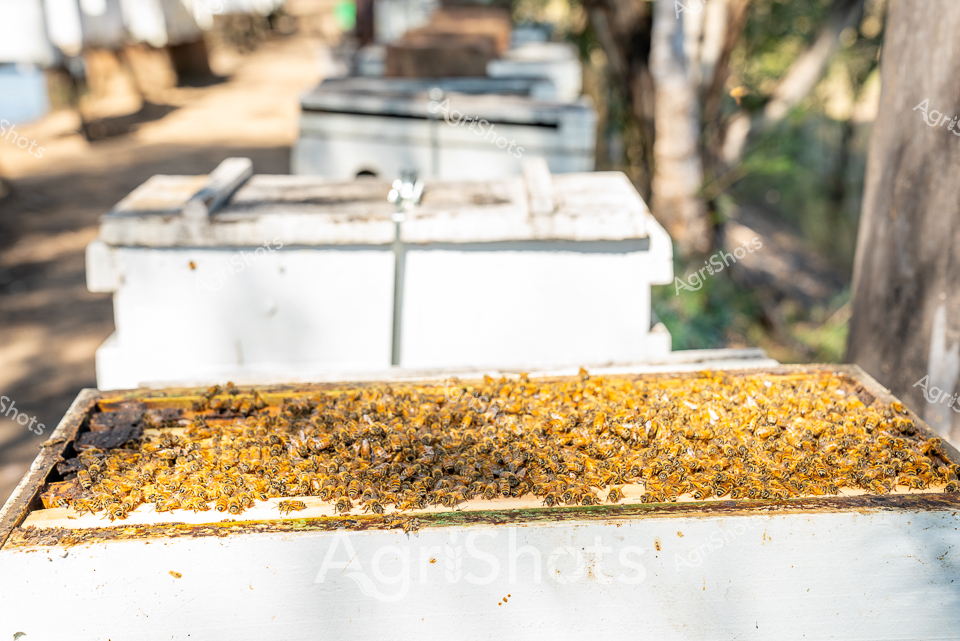
Golden swarms blanket a weathered apiary frame, hundreds of honeybees densely clustered across the wooden surface in the soft dappled light of a Queensland spring morning. White rectangular hive boxes stand sentinel in the background, nestled beneath leafy trees in the fertile Lockyer Valley, a region renowned for its agricultural diversity. The bees move with purposeful energy, their amber and black bodies creating a living, breathing mosaic of collective activity - a testament to the intricate social structure of these remarkable pollinators. Sunlight filters through the surrounding foliage, casting gentle shadows across the apiary and highlighting the rich golden-brown tones of the honeycomb and bee clusters. This scene captures the delicate ecosystem of commercial beekeeping, where careful management and respect for natural processes yield not just honey, but crucial agricultural pollination services. The image speaks to the quiet dedication of apiarists who maintain these vital insects, integral to both local crop production and broader environmental health.
 Image
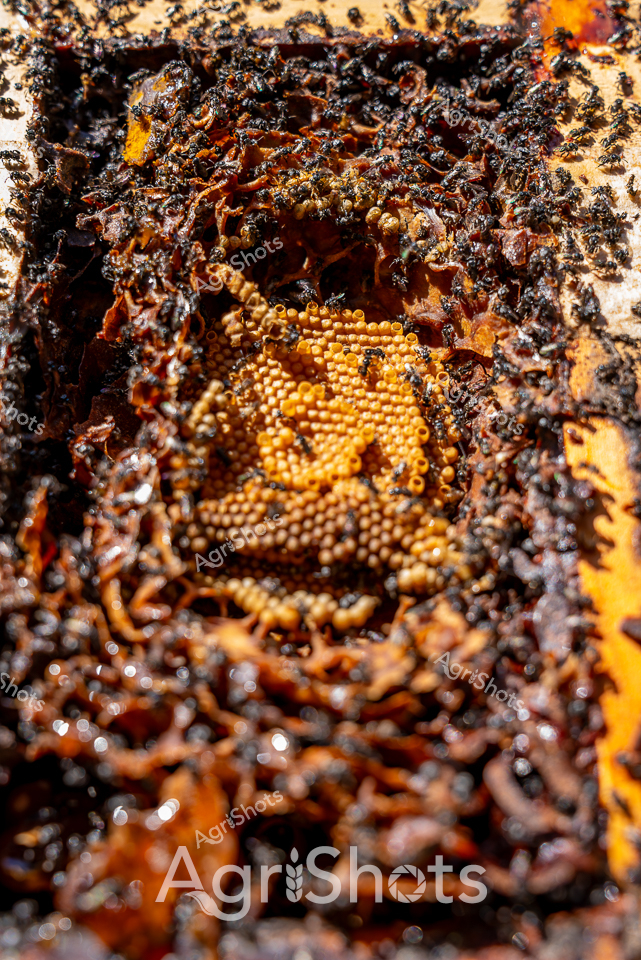
Golden honeycomb clusters nestle into a rich, dark landscape of propolis and amber-hued resin, revealing an intimate portrait of Australian native stingless bee (Tetragonula carbonaria) colony life. The intricate hexagonal wax structures shine like miniature golden pearls, contrasting dramatically against the deep brown and charcoal textures of the hive interior. Winter light filters across the organic, layered surfaces, highlighting the precise architectural complexity of these remarkable Queensland pollinators native to the Lockyer Valley region. Densely packed worker bees move in tight formations around their precious brood chambers, their collective industry representing the sophisticated social structure of these tiny agricultural partners. The macro perspective transforms the bee habitat into an almost abstract landscape, revealing the extraordinary precision and collective intelligence of these small but crucial ecosystem contributors. Each textured surface tells a story of survival, collaboration, and the delicate balance of subtropical Australian apiary environments.
 Image
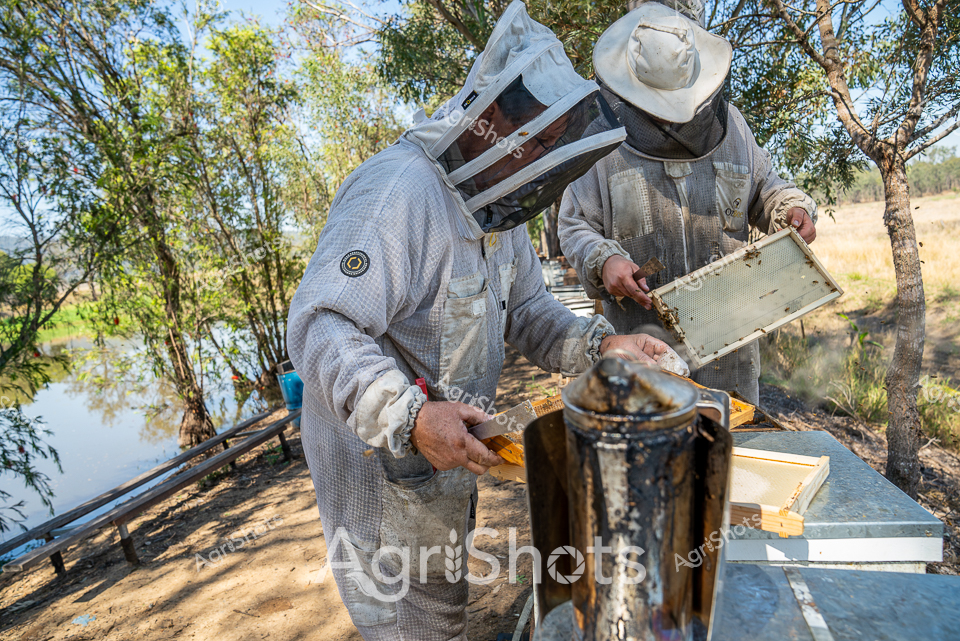
Honey harvest unfolds in the tranquil Lockyer Valley, where two beekeepers in protective grey mesh suits meticulously tend their apiary. Soft spring sunlight filters through surrounding eucalyptus trees, casting dappled light on the wooden hive boxes and sandy ground. One beekeeper carefully lifts a honeycomb frame, revealing the intricate work of their industrious bee colony, while the other prepares a smoker to calm the insects during the extraction process. Their specialized white mesh veils shield their faces, a critical safety measure when working closely with thousands of buzzing pollinators. The landscape reveals a serene waterway in the background, complementing the natural setting of this agricultural practice that is vital to Queensland's agricultural ecosystem. Rugged and precise, these beekeepers represent the careful stewardship required in sustainable honey production, their movements deliberate and respectful of the delicate balance between human intervention and natural bee behavior.
 Image
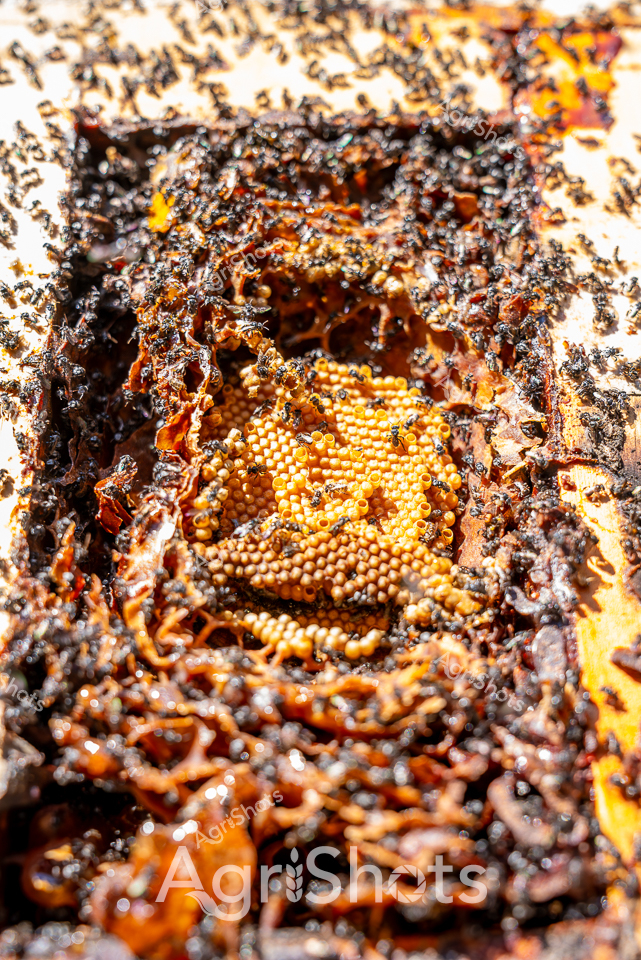
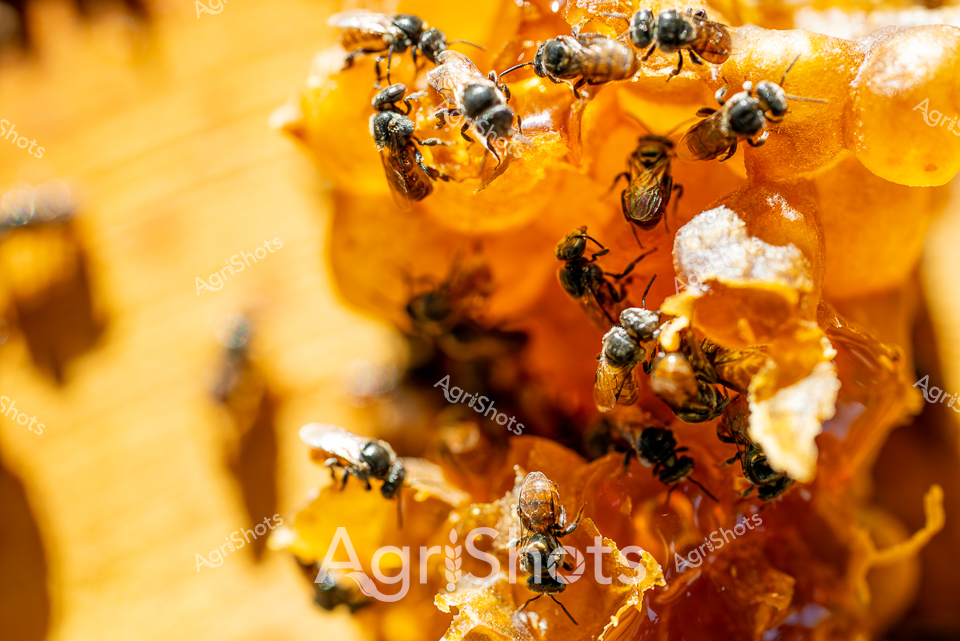
Stingless native bee honey glistens like liquid gold, nestled within the intricate honeycomb of a Trigona carbonaria hive. The close-up reveals the remarkable micro-architecture of an Australian native bee colony, capturing the rich amber and deep brown textures of their meticulously constructed home. Tiny black native bees have crafted an extraordinary nest structure, with perfectly formed hexagonal cells packed densely around a central golden honey reservoir. The organic, layered surfaces suggest the hive's location in the subtropical Lockyer Valley of Queensland, where these remarkable social insects thrive during the mild winter months. Each textured surface tells a story of collective labor, precision, and the sophisticated ecological networks that sustain Australian native bee populations. The image celebrates the intricate world of these essential pollinators, highlighting the delicate beauty of their miniature agricultural enterprise.
 Image
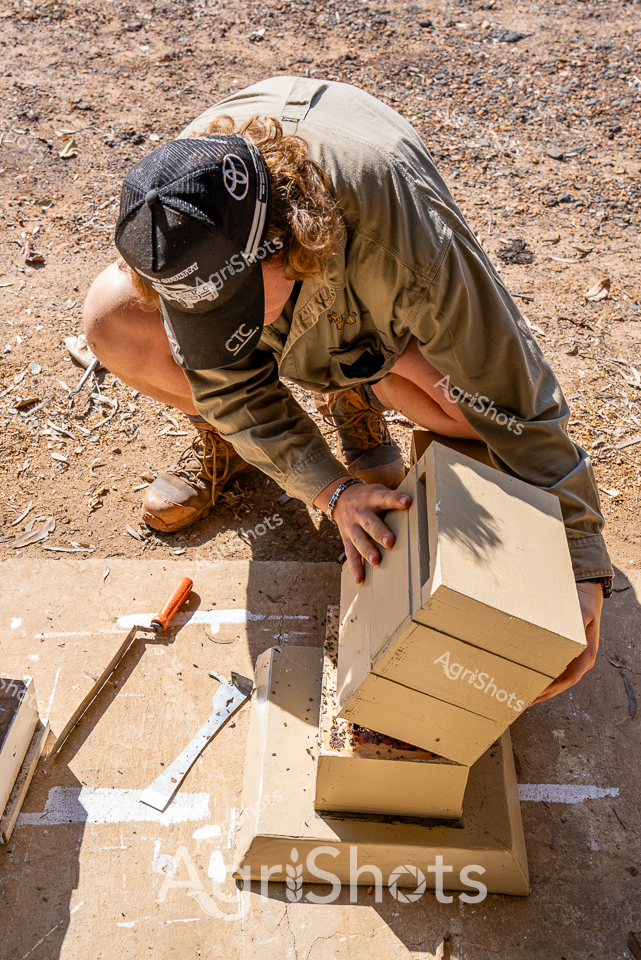
In the sun-baked terrain of Queensland's Lockyer Valley, a focused worker bends intently over stacked cardboard boxes, preparing equipment for native bee management. Wearing a khaki work shirt and a distinctive black cap, the individual carefully handles the containers on a dry, rocky ground scattered with small stones and debris. Precision tools—a ruler and another measuring implement—lie nearby, suggesting a methodical approach to apiary work. The harsh winter sunlight casts sharp shadows across the scene, highlighting the textural contrasts between the worker's rugged clothing, the sandy ground, and the clean lines of the storage boxes. This image captures the meticulous behind-the-scenes labor of Australian bee husbandry, where careful handling and preparation are critical to maintaining healthy native bee colonies. The scene embodies the quiet dedication of agricultural workers who play a vital role in supporting local ecosystems and agricultural productivity.
 Image
Nestled in the lush Lockyer Valley, a serene apiary unfolds along a shadowy earthen path lined with mature eucalyptus trees. Rows of pristine white bee hives stand sentinel, their uniform wooden boxes creating a methodical arrangement against the natural backdrop of verdant foliage and dappled sunlight. A brilliant blue water barrel breaks the visual rhythm, suggesting careful water management for these critical pollinators. The scene captures the intricate relationship between agricultural practice and natural environment, with hives positioned strategically between woodland and what appears to be a seasonal waterway. Soft spring light filters through the tree canopy, casting intricate shadows across the packed earth walkway, highlighting the meticulous organization of this professional beekeeping operation. The tranquil setting speaks to the precision and harmony required in apiculture, where human intervention supports the delicate ecosystem of honeybee colonies essential to agricultural productivity.
 Image
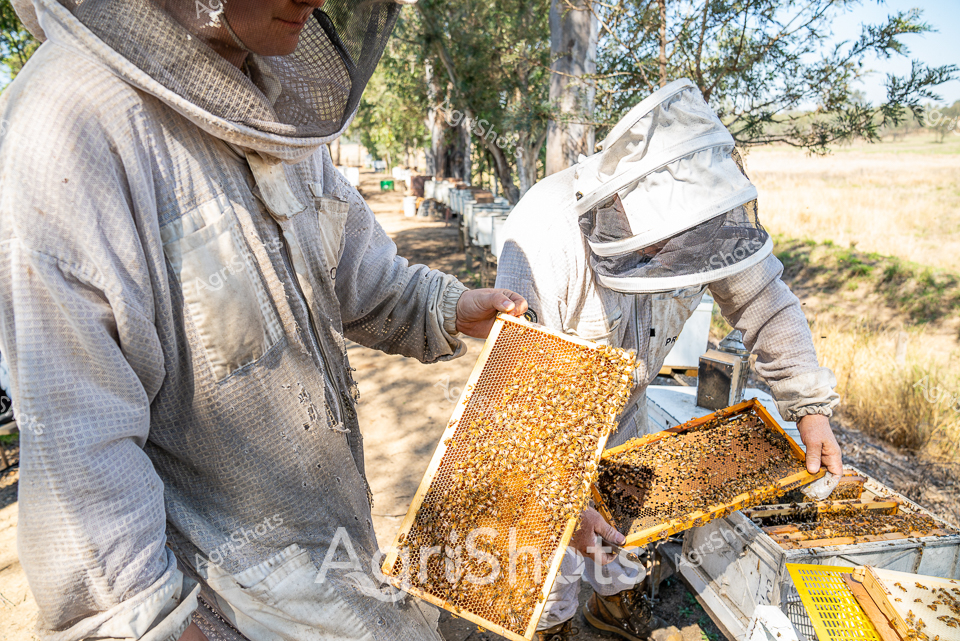
Beekeepers tend to a vibrant honey production site in Queensland's lush Lockyer Valley, their protective mesh veils and lightweight summer suits shielding them from potential stings. Sunlight filters through surrounding eucalyptus trees, casting dappled shadows across rows of pale wooden hive boxes nestled in golden grasslands. Skilled hands carefully lift honeycomb frames thick with golden-amber honey cells, revealing the intricate geometric patterns created by industrious worker bees. The light gauzy protective clothing in soft greys and whites contrasts beautifully with the rich amber and brown tones of the active hive, capturing the delicate yet precise work of apiary management during peak spring harvesting season. Each carefully extracted frame demonstrates the symbiotic relationship between human agricultural skill and the remarkable natural engineering of bee colonies. The scene radiates a sense of quiet concentration and deep respect for these essential pollinators and honey producers, fundamental to Australia's rich agricultural ecosystem.
 Image
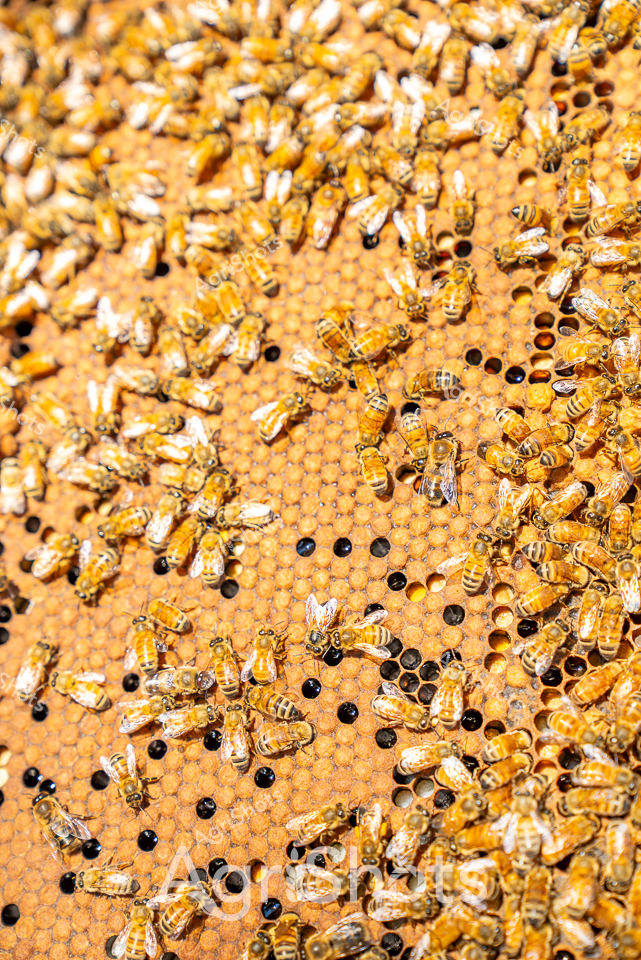
Honey Harvest in the Lockyer Valley Golden sunlight bathes a densely populated honeycomb, revealing the intricate world of a thriving bee colony. Dozens of industrious honey bees move across the rich amber-toned wax surface, their striped bodies weaving between hexagonal cells filled with honey and developing larvae. Dark capped brood cells punctuate the honeycomb, indicating the next generation of pollinators in various stages of development. The image captures the remarkable social structure of these crucial agricultural workers, each bee playing a precise role in the hive's complex ecosystem. Captured during the vibrant spring season in Queensland's fertile Lockyer Valley, this close-up reveals the extraordinary detail of apiary life - a testament to the remarkable productivity and organizational precision of bee colonies that are essential to agricultural pollination and honey production. The warm golden and amber tones suggest the rich agricultural landscape of the region, where these industrious insects contribute significantly to crop health and local farming ecosystems.
 Image
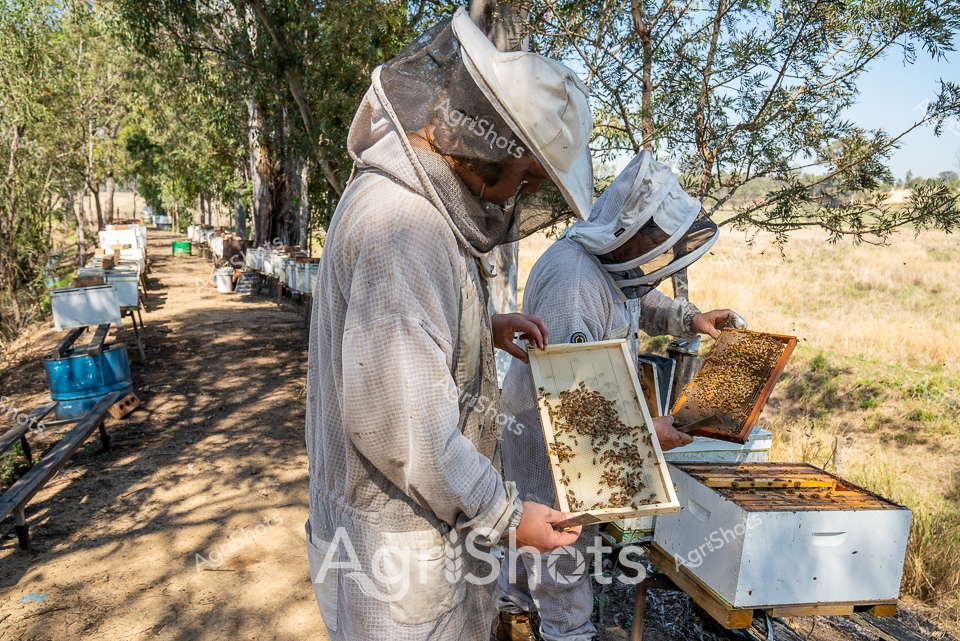
Beekeepers tend to a thriving apiary nestled among eucalyptus and native trees in Queensland's fertile Lockyer Valley. Dressed in protective white mesh suits and wide-brimmed veiled hats, the workers carefully inspect honey frames teeming with industrious bees. Sunlight filters through the surrounding woodland, casting dappled shadows on the neat rows of white and blue hive boxes positioned along a well-worn earth path. One beekeeper gently removes a frame, revealing a dense golden-brown honeycomb alive with movement, while his colleague stands ready to assist. The scene pulses with the quiet concentration of agricultural expertise, showcasing the intricate relationship between human stewardship and the complex world of bee colonies. Soft textures of mesh suits contrast with the metallic glint of hive tools and the organic patterns of the honeycombs, capturing a moment of careful observation in the heart of spring's abundant agricultural landscape.
 Image
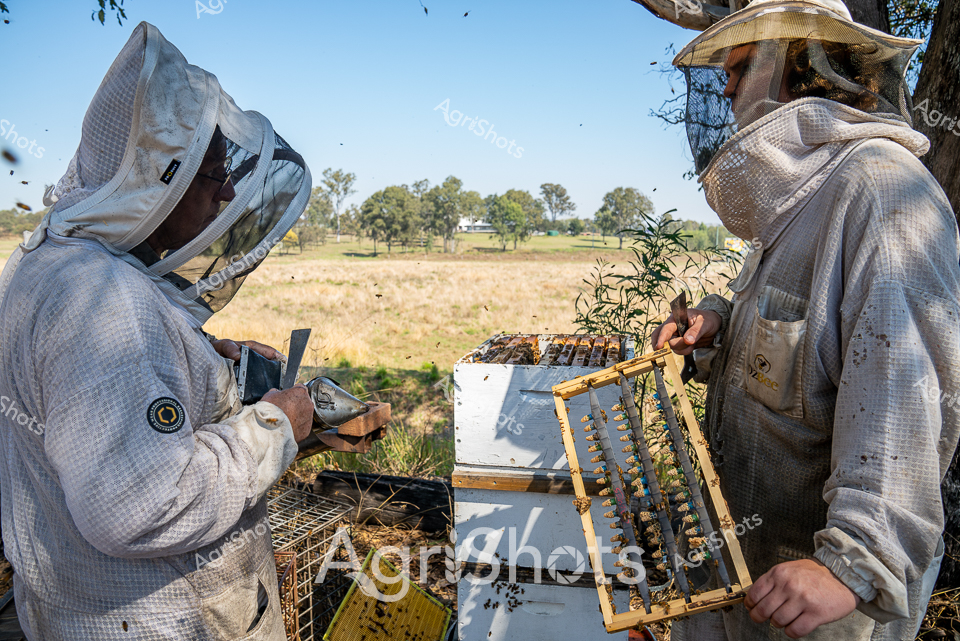
Beekeepers tend to their buzzing colonies on a sun-drenched property in Queensland's Lockyer Valley, their protective white mesh suits shimmering against the golden pastureland. One apiarist carefully manipulates a wooden frame laden with honeycomb, while his colleague prepares specialized tools for hive management. Scattered trees punctuate the wide rural landscape, creating a serene backdrop for this intricate work of honey production. Their mesh veils shield them from potential stings as dozens of bees swarm around the white wooden hive boxes, representing the delicate symbiosis between human agricultural practice and natural ecosystem. The textured light-colored protective suits contrast beautifully with the warm ochre tones of the grassland, capturing the precise, methodical nature of apiculture in the Australian agricultural landscape. Soft natural light highlights the detailed craftsmanship of the wooden hive frames and the careful movements of these skilled agricultural workers, embodying the precision and connection to land that defines rural Queensland's agricultural traditions.
 Image
Queensland's aquaculture innovation comes to life in this crisp spring scene at a Murray cod farm. A worker in a vibrant pink Condabilla branded shirt carefully handles a large, mottled green-grey Murray cod, examining its health and development alongside a supervisor in blue workwear and protective eyewear. The background reveals a sophisticated aquaculture facility with multiple blue-netted tanks and flowing water, highlighting the precision of modern fish farming techniques. Overhead shade netting filters soft natural light, creating an environment optimized for sustainable fish production in the Darling Downs region. The carefully choreographed interaction between the two workers demonstrates the technical expertise and meticulous care required in contemporary aquaculture, showcasing Queensland's advanced agricultural practices. The image captures a moment of professional assessment, where each movement and observation contributes to the successful cultivation of this native Australian fish species.
 Image
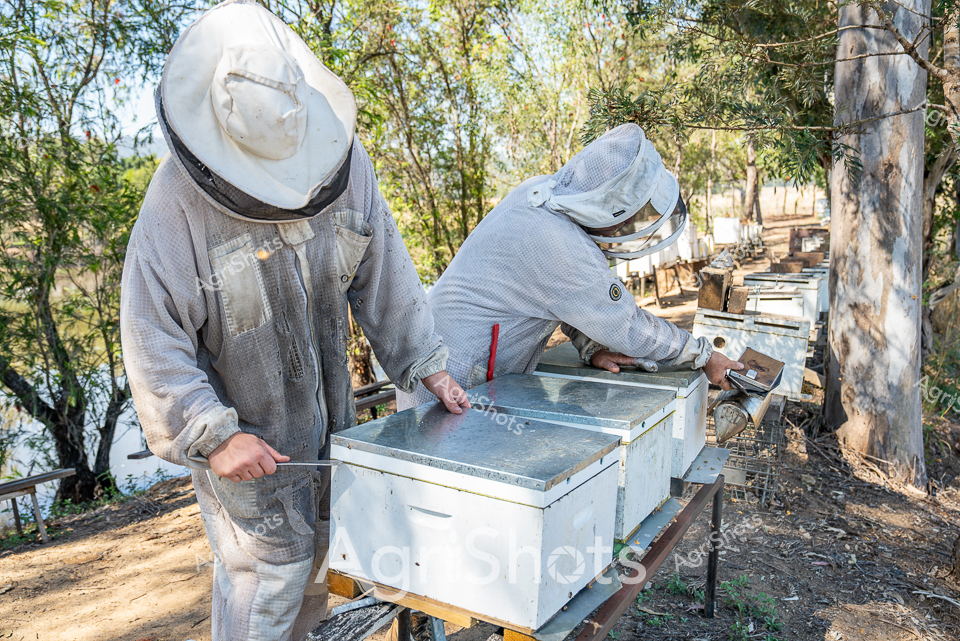
Beekeepers in silvery protective suits tend to their apiary nestled among the dappled light and soft greens of a Queensland spring morning. Surrounded by eucalyptus trees and filtered sunlight, two apiarists carefully inspect white-painted hive boxes mounted on metal stands in a tranquil woodland clearing. Their mesh-hooded suits - pale gray and textured like fine gauze - protect them as they methodically work, one standing observantly while the other leans intently over an open hive, likely checking honey production or evaluating the colony's health. The metallic gleam of the hive boxes contrasts beautifully with the natural woodland setting, suggesting a harmonious intersection of agricultural practice and natural ecosystem. Soft shadows and gentle vegetation create a serene backdrop to this meticulous agricultural craft, highlighting the precision and care required in sustainable beekeeping. The scene captures the quiet expertise of Queensland's agricultural workers, demonstrating the delicate balance between human intervention and natural process in modern apiculture.
 Image
Beekeepers tend to their thriving apiary on a sun-drenched spring morning in Queensland's fertile Lockyer Valley. Dressed in protective white mesh suits that shield them from potential stings, the apiarists carefully inspect a honey-laden frame teeming with industrious worker bees. Soft golden light bathes the landscape, highlighting distant tree lines and the open agricultural terrain surrounding the hive site. One beekeeper delicately manages a frame packed with honeycomb, while the other prepares specialized equipment, their coordinated movements reflecting years of shared expertise. The pale mesh of their protective gear contrasts beautifully with the natural earthy tones of the surrounding paddock, creating a serene visual harmony that speaks to the careful, nurturing relationship between these agricultural specialists and their essential pollinators. Scattered bee activity dances around the hive, a testament to the vibrant ecosystem these professionals carefully maintain in this quintessential Australian rural setting.
 Image
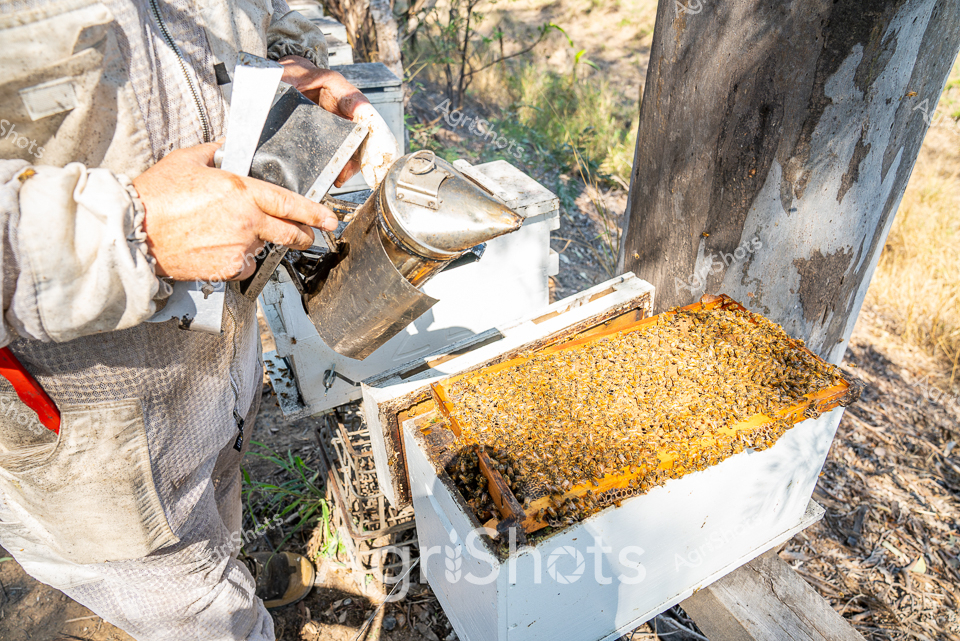
Burnished golden sunlight filters through eucalyptus trees, illuminating a beekeeper's careful work in the Lockyer Valley. Dressed in a protective white mesh suit, the apiarist uses a traditional steel smoker to calm a bustling hive, its wooden frame packed densely with honeybees moving across golden-hued honeycomb. Weathered hands gently manipulate the smoker, releasing soft plumes that pacify the industrious colony, allowing careful inspection of the hive's health and honey production. The surrounding landscape speaks of early spring - dry grasses, scattered trees, and the rich earth of Queensland's fertile agricultural region creating a textured backdrop to this intricate dance between human and insect. Precise and methodical, the beekeeper represents generations of agricultural knowledge, understanding the delicate balance required to sustainably harvest nature's sweet bounty. The metal and wooden equipment, sun-bleached and well-maintained, tells a story of patient craft and deep respect for these critical pollinators that sustain both wild ecosystems and agricultural production.
 Image
Honeybees swarm across golden honeycomb, their metallic bodies glistening against the rich amber and translucent wax cells. Each industrious worker navigates the intricate hexagonal structure, some collecting nectar while others deposit freshly gathered pollen. The close-up reveals the remarkable texture of the honeycomb - waxy, luminous surfaces reflecting warm golden and orange tones characteristic of a winter's day in Queensland's fertile Lockyer Valley. Native Australian bees demonstrate extraordinary collective behaviour, their synchronized movements highlighting the complex social structure of the hive. Droplets of honey catch the light, creating a shimmering landscape of liquid gold that speaks to the precision and productivity of these remarkable pollinators. The image captures the intimate ecosystem of an apiary, where each bee plays a crucial role in producing one of Australia's most precious agricultural exports.
 Image
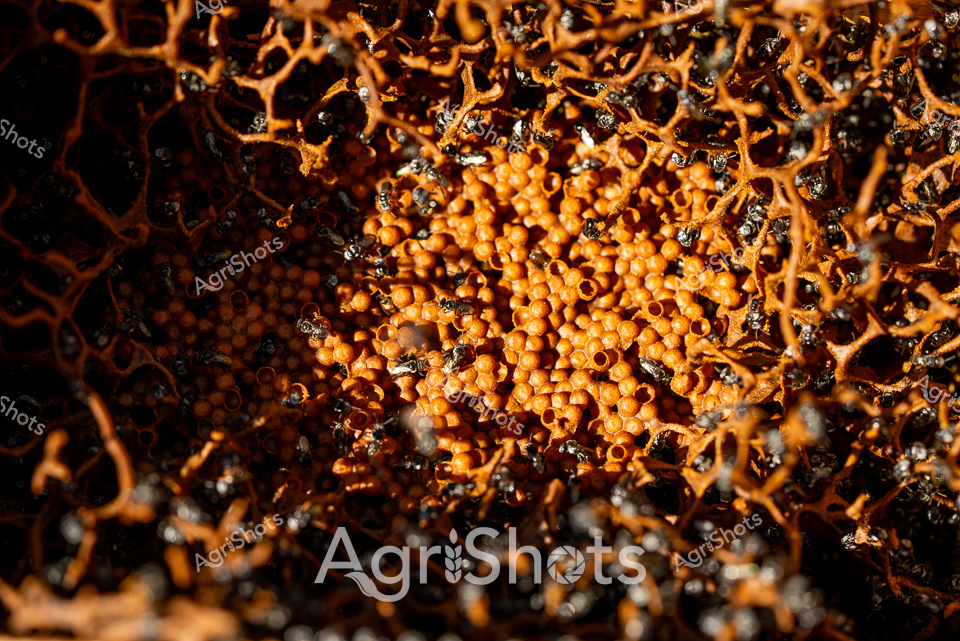
Molten amber and obsidian intertwine in a mesmerizing close-up of native Australian stingless bee (Tetragonula carbonaria) honeycomb architecture. Intricate golden-brown networks of hexagonal chambers pulse with life, clustering around a dense central mass of vibrant orange-yellow honey globules. The microscopic landscape reveals the extraordinary complexity of these tiny subtropical Queensland pollinators, their collective biomechanical design showcasing nature's precise engineering in the Lockyer Valley's winter season. Dark and luminous textures create an almost metallic quality, with delicate branching structures connecting each honeycomb cell, demonstrating the sophisticated social organization of these remarkable native bee colonies. Each spherical droplet and interconnected passageway represents a microcosm of agricultural symbiosis, highlighting the critical role these indigenous insects play in pollination and ecosystem health across Australian agricultural landscapes.
 Image
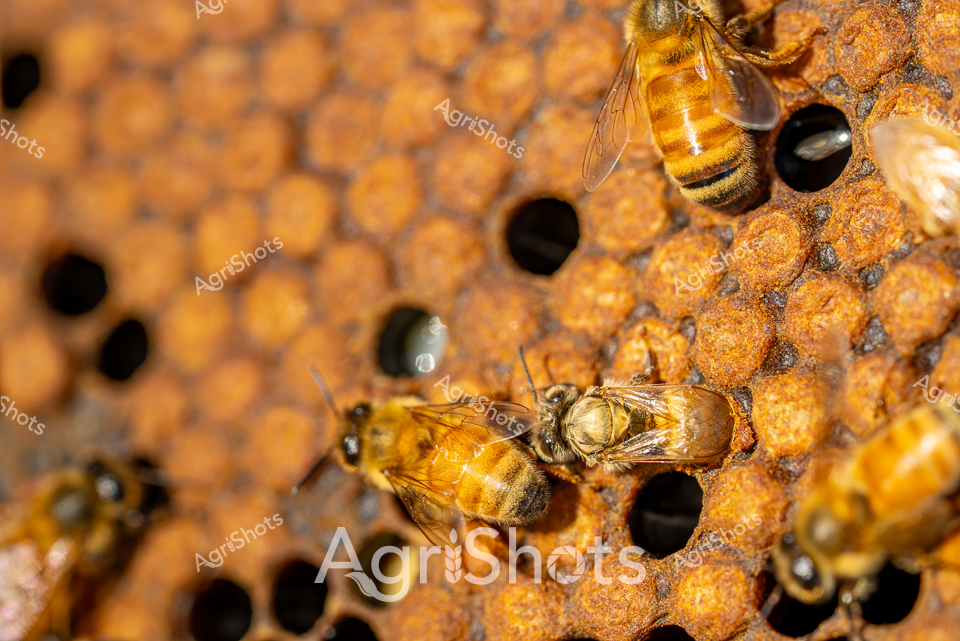
Honeybees swarm across the honeycomb's golden-amber surface, their striped bodies glistening with a rich, translucent amber and black pattern. Intricate hexagonal cells create a textured landscape of fertility and industry, some sealed with a waxy cap indicating developing larvae, while others remain open - revealing the pulsing microcosm of hive life. Each bee moves with precise purpose, clustered across the russet-toned wax surface, some emerging from dark cellular chambers, others tending to brood or communicating through complex choreography. The macro perspective reveals the extraordinary detail of these social insects - their segmented bodies, delicate translucent wings, and the organic architectural marvel of the honeycomb. This intimate view captures the vibrant spring season in Queensland's Lockyer Valley, where apiculture thrives amid rich agricultural landscapes. The image pulses with life, industry, and the complex symbiosis of a bee colony preparing for renewal and productivity.
 Image
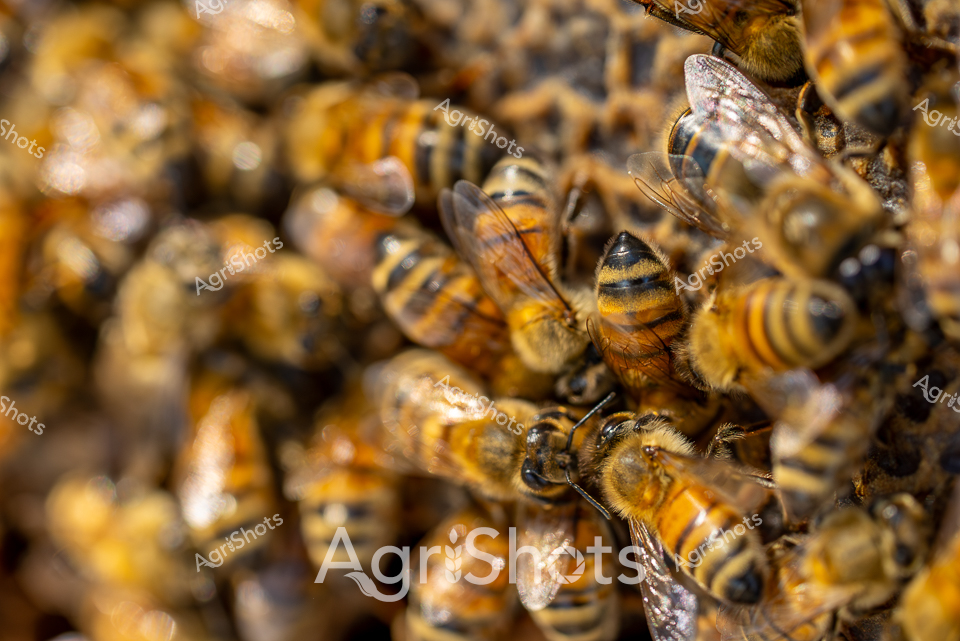
Honeybees cluster densely across the honeycomb, their golden-amber bodies striped with deep browns and blacks, creating a living tapestry of agricultural productivity. Intricate wings catch the light, revealing delicate translucent membranes against the warm, textured surface of the hive. This close-up reveals the extraordinary collective behavior of these essential pollinators, fundamental to agricultural ecosystems across Queensland's renowned Lockyer Valley. Each bee moves with purposeful precision, their bodies pressed closely together in a sophisticated social structure that speaks to the complex interconnectedness of agricultural life. The rich amber and ochre tones suggest a springtime scene, when bee colonies are most active and vital to crop production. This image captures the microscopic world of apiculture - a critical component of Australia's agricultural landscape, where these tiny workers play an enormous role in sustaining food production and ecological balance.
 Image
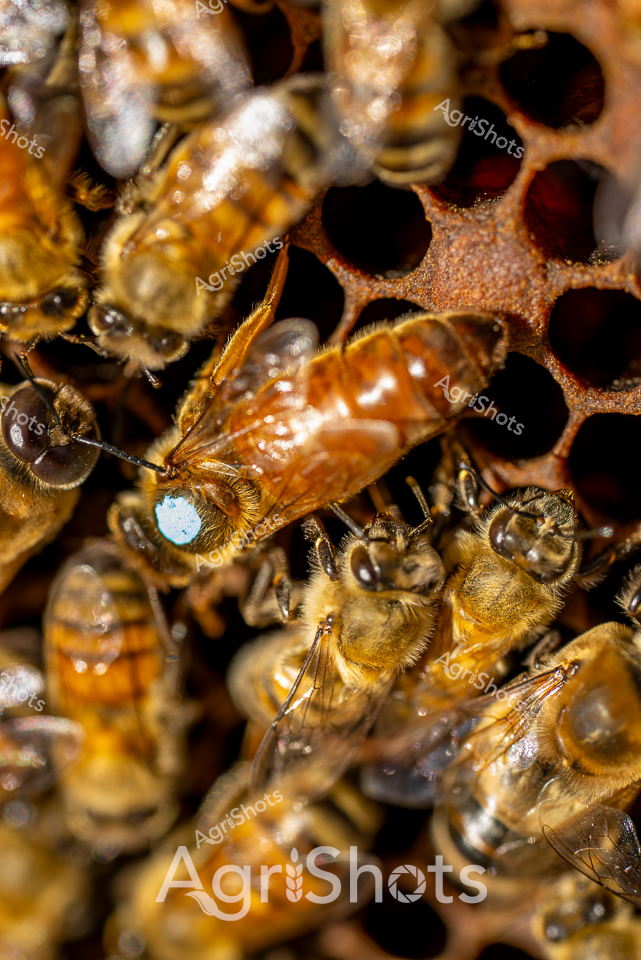
Amid the golden hexagonal chambers of a thriving beehive, a distinctive queen bee dominates the frame, her elongated amber body marked by a bright blue identifying tag. Surrounded by her industrious worker bees, she moves with regal purpose across the intricate honeycomb structure, its russet-colored wax cells creating a mesmerizing geometric backdrop. The close-up reveals the extraordinary detail of these remarkable social insects - their translucent wings, fuzzy golden-brown bodies, and intense collective focus capturing the complex microcosm of apiary life in Queensland's fertile Lockyer Valley. The image pulses with the energy of spring, when bee colonies are at their most active, nurturing new generations and preparing for the critical pollination season that sustains agricultural ecosystems. Each bee's exquisite texture and precise positioning speaks to the remarkable organization of the hive, where every individual plays a crucial role in the colony's survival and productivity. This intimate portrait celebrates the essential work of bees in Australian agricultural landscapes, highlighting their intricate social structures and vital contribution to crop production and environmental health.
 Image
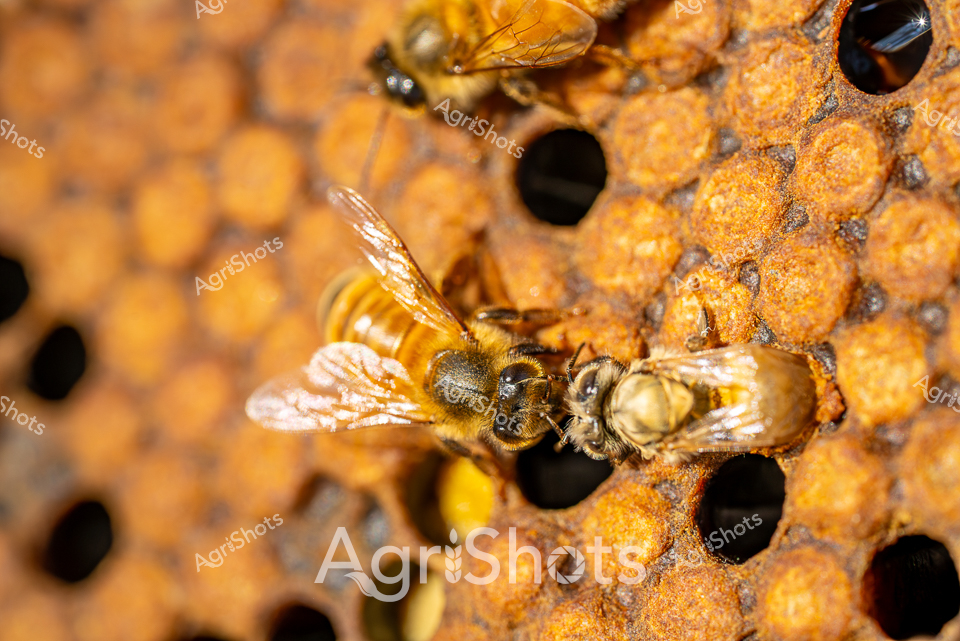
Honeybees cluster and communicate across the golden-amber honeycomb, their delicate translucent wings catching the soft light as they tend to emerging larvae in the intricate hexagonal chambers. Densely packed brood cells pulse with nascent life, each waxy compartment a miniature nursery in this vibrant spring hive from Queensland's fertile Lockyer Valley. The worker bees move with purposeful precision, their fuzzy bodies dusted with pollen, engaging in the complex social choreography of colony reproduction and care. Warm amber and rich ochre tones dominate the frame, highlighting the textural complexity of the hive's surface - a living, breathing ecosystem of interconnected cells and constant movement. Intimate and rhythmic, the scene captures the remarkable collective intelligence of these essential pollinators, their synchronized efforts ensuring the continuation of their remarkable community. Each bee plays a critical role in this microcosm of agricultural symbiosis, representing the intricate networks that sustain both natural and cultivated landscapes.
 Image
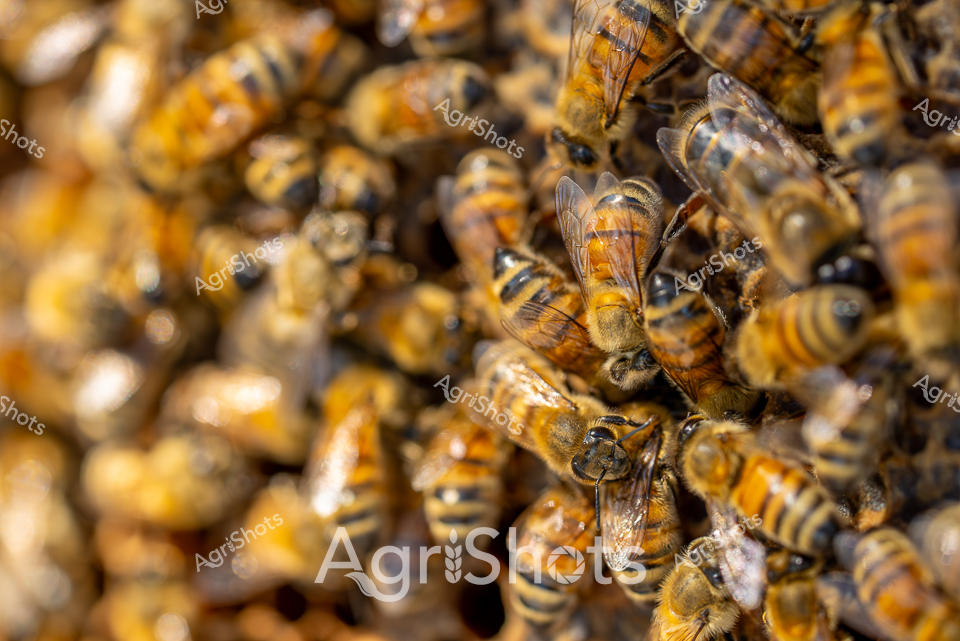
Honey bees cluster densely across the frame, their golden-amber bodies creating a mesmerizing tapestry of intricate life and collective movement. Sharp, translucent wings catch the light, revealing delicate venation against the warm amber and black striped bodies of these industrious pollinators. The tight formation suggests a thriving colony in peak spring activity, characteristic of Queensland's Lockyer Valley apiary operations during the productive flowering season. Each bee appears meticulously positioned, reflecting the precise social organization of their hive - a living, breathing organism of remarkable complexity and efficiency. Macro photography reveals the extraordinary textural details of their exoskeletons, from the fine hair-like setae to the segmented abdominal sections, capturing the raw beauty of these critical agricultural workers. The golden-brown palette speaks to the rich agricultural ecosystem of the region, where these bees play a fundamental role in crop pollination and honey production.
 Image
Golden honeybees cluster densely across the frame, their translucent amber-tinted wings and fuzzy golden-brown bodies creating a mesmerizing texture of collective movement. Captured in exquisite macro detail, each bee's intricate physical structure is revealed - compound eyes, delicate antennae, and fine hair-like sensory structures visible against the warm, honeyed tones. The image represents the complex social dynamics of a thriving honey bee colony, where individual insects work in perfect synchronization for the survival of the entire community. This close-up reveals the extraordinary micro-world of apiary life, highlighting the precision and interconnectedness of these critical pollinators that are fundamental to agricultural ecosystems across Queensland's Lockyer Valley. The photograph's rich golden and brown palette suggests a spring morning, when bee colonies are most active in preparing for nectar collection and hive maintenance. Every bee appears laser-focused, embodying the remarkable collective intelligence that makes these insects such a vital component of sustainable farming and ecological balance.
 Image
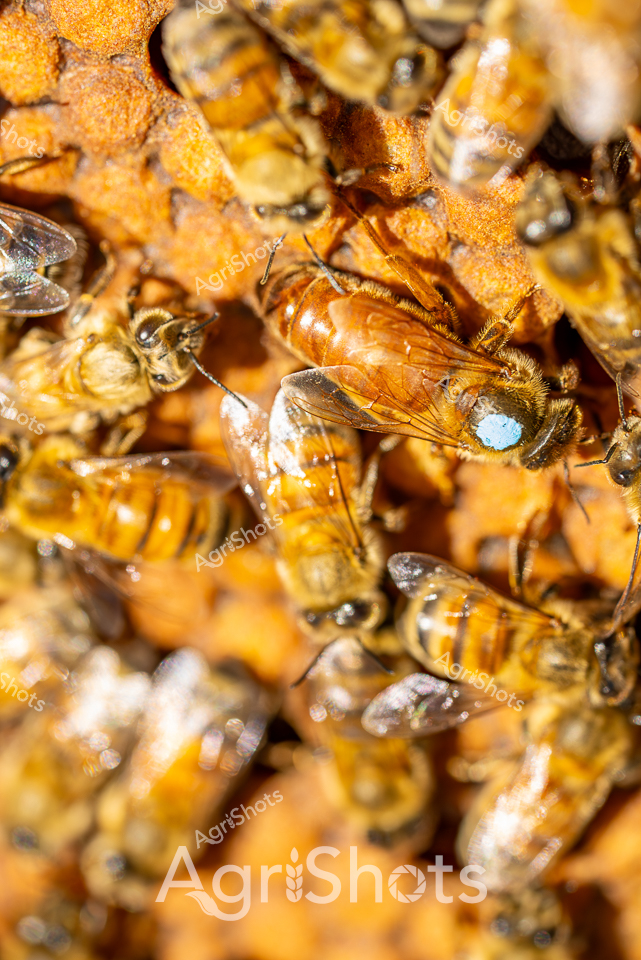
Honey-golden worker bees cluster densely across a honeycomb frame, their translucent amber wings and intricate exoskeletons creating a mesmerizing tapestry of agricultural life. At the heart of this macro perspective, a vibrant queen bee stands distinguished, her body a rich copper tone with a striking blue-tinted marking, surrounded by her industrious colony. The frame pulses with warm orange and golden hues, reflecting the rich pollen and nectar environment of a thriving spring apiary in Queensland's fertile Lockyer Valley. Each bee displays remarkable detail - delicate antennae, segmented bodies, and gossamer wings capturing the precision and collective energy of these critical pollinators. The tight clustering demonstrates the remarkable social organization of the hive, where every individual plays a crucial role in honey production and colony survival. Sunlight illuminates the scene, highlighting the textural complexity of honeycomb cells and the bees' intricate movements, revealing the sophisticated microcosm of agricultural ecosystem interdependence. This image celebrates the extraordinary world of beekeeping, showcasing the intricate beauty and vital agricultural importance of honeybees in Australian farming landscapes.
 Image
A golden-hued queen bee emerges from the dense cluster of worker bees, her elongated amber body standing out against the sea of smaller honeybees. Captured in stunning macro detail, the intricate world of the apiary reveals itself in sharp focus, with each bee's delicate wings and fuzzy exoskeleton meticulously rendered. The queen, adorned with a distinctive blue marker for identification, moves purposefully through her colony - a living, breathing organism of collective purpose and intricate social structure. The image pulses with the warm, rich tones of spring in Queensland's Lockyer Valley, where beekeeping is a vital part of the agricultural ecosystem. Honey production and pollination are the lifeblood of this region, with each bee playing a critical role in sustaining local crops and biodiversity. The tight composition speaks to the remarkable organization and communication within the hive, a microcosm of agricultural productivity that mirrors the broader farming landscape. Layers of bees overlap and intertwine, creating a textural tapestry of yellows, browns, and golds - a living testament to the complexity and beauty of apiculture in the Australian agricultural system.